
Understanding the landscape of food container wholesalers in Bangalore is essential for any business in the food industry, from bubble tea shops to catering services. This city, known for its culinary diversity, has a thriving market of suppliers providing quality food storage solutions tailored to various needs. Each chapter in this article delves into crucial aspects of these wholesalers, starting with an overview of the landscape, exploring various types of containers available, identifying market trends, reviewing supplier certifications, and assessing the economic impact of wholesalers in Bangalore. By the end of this article, readers will gain a comprehensive understanding of how to navigate this market effectively.
Smart Sourcing in Bangalore: Navigating the City’s Food Container Wholesalers
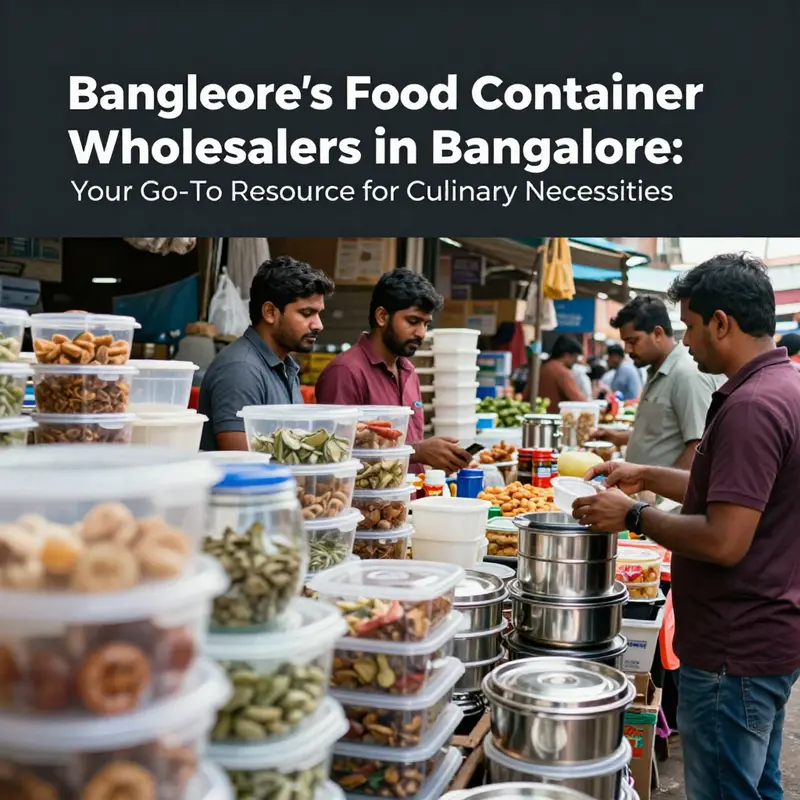
Bangalore has long been a magnet for manufacturing and trade, and its role in the food packaging ecosystem is a telling reflection of how urban markets adapt to diverse demand. The city’s wholesale networks operate at a scale that blends steady, repeatable orders with the flexibility needed by small cafes, caterers, and regional distributors. In this environment, the choice of food containers is rarely a simple one. It is a decision shaped by the nature of the food service operation, the cadence of orders, the desire for sustainable practices, and the ability to customize packaging to match brand identity. The landscape, as illustrated by market insight aggregators and sourcing platforms, shows a spectrum of suppliers, each bringing a distinct mix of materials, capacities, and service models. This complexity is not a hurdle; it is an opportunity to craft a sourcing strategy that aligns with both cost efficiency and product stewardship. The Bangalore wholesale scene is also anchored by credible naming conventions within the sourcing community, with many suppliers presenting certifications and transparent MOQs, a combination that helps buyers separate reliable partners from those offering only a tempting price tag. In practice, buyers often begin with a clear specification of storage needs—whether for dry goods in a restaurant pantry, bulk condiments for a central kitchen, or portable packaging for a street-food operation—and then map those needs against the product categories most readily available through local wholesalers or through reputable intermediaries that connect buyers with a broader network. This approach is particularly important when considering the wide range of container types that are readily accessible in the city’s wholesale markets. The research notes a robust presence of glass storage solutions, metal food containers, wood and bamboo alternatives, and plastic or composite options. Each material carries its own advantages and trade-offs. Glass containers, prized for their transparency and inert nature, are favored for dry goods such as tea, coffee, and grains, while their modern airtight variants often feature wooden or metallic lids that combine practicality with a hint of aesthetic appeal. In Bangalore’s market, borosilicate glass is especially sought after for its thermal resistance and durability, meeting the expectations of health-conscious buyers who want to minimize flavor interference and chemical interaction with stored ingredients. Stainless steel remains a staple for durability and longevity. The 316-grade metal options, in particular, are valued for corrosion resistance, which is a meaningful consideration in kitchens and for on-the-go meals that demand robust containment. These metal containers extend beyond simple cans and tins; they frequently include thoughtful enhancements like integrated scoops or built-in dispensers that streamline service in busy settings. Wooden and bamboo containers fulfill a different niche. They tap into the eco-friendly segment and the rustic, artisanal aesthetic that resonates with niche markets and premium product lines. In a city with a strong emphasis on sustainable practices, these natural-material options are more than stylistic choices; they signal a commitment to low-impact packaging that can appeal to a broad spectrum of consumers who value heritage and environmental responsibility. Plastic and composite solutions, while sometimes viewed with caution due to environmental concerns, still play a role in bulk storage and cost-sensitive segments. The key in Bangalore’s market is to distinguish BPA-free and food-grade formulations from lower-grade alternatives, ensuring compatibility with diverse food products while managing total cost of ownership. The market’s MOQs—typical ranges cited by wholesalers in the data set from credible sourcing platforms—span from modest 20 pieces to more substantial orders up to 1,000 per item. This spread is meaningful, because it allows a bakery, a mid-sized cafe chain, or a regional distributor to scale their procurement without tying up excessive capital in inventory. Beyond product availability, the credibility of suppliers matters just as much as the containers themselves. Buyers look for clear certifications, consistent product quality, transparent lead times, and the ability to offer private labeling or customization. The Bangalore ecosystem has increasingly accommodated these expectations, with many suppliers capable of tailoring sizes, branding elements, and packaging configurations to meet specific customer needs. The result is a market that rewards collaboration and long-term partnerships, where pricing strategies reflect not only unit cost but also the reliability of supply, the speed of replenishment, and the added value of design options that reinforce a buyer’s brand story. Sustainability trends are particularly influential in shaping demand. A growing segment of buyers seeks bamboo-based or recyclable materials, driven by both regulatory considerations and consumer sentiment that favors eco-conscious packaging. In Bangalore, this shift dovetails with the city’s broader identity as a center of green manufacturing and design innovation. Wholesalers respond with offerings that balance aesthetics with practicality, ensuring that sustainable options do not compromise durability or food safety. The emphasis on customization further amplifies the value of local suppliers. Private labeling, bespoke sizes, and branding opportunities enable businesses to present a cohesive packaging system that supports visibility in a crowded market. This is especially important for food service operators who want packaging that is not merely functional but also reflective of their brand identity. Importantly, the wholesale landscape also reflects the operational realities of moving large quantities through a metropolitan hub. While domestic manufacturing remains a backbone, the presence of global sourcing platforms adds a layer of breadth, enabling buyers to compare materials, certifications, and design capabilities side by side. For buyers, the key is to translate those options into a coherent procurement plan that minimizes risk and maximizes value. In practice, this means evaluating supplier credibility, confirming MOQs align with current demand, assessing whether customization is feasible within required timeframes, and understanding the total cost of ownership of each container solution, including shipping, storage, and potential return or exchange terms. The market’s transparency—supported by supplier profiles, certifications, and performance indicators—helps buyers create a governance framework for ongoing sourcing. A practical reminder within this ecosystem is the value of real-world examples in guiding decisions. For instance, a wholesale takeaway packaging page can illustrate how a supplier aligns product design with end-use requirements, offering insights into how container choice affects portion control, ease of handling, and waste management. Such references also underscore the importance of accessible, well-documented product data in assessing options quickly and confidently. For readers navigating this landscape, a concrete step is to examine a few representative suppliers and request samples, pricing quotes, and lead-time commitments. This approach reduces ambiguity and builds a foundation for scalable procurement that can adapt to seasonal demand spikes, menu changes, or new channel strategies. When assessing a full spectrum of options, one practical tactic is to consider a mixed-material strategy: glass for premium presentations and pantry storage, stainless steel for durability and portability, and sustainable wood or bamboo where appropriate. Plastic can fill gaps in cost-sensitive segments, provided it meets safety standards and environmental goals. The Bangalore market’s strength lies in its ability to blend these alternatives into coherent packaging ecosystems, enabling businesses to tailor their packaging to the specific demands of each channel—front-of-house display, back-of-house operations, and consumer takeaway. This integrated viewpoint helps explain why the city remains a vital node in India’s food packaging supply chain and why buyers should approach sourcing with a strategic, rather than purely transactional, mindset. For readers seeking a practical entry point into these dynamics, consider how a representative internal resource could guide your next purchase. See a wholesale take-away cup option that demonstrates how design, branding, and usability converge in a single packaging decision: wholesale-take-away-8oz-12oz-disposable-coffee-paper-cup-with-lids. While this is just one facet of a broader container ecosystem, it illustrates how sourcing choices ripple across service speed, customer experience, and brand perception. For broader market context, you can explore additional supplier insights on Alibaba’s Bangalore-focused listings, which offer a comparative snapshot of product varieties, MOQs, and certification options available to buyers navigating this vibrant city’s wholesale scene. Source: Alibaba Bangalore food containers wholesale listings
Bulk Choices, Local Markets, and the Shape of Storage: Types of Food Containers Available Through Wholesalers in Bangalore
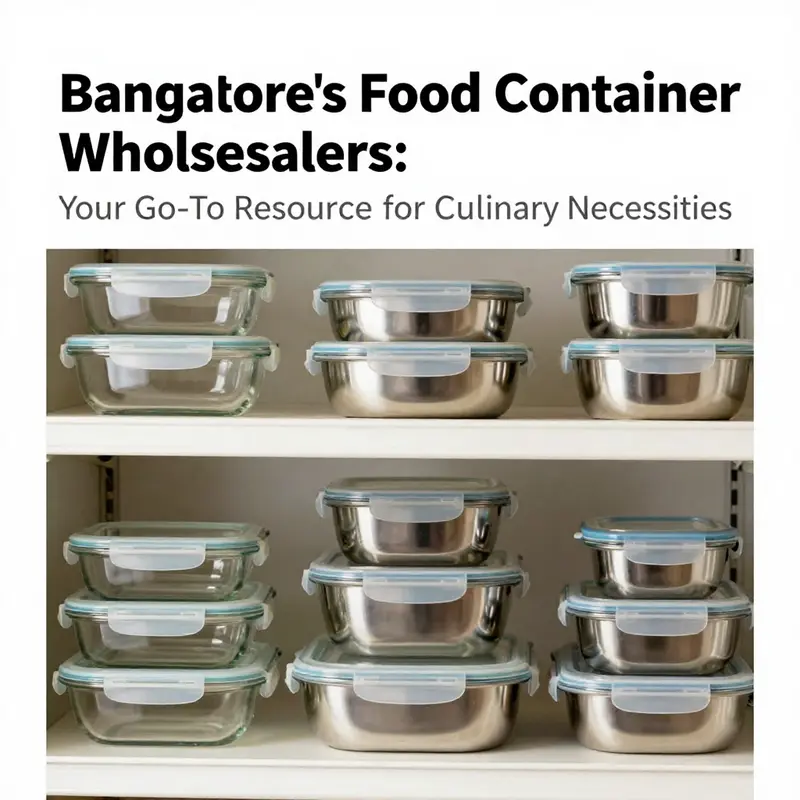
In Bangalore’s bustling food-service milieu, a quiet economy of containers underpins every plate that leaves a kitchen or a takeaway counter. The wholesalers who operate in and around the city’s industrial corridors—areas like Koramangala, Whitefield, and Hosur Road—serve as the backbone of storage and packaging for restaurants, caterers, food manufacturers, and even smaller retail ventures. The landscape is defined not by a single best-seller but by a spectrum of container types, each chosen for its alignment with food safety, handling convenience, and cost efficiency. This spectrum reflects a broader shift in how businesses think about storage: not merely as a means to hold ingredients, but as a strategic element that influences freshness, transportability, waste reduction, and customer experience. Buyers work with suppliers who can offer bulk quantities, reliable MOQs, and certifications that attest to safety and compliance, creating a supply chain that is as much about trust as it is about price.
To understand this bulk ecosystem, it helps to imagine the daily needs of kitchens that prepare and distribute meals at scale. Plastic containers, for instance, are prized for their lightness and durability. They come in a variety of sizes and shapes, frequently including fitted lids that seal in moisture and keep ingredients from shifting during transit. The appeal of HDPE and PP materials lies in their safety credentials, heat resistance, and moisture resistance, which make them suitable for storing everything from chopped vegetables to ready-to-eat meals destined for delivery platforms. In the right workflow, plastic containers support quick assembly lines, stack neatly for storage, and tolerate the rigors of frequent washing and re-use in high-volume environments. Yet, the choice is never about plastic alone. It is about how the material performs within a specific culinary and logistical context, balancing reuse with return-on-investment in a busy kitchen.
Aluminum foil trays occupy a different niche in the Bangalore wholesale scene. Their heat conductivity and non-reactive surface render them ideal for both cooking and serving. In many cases, these trays are favored by caterers and event-focused kitchens that need to move from oven to dispatch swiftly. They can withstand temperature fluctuations—from hot dishes fresh out of the oven to cold storage—without compromising the integrity of the food. The result is a streamlined workflow where trays can be filled, heated, and transported with minimal need for repackaging. The practicality of aluminum trays is complemented by packaging solutions that preserve portion sizes and reduce handling time, a trio of benefits that resonates in the city’s fast-paced service culture.
Paper and cardboard containers offer a different set of advantages, particularly for takeaway and dessert lines. Eco-conscious operators, as well as those seeking compostable or recyclable options, lean into paper-based packaging as a way to align with sustainability goals while still meeting functional demands. These containers typically excel in presentations that emphasize freshness, simple disposal, and a lighter environmental footprint. Their role in the Bangalore market illustrates a growing recognition that storage and serving solutions can be designed to support responsible consumption without sacrificing convenience. Meanwhile, Styrofoam—once a mainstay for insulation and insulation-dependent takeout—now faces increasing scrutiny as consumers and regulators push for alternatives. The wholesale market responds with a slower, but steady, decline in reliance on these materials, as suppliers broaden catalogs with more sustainable choices that deliver comparable performance.
Glass containers represent another distinct thread in the city’s storage fabric. Reusable, durable, and increasingly favored by health-conscious consumers and premium brands, glass offers safety in heating, freezing, and long-term storage. The heavier, delicate nature of glass is balanced by its reusability and perceived quality, which appeals to kitchens aiming to project a premium image or to households that value a durable, long-lived storage solution. The rise of glass in wholesale catalogs mirrors a broader trend toward plastic-free or reduced-plastic storage, especially in spaces where container longevity and sensory quality are part of the product narrative.
Silicone storage solutions—bags and containers—are gaining traction as flexible, heat-resistant, and resilient options that can bridge home kitchens and small-scale production lines. Silicone’s appeal lies in its reusability and durability, traits that align with circular economy principles increasingly embraced by Bangalore’s businesses. These items—usable from freezing to oven heat—are especially attractive to small producers and home chefs who want to scale up without compromising on sustainability credentials. In the wholesale conversation, silicone can be positioned as a transitional material, offering a practical pathway from single-use plastics to long-term reusables.
Metal cans and jars, including steel and tin options, occupy a more bulk-oriented category. They are prized for their protective properties against light, air, and moisture, which helps extend shelf life for dry goods, sauces, and preserved foods. These containers suit situations where long-term storage, compact stacking, and robust protection are essential. In many Bangalore operations, metal packaging comes into play for bulk storage and for products that require strict light or oxygen barriers. Together with other materials, metal containers complete a broad portfolio that can address everything from back-of-house bulk storage to retail-ready display and distribution.
The practical realities of procurement reinforce that wholesalers are not just suppliers of raw containers but stewards of efficiency. Minimum order quantities, lead times, and customization options—such as branding and logo printing—shape how a business plans its purchases. In practice, a caterer might specify a mix of stackable plastic boxes for cold dishes, glass jars for premium sauces, and paper bowls for hot takeaway to minimize waste while maximizing visual appeal. The ability to tailor containers to branding needs helps transform a storage solution into a customer-facing asset, a detail often overlooked in discussions about bulk procurement. In Bangalore’s market, the alignment between product performance, cost, and brand presentation is a daily negotiation, with suppliers offering a spectrum of options to fit different budgetary constraints and service models.
Within this ecosystem, platform-based marketplaces behave as crucial filtering mechanisms. Buyers compare specifications, certifications, and MOQs, while also weighing the environmental implications of each material. A growing segment of operators seeks recyclable or compostable options, even within bulk packaging, to demonstrate responsible sourcing and to meet evolving consumer expectations. These decisions also reflect broader supply-chain considerations—such as compatibility with dishwashers and sterilization processes, the ease of stacking for warehousing, and the potential for cross-utilization across multiple menus or service formats. The Bangalore market, with its dense culinary network, rewards suppliers who offer clarity on safety certifications and material compatibility, because these factors directly influence food safety outcomes and operational reliability.
For readers curious about concrete design and sourcing options, the dialogue with wholesalers often includes case-by-case assessments of MOQs and customization capabilities. A practical step for buyers is to align container choices with the specific handling and service workflow of their operation. For instance, selecting a mix of returnable and reusable options can optimize waste reduction while supporting consistent portioning and presentation across delivery channels. The market’s depth—spanning HDPE, PP, aluminum, paper, glass, silicone, and metal—supports a nuanced approach to storage that can scale with business growth and changing consumer tastes. The wholesale landscape in Bangalore thus emerges as a dynamic interface between material science, environmental stewardship, and real-world kitchen operations.
As a closing note, situating this discussion within the broader network of procurement tools clarifies how a business navigates the landscape. Wholesalers provide not just containers but a spectrum of service options, including customization, packaging integrity guarantees, and responsive supply timelines. The choice of container type often signals a strategic stance on waste, safety, and brand perception, while the ability to source in bulk ensures that the day-to-day needs of kitchens, caterers, and manufacturers can be met with speed and consistency. For readers seeking practical entry points, a well-curated inventory and a fluent dialogue with suppliers can turn storage solutions into a competitive advantage rather than a logistical hurdle. To explore a concrete example of design-ready packaging in this ecosystem, see the following internal resource: disposable-700ml-kraft-paper-bowl-take-out-octagonal-rectangle-paper-bowl.
External reference: https://www.indiamart.com/wholesale-food-containers-bangalore.html
Sustainable Shift and Smart Storage: Bangalore’s Food Container Wholesalers Redefine Bulk Packaging
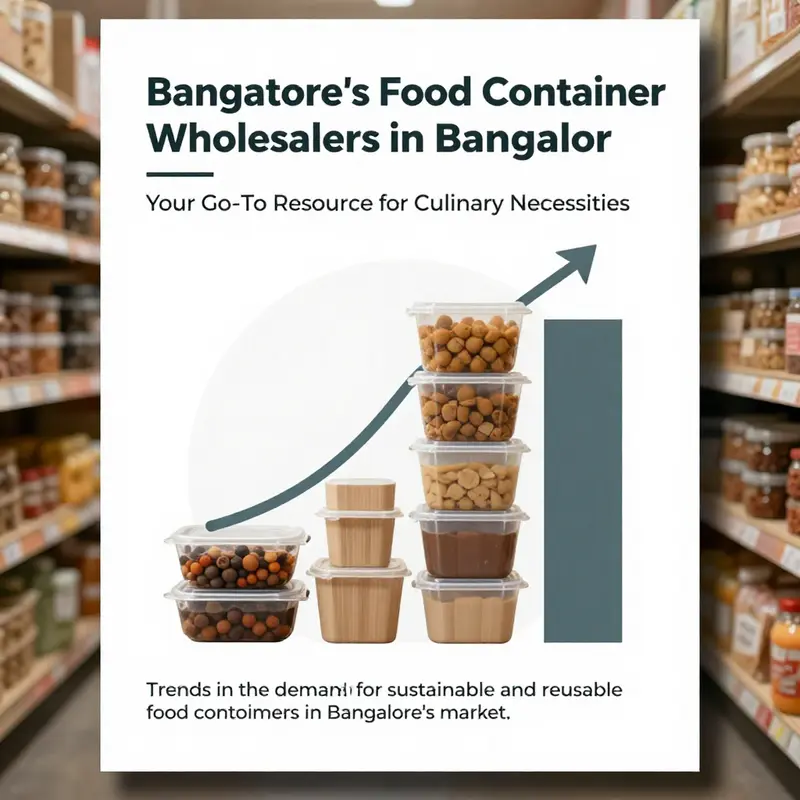
Bangalore’s wholesale ecosystem for food containers sits at a telling crossroads where practicality, design, and responsibility converge. The city’s wholesalers are not merely moving boxes; they are shaping how kitchens, cafes, and retail spaces express efficiency and curb waste. In recent cycles, the market has shifted from a focus on basic durability to a broader conversation about premium materials, modular design, and intelligent features that align with both professional kitchens and eco-conscious consumer cultures. This transformation is not incidental. It reflects a layered set of pressures and opportunities—from the robust demand for bulk procurement and scalable MOQs to the rising expectations for certifications that guarantee safety, repeatability, and environmental accountability. For buyers, that means a more nuanced selection process, a greater emphasis on supplier credibility, and a willingness to invest in containers that perform across the life cycle of a busy operation rather than merely meeting one-off storage needs. The result is a market that feels dynamic, capital-intensive, and unusually forward-looking for a segment traditionally anchored in cost and availability alone.
At the heart of the Bangalore shift is a clear move toward sustainability coupled with premium functionality. Consumers and operators alike are gravitating toward materials whose life cycle favors reuse and minimal environmental impact. Bamboo and recycled glass, alongside high-grade stainless steel, are becoming common references in supplier catalogs and showroom displays. These choices are not merely about surface aesthetics; they are tied to practical benefits—longer shelf life for dry goods, resistance to staining and odor retention, and safer, longer-lasting seals that withstand daily wear in a bustling kitchen. Glass and steel offer transparency and durability that plastic often cannot, while bamboo introduces a renewable, lightweight option that still meets the demands of commercial use. This triad signals a broader reevaluation of what constitutes value in bulk packaging: durability, recyclability, and the ability to steward resources without compromising on speed of service or the visual identity of a brand.
Alongside material choices, modular and multi-functional storage solutions have become central to wholesale conversations in the city. The market now shows a strong preference for airtight, stackable containers crafted from borosilicate glass or food-grade stainless steel of non-reactive grades. These designs satisfy two core needs that dominate modern kitchens: space optimization and culinary workflow efficiency. Dry goods such as tea, spices, coffee beans, and even salt are stored in containers that reduce spoilage while offering easy visibility and quick access. In a fast-paced service environment, stackability translates into cleaner lines of storage in back-of-house and front-of-house displays, allowing operators to maintain a curated, restaurant-grade aesthetic without sacrificing practicality. The rise of these containers mirrors a broader trend toward kitchen architecture that blends form with function, turning storage into a design feature rather than a utilitarian afterthought.
Wholesalers have also embraced customization as a strategic differentiator. In Bangalore’s competitive landscape, bulk buyers—from hotel chains and bakeries to boutique cafes and gourmet retailers—seek branding consistency as a way to elevate consumer experience. Private labeling, bespoke shapes, and branded inserts can be coordinated at scale, turning containers into canvases for a brand’s identity. This is more than decorative labeling; it is a scalable approach to marketing and customer recall, especially for small brands entering crowded markets. The ability to tailor packaging—whether through color accents, lid designs, or included measuring spoons—helps retailers extend their in-store storytelling and remind customers of quality with every transfer from shelf to table. For wholesalers, the payoff is not only in higher-margin orders but in longer-term partnerships where continuous collaboration replaces episodic transactions.
Smart features, once the preserve of premium lines, are gradually becoming more standard in Bangalore’s wholesale catalogs. Vacuum sealing and rudimentary temperature-control capabilities are no longer exclusive to high-end offerings; they are increasingly appearing as value-adds in the upper tiers of bulk packaging. Early adopters—catering outfits, cross-regional chains, and foodie pop-ups—are experimenting with these features to sustain freshness for delicate ingredients and to extend shelf life in transport and display. While such innovations remain niche within the broader market, their adoption signals an industry-wide benchmark shift. It is easy to imagine a near future where smart containers integrate with inventory management systems, sending alerts when seals weaken or when temperature thresholds are breached. Even in the absence of full digital ecosystems, the presence of these features communicates a commitment to quality, consistency, and data-informed operations that reduce waste and improve cost control.
From a market-entry perspective, this convergence of premium materials, modular design, and smart features raises meaningful considerations for buyers and wholesalers alike. Certifications become more than a box-ticking exercise; they are a practical necessity for sustaining supply relationships in a city where food safety and compliance are non-negotiable. Buyers now expect visible attestations of food-grade status, cleanability, and long-term performance under typical Bangalore conditions—humid climates, crowded storage rooms, and high-frequency use. For wholesalers, maintaining a credible range means curating suppliers who can consistently meet MOQs without compromising quality, and who can provide transparent documentation across batches. The emphasis on trust and traceability helps stabilize pricing in a market where demand from a diverse ecosystem of food service players can outpace supply. In this context, aggressive pricing must be balanced with reliability, post-purchase support, and the capacity to scale as a customer’s footprint grows.
The Bangalore narrative also reflects broader regional dynamics in India’s packaging landscape. While local preferences favor practicality and ease of use, there is a parallel push toward sustainability that aligns with national waste-reduction goals and evolving regulatory expectations. The city’s wholesalers are synchronizing with this policy environment by expanding their repertoires of eco-friendly materials and offering more sustainable end-of-life solutions. The result is a packaging ecosystem that not only serves immediate operational needs but also contributes to longer-term environmental objectives. For buyers, this translates into a more sophisticated procurement approach: evaluating supplier sustainability credentials, investigating life-cycle impacts, and factoring in the total cost of ownership rather than just the upfront price. In such a framework, containers become strategic assets that support brand integrity, reduce waste, and improve overall operational efficiency.
For readers seeking a broader market context, the latest analyses of the Indian food and beverage packaging sector underscore how Bangalore fits into a national expansion pattern. The January 2026 market insights emphasize growth in sustainable packaging, premiumization, and the integration of higher-value features across the supply chain. These macro trends reinforce what Bangalore wholesalers are already delivering on the ground: products that combine robustness with a design-forward mindset, and services that align with the needs of modern food brands seeking to scale responsibly. This alignment between local practice and national momentum helps explain why the city has become a focal point for buyers who insist on quality, consistency, and a forward-looking approach to packaging. External resource: https://www.marketsandmarkets.com/Market-Reports/india-food-and-beverage-packaging-market-4073.html
In sum, Bangalore’s food container wholesale sector is evolving from a focus on price and availability to a more nuanced discipline that balances sustainability, aesthetics, and functionality. The demand for modular, multi-functional storage paired with customizable branding signals a marketplace that views packaging as an extension of brand story and kitchen efficiency. The gradual introduction of smart features marks a transitional phase toward more data-informed operations, even as traditional strengths—reliability, clear certifications, and scalable MOQs—remain foundational. Buyers who navigate this landscape with an eye for supplier credibility, environmental responsibility, and total value will find not only more resilient supply chains but also opportunities to craft distinctive experiences for their customers. The trajectory suggested by Bangalore’s wholesalers, supported by broader industry analyses, points to a future where bulk packaging is less about bulk cost and more about bulk confidence, bulk quality, and bulk humility toward the environment.
Certified to Protect Taste: Quality Assurance and Standards Guiding Bangalore’s Food Container Wholesale Market
In Bangalore, the wholesale landscape for food containers operates at the intersection of reliability, safety, and speed. It is a market where every pallet of stainless steel, glass, and plastic must carry not just durability but a quiet assurance that it will perform as expected when it touches food, shelf life, and the crucial moment of service. The chapter that follows treats supplier certifications and quality assurance as the wakeful guardians of this ecosystem. They are not merely badges on a wall; they are the operating choreography that keeps cloud kitchens, quick-service concepts, and fast-moving consumer goods brands aligned with safety, compliance, and consumer trust. When a buyer navigates this space, certification and QA become the first test of a supplier’s credibility and, ultimately, a backbone for brand protection in a crowded and competitive market.
For any business procuring containers in bulk, the value of robust certifications begins with the basic premise that packaging and containers are in intimate contact with food. The materials—stainless steel that resists corrosion, glass that remains inert, or plastics that must not leach chemicals—pose potential risks if not managed through a rigorous system. In Bangalore’s dynamic market, where hundreds of wholesalers vie for attention, certifications serve as a compact, widely recognized shorthand for a supplier’s commitment to safety across the supply chain. ISO 22000, FSSAI registration, and BRCGS certification repeatedly emerge as the most credible signals. Each plays a distinct role in building confidence with buyers, regulators, and downstream partners who must assure food safety from source to service.
ISO 22000 is, at its core, a system-level guarantee. It invites suppliers to map every step of the food-contact journey—from the raw material stage to final packaging and distribution—and to implement controls that minimize contamination risks. In practice, this means documented procedures for hygienic handling, clean environments, and traceable processes that can withstand scrutiny during supplier audits or customer inquiries. Such a framework is especially meaningful in a city where food service volumes surge during peak hours and where a single batch issue can ripple across multiple restaurants and delivery networks. In Bangalore’s wholesale environment, ISO 22000 signals that a supplier is not merely producing containers but managing a secure, food-safe system that reduces variability and supports consistent performance.
FSSAI registration, the regulatory cornerstone in India, functions as a practical gatekeeper. While ISO 22000 speaks to the system, FSSAI confirms that the business itself operates within the legal fabric of food safety norms. For wholesalers, FSSAI registration is a non-negotiable entry ticket; customers in cloud kitchens and fast-casual concepts often require proof of compliance before any substantial order is finalized. The presence of FSSAI documentation also accelerates due diligence, helping procurement teams avoid delays and penalties that can arise from noncompliant packaging. In Bangalore, this registration is particularly salient given the city’s blend of traditional eateries, modern delivery kitchens, and a growing segment of specialty food vendors that demand rigorous standards without exception.
Beyond ISO 22000 and FSSAI, BRCGS certification adds an external validation layer grounded in global packaging safety standards. While the specific expectations of retailers may vary, BRCGS denotes that packaging has been produced, packed, and handled under a framework designed to minimize risk and enhance traceability. For wholesalers who distribute to diverse markets or who aspire to export, BRCGS can function as a differentiator, signaling that the containers meet internationally recognized safety and quality expectations that extend beyond local regulatory requirements. This is meaningful in a market where buyers increasingly seek assurances that extend across borders, particularly as Bangalore continues to attract a broader mix of restaurateurs and exporters.
In parallel with these certifications, a growing emphasis on environmentally responsible packaging has brought biodegradable and compostable standards into sharper focus. Standards such as ASTM D6400 and EN 13432 provide objective criteria for the performance of compostable materials and the environmental claims associated with them. In practice, suppliers pursuing these standards often undertake additional testing to demonstrate that their packaging materials break down under industrial composting conditions and do not leave harmful residues. For buyers who prioritize sustainability, these certifications offer a way to align procurement with broader corporate and regulatory expectations while maintaining confidence in safety and performance. The Bangalore market, with its vibrant startup scene and elevated consumer awareness, increasingly views such green credentials as a key component of competitive differentiation rather than a peripheral add-on.
Quality assurance practices then translate certification into daily operations. The most robust suppliers integrate in-process inspections as a constant, real-time feature of production. This means checks at critical points to verify dimensions, surface integrity, and closure reliability, ensuring that a container’s fit, seal, and finish perform to spec. Third-party lab testing stands as a critical safeguard, particularly for plastic containers where chemical migration is a salient concern. Independent laboratories provide objective migration test results, confirming that any packaging contacting food remains within safe limits for migration of plasticizers, dyes, and other additives. Such testing is not merely a compliance exercise; it is a practical safeguard against product failures that could affect flavor, safety, or consumer perception.
To complement physical testing, many suppliers deploy digital tracking systems that enable batch-level traceability. When a container batch is linked to raw materials, production dates, and distribution routes, it becomes feasible to isolate and recall a specific lot if a problem arises. For Bangalore’s fast-moving market, where orders can move quickly from supplier to multiple kitchens in a single day, batch traceability reduces risk and accelerates corrective action. It also underpins long-term reliability by enabling continuous improvement—data-driven feedback loops that identify recurring defects, supplier performance gaps, and opportunities to refine specifications.
The industry context in Bangalore reinforces why certifications and QA are not abstract ideals but practical necessities. Cloud kitchens, which must consistently deliver safe, uniform packaging for high-volume orders, rely on suppliers who can demonstrate reliability through documented compliance. FMCG brands that place packaging into the hands of consumers demand confidence that containers will not fail under cold or hot holding conditions, will not impart off-flavors, and will not compromise food safety during transit. In this landscape, a structured evaluation framework for suppliers—assessing not only the presence of certifications but their validity, renewal status, and real-world application—becomes essential. It helps buyers separate true partners from the plethora of mid-tier suppliers who may present impressive certificates but lag in practice.
From recent sourcing insights, the pattern is clear. Suppliers with verified compliance records tend to deliver with lower defect rates, fewer enforcement-related disruptions, and faster issue resolution when problems do occur. The reliability of such suppliers translates into steadier supply, fewer production line stoppages for customers, and stronger reputational protection for every kitchen and brand they serve. This is especially valuable in a city that continually sees new entrants seeking scale. For procurement teams, the takeaway is blunt: certifications and QA processes are not luxury features of a supplier profile—they are indicators of organizational capability, risk management, and a long-term partnership mindset.
For readers seeking practical steps, consider how to verify and leverage these signals. Buyers should request current certification documents and confirm their renewal dates. It is equally important to review how a supplier applies QA on the floor: where inspections happen, how nonconformances are documented, and what corrective actions are standard practice. In addition, requesting sample batches for chemical migration testing or compatibility assessments with existing food products can provide a tangible sense of how a container will perform under real-world conditions. A structured dialog about traceability processes is equally valuable, since visibility into batch history directly supports recall readiness and quality control across multiple customer sites.
Within this framework, sustainable packaging opportunities can still align with rigorous safety standards. If choosing to pursue biodegradable or compostable options, buyers should ask for certifications that demonstrate credible performance under defined conditions and clear environmental claims backed by recognized standards. The integration of sustainability with safety is not inherently conflicting; it is about selecting materials and processes that satisfy both safety criteria and environmental commitments. As Bangalore’s market continues to evolve, the demand for packaging solutions that meet ISO 22000, FSSAI, and BRCGS expectations while also delivering verifiable environmental benefits will likely intensify. In this setting, a well-vetted supplier landscape becomes a strategic asset for any business aiming to scale responsibly.
If you are exploring packaging options with a sustainability lens, you may come across specific product families worth examining for compliance and performance. For instance, the kraft paper bowl segment has gained traction for take-out concepts that want a compostable or recyclable footprint without compromising seal quality or usability. A representative collection of such options can be explored through the following page, which highlights a range of disposable kraft paper bowls suitable for hot and cold offerings. disposable-700ml-kraft-paper-bowl-take-out-octagonal-rectangle-paper-bowl. This example underscores how packaging choices can align with certified safety standards while supporting a sustainable service model.
For a broader regulatory reference and to confirm the formal requirements governing food packaging in India, the official site of the Food Safety and Standards Authority of India (FSSAI) provides essential guidance and updates. This authority’s framework informs how suppliers design, manufacture, and certify their containers so that they reliably support safe food handling from production to plate. Regulators continue to emphasize traceability, risk-based audits, and continuous improvement, aligning with the realities of Bangalore’s fast-paced wholesale environment. Further regulatory details can be found at the FSSAI’s official portal: https://fssai.gov.in
Storing the City: The Economic Pulse of Bangalore’s Food Container Wholesalers and the Shape of Urban Food Services
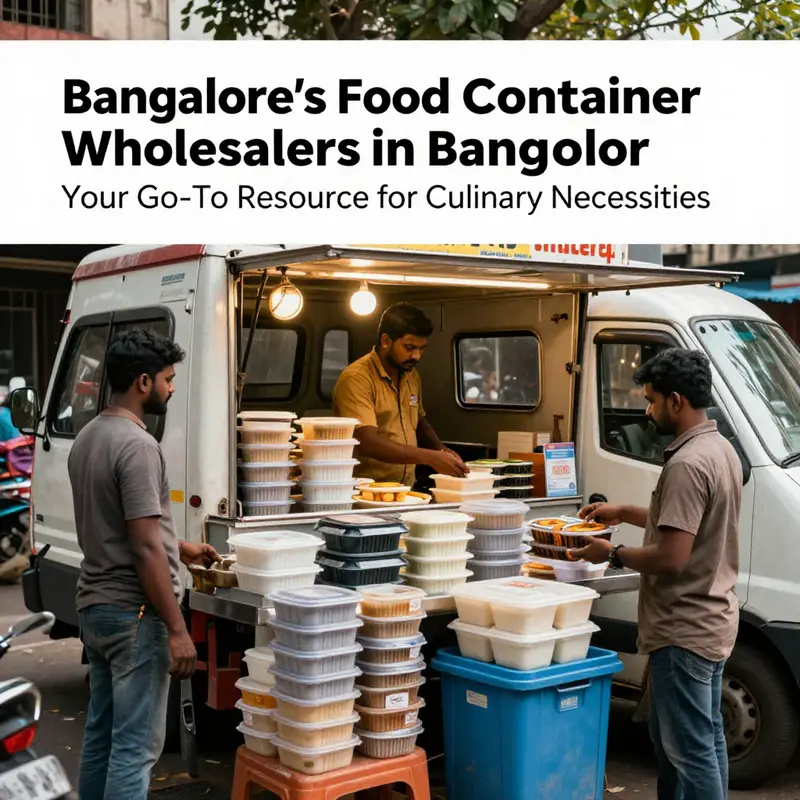
Bangalore’s food service landscape is a sprawling tapestry of diners, street stalls, cafes, caterers, and the ever-expanding ecosystem of delivery platforms. In this milieu, the packaging layer—food containers, cups, trays, and lids—serves not just as a vessel but as a critical enabler of speed, hygiene, and brand experience. The wholesalers who move these products into the city are less visible than the chefs or the riders, yet they underpin the daily throughput of meals and the reliability that customers expect when ordering in or grabbing a quick bite from a street-side vendor. Their role extends from a simple stock-keeping function to a broad economic service: forecasting demand across sectors, aligning with seasonal and festival currents, and translating global packaging concepts into formats that work for local kitchens and households.
The diversity of containers seen in Bangalore reflects the variety of food service needs. Stainless steel, glass, and plastic varieties each occupy a niche, supported by wholesalers who tailor assortments to the scale of operators. For a small takeaway counter, a handful of multipurpose containers and lids can determine how fast a line forms and how cleanly meals travel across the city. For large restaurants and caterers, bulk packaging and standardized MOQs help manage costs, ensure consistent quality, and simplify procurement with traceable supplier certifications. The market is not a monolith; it is a mosaic of materials, sizes, durability ratings, and compliance signals. The presence of credible suppliers with transparent MOQs and clear certifications helps buyers navigate quality expectations in a market that has become increasingly transparent thanks to digital marketplaces and reference checks.
The economic interpretation of this ecosystem becomes clearer when one considers the jobs tucked into it. Wholesalers staff warehouses, drive logistics schedules, and coordinate with manufacturers who convert raw inputs into finished packaging. While many hands participate in stocking, picking, packing, and shipping, a larger portion of employment takes shape in the downstream demand chain: account managers who help restaurants place recurring orders, quality inspectors who verify material integrity, and sales teams who connect local buyers with global supply networks. The result is a multiplier effect that extends beyond the initial transaction, stimulating demand for transport services, storage facilities, and maintenance operations that keep machines and molds in working condition. In a city as dynamic as Bangalore, where cloud kitchens coexist with traditional eateries and rapid delivery has become a baseline expectation, the packaging layer also indirectly supports innovation by allowing chefs and operators to experiment with new serving formats, portion sizes, and sustainability commitments without risking undue waste or cost spikes.
Sustainability emerges as a central theme in the evolving profile of container wholesalers. The data from recent market reviews signals a growing appetite for reusable and recyclable options, with buyers increasingly factoring end-of-life considerations into their procurement choices. This shift dovetails with the city’s broader environmental objectives and with consumer preferences that favor packaging that can be repurposed, sterilized, or composted where feasible. Wholesalers respond by expanding ranges that include durable, heat-tolerant plastics, dishwasher-friendly stainless steel alternatives, and glass options that balance fragility with the premium presentation of certain dishes. The push toward sustainable packaging also intersects with regional supply networks; many materials are sourced from nearby suppliers, reducing transport emissions while supporting domestic manufacturing capacity. The consequence is a packaging system that aligns economic activity with ecological responsibility, albeit with initial cost implications as producers retool lines to accommodate stricter standards.
Regulatory developments play a decisive role in shaping the trajectory of this sector. The 2026 Technical Barriers to Trade guidelines set clear expectations for the material composition and performance of single-use food containers. They mandate the use of food-grade virgin materials, explicitly exclude certain additives that have raised health concerns, and establish strict thresholds for microbial limits and chemical migration. Practically, these rules translate into higher compliance costs, bigger energy bills, and longer development cycles for new products. Smaller players may struggle to finance the upgrade, while larger firms, with established R&D and quality assurance frameworks, can absorb the costs and accelerate the rollout of compliant lines. In Bangalore, where businesses compete on price and speed as much as on product attributes, the response to these standards will influence market concentration and the pace at which innovative packaging gains scale.
The legal framework also nudges the sector toward more disciplined waste management and resource efficiency. The emphasis on durability testing, heat resistance, and hygienic performance supports a narrative of packaging built to travel, rather than one designed for a single use. This is compatible with circular economy concepts that are beginning to orient both policy and corporate strategy around reducing dependency on disposable solutions. The governance context, reinforced by official notifications like the Ministry of Commerce and Industry’s guidelines, signals a longer horizon in which investments in compliant production become a competitive prerequisite rather than a niche advantage. In Bangalore, that horizon translates into a consolidation of suppliers who can guarantee consistent quality at scale, paired with a reframing of cost structures that passes through producers and distributors toward consumers and institutions.
Yet the market remains deeply local in its sensitivities. Bangalore’s buyers—whether a mid-sized hotel, a university cafeteria, a hospital canteen, or a mobile food vendor—are influenced by a mix of price, availability, and performance. They want packaging that protects food during the rough conditions of last-mile delivery, that preserves taste and texture, and that upholds cleanliness standards when the containers are opened in busy service areas. They also increasingly seek formats that reflect regional preferences and branding opportunities. For instance, a food service operator might value a take-away solution that blends durability with the ability to present a brand story at the point of sale. The idea of customization, including branded containers, becomes a strategic lever for differentiation in a crowded market. To illustrate a practical example of this trend, one can explore how customized packaging options are presented in accessible suppliers’ catalogues, such as a custom-logo kraft paper takeaway cup with lid that demonstrates how branding can travel from kitchen to consumer with minimal fuss. This approach is not merely aesthetic; it enhances repeat purchase intent and reduces the risk of misbranding during transit. See the linked example for a sense of how branding on packaging can look in scalable wholesale formats and how such offerings integrate with existing procurement channels.
As Bangalore evolves into a hub of digital food delivery and cloud kitchens, the packaging layer gains additional strategic weight. Delivery-driven demand emphasizes not only the need for leak-proof, tamper-evident containers but also for packaging that aligns with fast, efficient handoffs at customer endpoints. In such a system, wholesalers act as both risk mitigators and opportunity enablers: they provide the scientific rigor behind material choices and the logistical flexibility that keeps supply under control when demand swings. The interplay between packaging choices and delivery performance has tangible business implications, influencing delivery times, customer satisfaction, and the economics of scale for kitchens that rely on bulk procurement. The sourcing logic, often blended with regional manufacturing ecosystems, further ensures that costs stay competitive even as regulatory and sustainability pressures mount.
At the same time, the market’s trajectory compels stakeholders to think beyond immediate transactional gains. The broader economic narrative suggests that packaging should be part of a longer-term strategy toward responsible consumption. This includes extending the life of containers through reuse programs, experimenting with returnable systems where feasible, and encouraging manufacturers to pursue materials that reduce environmental footprints without compromising safety. The alignment of policy incentives, business models, and consumer expectations will determine whether Bangalore’s packaging industry remains a cost center or evolves into a platform for innovation that supports a more resilient urban food system. In this sense, the city’s wholesalers do more than move product; they help shape how Bangalore feeds itself, how it organizes waste, and how it imagines a future where packaging supports nourishment with minimal ecological cost.
For readers seeking additional context on how modern packaging standards influence the supply chain, the following external resource provides a global perspective on the evolving regulatory landscape and trade considerations: https://tbt.wto.org/cst/
To glimpse a practical facet of branding through packaging, consider how a customized kraft paper takeaway cup with lid can align with a business’s visual identity in scalable wholesale formats. This example illustrates how branding can travel from kitchen to consumer with ease and durability, reinforcing the idea that packaging design is a strategic component of the customer experience. See the linked example for more on how such formats can be integrated into procurement channels and supply networks.
Final thoughts
The food container wholesale market in Bangalore presents a rich landscape for businesses engaged in food service. By understanding the available types of containers, current market trends, the importance of supplier certifications, and the economic impact of this sector, businesses can better equip themselves to make informed decisions. Whether you’re a beverage chain or a catering service, collaborating with reliable wholesalers can significantly enhance your operational efficiency while meeting the evolving demands of your customers. Embrace the insights shared, and position your business for success in this competitive yet vibrant market.