
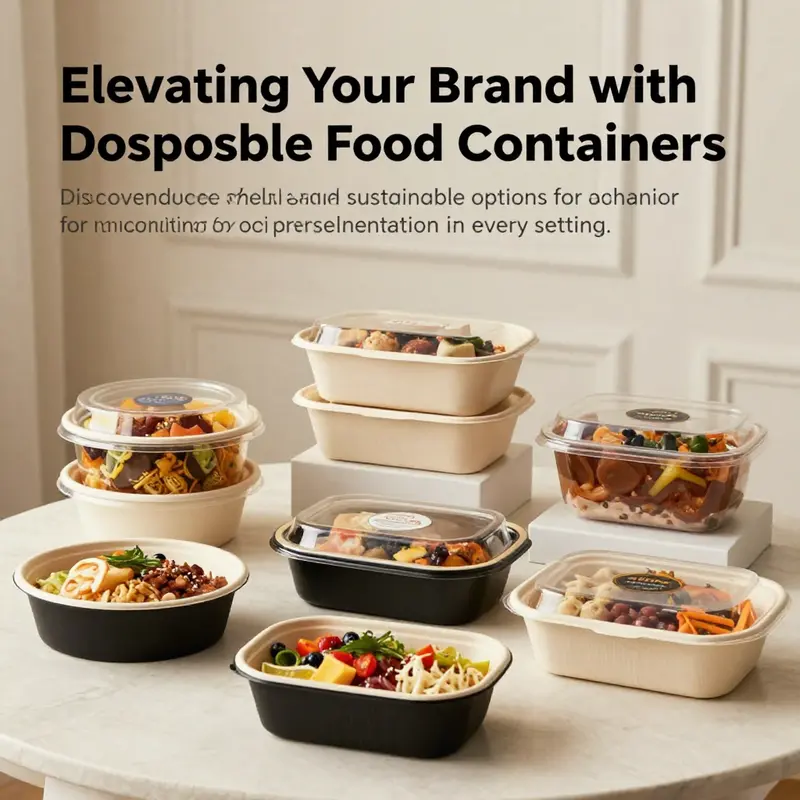
In an age where brand identity is intricately woven into every customer interaction, the aesthetic appeal of your food service packaging speaks volumes. Fancy disposable food containers are not just a practical necessity; they are a statement of your brand’s commitment to quality and sustainability. This article explores the myriad of benefits these containers provide, particularly for businesses in the vibrant realms of bubble tea shops, restaurants, food trucks, catering services, and event planning. From emphasizing sustainable design to examining their economic viability, delving into manufacturing processes, and analyzing consumer trends, each chapter reveals essential insights to elevate your service and align with contemporary market demands.
Green Luxury on the Go: The Convergence of Style and Sustainability in Fancy Disposable Food Containers
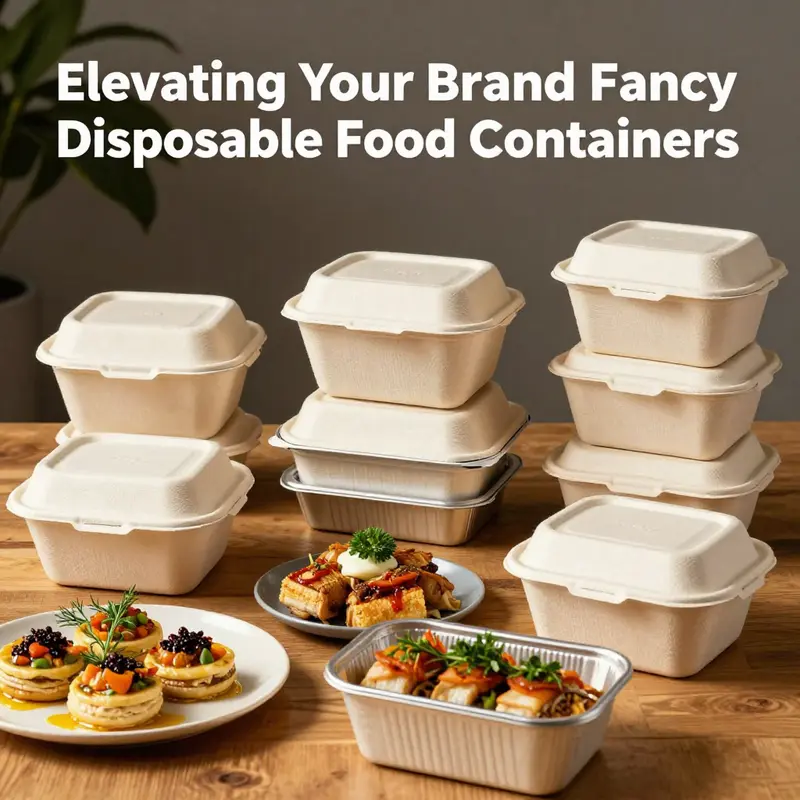
The modern dining experience often travels beyond the plate and into the shape that holds it. In this chapter, we explore how sustainability has ceased to be a mere afterthought and has become a defining attribute of what people expect from fancy disposable food containers. The pairing of elegance with responsibility is no longer a compromise but a competitive advantage. A guest’s perception of quality can be shaped as much by the surface finish and the way a container feels in the hand as by the food inside. In response, manufacturers are crafting solutions that balance sensory appeal with ecological clarity. They are choosing materials that look premium, perform reliably, and leave a smaller footprint after use. This deliberate alignment of aesthetics and ethics is reshaping what “luxury takeout” and “event-grade packaging” can mean in a world increasingly attuned to environmental impact. The result is a spectrum of options that promise to hold up under heat, retain a crisp appearance, and still break down as part of a compostable cycle, without forcing operators to sacrifice branding or guest experience.
The most visible shift is in the materials themselves. Biodegradable and compostable options now extend beyond simple alternatives to plastic. Plant-based plastics, such as those derived from cornstarch, and recycled papers are delivering a premium look and feel while supporting responsible disposal. These materials are engineered to resist grease and moisture long enough to maintain their shape during service and transport. They also take printing well, allowing for rich logos, patterns, and color work that were once the exclusive domain of plastics or aluminum. Importantly, the best of these materials are not just about outward appearance; they are formulated to withstand practical use. They can be microwave-safe for brief reheating and oven-safe for short warming, catering to the needs of busy kitchens and diverse menus. In other words, the container can perform as well as it presents itself, a factor that directly influences guest satisfaction and repeat business.
In addition to material science, the design language of fancy disposable containers has matured. Minimalism has given way to refined textures and strategic visual elements that signal quality without compromising compostability. Surfaces are engineered for smoother textures to enhance printing fidelity, creating a premium impression that rivals traditional luxury packaging. This convergence of tactile elegance and sustainable chemistry enables brands to tell a story with every curve and contour. Even the color palettes and finishes are carefully chosen to align with eco-conscious values—earthy tones, soft matte sheens, and restrained gloss levels all communicate a thoughtful approach to consumption. The goal is not merely to look good; it is to feel appropriate for the occasion, whether it is an upscale takeout, a wedding buffet, or a corporate catering event where the branding needs to be visible yet reverent toward the environment.
The role of branding in this space cannot be overstated. A well-branded container extends the event’s narrative and reinforces a supplier’s or venue’s commitment to sustainability. The best designs integrate the brand story with the container’s ecological credentials, often through subtle, careful printing and a restrained use of inks. Minimal ink usage is not merely a cost-saving measure; it is a deliberate design principle that reduces environmental impact while preserving legibility and visual impact. When ink is kept to a minimum, the container’s natural material beauty—such as the grain of recycled paper or the fiber texture of bagasse—becomes part of the brand language. In some cases, customizing the container can involve more than a logo; it can include the choice of lid, the color of the interior, or the shape of the bowl or box itself. Each element offers branding opportunities while maintaining a commitment to compostability and waste reduction. For an example of an eco-friendly, printed-logo option, see the disposable-eco-friendly-printed-logo-single-wall-paper-cup page.
As regulations tighten around single-use plastics, the market for stylish yet sustainable containers is stepping up to meet new mandates and consumer expectations. The rise of green procurement policies in hospitality, the surge in consumer demand for transparent supply chains, and the growing importance of corporate social responsibility have all accelerated investment in these products. Businesses can showcase their values through packaging choices that look and feel premium, without falling into the trap of greenwashing. The conversation about sustainability increasingly includes the entire lifecycle of the container—from raw material sourcing and manufacturing processes to end-of-life disposal and recycling options. When brands choose compostable fiber or plant-based plastics, they are signaling a long-term commitment to responsible waste management. In practice, this means considering not only the product but also the lid, the sleeve, and even the packaging used to transport the container. A streamlined, recyclable system that minimizes the number of components can enhance overall sustainability while still delivering a refined guest experience.
The practical benefits of these choices extend beyond aesthetics. For food service operators, the ability to reuse or repurpose packaging concepts across multiple service styles can reduce inventory complexity and streamline procurement. A container that handles both hot and cold foods without deforming opens possibilities for a broader menu range, reducing the need for two separate packaging families. In addition, the durability and heat tolerance of premium, eco-friendly materials mean that a single container can transition from a hot buffet to a cold display, or from a formal event to a quiet, take-home service, without compromising performance. This versatility matters because it supports seasonal menus, last-minute shifts in event plans, and the logistic realities of catering at scale. Operators report that these containers are not only more revered for their appearance but are also easier to manage in high-volume contexts, where consistency and reliability are essential for a successful service.
From a lifecycle perspective, the shift toward compostable and recycled materials also drives improvements in how containers are designed and packaged for disposal. Materials designed to break down under industrial composting conditions align with broader waste management goals and regulations, while those based on recycled fibers can close the loop by returning to new products in downstream industries. Brands can further strengthen their environmental narratives by simplifying packaging typography and reducing the total ink footprint, a practice that resonates with increasingly discerning customers who value honesty and simplicity. The marketing payoff is not just in the aesthetics but in the clarity of environmental impact, which is easier for guests to interpret when packaging itself is designed for readability and recyclability. The structural elegance of a container thus becomes a practical statement of responsibility—an embodiment of how high-design and high-purpose can travel together.
The future of fancy disposable containers is likely to be defined by continued innovation at the intersection of chemistry, design, and sustainability policy. Material scientists are exploring more heat-tolerant biopolymers and reinforced fibers that keep their shape under pressure, while designers experiment with modular components that can be separated for recycling without compromising the visual appeal. Advances in printing technology are enabling more intricate patterns and textures with less ink, enhancing the premium look while reducing resource use. In a marketplace where consumers are increasingly savvy about the trade-offs between convenience, aesthetics, and environmental impact, the ability to deliver a cohesive story through packaging will become a key differentiator. Companies that successfully align product performance with sustainability goals will win loyalty not only from diners but also from event planners, chefs, and brands seeking to demonstrate leadership in responsible luxury. The narrative that emerges is one of elegance without excess, a refined approach to packaging that respects the planet while elevating the dining experience. External resource: https://www.greenbiz.com/article/eco-friendly-food-packaging-trends-2024
Pricing, Prestige, and Practicality: The Economics Behind Fancy Disposable Containers in Premium Catering
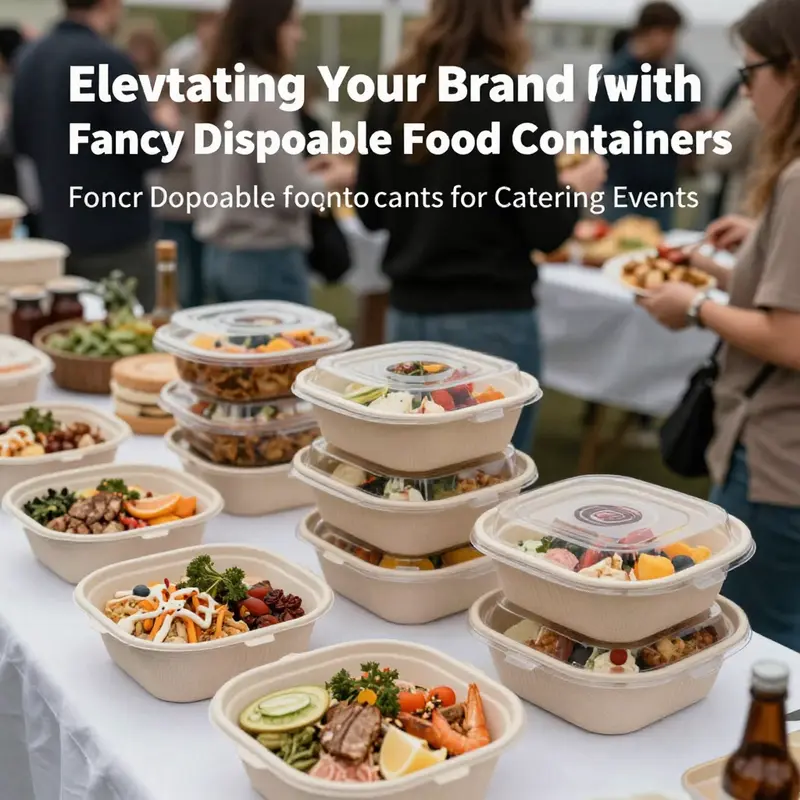
In the world of premium catering, presentation is more than a surface detail; it is a visible extension of a brand’s promise. Fancy disposable containers sit at the intersection of aesthetics, functionality, and sustainability, and their economic viability hinges on how well they balance those elements with operational realities. For events that hinge on first impressions—weddings, anniversary dinners, corporate galas, and intimate chef’s tastings—the container becomes part of the dining experience. The challenge for operators is to translate that experiential value into measurable financial outcomes. The economics are not purely about unit cost; they are a careful calculus that weighs price, perceived value, risk reduction, and logistics against the realities of storage, transport, and waste streams. When this balance tilts toward a compelling value proposition, fancy disposables move from novelty to necessity within a well-executed event program.
The cost picture for premium containers begins with the per-unit price, which tends to run higher than standard disposables. The price range commonly cited for bulk purchases in the premium segment falls in the neighborhood of roughly $0.12 to $0.20 per unit. That range reflects a package of features that matter on the day: multiple compartments to keep sauces separate, modular dividers to preserve layout during transit, and a construction that holds its shape under heat and movement. For caterers who routinely manage delicate presentations, the added upfront cost can be justified by what the packaging does for the dining experience. The cost is not only about keeping food intact; it is about enabling a brand story—one of care, precision, and hospitality—that guests remember long after the last bite.
The economics, however, do not exist in a vacuum. They must align with a caterer’s target market and the scale of an event. For affluent clients and high-profile gatherings, customers often equate price with quality and trust that a premium container signals a premium experience. In this segment, the container’s appearance and its ability to maintain presentation under travel are part of the product. The higher price point can be supported when the container helps justify a higher ticket, increases client satisfaction, and nudges repeat bookings and referrals. In practical terms, if the container reduces the need for artful re-plating on site, minimizes spill risk, and lowers the rate of last-minute substitutions due to presentation faults, the incremental cost can be offset by savings in time, labor, and guest perception.
From a procurement standpoint, suppliers in this space often emphasize the added value of design features. For instance, containers designed with multiple compartments and robust dividers help maintain a clean, organized plate sequence from service to table. They also support branding opportunities—printing surfaces that can carry logos or theme graphics without sacrificing grease and moisture resistance. The ability to print high-quality visuals on a smooth surface means the container itself becomes a marketing asset during the event and in post-event photography, social media shares, and guest recall. When a catering business can claim a consistent, premium image across multiple events, the value of the container compounds through client confidence and perceived expertise.
Operational efficiency is another critical axis in the economic equation. Premium disposables often come with enhanced durability, grease resistance, and heat tolerance that enable more predictable performance. A well-engineered container minimizes leakage, maintains temperature longer, and reduces the likelihood of deformations that would require repackaging or quick-service improvisations. In practical terms, a robust design lowers waste, reduces on-site waste disposal costs, and accelerates the handoff to guests. The reliability of the container translates into smoother service choreography, fewer disruption points, and a more confident front-of-house operation. For events that run back-to-back or during peak demand periods, even small gains in transport stability can translate into meaningful cost savings over a season.
Yet premium containers bring challenges too. Storage and shipping footprint can grow substantially when full, heavier, and bulkier packaging is required. The extra bulk means operators must reserve more warehouse space, and shipments incur higher freight costs or more frequent deliveries. Temperature management adds another layer of cost. If a venue requires insulation or temperature buffering to maintain hot or cold holdings across travel distances, the additional packaging or logistics solutions can erode margin unless the event value captures those improvements. The economic sweet spot, therefore, exists where presentation and reliability significantly elevate client value and reduce service risk without overwhelming the operation’s logistical capacity.
The value proposition often rests on a delicate trade-off: the premium container must deliver enough differentiation to justify its price while remaining compatible with the caterer’s service model. For events where the goal is to impress and retain clients, the premium container’s ability to preserve layout, color, and texture through transport is critical. In these contexts, operators may choose a tiered approach—employing high-end packaging for weddings and milestone occasions, while using more conventional, cost-efficient options for standard corporate lunches or high-volume, budget-conscious events. This tiered strategy protects margins by matching container selection to the client’s value expectations and the event’s price point, rather than applying a one-size-fits-all approach to every engagement.
Beyond the immediate event, the broader market dynamics influence economic viability. Sustainability trends, for instance, have shifted client expectations toward eco-friendly materials and responsible disposal. Compostable options, such as those made from sugarcane bagasse or bamboo composites, align with a growing preference for products that reduce environmental impact. This alignment can unlock a premium price tier with a readiness to pay for responsible packaging, especially among health-conscious and sustainability-minded clientele. The market demand for aesthetically pleasing yet functional green packaging supports the argument that premium disposables can command sustained value in the right markets. The trade-off, of course, is that eco-friendly materials can entail higher raw material costs or more complex supply chains, which must be weighed against the brand and event value they enable.
To translate these considerations into actionable decision-making, many operators rely on a simple, event-level profitability framework. Start with the incremental revenue from offering a premium presentation—how much center-value can be attributed to the container experience, and how much of that can be captured as premium pricing. Then subtract the per-unit cost and add the incremental logistics costs associated with storage, insulation, and handling. Finally, factor in reductions in waste and the potential for higher client retention and referrals. This approach helps determine whether the premium container adds net value for a given event type and client segment. When the math favors premium packaging, it becomes a strategic bet rather than a cosmetic expense.
From a design and sourcing perspective, many operators also weigh the potential for customization. The ability to tailor lids, dividers, and printing surfaces to a client’s branding can be a powerful differentiator. Customization can justify higher minimum orders and lead times, but it can also cement a long-term relationship with clients who value brand consistency across their own customer touchpoints. The decision to pursue customization should be informed by projected order volumes, the client mix, and the degree to which branding impact translates into repeat business. In such cases, the container functions as a brand ambassador, extending restaurant or event branding into the consumer’s dining experience and social media capture.
To illustrate the practical implications, consider how a caterer might integrate premium packaging within a portfolio of event offerings. For weddings and gala dinners, the container becomes part of a curated dining narrative that begins with the invitation and extends through the table setting to the final toast. The ability to maintain food integrity during transport and to present a cohesive aesthetic—colors, textures, and shapes that echo the event’s theme—contributes to guest satisfaction and word-of-mouth recommendations. In fixed-price packages, this is reflected in higher ticket values and more predictable margins, provided the containers are sourced efficiently and the logistics are managed with care. In corporate events, the value proposition shifts toward reliability and corporate branding alignment. Even if the event size is large, the premium container can help isolate and control the dining experience, reducing variability and the associated on-site pressures that often erode margins. In all cases, the container is a strategic element of the service design, not merely a packaging afterthought.
From a practical standpoint, sourcing a container that balances appearance with performance requires attention to materials, construction quality, and compatibility with the event’s menu. A sugarcane bagasse-based option, for instance, offers a premium look and good grease resistance while maintaining compostability. Such choices appeal to clients who want sustainability without sacrificing elegance. For those managing high-volume programs, options with reliable lead times and scalable customization capabilities become essential, particularly when a single event or a seasonal cycle requires dozens or hundreds of thousands of pieces. The ability to secure favorable bulk terms while keeping a watchful eye on waste streams and disposal costs is a key financial lever.
For readers seeking concrete, real-world cues on packaging options that align with premium catering goals, consider exploring markets that emphasize both display and defense in packaging design. A reference point for broader design and market applications is the concept of a high-end, modular container system that can support intricate layouts while maintaining transport integrity. Such systems illustrate how presentation, durability, and sustainability can converge to deliver measurable event value. An example of a packaging approach that captures these elements can be found in the octagonal kraft paper packaging concept, which demonstrates how form can follow function and branding can reinforce guest experience. See: disposable octagonal box kraft paper packaging.
Ultimately, the economic viability of fancy disposable containers rests on a disciplined alignment of product features, client value, and operational discipline. When a caterer can articulate how premium packaging elevates the guest experience, reduces service risk, and supports brand storytelling—while maintaining efficient storage, transport, and disposal costs—the container becomes a rational investment rather than a decorative expense. This cohesion between design and deliverables is what allows premium disposables to thrive in the competitive landscape of modern catering, where the bar for excellence continues to rise and expectations for seamless, sustainable service continue to grow.
External resource for further reading on market-scale packaging options and supplier considerations: https://www.alibaba.com/product-detail/Disposable-Catering-Food-Containers-999_1600483477238.html
Material Alchemy: The Craft Behind Fancy Disposable Food Containers
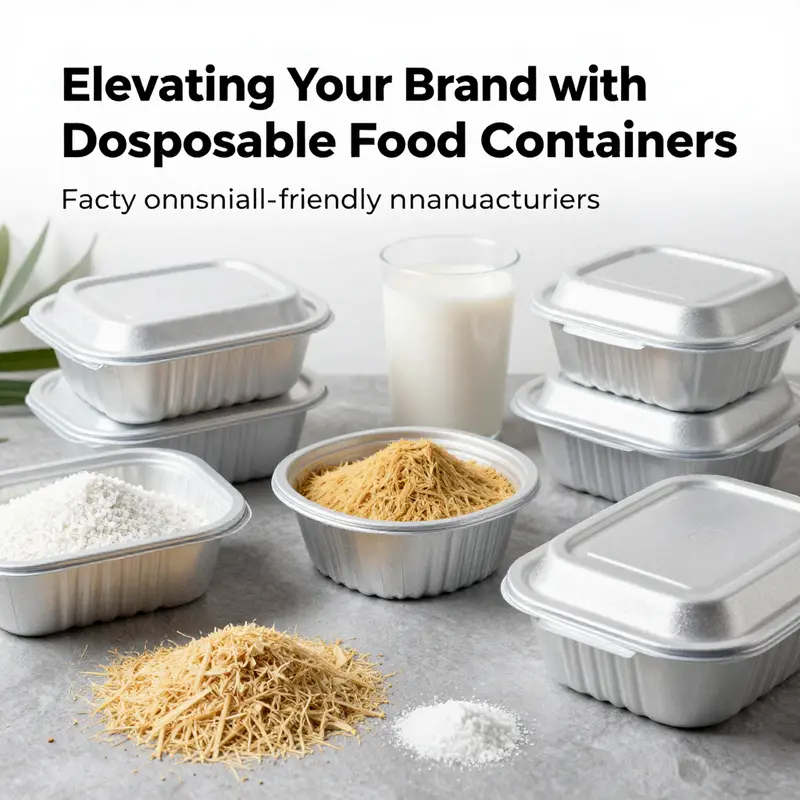
Every premium takeout experience begins long before the first bite. The box is not merely a container; it is the opening act of the dining story, the first impression of care, and a silent ambassador for the brand. In the realm of fancy disposable food containers, aesthetics and function must be woven together with the same precision as the recipes they carry. The materials chosen and the manufacturing methods used are not footnotes; they shape how hot a dish can travel without warping, how grease beads away from the surface, and how a surface can carry vivid branding without cracking or fading. When a container looks and feels upscale, it elevates the entire dining moment, whether it rests on a wedding banquet table, a corporate lunch, or a gourmet meal kit delivered to a curious home cook. But that elevated feel does not come from one magic trick. It arises from a thoughtful sequence of material decisions and production steps, each with its own trade-offs between stiffness, moisture resistance, heat tolerance, and surface finish. Understanding this sequence helps decision-makers select containers that align with both culinary needs and sustainability goals, while also delivering a memorable unboxing experience.
At the core of many premium options lies a material family that blends rigidity with a refined tactility. Rigid paperboard, often paired with a carefully calibrated food-safe coating, provides a durable body that still feels substantial in hand. The rigidity helps protect delicate contents during transit, reduces the likelihood of denting during stacking, and supports clean, crisp edges that render high-quality printwork with impressive clarity. When a brand’s identity is meant to shine through, the surface must take ink with fidelity, reproduce soft gradients, and resist wear from moisture and grease. A well-executed coating not only protects the contents but also enhances the perceived value of the packaging, making the container feel more like a premium piece of tableware than a disposable afterthought.
Another common path for premium presentation employs folded cardboard. This approach enables more intricate silhouettes and structural features, such as tight corners, rounded edges, or dramatic angles that catch light in a way that complements the food it holds. The folding process, guided by precision creasing and high-tidelity gluing, yields a container that sits flat when closed and pops into shape with a satisfying snap when opened. The visual payoff comes from the way light plays across the surface and how the internal geometry protects the contents. In some designs, luxury is reinforced by tactile details such as soft touch finishes or matte textures that invite a gentle stroke of the fingertips. These are not mere embellishments; they are deliberate cues that signal quality and care.
In pursuit of a truly upscale look, some containers incorporate layers beyond paperboard. PP or PET may be employed as structural supports or moisture barriers, while bioplastic laminates offer moisture resistance with a more sustainable footprint. The choice between plastics and bioplastics is seldom about one property alone; it is a balancing act among barrier performance, heat tolerance, and end-of-life considerations. For hot or cold foods that demand a certain degree of protection, the combination of materials is engineered to prevent leakage, resist separation, and maintain a smooth, polished exterior. Even when plastics are present as supporting members, the outer experience can still feel natural and premium, thanks to finishes that minimize shine or imitate natural textures while maintaining recyclability or compostability where possible.
Aesthetic enhancements can be subtle yet transformative. Magnetic closures, velvet linings, and custom foam inserts are not mere gimmicks; they are functional details that improve transport confidence and elevate the unfolding moment. Magnetic closures provide a secure, reusable feel for special events, while velvet linings introduce a tactile luxury that reinforces a sense of occasion. Foam inserts, when used judiciously, cradle delicate items—such as pastries, confections, or seared bites—so they arrive intact and visually striking. These features must be compatible with the base materials, not compromise barrier properties, and align with sustainability goals. The art lies in integrating such elements without creating bulk that undermines stackability or increases waste.
When the design heart is set on a truly premium appearance, printing becomes a central act of storytelling. High-precision printing, whether digital or offset, enables vibrant imagery, brand typography, and intricate patterns to live on the container’s surface. Digital printing excels when short runs or rapid turnarounds are needed, delivering bold colors and fine details with minimal setup. Offset lithography, meanwhile, shines in longer runs, delivering consistent color fidelity and a seamless look across batches. Either path demands meticulous preparation: color management that anticipates how ink will interact with the substrate, coatings that seal the surface, and lamination strategies that keep the finished piece resistant to grease and moisture. The result is a container whose surface can support enduring branding and crisp, legible information—an essential factor for premium offerings where every visual cue reinforces the product’s story.
The production line itself holds as much importance as the materials. Die-cutting is the opening act of shaping. Precision dies are used to cut sheets into the exact profiles needed for each container, enabling complex geometries and tight tolerances that ensure the parts assemble cleanly. The accuracy of this step matters; even a fraction of a millimeter can affect how smoothly a lid closes, how snug a seam sits, or how a corner reflects light. After die-cutting, folding and gluing transform flat sheets into three-dimensional containers. Automated folding machines deliver consistent creases and secure gluing, creating durable bodies that resist deformation during stacking or transport. The glue chemistry is not incidental either. Water-based adhesives are increasingly favored for their lower environmental impact, provided they meet the product’s moisture and heat requirements. The chemistry of the bond must withstand transit conditions without degrading the surface finish or compromising the barrier properties that guard the contents.
Beyond the mechanics of shaping and sealing, the finishing touches—printing, coatings, and surface textures—are the final sculpting touches that set apart the fancy container from the merely functional. High-precision printing is not about loud graphics alone; it is about faithful color reproduction and durable imagery that survives handling, dampness, and the occasional splash from a sauce. A soft-touch coating might be applied to elevate tactility, while a grease-resistant film can preserve surface integrity without sacrificing the tactile impression. The texture can range from smooth, glassy surfaces to matte, velvety feels, each choice sending a different message about the product inside and the brand behind it. These choices, while seemingly small, contribute to a consistent and premium consumer experience from the moment the box is picked up to the moment the lid is opened.
The most forward-looking chapter in this craft is its evolving relationship with sustainability. The industry is increasingly guided by the demand for materials that can be recycled or composted without compromising performance. Recycled content keeps raw materials from going to waste, while water-based adhesives reduce the environmental footprint of manufacturing. Some manufacturers now offer certified compostable and recyclable options, designed to align with broader circular economy goals. Even when a container uses a plastic component for structure or barrier, the overall design aims to minimize environmental impact by selecting materials with better end-of-life outcomes and by enabling at least one viable disposal path. The interplay between sustainability and luxury rests on not forcing a trade-off between aesthetics and responsibility; instead, it seeks a synergistic balance where high design standards go hand in hand with conscientious materials and processes.
The practical implications for brands are clear. A container that looks and feels premium must also perform reliably—heat tolerance, moisture resistance, and structural integrity must be baked into the material choices and the production sequence. This means selecting substrates that hold a print well, coatings that resist grease without cracking, and closures or inserts that secure contents during transport. It also means choosing manufacturing partners who can deliver accurate die cuts, precise folds, and consistent glue lines at scale, all while meeting environmental expectations. For designers and purchasers, this translates into a disciplined evaluation of the total package: how the container performs in real-world handling, how it supports branding, and how it aligns with sustainability commitments.
For those who want to explore a practical example of the shaping of a premium packaging concept, consider a design that emphasizes a robust yet refined silhouette and a surface capable of high-fidelity branding. The ability to present a box that feels premium without excessive weight is a subtle advantage, especially in the high-end catering and events sector. A packaging solution that can be visually striking yet serviceable—achieving even browning for baked dishes, resisting grease, and allowing for microwave and short oven use when appropriate—demonstrates how materials and processes translate into tangible value. In this vein, a design approach that leverages a combination of rigid substrate with a premium surface finish and a carefully engineered closure can offer both elegance and practicality. Such an approach also leaves room for branding details that enhance the dining experience, from the way the lid fits to the impression the surface texture leaves in the fingers.
The choice to incorporate features such as magnetic closures, velvet linings, or foam inserts must be aligned with the functional requirements of the menu, the handling environment, and the event context. A wedding reception, a corporate gala, or a gourmet meal kit might demand additional elements to communicate a sense of ceremony, protection, and care. Yet every extra feature adds cost and complexity, so the trade-offs must be weighed against the intended consumer journey and the overall sustainability profile. In practice, this means that designers and procurement teams collaborate across disciplines—material science, manufacturing engineering, and brand strategy—to produce a cohesive package that supports the dish, the delivery experience, and the brand’s storytelling.
To connect the narrative of material choice with real-world variation, one can imagine a design that uses a sturdy, coated paperboard for the outer shell, a die-cut profile that yields a sleek, octagonal form, and an interior liner that provides gentle cushioning. The finish on the exterior can be tailored to match the brand’s color story, while the interior liner protects delicate items and helps maintain temperature and moisture balance during transport. For forward-looking brands seeking a truly distinctive look, engaging with a packaging solution that offers both form and function—without sacrificing recyclability—can elevate the entire dining experience. A careful balance of rigid substrates, barrier films, and thoughtful finishing techniques can deliver a container that feels substantial in hand, prints crisply, and performs under the demands of busy kitchens and bustling events. When done well, the container becomes a quiet co-pilot in the meal journey, earning trust with every touch.
In sum, the materials and manufacturing processes behind fancy disposable food containers are not abstract technicalities. They are the practical grammar by which an upscale dining concept communicates quality, sustainability, and brand identity. The right combination of substrate, coatings, and construction methods translates culinary artistry into packaging that respects the dish, the planet, and the consumer’s expectations. As designers refine textures and as manufacturers optimize die-cutting, folding, and printing, the gap between disposable and durable narrows. The result is packaging that looks premium, travels securely, and leaves a smaller environmental footprint—proof that thoughtful materials and precise processes can elevate the everyday act of dining to a refined, memorable experience.
To see how a sophisticated packaging concept translates into a tangible, recyclable form, you can explore an example that highlights a premium kraft paper packaging approach through a dedicated product page. disposable octagonal box—kraft paper packaging. For readers seeking deeper technical guidance on sustainable material options and industry best practices, a widely cited external resource delves into certified compostable and recyclable options, recycled content, and water-based adhesives, offering a comprehensive framework for responsible packaging design. External resource: https://www.ecoenclose.com/sustainable-food-packaging
Aesthetic, Function, and Footprint: How Consumers Redefine Fancy Disposable Food Containers
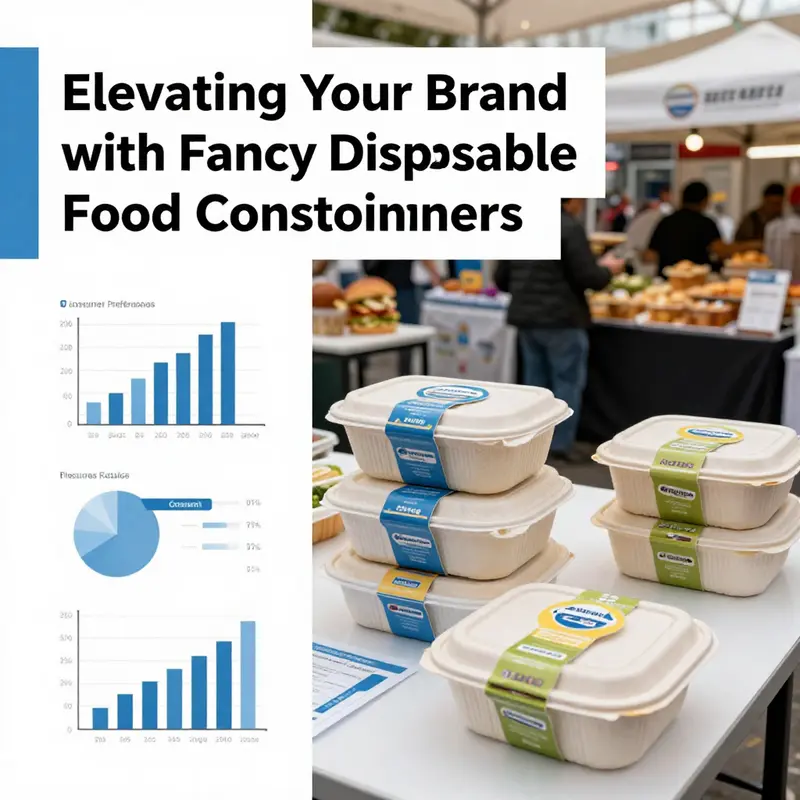
The rise of fancy disposable food containers is less about a single trend and more about a confluence of tastes, expectations, and technologies that together redefine what a takeout box can be. In urban markets where dining experiences are curated as meticulously as menus, packaging has become an extension of the plate. Consumers no longer accept containers that merely hold food; they insist on packaging that complements a meal’s story, signals a brand narrative, and, increasingly, aligns with a commitment to the environment. This shift is not only about looking good in a photo for a six-second scroll; it is about the entire journey from kitchen to table, and whether that journey preserves the dish’s integrity, respects the guest’s values, and finally, whether it can be repurposed or returned to the ecosystem after use.
Aesthetic appeal has moved from the flashy to the thoughtful. Modern diners, especially in discerning markets, seek packaging that elevates the dining moment without shouting its own importance. Fancy takeout boxes and premium bowls are valued for graceful lines, refined textures, and finishes that suggest quality. The visual language is deliberate: a container that blends into the brand’s identity, rather than simply carrying food. This is where the discourse around modular compartments, elegant finishes, and durable construction comes into play. A well-designed container can maintain the structure of delicate foods during transit, prevent leaks, and still present a sense of ceremony when a guest opens the box. The result is a cohesive experience where the container and its contents feel like parts of a single, curated ritual rather than a mere disposable purchase.
Social media has amplified these expectations by transforming packaging into a stage for storytelling. Instagrammable experiences now succeed or fail in part because of packaging that photographs well under varied lighting and at multiple angles. The most shared moments come from containers that feel premium while still signaling accessibility and sustainability. Brands are responding by offering customization options that enable a visual narrative to be woven into the container itself—logos, color palettes, and even textures that echo the menu’s themes. For many operators, this is not a luxury but a strategic investment in brand cohesion and recall. When a guest snaps a photo of a beautifully presented meal, the container becomes a billboard for the cuisine and the business, reinforcing the perception of quality and care.
Yet the elegance of form cannot be divorced from function. In premium circles, the expectation is that beauty does not compromise performance. Consumers want containers that stand up to oils and moisture, that seal securely to preserve freshness, and that support comfortable handling during delivery. In practical terms this translates to grease resistance, reliable lids, and materials that resist deformation at high temperatures. The appetite for temperature management is especially pronounced for hot dishes, baked goods, and seafood where heat and aroma are part of the dining experience. A container that fails to maintain temperature or shows grease marks after a short journey undermines the overall impression and can erode trust in the brand. For this reason, many premium options emphasize barrier properties and structural integrity as essential components of the aesthetic package.
Sustainability has shifted from a niche concern to a core criterion, even for upscale packaging. Consumers increasingly expect materials to be recyclable or compostable, with a smaller ecological footprint than traditional plastics. This does not mean sacrificing performance in the name of virtue; the best options marry sustainability with robustness, heat resistance, and print quality. The market has responded with a spectrum of materials that aim to satisfy both the eye and the impulse to minimize waste. Sugarcane bagasse fiber, for example, surfaces in discussions about premium, compostable containers that feel substantial and convey a premium look while remaining aligned with ecological goals. Such materials are designed to withstand a range of temperatures, including microwave and oven use for limited times, which broadens the scenarios in which upscale takeout can be served. While no solution is universally perfect, the trend toward compostable, grease-resistant, and moisture-barrier materials is clear and accelerating, particularly among brands that want to tell a story of responsible luxury.
The opportunity for customization plays a central role in how businesses respond to consumer expectations. Wholesale suppliers increasingly offer OEM services that let brands imprint logos, brand colors, and even distinctive structural elements onto containers. This enables a restaurant or caterer to weave their identity into the packaging, reinforcing the customer’s memory of the meal and the brand. The appeal is twofold: it strengthens the perceived value of the dining experience and it supports the practical need for recognizable, scannable branding that remains legible through transit. A well-executed customization program can turn a disposable item into a tactile extension of the brand narrative, with a finish that resists wear and still photographs with accuracy. Importantly, customization is not just about appearance; it can also influence functionality through modular designs that support multiple courses or meal kits. A container can be engineered with compartments that separate sauces from solids, or lids that fit securely without excessive force, reducing the risk of spills during delivery.
The consumer arc described here drives a parallel evolution in the competitive landscape. Operators who recognize that fancy disposable containers must deliver both prestige and performance are more likely to invest in high-quality materials and thoughtful design. This means balancing cost with value: premium containers often command higher price points, but customers anticipate a tangible payoff in the form of improved presentation, easier handling, and less waste generated by leaks or substitutions. The market is seeing a gradual adoption of materials that combine the premium look with sustainability credentials. In practice, this translates into a tiered ecosystem of options where cooks can select containers with different finishes, seal technologies, and barrier properties to suit the dish, the delivery context, and the brand’s environmental commitments.
In this landscape of changing expectations, one practical option stands out for operators seeking a balance of form and function: an octagonal kraft paper packaging solution that combines a premium appearance with a sustainable fiber base. This type of container, with its distinct geometry and clean surface, offers a sense of ceremony while maintaining the durability and printability needed for branding. It demonstrates how a thoughtful design can matter as much as the food inside, particularly when the aim is to create an unforgettable unboxing moment. For teams exploring this path, a reliable supplier that can provide bulk quantities, consistent quality, and customization options is essential. See an example of this approach in a disposable octagonal box packaging that highlights how form can echo a cuisine’s story while delivering practical performance in hot and cold conditions. octagonal kraft paper packaging.
The regional and cultural nuances of dining also shape consumer preferences. In some markets, the visual language leans toward minimalism and restrained textures, while in others, bold finishes, metallic accents, or tactile surfaces convey a sense of celebration or luxury. Across the board, however, the demand is for packaging that aligns with broader values—responsibility, quality, and a compelling brand narrative. This means that a container cannot simply be a passive vessel; it must be a passport to the meal it carries. The best bags, bowls, and boxes do not shout their own importance; they support the guest experience, elevate the meal, and remain consistent with the brand’s broader storytelling. Even as the menu evolves toward more complex tasting experiences, this principle holds: a container that communicates care and attention often makes the meal feel more curated, more intentional, and more shareable.
From the perspective of the operator, the pathway to achieving this balance is not a single decision but a continuous optimization. The design process involves testing for performance at typical delivery conditions, assessing how materials respond to grease and moisture, and evaluating whether the packaging holds its shape during transport. It also requires a careful look at the full lifecycle of the product, from raw material sourcing to end-of-life options for customers. In this sense, the future of fancy disposable containers lies not in choosing between aesthetics and sustainability but in integrating both into a coherent package that reflects a brand’s values while meeting real-world demands. The most successful packaging strategies will be those that tell a story—one that resonates visually, performs reliably, and respects the planet’s limits.
For readers seeking a tangible example of this integrated approach, consider the space where printing quality and material smoothness meet grease resistance and temperature tolerance. The best options are designed to crisp the brand’s image on the shelf or in a photo, while also withstanding the realities of busy kitchens and fast-moving delivery routes. The balance is delicate but achievable when suppliers offer materials engineered for both premium aesthetics and practical resilience. It is through this balance that fancy disposable containers can remain both desirable and responsible, delivering a premium dining encounter that travels as well as it looks.
External resource note: industry readers seeking additional perspectives on supplier-driven options, customization capabilities, and sustainability profiles can consult industry references such as supplier overviews and packaging benchmarks. For further context on a leading supplier’s approach to disposable packaging and its potential implications for brand storytelling and sustainability, see external resource: https://www.disposoul.com/ .
Final thoughts
As consumers increasingly favor brands that align their purchasing with values of eco-friendliness and quality, fancy disposable food containers become more than just a means to package food—they are a powerful branding tool. By integrating sustainable design, leveraging economic viability, understanding materials and manufacturing, and responding to consumer trends, businesses can elevate their service offerings. Whether you’re in catering, operating a food truck, or managing a restaurant, the right packaging can enhance your brand image and cater to modern consumer expectations. Invest in fancy disposable food containers to not only meet but exceed the demands of today’s discerning customers.