
As consumers become increasingly aware of their environmental footprint, the eco-friendliness of disposable products is frequently scrutinized. One such item, the compost paper coffee cup, often touted as a green alternative, raises questions when it comes to effective disposal methods. Are these cups truly compostable? Can they be recycled like other paper products? Understanding the nuances of compostability versus recyclability is critical for beverage chains, restaurants, food trucks, and event planners who strive to reduce waste while maintaining operational efficiency. This article will explore why compost paper coffee cups can’t be recycled, clarify the differences between compostability and recyclability, highlight the real-world challenges that complicate this issue, and discuss the infrastructure demands necessary for effective disposal. By the end, businesses will gain valuable insights into making informed choices regarding their disposable products.
Unraveling the Coatings and Contaminations: Why Compost Paper Coffee Cups Aren’t Recyclable—and What This Means for a Truly Circular Cup
The statement that compost paper coffee cups can’t be recycled is a shorthand that hides a more complex reality. It reflects a fundamental mismatch between the way these cups are built and the way traditional recycling systems are designed to process paper. At a glance, the cups look like simple sheet products: a paper shell intended to hold a hot drink. But inside, most standard cups carry a thin, often barely visible shield—coatings that prevent liquid from soaking through. Those coatings, whether polyethylene, a plastic layer, or a bioplastic such as PLA, are the stubborn culprits that rescue the cup from leakage while simultaneously poisoning the recycling stream. The coating’s purpose is straightforward, liquid protection; its consequence is subtle yet decisive: it makes the cup diverge from the single-material paper stream that paper mills rely on. In practical terms, this means that in most curbside programs, the cup cannot be separated cleanly into paper fibers and plastic, so it is treated as a non-recyclable item. The nuance matters because it reframes what it means to be responsible in disposal: not every lid or sleeve is an enemy, but the way a cup is designed and processed determines whether it can enter the recycling loop at all without destroying the quality of the recycled product. The challenge is not simply whether a cup is labeled recyclable, compostable, or something in between; it is whether the waste system has a compatible path for that specific material, at scale, with consistent outcomes for the paper fibers.
To understand why this matters, it helps to map the material architecture of a typical compostable or coated cup. The paper body offers strength and rigidity, but the waterproofing layer—whether a traditional polyethylene film or a newer bioplastic—crosses a boundary. Recycling facilities are designed to separate colors, fibers, and inks, but they rarely have a reliable way to peel off a plastic or PLA coating from the paper pulp in an economical and consistent manner. Even trace amounts of residual plastic can degrade the pulp quality, disturb the de-inking process, and create defects in the final paper product. This reality is not merely a technical footnote; it is a gating condition for the recycling industry. The result is that many cups end up in landfills or incineration streams, not because people are careless, but because the system simply isn’t equipped to reclaim them as paper. In some places, even cups certified as compostable face a second gatekeeping problem: industrial composting facilities that can handle them are not universally available. The result is a double bottleneck. The public, consumer education, and branding all push people toward the more eco-friendly label, yet the infrastructure to deliver that promise remains uneven and unevenly distributed across geographies.
The separation of composting and recycling is not a minor policy distinction. It defines the entire value chain of waste management. Recycling depends on a clean, single-material stream; composting depends on high heat, humidity, and controlled conditions that promote the breakdown of organic polymers. When a cup blends paper with plastic or bioplastic, it becomes a hybrid. In most municipal systems, hybrids are treated as non-recyclables because the separation technology and collection practices do not reliably recover the paper fibers without contamination. The consequence is not merely a missed recycling cycle for one cup; it is the contamination risk that can contaminate an entire bale of paper. A single cup with residual plastic can introduce black specks, weaken fiber strength, or create equipment damage at scale. The physics of pulp and the economics of recycling converge here: the marginal gain of reclaiming one cup is outweighed by the cost of ensuring purity across millions of pounds of paper.
From a regulatory standpoint, several guidelines shape how these products are viewed in the waste stream. The ISO 18603 standard, for example, classifies paper-based composites with non-separable polymer coatings as restricted recyclables. This is not a moral judgment about waste; it is a recognition of process realities. The standard reflects a consensus in the manufacturing and recycling communities about the compatibility of materials with existing recycling infrastructure. It also underlines the gap between marketing labels and technical feasibility. A cup may be described as compostable under certain standards, but that does not guarantee recyclability, nor does it guarantee compostability in any available municipal facility. The EN13432 standard used for industrial composting signals another layer: only facilities with precise temperature and moisture conditions can break down the material efficiently. Without access to those facilities, a cup labeled as compostable may linger long after it should, or worse, cause confusion for consumers who assume they are helping the planet by using a compostable option that the local system cannot process.
The practical implications of these material choices extend beyond the lab and the landfill. A 2023 White Paper from the China Paper Association highlights the scale of the problem in one of the world’s largest markets for disposable cups. It reports roughly 280,000 tons of coated cup waste generated annually, with less than 8 percent effectively recycled. The numbers are telling, not because they indict consumers, but because they expose a systemic mismatch: the coatings contaminate pulp during pulping and de-inking, undermining the quality required for high-grade recycled paper. Even a small amount of residual plastic can undermine an entire batch of recycled fiber, leading to rejected loads and lower-value products. The mechanical stress of pulping and the chemical processes of de-inking are designed for clean, single-material streams; when that assumption is broken, the downstream consequences are costly and persistent. This is not a regional anomaly; it is a global pattern that demands attention when evaluating the environmental merits of new cup designs.
What makes this situation even more persistent is that consumer intent and labeling often outpace local capabilities. In many cities, the availability of industrial composting is limited, and curbside recycling remains the default. People, rightly concerned about waste, recycle or compost with what they have. The result can be a shared misalignment where a compostable cup ends up in a recycling bin or a recyclable labeling meets a landfill because no facility is prepared to process it. The net effect is a paradox: products marketed as solutions toward reduced environmental impact do not reliably deliver that impact, because the waste networks are not harmonized with the product design. This is where innovation is not merely about better materials but about aligning product architecture with collection, processing, and end-of-life pathways.
Against this backdrop, researchers have begun to explore coating technologies that can reconcile performance with recyclability. A promising line of inquiry from Northeast Forestry University in Harbin centers on a smart coating built from natural materials like lignin nanoparticles, plant-derived stearic acid, and water-soluble polyvinyl alcohol. This coating aims to deliver waterproofing without fixing the paper into a plastic envelope that resists separation. Crucially, it dissolves when exposed to hot water, above 60 degrees Celsius, enabling easier separation of fibers for recycling while preserving the integrity of the paper stock for reuse. If such a coating can be scaled and integrated into production lines, it would represent a meaningful advance: a cup that acts as a barrier during use but can be peeled away cleanly from the fiber stream during recycling. It would also reduce the contamination risk posed by conventional coatings and open avenues for better de-inking, higher-quality pulp, and less waste overall. The potential to shift from a mixed-material obstacle to a dissolvable, fiber-friendly interface signals a real shift in how the industry could approach the circularity problem.
Yet, even with this technological promise, the path to broad adoption is not guaranteed. The gap between a laboratory demonstration and widespread manufacturing is wide and messy. Infrastructure to process older stock, the capital costs of new coating technologies, and the need for standardized testing across brands and mills all present barriers. The broader lesson is that innovation must be accompanied by changes in supply chains, waste infrastructure, and consumer education. The goal is not simply to replace one coating with another but to reimagine the cup as a part of a system where its end of life is predictable, scalable, and genuinely sustainable. This requires collaboration across designers, manufacturers, waste managers, and policymakers, along with transparent labeling and standardized lifecycle assessments that compare recyclable, compostable, and reusable options on an equivalent basis.
In the meantime, practical guidance remains straightforward. Empty and rinse the cup to remove residual liquid; this reduces contamination risk in recycling streams and in composting facilities where feasible. The overarching takeaway is that compostable does not automatically equal recyclable, and recyclable does not automatically equal ideal in every locale. Local waste management capabilities, regional certification schemes, and industrial composting availability shape what can actually be recovered. The best-practice recommendation for many organizations and individuals remains the adoption of reusable cups. Reusables sidestep the recycling and composting conundrum entirely, offering a lower-energy, higher-value loop that bypasses the uncertainties of blended-material cups. When sustainability is assessed on a system-wide basis, the advantage of reusables becomes clearer: they keep materials within the same quality stream, minimize contamination risks, and reduce the demand for virgin inputs.
For readers who want a concrete alternative that aligns with current market offerings while acknowledging the constraints of local systems, one can explore options that emphasize recyclable pulp-based cups designed to fit into existing paper recycling streams. A practical, product-focused example that illustrates this approach can be found at eco-friendly options designed around recyclable pulp cup holders. These cups leverage a design language that keeps the paper intact and relies on recyclable fibers rather than a mixed substrate. By prioritizing compatible materials and clear end-of-life pathways, manufacturers can offer a credible bridge between consumption and recovery. See more here: eco-friendly-recyclable-pulp-2-4-cups-coffee-take-away-cup-holder.
As the field evolves, the conversation about compostable versus recyclable is unlikely to become simpler. It will demand more nuanced standards, better alignment between product design and waste processing, and a broader recalibration of expectations among businesses and consumers. The core truth remains: the current generation of compost paper coffee cups is not seamlessly recyclable through standard recycling channels, and their compostability depends heavily on specialized facilities that are not universally available. The path forward blends better material science with smarter infrastructure investments and a commitment to behavioral change that prioritizes reusable options whenever feasible. In the interim, awareness, accurate labeling, and practical disposal guidance are essential, enabling people to navigate the real constraints of today while supporting evolving pathways toward true circularity.
External resource for further context on the advanced coating research and its implications for packaging sustainability: https://doi.org/10.1016/j.jobab.2026.100230
Between Compost and Recycle: Unpacking Why Compost Paper Cups Can’t Be Recycled and What It Means for a Truly Sustainable Brew
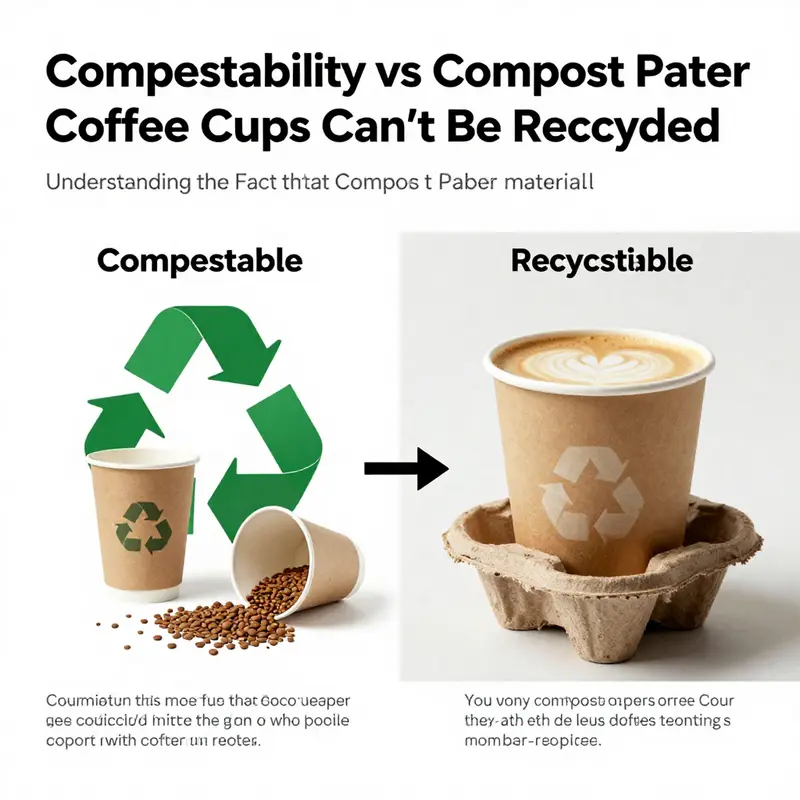
The everyday ritual of grabbing coffee on the go invites a simple question: what should I do with the cup when I’m finished? The answer is surprisingly tangled. The common assumption that paper cups are readily recycled clashes with how these cups are actually made and managed after use. In truth, most standard paper coffee cups cannot be recycled through conventional curbside programs. The culprit is usually a thin plastic lining, a polyethylene coating that earns the cup its waterproof badge and, by weight, often makes up around five percent of the cup. This coating acts like a stubborn barrier in the papermaking stream, where clean fiber separation is essential. When the liner stays attached, it contaminates the batch, and the resulting pulp can’t be turned into high-quality paper products. The misconception persists because people see mostly paper, and the labeling often emphasizes compostability or “eco-friendly” attributes without fully clarifying the practical limits of the waste system that surrounds them. The result is a mismatch between what consumers assume happens to their cup and what actually occurs in local facilities.
This disconnect sits at the heart of why the conversation around compostability and recyclability is both urgent and confusing. Compostable cups—often built with bioplastics like PLA derived from cornstarch—are designed to break down under industrial composting conditions that reach elevated temperatures and controlled humidity. Recycling, by contrast, demands a clean, single-material paper stream. The two processes do not simply overlap; they demand opposite pathways, and neither pathway is guaranteed by a product’s label alone. A cup marketed as compostable may stumble in a community that lacks industrial composting capacity, while a standard paper cup with a plastic lining remains an obstacle for recycling facilities that can’t easily separate the paper fibers from the coating. This distinction is more than a technical footnote. It changes how waste streams are organized, how consumers dispose of cups, and how policymakers decide what to fund or regulate.
To see why this matters, imagine the lifecycle of a disposable cup. Its raw materials start in a forest or a managed paper supply chain, then progress through manufacturing that applies a plastic lining for water resistance. The cup is used for a few minutes of hot beverage experience, and the end-of-life decision arrives in the form of a recycling bin, a compost bin, or a general waste bin. If the waste system is configured for single-stream recycling, the liner’s presence can derail the entire batch, forcing facilities to discard the resulting pulp or, worse, to process contaminated loads that degrade the energy and fiber recovery of the facility. If the cup is captured by a municipal composting stream but the local facilities do not meet the stringent conditions for industrial composting, it may simply languish in a landfill or take decades to degrade, depending on various environmental factors. The message is clear: compostability and recyclability hinge on infrastructure that is unevenly distributed, unevenly funded, and unevenly understood by the public.
The practical takeaway for most households and many businesses is that the reality of current waste infrastructure does not align with the optimistic promises of many labels. Even cups branded as “compostable” may not truly compost in typical municipal conditions, and many cups labeled as recyclable fail to navigate the local recycling rules because they are not accepted in the local paper stream. The consequence is a quiet but costly problem: cups end up in places where they cannot be properly processed, contaminating batches and complicating the work of recycling, composting, and waste management professionals. In short, the statement that compost paper cups can’t be recycled is not a simple binary. It is a reflection of a complex system in which material composition, labeling, local infrastructure, and consumer behavior intersect in unpredictable ways.
What follows is not merely a catalog of incompatibilities but a call for a broader, systems-aware approach to disposal. The two core concepts—compostability and recyclability—must be understood not as interchangeable traits but as distinct pathways that require specific conditions. Compostability is about the end-of-life environment: it presumes industrial composting facilities capable of maintaining high heat and humidity long enough to break down the cup’s bioplastics and paper into usable compost. Recycling, on the other hand, requires clean, homogenous material streams and robust separation processes that can isolate the paper fibers from coatings or bioplastics. When either pathway is absent or incomplete, the result is a missed opportunity to recover value and reduce burden on landfills.
The environmental argument then shifts from “Is this cup recyclable?” to “What is the actual end-of-life option available in my city, and how can we optimize it?” The answer demands more than consumer diligence; it requires a robust, transparent waste-management infrastructure, consistent labeling that clearly distinguishes compostable from recyclable, and a coherent policy framework that supports both the development of industrial composting facilities and the expansion of accessible curbside recycling programs. It also demands a shift in consumer behavior toward a universal mantra: reduce, reuse, and reimagine the single-use habit. The most impactful change is not simply choosing between a compostable cup or a recyclable cup, but embracing a reusable cup system. By prioritizing durable, clean-use cups that travel through the beverage ecosystem with repeated use, a business or a community can dramatically reduce single-use waste and minimize the confusion surrounding the end-of-life fate of disposable cups.
In practice, the most responsible disposal approach begins with the simplest action: empty the cup and rinse if possible. Food residue contaminates recycling streams and can compromise the quality of the final paper product. When compostability is possible, it usually happens in facilities designed to handle bioplastics and paper through a controlled process, not in a standard curbside compost bin. Contamination remains a persistent risk; it can derail an entire batch and lead facilities to reject loads that might otherwise be processed if the materials were clean and separated. These realities underscore a broader challenge: labeling can be muddled or ambiguous, with terms like “eco-friendly” or “biodegradable” appearing on packaging without clear certification of how and where disposal should occur. A widely cited understanding in disposal literature notes that only a limited number of cities have industrial composting facilities capable of handling these cups, and some labeling may mislead rather than inform.
This is where a nuanced, outcome-focused perspective matters. Compostability does not guarantee compostability in a given locality, and recyclability does not guarantee acceptance in all paper streams. The best way to progress toward real sustainability is not to chase the illusion of a universally recyclable or universally compostable cup but to design systems that align with actual infrastructure, prioritize durability and reusability, and educate consumers about what happens after disposal. A reusable cup, in particular, offers a clear advantage. It eliminates the need to resolve an end-of-life question for each cup and dramatically reduces energy, water, and material inputs across repeated uses. It also creates a tangible platform for brands and communities to demonstrate commitment to material stewardship beyond the immediate convenience of a single-use product.
To connect practical choices with the broader discourse, consider a model where disposable cups are part of a larger, circular approach: a system that prioritizes reuse where feasible, supported by robust recycling or composting options where appropriate. In this model, a disposable cup can act as a bridge—an occasional fallback when reuse isn’t possible, but with a robust plan to minimize waste through design, labeling, and infrastructure investment. In the meantime, individuals can take practical steps to reduce the impact of their cup footprint right now. Emptying and rinsing becomes more than a hygiene habit; it becomes a disposal discipline. Understanding the local options for composting and recycling is equally important. If compost facilities exist, align disposal with their requirements; if not, direct attention to ways to minimize disposal through alternatives and reuse.
For readers seeking a concrete path toward practical solutions, there is value in looking at the broader ecosystem of disposable cup options without conflating their end-of-life stories. A useful resource for considering options that emphasize recyclability and reusability is the broader catalog of eco-friendly packaging choices that companies are exploring. In particular, there is value in exploring products designed to meet specific waste streams, such as recyclable pulp-based cups that can navigate certain municipal systems more predictably. For a point of reference on practical cup options that align with recycling goals, see the resource described here: eco-friendly recyclable pulp 2-4 cups coffee take-away cup holder. This link points to options that explicitly consider the realities of recycling streams and the importance of material purity, a topic that resonates with the broader theme of this chapter.
The central takeaway is clear: compostable does not automatically equate to recyclable, and recyclable does not guarantee universal acceptance. The confusion isn’t simply about a single cup’s ability to be composted or recycled; it’s about the mismatch between product labeling, consumer expectation, and the regional reality of waste-management infrastructure. Any credible sustainability strategy must acknowledge that end-of-life outcomes are conditioned by local capabilities as much as by product composition. This awareness invites a shift in both policy and practice. It invites designers to simplify materials and minimize coatings, policymakers to invest in industrial composting where it makes sense, and communities to standardize disposal rules in a way that reduces friction for households and businesses alike.
As the chapter closes on this point, the most reliable guidance for individuals remains anchored in the principle of reduction. Choose a reusable cup whenever possible, and favor experiences and retailers that support durable, long-lived containers. When single-use is unavoidable, seek facilities that are proven to manage compostable or recyclable streams, and participate in labeling and governance that clarifies the actual end-of-life path for your locality. The outcome is not merely a label, but a measurable reduction in waste, a clearer signaling system for disposal, and a shared commitment to a waste system that actually works in practice. The conversation about compostability and recyclability thus becomes more than a taxonomy of materials. It becomes a conversation about system design, infrastructure investment, and collective behavior that can turn a moment of disposal into a meaningful contribution to environmental stewardship.
External reading and further context can illuminate how the public conversation has evolved. For a broader perspective on the recycling and composting challenges facing paper cups, see the external resource that has shaped much of the contemporary debate: Why Paper Coffee Cups Can’t Be Recycled – The Guardian. This piece traces the limitations of current waste streams and underscores the need for informed consumer action and improved infrastructure.
Laminations, Labelling, and Logistics: Real-World Challenges in Compostable Paper Cup Recycling
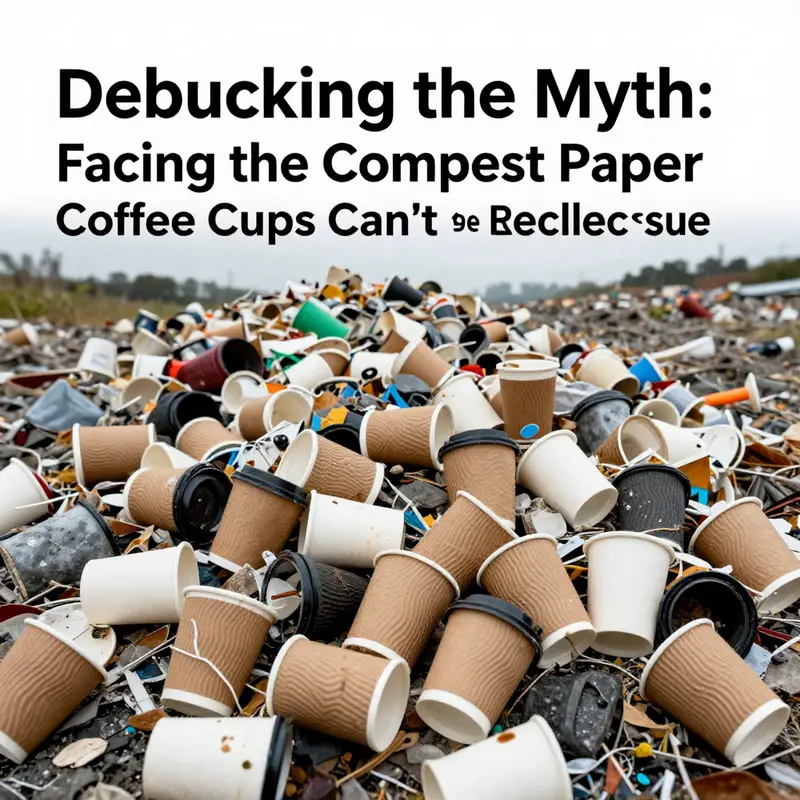
The statement that compostable paper cups hold a straightforward path to disposal is a tempting simplification. In practice, the journey from cup to compost or to a responsible recycle stream is hindered by a web of materials science, infrastructure limits, and human behavior that often contradict the optimistic marketing surrounding single-use cups. A careful look at the real world reveals a pattern: the very features that make these cups functional for daily coffee routines also complicate their end-of-life fate. At the heart of this tension is a simple but consequential truth—the cups most people reach for are composites, not monoliths, and that composite reality is what drags the matter into a maze of exceptions and regional disparities rather than toward a universal solution.
Most standard paper coffee cups, even when they carry the badge of sustainability, are coated with a thin layer of polyethylene to keep liquids from seeping through. This plastic lining—frequently about five percent of the cup by weight—acts like a stubborn barrier in the paper recycling stream. When recycled locally, the plastic contaminates the pulp, complicating processing and often prompting rejection of an entire batch. The upshot is that curbside programs designed for clean paper streams frequently cannot accommodate these cups, leading many communities to exclude them from recycling altogether. The net effect is a paradox: a material marketed as renewable and recyclable in theory becomes a maintenance headache in the practical, municipal recycling ecosystem. A 2026 guide summarized this reality with blunt clarity: the plastic coating is a primary reason cups do not feed a standard paper recycling stream, regardless of labels or promises.
Even cups branded as compostable sit in the same crosshairs. Compostable cups often rely on bioplastics such as PLA, derived from plant sources, to enable breakdown under controlled conditions. The problem is twofold. First, PLA and similar bioplastics require industrial composting facilities that reach high heat and maintain specific humidity and residence times to complete the decomposition within a window of roughly 90 to 180 days. Second, such facilities remain unevenly distributed and, in many regions, scarce or nonexistent. Without access to certified industrial composting, compostable cups languish in landfills, where their degradation mirrors the slower path of conventional plastics and can release methane—a potent greenhouse gas. The mismatch between the presence of a compostability label and the actual on-the-ground capability to process those cups creates a gap that consumers, waste managers, and policymakers continuously wrestle with.
Alongside material composition, there’s the issue of lamination and labeling. A growing body of materials research and waste-management guidance notes that many cups employ coatings or laminates designed to improve moisture resistance or heat tolerance. These coatings can add another layer of complexity to recycling or composting streams. Even when the cup is declared compostable, the presence of multiple layers—paper plus plastic or bioplastic—means the item does not meet the single-material or easily separable criteria that modern recycling streams prefer. In practice, this means that a cup might be claimed as compostable, yet in a given city—where composting facilities are not calibrated for layered materials—it ends up in the landfill rather than in an industrial composting bin.
Consumers are central to the problem’s scale, because behavior drives the fate of these cups beyond the gate of the plant. Sorting systems rely on people placing items in the right stream, and that requires a clear mental map of what is recyclable, what is compostable, and what should be discarded. The problem is compounded by confusion over labeling. Without standardized, globally recognized certification marks and consistent guidance, well-intentioned households may place a compostable cup into the recycling bin or throw a non-recyclable cup into a compost bin. Contamination is not a theoretical hazard; it is an operational reality that can degrade entire batches of recyclables and streams of compost alike. Residual liquids and food remnants exacerbate the problem, further stressing downstream sorting and processing.
In this tangled landscape, infrastructure matters as much as material science. A robust composting regime requires a network of facilities that can accept a variety of designed-for-disposal products. In many urban and suburban areas, such facilities are either too few or configured to handle only certain feedstocks. In some regions, municipal policies have yet to adopt standardized acceptance criteria for compostable products, leaving waste streams vulnerable to municipal improvisation. It is not merely a matter of throwing cups into a different bin; it requires synchronized investment in collection, transport, and processing facilities that can handle the nuanced chemistry of modern cup design. This misalignment between product design and waste-management infrastructure is not a niche issue; it is a friction point that affects consumers, businesses, and governments alike. Even when a city proclaims a goal of diverting waste from landfills, the practical mechanics of achieving that goal are often more modest than the rhetoric.
What does this mean for the future? On one hand, the tension has spurred meaningful innovation. Researchers and manufacturers are exploring water-based or plant-derived coatings that could replace conventional plastic laminates, reducing contamination risk and improving end-of-life outcomes. There is also a push toward designing cups with more straightforward end-of-life pathways: single-material paper constructs or clearly separable laminates that could be more readily processed by existing streams. The challenge, as underscored by industry observers and critical coverage in recent years, is to align these material innovations with a parallel evolution in infrastructure and labeling. Without concurrent changes in the waste-management system and in consumer education, even the most elegantly engineered cups risk becoming misfits in the recycling or composting infrastructure they were designed to complement.
A practical takeaway for households and workplaces is the value of transparent disposal practices and consistent rinsing, without assuming universal compostability or recyclability. A quick rinse to remove residual coffee or dairy is a simple, practical step that reduces the risk of contaminating a batch of recyclables or compost, particularly when facilities lack the capability to separate coatings from the fiber. Yet even this precaution has limits; rinsing cannot magically convert a multi-layer cup into a recyclable feedstock in a curbside system that cannot accommodate the contaminant. In that sense, the recommended household ritual becomes a badge of responsible consumption rather than a guarantee of end-of-life success. The most resilient solution remains a shift toward reusable cups in everyday settings, a move that sidesteps the recycling and composting crossroads entirely. Reusables encode a future in which a single cup serves dozens or hundreds of uses, reducing the volume of waste that relies on fragile downstream systems to sort out mixed materials.
The discussion also touches on consumer-facing communication. With limited infrastructure capable of accepting compostable or coated cups, the messaging to consumers should emphasize the practical realities of local facilities and the limits of end-of-life processing. Clear, localized disposal instructions can prevent cross-contamination and misunderstanding, but that requires investment in public-facing communication and standardized labeling across jurisdictions. The lack of universal standards makes this a patchwork problem; standardized labels, equivalency checks between certifications, and accessible facility maps would help, but implementing them demands political will and cross-border coordination.
In contemplating progress, it is instructive to examine the design ethos behind disposable packaging more broadly. If the world’s waste systems are to handle cups with their embedded laminates and bioplastics more gracefully, product designers must anticipate end-of-life constraints from the outset. This means not only choosing materials with compatible recycling streams but also insisting on packaging systems that minimize contamination risk and enable straightforward separation when necessary. The shift from line-by-line recycling folklore to system-level design demands collaboration among suppliers, waste-management operators, and local governments. It also demands honest communication with consumers about what is technically feasible within a given community. When a facility can process only a limited set of materials, it is more beneficial to label with precision and guidance rather than rely on broad, aspirational claims of compostability or recyclability.
The contemporary reality, then, is neither a catastrophe nor a simple win. It is a nuanced ecosystem in which plastic linings, bioplastics, coatings, and adhesives all play a role, but the success of any given disposal path depends on the surrounding infrastructure and behavior. The most robust takeaway is that compostable does not automatically mean recyclable, and recyclable does not guarantee composting. Local context matters profoundly. This reality urges a pragmatic approach for individuals and institutions: favor reuse, support vendors and facilities that align with transparent end-of-life options, and engage with local waste-management programs to understand what is possible in your area. If a city or campus can provide industrial-scale composting with clear acceptance criteria for compostable cups, then those facilities offer a viable route for those products. If not, the continued emphasis on reusables becomes not merely an environmental preference but a practical necessity.
To connect the discussion to the broader conversation about packaging and waste, consider how disposal systems could be better designed to accommodate the current generation of cups and to prepare for future innovations. This involves a dual focus: material development that yields straightforward, single-material compostable streams where feasible, and infrastructure development that upgrades collection and processing capacity to handle layered materials when needed. It also requires ongoing consumer education and consistent labeling so that people can act with confidence rather than guesswork. In the meantime, the best-informed move for many organizations and households remains straightforward and consistent: reduce reliance on single-use cups where possible, and invest in durable, reusable options that bypass the recycling and composting hurdle entirely. The problem is not only technical; it is systemic, and the path to meaningful improvement will likely require a combination of better materials, smarter design, stronger standards, and more coherent waste-management networks.
For readers seeking deeper context on why these cups pose challenges in recycling streams, a detailed external resource helps illuminate the targeted mechanics behind the issues discussed here: https://www.c&en.globalenterprise.com/why-cant-you-recycle-paper-cups/. This resource illustrates how a combination of coatings, lamination, and residual contamination shapes the fate of paper cups in modern waste streams, reinforcing the message that compostable does not equal recyclable in most real-world settings. And while this chapter has centered on the complexities and limitations, there remains room for practical, scalable solutions that align product design with waste-management capabilities, a alignment that will define the next era of sustainable packaging decisions. In the near term, bridging the gap between what is technically possible and what actually happens in communities worldwide will require careful coordination, transparent labeling, and a continued commitment to reuse as the most reliable path to reducing single-use waste.
Internal reference: disposable white paper lids for hot coffee cups
Gatekeepers of Waste: How Infrastructure Shapes the Recycling and Composting Fate of Paper Coffee Cups
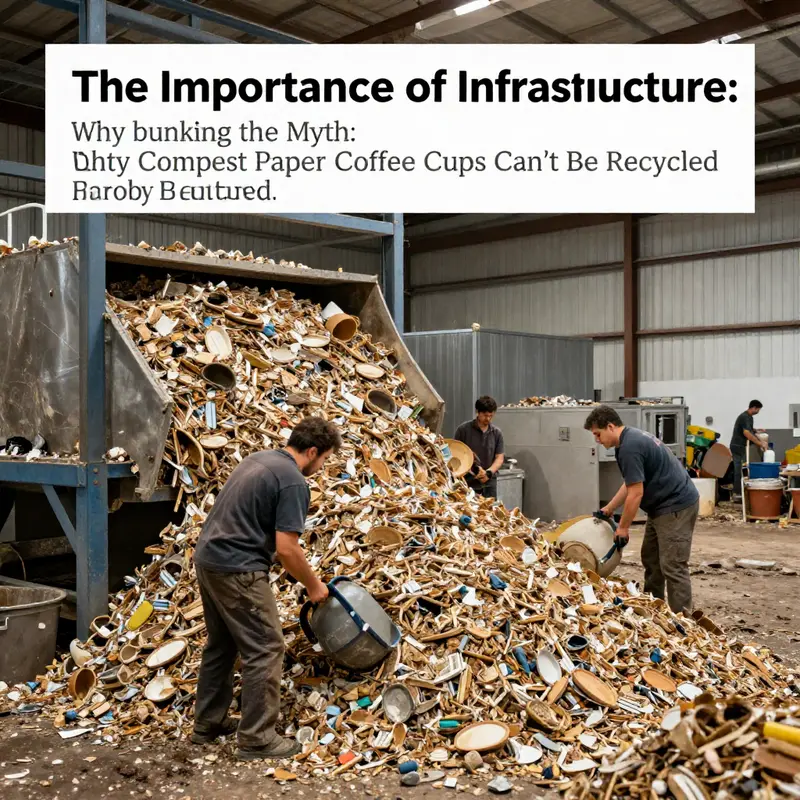
The fate of a paper coffee cup is not sealed by the material alone. It is decided by the hidden gatekeepers of waste management—the systems that collect, sort, treat, and dispose of what households and businesses throw away. When we talk about whether compostable or recyclable cups can actually be recovered, we are really examining the robustness and reach of local infrastructure. In places with advanced, well-funded facilities, a cup can contribute to a circular loop. In places with sparse or aging systems, the same cup can end up as solid waste, or, worse, as a contaminant that destabilizes an entire batch of recyclables. This interplay between material design and system capacity is the core tension behind the widely circulated claim that compost paper cups “can’t be recycled.” The truth rests not on the cup alone but on whether the waste system in a given region was built to handle it from curb to composting facility or from source separation to a dedicated compost stream.
Consider the basic fact that most standard paper cups are lined with a thin polyethylene layer, typically around five percent by weight. That plastic coating is what keeps the cup waterproof for hot beverages and prevents leaks. However, that same coating makes the cup a problem for conventional recycling streams because it disrupts the paper recycling process. The paper fibers cannot be cleanly separated from the plastic without expensive, specialized equipment. In many curbside programs, the presence of even a small plastic layer contaminates the entire load, causing rejection and forcing sorting facilities to discard the batch. A 2026 guide captured this dilemma succinctly: cups labeled as recyclable or compostable are only as effective as the infrastructure designed to process them. If the local system cannot cope with the lamination, the cup fails to fulfill its intended environmental promise. In other words, the label on the cup is only as meaningful as the label on the plant down the street.
The conversation becomes even more complicated when we examine cups explicitly marketed as compostable. These cups often rely on polylactic acid (PLA) or other bioplastics, which are designed to break down under industrial composting conditions—high heat, humidity, and controlled residence times that are not typically found in backyard composting. The separation between compostability and recyclability remains narrow but crucial: compostable cups may not be suitable for recycling streams, and recyclable cups may not compost in available facilities. The real challenge is not merely the cup’s construction but whether local facilities exist to deliver the conditions necessary for decomposition. As a practical matter, many areas lack the industrial composting capacity required to process compostable cups in a timely and efficient manner. Without this capacity, such cups accumulate in landfills where they can decompose slowly, releasing methane under anaerobic conditions, a potent greenhouse gas. The paradox is stark: a consumer product designed to reduce environmental impact may contribute to climate-harming emissions if the waste system cannot handle it responsibly.
Infrastructure problems extend beyond the presence or absence of facilities. Sorting and collection play critical roles in determining whether cups are recovered. The sheer small size and light weight of a single cup make them easy to lose in the stream of waste, slipping through cracks in collection routes or escaping from bin lids into streets and rivers. When cups are gathered in mixed waste and contaminated with food residues, they threaten whole batches of recyclables. A quick rinse to remove leftover liquids is often recommended because residual food and liquid can hinder decomposition and recycling processes. Yet even a rinse is not a panacea; if the cup’s lamination or bioplastic is not compatible with local processing capabilities, the cup remains a liability rather than an asset. The end result is a fragile system where good intentions collide with logistical realities.
The literature on global performance paints a sobering picture. The Ellen MacArthur Foundation’s Global Plastic Outlook 2023 highlighted the stark gap between what is possible in laboratory or theoretical design and what actually happens in the real world. Among disposable coffee cups, only a tiny fraction is recycled or composted globally. The 1 percent figure is not simply an indicator of dismal performance; it signals how critical mature, scalable infrastructure is to closing the loop. Without investment in advanced sorting technologies, improved collection networks, standardized labeling, and public education, even products designed for sustainability fail to deliver meaningful environmental benefits. The story is not one of a single material facing a single bottleneck; it is a narrative of systemic under-resourcing that prevents ambitious waste reduction promises from becoming tangible outcomes.
A remarkable part of the infrastructure equation is the confusion that can arise from labels themselves. When a cup is described as compostable or recyclable, consumers naturally assume that either option is readily achievable in their community. In practice, the reality can be far more nuanced. Some municipalities do have industrial composting facilities capable of handling PLA or other bioplastics, but these facilities may be geographically concentrated, expensive to operate, or limited in capacity. Others may have robust municipal recycling programs, yet those programs may operate closed-loop streams that require single-material paper products; the mixed-material nature of most cups defeats that possibility. The result is sometimes a misalignment between consumer behavior and processing capability. People rinse cups and sort them according to local guidelines, only to learn that the cup’s composition renders it unrecoverable within their system. This disconnect undermines trust and stymies the potential benefits of the very products designed to be “eco-friendly.”
The practical implications extend to policy and business decisions as well. If a city or region is serious about extending the life of a cup as a resource, it must embark on a systems-level upgrade rather than addressing the issue at the product level alone. That means investing in sorting infrastructure that can recognize and separate different cup types, developing dedicated streams for compostable packaging, and aligning consumer education with what actually happens in the waste facility. It also means crafting labeling standards that clearly communicate the processing requirements and capabilities of a given area. Ambiguity in labeling is not a neutral attribute; it invites mis-sorting, contamination, and inefficiency. When people assume a product is recyclable or compostable and find it is not, they may react by discarding more items improperly, which propagates a cycle of waste rather than stewardship.
The environmental cost of poor infrastructure must be acknowledged. In regions with underdeveloped systems, the most sustainable-looking products can become a liability. When cups do not enter the intended streams, they occupy space in landfills where decomposition is slow and methane release becomes a concern. In the absence of oxygen, organic materials release methane, a greenhouse gas with a global warming potential far higher than carbon dioxide over a short time horizon. The unintended climate impact emerges not from the cup’s chemistry alone but from the mismatch between product design and waste processing realities. This is the environmental paradox that underlines why infrastructure matters as much as material science. The cup’s design might aim for lower emissions and reduced waste, yet the overall outcome depends on whether the waste system can realize or bypass those intentions.
The story has practical implications for what businesses and institutions can do today. First, there is value in adopting reusable cups as a primary option. Reusables bypass many of the ambiguities associated with single-use materials and the complex end-of-life questions that accompany lamination and bioplastics. When a consumer drinks from a durable cup that can be washed and reused many times, the need for end-of-life processing is reduced. Designing for reuse also simplifies the end-of-life pathway: the cup remains a single material in a controlled lifecycle, rather than a multi-material item whose recycling or composting depends on a facility that may not exist in the community. Of course, achieving a culture of reuse requires changes to workflows, cleaning regimes, and customer behavior, but the payoff is a more resilient system that does not hinge on fragile, under-resourced infrastructure.
Second, for those who must rely on single-use options, a more nuanced approach to materials is necessary. This means investing in products that align with regional capabilities rather than marketing claims alone. Where local composting exists, cups designed for industrial composting can be prioritized, but their success still hinges on reliable collection and acceptance by the compost facility. Where recycling exists, cups must be compatible with the local paper-stream processing. In either case, clear labeling, public education, and investment in sorting technology will be essential to ensure that the processes work in practice rather than only on paper. A practical, shop-floor takeaway is to look for products that offer explicit, third-party certified credentials indicating compatibility with local infrastructure—credentials that are more informative than marketing slogans.
Within this broader context, the notion of a single “best” path becomes less important than the recognition that a robust waste system acts as the actual enabler of sustainability. A cup is only as sustainable as the system that can recover it, process it, and reuse the materials it contains. This understanding shifts the focus from debating material types to prioritizing infrastructure investments, governance frameworks, and consumer engagement that align with those investments. It also suggests that the most meaningful progress may come from a combination of approaches: expanding reuse networks, strengthening local composting capabilities where feasible, and upgrading recycling streams to handle ever-evolving packaging. In places where neither option is feasible, the emphasis should be on reducing reliance on disposable cups altogether and designing for longer lifespans, continuous reuse, and minimal waste creation.
In practical terms, this means rethinking the lifecycle of the cup from the ground up. The design decision becomes intertwined with the system it must fit into. Cup manufacturers, waste managers, policymakers, and handlers all share the responsibility of building a coherent, capable, and transparent waste circuit. Labels should be honest about what is technically feasible given the local infrastructure, and businesses should adjust their product strategies accordingly. When a consumer encounters a cup labeled as eco-friendly, that claim should imply a realistic end-of-life scenario supported by robust local capabilities, not a marketing veneer. The result is a more predictable and accountable form of sustainability, one grounded in infrastructure as much as in chemistry.
For readers seeking a concrete example of how a product category can align with infrastructure realities, consider options that fit a flexible recycling or reuse pathway. A practical choice is to explore eco-friendly options in disposable cup ecosystems that emphasize compatibility with multiple end-of-life routes rather than a single ideal pathway. One such example highlights an option that blends ease of use with a potentially renewable end-of-life process: eco-friendly recyclable pulp coffee cup holders designed to accommodate take-away cups in settings that prioritize reclaiming single-use packaging in a streamlined manner. This approach demonstrates how a product line can acknowledge infrastructural constraints while still offering a viable, customer-friendly solution. You can explore this category here: eco-friendly recyclable pulp coffee cup holder.
The broader lesson is clear. The environmental merit of compostable or recyclable cups cannot be judged in isolation from the waste system that processes them. Infrastructure matters as much as material choices, and the most effective path to meaningful waste reduction will be built on investment in sorting technology, collection infrastructure, clear signaling, and consumer education. Labeled promises will only translate into real-world gains when the system is capable of delivering them. Until then, efforts to reduce disposable cup waste should focus on strengthening the gatekeepers—those collection and processing networks that hold the key to turning design into durable, scalable environmental benefits.
External reference to deepen understanding of the systemic scale involved can be found in the Ellen MacArthur Foundation’s Global Plastic Outlook 2023, which provides a comprehensive view of how materials circulate (or fail to circulate) and why infrastructure is central to the circular economy. The report highlights the scale of recovery gaps and the need for coordinated action across producers, municipalities, and consumers to move toward a more closed-loop reality. Access to the external resource at this link: https://www.ellenmacarthurfoundation.org/assets/downloads/publications/global-plastic-outlook-2023.pdf
Final thoughts
Understanding the limitations of compost paper coffee cups is vital for making sustainable choices in the food and beverage industry. While they serve as a better alternative to traditional plastic cups, the truth remains that they cannot be recycled through standard systems, and nor can many be composted without specialized facilities. For beverage chains, food trucks, and corporate procurement teams, the emphasis should be on strengthening infrastructure for waste management and considering reusable options. Engaging with the nuances of compostability versus recyclability will place your business ahead in the sustainability landscape. A commitment to eco-friendly practices is essential not only for compliance but also for enhancing your brand’s reputation among environmentally conscious consumers.