
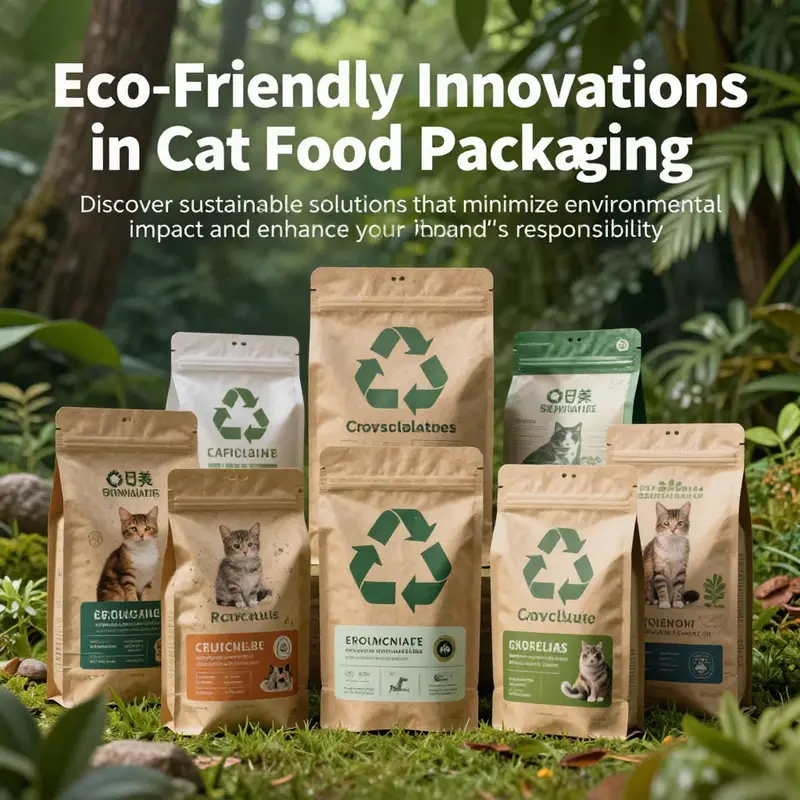
The growing demand for sustainability across markets necessitates innovative approaches to packaging, especially in the pet food industry. Eco-friendly packaging for cat food is not just a trend; it’s a commitment to environmental responsibility that resonates with today’s conscientious consumers. From recyclable materials to sustainable design practices, these packaging innovations enable businesses like yours—be it bubble tea shops, restaurants, or catering services—to align with eco-conscious ideals while boosting customer loyalty. In this exploration, we’ll delve into recyclable materials, sustainable raw materials, impacts of transportation, and the power of informed consumer choices in shaping an eco-friendly future for cat food packaging.
Circular by Design: The Role of Recyclable Materials in Eco-Friendly Cat-Food Packaging
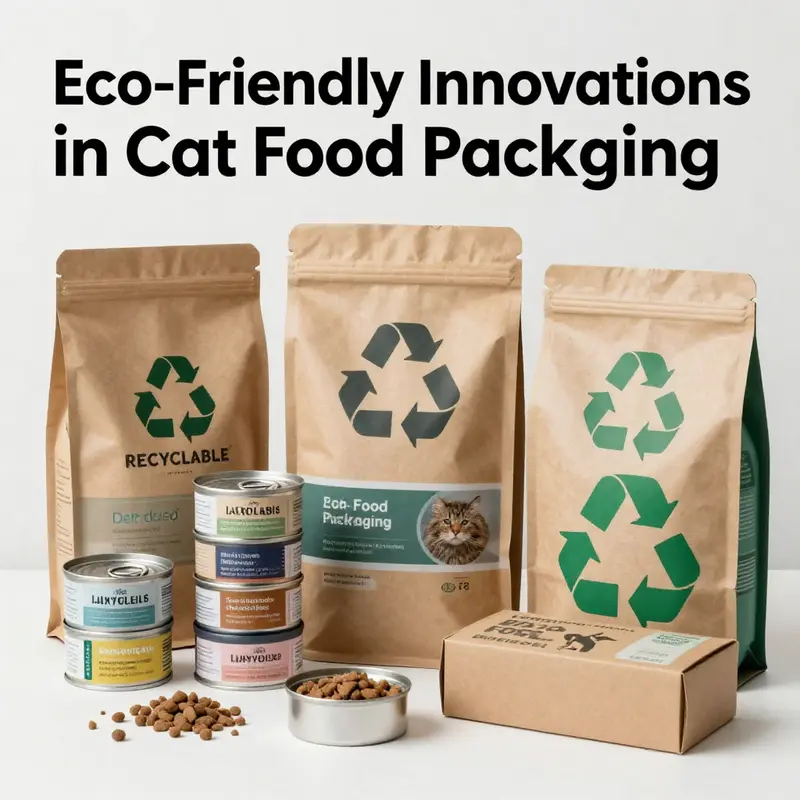
Recyclable materials sit at the heart of eco-friendly cat food packaging as a deliberate design choice that reshapes the product lifecycle. When a package is selected and produced with end of life in mind, feeding a pet becomes part of a broader resource stewardship effort. The move toward recyclable materials is driven by closer to home recycling streams, compatible processing facilities, and brand willingness to design with end of life in mind. This chapter discusses materials such as metal tins for high barrier protection, FSC certified paperboard for carton based formats, and mono material laminates that aid compatibility with existing recycling streams. Mono material pouches made from a single polymer family offer a practical path to circularity by simplifying sorting and reprocessing and reducing the need for complex separation. The packaging must still protect the product while remaining lightweight for lower transport emissions. Certifications such as FSC help ensure wood fiber comes from responsibly managed forests and support a responsible supply chain. Beyond materials, consumer education and clear labeling are essential to get recycling right, and policy support for curbside programs and end markets strengthens the system. In sum, recyclable materials are a strategic pillar that connects product safety, consumer convenience, and environmental stewardship and invites collaboration across brands, recyclers, retailers, and regulators to advance a circular economy in cat food packaging.
Circular Inputs, Softer Footprints: How Recycled Plastics, Bioplastics, and Paper Sustain Eco-Friendly Cat Food Packaging
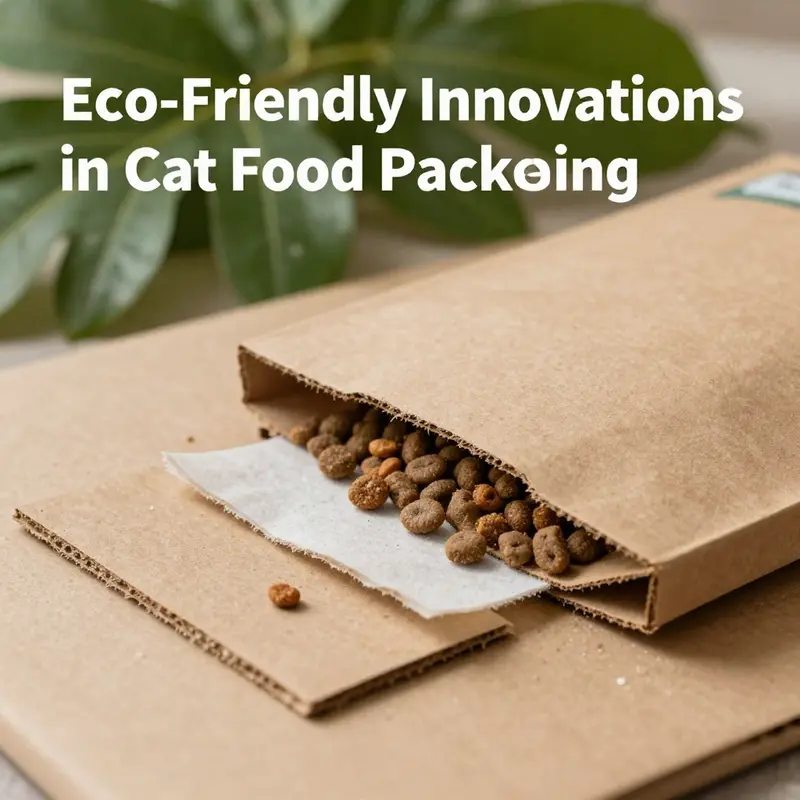
Every package that reaches a cat owner’s kitchen tells a story beyond the nutritious contents inside. The raw materials chosen for packaging determine how much energy is used, what waste is created, and how easily the container can be reclaimed and reintroduced to the supply chain. In the pursuit of truly eco-friendly cat food packaging, three families of materials are shaping the landscape: recycled plastics, bioplastics, and plant-based papers and boards. Each brings strengths and trade-offs, and together they illustrate a broader shift toward circularity rather than linear take-make-discard models. The decision to favor one material over another cannot be reduced to a single metric; it hinges on how the material behaves through every phase of the product’s life—from production and distribution to consumer use and end-of-life recovery. Yet a common thread ties these options together: the capacity to minimize virgin material demand, cut pollution, and keep resources cycling within the economy for as long as possible.
Recycled plastics form a crucial pillar in the eco-friendly packaging toolkit. By incorporating post-consumer or post-industrial plastics, manufacturers can substantially lower the demand for new resin, reducing the energy and emissions embedded in material creation. This strategy also addresses another persistent challenge in pet food packaging: the sheer volume of plastic waste that can accumulate when packaging is not designed for recovery. When designers create packaging with recyclability as a first principle, the material stream can stay intact long enough to re-enter the market as useful products, rather than piling up in landfills. However, achieving true circularity with plastics requires a robust system for sorting, cleaning, and remanufacturing. Without clean streams and consistent collection, contaminated or multilayered plastics lose value and end up incinerated or discarded. In practice, this means packaging must minimize non-recyclable layers and avoid adhesives or laminates that impede separation. It also means recognizing that certain plastics, while technically recyclable, are more valuable when kept in closed loops for specific applications. When a packaging design embraces these constraints, a post-consumer plastic stream can feed new products, reducing the need for virgin petrochemicals and shrinking the carbon footprint tied to material sourcing.
Bioplastics offer another pathway to lower environmental impact. Derived from renewable feedstocks such as corn starch or sugarcane, these materials can be engineered to be biodegradable or compostable under certain conditions. The appeal is clear: fewer fossil-based inputs and the possibility of turning waste back into useful resources in appropriate facilities. Yet bioplastics are not a panacea. Many require industrial composting infrastructure to perform as intended, which is not universally available. Moreover, the end-of-life story for bioplastics depends on correct labeling and consumer behavior; when bioplastics end up in standard recycling streams, they can contaminate the process and reduce the quality of the resulting material. Designers and producers therefore need to be explicit about what form of end-of-life their product envisions and to align packaging formats with local waste-management realities. In the best cases, bioplastics are deployed in tandem with other recyclable materials in multi-material systems that are still designed for disassembly and recovery. In that sense, bioplastics expand the toolbox rather than replace the need for effective recycling ecosystems.
Plant-based papers and boards—often sourced from responsibly managed forests certified for sustainable practices—represent another resilient pillar. Paper and cardboard are inherently lighter than many plastic alternatives, which can translate into lower shipping emissions when the same quantity of food is transported to retail. The challenge lies in ensuring that moisture barriers and food-contact safety are maintained without resorting to non-recyclable laminates or heavy coatings that complicate recycling. Advances in barrier coatings, many of which are plant-derived or mineral-based, are gradually enabling paper-based packaging to perform in environments where moisture or fats would previously demand plastic films. What matters here is not only the presence of FSC-certified fibers but the lifecycle story of the entire package: the forest stewardship, the energy footprint of pulping and converting, and the ease with which the final container can be recovered and remanufactured. When paper-based packaging stays free of non-recyclable additives and is designed with simple, separable layers, it can play a central role in reducing plastic leakage into the environment and in expanding circularity across pet care products.
All three material families share an essential design principle: lightweight, minimalist architecture that preserves product integrity while reducing material mass. Lightweighting lowers transport energy, a significant factor given the global reach of pet food distribution. It also forces a rethinking of how closures, coatings, and seams are engineered. If a package must resist moisture, odor, and physical abrasion, designers often turn to multilayer constructions that can be difficult to recover. The most forward-looking approaches, however, reimagine the entire packaging system to favor components that are easily separable and reclaimable. In practice, this can mean replacing layered laminates with single-material constructs, or embracing barriers that function without sacrificing recyclability. The goal is not merely to minimize plastic or to maximize recycled content; it is to optimize the entire lifecycle so that every gram of material can re-enter the economy rather than exit to waste.
A notable element of progress in this space is the emergence of collaborations that span the packaging value chain. When a major pet-care company teams up with a design studio or a materials specialist, the result can be a practical demonstration of circularity in action. One such collaboration focused on the mechanical recycling of plastic pouches once used for cat food. The concept shows that the plastics from single-use pouches can be recovered, processed, and transformed into new products—ranging from consumer packaging to cleaning-product containers—thereby closing the loop and reducing landfill waste. The underlying insight is simple but powerful: create packaging that can be reliably recovered, keep the material streams clean, and design processes that can reinsert the material into the economy without sacrificing performance. This approach embodies the principle that packaging should be a resource, not a discardable by-product. For readers who want to see a concrete example of a cross-industry, closed-loop initiative in practice, an accessible case study highlights how such collaborations can deliver tangible environmental benefits while maintaining product safety and quality.
In discussing sustainable raw materials, it is also important to situate consumer behavior within the system. Even the most thoughtfully designed packaging will struggle to realize its full potential if waste streams remain opaque to users. Clear labeling about end-of-life options, simple disposal instructions, and visible indicators of recyclability can empower households to sort correctly. Companies increasingly test packaging innovations with consumer feedback to learn how real-world handling affects recyclability. This is not only about compliance; it is about translating a theoretical circular economy into everyday action. A packaging system can be technically recyclable yet practically fragile if consumers cannot identify the correct streams or if the local infrastructure lacks processing capacity. Therefore, education and clear communication must accompany material innovations. The messaging should be precise and accessible—no jargon that confuses, but practical guidance that prompts proper separation and recycling.
The interplay between material choice and supply chain logistics also shapes the environmental footprint of cat food packaging. Recycled plastics and paperboard, when sourced responsibly, contribute to lower virgin-material demand and reduced energy use in production. But the benefits can only be realized if the upstream and downstream stages are aligned. For instance, a high recycled-content resin is only as valuable as the system that collects and processes the post-consumer material. Similarly, a bioplastic that is marketed as compostable should be kept in environments where industrial composting is available; otherwise, it may end up in landfill where it yields little benefit. This underscores the importance of harmonizing product design with regional waste-management capabilities and consumer habits. In regions with advanced recycling infrastructure, single-material packaging can often outperform multilayer plastics. In areas where composting or anaerobic digestion is more accessible, bioplastics may prove advantageous. The regional dimension is not a footnote; it defines the feasibility and ecological value of each material choice.
As this landscape evolves, the opportunity emerges for brands to communicate a coherent narrative about material strategy without overwhelming customers with technical details. The story should commend recyclable metal tins, FSC-certified paperboard, and responsibly sourced bioplastics while acknowledging the practical realities of recycling streams and composting facilities. When done well, messaging helps consumers see themselves as active participants in a circular system. They learn to recycle, sort, and support products whose packaging is designed with end-of-life in mind. They also become more discerning about where their waste goes and how it can be transformed into new goods. In such a system, the packaging itself becomes an agent of environmental stewardship rather than a one-way repository for waste.
The broader takeaway is that no single material solves every problem. Instead, the most resilient eco-friendly cat food packaging strategies blend recycled content with materials that can be recovered or safely redeployed. They favor designs that minimize waste, avoid non-recyclable laminates, and reduce the energy needed to transport products from factory to kitchen. They embrace forest-positive and circular material choices when possible, and they align with local waste-management realities to ensure the end-of-life stage actually contributes to a cycle rather than a detour to landfills. In other words, the best packaging materials are those that can be trusted to keep resources within productive loops, with a clear, accessible path for consumers to participate in that loop.
For readers who want to explore practical examples of how these material choices are implemented in real packaging programs, a cross-industry case study outlines how collaborations can push the boundaries of circularity. This resource demonstrates how a partnership between a major pet-care organization and a packaging-design entity progressed from concept to scalable, recyclable solutions. The case study emphasizes the central themes of this chapter: choosing sustainable raw materials, designing for recyclability and disassembly, and building systems that support closed-loop recovery. It illustrates how real-world applications require careful alignment of material science, product safety, consumer behavior, and waste-management infrastructure. While the particulars may vary by product category and geography, the underlying principles remain consistent: favor materials that can be reclaimed, design for end-of-life clarity, and pursue cross-industry cooperation to keep resources circulating.
In closing, the journey toward eco-friendly cat food packaging is a multi-material expedition grounded in thoughtful design and robust systems. Recycled plastics can reduce virgin demand when streams are clean and well-managed. Bioplastics offer a renewable feedstock path, provided end-of-life options are clear and available. Paper-based packaging, anchored in sustainable forestry, can deliver lightweight, recyclable solutions that minimize shipping footprints. Each path has its place, and the most durable strategies often involve a blend of these materials, chosen for their compatibility with the local waste landscape and the product’s performance needs. The goal is a packaging ecosystem where every component is a resource, every action has a purpose, and the end result is a smaller footprint without compromising the health and safety of the animals that rely on these products. In that sense, sustainable raw materials are not merely a technical consideration; they are a shared commitment to a healthier planet and a healthier lifecycle for the pet products people trust.
External resource: A detailed case study of a circular packaging collaboration in this space is available at https://www.packstudios.com/case-studies/nestle-purina.
Carrying a Greener Promise: Lowering Transportation Footprints for Eco-Friendly Cat Food Packaging
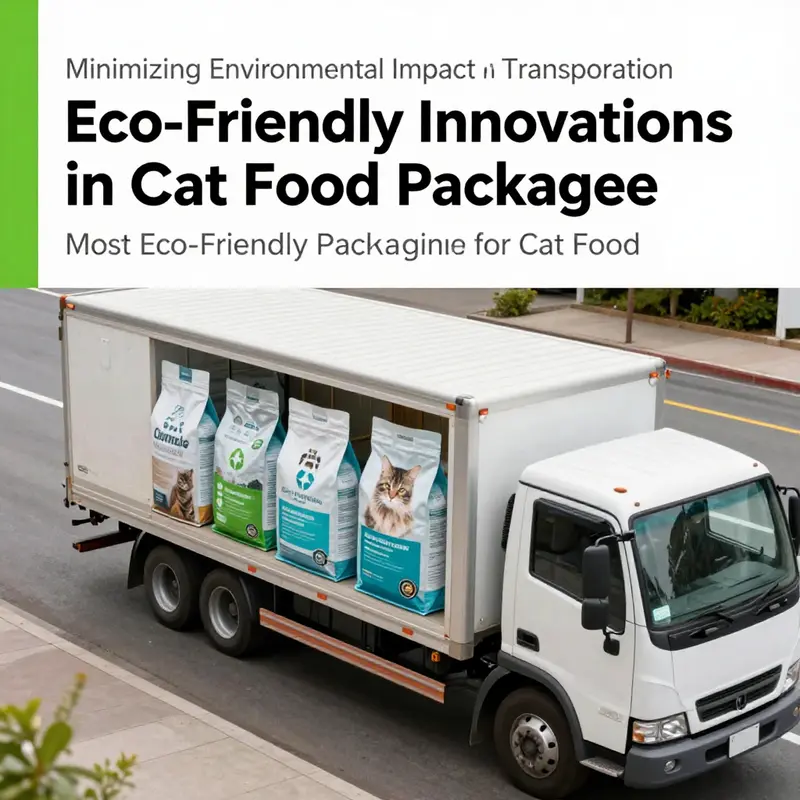
The journey of cat food packaging from factory to kitchen shelf is as much a story of movement as it is of materials. In the push toward environmental stewardship, the transportation phase often determines the overall footprint more than the choice of raw materials alone. Lightweight, compact designs can shave energy use from every mile, while smarter logistics can trim idle time, fuel burn, and emissions across a product’s life. When the packaging itself is designed with transport in mind, the cumulative effect ripples through the supply chain and into the homes of pets and their people. To appreciate how transportation shapes the ecological profile of the most eco-friendly cat food packaging, it helps to imagine a few core principles at work and then tracing how real-world design choices align with them. In practice, the best pathways balance material science, route optimization, and forward-looking logistics, all while preserving the product’s safety, integrity, and nutrient quality.
A central lever is weight and volume. Heavier or bulkier packaging demands more energy to move, regardless of the packaging’s end-of-life recyclability. The most eco-friendly approaches seek to reduce both weight and the space a single unit occupies in a shipping container or pallet. A notable example, in generic terms, is a main meal can designed to be 90 grams and fully recyclable. The low mass translates into tangible savings in fuel consumption per shipment, particularly when hundreds or thousands of units travel together. Beyond the weight, the geometry matters too. Packaging that stacks neatly and efficiently fills pallets without leaving voids minimizes unused space, which in turn reduces the number of trips required to deliver the same quantity of product. When every container is optimized for stacking, the logistical system waste that would otherwise accumulate during loading, unloading, and warehousing starts to shrink.
Another pillar is the material mix itself. Recyclability should not be sacrificed for lighter weight; instead, the aim is to pair materials that offer both. Metal tins, for instance, are prized for durability and high recyclability, enabling a circular lifecycle with a relatively straightforward recycling process in many communities. The idea is not to substitute metal with plastic for the sake of weight alone but to employ materials that maintain structure and shelf life while supporting end-of-life recovery. In the broader landscape of eco-friendly packaging, carton-based systems made from FSC-certified paperboard present a compelling complement. This combination—the durability of metal when appropriate and the recyclability of paper-based alternatives—can significantly impact transportation because paperboard components tend to be lighter, can be designed to minimize laminate layers, and often require fewer resources to process at end of life in well-equipped recycling streams. The most forward-looking designs embrace both worlds where suitable and avoid unnecessary plastics or non-recyclable laminates that complicate recycling downstream.
The story of packaging in the transport stream also hinges on the materials’ life-cycle realities. In some premium lines, the packaging approach includes a lightweight, recyclable metal can paired with a packaging process that preserves nutrients using dry or frozen-dried techniques rather than chemical preservatives. While the methods of preservation are separate from transport, their influence on packaging complexity is real. Clean-label approaches that reduce additives can also streamline the packaging system by lowering the demand for protective laminates and seals, which in turn lightens the load carried by distribution fleets. In this context, the transport narrative becomes a holistic one: if the product requires fewer protective layers, less plastic, and less bulky packaging, then the shipping footprint naturally contracts. The upshot is a packaging system that supports a cleaner supply chain while maintaining product integrity.
A practical pathway to lighter, more transport-friendly packaging is the adoption of carton-based formats built from high-quality, certified paperboard. Options that use FSC-certified materials and minimize plastic coatings can offer meaningful advantages in both weight and recyclability. In addition to the material choice, the design should feature an easy-to-open yet resealable mechanism that reduces food waste during storage and handling. When packaging is efficient to both ship and use, the consumer’s disposal behavior becomes a positive, reinforcing loop rather than a source of waste in the chain. The emphasis on easy recycling and high recyclability aligns squarely with transport efficiency: fewer materials types and simpler end-of-life processing reduce the energy and emissions tied to post-consumer recovery.
Logistics choices exert a parallel if not equally powerful influence. Route optimization uses data and analytics to streamline delivery paths, consolidate shipments, and shorten the total distance traveled. In a world where transport fleets rely on diesel, every avoided mile translates into fewer grams of CO2 per unit. Consolidation strategies—combining orders from multiple retailers or warehouses into single, well-timed routes—maximize load factors and reduce the number of trips required to move the same amount of product. In parallel, advances in vehicle technology matter. When feasible, switching to low-emission delivery options, including electric or other cleaner-power fleets for last-mile legs, can dramatically reduce local air pollution and the overall carbon footprint of a product’s journey. The practical challenge is balancing the economics and infrastructure needs of such fleets with delivery timelines and regional availability. Still, as more regions deploy charging networks or alternative-fuel solutions, the transport side of eco-friendly cat food packaging becomes increasingly feasible and scalable.
Local sourcing of packaging materials is another lever with transport benefits. Shorter supply chains mean fewer miles from supplier to factory to warehouse to store shelf. Local or regional mills and converters reduce the energy spent on long-haul shipping of raw materials and finished goods. This approach also strengthens resilience in the supply chain by limiting exposure to disruptions that can cascade across distant networks. Of course, local sourcing must be weighed against material performance, cost, and availability. In some cases, the environmental gains from shorter distances are substantial, but they must be balanced with the need for packaging that still protects the product throughout its shelf life. When done thoughtfully, local sourcing enhances the overall sustainability profile by trimming transport emissions while supporting regional economies and reducing lead times.
Consumer behavior sits at the far end of the chain and ultimately closes or widens the loop of environmental impact. Even the best-designed packaging and optimized transport plan can be undermined if disposal habits lag. The most eco-friendly packaging programs emphasize recyclability and compostability and provide clear, accessible guidance for disposing of containers correctly. When consumers dispose of cans, cartons, or fiber-based packaging into appropriate recycling streams, the end-of-life phase becomes part of a circular economy rather than a linear throwaway path. In turn, efficient end-of-life processing reduces the energy and emissions associated with material recovery and reprocessing, reinforcing the environmental benefits achieved upstream in design and logistics.
The conversation about transport-friendly packaging would be incomplete without acknowledging the importance of cross-functional coherence. Designers, procurement specialists, logistics planners, and retailers must align goals around weight, volume, and recyclability. The packaging must not only be technically recyclable but also practically recoverable within the local waste and recycling infrastructure. In regions where curbside recycling supports metal cans and FSC-certified paperboard, the case for lighter, purer packaging grows stronger. In places where recycling streams are less robust, the emphasis shifts toward minimizing material complexity, avoiding multilayer laminates, and favoring designs that tolerate a wide range of post-consumer processing options. This is not a one-size-fits-all mandate; rather, it is a framework for making intelligent, locally attuned choices that reduce transport energy while preserving food quality and safety.
To illustrate how these design and logistical principles translate into real-world choices, consider the core elements present in the most eco-friendly packaging strategies. First, a packaging system prioritizes recyclability, choosing metal tins or carton-based formats that can be recovered and reprocessed with minimal contamination. Second, the system emphasizes sustainable raw materials, such as paperboard derived from responsibly managed forests, with a lean laminate approach that keeps barriers sufficient but simple. Third, the form factor remains lightweight and compact, compressing shipping volume and enabling more efficient stacking and palletization. Fourth, the supply chain is optimized for routes, consolidation, and, where feasible, low-emission deliveries. Fifth, sourcing is local where practical, shortening the chain and reducing transport emissions while stimulating regional economies. Sixth, the product design minimizes waste in use and end of life, encouraging consumers to recycle or repurpose packaging wherever possible.
The integration of these elements does not happen by accident. It requires a thoughtful, iterative process in which packaging engineers, logistics teams, and sustainability professionals collaborate from concept to carton. It also invites consumer education. When shoppers understand that choosing a packaging system designed for efficient transport can meaningfully lower emissions, they become participants in the circular economy rather than passive observers of a supply chain. The packaging choice thus becomes a conversation between product performance and environmental responsibility, a conversation that travels from the plant floor to the road, to the recycling facility, and back again through a refreshed product cycle.
From a practical lens, the considerations above translate into a few concrete guidance points. Favor packaging that is light and stackable, avoiding unnecessary plastic layers and non-recyclable laminates. Favor materials that can be recovered through established recycling streams, such as metal cans where appropriate and FSC-certified paperboard for cartons. Design for efficient shipping by ensuring forms are compact and fill standard pallet footprints. Optimize supply chains with data-driven route planning and shipment consolidation. Where possible, introduce or rely on low-emission delivery options to shrink the final-mile footprint. Prioritize local or regional sourcing of materials to shorten the lifecycle miles traveled. Finally, pair these design and logistics choices with clear consumer guidance on disposal to close the loop and facilitate high-quality recycling or composting where available.
In this way, the transportation phase becomes not a back-end afterthought but a central lever in the quest for truly eco-friendly cat food packaging. When the packaging is designed to travel light, ship efficiently, and be recovered cleanly, the entire lifecycle gains resilience and clarity. The result is a packaging story that supports a healthier planet without compromising the care animals receive in their meals. For readers who want to explore practical packaging options further, a concrete example of a Kraft paper packaging approach—emphasizing simple, recyclable, and low-waste design—can be found here: Kraft paper packaging options. This reference highlights how a simple packaging shift can influence weight, volume, and end-of-life recovery while remaining adaptable to diverse distribution networks.
For those seeking a broader, external perspective on sustainable pet packaging and green logistics, a comprehensive resource provides deeper guidance on reducing environmental impact throughout the supply chain. It offers benchmarks, case studies, and practical steps that echo the themes discussed here: https://www.freightamigo.com/blog/sustainable-pet-food-packaging
Packaging with Purpose: Eco-Friendly Cat-Food Packaging and the Circular Path Forward
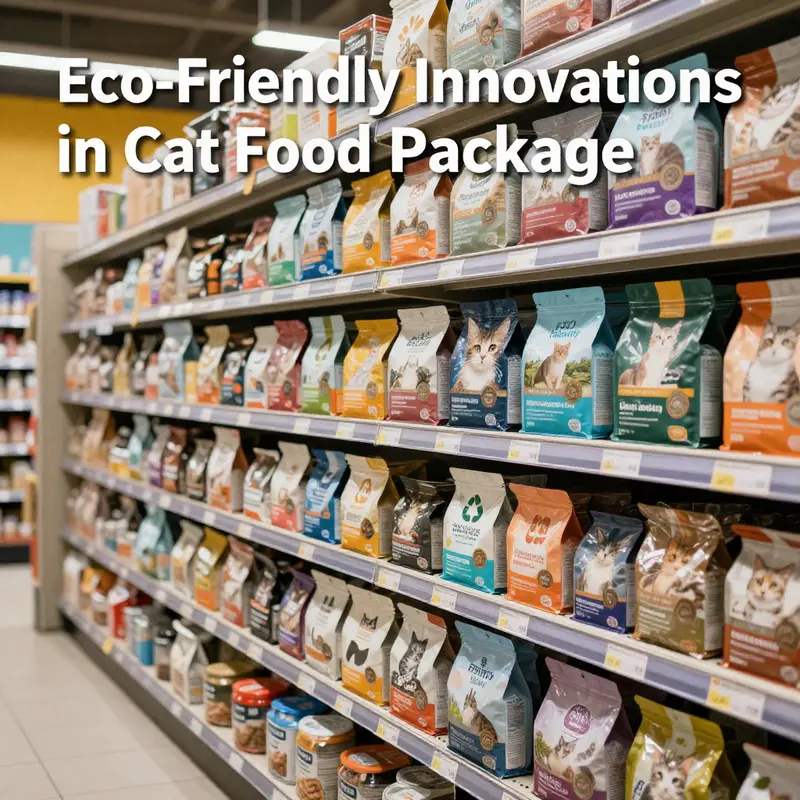
Shoppers today approach pet care with a purposeful gaze. When selecting cat food they weigh taste and price but also packaging and footprint. Packaging signals a brand values and the product lifecycle. Consumers expect recyclable materials, responsibly sourced inputs, simple end of life guidance and transparency about disposal. This shift makes packaging a frontline signal of environmental stance and product quality.
One guiding principle is recyclability that aligns with local waste streams. Metal tins and paperboard packaging offer clear end of life options when local systems accept them. Designers are encouraged to minimize laminates and keep materials compatible with existing recycling streams.
Beyond packaging choices, the story includes sourcing and energy use. Suppliers may rely on renewable inputs and cleaner production. Lightweight designs reduce transport emissions and overall carbon footprint.
Transparent verified claims and third party certifications build consumer trust and reduce misperception. In sum, eco friendly packaging aims to balance product integrity, affordability, and planetary health, guiding brands toward a more sustainable pet care future.
Final thoughts
The shift towards eco-friendly cat food packaging represents a transformative step in the pet food industry that aligns with global sustainability efforts. By embracing recyclable materials, sustainable raw sources, and efficient transportation methodologies, businesses in the food and beverage sector can not only play a pivotal role in reducing environmental impact but also cater to a growing segment of eco-conscious consumers. Making informed decisions about packaging needs today will ensure a healthier planet for tomorrow, fostering stronger customer relationships and brand loyalty among those who share these values.