
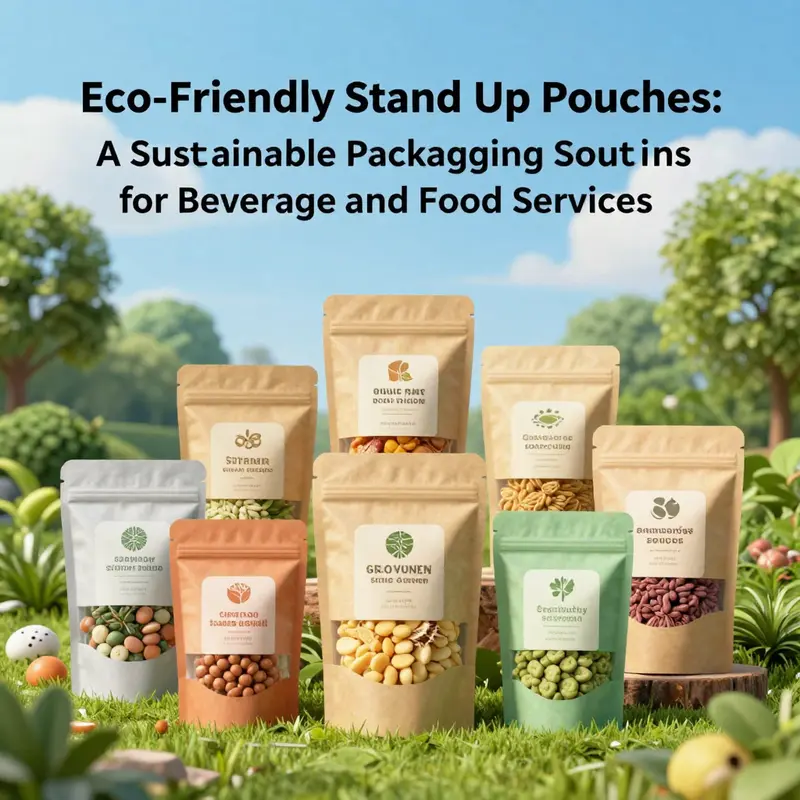
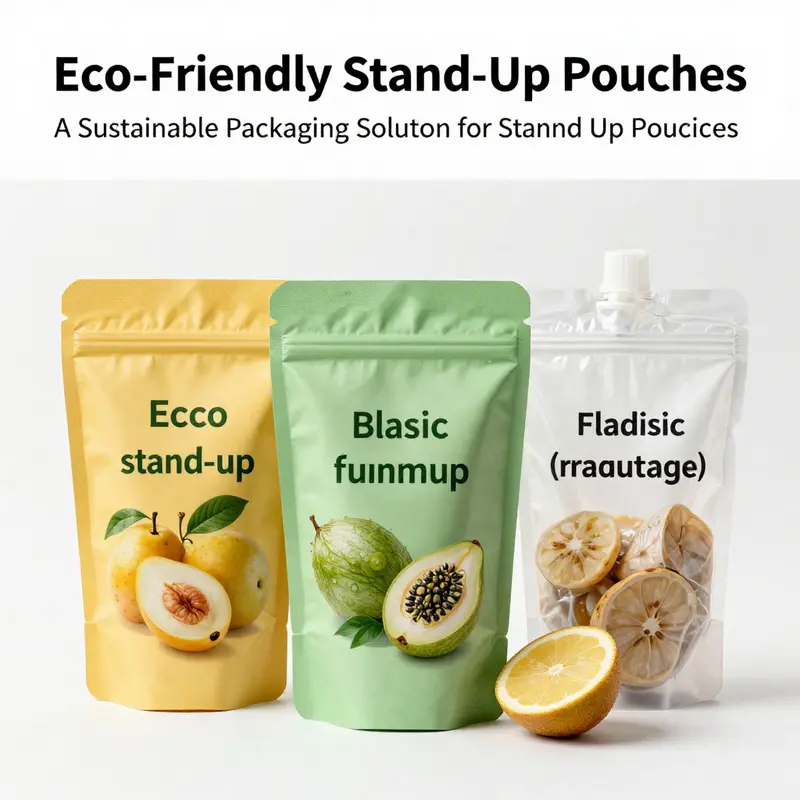
Eco-friendly food packaging stand-up pouches have emerged as a critical solution for businesses aiming to meet environmental responsibilities while delivering convenience and quality. Tailored for beverage chains, restaurants, food trucks, and event planners, these pouches are crafted using sustainable materials, providing an excellent alternative to traditional packaging. As we delve into the significance of sustainable materials, customizable designs, market dynamics, and the environmental impacts of these pouches, you’ll learn how these innovative packaging solutions not only align with eco-conscious practices but also enhance your brand’s commitment to sustainability. This comprehensive insight aims to equip you with the knowledge to make informed decisions and embrace more sustainable operations.
Materials in Motion: How Renewable, Recycled, and Biodegradable Films Redefine Stand-Up Pouches
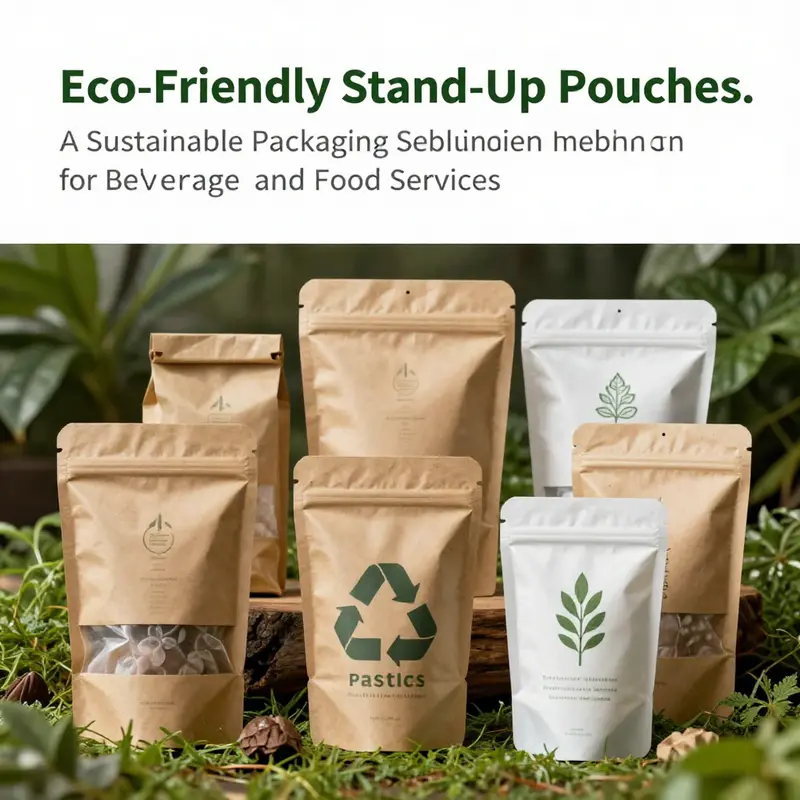
Sustainable materials are no longer a niche concern for eco-conscious brands; they have become a core driver of design, performance, and consumer trust in stand-up pouches. The shift reflects a broader industrial pivot toward renewable resources, recycled content, and end-of-life clarity. These pouches, once a simple barrier between food and the outside world, are now complex multi-layered systems where each layer plays a specific role in freshness, structure, and responsibility. The goal is to balance robust barrier properties with a lighter environmental footprint, a challenge that has spurred a range of material innovations and collaborative supply-chain strategies.
At the heart of this evolution is the use of renewable resources. Plant-based plastics, such as polylactic acid (PLA) derived from corn starch, demonstrate how bio-based inputs can substitute traditional fossil-based plastics in portions of the pouch structure. PLA offers transparency, heat tolerance suitable for certain products, and a lower apparent carbon footprint when grown and processed under responsible conditions. Beyond PLA, brands are experimenting with other bio-based polymers that can replace conventional resins in specific layers without sacrificing seal integrity or machinability. The practical upshot is that stand-up pouches can reduce their dependence on virgin petroleum-based materials while maintaining the performance levels customers expect for dry and semi-dry goods.
Recycled content also plays a critical role in modern pouch design. Incorporating recycled plastics into the laminate stack reduces the demand for new resin production and helps close the loop for packaging waste. Recycled polyethylene (rPE) or recycled polypropylene (rPP) can be used in outer layers or as functional components within multi-layer structures, depending on barrier requirements and processing compatibility. The ability to design with recycled content does not automatically negate recyclability; rather, it prompts a careful assessment of how the entire packaging system will be treated after use. When the materials are chosen to align with local recycling streams, the perceived and actual environmental benefits multiply, because the post-consumer pouches become feedstock for new products instead of becoming waste.
Another strand of material innovation focuses on biodegradable and compostable films. These are designed to degrade more quickly under specified environmental conditions, aligning with circular economy principles. Biodegradable films can be formulated to maintain barrier performance during shelf life and then break down in industrial composting facilities or, in some cases, under home-composting conditions. The key caveat is that end-of-life success hinges on appropriate waste management infrastructure; without access to composting programs, the biodegradable option may not realize its full environmental potential. Nevertheless, these films expand the toolbox for brands seeking to tailor packaging to consumer values and regional waste systems.
Mono-material structures have emerged as a practical strategy to enhance recyclability. By using a single type of plastic for the main barrier layers—such as polypropylene (PP) or polyethylene (PE)—manufacturers can simplify sorting and processing at recycling facilities. This approach reduces the mechanical and chemical complexity associated with multi-material laminates that require separation before recycling. While mono-material pouches may sometimes challenge barrier optimization, advances in sealant technologies, micro-porous coatings, and thin-film enhancements have allowed performers to achieve competitive shelf life and moisture protection without sacrificing recyclability.
A parallel trend is the adoption of water-based inks and adhesives. Traditional solvent-based inks contribute to volatile organic compound (VOC) emissions and raise concerns about worker exposure and environmental impact. Water-based inks minimize emissions, offer a broader color gamut, and can be formulated to meet stringent food-contact safety standards. Similarly, adhesives designed for aqueous systems reduce hazardous solvent content and improve the overall safety profile of the finished pouch. For brands seeking to emphasize a clean, green image, these coating and printing choices provide tangible benefits that resonate with environmentally minded consumers, while also supporting regulatory compliance in jurisdictions that regulate solvent use and emissions.
Industry developments extend beyond material choices to how packaging operates within a circular economy. Designers and manufacturers are increasingly focused on end-of-life pathways, not just during shelf life. Closed-loop systems are gaining traction in which used pouches are collected, recycled, or repurposed into raw materials for new packaging or other products. These systems require cooperation across the value chain, including retailers, waste haulers, recyclers, and resin producers, to ensure that the recovered materials retain sufficient quality for reuse. When successful, closed-loop approaches can substantially reduce the net environmental impact and create a tangible competitive advantage for brands that can demonstrate a transparent, traceable flow of materials.
The implications for high-volume sectors are particularly meaningful. In coffee and tea, where pouches are often exposed to humid, aromatic contents, the demand for sustainable options is not merely aspirational; it is a practical performance consideration. Consumers expect packaging that preserves freshness while reducing waste, and manufacturers respond by aligning packaging architecture with these dual goals. For baby foods and plant-based dairy alternatives, the need to deliver a clean label and a low-carbon footprint further intensifies the push toward sustainable materials. In each case, the selected materials influence not only the product’s shelf life but also the perception of brand responsibility, which increasingly informs purchase decisions.
Material selection, however, is not purely about the resin or the film’s chemistry. It also encompasses the broader design logic of the pouch. Consumers increasingly scrutinize packaging elements such as packaging structure, recyclability cues, and labelling practices. Transparent or semi-transparent films enabling product visibility, for example, must still mask or minimize food contact concerns while keeping the barrier intact. The modern stand-up pouch thus becomes a balanced system: the outer layers signal sustainability through the use of recycled content or bio-based inputs, while the inner layers guarantee freshness and high barrier performance. Achieving this balance often requires meticulous testing, life-cycle assessments, and collaborative development with material suppliers to tailor barrier properties for a given product matrix and storage conditions.
Along with technical performance, the market and regulatory environments influence material choices. Regulations around plastic reduction, recyclability, and compostability are increasingly harmonized across regions, yet remain nuanced enough to require localized solutions. Brands must design for the specific end-of-life infrastructure available to their customers. In places with robust curbside recycling, mono-material pouches with barrier-enhancing coatings may offer straightforward recycling pathways. In areas where industrial composting is more accessible, compostable films can be a strategic option, provided the label and adhesive systems align with compostability standards. This regulatory and infrastructural mosaic drives ongoing innovation and collaboration across the supply chain, pushing material science toward pouches that perform well in actual disposal streams, not just in the laboratory.
The practical impact for businesses is clear: sustainable materials can reduce total environmental footprints, improve consumer trust, and align with evolving policy landscapes. The potential benefits extend beyond raw material selection to the entire packaging value chain—inventory management, shipping efficiency, and consumer education about end-of-life options. For example, packaging designed for easy recycling or composting can be paired with consumer-facing instructions that guide users toward appropriate disposal streams, thereby closing the loop more effectively. While the journey toward fully circular stand-up pouches is ongoing, every material decision contributes to a broader trajectory toward responsible packaging that respects resource limits and celebrates innovation.
As brands experiment with combinations of renewable inputs, recycled content, and end-of-life strategies, it becomes essential to balance ambition with practicality. Not every product will suit every material profile, and trade-offs are inherent. A coffee pouch that emphasizes compostability may require a dedicated waste stream; a pouch leveraging mono-material recyclability may optimize recycling facilities but demand higher-performance coatings. The most successful implementations emerge from a deep, collaborative approach that connects product developers, material scientists, waste-management partners, and retailers. In such ecosystems, the pouch becomes more than a container; it functions as a node in a sustainable system, signaling commitment to the environment while delivering the taste, aroma, and convenience that consumers expect.
From a reader’s perspective, the material story behind stand-up pouches is a reminder that eco-friendly packaging is a dynamic field, not a static choice. The materials science behind these pouches is evolving rapidly, driven by climate urgency, consumer demand, and the ethical imperative to reduce waste. The best practices now emphasize not only what is in the pouch but also how it fits into a circular economy—how it is made, how it is used, and how it is eventually returned to the system for reuse or recycling. The chapter’s themes echo a broader truth: sustainable packaging is most effective when it integrates material science with thoughtful design, responsible sourcing, and robust end-of-life options. When these elements align, stand-up pouches can deliver on both performance and principle, offering a practical, scalable path toward greener everyday packaging.
To connect this material-centric vision with the broader packaging ecosystem, consider the interplay between design choices and consumer behavior. Clear communication about material attributes—whether a pouch uses a high proportion of recycled content, relies on bio-based inputs, or is compatible with a local recycling stream—helps consumers make informed decisions. This transparency strengthens brand loyalty while encouraging responsible disposal practices. In the end, sustainable materials are not merely a technical specification; they are a narrative about stewardship, innovation, and the shared responsibility of reducing plastic waste across countless daily uses. As more brands adopt streamlined, recyclable, or compostable pouches, the market predictable moves toward standardization, scale, and the emergence of reliable collection systems, all of which reinforce the feasibility and desirability of eco-friendly packaging in the stand-up pouch format.
For readers seeking practical cues about integrating these materials into real products, a nearby option is available within the broader packaging catalog of the industry’s supply network. See Kraft Paper Octagonal Bowl in Stock for a related example of how kraft-based formats are being deployed across packaging lines to support a unified, earth-friendly aesthetic and performance in take-away applications. Kraft Paper Octagonal Bowl in Stock.
Finally, for a wider policy and environmental-management context that informs material choices and end-of-life pathways, refer to the U.S. Environmental Protection Agency’s overview of sustainable plastics management. As the agency notes, reducing plastic waste requires coordinated actions across design, production, reuse, collection, and recycling—an ecosystem view that aligns closely with the evolving craft of stand-up pouches and their materials. External resource: https://www.epa.gov/sustainable-management-plastics
Designing for Impact: Customization, Materials, and the Promise of Eco-Friendly Stand-Up Pouches
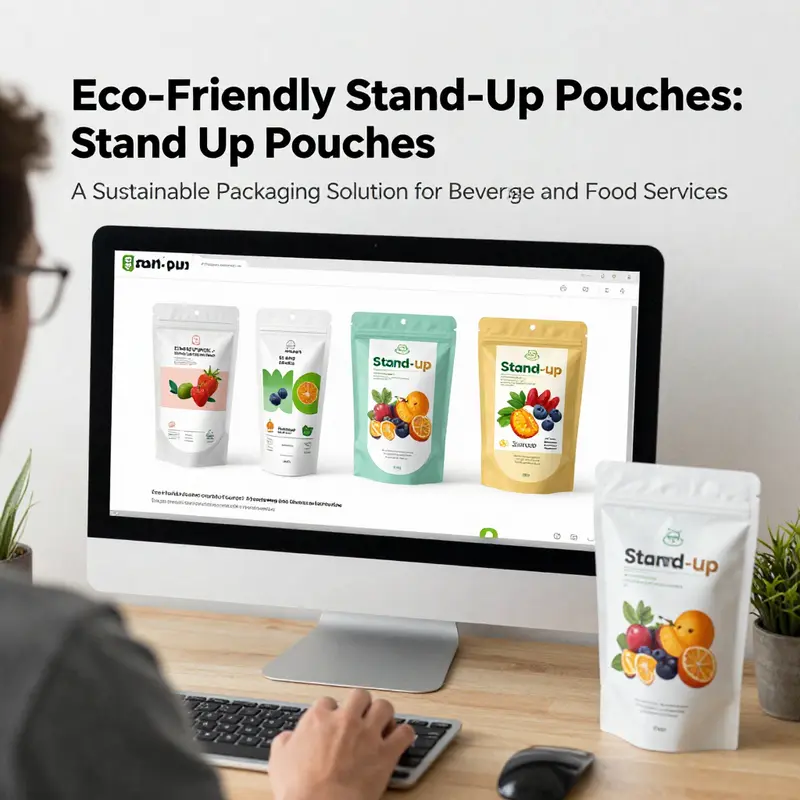
Customization and design in eco-friendly food packaging stand-up pouches operate at the intersection of form, function, and responsibility. They are not merely a surface for branding; they are a delivery system for product integrity, consumer trust, and a tangible commitment to reducing waste. In the modern retail environment, the pouch has evolved from a simple sack into a versatile platform that can be tuned to a product’s exact needs while still supporting a circular economy. The most compelling designs treat customization as a strategic asset that aligns aesthetic appeal with environmental stewardship, rather than as a cosmetic afterthought. This approach requires a deliberate balance: materials must be chosen for their performance and end-of-life options, printing and finishing must communicate truth in labeling and avoid misleading claims, and structural features must enhance user experience without creating unnecessary waste. When brands get this balance right, stand-up pouches become ambassadors for sustainability on the shelf, capable of preserving flavor and aroma while signaling to consumers that a brand stands behind responsible packaging choices.
Material choice is the backbone of any customization strategy for eco-friendly stand-up pouches. Modern pouches often combine barrier laminates that include recyclable films with layers made from polyethylene (PE) or polyethylene terephthalate (PET), among others, to create moisture, oxygen, and light barriers that preserve product quality. Certifications such as SEEDLING and OK-Biobased are increasingly sought after because they provide a credible signal to regulators and environmentally conscious shoppers alike. These materials are designed to meet global environmental standards without sacrificing performance. They enable shelves to remain visually striking while delivering dependable shelf life for snacks, coffee, tea, baby foods, and even plant-based dairy alternatives. The materials’ compatibility with recycling streams or composting processes is central to the design conversation. If a pouch is not aligned with recycling infrastructure or appropriate composting facilities, even the most elegant print and shape risk becoming a barrier to true sustainability. That is why the most effective customization strategies begin with a clear view of end-of-life options and how those options map to regional waste management realities.
The range of customization options available today is broad and pragmatic. Brands can push the envelope with full-color printing—often up to ten colors—on either transparent or opaque films. This capability opens up vivid shelf designs and strong storytelling opportunities without requiring opaque inks that obscure the material’s environmental benefits. On transparent films, bold, color-rich graphics can be layered with product visibility, enabling a consumer to glimpse the product while still featuring eye-catching branding. For opaque films, designers can leverage color blocks, gradients, and high-contrast typography to maximize readability for nutrition information and usage instructions. The printing process must also align with food-grade safety standards and ensure ink adhesion remains robust through the product’s lifetime. The result is packaging that is as visually compelling as it is responsible.
Beyond aesthetics, functional features are central to customization in a way that directly influences product freshness and consumer convenience. Zipper-top seals and resealable closures, tear notches for easy opening, and easy-pour or wide-mouth openings translate into tangible benefits for the consumer. These features support repeated usage, which in turn can enable refillable or bulk-bulk purchase scenarios that dramatically reduce waste. Refillable versions, in particular, demonstrate how design can extend the lifecycle of packaging. When a family or consumer group reuses the pouch by filling it from bulk containers, the waste generated per unit of product can drop significantly—often cited as a potential reduction of packaging waste by up to 70%. That kind of improvement is not just a nice statistic; it is a practical outcome that can affect household behavior and corporate sustainability metrics alike. The challenge, of course, is maintaining barrier integrity and product protection across repeated uses. Thoughtful pouches will incorporate durable closures, secure resealability over time, and materials that resist deformation, ensuring that the pouch remains functional long after the initial purchase.
The stand-up design itself represents a design decision with strategic implications. The vertical, freestanding profile maximizes shelf presence and enables efficient display layouts in retail environments. It also supports a broad range of product formats—from single-serving snacks to larger, multi-serve blends like coffee and tea. Positioned on a shelf, a stand-up pouch can carry a concise, readable message about sustainability alongside product specifics such as origin, ingredients, and nutrition. The typography and graphic composition must consider legibility across sizes, including in low-light retail environments and on mobile shopping interfaces. This is where design and material science converge: white-space strategy, color contrast, and typography must harmonize with the pouch’s material attributes to ensure legibility while preserving the integrity of branding. The end effect is a packaging solution that is not only attractive but also honest about its capabilities and limitations.
One of the most consequential aspects of customization is how it communicates sustainability to the consumer. Labels, claims, and visual cues should reflect real environmental attributes rather than speculative green messaging. For example, a pouch may advertise recycled content, recyclable film, or compostability where supported by local waste systems. Brands must be cautious to avoid over-promising; a pouch that claims to be “compostable” needs to be compatible with industrial composting facilities or home composting contexts as appropriate, and that distinction should be clearly conveyed to the consumer. This clarity helps to build trust, which is essential in a marketplace increasingly skeptical of vague sustainability claims. The color palette and material finish can reinforce these messages: a natural kraft appearance can emphasize recyclability or post-consumer content, while a glossy finish may highlight premium attributes or flavor profiles. The interplay between finish, color, and material can also influence heat and light sensitivity considerations, which in turn affects how a brand presents its value proposition without compromising product performance.
A practical dimension of customization centers on regulatory compliance and quality assurance. Packaging designers must navigate a landscape of certifications and safety approvals to ensure that customized pouches are acceptable for food contact. Certifications such as EPR (Extended Producer Responsibility) considerations in Germany and general food-grade safety approvals are part of the design brief for many manufacturers. These regulatory elements are not mere bureaucratic hurdles; they are critical guardrails that protect consumers and stabilize supply chains. They also reassure retailers and distributors that the packaging can perform in diverse environments—from high-humidity enclosures to long transit routes—without compromising safety or quality. In this context, customization decisions are not reckless leaps but calculated choices that balance branding needs with compliance realities. The most successful collaborations between brands and packaging suppliers emerge when design teams budget for testing, validation, and documentation as integral components of the customization process rather than afterthoughts.
Sourcing and supply chain considerations form another axis of customization practice. For brands pursuing fully customized, eco-friendly stand-up pouches, the procurement path often begins with clear specifications and a robust dialogue about material composition, printing capabilities, and production scale. Suppliers can accommodate bulk orders—often starting at large minimum quantities like 100,000 units or more—and pricing can range widely based on material structure, lamination layers, and the level of customization. The economics of customization require careful planning around volumes, lead times, and post-order support. Some suppliers offer free samples or flexible payment terms in USD, which can ease the transition from concept to cart. The ability to source a pouch that meets both sustainability targets and brand standards is a key lever in achieving a successful go-to-market strategy. When planning a line extension or a new product, brands may also explore bulk-sourcing platforms that streamline supplier discovery while keeping environmental criteria front and center. The result is a supply chain that is more resilient and aligned with long-term sustainability goals rather than a one-off campaign objective.
The aesthetic and structural language of a pouch is also a reflection of the consumer’s evolving expectations around packaging. Today’s shoppers gravitate toward designs that convey clarity, honesty, and a sense of responsibility. That means typography must clearly present ingredients, nutrition, and allergen information, while the packaging must avoid over-claiming benefits that cannot be substantiated. A well-designed pouch delivers an intuitive user experience: a resealable zipper that maintains freshness, an easy-tear notch that respects the product’s delicate contents, and a closure system that is reliable even after multiple openings. It also considers the practical realities of real-world usage. For instance, a coffee or tea pouch should protect aromatic compounds from oxygen ingress while offering a user-friendly opening and resealing experience. A snack pouch should balance visibility with barrier protection to preserve crunch and flavor. All of these design choices are part of a cohesive customization strategy that communicates both brand personality and environmental responsibility.
In the conversation about customization and design, it is important to acknowledge that eco-friendly does not automatically equal universal recyclability. Recycling streams vary by region, and some barrier laminates are not accepted in all municipal programs. This reality underscores the need for transparent consumer guidance and forward-looking design decisions. Packaging designers increasingly incorporate clear end-of-life instructions, labeling that helps consumers separate materials, and, where feasible, transitions toward monomaterial architectures that simplify recycling. The best practice is a design that respects the product’s needs while remaining compatible with existing waste systems and encouraging improvements in waste infrastructure over time. In parallel, experimentation with refillable configurations and bulk-fill packaging demonstrates how design can influence consumption patterns in meaningful ways. When implemented thoughtfully, these strategies reduce waste, lower per-unit environmental footprints, and encourage a more mindful approach to packaging throughout the product’s lifecycle.
As a practical example of how customization translates into real-world decisions, consider the potential to tie packaging design to a broader sustainability narrative. The pouch becomes a tangible piece of a brand’s environmental storytelling, signaling a commitment to responsible materials, responsible use, and responsible disposal. The graphic language can reflect the sourcing story, the recycling journey, or the community impact of a brand’s packaging program. In this light, the pouch is more than a container; it is a communication vehicle that supports consumer understanding and fosters loyalty. Rather than viewing customization as a single moment in product development, it becomes an ongoing dialogue between brand, supplier, and consumer—an ecosystem that can evolve as materials science advances, as waste management evolves, and as consumer expectations shift toward greater accountability.
For brands seeking to navigate this complex landscape, a pragmatic path emerges. Start with a materials-enabled design that prioritizes barrier performance and end-of-life options. Layer in branding elements that communicate truth and encourage responsible use, then add functional features that improve consumer experience and reduce waste through recyclability or refillability. Finally, align with suppliers who can deliver on scale, offer credible certifications, and support transparent communication about environmental attributes. In this way, customization becomes a driver not only of shelf appeal but of sustainable practice across the product’s entire journey—from production to disposal.
To illustrate how design inspiration can translate into tangible packaging choices, consider the following: a pouch that uses a kraft-paper exterior with a recyclable inner film communicates a natural, eco-friendly impression while preserving barrier integrity; a four-color printing scheme on an opaque film delivers high contrast for nutrition panels and branding while ensuring ink safety for food contact; a resealable zipper and a tear notch provide a seamless user experience that encourages repeated usage without compromising freshness. The goal is to craft a pouch that is visually compelling, practically resilient, and environmentally responsible. When successful, this combination of design and material science resonates with consumers who seek authenticity and value in their packaging choices. It also positions brands to participate constructively in the broader dialogue about sustainable packaging, a dialogue that includes suppliers, retailers, regulators, and, most importantly, the end consumer who will decide whether a pouch has earned a place in their home and in their waste stream.
For readers who want to explore a concrete example of the customization possibilities within eco-friendly stand-up pouches, a category of product sourcing platforms highlights the availability of fully customized, eco-friendly options. These platforms emphasize stock availability, material choices—including eco-friendly kraft paper and recyclable films—and scalable pricing models that reflect the degree of customization and the material stack. While price and minimums vary, the trend toward flexible customization demonstrates that sustainability and customization are not mutually exclusive; rather, they can be deliberately combined to meet brand goals and consumer expectations alike. The strategic takeaway is clear: customization should be purposeful. It should hardwire the product’s environmental narrative into the packaging design while maintaining or enhancing performance and consumer satisfaction. The pouch, in other words, is a conduit for responsible consumption rather than a mere barrier to product access.
For marketers and product developers, the challenge is to balance ambition with practicality. Bold customization that pushes color and form must be paired with robust testing to ensure that prints remain legible and colorfast under typical storage and handling conditions. The packaging must withstand the rigors of distribution, from warehouse to shelf to home refrigerators, without compromising safety or usability. The strongest designs emerge when brand teams cultivate close collaboration with packaging engineers, printing partners, and regulatory experts. This cross-functional approach enables the creation of stand-up pouches that deliver both distinguished branding and credible environmental performance. It also ensures consistency across product lines, enabling a cohesive sustainability story that can scale with the brand’s growth while staying faithful to ecological commitments.
In closing, customization and design in eco-friendly stand-up pouches are about more than aesthetics or novelty. They are about shaping the product experience in a way that respects the product, the consumer, and the planet. When brands treat customization as a strategic tool—guided by material science, supported by credible certifications, and grounded in end-of-life realities—the pouch becomes a powerful vehicle for responsible innovation. The result is packaging that not only protects freshness and flavor but also communicates a credible environmental promise. It is packaging that invites trust, supports responsible consumption, and aligns business success with a healthier planet. For readers who wish to see a tangible example of the broader ecosystem in which these designs operate, a representative listing on a packaging platform illustrates the availability of custom, eco-friendly stand-up pouches, including material options and pricing. External reference: https://www.alibaba.com/product-detail/maibao-MB-Custom-printed-eco-friendly_1600723549684.html
Rising Demand, Reducing Footprints: Market Dynamics and Pricing of Eco-Friendly Stand-Up Pouches
The shift toward eco-friendly stand-up pouches is not just a trend; it is reshaping how brands think about storage, shelf life, and the footprint they leave on the world. As consumers become more aware of plastic pollution and the consequences of embedded carbon, they are voting with their wallets for packaging that offers performance without sacrificing responsibility. This growing demand is not a mere preference; it is a market signal that companies of all sizes cannot ignore. Retailers who want to align with sustainability without compromising convenience are increasingly favoring solutions that combine durability, resealability, and low environmental impact. In response, suppliers are recalibrating their materials and processes to offer a spectrum of options that can meet a range of product specs, price points, and waste-management realities. The core dynamic is simple: consumers want less waste, brands want longer shelf life and better protection, and packaging makers must bridge both with materials that can be recycled, composted, or safely degraded after use.
At the heart of this shift is material innovation. Eco-friendly stand-up pouches now commonly incorporate kraft paper, recycled plastics, and a variety of biodegradable laminates. The move toward mono-material structures is particularly important because it simplifies end-of-life sorting and recycling. Plant-based films and compostable laminates are no longer fringe options; they are increasingly supported by regional recycling and composting infrastructures, standards, and certifications that help consumers trust how to dispose of them properly. In addition to new materials, the design space is expanding to accommodate a range of consumer needs. Brands can tailor sizes, shapes, and closures to suit specific products—from bite-sized snacks to coffee blends and baby foods. Reclosable zippers and wide-mouth openings increase usability, reduce product waste, and encourage re-use in refill scenarios. Refillable options, in particular, can dramatically cut packaging waste in homes by up to 70 percent, a statistic that resonates with families seeking practical, real-world reductions in daily consumption.
The versatility of stand-up pouches across categories underscores their role in a broader ecosystem of sustainable packaging. Snacks and confectionery are natural fits, but pouches have also found traction in coffee and tea blends, baby foods, and even dairy alternatives like plant-based milks. Their moisture-proof and airtight properties help preserve freshness, which means longer shelf life without relying on heavy preservatives. For foods that travel well or require a robust barrier against oxygen and humidity, pouches offer a compelling blend of protection and convenience. This functional advantage is a key part of why, across markets, the adoption curve for eco-friendly pouches has been upward and steady.
From a business perspective, the economics of eco-friendly pouches reflect both the scale of demand and the realities of supply chains. Pricing varies widely based on volume, material quality, and features such as resealability. In many cases, suppliers advertise bulk pricing that reflects economies of scale. For example, piece costs in the tens of thousands of units can dip into the low two-cent range, while smaller runs may sit higher, depending on the material mix and the sophistication of the lamination. Premium options—those that emphasize enhanced sustainability credentials or incorporate specialized closures—will naturally command higher prices. The cost structure is not purely about the pouch itself; it also includes the sourcing of materials, the complexity of the laminate, and the logistics of getting raw materials to the production line and finished pouches to the customer. The result is a spectrum rather than a single price point, with customers selecting the right balance between cost, performance, and environmental impact.
Concrete pricing examples illustrate the commercial realities. For orders in the mid-range, around 30,000 to 49,999 units, per-piece pricing can be around US$0.0325. For larger runs, 50,000 units and above, pricing can slip slightly to around US$0.032 per piece. These numbers reflect material quality and the level of customization, including basic food-grade applications. It is also important to account for logistics. A single shipment from a production hub to the United States, for instance, can involve a shipping cost such as US$30.34 via a standard courier service, underscoring how freight and handling add to the total landed cost. While these specifics may vary by supplier and region, the underlying principle remains consistent: higher volumes lower unit costs, while premium features add to the sticker price.
The market outlook for stand-up pouches is expansive and increasingly favorable. The global stand-up pouch market, which includes eco-friendly variants, was valued at about USD 15.27 billion in 2026. It is projected to grow at a compound annual growth rate of roughly 5.29 percent, reaching around USD 19.75 billion by 2031. This growth is driven not only by sustainability concerns but also by the practical advantages of stand-up pouches: they are durable, space-efficient, easy to store, and adaptable to a wide range of product formats. For fast-moving consumer goods, these attributes translate into less spoilage, reduced transportation weight, and improved consumer convenience. The combination of functional superiority and environmental appeal creates a compelling case for brands to integrate eco-friendly stand-up pouches into their packaging strategy as a core component rather than an add-on.
In the real world, manufacturers and retailers are not waiting for perfect regulatory conditions to act. Regulatory pressures in regions such as the European Union and North America are accelerating the transition to sustainable packaging. Legislation focused on recyclability, compostability, and extended producer responsibility pushes companies to assess the end-of-life fate of their packaging early in the design process. This regulatory climate complements consumer sentiment. It incentivizes investment in plant-based films, mono-material structures, and efficient lamination that can be separated and recycled where possible. The result is a market where responsible packaging is becoming a default rather than an exception, and where the cost of inaction—environmental damage, regulatory penalties, and reputational risk—can far exceed the premium required for better materials and smarter design.
As buyers navigate this evolving landscape, they often turn to suppliers who can offer visibility into materials, performance, and sustainability credentials. Platforms that provide real-time supplier information and product specifications help buyers compare options quickly. Pricing, too, is increasingly transparent, with bulk tiers and standard configurations clearly delineated. This transparency supports more informed procurement decisions, enabling brands to align packaging choices with product positioning, supply chain constraints, and environmental goals. In the broader packaging ecosystem, the rise of eco-friendly stand-up pouches is part of a larger movement toward circularity. Recyclability and the feasibility of reusing pouches, especially in refillable formats, contribute to a lifecycle model that minimizes waste and optimizes resource use. The integration of consistent, verifiable sustainability metrics—such as recycled content, recyclable layers, and compostability certifications—further reinforces consumer confidence and brand accountability.
Yet even as pouches lead the charge, the packaging landscape remains interconnected with other eco-friendly formats. Brands often adopt a portfolio approach, blending pouches with compatible packaging options to optimize waste reduction and consumer appeal. For instance, some retailers explore accompanying accessories or ancillary packaging that can be used in tandem with the pouches, supporting the broader goal of reducing overall waste from a product’s packaging suite. This holistic view acknowledges that a single format cannot solve every challenge; rather, sustainability succeeds when multiple formats work together to align with waste-management capabilities and consumer behavior. The result is a more resilient supply chain that can adapt to regional recycling infrastructure, consumer education, and changing regulatory requirements.
In practical terms, businesses planning to source eco-friendly stand-up pouches should weigh volume commitments, material choices, and the level of customization required. Materials matter for both performance and end-of-life outcomes. A mono-material structure, for example, can make recycling cleaner and more efficient, while a multilayer laminate might offer superior barrier properties for sensitive products. The choice between kraft-based and plastic-based options can reflect local recycling capabilities, consumer expectations, and the product’s storage conditions. In addition to material science, process innovations—such as more efficient extrusion, advanced lamination techniques, and precision sealing—play a critical role in reducing manufacturing waste, energy use, and CO2 emissions associated with packaging production.
From a consumer engagement perspective, the packaging experience matters. Recloseability, resealability, and intuitive tear notches contribute to a positive user experience and can influence repeat purchases. The ability to keep contents fresh without adding complexity to the consumer’s routine translates into perceived value. In turn, this drives a willingness to pay for better packaging that aligns with environmental values. The design language of eco-friendly stand-up pouches—clean lines, clear product messaging about sustainability, and transparent disclosure of material choices—also helps brands build trust with a growing audience of discerning shoppers. The result is a virtuous cycle: demand pushes suppliers to innovate, which in turn enables brands to offer products that meet customer expectations while minimizing environmental impact.
To illustrate the market’s data-driven trajectory, consider the pricing and volume dynamics as a microcosm of broader trends. The cost per piece declines with scale, reinforcing the business case for larger shipments and long-term supplier partnerships. However, the premium segment that emphasizes sustainability credentials and specialized features will always command a higher price. For example, premium pouches with enhanced barrier properties, exclusive closures, or certifications may carry noticeably higher unit costs. This is not only a function of materials but also of the supply chain complexities involved in sourcing high-grade, responsibly produced laminates and ensuring compliant labeling for multiple markets. The economics, therefore, rewards efficiency, standardization, and continuous improvement in both manufacturing and logistics.
As buyers evaluate supplier capabilities, they also weigh the potential for bulk purchasing from reputable manufacturers who offer free samples and flexible payment terms. The path from inquiry to order often includes a due diligence phase on material safety, food-grade compliance, and the viability of end-of-life options in the target markets. These considerations shape not only procurement costs but also the brand’s ability to communicate its sustainability story to consumers and retailers. A transparent narrative about material choices, recycling options, and refill possibilities strengthens market positioning and can unlock premium shelf space in a crowded market.
The conversation around pricing and market dynamics would be incomplete without acknowledging the role of real-time information streams. For buyers seeking up-to-date product listings and current pricing, a wealth of suppliers offer detailed specifications and bulk pricing through online marketplaces. This immediacy supports agile procurement, allowing brands to adjust their packaging configurations in response to changing demand, supply disruptions, or shifts in regulatory guidance. The market’s overall vigor is rooted in this transparency and responsiveness, which empower small startups and established producers alike to experiment with sustainable packaging without sacrificing competitiveness.
Embedded within this narrative is a recognition that eco-friendly stand-up pouches are part of a broader transformation in consumer goods packaging. The industry is moving toward a framework where environmental considerations are integrated into the very design brief, rather than added as an afterthought. Brands that embed sustainability into the core packaging strategy—from material selection to end-of-life planning—stand to gain not only regulatory goodwill but also consumer trust and long-term loyalty. The market dynamics, then, are not purely about current price points or transient fashion. They reflect a fundamental rethinking of how packaging supports product quality, brand values, and the health of the planet. In this sense, stand-up pouches are more than a packaging choice; they are a signal of a broader commitment to responsible production and consumption.
For readers seeking a snapshot of supplier landscape and pricing patterns, the current market environments reveal clear patterns: volume-based discounts, tiered pricing by material quality and customization, and the continuing premium for features that advance sustainability credentials. The numbers, while instructive, are best interpreted as part of a larger story about how the packaging ecosystem is reorganizing itself to meet environmental goals without compromising practicality. The convergence of consumer demand, regulatory impetus, material science, and sophisticated logistics creates an ecosystem where stand-up pouches can play a central role in a sustainable product portfolio.
Internal link note: as part of the broader packaging conversation, there is a related exploration of eco-friendly design options within the same ecosystem. You can explore octagonal kraft paper bowl options as another example of how sustainable formats are being employed across the packaging continuum to reduce waste and improve user experience. octagonal kraft paper bowl options.
External resource: for a real-time reference to marketplace availability and pricing for eco-friendly stand-up pouches, see the Alibaba listing on stand-up pouches. https://www.alibaba.com/product-detail/Eco-friendly-Food-Packaging-stand-up-Pouches1600439285579.html?spm=a2700.galleryofferlist.pproductDetail.1.6f8c4f42wCgWnT&urlV2=https%3A%2F%2Fwww.alibaba.com%2Fproduct-detail%2FEco-friendly-Food-Packaging-stand-up-Pouches1600439285579.html%3Fspm%3Da2700.galleryofferlist.pproductDetail.1.6f8c4f42wCgWnT
null
null
Final thoughts
Eco-friendly food packaging stand-up pouches represent an intersection of sustainability, convenience, and innovation. By aligning your business with these environmentally conscious practices, you contribute positively to the planet while addressing consumer demands for greener choices. From using sustainable materials and embracing customizable designs to understanding market dynamics and assessing environmental impacts, every element of these pouches can elevate your brand’s commitment to sustainability. Transitioning to eco-friendly stand-up pouches is not merely a trend; it’s a necessary step for the future of food and beverage services. As you explore the opportunities these solutions offer, remember that adopting eco-friendly practices cultivates a healthier planet and resonates with today’s eco-conscious consumers.