
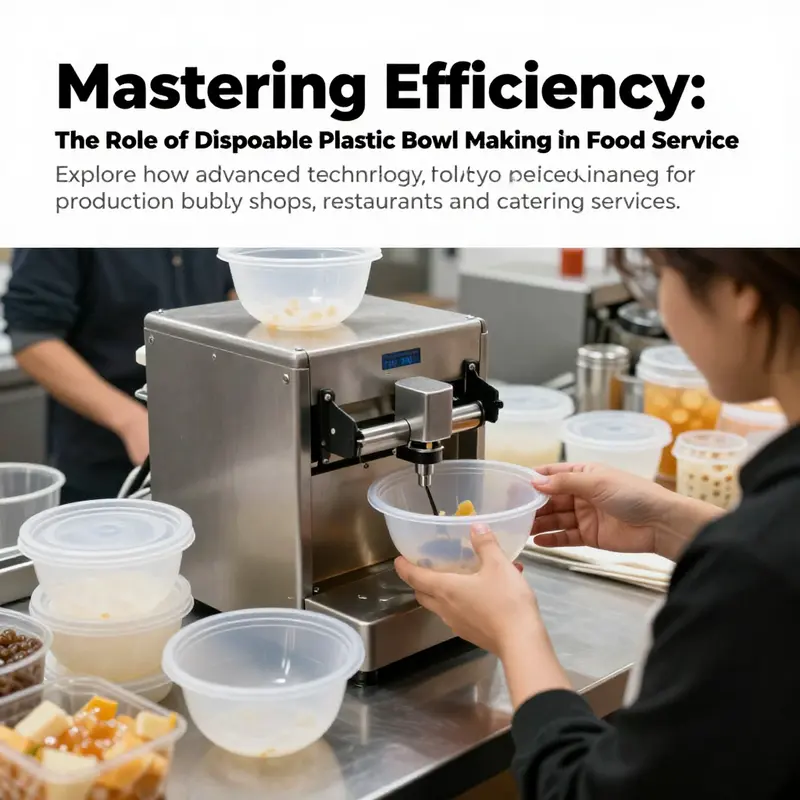
In today’s fast-evolving food service environment, speed and efficiency are more important than ever, especially for bubble tea shops, restaurants, food trucks, and catering services. Disposable plastic bowl making machines have become essential in ensuring these businesses meet customer demands while maintaining high standards. These sophisticated machines are designed to produce high-quality, single-use bowls swiftly and effectively, employing innovative technologies. This comprehensive exploration delves into how features such as advanced control systems, high production speeds, versatility, compliance, durability, and integrated functions all contribute to a streamlined production process for food service establishments. Join us as we dissect each of these features and their benefits to your business.
Orchestrating Throughput: The Intelligent Control Systems Powering Disposable Bowl Thermoforming
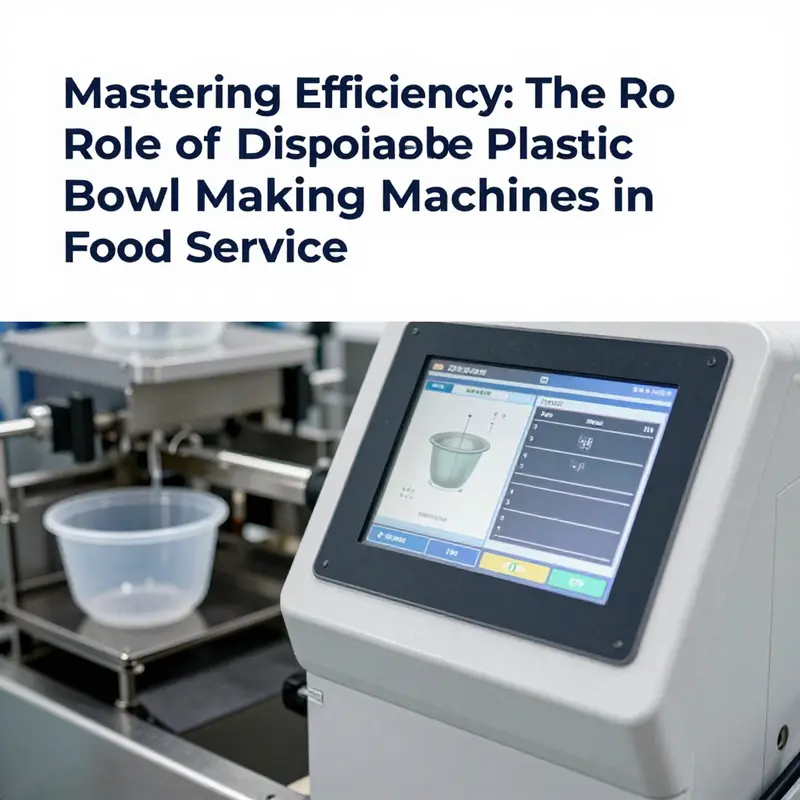
In the pace of modern food packaging, the disposable bowl line operates as a living system where intelligence, rather than force, determines success. The machines that shape, form, and stack single-use containers are designed to run with minimal human intervention, yet their real power rests in the sophisticated control architectures that govern every motion, temperature profile, and timing sequence. These control systems are the hidden conductors of an orchestra that must deliver precision, speed, and hygiene at scale. The result is not merely more bowls per minute; it is a repeatable assurance that each bowl meets the same dimensional tolerances, surface quality, and safety standards required by today’s demanding markets. In this chapter, we explore how programmable logic controllers, servo-electric drives, and integrated automation transform thermoforming lines into reliable, data-driven production assets that align with global compliance, operational efficiency, and environmental expectations.
At the core of these systems sits the programmable logic controller, a compact yet powerful brain that interprets inputs from sensors, switches, and vision or defect-detection subsystems, and translates them into precise outputs for actuators, heaters, and motors. In practice, a modern mono- or multi-stage line uses a touchscreen-enabled PLC platform that operators can use to adjust bowl size, shape, and forming cycle times in real time. This capability is far from mere convenience; it reduces changeover times and minimizes human error during the often complex transitions between different product families. Real-time adjustments are complemented by closed-loop feedback, where critical process variables—mold alignment, forming pressure, furnace temperature, and dwell times—are continuously monitored. If any parameter strays outside acceptable ranges, the system can auto-correct, pause the line to avoid scrap, or alert maintenance personnel before a defect propagates. The effect is a dramatic improvement in product consistency across long production runs, a quality outcome that feeds directly into consumer trust and brand integrity.
The role of sensor fusion and automated defect detection cannot be overstated. Modern control platforms aggregate data from multiple sources, including temperature sensors in the heating zone, pressure transducers in the forming heads, and alignment checks via vision or contact probes near the molds. When a deviation is detected, the control system can trigger a sequence to compensate—adjust forming pressure or cycle time, recalibrate the mold offset, or flag the clearest line section for inspection. This proactive approach is essential in a field where variance compounds quickly: a slight misalignment at the mold can ripple into rough edge finishes, inconsistent wall thickness, or uneven stacking downstream. In effect, the control system becomes a guardian of quality, enforcing tolerances with a precision that is unattainable with manual adjustments alone.
Another core pillar of these advanced control architectures is the servo-electric drive system, which is increasingly preferred over hydraulic configurations for thermoforming lines. The servo-based approach delivers precise control of injection speed and pressure, enabling cleaner, smoother forming cycles and more reproducible part geometries. The energy profile of servo systems also contrasts with traditional hydraulics by reducing overall energy consumption—often cited as substantial savings, in the order of substantial percentages—while producing less noise and heat. For hygienic environments or facilities with stringent cleanliness requirements, servo drives operate with quieter performance and cleaner mechanical footprints, contributing to longer intervals between maintenance and less risk of contamination around critical forming zones. The result is a machine population that runs cooler, cleaner, and with fewer unplanned interruptions, all of which translate into lower operating costs and higher uptime.
The integration of servo drives with high-fidelity control loops also enhances the repeatability of each cycle. Precise feedback from rotary or linear servo motors ensures that the exact motion profile is followed every time a bowl is formed and ejected. This repeatability is especially important when the line is configured to produce a family of products with varying dimensions or shapes. In a fully automated thermoforming line, the control system orchestrates material feeding, heating, forming, punching, cutting, and stacking with a level of cohesion that manual coordination cannot match. The synergy between servo precision and intelligent sequencing enables rapid changeovers, predictable cycle times, and minimized scrap—capabilities that directly influence throughput and profitability.
Beyond the mechanics of motion and temperature, these systems also embed compliance and governance into daily operation. CE certification is a critical signal that a machine has been designed to meet European safety, health, and environmental standards. While certification speaks to the external assurance of safety and reliability, the internal control architecture demonstrates continuous compliance in operation. Data logging, traceability, and alarm management are not add-ons; they are built into the control framework. In practice, this means operators and quality teams have ready access to process histories, defect rates, and corrective actions across batches. The combination of robust hardware and disciplined software governance makes the equipment not just compliant at installation, but auditable and resilient through years of high-volume production.
From the buyer’s perspective, evaluating suppliers for these lines is less about a single machine and more about an ecosystem. Modern thermoforming hubs—especially in large clusters—offer vertically integrated capabilities that span component manufacturing, system integration, software updates, and after-sales support. Regions that nurture integrated ecosystems—such as those with mature electronics, automation, and plastics processing industries—tend to provide shortened lead times and more reliable service. This is particularly evident when suppliers can deliver turnkey lines with validated control software, ready-to-run recipes, and modularity to accommodate a diversity of materials such as PP, PS, PE, PET, and even bio-based polymers like PLA. The ability to customize quickly while maintaining stringent quality management is the hallmark of a future-proof solution. The emphasis on ISO 9001 quality management and compliance with international standards ensures that the entire value chain—from design through after-sales assistance—meets consistent performance benchmarks.
The geographic dynamics of these industries also shape the adoption of advanced controls. In major manufacturing hubs, there is a strong emphasis on rapid prototyping, robust component supply, and thorough quality control, all underpinned by sophisticated control systems. Key regions show how an integrated approach—combining powerful PLCs, servo-electric drives, and fully automated workflows—can deliver reliable throughput with reduced downtime. Operators trained to optimize control parameters can shave seconds off cycle times while preserving product integrity. And because these lines are designed to run continuously, even small gains in efficiency compound into meaningful annual savings in energy, consumables, and labor costs.
To understand the broader implications, consider how data from these machines informs maintenance and continuous improvement. Modern systems collect a wealth of process data—from heating zone temperature trends to mold seating pressures and cycle-time distributions. When this data is analyzed in near real time, plants can implement predictive maintenance strategies, identifying worn components before failure and scheduling downtime during planned windows. This data-driven approach aligns with the broader industry shift toward intelligent manufacturing, where the objective is to minimize unplanned interruptions and maximize stable production. In practice, this means not only keeping the line running but also providing operators with proactive guidance: recommended parameter adjustments for different product families, reminders to calibrate sensors, and dashboards that translate raw data into actionable interventions.
For practitioners looking to relate these capabilities to tangible product outcomes, the link between control sophistication and packaging performance becomes evident. The bowls produced on lines with advanced control systems exhibit consistent wall thickness, uniform rim finish, and stable stacking behavior—attributes that reduce downstream handling issues and improve fill-line efficiency in packing rooms. The entire value proposition hinges on a coherent design philosophy: embed precise, closed-loop control at every critical stage, enable rapid adaptation to changing demand, and maintain strict adherence to safety and quality standards. When these elements coalesce, manufacturers can sustain high throughput without compromising the hygienic integrity of the containers that arrive at retailers and homes.
A practical reflection on connectivity reveals how these lines fit within a broader packaging ecosystem. The production of disposable bowls is rarely an isolated operation. It interlocks with suppliers of raw thermoplastic sheets, downstream filling lines, lids and packaging components, and the logistics framework that moves finished goods to distribution centers. The control system thus acts as the central node in a network of equipment, sensors, and software that orchestrates every step—from material feeding to stacking—while remaining adaptable to a spectrum of sizes, shapes, and materials. The ability to tune performance, monitor quality, and ensure compliance makes these lines not simply efficient machines but intelligent assets that contribute to sustainable manufacturing practices, reduced waste, and better overall product stewardship.
For readers who wish to explore a concrete example of how a high-output line can be configured and controlled, the following resource offers insight into the broader landscape of automatic disposable bowl production and its automated feeding, forming, and stacking stages: disposable-700ml-kraft-paper-bowl-take-out-octagonal-rectangle-paper-bowl.
External resource: https://www.alibaba.com/product-detail/NOBLEGEYUN-JC-500B-Automatic-Disposable1602483755485.html?spm=a2700.1.women.12&from=productdetail&isRushOrder=false
Accelerating Throughput: The Engine Behind Fast, Hygienic Disposable Plastic Bowl Production
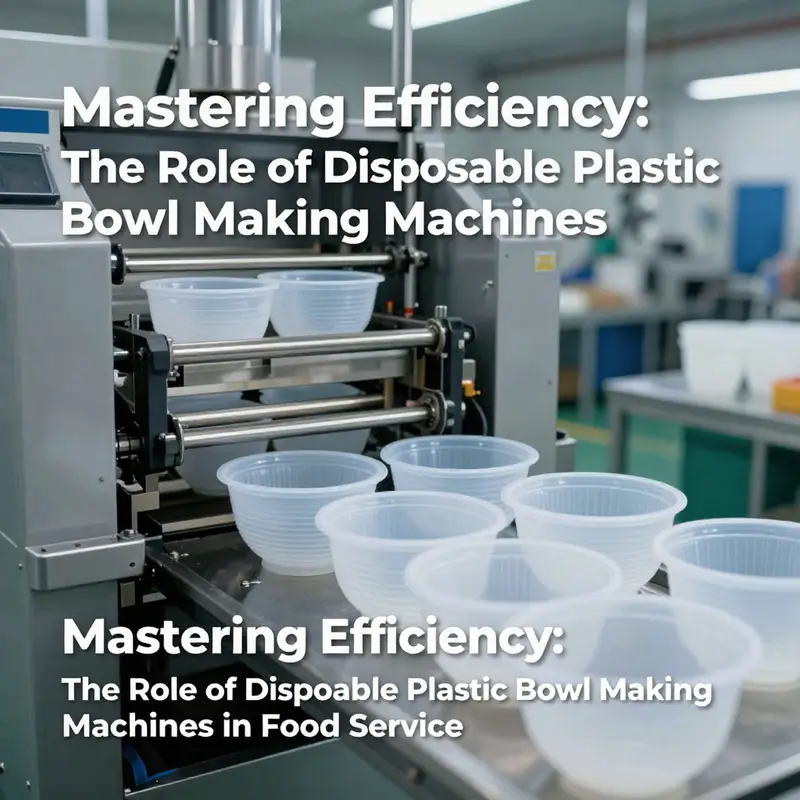
In the modern food packaging ecosystem, throughput is more than a metric—it is the heartbeat of a manufacturing line. For disposable plastic bowls, where demand spikes with catering events, quick-service cycles, and retail rollout, the ability to push product off the line rapidly while maintaining exacting hygiene and uniformity defines competitiveness. The best thermoforming systems are not just faster; they are purpose-built to preserve quality at speed. They weave together heating, forming, cutting, and stacking into a single, synchronized dance, where each stage feeds the next with predictability. The result is a line that can satisfy high-volume orders without sacrificing the integrity of the containers that hold meals, soups, and snacks. In this environment, a high-speed thermoforming line is the decisive advantage, marrying mechanical robustness with intelligent control to deliver consistent parts at a rate that used to be the preserve of longer-established plastics processes.
At the core of speed is the thermoforming cycle itself, which hinges on precise heating and rapid forming. Thermoplastic sheets, whether polypropylene, polystyrene, polyethylene, PET, or even bio-based variants, are heated to just-softened states and then drawn into shape under pressure. The minute-to-minute tempo of this cycle is governed by how quickly the sheet reaches the right temperature, how swiftly the forming station can depress into the mold, and how cleanly the formed bowls are released and transported to the next station. In high-throughput lines, servo-driven stretching systems play a pivotal role. These systems deliver controlled, repeatable stretch during forming, which reduces defects and reduces the need for rework. The result is a pronounced reduction in cycle time per bowl without compromising the dimensional stability that defines a reliable container. When every component—heater modules, forming anvils, and punch tools—operates in harmony, the line can sustain high speeds with low variance, which is essential for downstream quality control and packaging line integration.
Control architecture is another essential driver of speed. Modern lines deploy PLCs and servo motor ecosystems that choreograph motion with surgical precision. Instead of relying on operator-led adjustments, the control platform sequences each step—sheet feed, indexing, heating, forming, trimming, punching, and stacking—under a unified program. This ensures not only rapid response to process variations but also repeatable accuracy across tens of thousands of cycles. In practice, precision translates into fewer mis-formations and fewer rejected parts, which directly shortens downtime and keeps the throughput metric on an upward trajectory. A high-speed line thus becomes less about raw torque and more about disciplined coordination: the servo control must align position, speed, and force across every stage, every cycle.
Among the tangible indicators of speed, numbers are instructive. A high-throughput disposable bowl system can produce up to fifty bowls per minute, illustrating how modern lines translate material efficiency and swift motion into practical capacity. In other configurations, lines are optimized to sustain a robust cadence while preserving tight tolerances, with production speeds designed to maintain consistency even as speeds push the envelope. These capabilities are not only about output; they’re about predictable performance. When a line delivers fifty bowls per minute, the target is not merely volume but uniformity—bowls that meet strict dimensional tolerances and consistent surface quality, ensuring that downstream printing, labeling, or lid fitting proceeds without disruption.
The interplay between speed and precision is further reinforced by stack-and-pack workflows integrated into fully automated lines. In the most advanced configurations, feeding, thermoforming, punching, cutting, and robot-assisted stacking are integrated along a single conveyor, reducing the need for manual handling and limiting potential contamination. Robotic pick-and-place devices assist with translation between processing stations and the accumulation of finished parts. This integration not only accelerates the overall cycle time but also minimizes human error, which is crucial when operating at high speeds. The synergy of automated material handling and forming tools translates to fewer stoppages and a smoother path from raw sheet to finished product.
Material versatility also feeds speed in meaningful ways. The ability to switch among several thermoplastics without major mechanical modifications means a line can adapt to market demands or price signals rapidly. A line configured to handle PP, PS, PE, PET, and PLA, for instance, can pivot to the most favorable material without lengthy retooling. This flexibility is a strategic asset when demand patterns shift or when customers require different barrier properties, stiffness, or heat resistance. The ability to change materials with minimal downtime makes the production floor more agile, supporting high-speed throughput while maintaining product integrity across different formats. Moreover, manufacturers can adjust bowl dimensions and shapes through straightforward touch-screen interfaces, allowing quick adaptation to new packaging briefs without extended stoppages.
The economics of speed, while sometimes nuanced, are straightforward in outcome. High-speed lines come at a significant capital outlay, with price ranges reflecting automation depth, control sophistication, and the complexity of integration. The investment, however, pays off through increased unit output, reduced labor content, and lower per-bowl processing costs. The most compelling cases show a meaningful uplift in throughput that justifies the cost of the line through shorter lead times, higher capacity, and improved consistency across large production batches. In regions where manufacturing clusters assemble in modular, scalable formats, the economics of speed become even more favorable. Facilities can expand a line’s throughput by adding stages or extending an existing automated line, rather than installing entirely new equipment. This modularity makes the pursuit of high-speed production a phased, financially structured improvement rather than a single, disruptive upgrade.
The geographic and industry context matters here as well. Regions with strong plastics fabrication ecosystems—where clusters of manufacturers offer turnkey lines and customization—tend to provide faster lead times for high-speed thermoforming setups. Lead times in such ecosystems can be measured in weeks rather than months, with standard configurations translating into rapid deployment once a design is locked. The speed-to-market advantage is amplified when suppliers offer integrated solutions: material handling, thermoforming, cutting, trimming, and stacking in a single, coordinated supply chain. This kind of integration reduces the risk associated with multi-vendor handoffs and accelerates start-up, commissioning, and qualification phases of production. It also helps ensure that the fastest lines are not merely fast but reliable, with consistent output that stands up to end-of-line packaging and distribution requirements.
Even as lines push the envelope on speed, attention to process control remains non-negotiable. Precision in feed timing, material alignment, and cycle synchronization prevents the small misalignments that cascade into quality issues at high speeds. An error in material feeding, for instance, can cause a ripple effect through the forming station, requiring rework and halting the line. To counter this, operators rely on real-time monitoring and rapid corrective actions. Modern control platforms provide dashboards that reveal cycle time, defect rate, and equipment health at a glance, enabling teams to detect subtle trend changes before they become production bottlenecks. In this sense, speed is not a reckless sprint but a carefully managed sprint, where every millimeter of tolerance and every millisecond of cycle time is accounted for in the overall throughput equation.
The practical implications for manufacturers extending their capacity are clear. A line designed for high speed offers more than just a higher hourly count; it provides a robust platform to meet the demands of large-scale catering, hospitality, and retail packaging. It supports the shift toward more sustainable, single-use containers by enabling more efficient use of raw materials, minimizing waste through tighter tolerances, and enabling faster product changeovers with minimal downtime. The combination of fast cycle times, precise control, integrated automation, and material versatility creates a compelling value proposition for facilities aiming to scale up operations without sacrificing hygiene or product quality. For packaging professionals exploring related formats that share the same core manufacturing principles, further reading on related packaging structures can be found at disposable-octagonal-box-restaurant-food-kraft-paper-packaging (https://greendispopack.com/product/disposable-octagonal-box-restaurant-food-kraft-paper-packaging/).
In sum, high production speed in disposable plastic bowl manufacturing is the result of coordinated advances across machine architecture, control systems, forming dynamics, and end-to-end automation. It requires selecting the right blend of servo-driven forming, precise PLC control, and intelligent material handling to sustain throughput without compromising the strict quality standards that food packaging demands. The fastest lines are not mere engines of volume; they are disciplined systems where speed, accuracy, and reliability complement each other, enabling manufacturers to meet diverse market needs while maintaining hygienic, consistent products. As packaging ecosystems evolve toward greater customization and tighter supply chains, the ability to accelerate throughputs while preserving product integrity becomes not just advantageous but essential to competing successfully in a crowded, dynamic market.
Shape Shifters of Form: The Versatility Engine Behind Disposable Plastic Bowl Making Machines
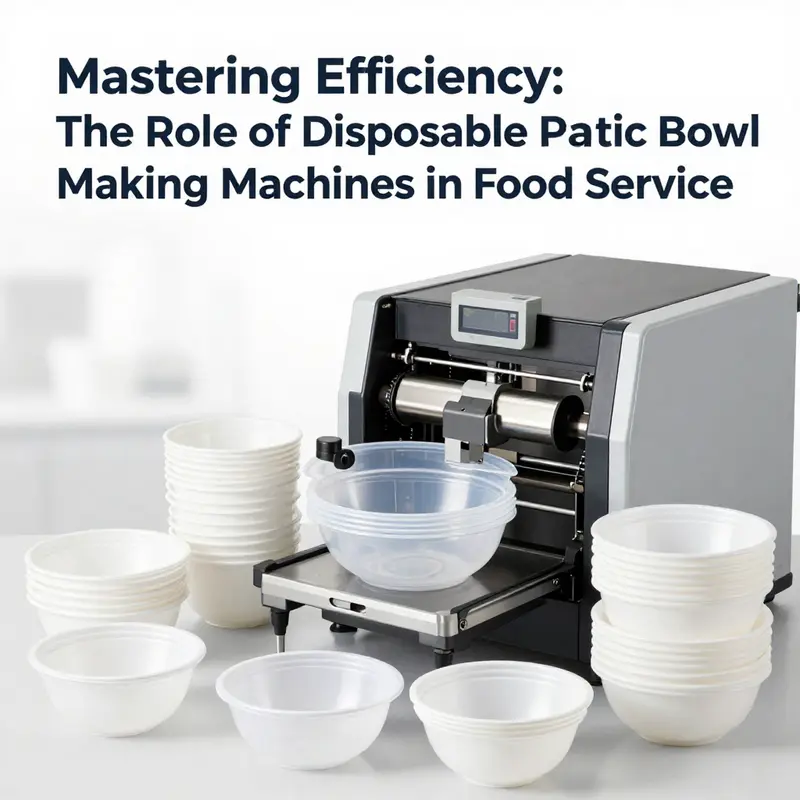
Versatility is the quiet engine behind modern disposable plastic bowl making machines. It is not a single feature but a design philosophy that lets a single line adapt to shifting market demands, evolving materials, and a range of product specifications. In practice, versatility means the ability to vary wall thickness without sacrificing cycle time, to switch among several thermoplastics, and to reconfigure forming methods without a complete rebuild of the line. It also means accommodating different end-uses, from thin-walled salad bowls destined for single-serve meals to sturdy, microwave-safe containers that can handle longer shelf lives and higher heat exposure. When a producer can pivot between these extremes with minimal downtime, the economics of packaging shift from a singular, one-note operation to a flexible platform capable of sustaining growth across multiple product families. The result is not only greater throughput but a meaningful reduction in tooling costs, changeover risks, and material waste, all of which matter when margins are tight and the market is unforgiving about quality and consistency.
The first facet of this versatility lies in geometry. Modern thermoforming lines are engineered to handle a spectrum of wall thicknesses and diameters by adjusting forming parameters, mold contours, and sheet draw. A thin-walled bowl, designed for quick disposal after a meal, requires precise control of cooling rates and vacuum or pressure profiles to preserve a smooth surface and uniform geometry. At the other end of the spectrum, heavy-walled containers demand deeper draw, stronger seals, and often a different cooling path to prevent warping. The same machine platform, aided by servo-driven stretching systems and programmable logic controllers, can accommodate these differences with calibrated recipe sets. Operators can select a product family on a touchscreen, and the form, trim, and stacking sequence recalibrate in seconds rather than hours. This capability fosters product line diversification without the need for separate, dedicated machines for each format, a significant efficiency in both space and capital expenditure.
Material versatility is the second pillar. Thermoplastics such as polypropylene (PP), polystyrene (PS), polyethylene (PE), and polyethylene terephthalate (PET) are common on disposable bowl lines, but the sustainability drive is pushing some manufacturers to experiment with recycled resins or bioplastics like PLA where regulatory and consumer acceptance permit. A versatile machine must tolerate backings and blends, manage different melt viscosities, and maintain dimensional stability as the material in the hopper changes. This requires adaptable heating zones, precise temperature control along the sheet, and robust vacuum or pressure systems that can be tuned for each resin. When a plant switches from a crisp, clear PS lid to a more opaque, recycled-content PP bowl, the cycle parameters shift, but the physical workflow remains intact. The equipment’s ability to interchange materials not only broadens the product portfolio but also aligns production with sustainability goals and evolving regulatory landscapes. In this context, the ability to form with recycled content is not merely a social preference; it is a key driver of cost structure and supply chain resilience.
Beyond material choice, many contemporary lines embrace multiple forming processes. Thermoforming remains a workhorse for high-speed, low-tooling-cost production of simple, consistently shaped bowls and trays. However, advanced lines integrate or run in tandem with injection or blow molding stations for more complex geometries and higher-strength applications. Injection blow molding, for instance, can yield bowls with intricate profiles, reinforced rims, and precise wall thickness distribution that are difficult to achieve with thermoforming alone. The strategic value of this hybrid capability lies in the ability to tailor the forming method to specific market segments within a single production footprint. A single shift can produce standard clamshells by thermoforming and then switch to injection blow molding for premium, microwave-safe designs, all controlled through centralized software and a unified material handling system. The result is a platform that excels not only in volume but in variety, enabling manufacturers to respond rapidly to new design trends, regulatory requirements, or customer specifications without sacrificing cycle time or part quality.
The integrated line architecture further reinforces versatility. Modern systems often combine material feeding, thermoforming, trimming, punching, and robot-assisted stacking into a single automated workflow. This integration reduces manual handling, lowers cycle times, and minimizes human error. It also makes changeovers more predictable. When a plant shifts from one product line to another, the servo motor network, PLC logic, and end-of-arm tooling adapt to the new footprints, dimensions, and stacking configurations. In practice, that means shorter downtime during changeovers, more consistent part weights, and tighter tolerances across batches. Operators benefit from a unified interface that translates product specs into machine parameters, while engineers appreciate modular components that can be swapped or upgraded without a wholesale redesign. Even the most routine adjustments—altering bowl diameter, wall thickness, or lid compatibility—become deliberate, data-driven steps rather than improvisations.
This adaptability is not purely technical. It carries strategic implications for how manufacturers manage product portfolios and respond to market pressures. The ability to transition quickly between single-use and more durable designs translates into faster time-to-market for new flavors, packaging concepts, and regulatory compliance—without locking the business into a single format. It also supports sustainability narratives that resonate with retailers and consumers who seek low-waste or recyclable options. In essence, a versatile machine becomes a platform for experimentation that preserves operational efficiency while expanding the range of permissible packaging solutions. For a plant that serves multiple channels—from quick-service restaurants to high-end food service—the value of such a platform compounds as product cycles shorten and consumer preferences shift with growing environmental awareness.
The practical upshot of this versatility is reflected in the economic calculus of the line. While the initial capital outlay may be higher than a single-purpose machine, the downstream savings are substantial. Changeover time is minimized, tooling expenses are amortized over a broader product mix, and spares inventories become smaller because many components are universally compatible across formats. The energy profile of modern lines also benefits from precision servo controls and optimized cooling cycles, which help lower operating costs over the life of the machine. And because the machines can handle a wider range of materials and product geometries, manufacturers are better positioned to exploit shifts in material prices or supply chain disruptions. The combined effect is a more resilient manufacturing asset that can squeeze more value from the same floor space and budget over time.
The breadth of capability does not occur in a vacuum. It rests on the foundation of careful design principles, rigorous process control, and a supplier ecosystem that understands how to tune lines for both speed and accuracy. Compliance and durability remain non-negotiable, with respect to international safety and quality standards, as well as the ability to perform reliably under continuous, high-volume operation. The best machines deliver repeatable performance at high speeds, while still accommodating the nuanced demands of specialized bowls and lids. They are built to withstand the rigors of daily production, provide long service life, and offer predictable maintenance schedules. In short, versatility in these systems is not simply about having many options; it is about delivering consistent, high-quality outcomes across a spectrum of products, materials, and market requirements.
For readers exploring the broader packaging landscape, this flexibility in forming technology is also mirrored in adjacent product families. While the discussion here centers on plastic bowls, producers often consider extending their lines into related packaging formats—such as laminated or recycled-material alternatives—that share core process steps, material handling, and automation strategies. This cross-pollination underscores how the best equipment investments yield compound benefits: a single platform that can scale up to meet rising demand, adapt to stricter sustainability standards, and accommodate evolving consumer expectations without the disruption and cost of a switch to an entirely new production system. And because consumer packaging continues to converge on convenience, hygiene, and environmental responsibility, the ability to morph form and function within the same line is no longer a luxury but a competitive necessity.
As a practical illustration of these principles in action, consider how a plant might diversify its bowls without sacrificing throughput. The line might begin with thermoformed, thin-walled salad bowls in one shift, then, after a routine changeover, produce heavier, microwave-safe containers for ready-to-heat meals. The machine’s touch-enabled recipe management guides this transition, ensuring that heat profiles, cooling steps, and trimming tolerances align with each product’s requirements. The operator can monitor weight distribution and surface finish in real time, enabling immediate adjustments if a batch deviates. Even the smallest details—rim thickness, edge radius, and lid fit—are captured in the digital memory of the line, enabling rapid replication of successful runs and a clear path to scale when demand spikes again. In sum, versatility becomes a disciplined capability, not a vague aspiration, shaping how manufacturers think about capacity, risk, and opportunity in a rapidly changing packaging world.
For further context on how these capabilities look in practice, see this product range illustrating a related sustainable packaging option: disposable kraft paper bowl for food package with lid.
External resource for deeper technical insight: https://www.alibaba.com/product-detail/Comprehensive-Guide-to-Plastic-Bowl-Making-Machine_1600572345789.html
Built to Last and Built to Comply: Ensuring Regulatory Safety and Long-Term Durability in Disposable Plastic Bowl Production
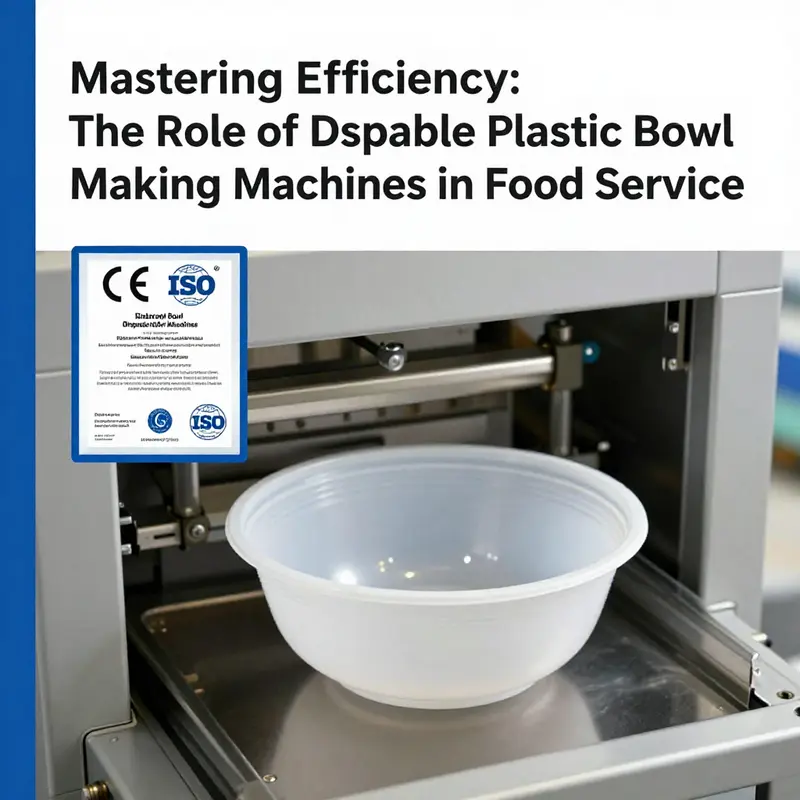
Reliable compliance and lasting durability are the twin pillars that determine whether a disposable plastic bowl making machine will serve a food-packaging operation well for years. Manufacturers design these systems to meet stringent regulatory requirements while also resisting the mechanical, thermal, and chemical stresses of continuous production. The interplay between regulatory compliance and rugged construction shapes machine specifications, procurement choices, maintenance regimens, and the total cost of ownership.
Regulatory compliance begins with the machine’s ability to produce food-contact safe containers from approved materials. Machines must handle thermoplastics such as polypropylene and PET without introducing contaminants. That requirement affects every design decision, from the selection of food-grade contact surfaces to the avoidance of lubricants and coatings that could migrate into heated plastic. Equally important is the machine’s tolerance for emerging materials. As compostable and bio-based materials gain traction, compatibility with PLA and other bioplastics becomes a selling point. Operators who plan product lines around sustainable bowls should verify that thermoforming parameters, heating profiles, and mold geometries are suitable for those alternative resins, and that the machine’s material feed and exhaust paths do not trap residues from incompatible materials. For businesses exploring hybrid production, it helps to compare samples produced on candidate machines and ask suppliers for material compatibility test reports or processing trials.
Certifications and documented quality systems are the next layer of assurance. Machines that are built and supplied under internationally recognized standards reduce regulatory risk and speed market acceptance. A machine accompanied by CE conformity signals compliance with EU directives covering electrical safety, machine safety, and electromagnetic compatibility. Likewise, a supplier operating under an ISO 9001 quality management system offers stronger evidence of consistent production, traceability, and corrective-action processes. While certifications do not replace operational hygiene and validation, they provide a reliable baseline that procurement teams can cite in audits and safety submissions.
Hygienic design is a cornerstone of both compliance and durability. Machines intended for food packaging must enable regular sanitization without accelerating corrosion or degrading critical components. Stainless steel frames and forming stations resist moisture and cleaning agents while maintaining structural integrity. Smooth, accessible surfaces and removable guards make deep cleaning straightforward. Equally critical are sealed bearings and enclosed motor assemblies that prevent ingress of washdown fluids. Where components are inevitably subject to wear, specifying food-grade, corrosion-resistant alloys and easy-to-replace wear parts reduces the risk of cross-contamination and unplanned downtime.
Durability stems from mechanical robustness and from the incorporation of modern control and drive systems. PLC-based control platforms with servo drives yield more precise, repeatable forming cycles than older relay- or cam-driven machines. That precision reduces scrap, lowers tool wear, and stabilizes throughput at high speeds. Servo motors also allow soft-starts and controlled deceleration, which reduce mechanical shock to frames and tooling. For plants running multiple shifts, these incremental reductions in stress add up to significant lifecycle benefits. Equally, attention to component selection—heavy-duty gearboxes, industrial-grade hydraulic systems, and commercial bearings—ensures the machine withstands years of continuous operation.
A realistic view of durability includes planned maintenance and parts availability. No machine lasts indefinitely in high-volume service without ongoing care. Clear maintenance schedules, easy access to lubricant points, and modular subassemblies simplify servicing. Suppliers that provide local parts support and service training help machines remain productive. When evaluating options, buyers should request mean time between failures (MTBF) data, typical spare parts lists, and recommended inventories. Machines designed with common, standardized components often have lower long-term support costs than those built from proprietary parts that require special ordering.
Safety features intersect with compliance and durability goals. Emergency stops, guarded access panels, light curtains, and interlocks protect operators and help satisfy regulatory inspectors. But safety also protects the machine: interlocks that halt operation before a guard opens prevent damage to tooling and reduce costly repairs. Incorporating built-in diagnostics and condition monitoring into the control system transforms maintenance from reactive to proactive. Vibration, temperature, and cycle-count monitoring detect incipient failures early and safeguard both product quality and machine longevity.
Quality control and traceability are intrinsic to compliance. Integrated in-line inspection, weight monitoring, and dimensional checks help ensure that every bowl meets food-safety and labeling claims. When combined with batch tracking and production logging, these systems make it easier to support recalls, validate shelf-life claims, and comply with retailer specifications. For operations supplying high-volume customers, the ability to produce consistent product runs and to provide documented evidence of process control becomes a competitive advantage.
Total cost of ownership (TCO) is where compliance and durability converge in procurement decisions. A lower-capital machine that saves upfront cost but requires frequent repairs, uses non-food-grade components, or lacks certification can be more expensive over its lifetime. Evaluating TCO requires examining energy consumption, maintenance intervals, spare parts costs, and downtime risk. Modern machines with efficient drives and optimized heating cycles can deliver notable energy savings. Likewise, machines that reduce scrap through precise control and offer fast changeovers increase effective throughput and lower per-unit costs.
Future-proofing is increasingly important. Regulatory landscapes evolve, and materials science moves quickly. Machines designed with modular tooling, software-upgradable control platforms, and flexible heating and forming modules allow operators to adapt without scrapping capital equipment. When a manufacturer offers clear upgrade paths or retrofit kits, buyers gain the agility to adopt new materials or to increase automation as demand grows.
Finally, supplier selection matters as much as machine specifications. A reliable supplier provides transparent documentation, training, and proven after-sales support. They assist with validation runs, help configure sanitation protocols, and advise on spare parts planning. In addition, suppliers that can coordinate integration with upstream and downstream processes—such as automated material feeding and robot stacking—deliver a cohesive production solution that preserves both compliance and physical integrity across the whole line. For businesses exploring alternatives to rigid plastics, it helps to review examples of compatible paper or compostable product lines, such as a biodegradable eco-friendly take-away bowl, to understand market expectations and material trade-offs.
Procuring a disposable plastic bowl making machine requires balancing regulatory certainty with engineering resilience. Machines designed for food safety, built from corrosion-resistant materials, equipped with modern controls, and backed by strong service support will produce compliant containers while minimizing lifecycle costs. Thoughtful investment in certified, durable equipment protects product safety, improves uptime, and positions an operation to adapt to evolving material and regulatory demands.
https://www.alibaba.com/product-detail/NOBLEGEYUN-JC-500B-Automatic-Disposable1601234567890.html?src=hotsearch&spm=a2700.galleryofferlist.pofferlist.12345678901234
Seamless Automation: How Integrated Functions Drive High-Speed Disposable Bowl Production
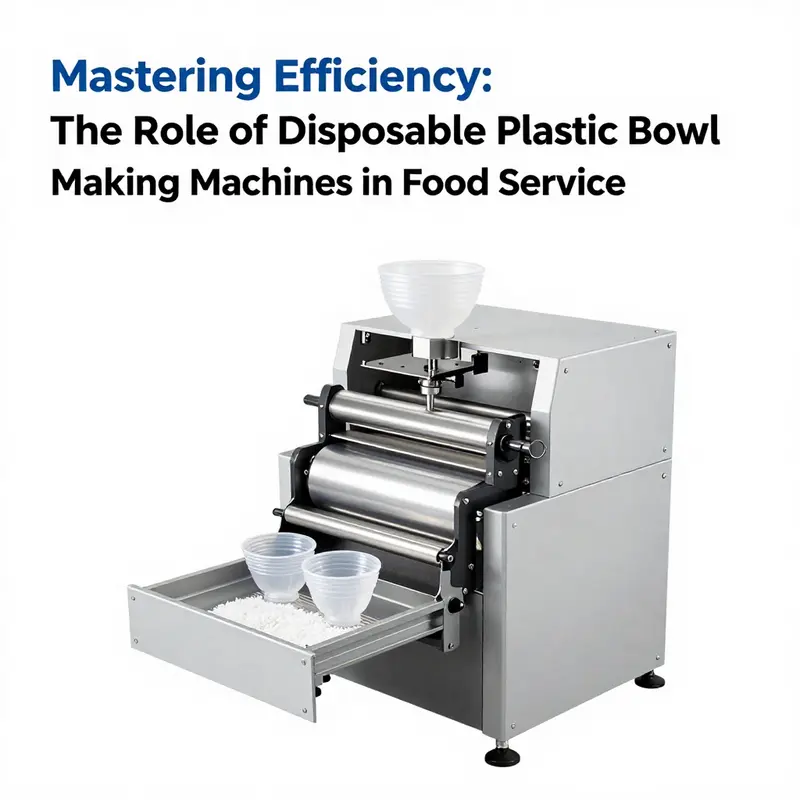
Integrated functions are the heart of modern disposable plastic bowl making machines. When feeding, forming, cutting, cooling, and stacking work as a single, synchronized process, the result is high throughput, consistent quality, and minimal downtime. Rather than a series of handoffs, a fully integrated line behaves like a single organism. Each subsystem senses, reacts, and hands off with precision. This chapter explores how those subsystems interlock and what that integration means for production, maintenance, and product quality.
A continuous feed begins the chain. Automatic film feeding controls the pace and position of thermoplastic sheets. Servo-driven rollers and tension systems draw film from rolls and present it to the heating zone with frame-level accuracy. The difference between simple motorized reels and servo-tooled feeding is significant. Precise feeding eliminates wrinkles, misalignment, and wasted material. It also enables longer unmanned shifts by reducing the need for manual reloading.
The heating and pre-forming stage converts rigid film into a pliable sheet ready for shaping. Infrared panels, hot-air channels, or hybrid systems heat the sheet to a uniform temperature. Integrated sensors monitor surface and core temperatures. When heating is tied directly to the PLC, the system adapts to film thickness and ambient conditions. This closed-loop control prevents over- or under-heating, reducing scrap and energy waste.
Forming then becomes a matter of timing and pressure. Vacuum forming presses softened film over precision molds. Some systems pair vacuum with positive pressure or mechanical stretch to achieve deeper draws and finer detail. Integrated vacuum pumps and pressure valves operate in concert with the motion system. When vacuum levels, dwell time, and mold position are coordinated automatically, parts retain consistent wall thickness and dimensional accuracy. This coordination matters for bowls sold to restaurants, retailers, and food service channels where fit, strength, and appearance must be reliable.
Precision cutting follows forming and requires equal attention. Automated dies, high-speed cutters, or laser trimming units separate parts from the remaining sheet. Integrated color mark tracking uses optical sensors to locate registration marks on printed film. When the cutter coordinates with these marks through the central control, cuts fall precisely where intended. That alignment is critical for branding and for nests of cut parts that must stack without distortion. Clean edges reduce post-processing and improve the finished product’s perceived quality.
Small but crucial features are often integrated into the forming line. Air release hole punching, for instance, prevents trapped pockets of air during forming. These tiny punches are timed to the forming cycle to relieve pressure without affecting structural integrity. Other lines include blow-off functions that remove dust, dust particles, and trimmed flash before stacking and packaging. These micro-operations are invisible to the buyer but essential for hygiene-sensitive markets.
After cutting, cooling stabilizes parts. Cooling channels, air knives, and timed conveyor dwell zones reduce residual heat. Ejection systems then remove parts from molds and convey them to stacking stations. Robotic arms or pneumatic stackers organize finished bowls into packs or magazines. Machines with integrated handling place parts on conveyors or into packing lanes with minimal human touch. This lowers contamination risk and improves packaging consistency.
At the control core, PLCs and servo drives synchronize every motion. A single touch-screen interface can control feeding, heating curves, forming pressure, cutting timing, and stacking sequences. Operators can switch recipes for new sizes or materials through a few screen taps. Recipe management and data logging support consistent production and faster changeovers. Integration at the software level also enables predictive maintenance, capturing vibration, temperature, and cycle-count data to flag wear before failure.
Energy efficiency is a built-in advantage of integration. Servo-electric drives replace constant-speed hydraulic systems on many axes, reducing energy use during idle or slow motion. Heat recovery from ovens and optimized vacuum scheduling further cut consumption. When machine modules share control logic, idle modules can power down automatically, and compressed air usage can be throttled to demand. Lower energy use translates directly to lower operating costs.
Quality control benefits when inspection is part of the integrated loop. Vision systems verify forming integrity, check for flashing, and validate cut alignment. When inspections detect deviations, the line can adjust parameters immediately. A color mark misalignment, for instance, can trigger a brief pause for re-indexing rather than a full shift of rejected parts. Integrated traceability also allows batch-level tracking. Codes, timestamps, and production parameters can be logged to aid recalls or to certify compliance.
Space optimization is another outcome of integration. A machine that houses forming, cutting, cooling, and stacking in one compact frame reduces workshop footprint. This matters for facilities where floor space commands a premium. Compact lines require fewer manual conveyors and less intermediate handling, which shortens lead times and reduces labor costs. Design choices around hinged access panels and modular subframes make maintenance easier without splitting the line into separate cells.
Maintenance and servicing are simplified when functions are integrated with clear diagnostics. A central control reports component faults, cycle counts, and temperature trends. Quick-change mold mounts and guided alignment pins reduce downtime for product switches. Spare-part kits and modular replacements let technicians swap pumps, heaters, or controllers with minimal recalibration. Training focuses on a single control system rather than multiple disparate machines, which accelerates learning and reduces human error.
Buyers should weigh integration against flexibility. Highly integrated machines excel at continuous runs and minimal handling. However, if a plant must switch frequently between many vastly different formats, modularity may be preferable. The ideal balance depends on volumes, product variety, and labor strategy. For many operations, a hybrid approach works best: a compact, fully integrated stamping and forming frame with quick-change molds and configurable stacking stations.
Integration also intersects with sustainability. Machines that support multiple materials—PP, PS, PET, PE, and compostable bioplastics—offer higher material choice. Integrated heating and forming controls allow operators to optimize cycles for recyclable or compostable resins. Reduced scrap rates and energy-efficient drives lower the overall environmental footprint of production.
When sourcing an integrated line, consider automation level, recipe storage, servo and PLC vendors, and the availability of spare parts. Verify that the supplier offers installation, training, and local support. Request demonstrations of color mark tracking, automatic changeovers, and robot stacking. A live demonstration clarifies how subsystems communicate under load and how the line responds to out-of-spec events.
Integrated machines change the economics of disposable bowl production. They combine precision, speed, and hygiene into a single, manageable workflow. For manufacturers aiming to scale output, improve yield, and reduce manual handling, these systems offer clear advantages. See a typical production marketplace for thermoplastic forming equipment details at https://www.alibaba.com and review compatible packaging options such as the disposable kraft paper bowl for food package with lid for alternative product strategies: https://greendispopack.com/product/disposable-kraft-paper-bowl-for-food-package-with-lid/.
Final thoughts
The world of disposable plastic bowl making machines unfolds a wealth of possibilities for businesses in the food service industry. By embracing advanced control systems, high production speeds, versatility in production, compliance with safety standards, and integrated functionalities, operators can significantly enhance efficiency and quality. Such capabilities not only streamline operations but also meet the growing consumer demand for hygienic, attractive packaging solutions. As a key player in this evolving market, investing in modern bowl making technology today can lead to a more productive and successful future for your food service enterprise.