
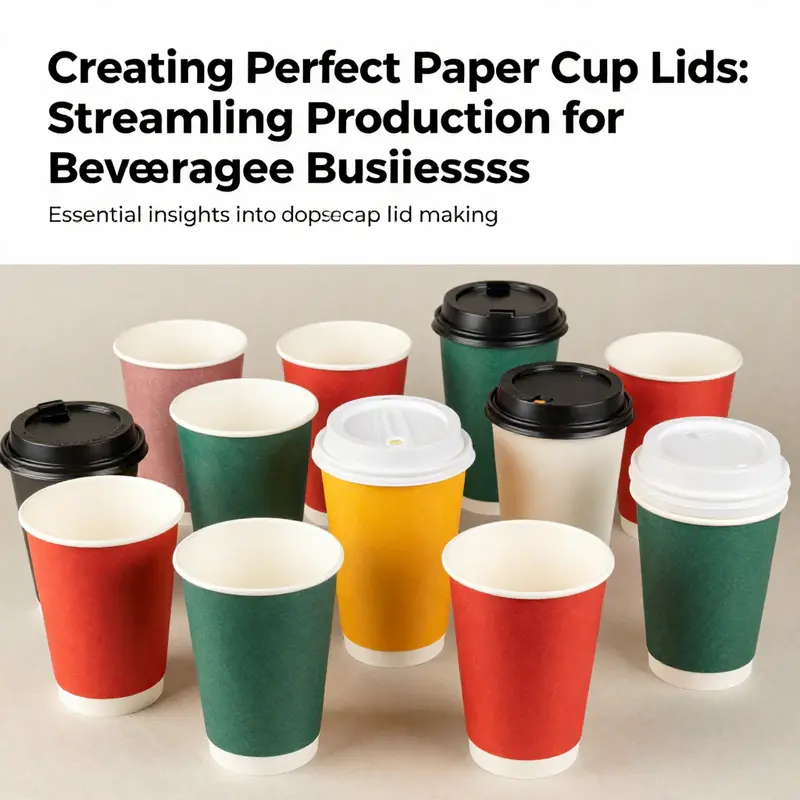
In a world where consumer demand for quality and sustainability is booming, the production of disposable paper cup lids has become a significant focus for beverage businesses, including bubble tea shops, restaurants, food trucks, and catering services. Understanding the intricacies of disposable paper cup lid making not only enhances operational efficiency but also aligns with the growing need for eco-friendly solutions. Throughout this article, we will delve into the various equipment types and their technological features, essential factors to consider when selecting manufacturing machines, emerging trends in the industry, and the paramount importance of sustainability in the production process. Each section aims to equip you with the knowledge to optimize your packaging solutions, ensuring your beverage offerings are both appealing and responsible.
Sealed by Design: Mainstream Lid-Making Machinery and the Route to Disposable Cup Lids
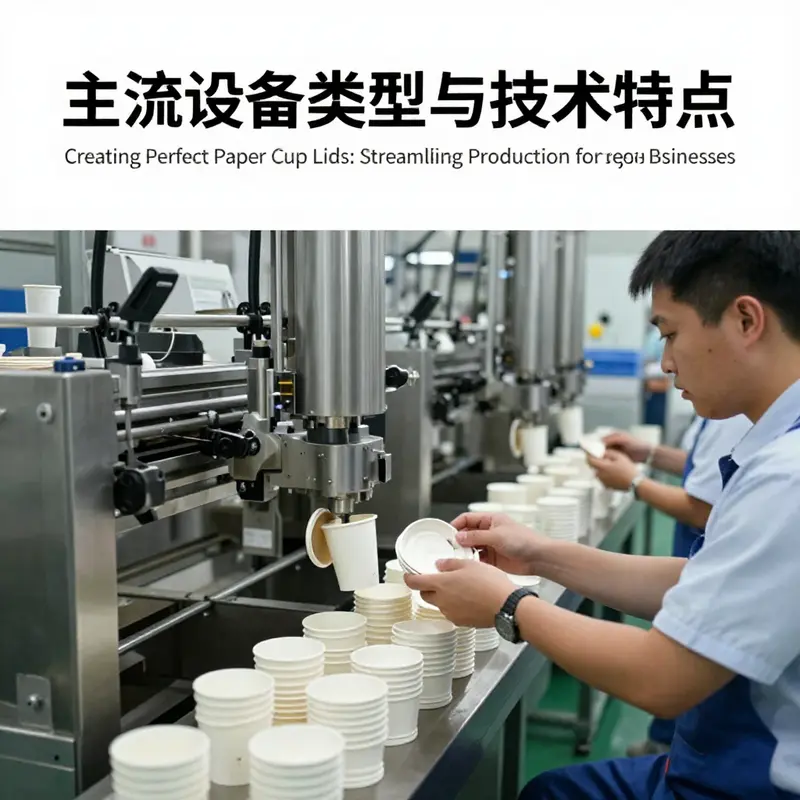
Behind every takeaway coffee and hot tea sits a quiet engine turning concept into consistent product. The disposable paper cup lid is the interface between concept and experience. This chapter surveys mainstream lid-making machinery, separating semi-automatic lines from fully automatic lines, and explains how they integrate materials, sealing, and quality control into scalable output.\n\nSemi-automatic machines provide a bridge between manual craft and automated repeatability. Operators load stock, align forming tools, and oversee trimming and initial sealing. This approach preserves flexibility for small to mid-sized suppliers and allows rapid changeovers between cup sizes and lid geometries, albeit with throughput limited by human rhythm. Fully automatic lid lines, by contrast, are designed for high-volume production with continuous flow: material handling, forming, trimming, edge finishing, sealing (including ultrasonic welding where appropriate), and stacking all in a closed loop governed by a PLC and vision sensors. The result is a predictable rhythm and the ability to run hundreds of thousands of lids per day with tight tolerances.\n\nMaterial choices matter as much as machine design. PE-coated or barrier-coated lids balance heat resistance, rigidity, and compatibility with downstream cleaning and recycling streams. In modern lines, ultrasonic sealing offers a solvent-free alternative to adhesive bonding, reducing cycle time and improving robustness under heat. The chapter notes how lines accommodate variability in cup diameter, rim geometry, and beverage temperature through modular tooling, digital recipes, and quick-change interfaces.\n\nLooking forward, the mainstream approach emphasizes flexibility, data-driven maintenance, and sustainability. Standards and certifications guide material safety, while IoT-enabled monitoring supports predictive maintenance and energy optimization. Together, these elements create a practical, scalable path from raw stock to reliable lids that perform in cafés, restaurants, and institutions while supporting ongoing efforts toward circularity and responsible packaging.
Choosing the Right Machine: The Subtle Science of Disposable Paper Cup Lid Making
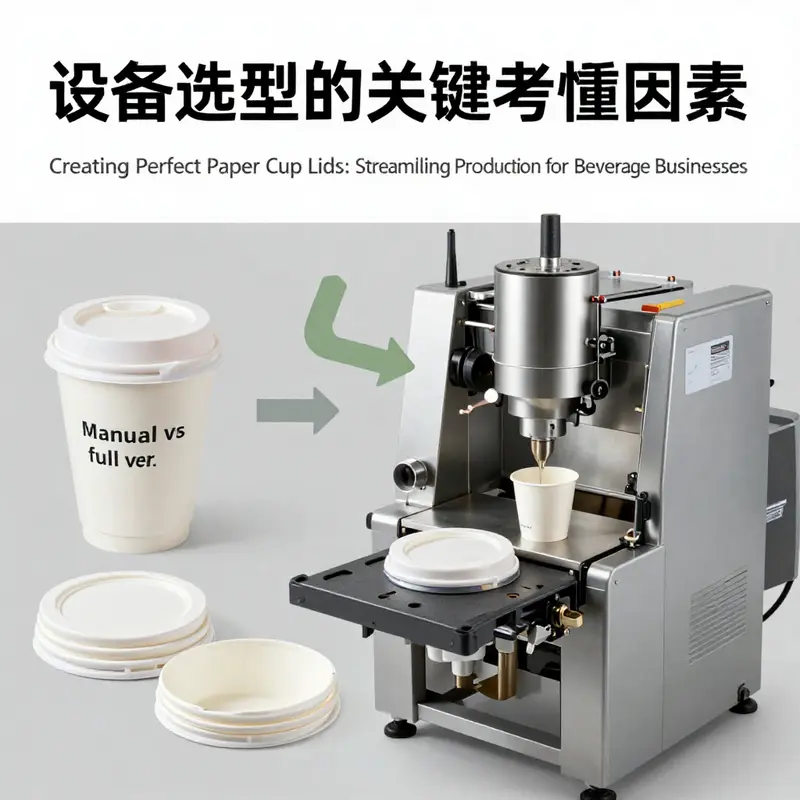
Selecting a lid production line is about balancing throughput with flexibility and long-term value. Manufacturers weigh semi-automatic lines for lower upfront risk against fully automatic lines for scale and repeatability. Ultrasonic sealing is a leading option for robust joints with many laminates, but substrate choices, energy use, and waste handling matter as well. A well-designed plant links material handling, forming, sealing, finishing, and quality control into a single workflow, while keeping spare parts and service close at hand. In the end, the best machine is the one that fits the brand’s product roster, demand patterns, and sustainability goals, not simply the fastest speed or the lowest price.
null
null
The Seal of Sustainability: Redefining Disposable Paper Cup Lid Making through Eco-Conscious Design
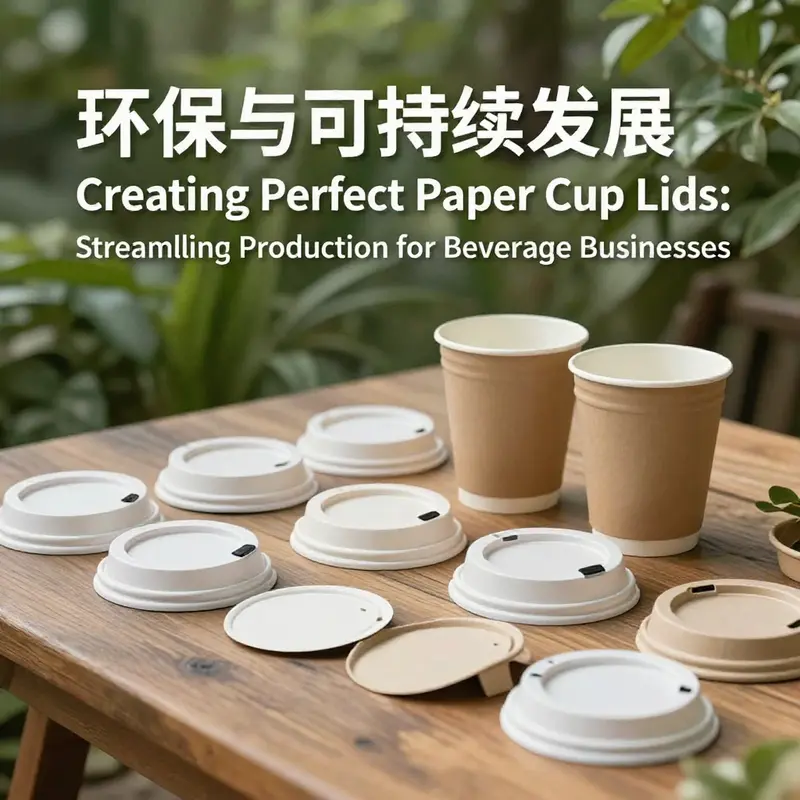
The seal that wraps a hot drink in a lid is more than a practical constraint; it is a public-facing statement about how a brand treats waste, material choices, and the broader environment. In the evolving landscape of disposable paper cup lid making, sustainability has moved from a supplementary consideration to a core design parameter. This shift reflects not only growing consumer awareness but also a tightening policy environment that rewards closed-loop thinking, renewable materials, and transparent lifecycle management. As a result, the lid, once a simple accessory, now acts as a litmus test for a company’s commitment to responsible production and responsible consumption.
A central dimension of sustainable lid making is material choice. Traditional lids rely on plastic-based laminates or multi-layer coatings to achieve water resistance and leak prevention. While these constructions deliver reliability in the short term, they often complicate end-of-life processing. The industry has responded with two complementary strategies. One is to advance water-based and plant-friendly coatings that can perform the same protective functions without compromising recyclability. The other is to pursue barrier technologies that reduce liquid penetration while remaining compatible with existing pulping streams. In practice, this means moving toward coatings that are either biodegradable, compostable under industrial conditions, or at least washable from the recycle stream with minimal contamination. The literature on this topic highlights coatings such as water-based acrylics and high-performance eco-friendly barrier layers as increasingly viable options. These developments aim to preserve the integrity of the paper substrate and its post-consumer processing, which is crucial for achieving true circularity rather than a limited, single-use cycle.
From the perspective of a modern producer, coatings are only part of the equation. The lid must also be designed to minimize waste, simplify manufacturing, and support energy-efficient operations. High-speed ultrasonic forming lines and fully automated lid-formation systems have reached maturity in many markets, enabling precise tolerances and reduced scrap. Yet automation alone cannot deliver sustainability; it must be paired with material choices and process controls that lower the environmental footprint. Energy consumption, solvent use, and the potential for contaminating recyclates with incompatible materials all demand careful optimization. In this context, the most forward-looking plants integrate coating application, drying, and curing steps with real-time quality monitoring. They also incorporate systems for reclaiming edge scrap and reprocessing trimmings back into the feed stream, turning what could be waste into usable material.
The environmental promise of sustainable lid making hinges on compatibility with existing recycling and waste management systems. The ideal lid material should align with standard pulping and paper recycling processes, allowing the lid to flow through the same stream as the cup. Recent findings in the field suggest that certain water-based coatings and barrier layers can be treated in conventional废纸回收过程, enabling a closed-loop pathway that preserves pulp quality. This is not a universal outcome; some coatings still pose challenges, especially when they introduce fluorinated components or difficult-to-separate layers. The critical takeaway is that material chemistry must be selected not only for performance but also for lifecycle integrity. Brands and converters increasingly perform life-cycle assessments to compare the environmental impact of alternative coatings, laminates, and substrates across energy use, emissions, and end-of-life processing. In practice, this means choosing a lid design that minimizes embedded carbon, reduces water usage in coating and curing, and supports efficient separation in recycling facilities.
Consumer expectations have begun to drive meaningful changes as well. People are not simply asking for leak-proof lids; they want packaging that can be returned to a sustainable loop without sacrificing convenience. Plant-based or recycled content options, lower-carbon production, and the potential for compostability where industrial facilities exist are attractive to a growing segment of customers. In response, many producers are prototyping or deploying lids that rely on single-material formats or simplify lamination stacks to improve recyclability. This aligns with a broader industry move toward “paper-first” packaging solutions, where the lid is designed to be as recyclable as the cup itself. In parallel, several brands are exploring foldable or collapsible lid elements that reduce packaging volume and transportation emissions while maintaining usability. These innovations embody the principle of reducing material intensity while preserving function.
Innovation in this space also has policy and market implications. Regulatory actions aimed at reducing plastic pollution and lowering carbon footprints are shaping procurement criteria and investment decisions. Where bans or taxes on plastic consumption exist, the incentive to switch to paper-based lids with eco-friendly coatings grows stronger. At the same time, public and private sectors are increasingly rewarding solutions that demonstrate transparent supply chains, third-party certification of materials, and robust end-of-life performance. For manufacturers, the practical implication is to design lids with clear documentation about material composition, coatings, and recyclability. This transparency helps customers meet regulatory expectations and build trust with stakeholders who are scrutinizing environmental claims, particularly in regions with stringent packaging waste regulations.
A practical route toward sustainable lid making lies in deliberate design for disassembly and recyclability. Even when a lid cannot be fully recycled in every locale due to facility limitations, it can still be designed to minimize contamination and facilitate sorting. Simpler, single-material choices reduce the risk of cross-contamination during pulp processing. Additionally, the industry is showing increasing interest in bio-based or compostable liners and inner coatings that do not impede the deinking and repulping processes. A broader reuse mindset is also emerging; some operators are exploring modular lid designs that can be adapted for different cup sizes without introducing new plastics. These approaches reflect a holistic view: the lid is not a standalone product but part of a packaging system whose performance, environmental burden, and end-of-life trajectory are tightly interwoven.
All these shifts are underpinned by data-driven practices. The most sustainable producers collect and analyze metrics across the supply chain—from raw-material sourcing and coating application to energy intensity in curing ovens and rates of scrap removal. Such data enable targeted improvements, such as substituting lower-energy drying technologies, selecting low-VOC coatings, and optimizing the coating thickness to balance barrier performance with recyclability. The shift toward digitalization and IoT-enabled monitoring supports predictive maintenance, reducing downtime and waste, while delivering higher process stability. In practice, facilities that integrate material science with data-informed operations stand a greater chance of aligning economic viability with environmental responsibility. The outcome is a lid-making process that not only protects beverages but also upholds a credible, verifiable commitment to environmental stewardship.
For readers seeking concrete pathways to implement these principles, a useful starting point is to consider the entire lid life cycle—from material selection to end-of-life. Begin with a materials audit that maps the lifecycle impact of each coating and substrate option. Then assess pulping compatibility and recycling stream dynamics in the target markets. Where possible, pilot programs that test new eco-friendly coatings and single-material constructions can reveal real-world performance and recyclability outcomes before full-scale adoption. Collaboration across the value chain—coating suppliers, lid manufacturers, cup producers, and waste-management partners—emerges as a critical success factor. Only through such cross-functional collaboration can the lid achieve its potential as a sustainable, high-performance component that supports the broader shift toward a circular economy in disposable packaging.
In sum, the lid is a gateway between convenience and responsibility. By prioritizing eco-friendly coatings, recyclability, and lifecycle thinking, the disposable paper cup lid can become a model of sustainable packaging design. This is not merely about complying with regulations or satisfying consumer demand; it is about redefining what it means to be a responsible producer in a sector tasked with balancing mass usage with environmental accountability. As the market matures, those who couple high-quality performance with transparent environmental credentials will likely set the standard, shaping choices for manufacturers, brands, and waste-management systems alike. The lid, then, becomes a symbol of how a simple consumer touchpoint can catalyze broader changes in the packaging ecosystem.
For readers who want to explore specific examples of eco-friendly lid options and related packaging solutions, see the discussion on disposable paper lids for hot paper coffee cups, which offers insight into materials and design decisions that support recyclability and sustainability. disposable paper lids for hot paper coffee cups.
External resources offer a broader market perspective and underscore the growing emphasis on sustainable growth in disposable cup packaging. A detailed market analysis provides context for the expansion of eco-friendly materials, barrier technologies, and recycling-enabled designs across regions and applications. See the Allied Market Research report for an external reference to the trends shaping the disposable paper cup market and the sustainability drivers that influence lid making at scale. https://www.alliedmarketresearch.com/disposable-paper-cup-market
Final thoughts
In conclusion, the production of disposable paper cup lids plays a crucial role in the beverage industry’s evolution towards sustainability and efficiency. By investing in the right equipment, understanding market trends, and prioritizing eco-friendly practices, businesses can not only meet customer expectations but also contribute positively to the environment. This comprehensive approach to disposable paper cup lid making not only enhances operational success but also aligns with the global shift toward responsible consumption. As you navigate through this space, remember that your choices today will shape the beverage landscape for tomorrow.