
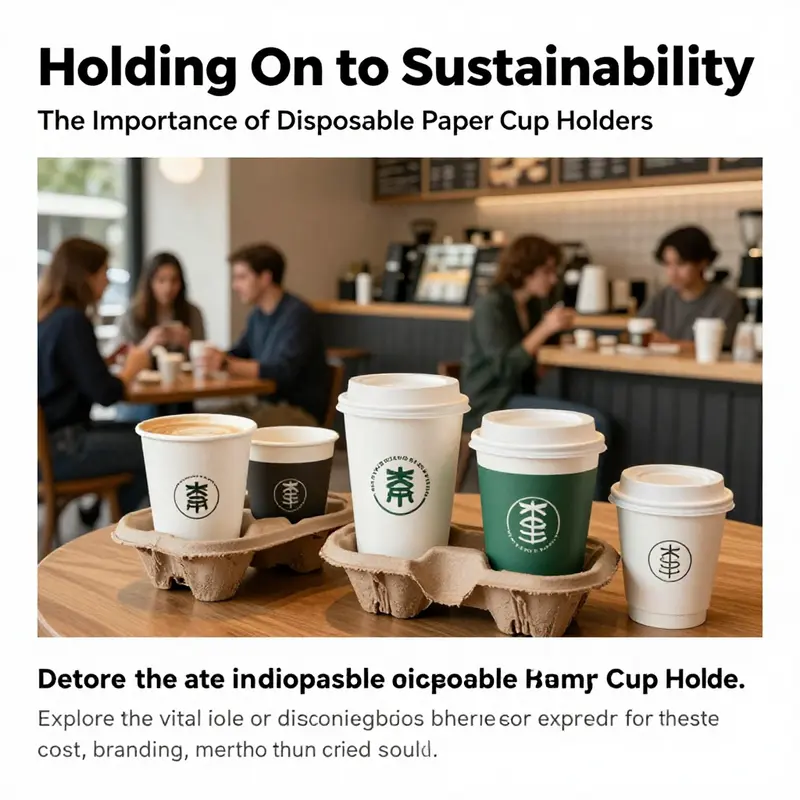
In today’s fast-paced food service industry, disposable paper cup holders have emerged as essential tools for businesses aiming to combine functionality with sustainability. From bubble tea shops to gourmet restaurants and catering services, these holders not only serve a practical purpose—enhancing user experience and preventing spills—but also reflect businesses’ commitment to eco-friendly practices. This article delves into the design and materials of these cup holders, demonstrating how they can be both cost-effective and customizable, while exploring their significant impact on environmental sustainability. Each chapter will illustrate how integrating disposable paper cup holders into your operations not only meets customer expectations but also enhances brand visibility.
Grip, Glow, and Green Footprints: The Hidden Architecture of Disposable Cup Holders
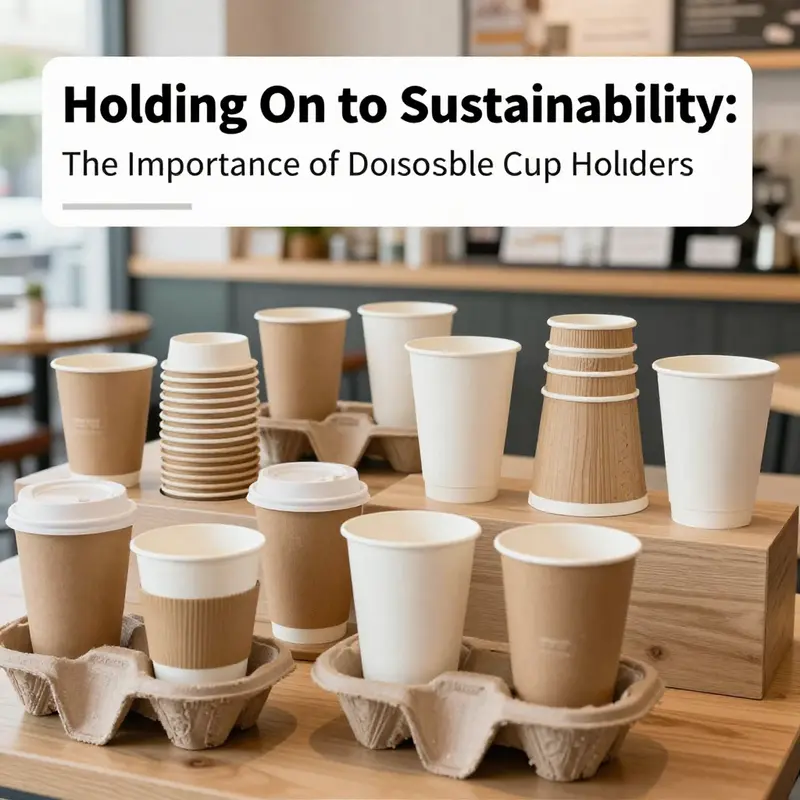
Every takeaway beverage arrives wrapped not just in steam but in a small ritual of handling. The disposable cup holder is a quiet facilitator of that ritual, shaping the moment between hand and cup and offering insulation from heat. It can reinforce brand storytelling without shouting, while enabling easy handling in busy environments. The durable sleeve must hold a standard cup securely, resist moisture and heat, and feel comfortable in the grip. Customization can be subtle—a color, texture, or logo—that reinforces a brand without adding friction. In this sense, the cup holder is more than packaging; it is a touchpoint that communicates care for both user and planet.
At its core, the geometry is simple and practical. Most designs wrap around a standard cup with a snug fit, a reinforced rim to improve insulation, and contours that prevent slipping when hands are wet. The opening should balance accessibility with containment, allowing a sip without removing the grip. Materials range from recycled paperboard to coated options that resist moisture; the challenge is to maximize barrier performance while keeping end-of-life outcomes favorable for recycling or composting.
Sustainability considerations drive ongoing innovation. Recyclable and compostable materials, responsibly chosen coatings, and a clear disposal path are increasingly expected. The best cup holders combine rigid structure with a light touch on the hand, offering grip without bulk and a look that aligns with a brand’s aesthetics. As waste-management systems evolve, the industry learns to optimize for recyclability, reducing virgin materials and enabling circular use.
The evolving market also highlights how suppliers support scalability and customization. A single design can serve multiple cup sizes, simplifying SKUs and logistics, while premium finishes and strategic branding can be deployed selectively where it adds value. In practice, the most successful holders manage a quiet balance: they perform reliably in daily use while remaining mindful of their lifecycle and the planet.
The Silent Lever of Service Economics: How Disposable Paper Cup Holders Multiply Value in Food Service
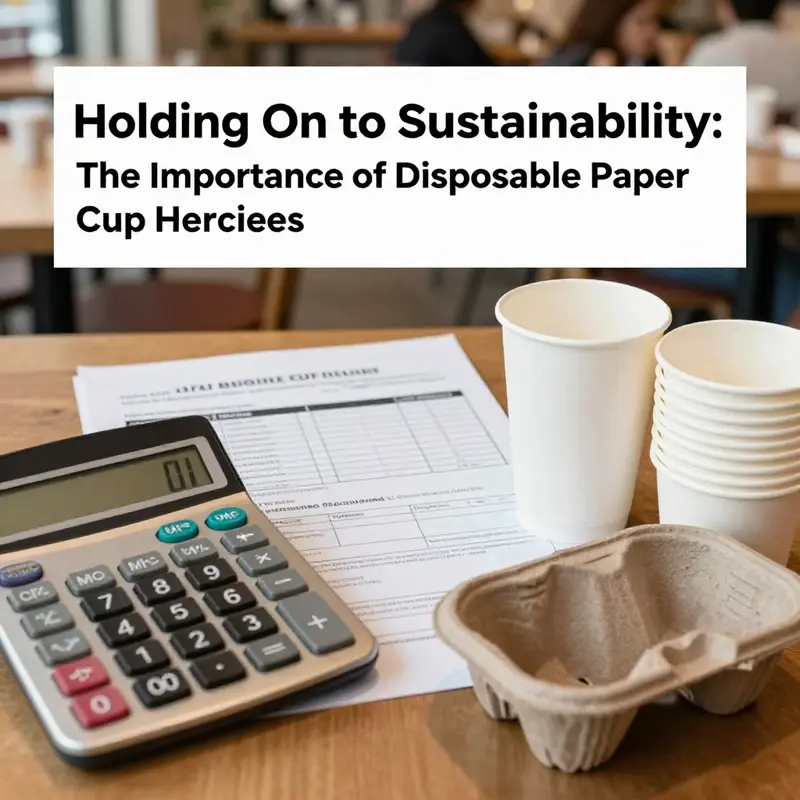
In the rhythm of a busy cafe, a disposable paper cup holder might seem almost invisible, a slim ring of fiber that silently protects fingers and frames a drink. Yet this unassuming accessory subtly reshapes the economics of food service. It touches several levers at once: cost, efficiency, presentation, and brand storytelling. When a restaurant or takeaway operation scales up, the holder becomes more than a convenience; it becomes a lever that can tilt profitability toward steadier margins, faster service, and happier customers. The logic behind its appeal is straightforward yet powerful. A holder is cheap to produce when manufactured at scale, easy to deploy in bulk, and simple to integrate into existing service rituals. When a business considers the daily cascade of cups, sleeves, lids, and accessories, the holder stands out as a predictable, durable, and recyclable component that helps standardize operations across shifts and locations. Its value emerges not from dramatic, one-off savings but from reliable, compounding gains in speed, hygiene, and consistency that accrue month after month during high-volume service periods. In this sense, the holder is both a practical tool and a strategic asset, a small but meaningful contributor to the overall efficiency and sustainability of the service model.
From a cost perspective, the core advantage rests on mass production. The manufacturing pathways for cup holders leverage continuous, automated processes that shape pulp into sleeves or wraps with very low marginal cost. The raw materials—often recycled fibers or sustainably sourced pulp—are designed to be inexpensive, yet strong enough to withstand heat and handling during transport. The combination of bulk demand and standardized design reduces per-unit overhead, enabling suppliers to offer competitive prices even as features like embossing or color accents are added. For operators who purchase thousands of units each month, the price per piece can translate into meaningful annual savings. The math is straightforward: a modest saving on each holder multiplied by tens of thousands of cups moved daily becomes a sizable margin improvement over time. This is especially important in quick-service segments where even fractions of a cent saved per unit accumulate into a noticeable bottom-line impact when multiplied across the entire operation.
Material choice matters, too. Eco-friendly options, including pulp from recycled streams or responsibly sourced plant fibers, appeal to customers who care about sustainability. These materials can be selected to balance cost with performance attributes such as insulation, grip, and heat resistance. The environmental profile of the holder strengthens a brand’s value proposition in a marketplace that increasingly rewards responsible packaging. When a business signals its commitment to sustainability, it can justify broader packaging strategies or even premium pricing in certain channels without sacrificing overall cost-effectiveness. The sustainability equation is nuanced; while some green materials might carry a higher upfront cost, they can reduce waste handling expenses, simplify recycling, and enhance customer appeal. In practice, operators can tailor their choice of material to align with regional waste infrastructure, consumer expectations, and their own brand positioning. The result is not a purely economic decision but a strategic alignment of procurement with sustainability goals and customer values.
Operational efficiency is another cornerstone of value. A cup holder supports faster service by reducing the time required to handle and transfer cups during busy periods. In a queue-heavy environment, every second shaved from the process adds up. The holder’s simplicity contributes to reliability: it does not require elaborate assembly, special tools, or extensive staff training. It is robust enough to withstand the typical pressures of a service line, yet flexible enough to accommodate a range of cup styles through thoughtful design. The consistent handoff from barista to customer is smoother when the cup is fit to the holder, reducing the likelihood of slips or spills that require replacements or cleanup. By protecting the cup from direct contact with hot surfaces, the holder also contributes to sanitation by limiting contact with surfaces that might harbor germs, especially during peak times when handoffs are rapid and frequent. The cumulative effect is a cleaner, more efficient operation with less downtime between orders, a benefit that is easier to measure in a busy shift than in a quieter hour.
Volume considerations amplify the value of this little item. In venues that host large crowds—sporting events, concerts, or corporate gatherings—service load is a function of throughput rather than individual orders. A universal or near-universal holder design can handle a spectrum of cup diameters, reducing the need to stock multiple SKUs and simplifying staff training. Fewer SKUs translate into fewer stockouts and less waste from unused or mismatched sleeves. For event-driven businesses and multi-site operators, the supply chain’s predictability becomes a strategic asset. Bulk purchasing, standardized packaging, and consistent quality help ensure that interruptions to service are minimized and that the user experience remains consistent across locations and shifts. A steady supply chain lowers the friction associated with seasonal spikes or promotional campaigns, letting operators focus on service levels, rather than worrying about supply gaps. In short, volume magnifies the return on investment. The same small unit cost that might seem trivial on a per-piece basis becomes a meaningful contributor when applied consistently across tens or hundreds of thousands of servings.
But cost-effectiveness does not hinge on price alone. It also hinges on how well a product integrates into a broader packaging and service strategy. The holder functions as a hinge between the beverage and the customer, linking the cup’s insulation with the hand’s comfort and the ambiance of the brand. When brands pursue customization through logo printing or distinctive embellishments, the holder becomes a mobile canvas for brand visibility. The economics of customization are nuanced: well-executed branding can elevate perception and drive customer loyalty, potentially supporting price integrity and repeat business without bloating the per-unit cost. The key lies in balancing aesthetics with durability and throughput. A design that looks stylish but tears or becomes illegible after transport defeats its purpose. A design that holds up under damp, greasy fingers and repeated handling will deliver a higher lifetime value for a modest additional expense. In markets where customers accumulate brand impressions across many visits, the branding opportunity of a cup holder contributes to a longer customer lifecycle with the brand.
The supply chain itself often determines whether a holder’s cost-effectiveness can be realized in practice. A reliable supplier network reduces lead times, ensures consistent product quality, and minimizes the risk of stockouts during peak periods. In operations where everything hinges on fast service, even a small delay can cascade into longer wait times, lost sales, and frustrated customers. The value of dependable delivery is therefore not measured in a single transaction but in the continuity of daily service across months and quarters. The availability of a universal design that still accommodates a broad range of cup sizes further stabilizes procurement. Operators gain from fewer suppliers, fewer SKU variations, and simpler internal processes for receiving, stocking, and rotating inventory. The strategic choice to work with a supplier capable of offering customization options, stable quality, and scalable export capacity is a practical reflection of how cost-effectiveness extends beyond the per-unit price to encompass reliability, predictability, and long-term partnership.
The role of the holder in branding and customer experience should not be underestimated. In some contexts, the holder’s function becomes part of the sensory memory of a brand. A customer’s impression can be shaped by the manner in which a drink is greeted at the point of service and how the packaging supports a cohesive story. A simple, clean presentation, when paired with subtle branding on the holder, reinforces a perception of quality and attentiveness. This is not about flashy packaging; it is about consistent, intentional presentation that resonates with customers who value both efficiency and care. In markets where takeaway packaging competes with fragile, in-person service experiences, the holder’s ability to stabilize the transfer process and maintain a uniform appearance can be a differentiator. The branding payoff, while difficult to quantify in isolation, often manifests in increased repeat visits and positive word-of-mouth from customers who notice the care embedded in the packaging. The interplay of cost, efficiency, and branding turns a modest accessory into a strategic contributor to a restaurant’s competitive advantage.
From a practical standpoint, operators often appreciate options that balance performance with flexibility. A well-designed holder should accommodate a range of cup sizes without requiring readers or staff to implement awkward workarounds. The most effective universal or near-universal designs reduce the number of SKUs, simplify storage, and streamline ordering processes. The result is a smoother workflow that minimizes the cognitive load on staff during busy periods. A straightforward approach to customization—such as a simple stamped or printed branding motif that remains legible in challenging lighting and wet conditions—can deliver meaningful impact with modest incremental cost. For businesses evaluating options, the choice becomes a function of their service model, the breadth of their menu, and their branding ambitions. The goal is to identify a design that provides consistent performance while remaining economical to produce at scale across multiple locations and seasons.
In synthesizing these threads, the cost-effectiveness of disposable paper cup holders emerges as a multi-faceted proposition. It rests on the foundation of low marginal costs achieved through high-volume production, reinforced by tangible operational gains—speed, cleanliness, and consistency—that collectively improve service quality. It benefits from a narrative of sustainability that resonates with today’s consumer expectations, while offering branding opportunities that can enhance loyalty without sacrificing efficiency. It is reinforced by supply chain reliability and the practical convenience of universal designs that simplify procurement and inventory management. And it finds its strongest expression when integrated into a broader packaging strategy that treats the cup holder as a strategic tool rather than a disposable afterthought.
For readers seeking practical options, there are diverse materials and designs in the market, ranging from simple, no-frills sleeves to more decorative or logo-branded solutions. The choice will depend on the business model, the level of customization desired, and the capacity to manage inventory efficiently. A practical approach is to view the cup holder as a scalable component that can be aligned with procurement cycles, staff training programs, and sustainability goals. The result is a coherent, cost-conscious packaging strategy that supports fast service, helps manage waste, and reinforces brand perception across locations.
To connect with concrete examples and further detail on options in the market, you can explore a relevant category that highlights the environmental promise of modern holders and offers a glimpse into how such items align with contemporary packaging goals. See more here: Eco-friendly recyclable pulp cup holder for take-away.
From a broader industry perspective, the ongoing evolution of disposable packaging continues to emphasize efficiency, sustainability, and brand interaction. As service models adapt to evolving consumer expectations—especially in delivery and take-away channels—the holder will likely grow in importance as a standard, scalable element of the packaging ecosystem. Its value is not only in its current performance but in its potential to adapt to new materials, new printing techniques, and new combinations with lids and cups that further optimize throughput and hygiene. In this sense, the holder exemplifies how a modest, well-designed staple can underpin a high-functioning service operation, supporting steady growth while aligning with responsible packaging principles. The practical takeaway for operators is straightforward: invest in a holder that is reliable, adaptable, and aligned with your sustainability and branding objectives, and you’ll see dividends in service speed, waste reduction, and customer satisfaction over time.
External resource: For additional context on market availability and supplier practices, consult an external resource: https://www.alibaba.com/showroom/food-service-paper-holder.html
Branding That Wraps Around the Cup: Custom Options for Disposable Paper Cup Holders
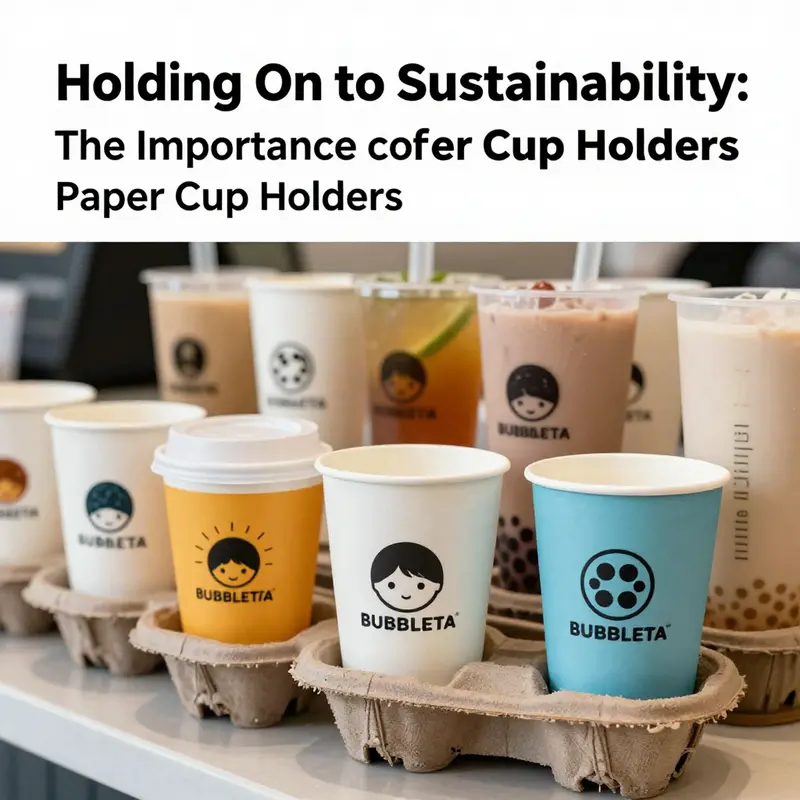
Custom branding on disposable paper cup holders turns a simple accessory into ongoing promotion. When a holder is fitted with a logo, slogan, or distinctive pattern, it becomes a mobile billboard. Each takeaway trip, delivery drop-off, or event becomes a touchpoint for your brand. The physical design, materials, and printing choices determine how well that touchpoint performs. This chapter explores the practical options, design strategies, production realities, and sustainability considerations involved in custom paper cup holders.
Design begins with an honest view of the holder’s role. A cup holder must protect hands from heat. It must fit the cup snugly. It should stack, ship, and store efficiently. Add branding without compromising function. That means choosing a surface and print method that remain legible after handling, moisture exposure, and brief contact with beverages. Kraft or natural-colored paper often provides the best balance. The muted background highlights full-color prints. Recycled pulp and sugar cane pulp provide earthy textures that reinforce eco messaging.
Printing methods vary by effect and budget. Full-color digital printing reproduces photographic imagery and gradients. It suits complex brand visuals and small runs. Offset printing delivers sharp, repeatable colors for large quantities. Foil stamping, often used as a luxury accent, brings metallic shine. Black gold or gold foil adds prestige to simple designs. Embossing creates tactile logos and borders. Spot UV adds glossy contrast to a matte surface. Combining effects yields memorable sleeves: a printed background with a foil logo and a subtle embossed line can feel premium without driving costs sky-high.
Material and structure choices matter to how branding reads and feels. Single-wall flat sleeves are economical and perfect for simple logos. Double-wall or corrugated ripple designs increase insulation and lend a premium hand-feel. The thickness of the paper affects print fidelity. Smooth kraft surfaces hold fine detail well. Raw pulp surfaces show a natural grain, which supports rustic or eco-forward aesthetics. If the brand identity is minimalist, a raw kraft holder with a single foil-stamped symbol can be more persuasive than a busy full-color wrap.
Pricing and minimum orders shape what is realistic. Many suppliers set MOQs for custom prints. For plain stock sleeves, small orders are common. For custom-printed holders, MOQs can start high. A typical example is 50,000 pieces for custom logo runs. Per-unit cost falls with volume. Entry-level pricing for large runs can begin at around $0.01 per unit. Your final price depends on material, printing method, and finishing. Simple single-color prints cost less than full-color prints with foiling and embossing. Always budget for setup fees, plate charges, or die costs if you need a unique sleeve shape.
Samples are essential. Request physical samples before full production. A digital mockup shows placement and scale. A printed proof verifies color, registration, and material compatibility. Samples let you evaluate hand-feel, insulation, and stacking. They reveal print bleed or edge inconsistencies. Most manufacturers offer sample options with modest fees. Insist on a final sample if you plan foil or embossing. Those processes interact with paper weight and can shift registration.
Artwork and technical specifications must match vendor requirements. Use vector files for logos. Supply Pantone references when exact colors matter. Provide dielines for custom shapes and perforations. Leave adequate bleed and safe zones. For curved printing around a sleeve, account for distortion near seams. If you plan to pair holders with branded cups or lids, match color recipes across all items. Cohesive color and typography reinforce brand recognition when customers photograph or post their drinks.
Packaging and logistics influence the customer experience and cost. Bulk cartons commonly hold hundreds of sleeves. One common carton quantity for lengthier holders is around 600 pieces per carton. Carton packing affects shipping costs, storage footprint, and how quickly staff can load sleeves into dispensers. For events or seasonal runs, request pre-packaged cartons that match your deployment plan. Some suppliers offer customized cartons with branding, which can extend the unboxing and storage story.
Sustainability is no longer optional for many buyers. Certifications such as food-grade safety and compostability reassure both operators and consumers. Paper holders made from recycled pulp or sugar cane pulp reduce reliance on virgin fibers. They also provide a visual cue of environmental responsibility. Consider printing methods that minimize toxic inks and metallic coatings that hinder compostability. If recycling or composting is a local option, include clear on-product instructions. A simple icon and short line of text promote correct disposal and close the loop between product and promise.
Practical design tips improve visibility and usability. Place primary branding where a hand is least likely to cover it. A centered logo on the largest face of the holder reads well on photos and displays. Reserve the seam area for secondary messaging. Use contrasting colors for legibility against kraft or natural backgrounds. Avoid tiny fonts and intricate details that lose clarity at small print sizes. Consider including a secondary message, such as a tagline or social handle, in a smaller band near the bottom. If your campaign is seasonal, a band for a sticker or stamp allows quick, low-cost updates without reordering the entire stock.
Integrate the holder into wider packaging and promotional programs. Coordinate cup, lid, and sleeve visuals for a unified pickup experience. A distinctive sleeve can drive social sharing. Encourage customers to post photos by using a dedicated hashtag printed on the sleeve. For delivery, printed QR codes can link to promotions, feedback forms, or loyalty programs. Make sure code placement avoids creases or seams, and test scannability across several phone types.
Beyond the immediate brand boost, custom holders can support product differentiation. Limited-edition prints for collaborations or events create collectability. Co-branded holders with partners, festivals, or charities extend reach. For bakeries and cafes that sell pastries or take-out bowls, consistent kraft textures across bowls and holders reinforce the brand story. If you sell soup or salad bowls, consider matching sleeves or outer bands. Consistency in material and finish encourages a professional perception across your entire takeaway suite. Explore partner items to maintain a coherent look and feel across the menu.
Supplier selection affects quality, timelines, and risk. Evaluate manufacturers on responsiveness, sample quality, production capacity, and export experience. Confirm lead times for tool creation and printing. Complex effects like foil stamping add days or weeks to schedules. For large seasonal campaigns, place orders well ahead of peak demand. Request clear terms on color variance, returns, and defective-item thresholds. If you require rapid replenishment, choose suppliers with stock options in blank or standard-printed holders.
When designing, remember that less often reads as more. Clear, bold marks outperform dense imagery. A lean design reduces printing plates, cuts costs, and scales easily across sizes. For multi-size programs, create art that adapts without losing balance. A logo that sits well on a narrow 8oz sleeve should also perform on a wider 16oz wrap. Test your art on a variety of mockups to ensure consistency.
Finally, align your branding goals with measurable outcomes. Track redemption rates on sleeve-based promotions, follow social media engagement, and survey customers about perceived brand quality. Use these insights to iterate on future runs. A sleeve that performs well might justify added effects like foil or embossing later. Conversely, if an economic run must be lean, maintain core identity elements and reduce embellishments.
For practical sourcing, explore supplier listings that show product specifications, sample options, and MOQ details. Many marketplaces display real-time quotes and sample request options, enabling side-by-side comparison. If you need an eco-friendly starting point, consider an eco-friendly recyclable pulp cup holder as a base for customization. Such holders pair well with kraft cups and compostable bowls for a cohesive, sustainable program: https://greendispopack.com/product/eco-friendly-recyclable-pulp-2-4-cups-coffee-take-away-cup-holder/.
When planning a custom run, include time for proofing, sample approval, and logistics. Factor in setup fees and shipping costs into your per-unit calculation. Request a written specification sheet that lists materials, finishes, tolerances, and carton counts. This reduces misunderstandings and helps maintain consistent quality across multiple orders.
Custom branding on disposable paper cup holders is a practical, scalable, and sustainable way to raise brand visibility. Thoughtful design, correct material choice, and a clear production process create holders that protect hands, reinforce identity, and invite customer engagement. With careful planning, these small pieces of packaging deliver disproportionate marketing value with each cup they touch.
For detailed product examples and custom ordering options, see the supplier listing referenced in the industry research: https://www.alibaba.com/product-detail/Custom-Logo-Print-Disposable-Takeaway_1600429374586.html.
From Fiber to Footprint: How Disposable Paper Cup Holders Shape Sustainable Packaging
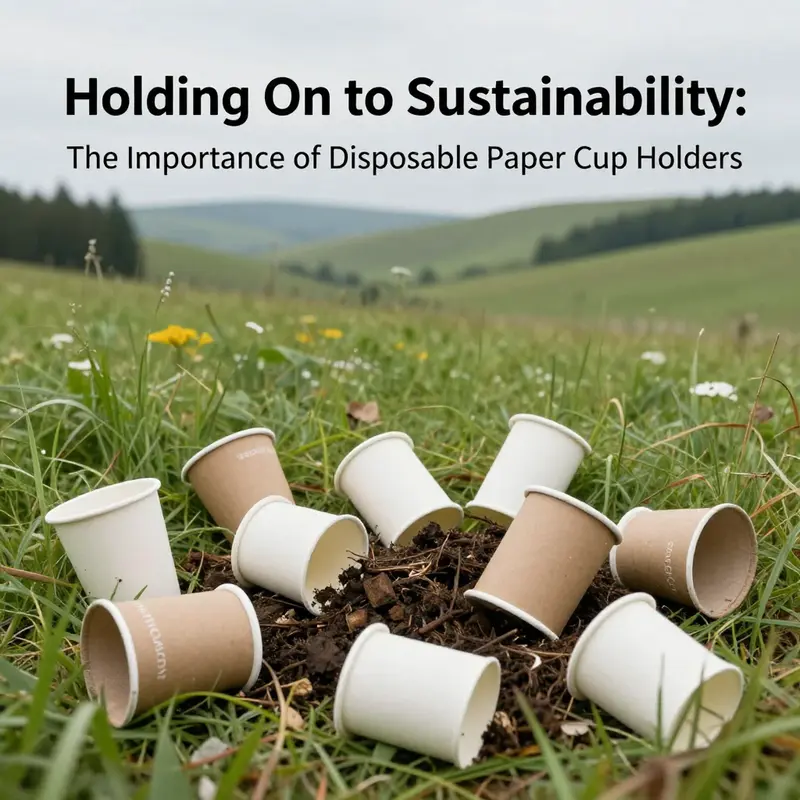
Disposable paper cup holders are often sold as a greener choice for takeaway beverages. The reality is more nuanced. Their environmental performance depends on raw materials, manufacturing, design, use patterns, and end-of-life handling. This chapter traces the path from fiber to footprint and offers practical insight for buyers, operators, and designers who want to lower the climate and pollution impacts of cup-holding solutions.
The material choice defines most downstream outcomes. Holders made from recycled pulp or agricultural residues such as bagasse use renewable feedstocks. These fibers can reduce reliance on virgin timber and lower embodied carbon compared with fossil-derived plastics. Conversely, holders with plastic or metal coatings deliver better moisture resistance and gloss. Those benefits come at a cost: coatings complicate recycling and can render a product non-compostable. Even a thin polyethylene lining can prevent a fiber holder from being accepted by many paper recycling streams, and it can fragment into microplastics when mismanaged.
Production water and energy are sometimes overlooked. Pulping, forming, drying, and finishing consume water and heat. Where energy grids rely heavily on fossil fuels, the carbon footprint rises. Suppliers that optimize process efficiency, use renewable energy, or choose mechanical pulping over energy-intensive chemical processes can materially lower environmental impact. Certifications that track sustainably sourced fibers, like chain-of-custody standards, help ensure raw material choices support responsible forestry and land use.
Design decisions influence both user experience and end-of-life fate. A snug sleeve minimizes material while preserving thermal insulation and grip. Oversized or rigid shells use more fiber for the same function. Adding decorative finishes such as metallic stamping or heavy varnishes increases aesthetic appeal, but also reduces recyclability. Simpler constructions generally perform better in resource and waste metrics. For businesses that want branding, water-based inks and low-solids printing methods reduce harmful emissions and keep recycling streams cleaner.
Another design axis is universality. A well-sized holder that accommodates several cup diameters can reduce SKUs and inventory waste. Universal holders also simplify logistics for busy outlets. However, universal fits sometimes need more material to remain stable. That trade-off must be balanced: design for multi-size compatibility, while optimizing wall thickness and corrugation to use the least material that still meets safety and insulation requirements.
End-of-life handling determines whether benefits are realized. Recyclable fiber holders only deliver circular outcomes if they are collected, sorted, and processed correctly. In many urban systems, contamination with food and liquids leads to rejection of paper streams. Lined cups often contaminate fiber recyclables, producing mixed waste that goes to landfill. Compostable holders require industrial composting to break down efficiently. Municipal composting access varies widely, and without proper facilities, compostable materials may degrade slowly or emit methane in anaerobic landfill conditions.
Microplastic release is a meaningful concern when cups or holders contain plastic components. When those products fragment in the environment, microplastics can enter waterways and accumulate in marine food chains. This negates part of the perceived environmental advantage of fiber-based solutions. Avoiding plastic linings and coatings, or at least selecting certified, compostable polymer alternatives, reduces this risk.
There is a clear hierarchy of impact-reduction strategies. First, reduce single-use reliance where feasible. Reusable cup programs, in-store ceramic service, and incentivized cup returns cut the total number of disposable holders required. Where reusables are not viable, choose holders made from post-consumer recycled fiber or agricultural pulp. Look for low-impact finishes and minimal adhesives. Third, ensure end-of-life recovery by partnering with local recycling and composting providers or by providing clear disposal instructions on packaging.
For businesses, procurement choices have operational and brand implications. Low unit costs of disposable holders can obscure hidden externalities. A very cheap holder may carry higher lifecycle emissions, require more frequent replacement because of structural failures, or cause waste-handling headaches that increase local disposal costs. Conversely, slightly higher-priced holders made from recyclable or compostable fibers often reduce waste disposal fees and align with customer expectations for sustainability. Investing in higher-quality holders that perform reliably reduces waste from breakage and poor insulation, improving customer satisfaction as well.
Customization and branding complicate the sustainability calculation. Custom-printed holders can boost visibility, but heavy printing inks or foil stamping often contain metals and polymers that interfere with recycling. To maintain brand presence while preserving recyclability, opt for single-color water-based printing, limited varnish, or embossing that doesn’t add non-fiber material. When full-color or metallic effects are essential, consider complementary branded collateral that is reusable, such as tableware or in-shop signage, to reduce reliance on disposable branded items.
Operational practices matter as much as product specification. Staff training on correct stacking, storage, and handling reduces damage. Proper storage keeps holders dry and prevents mold or contamination that would render them non-recyclable. Clear in-store signage directing customers to the correct disposal bins increases capture rates for compostable or recyclable materials. If a facility offers composting only, ensure holders are certified for industrial composting and that contamination by non-compostable items is minimized.
Traceability and supplier transparency allow better decisions. Ask manufacturers for life cycle data, chain-of-custody certification, and third-party verification of compostability or recyclability claims. Suppliers who can demonstrate low-impact manufacturing, waste minimization, and adherence to environmental standards reduce procurement risk. Bulk purchasing and consolidated shipments also shrink transport emissions compared to frequent small deliveries.
There are concrete product alternatives to consider. Reusable racks and holders made from stainless steel or durable plastics offer a circular option for high-volume settings like catering or office coffee stations. These systems demand cleaning and handling protocols, but they rapidly amortize their embodied impacts over many uses. For disposable needs, choose fibre holders that are designed for recyclability and that match local waste-processing capabilities. When available, products that state post-consumer recycled content and carry reputable certifications generally perform better in life cycle assessments.
Consumer behavior influences outcomes. Clear communication that explains why a particular holder is chosen — recyclable pulp, compostable bagasse, or reusable systems — helps align expectations. Visible bin labeling and short guidance reduce contamination. Incentives, such as small discounts for customers who bring reusable cups, change habits and reduce the overall need for disposables.
Policy and infrastructure play a decisive role. Local collection, sorting, and industrial composting capacity directly affect whether a theoretically recyclable or compostable holder actually returns to productive use. Policymakers can help by improving municipal processing, setting procurement standards for public institutions, and clarifying labeling rules to avoid greenwashing. Extended producer responsibility schemes are another lever. If manufacturers absorb end-of-life costs, they face incentives to design products that are easier to collect and process.
A practical checklist for businesses can translate principles into action. Prioritize holders made from recycled or agricultural pulp without plastic linings. Favor simple finishes and water-based inks. Confirm local recycling or composting access before committing to compostable products. Train staff on storage and disposal practices. Consider reusable alternatives for regular customers or high-traffic points. Request supplier data on lifecycle impacts and certifications, and include end-of-life handling in procurement contracts.
Changing to more sustainable holders does not require a single perfect product. It needs a systems approach. Better materials, improved design, supplier transparency, solid waste infrastructure, clear in-store practices, and consumer engagement together create measurable improvements. Small design changes can reduce material intensity. Better collection systems can close the loop for recovered fiber. Reusable options can replace thousands of disposables in busy environments.
Finally, avoid simplistic claims and verify performance. Terms like “eco-friendly” or “biodegradable” are not guarantees of low impact. Seek specific certifications and data on compostability, recyclability, recycled content, and life cycle emissions. Use available life cycle analysis to compare options in your region. The objective is not perfection but measurable progress: fewer single-use items, higher recovery rates, and lower pollutant release.
For businesses seeking an immediately relevant product option, consider holders that combine recyclable pulp with minimal finishing and are sized to fit common cup types. An example product line focused on recyclable pulp and designed for multiple cup sizes can simplify inventory and end-of-life recovery. You can learn more about such options from suppliers who specialize in recyclable pulp holders and related take-away packaging.
Source: The disposable paper cup environmental bane – https://www.sciencedirect.com/science/article/pii/S0048969720315286
For a practical example of a recyclable pulp holder suitable for small cups, see the eco-friendly recyclable pulp product listed here: eco-friendly recyclable pulp 2-4 cups coffee take-away cup holder.
Final thoughts
As the food service sector evolves, the role of disposable paper cup holders extends beyond mere functionality. These eco-friendly options contribute significantly to branding efforts, operational cost efficiency, and sustainability initiatives. By choosing the right design and customization options, businesses can enhance their image while being conscious of their environmental footprint. Investing in quality disposable paper cup holders promotes a positive customer experience and echoes a commitment to sustainability, aligning with modern consumer values.