
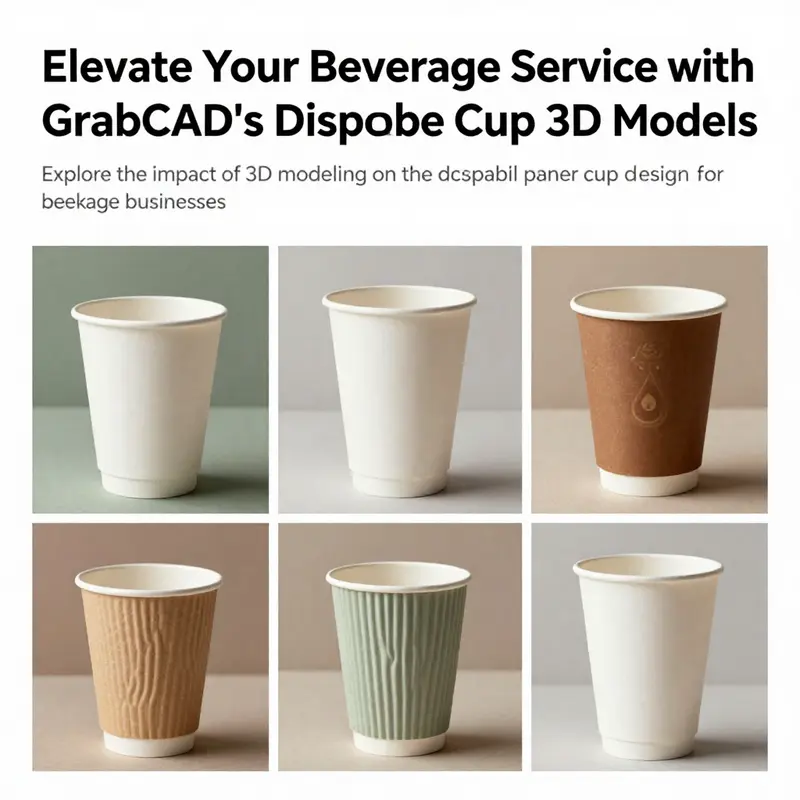
In the modern beverage landscape, especially for bubble tea shops, restaurants, food trucks, catering services, and corporate procurement teams, the design and functionality of packaging are critical. One key element that many industries overlook is the impact of 3D modeling on product design. The availability of high-quality, reusable 3D models on platforms like GrabCAD is a game-changer for product visualization, innovation, and prototyping. This article delves into the disposable paper cup 3D model available on GrabCAD, exploring its nuances, formats, industry applications, user contributions, and future trends in the space. Each chapter will provide insights that can directly benefit your beverage or food service business, enhancing product offerings and operational efficiency.
null
null
Formatting for Fit: Navigating File Formats and Usability of Disposable Paper Cup 3D Models on GrabCAD
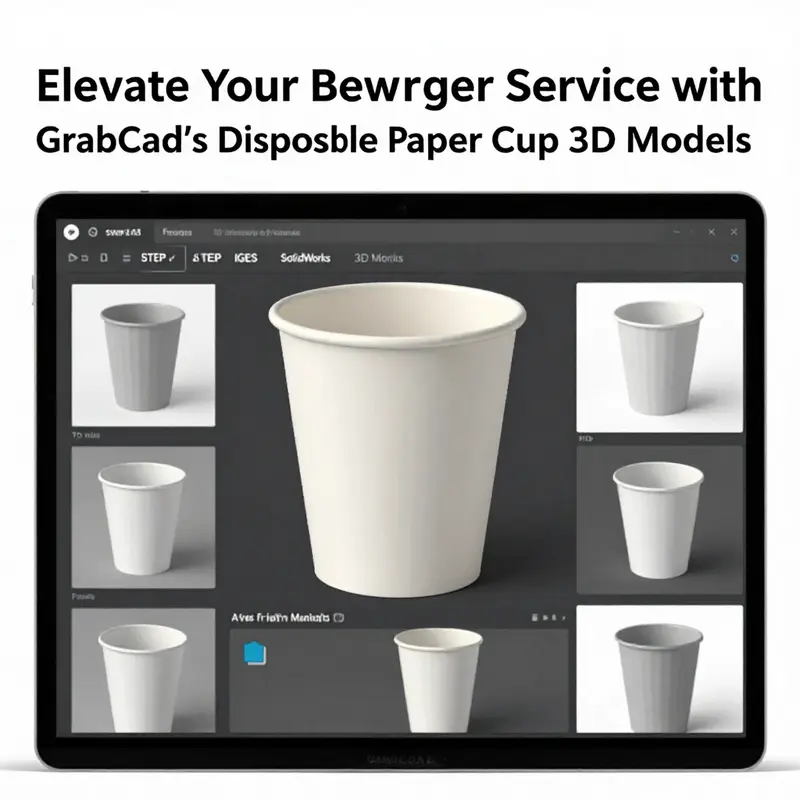
The evolution of a disposable paper cup model from a simple schematic to a production-ready CAD asset hinges on more than a pretty surface. It rests on the formats that carry its geometry, the metadata that describes its intent, and the workflows that a designer or engineer will follow to prototype, test, and potentially scale a concept. On GrabCAD, where a diverse community uploads models with varying purposes, the formats in which a disposable paper cup model is offered can shape every downstream decision. A model’s utility begins with compatibility. When a user downloads a STEP file, the geometry comes with a level of parametric integrity that invites modification without starting from scratch. STEP, or .stp, preserves relationships between features, faces, and curves, enabling a designer to interrogate how the cup would behave under different tolerances or how a lid might interact with the rim in a clutch of design iterations. In practice, STEP supports seamless handoffs from concept to engineering, allowing a mechanical engineer to adjust wall thickness, taper, or the rim diameter while preserving the fundamental geometry that defines a standard disposable cup. The presence of STEP in a GrabCAD model’s suite of formats signals a readiness for integrated design reviews, finite element analysis, and compatibility with downstream CAD ecosystems that teams rely on for collaborative projects.
Another cornerstone format is IGES, represented by .igs. While it predates STEP in many CAD pipelines, IGES remains a robust conduit for exchanging a broad spectrum of CAD data, including surface definitions. For teams that inherit a library of older tooling or whose archival strategy favors a time-tested exchange, IGES serves as a familiar bridge. Its versatility supports not just solid bodies but also surface representations that may be crucial for styling studies, lay-flat unfolding analyses for packaging, or compatibility checks with legacy visualization tools. Although IGES may not carry as rich a parametric history as STEP, its straightforward geometry can prove invaluable in early feasibility studies where the emphasis is more on form and fit than on re-parametrization.
Native formats like SolidWorks’ .sldprt bring a different kind of value. When a disposable cup model is available in a SolidWorks native file, designers working within that environment gain direct access to parametric features, sketches, and feature trees. This is particularly advantageous for teams that routinely tailor the cup to specific campaigns or market segments. The realism of assemblies improves once users can adjust tolerances in context, test interactions with lids, sleeves, or embossed branding, and re-share the updated geometry without losing the underlying design history. The trade-off, of course, lies in software compatibility. Native formats demand that collaborators either use the same platform or invest in reliable translation workflows that preserve intent without introducing unexpected geometry drift.
A third key format, STL, is widely recognized for its role in rapid prototyping and 3D printing. STL’s strength is universality: a mesh-only representation that conveys shape without parametric data or metadata. In a workflow centered on physical proofing, an STL export lets a team generate rapid prototypes to evaluate tactile properties, curvature, and stackability in real-world contexts. Yet STL’s limitations become apparent when iteration speed is tied to design logic. Without parametric history, making changes requires re-exporting updated meshes from a parent CAD model, and the absence of metadata can hinder later stages such as assembly planning or bill-of-materials generation. The GrabCAD community often helps bridge these gaps by providing multiple formats for the same model, letting readers choose the flavor that aligns with their immediate objective—whether it’s quick printability, detailed engineering analysis, or vivid product visualization.
In this landscape of formats, the usability of a disposable paper cup 3D model is not simply about having a file in a preferred format. It is about how clearly the model is documented, how easy it is to interpret its dimensions, and how transparent the licensing and provenance are. A well-documented model on GrabCAD typically carries a concise description that notes the intended use, key dimensions, material assumptions, and any simplifications that were made for the sake of manufacturability or display. The clarity of this documentation matters when a project moves from a concept review to a supplier briefing. Designers need to know where tolerances live, how much the geometry can vary before functional issues arise, and what liberties can be taken when adapting the cup for a different volume or a different lid design. The presence of reviews or comments from other engineers can amplify confidence, signaling that the model has been tested under varied viewpoints and that potential pitfalls have already been flagged by the community.
The decision to download a model in one format or another frequently reflects a broader practice rather than a single preference. Many teams adopt a mixed-format strategy to accommodate a spectrum of tasks. For initial concept validation, an STL might be downloaded to support rapid prototyping and to validate the physical form against ergonomic or stacking constraints. For design refinement and engineering analysis, STEP or IGES becomes the backbone, supporting parametric edits and cross-compatibility with simulation tools. If the aim is near-seamless collaboration across a design-to-manufacturing chain, an accessible native format like SolidWorks becomes highly desirable, enabling downstream engineers to preserve feature history while reconfiguring the model in response to packaging requirements, lid interactions, or branding changes.
A notable benefit of GrabCAD is the community-driven emphasis on model quality and documentation. High-quality models tend to include thoughtful notes about tolerances, scale, and intended manufacturing methods. Such metadata is not merely descriptive; it is actionable. When a designer wants to assess how the cup behaves under a thermal load or how a lid seals at the rim, reliable metadata helps the engineer decide whether the available file formats can sustain the analysis without introducing unintended distortions. This is especially important for disposable cups, where wall thickness, rim geometry, and the fit with lids can influence performance during hot-fill processes, stacking in packaging lines, or consumer handling. In short, the value of these models lies as much in the accompanying information as in the geometry itself.
For practitioners seeking concrete examples, a representative disposable paper cup model on GrabCAD illustrates the practical range of formats and how they complement each other. The model demonstrates how a single geometry—whether a standard 8-ounce single-wall cup or a larger 12-ounce variant—can be exported in STEP, IGES, SolidWorks format, and STL. Each format unlocks a different workflow, and the presence of multiple export options signals readiness for cross-functional collaboration. For readers who want a direct, real-world touchstone, the link to the GrabCAD model serves as a gateway to observe how a well-structured digital asset looks when accessed through different CAD interfaces and how the community’s feedback can inform subsequent revisions. This example underscores a core lesson: the most effective disposable cup models on GrabCAD are those that anticipate a spectrum of use cases—from digital visualization to hardware prototyping to vendor communications.
To put a practical frame around this discussion, consider a tangible reference within the broader ecosystem of disposable cup design and packaging. There is a commonly used disposable single-wall kraft coffee cup with lid available in a well-documented format that emphasizes real-world applicability. This reference demonstrates how a digitally defined geometry can translate into a physical product that respects standard dimensions, margins, and fit with lids designed for consumer convenience. The existence of such a reference within the same ecosystem highlights an important point: digital models gain utility when they align with actual manufacturing constraints and packaging workflows. In other words, a model’s formats are meaningful insofar as they enable design teams to preserve intent from concept through fabrication.
In practice, when a designer searches GrabCAD for a disposable cup model, they should evaluate not only the geometry but also the surrounding context: how the file formats support their current task, what licensing terms govern reuse in a commercial project, and how easy it is to modify the model without breaking the geometry. The question is often less about choosing one format as “the best” and more about choosing the right toolkit for the job at hand. A robust model library might offer STEP for engineering analysis, STL for rapid prototyping, and a native format for ongoing design iterations. The human factor—clear documentation, thoughtful naming, and helpful community feedback—can tip the balance in favor of a particular asset, even when several compatible formats exist. In this sense, usability emerges from thoughtful packaging as much as from the CAD data itself.
For readers who want a practical touchstone beyond theory, a consolidated approach is to explore formats in parallel with a live project. Begin with a STEP export to prototype the core geometry and assess whether the wall thickness and rim diameter meet the target packaging standards. Then generate an STL to print a physical sample and validate ergonomics and stacking behavior. Finally, if the workflow demands collaborative refinement with colleagues using a different CAD platform, obtain the SolidWorks-compatible portion to preserve the design history and enable parametric edits without losing fidelity. This sequence embodies the core value proposition of GrabCAD models: diverse formats that empower diverse workflows, all anchored by a shared commitment to accuracy and accessibility.
The takeaway is not a rigid rulebook but a disciplined flexibility. Formats are levers that unlock different stages of design, analysis, and production. A well-documented model on GrabCAD becomes a bridge—linking concept to reality, and linking teams across disciplines. As with any engineering artifact, the true measure of usability lies in how readily a model can be adapted to new volumes, new materials, new packaging configurations, or new branding while maintaining the integrity of the original geometry. When this alignment exists, the disposable cup model transitions from a digital asset to a reliable companion in the journey from idea to market, supporting rapid iterations without sacrificing precision.
For readers who want to explore a real-world example directly, the model linked to GrabCAD provides a concrete glimpse into how these formats cohabit a single asset, and how the community’s feedback can illuminate paths for improvement. A practical, hands-on learning path is to examine the GrabCAD entry, compare the STEP, IGES, SolidWorks, and STL representations, and observe how the geometry translates across platforms. This exercise reinforces that the true power of 3D models in this niche lies not only in the geometry but in the ecosystem that surrounds them—how teams share, refine, and implement a design that must perform reliably in a consumer-facing setting while remaining adaptable to evolving packaging requirements.
External resource: GrabCAD Disposable Paper Cup Model
From Virtual Prototypes to Market Realities: The Industrial Value of Disposable Paper Cup 3D Models
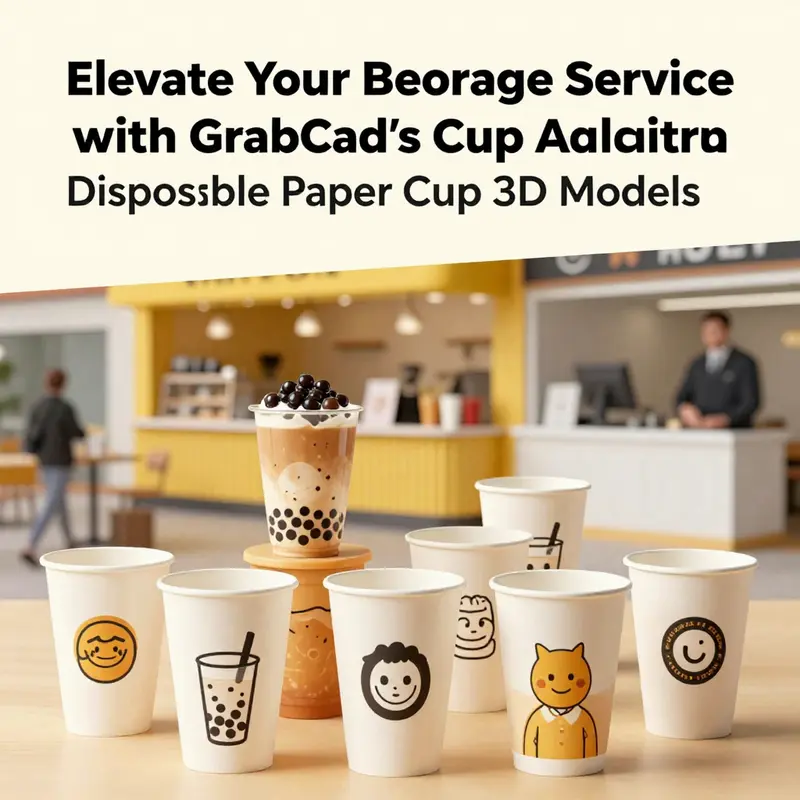
Digital representations of disposable paper cups sit at the crossroads of imagination and manufacture. On platforms like GrabCAD, engineers and designers access 3D models that mirror standard cup geometry—lip curves, wall taper, bottom footprint, and base reinforcement—allowing teams to study form and function long before any physical prototype touches resin or cardboard. These models often come in multiple formats, such as STEP, IGES, and SolidWorks, enabling seamless import into established design pipelines. The dimension accuracy embedded in a well-made cup model is not cosmetic; it informs stacking in warehouse racks, compatibility with lids, and the ability to hold hot beverages without warping or leakage. A parametric approach means diameter, height, or wall thickness can be adjusted quickly to meet client specs. This capability accelerates iteration cycles, minimizes material waste, and aligns engineering with marketing and procurement through a single source of truth. In practice, the digital model becomes more than a visualization tool—it becomes a reliable interface for cross-disciplinary collaboration. Tolerances, feature hierarchies, and surface finishes encoded in the model guide downstream processes, from CNC machining to mold design, ensuring consistency across production runs. The model thus embodies both creative exploration and industrial discipline, forming a blueprint that translates ideas into manufacturable reality while preserving the ability to adapt as requirements evolve in response to market feedback and sustainability considerations.
Product design and prototyping are the first frontiers where these assets prove their worth. Teams experiment with cup profiles, testing a range of shapes from traditional cylindrical forms to more sculpted sides that improve grip and heat distribution. The virtual environment makes it feasible to explore a spectrum of wall thicknesses, lip radii, and base contours without fabricating a single physical sample. Stacking behavior, nestability, and transport efficiency can be analyzed, and the impact of new lids or liners can be assessed within the same file. Structural analyses illuminate potential weak points under thermal load or when the cup is filled, enabling design adjustments before any tooling is committed. This kind of rapid feedback translates into a more predictable development timeline and a clearer, more defendable design rationale when stakeholders review the concept. The ability to pair the cup with a lid, sleeve, or cup holder in a shared assembly underscores the value of integrated design, showing how each element interacts with the others in real-world use. Visualizing the final product in a virtual setting—whether it sits on a café counter, in a drive-thru line, or in a compact retail display—makes the intended user experience tangible long before production. The culmination is not simply a refined shape, but a validated pathway to manufacturing with clearer tolerances and quality benchmarks that can be traced back to the digital origin.
Collaboration in packaging hinges on the realism and flexibility of the digital model. Clients frequently demand customization—logos, embossed patterns, or brand-specific textures—that must translate faithfully into production. A 3D model accompanied by precise texture maps and embossing specifications allows clients to review aesthetics without committing to expensive samples. This capability reduces miscommunication and protects the project timeline from costly rework. The model also supports packaging engineers who evaluate nestability, labeling space, and interactions with sleeves and lids. When a client requests a glyph aligned with the rim or a raised emblem on the body, designers can update the model and re-check interference with adjacent parts. The model becomes a common canvas for design intent and production feasibility, enabling faster sign-off cycles and safer tooling decisions before any mold is produced. In many workflows, the ability to render colorways and finishes in photorealistic scenes helps marketing explore seasonal or regional variants with confidence. This synergy between design and presentation reinforces a collaborative rhythm where decisions move from concept to approved spec with fewer surprises.
Advertising and marketing workflows increasingly leverage 3D assets to populate virtual showrooms and e-commerce galleries. Rendering the cup in realistic settings—coffee shop ambience, counter displays, or takeaway scenarios—demonstrates user experience and product storytelling without costly photoshoots. The visual narratives support omnichannel campaigns where images, animations, and interactive previews share a unified design language. A robust 3D model serves as a reusable asset across banners, catalogs, social media, and configurators, enabling teams managing multiple SKUs to maintain consistency and avoid geometry drift. From a cost perspective, digital visuals unlock rapid market testing for limited editions or region-specific packaging, letting teams gauge potential demand before committing tooling and production capacity. The ability to swap logos or insignia on the same base geometry illustrates the value of modular workflows; a single canonical cup model can accommodate diverse branding while preserving dimensional integrity. In this context, the model becomes a living library that reduces redundancy, accelerates content generation, and strengthens the alignment between product design, marketing strategy, and retail execution.
The manufacturing planning phase rests on accurate CAD data and a clean handoff from digital to physical tooling. When developing new molds, engineers import the cup model into mold design workflows, extracting core dimensions, draft angles, and radii that satisfy toolmaking constraints. The model helps specify surface finishes and tolerances that influence sealing behavior, stacking efficiency, and line throughput in automated environments. In many cases, the model guides CNC programmers as they generate cavity blocks and align feeding channels for forming processes that produce cups and liners. A well-crafted CAD representation reduces mold misalignment risk and part mismatch as production scales, a critical consideration in high-volume beverage operations where downtime is expensive. Tightly controlled digital files also support hygiene and food-safety expectations, with features that anticipate cleaning paths and potential contamination concerns. Prototyping with digital twins—whether through 3D-printed test cups or machine-produced samples—enables rapid validation of geometry under real-world conditions, linking virtual performance to physical reality and informing procurement decisions with clear, testable criteria.
Customization remains a primary driver of value. Brands seeking to establish a distinctive market presence can present client-specific cup designs long before a single cup leaves the factory floor. The digital model enables precise logo placement, embossed textures, and color maps aligned to packaging constraints, allowing stakeholders to review branding in the same namespace as geometry. For suppliers offering on-demand branding, the model becomes a client-facing proof that accommodates real-time adjustments and transparent version control. Design-for-manufacture principles emerge naturally: reinforced rims, improved grip textures, and optimized drainage paths for condensation can be iterated virtually and validated for manufacturability before any tooling is cut. While the geometry remains constant, surface finishes and materials convey distinct tactile senses, enabling comparisons between kraft-like textures and smooth coatings without adding physical prototypes. Even the choice of liner and lid architecture can be evaluated against the cup’s geometry to guarantee a reliable seal and a positive user experience, all within a single, auditable digital file. The resulting workflow reduces change orders and accelerates production handoff, helping teams meet brand timing while preserving quality across variants.
A practical path through this landscape is to explore flexible digital assets that demonstrate how a base geometry can host a wide spectrum of customization options. For example, a page illustrating a new-arrival single-layer cup lid scenario highlights how minimal adjustments to the rim and lip profile can impact user comfort and sealing behavior across different beverages. This kind of exploration, when shared with clients and manufacturers, clarifies expectations and fosters rapid consensus on feasibility and aesthetic direction. For practitioners, internal libraries and communities provide access to assets tailored for various software ecosystems, supporting a smooth transition from concept to production. See the example at new-arrival-single-layer-paper-cup-lid-flat-paper-cup-lid to observe how a base geometry accommodates diverse branding and packaging needs, and to appreciate the practical workflow that ties digital assets to tangible outcomes.
As the industry advances toward digital twins and sustainability, the enduring value of 3D cup models grows. They serve not only as tools for design and fabrication but as strategic assets that shape how products are marketed, manufactured, and maintained in the supply chain. The capacity to simulate, visualize, and validate in parallel across disciplines reduces cost, shortens cycles, and strengthens the alignment of technical and commercial goals. In the end, the disposable paper cup is more than a single-use item; it becomes a canvas for engineering discipline, brand storytelling, and scalable manufacturing—all enabled by robust, accurate digital models. For designers and engineers navigating the evolving requirements of packaging, food safety, and consumer expectations, the 3D model is the starting point for iterative learning and repeatable success.
External resources can extend this practice. A broader ecosystem of royalty-free assets and design tools supports practitioners seeking diverse materials, textures, and configurations. For ongoing reference, consider exploring Adobe’s asset collections for design and visualization workflows that complement CAD-based cup models. https://www.adobe.com/creativecloud/plans.html
Catalyzing Iteration: Community Engagement and the Shared Life of a Disposable Paper Cup 3D Model on GrabCAD
A disposable paper cup 3D model on GrabCAD begins as a single file, but it rarely stays a file. In open-design communities, digital artifacts transfer meanings through the hands that touch them. The GrabCAD ecosystem thrives on the temperate hum of collaboration: a seed model uploaded by a designer, a thread of comments with practical suggestions, a handful of revised files, and soon a family of variants that suit different sizes, tolerances, or presentation needs. When we study the dynamics of community engagement in these spaces, we are not merely counting downloads or star-ratings. We are tracing how ideas propagate, how attention concentrates in bursts, and how sustained contributions turn a niche resource into a durable tool for education, prototyping, and design exploration. In the case of a disposable paper cup 3D model, the stakes are concrete: precision in the lip and wall thickness, compatibility with standard manufacturing tolerances, and the adaptability to depict different paper weights, coatings, or lids. The model becomes a canvas where engineers and students test fit, test form, and test function before committing to a physical prototype. This iterative life cycle—seed, critique, refine, share again—depends on more than technical skill. It depends on a culture of generosity, clear communication, and a transparent workflow that invites further contribution rather than gatekeeping access to the resource.
The broader literature on open-design communities emphasizes engagement as a driving force for project longevity and innovation. In software ecosystems, for example, early bursts of activity often predict whether a project survives long enough to mature. Yet those bursts are only the opening act. Sustained engagement—ongoing issue reporting, thoughtful comments, and incremental contributions—consistently correlates with sustained development and broader relevance. When translated to 3D modeling on collaborative platforms, these patterns manifest as model reviews that catch dimensioning inconsistencies, comments that propose alternative glazing or rim shapes for stacking compatibility, and contributions that add variant geometries for different cup sizes or lid configurations. The result is a corpus that is more robust, more versatile, and more likely to be adopted by educators, product developers, and makers alike.
In practical terms, a disposable cup model on GrabCAD is a living document. The original uploader provides a clean, well-documented geometry, often with multiple export formats such as STEP, IGES, or SolidWorks, enabling downstream users to integrate the model into CAD pipelines without rebuilding from scratch. But the value of that file multiplies when other users engage. A designer who notices a mismatch between internal diameters and standard cup stock might comment with a suggested adjustment to the wall thickness to preserve rigidity while reducing material use. A second contributor could upload a variant that represents a single-wall cup for lightweight beverages, or a double-wall configuration for hot drinks, each tagged with precise tolerances and a clear note about intended applications. These interactions do not merely “fix” the model; they reframe it as a flexible template that can support a spectrum of design experiments. The cycle of critique and revision catalyzes new iterations, and each iteration travels through the same digital air of openness and possibility that characterizes GrabCAD’s community ethos.
The mechanics of contribution matter as much as the content of the contributions themselves. When a file is accompanied by lucid metadata—dimensions, material considerations, assembly notes, and a concise description—it lowers the cognitive load for subsequent contributors. It invites others to reuse and adapt the model without reinventing the wheel. Conversely, sparse documentation invites guesswork, which can dampen engagement. The quality of feedback styles engagement as well. Constructive comments that propose measurable changes tend to elicit more thoughtful responses and subsequent uploads. This does not always mean formal reviews or structured processes; sometimes it is the simple act of sharing a revised file with a public note, explaining the rationale for a change and inviting others to test it in their own contexts. In a field as practical as disposable packaging design, the practical wisdom embedded in these conversations is often more valuable than the original geometry. It translates into models that can be used to simulate stacking efficiency in crowded displays, to compare alternatives for recycled-content corrugation, or to visualize how a cup might look under different lighting or branding conditions.
Within this ecosystem, the role of the community extends beyond critique. It becomes a form of peer mentorship that lowers barriers to entry for novices and mid-career designers alike. A student learning CAD sees a real-world object in 3D and can compare their own first attempts against a model that has already benefited from collective scrutiny. An instructor can assign tasks that revolve around tweaking a parameter to test hypotheses about manufacturing tolerances or material performance. Even professional designers who rarely publish their own work participate by suggesting improvements or by forking the model into specialized variants for clients or research projects. The sheer diversity of use cases in a shared repository creates a positive feedback loop: more use promotes more feedback, which yields more refined models, which in turn attracts new users who bring fresh questions and new forms of expertise.
From a governance perspective, successful community-driven modeling depends on accessible licensing and clear contribution norms. When creators understand how their work can be used, modified, and redistributed, they are more willing to invest time in quality augmentation. Conversely, ambiguity around licensing or attribution can chill participation. The most vibrant resources are those that maintain an explicit stance on reuse while preserving the author’s credit and the possibility for derivative work. In practice, this means well-documented permission for educational and prototypical use, with straightforward attribution guidelines for any forks or updates. It also means inviting considerate, solution-oriented dialogue rather than letting critiques devolve into noise. In this sense, the social fabric that supports a single model—the etiquette, the prompt feedback, the willingness to share improvements—becomes as important as the geometry itself. The cumulative benefit is a more legible history of ideas within a single file, a lineage that future designers can trace, study, and extend.
The social dynamics of engagement are not merely academic; they shape how widely a model travels into classrooms, studios, and maker spaces. A disposable cup model that stands up to rigorous feedback may be used to teach design-for-manufacture workflows, allow students to explore lid-seal tolerances, or enable research into sustainable packaging geometries. Each new use case generates more comments, questions, and variant uploads, expanding the model’s reach and utility. In this sense, the model becomes a seed for a wider conversation about how simple objects can be redesigned for better performance, recyclability, or branding impact. The shared activity—comments that push for better fit, files that reflect a new context, and documentation that clarifies how to adapt—transforms a static asset into a dynamic teaching and research instrument. It is precisely this fluidity that makes GrabCAD and similar platforms fertile ground for what one might call a living design culture: an ongoing conversation in which the designated object evolves as participants bring new questions, constraints, and opportunities to the table.
For those who curate or study design repositories, the pattern is instructive. The introduction of a stable seed model tends to attract an initial cohort of early adopters who value the model for its clarity and precision. Those early users set a tone of constructive critique and practical experimentation. When their feedback is acknowledged and acted upon, trust is built, and more participants join with confidence. Over time, the repository may become a hub for a family of related models—variants that accommodate different cups, stacking scenarios, or educational demonstrations. The most successful packs of resources are those that balance consistency with adaptability, preserving core design integrity while inviting extensions that reflect evolving needs in packaging, sustainability, and manufacturing methods.
In the spirit of connecting practice to research, it is worth noting a broader inquiry into how user engagement drives innovation in open digital ecosystems. A landmark study on open-source design communities highlights that sustained engagement, not just initial enthusiasm, correlates with ongoing development and resilience. The study emphasizes that engagement manifests through issues, comments, and contributions that feed a project’s evolution. This lens helps explain why a seemingly modest model of a disposable cup can become a robust educational tool, a testbed for design-for-manufacture ideas, and a reference point for sustainability-oriented packaging research. The dynamic described here—seed creation, early feedback, ongoing refinements, and broad adoption—parallels the patterns observed in diverse open-design environments and reinforces the value of collaborative modeling as a catalyst for practical, incremental innovation.
To reinforce the practical takeaway, consider the potential of linking this shared model to related packaging design resources. For instance, a nearby packaging concept—forward-looking yet rooted in common paper-stock realities—can be explored through linked examples that illustrate how a 3D model informs real-world decisions about material selection, production methods, and end-of-life considerations. This integrative approach helps students and professionals alike see the model not as a static file but as a node in a larger design conversation about efficiency, simplicity, and responsible packaging. The habit of forking, annotating, and reusing models creates a lineage of improvements that stakeholders can trace, evaluate, and build upon in future projects. It is this lineage, more than any single iteration, that defines the practical value of community engagement on GrabCAD.
As a closing reflection, the lived experience of contributory culture around a disposable paper cup model highlights a core truth about open design: the real power lies in the people who treat a file as a shared instrument rather than a private asset. When practitioners, educators, and students feel invited to critique and contribute, the model grows beyond its initial geometry. It evolves into a flexible platform for exploration of forms, processes, and sustainability narratives. In this sense, community engagement does not merely improve a design; it expands the vocabulary of what designers can imagine and test. The living model becomes a testbed for ideas about circularity, efficiency, and adaptive reuse in a world where packaging remains a critical interface between product and consumption. The chapter you are reading is not just about a single cup; it is about how crowdsourced design ecosystems nurture iterative thinking and democratize access to practical, teachable knowledge.
External resource to consider for further reading: Unlocking innovation: the dynamics of user engagement in an open-source 3D printer community. https://journals.plos.org/plosone/article?id=10.1371/journal.pone.0285769
Internal reference for related design-reuse context: disposable-700ml-kraft-paper-bowl-take-out-octagonal-rectangle-paper-bowl
For practitioners interested in seeing a real-world packaging model in a related product context, you can explore a packaging-focused example here: disposable-700ml-kraft-paper-bowl-take-out-octagonal-rectangle-paper-bowl.
From Cup to Canvas: The Next Frontier of 3D Modeling and Personalization in Disposable Paper Cups
The trajectory of disposable paper cups is being rewritten by the capabilities of modern 3D modeling, where the cup ceases to be a mere vessel and becomes a flexible surface for storytelling, engineering, and environmental stewardship. In this evolving landscape, designers and manufacturers are leveraging advanced digital tools to simulate every curve, texture, and interaction long before a single sheet of material is cut. The idea of a disposable cup as a static, single-purpose object has given way to a dynamic design space that can accommodate brand narratives, regulatory constraints, and user experience—without sacrificing the economies of scale that make disposable goods viable. As the digital thread tightens between concept and production, 3D models become living blueprints that can be tested, refined, and deployed with astonishing speed. The result is a workflow in which a cup’s shape, surface, and structure are not fixed once but are adaptable, enabling rapid exploration of variants that align with evolving consumer tastes and sustainability goals.
Enhanced customization is at the core of this shift. The reach of 3D software means brands can move beyond simple logo placement to a holistic surface design language. Surfaces can display intricate graphic narratives, multi-layer textures, and even tactile micro-geometry that affects grip and warmth. Parametric design approaches unlock a family of variations from a single master model, allowing a brand to tailor colorways, patterns, and coatings for regional markets or seasonal campaigns without rebuilding the geometry from scratch. In practical terms, this means a cup can carry a cohesive story across hundreds of SKUs, with the digital model ensuring exact dimensional fidelity, correct alignment of graphics at the seam, and consistent production tolerances. The preview becomes a faithful proxy for the true physical product, so stakeholders—from marketing to manufacturing—can converge on ideas with confidence rather than conjecture. A practical implication is the ability to generate virtual proofs that resemble real prints, so the actual physical sample can be judged in days rather than weeks, dramatically accelerating the design-to-market cycle.
The sustainability imperative also shapes how 3D modeling informs material choice and construction. With increasing pressure to minimize waste and to embrace compostable and recycled content, designers rely on digital simulations to test material behavior under real-world conditions. 3D models can incorporate multiple material layers, coatings, and barrier treatments, and they can be subjected to virtual tests that mimic boiling water, cold beverages, and varying humidity. This kind of virtual testing helps identify the minimum viable material stack that satisfies performance while meeting environmental goals. Designers can experiment with monomaterial solutions that simplify recycling streams, or with biodegradable coatings that do not compromise barrier properties. By modeling the lifecycle impact alongside the visual design, teams can optimize the entire product profile from the outset. The result is a cup whose environmental footprint is reduced not as an afterthought but as an integral design parameter, woven into the geometry and surface treatment from the earliest stage of the model.
Structural innovation is another frontier opening up through 3D modeling. Traditional disposable cups often face challenges related to stability, stacking efficiency, and heat management. Digital design environments enable the exploration of unconventional base geometries, wall profiles, and grip textures that improve handling and stability on cluttered tabletops. Consider, for example, a cup geometry designed to offer a flat, stable footprint on uneven surfaces, or a slightly contoured grip that remains comfortable even when the cup is warm. Such innovations can be prototyped in full 3D, stress-tested in virtual environments, and then refined before any physical tooling is committed. The idea can be extended to incorporate user-centric features like improved one-handed use or secure lid seating, all validated through digital twins that simulate the interaction between cup, hand, and lid under diverse conditions. Even the way cups stack for transport and display can be reimagined, reducing space in shipping and warehousing while preserving performance and aesthetics.
The production pipeline benefits immensely from these digital advances. The ability to translate a refined 3D model directly into manufacturing data shortens the distance from concept to sample. Digital files can drive rapid prototyping through 3D printing or other additive processes, enabling designers to iterate not only on form but also on fluid dynamics, coatings, and barrier layers. This capability is particularly valuable when introducing new materials or coatings that require precise application conditions. In many cases, a handful of iterations can yield a production-ready design that meets both technical specs and consumer expectations. The reference to prompt sample delivery in the broader discourse underscores this point: digital models reduce the time required to move from a concept sketch to a tangible prototype, enabling faster feedback loops and faster responses to market signals. The result is a more responsive product development cycle that can keep pace with shifting consumer preferences and the pace of retail velocity.
Cross-disciplinary collaboration is increasingly essential in this future-driven approach. 3D models become shared sources of truth that bring design, engineering, sustainability, packaging, and supply chain into a single, coherent workflow. Designers can incorporate engineering constraints early, such as sealing performance, printability, and process feasibility, while engineers can flag manufacturability concerns and cost drivers at the digital stage. The notion of a digital twin—an accurate virtual replica of a physical product across its production chain—grows more tangible with each iteration. This alignment reduces rework and accelerates decision-making, because teams can review a single model that represents geometry, materials, coatings, and assembly sequences. The outcome is not only a cup that looks right but one that behaves correctly under the sort of real-world handling, transportation, and user interaction it will encounter in homes, offices, and public settings.
Consumer experience, too, is transforming as personalization becomes scalable through 3D modeling. Rather than delivering uniform cups across mass markets, brands can tailor patterns and color families to micro-segments without disrupting the manufacturing line. The digital model supports variable data that can drive true customization at the point of sale or even post-purchase, if the supply chain permits. While extreme customization remains bounded by production realities, the mid- to high-end spectrum of personalization is now well within reach, enabling brands to tell a more intimate story with each cup. The design language can reflect local culture, seasonal themes, or event-based campaigns, while ensuring that the underlying material choice and end-of-life handling remain consistent with sustainability goals. The challenge, and opportunity, is to maintain a cohesive brand look across a family of products while permitting meaningful variation that delights consumers and reduces waste by improving first-use satisfaction and refillability where applicable.
In this evolving picture, it is also essential to consider how surface design interacts with recyclability and compostability. The future cup will not be a compromise between aesthetics and environmental performance but a synthesis where the surface art, the substrate, and the barrier system co-exist in a way that supports recycling streams. Designers increasingly test how inks, coatings, and print layers perform when combined with recyclability goals, ensuring that decorations do not introduce contaminants or complicate end-of-life processing. A holistic approach recognizes that the surface is not merely decorative; it participates in the product’s lifecycle. Even small choices—such as optimizing ink chemistry for low migration or selecting coatings compatible with composting—can ripple through the supply chain to deliver measurable environmental benefits.
Finally, the ecosystem of 3D modeling tools continues to evolve in ways that broaden access and stabilize the transition from digital concept to physical product. Open-source and professional platforms alike are expanding libraries of materials, textures, and generative design algorithms that enable rapid exploration of form. The job now is not only to create a model that looks good on screen but to cultivate a design language that can be deployed across lines, formats, and markets without sacrificing performance or sustainability. The trend toward modular design—where core geometry is combined with interchangeable surface modules, coatings, or insulation layers—offers a practical path to scale. In such a system, a single robust base cup can serve multiple roles, from a standard hot beverage cup to a variant optimized for cold drinks or ambient temperature sampling programs. The digital thread holds these configurations together, reducing the risk of misalignment between the design intent and the manufacturing reality. As this ecosystem matures, it will empower teams to push the boundaries of what a disposable cup can be—a small object with a surprisingly large capacity to convey meaning, ensure safety, and support a healthier planet.
For readers who want to explore related discussions of eco-friendly surface design and the broader packaging context, a representative example of customization with sustainability in mind can be seen in eco-friendly printed-logo single-wall paper cups. This approach demonstrates how surface customization can be pursued without compromising recyclability, aligning brand storytelling with responsible material choices. eco-friendly printed logo single-wall paper cup.
External resource for further reading: the rapid-prototyping and customization landscape in this domain is also reflected in supplier-driven examples and market reports; for broader context on premium, customizable disposable cup offerings and expedited sampling, see the external reference here: https://www.alibaba.com/product-detail/Disposable-Paper-Cups-Premium-Quality-Custom_1600579874411.html.
Final thoughts
The exploration of disposable paper cup 3D models on GrabCAD is a demonstration of how technology is reshaping product design in the beverage industry. By engaging with these models, businesses not only streamline their product development processes but also harness the collective creativity of a community focused on innovation. The insights shared here highlight the ample opportunities to improve product offerings, enhance customer satisfaction, and stay ahead in a competitive market. As we look towards the future, it’s clear that adopting such technologies will play a critical role in redefining packaging solutions across various segments of the beverage industry.