
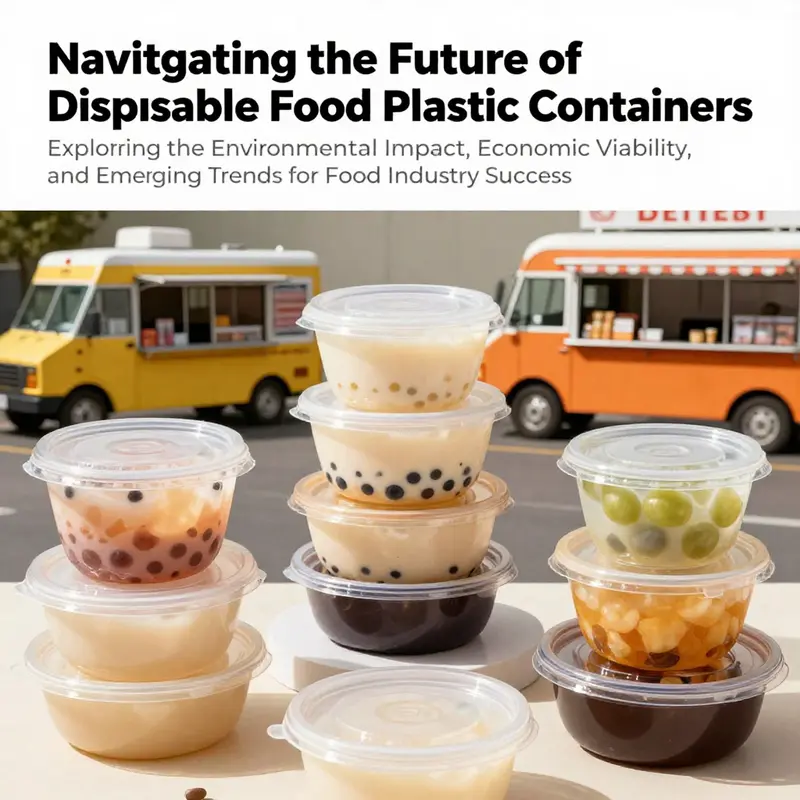
Disposable food plastic containers play a vital role in the food service industry, especially for businesses like bubble tea shops, food trucks, and catering services. These containers ensure convenience, hygiene, and food safety during transportation and storage. However, the implications of using these materials resonate beyond immediate functionalities and delve deep into environmental impacts, economic factors, and regulatory frameworks. In an industry striving for sustainability, understanding these elements is essential for making informed choices. Each chapter will further unravel these topics, highlighting the environmental challenges these containers present while examining their economic viability and addressing evolving consumer and regulatory trends, arming businesses with the knowledge necessary for thriving in today’s market.
Footprints in a Single-Use World: Tracing the Environmental Toll of Disposable Plastic Food Containers and the Search for Safer Alternatives
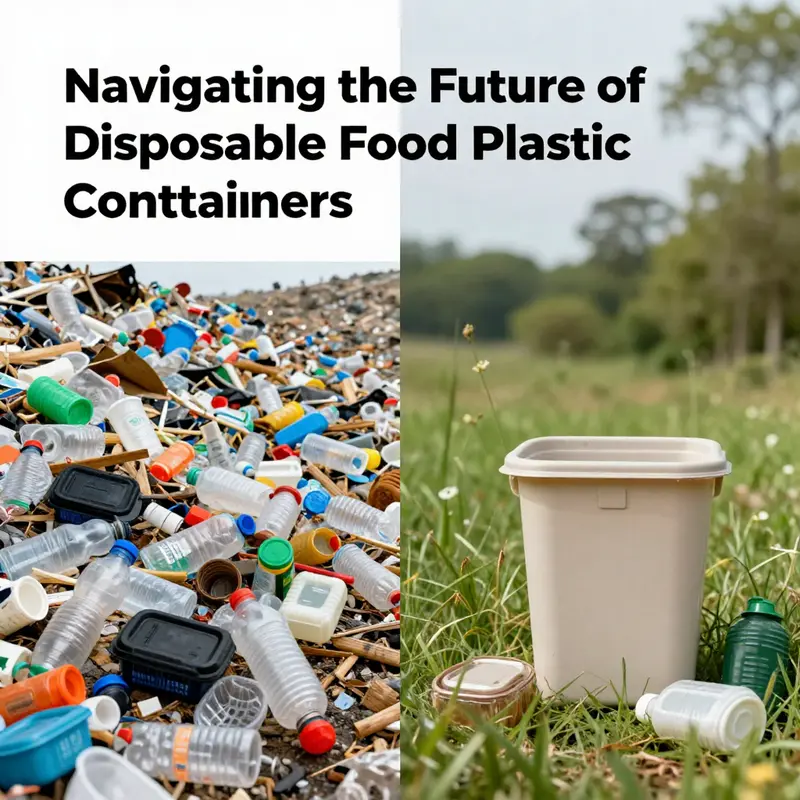
Disposable plastic food containers stand at the hinge point of modern food service, takeout, catering, and retail. They are designed for speed, hygiene, and convenience, allowing meals to move from kitchen to customer with minimal fuss. Yet beneath their practical allure lies a layered environmental story that stretches from fossil fuels to landfills, from microscopic fragments in coastal waters to the subtle but real health implications of additives used in some plastics. This chapter follows that story in a single, continuous arc: how these containers come to exist in the quantities we see, what happens to them after use, and how choices—by manufacturers, businesses, and consumers alike—shape the longer arc of planetary health. It is not merely a tale of waste; it is a tale about design, systems, and the responsibilities embedded in everyday decisions around packaging.
The lifecycle of disposable food plastic containers begins with raw materials and energy inputs that are as pervasive as the dishes they hold. Most of these containers are built from fossil-fuel–based polymers, crafted through polymerization processes that demand significant energy and chemical inputs. The selection of resin affects not only performance but end-of-life possibilities: heat resistance, clarity, and chemical stability can determine whether a container is suitable for hot soups and ready-to-eat meals or is restricted to cold or room-temperature applications. In practice, polypropylene (PP) is prized for its heat resistance and chemical stability, making it a common choice for containers intended for microwave use or hot storage. PET, especially in its recycled form (rPET), offers crystal clarity and a lighter footprint in terms of weight, with recycling infrastructure that supports circular economy goals in many communities. Polystyrene (PS) has historically kept costs low and contributed light, shatter-resistant clamshells for salads and sandwiches, yet its environmental profile has come under heightened scrutiny as systems for collecting and recycling PS encounter persistent challenges. Each resin family embodies tradeoffs between performance, cost, and end-of-life fate, and those tradeoffs reverberate through the environmental ledger of production and disposal.
The environmental stakes extend far beyond the factory floor. Once discarded, these containers become part of a sprawling waste stream that tests the limits of waste management systems worldwide. In many places, waste collection and recycling infrastructure lag behind consumption, leaving large quantities of packaging to end up in landfills, land-locked dumps, or mismanaged sites where runoff and wind distribute plastics across landscapes. In the oceans, plastic fragments from countless discarded containers persist for decades, sometimes centuries, breaking down into microplastics that infiltrate soils and waters and move through the food web. The ecological consequences are multifaceted: wildlife suffer when mistaken packaging becomes entanglement or ingestion hazards; waterways can accumulate plastics that alter habitats and reduce biodiversity; and researchers increasingly worry about the long-term exposure of humans to microplastics via the food chain. While the magnitude of exposure and risk remains an active area of study, a mounting body of evidence highlights that the persistence and pervasiveness of single-use plastics complicate efforts to safeguard ecosystem integrity and public health.
Climate implications weave through both the production and end-of-life phases. The extraction of fossil fuels, the refining and polymerization processes, and the manufacturing transport required to bring these containers to market all demand substantial energy inputs. This energy demand translates into greenhouse gas emissions, contributing to the broader climate impacts associated with food packaging. The story does not stop at disposal. Incineration, a common end-of-life pathway in places with limited recycling or waste diversion programs, releases a suite of pollutants into the air and ash that can carry toxic traces and heavy metals if present in the materials. Alternatively, open dumping and poorly managed landfills can lead to leachates and methane generation, both of which carry environmental and health risks. In short, the environmental footprint of disposable plastic containers is not confined to one stage of their life but is distributed across a complex network of production, distribution, use, and waste management that interacts with local policies, waste infrastructure, and consumer behavior.
A crucial, ongoing line of inquiry concerns the chemical composition of these containers and the potential for additives to migrate into food or the environment. Some plastics rely on additives such as plasticizers or other residual compounds that may, under certain conditions, migrate into hot or fatty foods, particularly when containers are used beyond their intended temperature range or subjected to repeated heating. This dimension raises questions about ecosystem exposure and, potentially, human health. While the risk profile varies with resin type, formulation, and use scenario, the precautionary emphasis in the literature rests on reducing unnecessary exposure, restricting high-heat applications for materials not designed for them, and ensuring rigorous testing of new materials entering the food-contact stream. As researchers push for a deeper understanding of leachates and the interactions between packaging and the foods it protects, the emphasis remains on minimizing risk through better materials, smarter design, and stronger regulatory guardrails.
In response to these multifaceted impacts, both policy and industry have begun to recalibrate how packaging is designed, produced, and disposed. A key axis of change centers on end-of-life realities. Recycling rates for plastic containers vary dramatically by geography and infrastructure, but globally they remain insufficient to offset the continuous production of new plastic. The mismatch between supply and demand for recycled resin, the costs of collecting and sorting mixed streams, and the challenge of reclaiming contaminants means that a substantial amount of packaging ends up incinerated or dumped, with attendant environmental costs. This situation underscores the interconnectedness of consumer habits, municipal waste management strategies, and the economics of recycling markets. It also highlights the pressing need for systemic solutions that can shift packaging from a disposable mindset toward a more circular approach.
Design for the circular economy has gained traction as manufacturers experiment with resin blends, barriers that extend shelf life while facilitating recycling, and formulations that ease separation and reuse. In many instances, the most visible design response is to reduce material volume without compromising function, or to substitute traditional plastics with alternative materials where life-cycle benefits are clearer. Fiber-based packaging, including kraft paper bowls and related paper-packaging systems, has attracted interest as a potential substitute for certain applications. These materials can offer improved recyclability in many municipal programs and a different end-of-life profile, particularly when composting pathways are accessible. For venues seeking to reduce plastic dependence, many operators are turning to fiber-based alternatives, such as kraft paper bowls and related paper-packaging options, like this eco-friendly kraft paper bowl collection. eco-friendly kraft paper bowls
The environmental calculus, however, is nuanced. Paper-based packaging may offer advantages in compostability or recyclability under certain conditions, but it also carries its own footprints in terms of single-use waste, water use, and energy demands associated with pulping and paper production. The broader community of researchers and practitioners emphasizes that no material is a perfect answer; rather, the path forward lies in a combination of better materials science, smarter product design, and systems-level policies that encourage reuse and efficient recovery. We need to look beyond a single material to a portfolio of approaches, balancing food safety and waste reduction with resource stewardship. In this sense, the environmental story of disposable containers becomes a narrative about choices that ripple across stakeholders—manufacturers, retailers, waste managers, policymakers, and consumers alike.
The literature also points to the role of governance and consumer behavior in shaping outcomes. Policy instruments such as bans on certain single-use items, packaging taxes, or mandatory take-back schemes can alter the incentives for producers to rethink packaging architectures. Extended Producer Responsibility programs, which place some of the waste management burden on manufacturers, align economic signals with environmental goals and can shift investment toward recyclable or reusable systems. At the consumer level, shifts in behavior—such as selecting reusable options, properly sorting recyclables, or supporting products with clearer end-of-life paths—can accumulate into meaningful reductions in waste streams when aggregated across cities and regions. Yet behavior alone cannot close the gap; infrastructure—collection, sorting, and processing capacity—must evolve in tandem with product design.
Ultimately, the environmental toll of disposable plastic containers is a tale of systems thinking. It asks us to consider how a single-use item designed for one meal can influence land, water, air, and health in ways that span years and geographies. It asks us to reckon with the fact that the convenience we enjoy today is underwritten by a persistence that can outlive several generations of users. It also invites a hopeful counter-narrative: when packaging is reimagined for durability, recyclability, and responsible end-of-life management, the same system that makes convenience possible can become a driver of sustainability. The pursuit of such a system is not about a single hero product or a quick fix, but about a continuum of improvements—material innovations that enable safer food contact and easier recycling, manufacturing practices that reduce energy use and emissions, and policy frameworks that align incentives with environmental well-being. In that sense, the environmental impact of disposable food plastic containers is not a verdict but a starting point for collective design that keeps nourishment flowing while protecting the ecosystems we rely on.
For readers seeking tangible examples of how alternative packaging can align with both practical needs and environmental aims, there is a growing range of fiber-based solutions that address specific use cases without compromising food safety or user experience. These options vary in size, shape, and lid configurations to accommodate different meals and dining contexts, from grab-and-go soups to salads and hot entrees. Embracing such alternatives is not a blanket rejection of plastics but a strategic rethinking of when, where, and how disposables are used. In a world where microplastics have become a global concern, the move toward more sustainable packaging choices—whether through improved plastics, better recycling, or viable fiber substitutes—represents a pathway toward aligning daily ritual with planetary stewardship. The challenge remains to scale these approaches so they are accessible, cost-effective, and genuinely better for the environment across diverse urban and rural settings.
External resource: For a comprehensive synthesis of the environmental implications of food packaging materials, including the role of waste management challenges and the risks associated with persistent plastics, consult peer-reviewed reviews that examine pollution, resource use, and lifecycle considerations in depth. https://www.ncbi.nlm.nih.gov/pmc/articles/PMC7623945/
Economies of Convenience: The Economic Viability and Future of Disposable Food Plastic Containers in a Regulating, Sustainability-Managed Landscape
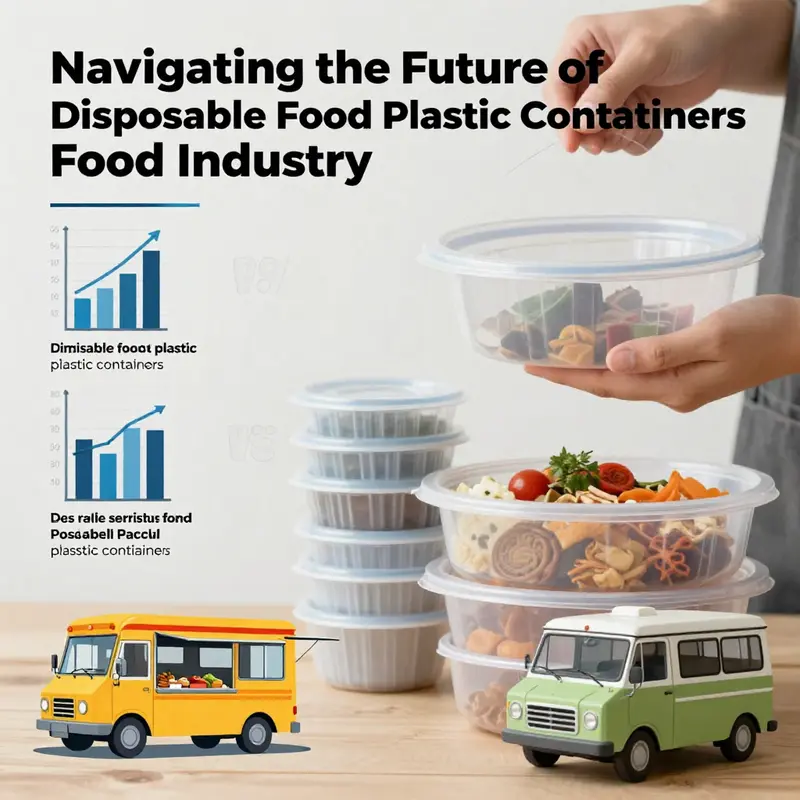
An overview of the economics of disposable food plastic containers, examining price, performance, and regulation. The analysis centers on PP and PS formats, where low unit costs, lightweight design, and manufacturing maturity support high-volume throughput in quick-service settings. It also considers total cost of ownership, including end-of-life and recycling impacts, and how lifecycle cost analysis can shift decisions toward hybrids that combine disposables with reusable options. Finally, the chapter notes how consumer preferences and regulatory trends influence long-term viability and the design of packaging portfolios.
null
null
Final thoughts
As disposable food plastic containers continue to dominate the market, the need to balance convenience with environmental responsibility grows increasingly urgent. For businesses in the food service industry, understanding the environmental impacts, economic advantages, and evolving regulatory landscape is critical for sustainable operation. By embracing more eco-friendly alternatives and adapting to consumer expectations, companies can not only improve their environmental footprint but can also strengthen their brand loyalty and operational efficiency. Taking a proactive approach today will pave the way for a more sustainable and economically viable future in the food industry.