
In today’s dynamic food service landscape, disposable food containers hold a pivotal role in ensuring convenience and sustainability. Coles, a prominent name in Australian retail, is strategically aligned with this important segment, providing solutions that cater to businesses ranging from bubble tea shops and restaurants to catering services and event planners. This article will delve into the diverse product types available at Coles, the evolving industry trends, and Coles’ integral position within the disposable food container market—all designed to meet the needs of modern food service professionals. Understanding these aspects will help businesses make informed choices that align with both functionality and eco-friendliness, enhancing their operational efficiency and customer satisfaction.
From Aisle to Aftertaste: Tracing the Range, Rationale, and Environmental Footprint of Disposable Food Containers at Coles
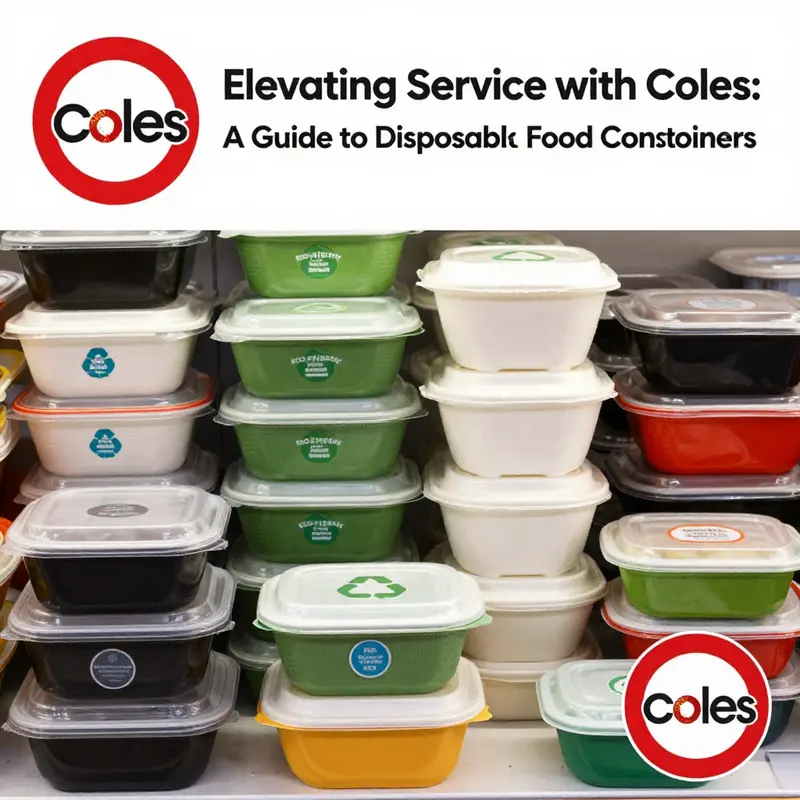
A single item tucked beside the bakery or stacked beside the deli counter can reveal a broader story about convenience, safety, and the planet. In supermarkets like Coles, disposable food containers are not just vessels for food; they are instruments that reflect how a retailer balances cost, performance, and responsibility in a crowded, highly competitive market. The shelves that hold these containers chart a careful negotiation between everyday practicality for shoppers and longer-term commitments to sustainability. Coles does not manufacture these containers, nor does it rely on a single supplier. Instead, it curates a spectrum of packaging options that speak to a broad range of uses, from home meal prep to meals-on-the-go, from quick-service takeouts to online grocery deliveries. In this light, the container category becomes a lens through which to view how a major retailer translates consumer demand into packaging choices that can travel with a family through a week of meals, and then be disposed of, ideally with the least environmental impact possible. The strategic logic behind the assortment rests on three pillars: versatility and reliability for the consumer, safety and compatibility with food, and a clear pathway for end-of-life disposal. Each pillar is not a standalone demand but a dynamic interplay among material science, store operations, and consumer expectations. The decision to stock a wide range of container types reflects a recognition that modern eating occasions are diverse. Some shoppers need durable, leak-proof options for hot street-food purchases or prepared meals from the deli. Others seek compostable or recyclable alternatives for events or for everyday lunches. Still others want compact, single-serve containers that help with meal planning and reduce waste. A robust assortment ensures that Coles meets these needs without forcing customers to compromise on either convenience or environmental values. This approach also signals a broader strategy within Coles’ private-label and supplier ecosystem. While Coles does not own factories for disposable containers, it does exercise selection and design influence through its private-label programs and through partnerships that prioritize sustainable packaging options. The goal is not to post a lone green badge on a product but to normalize packaging that aligns with evolving standards for safety, disposability, and end-of-life management. The result is a shopping experience where a consumer can pick up a ready-to-use home meal, or a grab-and-go deli option, with packaging that feels both familiar and forward-looking. The packaging becomes a silent partner in the meal, supporting reusability where possible, enabling composting where infrastructure exists, and ensuring that the containment system remains safe for hot foods and oils. In this sense, the container category mirrors a larger movement toward design-for-disposal that does not merely chase the lowest price or the brightest marketing claim but aims for a practical balance between user experience and planetary impact. The practical implications for shoppers emerge when one considers the typical lifecycle of these containers. A family buys a ready-to-eat dinner from Coles’ deli or orders online for delivery. The container is designed to keep the meal intact during transit, protect the food from contamination, and, in many cases, allow for reheating in a microwave. Materials range from traditional plastics to paper-based and plant-based composites. Microwave-safe plastics, often with heat-resistant coatings, enable easy reheating without creating a mess in the kitchen. Paper-based options, sometimes reinforced or lined, offer lightness and a reduced plastic footprint, especially when paired with certified compostable materials. For occasions where sustainability is prioritized, compostable options made from plant-derived fibers or starch blends come into play. These are designed to break down in industrial composting facilities or in environments where home composting is feasible, though the latter depends on local capabilities and consumer behavior. The layering of options acknowledges that there is no one-size-fits-all solution in packaging. Some households may have access to composting facilities, while others may rely on recycling streams or simply reuse containers for storage before disposal. Coles’ range strives to accommodate these varied realities, offering multiple pathways for end-of-life management and clear labelling to guide consumers. A glimpse into the design priorities behind these products reveals a careful attention to safety and performance. Containers must be food-contact compliant, with materials tested for heat resistance, leak prevention, and chemical migration, especially when hot foods and fats are involved. The no-BPA narrative is a common expectation in today’s market, and the containers eligible for hot foods are frequently advertised as BPA-free or free of other controversial additives. The reliability of a container in daily use becomes a key metric; customers expect containers to hold their meals during transit, to stack efficiently in cupboards, and to fit under lids or seals that prevent leakage. The security of lids, seals, and dividers matters not just for convenience but for the integrity of the product and the consumer’s trust. In many Coles settings, such as the deli or prepared-food counter, containers are chosen not only for their functional fit but for their compatibility with the store’s handling practices. A well-designed container can withstand the care that goes into slicing, packaging, and presenting a ready-to-eat meal without becoming deformed, leaking, or releasing odors. Beyond the supply chain and in-store dynamics, consumer behavior is a critical driver of packaging decisions. The modern shopper is increasingly concerned with the environmental footprint of the meals they buy, yet seeks convenience that does not require extra steps or compromise. This tension pushes retailers toward a dual strategy: large-scale adoption of compostable and recyclable materials where feasible, and continuous improvement in the packaging design to enhance recyclability and compostability. The industrial ecosystem—collection, sorting, and processing facilities for recycling and composting—shapes what Coles can confidently offer. If a certain material cannot be efficiently recycled or composted in most regions, the retailer may limit its use or pursue alternative formulations that align with existing infrastructure. This pragmatic stance helps Coles balance aspirational sustainability goals with real-world conditions, ensuring that the packaging choices available to customers can be acted upon in everyday life rather than becoming a theoretical ideal. The ecosystem of materials is also evolving. Plant-based fibers, bagasse from sugarcane, and starch-derived blends are increasingly common in the disposable category, offering improved end-of-life options compared to traditional plastics. These materials often carry certifications indicating industrial compostability or biodegradability, and they are frequently used in takeout and bakery-deli packaging. Yet there remains variability in how these products behave under heat, with oils, or in the presence of moisture. The consumer’s kitchen is not an industrial facility, and thus the home environment adds another layer of complexity to the choice of container. For instance, some compostable materials may require specific temperature or moisture conditions to break down, or may need to be disposed of through a program that accepts compostable packaging. Coles, recognizing this, tends to provide clear packaging guidance and supports channels that help customers understand how to dispose of each item correctly. Such guidance is essential because even the most well-intentioned consumer can inadvertently jeopardize a container’s end-of-life outcomes if they dispose of it in a standard landfill. This is where the alignment with broader corporate goals comes into focus. Coles’ environmental narratives—often framed around the idea of reducing single-use plastics and promoting more sustainable packaging—are not only marketing statements; they signal a deliberate alignment with industry-wide shifts toward waste reduction, safer materials, and better disposal options. In practice, this alignment translates into a diversified assortment that makes it possible for households to choose packaging that aligns with their values and their local waste streams. A key example of how design meets function in this space is a typical take-out or prepared-food container that is sized to fit a standard meal, stackable for kitchen storage, and compatible with common lids that ensure leak resistance—an essential feature when sauces or gravies accompany a dish. For shoppers who favor sustainability, the presence of plant-based or compostable options in the same aisle as traditional plastics can help normalize more eco-friendly choices. It reduces the psychological and logistical friction of opting for greener packaging, especially when price and performance are kept competitive. As Coles navigates the next phase of packaging evolution, the role of private-label packaging becomes more pronounced. While the company does not own production facilities for these containers, it has the opportunity to steer the market by specifying performance criteria, durability, and end-of-life options that align with its sustainability ambitions. Private-label packaging allows Coles to harmonize user experience with environmental claims, ensuring consistency across deli, bakery, and online fulfillment. This approach helps create a coherent consumer expectation: when a family reaches into Coles for a ready-to-eat dinner or a take-home snack, the container they pick up is not an isolated choice but part of a broader system that balances practicality, safety, and environmental accountability. The overall arc of Coles’ disposable-container strategy thus presents a narrative of responsible facilitation. It is about translating a simple act of choosing a container into a decision that can influence waste streams and recycling infrastructure. The consumer is invited to participate in a circular economy through informed disposal practices and through the availability of materials that are more compatible with existing waste-management systems. It is not merely about offering options; it is about shaping habits and expectations, and in doing so, nudging the entire food-service ecosystem toward better stewardship. For suppliers and designers examining this space, a representative example of the packaging that can accompany meals is the kind of sturdy, multi-purpose bowl designed for take-out contexts. A disposable, 700ml kraft paper bowl with a take-out-friendly lid and appropriate lining demonstrates the type of packaging that balances weight, insulation, and a potential path to composting. A look at such a container illustrates how materials, form, and end-of-life considerations converge in a single product. If you want to see a concrete instance of this design in action, you can review a production example here: disposable 700ml kraft paper bowl take-out octagonal rectangle. While this example focuses on a specific form factor, it embodies the general traits Coles seeks: reliability in transit, compatibility with hot or cold meals, pan-skill in stacking and storage, and a pathway toward environmentally responsible disposal where infrastructure exists. The shopping journey connected to these containers is not a linear path from shelf to sink. It is a circular one that links product design, consumer choice, and waste management. In that circular frame, the retailer’s role expands beyond stocking choices. It becomes a facilitator of information, with labeling that clarifies heat tolerance, disposal methods, and whether the container qualifies for industrial composting. In practice, this means clear on-pack messaging, accessible recycling diagrams where applicable, and a labeling system that helps shoppers distinguish between options that can be recycled, composted, or repurposed at home. The consumer experience is enhanced when a container communicates its own story—what material it uses, how it should be disposed of, and what it can withstand in terms of reheating and storage. And while customers can be drawn to the greenest option, the decision is rarely made on environmental grounds alone. The price, the performance, and the convenience of a container often determine the choice. Coles recognizes this as a reality of modern retail. The packaging strategy thus becomes a blend of aspirational goals and pragmatic constraints: the aspiration of reduced plastic waste, the pragmatism of ensuring food safety, and the economics of keeping packaging affordable for both the retailer and the consumer. The evolving nature of consumer expectations also pressures retailers to rethink the endgame of disposal. As cities and states refine their plastics policies and expand composting programs, the viability of different materials shifts. In some regions, industrial composting infrastructure may be robust and accessible; in others, it remains limited. Coles’ approach is to diversify the material mix so that there is a practical option for most customers, with an eye toward broader systems that can absorb more compostable packaging as infrastructure improves. The broader lesson of this chapter is not to celebrate a single container in isolation but to understand how a retailer curates a complex, interconnected packaging ecosystem. It is about recognizing that the container is a unit of convenience, safety, and environmental policy all at once. As the chapter closes on this reflection, we are reminded that the container is a proxy for the values a retailer promotes in the everyday rhythms of shopping, cooking, and eating. It is an artifact of a modern grocery operation that seeks to honor the needs of busy households while contributing to a more sustainable future, one choice at a time. External resource: https://www.coles.com.au
null
null
Coles as Gatekeeper: How a Major Australian Retailer Shapes the Disposable Food Container Landscape Through Sustainability and Private-Label Influence
When observers look at Coles, conversations about disposable food containers start with practicality and end with consequences. Yet within the practical world of supermarket shelves, a subtle but powerful dynamic unfolds: a retailer of Coles scale does not merely stock containers; it helps shape the very terms on which the market for disposable food containers operates. The story of Coles in relation to disposable containers is a study in indirect influence. It is about how a dominant retailer can steer packaging standards, raise the bar for environmental performance, and nudge suppliers toward more sustainable design choices, all while keeping the shopper’s experience simple, safe, and cost-conscious. In that sense, Coles’ relationship with disposable containers is less about ownership of production or wholesale distribution and more about the orchestration of a supply ecosystem that aligns with evolving consumer expectations, regulatory landscapes, and the retailer’s own ambition to deliver a more sustainable shopping environment.
Coles Group, as one of Australia’s largest retail organizations, has core competencies rooted in groceries, beverages, online fulfillment, and logistics networks that feed both physical stores and digital storefronts. The publicly observable strategies emphasize customer experience, operational efficiency, and sustainability. A few years into the 2020s, Coles undertook a deliberate digital expansion — the trial of AI-enabled shopping carts and the broad push to optimize Coles Online and rapid pickup services. These moves are not incidental to how disposable containers are chosen and presented in stores; they define how packaging choices are made, how suppliers are evaluated, and, crucially, how far Coles can push for reductions in single-use plastics and improvements in packaging end-of-life outcomes. Even if Coles does not manufacture or wholesale disposable containers itself, its private-label program and supplier standards can create ripple effects that cascade through the packaging industry. The retailer’s procurement strategies, supplier scorecards, and ongoing sustainability commitments collectively shape what kinds of containers are preferred, what materials are acceptable, and how packaging can be designed for recyclability, compostability, or reusable life cycles.
The market context around disposable containers is defined by environmental concern and consumer demand for safer, cleaner, and more responsible packaging. Across global markets including Australia there is a trend toward materials that minimize chemical migration, reduce plastic waste, and support responsible disposal. BPA-free designs have become a baseline expectation for containers that hold hot foods or oily contents, given consumer attention to food safety and chemical exposure. In this arena a retailer like Coles can influence the trajectory of product development by setting clear expectations in supplier agreements and by favoring packaging that demonstrates verifiable environmental performance. The discussion of safety and sustainability is not only about the container material; it is about the lifecycle of the container. How easily can the packaging be recycled in typical municipal streams? Is it accepted by local composting programs if labeled compostable? What evidence exists for real-world compostability or recyclability, beyond lab tests? These questions matter to a retailer whose customers are increasingly discerning about environmental credentials of products.
A critical dimension lies in private label packaging. While the company may not own a factory floor, it can decide, through private-label specifications, what types of packaging its own branded items should use. Private-label decisions ripple through the supply chain, informing the design priorities of manufacturers who want Coles shelf space and volume. When Coles emphasizes packaging that reduces single-use plastic or uses recycled content, suppliers respond by retooling their production lines, sourcing alternative fibers, or investing in new molding technologies. The effect is gradual but potent: a shift toward more sustainable options becomes part of the baseline for tender processes, category reviews, and supplier partnerships. In this sense Coles can function as a market maker—an anchor that helps steer the kinds of disposable containers that vendors produce and that shoppers encounter in store and online.
The speed and direction of this influence are tied closely to Coles’ broader sustainability agenda. The retailer has publicly signaled a commitment to reducing plastic packaging and to expanding the use of recyclable or reusable packaging across its product ranges. This is not a one-off policy shift but a sustained program that intersects with supplier performance metrics, packaging guidelines, and brand-aligned storytelling in-store and online. The packaging conversation is about trade-offs. There is a constant balancing act between protecting food quality, preserving temperature, enabling convenience, and minimizing environmental footprint. For Coles, the challenge is to reconcile these sometimes competing objectives within a framework that is scalable and credible to customers who scrutinize the life cycle of every container. The retailer’s role extends beyond the shelves into packaging specifications, supplier audits, and consumer education. It is about aligning supply chain decisions with the values of a growing cohort of shoppers who expect more than temporary convenience from disposables; they want containers that respect the planet while still performing reliably in busy service environments.
In this light conversations about disposable containers become conversations about the end user, the consumer who orders a meal for quick pickup, a family that relies on take-away for busy weeknights, or a caterer seeking efficient, sanitary packaging for a large event. For these users the choice between a disposable option and a reusable one is often driven by practical constraints: time, cost, convenience, and the simplicity of disposal or return systems. Coles’ response to these constraints is to curate a packaging ecosystem that reduces friction for the customer while advancing environmental targets. This is where the retailer’s influence on the market becomes most plainly seen. By seeking packaging that can be handled within the existing waste streams, Coles reduces the likelihood that a shopper will encounter a non-recyclable or non-compostable option that creates confusion or contributes to waste. The practical outcome is that more of the disposable containers found on Coles’ shelves — whether in stores or online — are part of baskets designed with sustainability in mind. And when suppliers see that Coles places emphasis on end-of-life performance, they innovate more aggressively around design for recyclability, ease of sorting, and the use of post-consumer fibers.
The sustainability narrative around disposable containers is not limited to material choices. It encompasses design features that improve efficiency in preparation, service, and cleanup. For instance, containers with dividers or compartmentalized designs have utility in industrial or catering contexts where different food items must be kept from mixing, or where heat and momentum transfer must be managed to preserve quality. While such features might be associated with higher-end take-away solutions, they also reflect a broader industry move toward smarter packaging that reduces mess, enhances food safety, and supports efficient handling across multiple touchpoints in the supply chain. Coles, through its procurement and private-label strategies, can push for such design sophistication when it aligns with consumer value propositions and with the retailer’s waste-reduction goals. The practical implication is that a retailer-as-influencer can accelerate the adoption of more advanced packaging configurations, even if the retailer is not producing or distributing the containers itself.
Another axis along which Coles indirectly shapes the disposable container market is through partnerships with suppliers who can deliver packaging that aligns with local regulatory expectations. Australia and New Zealand operate within a regulatory culture that highly regards food safety and environmental stewardship. While standards bodies determine the baseline safety criteria for food-contact materials, retailers are judged on how well they communicate and enforce these standards across a sprawling supplier base. The Coles approach typically blends strict supplier requirements with transparent labeling and robust product life-cycle information. When Coles requires that packaging meet certain recyclability criteria or that it avoid certain additives, manufacturers must adapt to secure shelf space and keep price points competitive. The outcome is a market environment in which packaging innovations are evaluated not only on performance and cost but also on environmental governance. Shoppers benefit when retailers can credibly demonstrate that the disposable containers they purchase in-store or online are aligned with a practical path toward waste reduction and responsible disposal.
It is important to acknowledge the limits of this influence. Coles is not a manufacturer, and there are often multiple layers between a retailer’s private-label directives and the final consumer packaging option. The global nature of the supply chain, the pace of innovation in packaging materials, and the economics of volume and logistics all mean that Coles’ ability to mandate change has to be exercised with nuance. Yet the retailer’s scale—its vendor relations, category management capabilities, and digital platforms—provides a unique leverage point. A shift in Coles’ supplier standards can ripple across the Australian market and beyond, pushing smaller retailers and other national players to adapt, even if the initial changes occur gradually. In this sense, Coles’ footprint extends beyond its own stores. It is a player in a wider ecosystem of packaging innovation, sustainability reporting, and consumer education that collectively define the future of disposable containers in the region.
Within the broader industry, what packaging trend watchers observe is that consumer preference is increasingly for transparency and for packaging that supports cleaner disposal options. The demand for BPA-free and food-safe materials is no longer a niche concern; it has become part of the core value proposition that shoppers expect from responsible retailers. The discussion around compostable and recyclable designs is nuanced. Compostability must be credible in practice, not merely claimed on a label. Recyclability must reflect the realities of local waste streams. Coles, in its capacity as a market leader, can help ensure that its private-label and supplier partners provide packaging with validated end-of-life pathways and clear consumer guidance. The expectation is that packaging will be designed with both performance and end-of-life clarity in mind, so that when a meal is consumed and the container is disposed of, there is a straightforward route to recycling or composting, rather than to landfill. When retailers provide such clarity, they not only simplify the customer decision-making process but also reduce environmental leakage across the supply chain.
An important nuance in this discourse is how the packaging conversation intersects with technology and data. Coles experiments with AI-driven shopping experiences, such as AI-enhanced carts, reflect a broader corporate commitment to using digital intelligence to improve shopping efficiency, reduce waste, and optimize inventory and fulfillment. These technologies can indirectly influence packaging decisions by enabling more precise demand forecasting, better matchmaking of products with appropriate packaging, and smarter packaging allocation at the distribution and store levels. In practice, this means that the retailer can push suppliers toward packaging that is appropriate for the volumes and service models Coles operates—take-away, dine-in, and home delivery—thereby reducing over-packaging in some cases and encouraging optimization in others. The result is a packaging ecosystem that becomes, over time, more attuned to actual consumer behavior and operational realities rather than to speculative demand.
It is equally important to recognize the broader consumer culture surrounding disposable containers in Coles’ market. Shoppers are not just buying a mechanism to transport food; they are selecting a statement about sustainability, hygiene, and convenience. Their choices are shaped by visible commitments Coles makes—whether in-store signage about plastic reduction, in-store recycling points, or online communications that highlight end-of-life options for packaging. In this sense Coles helps translate abstract environmental principles into tangible shopping experiences. When a customer sees a bagged meal in a container that claims recyclability and is backed by robust recycling guidelines, the consumer gains confidence that their purchase aligns with their values. That alignment, in turn, reinforces Coles’ sustainability narrative and supports a virtuous cycle: better packaging standards lead to more responsible consumer choices, which then motivates further improvements by suppliers and by the retailer’s own private-label program.
From a practical standpoint, one can imagine a continuity of action that would keep Coles at the forefront of shaping disposable container trends without needing to own manufacturing assets. This includes ongoing collaboration with packaging suppliers to test new materials, invest in pilot programs for compostable alternatives, and refine packaging designs for easier sorting and recycling. It also means maintaining a vigilant eye on cost structures, ensuring that sustainable packaging remains accessible to customers across price points. The sustainability story should not come at the expense of affordability or accessibility, which are core to Coles’ value proposition. The best outcomes arise when innovation demonstrates that better environmental performance can coexist with strong food safety and practicality in food service contexts, and a total cost of ownership that makes sense for both the retailer and the supplier.
As this narrative unfolds, a concrete example from the wider packaging ecosystem deserves attention. Consider the types of disposable containers that are often discussed in packaging circles — materials such as recycled fiber, molded pulp, and compostable bioplastics; designs that improve insulation, leakage resistance, and stackability; and labeling that provides straightforward instructions for disposal. While a single retailer cannot reengineer a global supply chain overnight, its procurement choices, performance expectations, and public commitments can accelerate the adoption of these innovations. In markets where Coles and similar retailers collaboratively set standards with suppliers, the pace of packaging evolution quickens and the environmental footprint of disposable containers begins to shrink more rapidly. The consumer benefit is a more sustainable product mix encountered during every shopping experience, whether in a physical store or online.
To connect these reflections to a tangible in-the-flesh experience, consider how a shopper might interact with a disposable container in Coles’ ecosystem: the container used for a takeaway lunch, the lid that keeps contents secure in transit, the material that maintains temperature for a reasonable period, and the end-of-life options that appear on the packaging or on the retailer’s guidance pages. Each of these elements is interconnected with procurement decisions, supplier partnerships, and the store’s communication strategy. The container becomes something more than just a vessel; it becomes a link in a chain that ties together food safety, waste management, and consumer trust. In practice Coles’ indirect influence rests on its ability to articulate expectations that are clear, verifiable, and aligned with customer values, while simultaneously ensuring that suppliers can meet those expectations at scale and at reasonable cost. This is the balancing act that defines modern retail packaging leadership and explains why Coles, even as a non-manufacturer, remains central to the evolution of disposable containers in its market.
For readers seeking concrete illustrations of how packaging ecosystems can evolve in response to retailer influence, one can observe the kinds of packaging configurations that suppliers increasingly promote in response to large-format retailers’ demands. The industry is moving toward combinations of recyclability, fiber-based materials, and water-based inks that reduce environmental impact and simplify disposal. It is also proliferating documentation—certifications, life-cycle analyses, and end-of-life guidance—that helps both retailers and consumers achieve greater transparency. The broader lesson is that the most meaningful progress in disposable containers often arises when retailers leverage their scale and data, not merely to push lower costs, but to align the incentives of suppliers, manufacturers, and customers toward a shared future in which packaging is safer, cleaner, and more responsible for the environment. Coles’ role, then, can be seen as that of a steward guiding the market through a period of rapid change, where the container is not just a packaging choice but a signal of values, a test of performance, and a touchpoint in a consumer journey that links nourishment with stewardship.
As this chapter closes, the conversation returns to the essential idea that Coles is a facilitator of packaging transition rather than a direct producer. Its impact on disposable containers is most powerful when it acts as a convergence point for safety, sustainability, and shopper experience. The retailer’s private-label approach, supplier management practices, and digital-enabled customer interactions collectively contribute to a market environment where more containers can be recycled, more materials can be responsibly sourced, and more shoppers can participate in decisions about what happens to packaging after the meal is finished. In other words Coles’ influence is quietly substantial. It shapes how the industry thinks about disposables, it informs consumer expectations, and it nudges the entire ecosystem toward packaging that is not only functional but also aligned with a modern, sustainable vision of food retail.
Internal links can illustrate the practical realities of the packaging ecosystem that Coles helps to shape. For example, a supplier page highlighting stock availability for a specific recyclable container can demonstrate how retailers and suppliers collaborate to meet demand, manage inventory, and ensure consistency of supply across channels. See an example of a stock-available, certified option here: kraft paper octagonal bowl in stock ready to ship fast delivery. This link underscores how packaging partners communicate product availability in a way that supports retailer expectations and consumer needs, illustrating the broader dynamic at work in Coles’ market.
Externally, Coles public communications and official presence provide a lens into the governance of its sustainability ambitions. While a retailer’s public commitments are not a substitute for the detailed supplier agreements that govern private-label packaging, they offer a window into the principles guiding packaging choices and the metrics that matter for customers and investors. The Coles Group Official Website remains a primary resource for understanding the retailer’s approach to waste reduction, packaging reforms, and the integration of digital technologies that influence how products are delivered and presented to shoppers. External readers may wish to explore these dimensions further to contextualize the chapter’s discussion of how a prominent retailer can drive market-wide change in disposable containers and related packaging practices. External resource: https://www.coles.com.au/
In closing, the relationship between Coles and disposable food containers exemplifies a broader phenomenon in modern retail the ascent of sustainability as a strategic driver. A retailer of Coles’ magnitude cannot simply select a container and move on; it must shape a credible and scalable packaging future by coordinating product design, supplier capability, waste management infrastructure, and consumer education. The chapter above traces how such influence manifests in practice. It shows that the path toward a more sustainable disposable-container landscape is not simply the story of new materials or clever designs; it is the story of how a large, data-informed retailer guides, and sometimes accelerates, a market toward choices that are better for people and the planet. And because Coles is a touchpoint for millions of households—both online and offline—its decisions reverberate through the supply chain, motivating partners to innovate, and inviting shoppers to participate in responsible consumption with confidence and clarity.
Final thoughts
As the food service industry continues to evolve, the significance of high-quality disposable food containers cannot be understated. Coles stands poised to support businesses looking to enhance their service with sustainable and practical options. By understanding the types of products available, the current market trends, and leveraging Coles’ position in the disposable food container space, food service operators can make strategic decisions that elevate their business. As we move towards a more environmentally conscious era, embracing these insights will not only benefit sustainability efforts but also contribute to customer satisfaction and operational success.