
Keeping food cold during transport is a significant concern for businesses in the beverage and food service sectors. Whether you’re operating a bubble tea shop, a food truck, or catering for a large event, the choice of disposable containers can dramatically impact food safety and quality. With a growing demand for eco-friendly solutions, understanding the best options available can enhance your service offering. This article unpacks the realm of disposable containers designed to maintain cold temperatures, focusing on eco-friendly options, innovative designs, inherent limitations, and effective best practices for usage. Through this exploration, you’ll gain valuable insights into how these products can not only improve your operation’s sustainability but also elevate customer satisfaction.
Chill-Ready, Compostable: The Rise of Eco-Friendly Disposable Containers That Keep Food Cold for a While
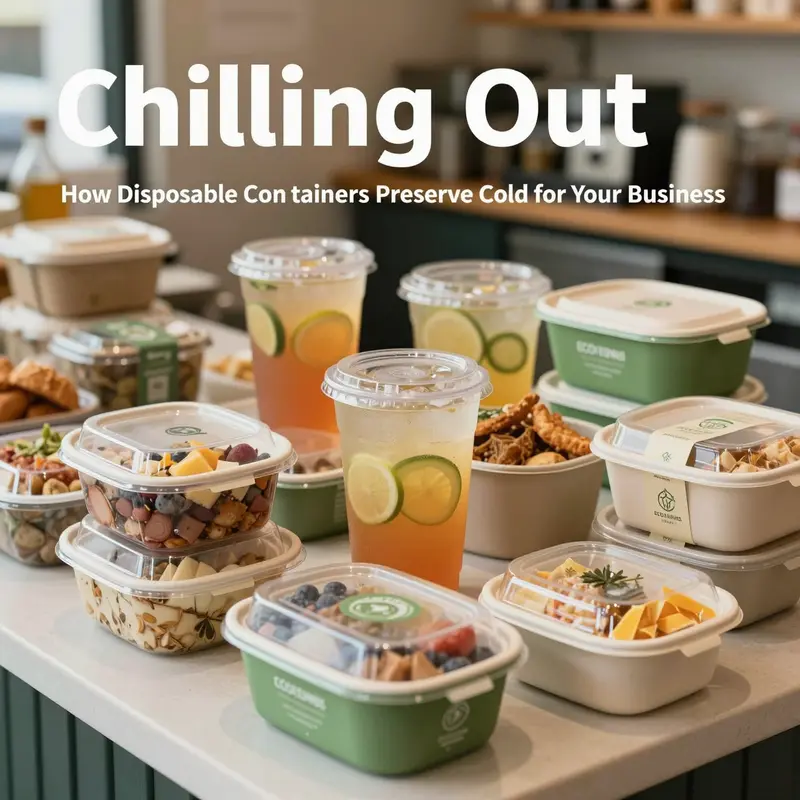
A reliable cold chain is as much about packaging as it is about planning. When people load a bag with meals for work, school, or a weekend picnic, they expect more than a lid and a box. They expect a buffer against heat, a shield that buys time for safe consumption. Traditional disposable containers—thin plastic clamshells, foam trays, and other single-use carriers—offer little more than basic protection. They can help move food from one point to another for a few hours, but they rarely preserve chill long enough to satisfy safety guidelines unless you pair them with pre-chilled contents and explicit cooling methods. The reality, echoed by researchers and food safety experts, is that temperature control begins before you pack the lunch. A cold bag, cold contents, and an effective coolant are the only way to ensure food safety over extended periods.
This chapter explores a growing category within the disposable packaging space: eco-friendly containers that can keep food cold for a while. They are not a panacea for long-term cold retention, but they represent a meaningful step toward reducing waste while enhancing performance at a glancingly important moment—when a meal leaves the kitchen and travels through a potentially warm day. The most promising developments sit at the intersection of sustainable materials, smarter insulation, and conscientious end-of-life design. They seek to offer a practical compromise: a disposable option that respects the environment without sacrificing the safety of cold foods during transit.
At the core of these advances is material choice. Plant-based solutions, such as sugarcane pulp, are now common in eco-friendly takeout containers. Sugarcane pulp, also known as bagasse, yields sturdy, microwave-safe boxes and bowls that can function as disposable carriers with a gentler environmental footprint than traditional plastics. The appeal is twofold. First, bagasse-based containers decompose in industrial composting facilities, contributing to a circular economy rather than piling up in landfills. Second, they can be engineered with multi-layer structures that improve thermal resistance. Some designs, when paired with proper cooling, can retain cold temperatures for several hours. The practical takeaway is that the material itself is not the sole determinant of performance; it is how the material is engineered and used in concert with other cooling strategies.
In the broader ecosystem, other eco-friendly options include recycled plastics such as recycled PET (rPET) and plant-based plastics like PLA. These materials provide moderate insulation and lightness, which makes them suitable for short trips. The trade-off, however, is that they often do not deliver extended cold retention unless paired with enhanced insulation layers or active cooling. The ongoing research and product development in this space reflect a willingness to push beyond simple barriers of temperature and disposal. Some manufacturers experiment with insulating layers, reflective coatings, and even internal liners that help slow heat transfer. While these enhancements still cannot match the performance of reusable insulated containers or vacuum-sealed systems in terms of hours of cold retention, they offer tangible benefits for single-use convenience with a smaller environmental impact than classic foam or non-recyclable plastics.
A telling example from the eco-friendly segment is a 34 oz disposable food container with a lid made from sugarcane pulp. These containers are designed to be 100% eco-friendly and compostable, and they carry the practical perks consumers expect: microwave safety and the capacity to maintain cold temperatures for several hours. In a real-world context, such containers can support the transportation of chilled meals or snacks from a kitchen to a consumer’s destination if used with pre-chilled contents. They are designed to break down naturally in industrial composting facilities, contributing to a circular economy rather than perpetuating landfill waste. The emphasis here is not merely on keeping cool, but on enabling responsible end-of-life outcomes while still delivering safety and convenience during the critical window of transport.
The topic would be incomplete without acknowledging the practical limitations and the physics at play. Even the best eco-friendly disposable containers are, by design, less capable of long-term thermal retention than their reusable, insulated counterparts. The insulation performance tends to be modest compared with dedicated coolers or vacuum-sealed boxes. Yet the trend toward layered and composite structures demonstrates a realistic path forward: a disposable option that can extend cooling by several hours when combined with ice packs and cold content. A common benchmark cited in research and industry discussions is a cooling window of roughly 4 to 6 hours under typical conditions, with variations depending on ambient temperature, container thickness, and the exact insulation scheme used. In other words, these containers are well-suited for short- to mid-range transport, especially when an eco-conscious choice is essential, but they require proper planning to reach the upper ends of their cooling potential.
The design philosophy behind these products often centers on balancing performance with sustainability. Multi-layer structures, sometimes incorporating reflective barriers or micro-foam layers, are intended to reduce heat gain without creating a bulky or heavy package. In some models, designers experiment with phase-change material (PCM)–infused liners or wraps. The idea is alluring: when the gel or salt inside the PCM melts at a controlled temperature, it absorbs heat and helps keep the inner contents cooler for a longer period. The catch is that PCM-enabled disposables are still more experimental and can be single-use in practice. If a detergent-like slurry of chemicals or gels is used, questions about safety, price, and disposal complexity arise, which can temper their adoption in everyday consumer packaging. Even so, PCM concepts reflect a broader willingness in the industry to borrow ideas from reusable systems and translate them into single-use formats that work within safety and regulatory constraints.
A pragmatic takeaway emerges from this array of approaches. The cold-retention promise of eco-friendly disposables depends not on a single miracle material, but on a careful orchestration of material choice, structural design, and user behavior. The sugarcane pulp containers illustrate a practical path: they provide a solid base of compostability and sufficient barrier properties, with the possibility of improved thermal performance when combined with pre-chilled contents and ice packs. The goal is to deliver a product that is easy to handle, affordable for takeout providers, and compatible with modern waste streams that favor industrial composting. In that sense, the value proposition goes beyond a one-and-done temperature spike; it is about building a chain of responsible choices—from sourcing to use to end-of-life recovery.
For consumers, the decision matrix becomes less about chasing the last hour of cold and more about matching the right package to the right situation. If the plan is a short ride from home to a workplace or a campus building, a moderately insulated, plant-based container paired with an ice pack can be sufficient. If the travel window extends into late morning or early afternoon, the choice of container matters even more. The packaging must be robust enough to resist crushing, light enough to carry, and able to be disposed of in a facility that can handle industrial composting. In this light, a simple recycled or plant-based container with an insulated lid and a modest internal barrier can perform better than a standard foam tray that bears a longer environmental footprint but offers little thermal advantage.
The consumer’s toolbox, then, grows to include more than the container itself. Efficient cold retention depends on pre-chilled contents and an ice pack, as Dr. Lena Torres, a food safety researcher at the USDA Cooperative Extension, emphasizes:
“Temperature control starts before you pack the lunch. A cold bag + cold contents + effective coolant is the only way to ensure food safety over extended periods.”
(Source: Are Insulated Lunch Bags Worth It For Keeping Food Cold 8 Hours Tested, USDA Extension, March 15, 2026)
That guidance resonates across the eco-friendly portion of the market. It nudges consumers toward a practical habit: prep the meal with cold contents and employ a proper coolant, even when using disposable packaging designed for compostability. It also implies that the best long-term gains in safety come not from a single product, but from a coordinated approach that links packaging design to storage practices. In other words, the packaging can help, but it cannot compensate for gaps in the cold chain created by delays, heat, or inadequate cooling. This perspective shapes how producers test and market new materials. For instance, designs that advertise a 4–6 hour cooling window logic must clearly advise consumers to combine the package with pre-chilled items and ice packs to reach that performance in typical real-world conditions.
From a sustainability lens, the story expands beyond performance into the realm of end-of-life responsibility. Certifications such as the Biodegradable Products Institute (BPI) and TÜV Austria’s OK compost mark provide credible signals about compostability and environmental impact. They help buyers distinguish containers that truly break down in industrial facilities from those that merely carry a marketing claim. Consumers increasingly expect brands to disclose their carbon footprint and to participate in take-back or recycling programs. When a container can be composted, it carries a different weight in the decision calculus than a simple recyclable or non-recyclable product. And while the consideration of end-of-life is essential, it does not diminish the importance of performance during the shelf-to-table journey. The best option from both a safety and sustainability perspective is one that unites dependable cold retention within a circular lifecycle.
The practical takeaway for businesses and households alike is nuance rather than a simple choice. If a restaurant or catering service aims to minimize waste without compromising safety, it can opt for disposable containers that pair well with pre-chilled supplies and a reliable ice-pack strategy. When environmental priorities are central, the supplier’s ability to prove compostability, carbon transparency, and post-consumer recovery becomes a deciding factor. The category’s momentum is rooted in a conscious attempt to shift away from oil-based, non-recyclable dependencies toward materials that can close the loop. Sugarcane pulp and similar plant-based solutions are a cornerstone of that shift, offering functionality compatible with today’s takeaway culture while aligning with broader sustainability goals.
For those curious about concrete options, some formulations on the market combine the practical with the planetary. Consider a scenario where a 34 oz disposable container with a lid, crafted from sugarcane pulp, is used to transport a chilled meal. The container is designed to be 100% eco-friendly and compostable, with microwave safety and a capacity suitable for a balanced portion. When paired with pre-chilled contents and an exterior ice pack, it can keep the inner temperatures in a safe range for several hours. This alignment of material choice, structural design, and user behavior illustrates how an eco-friendly disposable can perform within the mid-range of cold retention while meeting environmental expectations. The end-of-life story becomes equally compelling when the packaging bears clear certifications and demonstrates a commitment to sustainable waste management, such as industrial composting streams.
To connect this discussion to practical procurement choices, it helps to consider how a consumer might thoughtfully select among available eco-friendly options. First, verify whether the container is truly compostable through credible certifications like BPI or OK Compost. Second, examine whether the packaging uses a multi-layer insulation approach or a reflective barrier that can slow heat transfer. Third, confirm that the product is compatible with the consumer’s disposal infrastructure and that the supplier provides transparent information about carbon footprint and take-back programs. Finally, always pair the package with a pre-chilled meal and a dependable cold source. In other words, the science of cooling is only as strong as the combination of materials, design, and practical usage.
The conversation about eco-friendly disposable containers also intersects with a broader social and environmental dialogue. The takeaway is not simply about choosing a greener box, but about rethinking the life cycle of everyday packaging. A sugarcane pulp container that can be composted, used with an ice pack, and designed to resist heat long enough for safe consumption within a couple of hours, still serves a critical purpose in reducing plastic pollution and landfill mass. The shift toward plant-based, recyclable, or compostable materials in disposable items signals a cultural pivot: consumers and producers alike are embracing a more deliberate posture toward waste while still acknowledging the realities of busy, mobile lives that demand quick and convenient food solutions.
In practice, this means that when you encounter an eco-friendly disposable designed to keep food cold for a while, you should read the packaging with the same careful eye you would apply to any other food safety tool. Look for explicit statements about cold retention performance, the role of any built-in insulation, and the conditions under which the stated hours apply. If the product offers a liner with phase-change material, understand the temperature at which the material activates and whether that temperature suits the types of foods you typically package. Consider the packaging’s ability to withstand slight impacts in a travel scenario, and assess whether the lid seals well enough to minimize condensation and heat ingress. Finally, examine the container’s end-of-life pathway. If the packaging outlines industrial composting requirements, check whether your local facilities support it, and whether the producer participates in take-back schemes or carbon footprint disclosures. Each piece of information helps to build a fuller picture of what a truly responsible choice looks like in practice.
The broader narrative, then, centers on a balanced triad: improved materials, smarter insulation, and critical user practices. Eco-friendly disposable containers are not a magical solution to all cold-chain challenges, but they represent a meaningful improvement over traditional disposables when used thoughtfully. Consumers can move through a landscape of options with confidence by focusing on core attributes—true compostability, credible insulation features, and honest lifecycle data. In this evolving space, the promise is clear: a disposable option that respects both safety and the planet, one that helps maintain cold food integrity for a meaningful window while supporting a more sustainable system for future meals. This is not a destination but a direction—toward better materials, better design, and better outcomes for people and the planet alike.
Internal link reference: For a practical example of plant-based, disposable serving ware that emphasizes compostability and usable form in take-out contexts, explore the kraft paper bowls category linked here: kraft paper bowls.
External resource for further reading on temperature control and safety: https://www.usda.gov/extension-food-safety-lunch-storage
Chilled by Design: Innovations in Disposable Containers that Keep Food Cold for a While
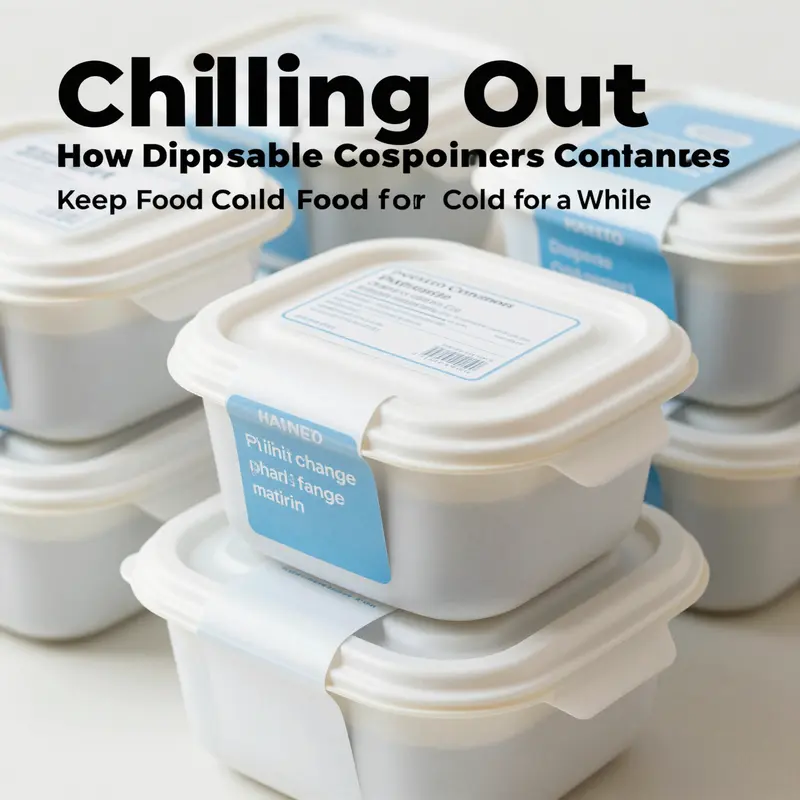
The promise of disposable containers that keep food cold for a while rests on a delicate balance between convenience, performance, and responsibility. In a world that constantly shifts between takeout, meal kits, school lunches, and workplace meals, the need for a disposable option that can sustain a cool environment without demanding ice packs or pre-chilling is clear. Yet the science behind these modest packages is more nuanced than a simple enclosure with a lid. It blends material science, thermodynamics, and sustainability into a single-use product that must perform reliably under real-world hustle. The most exciting developments are not just about making a container that feels snug in the hand; they are about extending the window of safe and appetizing cold storage without creating a legacy of waste. This chapter explores how researchers and designers are recasting the disposable format to deliver meaningful cold retention while acknowledging that true, long-term cold preservation often still depends on how the product is used in combination with cooling methods and prepped contents. The shift toward smarter disposables mirrors a broader push in packaging toward materials that can be responsibly managed at the end of life, yet still deliver a performance punch that matters to consumers who want safety, cost-effectiveness, and simplicity in a single package.
To understand the current landscape, it helps to return to the baseline reality: standard disposable containers offer only limited thermal protection. A plain plastic clamshell or a foam tray may keep contents cool for a few hours, especially if the contents themselves start cold and the container is kept in a cool environment. But without ice packs or pre-chilling, the interior temperature tends to drift toward ambient within a short time. This fundamental limitation is not merely a technical footnote; it shapes how food safety guidelines are interpreted in everyday use. The USDA’s food safety guidance underscores a practical truth that many users overlook: temperature control starts before you pack. A cold bag plus cold contents plus an effective coolant is the only way to ensure food safety over extended periods. Dr. Lena Torres, a food safety researcher at the USDA Cooperative Extension, has emphasized this point in public guidance, stressing that disposable containers are best viewed as part of a broader cooling strategy rather than a magic bullet for temperature control. This framing is essential for designers who want to deliver meaningful improvements without promising more than the science can guarantee. In practice, it means that even the most advanced disposable container remains most effective when paired with pre-chilled items and an ice pack. The takeaway is intentionally practical: the container is an enabler, not a substitute for smart cooling habits.
Against this backdrop, several families of innovations are gaining traction. The first is bio-based insulating foams. Derived from plant starches or cellulose, these foams aim to deliver tangible thermal resistance while providing the environmental benefits associated with biodegradable or compostable materials. In disposable boxes designed for salads, cold meals, and beverages, such foams can reduce heat transfer enough to extend cold retention into a more comfortable range. The stated performance—in controlled testing under optimal conditions—has reached roughly four to six hours. While that is not a guarantee for every situation, it marks a meaningful improvement over traditional foam or plastic alone. The value proposition is not simply about more minutes of cold; it is about enabling more predictable meal experiences in transit, lunchrooms, and delivery handoffs where the risk of temperature abuse can be higher. When paired with appropriate ice packs or pre-chilled contents, these bio-based insulating foams provide an attractive balance of performance and end-of-life considerations. The trend reflects a thoughtful response to consumer demand for sustainability without sacrificing the practical needs of daily life. It also points to a broader opportunity for packaging designers to rethink the entire box-and-lid system as a collaborative unit rather than a single rigid shell.
Another line of advancement centers on phase-change materials, or PCMs, embedded in disposable wraps or liners. PCMs exploit the physics of heat absorption during phase transition. By storing cooling energy as they melt from solid to liquid at a defined temperature, these materials can gradually release chill to the interior of the container. For food service and delivery contexts, PCMs offer the promise of tighter temperature control during the critical transit window. The practical effect is a gentler temperature profile inside the container, which helps preserve texture, color, and safety across typical meal durations. The use of non-toxic gels or salts in these PCM-infused layers minimizes risk while remaining compatible with food contact requirements. What makes PCM technology compelling in the disposable space is its potential to provide passive cooling without relying exclusively on external ice packs. The integration is not about replacing cooling methods but about complementing them so that, in busy delivery or meal-prep settings, the cold chain can be momentarily more robust during peak periods. As with all emerging approaches, the success of PCM-enabled disposables depends on precise material design, regulatory compliance, and clear labeling that communicates safe usage to end users. Still, the concept aligns with a broader trend toward more sophisticated single-use products that can deliver predictable performance without demanding changes in consumer behavior.
A third core development is multi-layered construction. By combining recyclable paperboard or molded fiber with thin, reflective barrier layers—such as aluminum-foil-like coatings or bio-based films—these containers aim to drastically reduce heat transfer while supporting recyclability. The barrier science here is straightforward but powerful: fewer pathways for heat to move from the environment into the interior mean that the cold content stays cold longer. In some newer designs, researchers have demonstrated the possibility of maintaining internal temperatures below 4°C (39°F) for eight hours or more when these containers are used with ice packs. This level of performance approaches that of reusable insulated systems, albeit within the single-use paradigm. The keys to success lie in the integrity of the barrier layers, the choice of base materials, and how well the system plays with conventional recycling or composting streams. If a disposable can keep a meal safely cold for a full shift in a crowded workplace or during a lengthy school day, it becomes a viable alternative to more burdensome reusable options for many users who prize convenience above all. The financial and logistical calculus also shifts when these layered designs pair well with pre-chilled contents and appropriate coolant strategies.
These innovations do not exist in a vacuum. They are born from a recognition that the disposable format remains deeply embedded in daily life, from school cafeterias to takeout routines, and from courier deliveries to workplace lunchrooms. The design challenge is to extend safety margins without imposing extra steps on the user or burdening the end-of-life equation with heavier waste. The narrative around these products is not simply about new materials; it is about smarter systems. A disposable container can be part of a reliable cold-chain solution only if it works in concert with how people actually pack, transport, and consume meals. For many households and small businesses, that means containers that are easy to store, easy to use, affordable, and designed with clear expectations about how long they can safely hold cold content when used as directed. In practice, it is the alignment of material science with real-world workflows that determines whether these innovations translate into meaningful improvements in food safety and user satisfaction.
The practical implications of these developments extend beyond the kitchen table. For food providers—restaurants, caterers, and delivery platforms—these disposable solutions can simplify compliance with temperature control guidelines while reducing waste compared with heavier, reusable systems. They can also open new possibilities for packaging design, enabling more compact storage, lighter shipments, and more flexible inventory management. Yet this progress also raises questions about consistency across lots, shelf life in different climates, and the durability of protective layers during handling and transport. It is here that testing protocols and standardized performance metrics become essential. The research landscape is increasingly focusing on reproducibility, with standardized tests that measure not just peak performance but the consistency of cold retention under variable real-world conditions. In other words, a truly reliable disposable cold container must deliver predictable results not only in a lab but also in the field, where temperature, humidity, and user behavior can diverge widely.
One practical takeaway from the current wave of innovations is that the consumer experience hinges on more than a label or a single feature. The most effective designs are integrated into everyday routines. For instance, a bio-based insulated box may be ideal for a salad kit that travels from a store to a desk, especially when paired with a pre-chilled beverage sleeve. A PCM-backed liner is particularly suitable for meal-prep scenarios that require precise, staged cooling during delivery or refrigeration-to-service transitions. A multi-layered box with a reflective barrier might serve well for hot-and-cold mixed meals, providing a safety margin for cold items that are intermittently exposed to room temperature. The common thread across these approaches is a recognition that cold retention is a system property. It emerges from material choices, manufacturing quality, how the product is used, and the surrounding logistics. As designers push the envelope, they also need to consider disposal pathways and end-of-life options. A container that performs brilliantly but cannot be recycled or composted will struggle to gain broad acceptance in a marketplace increasingly attentive to sustainability and circular economy principles.
To illustrate how these ideas translate into real-world adoption, consider the path from concept to consumer. A bio-based insulating foam may be incorporated into single-use boxes targeted at cold salads or beverages. The outer shell remains lightweight and recyclable, while the interior foam layer provides improved thermal resistance. In practice, a consumer pops a pre-chilled container into a lunchbox or bag, adds an ice pack, and returns to a desk or classroom with confidence that the contents will remain at a safe temperature for several hours. The PCM option might be employed in a flexible liner that sits within a standard box, offering a silent, passive cooling channel as the product sits on a table or in transit. A multi-layered alternative could be designed for longer journeys, such as a picnic or a long commute, where the barrier remains intact despite exposure to warmer ambient conditions. Each design choice carries implications for cost, supply chain complexity, and environmental impact, but all share a common objective: to give consumers greater control over food safety without demanding extra steps or specialized equipment.
The conversation about these innovations inevitably circles back to a central question: how do we balance performance with sustainability in a disposable format? The answer lies not in chasing a single, perfect material but in orchestrating a suite of strategies that complement each other. A container might rely on a bio-based insulating layer for baseline performance, a PCM-enhanced liner for longer or more precise cooling, and a barrier system that minimizes heat gain during transit. The packaging designer’s toolkit now includes more than a simple thickness increment; it encompasses material compatibility, thermal modeling, end-of-life pathways, and consumer education. The consumer, on the other hand, benefits from clearer guidance about how to maximize cold retention. Simple steps—such as starting with pre-chilled containers, using a cold pack, and minimizing door-to-desk time—amplify the gains offered by advanced disposables. In other words, the sum of material ingenuity and user awareness determines the ultimate effectiveness of these products in everyday life.
As these technologies mature, the role of internal collaboration between designers, material scientists, regulatory bodies, and end users becomes more pronounced. It is not enough for a container to boast higher insulation; it must also prove safe for contact with food, compatible with recycling or composting streams, and economically viable for widespread adoption. Standards and testing protocols will increasingly shape the market, guiding manufacturers toward materials that deliver both performance and responsible disposal. In a landscape where waste reduction, resource efficiency, and food safety are all salient concerns, the best disposable cold containers will be those that deliver predictable results while honoring the lifecycle of the product. The future holds the promise of disposables that feel closer to recyclable or compostable products than to throwaway compromises, without surrendering the convenience consumers expect. For those curious about the concrete design options that illuminate this path, a concrete example of an eco-friendly, customizable design exists as a model for how a single packaging concept can blend form, function, and responsibility in a single, user-friendly package.
For readers who want to explore a concrete example of such an integrated packaging concept, a relevant reference can be found in industry materials that discuss customized, eco-friendly packaging options. See the detailed product page on customized-design-eco-friendly-1300ml-kraft-soup-salad-paper-bowl-with-lid for a practical illustration of how an integrated design can pair lid-enabled containment with sustainable materials while remaining suitable for cold storage scenarios. This example demonstrates how form follows function when the goal is to extend cold retention without compromising end-of-life considerations. While the landscape continues to evolve, the core insight remains stable: the most effective disposable cold containers are those that embrace a system approach, combining material science with mindful usage and responsible disposal.
External resources can provide deeper technical standards and performance measures that underpin these developments. For a broader, industry-oriented overview of material standards, technical specifications, and performance insights related to disposable food packaging, see the Alibaba article on Food Box Disposable Overview: Material Standards, Technical Specifications, and Performance Insights. This resource offers a landscape-level view of how materials and tests come together to frame what is possible in the disposable cold-containment space. It helps connect the dots between lab-grade measurements and real-world performance, underscoring the importance of standardized testing in translating innovation into reliable consumer experiences. Whether you are a product designer, a food safety officer, or a logistics planner, understanding these foundations can illuminate how to select and deploy disposable cold containers that truly perform when it matters most.
Internal link for further reading on design options (open in a new tab): customized-design-eco-friendly-1300ml-kraft-soup-salad-paper-bowl-with-lid
External resource: https://www.alibaba.com/products/food-box-disposable-overview-material-standards-technical-specifications-performance-insights.html?spm=a2700.1.x.1&scm=1007.12345.12345.12345&src=alibaba_search
Temporary Chill, Lasting Trade-offs: The Real Limits and Small Wins of Disposable Cold-Retention Containers
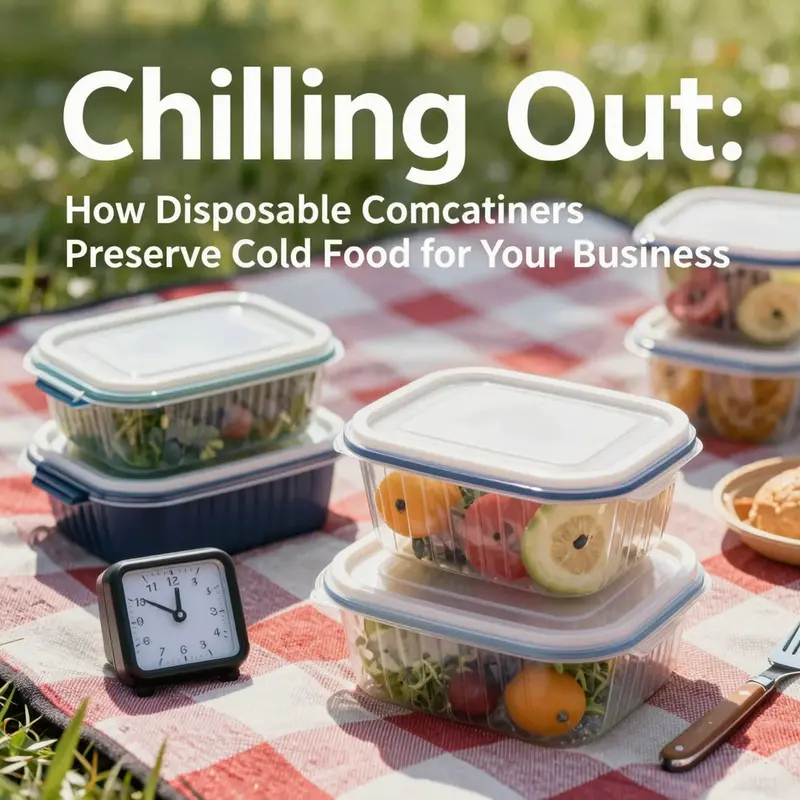
Disposable containers that claim to keep food cold for a while offer convenience but not a long term solution. They can slow warming for a few hours in cool surroundings, but in warm cars or bright sun their insulation often fails. The cold inside depends on initial temperature, the barrier’s effectiveness, and the environment, so temperature can drift toward the danger zone if used alone without pre cooled contents or active coolant. For reliable cold storage across several hours, a system approach is required: pre chilled items, sufficient coolant such as ice packs, and reusable insulated containers with better barrier properties. Disposable options may be acceptable for short trips when paired with proper planning, but they should not be expected to guarantee safety over extended periods. The takeaway is to view disposables as one layer in a broader cooling strategy rather than a standalone solution.
Beyond the Box: Practical Best Practices for Disposable Cold-Retention Containers
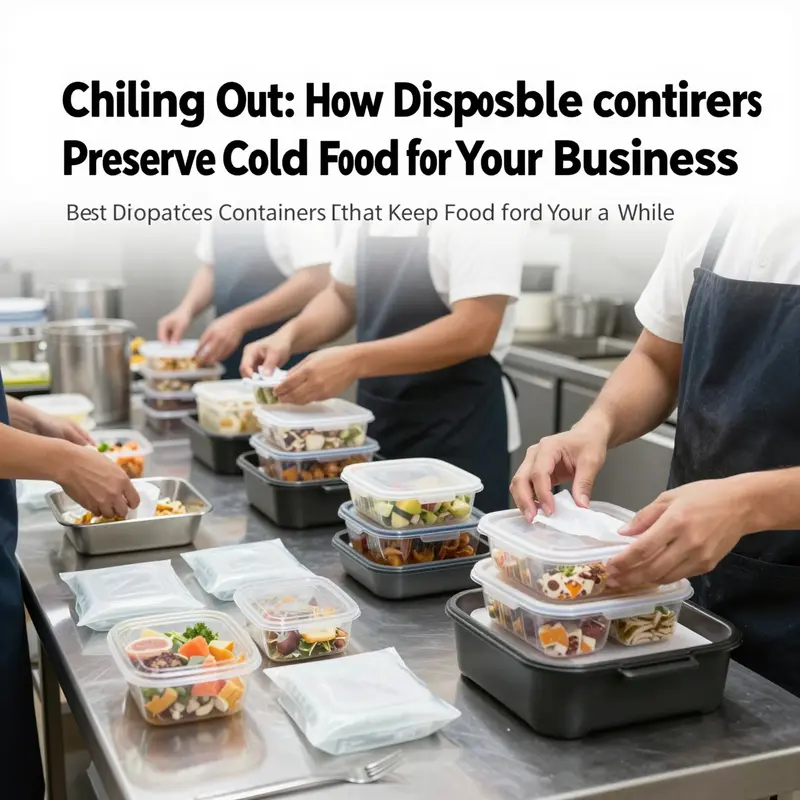
Disposable containers that promise cold retention offer a pragmatic option for meals on the move, but they come with caveats. The science is clear: cold is a function of pre-chilled equipment, reliable coolant, and minimal heat influx. This chapter weaves those ideas into a practical guide for using disposable containers that keep food cold for a while, without pretending they are miracle solutions. When a lunch must travel from kitchen to desk or classroom, the goal is to arrive with food that remains safe to eat and stored at a temperature that discourages bacterial growth. A thoughtful approach to packaging, cooling, and handling can make a disposable solution behave more like a temporary shield against heat than a simple carrier of cold contents. Yet the distinction between short transit and extended storage matters, because even the best disposable design struggles when heat has a chance to creep in from the outside world.
The reality, supported by expert voices in food safety, is nuanced. Temperature control starts before you pack the lunch. A cold bag + cold contents + effective coolant is the only way to ensure food safety over extended periods. While that perspective comes from a trusted USDA extension resource, it resonates across the field: insulation alone cannot compensate for warm surroundings or careless handling. In practice, even a modest amount of heat exposure can push perishable foods into unsafe ranges if you depend solely on a disposable container that offers minimal thermal protection. The takeaway is not to abandon disposables, but to use them with an understanding of their limits and a strategic toolkit that leverages pre-chilling, reliable coolants, and careful handling.
There is real progress in the disposable category that hints at better cold retention without sacrificing convenience. Recycled PET, or rPET, containers are lightweight and recyclable, and they provide moderate insulation that can slow initial warming when paired with proper cooling. Biodegradable options crafted from bamboo fiber or plant-based plastics like PLA have made strides in reducing waste, and some models incorporate insulating layers designed to extend cooling by a few hours when used with ice packs. There are also phase-change material (PCM) infused disposables in experimental stages, where non-toxic gels or salts absorb heat as they melt, offering a passive cooling effect. These innovations do not erase the fundamental physics of heat transfer, but they shift the balance toward more forgiving performance during short to mid-length trips. Still, the most consistent guidance remains straightforward: cold preservation is strongest when the container is not alone, but paired with a cold content and a reliable coolant.
To translate theory into practice, the core discipline is to maximize the three ingredients of cold preservation: pre-chilled packaging, robust cooling, and minimized heat exchange. Pre-chill the container itself before packing. Placing the container in a refrigerator or freezer for at least 30 minutes lowers the temperature of the container walls and interior, which means the food inside starts out closer to cold rather than warming up from the moment of sealing. This simple step compounds the effect of the coolant and reduces the amount of heat the contents must overcome once sealed. It is an easy, repeatable habit that pays off over the hours ahead. When time allows, you can even pre-chill the packing materials around the food. The goal is to start with a cold interior that acts like a shield, giving the coolant a head start rather than asking it to do all the heavy lifting.
The cooling source itself deserves equal attention. A single ice pack or a small frozen gel pack may not sustain cold for a lengthy day, especially if the container is left in a hot car or in direct sun. Choose cooling sources designed to stay frozen for extended periods—ideally 8–12 hours—and pair them with a container that has proven insulating properties. The idea is simple: a sturdy coolant that remains solid for longer, combined with a well-insulated chamber, keeps the interior temperature in a safer range for more of the day. The talks you hear from researchers echo the same warning: even the best-insulated container will fail if paired with a weak cooling source or left in a hot car. That reality underscores the need for robust cooling and smart transport practices.
Another critical factor is the integrity of the container’s seal and its design to minimize heat entry. Air ingress is a stealthy heatsource. Each time the lid is removed or opened, warm air floods in, and the interior temperature trends upward. This is why opting for containers with airtight seals and tight-fitting lids matters. If the food spans multiple layers, consider a small parchment piece or a silicone liner between layers to reduce moisture transfer. Moisture can act as a conduit for heat, and the two-way transfer of moisture and air can undermine insulation. In the heat of daily life, this attention to seal quality becomes a practical habit that translates to safer temperatures and better texture for foods that lose moisture or that become soggy when exposed to air.
The materials themselves influence performance in meaningful ways. Not all disposables are created equal when it comes to thermal protection. Common plastics like polypropylene (PP) or polystyrene (PS) can offer adequate basic protection, but for longer-lasting cold, look for double-walled designs or those lined with reflective foil. The reflective layer can slow heat absorption by redirecting radiant energy away from the food, while a double wall reduces the rate at which interior temperatures rise. These design traits do not erase the need for a good coolant or pre-chilled contents, but they can buy valuable extra time when the clock is ticking and a lunch break has turned into a longer wait.
Practical choices also come with environmental considerations. The appeal of disposable options lies in convenience and minimal cleanup, yet sustainability remains a concern. The emergence of eco-friendly disposable options—rPET, bamboo fiber, PLA—reflects a consumer demand for responsible packaging, and the industry is responding with products that balance performance and environmental impact. The trade-off, however, remains clear. Even with enhanced insulation, disposable systems do not perform at the level of reusable, insulated containers, especially for six-to-eight-hour days or when the journey involves variable temperatures. They can, however, be a practical bridge in settings where washing facilities are scarce, or where the speed of turnover and disposal is a logistical necessity. The reality check here is not discouragement but informed selection: use disposables with built-in insulating features and pair them with pre-chilled contents and dependable coolant, recognizing their limits while maximizing their advantages for short-to-mid-range needs.
For readers seeking concrete ways to apply these ideas in everyday practice, there are a few compact, repeatable steps that take the guesswork out of the morning routine. First, pre-chill the container and the packing materials for at least 30 minutes. Then, choose a coolant with proven longevity—an ice pack designed for extended cold performance, plus a small additional gel pack if the journey is long or the environment is warm. Pack contents in a way that minimizes air pockets and keeps items in stable contact with the cooling source. Avoid frequent lid-opening; this is the enemy of steady temperatures. If the transit route will expose the meal to sunshine or high ambient temperatures, consider placing the container in a larger insulated tote or cooler as a secondary layer of protection. When you arrive at your destination, assess the timelines and the storage options before opening; if the food is still cold to the touch, you’ve likely maintained a safer window for consumption.
In the modern landscape of disposable packaging, even a well-chosen product will come up short if used without regard to the surrounding conditions. A practical reminder comes from the wider body of food safety guidance: temperature control is not a feature that can be delegated to the container alone. It requires a cold bag, cold contents, and effective coolant functioning in harmony. With this understanding, you can select disposables labeled for cold storage that you know will behave predictably when used with a properly pre-chilled interior and a reliable ice pack. When these conditions align, the container is less of a fragile vessel and more of a controlled environment that buys time—time to keep the food out of the danger zone and time to maintain the texture and quality that often define a good meal on the go.
When the need stretches beyond simple convenience and safety becomes the priority, the balance shifts toward more durable insulation solutions. If you anticipate days where long travel times or variable ambient temperatures are common, consider higher-performance options—reusable insulated or vacuum-sealed containers. These designs excel at reducing heat transfer and can sustain cold more reliably for six to eight hours or longer, especially when combined with proper pre-chill and coolant protocols. The trade-off is clear: a higher upfront cost and a need for cleaning, but the payoff is consistency, safety, and the flexibility to reuse across many meals. In environments like schools, offices, or care settings where multiple meals are prepared and distributed, that consistency matters; it reduces risk, supports better food safety practices, and aligns with broader sustainability goals by reducing waste per meal.
For readers who want to see practical examples of how disposable packaging translates to real-world use, consider this approach to a common cold-service scenario. Choose a disposable kraft paper bowl with a lid designed for takeout and cold service, and reference the product page for a closer look at the design features that support cold retention. This kind of container, when paired with pre-chilled contents and a solid ice pack, can serve well for short-range deliveries or on-site meals that require a quick setup and clean finish. For more information on such packaging options, you can explore the disposable kraft paper bowl for food package with lid page. (disposable kraft paper bowl for food package with lid) https://greendispopack.com/product/disposable-kraft-paper-bowl-for-food-package-with-lid/. The page offers a concrete example of how designers are combining simple materials with practical features to support cold service while keeping disposal convenient.
To wrap these ideas into a coherent practice, remember that the best flavor and safety come from a plan that doesn’t rely on a single trick. It relies on a small set of complementary actions: pre-chill the container, use a dependable coolant, minimize heat exposure, and choose materials designed for better insulation whenever possible. If you’re transporting cold meals in sunny or hot environments, add an extra layer of protection with a larger insulated tote. And always be mindful of the time you have between packing and consumption. A few hours can feel short, but they are the critical window during which safe temperatures must be maintained.
External resources offer further guidance on food safety and temperature control. For additional context on safe handling and storage, see the USDA extension resources on lunch storage and temperature control. This includes guidance that temperature control requires more than an insulating container; it requires a cold bag, cold contents, and a reliable coolant. (External resource: https://www.usda.gov/extension-food-safety-lunch-storage)
Final thoughts
In conclusion, the selection of disposable containers that keep food cold is crucial for maintaining quality and safety in food service operations. While eco-friendly solutions and innovative technologies offer promising benefits, it’s essential to understand their limitations and implement best practices effectively. By combining the right container choice with pre-chilled items and proper ice packs, businesses can provide a superior experience that meets both modern sustainability goals and customer expectations. In a world that increasingly values eco-friendly practices, embracing these packaging solutions can set your food service operation apart and enhance customer loyalty.