
In today’s competitive beverage industry, the demand for customizable solutions has never been higher. Disposable milk cups are a staple in cafes, restaurants, food trucks, and event services. Investing in custom cup plastic machines allows businesses to meet varying customer preferences while optimizing production processes. This article delves deep into four key aspects; starting with the production specifications of these machines, we will uncover their customization options, analyze market trends, and explore the quality standards that ensure reliable operation. Each chapter builds on the last, shaping a comprehensive understanding of how these machines can elevate service offerings in a dynamic market.
Precision in the Forming Line: Production Specifications of a Custom Thermoforming Machine for Disposable Milk Cups
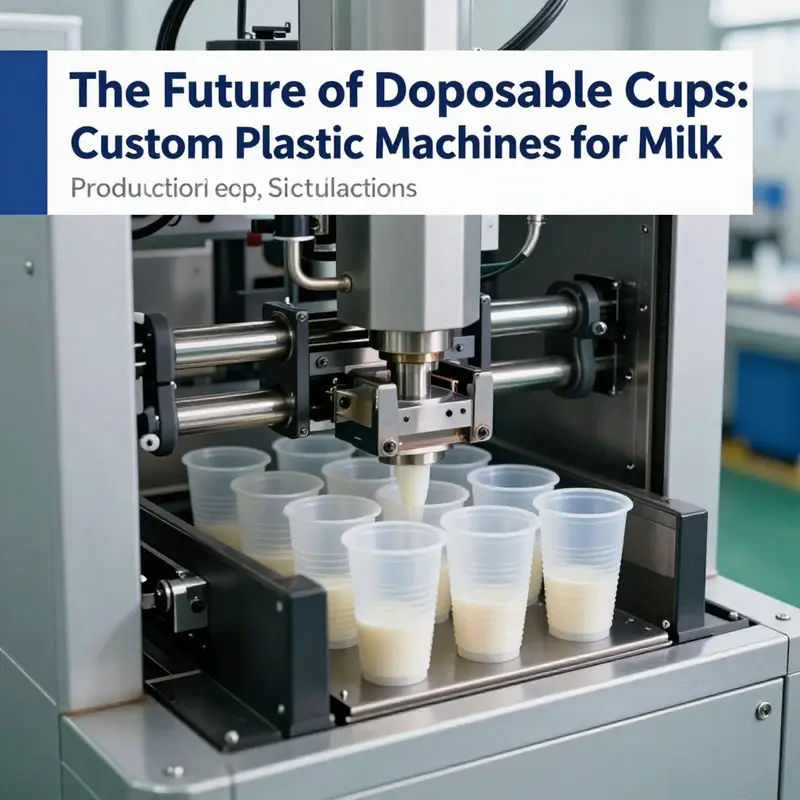
The chapter you are reading sits at the hinge between concept and scale: the custom thermoforming machine that turns flat plastic sheet into a disposable milk cup is not just a piece of equipment, it is a carefully tuned system where material behavior, control philosophy, and production demand converge. When designers and manufacturers speak of production specifications for a custom cup-forming line, they are describing more than a list of numbers. They are outlining the capabilities that translate a concept—an idea about a cup’s shape, thickness, and durability—into reliable, repeatable output on a factory floor. In the realm of disposable milk cups, where consumer expectation is for a clean, dependable drinking experience and the brand owner seeks consistent performance from batch to batch, the specifications of the thermoforming machine serve as the backbone of quality, cost efficiency, and flexibility. The core technology is a fully servo-automatic cup forming machine, a system that can heat, form, and finish cups with minimal manual intervention while maintaining tight tolerances.
The machine type itself brings a fundamental implication for how a production line can be configured. A fully servo-automatic cup forming machine uses servo-driven axes for the critical stages of feeding, heating, forming, cooling, and ejection. The servo system provides rapid, repeatable movements and precise synchronization across stations, which reduces misfeeds, thinning, or deformation that can occur with less advanced control methods. In practice, this precision manifests as tighter wall thickness tolerances, smoother edge finishes, and more consistent base shapes from cup to cup. In a market where customization is common, the value of servo control is measured not only in the tightness of a single cup, but in the stability of thousands or millions of cups produced over the line’s life. The result is a machine that can be trusted to maintain a defined dimensional envelope while responding quickly to changes in cup diameter, height, or corner radii when a client demands a different capacity.
Materials compatibility is another central axis of these specifications. PET and PP are the two plastics most commonly used for disposable milk cups. PET, with its clarity and strength, is well-suited for cold beverages and for applications where a transparent appearance matters. PP is preferred when heat resistance is a consideration, making it a sensible choice for hot beverages and for a broader range of service temperatures. A robust thermoforming line will be designed with the understanding that the material’s glass transition temperature, melt flow characteristics, and forming temperature window govern the heating profile and the downstream cooling strategy. The heating system must bring the sheet to a precise forming temperature range without excessive browning or thinning at the rim, while the forming station must apply appropriate downward pressure and mold geometry to achieve the intended cup profile. The die or mold sets the geometry: a typical disposable milk cup might be formed within a diameter window around 150 to 180 millimeters, with a height that suits a given capacity, and with a reinforced rim to withstand stacking and handling.
In practical terms, the production capacity of these machines is defined by speed and reliability. A broad spectrum exists, with speeds commonly ranging from about 12 to 30 cycles per minute, depending on the model, the cup size, the material, and the chosen process configuration. The cycle rate is not simply a measure of speed; it is a signal about how quickly the machine can complete its seven essential steps: material feeding, heating, forming, cooling, ejection, trimming if necessary, and waste handling. The servo-driven architecture supports high-frequency operation with minimal mechanical backlash, which sharpens cycle repeatability. The downstream effect is reduced scrap, better consistency in fill-to-edge tolerances, and less downtime spent on adjustments between runs. It is essential to recognize that higher cycles per minute often come with trade-offs in incoming material handling or in the complexity of the cup geometry.
The process specificity matters in another dimension: automation. A fully servo-automatic cup machine is designed to handle end-to-end operations with minimal human intervention. The process includes material feeding, heating, forming, cooling, and ejection, all synchronized by the control system. Some configurations may add a sealing or lidding station to create a completed single-serve packaging line. The ability to integrate with downstream equipment—such as a cup-sealing station, lid application, or stacker—transforms the machine from a stand-alone unit into a flexible production line capable of rapid changeovers. For milk cups, where the consumer value proposition often depends on a clean lid fit and a reliable seal during transport, those downstream options are not merely conveniences but strategic capabilities that influence brand reliability and shelf life.
Customization is a persistent theme in this space. Suppliers recognize that buyers do not always want or need a one-size-fits-all solution. A custom machine can adjust forming size, wall thickness, and even the curvature of the cup sidewall to meet customers’ precise capacity targets—such as a 10-ounce cup—while keeping the overall footprint or energy usage within acceptable bounds. In many cases, the machine is specified to accommodate a range of cup dimensions, enabling manufacturers to switch between small-batch runs and higher-volume production without replacing the entire forming train. The ability to adapt is tied to the modular architecture of the tooling and the control software. The tooling can be swapped or reconfigured to change the cup diameter or height within the permissible mechanical limit. The software, meanwhile, allows for quick recipe changes, with parameter sets stored for specific cup formats. In practice, the transition from one cup size to another can be achieved in a matter of hours rather than days, a capability that directly affects time-to-market for new packaging ideas and promotions.
From a quality assurance perspective, design and process specifications are framed by safety and compliance. A machine designed for food-contact applications will incorporate sanitary-by-design features, easy-to-clean surfaces, and material choices that satisfy hygiene standards. Some machines carry international certifications such as CE or ISO 9001, signaling that they meet recognized safety, health, and quality-management requirements. Those certifications are not decorative labels; they are indicators that the machine’s design and manufacturing processes have been validated against international benchmarks. For manufacturers, certification reduces risk when entering new markets and helps ensure consistent part quality across lots and suppliers. The control philosophy accompanying these machines is often built around fault-tolerant operation, with sensors that monitor temperature, pressure, servo position, and cycle timing. When a deviation occurs, the system can halt automatically or compensate within predefined limits, which is essential to protecting the integrity of the product and avoiding waste.
In a market where capital investment competes with operating costs, the economics of a custom thermoforming line are as critical as its capabilities. The baseline price range for a full-featured, high-precision forming machine is typically in the realm of a few thousand to tens of thousands of dollars for smaller, lower-throughput configurations, and well into the six-figure territory for large-scale, multi-station lines with integrated sealing and packaging. A compact, high-value setup might land closer to the mid-range, providing dependable performance at a price accessible to smaller contract manufacturers or pilot plants. For larger, high-output manufacturing environments that run around the clock, an investment can be substantial—reflecting the higher automation level, greater process stability, faster changeover times, and the ability to amortize through high-volume production. It is not unusual for buyers to consider total cost of ownership, including energy consumption, maintenance, spare parts, and service contracts, when evaluating a purchase. Informed buyers will compare the performance of fully servo-driven systems with alternative configurations that rely on hydraulic or mechanical actuation, weighing the advantages of precision and repeatability against upfront and ongoing costs.
Information sources for these specifications commonly converge on comprehensive product listings and vendor catalogues that emphasize the machine’s flexibility and the breadth of its capability. The Alibaba platform, for example, often features fully servo-automatic cup forming lines that advertise the ability to process PET and PP materials, to achieve speeds within the 12–30 cycles per minute range, and to tailor forming sizes to customer requests. For readers seeking practical procurement guidance, the catalogues emphasize customization options, safety certifications, and the integration potential with downstream equipment. Even as buyers weigh the promise of turnkey lines versus modular components, these listings underscore a universal truth: the value of a custom cup machine lies in its ability to harmonize material behavior, forming science, and production control into a stable, repeatable, and scalable process.
This harmony between science and production is what makes the specification sheet so valuable. It translates conceptual design goals into measurable performance, ensuring that a disposable milk cup—an everyday object—emerges from the forming die with uniform thickness, a clean rim edge, and the precise proportions that define both usability and packaging efficiency. The form of the cup matters as much as its function. The diameter and height must accommodate filling lines and sealing systems; the rim must resist deformation during stacking and handling; the base must be strong enough to withstand the forces of thinning during forming and the rigors of end-use. To achieve such outcomes, the machine’s forming station is tuned for downward pressure and repulsion, a process sometimes described in technical circles as a down-stroke forming method. This approach helps etch the intended geometry into the plastic sheet while keeping material flow even across the entire surface of the cup. The choice of material and its imparted rheology are then matched to the mold’s geometry, the gap tolerances, and the cooling profile that quenches the cup into its final shape. It is a choreography in which temperature, position, and dwell times must align with the mold’s geometry and the plastic’s crystallization behavior.
The practical upshot for manufacturers is straightforward. When a buyer specifies a custom cup with a particular capacity, diameter, and rim design, the production specifications of the thermoforming machine become the primary language for translating that need into a working line. The machine’s capacity to deliver consistent quality, its ability to adapt to different cup formats, and its potential to integrate with sealing and packaging steps all become decisive in choosing the right equipment for a given business model. The balance between upfront cost, throughput, changeover speed, and energy efficiency ultimately determines whether the line can sustain profitability across multiple product runs and evolving customer demands. It is here that the concept of customization earns its pragmatic value: a machine tuned for a specific cup dimension does not merely produce one product; it enables a family of products, scales with demand, and supports branding strategies that rely on consistent packaging aesthetics.
To bring home the practical implications, consider the lifecycle of a typical project. An engineer will define target cup dimensions, material choice, and required cycle time, then map these onto the machine’s forming die geometry, heating profile, and cooling circuit. The next step is to test with real material to validate wall thickness uniformity and edge integrity, performing adjustments to forming pressure, mold geometry, and dwell times as needed. If the project involves a larger production run, the line may be completed with a sealing stage to create a finished product that moves directly into packaging. The lower end of the market will still demand reliable quality control and straightforward changeovers, but such lines may focus more on standardized cup sizes and less on rapid, complex customization. Either path—whether a compact, high-precision line for niche products or a larger, flexible line designed for frequent format changes—relies on the same core premise: production specifications that are expressed in material compatibility, form geometry, cycle time, automation depth, and integration capability. Those are not abstract numbers; they are the tangible levers that determine how efficiently a factory can deliver cups that keep beverages at the right temperature, protect contents during transit, and meet consumer expectations for reliability and ease of use.
For readers who want to explore the concept further within the broader ecosystem of disposable cup manufacturing, a practical reference is available through a supplier listing that highlights a wholesale option for a common cup format. This resource offers a real-world example of the scale, customization options, and downstream possibilities that manufacturers weigh when crafting their own lines. The link provides a window into the market’s expectations for dimensions, material compatibility, and automation features, helping readers connect the theoretical specifications discussed above with the tangible products that end up on packaging lines and in consumer hands. See the internal reference here: wholesale takeaway 8oz-12oz disposable coffee paper cup with lids. This link serves as a concrete example of how buyers communicate requirements and how suppliers respond with configurations that align with the target geometry, material, and process flow.
In closing, production specifications for a custom thermoforming machine for disposable milk cups are not merely a specification sheet; they are a blueprint for translating design intent into scalable manufacturing. The interplay between servo-driven precision, material properties, forming geometry, and downstream integration shapes the quality and cost efficiency of the final product. As the market continues to seek greater customization without sacrificing reliability, the value of a well-specified thermoforming line becomes increasingly evident. The capability to adjust cup dimensions, switch materials from PET to PP, and connect to sealing systems all while maintaining consistent cycle times is what enables a producer to respond quickly to changing consumer preferences and retailer requirements. It is the decisive factor in turning a simple disposable cup into a dependable packaging solution, capable of sustaining a brand’s promise in a competitive landscape.
External resource: https://www.alibaba.com/product-detail/Alibaba-Product-Link
Custom-Tuned Thermoforming: Crafting Flexible Plastic Cup Machines for Disposable Milk Cups
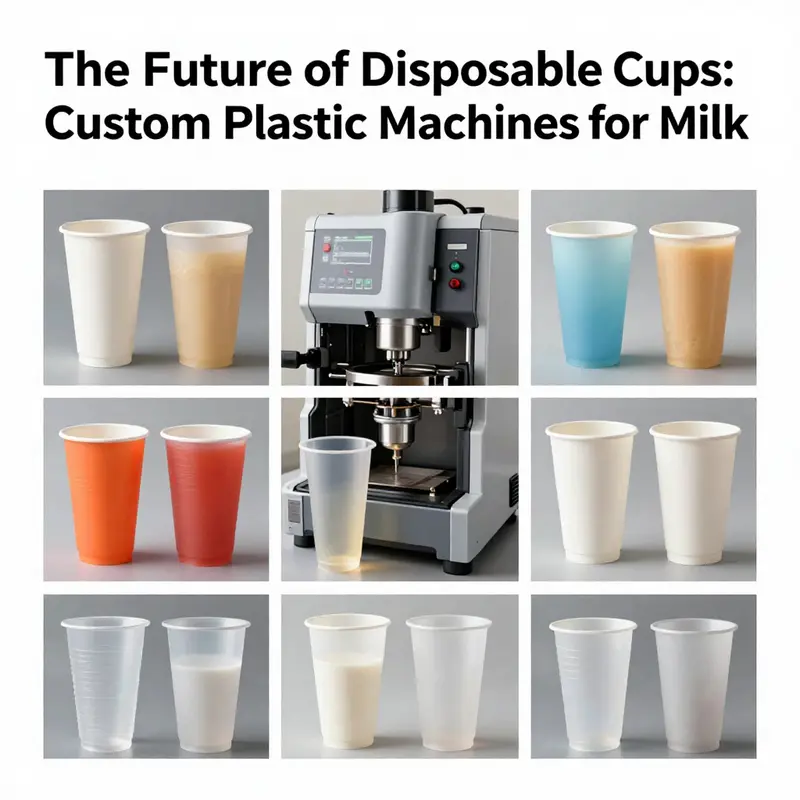
Manufacturers aiming to produce disposable milk cups face a core question that blends engineering precision with business agility: how to tailor a thermoforming machine to deliver consistent cup quality at the right pace, while staying adaptable to evolving designs and materials. The answer lies in a family of customization options that redefine what a single-purpose machine can do. Rather than viewing a thermoforming line as a fixed asset, savvy operations treat it as a modular platform whose capabilities can be tuned to match product family, plant footprint, and throughput expectations. This perspective is especially important when the end product is a disposable milk cup, a container whose shape, thickness, and surface finish influence everything from consumer perception to recycling outcomes. The customization options described here reflect a practical balance between form, function, and economics, showing how the machine can be calibrated to yield branded, high-quality cups without sacrificing efficiency or reliability.
At the heart of customization is the forming area. A well-tuned thermoforming machine can be configured to handle forming areas as large as several hundred square millimeters, with practical examples reaching up to roughly 680 × 320 millimeters. This range supports a spectrum of dairy-related cup geometries, from slender, tall milk cups to wider smoothie-style vessels and even yogurt containers. The choice of forming area is not merely about size; it dictates downstream handling, mold lifecycle, and cycle stability. When a plant shifts from a standard milk cup to a specialty vessel—perhaps one with a reinforced rim for printed branding or a slightly squared profile for stackability—the forming area and the associated tooling are adjusted to preserve seal integrity and appearance. The ability to retool without sacrificing downtime is one of the most valuable facets of customization because it lowers the total cost per unit in multi-product lines.
Material selection and sheet thickness form a second axis of customization. For disposable milk cups, the process commonly engages sheet stock in a range from about 0.35 millimeters to roughly 2.5 millimeters. This span unlocks a trade-off between rigidity, heat resistance, and cost. Thinner gauges yield lightweight cups suitable for single-use scenarios with moderate cold tolerance, while thicker sheets offer improved stiffness and better handling during filling and capping. The machine’s settings can be adjusted to accommodate PET, PS, or HDPE sheets, among others, depending on the cup’s intended use, temperature exposure, and recycling considerations. A thoughtfully configured line accepts different materials with minimal tool changes, enabling a brand to switch materials in response to supply chain shifts or environmental goals. In practice, this means the same base machine can produce a crisp, transparent PET milk cup for premium-packaged dairy lines or a robust HDPE variant for value lines, all without a wholesale equipment change.
Speed and throughput constitute another crucial dimension of customization. A major objective is to align cycle speed with downstream processes such as cooling, trimming, and stacking. In many configurations, cycles per minute can reach as high as 35, enabling high-volume production in commercial contexts. Achieving this pace reliably requires a careful balance of forming pressure, dwell time, and transfer timing. It also depends on the consistency of the sheet material and the precision of the vacuum or plug-assist used during forming. The machine can be tuned to hold a steady cycle even as cup dimensions shift within the same family, which is essential for brands that experiment with slightly taller or wider cups to optimize pouring or grip. When throughput is critical, the line is often paired with automatic material feeding and an integrated cooling stage to maintain sheet-to-cup timing without bottlenecks. The ability to push up to 35 cycles per minute on demand—while maintaining tight tolerances—maps directly to the commercial realities of milk cup production and helps justify the investment in a flexible thermoforming platform.
Another cornerstone of customization is tooling and the roller system. The tooling can be adjusted to generate diverse cup profiles, handles, and ergonomic shapes. The maximum roller diameter—often around Φ1200 millimeters—supports larger molds and more varied cup contours. With larger rollers, the equipment can form cups with more pronounced shoulders, tighter rims, or subtle curvatures that improve grip or pourability. This flexibility is particularly valuable when a client seeks to differentiate its milk cup with a distinctive silhouette or an ergonomic grip that reduces spillage. Tooling changes can be designed to accommodate branding elements like embossed logos or matte versus glossy finishes on the cup surface. In practice, manufacturers can cycle through a sequence of mold configurations that produce a family of cups that share a common base geometry but diverge in details. The upshot is a production line capable of rapid product rotation and minimal downtime between runs, a key advantage when responding to marketing campaigns, regional preferences, or seasonal packaging themes.
Control systems provide a fourth axis for customization, intertwining automation with safety and repeatability. Modern thermoforming platforms incorporate smart touch control interfaces that simplify setup, monitoring, and adjustment. Programmable settings allow operators to save multiple cup configurations, including specific forming temperatures, dwell times, and punching or trimming parameters. CE certification and other quality assurances often accompany these systems, signaling adherence to recognized safety and performance standards. The control architecture can also support remote diagnostics, data logging, and predictive maintenance prompts, enabling operators to anticipate wear on molds or components and schedule calibrations before issues impact output. In this way, customization extends beyond physical parts to include software-enabled reliability that reduces unplanned downtime and extends tool life.
Integration into broader production lines marks the natural extension of customization concepts. A customized thermoforming machine does not stand in isolation; it is typically woven into a complete line with automated feeding of film or sheet stock, a cooling stage, and downstream packaging. The ability to integrate with conveyors, robots, or stackers ensures a smooth transfer of cups from forming to trimming to end packaging. Such integration can include synchronized feeding – for example, aligning sheet advancement with the machine’s cycle timing to prevent misfeeds or misalignment during high-speed runs. Downstream packaging, essential for consumer-ready presentation, benefits from line-level control that coordinates the pace of forming with the pace of packaging. This coordination is particularly important for branded milk cups, where consistent appearance and precise labeling contribute significantly to perceived quality. The result is a seamless flow from raw material to finished product, with minimal manual intervention and improved traceability across batches.
The decision to customize must also weigh branding, sustainability, and regulatory considerations. For many producers, customization becomes a pathway to stand out in a crowded market. A line tailored to produce cups with strong, brand-consistent rims, interior textures for improved grip, or exterior surfaces optimized for labeling or printing can deliver a more compelling consumer experience. Environmental goals further shape customization choices. In some markets, the preference is for materials that permit easier recycling or lower carbon footprints. The machine’s capability to handle different sheet thicknesses and materials can support those goals by enabling the use of materials that balance performance with end-of-life outcomes. As a result, a specialized line can simultaneously satisfy sensory expectations and ecological responsibilities, creating a competitive edge born from design-focused manufacturing.
From a cost perspective, customization remains a strategic lever. Market observations suggest a tiered landscape for equipment costs. Entry-level, complete, high-value thermoforming machines with robust performance often fall in a broad range—from modest five-figure investments for simpler lines to mid-range figures for more capable configurations. For larger-scale production with extended automation and broader material compatibility, investment becomes substantially higher, crossing into six-figure territory. The implications for capital planning are meaningful: customization can stretch or compress the total cost of ownership depending on how many product families are housed on the same platform and how much downstream automation is integrated. Yet the payoff is clear. A machine that can quickly shift from producing standard milk cups to a lineup of branded, high-margin variants reduces changeover time, lowers batch costs, and supports flexible manufacturing strategies that respond to seasonal demand or client-specific orders. This balance between capability and cost underscores why customization is not merely a technical feature but a strategic business decision.
In exploring these customization options, buyers often consult official manufacturer resources that elaborate on automatic thermoforming capabilities, including detailed specifications, configuration options, and practical guidance for implementation. For readers seeking a deeper technical dive, a comprehensive guide on automatic thermoforming machines provides a structured overview of forming methods, tooling approaches, and integration best practices. This external reference offers broader context for how the specific customization choices discussed here fit within industry standards and evolving best practices.
Internal cross-linking can further illuminate how customization translates into practice. For industry readers looking to compare packaging options across formats, a related product line discusses disposable custom paper cups designed for take-away settings. This example demonstrates how packaging engineering can leverage similar customization principles—modular tooling, versatile forming areas, and adaptable control systems—to deliver consistent quality across materials and product lines. You can explore related packaging discussions in this related resource: disposable-custom-double-wall-hot-paper-coffee-cups-with-lid. While it centers on paper cups, the underlying engineering logic—modular tooling, adjustable forming parameters, and end-to-end line integration—resonates with the approach described for plastic disposable milk cups and underscores how customization bridges different cup formats.
Overall, customization of thermoforming machines for disposable milk cups is a synthesis of geometry, material science, process control, and systems engineering. It requires a clear view of product requirements, an assessment of throughput and footprint, and a plan for how to evolve the line over time as consumer tastes and sustainability targets shift. When done well, a customized platform becomes more than the sum of its parts: it is a resilient, product-ready engine that can support a brand’s identity, adapt to supply-chain realities, and deliver reliable performance across a family of cup designs. The emerging insight for manufacturers is not simply to choose a machine with larger forming areas or higher speeds, but to select a platform whose adjustable tooling, material compatibility, and intelligent controls create a single, coherent workflow. This coherence minimizes setup complexity and accelerates time-to-market for new cup designs.
To close, the path to effective customization is iterative and practical. It starts with comprehending core requirements—cup size, shape, and surface finish—then maps those requirements onto forming area options, material handling capabilities, and downstream integration. It continues with a disciplined approach to tooling changes, ensuring that each modification preserves seal integrity, edge quality, and consumer usability. Finally, it embraces automation and control systems that deliver repeatable results, track performance, and enable rapid reconfiguration for new product runs. In the end, a customized thermoforming machine for disposable milk cups becomes a strategic asset, enabling brands to maintain differentiation, manage costs, and stay responsive in a fast-moving beverage packaging landscape.
External resource for further technical context: https://www.alibaba.com/product-detail/High-Quality-Automatic-Thermoforming-Machine_1600492218856.html
null
null
From Process to Palate: How Quality Standards Shape Custom Cup Plastic Machines for Disposable Milk Cups
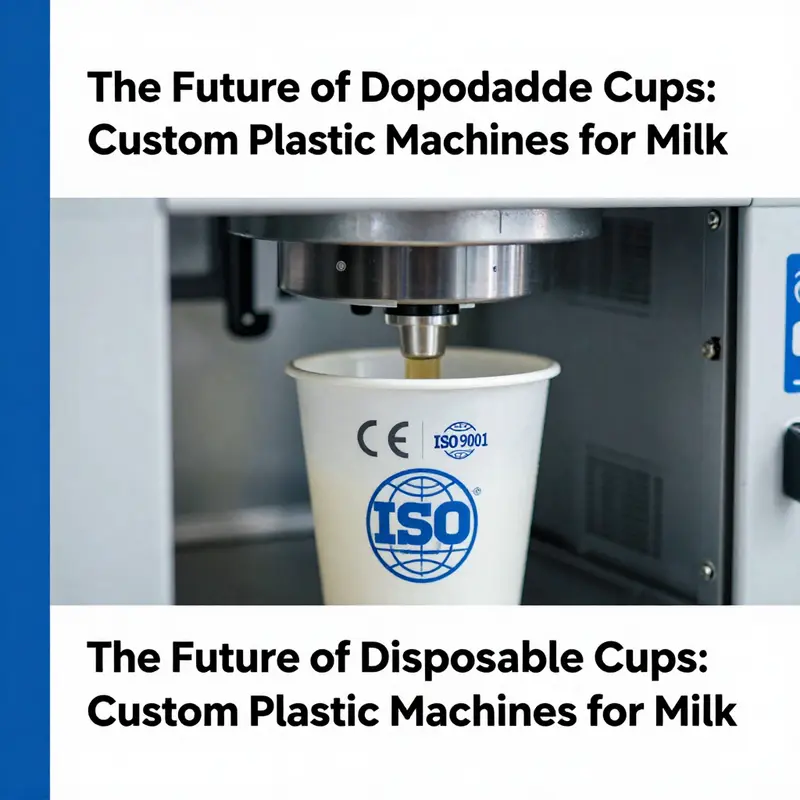
Across the global market for disposable dairy cups, the conversation often centers on speed, efficiency, and cost. Yet beneath the surface of a high-output thermoforming line lies a sophisticated web of standards that dictates whether a machine can reliably produce cups that are safe to touch, safe to drink from, and safe for long-term operation in a factory setting. The chapter you are about to read threads these concerns together, presenting a cohesive landscape where technical capability, compliance frameworks, and practical risk management align to define what a custom cup plastic machine can and should do when tasked with making disposable milk cups. The story begins with a simple but powerful premise: a thermoforming machine heats plastic sheet, forms it against a mold, and yields a blank that becomes a finished cup after trimming, stacking, and sometimes decorating. This basic sequence is not merely a manufacturing choreography; it is a controlled system where material science, engineering design, and quality governance converge to deliver a product that ends up in a consumer’s hands and, ultimately, on a dairy or café table. The choice of material, commonly polypropylene (PP) among others, and the downstream handling of the finished cups, is not incidental. It is a deliberate design decision informed by regulatory expectations and market demands for safety, reliability, and traceability. In this light, quality standards and certifications become the invisible backbone of the production line. They are not rigid gatekeepers that stifle ingenuity; rather, they are a language that communicates capability, risk awareness, and continual improvement to customers across borders. The most prominent standards touching on these machines are CE and ISO 9001. The CE mark, a familiar symbol on European-market machinery, is not merely a badge of compliance. It is a declaration that the machine satisfies essential health, safety, and environmental protections tied to its design and intended use. The EU framework behind CE regulation emphasizes risk assessment, protective features, safeguarding interlocks, electrical safety, and the prevention of hazards associated with moving parts. When a custom cup plastic machine carries CE, buyers gain confidence that the equipment has been evaluated against a set of harmonized requirements that facilitate safe operation in diverse production environments. For manufacturers, CE compliance is often the first step in a broader narrative of legitimacy, because it signals to buyers in tightly regulated markets that the equipment can be deployed with a measured expectation of safety and reliability. Beyond the machine’s own safety envelope, the production process must be governed by a robust quality management system. ISO 9001 is the international standard that speaks to a systematic approach across planning, execution, monitoring, and continual improvement. A plant that adheres to ISO 9001 demonstrates that it has defined processes for design and development, supplier management, production controls, and after-sales support. In the context of custom cup production, this translates into reproducible cup quality, traceable change management for tooling and molds, consistent calibration of heating and clamping cycles, and formal mechanisms to address non-conformances. The interplay between CE and ISO 9001 is not a mere checkbox exercise. It is a synergistic relationship that shapes how a machine is specified, how it is manufactured, and how its performance is measured over time. The CE framework ensures that basic safety and environmental aspects are addressed at the product level, while ISO 9001 anchors a broader philosophy of quality across the organization that designs, builds, and services the equipment. A critical nuance often overlooked in discussions of standards is the role of the final cup product in the regulatory ecosystem. Food-contact safety is not solely about the machine’s electrical safety and mechanical reliability; it also concerns the materials used to produce the cups and the methods by which they contact consumables. The QS certification, a more country-centric signal, speaks to food-safety in the supply chain and to the materials used in the cups themselves. In markets where QS is recognized, the emphasis is on ensuring that the plastics chosen for the final cups meet stringent safety requirements for direct contact with food or beverages. This is not an abstract consideration. It is a practical assurance that the PP or other polymers used in the finished product will not pose unacceptable risks to consumer health through migration of additives, improper composition, or contamination during manufacturing. In practice, this means that a machine, even with CE and ISO 9001, still depends on the downstream materials specification and supplier controls. A thoughtful integration of machine certification with material safety assurances is what ultimately delivers a reliable, safe finished cup. It is this integration that explains why reputable suppliers will highlight both machine-level certifications and material certifications in their documentation. For a buyer, the practical implication is clear: the purchase decision encompasses not only the machine’s technical specs and speed but also its alignment with a holistic quality and safety strategy that minimizes risk across the supply chain. As a reader, you may wonder how these standards translate into day-to-day operations on the factory floor. The answer lies in how a line is designed to minimize risk, how processes are monitored, and how deviations are handled. In a CE-certified line, the machine’s risk assessment will typically address potential hazards such as hot surfaces during forming, moving components, pinch points, and electrical safety in control panels. A robust safety plan will include interlocks on access doors, automatic shutoffs for abnormal cycles, and clearly labeled emergency stops. The machine’s design will also reflect environmental considerations—noise limits, energy efficiency, and waste management—so that performance does not come at the expense of worker safety or community impact. On the quality management side, ISO 9001 requires documented processes that cover not just the pre-installation validation and commissioning but also ongoing inspection and testing. For instance, a form-and-trim process may incorporate in-line gauges to verify dimensions, thickness tolerances, and edge quality. The data generated through these checks feeds a feedback loop that informs tooling changes, heating cycle optimization, and mold maintenance. The cumulative effect is a production environment where improvements are not episodic but embedded in daily work. The quality system thus becomes a living map of how the machine behaves under different conditions, how suppliers perform, and how any deviations are traced and resolved. When a customer assesses a custom cup plastic machine, three questions typically surface. First, can the machine consistently produce cups that meet defined dimensional tolerances and surface quality? Second, does the machine include built-in safety features and proven reliability that reduce downtime and protect workers? Third, can the producer demonstrate traceability—both of the machine’s components and of the materials used in the final cups—so that the supply chain remains auditable from incoming plastics to finished cartons? The answers to these questions are typically grounded in the documented certifications and the company’s quality policies. Yet the discussion does not end with certificates hanging on a wall. Real-world compliance requires ongoing vigilance. Regular audits, calibration schedules, and preventive maintenance plans are the practical manifestations of ISO 9001 in action. In addition, CE compliance demands that modifications to the machine, molds, or process parameters undergo appropriate evaluation to ensure continued conformity. For instance, altering the heating temperature profile or the clamping force could affect both safety and product quality. Any such change should be controlled through formal change management, with risk assessments and, if needed, re-verification of the CE scope. The interdependence of machine safety, process quality, and material safety has become a central theme for companies seeking to position themselves in an increasingly regulated and transparent marketplace. This is particularly relevant in markets where end-users demand assurances about how disposable milk cups are produced, from raw film to final product. The certification story also has a practical economic dimension. The widely recognized CE and ISO 9001 marks often signal a certain level of manufacturing discipline that can shorten the path to market, facilitate easier supplier qualification, and reduce the risk premium embedded in product pricing. For buyers, this translates into a smoother integration with existing plants and a more straightforward path to scale when demand grows. From a manufacturer’s perspective, obtaining and maintaining these certifications are not merely bureaucratic hoops; they are strategic assets that support reliability in design, manufacturing, and service. A high-quality machine, backed by a robust QMS, often shows lower downtime, fewer process deviations, and better predictability in performance. In short, quality standards are not abstract ideals; they are practical tools that shape engineering decisions, inform production planning, and foster trust with customers who expect consistent, safe, and compliant cups for their brands. The conversation about standards should also recognize that the regulatory landscape is dynamic. Standards bodies, consumer safety authorities, and industry associations periodically update guidelines to reflect evolving science and market needs. The best-performing suppliers stay ahead by adopting proactive compliance programs that anticipate changes and invest in process improvements before new requirements become mandatory. This proactive posture is especially important for a product category like disposable milk cups, where consumer safety is tightly coupled with both the process and the materials involved. It is worth noting that the broader ecosystem of certifications extends beyond CE and ISO 9001. While these two are central, other marks—where applicable—can strengthen a buyer’s confidence. In some regions, QS is a relevant indicator for food-contact safety, signaling that a cup’s materials were evaluated under recognized national frameworks for safety. Buyers should also pay attention to supplier audits, raw material certificates, and traceability practices that accompany the machine’s deployment. A well-documented supply chain gives customers the assurance that, from sheet to cup to customer’s brand, every step adheres to a coherent safety and quality story. The practical takeaway for engineers and managers is clear: design and operate a custom cup plastic machine with the end-to-end safety and quality lifecycle in mind. This means selecting tools and molds that support consistent forming without introducing risk through overheating or material defects. It means implementing a control system that records process variables, flags out-of-tolerance events, and enables rapid corrective actions. It also means engaging with material suppliers who can provide full material safety data, compliance certificates, and documentation that supports food-contact safety claims. When these elements align, a factory can offer customers not just a machine but a proven capability to produce cups that perform at the expected quality across batches and across time. For teams building a value proposition around a custom thermoforming line, the narrative of compliance becomes a competitive differentiator. It translates into shorter validation cycles for customers, more predictable rollouts of new cup designs, and greater assurance that regulatory obligations will be met as markets expand. In this sense, standards are not constraints but enablers—facilitators of scalable, responsible manufacturing that respects consumer safety and environmental stewardship. As you reflect on the role of quality standards in the life cycle of a disposable milk cup, consider the broader implications for sustainability and corporate responsibility. A machine designed with safety and quality at its core naturally supports waste minimization through precise forming and trimming, reduces downtime through vigilant maintenance, and enables consistent product quality that minimizes returns. These benefits ripple through the supply chain, affecting not just the manufacturer and the customer but also the end consumer who expects a reliable, safe drinking experience. The chapter’s thread also invites a closer look at how internal and external resources reinforce the standard-setting narrative. Internal documentation—risk assessments, operating procedures, calibration logs, and change-control records—becomes the backbone of ongoing compliance. External resources, such as official guidelines from authorities on plastic food contact, provide the outer frame within which the internal processes operate. For readers who wish to explore the regulatory backbone further, an essential external reference is the European Commission’s guidance on plastic food contact, which outlines the conditions under which plastics may safely contact food and beverages: https://ec.europa.eu/food/safety/plasticfoodcontact_en. In practical terms, this external resource serves as a compass for how material safety standards intersect with machine certification. Meanwhile, to illustrate the connected nature of product design, process control, and branding considerations, consider how an end-user might view a complete package: a highly capable custom thermoforming line that delivers uniform cups while meeting stringent safety and quality requirements. The choice to partner with suppliers who can demonstrate CE and ISO 9001 compliance, and who can supply material safety documentation for the cups themselves, signals a mature, risk-aware manufacturing ecosystem. It communicates that the supplier recognizes that a cup’s journey from sheet to sip is not a single step but a chain of checkpoints tied to health, safety, and brand integrity. The value proposition extends beyond regulatory compliance. It encompasses operational excellence, predictable performance, and an alignment with consumer expectations for safe, hygienic, and dependable packaging. In a market where disposable cups feed into fast-paced food service and retail environments, such assurances reduce friction in adoption and scale. The discussion thus closes a circle that begins with a machine’s design and ends with a consumer’s confidence in a brand’s commitment to safety and quality. For readers who want to dig deeper into how these standards translate into real-world practice, a case may be made to explore specific process validation examples, supplier qualification frameworks, and manufacturing-control strategies that align with ISO 9001’s high-level requirements. Such practical explorations can illuminate the concrete steps a plant owner or engineer would take to bring a new cup design to life while maintaining compliance across the production cycle. And while no two production lines are identical, the shared emphasis on CE, ISO 9001, and material-safety certification creates a common language that helps buyers compare offerings and predict long-term performance. In sum, the quality standards and certifications attached to custom cup plastic machines are not abstract milestones. They are a living framework that shapes every decision along the path from design to distribution. They ensure that the equipment is safe and that the cups produced are safe for their intended use. They guard against variability and elevate reliability. They create a bridge between the technical prowess of thermoforming and the assurance that a consumer can sip confidently from a disposable cup, knowing that every hand that touched the process—from engineers to operators to material suppliers—was guided by a shared commitment to safety, quality, and responsibility. The end result is a more robust manufacturing ecosystem, where standards propel not just compliance but ongoing improvement, and where the ultimate measure of success is the simple, universal act of enjoying a cup—without question, without hesitation, and with trust in the path from machine to palate. As you navigate future chapters, carry this thread: the best custom cup plastic machines are defined as much by their adherence to safety and quality standards as by their regional certifications and performance metrics. It is this integrated approach—the fusion of machine capability, material safety, and governance—that will continue to drive the industry forward while protecting the consumer and strengthening the supply chain. And for readers seeking a tangible example of how such standards translate into branding and product consistency, the following resource offers insight into the broader world of disposable cup design and packaging that can accompany a compliant manufacturing setup: disposable-takeaway-paper-cup-custom-logo-kraft-coffee-cup-with-lid. The combination of material choice, process control, and transparent certification creates not only cups that perform but a manufacturing story that earns market trust. */
Final thoughts
Understanding the value of custom cup plastic machines for disposable milk cups is pivotal for businesses aiming to enhance service efficiency and customization. With the right machine, businesses in the beverage industry can produce high-quality, tailored products that meet the diverse needs of their customers. Coupled with compliance to stringent quality standards and insights into market trends, investing in these machines is not just a strategic advantage; it’s a necessity for staying competitive. The demand for unique, eco-friendly, and efficient solutions is growing, and the time to act is now.