
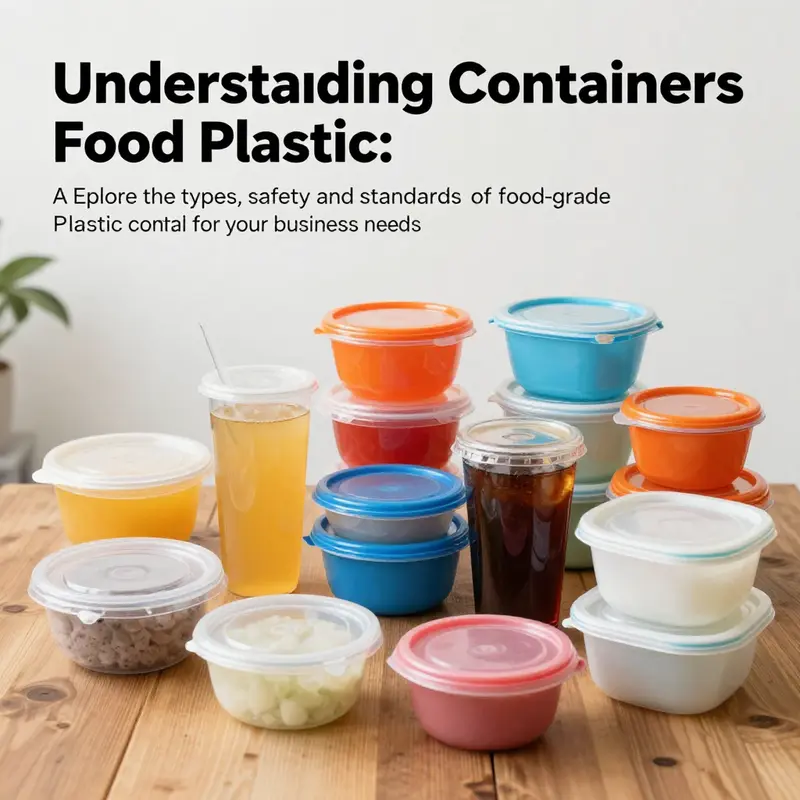
As businesses in the beverage, catering, and foodservice sectors, selecting the right food plastic containers is crucial not only for operational efficiency but also for ensuring customer safety and satisfaction. This article dissects the various types of plastics used in food containers, highlighting their properties vital for the food industry. We delve into the associated safety risks, such as chemical leaching and material degradation, followed by essential industrial applications and compliance with stringent safety standards. Ultimately, this comprehensive overview equips you with the knowledge to make informed decisions when choosing the right containers for your products.
null
null
When Plastics Meet the Plate: Unpacking Safety, Leaching, and Degradation in Food Containers
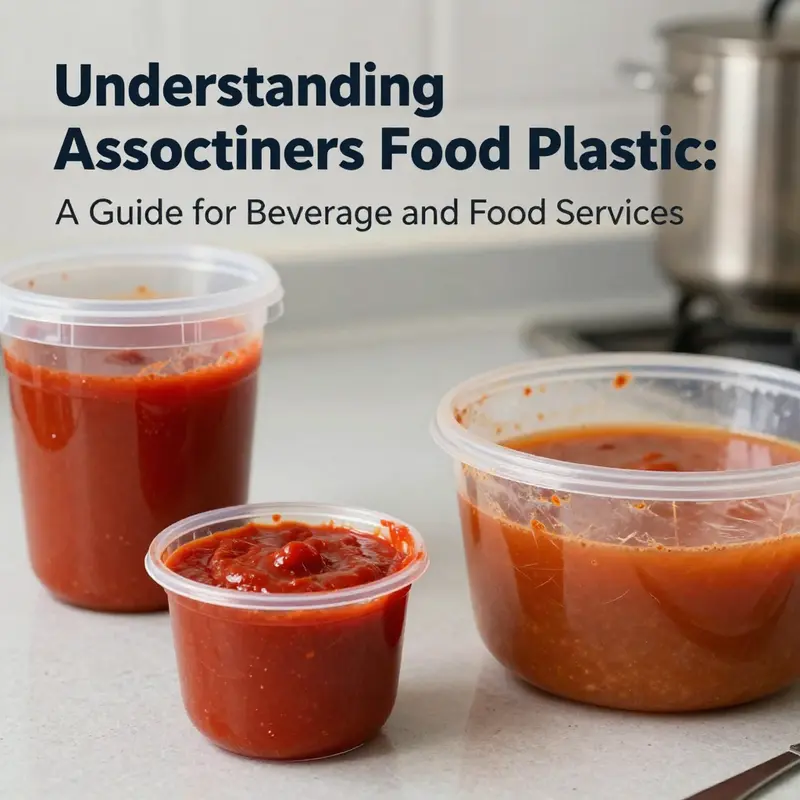
Food containers made from plastic touch a broad spectrum of daily life, from the quick grab of a yogurt cup to the bulk storage in a restaurant walk-in. They promise convenience, preserve freshness, and often reduce waste with reusable designs. Yet beneath these practical advantages lies a complex web of science and regulation that governs how these materials interact with food over time. To understand the safety and risks of containers food plastic, it helps to consider the materials, the conditions they endure, and the subtle ways in which time and use can alter their behavior. This is not a argument about absolutes but a careful look at where migration can occur, what compounds may migrate, and how those migrations are shaped by heat, acidity, and duration. It is also a call to recognize that safety standards evolve as new evidence emerges and as industry practice shifts toward more sustainable choices and better risk management. The discussion that follows threads together the chemistry of plastics, the physics of storage and reheating, and the practical realities of kitchens that depend on reliable packaging to deliver meals with safety, integrity, and taste intact. It also highlights the tension between convenience and precaution, a tension that many users encounter in homes, schools, hospitals, and commercial operations every day. In short, the story of containers food plastic is as much about how we store food as it is about how materials are engineered to perform under specific conditions and how those conditions shape possible outcomes for public health and the environment.
To begin with, the decision to use plastic for food contact is guided by a balance of performance attributes. Plastics chosen for food packaging are engineered for chemical resistance, durability, temperature tolerance, and recyclability. The choices range from flexible polyethylene and thermally stable polypropylene to rigid polystyrene and clear, lightweight polyethylene terephthalate. Each of these polymers carries a set of characteristics that lend themselves to particular applications. Polyethylene, for instance, is prized for its chemical resistance and flexibility, making it common in bags, wraps, and some containers. Polypropylene stands out for heat resistance, which explains its prevalence in microwave safe containers and reusable storage. Polystyrene offers rigidity and clarity, which makes it a favorite for disposable takeout containers, though it has notable limitations when exposed to high heat. PET, known for its light weight and recyclability, is a staple in single use beverage bottles and select food containers, but it is generally not recommended for repeated use or hot foods. The spectrum extends to specialty materials like CPET, which combines the clarity of PET with enhanced heat resistance to withstand temperatures suitable for prepared meals. Biobased options such as PLA appear in compostable packaging, bringing renewable resource claims into the mix, though with caveats about heat tolerance and suitability for long term storage.
Within this landscape, the safety of plastic packaging is governed by both intrinsic material properties and regulatory assessments. National and international authorities scrutinize what compounds may migrate into food under real world conditions. The food contact materials guidelines encourage manufacturers to demonstrate that migrations stay within established limits during the intended use. Those standards cover a broad range of scenarios, from frozen storage to reheating, and from short term shopping trips to extended shelf life. The FDA in the United States and EFSA in Europe maintain frameworks that require testing and compliance documentation. These regulatory bodies underscore that material selection is not universal; it hinges on how a product will be used, what foods it will contact, and whether the appropriate barriers and stabilizers have been validated for safety. In practice this means that a container designed for freezing may differ in composition and performance from one intended for hot soups, and a storage box used in a hospital kitchen will meet different criteria than a consumer grade takeout product. The regulatory conversation, therefore, is as much about the intended use as it is about the material itself.
A central concern in the safety conversation is chemical leaching. Additives and residual monomers embedded in plastics can migrate into food under certain circumstances. Heat exposure is one of the most influential drivers of this migration. When containers are microwaved, washed at high temperatures, or subjected to repeated heating cycles, the plastic matrix experiences stress and microstructural changes. This creates more pathways for substances to migrate. The types of substances that migrate can include bisphenols such as BPA, BPS, and BPF, which have been linked to endocrine disruption in some studies. Phthalates, used as plasticizers in various polymers, are another class of compounds that may migrate under certain conditions. Even plastics marketed as BPA free may carry other bisphenols or alternative additives that exhibit similar biological effects. The broader takeaway is that labeling alone does not guarantee total safety in all contexts; it is a signal that helps consumers and professionals evaluate risk in light of the intended use and the product’s life history.
Another dimension of risk arises from material degradation after repeated use. A plastic container that has been scratched, clouded, or warped through dishwasher cycles and microwaving may not perform as it did when new. Surface damage increases the surface area where chemicals can migrate, especially if the container holds acidic ingredients such as tomato sauces or hot liquids. The degradation process is gradual and cumulative, so a container that seems perfectly fine after a few uses can become more vulnerable to leaching after many cycles. This is why guidance about reuse often emphasizes visual inspection and the potential benefits of switching to less reactive materials for long term or high heat storage. The degradation story also intersects with environmental considerations, because repeated use prompts questions about durability, end of life, and the relative benefits of recycling versus reuse, given the energy and chemical footprints involved in processing plastics at scale.
In discussing the spectrum of plastics, it is useful to map some of the typical materials to their practical strengths and cautions. Polyethylene is flexible and resistant to many chemicals, making it common for wraps and some containers. It is generally regarded as safe for food contact in many uses, but its performance profile is not identical across all grades. Polypropylene is widely used in both household and commercial settings because it tolerates heat well and maintains its shape under repeated sterilization. This makes it a favorite for microwave safe containers and durable storage. Polystyrene is often chosen for its rigidity and clarity, features that appeal to disposable takeaway settings. However, its heat limits and propensity to deform or release styrene at high temperatures constrain its use with hot foods. PET is lightweight and recyclable, offering excellent clarity for retail display, but it is not intended for repeated use with hot foods, which can promote material fatigue and migration. PLA introduces a renewable dimension to packaging but carries heat tolerance limitations that restrict its suitability for hot or long contact with food. PVC remains less common in direct food contact applications in many regions due to concerns about additives and potential health risks. A high performance alternative like CPET is designed to meet demanding conditions, blending PET like clarity with improved heat resistance suitable for ready to eat meals and oven ready packaging. On the industrial side, materials such as PC have seen reduced use in new designs due to BPA related concerns, though they still appear in legacy equipment.
The practical implication is that the raw material choice matters, but the life history of the container matters even more. A container that is new and used under moderate conditions will behave differently from one that has seen repeated microwaving, aggressive dishwashing, and long term storage with acidic contents. This is why best practice recommendations often stress a combination of selecting the right material for the job, avoiding damage by inspecting containers regularly, and recognizing when to transition to safer or more inert options for certain uses. In many households this translates into reserving glass or stainless steel for reheating and storing hot items, while using plastic primarily for short term, cold or mildly warm storage. The idea is not to demonize plastic outright but to use it with awareness, to minimize exposure during the worst-case scenarios, and to embrace alternatives where the risk profile is higher.
From a consumer behavior perspective, it is helpful to remember that a lot of risk reduction comes from simple habits. Avoid heating in containers that are scratched, cloudy, or warped. Do not reuse single use takeout containers for hot foods, and avoid storing highly acidic or fatty foods in containers not rated for long term contact with those substances. When in doubt, opting for glass or stainless steel can reduce the chance of leaching during reheating and long term storage. Reading labels for safety certifications and microwave compatibility can also guide decisions, but it is important to interpret those labels in the context of actual use. A label that states microwave safe does not guarantee indefinite safe performance for all food matrices or for extended heating times. The broader safety picture includes how the container was manufactured, what additives were used, and how the material interacts with different foods under diverse conditions.
In parallel with these considerations, the packaging industry has also evolved toward more sustainable and safer packaging paradigms. The push toward reuse and recycling drives interest in materials that balance performance with environmental impact. Some food service operations favor modular, durable containers that withstand repeated cleaning and sterilization, while others explore alternatives to conventional plastics such as compostable or recyclable options that reduce waste without compromising safety. The tradeoffs in this shift are not trivial. Recyclability, end of life, and the energy footprint of recycling or composting programs all influence the overall environmental burden of packaging choices. In commercial kitchens and institutional settings, the decision matrix becomes even more complex, as factors like hygiene, ease of handling, portion control, and supply chain logistics intersect with safety considerations. In these spaces, the 650 series of common storage containers has long been valued for its space efficiency and versatility, with multiple compartments and insertable dividers that support portion control and meal prep. Materials in this category typically include HDPE for impact resistance and chemical durability, PP for thermal stability, and occasionally PC or CPET variants for specialty uses. The design focus is on smooth interior surfaces, welded joints, and sometimes UV resistance to protect the contents when containers are stored outdoors or under bright light. These details matter because the way a container is built can influence not just hygiene but the integrity of the user experience in a professional kitchen where speed and accuracy are essential. Nevertheless, even these well engineered systems must be used with an eye toward safety, as repeated use and aggressive cleaning can still degrade performance over time.
Despite the appeal of plastic as a versatile packaging solution, safety and risk awareness lead many users to consider safer alternatives. Glass emerges in this conversation as a particularly inert option. Its chemical structure does not readily release substances into food, and it maintains its integrity across many cycles of heating and cooling. Glass paired with metal or silicone lids can deliver durable performance for meal prep, freezing, and reheating without the same concerns about leaching. Stainless steel also offers robust heat tolerance and excellent recyclability, and many households adopt steel containers for soups and leftovers that require frequent reheating. The tradeoffs here, of course, are weight, breakability, and cost. For institutional settings where large volumes, strict hygiene standards, and predictable cycles of use dominate, the decision often balances the safety benefits with logistical realities such as stackability, transport, and cleanability. In this context, a shift toward glass or metal must be weighed against the needs of the operation and the expectations of customers or patients who rely on safe and convenient packaging.
One practical takeaway for readers who want to translate this understanding into everyday habits is to treat plastic containers with an appraisal of risk and a plan for safe use. Start by inspecting containers for scratches, clouding, or warping, and retire any container that shows signs of wear. Refrain from heating acidic or fatty foods in containers not designed for such use, and whenever possible, transfer hot contents into glass or ceramic vessels before reheating. When in doubt about a container label, regard it as a guide rather than an oath of safety and consider safer alternatives for high temperature use. And while communicating toward safer choices, consider the potential of paper based and compostable packaging as an option in contexts where durability and heat tolerance are not the primary requirements. The broader story here is not static; it weaves together advances in polymer chemistry, evolving regulatory expectations, and a growing public awareness of how everyday choices affect health and the environment. In other words, the container you reach for at the store or in the kitchen is not a neutral object but a material system with a history, a purpose, and a potential to influence outcomes in ways that are sometimes visible and sometimes subtle.
For readers who want to explore a concrete alternative path in packaging, many households and operations experiment with paper based bowls and related pulp products that offer different performance profiles and a different risk calculus. A representative option is available for viewing in product collections that emphasize disposable kraft paper bowls and related take out packaging. For a sense of how such options are described and positioned, you can explore the following example: disposable-700ml kraft paper bowl take out octagonal rectangle paper bowl. This kind of packaging illustrates a broader shift toward materials sourced from renewable fibers with a design emphasis on usability and waste reduction, even as such options face their own challenges in terms of moisture resistance, leak control, and durability under hot or fatty foods. Taking a moment to compare this approach with conventional plastics helps illuminate how decisions in packaging design reflect tradeoffs among safety, cost, convenience, and environmental impact. It also signals how the market is responding to consumer interest in safer, recyclable, and more transparent packaging narratives. In this sense, the packaging landscape is not only about compliance but about choices that align with evolving expectations around health, sustainability, and responsible stewardship of resources.
The external dimension of safety, including regulatory and scientific scrutiny, is enriched by ongoing research that probes the complex interactions between plastics and food. A robust body of work has demonstrated that plastics are not completely inert in contact with food, especially under conditions of heat and prolonged contact. A 2024 review published in PMC, for instance, consolidates evidence that plastics can leach metals and a range of organic compounds into stored food when subjected to elevated temperatures or extended contact. This finding reinforces the principle that plastic materials, even when labeled food contact safe, operate within a dynamic system where exposure depends on usage patterns. It serves as a reminder that safety is an ongoing process, not a one time guarantee, and it invites continued attention to how containers are used in real life settings. For readers seeking direct access to the scientific synthesis, the full study is available online at the NIH repository: https://www.ncbi.nlm.nih.gov/pmc/articles/PMC11573948/
In sum, the relationship between containers and food plastic is a study in nuance rather than a simple binary choice between safe and unsafe. It requires a careful appraisal of material chemistry, usage scenarios, and the evolving science that underpins safety standards. It invites consumers to translate laboratory findings into practical habits that reduce exposure where the risk is highest, while recognizing the realities of daily life that demand convenience and reliability. It also invites designers and manufacturers to continue refining materials and processes so that the packaging that travels from kitchen to table does so with greater protection for health and the environment. The chapter that follows will build on these ideas, linking them to broader themes of sustainability, regulatory evolution, and the practicalities of making informed packaging decisions in a world where the Plate is not simply a plate but a stage for material science in everyday life.
External resource for further reading (external link): https://www.ncbi.nlm.nih.gov/pmc/articles/PMC11573948/
Stability, Safety, and the Seal of Compliance: Standards in Industrial Food-Container Plastics
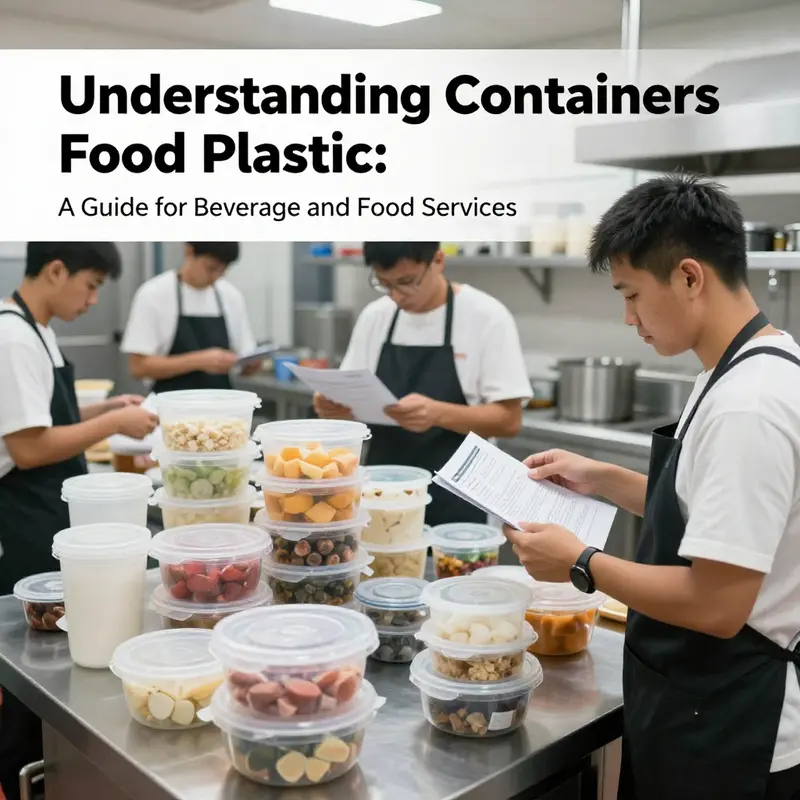
The industrial ecosystem for food-grade plastic containers sits at the intersection of material science, regulatory fidelity, and operational discipline. In large-scale food systems—from processing lines to distribution networks—polymer choice is a formal commitment to safety, traceability, and sustainability. This chapter traces the journey from resin selection through finished container integrity, showing how standards shape everyday practice in factories, labs, and warehouses. The result is a practical view of materials in service to food safety, where every product touches a tightly governed pipeline of compatibility testing, migration checks, and documented provenance. The outcome is a balance between strong, predictable performance and the realities of high-volume production, quality assurance, and regulatory compliance.
At the material level, the workhorse polymers define a familiar toolkit. HDPE offers chemical resistance and impact resilience, making it a durable choice for containers that experience repeated handling, light heating, and contact with a broad range of foods. It is common for primary containers that undergo freeze-thaw cycles or brief microwave exposure, with stability under stress helping minimize leaching and structural damage. It is consistent with regulatory expectations in major markets. In the United States, many HDPE food-contact applications follow FDA-related guidance and restrictions on migration, while in Europe HDPE aligns with Regulation (EC) No 1935/2004 and related measures. Practically, HDPE provides a reliable baseline for cold-to-warm storage, with cautions about long-term light exposure or acidic contents that can alter surface characteristics over time.
Polypropylene, PP, complements HDPE with higher heat tolerance and stiffness. It is favored for hot-fill operations and microwave-ready products, translating into durable trays, tubs, and process components. PP’s clarity can aid automated inspection in production lines, and its chemical resistance supports repeat sanitization cycles. From a risk management perspective, PP must be demonstrated to be stable under intended use, including repeated sterilization if applicable, and migration studies under elevated temperatures to verify safe performance. The regulatory frame for PP follows general risk-management principles: specify intended use, validate migration limits, and maintain auditable records that support product safety and process control.
Polycarbonate has offered strength, clarity, and rigidity, which supported certain reusable containers and equipment in plant environments. Public health concerns around bisphenol A have driven shifts toward BPA-free PC or alternative materials. PC remains in select applications where compatibility with existing systems is critical, but direct food-contact uses are increasingly scrutinized. This shift illustrates a broader pattern: standards steer material ecosystems by guiding phased transitions away from risky components toward safer, well-characterized substitutes. The outcome is an ongoing design cycle where teams anticipate regulatory evolutions and stock materials with robust safety profiles across diverse foods and processes.
Beyond the core polymers, CPET (crystallized PET) provides heat resistance in microwaveable and oven-safe disposables. CPET expands packaging options for ready-to-eat meals while meeting safety expectations during brief reheating. The regulatory stance mirrors other plastics: define intended use, confirm migration remains within thresholds for designated foods, and verify compatibility with processing temperatures. For manufacturers, CPET broadens the toolbox to meet performance and sustainability goals in high-turnover supply chains.
PLA and other bio-based options surface in contexts prioritizing end-of-life stewardship. PLA offers renewable sourcing and compostable pathways, but heat tolerance and long-term stability in contact with various foods can be limited. As a result, PLA is typically deployed in markets where processing conditions suit its profile and where composting infrastructure is accessible. The trade-offs between performance, sustainability, and end-of-life realities drive targeted use rather than universal substitution.
In some segments, vinyl-based formulations remain for regulated functions, though their use is more restricted given additive migration concerns. The overarching guideline remains: material selection must be aligned with explicit, documented risk assessments for the intended use, supported by regulatory proofs and validated testing. Every container design, lid, and seal benefits from a documented material declaration, a clear performance envelope, and a traceable history from resin to finished product. Traceability is a core element of GMP and HACCP frameworks that underpin safe food handling across complex supply chains.
Quality control hinges on analytical and organizational practices. On the analytical side, GC-MS and HPLC are standard tools for detecting trace chemicals and confirming migration limits. Non-targeted screening complements targeted analyses to catch unexpected compounds. Organizationally, manufacturers maintain rigorous traceability; each batch carries a unique identifier, and documentation travels with the product to support recalls, safety verifications, and continuous improvement.
The regulatory stage is active and evolving. In the United States, the FDA’s food-contact regulations anchor permissible substances and migration limits, while in the European Union Regulation 1935/2004 establishes a general framework complemented by material-specific measures. In recent years, more explicit rules have emerged in specific regulatory notes and guidance that emphasize material-by-material assessments, testing protocols, and labeling to guide manufacturers, retailers, and consumers. This lifecycle discipline starts with procurement and ends with consumer safety assurances on packaging and performance, including extractables and migrants studies that quantify real-world migration. The resulting data feed risk assessments and, when necessary, formulation updates.
In practice, a sound quality program combines robust analytical methods with strong documentation. The design of a compliant packaging ecosystem emphasizes clean interior surfaces to reduce bacterial adhesion, avoidance of seams prone to leakage, and consideration of UV exposure for long-term stability in cold and ambient storage. Sustainability discussions increasingly intersect with design choices, including recycled-content feedstocks and recyclable packaging formats implemented without compromising microbiological safety or process reliability. A risk-based verification approach anchors decision making: validate not only what a material can tolerate in theory but what it actually endures in real production environments.
A broader lifecycle view shows how suppliers, processors, and regulators converge on shared objectives: minimize risk, maximize compatibility, and enable consistent product quality across vast networks. Environmental management standards, including ISO 14001, guide sustainable production footprints and waste-reduction programs that do not compromise safety or performance. A facility that demonstrates strong environmental governance alongside rigorous testing and regulatory compliance earns trust across the supply chain and with inspectors and consumers alike.
In practice, the industry learns from audits, test results, and field experience. Tensions exist between the push for high efficiency and the imperative to maintain safety margins across diverse foods and processing contexts. That tension spurs innovation: new polymer blends, improved sterilization compatibility, and more transparent supply chains that illuminate the provenance of every container. The result is a resilient packaging ecosystem where performance, safety, and environmental responsibility reinforce one another.
The practical takeaway is simple: material selection should be guided by clearly defined use cases and tested against the exact foods and processes involved. Compliance is a living discipline, not a checkbox. It requires consistent testing, careful documentation, and proactive risk management. Quality control is an ongoing loop that starts with supplier qualification and ends with customer confidence. When a facility can demonstrate stable migration profiles, durable mechanical performance, and transparent traceability, it gains the credibility to operate at scale across commissaries, central kitchens, and multinational manufacturing networks. Standards function as compass and safeguard, guiding safer containers and a steady road to market for products moving millions of meals.
For readers seeking a broader regulatory panorama and material-specific guidance, an external reference offers a structured overview of the landscape and common testing approaches. This material complements practical case studies on packaging design and sustainability, showing how standards translate into everyday engineering decisions in large-scale food packaging ecosystems.
Final thoughts
Selecting the right food plastic containers is not merely about convenience; it’s an essential aspect of operational safety and quality assurance in the foodservice and beverage industries. By understanding the types of plastics and their properties, recognizing the risks associated with material degradation, and ensuring compliance with industry standards, businesses can make informed decisions. With this knowledge, beverage chains, food trucks, and catering services can optimize their packaging choices, enhance customer satisfaction, and ultimately contribute to a responsible and sustainable food industry.