
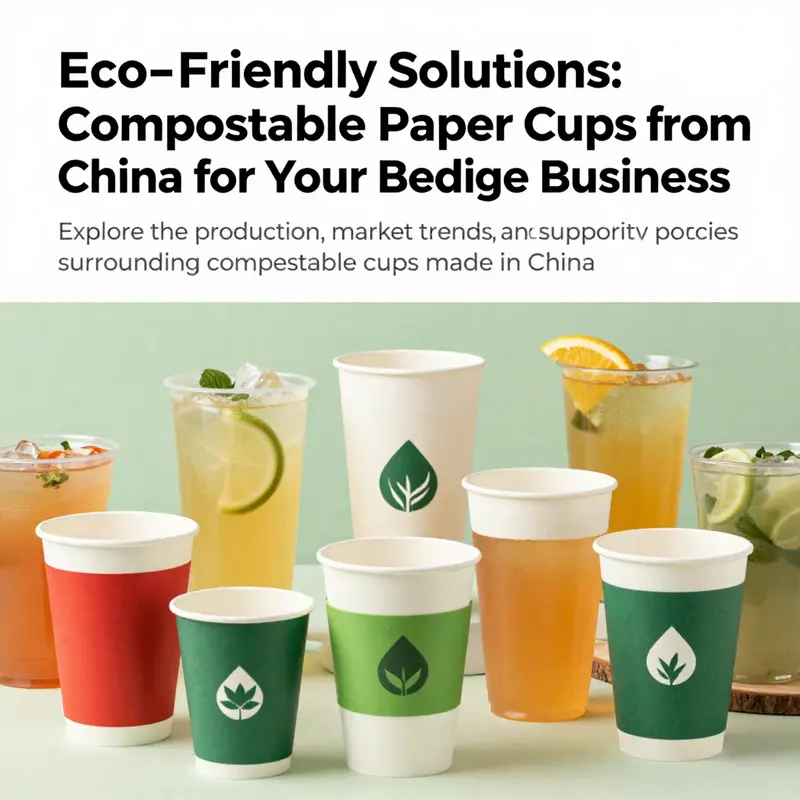
With the increasing demand for sustainable products, compostable paper cups produced in China are gaining popularity among bubble tea shops, beverage chains, restaurants, food trucks, catering services, event planners, and corporate procurement teams. Made from eco-friendly materials such as PLA, bagasse, and bamboo pulp, these cups are not just biodegradable; they also meet international environmental standards. In the following chapters, we will delve deep into the production and environmental standards of these cups, the market trends shaping their supply chain dynamics, and the supportive government policies that are facilitating their growth in China. This comprehensive overview will provide valuable insights into how adopting these eco-friendly cups can align with your business’s sustainability goals while catering to your clientele’s needs.
null
null
Green Currents on the Belt: How China Shapes the Global Market for Compostable Paper Cups
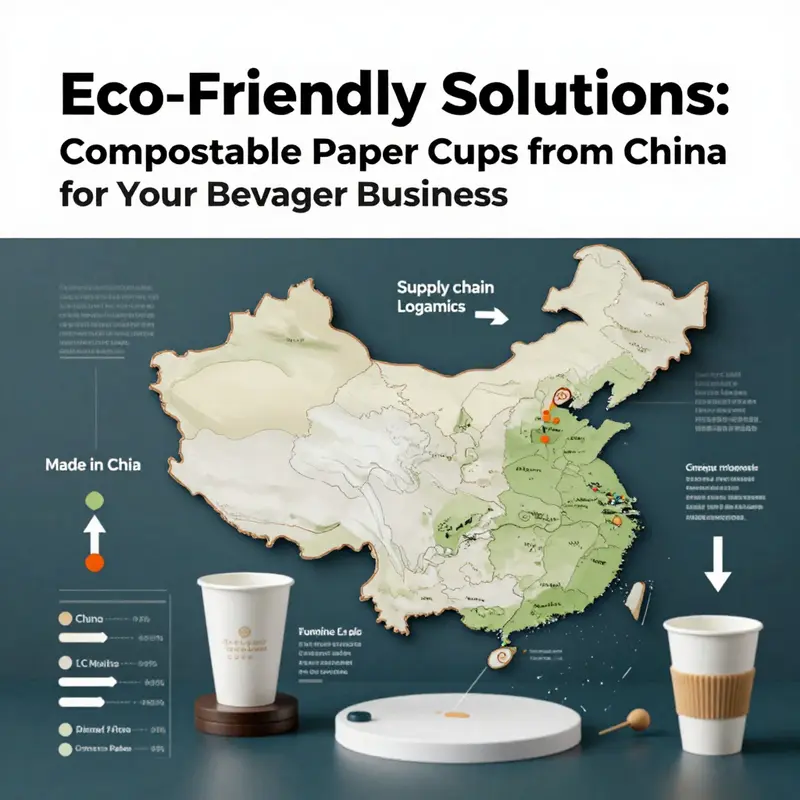
A market that began as a narrow niche has grown into a global conversation about sustainable packaging and cross-border supply chains. This chapter traces a single thread: how policy, industry capability, and demand converge in China to create an integrated ecosystem for compostable paper cups. It is not a tale of small improvements; it is a story of scale, coordination, and the willingness to align manufacturing with environmental goals. The result is a dependable supply chain, broad customization, and a rate of innovation that helps buyers meet sustainability targets while maintaining delivery discipline.
At the core is the material mix that defines compostable cups in the Chinese system. PLA coatings, bagasse fiber, bamboo pulp, and wood pulp offer a spectrum of performance from barrier protection to heat tolerance. PLA-coated cups bring a compostable polymer layer that can meet end-of-life expectations in many markets. Bagasse provides light weight and cost advantages, while bamboo pulp adds texture and strength. Together these materials enable cups for hot and cold beverages, with double-wall or single-wall designs that suit cafes, institutions, and programs with strict sustainability criteria.
Geography matters. Coastal provinces anchor capacity by linking ports to dense networks of upstream suppliers, converters, and packaging integrators. Guangdong, Zhejiang, and parts of Anhui are not just factory clusters; they are ecosystems that shorten lead times, streamline inbound and outbound logistics, and enable rapid scale-up for large campaigns. The scale also supports a range of specifications, from eight-ounce cups to larger 16 or 22-ounce variants, while maintaining print readiness for branding and certifications.
Policy and incentives quietly reinforce green manufacturing. Energy advantages, cleaner production incentives, and a framework that rewards efficiency and circularity create a favorable environment for R&D, process improvement, and supplier qualification. For buyers, this translates into predictable pricing, traceability, and a clear path to meet procurement standards across multiple markets.
Digital platforms complete the picture. Verified suppliers, real-time stock data, and transparent catalogs reduce risk and speed decision-making. Buyers can sample materials, test coatings, and compare insulation options while defining branding and customization needs. The ability to co-create with suppliers—adjusting wall thickness, coatings, and lid compatibility—turns procurement into a collaborative product development exercise.
The market corridors of North America, Europe, and parts of Southeast Asia remain the primary export destinations, driven by strict plastic-use policies and rising consumer expectations. Chinese manufacturers respond with end-to-end solutions that address not only the cup but packaging, testing, and documentation that demonstrate compliance and end-of-life performance.
Looking ahead, continued material innovation, more efficient coatings, and smarter packaging design will shape the next wave of adoption. Brands will seek partners that offer credible environmental stewardship, robust traceability, and the capacity to scale with confidence across markets. The Chinese ecosystem, when aligned with buyer needs, can translate sustainability into a scalable, economically viable reality for a broad range of beverage programs.
Policy Currents and Green Coatings: Charting China’s Rise in Compostable Paper Cups
Policy Currents and Green Coatings: Charting China’s Rise in Compostable Paper Cups
Across the landscape of modern packaging, China stands at a confluence of policy ambition, manufacturing scale, and evolving consumer expectations. The rise of compostable paper cups in China is not a single technological breakthrough or a mere market fad; it is the outcome of a deliberate governance framework that aligns environmental protection with industrial capability. The chapter that follows threads these strands together, tracing how government drives, technical innovation, and market dynamics interact to reshape the everyday container for coffee, cold beverages, and desserts. It is a story of policy as a catalyst, of coating chemistry as a precision instrument, and of a supply chain that has learned to turn waste into opportunity while ensuring safety and quality at scale.
To begin, consider the overarching policy architecture that frames every decision in the sector. At the highest level, national plans for environmental protection and carbon reduction set two quiet but persistent objectives: decarbonization of heavy and light industry and a shift toward circular economic practices. The paper and packaging industries, which include compostable cups, are expected to build green production systems that minimize pollution, optimize resource use, and extend the lifecycle of materials through recycling or composting where feasible. These policy directions do more than encourage greener products; they create a market signal that prioritizes clean operations, efficient energy use, and waste minimization. In practice, this translates into incentives for investment in energy-efficient machinery, cleaner inputs, and rigorous lifecycle thinking.
One of the most consequential policy levers is the nationwide drive to restrict plastic use in the catering sector. The broad push to ban or restrict plastics, and to promote biodegradable alternatives, has accelerated demand for compostable paper cups as a practical substitute for single-use plastic cups. This is not a simple substitution; it is a transformation of procurement and product design. Cities and regions have introduced regulations that favor paper-based materials with water-based barrier coatings, ensuring that the cups are both recyclable and compostable where local facilities exist. The combination of a legal framework and an operational pathway—where packaging can be collected, processed, and returned to a circular loop—has a powerful influence on what manufacturers design, how they coat and seal, and which materials they select as feedstock.
Technological innovation is the other half of the coin. In the policy arena, governments do not merely set targets; they actively promote and de-risk the research and development that makes greener cups practical. Industry players in this space have pursued coating technologies that improve barrier properties for hot and cold beverages while preserving recyclability and food safety. Water-based coatings, in particular, have gained emphasis as a means to reduce reliance on solvent-based systems and to simplify end-of-life processing. The strategic aim is to enable a coating that protects the cup from leaks and grease, keeps beverages at the right temperature, and still allows the cup to be diverted into recycling streams or composting channels where available. This is a nuanced engineering challenge: the coating must be food-safe, non-toxic, durable enough for use, and compatible with downstream processing—requirements that often pull in different directions. Through collaboration among research institutes, equipment manufacturers, and packaging producers, a pathway has emerged to balance performance with environmental responsibility.
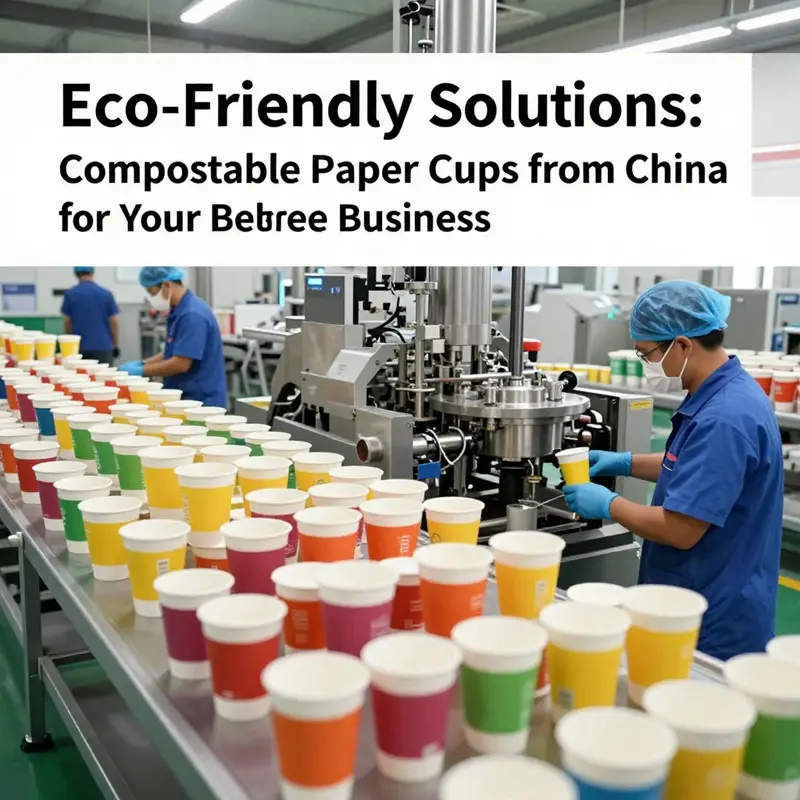
Alongside coating innovations, policy nudges have encouraged a broader upgrade of the production ecosystem. Fully automatic cup forming lines and related automation technologies are no longer luxury capabilities; they are increasingly a baseline for high-volume production. The logic is simple: higher throughput, tighter process control, and lower waste per unit. When coupled with green production incentives—such as tax breaks, subsidies for R&D, and recognition schemes for green-certified products—the financial calculus for upgrading equipment becomes favorable for manufacturers. In practice, the result is a production landscape where modern lines can consistently produce cups with a vegetarian-friendly PLA-based or bio-based barrier and a compostability profile that aligns with local waste management capabilities. This is not only about raw materials or coatings; it is about an integrated system that coordinates farming or forestry residues, pulping processes, coating chemistries, conversion lines, and end-of-life streams.
Regionally, the manufacturing clusters that have emerged along coastal provinces demonstrate how policy and economics converge. The combination of proximity to raw materials, access to energy and water infrastructure, and the capacity to move finished goods swiftly to domestic and export markets has created a favorable environment for compostable cup production. Manufacturers benefit from a dense ecosystem of suppliers, service providers, and quality-control networks that can scale as demand grows. The cascade of benefits reverberates back through the value chain: faster lead times for buyers, more predictable supply, and improved resilience against shocks in raw material markets. A robust domestic market for sustainable packaging further reinforces this dynamic, as the catering and food delivery sectors expand rapidly. When consumption data point to a catering market in the trillions of renminbi and a booming online-delivery segment, the incentive to invest in cleaner packaging becomes not only sensible but essential for competitive positioning.
The policy environment also seeks to standardize and assess the environmental impact of packaging across its life cycle. Standards and certification programs are being designed to evaluate not only the safety and performance of cups but also their environmental footprints from cradle to grave. In practice, this means more transparent information for buyers about material composition, recyclability, end-of-life options, and the energy use embedded in production. The emphasis on lifecycle thinking helps ensure that a cup’s “green” claim is not merely about a single attribute such as compostability, but about the broader system—how cups are produced, used, collected, processed, and, where possible, reintegrated into new products.
Market dynamics have also intensified the alignment between policy and practice through demand creation. The scale of China’s catering market and the growth trajectory of online food delivery create a powerful pull for sustainable packaging. As more consumers order beverages and meals in single-use formats, the emphasis falls on packaging that can be responsibly disposed of. In this environment, compostable cups become less a niche offering and more a standard component of packaging portfolios. The result is a virtuous circle: policy pushes suppliers toward greener practices, which in turn makes sustainable options more accessible and affordable for buyers, while consumer expectations exert pressure on the value chain to maintain quality and reliability.
From a governance perspective, then, the story of compostable cups is a narrative of alignment. Policy aims to reduce plastic pollution and lower carbon emissions, while industry responds with technologies and processes that deliver safer products at scale. The cooperation among regulators, manufacturers, and researchers creates an ecosystem in which green production is not a marginal benefit but a core capability. This is reflected in the everyday choices of a consumer who picks a cup for a hot coffee or a cold beverage, often without noticing the policy signals that helped shape that choice. It is also evident in procurement decisions by vendors and distributors who seek stability and predictability in supply, given the long lifecycles and the capital-intensive nature of modern cup production.
Yet this transformation is not without tensions. Standardization remains a work in progress. The push toward biodegradable and compostable solutions must contend with the varying capabilities of municipal waste systems across regions. Some areas are well-equipped to process compostable cups, while others lack dedicated facilities or program infrastructure. In such contexts, producers and policymakers must be pragmatic, designing products that maximize recyclability where possible and compostability where facilities exist. This pragmatic approach often means offering a range of material options and coating systems, so buyers can select products that suit their local waste streams. It also entails ongoing investments in education and collaboration with local authorities to expand the network of accepted materials and to improve the efficiency of sorting and processing.
The interplay of policy, technology, and market demand also shapes the international dimension of the story. As global interest in sustainable packaging grows, Chinese manufacturers find themselves positioned to satisfy both domestic demand and export opportunities. The policy framework supports research and development that not only improves cup performance but also reduces material costs and environmental impact. The result is a portfolio of products that can meet diverse regulatory and sustainability requirements across markets. At the same time, the smart use of coatings and barrier technologies helps ensure that cups protect flavor and temperature while meeting stringent safety standards. For buyers, this translates into a more reliable supply chain that can scale with seasonal peaks, promotions, and events that drive beverage consumption. It is a nuance of policy-driven industrial capability that becomes visible in the reliability of a supply chain and the confidence of buyers who must plan long lead times and large orders.
In practical terms, procurers and operators often weigh trade-offs between barrier performance, compostability, and cost. The policy impetus toward greener production pushes suppliers to optimize these variables in concert, rather than in isolation. Material scientists work to refine barrier coatings that perform under heat and humidity, while process engineers tune the coating application to minimize waste and energy use. The financial side—grants, tax incentives, and subsidies—helps offset the upfront costs of upgrading lines and adopting cleaner inputs. In turn, the industry gains a more stable platform for innovation, with room to experiment under the guardrails of safety and environmental stewardship. This is the core of the governance-driven transformation: it is not about dictating the exact material recipe, but about enabling an ecosystem where safe, effective, and environmentally responsible packaging can be produced at scale.
What does this look like in practice for a buyer seeking to source compostable cups in or from China? It means a careful assessment of supplier capabilities, including the compatibility of the coating system with the intended end-of-life pathway, whether recycling streams are present in the customer’s market, and what certifications accompany the product. It means asking about energy intensity and waste management in the production facility, as well as the supply chain’s resilience to material price fluctuations and regulatory shifts. It also means recognizing that the fastest path to compliance with growing consumer expectations often lies in partnerships—between manufacturers, coating specialists, and waste-management networks—that can align incentives across the lifecycle. In such a setting, a buyer is not just selecting a product; they are participating in a system designed to minimize environmental impact while preserving safety, performance, and affordability.
Within this system, a pragmatic approach has emerged that emphasizes regional specialization and collaboration. Coastal clusters have developed deep expertise not only in producing cups but in coordinating with upstream suppliers and downstream processors. The geographic concentration helps streamline logistics, reduces lead times, and strengthens the ability to respond to shifting regulatory signals. It also fosters knowledge-sharing channels that accelerate the diffusion of best practices—from material selection to coating formulation and end-of-life processing. For instance, where a city or region implements a targeted policy to promote water-based coatings, manufacturers in the surrounding area often adapt quickly to meet new standards, while ensuring that the coating’s compatibility with existing machinery remains intact. This dynamic underscores how governance, when designed with flexibility and clarity, can catalyze rapid improvement without sacrificing safety or quality.
At a more human scale, the policy and market dynamics described above translate into real-world benefits: cleaner production facilities, reduced emissions, safer products for consumers, and greater confidence in the sustainability claims that accompany packaging. Workers in mills and coating plants participate in training programs, safety protocols, and continuous improvement processes that align with environmental targets. Buyers enjoy a more predictable supply chain and the assurance that their packaging choices reflect shared commitments to environmental stewardship. And society gains incremental steps toward reducing plastic waste and curbing the carbon footprint of everyday consumption. It is, in a sense, a quiet revolution—one driven not by a single invention but by a coordinated set of choices across policy, industry, and consumer behavior.
For stakeholders who seek concrete, actionable paths forward, the chapter’s lens reveals several guiding principles. First, policy design should continue to reward not only the end product’s performance but also the integrity of its life cycle. Clear, verifiable standards that connect production practices with end-of-life outcomes help buyers and regulators speak a common language. Second, investment in coating technology and sustainable inputs should be encouraged through predictable and targeted incentives, paired with support for the upgrading of production lines. Third, the market should reward flexibility, enabling suppliers to offer a range of materials and designs that fit local waste-management realities while maintaining safety and quality. Finally, cooperation—between researchers, manufacturers, waste-management providers, and regulators—must be prioritized. The goal is not simply greener cups but a more resilient packaging system that can adapt to evolving environmental, social, and economic conditions.
In sum, the rise of compostable paper cups in China is best understood as the product of policy-induced capability, innovation-enabled production, and market-driven demand. This triad has created an ecosystem in which green practices become codified into everyday business, and where small design choices—like a coating that holds liquids or a process that reduces waste—aggregate into meaningful environmental outcomes. As regulations tighten and consumer preferences lean more decisively toward sustainability, the industry’s trajectory suggests that compostable cups will move from a policy-driven niche to a mainstream packaging option, embedded in the daily rhythm of consumers and retailers alike. The result is a packaging future that mirrors the ambition of the policy framework—cleaner, safer, and more mindful of the planet, all while sustaining economic growth and the livelihoods that rely on this vibrant manufacturing sector.
For readers seeking a practical glimpse into the sourcing landscape, consider how buyers navigate options at scale. The typical take-away cup families, available in a range of sizes and endowed with lids, illustrate how design and policy converge: the cup must perform under heat, resist leaks, and travel well through the supply chain, while offering a clear pathway to end-of-life processing where facilities exist. The availability of such formats on wholesale channels reflects a market that has learned to align performance with sustainability, often with customization options that reinforce brand identity without compromising environmental goals. A buyer can pursue a simplified, scalable sourcing path by selecting a reliable, uniform lineup of cups and lids that meet local waste-management realities, thus reducing complexity and uncertainty in procurement. In this sense, the policy-driven transformation supports practical decision making, enabling organizations to adopt greener packaging without sacrificing efficiency or cost-effectiveness. The result is a packaging ecosystem that not only meets regulatory requirements but also resonates with consumers who increasingly value transparency and responsibility in the items they pick up day after day.
If one looks beyond national boundaries, the global context adds another layer of relevance. As international markets intensify their own commitments to reduce plastic pollution and to cultivate circular packaging industries, China’s approach offers a model of how governance, industry, and markets can synchronize to expand sustainable options. The emphasis on green standards, lifecycle assessment, and the scaling of production capacity presents a roadmap for other economies seeking to elevate their biodegradable packaging offerings. It demonstrates that advances in materials science, coupled with strategic policy design, can unlock durable, scalable improvements without compromising safety or reliability. The broader lesson is not simply about one product category but about the systemic potential when environmental objectives are embedded into the operational logic of a mature manufacturing sector.
For ongoing readers, this narrative points to a shared path forward. It invites policymakers to refine standards that reflect real-world manufacturing and end-of-life realities while maintaining the flexibility needed to adapt to evolving waste ecosystems. It invites manufacturers to invest in precision coatings, cleaner inputs, and smarter lines that reduce energy use and waste. And it invites buyers to participate in a collaborative market that values sustainability as a core criterion of quality and reliability. The convergence of these efforts holds the promise of a more sustainable packaging future—one where compostable cups can become not only a practical choice but a trusted component of a circular economy that respects both the needs of modern commerce and the health of the planet.
As the chapter closes, the thread remains clear: China’s governance of compostable cups is a living system, continually refined through policy, technology, and market action. The conditions for success are not housed in a single policy or a single breakthrough but in the daily interoperability of standards, incentives, and choices across the value chain. In this sense, the chapter is less about an endpoint and more about a landscape in motion—one that will continue to evolve as innovations mature, waste-management infrastructures expand, and the global economy increasingly recognizes the value of sustainable packaging as a foundational element of responsible consumption. The journey from factory floor to consumer cup is, at its core, a story about how governance can shape practical, scalable solutions that touch nearly every consumer moment—offering a glimpse into a future where sustainability acts as a habit, not an exception.
For readers who would like to explore a concrete example of how market participants are translating policy into scalable sourcing, a representative catalog entry available through a wholesale channel offers a useful snapshot of the options buyers typically encounter when seeking reliable, consistent performance at scale. This resource highlights the breadth of sizes and configurations commonly used in high-volume settings and demonstrates the alignment of product features with the environmental and safety standards that policy frameworks advocate. Such examples—though only a sliver of the broader system—illustrate the practical path from regulation to procurement, and from procurement to daily use in kitchens, cafes, and venues that rely on disposable packaging that is both functional and responsible.
External reference for broader policy context: https://www.sohu.com/a/769834567_121356
Internal reference (embedded): wholesale-take-away-8oz-12oz-disposable-coffee-paper-cup-with-lids
Final thoughts
In conclusion, compostable paper cups made in China present a promising direction for businesses committed to sustainability. Not only do they adhere to international environmental standards, but their production is also backed by robust government support and a dynamic supply chain. By incorporating these eco-friendly cups into your service, you not only enhance your brand’s image but also contribute more profoundly to environmental preservation. Embracing the shift towards biodegradable materials positions your business favorably in a market increasingly oriented towards sustainable practices, catering to the eco-conscious consumer while ensuring product integrity and quality.