
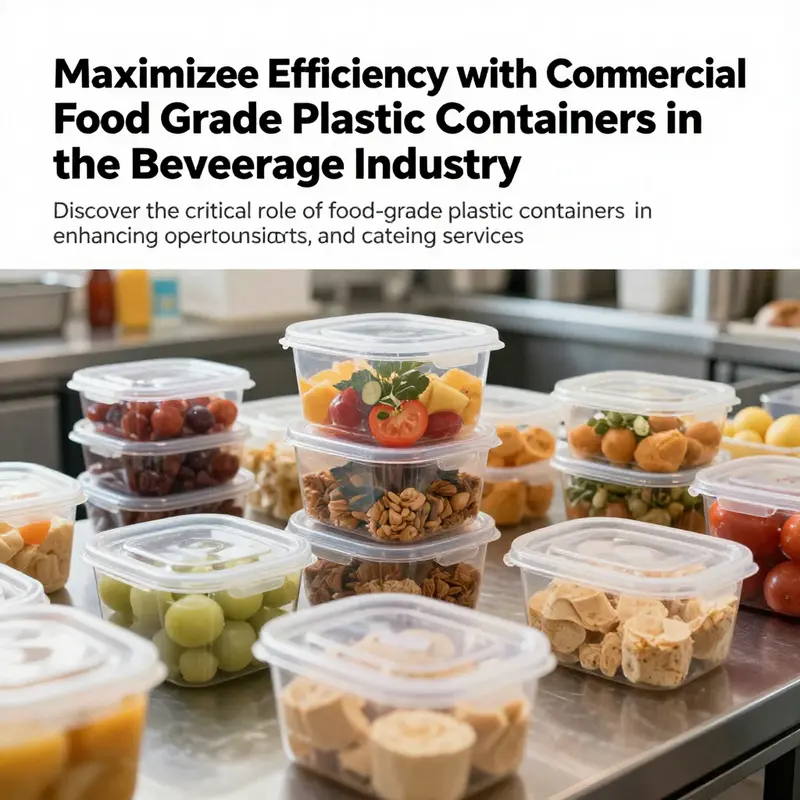
In today’s competitive food and beverage landscape, the efficient handling and storage of ingredients and products are key to success. Commercial food-grade plastic containers, specifically designed for safety and hygiene, are indispensable tools across various sectors, including bubble tea shops, restaurants, food trucks, and catering services. This article delves into the practical applications of these containers, underlining their importance in food storage, the rigorous safety standards they comply with, their economic benefits to businesses, and the environmental implications associated with their use. Each chapter builds on these themes, providing a comprehensive understanding of how food-grade plastic containers contribute to operational efficiency and food safety.
From Storage to Service: The Wide-Ranging Applications of Commercial Food-Grade Plastic Containers in Food Handling
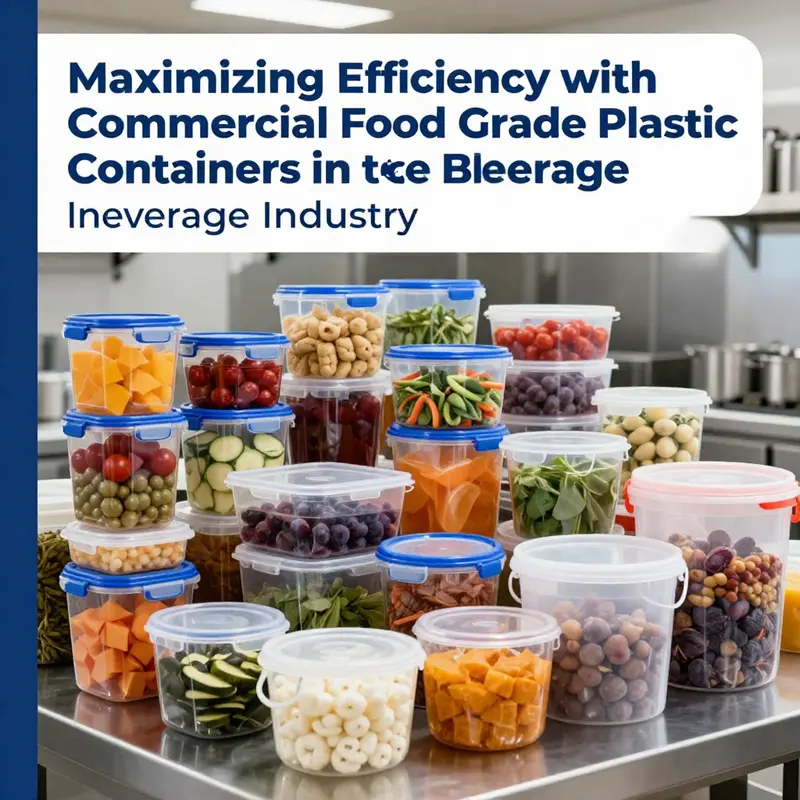
Commercial food-grade plastic containers are the quiet workhorses of the modern food system. They move through factories, warehouses, kitchens, and delivery networks with a reliability that rarely draws attention, yet their performance underwrites safety, efficiency, and cost management across the entire supply chain. Crafted primarily from high-density polyethylene and polypropylene, these containers balance chemical resistance, moisture control, and rugged durability with the practical needs of containment and transport. They are designed to withstand the stresses of long storage, rough handling, and frequent washing, while remaining safe for contact with a wide range of food products. Their lightweight nature reduces handling strain and shipping costs, yet their strength and impact resistance protect contents from damage. The ability to seal well and resist leaks makes them indispensable for liquids and semi solids as well as dry goods. In laboratories and production floors as much as in back-room storage, the container is not just packaging; it is a controlled environment that preserves integrity from the moment of fill to the moment of use.
This chapter traces how these containers find utility across sectors, tying together material science with real-world workflows. It shows how the same foundational attributes—chemical resistance, low moisture permeability, stackability, and hygienic design—translate into practical advantages in varied settings. The story of storage and handling is not about a single function but about a chain of operations that hinge on dependable containment, visibility, and sanitation. In practice, the choice of container type and its design details—whether a clear tub for inventory visibility, or a rugged bucket for bulk storage—reflect a deliberate alignment with process requirements, regulatory expectations, and sustainability goals. The chapter also acknowledges a broader push toward greener materials and smarter packaging architectures that still meet the stringent safety criteria demanded by commercial food operations.
In manufacturing and food production facilities, the fundamental role of these containers is to keep inputs clean and outputs traceable. Raw ingredients such as grains, flours, and oil components require containment that minimizes contamination risk while allowing easy handling within automated and manual workflows. Containers with clear or translucent walls enable quick visual inspection, enabling operators to monitor fill levels, detect sediment, or identify color changes that might signal quality concerns. While not all containers are transparent, the option to choose PET or clear grades for certain applications enhances inventory control on the floor and in storage rooms. Moreover, gas barrier properties can play a crucial part in preserving product freshness during storage and transit, particularly for carbonated beverages or specialty oils where oxidation or off flavors are a concern. In many facilities, modular stackable designs maximize floor and racking space, a practical detail that translates into meaningful cost savings when hundreds or thousands of containers move through a site over a year.
Restaurants and catering operations rely on the same core properties but feel the attention more acutely to the day to day rhythms of prep, transport, and service. In busy kitchens, containers must survive repeated washing, sanitizing, and reconfiguration as menus shift and service styles evolve. Color coding and labeling schemes help prevent cross-contamination, especially when raw and ready-to-eat items share storage or prep areas. The robustness of lids and seals matters greatly for meal prep and takeout, where secure containment keeps products stable during transit and reduces the risk of leaks. The stackable form factor saves precious kitchen and walk-in space, a critical advantage in smaller facilities where every square foot counts. When meals are prepared for delivery, reliable temperature maintenance becomes a key performance indicator, and container design that supports this—whether through airtight lids, compatible insulating accessories, or compatibility with steam and microwave processes—directly affects customer experience and operational efficiency.
Logistics and warehousing cast containers in a different but equally important role. In large-scale distribution centers, moisture resistance and dust protection keep products from degradation during long journeys or exposure to less-than-ideal environments. The durability of these plastics means they hold up under frequent loading and unloading, reducing breakage incidents that costly cardboard boxes might suffer in transit. The ability to nest and stack containers without compromising integrity simplifies inventory staging and handling, while leak-proof lids prevent spillage in transit. In automated warehousing contexts, containers must be compatible with conveyors, robotic pick-and-place systems, and automated washing lines. A well-integrated container design minimizes jams and eases sanitation cycles, contributing to higher throughput and lower labor intensity. All of these factors combine to keep perishable goods on track from factory floor to grocery shelf, a sequence that demands steadfast performance from every container along the chain.
Agricultural and horticultural applications echo these same principles in a field setting. Farmers and nurserymen appreciate containers that can withstand outdoor use, handle harvest loads, and resist weather-related wear. Lightweight yet sturdy designs ease manual handling during picking, sorting, and transport from field to processing or storage. Containers used in packing and transport of fresh produce must avoid compromising the perishable quality of berries, leafy greens, or tomatoes. Beyond storage, the properties that make plastic containers durable also support their use as seedling trays or planters in nurseries and urban farming projects. The ability to hold moisture and resist leaks is valuable when shipping seedlings in bulk, while the clear variants enable quick verification of contents at a glance. These agricultural applications illustrate how a single packaging technology can flex across contexts—from field to facility to market—without sacrificing safety or efficiency.
Industrial food processing plants demonstrate another layer of integration. In these environments, standardized containers become embedded in automated material handling systems. They shuttle bulk ingredients between process stages and serve as reliable intermediate storage before packaging and distribution. Robotic grippers and automated conveyors favor containers with predictably shaped profiles and consistent weight, enabling high-speed, low-error handling. The reuse of containers across multiple process cycles reduces waste and contributes to operational cost savings, provided that sanitation protocols are robust and repeatable. In many facilities, the design of container closures, seals, and venting features is tuned to support cleaning-in-place or sanitary washdowns without compromising integrity. The result is a streamlined flow of materials through complex production lines, where every container must perform its role without introducing contamination risks or downtime.
Sustainability has become a central theme across all these applications. Modern commercial food-grade plastics increasingly incorporate recycled content or rely on bio-based materials that can be processed within existing manufacturing and recycling streams. The drive toward circularity seeks to maintain safety and performance while reducing environmental impact. For some uses, bio-based or recycled content must meet strict regulatory and consumer expectations for food contact safety, which necessitates careful material selection and processing controls. The challenge is to balance barrier performance, mechanical strength, and ease of cleaning with the evolving goals of waste reduction and responsible end-of-life management. Designers and manufacturers continue to explore innovative blends and coatings that extend container life, improve sanitation, and support downstream recycling or composting where appropriate. In all cases, the objective remains clear: retain product quality and safety while minimizing the ecological footprint of storage and distribution infrastructures.
The regulatory framework guiding these choices anchors safety in science and practice. Containers intended for food contact must meet evidence-based standards that govern what substances may migrate into foods and at what levels. The emphasis is not solely on avoiding toxins but on ensuring that the package does not alter the sensory characteristics or shelf life of products. This regulatory discipline intersects with material science, manufacturing, and quality assurance to create a reliable ecosystem for food handling. In addition to safety, traceability and documentation around material origin, composition, and batch-level conformity underpin accountability throughout the supply chain. Practitioners across sectors benefit from clear standards that help them select appropriate container materials for each product category, storage duration, and environmental condition. The result is a cohesive approach that combines safety, performance, and practicality in everyday operations.
As the industry evolves, the conversation around containers increasingly includes design for sanitation and lifecycle management. Simplified cleaning regimes reduce downtime between production runs, while modular components facilitate parts replacement and refurbishment without compromising hygiene. A continued focus on leak resistance, secure closures, and compatibility with temperature variations ensures that containers remain fit for purpose across kitchens, processing lines, and distribution networks. The most effective designs anticipate future needs, such as evolving cold chain requirements or tighter regulatory expectations, and embed flexibility accordingly. In practice, this foresight translates into containers that deliver consistent performance across a broad spectrum of products—from dry staples to liquid concentrates—while maintaining the clarity, strength, and safety that customers expect.
For readers seeking a broader dialog on packaging choices and their implications for sustainability, one resource discusses eco-friendly, recyclable pulp take-away cup holders that illustrate the wider shift toward responsible, low-impact packaging solutions. This example underscores how packaging choices, even when they fall outside the exact material family discussed here, reflect a shared ambition: to reduce waste, simplify handling, and protect product integrity without compromising service quality. The overarching narrative is not about a single material but about a holistic approach to packaging that respects safety, efficiency, and the planet. In this sense, the chapter on applications of commercial food-grade plastic containers ties into a broader ecosystem of packaging decisions where material science, process design, and environmental stewardship intersect on every shift in the production and distribution chain.
The cumulative effect of these considerations is a food system that can store, move, and serve with confidence. Containers that are durable and cleanable, with predictable performance under varying temperatures and handling conditions, enable teams to plan more accurate inventories, schedule sanitation more efficiently, and optimize routes and loads in distribution. The result is a chain that minimizes waste and spoilage, protects brand integrity, and delivers consistent quality from the start of production to the moment the product reaches a consumer. As the field advances, ongoing innovations in materials, coatings, and container geometries will further enhance the reliability and sustainability of this essential packaging class. The practical takeaway is clear: the right container makes the right difference at every stage, reducing risk while enabling smoother, safer, and more cost-effective food handling.
External reference for safety standards and regulatory context: FDA guidance on food contact materials.
Guardians of Freshness: Navigating Safety Standards and Compliance in Commercial Food-Grade Plastic Containers
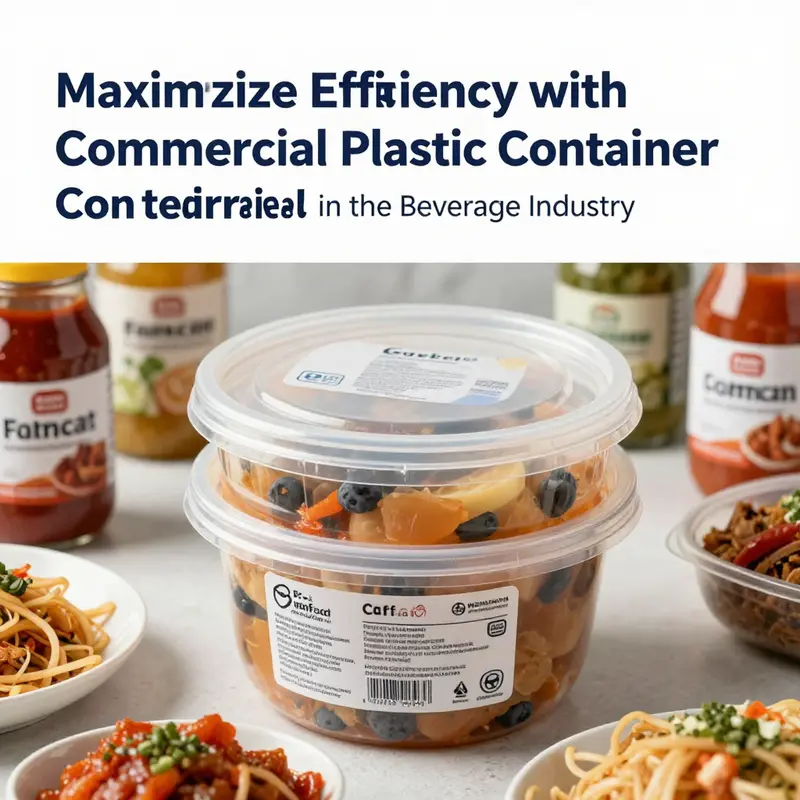
Every food storage and distribution operation hinges on a quiet conviction: the containers that cradle ingredients and meals must be safe, reliable, and predictable in how they perform. In the world of commercial food-grade plastic containers, safety standards and compliance are not mere checkboxes to tick; they are the backbone of trust between manufacturers, caterers, distributors, and the consumer who ultimately handles the product. The journey from raw resin to a finished container that can come into contact with food is governed by a network of regulations and certifications designed to curb the risk of contamination, migration of potentially harmful substances, and unexpected failures in the field. This governance is not static. It evolves with science, technology, and the ever-shifting contours of global supply chains. At the core lies a simple principle: materials must be suitable for their intended use, and the processes by which those materials are produced, tested, and validated must be transparent and auditable.
First, understanding the material landscape helps illuminate how safety standards are chosen and enforced. The most common workhorse resins in commercial food-grade containers are polyolefins and related polymers. High-Density Polyethylene (HDPE) stands out for its durability, chemical resistance, and heat tolerance, making it a favorable choice for reusable, bulk-storage containers and for items that will endure repeated handling in hectic environments. Polypropylene (PP) adds a complementary balance of rigidity and chemical resistance, often enabling higher temperature tolerance. Low-Density Polyethylene (LDPE) lends itself to flexible applications, while PET offers clarity and strength in single-use contexts but is generally less suitable for repeated use or high-heat scenarios. Polystyrene (PS) finds limited, often disposable, applications where cost and clarity are priorities. Each resin brings a distinct migration profile, and the choice of resin must align with how the container will be used—from dry storage to hot-liquid contact, from freezer conditions to microwave or steam-assisted preparation. The safety calculus is thus intrinsically tied to the resin, its additives, and the design of the final product.
The regulatory framework that governs these choices is built on a dual foundation: food safety management and material compliance. In the United States, the Food and Drug Administration (FDA) sets the baseline for what can legally be used in food-contact applications. The relevant code, including regulations under 21 CFR Parts 174 through 179, addresses food additives and the conditions under which substances may migrate into food. In parallel, the European Union imposes stringent requirements under Regulation (EC) No 1935/2004, which focuses on materials and articles intended to come into contact with food and lays out the overarching principle of safety and non-toxicity. Beyond these core rules, many entities in the supply chain pursue accreditation under internationally recognized food-safety management systems, most notably ISO 22000 and its sector-specific extension in FSSC 22000. These frameworks harmonize the management of hazards across the food chain, ensuring that producers maintain robust food-safety culture, traceability, hazard analysis, and continuous improvement processes.
But standards and certifications do not float in isolation. They are implemented through rigorous testing, documentation, and ongoing oversight. Third-party verification is common because it provides an independent assessment of both the materials and the finished containers. A typical safety program includes migration testing to quantify what substances could migrate from the container into food under realistic use conditions, as well as assessments of heat resistance, impact strength, and chemical compatibility. Specific migration limits (SMLs) and overall migration limits (OMLs) are established benchmarks that help ensure that, even under demanding use, the consumer remains protected. Materials may be tested for their compatibility with fats, oils, salts, and other common food families, and the testing may simulate overnight storage, reheating, or exposure to cleaning and sanitizing regimes common in industrial kitchens or distribution centers.
Manufacturers, in turn, maintain documentation that demonstrates compliance with applicable regulatory limits. This includes formulations, batch records, stability data, cleaning protocols, and validation studies that show the container behaves as intended over its lifecycle. The emphasis on documentation is not sterile record-keeping; it is a practical guarantee of traceability. In the event of a product issue, being able to trace back to a specific batch, resin lot, or manufacturing run is invaluable for risk assessment and rapid remediation. Regular audits—whether internal quality checks or external certifications—help ensure that formulations remain current in light of new scientific evidence and that any changes in raw materials or processing steps are properly evaluated for safety implications.
In this environment, consumer-facing labeling becomes a meaningful signal of safety and suitability. A container that markets itself as “food-grade” should carry evidence-based assurances. Independent certifications from bodies such as NSF International or Underwriters Laboratories (UL) can provide additional confidence to buyers who demand a higher degree of scrutiny. Buyers also look for documentation that confirms compliance with specific regional requirements. For example, the FDA’s framework emphasizes food-contact substances and the need for products to stay within established limits during normal use, while the EU framework emphasizes a broader precautionary approach to materials that may contact food across the supply chain. The practical upshot is that responsible manufacturers design for safety from the outset, rather than attempting to retrofit safety late in the process.
An equally important aspect of compliance is the lifecycle and end-use versatility of containers. For commercial operations, the balance between durability and ease of cleaning is pivotal. HDPE and PP containers offer a compelling combination of lightweight design, chemical resistance, and robust mechanical properties. These features translate into lower energy costs in handling and reduced risk of damage during transit. Airtight seals and well-engineered closures mitigate contamination risks and preserve product integrity from warehouse to kitchen to consumer. In some designs, the capability to withstand higher temperatures or to be used in specific environments, such as microwave-ready scenarios or vacuum-sealing workflows, can expand the range of applications. Yet each added capability potentially shifts the safety equation. Higher heat exposure, for example, may alter migration behavior or interact with certain additives, reinforcing why ongoing testing and validation are essential when changing a container’s intended use.
Beyond the material science and regulatory language, the practical realities of daily operations shape how safety standards are applied. Bulk storage, often in 20-liter buckets or larger, demands containers that can endure stacking, repeated handling, and efficient sanitation protocols. In such settings, the integrity of the lid seal, the absence of cracks or delamination, and the stability of the container under load become as important as the chemical compatibility of the resin. The design philosophy that underpins these containers is guided by two overarching aims: minimize risk during handling and maximize the likelihood that a container will perform as expected, even in high-throughput scenarios. When a facility can visually inspect contents through transparent or semi-transparent walls, it supports quality control without compromising safety. This visibility helps minimize waste and ensures that inventory, product quality, and shelf life are managed with clarity.
Another axis of safety is the human and operational factor. Even the most compliant container can become a risk if used outside its intended parameters. Procedures for cleaning, sanitizing, and appropriate reuse must align with manufacturer guidance and regulatory expectations. For reusable containers, clear guidance on thermal resistance, compatible cleaning agents, and frequency of inspection is critical. In contexts where container washing and reconditioning occur, the facility’s own food-safety management system must verify that these processes do not introduce contaminants or residuals that could migrate into food on subsequent uses. The modern compliance environment thus blends material science, systematic risk assessment, and rigorous operating procedures into a single, auditable safety net.
From a supply-chain perspective, alignment across partners is essential. Suppliers of raw resins, fabricators, and container manufacturers must have reproducible processes and traceability to ensure that every batch used in a given line of containers conforms to the same safety profile. The governance of these relationships, combined with proactive testing and transparent documentation, enables buyers to meet the expectations of regulators, retailers, and end consumers. A well-implemented safety program not only mitigates risk but also supports sustainable practices by enabling longer product lifespans and reducing waste through durable, reusable designs. In a market where sustainability is increasingly measured alongside safety, the capacity to demonstrate that a container performs safely throughout its lifecycle becomes a differentiator for responsible operations.
For readers seeking a clear, practical reference to safety and compliance, recognize that the regulatory landscape and the technical specifications converge in everyday choices. Decision-makers weigh resin properties against anticipated use scenarios, then align with recognized safety standards and third-party certifications. The result is a packaging solution that protects product integrity, supports efficient logistics, and upholds public health expectations. When a facility purchases or redeploys containers, the emphasis should be on choosing materials and designs that have demonstrated safe performance under realistic conditions, with documented evidence to back those claims. The combination of robust material science, rigorous regulatory alignment, and transparent governance creates containers that are more than vessels; they are guardians of freshness, reliability, and consumer confidence.
To illustrate how these principles translate into practical choices, consider the role of visual inspection and material compatibility in bulk storage environments. Containers made from HDPE or PP offer clear advantages in chemical resistance and ease of cleaning, which align with best practices for maintaining hygiene and preventing cross-contamination. The presence of airtight lids, sturdy closures, and stackable geometry reduces the opportunities for contamination during handling and transit, supporting cold-chain or ambient distribution alike. These design attributes, underpinned by regulatory compliance and validated through testing, contribute to a predictable performance profile. In short, safety standards and compliance are not abstract requirements; they are the operational foundations that enable safe food handling at scale. When facilities invest in containers that meet these standards, they invest in reliability, cost control, and the trust that holds their whole supply chain together.
As a practical takeaway, organizations should look for documentation that confirms regulatory alignment and safety validation for their chosen containers. Labels indicating food-grade status should be supported by evidence, and certificates from recognized certifiers should be accessible for audits. For teams evaluating material suitability, it is prudent to consider the full use-case spectrum—from dry storage to liquids, temperatures encountered in distribution, and cleaning workflows. The choice of resin, the design of the container, and the accompanying certification together form a triple safeguard: chemical compatibility, mechanical performance, and regulatory legitimacy. This triad helps ensure that containers will perform as intended, protect product quality, and minimize risk to consumers.
For practitioners seeking a touchpoint in the broader conversation about packaging safety and design, consider examining the broader ecosystem of compliant packaging solutions. This can provide perspective on how different packaging formats—whether rigid containers or flexible films—engineer safety into everyday operations. A useful example of how packaging platforms integrate safety and usability can be seen in compliant, lid-equipped, take-away packaging options that emphasize both containment effectiveness and visibility of contents. disposable kraft paper bowl with lid offers a case study in how packaging designers balance containment, hygiene, and user experience, even though it lies outside the plastic container category. The underlying lesson remains consistent: safety is a function of material choice, system processes, and verifiable compliance.
In closing, the safety standards and compliance framework governing commercial food-grade plastic containers is not a static checklist but a living discipline that governs every phase of a container’s life. From resin selection and lacquer-free formulations to migration testing and third-party certification, each step is a safeguard woven into everyday operations. The objective is straightforward: enable safe handling of food across the entire supply chain while supporting efficient, sustainable practices. When these elements align, containers perform with consistency, customers gain confidence, and the journey from production floor to plate preserves the integrity of the food and the trust of the consumer. The ongoing dialogue between regulators, manufacturers, and end users will continue to refine these standards, propelled by advances in material science, risk assessment, and analytical capabilities. As such, safety in commercial food-grade plastic containers is not a one-and-done mandate; it is an enduring commitment to protecting health, quality, and the shared value of a trustworthy food system.
External resource: FDA – Food Contact Materials. https://www.fda.gov/food/food-contact-materials/food-contact-materials-chemicals
The Cost-Efficiency Equation: Economic Impact of Commercial Food-Grade Plastic Containers in the Food Industry
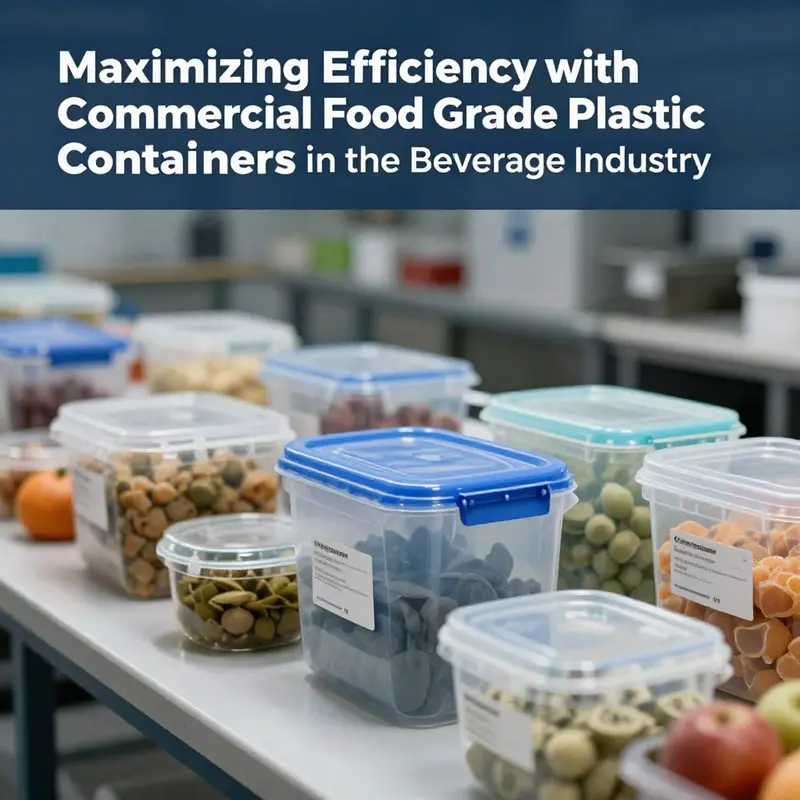
In the modern food system, the economics of packaging are inseparable from the economics of storage, handling, and distribution. Commercial food-grade plastic containers function as modular units of efficiency, safety, and scalability. They are not merely vessels for holding products; they are elements of a broader operational math where material choice, design, and lifecycle directly influence costs, margins, and resilience. When viewed through this lens, the economic impact of these containers extends far beyond their purchase price. It touches spoilage rates, labor intensity, energy use, warehouse space, and the speed at which a business can respond to demand shifts or supply disruptions. The chain from raw material to consumer table is, in essence, a linear yet highly interdependent flow, and the containers at the heart of that flow help determine where the line stops or accelerates.
From a technical perspective, the fundamental economic advantage begins with performance. Plastics engineered for food contact—commonly high-density polyethylene and polypropylene, among others—offer robust barrier properties against moisture, oxygen, and contaminants. This means perishable items such as sauces, dairy, oils, and dry goods stay fresher longer when stored in appropriate containers. The effect is not merely aesthetic; it translates into measurable reductions in spoilage and waste, which are among the highest line-item risks for any food operation. In bulk storage or manufacturing environments, the ability to preserve product integrity during extended storage and through transit lowers write-offs and improves yield. A single well-sealed, food-grade container can maintain product quality where substandard packaging might lead to accelerated degradation. In practice, that translates into lower replacement costs for spoiled inventory and more predictable inventory planning, both of which support steadier revenue streams and reduced capital tied up in unsellable stock.
Durability and reusability compound these savings over time. Reusable trays, jars, and tubs enable organizations to amortize packaging costs across many cycles, rather than bearing a single-use expense for each shipment. The economics of reuse are most favorable when containers are designed for stacking, nesting, and long service life. Space is a recurring cost in any operation—from warehousing to distribution to catering or meal prep centers. Efficient container designs maximize pallet density and minimize handling time. The ability to stack multiple units securely reduces warehousing footprint and shipping costs, a vital advantage when margins hinge on every square foot of storage and every mile of transport. In environments where space constraints are acute, even modest gains in stackability multiply into meaningful reductions in capital expenditures and operating expenses.
Transparency, a feature often built into many commercial-grade containers, also bears economic fruit. Clear or translucent designs enable quick visual inspection of contents, expediting stock checks and quality control. This reduces the likelihood of miscounts, misplacements, and, on occasion, recalls caused by poor inventory visibility. The financial impact of such improvements can be substantial: fewer manual audits, less labor time spent on inventory reconciliation, and a lower probability of disruptive recalls that carry both direct costs and reputational damage. In a competitive market where freshness and traceability are increasingly demanded by customers and regulators, the ability to confirm product status at a glance protects margins and protects brand value without incurring additional process costs.
Material choice matters in more concrete ways than just barrier performance. Food-grade plastics used in these containers are typically lightweight yet strong, a combination that supports lower energy use in handling and transport. When shipping heavy loads or moving large volumes, the weight savings per unit accumulate. Lower payload weights reduce fuel consumption and associated emissions, and they also lessen wear on equipment and facilities. For manufacturers and distributors, the energy cost saved in moving packaging and product through the supply chain can become a nontrivial component of total operational expenditure. Across multiple cycles and thousands of containers, small efficiency gains scale into meaningful bottom-line improvements, especially during peak seasons when throughput is high and time is money.
Process compatibility is another engine of economic efficiency. The same materials that resist moisture and oxygen can be engineered to withstand processing steps commonly used in the food industry, such as heat-assisted filling or pasteurization. This compatibility can shorten production lines, reduce downtime, and lower energy consumption per unit of product cured or packaged. In turn, throughput rises without a commensurate rise in capital investment for new equipment. The ability to maintain container integrity under processing conditions supports a leaner, faster, and more cost-effective operation. While not every product category requires high-temperature handling, the capability to participate in heat-treat or pasteurization steps expands a facility’s flexibility, allowing for a more responsive and scalable production plan.
Regulatory compliance is a core economic safeguard. Containers designed for food contact carry certifications and standards that reduce the risk of contamination events, product recalls, and the penalties associated with non-compliance. From the perspective of risk management, compliance translates into cost avoidance—fewer incidents that derail production, trigger expensive investigations, or force costly product withdrawals. A robust compliance profile also broadens a business’s market reach. When a supplier can demonstrate consistent adherence to safety and hygiene standards, it becomes easier to secure volume commitments, expand into new channels, and enter new regions with predictable onboarding costs. In sum, the regulatory dimension—often viewed as a compliance burden—performs as a proactive investment guardrail that stabilizes revenue streams and supports growth.
The economic narrative would be incomplete without acknowledging the waste and sustainability dimension. Reusable, durable containers can contribute to a circular economy model that reduces disposal costs and aligns with evolving consumer and regulatory expectations. Reuse and recycling become intertwined with financial performance. The initial capital investment in high-quality containers is offset over many cycles by reduced packaging waste, lower disposal fees, and a potentially improved brand perception among customers who value responsible packaging practices. At the same time, the lifecycle of plastics invites careful process design: cleaning, sanitization, and maintenance are necessary steps that cost time and energy. Efficient cleaning regimes, validated sanitation protocols, and durable designs that withstand repeated cycles can maximize the net environmental and economic gains. In practice, the best outcomes emerge when waste reduction, energy use, and labor efficiency are optimized in concert, rather than pursued in isolation. The result is a resilient packaging system that supports stable margins even as demand patterns shift or supply disruptions occur.
Market dynamics further amplify the economic impact. As demand for safe, hygienic, and scalable packaging grows, producers and distributors invest in containers that can perform across multiple stages of the supply chain—from bulk storage in warehouses to distribution in cold or ambient conditions, to retail or food service environments. The ability to reuse containers, repurpose them for different product lines, or adapt them to changing processing requirements adds strategic flexibility that translates into financial resilience. This adaptability reduces the need for frequent capital outlays on new packaging fleets and lowers total cost of ownership over time. It also supports more agile responses to market opportunities or emergencies, where the ability to scale up or down rapidly can determine whether a brand captures growth or loses ground to less adaptable competitors.
Beyond the factory floor, the economic story threads through vendor ecosystems, logistics networks, and procurement strategies. Strategic sourcing for food-grade plastic containers emphasizes standardization, durability, and lifecycle efficiency. Companies increasingly favor suppliers who can provide consistent quality, long-term supply stability, and clear performance data. In practice, that translates into better price predictability, reduced carrying costs for safety stock, and smoother procurement cycles. When containers are designed to be compatible with a range of products and processing conditions, buyers gain optionality—an important hedge against demand volatility. The result is a leaner procurement footprint, lower risk of stockouts, and, ultimately, a stronger bottom line.
In sum, the economic impact of commercial food-grade plastic containers is a composite of prevention, efficiency, compliance, and adaptability. They cut spoilage, shrink storage and transport costs, accelerate processing, and protect against regulatory and operational risk. They enable scale without sacrificing safety or quality. They bolster inventory visibility and reduce labor intensity, all while aligning with broader goals of sustainability and responsible packaging. The cumulative effect is a more predictable cost structure and a more responsive business model—qualities that matter when margin pressure, supply chain fragility, and consumer expectations are in constant tension. The containers themselves may be ordinary in appearance, but their contribution to the economics of food production and distribution is anything but: they are a quiet algebra of value, turning material into margin across the entire supply chain.
For readers curious about the broader materials and applications that underpin these advantages, a contemporary overview of food-container materials and safety standards provides context for how regulators and manufacturers balance performance, safety, and cost. This perspective helps explain why the economics of packaging are inseparable from the quality controls, process design, and strategic choices that shape today’s food system. By recognizing the chain from raw resin to retail shelf as a single continuum, practitioners can optimize each link while maintaining a coherent, resilient whole. The resulting gains—reduced waste, improved throughput, enhanced compliance, and greater strategic flexibility—underscore why commercial food-grade plastic containers remain indispensable assets in modern food production and distribution networks. For a deeper dive into material science and packaging safety trends that influence these choices, see the external resource linked at the end of this chapter.
External reference: https://www.plasticstoday.com/food-packaging/plastic-container-materials-and-applications-in-food-industry
Rethinking Safety and Sustainability: The Environmental Footprint of Commercial Food-Grade Plastic Containers
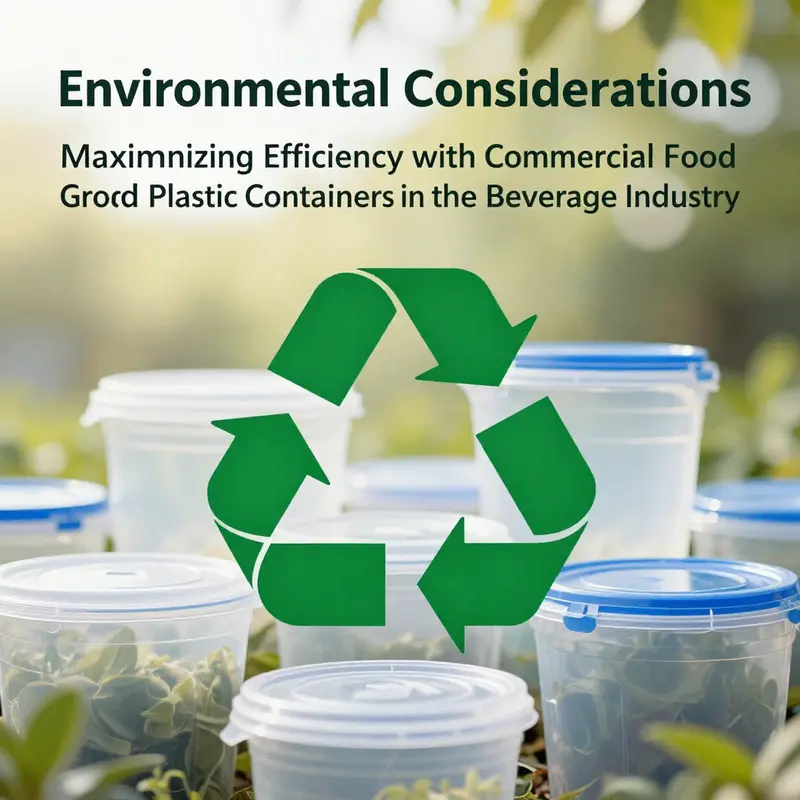
Commercial food-grade plastic containers quietly anchor the safety and efficiency of modern food systems. They are the unsung workhorses that keep products stable during storage, transport, and distribution, while upholding hygiene standards that protect public health. Yet as societies push for lower carbon footprints and less environmental waste, these containers face scrutiny not for their daily utility alone but for the broader life cycle they inhabit. In this chapter, we examine how environmental considerations intersect with the safety and practicality of commercial food-grade plastics, tracing a continuous thread from material selection through manufacturing, use, and end-of-life management. The aim is to understand not merely what these containers do for today’s kitchens and warehouses but how they influence tomorrow’s design choices, recycling systems, and regulatory expectations. When viewed through an environmental lens, the conversation becomes a dialogue between preserving microbial safety and reducing ecological impact, a balance that guides how manufacturers, buyers, and policymakers think about packaging at every turn. The stakes are not theoretical: the choices made in material composition, production methods, and after-use handling multiply through countless meals, ingredients, and supply chains, shaping both food safety and the health of ecosystems that sustain communities over the long term.
The environmental considerations begin with material persistence. The most common workhorses in commercial food-grade plastics are different grades of polyethylene and related polymers. High-density polyethylene and polypropylene are lightweight, highly impact resistant, and exhibit strong barriers to moisture and many chemicals. These properties are precisely what make them reliable for bulk storage and frequent handling in busy commercial settings. However, their very durability means that plastics can persist in the environment long after they have been discarded. When plastics escape collection streams, they may fragment into smaller particles or, in some cases, travel through rivers and soils before being captured by recycling facilities. The complexity of containers—from milky drum shapes to nested jars and lid systems—also affects recyclability. While bottle and bottle-like containers are well represented in recycling streams, more complex geometries and multi-material configurations can create sorting and processing bottlenecks.
Recycling, in turn, is not a universal guarantee of circularity. Even when PET or HDPE are technically recyclable, real-world outcomes depend on the integrity of the waste system. Contamination—mixing of different resins, residue from foodstuffs, or improper cleaning—can degrade material quality and hinder reuse. Sorting inefficiencies, limited processing capacity in some regions, and economic incentives that favor virgin resin over recycled content commonly reduce the rate at which post-consumer plastics re-enter manufacturing. The result is a paradox: containers engineered for safety and durability can end up contributing to waste streams if the infrastructure to close the loop remains incomplete. The situation is further complicated by the fact that certain shapes or multi-layer constructions may resist efficient processing, requiring more sophisticated technologies or alternative recycling streams that are not universally available.
Beyond end-of-life challenges, the production phase of virgin plastics bears significant environmental implications. The bulk of plastic feedstocks derive from fossil fuels, and the energy-intensive processes involved in polymerization and extrusion contribute to greenhouse gas emissions. While advances in process efficiency, energy recovery, and cleaner fuels help, the fundamental feedstock question remains: can the lifecycle emissions of food-grade plastics be reliably reduced while maintaining the stringent safety standards that the sector demands? In parallel, there is growing interest in alternative feedstocks and recycled content. Post-consumer recycled (PCR) materials, bio-based polymers, and other innovations promise lower life-cycle impacts, but scaling these options to the volumes required by commercial operations, without compromising safety or performance, presents practical hurdles and cost considerations that must be weighed by manufacturers and buyers alike.
Additives and health considerations add another layer to the environmental discussion. These substances are used to optimize performance—stability across temperatures, UV resistance, and compatibility with various food types—but they can also carry environmental and health implications if not properly managed. Regulations and risk assessments aim to limit the migration of additives into food under normal use, yet concerns about accumulation of chemical ingredients in wildlife or ecosystems over time remain part of broader conversations about material safety and sustainability. The dialogue here is not about demonizing additives but about understanding their life-cycle implications and ensuring that the entire supply chain adheres to robust, science-based standards that protect both people and the planet.
Industry responses to these intertwined safety and environmental challenges are increasingly framed by circular economy principles. Designers are moving toward configurations that maximize recyclability, often favoring mono-material constructions that can be more readily reprocessed than multi-material or laminated variants. The push toward closed-loop systems reflects a recognition that reusable containers, properly cleaned and maintained, can substantially reduce single-use plastic consumption in kitchens, catering, and meal delivery. Implementing such systems demands a coordinated approach to cleaning, sanitation, and logistics to preserve hygiene while enabling repeated use. It also invites reevaluation of warehousing and handling practices, since reusable systems place new demands on space, inventory management, and reverse distribution networks. In practice, these shifts require careful balancing of hygiene controls, transport efficiency, and labor costs, as well as clear standards to prevent cross-contamination across a broad set of products and facilities.
Alongside process changes, there is a growing emphasis on design-for-recyclability and design-for-reuse as strategic priorities. Mono-material plastics, where feasible, simplify sorting and recycling and can raise the likelihood that materials are recovered and fed back into production loops. At the same time, some applications may still benefit from selective use of multilayer structures if those layers are essential for safety or shelf-life, provided they are paired with effective post-use collection and recovery schemes. The debate is nuanced: it is not merely about eliminating complexity but about choosing configurations that optimize safety, traceability, and environmental performance within a given operational context. As the industry experiments with different configurations, the availability and reliability of local recycling streams increasingly influence material choices. When a facility can supply PCR content or when a region has established take-back programs, recycled material can begin to permeate even high-demand segments of the market. The result is a dynamic interplay between product design, waste management infrastructure, and regional policy frameworks that together shape the environmental footprint of food-grade plastics.
The future path also includes deliberate consideration of alternatives that may reduce environmental pressure. Biodegradable or compostable options hold promise in certain contexts, particularly for single-use applications with short lifespans or in settings where composting is well-supported. Yet these solutions are not a universal panacea. They face higher costs, uncertain performance across temperatures and humidity, and the need for appropriate composting infrastructure to function effectively. In many cases, the safest and most efficient route remains improving recycling systems, increasing the recycled content in new containers, and expanding the viability of reusable, sanitation-managed models. All these directions require collaboration among material scientists, packaging designers, waste managers, food business operators, and policymakers to ensure that environmental gains do not come at the expense of safety or reliability. The overarching objective is not a single solution but a portfolio of strategies that collectively reduce reliance on virgin resources, lower emissions, and keep food contact materials aligned with rigorous safety standards.
To illustrate the broader packaging ecosystem in this regard, the conversation around sustainability often intersects with opportunities in alternative packaging materials and formats. For organizations exploring options beyond traditional plastic, accessible examples of recyclable packaging in related categories can offer practical insights. For instance, the kraft paper bowl product page provides a window into how designers and manufacturers pursue recyclability and reusability in disposable formats. This juxtaposition helps illuminate the trade-offs between performance, consumer expectations, and environmental impact across different packaging systems. See the kraft paper bowl product page for a concrete reference to how some suppliers are framing eco-friendly, recyclable alternatives within a broader packaging strategy. kraft paper bowl product page
Regulatory and scientific oversight anchors the ongoing evolution of environmental considerations in food-grade plastics. Agencies responsible for evaluating materials destined for contact with food set migration limits and safety benchmarks that constrain the use of certain additives and require robust testing. These standards are not isolated from environmental objectives; they reflect a broader policy intent to minimize ecological harm while preserving food safety. In practice, this means that environmental claims—whether about recyclability, recycled content, or end-of-life options—must be grounded in verifiable data and integrated into supply chain decision-making. Such oversight helps ensure that strategies for reducing waste or increasing reuse do not compromise the integrity of food-contact materials. The alignment of safety and sustainability hinges on transparent reporting, lifecycle assessments, and continuous improvement as markets, technologies, and expectations evolve.
Ultimately, the environmental footprint of food-grade plastic containers is a function of choices made across the entire life cycle. Material selection, production processes, distribution efficiency, and end-of-life management all contribute to the overall impact. The most effective path forward embraces a portfolio of tactics: increasing recycled content where feasible, advancing mono-material designs to improve recyclability, expanding reusable systems with rigorous hygiene controls, and supporting the development of infrastructure that makes recycling and recovery more accessible and reliable around the world. It also requires ongoing investment in consumer education, producer responsibility, and regulatory clarity so that environmental goals are achievable without compromising the core imperative of food safety. As supply chains become more interconnected and data-driven, life-cycle thinking can help organizations quantify trade-offs, identify win-win solutions, and accelerate the adoption of packaging configurations that protect both people and the planet.
For authoritative guidance on chemical safety and environmental performance in food contact materials, reference the European regulatory framework managed by the European Food Safety Authority. The EFSA portal provides comprehensive guidelines and migration limits that underpin safe packaging design and use across diverse markets. See the EFSA resource for more detail: https://www.efsa.europa.eu/en/food-contact-materials
Final thoughts
Commercial food-grade plastic containers play a pivotal role in modern food and beverage operations, offering efficiency, safety, and sustainability. Their applications span various aspects of food storage and handling, bolstered by strict compliance with safety standards. Economically, they provide significant cost-saving opportunities while supporting waste reduction initiatives. Understanding and implementing these versatile containers can enhance the operational success of bubble tea shops, restaurants, food trucks, and catering services while addressing growing environmental concerns. Embrace the future of food safety and operational efficiency with commercial food-grade plastic containers.