

Clear plastic furniture cups might sound like a simple accessory, but they are essential for businesses like bubble tea shops, restaurants, and event planners. Designed to protect floors from scratches and dents caused by heavy furniture, these cups offer both functionality and a sleek aesthetic that blends seamlessly with any environment. This article explores their practicality, the materials used in their construction, the market trends surrounding their availability, customizable options for businesses, and the environmental impact of using plastic in this context. Each chapter sheds light on how clear plastic furniture cups contribute significantly to maintaining an appealing and safe space for customers while keeping your operational costs low. Let’s dive into this often-overlooked yet impactful accessory.
Underfoot Clarity: Clear Plastic Furniture Cups for Floor Protection
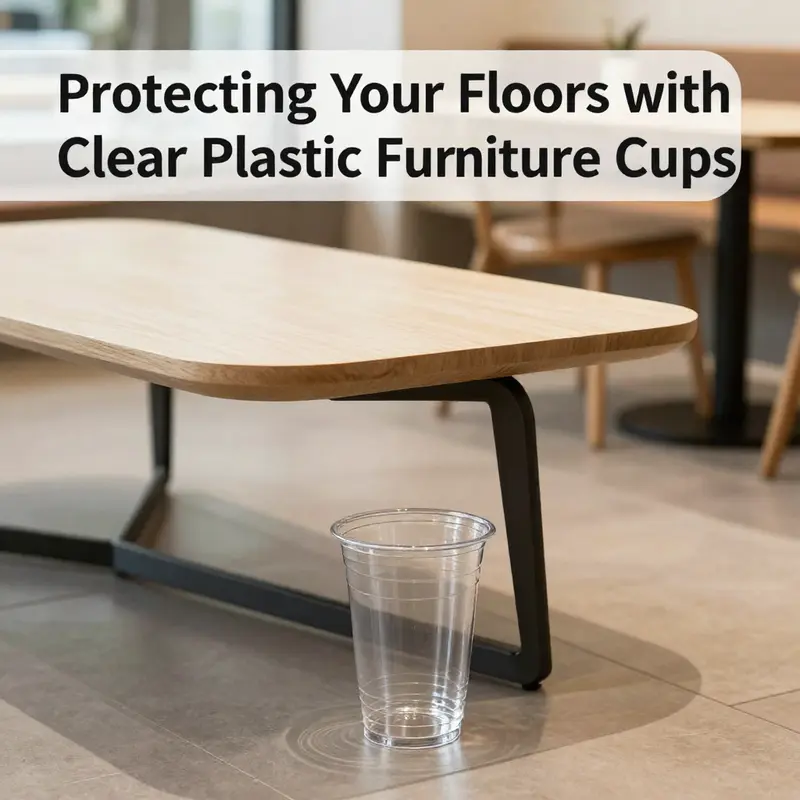
Clear plastic furniture cups provide a simple, effective layer between furniture legs and flooring. They distribute weight across a slightly larger contact area, reducing point pressure and helping prevent scratches on hardwood, laminate, tile, and vinyl floors. Their job is quiet but essential: extend floor life while keeping the room’s look cohesive.
Because they are clear, the cups remain visually unobtrusive, preserving the lines and tones of a space. They also help furniture glide more easily, making rearrangements less effortful and less likely to damage baseboards or edges.
Durability comes from BPA-free plastics such as polypropylene or high-density polyethylene, which resist cracking and remain clear over time. Many designs are stackable for easy storage and simple installation.
Maintenance is minimal: a quick wipe with a damp cloth keeps them clean, and the cost is modest compared with potential floor repairs.
Whether in homes or offices, these small protectors support flexible layouts while protecting the floor—an unassuming tool with a notable impact on durability and comfort.
Clarity Under Load: How PET, PP, and PLA Shape the Strength and Longevity of Clear Plastic Furniture Cups
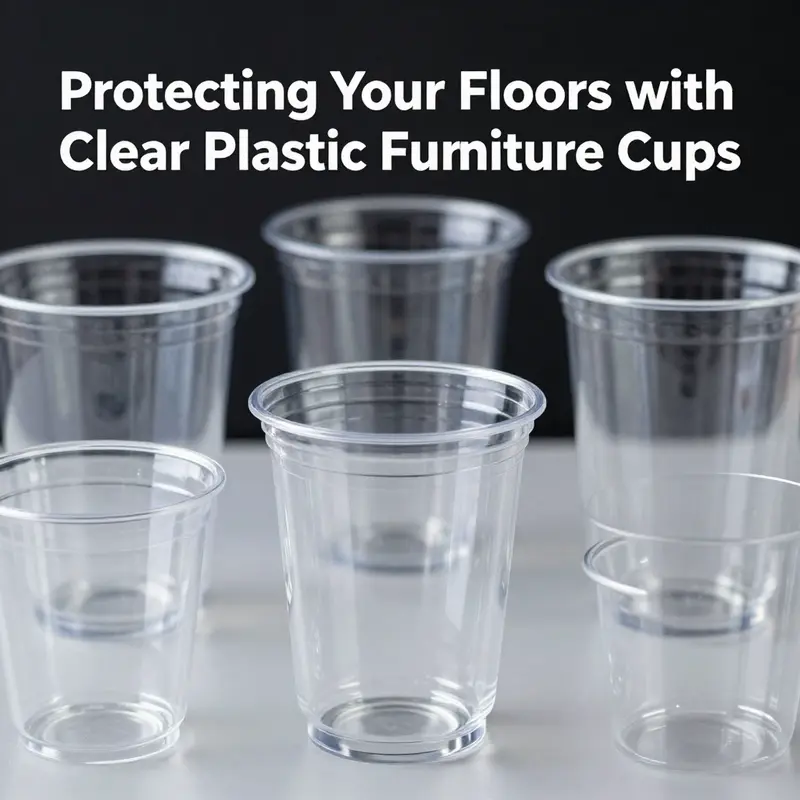
PET (Polyethylene Terephthalate) sits at the top of many lists for clear, high-performance cups and pads because it combines optical clarity with impressive impact resistance. When cast into a furniture cup, PET preserves the transparency that lets the leg sit virtually invisible against most floor finishes, a quality that is aesthetically valuable when decorating spaces with light-colored woods or glossy tiles. The structural integrity of PET remains robust under typical loads from chairs and tables, and its resistance to sudden impacts helps prevent dents or chips at the edge of the cup where wear often concentrates. PET’s performance isn’t limited to rigid housing; it also stays relatively stiff across a range of temperatures, which helps prevent sagging or deformation if a room’s heat fluctuates during sunny days or periods of intense artificial lighting. This combination of clarity and strength makes PET a natural choice for casters and furniture feet that must endure repeated cycles of use, from daily office work to busy hospitality settings. PET is also valued for its compatibility with clear aesthetics; its light transmission is excellent, which helps the cup remain visually unobtrusive under furniture. In many designs, this means the cup can be marginally thinner while maintaining the same load-bearing performance, contributing to cost efficiency and lighter packaging. A practical benefit of PET is its well-understood manufacturing profile; injection molding cycles are consistent, allowing for tight tolerances that ensure the cup fits snugly over most standard legs and casters. While PET is highly capable, it does have limits. In environments where floors are exposed to direct, sustained heat or harsh solvents, PET can experience slow, progressive wear if the design relies on minimal thickness. In such cases, designers may introduce slight geometry changes—rounded edges, internal ribs, or a marginal increase in wall thickness—to preserve stiffness and guard against creep over time. Still, PET’s overall profile makes it a reliable backbone for clear furniture cups where longevity and transparency are paramount.
PP (Polypropylene) brings a complementary set of attributes that balance PET’s rigidity with a touch more malleability and heat resistance. Polypropylene is renowned for its ability to endure higher temperatures without warping, a feature that matters when furniture sits near warm radiators, sunny windows, or in spaces with frequent hot cleaning cycles. For furniture cups, this translates into less risk of deformation when the leg is stationary for long periods or when the cup is subjected to incidental contact with warm liquids or cleaning agents that might otherwise transfer to the underside. PP’s flexibility is a practical advantage in repeated handling—think of stacking, packing, and unboxing or repositioning furniture during cleaning and rearrangement. The slight give in PP helps guard against brittle cracking if a leg edge encounters a minor impact, and that resilience lends itself to longer service life in busy environments. In addition to mechanical performance, PP offers a favorable balance of weight and cost. Its lower density can reduce the overall mass of a pad without sacrificing strength, which is meaningful for bulk procurement where small savings multiply across hundreds or thousands of pieces. From a design standpoint, PP supports smooth glide characteristics on hard surfaces; the polymer’s surface energy tends to promote stable, low-friction performance that helps chairs and tables move with less effort and less floor abrasion. One caveat to consider with PP is its optical clarity relative to PET. While modern PP grades can be highly transparent, there is often a trade-off between maximum clarity and stiffness. For most furniture applications, however, the visible difference is negligible, and the improved heat tolerance and impact resistance more than compensate. The result is a versatile material that broadens the design envelope—allowing thinner walls or more aggressive edge finishes that still maintain reliability under load.
PLA (Polylactic Acid) introduces an environmentally considerate option because it is derived from renewable resources such as corn starch and is compostable under controlled conditions. In theory, PLA offers clear, inviting aesthetics similar to PET and PP, which makes it attractive for designers seeking a greener footprint. In practice, PLA’s heat resistance and long-term stability lag behind PET and PP, which can limit its use in warmer rooms or spaces where cleaning solutions and floor treatments generate residual heat. PLA shines in applications centered on cold environments and short-term use, where its clarity and respectable strength suffice for light furniture or display pieces that do not experience sustained contact with heat sources. For heavy office or hospitality furniture that travels between rooms or experiences fluctuating temperatures, PLA’s performance is best considered in a hybrid approach or in areas where the load is moderate and environmental conditions remain cool. It’s worth noting that the end-of-life story for PLA is different from PET or PP; while PLA is compostable in industrial facilities, it requires appropriate infrastructure to realize its environmental benefits. For a product that sits at the base of a chair leg or other furniture feet, PLA’s best-fit scenarios are those that align with sustainability goals without compromising on the essential protection a clear cup must provide.
The material choices above are not made in a vacuum. They influence every design parameter—from wall thickness to the degree of curvature near edges, from the presence of ribbing that adds stiffness to the number of features that grip the floor without scuffing. In practical terms, the thickness of the wall around a furniture cup correlates with the expected load and the floor type it encounters. Hardwood floors and tile benefit from higher stiffness to prevent edge wear, while carpeted areas may tolerate slightly more deformation in exchange for better glide and less resistance. The inclusion of internal ribs, subtle tapering, and rounded corners are all deliberate geometric choices used to optimize load distribution, minimize contact area with dirty or abrasive surfaces, and maximize longevity. The transparent nature of these cups means that any design detail—no matter how small—becomes visible, making the appearance of quality just as important as the performance.
From a manufacturing perspective, producing clear cups that perform reliably requires more than choosing a plastic grade. Injection-molding processes must achieve consistent clarity, with minimal internal stress and controlled shrinkage to preserve tight fits around legs and casters. Additives that improve UV stability can help maintain clarity over time, especially in sunlit rooms. The production process also considers compatibility with automated handling and packing lines, where dimensional tolerances are critical for bulk purchasing. Across all materials, there is a shared responsibility to ensure the final product is BPA-free, a factor that aligns with contemporary safety expectations. While the core function of these cups is protection and glide, the purity of the plastic used in consumer environments remains a nontrivial concern, influencing buyer confidence and brand reputation across markets.
Environmental and safety considerations shape another layer of decision-making. PET’s recyclability is a practical advantage for facilities aiming to close the loop, and it supports a broad range of recycling streams when the cups reach end of life. PP’s resilience translates into longer service life, which can reduce turnover and waste in high-traffic spaces. PLA’s compostability offers appealing green credentials in contexts where industrial composting exists, but it also requires careful waste management planning to realize its benefits. In every case, storage, cleaning, and floor-care practices influence durability. Harsh solvents or aggressive scrubbing may interact with the edges of a cup, so compatibility with common cleaning regimens becomes part of the design brief. For end users, clear cups that tolerate routine cleaning without clouding or pitting deliver consistent performance and sustain floor protection over time.
When organizations think about a procurement strategy for clear furniture cups, material selection often intersects with practical realities like availability, cost, and the scale of deployment. The standard diameter of about 1-7/16 inches covers a broad range of furniture legs and casters, giving designers a robust baseline. Companies may also offer variants for carpet protection, such as spiked versions or soft-tloor options, to optimize friction and stability on different floor coverings. The transparent nature of these cups carries a subtle but meaningful advantage: they blend with any décor, ensuring that the floor remains the focal point of design rather than the protective accessory underfoot. This unobtrusiveness is particularly valuable in spaces where aesthetic integrity matters, such as galleries, showrooms, and executive offices. At the same time, the possibility of customization—through finishes, thickness gradations, or even logo printing on associated accessories—enhances the role these components play in brand alignment and client experience. For example, in related discussions of cups and related packaging, one can explore options like eco-friendly printed-logo cold beverage cup with lid, which demonstrates how a single component line can carry a consistent design language across product families. eco-friendly printed-logo cold beverage cup with lid.
In sum, the choice among PET, PP, and PLA for clear furniture cups is a decision about how much clarity, rigidity, heat resistance, and environmental responsibility matter in a given context. PET provides exceptional clarity and strength, PP offers higher heat tolerance and slightly greater flexibility, and PLA presents a renewable, compostable path with clear aesthetic appeal but with temperature constraints. The final design balances these material traits with geometry, surface finish, and end-use demands—while keeping in mind the real-world settings where these cups protect floors, simplify movement, and quietly support the comfort and efficiency of daily life. For readers seeking deeper technical context about how these materials perform in related plastic cup applications, a detailed guide on PET-based clear cups offers valuable data and comparisons. External resource: 16 Oz Clear Pet Plastic Cups Guide. external resource.
Glide and Guard: Market Trends in Clear Plastic Furniture Cups
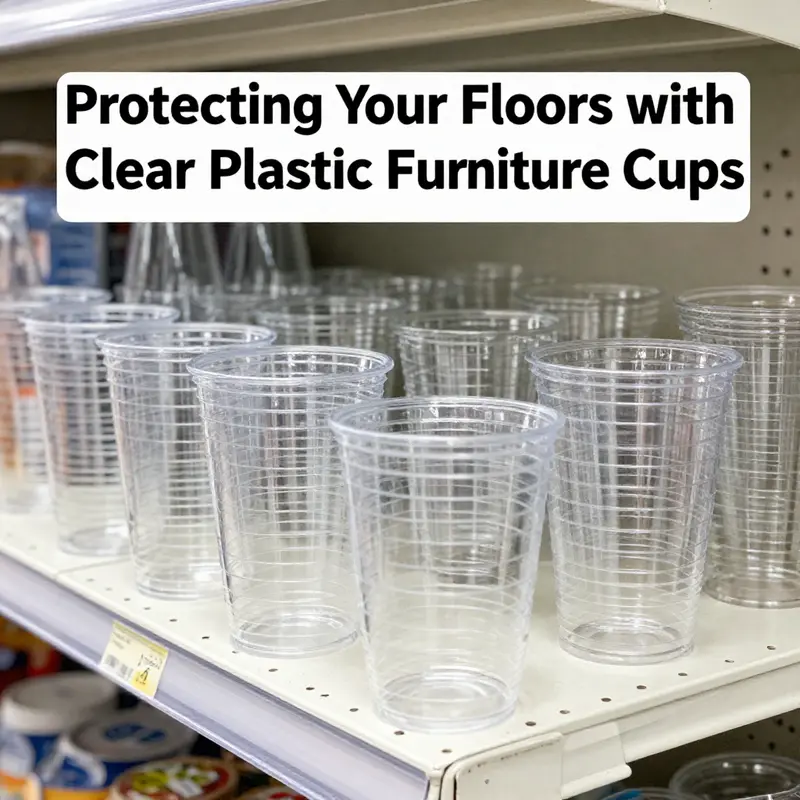
Clear plastic furniture cups perform their quiet service beneath the everyday bustle of home and office life. They sit under legs and casters with a transparency that makes them almost invisible, yet their impact on floors, wear patterns, and the ease of moving furniture is anything but subtle. In a world where hard flooring can show scratches, marks, and the scars of constant repositioning, these small protectors offer a practical solution that blends into any décor while delivering durable protection. They are designed to distribute weight more evenly, dampen friction, and provide a smooth glide that makes rearranging a room or cleaning a space far less daunting. The most common materials used for these cups are high-quality, BPA-free plastics, often in PET or PP, chosen for their combination of clarity, strength, and resistance to wear. The clarity matters because it keeps the cups unobtrusive, especially on light-toned floors or when furniture legs are part of a visible design scheme. The durability matters because households and offices expect long service life, even with frequent movement, contact with cleaning tools, and occasional heavy loads. And because the cups are typically placed on the very surface people walk on, safety and hygiene considerations translate into the choice of materials and finishes that resist staining and hold up to regular cleaning regimes. A standard size—roughly around 1-7/16 inches in diameter—tends to cover most furniture legs and casters found in typical living rooms, dining areas, and small offices. This sizing is a practical default that makes the cups appealing to a broad spectrum of buyers, reducing the guesswork that accompanies shopping for protective products in a large category.
Availability of clear plastic furniture cups across major online platforms is a noteworthy facet of their market stability. The ecosystem in which these cups circulate—encompassing both individual shoppers decorating a home and facilities teams maintaining a fleet of desks, chairs, and conference tables—appears to rely on accessible stock and predictable pricing. Listings for these cups appear in various sizes and configurations, including sets that combine cups with spiked features for enhanced carpet protection or different textures to accommodate diverse floor surfaces. This variety enables purchasers to tailor a purchase to the specific kind of flooring they want to protect, whether that is hard hardwood, polished concrete, or dense carpeted zones where movement resistance matters as much as protection. The breadth of options signals a mature market: suppliers are comfortable offering a spectrum of diameters and styles, and buyers have the flexibility to mix and match cups with furniture types ranging from lounge chairs to conference room desks.
Pricing, while generally affordable, reflects the expected trade-offs between size, features, and quantity. A representative listing for a pair or small set might hover around the low to mid teens in dollars, with variations that track with diameter and whether the design includes a spike for extra floor-savvy grip or a smoother cup for glide on hard surfaces. For example, a larger, spiked option can be listed at about $12.00, though shipping charges may add meaningfully to the total, highlighting how delivery terms influence the final cost especially for bulk purchases or impatient timelines. Larger, non-spiked configurations intended for broad floor protection can fetch prices in the same neighborhood or slightly higher as the size rises, and promotional pricing—such as momentary discounts or bundle deals—can shave a few dollars from the sticker price. Across the pricing spectrum, the strongest signal is not a dramatic price swing but rather reliability: buyers can expect these items to be available reliably, with stock replenished in typical retail cycles and price bands that remain within a narrow, predictable range.
When buyers compare options, a few functional questions guide the decision. Will the cups fit over the furniture feet or casters? Will they tolerate the floor’s texture, the pressure of constant movement, or the occasional impact against a wall or table leg? The general rule is to look for cups that fit the most common leg diameters while offering a sturdy, clear plastic that resists cracking or clouding under modest heat exposure and routine cleaning. For carpeted areas, the option with a spike or a slightly larger diameter may be favored because it can anchor the cup more securely and distribute weight to reduce fiber snagging. For hard floors, the emphasis shifts toward a smooth interior surface that minimizes resistance and lets furniture glide with minimal force. In either case, transparency remains an asset because it prevents the cups from visually competing with the floor or the furniture finish, preserving a neat, cohesive look even when the room’s layout shifts with seasonality or redecoration.
The market’s breadth also extends to business-to-business considerations. Supplies intended for offices or hospitality settings sometimes emphasize bulk availability and long-run consistency, with the practical advantage of standardized packaging such as bulk packs that simplify inventory planning and cost per unit calculations. In parallel, some suppliers—primarily those serving commercial clients—offer branding options, including logo printing, though this is less common than for disposable tableware and cups used in catering. When such customization is present, it is typically pursued by organizations aiming to reinforce branding on items that remain under desks or behind conference tables, rather than as a general consumer solution. The broader takeaway is that, while customization exists, most buyers are motivated by durability, price stability, and straightforward compatibility with a wide range of furniture types rather than by branding alone.
From a consumer perspective, a core point emerges: these cups are not designed for beverage use. Although their appearance can resemble disposable drinking cups at a casual glance, their role, construction, and safety profile are oriented toward floor protection and furniture movement. This distinction matters because blends of plastics used for beverage applications do not always align with the mechanical demands of furniture cup use, where bears weight, resists abrasion, and sustains clarity over time. The result is a product category that blends an almost invisible profile with a robust function, earning steady demand from homeowners, renters, small offices, and event planners who want to preserve floor finishes without sacrificing mobility or accessibility.
The narrative of market trends in clear plastic furniture cups also intersect with maintenance and longevity considerations. In a setting where floors can incur daily wear and furniture moves are frequent, the value of a simple, durable accessory increases. A clear cup that remains transparent after months of use helps maintain the room’s visual harmony, while durable materials resist pitting, clouding, or cracking under typical room temperatures and cleaning regimens. Buyers often weigh the cost per use, especially when they manage multiple rooms or offices. While a single set may appear affordable, the cumulative expense across a portfolio of furniture can be meaningful. Yet the durability and ease of replacement—paired with the relative thriftiness of the price bands—tend to offset the investment, particularly for facilities managers who value predictable maintenance budgets and quick re-stocking cycles.
Looking ahead, small but meaningful innovations could influence future trends. Enhanced cushioning at the cup’s base could improve comfort during movement and reduce floor rebound, while anti-slip textures inside the cup could further minimize scuffing on certain floor finishes. There could also be incremental shifts in customization, with more suppliers offering easy-to-reorder sets in popular sizes or slightly adjusted diameters to accommodate unusual furniture feet. Environmental considerations, including the recyclability of PP and PET choices and the durability of the cups in the context of extended-use scenarios, will continue to shape supplier offerings. In a market characterized by steady demand and predictable pricing, these developments will likely come in as incremental improvements rather than dramatic upheavals, reinforcing the central insight that even small, well-made protectors have a persistent role in preserving floors and easing movement in both homes and workplaces.
In sum, the current market for clear plastic furniture cups reflects a mature, stable segment anchored by practical value. Availability across multiple channels remains robust, pricing stays within accessible bands, and the variety of sizes and configurations empowers buyers to select the right balance of protection and mobility for their specific spaces. For consumers, this translates into a straightforward decision: choose the cup that best fits the leg diameter and the floor type, prioritize clarity and durability, and consider bulk or replacement options that align with the scale of the space being protected. For suppliers, the opportunity lies in sustaining stock levels, offering clear product specifications, and maintaining cost predictability in a segment where small price differences can influence purchasing choices. As floors endure and furniture continues to move, the quiet partnership between furniture cups and rooms remains a reliable, unseen form of care—a compact, efficient solution that supports cleaner, longer-lasting spaces without clutter or fuss.
External resource: https://www.walmart.com/ip/Furniture-Cups-in-Furniture-Hardware-Clear/1178791745
Branding Beneath the Surface: Customizable Pathways for Clear Plastic Furniture Cups in Commercial Use
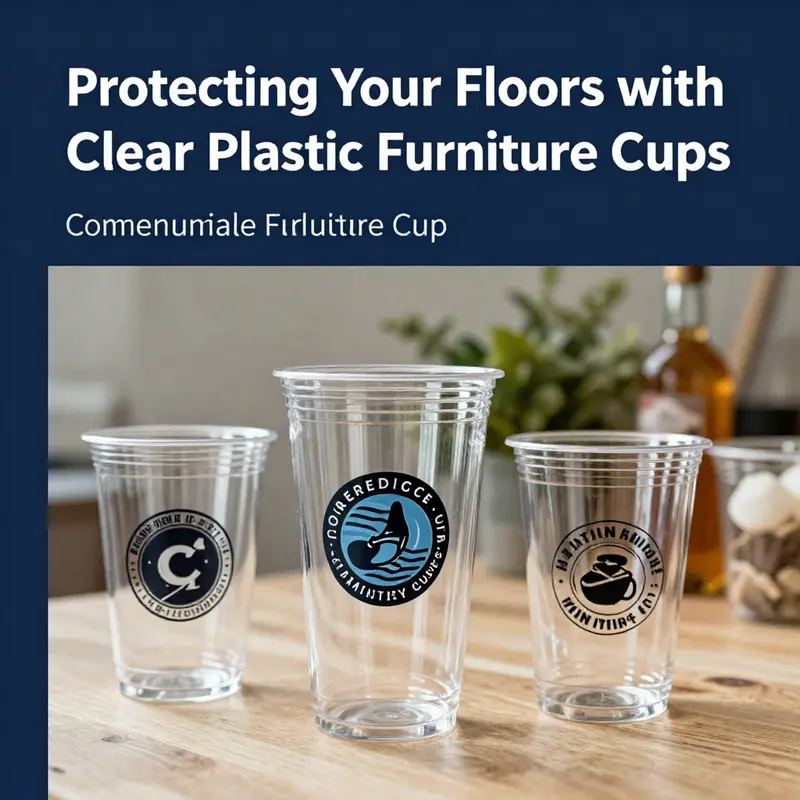
Clear plastic furniture cups, often overlooked as quiet protectors of floors, are evolving beyond simple protection into canvases for branding and design in commercial spaces. Their role is twofold: they shield delicate floor finishes from the relentless wear of furniture legs and casters, and they preserve a clean, unobtrusive aesthetic that lets the surrounding interior design speak for itself. The transparency that makes these cups nearly disappear on wood, tile, or carpet is exactly what opens the door to customization. In a world where a single lobby, conference hall, or dining area can serve hundreds of guests a day, the ability to tailor these small components to a brand color, a logo, or a campaign message is not a luxury but a practical extension of corporate identity. The result is a unified, cohesive look that travels with the furniture as it glides from room to room, meeting the operational needs of facilities teams while reinforcing brand presence in subtle, supportive ways.
From a material standpoint, the most common clear cups are designed to be BPA-free and manufactured from plastics that balance clarity with durability. PET and PP are the usual workhorses. PET offers high clarity and a lower cost per unit, which is appealing for bulk orders in large facilities where the cups must stay visually unobtrusive while still performing under frequent use. PP, by contrast, brings stronger heat resistance and chemical stability, which can be advantageous in settings where furniture experiences wider temperature fluctuations or where cleaning protocols involve more aggressive cleaners. For clients prioritizing sustainability, PLA becomes an attractive option, offering a bio-based, compostable pathway in line with environmentally conscious branding efforts. PS remains common in some markets for its rigidity and crisp edge definition, though its environmental profile is less favorable and its performance can waver under sustained heat. Each material carries a distinct balance of clarity, rigidity, cost, and environmental footprint, and customization plans often hinge on selecting the right base resin to support both the visual and functional ambitions of a project.
The real stage for customization, however, is the visible surface where logos, copy, and brand motifs can be applied without compromising the cup’s protective function. The most direct and widely available customization option is appearance customization through printing or logo application. Suppliers commonly offer multi-color printing—typically ranging from one to six colors—so a brand’s palette can be faithfully replicated on the cup’s exterior. For commercial deployments, this enables a fleet-wide deployment where the same logo, taglines, or design accents appear across all locations, maintaining a consistent visual language that customers recognize even from a distance as the furniture moves through a space. Since caster cups and clear furniture feet often sit at eye level or just beneath seating, the surface area available for printing is modest. Clever wrap-around prints or discrete side branding can communicate a corporate identity without overwhelming the design language of the room. The end result is a product that looks intentional and aligned with higher-stakes décor standards, rather than a generic floor-protection accessory.
The customization conversation also naturally extends to material choices. In a setting that values sustainability, the option to select PLA or a bio-based variant aligns with environmental goals and corporate responsibility messaging. In high-traffic public areas, the durability and chemical resistance of PP can be a deciding factor, ensuring that the printed branding withstands regular cleaning cycles and the rigors of daily movement. For venues that emphasize a pristine, colorless floor plan, PET’s exceptional clarity helps the branding vanish from view while still carrying the corporate mark—an effect many facilities managers seek when their priority is a seamless interior canvass rather than a billboard-like presence.
Beyond printed logos, other design considerations can broaden the customization envelope without compromising performance. Some product lines include variations in the base structure to address different floor types and furniture configurations. A common practical option is a base with an anti-slip texture or a slightly textured underside that minimizes shifting on smooth hard floors while reducing the risk of mar or scuffing when chairs or tables are rearranged. For carpeted spaces, there are even versions that feature a stabilized underside or a controlled, low-profile grip to distribute weight more evenly and minimize snagging. In some markets, spiked versions exist for carpet protection; these variants can provide a steadier contact with the floor while keeping the overall footprint discreet and unobtrusive. While the spikes themselves are not a branding element, their presence signals a commitment to preserving floor integrity in diverse environments, which in turn supports a broader brand promise of reliability and attention to detail.
The lifecycle of a customization program for clear plastic caster cups also hinges on practical logistics. In commercial procurement, bulk packaging and predictable lead times are essential. The standard size, around 1-7/16 inches in diameter, suits a wide range of common furniture feet and casters. Pack sizes—such as 12-piece or larger sets—offer economies of scale that facilities teams appreciate when outfitting entire campuses, hotel properties, or event venues. The price points for these bulk sets are a meaningful factor; examples from wholesale channels show that bulk caster cups can be acquired at accessible prices, enabling facilities managers to outfit spaces without exorbitant expense. When a client moves from a generic, unbranded solution to a branded program, the economics must anticipate the added steps of color matching, print setup, and minimum run quantities. Smart suppliers translate these considerations into tiered pricing, with the option to scale from a modest local installation to a multi-site rollout across dozens of properties with consistent branding.
The decision to pursue customization for clear plastic caster cups is also influenced by the broader design philosophy of a space. In hospitality or corporate environments where customers experience a brand through every touchpoint, the small details matter. A pair of transparent cups bearing a logo or color cue can become a part of the visual narrative that guests remember, echoing the cues they see in signage, menus, or lounge areas. The invisibility of the cups themselves may be a strategic advantage, allowing branding to feel integrated rather than intrusive. For design teams, the challenge becomes balancing visibility with discretion, ensuring the branding reinforces the space’s identity without competing with the furniture’s lines or the floor’s texture. In that sense, customization is less about turning the caster cups into megaphones and more about weaving branding into the fabric of the room’s experience.
From a sourcing standpoint, the option to print logos or brand marks on clear cups must be checked for compatibility with space constraints and cleaning protocols. Printing coverage, durability under cleaning agents, and ink adhesion are all pivotal considerations. It is not enough for a logo to look crisp on day one; it must endure the daily rituals of hospitality and office life. The best practice is to coordinate print specifications with the venue’s maintenance standards, ensuring that the chosen materials and inks withstand the chemicals used in cleaning routines and the occasional impact from foot traffic. With that alignment, the branding on a caster cup becomes a quiet ambassador for the brand, visible to guests without requiring deliberate attention.
In the context of cross-channel marketing, the concept of customization for clear plastic cups aligns with broader trends in beverage service and disposable ware. Even as caster cups under furniture feet perform their protective duties, the same principles—identity, color fidelity, and material behavior—apply to serviceware used in the same environments. For practitioners looking to explore this alignment, one relevant case study area is the world of printed disposable cups designed for branding quick-service and event-driven experiences. A representative example of the customization approach is evident in the option to print logos and multi-color designs on disposable cups, a topic explored in depth by beverageware suppliers who offer a range of print capabilities. See the discussion about custom-printed-logo-disposable-6oz-8oz-9oz-paper-coffee-cup for a concrete illustration of how branding is achieved on a different, but conceptually related, product category. custom-printed-logo-disposable-6oz-8oz-9oz-paper-coffee-cup.
The dialogue around customization for clear caster cups also benefits from external technical context. For practitioners seeking a broader technical overview of the materials and applications that influence disposable clear cups and their lids, a detailed reference exists that illuminates specifications and practical applications. This resource provides a technical grounding that informs decisions about clarity, rigidity, and printability, which in turn affect custom options for caster cups used in commercial settings. See the external technical overview at the linked source for a deeper dive into the material science and design considerations that underpin any customization program for clear plastics in serviceware.
In practice, a well-considered customization strategy for clear plastic furniture cups is not merely about slapping a logo on a surface. It is about selecting a material that maintains clarity and structural integrity while supporting color fidelity and print durability, then marrying that choice to a base design that accommodates branding without compromising function. It is also about understanding the space where the product will live—wood, tile, or carpet—and selecting features such as anti-slip textures, base stabilization, or carbide-like spikes that offer carpet protection. The end product is a furniture-protection accessory that carries a brand’s personality with quiet confidence, helping guests feel attentive to detail without feeling overwhelmed by branding in the environment. When approached with these principles, customization becomes a disciplined extension of interior design and facilities management rather than a mere adornment.
External resource for broader context: https://www.benjaminross.com/blog/technical-overview-disposable-clear-cups-lids/
Clear Footing, Clear Footprint: Environmental Realities and Safety of Plastic Furniture Cups
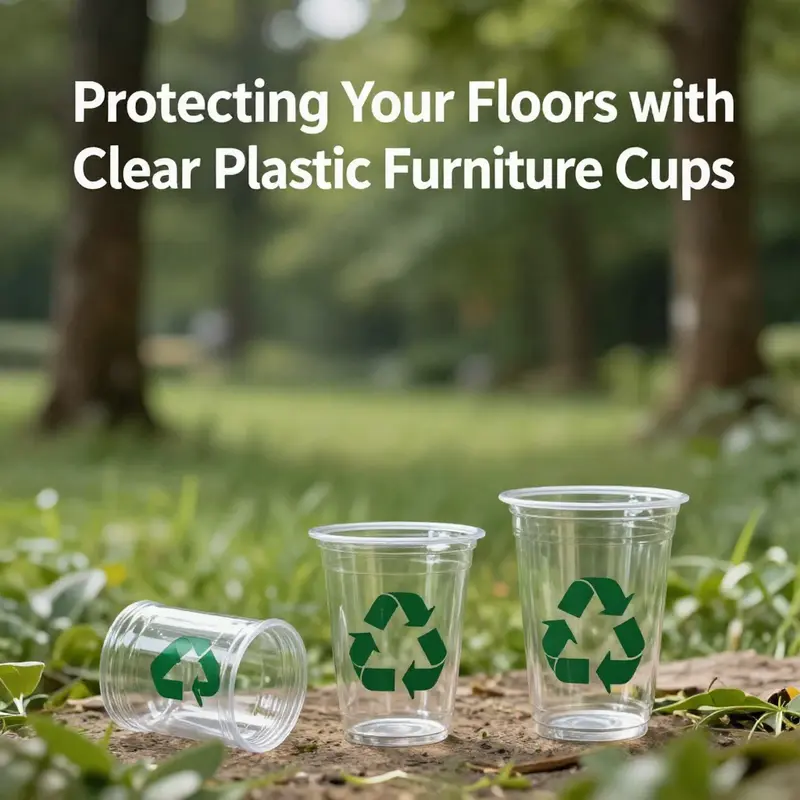
Clear plastic furniture cups sit quietly under the legs of chairs, tables, and fixtures, offering an unobtrusive shield for floors while performing a practical task: protecting surfaces from scratches, distributing load, and enabling smooth movement.
Yet behind that transparency lies a lifecycle that travels from production to end of life and echoes beyond a single room. This chapter examines the environmental footprint and safety considerations of clear plastic furniture cups, especially in busy commercial or public spaces where turnover and diverse floor finishes magnify both benefits and risks.
In practice, many cups are made from BPA-free plastics such as PET or PP, chosen for clarity, strength, and durability. The visible profile is almost invisible in use, which helps preserve a cohesive interior aesthetic. However, the same material choices that confer clarity and protection also pose questions about energy use, resource use, and end-of-life options. The lifecycle includes raw material extraction, resin production, molding, packaging, transport, use, and disposal. Each stage can contribute to greenhouse gas emissions and potential releases of microplastics if treatment and filtration fail to capture them.
Microplastics concerns are not limited to the cups themselves but extend to connectors in the broader plastic ecosystem. Responsible manufacturers implement filtration, closed-loop wastewater systems, and recycling programs. In high-traffic venues, where large quantities are deployed and replaced, the cumulative footprint becomes meaningful. Certifications and robust lifecycle analyses help buyers compare options and avoid greenwashing. Laboratory promises must be evaluated against real-world performance and end-of-life pathways.
Positive developments point toward sustainable alternatives and improved plastics technology. Plant-based or starch-based cups, and fully degradable paper-based solutions, are advancing to rival traditional plastics in insulation, leak resistance, and strength when properly engineered and industrially processed. The key is credible verification that end-of-life options exist in practice, whether through recycling, industrial composting, or reuse schemes. When facilities can access appropriate waste streams, the environmental advantage grows.
For institutions and facilities managers, the practical approach combines verification, context, and long-term vision. Look for third-party certifications that address safety in use and disposal pathways, ask about end-of-life infrastructure in the region, and pilot alternatives before wide-scale adoption. Consider flexibility in space design: pads that accommodate different materials, ease of cleaning, and compatibility with various floor finishes to minimize friction and wear. In other words, progress comes from coordinated decisions that connect product design with waste infrastructure and informed consumer choices.
In sum, the decision to use clear plastic furniture cups remains a balance of protection, cost, and environmental responsibility. The most durable gains come from ongoing evaluation and a willingness to adapt as new materials and processing techniques emerge. By aligning procurement with robust data and responsible end-of-life options, institutions can maintain the essential benefits of floor protection while reducing environmental impact. Additional context from recent consumer protection research highlights the need for clear labeling, robust standards, and realistic performance metrics in real-world settings.
Final thoughts
Clear plastic furniture cups play a pivotal role in ensuring your business maintains a polished appearance while protecting valuable floors. By understanding the functionality, materials, market trends, customization options, and environmental impact of these accessories, businesses can make informed decisions that enhance operational efficiency and sustainability. Investing in clear plastic furniture cups not only minimizes wear and tear on your flooring, but it also reflects a commitment to quality and customer care. Protect your investment and elevate your space by choosing the right protective solutions.