
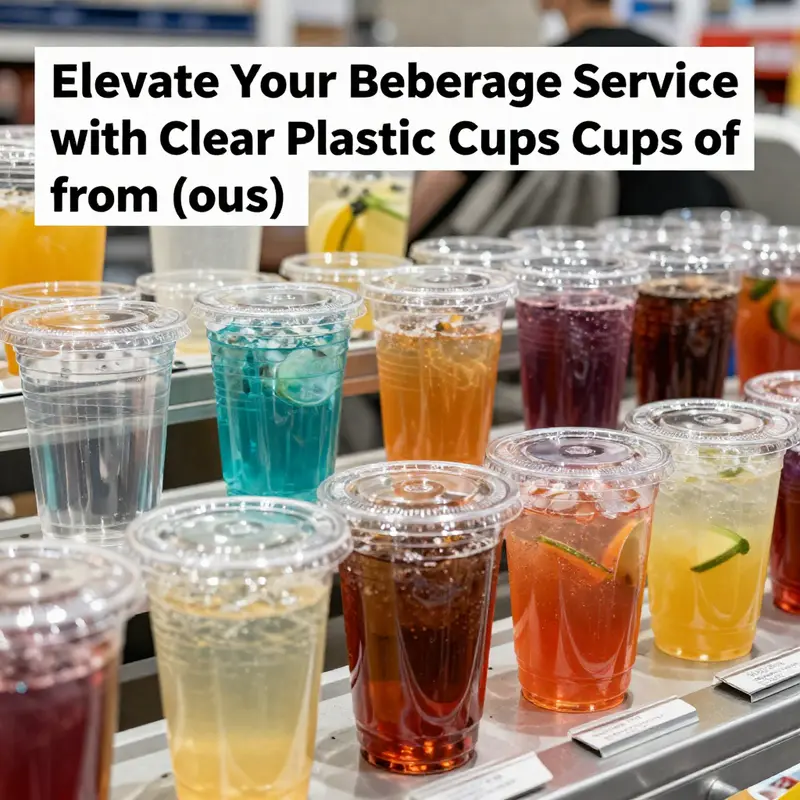
As the beverage industry continues to expand, the demand for high-quality, reliable packaging solutions has never been greater. For bubble tea shops, restaurants, food trucks, and catering services, finding the right clear plastic cups is crucial for enhancing customer experience while maintaining operational efficiency. Costco offers a range of options that cater to various needs, from event planners to corporate procurement teams. This article delves into the available sizes and prices of clear plastic cups at Costco, the benefits they provide, a comparison with other retailers, consumer preferences, and environmental considerations. Understanding these elements will better equip your business to make informed purchasing decisions.
Clear Choices, Bulk Buys: Mapping Costco’s Availability, Sizing, and Real-World Prices for Clear Plastic Cups
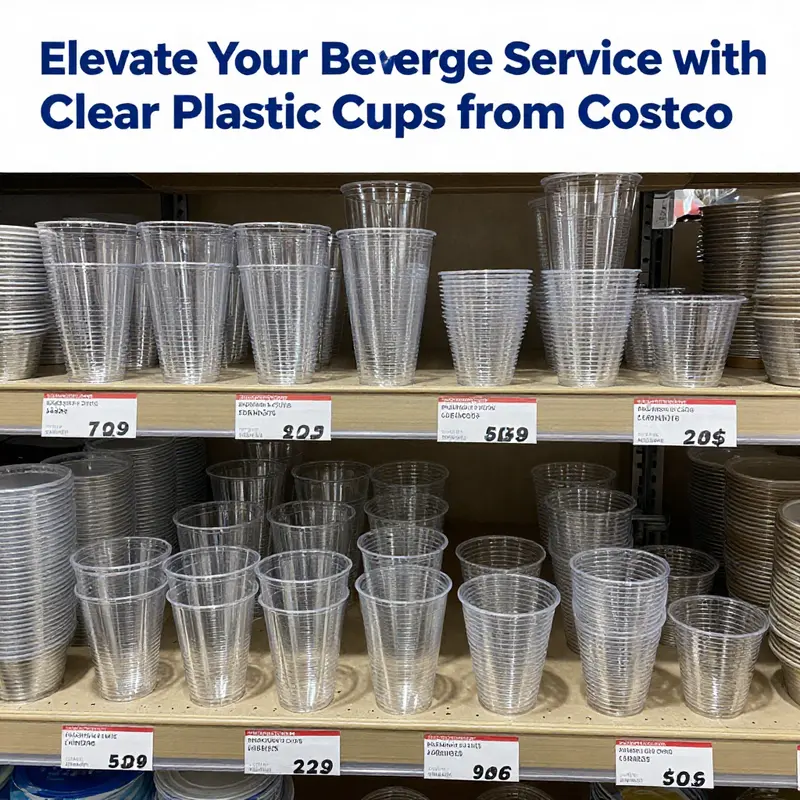
In a warehouse club where bulk is the default and convenience trails behind the next promotional banner, the path to clear plastic cups is rarely straightforward. The topic sits at the intersection of consumer desire for immediate use and the practical realities of wholesale procurement. Costco, with its signature focus on membership-driven savings, often positions disposable cups as a category you browse rather than a shelf you stalk. The reality that emerges from the available public data is that there is no consistent, publicly listed catalog of Clear Plastic Cups on Costco’s website or in every store. What shoppers frequently encounter instead are broader capsules of options—disposable cups sold in bulk, with sizes and styles varying by region, season, and even the specific aisle layout. This means that for anyone planning a party, event, or routine beverage service, the Costco experience is less a fixed price list and more a live, location-aware negotiation between quantity, material, and promotion.
To understand what might be available, it helps to zoom out first. The clearest takeaway from broader market data is that clear disposable cups exist in a spectrum of sizes and materials, and the unit economics shift dramatically as you move from a 7-ounce cup to a 16-ounce cup, or from a basic plastic cup to a version with a lid or a specialty finish. For instance, wholesale and retail sources show that a 7-ounce clear cup, typically sold in large lots, can run around twelve to thirteen dollars for a pack of one hundred in certain market segments. That translates to roughly a tenth of a dollar per cup, a price point that reflects the lower-margin, high-volume nature of casual partyware distribution. A parallel example in a consumer-friendly retail channel features a 16-ounce clear cup sold under a popular value line, commonly found in packs of fifty at approximately four to five dollars, yielding a price per cup just under a dime. These numbers—roughly twelve fifty for one hundred 7-ounce cups and around four sixty-eight for fifty 16-ounce cups—illustrate the two ends of the spectrum: small-volume, higher-cost-per-unit convenience versus larger packs where the unit cost drops.
When evaluating Costco specifically, the same economic logic applies, but with the added wrinkle of membership-based purchasing and regional inventory. Costco’s consumer-facing model tends to emphasize bulk packaging and limited SKU depth in any single location. In practice, that means you may find cups that come in large, uniform counts, such as 100 or 200 units per carton, with price tags that reflect local promotions rather than a standardized nationwide price. The absence of a universal, real-time listing for clear plastic cups on Costco’s public site does not indicate a universal absence of availability; rather, it underscores how the retailer curates inventory to balance demand, storage constraints, and promotional cycles. For shoppers, the recommended approach is straightforward but requires a little patience: search through Costco’s online store or app for terms like plastic cups, disposable cups, or clear cups, then compare what appears in Kitchen & Dining or Party Supplies by region. A trip to the store can also yield different counts or packaging options, which is a reminder that bulk items at warehouse clubs are rarely uniform across all locations.
The practical upshot for event planners and everyday users is to think in terms of unit cost and total cost, rather than chasing a single recommended SKU. If you’re planning for a single event, you weigh the convenience of a prepackaged set against the flexibility of more modular options from wholesale sources. The numbers that surface in the broader market include a 7-ounce cup priced in the low hundreds of dollars per thousand units in some wholesale channels, a 16-ounce cup around a nickel to ten cents per cup when bought in larger quantities, and even larger sizes used for coffee or bubble tea offerings that come with lids at a comparable bulk price. Translating these wholesale figures to Costco’s buyer experience requires translating the per-unit cost into the cost of the entire carton, then recognizing how promotions, membership tiers, and regional freight all push the final checkout figure up or down. For the curious buyer who wants concrete reference points outside Costco, it’s useful to know that substantially larger wholesale channels and marketplaces often list clear cups in 50,000-unit orders, with per-unit prices that can be as low as a few cents depending on material selection—PET, PP, or PLA— and the exact diameter, height, and wall thickness. The key distinction, though, is that these are wholesale listings designed for manufacturers or large buyers, not typical consumer purchases.
From a materials perspective, the landscape remains as vital as the counts. Clear plastic cups are made from an array of polymers, each with its own implications for clarity, rigidity, safety, and environmental footprint. Polystyrene is traditional and widely used for its clarity, though some buyers prefer polypropylene for its toughness and resistance to cracking. Bioplastic options, such as polylactic acid, signal a sustainability angle but can come with trade-offs in cost and heat tolerance. The practical takeaway for Costco shoppers is to stay mindful of how the material choice affects both price and performance in real-world use. A party with carbonated beverages and ice may demand sturdier PP cups; a cold, non-carbonated serving could fall comfortably into a lighter PS category. The durability and lid compatibility of a cup in bulk purchase scenarios also matter, particularly in settings where transport or self-service is part of the plan. Packaging, too, plays a substantial role: a 100-count carton can be substantially less expensive than ten individualized sleeves with the same count, but the cost per unit must be considered in the broader context of venue setup, storage, and disposal.
For readers who want a concrete relational anchor within the broader ecosystem of disposable cup options, there is a relevant reference that explores a range of related products, including lids, cups, and related take-away ware that share a focus on portability and presentation. Consider exploring a related catalog entry that presents a disposable cup system designed for cold beverages and easy lid pairing; this example helps illuminate how retailers price and package similar items in bulk, even if the exact SKU you see at Costco differs. As you pore over Costco’s listings or in-store displays, this broader perspective can help you translate a per-unit cost into a total cost for your event, and it can also guide expectations about what to find in a given region at a given time. To keep the path practical, remember that the most reliable method to confirm availability and price is to use Costco’s search function on the official site or app, and to visit the store if possible to check the carton counts and whether lids are included or sold separately.
As one moves through these considerations, a useful mental model emerges. Bulk cup purchases at Costco are less about chasing a single, static price and more about aligning volume, material choice, lid inclusion, and delivery dynamics with the needs of the occasion. If your plan is a casual backyard gathering, a basic, clear 16-ounce cup with a simple lid may suffice, and the unit price in a bulk pack will typically reflect the convenience of a ready-made solution. If your plan requires bubble tea-style cups or specialty beverages that demand specific diameters and wall thicknesses, you may find that options in the Costco ecosystem are more limited or revolve around a few favored configurations. In such cases, it is reasonable to supplement Costco’s offerings with wholesale channels that cater specifically to beverage service, while still weighing Costco’s bulk pricing against those sources. The overall lesson is that clear plastic cups exist in abundance in the wholesale space, but Costco’s consumer-facing footprint for this particular item is nuanced and highly dependent on location, timing, and the store’s current assortment.
For readers who want to explore a linked example that touches on disposable cup options in a related category, consider this resource that highlights a range of paper-based and disposable cold beverage cup solutions designed for flexible service. It can serve as a practical comparison point for what you might encounter in a bulk club setting and how different packaging choices influence cost and usability.
Internal reference point: for a related selection in the disposable cup family that emphasizes lid compatibility and eco-conscious design, see the following product entry: disposable-eco-friendly-printed-logo-cold-beverage-cup-paper-cup-with-lid. This example helps illustrate how a similar category item is presented to buyers who prioritize branding and sustainability alongside price.
If you are actively comparing options, keep in mind that the wholesale numbers discussed here are not uniform across the board. The field is dynamic, and promotions, regional stock, and shipping costs can swing the final price by a margin that matters when you are budgeting for a large event. In other words, the Costco experience for clear plastic cups is not a single, definitive price tag, but a snapshot of a live market—one that shifts as stock moves, promotions change, and new packaging configurations arrive on shelves. With that in mind, the best plan is to use Costco as a starting point for bulk planning, then corroborate with other wholesale or bulk vendors to ensure you are not leaving value on the table when you assemble the final guest experience. External markets that routinely aggregate large orders can offer a broader sense of scale and price ranges, which provides valuable context for evaluating Costco’s occasional offerings.
External resource for broader context: https://www.alibaba.com
Clear Choices in Bulk: How Costco-Style Transparent Cups Streamline Home and Event Service

Beneath the sheen of a neatly laid table or a carefully planned catering lineup lies a choice that often seems mundane until it isn’t. Clear plastic cups, when purchased in bulk from a warehouse-club setup, become more than simple vessels for beverages. They evolve into a practical backbone for homes, workplaces, and events where speed, clarity, and hygienic confidence matter. The value rests not just in the cups themselves, but in the way bulk purchasing aligns with the rhythms of daily life and organized service. When a host or a small business imagines the workflow of serving drinks, the decision to use transparent cups with reliable lids, piled in large quantities, emerges as a quiet force multiplier. The ease of grabbing a stack, the predictability of fit with common lids, and the ability to identify contents at a glance all contribute to smoother transitions between preparation, service, and cleanup. And while the retailer in question markets such products in bulk, the logic translates beyond a single storefront. It reflects a broader philosophy of efficiency: reduce the friction of everyday tasks by choosing tools designed for quick, confident use and repeatable results in large volumes.
One of the primary advantages of these cups is their spill-resistant design when paired with domed lids. In a setting where to-go service, outdoor gatherings, or crowded event lines are the norm, the combination of a transparent cup and a secure lid becomes a practical safeguard against mishaps. The visual clarity of the cup adds a layer of customer assurance; a drink, clearly visible, invites trust and reduces the likelihood of confusion between similar-looking beverages. This is not merely aesthetic. In bustling service environments, quick recognition of the correct drink is essential for maintaining tempo and accuracy. The transparent material supports this by allowing staff and customers to confirm contents in real time without fumbling or cross-checking through opaque containers. The result is a smoother workflow, fewer misfilled orders, and an improved rhythm from early prep to final handoff.
The transparent nature of these cups also makes cleanliness easier to assess. In any food-service context—or even at home during busy weeknights—the ability to inspect the interior before use is a small but meaningful comfort. When cups arrive in bulk, there is a practical expectation of thorough inspection during stock rotation. A quick visual check can reveal packaging flakiness, any smudges or film on the interior, or other signs that warrant a replacement before service begins. This straightforward verification supports hygiene standards and reduces anxiety about the safety of beverages. It also helps maintain a high level of confidence among staff and guests, who rely on consistent, clean presentation as part of the overall experience.
Efficiency follows closely behind hygiene and visibility. Bulk transparent cups are designed to be lightweight, stackable, and easy to handle—qualities that matter when a team is replenishing stations during a rush or when a family is swapping from one flavor to another without slowing down. The ability to store large quantities in a compact footprint is not just a space-saving convenience; it’s a time-saving strategy. When the supply closet is organized around uniform cups, staff can grab, fill, cap, and serve with minimal movement and decision fatigue. That streamlined sequence translates into faster service, less crowding at the serving area, and more opportunities to attend to other tasks that keep an operation’s momentum—like refilling beverages, cleaning up, and attending to guests’ needs.
From a cost perspective, bulk clear cups offer a compelling balance of durability, convenience, and price. In many markets, smaller cups in bulk can be purchased at a per-cup cost that rivals or undercuts what individuals might pay for disposable cups bought in smaller quantities. The value isn’t just in the upfront price. The real savings accrue when one considers the reduced waste from overbuying or underestimating needs, the lower labor costs associated with faster service, and the predictable per-unit cost that helps with budgeting for events, celebrations, or daily office use. A bulk-buy mindset, when paired with the right size options, helps consumers avoid the constant cycle of reordering and the last-minute rush that drives up prices and reduces reliability. The math is practical: buy what you know you’ll use, in a size that fits typical drinks, and pair with compatible lids to maintain the integrity of a to-go beverage across a short journey.
Size and packaging matter as much as material and price. In the bulk market, smaller cups—such as those around 7 ounces—are common for sample-sized servings or lighter, everyday beverages. They’re typically sold in sizable packs, making them a convenient option for homes preparing for a gathering or offices stocking a break room. On the other end of the spectrum, larger cups—around 16 ounces or more—align with standard soft drinks, iced coffee, and party beverages. They tend to be packaged in sizable bundles as well, designed to minimize the frequency of reordering during a busy stretch. The key is to match the cup size to the expected beverage profile and the anticipated guest count or daily needs. A thoughtful selection reduces the risk of running dry mid-event while avoiding overstock that consumes valuable storage space.
The broader disposable-dware landscape shows why many households and small businesses gravitate toward bulk cups through a warehouse-club model. The clustering of items under one roof—the bulk quantities, the simple price-per-unit, and the straightforward packaging—creates a dependable buying experience. While every retailer price-fluctuates with promotions and inventory, the underlying logic remains steady: bulk purchases lower per-unit costs, improve predictability, and support efficient service. The same rationale applies whether the cups are intended for a one-day event, a seasonal promotion, or the steady cadence of a busy office café. In a world where time is money and cleanliness is a baseline expectation, the ability to rely on clear cups that fit standard lids and stacks becomes a quiet but powerful product choice. It is not simply about owning a supply of cups; it is about anchoring a workflow that respects guests, staff, and the rhythms of daily life.
For readers who want to place this in a practical shopping context, the search can be navigated through the retailer’s online catalog or app. It is helpful to look for options that indicate clear walls, sturdy base construction, and compatibility with widely used lid designs. Checking the available pack sizes and per-unit costs can reveal the best balance for a given scenario, whether hosting a family reunion, equipping a small catering operation, or stocking a break room where beverages flow freely. When such cups are paired with domed lids, the combination becomes a reliable solution for on-the-go consumption, car rides, or outdoor settings where spilled beverages can create a mess or attract insects. The principle is simple: choose a cup that highlights content visually, protects the drink during transport, and supports a smooth, repeatable service flow. Then, scale that choice to fit the volume demands of the moment and the storage constraints of the space.
As part of the broader conversation about disposable drinkware, there is value in consulting related resources that illuminate how different materials and designs perform under real-world conditions. For a broader context on how materials influence performance in bulk settings, see disposable eco-friendly-printed-logo-single-wall-paper-cup. This reference helps place the Costco-style bulk approach within a wider spectrum of options, including considerations around branding, sustainability, and how design choices can affect handling and user experience. The link serves as a reminder that the cups chosen for any event or environment do more than hold liquid; they contribute to the rhythm of service, the perception of cleanliness, and the ease with which guests and staff move through the moment of purchase to the moment of cleanup.
In practice, the decision to rely on bulk transparent cups from a warehouse-club setting is a pragmatic one. It reflects a preference for consistency and reliability in everyday life, where the aim is to minimize friction without compromising quality. It also speaks to the broader notion that well-chosen disposables can support both personal and professional goals—from hosting intimate gatherings to running a small catering service—by freeing time and mental energy for the moments that matter most: making guests feel welcomed, serving beverages with confidence, and ending the event with a clean, orderly space.
For those who want the most up-to-date information on specific stock, batch sizes, and current pricing, checking the retailer’s official site or app is the best course. Real-time inventory and promotions can shift quickly, and the latest data will reflect what is actually available in a given location or online. In the meantime, the overarching themes remain stable: bulk, clear cups offer spill resistance, instant content recognition, straightforward cleanliness checks, and a path to efficient service at a favorable cost per serving. They fit naturally into homes, small businesses, and event settings where predictability and simplicity are valued as much as function and form.
External resource: https://www.costco.com/cups-200-pack-clear-plastic-cups-with-lids.product.100674839.html
Costco’s Clear Plastic Cups in the Retail Arena: A Practical Comparison Across the Bulk Market
Clear plastic cups are the quiet workhorses of gatherings, offices, and casual cafes. The appeal is simple: a transparent shell that shows the drink, a disposable format that makes cleanup predictable, and a bulk-supply appeal that aligns with the needs of large groups or busy workdays. Yet the way a buyer navigates the market for these cups often reveals more about supply chains and seasonal promotions than about a single price tag. When Costco enters this conversation, the scene becomes twofold: the retailer’s own online catalog does not present a straightforward, line-by-line listing of clear plastic cups, and the broader market presents a spectrum of sizes, quantities, and price points that can tempt even the most loyal shoppers to compare apples to apples that aren’t apples at all. In practice, the decision tends to hinge as much on packaging and logistics as on sticker price. A practical reader will find that the market offers a mosaic of options—small, mid, and large capacity cups—each with its own sweet spot in terms of per-unit cost, durability, and compatibility with lids and straws. In that sense, Costco’s position in this niche becomes a case study in how bulk retailers handle an everyday commodity when direct product listings are sparse and in-store aisles rely on bulk signage rather than a uniform online catalog.
Across the range of sizes available to bulk buyers, the rhythm of price and packaging tells a familiar story. A common, smaller size—around 7 ounces—often appears in packs of one hundred cups and carries a price point that sits near the two-digit range, roughly around twelve dollars and a few cents. That translates to about a nickel and a fraction per cup, a convenient figure for quick events or spill-prone environments where guests may want a light-handled, easy-drink vessel. By contrast, a more substantial offering—the 16-ounce cup—tends to be sold in medium-sized packs, sometimes around fifty cups, and carries a lower per-unit price when bought in bulk, frequently dipping toward the ten-cent-per-cup mark. These two sizes illustrate a broader principle in the disposable cup market: larger cups often come with a price-per-piece advantage, thanks to economies of scale in production and packaging, even though the total outlay is higher per pack. The market also features clear or frosted cups calibrated for beverages that range from iced coffee to bubble tea, with capacities in the 500- to 700-milliliter range. In wholesale channels, these larger cups show a notable price spread—from roughly three to ten cents per cup—depending on order size, material choice (whether a basic PET, a sturdy PP, or a compostable PLA option), and the specific supplier’s cost structure. The material choice matters as well, because it influences not just the price but the user experience: grip, rigidity, heat tolerance, and the visual appeal of the beverage inside. Materials marketed for environmental considerations, while often more expensive, signal a broader shift in consumer expectations that even bulk sellers must consider when projecting total cost of ownership for an event or operation.
Yet the real-world purchasing landscape soon reveals a tension between what the market offers and what a particular retailer emphasizes. In the case of a large wholesale and membership-based retailer, the path to finding a suitable clear cup may require a careful search within categories like Kitchen & Dining or Party Supplies, and it may also hinge on the availability of bulk packs with or without lids. The lack of a direct, clear catalog entry for a specific plastic cup size can create a moment of hesitation for buyers who want to lock in a price and a delivery window in advance. The effect is not merely about price per cup; it also concerns the broader logistics of procurement: whether the cups arrive in a way that fits any existing shelving, stacking constraints, or event timelines; whether the cups are compatible with lids and straws that a customer already owns; and whether the cup walls’ clarity and bottom strength meet the demands of a fast-paced service environment. In a world where a store’s private label or generic bulk packaging can vary by season, location, or even by shipment, the advantage of a truly consistent listing becomes less about a single SKU and more about a reliable procurement experience. In this sense, Costco’s approach—where search results can be inconsistent and depend on in-store stock or seasonal campaigns—reflects a broader challenge in bulk retail: the tension between showroom-like clarity and the realities of large, diffuse supply chains.
To frame Costco’s position against other widely accessible sources, it helps to look at how the broader market presents itself. In big-box retail environments, one often encounters 16-ounce clear cups with an option for lids and straws, marketed as a convenient cold-drink companion for iced coffees, shakes, or smoothies. The per-pack configurations can be modest, while the per-unit pricing benefits from larger bundles that reduce the cost per cup, a familiar pattern for bulk buyers who plan for steady demand. In the online marketplace space, buyers can find seven-ounce cups in hundred-count bundles priced near a modest, single-digit total, underscoring how small-volume needs can be met with economical, everyday-use options. For truly high-volume needs, wholesale channels advertise stark economies of scale: tens of thousands of units at rates near a fraction of a dollar per cup. These contrasts illuminate a practical reality: for any organization or event planner accustomed to bulk sourcing, the decision to purchase via a membership retailer like Costco involves balancing the allure of bulk pricing with the friction of catalog navigation and the risk of stock-outs. The price signals in the broader market—whether at a well-known big-box chain, a major online platform, or a wholesale supplier—often provide a useful cross-check to what a buyer might anticipate from Costco, even if Costco’s actual in-house offerings are not fully visible in a single, stable product page.
From a consumer perspective, this is where the decision calculus becomes nuanced. If one relies on Costco’s physical aisles or online search to identify a ready-made solution, the user may not always land on a simple, uniform SKU. The upside, though, is the potential for bulk savings and the convenience of one-stop shopping when a member needs to restock a wide range of kitchen and party essentials. The tension between price per cup and the total cost of ownership—shipping or pickup, the number of cups per carton, and the compatibility with existing lids and straws—remains central to the evaluation. Meanwhile, the competition’s price signals reveal that cheaper per-unit options exist, especially at very large quantities, but those options often require longer lead times or a willingness to manage additional logistics. And the marketplace’s broad spectrum of materials—non-recyclable plastics, recyclable PET, or compostable PLA options—further complicates the equation for buyers who weigh environmental impact alongside cost. In other words, for a buyer seeking clarity in a fog of bulk options, there is value in stepping back from a single retailer’s catalog and mapping a simple framework: target size, determine whether a lid is essential, decide on material based on budget and sustainability goals, and then benchmark the unit price against other bulk sources where possible. This framework helps prevent the common trap of assuming that the lowest sticker price per cup at one retailer guarantees the best deal when all other factors—packaging, delivery, and future use—are factored in.
Beyond the numbers, another layer of consideration emerges: the practical needs of the end user. For events and busy service environments, the preference often leans toward an option that feels sturdy enough to hold a full drink without warping, yet light enough to be comfortable to hold. Clarity matters because it highlights the drink’s appearance, which can be a factor in beverage presentation, particularly for cold drinks that rely on visual appeal. The packing configuration matters as well; a pack that’s easy to store, easy to transport, and easy to grab when restocking a service station reduces the chance of waste and miscounts. When a buyer looks across the bulk market, they can observe that different retail channels emphasize different strengths: some offer robust, large-capacity cups ideal for cafe service; others highlight cost efficiency through very large orders; still others target casual household use with smaller packs that fit on pantry shelves. The interplay of these factors—price, capacity, material, lid compatibility, and logistics—paints a landscape where Costco’s role is not solely about price per cup but about how well a member can align their bulk purchase with a predictable supply chain and a clear path from cart to customer.
In the end, the practical takeaway for a reader who wants to compare Costco with other retailers is modest: expect variation in how cups are packaged, priced, and delivered. Costco may not offer a simple, single SKU that mirrors every other retailer in a tidy online listing, but that does not necessarily erase value. For teams planning events or daily operations that rely on disposable cups, it is worth mapping the approximate price ranges from multiple channels, noting the per-unit cost at a preferred quantity, and then testing feasibility with the retailer’s current stock and delivery timelines. The core question becomes not only which cup is cheapest, but which option aligns with the organization’s pace, storage space, and sustainability goals. In that light, a well-rounded buying strategy emerges: price awareness, inventory awareness, and a clear plan for how cups fit into the broader workflow. The result is less a one-shot purchase and more a coordinated, bulk-ready approach to everyday beverage service that leverages the strengths of each channel while acknowledging their limitations. As the market for clear disposable cups continues to evolve—driven by demand for convenience, presentation, and responsible material choices—the buyer who treats every cup as part of a larger system will navigate the space more effectively, whether sourcing from Costco, a major retailer, or a dedicated wholesale supplier.
Clear Cups, Big Buys: Reading Consumer Preference and Availability in a Warehouse-Club Context

Shoppers move through the warehouse club aisles where bulk packaging dominates and the pace is set by pallets and service counters. In this setting, clear plastic cups are a practical focal point: inexpensive in bulk, versatile for beverages, and easy for fast service. Buyers weigh three core dimensions before placing a bulk order: price per cup with minimums, packaging configuration including lids and sleeves, and the reliability of supply across brands. The pricing story is dynamic: smaller cups in large packs may present attractive unit costs, but larger sizes often shift the per cup economics in favor of savings when bundled with compatible lids or sleeves. Availability and packaging matter just as much as price: does the cup ship with a lid, can it stack for space efficiency, and will it integrate with existing serviceware?
Beyond cost and availability, sustainability looms as a practical constraint. The tension between disposable convenience and environmental responsibility remains real in high volume settings, where cleaning and throughput are prioritized. Buyers increasingly seek models that balance hygiene and waste, such as recyclable or recyclable friendly designs, or clear information about disposal streams. Yet in coffee stations, catering events, and quick service lines, the needed speed and reliability can temper the shift toward greener options. The decision framework thus often centers on three questions: can the cup be sourced reliably in the required quantities, does the unit cost support projected margins after labor, and does the packaging approach align with sustainability goals without slowing service?
Cross category awareness helps buyers forecast stock levels and supplier options. Wholesale channels for cups often sit alongside related items like lids, sleeves, and straws, enabling a one stop reorder experience. This alignment reduces stockouts and shortens lead times, which is critical during peak periods. In practice, buyers compare listings across brands and pack sizes, verify compatibility with existing cups and lids, and look for bundled deals that improve total cost of ownership. In short, bulk beverage service at a warehouse club hinges on a pragmatic blend of price, availability, and an ecosystem of compatible accessories.
Taken together, the consumer preference for clear plastic cups in bulk retail reflects a balance between cost discipline, operational simplicity, and evolving attitudes toward packaging waste. The warehouse club environment rewards volumes that minimize handling and maximize turnover, while buyers seek reliability, hygiene, and predictable quality at scale. As markets and policies push toward greater sustainability, the best paths are often those that sustain service speed while offering clear options for responsible disposal and recycling.
Breathing Space: Environmental Considerations Behind Clear Plastic Cups Sold at Costco
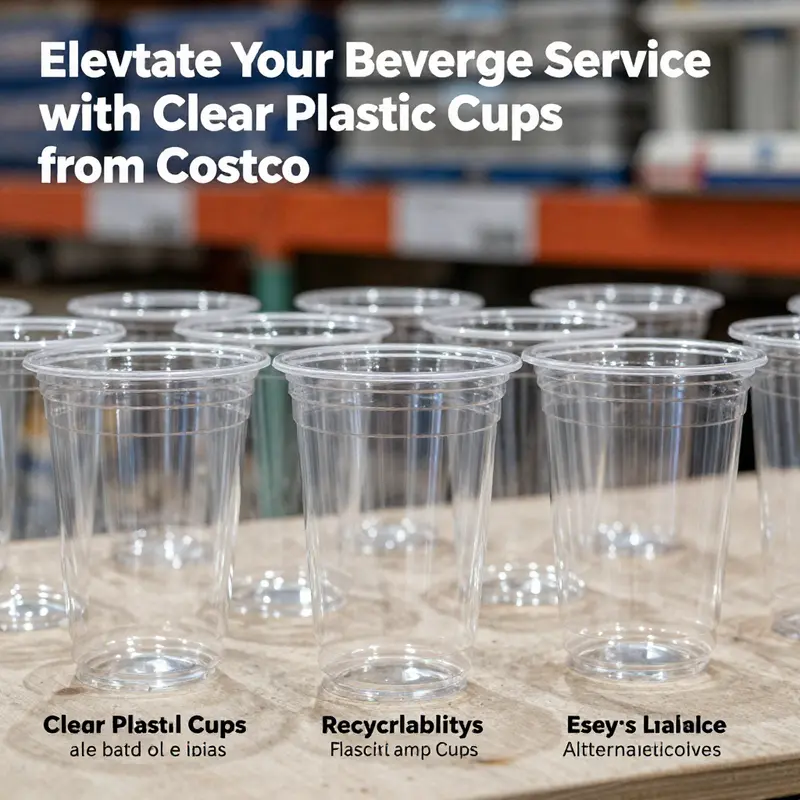
A clear plastic cup sitting on a table represents a set of choices about materials, energy, and end-of-life fate that extend far beyond its moment in a checkout line. When readers consider the environmental footprint of disposable drinkware found in large retail channels, they encounter a cascade of questions: what exactly are these cups made of, how easily can they be recycled, and what happens after the last sip is poured? In many markets, these questions are not simply academic. They shape how households discard packaging, how municipal recycling streams cope with contamination, and how retailers balance consumer demand with waste reduction goals. The lifecycle of a clear plastic cup begins long before its first fill and ends well after it is tossed, and understanding that lifecycle is essential for anyone who wants to shop more mindfully within bulk and warehouse-store ecosystems where such disposables are common.
Most clear disposable cups are manufactured from one of a handful of common plastics. The resin choices—polystyrene, polyethylene terephthalate, and polypropylene—are all petroleum-based materials that offer translucence, rigidity, and cost efficiency. They enable a light, spill-resistant vessel that can be produced at scale and sold in bulk. Yet these same materials are stubborn in the environment. They can persist for hundreds of years if left to accumulate in landfills or the natural world. Even when recycling programs exist, the path from curbside bin to recycled resin is fraught with practical hurdles. Contamination by food residue, adhesives, or labels can derail loads at processing facilities. Sorting mixers and local recycling rules determine whether a cup ends up in a recycling stream, a different plastic stream, or a landfill. In other words, the perceived simplicity of a “clear cup” masks a web of infrastructure constraints and policy variations that govern its ultimate fate.
If the cups are made from PET or PP, there is a glimmer of recyclability that can be realized where reliable take-back streams exist. PET, in particular, is widely accepted in many municipal programs for bottle recycling; however, cups often lack the same infrastructure or labeling clarity as bottles. Even when a cup carries a recycling symbol, the resin code and the clarity of local guidance determine whether it actually gets recycled. In practice, many households encounter a mismatch between intention and outcome, and the result is an ongoing problem of contamination and mis-sorted materials. The environmental narrative expands when one considers that some cups are now presented as compostable or made with post-consumer recycled content. PLA, a plant-based alternative, frequently appears in marketing as an eco-friendly solution. Yet PLA’s end-of-life reality is more complex than the label would suggest: it requires industrial composting facilities that can reach sufficiently high temperatures to break down the polymer, and municipal programs rarely offer that service. Even where composting options exist, consumer behavior must align with proper facility access and separation rules. Without this alignment, PLA cups can simply end up like other plastics in the waste stream, missing the intended environmental benefit.
The broader conversation about disposable drinkware intersects with a growing cultural push toward reducing single-use plastics. Public awareness campaigns and social media conversations have drawn attention to the lifecycle costs of convenience-centric purchases, including caveats around recycling and composting. A recent wave of consumer education emphasizes not only what happens to the cup itself but also how it relates to shared resources and the systems that process them. In this climate, even as shoppers grab cups in bulk for gatherings or everyday use, there is a heightened appetite for information about packaging that aligns with responsible waste management. The TikTok-driven emphasis on avoiding eco-harmful items, such as certain disposable coffee pods, mirrors a broader trend: shoppers are increasingly scrutinizing the cumulative impact of disposables and seeking alternatives that fit local waste ecosystems. The takeaway is not a blanket rejection of disposables but a call to discernment—knowing where a cup comes from, what it is made of, and how it will be handled after use.
For environmentally conscious shoppers, this means looking beyond price and convenience to consider labeling and material choices. Cups that advertise plant-based content or compostability can be appealing on the surface, but they require verification of end-of-life options in one’s community. Likewise, cups with recycled-content claims may reduce virgin plastic demand, but the recycling stream that accepts such materials must be robust and well-organized. The current reality is that no universal standard guarantees perfect recyclability or compostability for all clear cups across all regions. Shoppers can still take meaningful steps by examining labels, resin codes, and local programs, and by choosing options that align with the infrastructure available where they live.
Retail environments, including large warehouse clubs, shape the supplier landscape for clear cups through procurement choices, promotional cycles, and regional inventory differences. The majority of buyers in these settings are motivated by price, convenience, and the ability to stock vast quantities for events, offices, and hospitality contexts. This emphasis on scale can have a double effect: it sustains low per-unit costs but also concentrates the environmental footprint of disposable items within a single shopping experience. When a retailer prioritizes sustainability, it can influence suppliers to offer cups with lower overall environmental impact, or to present clearer guidance about how to recycle or dispose of the product in common waste streams. Yet the practical outcome for a consumer depends on local infrastructure and personal habits. In places where curbside recycling is robust and well understood, the environmental calculus differs from regions with limited sorting capabilities or ambiguous labeling.
Shoppers who want to make more sustainable choices while navigating these channels can adopt a practical framework. First, inspect the label for material composition and any end-of-life guidance. If a cup proclaims compostability, confirm that the facility in your area supports industrial composting and that household composting is not assumed to suffice. If the cup is a recycled-content product, look for credible disclosure about post-consumer content and whether the recycling facility accepts that specific stream. Second, consider alternatives that reduce waste without compromising function. Reusable cups and containers, while requiring an upfront investment, can dramatically lower single-use waste when properly integrated into daily routines. Third, ask questions at the point of purchase: what is the cup exactly made of, is it recyclable in my community, and does the supplier offer a corresponding recycling or take-back program for bulk purchases?
Within this framework, consumers may also find that options exist beyond the familiar plastic cup. Paper-based and compostable alternatives are increasingly visible in the supply chain, often marketed to event planners and cafeterias that want to reduce their plastic footprint. For readers curious about paper-based options, consider packaging alternatives such as kraft paper bowls and single-use cups that align with composting or recycling streams. One example of this kind of option is described in the kraft paper bowl category here: disposable-700ml-kraft-paper-bowl-take-out-octagonal-rectangle-paper-bowl. While a bowl is not a cup, the broader lesson remains relevant: the ecological advantage often lies in substituting a disposable plastic vessel with a packaging format designed for more predictable end-of-life outcomes.
For shoppers who rely on bulk purchases at large retailers, the practical path forward is to use available data creatively. Read product labels with a critical eye, favor items that clearly disclose material sources and end-of-life options, and align choices with local waste-management capabilities. If the local system supports only basic recycling, a recyclable symbol may still signal a viable pathway, provided contamination is minimized through proper rinsing and disposal. If composting is the only option, ensure access to a facility that can process PLA or other compostable formulations, and avoid assuming household composting will suffice. A consumer’s daily routine can adapt to these nuances: rinse the cup to reduce contamination, segregate empties by material stream when required, and store bulk purchases in ways that minimize mis-sorted packaging during waste collection.
The practical reality for many households is a blend of decisions based on cost, convenience, and local recycling realities. This means that while a clear plastic cup will likely remain a staple in many consumer contexts, a mindful approach to its purchase and disposal can accumulate meaningful environmental benefits over time. It also means that retailers, in turn, can respond to demand for greater transparency and more sustainable options by curating product lines that reflect a spectrum of end-of-life paths—from traditional recyclables to compostable variants and recycled-content designs. The conversation is not about banning disposables overnight but about elevating the choices available in a consumer-friendly way that takes into account regional waste infrastructures and the realities of daily life in busy households, workplaces, and event settings.
External resources and deeper exploration can help readers extend this thinking beyond a single shopping trip. For instance, social platforms have amplified conversations about shopping sustainably, encouraging shoppers to examine not only the packaging they can see but the systemic changes required to process it responsibly. The TikTok trend discussed in recent discourse highlights the broader movement toward avoiding products whose packaging is known to contribute to waste if not properly managed within the local ecosystem. While the discourse on that platform focuses on a broader class of disposable products, it reinforces a shared principle: informed choices matter, and they start with understanding what happens after the cup is emptied.
In summary, the environmental considerations surrounding clear plastic cups sold in bulk at large retailers hinge on materials, end-of-life options, and the alignment between consumer behavior and local waste infrastructure. The choices a shopper makes—reading labels, selecting compostable or recycled-content options where appropriate, and considering reusable alternatives when feasible—collectively influence the footprint of disposable drinkware. As retailers continue to refine their offerings and as waste-management networks evolve, the most practical path is a balanced one: pursue clarity about what the cup is made from, advocate for end-of-life options that exist in your community, and embrace substitutions when they demonstrably improve environmental outcomes. This balanced stance helps ensure that the convenience of a clear cup does not come at an unseen environmental cost, and it keeps the door open for ongoing improvements in product design and disposal practices.
External resource: https://www.tiktok.com/@trendalert/video/748563123456789012
Final thoughts
Selecting the right clear plastic cups from Costco can significantly elevate your beverage service, catering, or event planning. With a variety of sizes and competitive prices, these cups not only meet consumer preferences but also align with sustainability goals. By incorporating these considerations into your procurement strategy, you can enhance customer satisfaction while contributing positively to the environment. Ultimately, finding reliable and eco-friendly solutions is key to succeeding in today’s beverage market.