
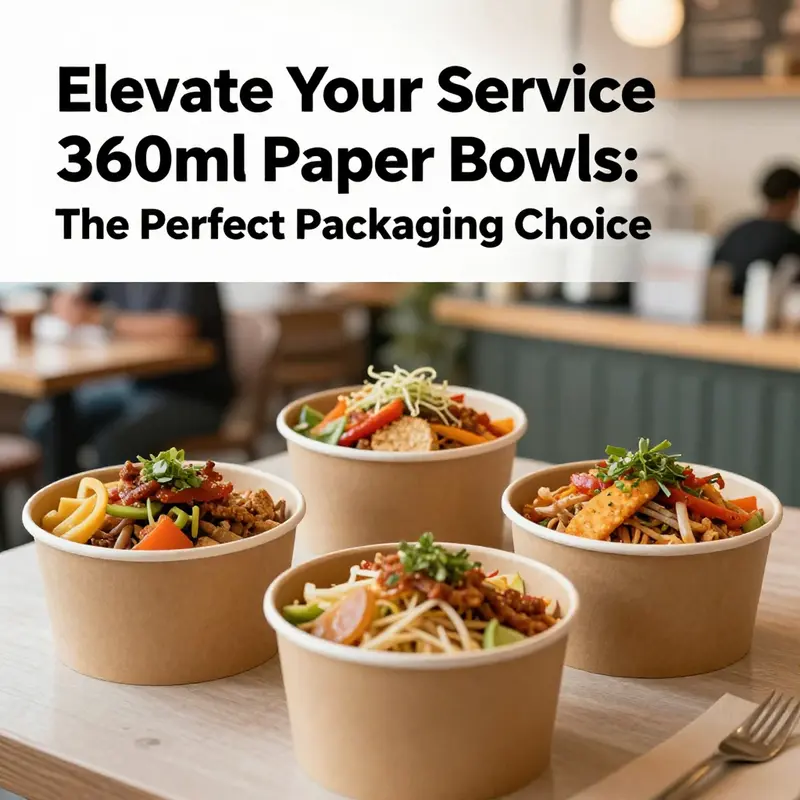
The Chinese market has introduced an array of functional and eco-friendly food packaging solutions, with the 360ml paper bowl leading the charge. Characterized by its durable food-grade paperboard and PE coating, this bowl ensures that no matter the dish—whether steaming soup, fresh salad, or delectable dessert—it stays safe and appealing. Understanding its material characteristics, design features, customization options, environmental impact, and market trends can empower bubble tea shops, restaurants, food trucks, and event planners to make informed packaging choices. Let’s delve deeper into each of these vital aspects.
Inside the 360ml Paper Bowl: Material Science, Safety, and Sustainability in China’s Takeaway Packaging
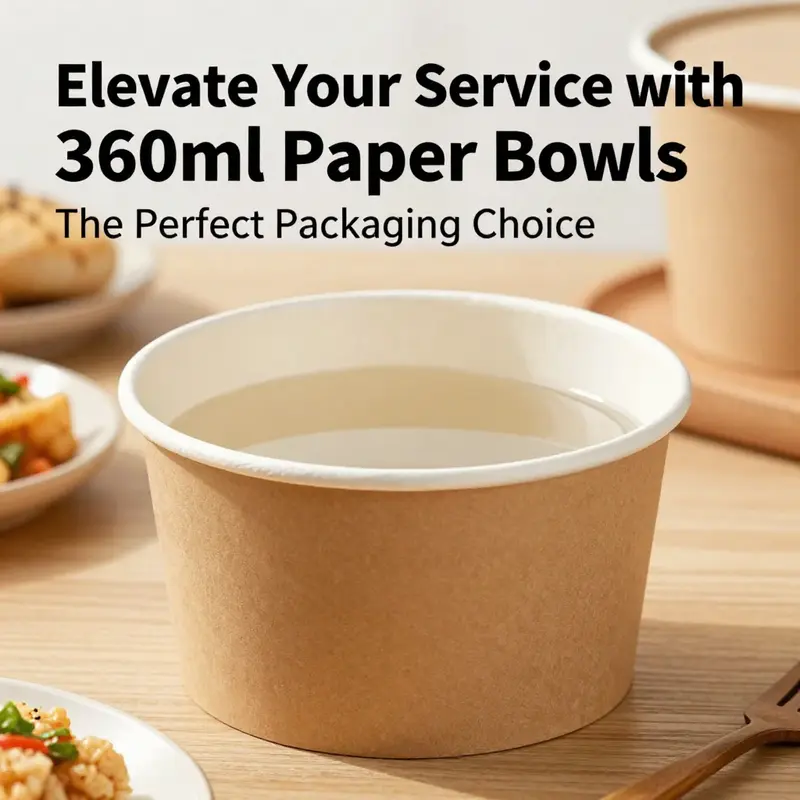
The material characteristics of a 360ml paper bowl, especially those designed for food service and takeaway use, unfold like a careful choreography of safety, practicality, and environmental responsibility. In markets where speed and convenience shape daily meals, the choice of container is more than a passive vessel. It is a material promise: it will hold heat or cold, survive a trip through a crowded delivery lane, and eventually return to nature with as little residue as possible. The 360ml size, roughly 12 fluid ounces, sits at a sweet spot for individual servings, warm soups, stews, or small portions of noodles and salads. In a single container, a balance must be struck among rigidity, barrier properties, and weight, all while staying within cost expectations that drive mass adoption in the bustling Chinese catering and takeaway landscape. Reading the bowl’s material characteristics reveals how manufacturers meet that balance across three domains: core materials, coatings and barrier performance, and end-of-life and safety considerations. Each of these domains interlocks with the others to deliver a packaging option that is both practical for operators and acceptable to increasingly discerning consumers who expect responsible packaging.
At the heart of the bowl lies its core structure. The most common materials are food-grade paperboard, often kraft-lined, and in some cases alternative fibers such as sugarcane pulp, or bagasse. Paperboard from kraft often provides the sturdiness needed to resist deformation when held upright or carried in a bag. Sugarcane pulp, when used, brings a different texture and a lower carbon footprint profile, especially for products positioned as eco-friendly. Some products are marketed as Class A biodegradable tableware, a designation that reflects ongoing efforts to harmonize convenience with environmental stewardship. This is not merely a marketing distinction; it signals a focus on materials that can degrade more readily under appropriate composting conditions. The use of bagasse and other agricultural fibers is part of a broader trend toward renewable resources that can substitute traditional wood pulp without compromising on barrier performance or printability. The choice of core material inevitably affects stiffness, fiber weave, and how gracefully a bowl can be nested for efficient shipping and storage in factories, as well as how it behaves when it meets hot liquid or moisture-laden foods.
While the core provides structure, the coating is what ultimately governs the bowl’s interaction with food and liquids. For many 360ml paper bowls, a single-layer PE (polyethylene) coating serves as the waterproof and oil-resistant lining. This coating is critical: it prevents leakage, protects the paper from absorbing sauces or soups, and helps the lid—when used or added later—sit securely on the rim. The PE layer contributes to predictable hydraulic performance, ensuring that even a hot broth or a steam-warm salad remains contained during transit. It also helps the bowl maintain its shape under pressure, a crucial feature for takeout where containers are stacked or subjected to jostling. In recent years, there has been growing attention to biodegradable coatings as more brands strive to reduce plastic reliance. PLA (polylactic acid), a compostable option derived from renewable resources like corn starch, has appeared in some instances as a substitute or companion to PE. PLA can offer similar leak-proof properties while presenting a clearer signal of environmental intent to consumers. The decision to employ PLA versus PE is not purely about compostability; it involves assessments of barrier performance, process compatibility with existing manufacturing lines, and the end-of-life infrastructure available to customers in different markets. The result is a spectrum of coatings that brands and manufacturers might choose from to meet specific safety and sustainability goals without sacrificing the core reliability that a 360ml bowl must deliver.
Alongside the core and the coating, the overall design and attributes contribute to usable, safe packaging. The standard 360ml bowl is round, with a relatively shallow height that accommodates a balanced height-to-volume ratio. The diameter of about 114 millimeters and a height near 90 millimeters enable a stable base and manageable grip, which matter both for consumer handling and for automated packing lines in kitchens and distributors. The geometry supports a single-wall construction—beneficial from a cost and material-use perspective while still delivering sufficient rigidity for typical takeaway meals. In practice, single-wall design means the bowl is lightweight, easy to carry, and relatively economical to produce at scale. For the end user, the visual cues matter as well: a clean exterior, often unbleached or lightly coated to preserve a natural appearance, can convey a sense of simplicity and safety. The transparency of the coating in some variants allows consumers to see the color and texture of the contents, which can influence appetite and perceived quality.
Safety and compliance form a non- negotiable layer in this material story. The materials used in 360ml bowls are typically certified as food-grade, with standards and certifications that aim to assure direct contact with foods is safe over practical use. International safety regulations guide manufacturers to obtain certifications that align with markets where these bowls are sold, including health and safety authorities that scrutinize contact materials and migration. In many cases, suppliers align with FDA and EU safety standards to demonstrate compliance. Such certifications give buyers confidence that the packaging will not introduce contaminants, that coatings will not leach undesirable substances, and that the combined system—paperboard, fiber, and barrier layers—will perform under normal temperatures and handling conditions. This is particularly important for hot liquids, where elevated temperatures can stress materials and coatings. The industry’s emphasis on safety, even as it explores renewables and compostables, reflects a broader consensus: consumer meals should be safeguarded from contaminants while still being disposed of responsibly after use.
The environmental narrative attached to the 360ml bowl is not incidental. In markets sensitive to single-use waste, the packaging community is increasingly open to options that improve recyclability or compostability without compromising performance during use. As noted in supplier literature, 360ml bowls are often positioned as recyclable or compostable within appropriate systems. The notion of compostability, especially when linked to bagasse or PLA-based coatings, depends on the availability of industrial composting facilities and the compatibility of coatings with the composting process. It is a reminder that sustainability is a system property, not a single material property. A bowl that can degrade under controlled conditions can still pose challenges if the local waste infrastructure does not support composting or if the product is mixed with conventional plastics in recycling streams. Nevertheless, the trajectory toward more environmentally friendly options—whether through renewable fibers or through coatings that reduce reliance on conventional plastics—reflects the industry’s acknowledgment that the demand for responsible packaging will continue to shape both material choices and consumer acceptance.
Market realities also influence how these material characteristics are deployed in practice. In China, a large share of the supply chain for 360ml paper bowls is concentrated among domestic manufacturers who ship to a wide array of restaurants, cafés, and delivery services. The scale of production supports relatively consistent quality and predictable lead times, with the typical first shipment window extending from 20 to 30 days, a timeframe that accommodates design finalization, material sourcing, and containerization for export. As with many commodity packaging items, customization support—printing and branding—entails additional considerations, including minimum order quantities and setup costs. Printing onto kraft or white paperboard is commonly done with six-color flexographic processes, enabling brands to display logos, instructional graphics, or promotional content while preserving the structural and barrier properties of the bowl. When customization is paired with features like a fitted lid, the product becomes a more versatile takeaway solution for brands pursuing on-the-go visibility. In this context, the choice of material is inseparable from the design of the product’s branding and user experience, since the coating and surface finish also impact printability and adhesion. A practical takeaway for buyers is to consider not only the base material and coating but how the entire packaging system—lid, sleeve, and printed surface—will integrate into their operations and waste streams. For readers who want to explore supplier perspectives on this topic, there is a relevant reference that discusses the broader ecosystem of disposables, including kraft-based bowls and related packaging. See the linked resource for a deeper dive into the options and considerations involved in sourcing a 360ml kraft paper bowl with lids and branding options.
In discussing material characteristics, it is also important to acknowledge the role of consumer perception and behavior. Many customers evaluate packaging not only on how well it protects food but also on how responsibly it aligns with their values. A bowl that signals environmental intent—through fiber choices, coatings, or labeling—can influence purchase decisions, even when the price and performance are similar to less sustainable alternatives. The design language of such bowls is often understated: a natural hue, clean print, and a minimal coating that preserves the paper’s texture can convey trust and quality without appearing indulgent. For operators, this translates into a packaging choice that can reinforce a brand’s values and support a smoother post-consumer experience. It is a reminder that the material characteristics of a 360ml bowl are not merely mechanical features but a communication tool that connects the moment of packaging with the long arc of environmental responsibility and consumer trust.
From a sourcing perspective, Chinese manufacturers publish specifications that reflect both the material science and the logistics of delivering reliable packaging at scale. Typical product specifications include the 360ml capacity, the use of food-grade paperboard, the potential for a single-layer PE coating, and dimension ranges in the neighborhood of 114 millimeters in diameter and around 90 millimeters in height. These numbers are anchors for buyers to compare options and estimate compatibility with their menus and delivery workflows. For those seeking a more integrated packaging solution, suppliers often offer customization options, including printed branding and, in many cases, compatible lids that can be designed to snap onto the rim with a secure fit. A typical catalog entry may note that the product is suitable for hot or cold foods, supports a variety of contents from soups to salads, and is packaged for export in standard export cartons. The practical implication for buyers is straightforward: the material characteristics drive performance during service and shape the end-of-life story for the packaging, both of which influence the overall sustainability calculus of a restaurant or food-service operator.
To illustrate how these characteristics translate into real-world packaging strategy, consider the broader narrative of takeaway in urban centers. Operators prioritize reliability, safety, and speed—three non-negotiables that hinge on material performance. A bowl that resists leakage under heat, that stacks efficiently for warehouse storage, and that can be branded to communicate a message of cleanliness and care has a direct impact on customer satisfaction and repeat business. At the same time, the environmental dimension cannot be ignored. Even as paper and fiber-based packaging continues to gain admiration for its renewability, the end-of-life outcomes depend on consumer participation in recycling or composting programs. This is why, in markets such as China, manufacturers and suppliers are increasingly transparent about material choices, coating types, and the overall lifecycle of their products. The goal is not simply to deliver a bowl that works today, but to present packaging that aligns with evolving regulations, waste management capabilities, and consumer expectations for responsible consumption.
In sum, the material characteristics of a 360ml paper bowl reveal a layered, thoughtful approach to packaging design. The core fibers, whether paperboard or bagasse, provide structure; the coating—PE or PLA—delivers a dependable barrier against moisture and grease; and the overall geometry ensures practical use in bustling takeout contexts. Safety certifications reinforce trust, while environmental considerations push the industry toward renewables and easier end-of-life processing. The interplay of these elements explains why the 360ml kraft-based bowl remains a staple in the Chinese food-service ecosystem. It is a product built not only to contain food but to carry a message: that convenience and care can coexist, even in the quick rhythms of modern dining. For readers curious about the practical details of sourcing and customization within this space, a related supplier profile offers concrete examples of how these bowls are designed and produced for the market. See the linked resource for deeper insight into the options and considerations involved in sourcing a 360ml kraft paper bowl with lids and branding options. disposable-kraft-paper-bowl-for-food-package-with-lid.
External reference: https://www.alibaba.com/product-detail/White-paper-bowl-disposable-food-grade_1600847959264.html?spm=a2700.189211.0.0.1b2c5f1dVwZoHJ
360ml Chinese Paper Bowls: Design, Durability, and the Quiet Revolution of Takeout Packaging
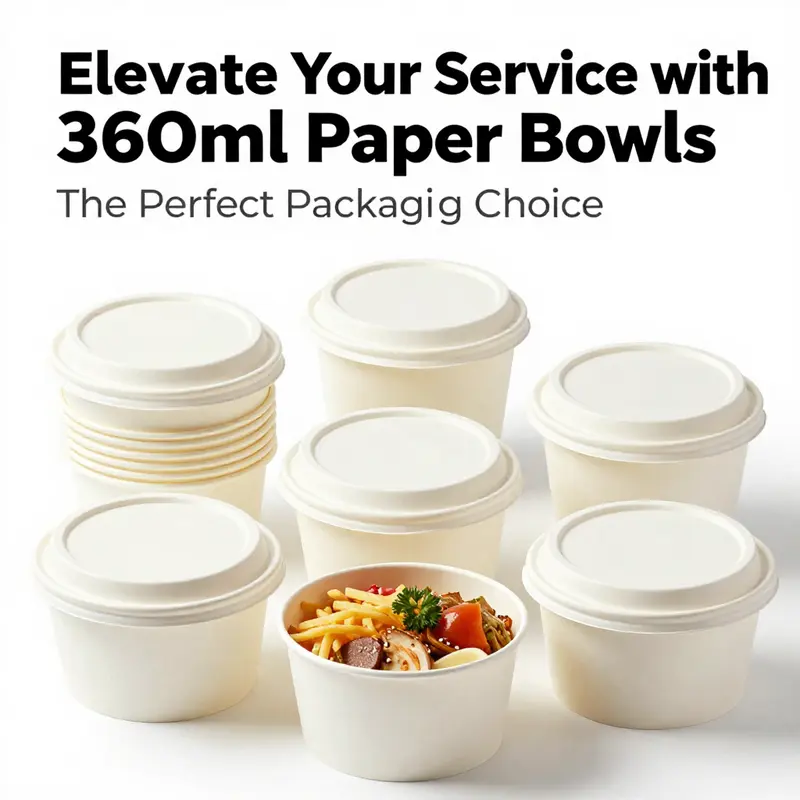
In the crowded world of food packaging, the 360ml paper bowl emerges as a dependable, almost invisible workhorse. It is everywhere: from quick-service counters to street food stalls, from hot soups to light snacks, and even in fruit salads that travelers carry along. The design of this single shape has grown out of a practical need: to hold a moderate portion while resisting heat, moisture, and the jostling of daylong service. Its popularity in China reflects not only a preference for convenient, disposable packaging but also a granular understanding of portion control and user experience. When you pick up a bowl of soup or a steaming noodle dish, you are not simply handling a container; you are negotiating a compact set of design decisions that balance safety, performance, and economy. The 360ml size is widely recognized as a practical middle ground—large enough to contain a satisfying portion, small enough to remain portable and cost-effective for high-volume use. It is a capacity that aligns with common meal patterns in fast-casual and takeout contexts, where customers expect a clean, predictable serving without overflow or waste. This capacity has become a benchmark in many suppliers’ catalogs, serving not just as a measurement but as a promise of reliability in the flow of urban eating.\n\nFrom a material standpoint, the bowl is typically crafted from food-grade paperboard, a choice that blends stiffness with lightness. A single-layer polyethylene (PE) coating is the most common treatment, providing the essential barrier against water and oil without compromising safety. The coating serves a practical purpose: it prevents the container from soaking through when hot liquids or oily sauces are inside, while remaining relatively inert when in contact with food. The combination of paperboard and PE coating is a straightforward solution that reduces leakage and preserves the meal’s integrity during transit. In terms of dimensions, the bowl usually measures around 114 millimeters in diameter and about 90 millimeters in height, with minor variations depending on the supplier and regional preferences. This geometry contributes to a stable base, reducing the risk of tipping when carried in a bag or stacked with other bowls. Even the base itself often receives thoughtful reinforcement—an extra layer or a slightly denser construction—to resist compression under load. The design is nothing if not practical: a vessel that can cradle a steaming hot portion, while still folding into a neat, disposable form for quick disposal.\n\nThe circular silhouette, while aesthetically pleasing and familiar, also has functional virtues. The round rim allows for comfortable sipping or tipping, while the curved walls help contain steam and reduce splashes when the bowl is moved. In many markets, including China, there is a recurring emphasis on ease of handling. Some variants incorporate anti-slip finger grooves along the sides, a small but meaningful enhancement that makes it easier to lift a full bowl without slipping. The choice of thickness for the paper and the structural layers reflects a deliberate trade-off: enough rigidity to resist buckling under liquid load, yet light enough to keep the overall package economical. The result is a container that feels sturdy in the hand, even as it remains clearly disposable.\n\nCustomization, where it matters, has entered the design conversation as well. The basic function of the bowl is universal, but brands—if they need to communicate their identity at a glance—often seek ways to differentiate their packaging without compromising safety or performance. Printing through a six-color flexographic process is a common route, enabling simple logos, brand colors, and limited artwork to ride on the exterior without compromising the internal barrier properties. The balance here is delicate: decoration must not weaken the coating or introduce inks that could migrate into food. Companies that pursue branding on these bowls frequently set high minimum order quantities, recognizing that the economics of print runs rely on volume. Nonetheless, the capacity for customization exists within a well-understood framework: a printed exterior that enhances recognition while preserving the interior’s safety and cleanliness.\n\nHow a bowl performs in real-world service is as much about its mechanical design as its material chemistry. A thick, sturdy paper shell resists tearing when gripped, scooped, or slightly squeezed during busy service. A reinforced base can prevent the bottom from deforming under the weight of hot liquids or heavy sauces, which translates into less leakage and a better, more predictable consumer experience. The interplay between rigidity and flexibility is a subtle art—the bowl must resist collapse under pressure yet remain pliant enough to be folded into a compact, single-use package. This is especially important during takeout or outdoor service, where a bowl must survive a short walk without sloshing or losing its lid’s seal as the carrier moves through crowds.\n\nSustainability also threads through the design narrative. Modern 360ml bowls in China are frequently presented as recyclable, a response to mounting environmental concerns in the foodservice sector. Yet sustainability is not automatic; it rests on the entire chain—from the raw pulp to the inks and coatings that touch the outer surface. The coating itself can influence recyclability or incineration outcomes, and not all coatings or inks are created equal. This is where careful material choice and supplier transparency matter. In consumer advisories issued in 2026, caution is urged regarding coatings or decorative inks that are not food-safe or that may complicate recycling streams. The aim is clear: a packaging system that protects the eater and also minimizes environmental impact along the way from factory floor to landfill or composting stream. Each bowl thus embodies a set of compromises and commitments—between barrier performance and recyclability, between branding flexibility and safety, between cost and function.\n\nBeyond the material and structural considerations, the bowl’s role in the broader ecosystem of fast-casual dining shapes its ongoing evolution. In China and other high-volume markets, the bowl is designed to be lightweight for transport, but robust enough to survive the rugged rhythms of a delivery workflow. It is common to see these bowls packaged in bulk for restaurant supply, with counts of dozens or hundreds per box to support continuous service. The packaging track is part of the bowl’s story as well: export-ready cartons and standardized counts help kitchens plan for expected demand, reduce breakage, and optimize forklift and shelf handling. In practice, this means a design that is not only ergonomic for a single user but also efficient for the business that deploys thousands of units weekly.\n\nFrom a safety standpoint, a track record of testing and regulation underpins the confidence in these products. Official quality reports and product safety tests provide a measure of assurance that the materials, coatings, and construction hold up under typical usage: hot foods, variable transport temperatures, and repeated handling. For shoppers and operators alike, these tests translate into a tangible promise—that the package not only keeps food intact but also remains free from undesired flavors or odors, even after extended exposure to heat. While the overarching narrative is about everyday convenience, the undercurrent is a careful attention to safety standards and durability that makes the bowl a reliable component of modern foodservice operations.\n\nIn the movement toward customization without compromising core performance, a practical option for branding and differentiation exists in the form of a customizable kraft paper bowl with a lid. This approach marries the green light of an eco-conscious exterior with the sealable convenience that customers increasingly expect when ordering hot meals or soups. The concept of a kraft exterior with a snug lid reinforces the bowl’s role as a portable meal vessel—easy to store, easy to transport, and easy to enjoy on the go. For teams exploring such customization, a representative option can be explored here: custom disposable kraft paper bowl with lid. This link illustrates how branding, packaging integrity, and user experience can align in a single takeout solution, while keeping within the practical constraints of a disposable system. The broader takeaway is that even with a standard capacity, there remains ample room for design choices that enhance utility and recognition without compromising safety.\n\nThe 360ml paper bowl thus stands as a small object with outsized implications for how food travels from kitchen to consumer. Its material choices, geometric clarity, and potential for branding reveal a design philosophy that prioritizes reliability, user convenience, and environmental mindfulness. The bowl is not a flashy product; it is a quiet enabler of fast, accessible meals. It reduces the friction of service, supports portion-control norms, and helps operators manage waste more predictably. In this way, the bowl embodies a microcosm of the takeout economy: swift, scalable, and attuned to the daily rhythms of millions who rely on it for nourishment.\n\nFor researchers and practitioners seeking a baseline of industry standards, it is instructive to reference official safety assessments and regulatory findings. These documents anchor the narrative in something more tangible than anecdote, offering a snapshot of how materials behave under real-world conditions and how packaging continues to adapt to evolving health, safety, and environmental expectations. The conversation around 360ml bowls is ongoing, shaped by advances in materials science, print technology, and sustainable design practices that keep pace with consumer demand and regulatory guidance. In this sense, today’s humble bowl is a window into broader trends—toward safer coatings, smarter disposal choices, and packaging that supports both the speed of modern dining and the well-being of communities and ecosystems.\n\nExternal resources and official testing references provide additional validation for those who want to dive deeper into the regulatory landscape surrounding these products. For formal safety test results and regulatory context, see the Hangzhou Market Supervision Bureau report: https://www.hzamr.gov.cn/col/col1229478817/index.html
From Surface to Statement: Crafting Custom 360ml Kraft Paper Bowls in China’s Packaging Ecosystem
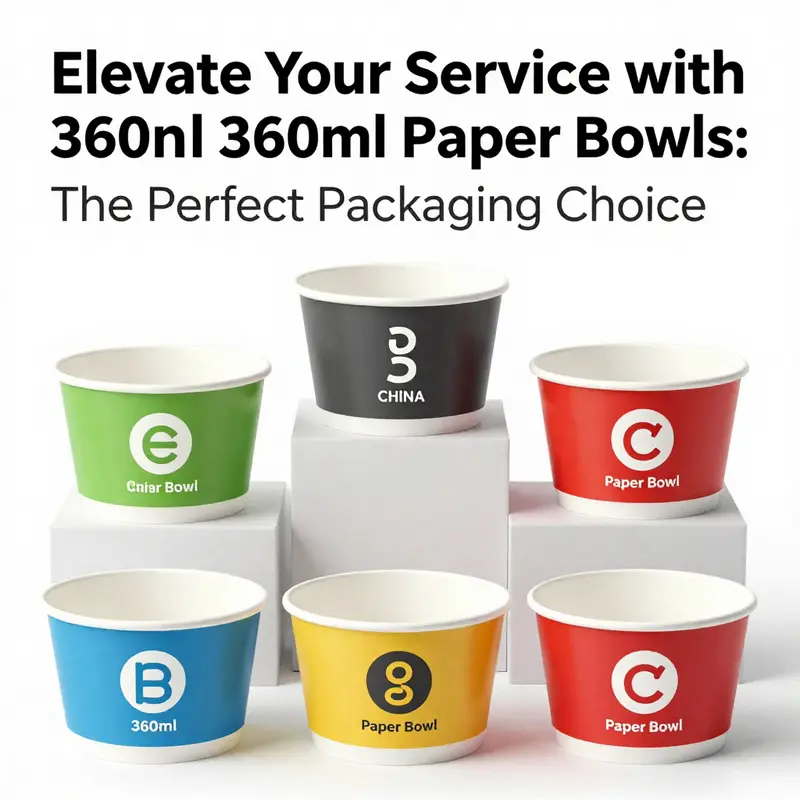
In the fast-paced world of Chinese food service, the 360ml Kraft paper bowl is more than a vessel. It is a functional canvas that carries heat, protects contents, and speaks for a brand without words. Its typical construction—food-grade paperboard with a single or double PE coating—reads like a quiet guarantee of performance. The bowl’s capacity, clearly labeled as 360ml, positions it squarely for mid-range portions: a bowl of hot soup, a modest serving of noodles, or a carefully measured salad. The round shape is familiar and efficient, but behind that simplicity lies a spectrum of customization options that can transform a standard product into a brand touchpoint. In this arena, packaging professionals think not just about containment but about message, perception, and sustainability, all threaded through a single everyday item that arrives at kitchens, stalls, and delivery hubs in staggering volumes each day. The evolution of this product reflects broader shifts in Chinese consumer expectations and supply-chain realities: speed, flexibility, and the ability to convey identity through a disposable form that is still mindful of the environment.
Customization starts with branding. Logos printed on the surface have become a mainstream enhancement. Suppliers frequently advertise the ability to add a logo, and buyers understand that a small mark on the side of a bowl can amplify a brand’s recognition as the container travels from shop to home. The technique behind this branding is often flexo printing, a six-color process capable of delivering clean text, crisp lines, and brand color fidelity at scale. The choice of printing is not merely cosmetic; it signals a brand’s willingness to invest in a consistent consumer experience. When a bowl bears a logo, it becomes more than packaging—it becomes a mobile advertisement, a tiny ambassador that accompanies a customer through a meal and into the social spaces where the content is shared.
But customization is not limited to logos. Material and coating options allow brands to tailor performance and sustainability to their needs. Standard double PE lamination remains a reliable default, creating a barrier against water and oil that keeps soups from seeping and snacks from leaking. Yet for brands with a kaliedoscopic view of the market, PLA (polylactic acid) biodegradable lamination offers an eco-conscious alternative. PLA aligns with growing demand for compostable or more sustainable packaging, even as it introduces considerations about end-of-life handling, composting infrastructure, and local regulations. Some buyers opt for single-layer or double-layer PE lamination for cost and performance balancing. Each choice has implications for heat retention, moisture management, and the tactile experience of holding the bowl. In addition, the coating choice can influence branding narratives—an eco-friendly coating becomes a visible commitment to sustainability, while a neutral double PE surface emphasizes reliability and contrast with a colorful lid or sleeve.
Color and design options broaden the creative canvas. Beyond the classic white, suppliers may offer pink, blue, or black hues to align with a brand’s visual language or a seasonal promotion. Color options enable coordinated merchandising with lids, sleeves, or other takeaway packaging, creating a cohesive look across a restaurant’s entire takeout ecosystem. While the default form remains round and unembellished for functional reasons, some suppliers list variations that hint at more complex design thinking: shapes such as diamond corners or S-shaped corrugated configurations appear in related product families. These variants, while less common for a standard 360ml bowl, demonstrate the market’s willingness to experiment with form to catch consumer attention, differentiate a menu, or solve niche packaging challenges.
Capacity remains a baseline. The 360ml figure is widely offered because it is a practical middle ground: it accommodates a reasonable portion without demanding oversized transport or storage. It is also a familiar size for customers who want predictability in portioning. The standard dimensionry footprint—roughly around a diameter of 114 millimeters and a height near 90 millimeters—ensures compatibility with a range of lids and outer packaging, while remaining compact enough to stack efficiently in bulk shipments. This stacking efficiency influences not only warehouse and logistics planning but also store shelf and pickup counter ergonomics. A packaging program built around 360ml bowls therefore benefits from consistent measuring cues that guide menu design, pricing, and promotions across multiple outlets.
The practical mechanics of customization extend to minimum order quantities and lead times. For bowls with printed branding, the typical minimum order quantity tends to be higher—often on the order of tens of thousands of units. If a brand seeks no printing, the MOQ can drop, enabling smaller pilot orders or regional rollouts. Lead times for the initial order usually span several weeks, accounting for printing plates, proofing, lamination, and finished-product packaging. Subsequent orders tend to arrive faster as the supplier’s production line catches the rhythm of a client’s demand. These realities matter for any business seeking to align packaging with marketing launches, seasonal menus, or promotional periods. They also underscore the importance of forecasting and clear communication with manufacturers to ensure that branding goals, color matching, and durability expectations are met without delays or misalignment.
From an environmental perspective, the 360ml bowl operates within a broader narrative about disposable packaging and responsibility. The rise of eco-conscious consumers has nudged many brands to consider biodegradable laminations or recycled-paper cores where feasible. PLA-based lamination, in particular, is marketed as an environmentally friendlier option, even as its compostability depends on local composting facilities. The choice of coating communicates a message as loudly as the logo itself: a plant-based coating becomes a promise of lower carbon impact, while traditional PE coatings emphasize reliable performance. The debate around end-of-life scenarios—whether bowls are recycled, composted, or discarded—shapes product development agendas and supplier dialogues. In China’s dynamic retail landscape, where takeaway volumes surge during peak hours and festival periods, the packaging mix must balance performance with environmental stewardship, cost with branding, and standardization with customization.
The bowl thus becomes part of a larger packaging ecosystem. It must work in concert with lids, sleeves, and outer cartons to provide a seamless customer experience. If a business uses a lid for heat retention or spill resistance, the interaction between lid design and the bowl’s coating becomes a factor in consumer satisfaction. Color coordination across components helps reinforce a brand’s story at the moment of purchase. The bowl also serves as a platform for cross-channel marketing. A well-branded bowl can extend a restaurant’s presence into social media as customers photograph and share their meals. In practice, this means that packaging teams collaborate with marketing, procurement, and operations to craft a cohesive, scalable solution that remains adaptable to menu changes, regional preferences, and supply constraints.
For readers seeking concrete examples of wholesale customization, consider a dedicated page that showcases a wholesale, logo-bearing Kraft paper soup bowl. It serves as a practical reference for how a brand can translate its identity into a disposable container without compromising performance or cost efficiency. This resource illustrates how a single product can balance branding imperatives with functional requirements, offering a blueprint for the kind of supplier collaboration that modern food-service operations rely on to stay competitive across markets.
Beyond the mechanics lies a strategic mindset: customization is not merely a decorative exercise. It is a deliberate choice that signals values, reinforces identity, and strengthens the consumer relationship at the crucial moment of dining. A well-printed logo, a responsibly sourced coating, a color that aligns with a campaign, or a shape that captures attention—all contribute to a cohesive brand narrative that travels with the customer from restaurant to home, and, in the best cases, into social circles. In a landscape where competition is intense and margins are sensitive, the 360ml bowl represents a high-leverage opportunity to differentiate through packaging. It is a compact but potent channel for telling a brand story, guided by practical considerations about material science, production realities, and consumer expectations.
For scholars and practitioners examining the market, a careful look at the customization options reveals a delicate balance between standardization and differentiation. The core platform—the 360ml paper bowl—provides a dependable, scalable base. From there, the inch-by-inch decisions about coating, color, and printing accumulate to produce a final product that can be as simple as a clean, dependable container or as expressive as a multi-panel branding experience. Suppliers in China offer a spectrum of choices that can be navigated with clear requirements: whether the priority is on cost containment, environmental impact, or maximum brand visibility. The key is to anchor decisions in a holistic assessment of use-case scenarios, supply-chain constraints, and the intended consumer journey. When this alignment is achieved, the 360ml bowl ceases to be a passive wrapper and becomes an active, measurable contributor to a brand’s value proposition in the takeout era.
Internal reference for further exploration: wholesale custom-logo Kraft paper soup bowl. This example illustrates how a single packaging item can be scaled across markets while preserving brand integrity and functional reliability. External resources corroborate the industry trend toward flexible, customized packaging in mid-size formats, including discussions of coating choices, printing capabilities, and logistics realities faced by manufacturers and buyers alike. For a broader context on how suppliers present these options to buyers, the following external resource provides additional insight into customization capabilities and market expectations: https://www.alibaba.com/product-detail/Customized-Disposable-Kraft-Paper-Soup-Cup_1600587931475.html
Balancing Use and Impact: Environmental Realities of China 360ml Paper Bowls
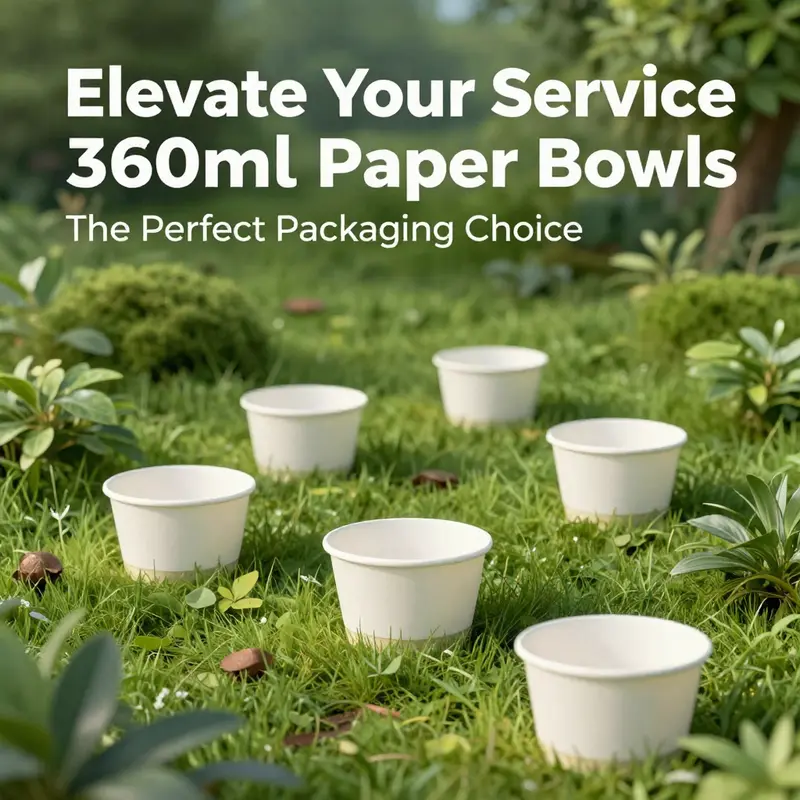
When evaluating the environmental profile of a 360ml paper bowl manufactured in China, one must look beyond a single attribute and consider the product across its full lifecycle. The bowl’s raw materials, coatings, energy consumed during production, logistics footprint, end-of-life options, and the supplier’s transparency about certifications all combine to determine whether the item is a responsible choice for a brand or foodservice operator. This chapter weaves those elements into a practical, decision-focused narrative so that procurement and sustainability teams can make informed trade-offs.
Material choice sets the tone. Most 360ml bowls use food-grade paperboard for structural integrity and a thin coating to resist liquids. The standard coating—polyethylene—provides reliable performance for hot soups and saucy dishes but complicates disposal: PE-coated paperboard is not industrially compostable and is difficult to recycle through conventional paper streams. Alternatives exist. Plant-based coatings such as PLA (polylactic acid) or water-based barrier layers can yield compostable results when paired with appropriate facilities, but the availability of industrial composting infrastructure varies by market. For businesses that want a lower-risk environmental claim, insisting on verified compostable coatings or fully uncoated designs where feasible helps align product performance with downstream waste processing.
Raw material sourcing deserves emphasis. Paperboard originates from wood pulp, and the environmental impact depends on forestry practices and the pulp supply chain. Choosing paperboard certified by an independent chain-of-custody standard signals that the fiber comes from responsibly managed forests or reclaimed sources. That certification reduces reputational risk and supports biodiversity and long-term pulp availability. For many buyers, the added cost of certified fiber is offset by the brand value of responsible sourcing and by eligibility for green procurement lists.
Production processes in China’s major manufacturing regions show both strengths and weaknesses. Hubs in coastal provinces benefit from vertical integration and economies of scale, which can reduce energy per unit through more efficient machinery and higher throughput. Modern automatic bowl-forming lines significantly lower labor intensity and improve consistency. However, energy mix matters: factories powered predominantly by fossil fuels will have a higher carbon footprint than those that incorporate renewable electricity or waste-heat recovery. Evaluating a supplier’s energy sources, emissions controls, and waste-management systems reveals whether efficiency gains are accompanied by lower overall environmental impact.
Logistics and export practices are an often-underestimated source of emissions. Shipping 360ml bowls from coastal factories to international markets contributes to the product’s embodied carbon. Manufacturers that consolidate shipments, optimize container utilization, and select lower-carbon shipping options reduce this portion of the footprint. Some suppliers offer carbon offsetting or claim carbon-neutral shipping; such measures can be helpful but should be verified and considered as part of a broader supplier improvement plan rather than a substitute for footprint reduction.
End-of-life outcomes are the decisive test of environmental claims. For PE-coated bowls, mainstream municipal recycling systems generally cannot process them, resulting in landfill or incineration. Where waste-to-energy exists, incineration recovers some energy but does not return materials to the economy. In markets with industrial composting, certified compostable bowls can achieve meaningful circularity. However, true circular benefits require correct disposal pathways and clear consumer guidance. Packaging labels that instruct consumers about composting or recycling and coordinate with local waste management companies materially improve end-of-life results.
Certifications provide a practical way to separate marketing from verified performance. Look for chain-of-custody certification for fiber sourcing, and for compostability certifications where compostable materials are used. Independent verification of manufacturing practices—covering emissions, effluent treatment, and worker safety—adds confidence. Buyers should request certificates and audit reports and include environmental clauses in purchase agreements that require periodic re-verification. Certifications are not a silver bullet, but they anchor conversations and reduce ambiguity.
Design choices can reduce environmental burden without compromising functionality. Slight reductions in paperboard gram weight, adjusted wall profiles, and efficient nesting designs can lower material use and increase container throughput per pallet. Offering compatible lids that are recyclable or compostable improves the product’s utility while avoiding mixed-material disposal issues. When specifying custom printing, keep ink choices and print area in mind: soy- or water-based inks and minimal print coverage facilitate recycling and composting, whereas heavy inks and metallic finishes can contaminate waste streams.
Supplier transparency and traceability form the backbone of credible sustainability claims. Reputable suppliers will share material specifications, production capacity, typical lead times, and relevant certificates. They will also discuss their environmental initiatives—energy efficiency projects, wastewater treatment, and waste reduction targets. These conversations often highlight suppliers who are genuinely investing in improvements versus those making unverified claims. Including sustainability KPIs in supplier scorecards encourages continuous improvement and aligns procurement incentives with environmental goals.
Market context matters, particularly for global brands. Different markets have divergent waste infrastructure: a compostable bowl that works well in one country may be unsuitable in another with limited composting facilities. Brands should design packaging strategies based on the destination market’s reality. Where industrial composting is unavailable, prioritize recyclable solutions or create take-back programs. Piloting product variants in specific markets helps gather data on actual disposal outcomes and consumer behavior.
Cost is an unavoidable consideration, but environmental improvements need not always mean large price increases. Bulk ordering and longer-term contracts often reduce unit costs and enable suppliers to invest in cleaner technologies. Consolidating SKUs—using the same 360ml bowl across multiple menu items—simplifies inventory and reduces waste from unsold packaging. Investing in higher-quality, sustainably certified bowls can also yield downstream savings by reducing customer complaints, leakage incidents, and food waste tied to inadequate packaging.
Communication is essential to realize environmental benefits in practice. Clear labeling, training for foodservice staff, and consumer-facing messaging help ensure that bowls are used and disposed of correctly. For example, clear symbols indicating that a bowl is industrially compostable, along with local disposal instructions, significantly increase correct end-of-life routing. Internally, training kitchen and delivery staff on lid compatibility and stacking techniques reduces damage and returns.
Ultimately, selecting a 360ml paper bowl involves navigating trade-offs among performance, cost, and environmental impact. The most resilient choices are those that match material and end-of-life attributes to the destination market, require supplier transparency and certification, and incorporate design features that reduce material use while preserving functionality. Procurement teams should treat suppliers as partners, setting clear environmental requirements, verifying claims, and fostering continuous improvements. By aligning material selection, manufacturing practices, and disposal pathways, businesses can materially reduce the environmental footprint of a seemingly simple item: a single-use bowl.
For buyers seeking a supplier example that offers compostable and PE-coated options and provides export-ready manufacturing, vendor listings can be a useful starting point for supplier sourcing and comparison. For further reference on market examples and verified supplier directories, consult this industry source: https://www.alibaba.com/product-detail/Top-Octagonal-Paper-Bowl-Suppliers-in-China_1600789586727.html
Learn more about an eco-focused bowl design that demonstrates practical compostable and recyclable options in take-away packaging from this resource on biodegradable and compostable kraft bowls: https://greendispopack.com/product/biodegradable-eco-friendly-take-away-odm-oem-round-kraft-paper-bowl/
Demand, Materials and Logistics: Navigating China’s 360ml Paper Bowl Market
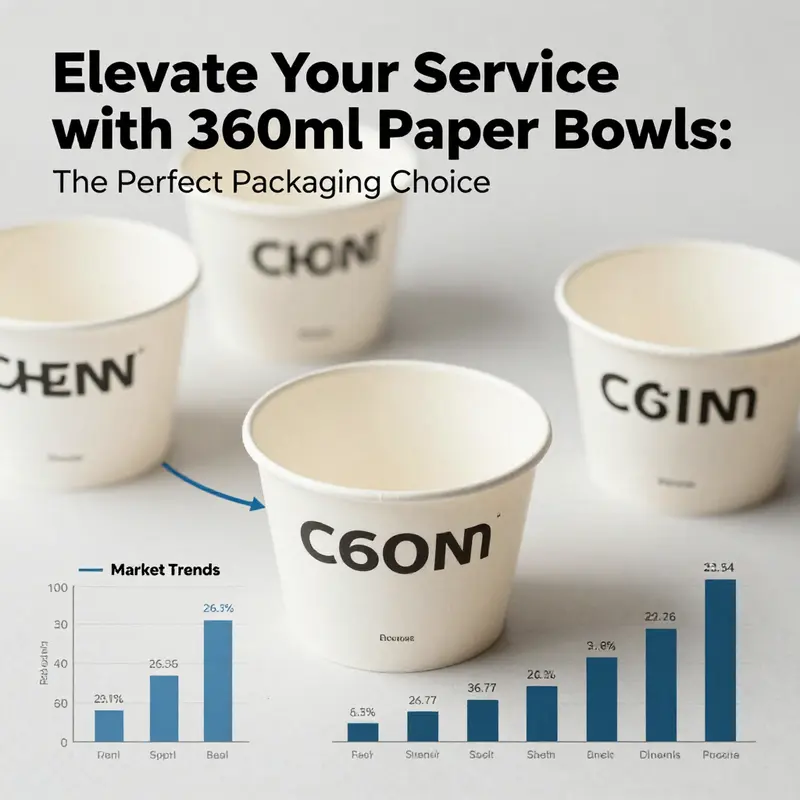
A single product can reveal the wider tensions and opportunities across an industry. The 360ml paper bowl—a mid-sized, PE-coated kraft paper container commonly used for soups, noodles and salads—sits at the intersection of rapid consumer demand, evolving environmental expectations, and a supply chain shaped by global pulp markets and local manufacturing pressures. Examining how demand patterns, material availability, manufacturing capacity and logistics interact offers a clear view of where risks and advantages lie for suppliers, buyers and brand owners who rely on this ubiquitous item.
Consumption trends for the 360ml paper bowl are driven by predictable uses and expanding channels. It fits middle-sized food portions: a single serving of soup, a modest noodle dish, or a salad. That makes it a staple for restaurants, chain kitchens, street vendors and the massive food delivery platforms that have become central to urban dining. In practice, order volumes multiply quickly. When delivery apps in large cities process tens of thousands of orders daily, the per-order use of multiple disposable items means millions of bowls are consumed every day. This scale underpins steady demand and creates economies of scale for manufacturers, while also concentrating exposure to demand shocks when consumer behavior shifts.
Environmental dynamics are reframing product design and procurement decisions. Buyers and end consumers now prioritize biodegradability and lower environmental impact. Paper bowls with food-grade kraft board and single-layer PE coatings are currently positioned as a pragmatic compromise: they protect against oil and moisture while remaining more recyclable or degradable than many plastic alternatives. Market research indicates the eco-friendly segment is expanding rapidly; projections show biodegradable paper tableware could claim over 30% market share within a near-term horizon. For suppliers, this means investing in clearer materials declarations, adopting compostable coatings where feasible, and supporting brand narratives that emphasize responsible sourcing and lower lifecycle emissions.
Product differentiation is less about capacity and more about function, printing and user experience. A 360ml specification is standardized enough to be interchangeable, but brands compete through sealed lids, attractive printing, and minor form variations that improve stacking, pouring or insulation. Custom printing—flexo six-color processes—remains a common buyer requirement, though it raises minimum order thresholds. Typical MOQs for printed bowls often land at tens of thousands of units, which favors medium to large volume buyers and distributors. Smaller operators lean on plain stock options to avoid the cost and lead time associated with customization.
The raw material underpinning these bowls is paperboard produced from bleached pulp. Global pulp markets have been volatile, and those fluctuations feed directly into manufacturing costs and availability. Supply constraints from major pulp-producing regions have at times tightened global inventories, prompting higher import volumes into China. Recent trade flows showed an increase in bleached hardwood pulp shipments into the Chinese market, underlining the country’s reliance on imported fiber to sustain mills and converters. This reliance creates a two-edged exposure: access to global supply can smooth local shortfalls, but it also transmits international disruptions—currency swings, shipping bottlenecks, or production outages—into domestic pricing and lead times.
Capacity changes matter. New pulp capacity coming online, particularly in regions close to China, promises to ease tightness over time, but the benefit will not be uniform across the year. Analysts anticipate a pattern of constrained supply in the first half followed by looser availability as projects ramp up. Still, downstream paper producers in China are not uniformly positioned to absorb these improvements. The domestic paperboard industry faces overcapacity, narrow margins and episodic shutdowns. Financial strain among large mills may translate into conservative production strategies, and some manufacturers could curtail output or delay maintenance investments. For buyers of 360ml bowls, this can produce localized shortages even when global pulp supplies improve.
Logistics and lead time considerations are integral to sourcing decisions. Typical export-grade orders for printed 360ml bowls feature 20–30 day lead times for initial shipments, with subsequent orders accelerated as tooling and production lines settle. Packaging and palletization standards, along with export documentation, shape transit readiness. For domestic distribution, warehousing and spot stocking near urban centers can reduce delivery times to clients, yet maintaining inventory ties up working capital. Buyers must balance lean inventory goals with the need for buffer stocks that mitigate supply and shipping disruptions.
Customization and small-batch challenges intensify supply chain complexity. When purchasers request branded printing, special coatings, or fitted lids, suppliers often require higher MOQs and longer timelines. These requirements favor consolidation of procurement among larger restaurant chains and central kitchens. Conversely, innovations in digital printing and shorter-run flexo capabilities are gradually lowering the breakpoint for customization, offering smaller brands pathways to differentiated packaging without prohibitive upfront cost. Where off-the-shelf solutions are acceptable, many buyers choose standard kraft bowls with neutral finishes to keep costs low and lead times short.
Quality assurance and compliance form another layer of decision-making. Paper bowls intended for hot and oily foods must meet food safety standards and withstand temperature without leaking. Single-layer PE coatings are standard because they provide proven moisture and oil resistance while remaining cost-effective. For buyers focused on environmental claims, suppliers should provide documentation about coating composition, recyclability and any third-party verification for compostability. Increasingly, procurement teams demand certificates of food-grade materials and test results confirming migration limits and thermal performance.
Price volatility is the natural consequence of these interacting forces. Pulp cost swings, fluctuations in shipping rates, and the balance of supply and demand at manufacturing hubs can produce rapid changes in per-unit costs. Buyers who secure multi-month contracts and predictable order volumes can often negotiate more stable pricing. Others may opt for spot purchases but face higher exposure to short-term spikes. Effective supply chain strategies blend contract commitments, diversified supplier bases, and contingency inventory to reduce vulnerability.
Sustainability is also reshaping supplier relationships and marketing. Companies that invest in sourcing certified fiber, minimize plastic use, and offer recyclable or compostable lids and coatings gain a competitive edge. Linking product features to visible sustainability credentials helps operators justify small price premiums to eco-conscious consumers. Practical measures—such as offering matched lids, ensuring stackability to reduce transport volume, and designing labels that minimize ink coverage—can lower both environmental footprint and shipping cost.
For buyers and suppliers who want to explore existing product options and lead times, suppliers list a range of sizes and configurations, often including bowls that pair with lids and variations suitable for cold and hot foods. One helpful reference is a page that outlines a disposable kraft paper bowl option with lid tailored for food packaging, which gives practical insight into product features and packaging choices: disposable kraft paper bowl for food package with lid.
Looking ahead, the market trajectory for the 360ml paper bowl will reflect broader shifts in consumption, regulation and material technology. As delivery volumes continue to underpin baseline demand, innovation in coatings and fiber sourcing will determine which suppliers lead. Near-term supply dynamics will hinge on imported pulp flows and the production health of local mills. For buyers, the most resilient strategies combine supplier diversification, clear sustainability requirements, and inventory practices that cushion short-term disruptions while avoiding unnecessary capital tie-up.
To connect these commercial choices with procurement practice: specify material and coating levels clearly; require food-safety documentation; build relationships with manufacturers that can scale and adapt; and evaluate total landed cost rather than unit price alone. Those steps reduce surprises and ensure that a modest item like a 360ml paper bowl reliably supports daily operations, brand commitments and sustainability goals.
For an external view of market-standard product features and sourcing channels, see this representative supplier listing that highlights a typical 360ml custom disposable kraft paper soup cup, which illustrates common coatings, capacities and customization options: https://www.alibaba.com/product-detail/Customized-Disposable-Kraft-Paper-Soup-Cup_1600587931475.html
Final thoughts
The 360ml paper bowl is not merely a packaging item; it’s an essential component of food service that aligns with safety standards, consumer preference for eco-friendly options, and business branding strategies. Understanding its material, design, customization, environmental impact, and market trends is crucial for success in a competitive environment. By integrating these bowls into your offerings, you enhance not only your service but also contribute to a sustainable future. Embrace the change and elevate your food service game!