
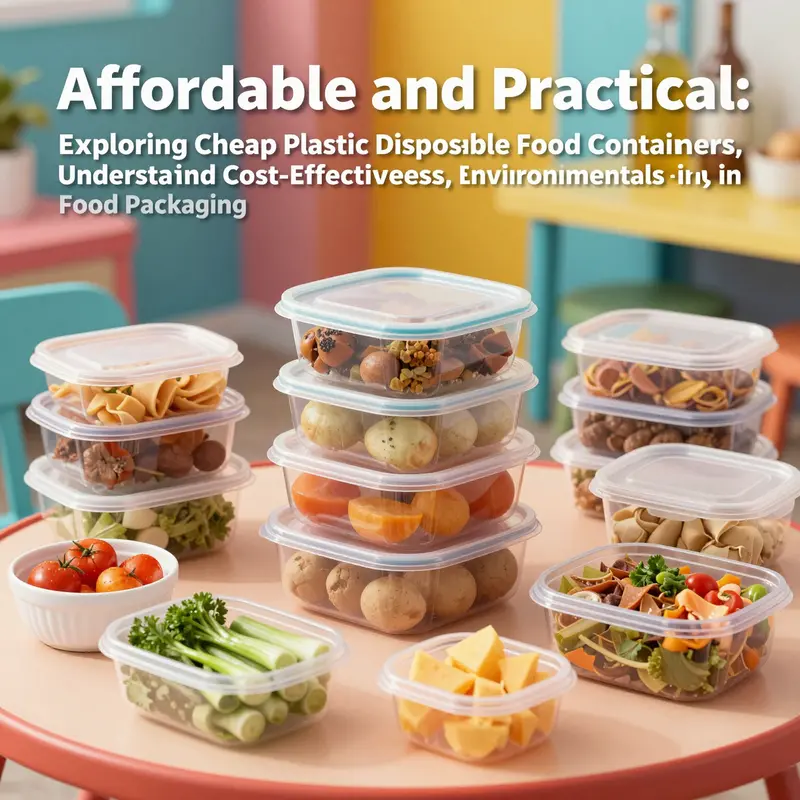
In a world where convenience and affordability go hand in hand, cheap plastic disposable food containers have emerged as vital assets for businesses in the food industry. From bubble tea shops to catering services, the demand for effective, budget-friendly packaging solutions continues to rise. This article delves into the economic analysis of these containers, exploring how their affordability translates into practical savings for businesses while meeting consumer needs. Following this, we will consider the environmental impact, addressing concerns related to sustainability while highlighting advancements in recycling practices. Finally, we will discuss the technological innovations in the production of these containers, which enhance their performance and reduce costs. Through this exploration, we aim to provide insights that empower business owners to make informed decisions regarding packaging solutions.
The Invisible Ledger: Economic Currents Shaping Cheap Plastic Disposable Food Containers
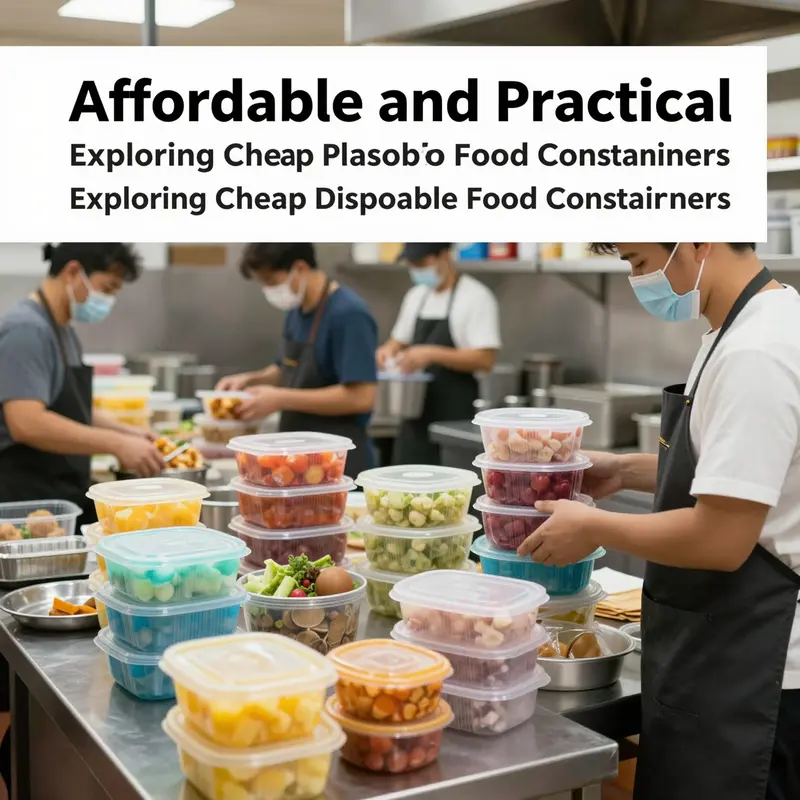
The economics of cheap plastic disposable food containers reads like a ledger whose entries ripple through kitchens, delivery apps, retailers, and regulatory boards. At first glance the numbers seem straightforward: low unit costs, high volume demand, and a market that grows as urban living and convenience culture expand. Yet every line item in this ledger reflects a web of trade-offs that extends from factory floors in distant ports to the policy desks in city halls. The result is a dynamic system where scale matters as much as sustainability, where the allure of minimal upfront cost can complicate long-term strategy, and where regulatory pressure can redraw the cost curves almost overnight. In this sense, the economic narrative for these containers is not merely about price—it is about the orchestration of supply chains, consumer expectations, regulatory risk, and the evolving value proposition that modern packaging must deliver to multiple stakeholders at once. The numbers that define the sector—production cost per unit, minimum order quantities, and the sensitivity of prices to resin markets—coexist with less tangible, but equally powerful, forces such as brand reputation, environmental stewardship, and the practical realities of mass distribution. In the end, the story is less about a single product and more about a system in which cost efficiency, convenience, and accountability must align to sustain growth over a long horizon.
Market growth in this space is anchored in the twin engines of convenience and scale. The disposable container market has demonstrated enduring appeal in a world of on-demand food services, where speed, reliability, and predictable packaging costs translate directly into operational margins. Industry projections have framed a healthy compound annual growth rate in the mid-single digits over the coming years, with expansion fueled by new entrants competing on price and by existing players expanding capacity to meet surging orders from restaurants, catering companies, and event operators. This growth is not a parkaage of fashion but a response to structural shifts in how people buy and consume prepared meals. Urbanization, busy work lives, and the proliferation of delivery platforms have created a baseline need for packaging that can be produced at scale and distributed with minimal handling frictions. When a buyer places a bulk order, the economics are usually driven by the ability to amortize fixed costs across tens or hundreds of thousands of units, a calculus that makes unit prices that look astonishingly low possible. In practical terms, a supplier can price plastic disposables aggressively when operating a high-volume, automated manufacturing line that minimizes waste and speeds up cycle times. The resulting price discipline—driven by capacity utilization and automation—helps explain why even modest reductions in unit cost translate into meaningful savings for large buyers that ship thousands of meals daily. It is here, at the hinge of demand and supply, that the long-run viability of these products is often determined.
To understand the cost logic at play, it helps to appreciate the essential components of the price equation. First, raw material costs, including resin and additives, set the floor. In high-volume production, resin suppliers compete on reliability and price, and manufacturers invest in feedstock strategies that hedge against sudden price spikes. Second, the cost of manufacturing, including mold technology, machinery maintenance, energy use, and labor, compounds the per-unit price as production volumes rise. Modern injection molding and thermoforming lines—driven by CAD/CAM/CAE-enabled design and precision automation—are capable of turning out thousands of identical parts with a remarkably low defect rate. These technologies create economies of scale that translate into per-unit savings, even when the product has little advanced functionality beyond basic storage and transport. Third, packaging can carry non-material costs that often appear in total cost of ownership: for example, the expense of ensuring shelf stability, leakage prevention, and microwave compatibility, all of which influence the design and testing regime. Fourth, distribution and logistics exert a powerful, sometimes underappreciated influence. Packaging that is lightweight, stackable, and robust reduces freight costs, reduces damage rates, and speeds up warehouse handling. The cumulative effect is that, for bulk orders, per-unit prices can dip into the cent range, making them compelling options for enterprises that operate at scale. The data points in this price landscape are striking: price points in the vicinity of a few cents per unit are not merely theoretical—they are real thresholds that shape procurement strategies and supplier selection for large-scale foodservice operations and catering ventures.
Yet the narrative of affordability does not exist in a vacuum. The broader economic backdrop includes the cost of compliance and the risk profile that larger buyers increasingly incorporate into their vendor assessments. Environmental regulations are moving the goalposts in important ways. Governments around the world are implementing bans or restrictions on single-use plastics, with an emphasis on reducing waste, managing end-of-life outcomes, and nudging consumers toward recyclable or biodegradable alternatives. While these measures create a headwind for low-cost, traditional plastics, they also open opportunities for suppliers who can pivot quickly to more sustainable formulations or to packaging solutions that align with circular economy objectives. In practice, this means that the cheapest option today may not always be the most cost-effective in a regulatory future, particularly for brands that want to maintain a compliance-ready portfolio across multiple jurisdictions. This regulatory horizon injects a form of risk into the cost equation, as tariffs, import restrictions, or ban expansions can alter supply chains almost overnight. For large buyers, this risk translates into the value of diversification—sourcing from multiple regions, investing in quality assurance programs that prove recyclability, and incorporating more flexible terms with suppliers who can adapt to shifting policy landscapes. The economic narrative, therefore, intertwines price with risk management, brand stewardship, and the ability to demonstrate responsible sourcing and product stewardship to regulators and customers alike.
From a technology perspective, the story of cheap plastic disposables is also a story about manufacturing innovation. Advances in automated tooling, precision molding, and waste-reducing processes are enabling manufacturers to push per-unit costs downward while maintaining consistent quality. Digital control systems, process monitoring, and predictive maintenance help minimize downtime and material waste, which in turn reduces the unit price through higher overall line efficiency. In many plants, the leap to more sophisticated automation is not merely about cutting labor costs; it is about creating repeatability that locks in performance across millions of cycles. The long-term payoff is a more robust value proposition for buyers who need predictable packaging performance at scale. At the same time, new materials and additive technologies open doors to improvements in heat resistance, leak prevention, and structural integrity, broadening the functional envelope of what can be offered at a competitive price point. Even within a relatively simple category, there is room for incremental gains that compound into meaningful benefits for high-volume customers. The ongoing convergence of manufacturing excellence, supply chain resilience, and design optimization is a hallmark of how these products stay relevant in a market that prizes both cost discipline and dependable performance.
But the practical realities of use reveal limits to the cheap plastic equation. In the everyday world of kitchens and event planning, not all cheap disposables are suitable for every application. Many are designed for short-term storage and basic serving, with modest heat resistance and limited reusability. They may perform well for cold or ambient-temperature items, but they are not a universal solution for all meals, nor are they always compatible with the full spectrum of reheating scenarios that customers may demand. For buyers who require microwave stability, leakage resistance, or extended shelf life, cheaper variants often carry tradeoffs in material properties. This functional caveat matters because it shapes where and how these containers can be deployed. When a packing solution is enforced by a combination of cost and performance constraints, the choice moves from “the cheapest option” to “the most appropriate option for the use case,” where the sum of per-unit cost, reliability, and compliance determines total value.
The environmental dimension adds another layer of complexity. The cost advantage of a cheap plastic container must be weighed against externalities associated with waste management, litter, and end-of-life handling. The market’s attention to recyclability and recyclate content has increased, and customers increasingly connect packaging choices to brand values. Even as many cheap plastics remain widely recyclable in theory, real-world recycling rates vary by region and are often constrained by collection infrastructure and consumer participation. The lifecycle economics shift when end-of-life costs—collection, sorting, and processing—are partially internalized by manufacturers and retailers, rather than borne entirely by municipalities. In some markets, extended producer responsibilities or take-back programs are being discussed or piloted, complicating the straightforward cost advantage of single-use items but offering a path to longer-term viability through shared responsibility and improved public perception. The upshot for buyers is that low unit costs must now be weighed against potential regulatory fees, recycled content requirements, and long-run waste management considerations. In this sense, the cheapest option today may be a less attractive choice tomorrow if it fails to align with evolving environmental expectations and policy directions.
The strategic implications for buyers and suppliers alike, therefore, revolve around balancing short-run affordability with long-run adaptability. A buyer-centric approach prioritizes total cost of ownership, which includes the costs of potential regulatory compliance, waste disposal, and reputational risk. When procurement teams evaluate a large contract, the decision is rarely based on price alone. They increasingly seek evidence of robust quality control, clear end-of-life pathways, and transparent supply chain documentation that can withstand scrutiny from regulators and customers. For manufacturers, the message is to invest in flexible production lines, diversified sourcing for feedstocks, and packaging designs that can be adapted to different materials as policy landscapes shift. In practice, this might mean maintaining a core family of ultra-low-cost disposables while offering a modular set of options—some designed for short-term use in hot environments, others optimized for cold storage with higher recyclability. The most successful players in this space will be those who can demonstrate not only price advantage but also reliability, sustainability, and regulatory readiness across multiple markets.
One obvious nexus for sustainability-driven pricing is branding and consumer perception. Even when the economic calculus supports low-cost disposables, brands that want to protect or grow their market share must consider how packaging signals values to customers. The packaging ecosystem now often treats branding as an integral feature, with opportunities to customize dimensions, printing, and branding messages that reinforce a product’s identity and the retailer’s values. In this context, the economics of customization intersect with the logic of mass production. Manufacturers who can offer minimal incremental costs for branding—through consistent print runs, efficient artwork workflows, and scalable print-on-demand capabilities—become attractive partners for operators seeking both cost control and brand coherence. The possibility of co-branding on packaging is not only a marketing advantage but also a potential legal and regulatory asset, as clearly labeled packaging with recycling instructions and material information helps reduce misclassification risks during inspections and audits. The trade-off is that customization can add complexity and require longer lead times, so buyers who rely on ultra-short replacement cycles must negotiate throughput and flexibility into their supplier relationships. The balance between customization and standardization is thus part of the economics of cheap disposables, shaping not only price but also speed to market and risk exposure.
For readers seeking a concrete exemplar of how sustainability considerations can coexist with price discipline, the market provides a spectrum of options. On one end are ultra-minimalist designs optimized for mass distribution and limited reuse, where the emphasis is squarely on cost and speed. On the other end are forms of packaging that emphasize recyclability and waste reduction, often at a modest premium or through long-run savings derived from improved end-of-life handling and reduced regulatory risk. Between these extremes lies a broad continuum where manufacturers offer a menu of materials, from conventional plastics to more recyclable polymers and even bio-based formulations, each calibrated to a different combination of price, performance, and environmental fit. The result is a market that rewards those who can connect the dots between procurement economics, material science, and public policy. The best decision for any given operator often depends on the intended use case, the geographic footprint of the business, and the regulatory climate in which the operation competes. A pragmatic approach recognizes that the cheapest option is not a universal solution, while a well-constructed mix of standard and adaptable packaging can deliver both cost leadership and resilience.
From a practical standpoint, procurement conversations in this sector increasingly hinge on a few core questions: How low can unit costs realistically fall at scale without compromising essential performance metrics? How will policy trends influence future costs related to waste handling and recycling? What is the total cost of ownership when factoring in brand impact, consumer trust, and potential fines or penalties for non-compliance? And how rapidly can a supplier alter course in response to sudden market shifts or regulatory changes? Answering these questions requires rigorous supplier evaluation, transparent pricing models, and a willingness to strike partnerships that reward reliability and adaptability as much as they do price. In other words, the economics of cheap plastic disposables are not a static equation but a dynamic negotiation across stakeholders who each bear different slices of risk and opportunity. The most successful arrangements are those that recognize this complexity and embed it into long-term contracts, product roadmaps, and sustainability commitments that keep pace with policy evolution and changing consumer expectations.
Finally, it is worth noting the broader implication for the industry’s future profitability. The core appeal of low-cost disposables will likely endure in volumes where convenience is paramount and regulatory constraints remain manageable. Yet the trajectory is unlikely to be linear. As standards for recyclability, recyclate content, and lifecycle transparency harden, margins may compress unless accompanied by improvements in process efficiency, material performance, or the emergence of alternative materials that meet both cost and compliance criteria. In this light, profitability hinges on a dual engine: first, continuous optimization of existing production models to extract additional savings per unit; second, strategic investments in alternative packaging strategies that fulfill environmental commitments without sacrificing the scale and speed that large buyers require. For stakeholders who can navigate this dual engine, cheap plastic disposables will remain a credible option for mass-market packaging needs with the potential to evolve toward more sustainable configurations that satisfy both the economics of the present and the expectations of the future.
In the end, the economics of cheap plastic disposable food containers hinge on more than their price tag. They depend on the ability to deliver consistent performance at scale, to anticipate and adapt to regulatory and environmental shifts, and to align with the branding and sustainability narratives that increasingly guide consumer choices. The narrative is thus not merely about cost but about a lifecycle-centric, risk-aware approach to packaging that recognizes the interconnectedness of production economics, distribution realities, and policy futures. This is the leverage point where cost discipline, operational excellence, and responsible branding converge to shape a market that remains attractive to buyers who value speed and reliability, while still being mindful of the broader environmental context within which modern foodservice operates. For researchers and practitioners looking to explore the topic further, a broader industry analysis provides deeper context on how these forces interact over the 2026–2033 horizon and beyond. https://www.linkedin.com/pulse/disposable-food-containers-market-analysis-2026-2033-maria-diaz/
As a complementary practical note, consider the potential benefits of exploring alternative packaging formats that combine the advantages of lightweight cost with enhanced end-of-life outcomes. Companies increasingly test formats that integrate recyclable materials or packing configurations designed to minimize waste while preserving necessary performance characteristics. When contemplating such options, buyers may also assess the viability of cross-material packaging strategies that preserve the speed and scale advantages of plastics while meeting stricter environmental criteria. An example movement in this space is the exploration of kraft paper-based bowls and containers for certain applications, which can offer consumer appeal and improved end-of-life handling in markets with robust recycling streams. For those who want to dive into specific packaging design and branding opportunities within this space, a practical reference is found in the following example: disposable-octagonal-box-restaurant-food-kraft-paper-packaging.
The Hidden Cost of Convenience: Tracing the Environmental Footprint of Cheap Plastic Disposable Food Containers
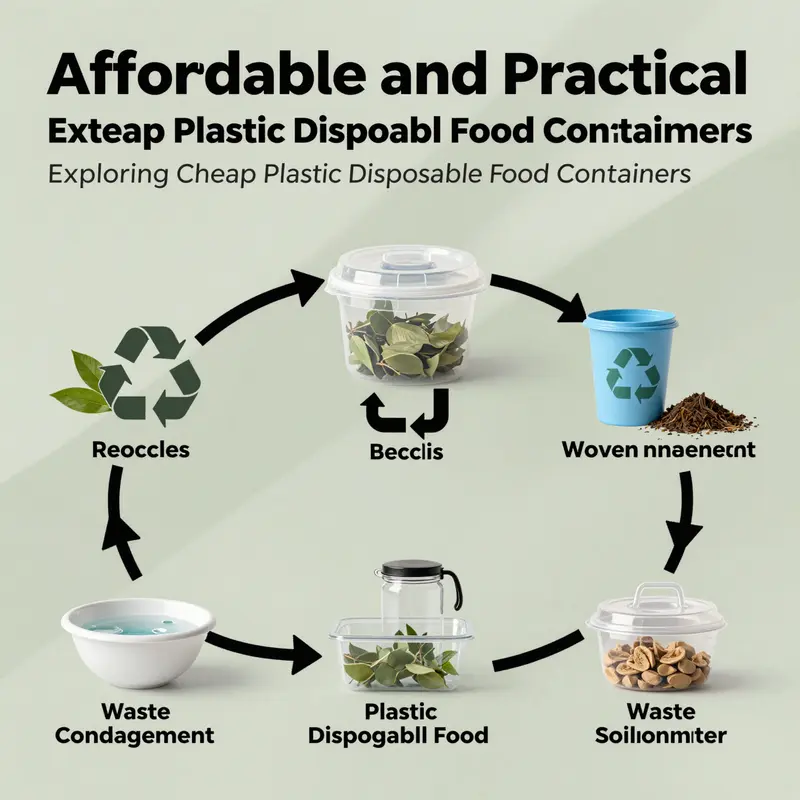
Cheap plastic disposable containers have become a lingua franca of modern food service. They enable quick service, predictable costs, and uniform handling across thousands of meals. Yet this convenience comes at a price that is rarely included in the sticker price: a substantial environmental footprint from cradle to grave. The journey from raw materials to a consumer meal is shaped by decisions that favor low cost and portable durability over a longer, noisier accounting of impact.
These containers are often made from polypropylene, a polymer born from fossil fuels and refined through energy-intensive processes. The chemistry is elegant in its simplicity: heat resistance, light weight, and a surface that can tolerate microwaving. But the same chemistry that underwrites their practicality also ties them to climate and resource concerns. When millions of units are produced every day, small efficiencies multiply into large environmental costs.
Usage patterns magnify those costs. Designed for one-time use, many containers contribute to a cycle of rapid production, consumption, and disposal. The typical lifespan of a single container is a matter of minutes, while the material can persist for decades in landfills and in the environment if not properly managed. The result is a data-heavy footprint that shows up not only in greenhouse gas emissions but also in land and water pollution, and in the less tangible, long-tail effects of waste leakage.
From a systems perspective, the environmental impact hinges on several interconnected factors: how the material is produced, how much energy it consumes, what happens at end of life, and how well recycling streams can accept and process it. The dynamic is further complicated by the fact that many jurisdictions struggle to separate contaminants, mislabel plastics, or maintain efficient collection networks. In oceans and soils, degraded plastics fragment into microplastics that infiltrate ecosystems and potentially enter the food chain. While not all plastic waste reaches the sea, the scale of production guarantees that a meaningful portion does, and the consequences are felt across habitats.
Scientific assessments have traced the effects across multiple impact categories. In particular, the global warming potential associated with production and disposal is nontrivial, given the energy demanded to extract, refine, and convert fossil fuels into a finished container. Resource depletion compounds the issue, as fossil-based feedstocks and the energy required to operate manufacturing facilities draw down finite reserves. The combination of high production energy and short use cycles creates a striking mismatch: materials engineered for resilience under heat and microwaving are, paradoxically, poorly aligned with sustainable timeframes when disposal and degradation are factored in.
On the surface, the economics make sense. The lower the price of a disposable container, the easier it is for a food business to scale up operations and absorb peak demand. Cheap containers support bulk procurement, reduce handling costs, and minimize inventory risk for large chains. They enable grab-and-go service and rapid turnover in high-volume venues. However, the true price is not paid at the point of sale. Externalities—such as cleanup costs, environmental remediation, and the loss of biodiversity—often fall on society, not the producer. The supply chain for cheap plastics is frequently anchored in regions where manufacturing benefits from economies of scale and favorable exchange rates, and where the possibility to customize for branding and performance remains a strong lure. The same chain that makes one container adaptable to microwave use and stacking efficiency also ties users to ecologies that struggle to absorb peak volumes of packaging waste.
That tension has spurred interest in alternatives that aim to preserve function while reducing environmental harm. Paper-based and other renewable-material packaging can offer comparable performance for many food service needs, especially when grease resistance and humidity management are addressed. Kraft-based bowls, sleeves, and containers present a path toward recyclability or compostability in the right systems, yet they are not a panacea. The effectiveness of any alternative depends on the local waste-management infrastructure, consumer behavior, and the economics of collection and processing. To illustrate a practical option without naming brands, consider a disposable 700ml kraft paper bowl designed for take-out use and manufactured to handle hot and moist foods. Such a product exists as part of a broader category of paper-based take-out packaging. disposable-700ml-kraft-paper-bowl-take-out-octagonal-rectangle-paper-bowl.
The advantages of paper- or pulp-based alternatives lie in their renewability and potential for lower long-term environmental costs when disposed of properly. But these gains are conditional. The grease and moisture barriers required for take-out foods often force coatings or laminates onto papers, which can complicate recycling streams or hinder compostability. Industrial composting facilities may be necessary to break down certain coatings, and municipal programs differ widely in what they accept. In practice, the environmental win hinges on alignment across design, manufacturing, supply chains, consumer habits, and policy levers. A packaging system must be designed as a whole: material choice, end-of-life route, and the behaviors of users must be considered together rather than in isolation.
Consumer choices, once thought of as individual actions, tap into a broader social and economic machine. Portion sizes, takeaway habits, and the appetite for convenience all feed demand for cheaper packaging. If a city or country tightens its plastic-use policies or imposes fees on single-use goods, producers may shift toward alternatives that balance cost with environmental performance. Consumers who opt for reusable or returnable options can push markets toward systems that emphasize durability and reuse rather than single-use disposal. Policymakers, in turn, have the chance to shape incentives and infrastructure that tilt the balance toward more sustainable packaging ecosystems, whether through extended producer responsibility schemes, recycling targets, or investments in facility modernization. The net effect is not merely a change in material but a transformation of processes that determine what gets produced, how it is used, and what happens after it leaves the consumer’s hands.
Design thinking offers another path forward. Packaging engineers increasingly adopt lifecycle thinking, asking not only how a container performs in seconds of use but how it behaves across years of post-use management. Questions about recyclability, compostability, and the potential for reuse guide material selection and production methods. In some cases, designers optimize for lightweight yet sturdy configurations that travel well and require less material overall, while still maintaining heat resistance and seal integrity. In others, the emphasis shifts toward modular packaging that can be refilled or repurposed, reducing purchase frequency rather than just trash volume. Such approaches demand collaboration across suppliers, waste managers, retailers, and customers, and they require transparent communication about what is feasible in given markets.
Ultimately, the debate around cheap plastic disposable containers mirrors larger tensions in modern consumption: the need for speed and affordability competing with stewardship for places, people, and ecosystems. This is not a binary choice between good plastics and bad plastics but a portfolio question about where to place the highest leverage for reducing harm. When a business can reconcile the imperative to serve millions of meals with the obligation to minimize ecological footprints, it often discovers a path that blends reliability with responsibility. The story is not only about a single container type but about how packaging design, waste management, and consumer expectations co-evolve to shape the environmental outcomes of everyday meals.
For readers seeking a broader scientific lens, the literature on takeaway packaging highlights the complexities of measuring impact across production, use, and disposal. A comprehensive review in a leading journal points to multiple categories of environmental effects, including climate change, resource use, and ecosystem disruption, and it underscores why many analysts urge a systems approach rather than a one-off efficiency gain. The insights from these studies reinforce the principle that decisions in packaging propagate through supply chains and communities, influencing how people eat and how waste is treated after meals. To delve deeper into the data, explore the external resource linked below.
External resource: https://www.sciencedirect.com/science/article/pii/S0956053X18304726
Efficiency, Economy, and Evolution: The Technological Transformation of Cheap Plastic Disposable Food Containers
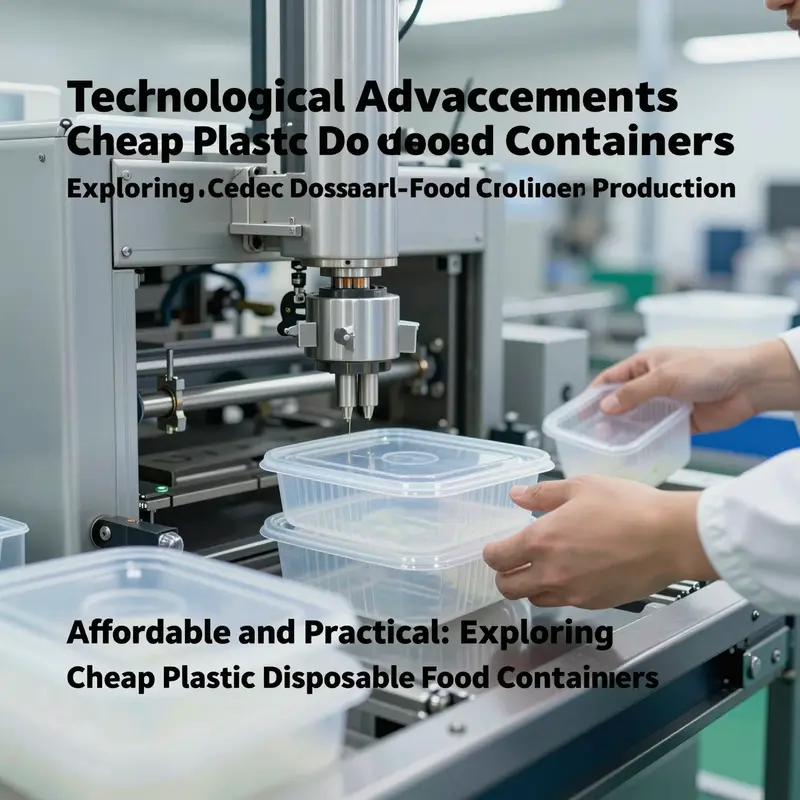
The machinery that turns a raw polymer into a blistering, affordable, disposable container is more than a line item in a factory budget; it is a living system that shapes what appears on trays, in bowls, and at event booths. The drive to produce cheap plastic disposable food containers at scale—without sacrificing safety, performance, or regulatory compliance—has prompted a convergence of automation, smarter materials, and digital oversight. Each of these elements contributes to a factory floor that can churn out billions of units per year, while still meeting the exacting demands of food safety standards and the evolving expectations of customers who want lower costs and more responsible packaging. The result is not simply lower price per unit; it is a more resilient, responsive, and transparent production ecosystem that can adapt to shifting taste, regulation, and logistics with less friction than ever before.
Automation sits at the heart of this transformation, but its value is not merely measured in the number of hands replaced by robotics. Modern automation integrates multiple stages of production into a seamless flow, from initial polymer melt to formed shapes, trimming, stacking, and even inline labeling or embossing. Precision-driven forming machines reduce waste by optimizing gate locations, runner systems, and cooling cycles. Robotic handling systems move finished pieces with microsecond timing to avoid damage, while automated inspection stations detect surface defects, dimensional deviations, or trace contaminants earlier in the process. The payoff is not only faster cycles; it is more uniform products. When every container shares a consistent wall thickness, consistent lid fit, and predictable heat resistance, end users experience fewer supply interruptions and less waste at the consumer end—from leakage in transit to failed microwaving tests.
In parallel, the industry has embraced smarter design rules that enable faster tool changes and more versatile production lines. Inline milling, trimming, and deshelling techniques allow manufacturers to switch between shapes and sizes with minimal downtime. This flexibility is crucial when demand swings between high-volume staples and niche configurations for catering, airline service, or institutional dining. The capacity to retool quickly without a new mold or specialized setup reduces capital intensity and keeps unit costs under control even as customization increases. This is especially important for producers that offer modestly customized branding or labeling options, because the same baseline machinery can accommodate additional features without a full retool. Such adaptability is essential when price-per-unit targets are pressed by price-sensitive buyers in fast food outlets, school cafeterias, or large-scale event planning.
Behind the scenes, material choices are evolving without abandoning the core advantages of conventional plastics. The baseline remains a polymer family known for its resilience, processability, and cost efficiency. Yet the push toward eco-conscious designs has accelerated, and manufacturers are increasingly exploring biobased polymers and nanocomposites that can deliver improved barrier properties, mechanical strength, and heat tolerance without a prohibitive price tag. Biobased polymers can reduce the carbon footprint of a container when sourced responsibly, while nanocomposite additives can enhance stiffness and thermal resistance, enabling thinner walls and less material use without compromising performance. The balance is delicate: the material must withstand repeated microwave exposure, resist leakage when stuffed with hot foods, and remain compatible with standard recycling streams. In other words, materials science is delivering modest, incremental gains that compound across millions of units.
The dialogue between cost and safety becomes most visible when considering regulatory pressures that shape material selection. Regulators in multiple regions have scrutinized substances historically associated with plastics, such as certain plasticizers or stabilizers, and have implemented restrictions on others like bisphenols and chlorinated additives. The consequences ripple through the supply chain: suppliers must provide substantiated safety data, manufacturers must validate migration limits in real-world use, and retailers demand assurance that packaging will not compromise food quality. This has accelerated the adoption of BPA-free formulations and prompted a broader reexamination of monomer selection, stabilizers, and barrier layers. Rather than a single product reformulation, the approach often involves multiple, incremental adjustments to resin blends, printing inks, and adhesive systems to meet evolving rules while preserving the economic logic of mass production.
Digitalization amplifies the impact of these material and process changes. Modern manufacturing systems converge with the broader ecosystem of Industry 4.0, where sensors, connected equipment, and data analytics enable real-time visibility into every batch. Real-time monitoring of temperature, pressure, cooling rates, and extrusion or forming parameters yields actionable insights. Manufacturers can predict equipment wear, optimize maintenance windows, and minimize unplanned downtime. Digital traceability supports brand protection and regulatory compliance by recording material lot numbers, supplier certificates, and processing histories for each batch. In a sector where a tiny deviation in wall thickness can affect heat distribution or containment, such digital oversight translates directly into reliability at scale. When combined with advanced process control algorithms, even minor adjustments in processing conditions can yield meaningful reductions in scrap and rework, further driving down the average cost per container.
Those efficiency gains do not occur in a vacuum. They are tightly coupled with the drive to ensure safety and quality across the supply chain. The push toward safer materials and better migration controls has spurred more rigorous supplier qualification and batch-level testing. Automated sampling, rapid analytical techniques, and digital recordkeeping help ensure compliance with food-contact regulations. This has a twofold effect: it strengthens consumer confidence and reduces the risk of recalls or compliance penalties that could disrupt a supplier’s ability to deliver at the target price. In practice, this means that factories invest in better screening at the point of material receipt, more robust in-process checks, and end-of-line tests that simulate typical consumer use, such as microwave heating cycles and impact tests that mimic the rough handling of busy kitchens.
The scalability of these improvements is essential for markets that demand bulk purchasing. Large orders—whether for chain restaurants, campus cafeterias, or event logistics—benefit disproportionately from the economies of scale generated by automation and digital oversight. When a factory can run longer cycles with fewer interruptions, the fixed costs per unit decline, and the variable costs shrink due to less waste and improved yield. Yet the industry must balance the drive for unit cost reductions with the imperative to maintain or improve performance across a broad temperature range, from chilled storage through microwave reheating and hot holding. The ability to sustain performance under such conditions, while keeping energy use and scrap low, is a direct outcome of tightly integrated automation, improved materials, and careful process design.
An often overlooked but critical piece of this technological mosaic is the ability to customize without breaking the cost curve. For many buyers, a little branding or a specific lid closure can be a meaningful differentiator. Modern production lines can accommodate simple branding schemes, serial labeling, or lid-attachment variations without triggering a costly retool or a steep design cycle. This capability relies on modular equipment, standardized interfaces, and software-driven changeovers that let operators adjust parameters with minimal downtime. When the same line can switch from one container geometry to another and still deliver predictable performance, manufacturers can offer a spectrum of options at relatively low incremental cost. The result is not a dilution of quality but a more responsive supply chain that aligns with customer demand and reduces the likelihood of overproduction or backorders.
The market context provides a solid backdrop for these advances. Price points as low as a few cents per unit are achievable in high-volume production, particularly when factories operate with lean energy use, optimized mold flow, and efficient scrap recovery. This price agility is often anchored in the strength of global supply networks, with many manufacturers leveraging low-cost regional hubs to support rapid, large-scale output. Yet even with aggressive pricing, the emphasis remains on safety, regulatory compliance, and product performance. The most successful players in this space are those that coordinate automation, material selection, digital oversight, and supply chain partnerships into a cohesive system that can deliver consistent quality at scale and at a predictable total cost of ownership.
In this environment, the choice of materials often continues to be a negotiation between cost, recyclability, and performance. Conventional plastics deliver undeniable advantages in processability and price, especially when high-volume runs are required. However, environmental pressures are pushing the industry toward designs that are easier to recycle and, in some markets, toward compostable or biobased options for specific applications. Designers may opt for polyolefin-based containers with recycled content or for barrier-enhanced blends that maintain moisture protection while enabling cleaner recycling streams. The trend is toward a modular approach: you select a base resin that provides the essential performance, then layer in additives or coatings that address specific needs, such as heat resistance or high-clarity display, while keeping the system compatible with standard recycling processes.
For readers who want to explore the broader packaging landscape as part of the decision-making process, there are tangible, real-world references to packaging families that blend plastics with paper-based alternatives. These discussions are not only about substitution but about understanding how different materials perform in terms of cost, safety, and environmental impact across the lifecycle. A practical example is the continuation of packaging options that pair lightweight, cost-conscious plastics with designs that are friendlier to recycling streams or that offer convenient, safe handling in food service contexts. From a design perspective, this means focusing on geometry, wall thickness, lid compatibility, and flow properties that collectively influence cost and performance. In practice, a container might be designed with a slight optimization in wall thickness to save material without compromising heat distribution or mechanical strength, while a compatible lid ensures secure sealing under transport and handling.
The conversation around technology and cheap packaging would be incomplete without acknowledging the appetite for customization and direct sourcing. In many markets, buyers prefer working with manufacturers that offer direct supply from major production hubs. The ability to source from a direct supplier, especially in high-volume scenarios, often translates into lower unit prices and shorter lead times, given the reduced presence of middlemen. At the same time, buyers see benefits in design support, material transparency, and the potential for brand-specific touches, such as minimal branding, color codes, or printed information that communicates safety and usage directions. This mix of price, reliability, and customization capability underscores why automation, materials science, and digital quality control are not separate streams but interlocking pillars of a modern, low-cost packaging strategy.
From a design and purchasing perspective, it is important to remain mindful of the broader ecosystem. For instance, a packaging choice that prioritizes cost might tempt buyers to overlook end-of-life considerations. The most forward-looking decisions balance upfront cost with downstream recyclability and post-consumer waste management. The industry’s trajectory toward improved recyclability often means favoring resin systems that can be separated easily in typical recycling facilities, minimizing contaminant build-up and enabling cleaner processing lines. This is not merely a regulatory preference; it reflects a growing awareness among producers and buyers that sustainability can be compatible with affordability when the entire lifecycle is considered. The future is not about choosing between price and responsibility but about engineering packaging systems that deliver both through a holistic approach to materials, process, and end-of-life pathways.
For those who want a snapshot of the broader engineering landscape that informs these trends, the discipline of machine design, materials development, and process optimization is increasingly interdisciplinary. Mechanical engineers collaborate with materials scientists, software developers, and supply chain analysts to deliver end-to-end improvements rather than isolated gains. The result is a pipeline where a small change in resin formulation, a tweak in an inline printer, or a more precise cooling protocol can ripple through the entire operation, enabling a lighter product that still meets rigorous performance standards and a lower overall cost per unit. This integrated approach is what makes today’s cheap plastic disposable containers not just cheaper but smarter, with a track record of reliability that is crucial for food service environments where margins are thin and expectations are high.
In closing, the technological evolution of cheap plastic disposable food containers is not a singular invention or a single breakthrough. It is a layered, iterative process that harmonizes automation, material science, digital intelligence, and supply chain strategy. The aim is to deliver consistently safe, cost-effective packaging that performs across a range of temperatures and use cases while aligning with evolving regulatory and environmental expectations. The narrative is not about a race to the bottom on price alone; it is the story of a mature, sophisticated ecosystem that can scale with demand, adapt to market shifts, and still honor the safety and sustainability commitments that shape contemporary packaging decisions. As this ecosystem continues to mature, manufacturers that invest in integrated automation, responsible materials, and robust digital systems will be best positioned to meet the dual demands of affordability and trust that define the packaging landscape.
For readers exploring packaging alternatives that emphasize recyclable paper-based designs, a related option worth considering is the disposable octagonal box for kraft paper packaging. This internal reference illustrates how packaging ecosystems broaden when brands seek complementary solutions that balance cost with environmental considerations. You can learn more about that option here: disposable-octagonal-box-restaurant-food-kraft-paper-packaging.
External resource for further context on the technology driving these capabilities is available here: https://www.linkedin.com/pulse/disposable-plastic-food-container-making-machine-market-2025-12-14/.
Final thoughts
In conclusion, cheap plastic disposable food containers represent a crucial element in the food industry’s packaging landscape. Their economic benefits not only streamline food service operations but also offer opportunities to enhance customer satisfaction through convenient takeaway options. On the environmental front, increasing recycling measures and innovations are paving the way for more sustainable practices, allowing businesses to meet consumer demand without compromising ecological responsibility. Furthermore, advancements in production technology are continuously improving the efficacy of these containers, making them a viable solution for businesses of all sizes. As the food industry evolves, embracing these trends will prove vital for companies looking to optimize their service while maintaining both quality and affordability.