
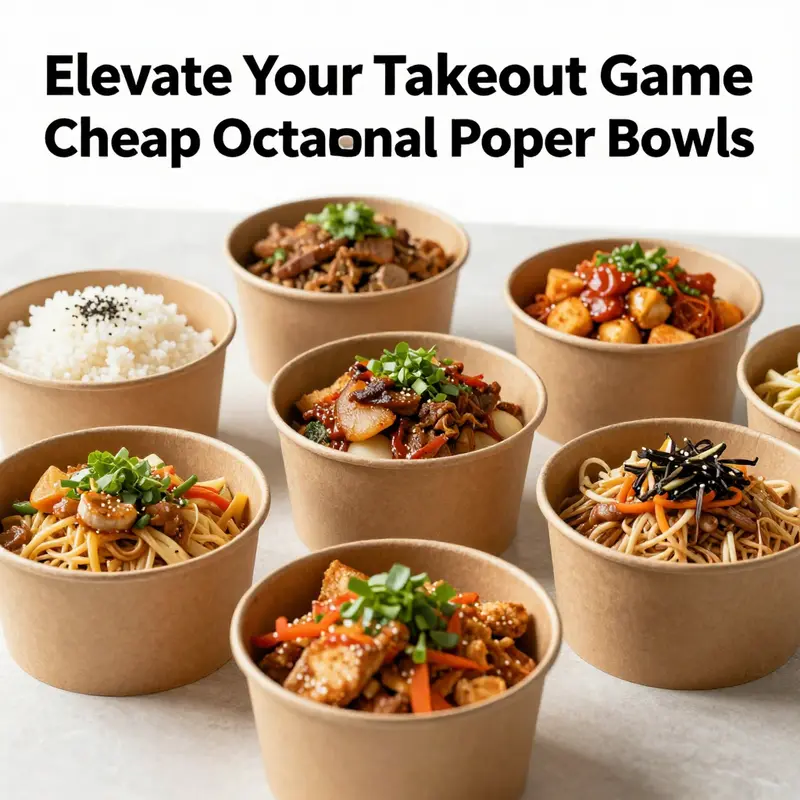
The rise in demand for efficient and environmentally friendly takeout solutions has revolutionized the food service industry. Among these, cheap octagonal paper bowls have emerged as a standout choice for bubble tea shops, beverage chains, restaurants, food trucks, catering services, event planners, and corporate procurement teams. These bowls not only offer a unique aesthetic with their geometric shape but also combine affordability with functionality, making them a smart option for businesses looking to streamline their operations without sacrificing quality. As we delve deeper into this article, we will explore the market dynamics surrounding these bowls, economic implications of their usage, their environmental impact, advancements in production technology, and shifting consumer trends. Each chapter will highlight how cheap octagonal paper bowls represent a significant innovation in disposable food ware, capable of meeting the evolving needs of the food service sector.
Economy and Ecology in Octangle Packaging: The Quiet Rise of Cheap Octangle Paper Bowls for Takeout
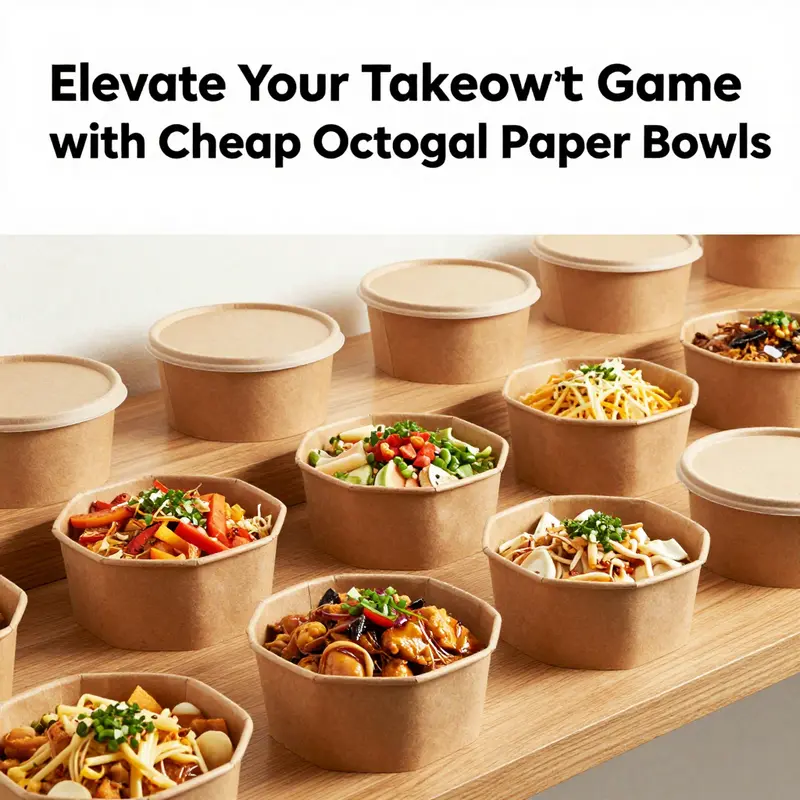
The market for affordable octangle paper bowls sits at the intersection of cost discipline and environmental accountability. In many foodservice environments—from casual takeout counters to event caterers—operators seek a container that performs reliably without inflating expenses or complicating disposal. The octangle bowl, with its eight-sided silhouette, stacks efficiently, nests with lids, and offers a familiar shape that supports smooth operations. The appeal rests on a practical triad: affordability, functionality, and a narrative about responsible sourcing that resonates with growing environmental expectations. In a landscape where waste consciousness can influence choice, cheap octangle bowls are positioned to bridge price sensitivity with obligations to the planet.
Market momentum for cost-effective, eco-conscious bowls is shaped by several forces. Environmental regulations push operators toward paper-based options; consumers are more aware of packaging life cycles when evaluating takeout. The octangle form, when paired with appropriate coatings and materials, delivers a practical response: it maintains structural integrity under heat and grease while signaling simplicity and stewardship. As a result, even price-sensitive buyers perceive value in packaging that aligns with sustainability goals without sacrificing performance.
A crucial node in this ecosystem is the production geography. A prominent manufacturing concentration in China—such as Fujian Province—has earned a reputation as a hub for affordable paper bowls. The region’s supply chains, raw materials access, and logistics networks create a base for economies of scale. Producers in Fujian can offer octangle bowls that meet basic standards at competitive prices, helping distributors maintain predictable costs across markets. The implications are meaningful: brands can differentiate through design and sustainability without losing cost discipline.
Beyond the factory floor, the supply chain for octangle bowls is increasingly transparent. Wholesale marketplaces and direct-from-manufacturer models enable bulk sourcing with clear visibility into coatings, certifications, and performance claims. Features such as polyethylene coatings, barrier properties, and compostability credentials can be part of the specification. In a competitive market these attributes translate into tangible benefits in handling, transport, and end-of-life options.
Industry dynamics also reflect how procurement is conducted. Buyers rely on credible supplier profiles that demonstrate quality systems and environmental stewardship. In this context the octangle bowl becomes a case study in how a simple packaging item can scale in volume and legitimacy. The shift toward formalized sourcing builds trust with customers who want predictable performance, on-time delivery, and clear end-of-life pathways.
As the market evolves, opportunities for differentiation exist through variations in size, coatings, and lid design. Suppliers respond with scalable production methods and clearer documentation, helping buyers compare options at a glance. The interplay of design, cost, and sustainability will continue to shape competition, rewarding those who deliver reliable performance, clear environmental credentials, and a price point that supports growth without eroding margins. The octangle bowl stands as a practical symbol of how economical packaging can be forward-looking—respecting the planet while serving busy kitchens and fast-moving consumer environments.
null
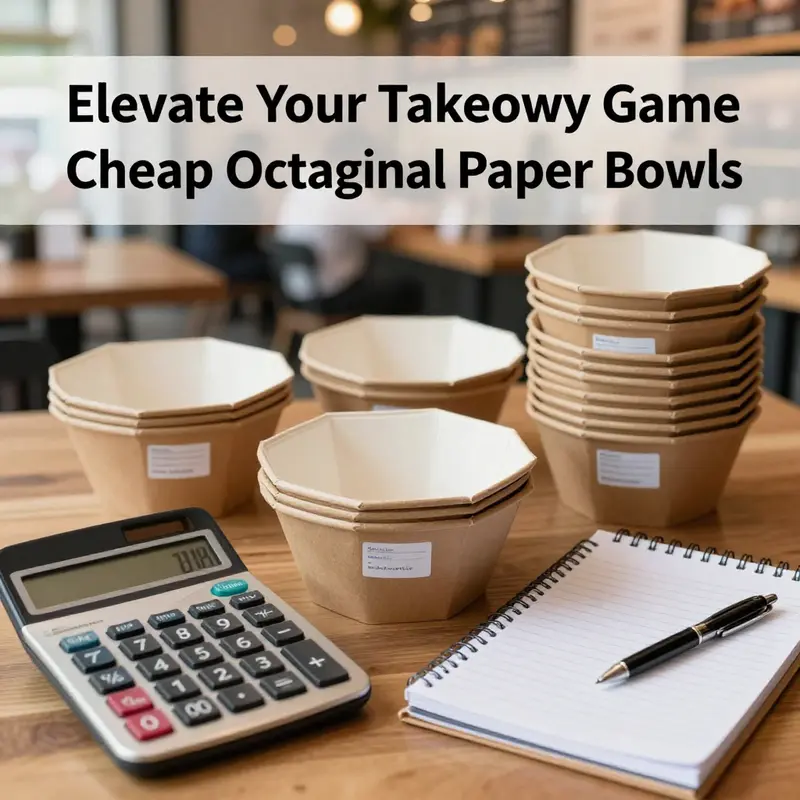
null
Greener Choices: Assessing the Environmental Footprint of Cheap Octagonal Paper Bowls

Material, lifecycle and practical choices
Cheap octagonal paper bowls offer an appealing mix of design and economy. Their environmental profile is often better than single-use plastic. Yet, the green promise depends on small but crucial details. Material composition, surface treatments, disposal pathways, and local infrastructure shape the actual impact. This chapter examines those details so buyers can make more informed choices without sacrificing cost efficiency.
Most low-cost octagonal bowls are formed from plant-based or recycled fibers. Sources include bagasse, bamboo, and post-consumer paper. These raw materials lower fossil fuel dependence and reduce embodied carbon compared with petroleum-based plastics. Producing fiber-based bowls typically emits less greenhouse gas per unit than molding equivalent plastic containers. Their natural origin also enables biological breakdown under suitable conditions, which reduces long-term landfill volume.
However, not every paper bowl on the market is equally biodegradable. Moisture and oil resistance are necessary for many food applications. To deliver those properties, manufacturers add coatings or laminations. Some coatings are compostable, often derived from biopolymers. Others rely on thin plastic films or polyethylene layers. These non-compostable linings prevent the bowl from fully degrading and pose serious recycling contamination risks. A bowl that looks eco-friendly can therefore become problematic after use if it contains non-biodegradable coatings.
Certification is the practical shortcut buyers need. Look for third-party marks that confirm compostability under industrial or home conditions. Recognized standards help distinguish truly compostable coatings from conventional plastic linings. If a supplier cannot provide clear certification, treat their material claims cautiously. For large orders, request material data sheets and lab verification. Small price differences at purchase can yield major improvements in the product’s end-of-life behavior.
Disposal pathways determine whether biodegradability matters. When bowls are collected and processed in industrial composting facilities, materials certified to industrial standards will break down into stable compost within prescribed timeframes. If bowls end up in landfill, the lack of oxygen and microbial activity slows decomposition dramatically. Even a compostable bowl can behave like long-lived waste in a landfill. Where municipal composting exists, compostable paper bowls can close local organic loops and return nutrients to soil.
Recycling is a different story. Clean, uncoated paper fibers are more easily recycled. Yet, when bowls are contaminated by food waste or laminated with mixed materials, they usually do not enter recycling streams. The cost of contamination rises because recycling facilities cannot process material that is greasy or contains plastic films. In practice, many food-service paper containers are diverted from recycling due to contamination and coatings. For buyers aiming to be circular, choosing single-material, compostable bowls is often better than relying on curbside recycling for mixed-material products.
The environmental story of cheap octagonal bowls also includes supply chain and transport emissions. Bulk purchasing reduces per-unit transport impact, since freight and packaging are amortized across many pieces. Local sourcing further cuts transport emissions. Material choices that enable lightweight construction can reduce fuel consumption in distribution. The octagonal design itself can support efficient packing; its geometry may improve stacking stability and minimize wasted space in cartons. These small design efficiencies scale up for businesses ordering thousands of units.
Water and chemical use in production deserve attention. Pulping and paper forming consume water and energy. Some manufacturing processes use fewer chemicals and recycle water on-site. When evaluating suppliers, ask about water-treatment practices, energy sources, and waste management. Suppliers that use closed-loop systems, renewable energy, or lower-impact pulping reduce upstream environmental burdens. Cheap price alone does not reveal these factors, so verification matters.
A recurring trade-off involves cost, performance, and sustainability. Ultra-low prices often reflect simplified supply chains or lower-cost coatings. Those coatings may impair biodegradability. Conversely, bowls built to meet compostability standards can cost slightly more. For many foodservice businesses, the incremental cost is offset by improved waste handling and brand value. When a bowl lands in the correct compost stream, the environmental benefit is clear. Buyers should weigh the total system cost — including disposal and potential waste fees — rather than focusing only on unit price.
Operational choices amplify or reduce impact. Staff training on waste segregation is crucial. A certified compostable bowl discarded into general trash loses its benefit. Clear signage, separate collection bins, and coordination with waste haulers maximize positive outcomes. Pairing compostable bowls with compostable lids and serviceware simplifies sorting. When multiple materials are mixed in the same package, instruct staff how to separate them, or choose integrated designs that avoid mixed materials altogether.
Design decisions beyond materials influence sustainability. Structural efficiency matters. Thinner walls, reinforced rims, or octagonal facets can preserve function while using less material. Avoiding unnecessary additives reduces processing difficulty and improves compostability. Printed graphics should use compostable inks. When logos are applied, ensure printing processes do not introduce non-compostable elements. Small design tweaks can lower the environmental footprint without compromising utility.
For organizations testing suppliers, a simple procurement checklist helps. Request composition details, ask for compostability or recycling certifications, and verify sample performance with the intended menu items. Field-testing with greasy or hot foods reveals real-world behavior. Evaluate how the bowls stack, how lids fit, and whether juices leak under transport conditions. Confirm lead times and minimum order quantities to match operational needs. Prioritize suppliers that provide transparent documentation and respond to follow-up questions.
Community-level solutions also matter. If your area lacks industrial composting, explore local options. Many municipalities, councils, or private haulers now offer food-waste collection. Businesses can partner with local farms or community gardens for small-scale composting. Educational outreach to customers and staff creates demand for proper disposal. Collective action by multiple vendors in a neighborhood can persuade waste managers to add composting services, improving the outcome for all.
Ultimately, cheap octagonal paper bowls can be a credible environmental choice. Their potential depends on material honesty and system alignment. Avoid products with non-compostable double plastic layers. Seek verified compostable options, and ensure local disposal pathways match the product’s end-of-life needs. Consider total lifecycle costs and practical performance when choosing suppliers.
A practical example of a low-cost octagonal kraft bowl option, and its material overview, can help buyers compare specifications when sourcing. For samples that balance cost and sustainability, review product descriptions and composition details before committing to large purchases. A readily available supplier page with composition insights is a useful reference for buyers assessing trade-offs between price and environmental performance.
For businesses ready to trial compostable octagonal bowls, a proven option for evaluation and ordering is available here: disposable 700ml kraft paper bowl take-out octagonal rectangle paper bowl.
For additional technical context and composition guidance, refer to this external resource detailing paper-bowl materials and industry grades:
https://www.alibaba.com/product-detail/Paper-Bowls-8oz-Overview-Composition-Grades_1600944552575.html
Precision, Speed, and Sustainability: The Tech Behind Cheap Octangle Paper Bowl Production
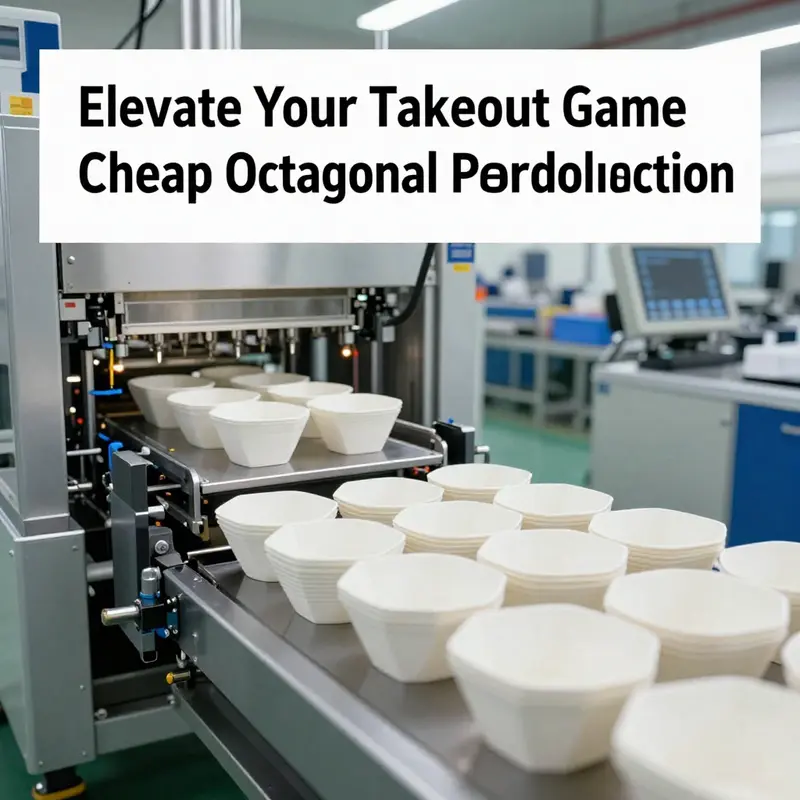
In the crowded realm of disposable foodware, the octangle paper bowl has emerged as a quiet revolution. It is not just a design flourish or a novelty for social media-ready takeout photos; it represents a practical convergence of cost discipline, performance, and responsible packaging. The heart of that convergence is technology—automation that makes a simple, humble bowl both affordable and reliable at scale. When you trace the production line from raw paper to the finished, waterproof, oil-proof vessel, you see a narrative of precision engineering that is reshaping what it means to serve hot soup, salads, noodles, or snacks in a way that feels both practical for operators and conscious for customers. The chapter that follows peels back the layers of this technology, showing how modern machinery, smart process control, and advanced forming techniques turn inexpensive materials into dependable packaging for a wide range of services.
At the center of these advances stands a fully servo automatic octagon paper lunch box making machine. Servo systems, with their fast, repeatable positioning and finely tunable motion, bring a level of precision to each bowl that used to require a dozen operators. The effect is not merely speed; it is consistency. Each unit that comes off a line beam is aligned, scored, folded, and sealed in ways that minimize variance from piece to piece. This is critical when you’re working with cheaper base papers that range from roughly 170 to 420 g/m². The lighter end of that spectrum is more economical but demands a tighter seam and steadier forming to resist leaks, while the heavier end offers more rigidity with less risk of deformation. Servo automation makes it feasible to harness the best qualities of both ends without sacrificing throughput.
A cornerstone of the line’s intelligence lies in computer control panels. Operators watch dashboards that display real-time data on tension, heat, fold angles, and sealing strength. These panels are not mere readouts; they are active tuning instruments. When the line senses a drift—perhaps a slight shift in paper tension or a jam—controls can adjust nip pressure, dwell times, or ultrasonic weld cycles on the fly. The outcome is waste reduction and a tighter process window. In a market where every gram of material and every second of cycle time translates into meaningful cost, the ability to minimize waste and rework is as valuable as the hardware itself. The result is a packaging solution that can stay within budget while still meeting the performance expectations of takeout, catering, and delivery operations.
Integrating the line’s most advanced forming techniques is ultrasonic welding. This method, used in higher-efficiency models, brings a clean, strong seam to thinner papers—often in the 170–420 g/m² range—without resorting to heavier, more expensive substrates or messy glue lines. Ultrasonic welding works by delivering high-frequency vibrations that fuse the paper layers at contact points, creating a durable seal that resists dripping and maintains structure even when the bowl is stacked or transported with lids in place. The process is fast, reliable, and well-suited to high-volume environments where consistency matters as much as speed. For operators serving fast-casual or takeout-centric chains, the line’s ability to strike a balance between material economy and stick-tight seals translates directly into lower per-unit costs and fewer customer complaints about leaks.
The market’s appetite for octangle bowls is not purely about the geometry; it’s also about reliability and the ability to scale. Production rates that climb toward fifty pieces per minute are particularly transformative for foodservice segments that move relentlessly between peak hours. When a kitchen or a delivery hub processes hundreds or thousands of bowls daily, every minute saved compounds into meaningful savings across the week. The octagon shape, with its flat sides and clear stacking profile, supports efficient warehousing and reduces the risk of tipping during transport. The design also offers a distinctive silhouette that helps brands differentiate their takeout packaging in crowded markets, while still preserving the familiar functionality of a disposable bowl. This combination of form and function is the result of a design-for-manufacture philosophy that seeks to reconcile aesthetics with practicality.
The material story behind these bowls deserves its own attention. To keep costs in check while delivering waterproof and oil-proof performance, manufacturers often work with a range of paper weights and finishes. The base paper must be compatible with ultrasonic welds and coatings that resist moisture and grease. The coating system, typically a barrier layer, is designed to prevent seepage without creating a brittle edge that could crack under seal or during stacking. In this context, the choice of 170–420 g/m² allows teams to tailor the bowl to the intended use: lighter weights for lighter fare or shorter transport, heavier ones for soups, stews, or salads with dressing. The coating and sealing processes must be robust enough to withstand the heat and humidity of hot foods while still providing a clean peel for the consumer. The manufacturing recipe, therefore, is not a single number but an interplay of paper weight, barrier technology, and welding discipline—each tuned on the control panel to deliver predictable, repeatable results.
Automation and control also influence environmental considerations. A line that minimizes waste and reduces labor intensity can lower energy usage per unit of product. It can also enable more consistent application of coatings and adhesives, which in turn reduces excess material usage. In contexts where customers expect compostable or recyclable packaging, the cost advantages of automation extend beyond the shop floor. When packaging is reliable, fewer replacements and returns occur, which lowers the environmental footprint of the packaging program. The octagonal bowl, by virtue of its geometry, can be designed to maximize stacking efficiency, which reduces truckload footprint and energy consumption in distribution. In an era when brands seek both affordability and responsibility, these lines illustrate how manufacturing choices can align with broader sustainability goals without forcing trade-offs in performance.
From a business perspective, the implications of these innovations are profound. If a market is willing to pay a modest premium for function, or if bulk procurement can push unit costs well below a penny or two, then operators can price competitively while maintaining margins. The research context notes examples of unit prices in bulk orders, underscoring how scale can convert delicate margins into workable profits for takeout operations, caterers, and delivery services. This economic equation hinges on repeatable quality at high speed, and it is exactly what servo-driven systems and automated forming lines deliver. The ability to produce bowls that are both inexpensive and dependable reduces the risk that a client’s brand will be undermined by packaging failures—such as leaks or weak seams—during busy service windows. When customers experience reliable performance, their loyalty to the takeout brand—already shaped by taste and service—extends into packaging satisfaction. The technology thus reinforces a seamless consumer experience, where the bowl performs as an extension of the restaurant or vendor’s care for the customer.
The role of design and material choice in enabling this performance cannot be overstated. The octangle bowl’s geometry supports functional storage and handling, while its ability to pair with lids and accessories—without compromising seal integrity—extends its usefulness across meal contexts. A smart design also anticipates the realities of transport: stability in transit, ease of stacking for warehouse efficiency, and compatibility with heat retention features. The modern line is engineered to deliver these traits in concert. Operators can select paper types and coatings that optimize both cost and performance, while the automated line ensures that every bowl adheres to the same standards. The synthesis of precise control, reliable forming, and intelligent material selection makes the octangle bowl more than a convenience; it becomes a scalable platform for packaging innovation in a price-sensitive market.
For readers who want a concrete sense of how this technology translates into market-ready options, one can explore available designs that emphasize both performance and design flexibility. Consider a take-out option that emphasizes an octagonal shape with a clear lid, crafted from kraft paper and designed for reliable sealing. Such offerings illustrate how manufacturers pair geometry with durable materials to meet diverse service needs. The combination of cost efficiency, robust performance, and distinctive form can help brands stand out in a crowded takeout landscape without sacrificing practicality or environmental responsibility. If you’re seeking a dependable example of this approach, one option worth examining is the High-quality food take-out kraft paper rectangle octagonal bowl, which demonstrates how form, function, and manufacture converge in a single, scalable product. High-quality food take-out kraft paper rectangle octagonal bowl.
In closing the arc of this discussion, the tale of cheap octangle paper bowl production is less about one invention and more about an integrated system. Servo-driven machines, computerized monitoring, advanced forming with ultrasonic welds, and carefully selected substrate thicknesses together form a reliable, scalable production ecosystem. This ecosystem makes affordable bowls that meet stringent performance criteria feasible for large-scale takeout and delivery networks. It enables brands to deliver consistent experiences, reduce waste, and differentiate their packaging through thoughtful design. It also lays a pragmatic groundwork for ongoing improvements: as sensor technology, materials science, and process optimization continue to evolve, the same production platform can adapt to new shapes, coatings, or performance targets without abandoning the advantages of automation and efficiency. In a marketplace where packaging is as visible as the food it protects, the fusion of precision engineering and economical materials is proving to be the quiet driver behind cheaper octangle bowls that still feel trustworthy and capable in front of customers.
External resource: https://www.made-in-china.com/products/High-Efficiency-Ultrasonic-Paper-Bowl-Maker-for-Global-Markets.html
The Octagon Advantage: How Cheap Kraft Paper Bowls Redefine Takeout Packaging in a Green Era

The rise of the cheap octagonal kraft paper bowl is more than a price story. It is a story about geometry meeting responsibility in a takeout ecosystem that rewards efficiency, durability, and a clear environmental stance. In a market where every component of a meal-to-go competes for attention, the humble bowl—the vessel that carries flavor, temperature, and impression—has become a strategic element. The octagonal form, compact yet distinctive, signals a design sensibility that values stability in transit, efficient stacking in kitchens, and a visually memorable presence in delivery bags. Inside this signal lies a convergence of material science, consumer expectation, and operational practicality that helps explain why these bowls are proliferating across restaurants, caterers, and home-based food services alike, even as price pressures mount and sustainability narratives grow louder.
Consumer attitudes toward packaging have shifted noticeably in the last few years. A broad swath of buyers now prioritizes packaging that is at least not detrimental to the environment, and many demand options that actively reduce waste or leverage compostable or biodegradable materials. This shift has pushed manufacturers to provide affordable, responsibly made choices that do not force a trade-off between price and principle. Kraft paper bowls with water-resistant and oil-resistant properties fit this demand well. They can hold a variety of foods—from fresh salads and pasta dishes to brothy soups and noodle bowls—without compromising the user experience. The oil resistance is not merely about dipping sauces; it is a practical feature that keeps the exterior readable and the bag manageable. In other words, the octagonal design is not just a matter of aesthetic flair; it contributes to a better overall handling experience for both the preparer and the consumer, reducing drips, leaks, and misplacement during busy service periods.
The octagon’s geometric claim is not accidental. In the realm of takeout packaging, a shape that departs from the conventional round or rectangle can create a perceptible edge in crowded markets. The octagonal bowl sits more securely in delivery bags and takeout sleeves, offering a balanced footprint that resists tipping during transit. This stability translates into a more confident consumer impression and can lower the risk of spillage, which is a notable concern for both vendors and customers. The design also supports better space utilization in kitchens and in transport. When stacked, octagonal bowls nest efficiently, occupying less vertical space and allowing more precise inventory planning. In a delivery environment where every inch of space matters, this nesting capability can yield tangible cost savings over time.
A practical layer to this conversation is the role of sourcing platforms that connect buyers to bulk quantities at favorable unit prices. The market has embraced a model in which small businesses can access large-volume pricing without the overhead of traditional distributors. The logic is straightforward: bulk production lowers unit costs, and digital marketplaces provide a frictionless path from factory to storefront. In this context, the cheap octagonal kraft bowl emerges as a compelling option for operations seeking to align affordability with reliability and sustainability. The numbers tell a part of the story. When orders surpass several thousand pieces, unit prices can drop dramatically, making it feasible for a single restaurant or a small catering outfit to standardize packaging across a menu without inflating the overall cost per portion. In practice, this means a consistent, predictable packaging expense that can be planned into a business model with less volatility than competing packaging formats.
Material chemistry underpins the performance that restaurants rely on. Kraft paper, treated with a thin, food-safe coating, delivers waterproofing and oil resistance essential for both hot and cold items. The coating—often a polyethylene layer or a similar barrier—keeps moisture and grease from wicking through the paper, preserving both the contents and the container’s integrity during transportation. Crucially, the coating is selected to maintain process compatibility with standard recycling streams or composting channels, depending on the product’s end-of-life plan. Suppliers frequently pursue ISO or other quality certifications to demonstrate that their products meet safety standards for food contact, which reassures buyers who must meet internal policies or regulatory requirements. The combination of a sturdy kraft base, a reliable barrier coating, and certified quality control forms a triad of assurance that is hard to replicate with cheaper, non-coated papers. In the hands of kitchen staff, this translates into fewer instances of soggy salads or leaking noodle broths and more consistent service across the week’s busiest days.
The consumer experience is not only about performance; it is about perception. The octagonal bowl offers a clear, differentiated visual narrative in a sea of round options. Merchants can leverage this visual distinction to support branding ambitions, reinforcing a message of thoughtful design and modern practicality. The shape subtly communicates care for the customer’s dining experience, implying that the vendor has considered not just the food but the entire journey from kitchen to doorstep. Yet aesthetics do not eclipse function. The octagon’s sides provide a stable platform for even filling, while the flat portions of the rim offer predictable sealing with lids. The lid, when paired with the bowl, helps preserve temperature and moisture for longer periods of time, a feature that matters to customers who depend on takeout to deliver a restaurant-quality experience at home. This combination—shape, barrier performance, and sealing compatibility—creates a packaging system that feels cohesive rather than improvised.
From an operational perspective, the economics of scaling play a decisive role. The ability to purchase in bulk at low unit costs can transform packaging from a fixed expense into a variable that is tethered to volume. For many operators, this means that a menu can be expanded or adjusted without triggering a proportionate rise in packaging spend. In environments where margins are tight, even small percentage improvements in packaging cost per unit can free up resources for promoting menu innovation or improving food quality. The octagonal bowl’s efficiency extends beyond material cost. Its design can reduce the number of shapes needed in a kitchen’s stock, simplify manufacturing logistics, and improve the speed of packing during peak hours. When a kitchen runs at full speed, every second saved in assembly translates into meaningful labor savings and improved throughput. This is where geometry intersects with economics, turning a seemingly modest design choice into a strategic lever.
The online marketplace has played a transformative role in accelerating this shift. By placing bulk, low-cost options within easy reach, digital supply chains enable even the smallest operators to participate in a packaging tier previously reserved for larger groups. The availability of a wide range of sizes, coatings, and feature sets means that buyers can tailor the octagonal bowl to specific menu needs without compromising on price. For many, this is a form of supply-chain democratization, where quality and reliability are not the sole preserve of large-scale buyers. A practical indicator of this trend is the widespread presence of listings that emphasize waterproofing, oil resistance, and ISO certification, alongside the octagonal aesthetic. When a business evaluates options, the key questions often hinge on whether the bowl can withstand the rigors of high-volume service and whether its end-of-life handling aligns with local waste-management realities.
Consider a scenario in which a vendor is evaluating the octagonal bowl as part of a broader packaging strategy. The decision would weigh the product’s functional properties against the realities of procurement, logistics, and branding. The waterproof and oil-proof characteristics reduce the risk of leak-induced customer dissatisfaction, while the robust construction supports a range of meal types. The shape adds a distinctive touch that can be leveraged in marketing materials and in-store displays, helping a brand carve out a memorable identity in a crowded category. The availability of lids further enhances the kernel of this value proposition, enabling temperature retention and content containment during transport. And as consumer expectations for sustainable packaging continue to grow, the option to source these bowls in bulk at competitive prices makes them a natural choice for operators seeking both fiscal discipline and environmental responsibility.
A practical reminder for ongoing decisions comes from how these products are described and marketed. The bowls are often presented as part of a broader packaging family that includes compatible lids and, in some cases, nesting-friendly designs that ease storage and distribution. For buyers paying attention to environmental outcomes, coatings and fiber sources are not merely technical details; they signal the product’s lifecycle footprint. In some instances, suppliers highlight compostable or biodegradable options, which can align with municipal waste programs or customer preferences for greener takeout. The tension between barrier performance and end-of-life options remains an active area of product development, with ongoing research and testing aimed at balancing performance with sustainability credentials. In practice, the octagonal kraft bowl represents a pragmatic compromise that satisfies the most common takeout needs while leaving room for future improvements as consumer and regulatory expectations evolve.
For readers seeking a tangible sourcing path, a commonly encountered option is the disposable kraft paper bowl for food package with lid. This internal link points to a product area where buyers can explore different sizes, coatings, and configurations that suit a given menu or service style. It is a practical reminder that the market rewards choices that are robust, scalable, and aligned with brand values. In parallel, the wider market continues to push toward standardization around safety and environmental standards, with certifications and clear labeling helping buyers navigate the trade-offs between cost, performance, and end-of-life outcomes. As these dynamics unfold, the octagonal bowl sits at an appealing intersection of form, function, and affordability, ready to support a takeout economy that prizes both efficiency and responsibility.
External resource for broader market context: https://www.alibaba.com/product-detail/Order-Online-Rectangular-Paper-Bowl-1k_1600497596852.html
Final thoughts
In summary, cheap octagonal paper bowls are not merely a trend but a valuable addition to the arsenal of packaging solutions for food service businesses. Their cost-effectiveness, coupled with their environmental credentials and appeal to modern consumer preferences, positions them as an optimal choice for diverse applications—from bubble tea shops to corporate events. As businesses continue to navigate the complexities of cost management and sustainability, these bowls stand out as a practical solution that balances quality and appeal. Adopting octagonal paper bowls not only enhances your food presentation but also strengthens your brand’s commitment to sustainable practices in an increasingly eco-conscious market.