

In today’s dynamic food service industry, including bubble tea shops, restaurants, food trucks, and event planning, the demand for high-quality disposable serving solutions is on the rise. Brown disposable bowls, known for their versatility and eco-friendliness, are becoming the go-to choice for many businesses looking to enhance their offerings while minimizing their environmental impact. Throughout this article, we will explore different product types and materials, common specifications and capacities, pricing and minimum order quantities, as well as customization services available for these bowls. Each chapter will provide insights that empower your procurement decisions and help you choose the perfect disposable bowls for your culinary creations.
Brown Bowls, Broad Choices: A Deep Dive into Product Types and Materials for Wholesale Kraft Paper Bowls
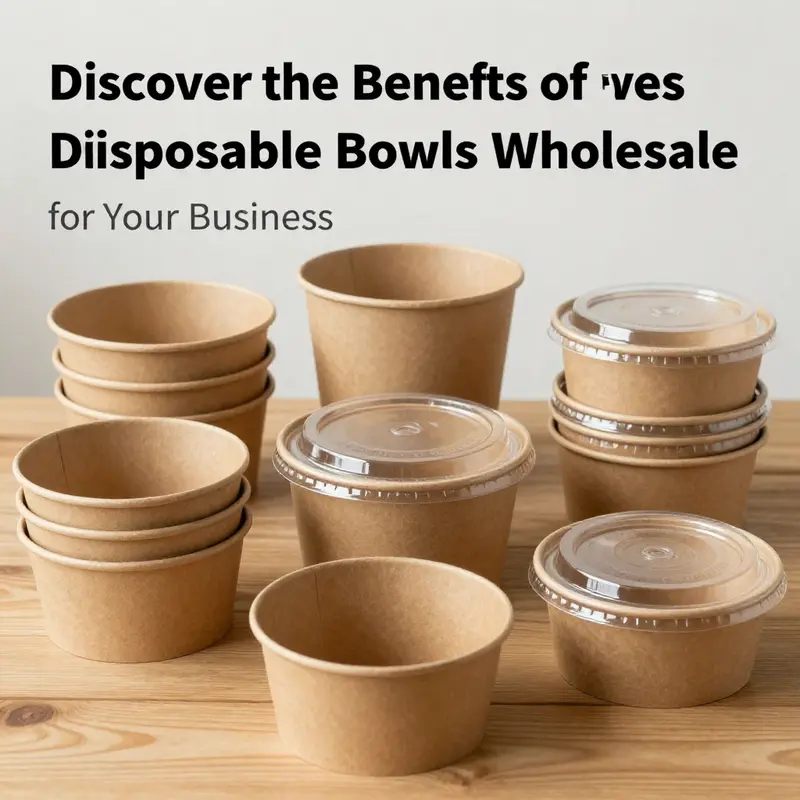
The wholesale market for brown disposable bowls sits at an intersection of practicality, cost efficiency, and growing environmental expectations. In many foodservice environments—whether a busy lunch rush, a wedding reception, or a corporate catering event—the choice of servingware can shape not only the guest experience but also the business’s sustainability profile. The brown disposable bowl, most often crafted from kraft paper, has emerged as a versatile solution that can be tailored to a range of culinary needs, service styles, and logistical constraints. The broad appeal of these bowls lies in their simple, natural aesthetic, their capacity to hold a variety of foods, and their compatibility with wholesale procurement, where unit costs and customization options can shift the economics of hospitality at scale. A well-chosen brown bowl becomes more than a container; it becomes a framing device for a brand’s sustainability story and a reliable workhorse in the back of house.
At the core of this market is a family of product types that share a common material language but diverge in function and form. The circular kraft paper bowl remains the default for many operators, prized for its familiar silhouette that fits standard soup cups and salads with ease. Yet the options expand beyond roundness. Rectangular, octagonal, or square shapes appear in wholesale catalogs to accommodate buffet lines, stacked service, or modular plating concepts. For catered events, shape innovation can support portion control, storage efficiency, and even the choreography of a service line. In addition to shape, a growing subset of bowls feature seamless lids or snap-on covers that secure contents during transport and hold heat or cold more effectively. The inclusion of a lid is not merely about containment; it is about reliability in logistics—ensuring that a hot item remains appetizing through delivery routes or during a break in an event schedule.
Customization is another thread that runs through wholesale brown bowls. Many manufacturers and distributors offer on-demand printing, allowing brands to imprint logos, taglines, or event themes directly onto the outer surface. The ability to customize colors, introduce specific typography, or adjust the overall look can transform a generic container into a marketing instrument. This is particularly valuable for venues that host weddings, corporate gatherings, or promotional campaigns where the packaging must convey a message as clearly as the meal itself. From a procurement standpoint, customization typically translates to a shorter lead time and a higher minimum order quantity, but the payoff is a more cohesive brand presentation across service moments.
The materials used to realize these bowls are as varied as the shapes and capacities they come in. Kraft paper remains the principal substrate, selected for its natural, earthy aesthetic and its relative sturdiness. Kraft-based bowls are often designed with food safety in mind, and many carry a designation such as food-grade inside the paper layer. The inherent advantage of kraft paper is its compatibility with a broad range of foods, particularly items that are salad-based, noodle-centric, or soup-focused. The natural texture and color contribute to a rustic, eco-friendly appeal that resonates with modern consumer sensibilities about sustainability.
Beyond the baseline kraft, some products integrate additional layers to bolster performance. A common approach is a thin, clear polymer coating—often polyethylene (PE)—applied to the inner surface or as a barrier between the food and the paper. This coating enhances moisture resistance and oil protection, making the bowl more suitable for soups, gravies, or dressings that might otherwise compromise the integrity of the container. While this improves practicality, it can affect recyclability, depending on local waste streams and regulations. For operators who aim to minimize plastic use, suppliers frequently offer alternatives such as starch-based coatings or specialty sealants that provide water and oil resistance without relying on traditional plastic films. These options illustrate the ongoing balance between performance, cost, and environmental considerations that defines wholesale purchasing strategies.
An emerging material category within this space is bamboo fiber paper. Bamboo fibers offer a distinctive combination of rigidity and resilience, with robust oil resistance and heat tolerance that make them well suited to warming foods. The bamboo approach aligns with broader sustainability narratives, given the rapid renewability of bamboo and its relatively small ecological footprint compared to some traditional packaging materials. In practice, bamboo-fiber bowls may present similar handling characteristics to kraft-based vessels but with a different tactile quality and, in some cases, enhanced grease resistance. For buyers dedicated to lower plastic use and higher compostability, bamboo fibers can present a compelling middle ground, albeit often at a premium relative to standard kraft.
Some premium or specialty products rely on fully biodegradable or compostable formulations. These bowls are designed to break down under specific industrial composting conditions or even in home composting environments, depending on the certification and testing behind the product. The market for fully compostable bowls reflects a growing consumer demand for disposables that align with circular economy principles. However, the practical realities of disposal infrastructure mean that buyers should verify local composting capabilities and any certifications that accompany the product. The most prudent approach is to seek clear documentation about biodegradability or compostability, including relevant standards or third-party certifications, to ensure compliance with import regulations and waste-management expectations in their markets.
The spectrum of capacities is equally broad, accommodating everything from a single-person portion to multi-serve catering needs. Common sizes range from 500ml up to 1900ml, with special larger formats around 32 ounces (approximately 950ml) in certain lines. These larger bowls are particularly valuable for venues that expect to serve hearty portions, such as rice bowls, noodle dishes, or stews at buffets and large events. The ability to pair specific capacities with corresponding lids or sealable features helps streamline logistics: a smaller bowl with a secure lid can ease takeout for delivery drivers, while a larger bowl with a robust lid may be preferred for on-site service where spill-prevention and temperature retention are critical.
Another persuasive dimension of wholesale brown bowls is the packaging and bundling options that accompany the core product. Many suppliers present bowls in bulk, with the option to bundle lids, sleeves, or related accessories in a way that optimizes warehousing and transport. Some offerings emphasize sea-worthy packaging—compact, stackable arrangements that maximize container space on pallets and during freight. Such packaging considerations are not cosmetic; they translate directly into cost control, especially for operators managing large volumes or frequent reorder cycles. The ability to negotiate blends of shapes and sizes in a single shipment can also drive consistency in serviceware across multiple outlets, minimizing the variety of stock kept in kitchens or stores.
In terms of price dynamics, wholesale brown bowls occupy a tiered pricing structure that rewards larger quantities and customization. The unit cost typically declines as order volume increases, which creates meaningful savings for chains, caterers, and event planners who standardize on a particular bowl design. The pricing spectrum often starts with very low unit costs for basic, unbranded models produced at scale, rising toward higher margins for branded, coated, or specialty-material variants. Lead times can vary with customization, with standard, unprinted bowls arriving faster than customized orders that require silk-screening, engraving, or color-matching. For operators, this makes planning essential: align your event calendar with supplier capacity, and you can lock in favorable terms and predictable delivery windows.
From a procurement vantage point, several decision points define the most effective wholesale purchase. First, confirm whether the product carries a food-grade certification that aligns with the markets in which it will be sold or served. A robust certification framework reduces risk during import and ensures that compliance standards for food contact materials are met. Second, determine the balance between durability and sustainability. Coated or laminated options give you stronger performance with liquid-heavy foods, but they may complicate recycling. Third, assess coating technology and its environmental implications. If your goal is to minimize plastic content, seek options with plant-based or mineral coatings that still deliver reliable moisture resistance. Fourth, consider customization needs in the context of demand predictability. If your brand plans to host a number of events or seasonal campaigns, a flexible customization program with scalable MOQs can be a strategic asset. Finally, evaluate logistics realities—lead times, shipping costs, and the feasibility of air versus sea freight depending on the order size and destination.
Within this broader landscape, the selection process benefits from a practical, principle-driven approach. Start by mapping the most common servings you provide and the typical temperatures of those dishes. If your menu frequently includes hot soups, gravies, or oily foods, plan for a barrier layer that protects both the food and the container. If your operations emphasize grab-and-go service, a secure lid system and an easy-to-stack design will matter as much as the visual appeal of the outer surface. For salad-forward venues, a bowl shape that promotes easy tossing and plating can improve the guest experience. The aesthetic dimension matters too: the brown hue, the texture of the kraft surface, and the possible presence of a natural-feel coating can reinforce branding without sacrificing practicality. In this sense, wholesale brown bowls are not merely a packaging choice; they are a flexible platform for communication with customers and a facilitator of efficient service.
In exploring the procurement ecosystem, many buyers look for reliable supplier ecosystems that offer both breadth and depth. A typical wholesale catalog will present a matrix of shapes, sizes, and coatings side by side, sometimes with optional lids and packaging configurations. A robust supplier will also offer samples—free or low-cost—so buyers can inspect print quality, confirm coating performance, and verify the overall feel in hands and on lips when tasting and serving. The ability to request a sample, assess print clarity for logos, and evaluate the “feel” of the surface under different condiments is often a predictor of long-term satisfaction with a vendor. If a line includes a 750ml salad bowl with a lid, for example, the option to try a free sample can prevent expensive missteps in large-scale orders. The relationship between quality control and long-term cost savings becomes evident when lines are used across multiple events or outlets.
To bring this discussion back to practical choices, consider an example that sits at the intersection of form, function, and marketing opportunity. A 750ml kraft paper salad bowl with a sealed lid exemplifies a balance between portion size, portability, and presentation. The outer surface can carry a logo, a color accent, or a seasonal motif that resonates with customers. The lid keeps ingredients intact during transport and helps maintain temperature during service pauses. For operators who want to examine options across the spectrum, a broader catalog might include rectangular or octagonal bowls designed for buffet lines or stacked displays, enabling a distinct visual arrangement that can elevate the dining experience while preserving efficiency in service.
For readers seeking further context or to explore similar wholesale offerings, a widely used resource provides access to a broad collection of brown kraft paper bowls in wholesale quantities. That resource offers a window into the variety of shapes, capacities, and finishes available and serves as a practical reference for comparing features such as grease resistance, sealing capability, and labeling options. As you navigate decisions about coatings, materials, and customization, this resource can help align supplier capabilities with your operational needs and sustainability goals. See the wholesale brown kraft paper salad bowls collection for more details.
In addition, a broader industry catalog highlights how the market continues to evolve with an emphasis on eco-friendly and compostable solutions. The ongoing push toward greener packaging influences the design choices you make in a wholesale purchase. Many operators now prioritize packaging options that reduce plastic dependence while maintaining performance standards for heat and moisture management. When a supplier presents a 500ml to 1800ml range, it is often possible to select a consistent line that offers cohesive aesthetics and predictable performance across multiple service contexts. Consistency matters for chain operations and multi-location events, where standardization reduces waste, simplifies logistics, and supports a clearer sustainability narrative for guests and stakeholders alike.
For those who want a concrete starting point in evaluating options, consider the following guiding questions. Do you need a fully waterproof interior barrier without compromising recyclability? Is a coating acceptable if it is certified as compostable or derived from plant-based sources? What is the expected service temperature range for your typical menu items, and how does that influence lid design and sealing strength? How important is branding, and what is the anticipated frequency of customization? Do your procurement terms favor volume discounts, shorter lead times, or more flexible MOQs that accommodate seasonal demand fluctuations? Answering these questions helps create a decision framework that supports both immediate service quality and long-term cost and sustainability objectives.
For readers who want to explore specific examples of related products and categories, a curated selection of wholesale packaging options can be found in the linked internal resource, which showcases a salad bowl with lid and other take-away containers in kraft-based materials. This page provides useful context on lid compatibility, printing surfaces, and bulk packaging options that can influence your logistical planning and kitchen operations. You can explore the detailed product pages to compare sizes, lip profiles, and seal performance, then align those findings with your menu and service model. Together, these considerations help ensure that your wholesale purchase of brown disposable bowls supports a smooth, scalable, and brand-consistent operation across all service channels.
As you advance from exploration to procurement, keep in mind that wholesale buying is as much about partnerships as it is about products. A reliable supplier will offer clear documentation, transparent pricing, and predictable lead times. They will also be responsive to requests for samples, proofs for customization, and questions about coating chemistry and recyclability. The right partner helps you navigate the tension between cost control, performance, and environmental responsibility, turning a container into a strategic asset rather than a simple expense.
External resources for broader context and comparison include industry-wide wholesale options and catalogues that gather brown kraft paper bowls and related disposables in one place. For a comprehensive look at available wholesale brown kraft paper salad bowls, you can refer to the following external resource: https://www.made-in-china.com/products/wholesale-disposable-brown-kraft-paper-salad-bowls.html
In summary, the wholesale landscape for brown disposable bowls is defined by a spectrum of product types and materials designed to meet diverse service needs. From simple, sturdy kraft bowls to advanced coatings and bamboo fiber variants, the choices enable operators to balance performance, aesthetics, price, and sustainability. The most successful buyers approach this space with a clear understanding of food safety requirements, a defined view on recyclability and compostability, and a practical plan for customization and logistics. The result is not just a container for food, but a carefully chosen medium that supports efficient service, consistent guest experience, and a credible sustainability story across the entire operation.
From Kraft to Kitchen: Navigating Specs, Capacities, and Sourcing in Brown Disposable Bowls Wholesale
Brown disposable bowls wholesale sits at a quiet crossroads where material science, packaging aesthetics, and operational efficiency meet. The wholesale market for kraft-based bowls is not just about a low price point or a large catalog; it is about the precise alignment of capacity, coating, and sustainability with the demands of modern foodservice. In practice, buyers are seeking a dependable balance between function and footprint. They want a bowl that can hold a salad without leaking, a soup without a soggy rim, and a catering service without delays caused by stockouts. The language of wholesale is a language of specifications that translate into real-world performance. When approached with a clear sense of what matters—from moisture resistance to lid compatibility and brand presentation—these bowls become a backbone for takeout menus, buffets, and event catering. The core material is usually kraft paper pulp, a choice that signals not only a certain warmth and rustic appeal but also a commitment to recyclability. The kraft pulp, often combined with a food-grade internal coating, forms the structural and moisture-defending heart of the bowl. This combination is where form meets function in a way that is scalable for wholesale procurement, enabling operators to purchase in bulk while maintaining the customer experience that begins the moment a lid is peeled back or a spoon pierces the seal of a to-go container.
The material story is essential because it frames the expectations buyers bring to the table. Most brown bowls in wholesale programs rely on 100% recycled kraft paper pulp, which supports biodegradability and compostability, at least in the eyes of sustainability-minded customers and regulators alike. What distinguishes the wholesale bowl, in practical terms, is the interior coating: a food-safe polyethylene (PE) layer that seals the fibers and keeps moisture and oils from seeping through to the outer surface. This coating is not merely a technical detail; it determines whether the bowl remains rigid enough during transport, whether sauces stay contained during the journey, and whether the customer’s perception of quality matches the price tag. In some markets, suppliers are moving toward alternative coatings—bio-based or PLA-based options—to align with stricter compostability standards or to meet particular retailer requirements. Yet, the PE-coated variants remain the standard for many operators who require reliable leakage resistance across a wide range of hot and cold foods.
Capacities in the wholesale space are a practical compass for operators planning menus, storage, and service flow. Traditional categories include 300 ml, 500 ml, 750 ml, and 1000 ml as the most commonly requested sizes, each serving a distinct function in daily operations. The 300 ml size is ideal for appetizers, desserts, or small sides that accompany a main course. It offers compact packaging for snack-sized portions and is often favored in settings where portion control is essential. The 500 ml option has long been a staple for salads, main courses, or meal-prep containers, delivering a balance between generous capacity and compact footprint for refrigerated display or kitchen storage. The 750 ml bowl steps up into larger servings such as soups and stews, or family-sized portions that might appear on a banquet table or during a catering drive. The 1000 ml container, frequently seen in bulk serving or restaurant takeout orders, supports buffet items, large catering orders, and high-volume takeout lines.
In practice, wholesalers also offer extended capacities that go beyond the standard quartet. A number of suppliers provide options in the 900 to 1400 ml range, and some scale up to 1900 ml for events and large banquets. These larger formats are particularly useful for hot entrees, stews, or multi-item takeout combos where a single vessel must hold a substantial portion. It is common for larger sizes to be paired with corresponding lids that seal securely to preserve heat and moisture during transport. The lid compatibility is not merely a courtesy; it is a line item in a wholesale quote because the seal integrity, venting, and stacking behavior of bowls and lids influence the entire workflow—from prep to pickup to service.
One of the most consequential elements of wholesale asset management is the production capacity of the supplier. In high-volume operations, a factory can churn out tens of thousands of bowls per day, sometimes approaching or surpassing 100,000 pieces daily. This scale is not incidental. It supports consistent supply for restaurants, caterers, and event planners who cannot tolerate interruptions in service quality because of stockouts. The ability to source a large, uniform batch of bowls with precise tolerances on diameter, wall thickness, and coating thickness is a competitive advantage. It reduces variance in performance across shifts and locations, which, in turn, reduces the risk of customer complaints over leaks or soggy edges. When buyers review a supplier, they often look for evidence of manufacturing discipline—documented quality control, traceability, and the capacity to meet seasonal surges as weddings, festivals, or promotional campaigns unfold across regions.
Customization remains a strategic lever in wholesale procurement, and it often defines the value proposition beyond raw materials and capacity. In wholesale channels, buyers can tailor the look and feel of the bowls to reinforce branding and user experience. Common customization options include imprinted logos, brand patterns, and textual messages that can appear on the bowl sides, lids, or packaging. Color customization—ranging from different browns to more vivid earth tones—also plays a role inbrand alignment and consumer perception. The practical significance of customization is twofold: it supports brand visibility in the consumer’s hands and can streamline the takeout experience by creating predictable packaging that is instantly recognizable in a crowded foodservice environment. For buyers pursuing wholesale customization, there is a clear path to scale: design once, print across batches, and maintain consistency across multiple locations.
Pricing in the wholesale space follows a volume-driven arc. Unit pricing for brown disposable bowls typically falls within a broad range, reflecting factors such as quantity, material quality, coating type, and customization. For standard stock, prices may range from roughly a few cents per piece up to around ten U.S. cents or more at lower volumes. As order quantities grow—from tens of thousands to hundreds of thousands—the per-unit price decreases, sometimes dipping into the mid- to low-tens of a cent range for very large orders. The commonly observed minimum order quantities are in the neighborhood of 10,000 or 20,000 pieces, with some suppliers offering flexibility at lower volumes, albeit at higher per-unit costs. The wholesale buyer thus navigates a balancing act: lower unit costs achieved through higher volume must be weighed against cash flow, storage, and the match between demand forecasts and actual consumption. When negotiations unfold, it helps to discuss not only unit price but also lead times, production slots, and the availability of free or discounted samples for quality verification.
Customization is often accompanied by a suite of ancillary services that are critical for wholesale customers. Free samples, though typically contingent on shipping, provide a practical way to assess the tactile quality of the paper, the rigidity of the bowl walls, and the integrity of the coating under different temperatures. Some suppliers will offer color matching and Pantone-based printing to align with brand standards, while others provide design assistance for logos and messaging that maximize readability against a kitchen’s glare or a restaurant’s dining room lighting. In this regard, wholesale channels mirror the broader packaging ecosystem: the value is not only in the product but in the predictable, end-to-end service that reduces friction from inquiry to delivery.
From a procurement perspective, several practical checkpoints help ensure that the wholesale bowl meets both regulatory and customer expectations. First and foremost, food-grade certification and safety marks are essential. Buyers should confirm that the interior coating does not contain residual contaminants and that the packaging materials comply with the regulatory frameworks of the destination markets, such as the United States FDA or European approvals. Second, the coating itself warrants careful consideration. While PE-coated interiors deliver reliable moisture resistance, they can complicate end-of-life disposal if compostability is a goal. For organizations pursuing a no-plastic or reduced-plastic strategy, it becomes necessary to weigh alternatives, such as pure paper-based coatings or plant-based composites, despite potential compromises in moisture resistance. Third, suppliers should provide clear specifications on wall thickness, base diameter, and lid mating tolerances. These metrics directly affect stacking efficiency in storage, transport, and kitchen prep work. Fourth, sustainability claims matter, but buyers should seek third-party verification where possible. Certifications related to biodegradability, compostability, or recyclability should accompany the product data sheets so that buyers can communicate verifiable claims to customers and regulators alike. Taken together, these checks form a disciplined framework that reduces risk when scaling up from pilot orders to full wholesale programs.
The sourcing journey for brown disposable bowls in wholesale channels also benefits from a structured approach to supplier evaluation. Buyers typically move from a generic supplier list to a short list that includes factors such as production capacity, lead times, logistics readiness, and after-sales support. Platforms that aggregate factories can enable side-by-side comparisons of pricing and terms, while the practical experience of the user—ease of ordering, responsiveness to questions, and consistency of fulfillment—often proves as important as the printed specifications on a data sheet. The most successful wholesale relationships tend to be long-term partnerships built on trust: a supplier who can deliver consistent quality, on-time shipments, and a reliable customization process is a scarce but highly valued asset in a busy foodservice operation. In many cases, wholesale buyers establish forecasting relationships that align production capacity with seasonal demand. They use historical data to anticipate peak periods—holiday meals, graduation parties, or festival seasons—and secure space on the production calendar earlier in the year to avoid last-minute price spikes or stockouts.
For those navigating the wholesale landscape, a practical example of customization in action can be found in the broader catalog of packaging options, including the possibility of wholesale customization with a logo or brand motif. This approach helps convert a simple takeout vessel into a brand touchpoint, reminding customers of the brand throughout the meal journey. It is here that the intersection of design and logistics becomes most apparent: a well-executed customization strategy must be scalable, compatible with the chosen coating and lid system, and aligned with the chosen capacities. The goal is not only to deliver a single, desirable bowl but to create a repeatable, brand-consistent packaging solution that can support multiple outlets and a growing customer base. See for example the wholesale customization path outlined in resources such as Wholesale custom-logo kraft paper soup bowl, which demonstrates how a basic vessel can be transformed into a branded packaging element without sacrificing performance at scale.
In sum, brown disposable bowls wholesale represents a confluence of material science, product design, and supply chain discipline. The typical specification set—kraft paper pulp with interior PE coating, a standard capacity ladder of 300 ml to 1000 ml (with extended sizes available in many programs), and lid compatibility—provides a foundation. The real nuance lies in the packaging’s lifecycle: how it performs during transport, whether it preserves heat and moisture, how it meets regulatory thresholds, and how the brand message is carried through the visual language of the bowl and its lid. Buyers who approach the category with a clear sense of capacity needs, coating choices, and sustainability expectations are better positioned to negotiate terms that serve both the business and the planet. As wholesale markets evolve, the conversation shifts from simply acquiring a disposable bowl to cultivating a packaging system that supports consistent service, reliable supply, and measurable environmental responsibility. For readers who want to explore concrete examples of wholesale customization that align with these goals, a useful reference can be found through the Wholesale custom-logo kraft paper soup bowl page, which provides a practical illustration of how customization integrates with production realities and delivery timelines. For further context on how these considerations play out in the broader landscape of brown disposable bowls, external material on wholesale brown bowls and their specifications offers additional perspectives on capacity diversity, coating tradeoffs, and end-of-life considerations: https://www.example.com/brown-salad-bowls-wholesale.
From Unit Cost to Bulk Scale: Decoding Pricing and MOQs for Brown Kraft Bowls in Wholesale
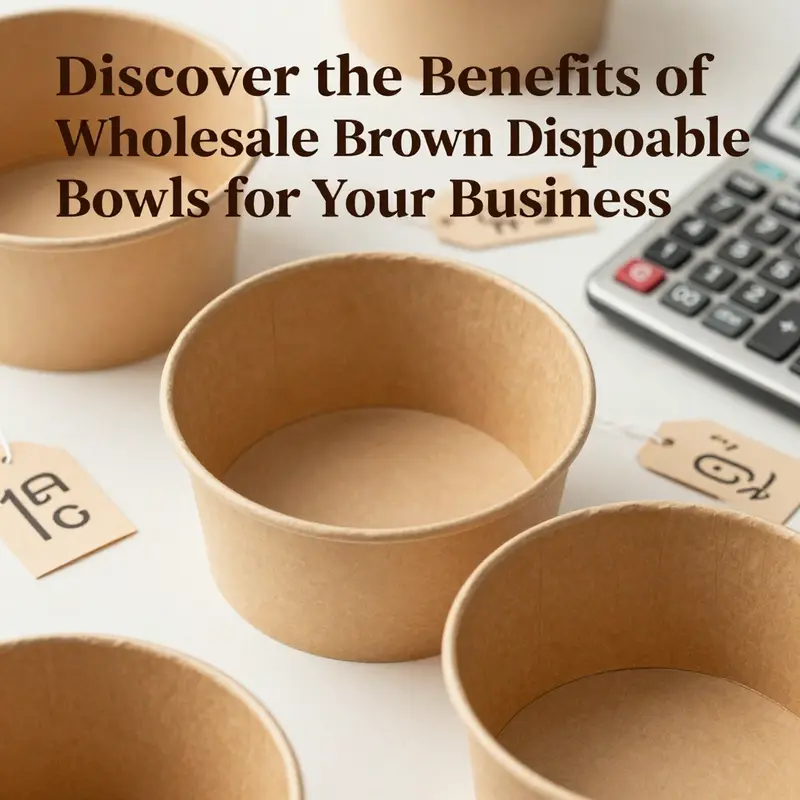
Pricing and minimum order quantities for brown kraft bowls sit at the intersection of material choice, size, and the realities of manufacture and logistics. When a buyer begins to compare quotes, the first instinct is often to focus on per-unit cost. Yet the true picture emerges only when you map unit price to total landed cost, and then layer in the constraints and opportunities that MOQs create. In wholesale markets, price per bowl can vary widely, typically between a few cents and under ten cents for bulk orders. A practical band often cited by suppliers is roughly four and a half to five and a half cents per item for standard, non-customized bowls ordered in large volumes. These figures shift as you move toward larger capacities or add customization, packaging requirements, or branding. The price you pay for a 500 ml bowl is rarely identical to the price for a 1500 ml bowl, even if both are kraft with a protective coating. The larger vessels use more material, take longer to form, and may require additional drying or surface treatment that influences the unit cost. A buyer should expect that capacity ranges—500–750 ml for light fare, 900–1400 ml for soups and mains, up to 1900 ml for party-size servings—will each carry their own pricing ladder. Some suppliers also offer a 32 oz or 950 ml size that is tailored to restaurant takeout or catering, which can skew pricing because it sits at a boundary between standard consumer sizes and commercial-volume needs. In practice, the most common price window for wholesale brown kraft bowls sits near $0.045–$0.055 per unit, a rate that tends to reflect orders in the tens of thousands of pieces when branding or packaging is not requested. The range $0.02–$0.07 per unit is not unusual, though it tends to appear when orders are smaller, when coatings are lighter, or when the supplier has a margin cushion due to supply chain arrangements. It is important to be transparent about the exact specifications to avoid price drift after the first quote. If the supplier’s description lists a kraft paper bowl with a PE coating, that coating adds a measurable cost but improves oil resistance and water resilience, which can reduce waste through leakage during transport or in line at a catering event. If a buyer needs a completely plastic-free option, the price is likely to move up due to the need for alternative coatings, such as plant-based oils or other biodegradable layers, which may not be as readily available in all regions. The difference between materials—bamboo fiber, bagasse, or standard kraft—also changes the pricing landscape. In markets where bamboo fiber or sugarcane bagasse bowls are readily available, the price per piece can shift by a few hundredths of a dollar, driven by raw material costs and supply chain volatility. The consumer-facing narrative of eco-friendliness can influence pricing as well, because certification, labeling, and supplier assurances about compostability or biodegradability may incur additional costs that are folded into the unit price. For businesses evaluating options, it helps to distinguish between base material price and added services such as branding or packaging. Customization is a core driver of price. Logo printing, color matching, or special shapes can elevate the unit cost substantially, especially when set-up fees, minimum print runs, or ink adhesion specifications enter the equation. A small business may find that a modest, single-color logo can be absorbed into the base price if the order is large enough, while a full-color, multi-ink design on a variety of sizes may trigger a multi-step process with higher minimums and higher per-unit costs. Many suppliers advertise free samples to help buyers validate quality before committing to a larger order. The catch is that the customer typically pays the shipping fee, but this cost can be credited back on the first full order. This approach offers a practical way to assess print fidelity, sealing, and the overall tactile feel of the bowl—factors that are crucial when the product is destined for food use. The decision to sample should be integrated into an overall negotiation strategy. If a buyer anticipates requiring branding, layout, and multiple sizes, it may be prudent to request a single, consolidated quote for a coordinated run. The MOQs associated with wholesale purchases are central to budgeting and forecasting. The most common minimums hover around 10,000 or 20,000 pieces, which aligns with factory production runs and the fixed costs of print plates or embossing dies. A higher MOQ can secure better per-unit pricing, improved lead times, or more favorable freight terms. Some suppliers offer lower MOQs in exchange for a higher per-unit price. It is not unusual to encounter MOQs as low as 1,000 pieces for basic, non-customized products, or as high as 50,000 units for standardized lines with limited coating options. Large-scale manufacturers may set MOQs at 1,000,000 pieces or more when the rhythm of demand and the scale of production justify that level of commitment. The variance in MOQs across suppliers means that the buyer’s negotiation strategy matters as much as the price sheet. A practical approach is to map potential volume bands against desired timelines. If a business forecasts seasonal spikes or regular bulk needs, securing a two- or three-tier quote can create flexibility to adjust orders without losing favorable unit costs. It’s also worth noting that some suppliers will accommodate smaller runs if the buyer agrees to longer lead times or takes on inventory risk at the supplier’s warehouse. The logistics of getting bowls from factory floor to customer hand also influence the overall cost structure. Freight terms—whether EXW, FCA, CIF, or DDP—play a pivotal role in the final landed cost. For regional buyers, the freight component may be minimized by grouping shipments and using consolidated freight to lower per-unit shipping fees. Conversely, if a supplier is distant or requires expedited transport, the freight can materially widen the total price per bowl. Buyers should request a landed-cost quote that includes packaging, labeling, freight, and any duties if the destination is outside the origin country. Packing practice matters too. Boxes versus pallets, and the degree of protection during transit, affect both the price and the risk of damaged goods. Some buyers prefer tight, carton-level packaging with a standard count per carton; others opt for direct palletized shipments to minimize handling. The packaging choice can also influence branding opportunities. For instance, a carton that is designed for a transparent lid or a clam-shell arrangement can complement a custom-printed bowl by presenting a cohesive brand story upon unpacking. These nuances underscore why wholesale buyers must look beyond the sticker price and consider the entire value proposition: cost efficiency, quality consistency, branding potential, and supply continuity. When a supplier highlights eco-friendly credentials—such as biodegradable or compostable claims—buyers should verify the scope and standards behind these labels. Certifications can incur cost but contribute to regulatory compliance and consumer trust in markets with strict packaging regulations. At times, the extra cost is worth the assurance that the product aligns with import rules and sustainability commitments. In researching options, it helps to drive conversations around several concrete questions: What are the exact sizes included in the quoted batch? Are there any minimums for the coatings and their strength in hot or oily contexts? Does the quote include optional lids or sealing features that can add value for takeout services? Are there any setup fees for printing or color matching, and if so, can they be amortized across a larger order? How flexible is the supplier on MOQs if we commit to a longer lead time or a multi-year sourcing plan? Do they offer free or subsidized samples, and under what terms can those samples be repaid in the first order? These questions help to create a quote that is not only price-competitive but also stable over time as volumes scale. The decision to pursue customization or stick with a standard line will shape both the price trajectory and the speed at which a buyer can scale. For a brand investing in visibility, the incremental cost of a logo or a color-coded lid can translate into greater recall and stronger customer associations with the packaging. A business may decide that the intermediate path—standard bowls with minimal branding—offers a quicker time-to-market and lower risk while testing consumer response. Alternatively, a brand that plans ongoing campaigns or multi-location rollouts might prefer a long-run agreement with a supplier that can support regular, predictable orders, and even a co-design approach that yields durable, brand-consistent packaging. The best path forward remains anchored in due diligence and clear communication. Buyers should request formal quotes that specify material composition, coatings, and certifications. They should also ask for a breakdown of all costs, from base unit price to any print or mold fees, to packaging charges and freight. In a market where environmental claims are increasingly scrutinized, it is prudent to obtain documentation or third-party verification of sustainability attributes when they are central to the product’s positioning. After comparing quotes, buyers may find that the sweet spot lies in a supplier who offers a balanced combination of reasonable unit costs, moderate MOQs, dependable lead times, and scalable customization options. This balance supports a purchasing strategy that can adapt to growing demand without sacrificing margins or service levels. For those who want to explore a practical example of customization-driven wholesale opportunities, consider the option to imprint brand logos on kraft paper bowls for takeout services. Wholesale custom logo kraft paper soup bowls can be an effective way to elevate a menu’s perceived value, particularly in markets where takeout remains dominant. The decision to pursue that route should come with a careful calculation of the incremental cost, the expected uplift in order value, and the logistics of holding branded inventory across multiple locations. If you are considering such an approach, you can learn more from suppliers who list these capabilities and align them with your timeline and quality standards. Wholesale custom logo Kraft paper soup bowls. External benchmarks and supplier profiles also indicate how different regions price and source these products, with competition and material availability often driving the range. To ground these considerations in market data, it helps to review publicly accessible wholesale listings and price guides from large marketplaces. For a broader sense of scale, a widely cited reference in wholesale is the listing for high-capacity kraft paper bowls, which illustrates how bulk pricing can improve as volumes rise and as the supplier’s ability to amortize fixed costs improves. This kind of data can anchor negotiations and provide a framework for evaluating proposals from multiple suppliers. External reference: https://www.alibaba.com/product-detail/Wholesale-Disposable-High-Capacity-Kraft_1600819427495.html?spm=a2700.10019655.0.0.1b9a7c39oDnFyI
Branding Beneath the Barrier: Customization and Sustainability in Brown Disposable Bowls Wholesale
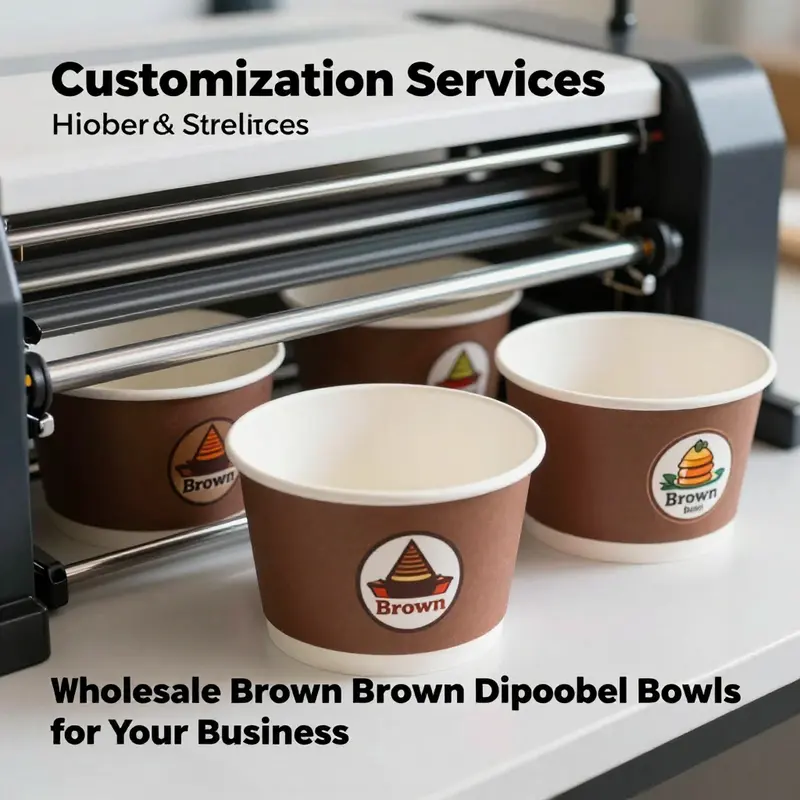
The wholesale market for brown disposable bowls has evolved from a simple supply of single-use vessels into a canvas for brand storytelling, operational efficiency, and sustainable practice. In this space, customization is not an afterthought but a core value proposition. The bowls, typically crafted from kraft paper and reinforced with a food-grade coating, act as a quiet ambassador for a restaurant, a catering outfit, or a venue service. The most common materials are brown kraft paper, prized for its natural look and compostable promise, with many products specifying a food-grade polyethylene (PE) coating to boost oil resistance and moisture protection. This combination allows bowls to handle everything from hearty salads to soups and noodle dishes, while still meeting safety standards in a global market that demands transparency about materials and sourcing. eco-conscious buyers often seek products marketed as Eco-Friendly, Biodegradable, or 100% Eco Friendly, and some suppliers extend this with third-party biodegradable certifications. While the core sizes frequently span 500 ml to 1900 ml, many lines include mid-range options around 750–1400 ml for everyday meals and event catering, with some special shapes and sizes designed for specific service styles or display needs. A notable trend in the customization dialogue is the inclusion of lids—sealing options that improve transport integrity and product preservation for take-away orders—and even octagonal or rectangular profiles that differentiate a brand on the shelf or at the pickup counter. These variants are not merely about aesthetics; they support a smooth operational flow, enabling staff to portion, package, and present foods consistently across shifts and locations. In practice, the buying journey usually starts with a supplier offering a menu of standard capacities—500, 750, 900, 1200, and 1400 ml—paired with optional lids and a selection of coatings. From there, brands layer on customization to match their identity, whether through logo imprinting, color-tuned browns, or tailor-made shapes that echo a restaurant’s interior design or a marketplace’s signage. The couplings of material choice and branding render a single bowl capable of communicating values such as rustic authenticity, modern sustainability, or family-friendly affordability, while also ensuring the logistical alignment required for large-scale distribution. A key observation across the sector is that customers increasingly view these bowls as part of a broader packaging ecology, not mere vessels. They want to know that the product is responsibly produced and that the materials will perform as promised in transit and on the consumer’s table. This awareness translates into a demand for clear labeling, a straightforward material story, and verified safety credentials that reassure importers and retailers in markets with stringent regulations. For buyers prioritizing environmental stewardship, the market offers a spectrum of choices: traditional kraft paper with a minimal coating for a lower-carbon footprint, or alternative fibers such as bagasse pulp that promise compostability and reduced plastic content. Some offerings emphasize a fully biodegradable lifecycle, aligning with global frameworks and regional packaging directives that regulate migration of substances into food, while others highlight certifications and compliance marks that ease cross-border commerce. In this landscape, the role of customization extends beyond the logo. It encompasses size calls, lid compatibility, packaging configurations, and even color adjustments within the brown palette to differentiate a brand at a glance. When a client requests a deeper customization, suppliers typically respond with a design brief that covers the intended use, target consumer, and distribution channel. They translate those inputs into a selection of base materials, coating thickness, shelf-ready packaging, and print areas. The print area is often generous on kraft bowls, providing room for brand marks, slogans, or allergen notices, while preserving the natural texture of the kraft surface. The outcome is a tangible fusion of form and function: a bowl that not only holds a meal but also communicates brand story through color depth, typographic layout, and even the texture of the printing on the surface. Such a synthesis is especially valuable for cafes and catering operations that rely on rapid pickup and consistent quality. The right combination of material and print supports a seamless customer experience, from the moment a user glances at the stack on a counter to the moment the lid is peeled back to uncover a fresh, hot dish. In this context, the willingness of suppliers to provide samples—often free of charge but with shipping costs in some cases—becomes a crucial step in decision-making. A sample can reveal the true feel of the paper, the color fidelity of the print, and the perceived sturdiness of the coating, all before committing to a full production run. The ability to request free samples reflects the confidence of suppliers in their product quality and their readiness to partner with brands that are seeking to scale. For buyers who need a clear decision path, the process typically includes a combination of technical specifications, sustainability claims, pricing tiers, and lead-time estimates. The cheapest unit price per bowl generally declines with higher volumes, and many manufacturers publish a tiered pricing model that caps at large quantities. For example, prices often range from a few cents per piece at very high volumes to higher rates for smaller lots or more elaborate customization. It is not unusual to encounter a price band that spans roughly one to several cents per unit, depending on the exact material composition, coating, and the extent of customization. In many cases, entry-level orders begin at modest MOQs—commonly around 10,000 to 20,000 pieces—while more expansive campaigns may secure even larger commitments. The economics extend beyond the unit cost to consider logistics, packaging, and delivery times, especially when sourcing from overseas manufacturers to satisfy multi-region retailers or event planners. The path to procurement often weaves through marketplace platforms that aggregate factories and allow buyers to compare options across suppliers. Platforms such as Made-in-China.com and Alibaba’s ecosystem commonly feature a broad spectrum of vendors, each showcasing their capabilities in custom printing, branding, and compliance. For buyers, these platforms offer a sense of security through transaction protections, payment safeguards, and a track record of certifications. The credibility conferred by food-safety and quality standards—such as CE, BV, and ISO certifications cited by some suppliers—helps reassure buyers who must navigate complex import regulations in markets like the EU and the United States. The customization conversation can be enriched by insights from suppliers who emphasize free samples, a feature that lowers the risk of misalignment between brand expectations and the delivered product. Buyers can evaluate print clarity, color consistency, and the tactile feel of the paper before committing to large-scale production. Such due diligence can be critical, especially for brands that seek to maintain a uniform appearance across multiple outlets, restaurants, and events. The decision to pursue a specific supplier is often shaped by a combination of these factors: the breadth of available sizes and coatings, the flexibility of print areas, the responsiveness of the supplier to design tweaks, and the reliability of logistics. A robust customization program is more than a marketing advantage; it is an operational enabler. It ensures that a brand can deliver a consistent product experience, whether customers are dining in, taking away, or attending a catered event. When a chain or franchise reveals a distinctive color family, typography, or logo system, the bowls must reflect that identity while still performing in a high-demand, high-use setting. The balance between brand fidelity and practicality is delicate. The best-customized brown disposable bowls achieve this balance through smart material science and thoughtful design. Some lines offer a dual-layer approach: a sturdy paper substrate with a thin, food-safe coating that resists grease and moisture, while the outer surface carries a durable imprint capable of staying legible after several minutes of handling. This is particularly important in busy environments where customers may bear the bowls without immediate access to a napkin or plate, or where the bowls travel through the hands of couriers during busy service windows. The choice of coating, the depth of the color, and the crispness of the print all contribute to a sense of quality that customers associate with a brand’s reliability. Sustainability remains a thread that runs through every facet of customization. Buyers increasingly expect their chosen bowls to align with their environmental commitments, and suppliers respond with more transparent material narratives. Some bowls advertise biodegradability or compostability, while others highlight certifications that indicate compliance with international packaging standards. The lifecycle story—from raw material sourcing to manufacturing processes and end-of-life disposal—becomes part of the conversation. Buyers who seek to minimize plastic use may question whether a product relies on PE coatings, and many suppliers are prepared to discuss alternatives such as purely paper-based coatings or natural plant-based finishes that still deliver the necessary barrier properties. In a market where the same vessel might be used by a street-food vendor one week and a high-end event caterer the next, the versatility of brown disposable bowls is a crucial asset. Customizable sizing supports a spectrum of use cases—from compact 500 ml salads for quick lunches to generous 1300 ml bowls suited for hearty entrees and party platters. The presence of lids, if offered, adds a practical dimension to the customization equation. Lids enable transport-ready packaging that preserves temperature and moisture, reduces spill risk, and supports a seamless customer experience when orders travel over long distances. The brand’s ability to present a coherent, attractive, and functional package hinges on decisions around these elements: the exact bowl size, the coating level, the lid design and fit, and the print layout. Suppliers frequently present a menu of ready-made templates that can be quickly adapted to a brand’s colors, fonts, and logo position. For more design-conscious buyers, the option to push beyond standard layouts—creating a unique silhouette or a mid-century minimal mark—translates into a strong return on investment by enhancing brand recall and consumer satisfaction. The practicalities of scale cannot be overlooked. Customization often comes with minimum order quantities, and those minimums can be a barrier for startups or smaller catering outfits. However, the breadth of options means a buyer can negotiate for a balance between aesthetic ambition and cost efficiency. In the long run, the most successful customization programs are those that are repeatable across multiple SKUs and service channels. A brand that standardizes its logo treatment, color palette, and lid compatibility across 500 ml to 1400 ml bowls will experience smoother production runs, reduced error rates, and faster fulfillment during peak periods. The synergy between design discipline and supply-chain reliability matters just as much as the visual impact of a logo on the bowl. For decision-makers, the path forward includes clear specifications, a defined testing process, and a phased rollout plan that prioritizes one or two core SKUs before expanding to additional sizes or configurations. It also involves a candid assessment of sustainability goals and regulatory compliance. Certification schemes, whether noted on product pages or confirmed via supplier documentation, provide a framework of trust for importers and retailers who must navigate diverse regional requirements. One practical takeaway is to request free samples and to review the quality of the material and print in various lighting conditions, since color consistency and legibility can shift under different environmental contexts. As with any packaging decision, input from packaging engineers, procurement leads, and brand designers should converge to confirm that the chosen bowls meet safety standards, perform under real-world use, and visually communicate the brand message. The balance of aesthetics, functionality, and responsibility remains the core objective of customization in brown disposable bowls wholesale. The more precisely a supplier can translate a brand’s identity into a tangible vessel, the more seamless the consumer journey becomes—from the moment a customer glances at the packaging to the final bite. To explore a specific customization option, readers can delve into the product pages that showcase tailored kraft bowls with lids, where the interplay of texture, print, and form is demonstrated in real-world applications. See the options in the custom-disposable-kraft-paper-bowl-take-away-kraft-paper-salad-bowl-with-pet-lid page. custom-disposable-kraft-paper-bowl-take-away-kraft-paper-salad-bowl-with-pet-lid. For those seeking a broader view of platform-enabled procurement, marketplaces like Made-in-China.com provide a broad canvas to compare factories, negotiate pricing, and secure sample requests with transparent terms. The external resource below offers a snapshot of how global buyers leverage certifications and customization capabilities when sourcing from major packaging suppliers. External resource: https://www.alibaba.com/product-detail/Custom-Brown-Disposable-Kraft-Paper-Bowl-with-Lid_1600684174274.html
Final thoughts
Wholesale brown disposable bowls are not just a practical solution for food service operations; they represent a commitment to sustainability and quality. The diverse range of materials and specifications available ensures that you can find the perfect bowl for any occasion, whether for serving bubble tea, hearty soups, or catering large events. With competitive pricing and extensive customization options, these bowls can be tailored to fit your brand’s identity while meeting customer expectations. As businesses increasingly opt for eco-friendly solutions, making the switch to brown disposable bowls is a smart choice that aligns with market trends and consumer preferences.