
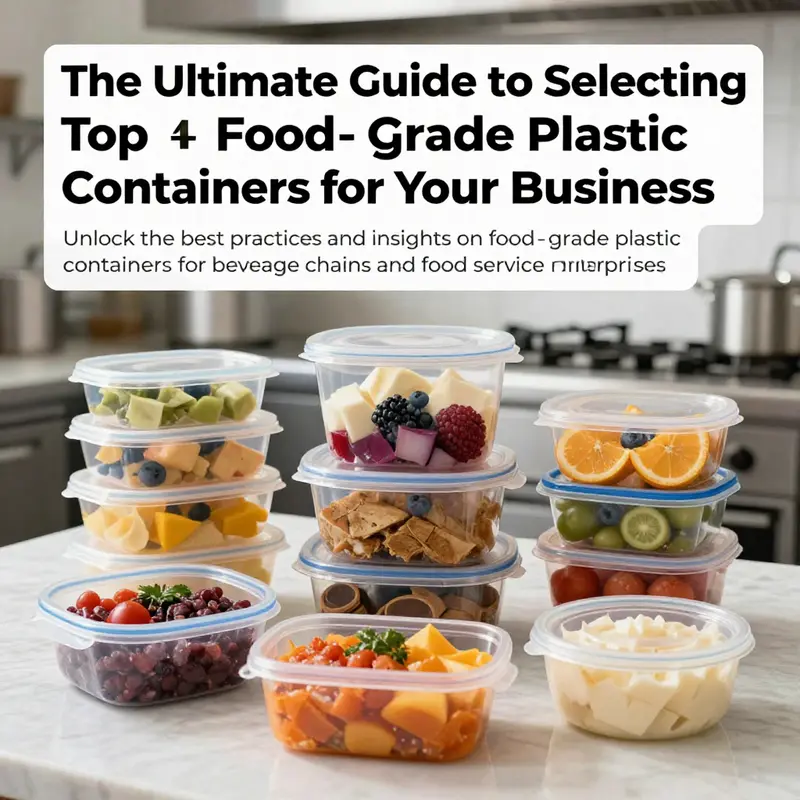
In the food and beverage industry, choosing the right storage solutions can have a significant impact on quality, safety, and customer satisfaction. Food-grade plastic containers are essential for businesses like bubble tea shops, restaurants, and catering services, as they ensure that ingredients remain fresh while maintaining compliance with health and safety regulations. This article will explore the best brands of food-grade plastic containers, detail the safety standards that protect your business and customers, and suggest practical uses tailored to your unique operational needs. Each chapter aims to provide valuable insights that can enhance your food storage strategies and drive success for your business.
Guardians of Freshness: How to Choose Food-Grade Plastic Containers That Safely Preserve What You Eat
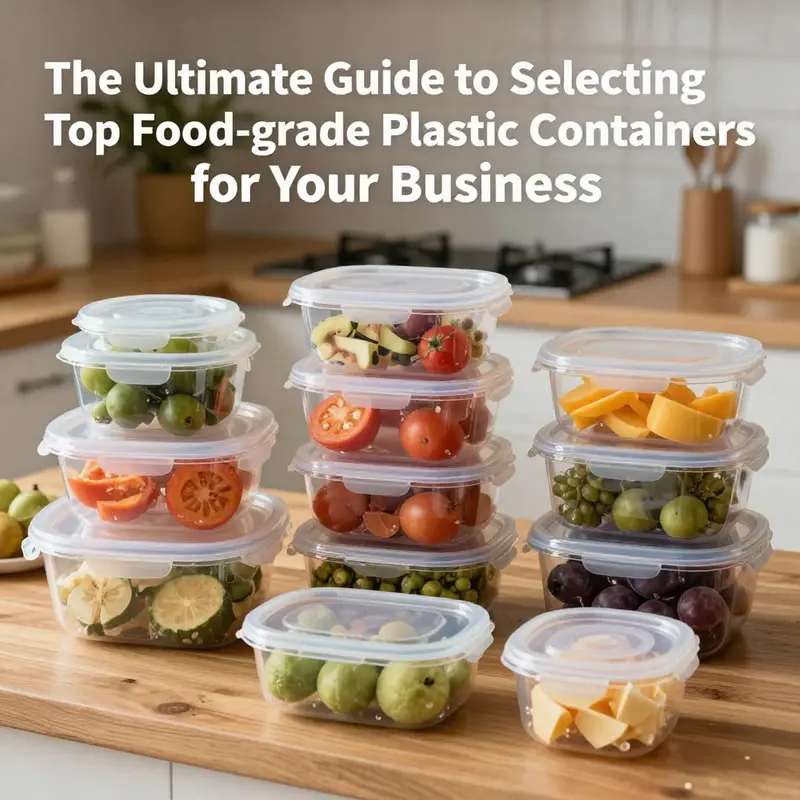
Storage is a quiet act with outsized impact on flavor, nutrition, and waste. When you line up a kitchen cabinet with containers designed to hold dry staples, coffee beans, spices, or chopped leftovers, you are choosing how much of your daily food experience you want to protect. In a market shaped by rapid product introductions and a flood of online reviews, a practical approach to selecting the best food-grade plastic containers blends safety, performance, and everyday usability. This chapter unfolds as a single, continuous narrative about how to evaluate options, why certain materials perform better in particular settings, and how to read the signals that indicate a container will keep food safe from moisture, air, and heat over time. It draws on the February 2026 market data and consumer feedback that highlight containers known for reliability in quality, seal, and practicality. Rather than chasing a single “best” brand, the conversation centers on a holistic framework that helps you match a product to your kitchen routines, storage needs, and risk considerations around heat exposure and long-term use.
At the heart of a good storage system sits a simple fact: food-grade plastics are not all created equal. The safest choices tend to be those crafted from materials that resist heat and chemical leaching while offering a robust barrier to moisture and odors. The material families most commonly encountered in household containers include polypropylene, high-density polyethylene, PET, and, less frequently today, polycarbonate. Each material brings a set of strengths and trade-offs. Polypropylene, often labeled with a resin code of five, is favored for its heat tolerance and chemical stability. It remains a reliable workhorse for microwaving after removing the lid and for shelf storage of dry goods and cooled or warm foods. The practical point here is not merely about hot foods; it is about how the container behaves across a spectrum of temperatures. Polypropylene’s melting point and its stable performance at typical kitchen temperatures offer a balanced baseline for everyday use.
In contrast, PET is common for cold storage and for see-through clarity. PET’s transparency makes it easy to check contents at a glance, a feature many households value for quick inventory checks of grains, nuts, or dried fruits. However, PET is not routinely recommended for hot foods or repeated microwaving, since thermal stress can accelerate wear and potentially affect performance over time. This is where user needs intersect with material science: you want a container that remains sturdy through routine cycles—freezer, fridge, dishwasher, and occasional microwave—without deforming, staining, or pilling the surface. High-density polyethylene shares some of these traits, offering impact resistance and a favorable balance between rigidity and flexibility. It is a common choice for pantry storage, often in the form of jars and canisters designed to keep out insects and humidity. The key virtue here is its resilience under rough handling and its lower propensity to warp when subjected to uneven cooling or heating in household appliances.
A more nuanced factor is the presence of additives, coatings, or compatibility with food contact regulations. A growing portion of consumer guidance emphasizes BPA-free formulations, particularly for containers intended for hot foods or for use in microwaves. The public health conversation around Bisphenol A has made many households cautious about PC-based containers and older generation plastics. In practical terms, this translates into choosing products that are marketed as BPA-free and that carry clear declarations of safety for food contact. Those declarations are more than marketing; they reflect adherence to regulatory expectations and independent testing. When you encounter a container that markets itself as food-contact safe and BPA-free, you are aligning with a standard approach that many households now expect as baseline, especially for items that touch hot foods or liquids.
Beyond material type and safety labeling, the consumer experience hinges on how the product performs in the real world: the seal, the lid design, and how well the container resists leaks and odors. Seal quality can be the difference between a pantry staple that stays fresh and one that invites moisture, mold, or stale flavors. A tight lid is not merely about preventing spills; it is about creating an interior microclimate that slows oxidation and moisture ingress. A good seal design considers both the lid’s geometry and whether a gasket is present. Some lids use a silicone or elastomer gasket to create a complete seal when pressed shut, while others rely on a snap-fit mechanism that provides a strong interaction without overtly forcing a hard seal every time. The best setups strike a balance: they lock in moisture and aromas without requiring extra torque or a wrestling match to open after a day in the fridge.
Another practical lens on the best containers concerns their usability in modern kitchens. Many households value clear bodies because they reduce the need to label or open every container to confirm contents. Clear plastics enable quick visual checks, which is especially important for dry goods stored in bulk—such as grains, seeds, and dried fruit—where visibility helps with inventory management. Size versatility matters as well: a set that spans multiple capacities—small, medium, and large—can support a wide range of storage tasks, from portioning snacks to storing larger batches of rice or coffee beans. In this sense, the most useful system is the one that adapts to a family’s evolving routines, whether it’s meal prep, lunch-boxing, or bulk dry storage for bulk purchases.
Yet even perfect design cannot compensate for poor material choices if a container is repeatedly exposed to heat, sunlight, or harsh dishwashing cycles. Exposure to extreme temperatures or ultraviolet light can degrade plastics over time, leading to discolored surfaces, micro-scratches, or diminished barrier properties. For frequent dishwasher use, a container with a durable exterior and a robust lid interface will fare better than one that shows wear after a few cycles. The same applies to microwave use: if you regularly reheat food in a container, you want a product tested for microwave safety, ideally with explicit guidance on whether the lid should be removed during reheating. This practical threshold—whether a container is deemed microwave-safe with the lid off—often determines whether a family will rely on it for daily meals or reserve it for cold storage and a quick reheating in a separate vessel.
To ground these considerations in lived experience, consumer feedback tends to converge on a few clear expectations. First, people want durability that matches the price point. The containers that receive consistently positive remarks tend to be those that withstand frequent use without cracking, warping, or clouding. Second, transparency in labeling and consistent safety messaging matter. When a product clearly communicates its food-grade status and safety certifications, buyers feel more confident about its performance in contact with hot foods and in the dishwasher or microwave. Third, practical features—such as modular designs for stackability, compatibility with tight-sealing lids, and ease of cleaning—are repeatedly praised. A container that resists staining and odor retention after repeated use is highly valued, especially for mixed contents like turmeric, coffee, and dried herbs. Finally, the supply chain dimension—availability, reliability of shipment, and access to replacement lids or parts—shapes the real-world decision as much as the product’s technical attributes. A well-supported, consistently manufactured option with responsive customer service tends to outperform a marginal choice that looks good on paper but falters in daily life.
When readers arrive at this junction, they often feel a tug between staying within a safe, familiar framework and exploring new options that promise better performance or value. It is worth recalling the market context from the latest data: several brands have earned household trust through repeat purchases and favorable reviews in major marketplaces. Consumers repeatedly note that these options combine sturdy construction, reliable sealing, and sensible capacity ranges. They tend to avoid containers that crack under heat, that leak when tipped, or that warp after a few cycles in the dishwasher. The takeaway is not to chase a single emblem of quality but to anchor your choices in a mindful set of criteria that align with your daily tasks—what you store, how you heat, and how you clean.
From a manufacturer’s perspective, the emphasis on safety and durability translates into a disciplined quality-control mindset. Reputable producers invest in materials testing, consistent molding processes, and traceability from raw resin to finished product. They maintain robust production lines, with clear performance benchmarks for seal integrity, lid fit, and dimensional stability. In markets with strong consumer protection frameworks, credible suppliers also invest in third-party testing and in providing transparent documentation about food-contact compliance. For households, this level of diligence offers a practical assurance: the containers you reach for daily are not only functional but align with safety standards designed to minimize risk over repeated use. The end purpose is straightforward: to keep foods unaltered by unwanted chemical interactions while preserving flavors, textures, and nutrients across pantry and fridge environments.
A nuanced aspect of the decision involves recognizing that no single container will be perfect for every scenario. For some items, such as aromatic spices or coffee beans, a container that minimizes air ingress and blocks moisture is critical. For others—like soups, sauces, or leftovers held in the fridge—a more robust seal and the ability to withstand rapid cooling and reheating cycles are paramount. The best practice, then, is to map your kitchen’s most frequent storage tasks to a corresponding set of container designs. In other words, the expert recommendation is not a universal panacea but a curated approach: choose a couple of core shapes that meet your daily needs, and add specialized pieces for niche tasks. A three-part system—one general-use option, one higher-seal option for dry goods, and one heat-tolerant, easy-to-clean vessel for leftovers—often yields the most practical, satisfying results. This modular thinking reflects how households actually operate, with different containers doing different jobs while maintaining a cohesive, easy-to-manage storage strategy.
The practical decisions you make when selecting containers also interact with broader considerations of waste, sustainability, and family routines. Reusable, durable containers reduce the need for disposable alternatives and help minimize packaging waste over time. The best-performing options in this regard tend to be sturdy enough to survive frequent re-use without degrading, while also offering a compact footprint for efficient stacking and cabinet organization. The value proposition here extends beyond safety to include convenience, such as dishwasher compatibility and straightforward cleaning. In households that juggle school, work, and meal-prep tasks, predictable performance translates into real time savings and less mental energy spent on sorting and repacking foods.
When readers step back and synthesize these threads, a clear, practical framework emerges. First, identify your primary use cases: dry pantry storage (grains, nuts, coffee beans), refrigerated leftovers (soups, sauces, steamed dishes), and freezer-friendly items (bulk portions, meals prepared in advance). Second, anchor your choices in a material reality that favors safe, heat-tolerant plastics for hot foods and durable, non-reactive plastics for mixed contents. Third, prioritize seal quality and lid design, seeking gaskets or snap interfaces that reliably prevent leaks and preserve aromas without requiring excessive force to open. Fourth, verify labeling that confirms food-contact safety and avoid materials known for high heat sensitivity or problematic chemical leach. Fifth, consider lifecycle practicality: are replacement parts available? Is the container easy to clean and resistant to staining? Finally, align these choices with your budget and the availability of the items in your region, understanding that a dependable, slightly pricier option may yield greater long-term value through reduced waste and repeated use.
In this light, the landscape of what counts as “best” becomes more about consistency and alignment with daily routines than about chasing the loudest marketing claims. It is a practical elegance: a small set of containers that perform well in a multitude of kitchen environments, that remain safe across years of use, and that still feel satisfying to handle. The emphasis shifts from naming precise models to embracing a decision framework that can be applied across brands and product lines. You gain confidence, not just nostalgia for a particular product, but a tested ability to evaluate and select with clarity. In a world where packaging options proliferate, this disciplined approach helps ensure that the containers you rely on every day truly safeguard your food, preserve flavor, and support a simpler, more organized kitchen life.
To translate this framework into action, consider letting your next purchase be guided by three baseline questions. First, is the material suitable for the kinds of foods you store and the temperatures you anticipate? Second, does the lid provide a reliable seal that remains user-friendly over time, and is the container easy to clean? Third, is the product clearly labeled as safe for food contact, with documented safety assurances that you can verify? If the answer to all three is affirmative, you have found a solid core choice for your home. Then, supplement this core with additional pieces that match your most frequent tasks—smaller containers for spices and snacks, larger canisters for grains, and specialized units for soups or sauces. The result is a cohesive, practical system that stands up to daily use and supports healthier, more organized cooking and meal planning.
In closing, the best food-grade plastic containers are not just about one superior brand or a flashy feature set. They are about a harmony of safety, durability, and everyday usability that resonates with how you actually cook, store, and reheat food. Market data and consumer feedback underscore that reliability in seal performance, clarity of labeling, and material safety are the features most valued by households. By prioritizing these factors, you can curate a selection of containers that not only keeps your food fresh but also aligns with your values around safety, sustainability, and ease of use. The result is a kitchen that works with you, not against you, turning storage from a routine chore into an intelligent, dependable part of your daily life. And as you expand your container collection, you will find that the right choices compound in practical ways—fewer spills, less waste, and more confidence in every scoop, every reheating, and every carefully portioned lunch.
External resource for further reading on food-contact safety and regulatory guidance: https://www.fda.gov/food/packaging-labeling-food-contact-substances
Guardians of Freshness: Navigating Safety Standards for Food-Grade Plastic Containers
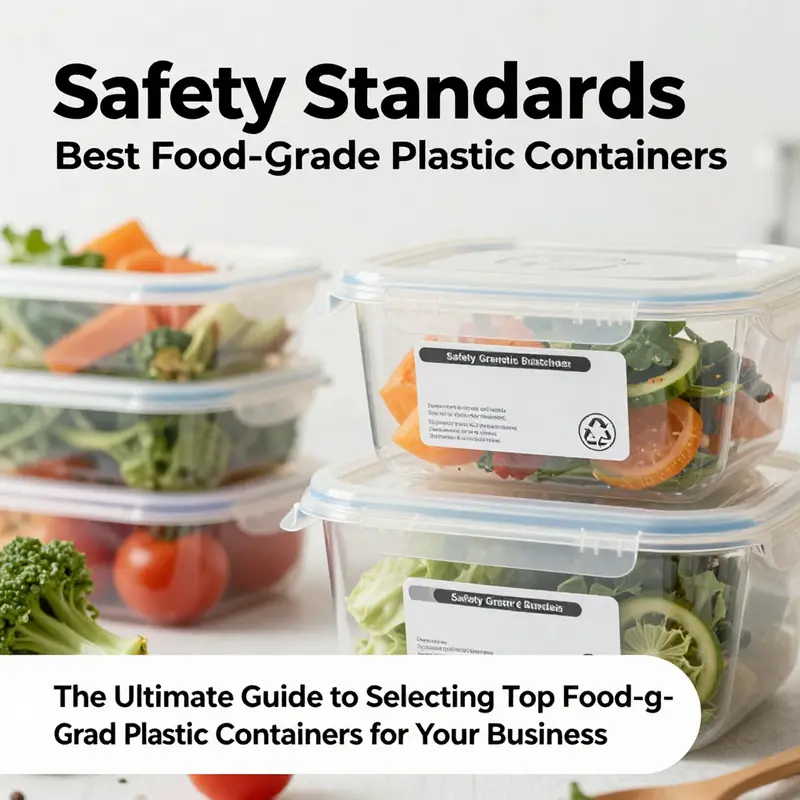
Safe food storage begins with understanding that plastics intended for contact with food must not release harmful substances under normal use. Safety standards are a network of national regulations and international guidelines that govern resin choices, testing, labeling, and traceability. In the United States, FDA oversight requires that plastics used in food contact come from approved resins and undergo migration testing. Packaging labels such as FDA compliant or food grade help signal compliance, but the absence of BPA does not guarantee safety, since other migratory substances may exist. In Europe, Regulation 1935/2004 sets general requirements for materials in contact with food, with migration limits and compatibility testing. ISO 18601 provides a framework for risk assessment and testing to supplement national rules. For consumers at the point of purchase, look for explicit food contact approvals and credible third party certifications, and be wary of resin codes alone as safety indicators. Polypropylene and HDPE generally show stronger heat and chemical resistance for food contact compared with other resins, but performance depends on the product design and testing. Real world testing should simulate heating, acidity, and storage duration, not just heat tolerance in isolation. When you see a container labeled as compliant with FDA or EU standards, treat it as a signal that a robust testing narrative backs safety, though always review the specific use cases listed on the label. Finally, prioritize transparent supply chains, clear usage instructions, and evidence of testing or certification, and recheck certifications when moving to new regions or storage applications.
Beyond Storage: Practical and Safe Uses of the Best Food-Grade Plastic Containers
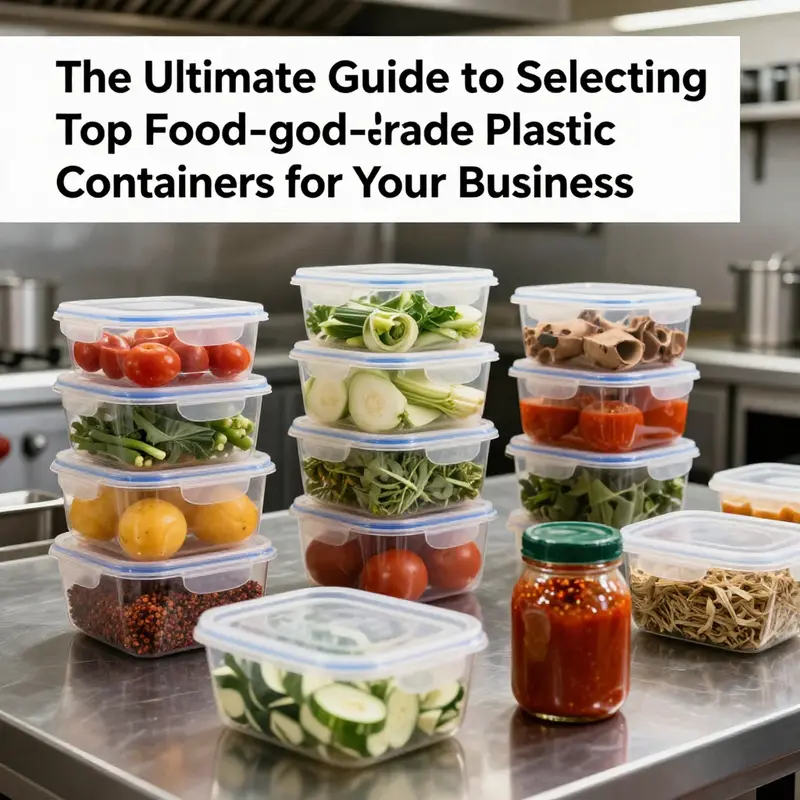
A simple kitchen with a few well-chosen food-grade plastic containers can redefine what it means to cook, store, and serve with confidence. These containers are not just vessels for leftovers; they are tools that translate food safety, efficiency, and organization into daily ease. When we move beyond the image of a clear box that holds rice, we begin to see how materials science and thoughtful design work together to guard flavor, texture, and nutrition through a host of practical applications. The essence lies in reliable barriers—barriers against moisture, air, heat, and contamination—and in the predictable behavior of the plastic material under common kitchen conditions. The best food-grade options, crafted for food contact and backed by quality-control practices, offer more than convenience. They provide a framework for planning meals, managing inventory, and reducing waste in ways that matter to households and small businesses alike.
In the home, the most immediate benefit of high-quality food-grade containers is their role in keeping dry goods fresh while limiting the intrusion of pests and humidity. Think of a well-sealed canister stack in a pantry: the contents remain dry and the surface level remains visible, so you can see at a glance what needs replenishment. The underlying science is simple and robust. Many of these containers are made from polypropylene, marked with the familiar triangular recycling symbol bearing the number 5. This designation is more than a label; it signals a material with a relatively high melting point and good chemical resistance, suitable for contact with hot foods and for brief microwaving in accordance with manufacturer guidelines. When chosen with care, such containers tolerate repeated use and dishwashing, which translates to less waste and lower recurring costs. In practical terms, a set of versatile volumes can cover most households’ needs: large bins for bulk grains, mid-sized containers for dried beans and coffee, and smaller units for nuts, seeds, and snacks. The visual clarity of the containers also matters; a transparent body lets you monitor reserves without opening lids and exposing contents to air. This simple, constant check helps reduce spoilage and mystery shopping trips to the store, which in turn lowers energy use and the carbon footprint of daily meals.
The refrigerator and freezer introduce a slightly different dimension of utility. Food-grade plastic containers designed for cold storage can dramatically simplify the management of leftovers, prepped ingredients, and batch sauces. When you portion a meal into uniform containers, it becomes easier to reheat evenly and to plan for portions during busy days. The containers’ design should align with your freezer’s temperature profile and the unit’s shelf space. A tight-seal lid reduces condensation on the inside of the container, preserving the texture of soups, stews, and stewed vegetables. It also helps prevent the dramatic flavor shifts that can occur when flavors mingle across different foods in the fridge. For sauces or marinated proteins, properly sealed containers prevent odour transfer and the risk of cross-contamination, a consideration that matters as households diet for health or accommodate allergies. The practical upshot is more predictable leftovers, fewer trips to the market, and less reliance on disposable options for single meals.
Beyond the kitchen, these containers find a special niche in pet care. Pet owners often struggle with keeping dry pet foods dry and fragrant while avoiding the spoilage that can accompany moisture and air exposure. A sturdy, food-grade container for pet kibble functions as a small airlock—minimizing moisture ingress and maintaining crispness in dry foods. The ability to see through the container helps a caregiver gauge when to restock, a small but important convenience that reduces waste and miscommunication about what is available for feeding. When used correctly, these containers can extend a product’s shelf life, preserve nutritional quality, and simplify daily routines around feeding schedules. They also support a tidy pantry and reduce the likelihood that pet food will spill when moving from a bag to a canister, lowering the risk of contamination and mess in living spaces.
In the realm of foodservice and takeout, the practical value of food-grade plastic containers expands into durability, portability, and hygiene management. In busy kitchens and delivery operations, containers must withstand heat, frequent handling, and exposure to air during transport. A well-designed system of sealed, microwavable-ready containers can streamline prep, cooking, and service while maintaining safety standards. For hot foods, soups, or dishes that require cooling, containers should be chosen for their heat resistance and stability during transport. In many settings, portioning meals into standardized containers supports portion control, inventory planning, and consistent customer experience. Containers that resist cracking and deformation during transit are essential to avoid leaks and maintain presentation, a factor that directly influences customer satisfaction and repeat business. The ability to reheat food in the same container, when permitted by the product’s specifications, further reduces waste and simplifies workflows in food service operations.
In retail contexts, transparent, food-grade containers can play a visible role in product education and consumer trust. When shoppers can clearly view contents—from dried fruits to trail mixes—the perceived freshness and quality rise, which can translate to better sales and reduced reliance on secondary packaging. The designers of these containers often emphasize modular shapes and stackable forms, enabling efficient shelf space usage and ease of restocking. For retailers, this means a more organized display and a way to segment products into clearly delineated portions or flavors. The containers’ ability to be reused by consumers aligns with growing demands for sustainable practices, provided the materials are properly labeled and maintained. A thoughtful approach to packaging can thus play a role not only in protecting food but also in communicating standards and values to shoppers who are increasingly mindful of safety, sustainability, and convenience.
Industrial and warehouse applications extend these benefits into larger scales. In production environments, food-grade plastic containers support the secure storage of raw materials, semi-finished goods, and finished products, enabling efficient batching, transfer, and stacking. The design emphasis in these settings often centers on modular geometry, robust latching systems, and compatibility with racking and shelving standards. Containers that are easy to clean and sanitize contribute to a culture of hygiene and regulatory compliance, particularly in environments where cross-contamination must be avoided and traceability is essential. The durability of the container translates into tangible savings: fewer replacements, less downtime due to breakage, and a more stable supply chain. The same logic applies to storage and transport within cold-chain logistics, where maintaining product integrity is a matter of quality assurance as much as cost management. The practical harmony of material choice, product design, and usage protocols becomes a reliable backbone for both small operations and larger food businesses.
When moving from indoor storage to outdoor use, the portability and resilience of food-grade plastic containers become especially valuable. For picnics, camping trips, or travel, a light, stackable kit of containers can guard meals against contamination and temperature fluctuations while remaining easy on the hands and luggage. The containers should be free of sharp edges and designed with accessible lids that minimize spills during transport. A common-sense rule emerges: choose containers that are clearly labeled for food contact, and respect the manufacturer’s guidelines about maximum heat exposure and microwave use. Following these guidelines helps ensure that the container’s performance remains consistent across varied environments, from a home kitchen to a roadside rest area.
Across all these settings, one principle remains central: safety is best ensured when the container is purpose-built for food contact and manufactured under rigorous QA processes. The labeling matters as much as the form. Look for clear indications of food-contact suitability, and when heating or reheating is involved, confirm that the model specifically permits microwave use and indicates the maximum safe temperature. It is prudent to avoid containers that are marketed for single-use or that do not provide explicit guidance on heat, reheating, or dishwashing. The aim is not to complicate choices but to empower users with the confidence to reuse containers safely and responsibly. Careful cleaning after each use—following the manufacturer’s care instructions—also extends life, preserves appearance, and minimizes the risk of residue buildup that could affect flavor or safety in future uses.
The decision to invest in well-made food-grade containers is not merely about convenience. It is a practical stance toward reducing waste, safeguarding nutritional quality, and streamlining daily routines. The everyday user benefits from a modest set of adaptable sizes that can handle bulk staples, mid-size portions, and small ingredients with ease. A layered system—large storage for pantry staples, medium units for prepped ingredients, and small inserts for spices, seeds, and snacks—supports a kitchen that is organized, efficient, and resilient. When these containers are designed with clear walls, sturdy lids, and reliable seals, they become allies in the ongoing effort to keep food safe, tasty, and ready to enjoy.
In closing, the practical uses of high-quality food-grade plastic containers stretch far beyond the obvious. They provide a framework for safer food handling, better inventory control, and more sustainable habits. They support families in preserving the integrity of meals, assist pet care routines, enable efficient foodservice practices, aid retailers in presenting trustworthy products, and empower warehouses to manage complex logistics with greater predictability. The key is thoughtful selection based on labeling, heat tolerance, chemical resistance, and durability, paired with consistent maintenance. When these elements align, the humble container becomes a fundamental partner in everyday cooking, storage, and service—a subtle but powerful enabler of health, taste, and efficiency.
External resource: https://www.plasticcontainerexpert.com/food-grade-pet-container-grades-properties-applications/
Final thoughts
Selecting the right food-grade plastic containers is crucial for preserving food quality and ensuring safety across your operations. Implementing these best practices and understanding the variety of available options can enhance your business’s effectiveness, whether you’re operating a bubble tea shop, catering service, or restaurant. Prioritizing high-quality containers from trusted brands while adhering to safety standards will not only safeguard your ingredients but will also boost customer satisfaction and operational efficiency. By embracing these insights, you position your business for success in an increasingly competitive market.