
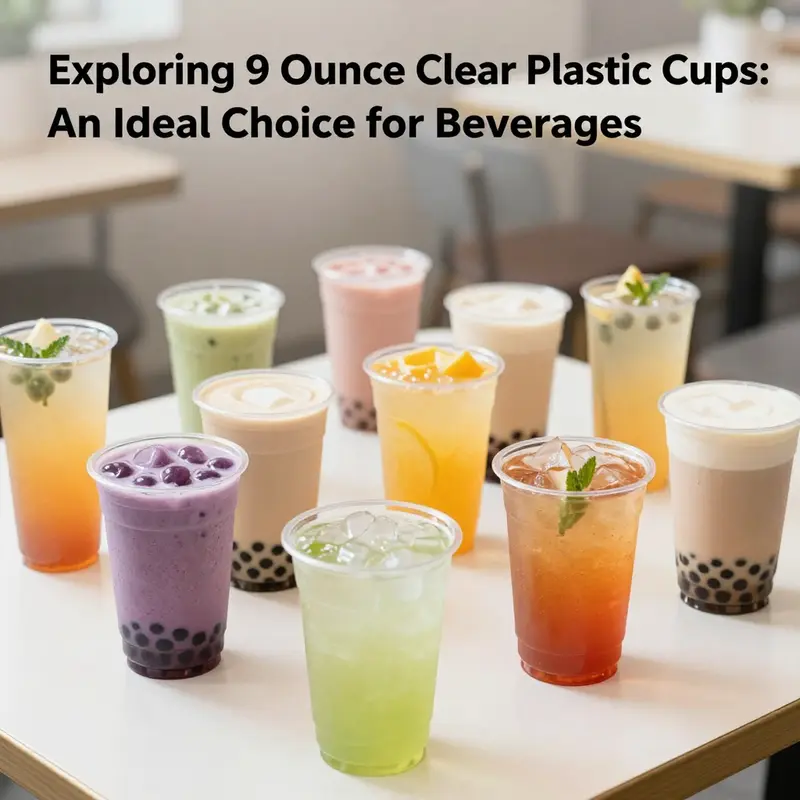
9-ounce clear plastic cups offer a versatile and practical solution for a variety of beverage service needs, particularly in settings such as bubble tea shops, restaurants, food trucks, and events. These lightweight and disposable cups are designed to cater to casual gatherings and professional events alike. This article delves into various offerings from notable retailers, examining competitive pricing and options suitable for different applications. Each chapter highlights specific suppliers, recyclable features, usage scenarios, and environmental impacts, providing a comprehensive understanding of how these cups can enhance beverage service while addressing sustainability concerns.
Clear, Cost-Effective Convenience: A Deep Dive into Walmart’s 9-Ounce Clear Plastic Cups for Sale
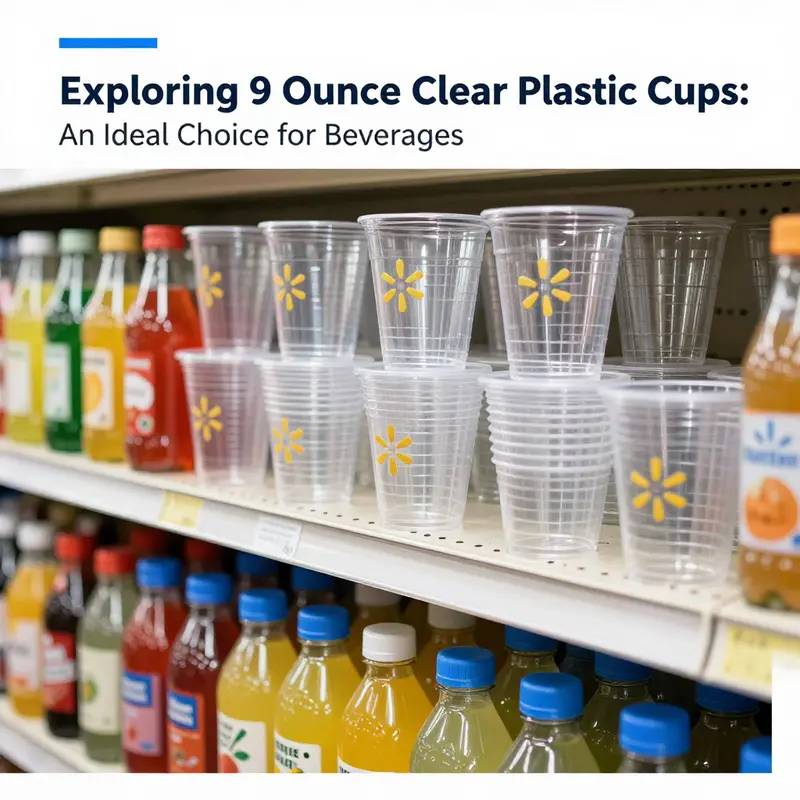
Across the spectrum of event planning and everyday office life, 9-ounce clear plastic cups have become a dependable baseline for serving cold beverages with minimal fuss. Their simplicity is part of the appeal: a clear walls’ view of the drink, a lightweight feel that won’t weigh down a crowded tray, and a price point that makes them easy to stock up for almost any occasion. For hosts organizing a casual backyard barbecue, for event managers stocking a fundraiser, or a school administrator outfitting a classroom break room, these cups offer a predictable, disposable solution that aligns with the rhythm of modern life. The market for these tumblers is oriented toward affordability and convenience, but shoppers also increasingly weigh environmental considerations, product safety, and compatibility with lids or toppers. In that context, one major retailer’s online shelf has emerged as a focal point for many buyers, offering a spectrum of pack sizes designed to accommodate everything from intimate gatherings to scale-ready productions. The result is a tiered shopping experience: small party packs for quick, low-volume needs; mid-size counts for family gatherings or office receptions; and bulk configurations that promise supply reliability for large events. What ties all of these options together is a core DNA: a clear, functional cup that serves as a blank canvas for beverages of every kind, without demanding a heavy investment in time, storage, or cleanup logistics. This balance of clarity, convenience, and cost is what keeps these cups persistently visible on the shopping lists of both casual hosts and professional caterers. The cups themselves are typically crafted to be BPA-free and recyclable, soft on the environment and aligned with growing consumer expectations about recyclable packaging and responsible material choices. While the cups are disposable, the conversation around them often extends beyond mere price per unit. Buyers consider how the cup’s rigidity holds up to ice and carbonation, whether the lip is smooth for comfortable sipping, and how well the cup stacks for shelf space. They also weigh the ease of disposing of or returning to recycling streams and the practicality of pairing the cups with matching lids, if lids are part of the package. All these considerations come together in a marketplace that rewards straightforward, transparent options and reliable delivery in addition to price. These factors shape the way a particular retailer catalogs their offerings, presenting a ladder of choices that can cater to a simple family dinner at home or a large venue needing reliable, consistent service quantities.
Within this landscape, one prominent retailer presents a clear lineup of 9-ounce clear plastic cups designed to meet a range of event sizes and use cases. The first option is a compact set, sized for smaller gatherings where a host wants to avoid overstock while still providing a polished, disposable option for guests. This 80-pack is explicitly marketed for cold drinks, emphasizing clarity and a crisp appearance that helps beverages stand out. Customers frequently note a smooth, BPA-free construction and recyclable materials, which resonates with buyers who are mindful of both safety and environmental impact. The reviews often highlight practical aspects like sturdy rims that resist cracking and good balance when filled with ice, along with the convenience of customers who appreciate that the cups perform well in busy, high-traffic settings. The overall sentiment tends toward satisfaction with the balance of price, quality, and practical utility, a combination that matters when the goal is to support a smooth event flow rather than a boutique or specialty presentation. The second option broadens the scope to a larger, more versatile pack—the 100-count configuration—designed to cover a wider set of environments, from classrooms and clinics to casual offices and home gatherings. The emphasis here is still on recyclability and safety, with a clear nod to universal applicability in settings that demand a dependable disposable cup without compromising on cleanliness or ease of disposal. This model’s appeal lies in its straightforward scalability: enough cups to service a modest-but-not-insignificant crowd, but not so many that storage becomes a logistical burden. Like the smaller pack, it supports quick service, consistent appearance, and clean disposal, which are the hallmarks of a practical consumables choice for busy facilities.
A markedly different silhouette appears in a larger bulk option—an 200-pack designed to evoke the feel of classic, old-fashioned tumblers. While the physical look can lean toward a touch of formality suitable for weddings or more formal gatherings, the cups remain fully recyclable and BPA-free, preserving the same safety and environmental considerations that govern the smaller packs. This configuration nudges the consumer toward event-scale thinking: more cups per guest or more servings pulled from a single stock, with a design that reads “elevated but not extravagant” in a way that can blend into the décor of a formal or semi-formal setting. The emphasis here is on dependable performance under heavier use, with the belief that sturdy construction helps visitors avoid spills during lively conversations and toasts.
The fourth option is a genuinely bulk-oriented choice—the 700-pack. This is the kind of configuration that speaks to mass gatherings, outdoor summer celebrations, or large community events where supply reliability is the critical driver. The sheer volume reduces the risk of running out mid-event, while continuing to deliver the clarity and recyclability that characterize the broader line. The bulk approach also invites considerations around shipping efficiency, storage space, and cost-per-unit advantages. Even with high quantities, the cups maintain a lightweight profile that makes handling and distribution manageable for volunteers or event staff. In all cases, the underlying materials remain focused on safety and recyclability, addressing common buyer concerns about long-term environmental impact. Across these four core options, the retailer presents a straightforward narrative: choose the pack size that fits your guest list, your service model, and your budget, without sacrificing the visual appeal or the practical benefits of a disposable cup that remains easy to use, easy to dispose of, and easy to recycle. Free shipping and hassle-free returns are often a part of the shopping promise, further smoothing the process of selecting the right pack for any given occasion. The practical takeaway for attendees planning events of any scale is that a single cup—clear, clean, and simple—can anchor the beverage experience from casual gatherings to celebratory moments, while offering the flexibility to adapt as guest numbers shift or as plans evolve.
Pricing cues weave through these choices in a way that helps buyers calibrate their expectations. The smaller 80-pack often appears in the neighborhood of nine to ten dollars, a price point that reflects the balance between volume and the perceived value of a reliable everyday cup. The 100-pack can sit a bit lower on a per-unit basis, thanks to its larger quantity, creating a margin for a few extra servings without requiring a dramatic increase in total spend. As pack sizes grow, the unit cost typically declines, albeit with the caveat that bulk purchases may involve higher upfront outlays and more space for storage. The 200-pack, positioned for mid-size events, tends to favor the scale of savings associated with moderate event budgets, while still remaining accessible to households planning larger gatherings. The 700-pack, by contrast, represents a different financial calculus entirely: the upfront investment is higher, but the per-cup cost often drops to a level that makes it appealing for recurring event needs or facilities that regularly host large groups. The exact prices can vary with promotions, seasonal sales, and regional differences, but the general pattern holds: more cups translate into lower per-unit costs, which is a key consideration for organizations operating on tight margins or volunteers managing a fixed budget. In practical terms, that means planning ahead pays off. A host who estimates guest counts with a small margin of error can confidently purchase a bulk option, secure in the knowledge that spillovers are minimized and inventory needs can be met without repeated shopping trips. The same logic applies in more institutional settings, where schools, clinics, and offices often seek a balance between a reliable supply and a simple, predictable procurement process. The bottom line for shoppers is straightforward: evaluate expected beverage volumes, consider how often you are likely to re-stock, and choose the pack size that aligns with both your event calendar and your storage capabilities. The retailer’s online catalog often reflects this logic through clear packaging details, delivery expectations, and straightforward return policies that reduce the friction typically associated with larger purchases. If a reader wanted to broaden the exploration beyond cups to related disposables, a related segment covering take-out kraft paper bowls provides a broader sense of how vendors frame disposable ware in the same ecosystem. For example, disposable 700ml Kraft paper bowl take-out octagonal rectangle offers a complementary reference point for those evaluating the full spectrum of tabletop disposables.
From the shopper’s perspective, the Walmart site and similar retailers present a convenient, coherent pathway to compare sizes, prices, and practical features. The emphasis on BPA-free materials and recyclability speaks to growing consumer expectations that disposables not only serve a functional role but also align with environmental and health considerations. The clarity of the cups themselves—transparent enough to showcase the color and tone of beverages, with rims designed for comfortable sipping and minimal spill risk—helps make the choice straightforward for most users. The final piece of the decision puzzle often centers on the logistics of delivery and returns. Free shipping and returns are a meaningful benefit when options are being weighed across multiple pack sizes, particularly for buyers who want to experiment with different configurations before committing to a larger purchase. In the end, the spectrum of 9-ounce clear plastic cups available in this retail lineup illustrates a broader trend in disposables: practicality paired with responsible material choices, packaged in scalable formats that accommodate everything from intimate gatherings to large-scale events. For event organizers and busy households alike, the appeal is not just cost but the confidence that comes with knowing the right quantity will be on hand when the occasion arrives. As the conversation about disposables continues to evolve, the emphasis on clarity, convenience, and recyclability remains a constant that guides both buyers and sellers toward choices that fit modern life’s tempo. In this context, Walmart’s catalog of 9-ounce clear cups serves as a practical touchstone for planners seeking predictable results without sacrificing accessibility or environmental considerations. For readers exploring other disposable ware options, you can see a related selection of take-out kraft paper bowls.
External resource for broader context on plastic disposal and recycling: https://www.epa.gov/recycle-plastic
Clear-Cut Value: Navigating the Market for 9-Ounce Clear Plastic Cups
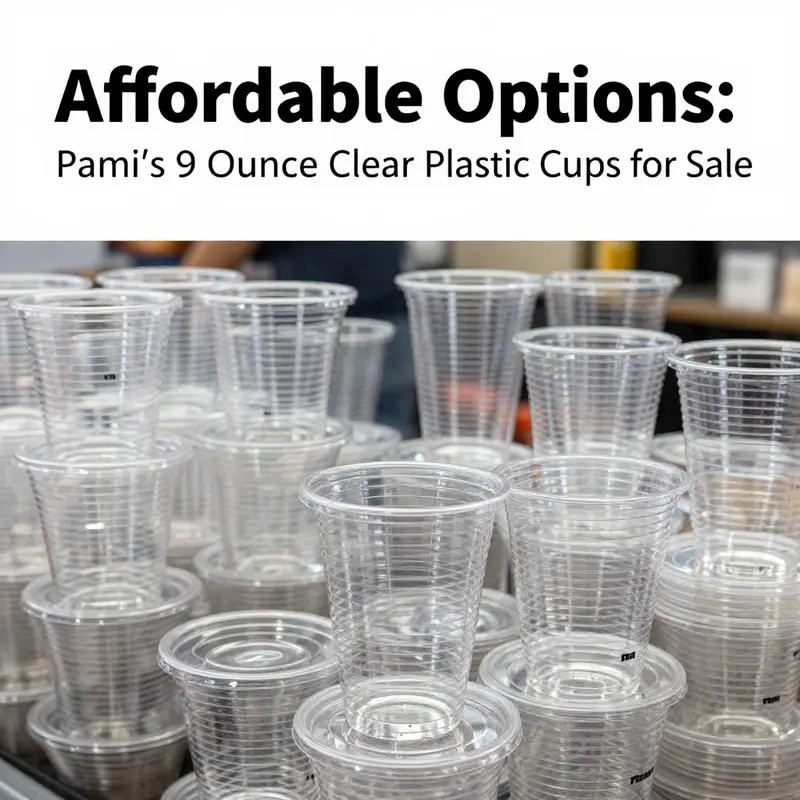
In the choreography of any event, from intimate gatherings to full-scale receptions, the 9-ounce clear plastic cup plays a background, yet indispensable, role. It is not merely a vessel; it is a utility that helps define service tempo, cleanup efficiency, and guest experience. The clear design is more than aesthetic—it’s practical. It allows guests to see the beverage’s color and level at a glance, which speeds service and reduces the guesswork that can slow a bar or buffet line. When paired with a reliable ribbed grip, the cup becomes easy to hold and less prone to slips, even in crowded, upbeat environments. This simple combination of clarity and grip design contributes to a smooth flow during busy moments, where every second can matter.
The strength of these cups rests on a deliberately uncomplicated philosophy: lightweight, functional, and disposable. They are crafted from food-safe plastic that is widely deemed suitable for cold beverages, which covers water, soda, juice, cocktails, beer, and even ice-infused options. The compatibility with a broad range of drinks makes them a versatile backbone for casual gatherings, corporate events, school functions, and hospitality settings where guests expect quick, straightforward service. The ribbed exterior, a feature highlighted by many manufacturers, is not merely a tactile flourish. It reduces the risk of a slippery hand when condensation forms on the outside, a common occurrence in warm venues or during outdoor receptions. In this sense, the cup’s physical design is as much about safety as it is about convenience, aligning with the practical demands of food service where efficiency and hygiene carry equal weight.
Availability in the market reflects the varied needs of planners and buyers. Retailers commonly offer these cups in multiple pack sizes, from compact dozens intended for small events to bulk quantities that support larger weddings or recurring gatherings. The pricing landscape often presents a familiar trade-off: larger purchases bring a lower unit cost, while smaller bundles offer flexibility for one-off occasions. Buyers frequently find that a mid-sized 80-pack or similar option hits a sweet spot for modest gatherings, balancing cost with the convenience of not over-purchasing. For those who plan on frequent use—think catering outfits, office break rooms, or rental stations—a bulk case spanning several hundred to nearly a thousand cups is frequently the most economical choice, enabling significant savings over the long run while keeping inventory lean and predictable.
From a cost perspective, the market has evolved toward affordability without sacrificing reliability. In practical terms, even at modest event scales, the per-cup expense tends to be a small fraction of a dollar, with bulk options driving further reductions. This affordability broadens the scope of scenarios where disposable cups become not merely convenient but financially sensible. In settings like weddings, holiday parties, or temporary pop-ups, the math adds up quickly: fewer trips to the supply closet, faster turnover of beverage stations, and simpler cleanup all contribute to a lower overall event overhead. When a budget is stretched across multiple components—food, decor, staff—having a dependable, cost-efficient cup can translate into meaningful savings that are easy to quantify in the post-event ledger.
Beyond price, the material and environmental conversation around these cups has grown more nuanced. Many options emphasize BPA-free construction, which remains a point of reassurance for health-conscious buyers. Lightweight plastic delivers the dual benefit of easy handling and reduced shipping weight, contributing to lower transport emissions compared with heavier alternatives. The clear plastic is designed to be recyclable where facilities exist, a factor many planners weigh when choosing between disposable and reusable strategies. Still, recyclability is not universal; programs vary by municipality, and local infrastructure often determines whether a given cup can re-enter the supply chain. In this light, responsible purchasing involves not only confirming the material’s safety but also understanding regional recycling capabilities and end-of-life options. A growing subset of buyers also weighs whether a product can be easily integrated into a broader sustainability plan, including supplier take-back programs or partnerships with local recycling cooperatives that handle post-consumer plastics.
From a usability standpoint, the 9-ounce format strikes a precise balance between capacity and manageability. It is large enough to accommodate a standard cold beverage without frequent refills, yet compact enough to minimize waste and storage footprint. For events where guests are mingling or standing, the smaller footprint helps keep lines moving and prevents congestion around drink stations. The visual appeal of a transparent cup also lends itself to beverage presentation—layered drinks, vibrant citrus garnishes, or visually striking color contrasts remain visible through the cup, which can be a subtle cue that enhances guest satisfaction. When catering teams consider this, they often pair the cups with appropriate lids (where needed) and seals that preserve cleanliness and protect beverages during transport or outdoor service. The affordability and flexibility of the cup render it a dependable workhorse, capable of adapting to a range of service styles without forcing a brand-new purchase strategy for every season.
For buyers weighing options, a few practical considerations can help optimize value. Storage space and shelf life become real logistics questions, especially for event professionals who maintain large inventories. Bulk purchases reduce unit costs but demand adequate storage conditions and proper inventory management. It is also worth considering whether to opt for a standard cup without embellishments or to explore versions that support branding through labels or printed sleeves. While branding may introduce an extra step or cost, it can enhance event identity or organizational branding for corporate functions, conferences, or product launches. In this context, buyers weigh the trade-offs between customization, ease of cleaning, and the relative price of enhanced presentation versus a simple, unadorned cup. The decision becomes part of a larger procurement strategy that includes lids, napkins, straws, and other disposables, all coordinated to deliver a cohesive guest experience while keeping administration straightforward.
Within this broader ecosystem, it is helpful to acknowledge related options in the disposable cup space. If a project requires a different material or aesthetic—perhaps a paper cup with branding or a more premium look—designers and organizers can explore a nearby family of products that offers a similar size, but with a different material profile or finish. For readers exploring these adjacent choices, a related resource highlights eco-friendly printed-logo cold beverage paper cups with lids, illustrating how branding and sustainability can coexist across cup formats. This linkage invites an expanded view of disposable vessels, reinforcing that the decision is not only about price per cup but also about presentation, end-of-life considerations, and alignment with event goals. See the linked page for a sense of how branding strategies can be integrated with practical beverage solutions.
The purchasing landscape for 9-ounce clear plastic cups is not isolated from broader retail dynamics. Pricing can vary by retailer, inventory cycles, and regional demand, but the core value proposition remains consistent: a lightweight, clear, easy-to-handle cup that delivers dependable performance at a modest cost. For event planners and hospitality professionals, this stability is a comfort. It allows them to forecast consumables with a level of confidence that supports precise budgeting and smoother operational planning. The cups’ simplicity—clear visibility, straightforward handling, reliable disposability—becomes a kind of silent efficiency expert that keeps service moving and guests comfortable. In turn, this reliability supports a gentle, almost unspoken rhythm at events: guests sip, move, mingle, and the cleanup proceeds with minimal fuss.
As markets continue to evolve, buyers can expect continued refinement in both design and sustainability claims. The conversation may expand to include more sustainable packaging options, measurement of lifecycle impacts, and the emergence of supplier partnerships that reduce waste through better stock management or return programs. Yet for the typical event or everyday use scenario, the 9-ounce clear plastic cup remains a pragmatic default. It offers a predictable performance envelope, a broad compatibility with beverages, practical handling, and cost efficiency that makes it an attractive cornerstone for beverage service. For anyone planning a gathering, a convention, or a recurring office event, starting with a well-chosen cup of this size often yields a dependable foundation upon which to build an effective service experience. And when guests leave with a clear memory of an evening that ran smoothly, the cup, in its unassuming way, has done its part.
External reference: https://www.amazon.com/dp/B0CZJ4YK1R
Clear-Cut Value: Recyclability, Pricing, and Practicality in 9-Ounce Clear Plastic Cups
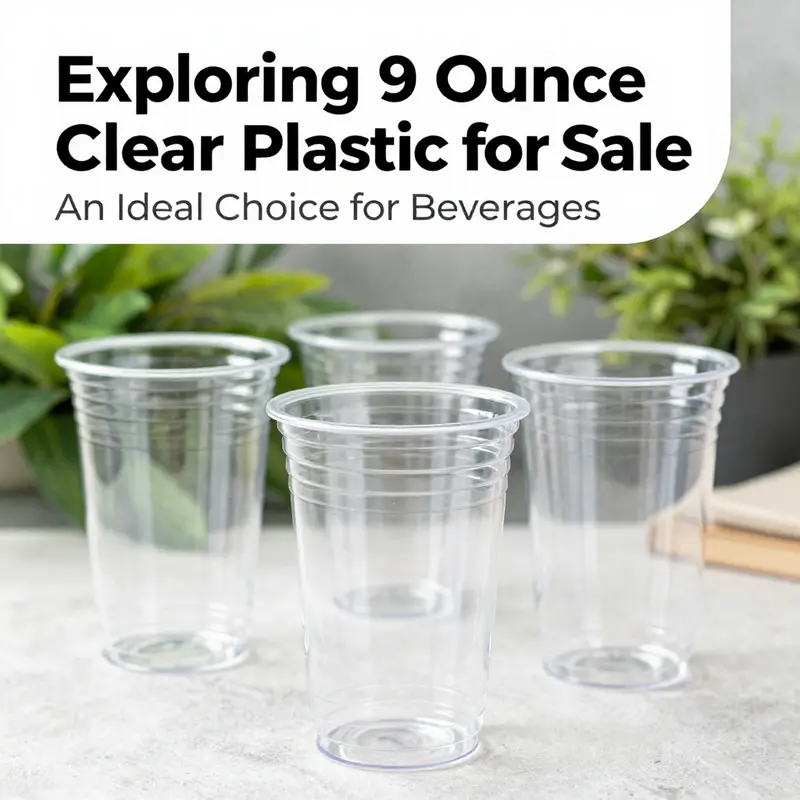
Choosing the right disposable cup is a foundational decision for event planners, cafeterias, clinics, and many other spaces that rely on quick service and clean presentation. In that context, the standard 9-ounce clear plastic cup sits at a practical crossroads between economy and usability. Its modest size makes it easy to manage high turnover, while its transparent walls let staff and guests see the contents, aiding both safety and presentation. The cups are designed to be light enough to stack and transport in bulk, yet sturdy enough to hold a wide range of beverages—from plain water to iced coffee, from fruit-infused waters to bubble tea. The versatility of this single size has made it a default option in many settings, even as buyers increasingly examine the environmental footprint of disposable serviceware and seek ways to minimize waste without compromising hygiene or experience.
A major supplier positions this 9-ounce cup as a practical, recyclable solution for a broad spectrum of operations. The product is described as 100% recyclable, a feature that matters in environments where staff must balance speed with responsible disposal. Its clear, durable plastic enhances content visibility, a quality both convenience and safety-conscious service rely on. And because the cup is designed for disposable use, it supports fast, line-friendly service in busy clinics, hospitals, dental practices, and school nurse stations, as well as in restaurants, food courts, and home settings where gatherings demand simple cleanup. The 9-ounce capacity is enough for a glass of water between patient visits, a measured portion of juice at a school event, or a serving of iced tea during a tasting session. The cup’s light weight reduces transport strain when orders are packaged in bulk, yet it holds up well during service, maintaining shape and integrity as ice remains in the drink and condensation forms on the outside.
One of the clearest signals of the market’s dynamics is pricing by pack size. Across major retailers and distributors, 9-ounce clear cups are offered in multiple bulk configurations, and the price per cup tends to converge as the quantity rises. A typical assortment might show a 50-count option around the ten-dollar mark, an 80-count option near eight to nine dollars, and a 100-count option pitching in at roughly six dollars in standard listings. These numbers reflect promotions, shipping, and regional variations, but they illustrate a pattern: bulk purchases lower the per-unit cost enough to make disposable serviceware a sensible choice for high-volume operations, while still keeping the total cost within reach for smaller venues that host frequent events. For facilities that fill several hundred cups every week, the economics of bulk buying become a deciding factor, influencing everything from inventory planning to the cadence of restocking orders. In such contexts, a 100-count pack at a modest price can translate into meaningful savings over time, especially when combined with a straightforward recycling approach and predictable usage rates.
In practice, the attraction of these cups often rests on their balance of reliability and convenience. They are designed to be compatible with standard lids and accessories, a consideration that matters in fast-paced service lines where customers expect minimal spill risk. The cups’ clarity supports quick visual checks for appropriate portions and beverage consistency, while the recyclable claim aligns with a growing corporate and consumer demand for responsible waste management. In healthcare and education settings, the ability to pass through a clean, disposable option without extensive reprocessing supports hygiene protocols and patient or student comfort. The cups are well-suited for serving water during long clinics, for small portions of juice at a nurse’s station, or for the occasional iced beverage during a patient or staff event. Because the containers are intended for single use, they also reduce the risk of cross-contamination and simplify cleanup after busy periods, enabling staff to redirect time toward patient care, teaching, or hospitality tasks. Home entertaining, community gatherings, and pop-up food stalls also appreciate the simplicity of stocking a 9-ounce clear cup in bulk and reusing the same space for quick restocking and easy disposal.
As buyers weigh the options, recyclability becomes more than a marketing line; it shapes the end-of-life story for the product. The cups are described as 100% recyclable, which means they can be diverted from landfills through appropriate municipal streams where facilities exist. Yet recycling infrastructure varies by region, and some operations still rely on the compatibility of the package with local sorting processes. That reality nudges buyers to pair their purchases with clear communication about recycling within their facilities and to align disposal practices with local guidelines. In other words, the choice to buy recyclable cups carries responsibility as well as convenience: staff should know where and how to dispose of them, and institutions should ensure that custodial teams share a common protocol for waste segregation. The net effect can be a smoother workflow, a stronger environmental stance, and a predictable cost profile that helps budgeting over the course of a school term, conference season, or clinic cycle.
To broaden the perspective beyond plastic, a related stream in the sustainable-dining conversation points to compostable or pulp-based cup alternatives. For readers exploring a broader eco-friendly lineup, the range of pulp-based, recyclable options demonstrates how suppliers segment disposable choices by material and end-of-life pathway. eco-friendly-recyclable-pulp-2-4-cups-coffee-take-away-cup-holder. This context helps buyers compare not just price and volume, but also how each option fits within an organization’s waste-management strategies and consumer expectations. The links between product design, packaging choices, and regional recycling capabilities are routinely part of the decision calculus for facilities that host large volumes of beverages and rely on quick service to satisfy customers and clients alike.
From a practical standpoint, the decision often comes down to the math of usage. If a venue serves beverages across many events with a quick turnover, factoring in breakage rates, the need for clean recycling streams, and storage constraints becomes essential. The 9-ounce option presents a compact solution that can be mass-produced, stored in standard shelving, and distributed with minimal handling. The cap of practicality sits at a sweet spot: not so large that it invites wasteful excess, yet not so small that it forces guests to repeatedly fill and refill. For healthcare facilities, clinics, and schools, the ability to provide water or light beverages without imposing a heavy logistical burden is a real advantage, especially during peak periods when staff time is at a premium. The same logic translates to catering events or coffee bars, where the cups’ transparency helps beverage stations stay organized and customers quickly identify what they are being offered. In all these settings, the combination of predictable pricing, straightforward disposal, and dependable performance creates a compelling case for the 9-ounce clear cup as a staple of the serviceware lineup.
Ultimately, the choice of disposable cups is not just about immediate price or eye-catching specs. It is a statement about how an organization balances efficiency, hygiene, and environmental responsibility. The 9-ounce clear cup offers a practical path: a simple, mass-producible option that serves many beverage profiles while supporting recyclability and responsible disposal. For buyers, the value lies in the reliability of the product and the freedom to scale purchases according to demand, season, and venue type. In a market where choices proliferate and supply chains move quickly, the ability to compare pack sizes, per-unit costs, and end-of-life options yields a clearer view of how to plan purchases that keep service smooth and waste manageable. As with any bulk purchase, success comes from aligning inventory, staff training, and local recycling infrastructure so that a straightforward product becomes part of a broader, more sustainable service model.
External resource: https://www.amazon.com/dp/B0BQ8P5VZM
Clear, Compact, and Convenient: How 9-Ounce Clear Plastic Cups Shape Parties and Professional Service
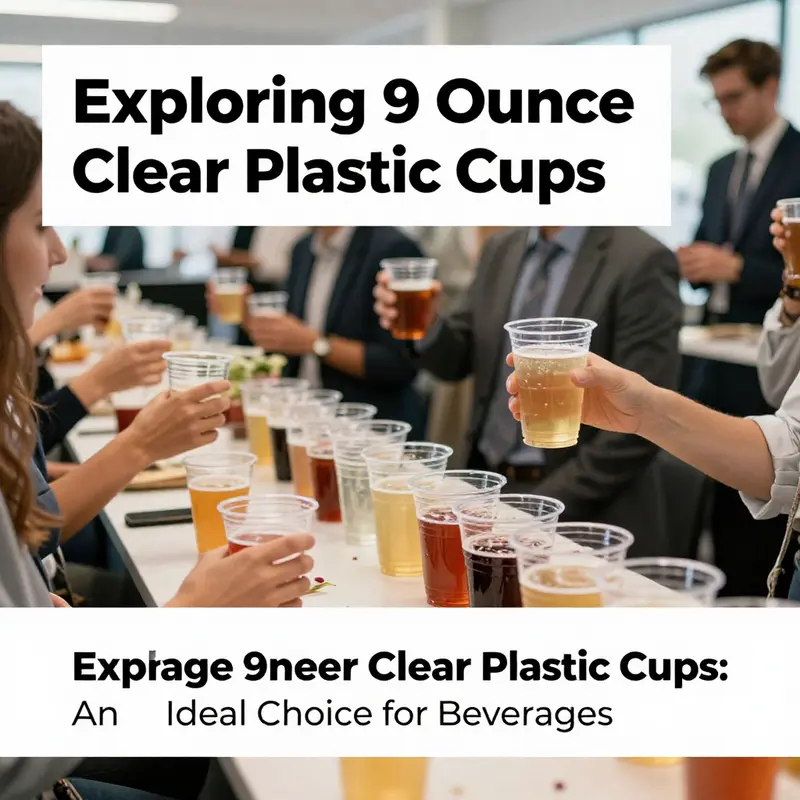
A modest cup can be a small but powerful equalizer at gatherings and in service spaces. The 9-ounce clear plastic cup sits at a sweet spot between capacity and convenience, offering just enough room for a well-portioned drink while remaining light, stackable, and affordable. Its ubiquity stems not from novelty but from practicality: it holds a reasonable amount of beverage for a quick toast or a casual tasting, resists tipping when guests mingle, and simplifies cleanup after long hours of hospitality. In any setting, the cup’s transparency becomes a stage for the drink itself. The color, clarity, and even the texture of a beverage are on display, inviting guests to appreciate the visual appeal of a juice, a cocktail, or a tea blend. This is not a flashy prop; it is a workhorse that disappears behind the enjoyment it helps to deliver. The design favors versatility over ceremony, yet that very versatility makes it suitable for both intimate family celebrations and larger professional events where speed and predictability matter. The result is a dependable tool that aligns with varied budgets and timelines, offering a calm reliability in moments when hosts are orchestrating schedules, seating, and service flow.
In party environments, the 9-ounce cup excels in several shared roles. It is large enough to accommodate a generous pour during birthday celebrations, but compact enough to encourage guests to sample a broader range of beverages without overfilling. At a wedding reception, its crystal-clear body allows a toast to shine as champagne or sparkling juice catches the light, while still supporting a practical, no-fuss service model for bartenders and servers who need to move quickly between stations. Holiday gatherings benefit from the cup’s unpretentious charm; its ability to showcase seasonal colors and garnishes can complement festive decor without demanding specialized glassware. The clear cup’s adaptability extends to everyday occasions—family picnics, casual barbecues, and office tea breaks—where its compatibility with a wide spectrum of drinks makes it a reliable default. In these scenarios, the cup acts as a subtle stagehand, enabling scenes to unfold naturally without drawing attention to the vessels themselves.
Atmosphere matters, and the cup’s design contributes to it in distinct ways. The absence of color lets the drink take center stage, while the clean lines and smooth rims create a sense of order and simplicity. Decorative elements, such as gold rims or subtle embossing, can elevate the presentation without competing with the drink’s appearance. This balance is particularly valuable for events that blend casual energy with a touch of elegance. When guests share a toast, the transparent geometry of the cup makes the moment feel accessible, welcoming people to join in without a sense of ceremony that might intimidate first-time attendees. The result is a setting where the beverage becomes the focal point, and the vessel merely supports the experience.
From a practical standpoint, the 9-ounce cup is a cost-conscious choice with real implications for planning. Bulk purchases enable predictable budgeting for large guest lists, while the lightweight construction reduces transportation and storage concerns. In typical market terms, retailers often offer bulk options that scale from dozens to hundreds of units, with price points designed to keep per-cup costs low enough to fit event budgets. For hosts planning a party, a 50-pack, a 80-pack, or a 100-pack can cover a wide range of guest counts and service durations, allowing hosts to balance the number of servings with the tempo of service. The economics matter in both casual gatherings and professional settings: the lower the unit cost, the more room there is to accommodate last-minute guests or to replenish supplies quickly without stressing the budget. This practical math reinforces why the 9-ounce format has become a staple in many event plans, where time is precious and the goal is to keep the experience fluid rather than encumbered by logistics.
Service venues, cafes, and event spaces likewise lean on the cup’s efficiency. In these professional contexts, the cup’s material composition—often food-grade polypropylene or similar plastics with a focus on safety and toxin-free offerings—supports a standard of reliability that operators rely on daily. Heat resistance and shatterproof characteristics matter in fast-paced service lines, where hot beverages may be prepared in proximity to service staff and guests, and where occasional drops are an occupational hazard. While some cups emphasize BPA-free certification, the broader value lies in delivering a safe, consistent product that can be trusted by managers who must meet health and safety standards while maintaining a smooth workflow. The clarity of the cup also makes branding and pairing decisions easier for venues that rely on clear beverage presentation to showcase a signature color or layered drink composition.
Branding opportunities are another practical advantage for professional users. Suppliers can offer custom printing services that imprint logos, messages, or seasonal artwork on the cups. This feature turns a disposable vessel into a moving piece of marketing collateral and a consistent element of the guest experience. In busy event spaces, customized cups help reinforce a brand identity, aid guest navigation, and contribute to a cohesive atmosphere across multiple service stations. The combination of branding potential with high-volume affordability makes the 9-ounce clear cup particularly attractive to event coordinators and operators who need to scale up without sacrificing visual impact or operational efficiency.
Price and availability shape planning in real time. In bulk, this format tends to be a bargain relative to premium glassware, shifting the emphasis from investment in durable dishware to cost-effective disposable solutions. Typical bulk configurations include dozens to hundreds of units per package, with per-unit prices that decline as quantity increases. For hosts hosting a large gathering, this translates into predictable costs per guest and straightforward restocking strategies. The practical benefit extends beyond price: the lightweight design reduces transport weight and simplifies inventory management when events are staged across multiple rooms or venues. The combination of simplicity, visibility, and value makes the 9-ounce clear plastic cup a steady performer in the toolkit of modern entertaining and service operations.
For those who pursue a greener footprint, the conversation around disposables often turns to recyclability and alternative materials. While these cups are designed for convenience and cost efficiency, many options on the market emphasize recyclability and the use of safer, non-toxic materials. In addition, a growing subset of consumers and organizers considers compostable or biodegradable variants, acknowledging the evolving standards and consumer expectations around waste. In practice, the choice often comes down to the event’s scale, duration, and disposal infrastructure. A small, in-home gathering may lean into recyclable plastics for ease, while a large, professionally run event might prioritize recycling streams and partner with waste processors to ensure responsible handling. The decision becomes an exercise in balancing guest experience, operational practicality, and environmental considerations.
As hosts and operators weigh what best fits their needs, they may also consider alternatives that align with sustainability goals. One avenue is to explore eco-friendly paper cups that offer branding options and a different environmental profile. For instance, there are disposable, eco-friendly, printed-logo options for single-wall paper cups that can fulfill similar marketing and presentation objectives while reducing plastic use. See the eco-friendly printed logo single-wall paper cup for a related option that integrates branding with a more sustainable packaging choice. eco-friendly printed logo single-wall paper cup
Ultimately, the choice of serving vessel for beverages at events balances several factors: guest experience, speed of service, durability, branding potential, and cost. The 9-ounce clear plastic cup represents a pragmatic convergence of these needs. It frames drinks in a way that is visually accessible and ready for quick service, while offering enough capacity to keep guests satisfied without requiring excessive trips to the bar. In professional settings, it supports a consistent service cadence, enabling staff to focus on quality and speed rather than managing fragile glassware. In social settings, its simplicity invites experimentation with a range of beverages, from fruit-forward sips to cocktails and mocktails, without imposing a formal ritual that might constrain spontaneity. The cup thus becomes an enabler of smooth hospitality and memorable moments alike, a small but essential instrument in the broader orchestration of events and everyday service.
External resource: https://www.epa.gov/sustainability
The Quiet Footprint of Clarity: Environmental Realities of 9-Ounce Clear Plastic Cups

The convenience of a 9-ounce clear plastic cup is hard to deny when tables fill with beverages, and plastic’s light weight makes it an economical choice for events of all sizes. Yet behind the familiar, transparent shell lies a chain of environmental implications that extends far beyond a single-use moment. To understand the true cost of these cups, it helps to trace their life story from raw material extraction to final disposal. Most of these cups are made from PET, a durable thermoplastic prized for its clarity and rigidity. PET’s visual appeal, however, comes with a responsibility that many buyers overlook. Recycling streams exist in many places, but actual recovery rates lag behind ideal expectations because a large share of PET becomes contaminated during collection, or is diverted by inconsistent sorting and insufficient processing capacity. Even when a cup is technically recyclable, the journey from bin to bottle is not guaranteed. The result is a material that can persist in landfills or the environment for many decades, or even centuries in some climates, before it breaks down into microplastics that travel through soil and waterways. The environmental story is thus not just about the material itself, but about the systems that manage it after use. If recycling infrastructure is strong and consumer habits align with proper disposal, some of these cups can avoid landfills. If not, the same plastic quietly accumulates in waste streams, contributing to resource strain and pollution while consuming energy and generating emissions along the way.
A complicating factor is the presence of coatings and additives. Some PET cups use surface coatings or thin films to enhance moisture resistance or help with lid compatibility. When those coatings are PE-based or PLA-based, the recycling or composting outcome changes markedly. PE coatings can add an extra energy investment in processing, while PLA, a biobased alternative, often requires industrial composting facilities that operate under precise temperature and humidity conditions. Without access to such facilities, PLA-coated cups may not decompose faster than conventional plastics and can contaminate recycling streams if not properly segregated. The lifecycle footprint—measured in greenhouse gas emissions, fossil energy use, and resource depletion—tends to rise when coatings complicate end-of-life pathways, because the separation and processing steps become more resource-intensive and less certain in outcome.
The question of compostability also enters the conversation. Industrial composting facilities, designed to break down specific polymer blends and coatings, are not universally available. In many places, household composters or generic curbside programs do not accept cups with certain coatings or plastics, leaving the waste to be redirected to landfill or unknown treatment. Even when a product is marketed as compostable, the on-the-ground effectiveness hinges on whether end users can and will separate it from conventional recyclables and send it to the right facility. Mismanaged waste from seemingly eco-friendly cups can undermine any potential environmental benefit. In other words, the label does not automatically translate into environmental relief; it depends on the surrounding waste management landscape and human behavior.
On the positive side, industry and research communities have been exploring options that aim to reduce harm while preserving the convenience that cups provide. There is movement toward commercially compostable alternatives and recyclable designs that emphasize easier separation and higher recycling throughput. Some manufacturers pursue mono-material builds and simpler coatings to improve recyclability, as well as formulations intended to lower the energy intensity of production. Even so, these advances are most effective when paired with strong consumer education and reliable post-consumption infrastructure. Without these supports, the best technical solution can falter in the real world, much as the most efficient washing machine becomes impractical if households lack a reliable electricity supply. The overarching takeaway is that eco-friendly claims require scrutiny: recyclability and compostability are relational properties, meaning their value depends as much on how people discard as on how a cup is made.
This is why a broader context matters. The availability and pricing of 9-ounce clear plastic cups often reflect a marketplace that values convenience and cost per use. Yet price signals rarely capture full environmental externalities. If a venue or retailer processes waste in a way that circumvents high recycling rates, the perceived affordability comes at a hidden environmental cost. Conversely, when buyers choose to prioritize reusable options or select disposable solutions that align with robust recycling or composting systems, they collectively shift the balance toward reduced harm. A meaningful shift requires more than individual choices; it requires a system-aware approach that aligns product design, waste collection, and consumer behavior. In that sense, the environmental profile of a common cup becomes a microcosm of the circular economy in action: design for end-of-life, collect and sort effectively, and create markets that reward responsible disposal.
For readers seeking packaging options that aim to minimize post-use waste, one avenue worth exploring is the eco-friendly recyclable pulp 2-4 cups coffee take-away cup holder. This alternative demonstrates how packaging solutions can be designed with waste systems in mind, featuring materials and structures that better fit recycling or composting streams and reduce the likelihood of mixed waste that complicates processing. By examining such options, buyers can compare not only initial costs but long-term implications for waste management and environmental impact. The choice between a simple, clear plastic cup and a more sustainable alternative becomes less about one moment of use and more about a lifecycle decision that resonates with local capabilities and policies. In practice, this means asking questions about facility availability, accepted materials, and the reliability of sorting streams before leaning toward a particular option.
To connect theory with place, it helps to consider life-cycle assessments that quantify trade-offs across stages of production, distribution, use, and disposal. Studies in peer-reviewed journals underscore how seemingly small changes in material composition or end-of-life handling can yield disproportionate shifts in greenhouse gas emissions and energy consumption when scaled to population-wide use. The linkage between design choices and waste management realities becomes clearer when measurements account for real-world collection rates, contamination, and the capacity of facilities to process the material. For practitioners, this means choosing cups that are truly compatible with local recycling or composting streams and engaging with waste management partners to understand what is feasible within a given jurisdiction. For consumers, it means recognizing that a seemingly minor preference—favoring a product with straightforward recyclability or identifiable composting pathways—can contribute to meaningful improvements when aggregated across events and institutions.
The environmental story is not simply about the material’s chemistry but about systems—fabricated by policy, industry, and individual habit—that determine what happens after the beverage is poured. This interconnectedness helps explain why buying choices should be accompanied by information about collection practices and facility availability. It also explains why clear, credible labels matter. When transparency about end-of-life outcomes accompanies marketing messages, buyers can make informed decisions that align with their environmental values rather than just their bottom line. The broader lesson is that sustainability in disposable beverage ware emerges from consistent alignment among product design, downstream processing, and end-user behavior, all working within the constraints and capabilities of local infrastructure.
External reference shaping this perspective can be found in peer-reviewed studies that assess the life cycle impacts of disposable beverage containers, providing a framework for comparing materials and disposal pathways. Such work helps contextualize the practical realities many venues face when choosing between options and underscores the importance of bridging gaps between production claims and waste-management outcomes: https://pubs.acs.org/doi/10.1021/acs.est.5b01647. For readers who want to explore concrete implications for packaging strategy, this chapter aims to illuminate how a small, common item can reveal larger truths about sustainability in a world where waste streams are uneven and infrastructure varies from one region to another.
In sum, the environmental footprint of 9-ounce clear plastic cups is not a fixed attribute but a dynamic attribute, shaped by material choice, manufacturing practices, and, critically, how end users dispose of them. Replacing or reducing their use offers one route to lower emissions and resource depletion, but meaningful progress also hinges on investment in recycling and composting capabilities, better disposal guidance for consumers, and packaging innovations that simplify end-of-life processing. When these elements align, the apparent simplicity and affordability of a disposable cup can coexist with a more responsible, circular approach to everyday consumption.
Final thoughts
In selecting suitable 9-ounce clear plastic cups for your beverage services, retailers like Walmart, Pami, and Dealmed present an array of options that strike a balance between cost and sustainable use. With advantages ranging from usability at various events to the growing demand for recyclable products, it’s essential to consider both functionality and environmental impact. By investing in these eco-conscious solutions, beverage businesses can cater to consumers’ preferences while minimizing their ecological footprint.