
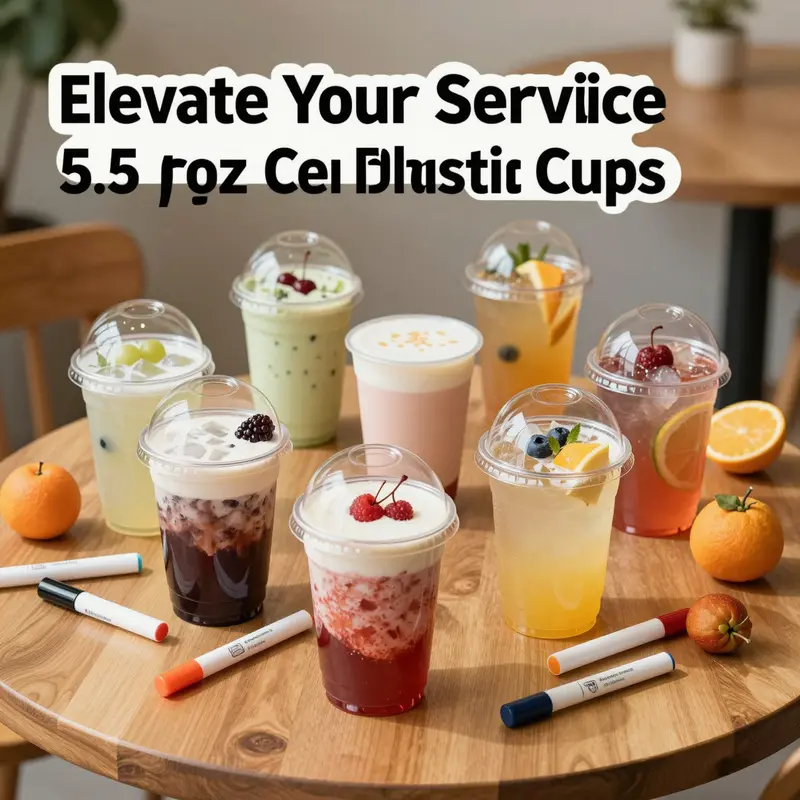
In a world where presentation and functionality are crucial in the food and beverage industry, 5.5 oz clear plastic cups with domed lids have emerged as an essential choice for many establishments. These cups are specifically designed to enhance the user experience, providing not only an aesthetically pleasing solution for serving desserts and beverages but also practical features that promote convenience and prevent spillage. Throughout this article, we will dive into the features and benefits of EcoQuality and LIFE brands, the technical aspects behind their design, the current market landscape, and the economic and environmental implications of using these cups. Each section aims to give professionals in the food industry the insights necessary to make informed choices that align with their operational needs.
null
null
Clear Confidence: The Design, Use, and Value of 5.5 oz Soufflé Cups with Domed Lids
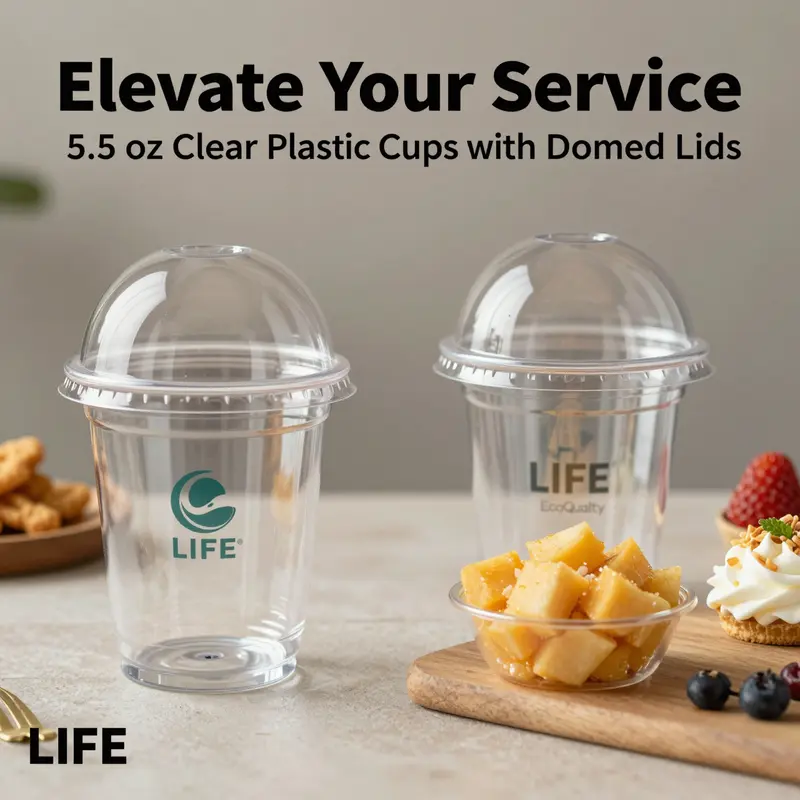
In the bustle of modern food service, a small, clear cup with a domed lid often stands at the center of a well-executed dining moment. It is not just a vessel; it is a carefully engineered interface between a dessert’s visual appeal, a server’s efficiency, and a customer’s confidence in taking a treat on the move. The 5.5 oz capacity sits at an intentional sweet spot. It is large enough to hold layered or topped desserts and small enough to support precise portion control. When filled with a creamy mousse, a layered pudding, or a tart fruit compote, the cup becomes a stage for color, texture, and composition. The clear plastic walls invite the eye to follow the progression from base to topping, turning a simple serving into a miniature edible display. This visual clarity matters because the moment customers decide to purchase often hinges on what they see as much as what they taste. The design rewards both dessert makers and guests with an anticipatory moment—the instant gratification that comes from a well-presented, compact serving. The lid design is the companion piece that transforms the cup from a neat portion into a reliable take-away solution. A tall, domed lid adds vertical space for toppings, sauces, or whipped cream, while preserving a seal that minimizes leakage during transit. The lid’s dome is more than just space—it creates breathing room. Toppings don’t get smooshed, and the product remains aesthetically appealing from the counter to the curb. A dedicated slot or opening for a straw can further simplify consumption on the go, reducing the need to remove the lid and thus lowering the risk of spills in transit. In high-traffic settings—such as amusement venues, outdoor markets, or drive-thru lanes—the combination of a secure seal and a topping-friendly dome translates into practical peace of mind for staff and customers alike. A stable, spill-resistant cup means one less headache during busy service periods and a smoother, more confident hand-off from server to guest. Material choice underwrites all these benefits. The cups are described as food-grade and BPA-free, which aligns with increasingly strict health and safety expectations in contemporary foodservice practice. The exact polymer can vary by model and production line, but polypropylene (PP) is a common backbone for clear, durable presentation cups of this type. PP contributes a balance of rigidity and lightness, aiding stackability during storage while resisting deformation when carried or stacked for display. The clarity of the plastic matters too; it enables the diners to glimpse the layers and toppings at a glance, reinforcing the perception of freshness and generosity. The combination of a clear body with a secure, domed lid yields a compelling package: robust enough for hot and cold items in some configurations, yet simple enough to recycle or reuse in many venues after a brief service life. Such versatility is a practical virtue in catering, event vending, and pop-up venues where menus shift with the day and the lineup of offerings can change with the crowd. From a functional standpoint, the 5.5 oz size is well suited to measured portions. It supports not only beverages—frappes, milkshakes, smoothies—but also dense, whipped, or layered desserts, dipping sauces, condiments, or even small, curated snack assortments. The domed lid provides a secure roof for toppings and a dependable barrier against spill risk when customers pick up or pass by a crowded counter. The lid’s fit between cup and cap is described as seamless in many product lines, with no gaps or leaks when carried in a tray or stacked for display. This reliability translates directly into a better customer experience: fewer awkward spills, less mess on hands or clothing, and a quicker, more efficient handoff from kitchen to customer, which matters in fast-paced service environments as much as in more leisurely dessert shops. The result is a serving option that can be trusted to perform under pressure while maintaining a clean and attractive presentation. Beyond beverages and desserts, the same family of containers demonstrates notable adaptability. In settings where space, stability, and portion control are critical, these cups can be employed to hold sauces for dipping, small portions of condiments, or even nonfood items in controlled portions during tastings or demonstrations. The clear walls again play a role, instructing the eye and enabling a quick assessment of contents without removing the lid. The domed cover slightly elevates the overall profile of the portion, making the serving feel more substantial and thoughtful, an impression that resonates with both casual diners and event attendees. This adaptability matters when operators are tasked with delivering multiple offerings from a single point of sale without sacrificing the clarity or integrity of each item. In other words, the same cup that carries a dessert can also carry a starter, a sauce sample, or a small side, all while maintaining a consistent user experience. Economics and practicality reinforce the case for bulk procurement. In many foodservice operations, these cups are sourced in bulk sets that suit the scale of daily demand. The practicality of a 50-count pack with matching lids, or similar bulk configurations, makes it easier for kitchens, kiosks, and caterers to maintain adequate stock without frequent reordering. Uniformity in packaging simplifies inventory management and reduces the risk of mismatches in lid-to-cup fit, a factor that contributes to fewer service disruptions. What’s more, the ability to present consistently at scale supports branding and presentation goals across different channels. When a venue uses similar, clean, transparent packaging, it unifies the guest experience across in-person and take-out contexts, helping customers recognize the same quality and attention to detail whether they are visiting a storefront, attending a festival, or receiving a delivery. In keeping with broader industry trends, the design of these cups reflects a shift toward disposables that balance usability, safety, and presentation. The emphasis on secure containment aligns with the demands of on-the-go consumption, where the risk of leaks and spills can compromise both customer satisfaction and staff efficiency. The ability to maintain a pristine appearance—clear walls for product visibility, a domed lid for volume under topping, and a secure seal for transport—speaks to a broader story about how simple packaging innovations can elevate a simple dessert into a reliable, reusable, and aspirational experience. The combination of practical containment with visual appeal is what makes these cups a quiet workhorse of many foodservice operations, while still feeling chic enough for boutique dessert spots that want to showcase layers, colors, and textures in a way that invites curiosity and purchase. For readers seeking a deeper dive into related packaging options and the broader ecosystem of disposable servingware, the evolution of branding-enabled, single-use formats is mirrored across materials and configurations. This trend emphasizes how the right container not only shields its contents but also enhances storytelling—how a dessert or a small snack is perceived, measured, and remembered. As operators weigh the merits of different cup-and-lid configurations, the 5.5 oz domed-lid format stands out for its balance of containment, presentation, and adaptability. It is a design that acknowledges the realities of high-volume service while honoring the sensory expectations of guests who crave a visually appealing, orderly, and convenient experience. External reference: https://www.walmart.com/ip/LIFE-5-5-oz-Clear-Plastic-Souffle-Cup-with-Lids-50-Set/1234567890 External reference: This trend toward well-packaged disposables also aligns with the broader shift toward branding-enabled, take-out solutions found in packaging offerings that prioritize eco-conscious, visually driven presentation. See for example the concept spotlight on eco-friendly, printed logo paper cups: eco-friendly-printed-logo-single-wall-paper-cup.
From Clarity to Comfort: The Balanced Engineering of 5.5 oz Clear PP Cups with Domed Lids
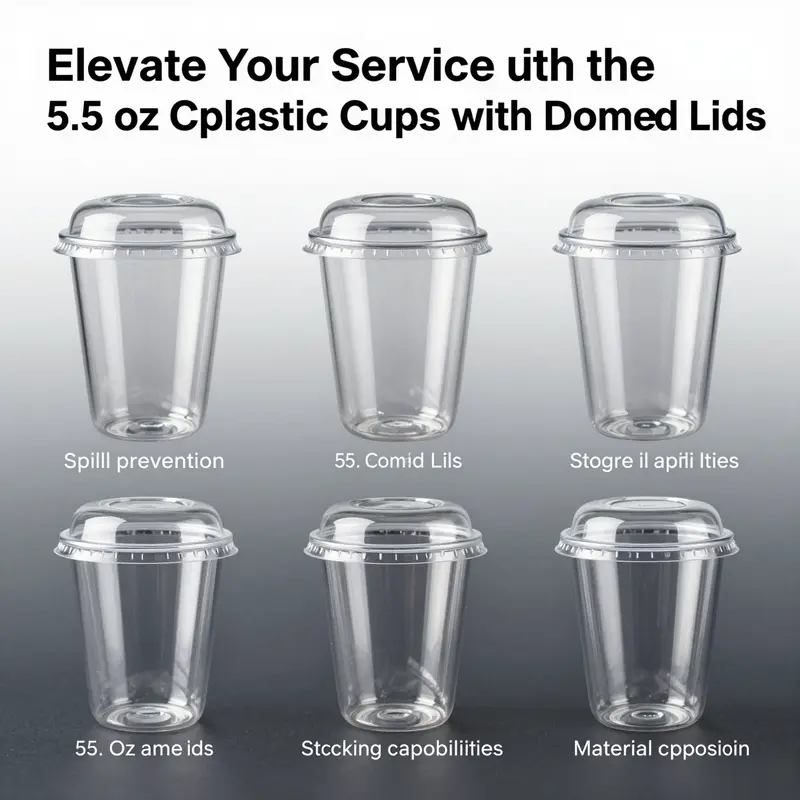
These 5.5 oz clear plastic cups with domed lids sit at a precise intersection of presentation and practicality. Built primarily from polypropylene, or PP, they combine clarity, rigidity, and recyclability in a form factor small enough to hold a single serving of desserts or condiments yet robust enough for direct handling and transport. The ripple wall design, with its vertical grooves along the sides, is not merely decorative. It reduces plastic usage by concentrating material where strength is needed, while giving the cup a textured grip that helps staff and customers manage the cup comfortably, even when fingers are damp or condensation is present. The geometry of the cup reflects a careful balance between wall thickness, stacking tolerance, and optical clarity. The goal is to create a container that reveals the contents without sacrificing structural integrity, a challenge that becomes acute as toppings add height and weight to a modest base. The domed lid is the companion element that completes this system. Its high profile provides generous headspace above the liquid or semi solid inside, a feature driven by the demand for ice cream, milkshakes, or whipped toppings where space matters for toppings to breathe and for the eye to perceive the full topping profile. The lid itself is shaped to cradle the dome while matching the cup rim with a snug fit, often relying on a friction-based or light snap connection to keep the two together during transit. This is essential in settings where customers carry drinks through crowded spaces or where delivery staff transport orders across parking lots and corridors to a pickup window. The same PP that forms the cup commonly forms the lid, ensuring compatibility and a simplified recycling stream, a small but meaningful advantage in busy kitchens that are trying to close the loop on packaging waste. The lid may also feature a cutout for a straw, a convenient touch that preserves the closed look of the container while enabling quick sipping, a feature that has become almost canonical in modern cup design. Yet the elegance of the design is not just functional; it is aesthetic. The clear plastic reveals the chosen dessert or beverage, allowing customers to gauge portion, texture, and color at a glance. In a dining room or café case, the visible layers of a layered dessert, the light bounce on a bright drink, or the spread of whipped cream on top all contribute to an impression of freshness and generosity that a solid color or opaque cup could undermine. In practice, the economics of this approach matter as well. Ribbed walls and a dome lid contribute to a design that uses material efficiently while delivering a high-perceived value. This conforms with a growing body of design guidance that emphasizes how form supports function in practical foodservice contexts. While the 5.5 oz capacity is small, its applications are surprisingly broad. It suits the discipline of portion control in fast service, where a single unit accompanies sauces and toppings or functions as a petite dessert cup in a tasting menu, dessert bar, or catering event. The decision to use a clear vessel with a dome lid is ultimately a conversation about experience: the customer can see the product, anticipate texture and richness, and sense that the product is being presented with care rather than simply dispensed. The dome lid prevents crumbly toppings from being pressed flat during transport, preserving the visual appeal that might be lost in a flatter lid or a plain, unadorned cup. This is particularly relevant for foods with whipped toppings, sprinkles, or syrup glazes, where compression can dull the sensory impact before the customer even raises the lid. At the same time, the lid frames the contents in a way that makes the product easy to sample; the inner space above the drink or dessert remains unobstructed by the lid, reducing the risk of spillage when a straw is inserted or when the cup is turned to take a sip. Handling in busy cafés benefits from the ripple wall as well. The vertical grooves help with grip, a subtle but meaningful ergonomic feature when staff are moving multiple cups at once. The wall texture also creates micro-tolerances in the molding process that can contribute to dimensional stability, helping the mouth of the cup accept a lid of compatible design without distortion. The combined system, cup plus lid, thus achieves a predictable fit even when subjected to rough handling, a common occurrence in catering, event spaces, or a quick service counter. In terms of health and safety, polypropylene is known for its stability under typical serving temperatures and its resistance to cracking and crazing under thermal cycling. The 5.5 oz size is often chosen for its suitability to hold a measured portion without overflowing, ensuring that toppings and sauces are presented in proportion to the base product. The lid plays a crucial role in this aspect by accommodating a topping without requiring the contents to be depressed or compressed during lid closure. The packaging logic here is not about sealing against leaks as much as it is about enabling stable transport and efficient display, a subtle but critical distinction in many real world use cases. For many operators, the ability to reuse or recycle PP packaging within the same stream creates an operational advantage, aligning with initiatives to reduce waste and streamline the end of life of disposable goods. The design language also supports a wide range of beverages and semi solids, from chiles and sauces to petite puddings, which broadens the scope of what a single 5.5 oz cup can serve at a family gathering or a formal tasting event. Yet for all its strengths, the system does not herald a guarantee of leakproof performance over long journeys. The friction fit can loosen under jostling, and the dome lid is not a seal. Still, the packaging is well suited to short trips and on site consumption, where customers enjoy the privilege of a clean presentation, clear visibility of contents, and a straightforward open or sip action at the point of consumption. The interplay of clear material, crisp geometry, and a thoughtfully designed lid translates into a sensory and practical benefit that extends beyond mere containment. It helps reduce cognitive load for servers and customers alike: there is less guesswork about what is inside, how it should look with toppings, and how much space the lid provides for those toppings to remain voluminous. This clarity supports both presentation and inventory planning for foodservice operators who must balance display with cost. In addition, the dome lid and cup combination supports a broader philosophy about serving utensils and handoffs in transient service environments. Being able to hold a single portion confidently means fewer spillage incidents and less time cleaning up after service, which in turn supports better table turnover and customer satisfaction. The consistency of the design is another of its virtues. A standardized 5.5 oz capacity with a dome lid that is compatible with a ripple wall cup ensures that supply chains can stock a uniform line of containers across multiple items, simplifying procurement, labeling, and quality control. The likelihood of mismatches between cup and lid, which can disrupt service or spoil the user experience, is reduced when the components are designed to fit together as a matched pair rather than as independent parts that must be jury-rigged to work. Finally, the chapter turns toward the sensory and experiential resonance of this packaging choice. Clear plastic allows color, texture, and gleam to rise in prominence, which matters for consumers who are drawn to bright toppings, layered desserts, or glossy sauces. The dome lid is not merely a functional cap; it is a stage for the product, a frame that allows the viewer to anticipate what lies beneath. The combination of function, form, and presentation makes these 5.5 oz cups with domed lids a versatile choice for a wide range of foodservice contexts, from the quick service counter to the catered event, from the home kitchen to the professional kitchen that handles desserts in small portions. For readers who want to explore related packaging formats that pair well with these cups, a nearby option to consider in practice is a kraft paper coffee cup with lid, which can be found at this page a kraft paper coffee cup with lid. Looking ahead, designers continually refine the resin formulation to maintain clarity while improving stiffness and heat resistance, sometimes introducing UV stabilizers to slow yellowing and extend shelf life. They balance molding techniques to tighten tolerances at the rim and base, reducing the chance of lid misalignment across large batch runs. The ripple profile itself can vary, with deeper grooves offering added grip but slightly altering optical clarity, a trade off designers navigate through testing and consumer feedback. In the broader context of packaging strategy, even a small cup like this can influence service speed, order accuracy, and perceived value. When a dessert is plated with precision and served in a vessel that looks pristine, the entire dining experience benefits. The combination of a clear cup that shows off color and texture, with a lid that respects toppings and heat, becomes part of a consistent service language across a brand, a subtle but powerful element of customer trust. Operators who seek to optimize both cost and experience will appreciate that the 5.5 oz cup with a domed lid is not a single choice but part of a broader ecosystem of disposable serveware designed for transparency, ease of use, and responsible disposal. For a practical anchor in practice, consider how a kraft paper coffee cup with lid can complement a line that includes clear dessert cups, offering a cohesive packaging family across cold and hot serving needs with shared handling and disposal logic. For further technical validation and broader context, see the product reference at https://www.amazon.com/dp/B0B7Z6Y9VQ.
Clear Convenience: Market Dynamics of 5.5 oz Domed-Lid Cups in Modern Foodservice
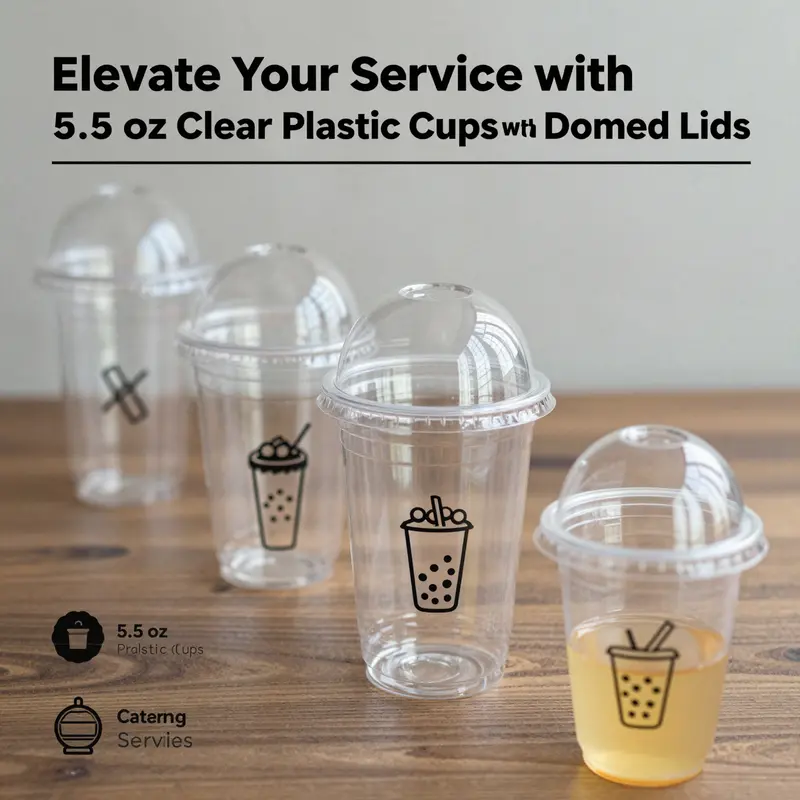
The market for 5.5 oz clear plastic cups with domed lids sits at the intersection of convenience, presentation, and reliability. In an era when customers expect quick service, consistent portions, and appealing visuals, these compact containers have carved out a durable niche within the broader disposable tableware ecosystem. Their appeal rests not only in a precise capacity that suits single servings but also in a lid that redefines what “portable” means for cold and semi-solid treats. The domed lid, often featuring a straw slot, is more than a practical closure. It is a design element that protects the contents during transport, preserves layered textures, and elevates the guest experience by keeping toppings intact and visible. In fast-casual, drive-thru, and event settings, where speed and impression converge, the 5.5 oz format delivers a blend of stability and display that few other single-serving vessels can match.
The fundamentals of this segment center on material performance and geometric clarity. Polypropylene, the common choice for these cups, offers a balance of rigidity, clarity, and heat resistance that is well suited to cold beverages, semi-solid desserts, and condiments. While these cups are not recommended for hot liquids, their transparency showcases the product inside—think swirls of espresso, layers of yogurt with fruit, or the glossy sheen of a gel dessert. The lid’s dome creates a visual window that accentuates color and texture, an attribute that brands leverage to communicate quality and indulgence without words. The combination of a transparent cup and a built-in lid also contributes to a sense of hygienic integrity, a feature consumers increasingly associate with reliable, disposable packaging.
From a design perspective, the 5.5 oz domed-lid cup is optimized for stacking and efficient storage. In warehouses and on catering carts, the ability to stack without the dome sticking or warping reduces handling time and minimizes breakage risk. This is a practical consideration for operators who rotate stock, prepare hundreds of portions, and seek a clean, uniform look across a display case or table. The lid’s straw slot is more than a convenience; it prevents the lid from lifting and the contents from leaking during transit, a factor that resonates with customers who travel short distances with a dessert or beverage in hand. The entire package—clear cup, clear lid, and precise cap seating—works in harmony to deliver a crisp, premium presentation that aligns with contemporary brand aesthetics.
In market terms, the segment benefits from a broad distribution network and competitive pricing that appeal to a wide range of buyers. Retailers and operators often purchase these cups in bulk sets, commonly 50 or 100 units per pack, to maximize efficiency and standardize procurement. The economics are favorable for operations that require predictable cost per portion and straightforward inventory management. A real-time pricing snapshot from major retail channels demonstrates how accessibility reinforces demand: such packs frequently appear in the mid-range for disposable portion cups, with standard quantities and consistent SKUs that enable easy reordering. While specific price points can fluctuate with supplier tension, seasonal promotions, and freight costs, the underlying value proposition remains steady: reliable containment, clear visibility, and minimal fuss in both kitchen and service lines.
A key driver of market growth is the rising demand for hygienic, disposable packaging that supports quick-service models without compromising presentation. Consumer expectations have evolved beyond mere convenience; they expect packaging that communicates cleanliness, portion control, and brand story at the point of sale. The 5.5 oz domed-lid cup delivers on all fronts. The dome acts as a stage for toppings—sprinkles, fruit bits, whipped cream, or a delicate drizzle—while the clear wall reveals each layer, giving customers a tangible preview of what they’ll receive. This is especially impactful for thick beverages like frappes and milkshakes, where layered colors and textures are part of the allure. Gel desserts and yogurts benefit equally, as the dome helps preserve texture and prevents shifting that could compromise the experience during transport or display.
Distribution channels have aligned with these preferences. In coffee shops, dessert kiosks, and frozen-yogurt stations, the 5.5 oz domed-lid cup serves as a dependable, easily managed portioning solution. On-the-go venues, including festivals and theme parks, prize efficiency and reliability as much as flavor and texture; in these environments, a spill-resistant cup is part of the value proposition that keeps service lines flowing and lines moving. Convenience stores and quick-service restaurants also leverage the format for promotional beverages, small-treat upsells, and grab-and-go options where space is at a premium and customer turnover is high. The design supports merchandising strategies, with the lid’s built-in features enabling stylized branding—clear surfaces provide an unobstructed canvas for logos and seasonal artwork once prints and sleeves enter the equation.
Material integrity remains a commercial lever. The preference for polypropylene is not incidental. Its clarity ensures a high degree of product visibility, while its durability reduces breakage risk in busy service environments. The material’s compatibility with cold items is a practical constraint that operators recognize: the cups hold up under low temperatures, resist cracking under typical handling, and maintain a polished look from kitchen to consumer. The domed lid, in concert with the cup’s wall thickness, contributes to a sense of premium quality that consumers notice in a crowded display of options. It is this perceived quality—an impression of care from the packaging—that often translates into higher willingness to pay for a single serving, particularly in settings where presentation weighs heavily in the dining-out decision.
From a business perspective, the 5.5 oz domed-lid cup ecosystem benefits from predictable lead times, scalable production, and compatibility with existing cold-fill workflows. Operators can standardize their hold times and service windows because the container is designed for a straightforward fill-and-cover process. Manufacturers emphasize durability and clarity at scale, ensuring that bulk purchases maintain uniform dimensions and lid fit across hundreds or thousands of units. The synergy with matching lids in bulk sets enhances operational efficiency, enabling quick replenishment during peak periods and reducing the risk of mismatched components that can disrupt service.
The consumer experience is at the heart of value realization in this market. A customer’s first contact is visual—the cup’s transparency invites curiosity and sets expectations for the flavors inside. The lid’s secure seal turns a simple purchase into a confident choice, especially for impulse buys or gifts at events where presentation matters. The product’s convenience is not solely about portability; it is about the confidence that the contents will arrive intact, with toppings preserved and without leaks. This reassurance reduces both perceived risk and actual waste, translating into higher satisfaction scores and repeat patronage. In markets where promotional events, catering, and festive occasions are common, these attributes become a differentiator, enabling operators to frame portions as shareable, premium experiences rather than mere convenience items.
An ecosystem perspective helps explain why the 5.5 oz domed-lid cup remains a staple. The combination of a clear, recyclable-ish wall with a dome-lid that accommodates toppings and a straw slot supports a wide range of beverages and desserts. It is a versatile tool for kitchen-to-customer narratives, enabling vendors to craft a consistent consumer journey—from the moment a product is selected to the moment it is enjoyed. In this sense, the cups function as both packaging and a storytelling device, reinforcing brand cues through color accents, logo placement on the lid, and the presentation of layered, visually appealing beverages and desserts. The functional design thus aligns with a broader consumer shift toward responsible, disposable packaging that still delivers a high-quality, memorable experience at the point of sale.
For buyers evaluating options, the practical considerations extend beyond visuals and flavor compatibility. Availability through bulk packaging and the relative ease of procurement are important, particularly for operators who scale their services during peak seasons or promotional campaigns. A reliable supply chain reduces stockouts and a stable cost structure helps with forecasting and menu planning. The combination of a clear cup, a domed lid with a straw slot, and a durable material offers a balance that few other single-serving containers can achieve in the current market landscape. It is this balance—clarity, containment, and convenience—that explains why the 5.5 oz domed-lid cup remains a dependable workhorse in both traditional and emerging foodservice formats.
In reflecting on the broader packaging conversation, it becomes evident that these cups occupy a transitional space between traditional disposables and more sustainable alternatives. While many operators are exploring compostable or reusable options, the practicality of a clear, semi-rigid cup with a domed lid for cold items keeps the format relevant. It serves as a bridge for customers who require quick service and visual appeal while brands navigate evolving sustainability targets. The market supports this transition by offering scalable, cost-efficient options that maintain product quality and presentation. The result is a packaging solution that is not merely functional but also expressive, capable of reinforcing a brand’s commitment to clarity, portion control, and customer delight.
As the chapter moves toward integrating these insights with broader packaging strategy, consider how a single product category like the 5.5 oz domed-lid cup informs decisions across containers and lids. The lessons here—emphasize secure sealing, maintain clarity for product visibility, and ensure compatibility with bulk purchasing—translate into practical guidance for menus, promotions, and store layouts. In the end, the market’s growth hinges less on a single feature than on the coherent experience the container helps create: a reliable, appealing, and portable serving that customers trust with every bite, sip, and swirl. For operators seeking to align supply with customer expectations, the domed-lid cup represents a straightforward path to consistent service quality, efficient operations, and a visually engaging presentation that supports sales and brand storytelling.
Internal reference: for operators exploring adjacent disposable options, see a related guide on kraft paper bowls and lids, which expands the conversation about take-out packaging formats and how design choices influence consumer perception and handling efficiency. disposable kraft paper bowls
External resource: for a real-time pricing perspective on 5.5 oz domed-lid cups, a major retailer’s listing provides a representative snapshot of current market dynamics and availability. https://www.walmart.com/ip/EDI-Clear-Plastic-Disposable-Portion-Cups-Soufle-Cup-with-Lids-5-5-oz-100/683523733
Tiny Vessels, Big Impacts: Environmental Tradeoffs and Economic Realities of 5.5 oz Clear Plastic Cups with Domed Lids
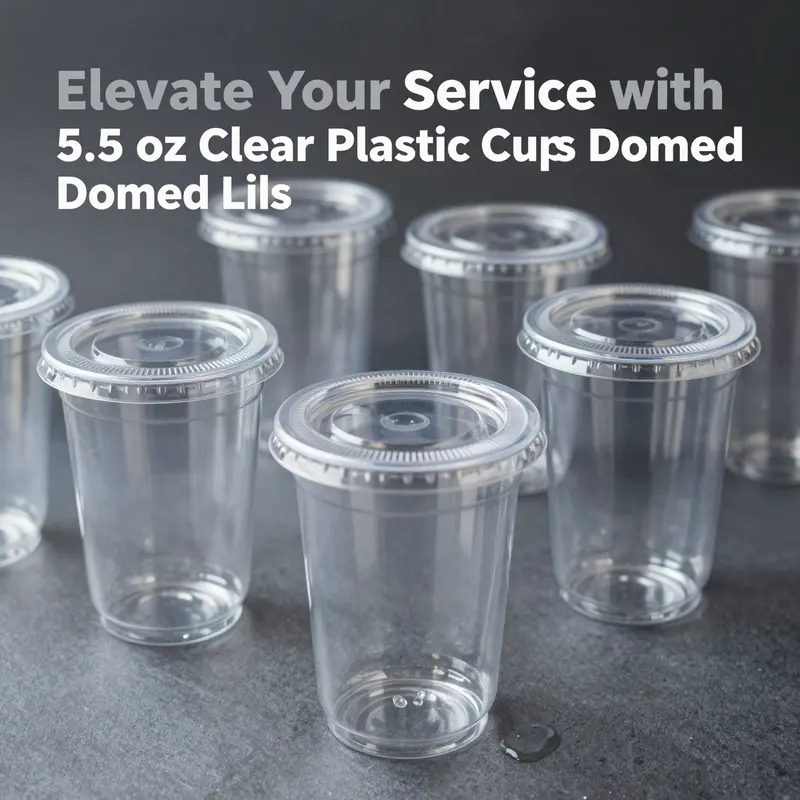
A five-and-a-half-ounce clear plastic cup with a domed lid is easy to overlook, yet it sits at a crucial intersection of convenience, presentation, and responsibility. In cafés, catering events, film screenings, and countless retail contexts, these compact vessels do more than hold a dessert or a sample. They shape the consumer experience by preserving visual appeal, supporting toppings, and reducing spill risk during transport. The dome lid provides space for whipped cream, caramel drizzle, berries, or sprinkles without crushing the topping, which makes the package attractive and functional at the same time. This practical design is exactly why such cups proliferate in high-volume settings. At the same time, the miniature scale of the container folds the larger story of packaging into a complex web of environmental and economic considerations that extend far beyond the register or the buffet line. From an environmental perspective, the most consistent finding is the tension between utility and end-of-life outcomes. The majority of these cups are made from conventional petroleum-based polymers, typically polypropylene or polystyrene. These materials offer clarity, light weight, and relative cost efficiency, but they are not biodegradable in natural environments. The persistence of these plastics—measured not in years but in decades or centuries—means that improper disposal translates into long-term ecological pressure. While some manufacturers experiment with plant-based options like polylactic acid (PLA), those alternatives often require industrial composting facilities to break down. In communities without access to such facilities, PLA products behave similarly to conventional plastics in the shortest paths to landfills or the environment, undermining the environmental rationale for their use. The domed lid, while enhancing sealing performance and topping accommodation, compounds the recycling challenge. It adds material volume and introduces a different polymer chemistry from the cup itself in many cases. Not all recycling streams sort or separate cup and lid materials efficiently, and mismatches can degrade the quality of recovered plastic. Industry guidance repeatedly stresses the need to evaluate compatibility among cup sizes, material thickness, and environmental impact when selecting dome lids. The consequence is a packaging system that may be technically recyclable in some contexts but not universally, creating a disconnect between ideal recycling practice and real-world waste management. In this sense, the cup becomes not just a container but a reminder of how design choices influence the viability of recycling infrastructure and consumer participation. The lifecycle footprint of these cups includes their production energy, fossil fuel use, and greenhouse gas emissions. Manufacturing demands raw materials, heat, and water, and even modest gains in efficiency can scale up into meaningful reductions when millions of units are produced. Transportation adds further emissions, especially when products are moved across long distances to serve dispersed markets. The cumulative effect of these stages is a measurable climate impact that some observers consider when evaluating total cost of ownership for packaging. The discussion often broadens to include waste management costs, the potential for litter, and the long tail of ecological harm that can follow if cups are inadequately collected or inadequately recycled. Economically, the story looks different. The appeal of 5.5 oz clear cups with domed lids lies in their lightweight form, stackable storage, and low unit cost. In bulk orders, unit prices can be astonishingly affordable, which makes them accessible for large chains, small businesses, and nonprofit events alike. The combination of a secure seal and a clean presentation minimizes product loss during transit and handling, reducing waste and improving throughput for busy kitchens and catering lines. This reliability translates into tangible savings: fewer complaints about spilled samples, less need for protective secondary packaging, and a smoother handoff from kitchen to customer. All of these factors contribute to lower operational friction and higher perceived value in the consumer’s eyes. Yet the economic logic is not infinite. Rising scrutiny over single-use plastics and potential regulatory measures could tilt the balance over time. Taxes, bans, or mandates that encourage alternatives or stronger recycling requirements could increase the long-term cost of maintaining a large stock of these cups. In addition, the hidden costs associated with environmental externalities—cleanup, waste management, and ecological damage—are increasingly factored into corporate assessments and public policy discussions. In other words, the initial price per piece is only one part of the financial picture; the full cost must account for the broader societal costs that accompany single-use plastics. For many operators, the decision hinges on a careful balance: the immediate gains in efficiency and customer experience versus the potential future liabilities tied to environmental stewardship and regulatory compliance. The chapter of packaging design that these cups inhabit is not static. Designers and buyers continually seek ways to preserve the advantages of dome lids while mitigating downstream consequences. One pathway involves refining material choices to improve recyclability or compostability without sacrificing heat resistance or clarity. Another pathway focuses on reducing material thickness and optimizing mold designs to minimize waste in production while preserving lid integrity. A third pathway looks at compatibility across sizes and lids, so that customers can reuse or recycle components more easily within established municipal waste streams. The guiding principle—packaging that is designed to fit into existing recycling or composting infrastructures—emerges as a critical criterion in sustainable decision-making. Beyond material science and policy talk, the consumer and service context matters. In high-volume food service, the visual impression of a dessert with whipped topping, the clean edge of a clear cup, and the smooth dome of the lid collectively shape perceived freshness and quality. The per-item cost becomes a driver of menu pricing and promo tactics, influencing the decision to use premium toppings or elaborate garnish. The cup’s transparency supports product presentation, allowing color, texture, and portion size to register at a glance. Yet the same transparency makes it harder to hide the cup’s ecological footprint from customers who expect responsible packaging. Retailers and caterers must navigate this dynamic by communicating their sustainability choices, investing in recycling education, and, where possible, offering alternatives that align with local waste management capabilities. In considering alternatives, several practical strategies emerge. Some operators explore compostable or bio-based cup options. The appeal of a compostable cup often rests on a perception of reduced environmental harm, but the reality is nuanced: industrial composting facilities are not universally available, and compostability can be compromised by carries-over food residues or by mixing with non-compostable streams. Others pursue reusable service models where appropriate, especially for events or venues with high repeat traffic. Reuse systems can dramatically lower single-use waste, but they require robust logistics, sanitation protocols, and consumer participation to be cost-effective. Still others emphasize recycling system improvements—clear labeling, better sorting at source, improved throughput in facilities, and clear guidelines for consumers about how to dispose of domed-lid combinations. In every case, the crucial insight is that sustainability is a system property, not a feature of a single component. For operators weighing options, a practical step is to benchmark against a broader portfolio of packaging choices. In some circumstances, it is reasonable to compare the 5.5 oz cup’s functionality with eco-friendly disposable options that incorporate recyclable or compostable materials, including those designed for lids compatibility and stacking efficiency. When evaluating a shift toward alternative packaging, it is helpful to consider the total cost of ownership, which includes procurement, storage, distribution, customer perception, and end-of-life processing. The broader lesson is that the dome lid’s utility cannot be separated from its environmental and economic context. The right choice depends on local waste infrastructure, the nature of the product inside the cup, and the organization’s ethical and financial priorities. For readers seeking a concrete example of how sustainability discussions intersect with product design, consider the broader packaging ecosystem. A number of packaging providers offer eco-friendly options that emphasize compatibility with lid systems, standardized sizes, and branding opportunities that reduce waste through smarter printing and fewer mismatches. In this sense, the conversation around 5.5 oz clear plastic cups with domed lids becomes part of a larger effort to reimagine single-use packaging as a component of a circular economy rather than an isolated, disposable artifact. As operators contemplate their next purchase, they should weigh not only the immediate cost and presentation but also the long arc of environmental responsibility and community benefit. To explore related sustainable packaging options beyond plastic cups, you can review a representative example of eco-conscious paper cup solutions and lid compatibility that mirrors some of the design and lifecycle considerations discussed here. eco-friendly printed-logo single-wall paper coffee cups with lids provides a point of comparison for how branding, lid design, and end-of-life pathways can align with local waste-management realities. For readers seeking a broader technical perspective on plastic cup grades, structure, and application benefits, an external resource offers additional context on material composition and performance characteristics: Understanding Plastic Poker Cups: Key Grades, Structure, and Application Benefits.
Final thoughts
The 5.5 oz clear plastic cups with domed lids not only maximize presentation and functionality but also cater specifically to the diverse needs of food service operations. By examining brands like EcoQuality and LIFE, we appreciate how thoughtful design can enhance customer experience. This overview of their features, uses, technical implications, market trends, and environmental impacts emphasizes why these cups are a smart choice for beverage shops, restaurants, and event planners. Investing in quality disposable products like these can lead to happier customers and more efficient operations.