
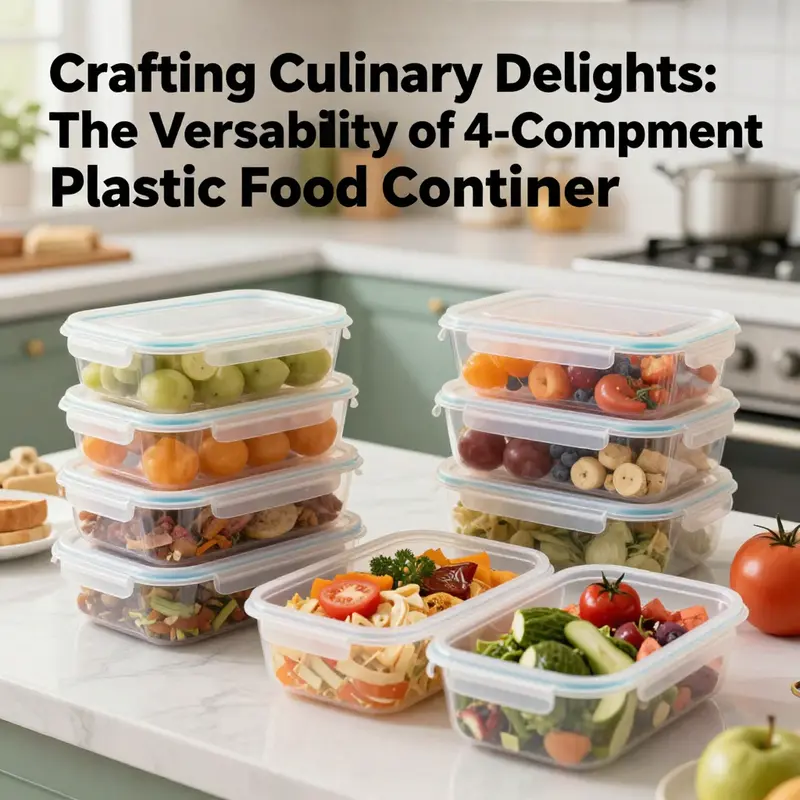
In the vibrant world of food service, presentation and functionality go hand in hand. The innovative design of 4-compartment plastic food containers not only enhances meal appeal but also caters to the diverse needs of businesses from bubble tea shops to catering services. These containers allow for neat portioning, ensuring that flavors remain distinct while providing an organized look that impresses customers. This article will delve into the material composition that promotes durability and safety, explore eco-friendly alternatives gaining traction in the market, examine various applications across different food service segments, discuss consumer preferences for these versatile containers, and unveil future trends that could shape their evolution. Together, these insights will illuminate the integral role 4-compartment containers play in modern culinary experiences.
From Molecules to Meals: The Material Composition of Four-Compartment Plastic Food Containers
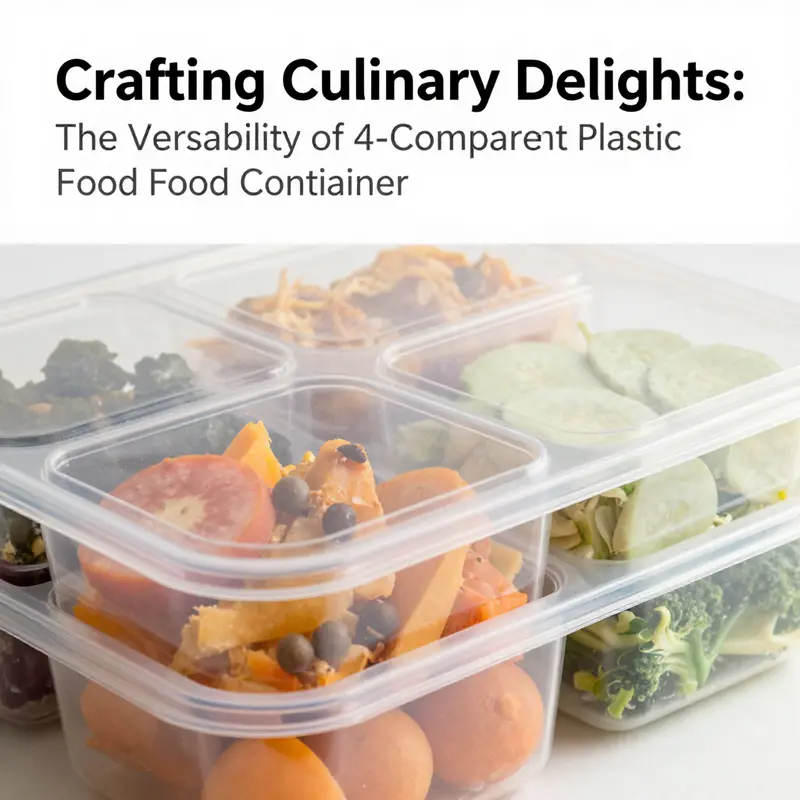
Material composition sits at the heart of how a four-compartment plastic food container performs in kitchens, cafeterias, and delivery services. The dominant material is food-grade polypropylene (PP), a polymer that balances light weight with strength, flexibility with stiffness, and a resistance to temperature swings that makes it practical for reheating, chilling, and stacking. In well-designed trays this polymer is molded into a single, seamless form that holds four distinct compartments with vertical walls separating each section. The four-chamber layout supports portion control and presentation, enabling a user to keep grains separate from proteins, or a sauce from a delicate salad, without cross-flavor contamination. The combination of compartments and a robust lid reduces spillage during transport and sustains a consistent dining experience from kitchen to table.
PP is favored for several reasons. Its chemical structure yields a high melting point and excellent impact resistance, even with small trays and tightly fitted lids. When marketed as a food-contact material, PP must meet standards to ensure that additives stay within safe limits and that migration into food remains below accepted thresholds. Clarity is welcome in some formats because it lets diners verify fill levels at a glance, though the priority in four-compartment designs is usually performance over translucence. PP’s compatibility with common manufacturing processes—chiefly injection molding and thermoforming—enables rapid production of millions of identical trays with uniform wall thickness. That consistency is essential for leak resistance, stable stacking, and predictable performance across a cold-to-hot workflow typical of meal-prep services and takeout operations.
Beyond PP, the design may call on other polymers to satisfy performance criteria. Polyethylene (PE) can appear in lids, liners, or sealing interfaces where a touch more flexibility or a specific moisture barrier is beneficial. Polypropylene’s stiffness, combined with a PE layer or seal, can create a more reliable closure without sacrificing the tray’s rigidity. Polystyrene (PS) sometimes appears in more cost-focused variants or in precise snapping-lid configurations where crisp, rigid edges help with secure closure and an easy release. However, PS can be more brittle under impact and may not withstand repeated heat cycles as reliably as PP. In practice many four-compartment systems lean heavily on PP because it offers the best balance of safety, durability, and recyclability within contemporary waste streams. The exact formulation—whether a random copolymer, a block copolymer, or blended grade—tailors toughness, scratch resistance, and heat tolerance to the container’s intended use, whether a one-time takeaway item or a reusable option in a controlled program.
Heat tolerance and compatibility with kitchen routines remain central considerations. A container advertised as microwave-safe carries the expectation that reheating will occur without deformation or the release of flavor-compromising residues. In polypropylene, this promise varies with grade and wall thickness. Higher-grade formulations with thicker walls and reinforced rims can endure repeated heating and shorter bursts of microwaving on medium power. Some designs explicitly warn against high-temperature spikes; others permit longer reheating cycles when the lid is vented or removed. Freezer performance is equally important. PP can maintain shape and resist cracking at low temperatures if the resin is formulated for cryogenic stability. The practical implication for foodservice operators is straightforward: reliable heat and cold performance translate into fewer service issues and less waste, while giving cooks and servers confidence in what they are packaging and how long it will hold up through transit.
The ongoing conversation about sustainability has pushed many operators to consider eco-friendly options that still deliver on function. Biodegradable and compostable alternatives, often based on polylactic acid (PLA), offer a pathway to reduce long-term plastic waste when industrial composting facilities are available. PLA trays can be suitable for cold or mildly warm foods and are sometimes chosen for campaigns where compostability is a priority. Yet heat tolerance typically lags behind PP, and some PLA formulations begin to deform under higher heat. The trade-off extends beyond just temperature: it involves the realities of disposal infrastructure and local waste streams. Many organizations therefore view material choice as part of a broader packaging strategy that aligns with environmental goals while remaining within regulatory and safety boundaries. In practice, PP remains the default for everyday needs, with PLA or other compostable options reserved for contexts that emphasize end-of-life outcomes and where disposal pathways are well established. The decision is rarely black and white; it is a nuanced balance of performance, safety, and sustainability.
From a supply-chain perspective, material selection is inseparable from production efficiency and branding strategy. PP’s durability and lightness support long-distance transport and stacking, reducing damage risk and optimizing warehouse space. This translates into tangible cost savings for large-scale operators, even before adding the value of custom labeling or design features. Some buyers seek color accents, internal barriers, or printed lids to help diners identify meals at a glance. The ability to imprint branding, portion guidance, or nutritional information onto the lid or outer wall is part of a broader value proposition that links material science with visual identity. The four-compartment design itself is a clever arrangement: it preserves texture and moisture, enabling a single product to satisfy multiple taste expectations within a compact package. When manufacturers evaluate options for scaling, they weigh material safety certifications, lead times, and compatibility with existing supply chains; the choice must also support reliable leakproof performance, strong lid closures, and easy stacking for cold-chain or hot-service environments.
Evaluating material safety means looking beyond the resin’s name to the tests and standards it must meet. Food-grade PP used in containers typically undergoes migration testing to ensure that additives do not move into food at levels that would raise health concerns. While many grades are certified for food contact, the specific supplier’s material should be verified to comply with regional regulations, whether at a national, state, or international level. The lids, seals, and any printing inks must also be compatible with the chosen resin to avoid delamination or chemical transfer during microwave reheating. As consumer expectations evolve, so do these specifications. Some manufacturers invest in barrier properties that limit oxygen or moisture diffusion, which helps preserve the flavor and texture of meals stored in the compartments. This is particularly relevant for mixed meals that include delicate greens, grains, and sauces, each with different moisture profiles. In practice, the balance between barrier performance and recyclability is a central trade-off, because adding layers or coatings can complicate end-of-life recycling streams.
Despite these complexities, PP remains the dominant choice for four-compartment trays not only because it is widely accepted by regulators but also because it integrates well with existing molding technologies and recycling streams. The recyclability of PP is a key consideration in many sustainability conversations, though the real-world recycling rate depends on local infrastructure and consumer participation. The industry continues to pursue innovations that improve recyclability, reduce weight, and enhance thermal performance without compromising safety. For instance, some high-throughput lines use precise control of mold temperature and cooling rates to ensure uniform wall thickness, which reduces warping and enhances the seal’s reliability. Others explore alternative filler materials or anti-scratch additives to extend the tray’s life in reusable-service contexts. All these developments aim to sustain a four-compartment option that is efficient to produce, comfortable to handle, and trustworthy for the consumer.
To connect the material choice with user experience, the end user’s goals must guide the conversation. For a robust, everyday takeaway solution, PP typically offers a resilient balance of safety, performance, and cost. For operations prioritizing end-of-life outcomes, PLA or other compostable options may be worth exploring, provided heat tolerance and disposal infrastructure are compatible with local programs. For shops seeking to minimize waste altogether, reusable PP designs or alternative recycling pathways can complement the four-compartment format. In practice, the most practical approach is a materials-agnostic strategy that aligns product performance with regulatory compliance and environmental impact. The chain—from resin to restaurant tray to consumer meal—remains long and complex, but each link benefits from thoughtful material selection that preserves portion control, flavor integrity, and efficient service.
As a final reflection, consider how the broader packaging ecosystem interacts with four-compartment containers. Beyond the resin itself, the choice of lid, venting mechanism, and lid-lock design influences user experience and the product’s environmental footprint. The same PP that prevents leaks can also be recycled within appropriate streams and transformed into new packaging or durable goods, depending on local capabilities. The result is a packaging solution that harmonizes practical kitchen needs with responsible material choices, a balance that will continue to evolve as new polymers and manufacturing techniques emerge. This integrated view helps explain why four-compartment containers remain a staple across meal-prep and takeout contexts, delivering both convenience and care for the foods they cradle. For readers curious about packaging alternatives that showcase sustainability beyond plastics, consider the kraft paper take-out bowl options linked here. disposable-700ml kraft paper bowl take-out options. And for a broader technical perspective on polymer composition and common industrial uses, see Plastic Chinese Food Containers Wholesale Explained: Composition, Key Characteristics, and Common Industrial Uses.
Eco-Friendly Alternatives for 4-Compartment Plastic Food Containers: Reimagining Everyday Packaging
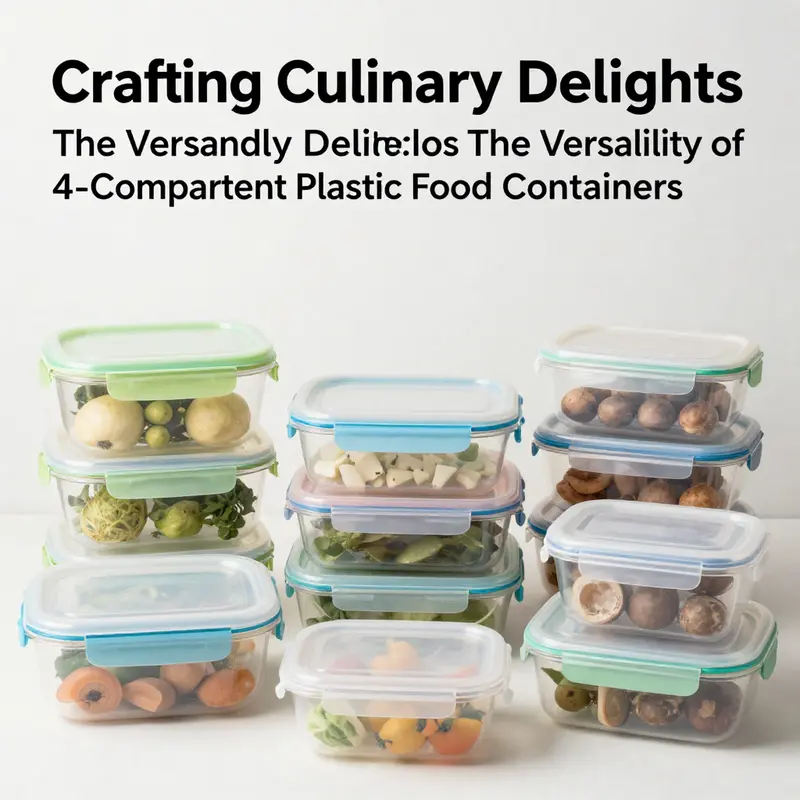
The four-compartment design has become a quiet standard in kitchens, cafeterias, and caterers alike. It is not merely a way to separate sauces from starch or greens from protein; it is a blueprint for portion control, meal planning, and visual appeal. Yet as awareness of waste, resource use, and end-of-life impacts grows, the packaging that shapes these meals is increasingly judged by its environmental footprint as much as by its utility. The challenge is not to abandon the practicality of four compartments but to reimagine what holds those compartments. Eco-friendly alternatives are no longer fringe options or niche innovations; they are competitive, scalable choices that align with the dining realities of takeout, meal prep, and institutional service. In this context, the conversation moves beyond a simple material swap. It becomes a study in how material science, logistics, and consumer expectations converge to create packaging that performs, protects, and ultimately returns to a cycle rather than the waste stream. The four compartments remain the organizing principle, while the container itself becomes a platform for responsibility and progress.
One of the most discussed paths is the shift toward bio-based, compostable substrates. Cornstarch-based materials illustrate how a renewable resource can translate into a disposable container that breaks down in appropriate facilities. These substrates typically exhibit strong resistance to oils and moisture, which translates into reliable performance for mixed foods. They are designed to withstand cold storage and, in many cases, mild reheating in microwaves, a feature that makes them viable for lunch meetups, home meal replacements, and event catering alike. The trade-offs, however, include heat tolerance limits and the realities of industrial composting infrastructure. For operators, the decision hinges on the balance between the convenience of single-use disposability and the availability of composting pathways that can handle peak volumes without complicating operations. In practice, cornstarch-based options can reduce lingering plastic signals in the waste stream, even as they require careful routing at the end of life to realize their environmental benefits.
Another compelling route travels through paperboard and other fiber-based architectures. When uncoated or properly treated with barrier layers, paperboard containers offer biodegradability and compostability that resonate with brands seeking a greener image. The plant-based fiber source is renewable by design, and the lightweight nature of these containers contributes to lower transportation emissions per unit. The mechanical performance of paperboard can be tuned with coatings and internal liners to manage moisture and grease, preserving the integrity of the four-compartment layout from the first bite to the last. Aesthetics and branding can be woven into the fiber itself or through external printing, enabling an appealing presentation without sacrificing recyclability or compostability where appropriate. For multi-meal operators, the ability to customize shapes and sizes within a fiber-based family supports menu variety and portion precision while preserving a coherent sustainability storyline. A practical, consumer-facing example can be found in disposable paper-based bowls and intermediate packaging designed for balanced meals; a link to a representative product page demonstrates how a fiber container can be styled for takeout, deli service, or campus dining while remaining weight-conscious and structurally stable.
A parallel path emphasizes the recyclability and reuse potential of certain plastics. Not all plastics belong in the same recycling stream, and the lifecycle calculus depends on how the material is recovered at the end of its useful life. In the right systems, PET and certain grades of polypropylene can offer long service life, high barrier performance, and true recyclability, especially when they are designed for repeated use rather than single-use disposal. For institutions and large-scale operations, this means designing for durability, ensuring leakproof lids, and confirming compatibility with established recycling processes. The energy balance and the environmental impact are not purely about material choice; they hinge on container design, cap tightness, stacking efficiency, and the density of the return stream. Robust, leak-resistant, and easily cleanable configurations can support a low-waste approach when paired with a disciplined recycling program and clear labeling that helps customers dispose of items correctly.
While material science drives much of the discussion, successful adoption requires attention to safety and performance as well as logistics. Food-grade safety certifications, barrier properties, and heat tolerance must align with the intended use—hot meals, cold salads, or mixed dishes—without compromising the integrity of the four compartments. Stackability matters for warehouses and delivery fleets where space translates to cost. Leakproof designs protect both food quality and transport safety, reducing mishaps during loading and unloading. Branding and customization are not afterthoughts; they are opportunities to signal a commitment to sustainability while maintaining a coherent brand voice. The interplay between aesthetics, function, and environmental goals is delicate but achievable when suppliers and buyers share a clear specification language and a long-range plan for end-of-life management. In this sense, eco-friendly alternatives are not a collection of isolated options but a continuum of designs that can be tailored to specific menu formats, service models, and regional waste ecosystems.
Sourcing and scalability are often the practical bridge between concept and routine. For organizations handling large volumes, choosing an option involves evaluating the total cost of ownership, including material cost, storage footprint, and potential savings from reduced waste streams. It also requires a candid assessment of end-of-life infrastructure in the operating region. While global sourcing platforms and distributors can speed access to diverse substrates, the decision should be guided by a clear environmental policy, a plan for recycling or composting, and transparent communication with customers about disposal. In many cases, a hybrid approach emerges: fiber-based containers for programs with strong composting capabilities, paired with recyclable plastics for other channels where waste management is more complex. This flexibility allows a four-compartment system to perform across a range of contexts—from quick-service kitchens to school cafeterias—without forcing a single path on diverse operations.
The conversation about eco-friendly four-compartment containers also invites a broader look at consumer expectations. Today, diners increasingly connect the act of eating with responsible stewardship. They expect packaging to be practical, reliable, and aligned with broader environmental values. A container that presents well, seals reliably, and offers a clear end-of-life option is more likely to be embraced by customers who are weighing convenience against concern for the planet. This is where design choices matter as much as material choices. A well-engineered fiber-based or compostable option can deliver a competitive advantage by reducing contamination risk in recycling streams and by supporting branding stories that resonate with health-conscious, eco-minded audiences. The net effect is a packaging ecosystem that respects flavor integrity, preserves the dining experience, and contributes to a more circular economy rather than surrendering value at the moment of disposal.
To illustrate how these ideas translate into real-world variety, consider a fiber-based option that emphasizes barrier performance and moisture control. In the right conditions, it can be sourced in a four-compartment format that mirrors the classic layout. The internal barrier design remains crucial to keep sauces from migrating between compartments, preserving both taste and presentation. On the eco-front, the fiber solution offers a pathway to industrial composting or home composting in some regions, depending on processing facilities and local guidelines. For cold meals and oil-rich items, cornstarch-based or other biobased substrates can offer similar performance with clean end-of-life options, though they may require more careful handling in high-heat scenarios. In short, there is no single universal solution; instead, there is a spectrum of materials and process technologies that enable four-compartment packaging to be part of a sustainable workflow instead of an end-point in a linear system.
For readers who want to explore concrete examples and practical options, one can see a representative category of disposable packaging that demonstrates the direction this discussion points toward. The focus is not on a single product but on how the design language of four compartments can be implemented across substrates with different end-of-life profiles. See the linked product page for a tangible illustration of how a four-compartment system can be packaged, marketed, and disposed of in a manner consistent with its ecological goals: disposable-kraft-paper-bowl-take-away-kraft-paper-salad-bowl-with-pet-lid. This example embodies the principle that functionality and sustainability can coexist without sacrificing the practical benefits of compartmentalized meals.
For readers seeking a broader technical synthesis beyond this chapter, an external overview provides a detailed composition, mechanical properties, and applications of four-compartment disposable food containers. This resource offers a structured lens on how material choices interact with processing methods, user handling, and end-of-life pathways, enriching the conversation about sustainable packaging strategies: https://www.example.com/overview-4-compartment-food-container.
Four-Quadrant Convenience: Market Dynamics of Four-Compartment Plastic Food Containers
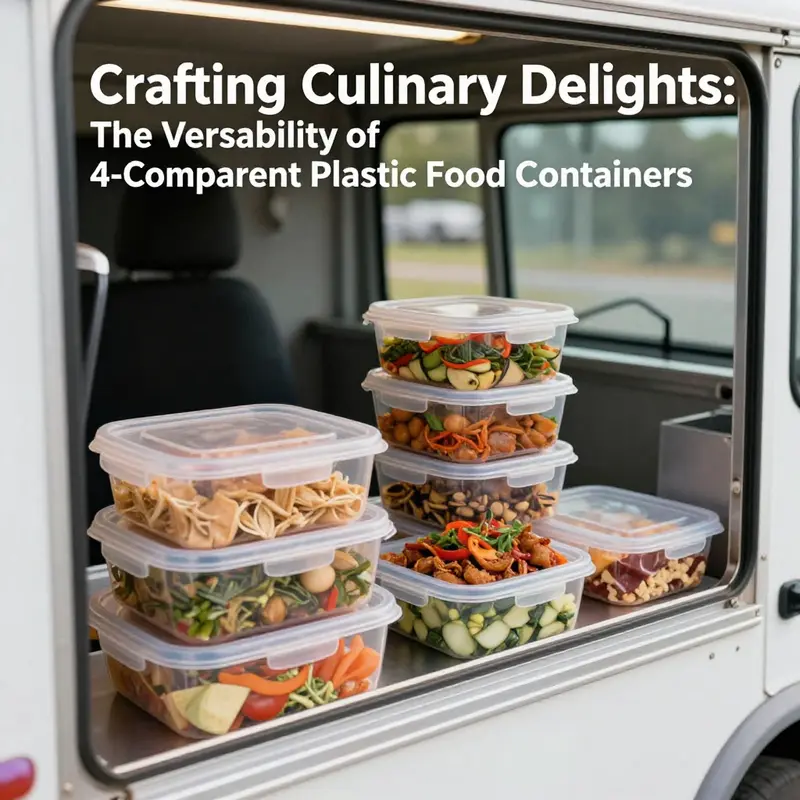
The four-compartment design is more than a practical feature; it is a decision-making framework for modern food service. In a landscape where speed, consistency, and hygiene steer choice, the quad compartment container offers a tangible promise: the ability to present a balanced plate in transit without cross-contact, while enabling precise portion control for kitchens that must scale up or down with demand. The containers’ success rests not only on their ability to separate items but on how that separation translates into reliability for operators and satisfaction for diners. When a main dish sits alongside a side, a sauce, and a dessert in clearly defined quadrants, there is less risk of flavors mingling in transit, less risk of runaway condensation, and less need for additional packing layers. This efficiency is especially prized in takeout and meal-kit contexts, where every ounce of space and every milliliter of integrity counts. The quadrant format reduces the need for secondary containers, streamlining routing through kitchens, couriers, and front-of-house teams, and it supports more predictable eating experiences for consumers who may reheat, mix, or portion at the table or desk. The result is a versatile packaging platform that touches planning, execution, and presentation in ways that matter across multiple channels.
Material choice sits at the heart of how well these containers perform under real-world conditions. The majority of four-compartment containers rely on food-grade polymers that balance safety, durability, and heat tolerance. In many markets, polypropylene (PP) remains the workhorse material because it offers a robust combination of chemical stability, impact resistance, and heat performance. PP-based designs frequently claim microwave compatibility, dishwasher safety, and a resistance to typical food acids and oils, which makes them well suited for reheating leftovers, storing hot meals, or serving items that travel well under varied temperatures. The micro-architecture of four compartments stays rigid under pressure, preserving the visual appeal of a well-portioned meal. Yet the sustainability conversation has intensified in recent years, and so the industry has seen a growing interest in alternatives that curb plastic pollution. Compostable options, often derived from polylactic acid (PLA) or other bio-based polymers, are appearing in markets where industrial composting infrastructure is accessible and consumer demand for greener choices is strongest. These materials offer compelling environmental benefits when managed correctly, but they also introduce trade-offs. PLA and similar bioplastics can be less tolerant of high-heat conditions and may have different performance envelopes in microwaves or under repeated wash cycles. For operators, that means a careful alignment of the product’s intended use with the material’s capabilities. The choice between a durable PP solution and an eco-friendly PLA option often hinges on context: whether the container is meant for hot meals that require reliable reheating, or for cold meals and cold storage, where compostable variants can shine without compromising durability.
Beyond raw materials, the geometry of the four-compartment format shapes user experience and supply-chain dynamics. Manufacturers emphasize leak resistance and lid integrity, because a secure seal preserves flavor separation and prevents cross-contamination during transport. Stackability is another critical attribute; compatible lids, interlocking rims, and uniform base profiles help fleets maximize space in cabinets, on delivery racks, and in consumer refrigerators. For foodservice operators, the ability to pre-portion and pre-pack meals in a single vessel accelerates service at busy times, reduces plate waste, and supports inventory control. In cafeterias and institutional kitchens, the quad container aligns neatly with standardized portion sizes, making batch planning more predictable and waste easier to track. In catering, the clean presentation afforded by the separate compartments enhances display quality on buffets or boxed meals, where visual appeal contributes to perceived value and guest satisfaction.
The market implications extend to sustainability strategies too. As more operators pursue environmentally responsible choices, there is increasing interest in recyclable or reusable formats that align with circular economy principles. Reusability can be attractive in institutional settings and some commercial kitchens where containers are collected, sanitized, and redeployed. Recyclability hinges on end-of-life collection systems that keep PP or PLA streams intact and free from contamination. In the eco-conscious segment, compostable options become viable when customers have access to industrial composting facilities, enabling a closed-loop-like lifecycle that reduces plastics pollution if managed properly. These dynamics are reflected in procurement conversations and sourcing strategies. Buyers weigh not only the upfront cost and performance but the entire lifecycle—production energy, transport efficiency, and end-of-life outcomes. The net effect is a broader packaging ecosystem where four-compartment containers coexist with a spectrum of material choices, each tailored to different operational realities and environmental goals.
From the standpoint of application, the four-compartment container demonstrates remarkable versatility. Takeout and meal-delivery sectors rely on fast, reliable multi-compartment configurations to support diverse menus and dietary needs within a single box. The ability to keep sauces separate from mains, or to present a balanced combination of protein, vegetable, grain, and dessert in one container, translates into consistent quality during last-mile delivery. In catering and event settings, these containers offer a clean, hygienic, and visually appealing way to portion meals for guests at buffets, short-service stations, or boxed lunches. For large-scale operations like school districts and corporate campuses, the quad design supports structured meal programs where portion sizes can be standardized without sacrificing variety. The compact form factor is particularly appealing for packed lunches, where space with friends, colleagues, and students matters. And when temperature control is important—hot soups, stews, or steamy entrees—material selection and lid engineering come to the fore to ensure safety and usability without excessive warming losses.
Innovation in materials and design continues to influence how these containers meet evolving expectations. In markets where food safety regulations are tightly observed, the preference for FDA-approved, food-grade plastics remains strong. Yet operators increasingly demand flexibility: containers that can withstand microwaves without warping, that can be washed and reused many times, and that can be recycled in local recycling streams. This convergence of safety, performance, and environmental responsibility shapes supplier conversations and drives design choices. It also prompts ongoing exploration of hybrid solutions—where a PP base is paired with a bio-based lid or where a PLA-graded body is engineered to maintain rigidity under real-world conditions. Each option carries its own set of advantages and constraints, and the right fit depends on how a business defines its service model, its temperature profile, and its end-of-life intentions. In practice, that means a careful alignment of demand forecasting with packaging specifications and a clear plan for handling waste, recyclability, or compostability after use.
Within this evolving landscape, procurement and branding considerations also come into play. Large-scale buyers seek predictable quality, consistent supply, and clear labeling that supports food-safety compliance. They look for containers that can be produced in bulk, with options for customization—whether that means branding on the lid, color-coding by meal type, or compatible outer packaging that reinforces a cohesive brand narrative during delivery. For retailers and food-service operators, the ability to source from suppliers who align with safety standards and environmental goals is essential. The emphasis is on an integrated solution: containers that perform reliably, align with the menu’s temperature and texture needs, and fit into a broader packaging ecosystem that can incorporate liners, wraps, and compatible containers for flatware and sauces. In short, the four-compartment container is not a stand-alone product; it is a node in a larger network of packaging decisions that shape how meals travel from kitchen to consumer.
To illustrate how this network operates in practice, consider a typical takeout workflow: a kitchen portioning a four-plate meal into one quad container, a lid snapped into place with a secure seal, and a courier network that delivers the box to a distant workplace or home. The convenience stems from the one-container-per-meal concept, which reduces handling steps and speeds up fulfillment while preserving the integrity of hot and cold components. In catering, the same principle supports elegant presentation at events, where clear separation helps servers present meals that stay tidy through service and transport, while still enabling quick reassembly on the plate at the dining location. And in institutional dining, the standardized, quad-partition approach simplifies meal planning, auditing, and meal-pairing strategies across dozens or hundreds of daily servings. This universality is what makes four-compartment plastic containers a foundational element of contemporary food packaging, one that continues to adapt as consumer expectations evolve and as environmental benchmarks become more ambitious.
For those seeking deeper standards and material-compliance guidance, a comprehensive resource on food-container material safety and regulatory alignment is available online. (Internal note: see referenced materials for sourcing and safety guidelines.) This topic remains central as markets expand into eco-friendly and reusable paradigms, where lifecycle thinking is increasingly a prerequisite for long-term viability. In practice, the decision to adopt a four-compartment container hinges on balancing performance with sustainability, while ensuring reliability in the hands of operators and consistency in the dining experience. For readers who want to explore ancillary packaging ecosystems, see this example of compatible kraft-paper packaging that often accompanies multi-compartment solutions in broader packaging programs: disposable-octagonal-box-restaurant-food-kraft-paper-packaging.
External standards and further reading can be found here: https://www.supplychain.com/food-container-material-compliance-guide
Split by Design: Four-Compartment Containers in a Busy World
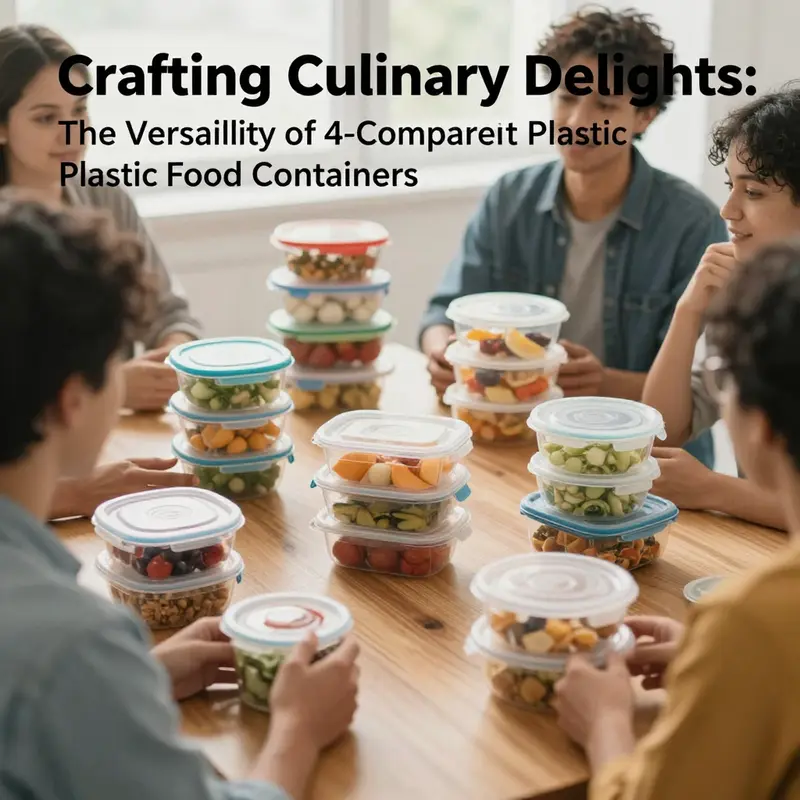
The four-compartment plastic food container sits at the intersection of everyday meals, convenience, and evolving expectations about packaging. It is more than a vessel for food; it reflects how households plan portions, manage variety, and care about ease of use in a world of busy schedules. The design—four distinct pockets with matching lids—embodies a practical approach to keeping foods separate, preserving textures, and supporting balanced eating without excessive waste.
As consumer habits shift, so too does the narrative around these containers. Environmental awareness, the appeal of convenience, and the rise of meal-prep culture all shape demand. The market now asks for materials that are food-safe and heat-tolerant, with clear disposal guidance and transparent life-cycle information. In practice, buyers still rely on four-compartment designs for daily meals, while increasingly seeking certifications and end-of-life options that align with their values. The result is a dual-track demand: reliability and affordability on one hand, and evolving sustainability expectations on the other.
From a materials perspective, polypropylene (PP) remains the workhorse for its safety and heat resistance. Bioplastics and post-consumer recycled content are gaining attention where facilities exist to process them, but heat tolerance and stability continue to drive material choices. In many settings, PP-based containers offer the best balance of cost, performance, and consumer acceptance, with greener options adopted selectively in regions with robust recycling or composting infrastructure.
Design details—leak-resistant lids, easy-to-grip rims, and stackable shapes—illustrate how form and function support everyday use. Branding, color-coding, and standardized geometries also help buyers and operators manage inventories across diverse vendors. These features reinforce the container’s core value: clear separation that simplifies meal planning and delivery while remaining practical and affordable.
For procurement and product development, the landscape emphasizes flexibility. Large buyers seek scalable solutions, compliance with safety standards, and options that work across traditional retail channels and emerging food-service models. The dual-track narrative pushes brands to communicate material choices, disposal pathways, and any certifications that reassure consumers. In this context, the four-compartment container becomes a canvas for responsible branding without compromising performance or price.
The reader’s journey through this topic highlights how user experience stays central. A well-designed container should feel sturdy in hand, protect perishable items during transport, and reheat with minimal quality loss. When packaging signals care—durable materials, reliable seals, and honest sustainability claims—consumers respond with trust and loyalty. The four-compartment format endures because it offers practical separation and portion control while continuing to adapt to evolving expectations around packaging stewardship.
Bracing for Change: Future Trends Shaping 4-Compartment Plastic Food Containers
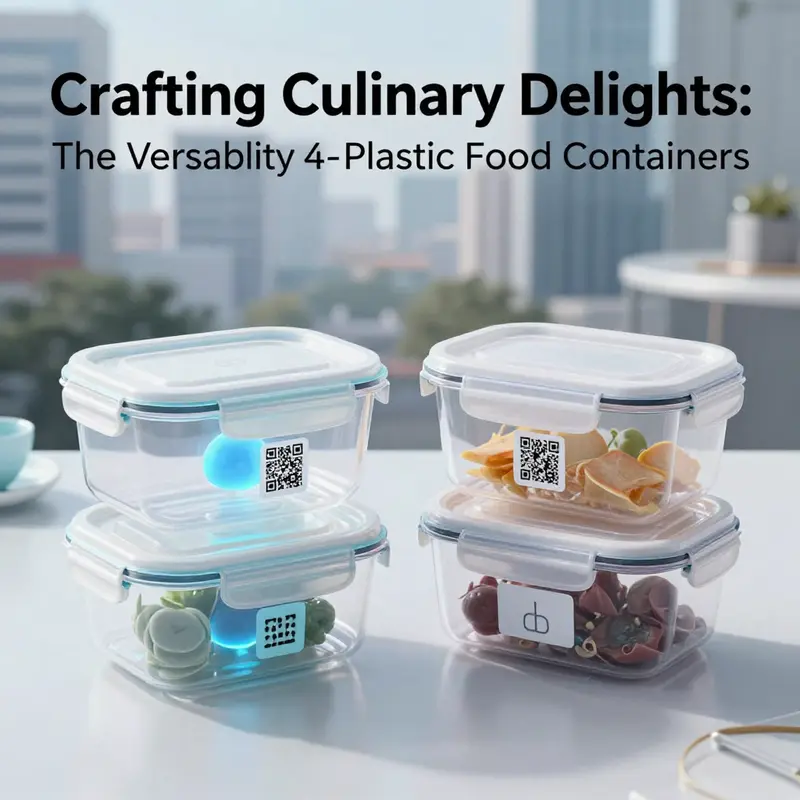
The evolution of four-compartment plastic food containers is being steered by a careful balancing act among performance, safety, and sustainability. As consumers increasingly prioritize environmental responsibility alongside convenience, manufacturers are called to preserve the core benefits of these modular trays—clear separation of foods, reliable portion control, and compatibility with busy service workflows—while expanding the pathways for responsible end-of-life management. Even with plastic remaining a dominant material category in the storage and transport of foods, the surrounding landscape is shifting toward smarter design, greener materials, and smarter production methods. The result is not a replacement of a single material or approach, but a coordinated portfolio strategy that keeps reliability high while broadening options for reuse, recycling, and composting. This chapter explores how these trends are converging to redefine what a four-compartment container can do in kitchens, cafeterias, catering operations, and even home meal-prep routines.
Biodegradable and compostable materials appear prominently on the horizon. Containers made from renewable resources such as cornstarch-based polymers promise a path to reducing waste when industrial or community composting is available. The appeal is clear: a material that can degrade more readily than conventional plastics under appropriate conditions, while still delivering the decisive barrier properties needed to separate sauces, grains, and vegetables. In practice, these materials often offer oil and water resistance that endures up to specific temperatures, and many are microwave-safe and refrigeratable, which broadens their functional appeal. Yet there are important caveats. Barrier performance can be sensitive to storage conditions, and some formulations require processing in facilities that can handle compostable polymers rather than traditional recycling streams. As a result, designers frequently pursue layered strategies that combine a durable base with compostable coatings or linings, preserving the tray’s integrity for wet or oily foods while aligning with circular economy goals. This is where the conversation shifts from simply substituting one polymer for another to reimagining how a container is used, collected, and processed after its life in a kitchen.
Industry 4.0 adoption is reshaping how these trays are manufactured and monitored. The rise of smart manufacturing—automation, real-time quality control, and data analytics—offers tangible gains in efficiency, consistency, and traceability. With digital tooling, producers can track raw material batches, monitor for deviations in thickness or barrier performance, and adjust production parameters proactively. The same digital mindset can support product development by modeling how a four-compartment design behaves across temperatures, storage times, or varying food types. The result is a more predictable supply chain and a clearer path to customization without sacrificing scale. When coupled with predictive maintenance and tighter process controls, Industry 4.0 can also lessen downtime and resource waste, a welcome improvement for facilities handling high volumes of meal-prep trays or catering boxes.
From a design standpoint, the emphasis remains on reliability and practicality. The four compartments must preserve flavor integrity and texture separation while resisting leaks and spills during transport. Lids need secure locking mechanisms, and the overall form should be easy to stack and store. Sustainability ambitions push designers to consider end-of-life pathways as part of the initial concept. Recyclability and potential reusability are weighed alongside the need for heat tolerance, abrasion resistance, and cleanability in typical commercial dishwashing or reuse cycles. It is not unusual to see experimentation with barrier coatings, recyclable derivatives, and coatings that can withstand microwaving without compromising the tray’s structural integrity. The challenge is to maintain a simple user experience even as the packaging becomes more sophisticated in its materials and its lifecycle footprint. In practice, this means achieving a harmonious integration of material science, ergonomic design, and manufacturing efficiency so that the tray remains a trusted workhorse of the dining ecosystem.
Consumer expectations reinforce the professional imperative to innovate. People want packaging that aligns with their values—transparency about material origin, clarity about end-of-life options, and confidence that the packaging will perform from first bite to final disposal. The push toward greener packaging choices is accelerating collaboration across the supply chain, including partnerships with suppliers offering greener packaging options. These collaborations are often practical rather than performative, focusing on compatible logistics, standardized dimensions, and shared commitments to safety and quality. This is where the industry handshakes with specific hopeful options: a move toward compostable and recyclable pathways that can be integrated into existing service models without compromising speed or portion control. To illustrate how businesses frame these choices in real terms, consider the potential to pair a four-compartment tray with an eco-friendly packaging lineage that emphasizes end-of-life recoverability. In this sense, sustainability is not a separate add-on but a core design criterion that informs every step, from raw material selection to the way a tray is disposed of after serving its purpose. For example, some producers explore packaging options that support broader circular economy goals, including partnerships that emphasize compostability where infrastructure exists and recyclable streams where it does not—an approach that minimizes waste while preserving the user experience. To learn more about related eco-friendly packaging pathways, see the resource linked here: eco-friendly recyclable pulp cup holder.
Regulatory and standards considerations continue to shape material choices and process flows. Food-contact safety remains non-negotiable, and as biodegradable and compostable options mature, there is growing attention to certifications, labeling, and the availability of appropriate end-of-life infrastructure. When compostable materials are used, the benefits hinge on access to industrial composting facilities that can process them efficiently; without such facilities, the environmental advantages may be diminished. Recyclable PP-based designs depend on clean separation and effective consumer participation in recycling programs. In many cases, the most pragmatic path is a hybrid one: retain the high-heat durability and mechanical reliability of traditional plastics for demanding applications, while expanding the use of high-performance, compostable alternatives in roles where the environmental impact is most pronounced and where the infrastructure supports such a transition. This pragmatic balance is already informing policy discussions and guiding procurement decisions in large-scale operations, schools, hospitals, and large-event catering where the same questions recur: How far can we push compostability without compromising safety or efficiency? How can we ensure that the packaging we deploy aligns with our broader sustainability goals and with the capabilities of local recycling or composting networks?
The economic and logistical realities of scaling these trends present both risk and opportunity. Material costs, processing requirements, and end-of-life management all influence the rate at which new designs are adopted. Yet the potential gains in waste reduction, improved product presentation, and strengthened brand loyalty—especially among environmentally conscious consumers—provide a compelling counterbalance. For institutions that order in bulk, the promise of standardized four-compartment trays with modular liners or coatings that tailor barrier properties to specific food types can unlock operational efficiencies while enabling consistent messaging about stewardship. In restaurants and catering operations, the ability to offer meal kits that maintain visual appeal and flavor separation under a range of temperatures supports broader menu innovation and customer satisfaction. This is not a simple upgrade path but a coordinated shift across materials, manufacturing, and procurement practices that recognizes the interconnected nature of modern packaging ecosystems.
Ultimately, the trajectory of four-compartment plastic food containers is not about a single leap but about a layered evolution. In the near term, expect continued reliance on proven plastics for tasks that demand rugged heat resistance and structural integrity, complemented by a growing set of compostable and bio-based options in roles where moisture management and presentation are paramount. Industry 4.0 will continue to drive improvements in efficiency, traceability, and customization, enabling companies to respond more nimbly to changing menus, dietary needs, and service formats. Barrier science will advance, coatings will become smarter, and recycling and composting networks will mature in tandem with product design. The packaging ecosystem is moving toward a circular mindset where recovery, reuse, and renewal are embedded in the product’s lifecycle, not treated as afterthoughts. In this integrated vision, four-compartment containers become a flexible platform for safe, convenient, and responsible meals that travel well, perform reliably, and reflect the values of a more sustainable food system. For further information on sustainable packaging innovations, see Cornstarch Disposable Eco Friendly 4 Compartment Food Container.
Final thoughts
As we navigate through the diverse applications and evolving trends surrounding 4-compartment plastic food containers, it’s clear they are more than just a packaging solution; they are a fundamental element of modern dining experiences. Their adaptability to different food service needs, combined with increasing consumer awareness of sustainability, positions them as a crucial asset for businesses aiming to impress customers while maintaining operational efficiency. Embracing both the practicality of conventional materials and the innovative potential of eco-friendly alternatives will likely define the next chapter in the journey of food packaging. As preferences evolve, staying ahead of the trends will empower businesses to remain relevant and competitive in this dynamic industry.