
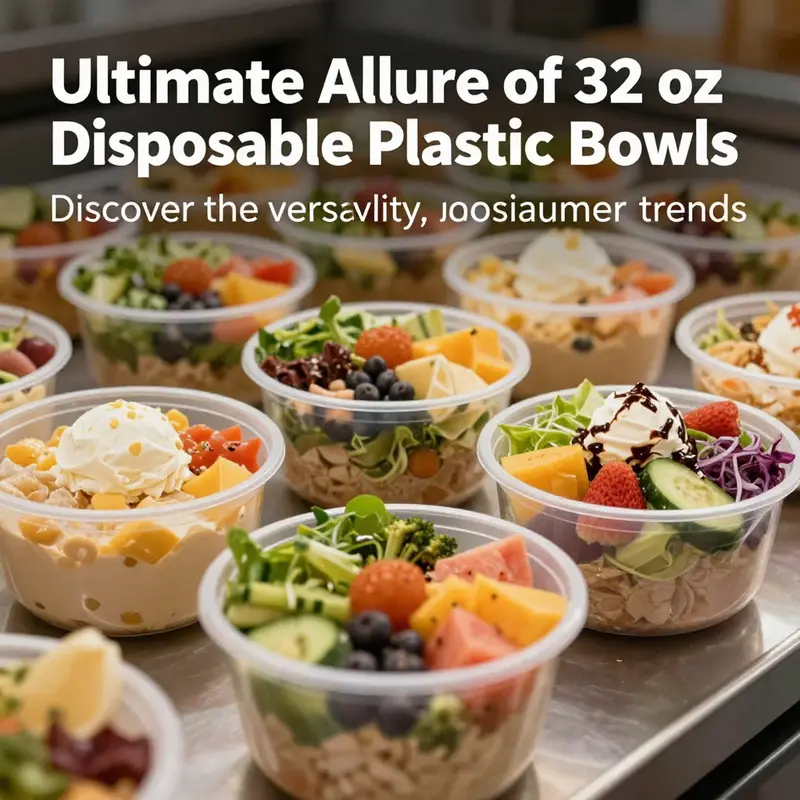
For businesses in the foodservice industry, the importance of choosing the right packaging cannot be overstated. 32 oz disposable plastic bowls have become a popular choice among Bubble Tea Shops, Restaurants, Food Trucks, Catering Services, and Event Planners. These bowls not only offer practical benefits like durability and leak resistance but also cater to evolving consumer expectations around sustainability and innovative design. This article explores the commercial applications of 32 oz disposable plastic bowls, the sustainability considerations that come with their use, and the emerging product designs that shape consumer preferences. Each chapter will build upon the last, offering a comprehensive view of how these bowls can enhance your service and align with modern expectations.
Serving at Scale: The Commercial Power of 32-Ounce Disposable Bowls in Modern Food Operations
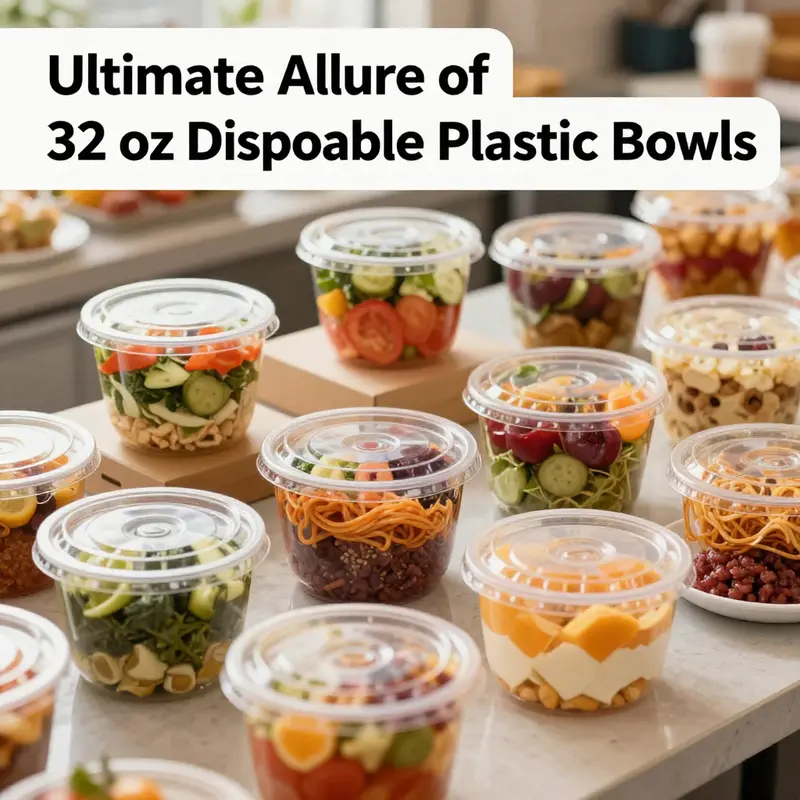
In the bustle of modern food operations, a single choice can ripple through the supply chain, shaping efficiency, safety, and the bottom line. The 32-ounce disposable plastic bowl sits at a strategic intersection of capacity, durability, and convenience. It is large enough to hold substantial portions—from hearty salads and grain bowls to generous soups and family-style sides—yet compact enough to fit into standardized service ware systems, delivery bags, and refrigerated spaces. This balance matters in high-volume environments where speed, accuracy, and consistency govern customer experience as surely as the taste of the dish itself. When operations scale from a handful of daily orders to hundreds or thousands, the logistics of packaging become a core competency rather than a mere afterthought. The 32-ounce format supports portion control by design, providing a clear, repeatable container size that staff can quickly assign to guests or kit components without guesswork. In kitchens where time is measured in minutes, not hours, such predictability translates into faster prep cycles, fewer miscounts, and smoother handoffs between stations, drivers, and delivery partners. The container’s size also dovetails with the demands of meal kit services, where precise portions matter as much as presentation. Each kit can be assembled with a consistent volumetric target, using bowls that retain their shape under load and resist deformation when stacked for transport. The result is a packaging system that minimizes waste, reduces the need for multiple containers per order, and supports a streamlined workflow that keeps throughput high while maintaining quality. Durable plastics—typically food-grade PP or PET—offer clarity and rigidity that help operators maximize visual appeal. Clarity matters in a category where presentation can differentiate a product on a crowded shelf or in a crowded bag. A crisp, transparent bowl allows the contents to speak for themselves, whether the bowl holds a jewel-toned acai mix, a vibrantly layered grain bowl, or a colorful medley of greens and toppings. The lid, often snap-on or ribbed for secure closure, is more than a seal; it is a critical transport partner. It guards against leaks and spills during transit, which not only protects food integrity but also reduces the risk of mess and sanitation issues that can erode customer trust. For operators, this is not merely a matter of convenience; it is a driver of reliability. A leak-proof lid means drivers can place orders in a crowded car or a hectic kitchen line without worrying about contents shifting or leaking en route. That reliability translates into higher customer satisfaction and fewer complaints, a factor that increasingly weighs in franchise decisions and multi-site expansion plans. In addition to utility, there is value in scalability. When a restaurant moves into catering, cafe-style service, or catering-for-a-billion-scale meal prep, the same containers can be used across multiple channels. A single design can serve dine-in, takeout, and delivery with minimal modification. This reduces the need to manage multiple SKUs, simplifies quality control, and lowers the risk of supply gaps during peak seasons. The 32-ounce bowl’s role as a packaging workhorse becomes even more pronounced when one considers its compatibility with the broader ecosystem of cold and hot foods. In many markets, polypropylene is chosen for its microwave tolerance, allowing for home reheating without sacrificing integrity. In turn, the same bowls can be used for hot bowls of soups or stews in a meal-prep setting, or for cool, refreshing bowls that rely on the high-clarity material to showcase layered ingredients. This versatility matters in a landscape where menu choices are fluid and a kitchen must adapt quickly to shifts in demand, dietary trends, or seasonal offerings. The design considerations extend beyond material choice to include stackability, nesting, and warehouse footprint. A stackable bowl reduces storage space, which is a tangible cost saver in warehouses, cold rooms, and delivery vans. Efficient nesting helps minimize handling time during packing, as staff slide one bowl into another with mechanical ease, reducing the risk of dropped containers and injury. In fleets that run across multiple markets, consistent packaging simplifies training, as staff members learn a uniform system for portioning, assembly, and transport. It also helps with quality assurance. When the same container is used across venues, calibrating fill levels, checking lid fit, and monitoring leak performance becomes a standardized process rather than a set of ad hoc checks. The presence of clear, food-grade plastics also speaks to regulatory considerations that matter to operators who source internationally. Certifications and safety standards are not optional niceties; they are prerequisites for serving a broad customer base, particularly in markets with stringent import requirements and consumer protection laws. The 32-ounce option commonly aligns with these expectations through established standards for food-contact materials, ensuring that the packaging does not impart unwanted flavors or contaminants while maintaining the product’s visual appeal. In markets where environmental regulation carries real weight, Extended Producer Responsibility (EPR) programs and related certifications guide operators toward responsible choices. The capacity to demonstrate compliance with these standards becomes part of a vendor’s value proposition, enabling procurement teams to source confidently across borders. Yet even as plastic bowls maintain broad adoption due to their practicality, the industry is increasingly attentive to sustainability, a factor that informs both day-to-day decisions and longer-range strategy. Companies grappling with consumer demand for lower-waste options are exploring a spectrum of alternatives, from compostable or recyclable paper bowls to more ambitious materials science solutions. Paper bowls, often made from renewable resources and lined with a leak-resistant coating, are marketed as eco-friendly options for those who want to reduce plastic use while preserving the convenience and performance that large-portions demand. The decision matrix grows more complex as buyers balance environmental goals with performance needs. A 32-ounce paper bowl may meet hot and cold handling requirements, but it can vary in terms of heat resistance, moisture management, and barrier properties. Suppliers respond with options such as coatings for leak resistance and prints for branding, while also addressing whether the product is compostable in municipal programs or industrial facilities. In this sense, the packaging landscape becomes a spectrum rather than a binary choice. The dominant 32-ounce plastic bowls remain popular for their ruggedness and transparency, but the market is increasingly accommodating a gradation of options that allow brands to position themselves as sustainability-minded without sacrificing user experience. From a procurement perspective, the economics of scale play a decisive role. The ability to order in bulk, negotiate branded printing, and verify compliance with international safety norms can tilt the decision in favor of one material over another. A supplier network that can deliver volumes that match the seasonal tempo of a business—holiday surges, back-to-school rushes, or promotional campaigns—reduces lead times and minimizes stockouts. This is where the broader packaging ecosystem becomes a strategic asset. When a buyer can coordinate bowls with customized branding across a suite of products, the packaging ceases to be a passive vessel and becomes a channel for storytelling. Prints and logos can transform a simple container into a mobile billboard, reinforcing brand consistency as it travels from kitchen to customer’s hands. The power of branding through packaging is tangible in a market where first impressions live on the plate and in the bag; a well-placed logo or color story can influence repeat purchases and foster brand recognition with a consistency that is hard to achieve through other channels. Even as the appetite for sustainability grows, the practical benefits of the 32-ounce format keep it central to many operators’ packaging strategies. The choice between plastic and paper often rests on a careful assessment of use case, environmental policy, and customer expectations. For some operations, the ideal approach might be to blend packaging solutions—utilizing the 32-ounce plastic bowl for high-demand or hot-service items and introducing paper or recycled-content alternatives for certain menus or promotions. This approach preserves reliability where it matters most while signaling a commitment to reducing environmental impact. The customer experience remains the anchor of any packaging decision. A transparent bowl reveals the dish’s colors and textures, inviting appetite and encouraging selection. A secure lid keeps sauces contained and ingredients intact, which is especially important for multi-item orders or deliveries where delays could compromise the dish. The tactile sensation of lifting a sturdy container can also matter, as a well-engineered lid and ridge design reduce slippage and spillage in transit. In a broader sense, the 32-ounce bowl is part of an integrated system that includes portion control, packaging ergonomics, and the logistics of movement from kitchen to consumer. It is not a standalone asset but a node in a network that includes cold chain management, delivery routing, inventory readiness, and consumer feedback loops. In markets where consumer preferences evolve rapidly, vendors that can adapt quickly—by offering alternative materials, expanding size ranges, or enabling branded customization—gain a distinct competitive edge. The 32-ounce format’s enduring relevance is a testament to its balance of function and adaptability. It supports large portions and keeps foods visually appealing, while its compatibility with a wide range of uses makes it a reliable backbone for operations that must scale with demand. Meanwhile, the industry’s attention to sustainability does not simply complicate decisions; it provides a framework for continuous improvement. Buyers who embrace this framework can influence suppliers toward better coatings, improved recyclability, and clearer guidance on end-of-life disposal. They can also explore mixed-material strategies that optimize barrier properties and heat resistance while reducing plastic waste where feasible. For example, some operators are beginning to experiment with paper-based options that preserve hot-holding capabilities and offer prints that reinforce brand messaging. In evaluating these paths, it helps to consider the entire lifecycle of the product—from raw material sourcing and manufacturing to transport, use, and disposal. A lifecycle approach clarifies where the greatest environmental gains can be realized and where trade-offs are acceptable to meet a business’s core needs. As this chapter threads through the realities of kitchen operations and the economics of scale, a single fact remains clear: 32-ounce disposable plastic bowls serve as a reliable, high-capacity vessel that unlocks efficiency without surrendering presentation or safety. Their success in food service, meal kit operations, catering, and retail ready-meals reflects a mature market that recognizes value in durable, visible packaging as a practical asset. At the same time, the breadth of available materials and finishes—ranging from crystal-clear PP or PET to more sustainable paper-based formats—signals a packaging ecosystem that is responsive to consumer expectations and regulatory realities. In this evolving landscape, the key for operators is to align packaging choices with operational goals, customer experience, and environmental commitments. By selecting containers that deliver consistent portion sizes, secure lids, and dependable performance across hot and cold scenarios, businesses can build a packaging narrative that supports throughput and profitability while maintaining trust with diners who expect quality from the first glance to the last bite. For readers exploring adjacent packaging choices, the broader ecosystem offers pathways to incorporate eco-friendly options without sacrificing the reliability that 32-ounce plastic bowls provide. If the goal is to offer a comprehensive, scalable solution, the path often lies in a thoughtful blend: leveraging the advantages of plastic where performance is non-negotiable, while progressively integrating paper or recycled-content options where sustainability can be meaningfully advanced. Such a strategy keeps serving at scale both practical and principled, a combination that today’s food operations increasingly require as they navigate a marketplace that values speed, safety, and stewardship in equal measure. As these dynamics unfold, buyers can lean on a network of suppliers who can deliver with consistency, support customization, and meet evolving standards—while customers enjoy meals that arrive with the same care and integrity as when they left the kitchen. For those curious about how packaging choices can intersect with branding and sustainability in a real-world setting, one example of the packaging family evolving toward eco-friendly options is the disposable kraft paper bowl with PET lid, which demonstrates how a brand can maintain performance while signaling environmental awareness. disposable kraft paper bowl with PET lid. This reference points to a broader design trend that embraces both function and responsibility, inviting buyers to weigh their options across materials, coatings, and end-of-life pathways. External resources offer additional perspectives on food-contact safety and regulatory expectations that inform these decisions, helping teams balance appetite for innovation with the need to protect public health. External resource: https://www.fda.gov/food-packaging
Rethinking the 32-Ounce Moment: Sustainability, Design, and the Future of Large-Volume Disposable Bowls
The 32-ounce disposable plastic bowl has long stood as a quiet workhorse of the foodservice world. It is the container that may be overlooked when a menu shines or a dish steals the show, yet it carries the practical weight of portion control, transport safety, and sanitation. Its ubiquitous presence in grocery delis, meal-kit shipments, catering queues, and takeout speaks to a broader pattern: a consumer economy built on convenience, where a single packaging choice can shape not just a single meal but an entire supply chain’s footprint. When we look at these bowls through a sustainability lens, we are compelled to ask not merely how they perform in the kitchen, but where they end up after the last bite is eaten, and how the system around them—the producers, the processors, the waste managers, and the customers—collectively shapes that ending.
At the heart of the sustainability conversation is a simple truth: most traditional 32-ounce bowls are crafted from petroleum-based plastics that persist in the environment for centuries. They are designed for a single-use moment, yet their life after that moment can stretch into a long, indeterminate timeline. This persistence is not just an abstract risk; it translates into polluted waterways, harmed wildlife, and congested landfills. Microplastics released from degraded fragments can travel far from their origin, infiltrating soils and oceans and entering food chains in ways that are not easily traced or remedied. The broader consequence is a collective responsibility; the bowls we purchase, manufacture, and discard are part of a complex system where materials, energy, and waste intersect with public health and ecological stability. It is a reminder that convenience must be balanced with accountability, and that progress in one area cannot ignore consequences in another.
In recent years, a meaningful shift has begun to take shape within the industry. Rather than relying exclusively on fossil-fueled, single-use plastics, producers and buyers are increasingly exploring alternatives that align with circular economy principles. The most discussed paths involve compostable and biodegradable materials. These options are not a panacea, but they offer a different fate for the bowl after it is used. Among the most prominent pathways is the adoption of plant-based polymers such as polylactic acid, commonly referred to as PLA. PLA is derived from renewable resources—most often plant starches—and, when processed under proper conditions in industrial facilities, can break down into organic matter. The appeal is straightforward: a reduction in fossil carbon, a potential decrease in long-term plastic accumulation, and a narrative that frames packaging as temporary, rather than enduring. However, the reality is nuanced: PLA bowls and similar biobased products require access to appropriate composting infrastructure. In many jurisdictions, municipal and household composting programs lack the capacity or the certification standards to process PLA material efficiently. Industrial composting facilities, equipped with the necessary high temperatures and controlled environments, are the places where these materials can legally and reliably reach their end of life. Without that infrastructure, PLA bowls can behave much like conventional plastics: they persist, they accumulate, and the environmental advantage diminishes.
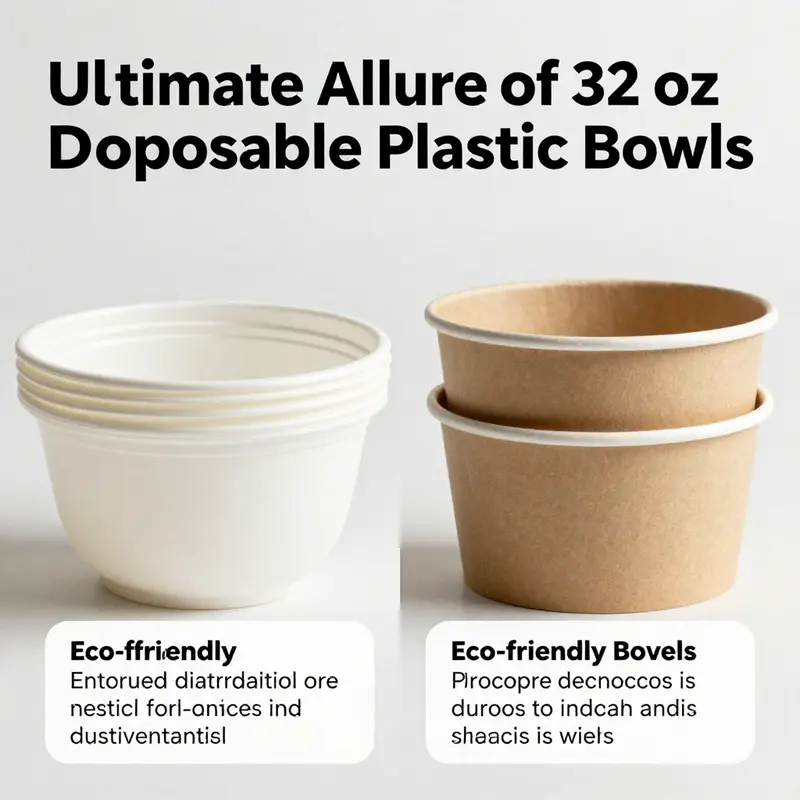
Another forward-looking material that has gained momentum in this space lies at the intersection of agricultural byproducts and resource efficiency: bagasse, the fibrous pulp leftover from sugarcane processing. Sugarcane bagasse is celebrated for being tree-free and naturally strong, offering a compostable alternative that meaningfully reduces reliance on petroleum-based resins. The appeal of these options extends beyond the material itself; bagasse-based bowls are often designed to be fully biodegradable and compostable, returning to the environment as organic matter when processed properly. Brands pursuing bagasse-forward designs emphasize not only compostability but also the reduction of waste associated with byproducts from other industries. In practice, these products can deliver sturdy performance for hot and cold applications, can be molded into a variety of shapes, and provide an aesthetically natural appearance that appeals to environmentally conscious consumers. That appearance matters because it communicates intent and responsibility to customers, a factor that can influence dining behavior and waste disposal choices. Yet, as with PLA, the end-of-life equation hinges on infrastructure: industrial composting facilities, standardized certifications, and local regulations that define what can be accepted and processed.
The certifications that accompany compostable materials are not mere marketing badges; they are critical signposts that help buyers navigate a complex landscape of claims. A common yardstick is certification by recognized standards bodies that validate compostability under defined conditions. In many contexts, industrial compostability claims hold only when material is processed in a facility that operates at elevated temperatures and with controlled humidity, depth, and residence times. In practice, this means that a PLA or bagasse-based 32-ounce bowl may be labeled as compostable, yet its real-world impact depends on whether the local waste stream supports industrial composting and whether the facility can process such materials efficiently and consistently. This nuance can be challenging for operators who must reconcile kitchen realities—volume, food types, heat integrity, stackability, lid compatibility—with environmental aspirations. This nuance can be challenging for operators who must reconcile kitchen realities—volume, food types, heat, stackability, and lid compatibility—with environmental aspirations.
The considerations extend to performance and practicality, where tradeoffs become visible in everyday use. Traditional plastic bowls offer clear visibility for meals and ingredients, a reliable leak resistance, and a lightweight profile that lowers shipping energy and carton volume. These are not trivial advantages in a world that faces rising costs and fluctuating supply chains. Yet, when the lifecycle is weighed holistically, the environmental benefits of a purely plastic solution can erode if the disposal pathway is weak or if end-of-life processes generate disproportionate emissions. Biobased or bagasse-based options strive to deliver comparable performance—maintaining heat resistance, structural integrity, and lid compatibility—while aligning with an ethos of waste reduction. But not all compostable alternatives deliver the same durability in every condition. Some biobased products may become less rigid at cooler temperatures, while certain moldings designed for high-hot-hold applications might demand different processing parameters during manufacturing. For a foodservice operator, the decision hinges on context: the type of food being served, expected consumption patterns, event duration, weather conditions, and the capacity of the waste stream to manage compostable materials.
The decision matrix grows even more intricate when we consider economic realities. The unit cost of compostable or biobased bowls is typically higher than conventional plastic options, a differential that can be magnified by large order volumes. Yet, the cost calculus cannot be reduced to sticker price alone. When a business invests in packaging that aligns with environmental goals, it can unlock ancillary benefits: stronger alignment with brand values, improved relations with customers who prioritize sustainability, and the potential for regulatory advantages in markets that increasingly favor circular solutions. The financial decision, then, becomes a blend of upfront price, tail-end value, and regulatory risk. It also invites a broader conversation about design for waste. If a bowl is intended to be composted, then its entire design—material composition, color, ink, adhesives, and even the lid—must be chosen with compostability in mind. Cleaner compostability means fewer contaminants in the stream and higher processing efficiency, which translates into tangible benefits for composting facilities and, ultimately, for the environment.
From a systems perspective, the sustainability of 32-ounce bowls cannot be separated from how they are used and disposed of. The consumer’s behavior matters as much as the raw material choice. Clear labeling, public education about what can go into composting streams, and accessible collection points all influence outcomes. Even the best compostable bowl can underperform if it is placed in a standard landfill or placed into recycling streams that cannot accommodate it. That is why many suppliers and retailers emphasize end-to-end thinking: material selection, manufacturing efficiency, supply-chain transparency, reliable labeling, and robust partnerships with waste-management entities. Each piece of the chain must be aligned to realize meaningful environmental benefits. In practical terms this means that a food-service operation should evaluate not only the bowl’s material but also its whole packaging ecosystem: the compatibility of lids, the ease of stacking within transport crates, the strength to withstand hot liquids, and the ability to perform well in the climate and handling conditions of the serving environment.
Against this backdrop, some operators are embracing a mixed strategy rather than a single all-or-nothing solution. They preserve the utility of conventional plastics where shelf life, heat resistance, and cost are decisive, while introducing compostable alternatives for select lines, events, or campaigns that brand themselves as eco-conscious. In other words, sustainability becomes a differentiating choice rather than a blanket substitute. It is a practical approach that respects the realities of today’s diverse foodservice ecosystem while signaling a commitment to a more responsible future. For buyers who seek to balance these dimensions, the decision becomes one of choosing material families that can credibly compete on both performance and environmental outcomes, depending on the event and waste-management context. In this sense, the discussion around 32-ounce bowls intersects with broader norms around service design. The aesthetic of the container—the clarity of the material, the shape that channels the flow of contents, the ease of sealing a lid—contributes to how customers engage with food and waste. A package that signals care about the environment can reinforce responsible dining behaviors, but only if supported by a system that makes disposal straightforward. The challenge is to maintain affordability and reliability while transitioning to more sustainable options. The path forward will likely involve a mix of material innovation, smarter packaging designs, stronger waste-management partnerships, and continued consumer education that makes sustainable choices intuitive rather than burdensome. The future will likely be defined by a hybrid approach that respects culinary and logistical needs while actively reducing environmental harm wherever feasible.
The discussion around 32-ounce bowls also intersects with broader norms around service design. The aesthetic of the container, the clarity of the material, and the shape that channels the flow of contents all influence how customers engage with food and waste. The discussion around 32-ounce bowls also intersects with broader norms around service design. The aesthetic of a bowl—the clarity of the material, the shape that channels the flow of contents, the ease with which a lid can be sealed—contributes to how customers engage with food and waste. A container that communicates care about the environment can reinforce responsible dining behaviors, but only if it is supported by a system that makes proper disposal straightforward. The potential gains are not purely environmental. When customers perceive a packaging choice as aligned with their values, trust increases; this can translate into repeat business, positive word-of-mouth, and a stronger brand narrative. The challenge, of course, is maintaining affordability and reliability while transitioning to more sustainable options. That is where ongoing innovation—whether in resin chemistry, process efficiency, or supplier collaboration—plays a pivotal role. Each incremental improvement in the supply chain can reduce energy use, lower emissions, or improve compostability, creating a ripple effect that extends far beyond a single product category.
Ultimately, the decision about 32-ounce bowls is a question of context, not a creed. In markets with robust industrial composting infrastructure, compostable biobased bowls can offer a compelling environmental advantage, especially for events or institutions that prioritize sustainability in their procurement policies. In settings where composting infrastructure is limited, a life-cycle assessment may still favor carefully chosen plastic options that optimize transport efficiency and recycling or energy recovery. And even within compostable strategies, there is a spectrum: some products may be fully compostable in industrial facilities, while others may be designed to be biodegradable within specific timeframes or to degrade under certain environmental conditions. The key is transparency, certification, and honest dialogue about what happens after the consumer discards the container. Without clear pathways, even the greenest claim can falter in practice.
Shopping for 32-ounce bowls, therefore, becomes an act of systems thinking as much as a purchase decision. Buyers must evaluate not just the bowl in isolation but the entire packaging ecosystem—how it supports food safety, how it integrates with preparation and service workflows, how it travels through distribution, and how it ultimately disappears from sight without accumulating harm. It is also essential to acknowledge the broader market landscape that still includes conventional plastic options at scale. The choice to pursue sustainable alternatives is not about mandating a single solution for every application but about expanding the palette of responsible choices so that the 32-ounce moment can be enjoyed with confidence and accountability. As the industry continues to evolve, the balance between convenience, cost, and environmental integrity will remain at the center of decision making. The path forward will likely involve a combination of better material innovation, smarter packaging designs, stronger waste-management partnerships, and continued consumer education that makes sustainable choices intuitive rather than burdensome. For a broader view of market options and supplier setups, see the detailed listings that provide bulk, compliant opportunities for 32-ounce disposables, and consider how such options compare to the biobased alternatives described above. External resource: https://www.alibaba.com/product-detail/Wholesale-32oz-Disposable-Heat-Resistant-Durable_1600597847407.html.
Beyond the Rim: The Design Intelligence and Evolving Demand of 32 oz Disposable Bowls
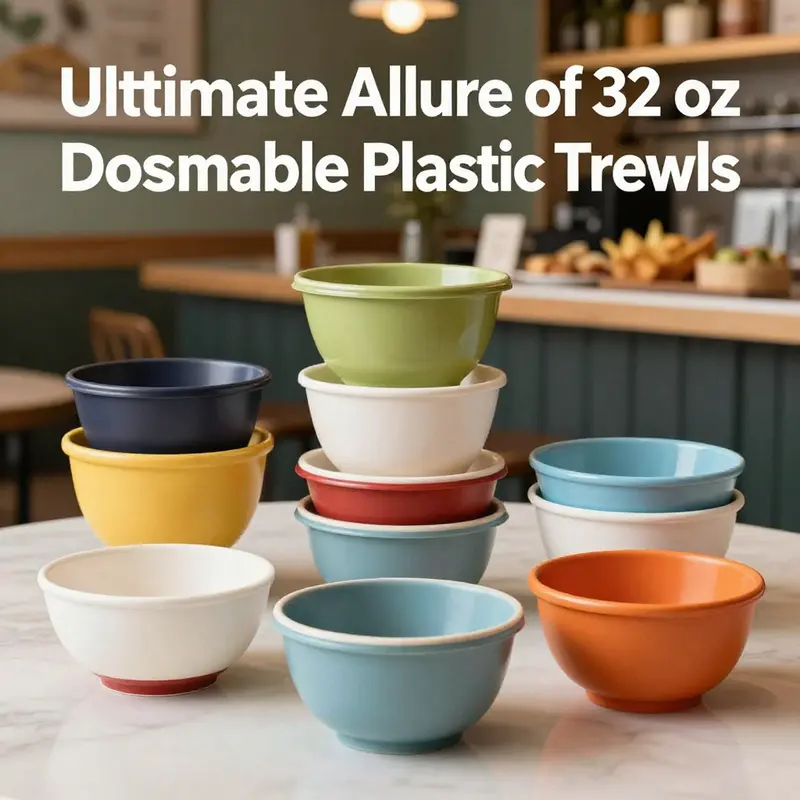
The modern foodservice ecosystem has long relied on 32 oz disposable plastic bowls as workhorse containers. They sit at the intersection of utility and velocity, expanding the repertoire of what a single portion can be, from the leafy expanses of large salads and acai bowls to hearty soups and noodle bowls that travel from kitchen to car, to office desk, to event table. The 32 oz size is more than a numeric claim; it is a promise of portion control and service flexibility. It enables a menu to scale without sacrificing the immediacy of a consumer experience. Yet this promise is not static. It is being recalibrated by designers, manufacturers, and buyers who demand performance without compromising environmental responsibility. The resulting product narrative reads less like a single object and more like a set of evolving choices about material, form, sealing, branding, and end-of-life pathways that together shape a new standard for takeaway packaging.
At the heart of this evolution is a relentless emphasis on functional integrity. The leak-proof, snap-on lid is no longer a mere accessory; it is a core feature that defines a bowl’s suitability for transport, reheating, and wide-ranging content. In a market where meals move through multiple handlers—kitchens, couriers, retail counters, and consumer hands—the lid must perform consistently: a snug fit around varied rim geometries, a reliable seal under the thermal load of hot foods, and the robustness to endure the jolts of a commute without compromising freshness. The design language of these lids often centers on a simple yet resilient geometry—clear lines that align with the bowl’s rim, a discreet gasket or indentation to deter leaks, and a hinge or snap mechanism designed for repetitive use in a high-turnover environment. The practical outcome is a packaging system that reduces spillage, preserves texture, and keeps sauces from migrating into the lid, all while remaining intuitive for both staff and customers. In effect, the lid becomes a crucial variable in a bowl’s overall user experience, a subtle but decisive factor in repeat purchases and brand trust.
The user experience extends beyond containment. A second axis of design choice is the surface itself—the way the material communicates content and brand at a glance. The 32 oz bucket has traditionally leaned on the clarity of clear PP or PET, materials prized for their light weight, durability, and transparent properties that showcase ingredients from bright greens to vibrant smoothies. This transparency is not merely aesthetic; it is a strategic attribute that helps customers visually assess portions, freshness, and arrangement. It also influences how retailers stage merchandising in display cases and how meal-kit providers present assembled meals for the consumer at the moment of opening. Yet the demand for sustainability has begun to tilt material choices toward blends that reduce environmental impact without sacrificing usability. While glossy, crystal-clear plastics remain prevalent for their form-keeping strength, there is a growing appetite for papers and bio-based or recycled-content composites that can ride the same wave of clarity or, in some cases, blend with the container’s exterior graphics to tell a sustainability story without diminishing practicality.
In practice, material selection is never a pure trade-off between strength and sustainability. Clear plastics such as PP and PET still dominate for their predictable performance with hot and cold contents, high clarity, and excellent barrier properties. PP, in particular, offers resilience under heat, allowing many bowls to handle warm foods without warping, while PET provides superior rigidity and a crisp visual that makes food appear more appetizing. The ability to microwave or reheat, when specified, further expands the functional envelope, enabling a single container to support the full cycle from prep to consumption. However, a parallel stream in the market is pushing toward compostable or compost-compatible options. Bagasse-based bowls, and biodegradable kraft paper containers reinforced with PET/PE coatings, are increasingly marketed as eco-friendly alternatives. In many cases, these materials are certified to recognized standards such as ASTM D6400, EU OK Compost, FSC, and RoHS. These certifications reassure buyers that the packaging is not only safe for food contact but also aligned with broader environmental and social governance goals. The practical implication is that a bowl isn’t graded on one attribute alone; it earns value through a composite score across safety, performance, and environmental impact.
The 32 oz capacity is especially well-suited to a spectrum of use cases that highlight the versatility of this container family. In commercial kitchens and meal-kit operations, a single bowl can anchor a meal’s throughput, from quinoa bowls and salads to hot soups and ramen. The dimension is large enough to accommodate generous portions while compact enough for efficient storage and stacking. It also supports merchandising strategies that rely on portion control and visual appeal. The option to print branding on the surface—through CMYK or offset printing on plastic and compatible coatings on paper-based variants—turns these bowls into mobile billboards. Print-ready surfaces transform ordinary food packaging into a branded experience, letting operators place logos, taglines, or seasonal artwork directly onto the container. In a highly competitive landscape—where food trucks, meal-prep services, and catering businesses vie for attention—this level of customization becomes a differentiator that is often coupled with practical cost considerations. A well-executed print design on a 32 oz bowl can capture the eye in a crowded display, communicate the meal’s identity at a glance, and reinforce brand recall with every lift of the lid.
Brand customization is not a cosmetic flourish; it is an operational tool. The ability to place logos or messaging on the surface opens opportunities for cross-promotion, co-branding, and limited-edition packaging that aligns with marketing campaigns and seasonal menus. Designers increasingly exploit printable surfaces for robust graphics, including bold color blocks, high-contrast typography, and playful motifs that engage customers—without compromising the integrity of the container. Even details such as lid color, the geometry of the snap-on mechanism, and the tactile feel of the rim contribute to a complete sensory package. Brand identity becomes part of the consumer’s memory of the meal, which in turn strengthens loyalty and drives repeat orders across channels—from dine-in substitutes and takeout to subscription meal plans.
The sustainability conversation around 32 oz bowls is layered and pragmatic. On the supply side, material innovations are expanding the set of options that meet safety and performance standards while reducing environmental impact. Compostable and biodegradable options, including bagasse and coated paper variants, are increasingly certified for industrial composting and other end-of-life pathways. These materials are designed to break down under appropriate conditions, with the understanding that home composting remains a gray area for many consumers. Certifications such as ASTM D6400 provide assurance that the materials can decompose in commercial composting facilities within a reasonable timeframe. EU OK Compost certifications reflect alignment with European market expectations for compostability. FSC certification supports the responsible management of forest resources when wood-based papers are involved. RoHS compliance speaks to the absence of hazardous substances, underpinning food safety and consumer protection. For buyers, these standards offer a framework for evaluating suppliers and facilities, reducing risk and enhancing alignment with regulatory and corporate sustainability goals.
The market’s shift toward sustainable alternatives has not displaced traditional plastics overnight. Rather, it has introduced a spectrum of choices that allow buyers to tailor packaging to specific use scenarios and sustainability commitments. For example, a food-kit provider focused on minimizing plastic waste might opt for biodegradable or compostable paper-based bowls with a sealed lid that still delivers a leak-proof experience. In contrast, a high-volume takeout operation with a heavy reliance on transport stability and visual appeal might prioritize clear PP or PET bowls with durable lids and a strong, vibrant print that communicates product identity while maintaining a clear view of contents. The decision matrix becomes a function of content type, temperature profile, transit duration, consumer expectations, and end-of-life logistics. In this sense, the 32 oz bowl is a platform—a container that can be tuned to particular sustainability narratives depending on the business model and geographic market.
From a logistical perspective, the supply chain for these bowls is intricate and often regional. In practice, manufacturers leverage clustered production hubs in regions with established plastics processing ecosystems, logistics networks, and access to raw materials. The emergence of efficient, high-volume production in several global corridors enables suppliers to offer bulk pricing, swappable lid designs, and customizable print runs that support both national programs and localized campaigns. The bulk purchasing trend—whether in 50- to 100-pack formats or even larger runs—has become a standard expectation for many operators, easing inventory management and reducing per-unit costs. The economics of scale benefits suppliers and buyers alike, providing a lever to invest in branding and sustainability without imposing prohibitive price increases on end users.
An important design consideration that threads through all these choices is microwave safety. In many consumer routines, reheating becomes a practical necessity. Some kraft paper or coated-paper variants claim microwave compatibility for short reheating periods, which broadens their usability while enabling a more sustainable lifecycle, provided the materials can withstand the heat without degrading or leaching additives. This is where food-contact safety standards and the choice of inks, coatings, and adhesives become crucial. The packaging must resist not only moisture and oil but also the potential thermal stress that accompanies reheating. For brands, this means collaborating with suppliers who can validate the entire chain—from resin selection and molding processes to printing inks and sealing adhesives—to confirm that every component remains food-safe under the intended use cycle.
Alongside the practical and regulatory dimensions, the aesthetic and experiential dimension of 32 oz bowls continues to mature. The rise of design-forward packaging is a response to how consumers perceive convenience in a crowded market. A bold, legible logo, a color story aligned with a campaign, or even a subtle texture that invites touch can elevate a disposable container from a functional artifact to a marketing instrument. In many cases, this is paired with storytelling—branding elements that communicate ingredients, sourcing narratives, or seasonal themes. The interplay between graphics and material choice makes the bowl more than a single-use item; it becomes a small platform for expression, a way for a business to convey its values in a tangible, portable way.
One practical takeaway from these trends is the never-ending balancing act between performance, cost, and sustainability. The 32 oz bowl is unusually versatile precisely because it can be adapted to different strategic intents. For a brand emphasizing premium, crave-worthy contents, a clear plastic bowl with a high-gloss finish and a precise, durable lid can communicate quality at first glance. For a sustainability-forward program, a compostable or recycled-content option paired with an equally robust lid and a carefully designed barrier can deliver a credible environmental narrative without compromising transport safety. The optimal choice is rarely a single material or design feature; it is a coherent packaging system that can scale, align with regulatory expectations, and resonate with consumer values across markets.
In this ongoing evolution, the production and design ecosystems are becoming increasingly integrated. Designers work closely with material scientists and process engineers to ensure that the chosen solution meets the dual demands of performance and responsibility. The message to buyers is clear: when you select a 32 oz bowl, you are not choosing a container alone. You are choosing a platform on which food safety, brand identity, sustainability storytelling, and customer experience converge. The best options in this space are those that reveal their value not only in the strength of their snap-on lids and their capacity to hold a generous portion but also in their readiness to adapt to future materials, coatings, and recycling or composting streams. In that sense, the current design and consumer trends of 32 oz disposable bowls epitomize a broader shift in packaging—a shift toward products that can be boldly branded, responsibly produced, and practically used across the full spectrum of foodservice operations.
For a practical glimpse into how these trends translate into real-world product options, one can look at the growing availability of kraft-paper-based bowls that combine a sustainable surface with a robust inner lining. These designs demonstrate how a seemingly simple container can embody a complex set of priorities, including moisture resistance, heat tolerance, and compatibility with branding strategies that reach audiences in stores, at events, and through online meal kits. The value proposition for operators is clear: a single container that can perform across multiple channels, while presenting a consistent brand story and aligning with evolving consumer expectations about waste and resource stewardship. This convergence of design, material science, and consumer insight is what is driving the latest wave of 32 oz bowls—from the shelves of bulk suppliers and marketplace-standard lines to the bespoke runs crafted for high-visibility campaigns. As markets continue to merge convenience with sustainability, these bowls may well become the standard bearer for how food packaging communicates care—for the consumer, for the planet, and for the brand at every step of the journey.
To explore a sustainable paper-based option that complements the plastic family while offering strong branding potential, consider the following: kraft paper bowl options. This example illustrates how a paper-based alternative can be developed to meet aesthetic and functional expectations, with features such as water resistance, printed surfaces, and compatibility with lids designed for leak resistance. While the plastic bowl remains indispensable in many high-volume operations, the paper option demonstrates the market’s willingness to diversify packaging portfolios in ways that support waste reduction and consumer choice. Such expansion is not merely a nod to environmental concerns; it is a strategic move to broaden supplier capabilities and unlock new revenue streams through customization and responsible marketing.
Ultimately, the 32 oz disposable bowl represents a design and market equilibrium that continues to evolve. It is defined not simply by its dimensions but by its capacity to deliver reliability, to convey a brand’s story, and to align with the expectations of increasingly environmentally aware consumers. The bowls that succeed in this ecosystem are those whose form and function are harmonized with the realities of modern logistics, regulatory compliance, and the subtleties of taste, temperature, and texture that define a great eating experience. As manufacturers advance through new materials, coatings, and printing technologies, the next generation of 32 oz bowls will likely offer even more nuanced options for end-of-life solutions, while preserving the core attributes that have made them a mainstay in foodservice and home kitchens alike.
External resource: https://www.astm.org/Standards/D6400.htm
Final thoughts
In conclusion, 32 oz disposable plastic bowls serve as a vital packaging solution for the foodservice industry, balancing practicality with the expectations of modern consumers. Their versatility extends from being functional containers for meals to embodying a commitment to sustainability when eco-friendly options are chosen. Moreover, innovative designs continue to capture the interests of consumers, reflecting their evolving tastes. As businesses strive to enhance their offerings, adopting the right packaging like 32 oz disposable plastic bowls can significantly impact customer satisfaction and environmental responsibility.