
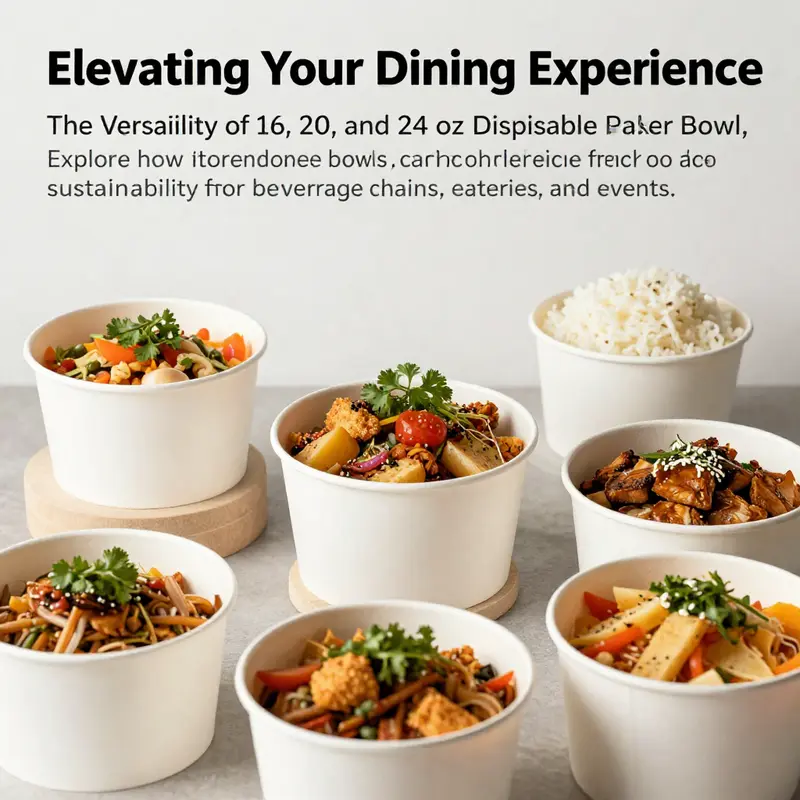
Disposable paper bowls in various sizes serve as essential components in food service, appealing to diverse sectors from bubble tea shops to catering services. The functionality and aesthetic of these bowls can significantly enhance customer experience and operational efficiency. This article delves into the distinct attributes of 16 oz, 20 oz, and 24 oz disposable paper bowls, illuminating their roles in different culinary contexts. Each chapter provides insights into their applications, market trends, and customization options, fostering a comprehensive understanding of how these bowls can align with your business objectives while embracing eco-friendly solutions.
Performance in a Standard-Size World: The 16 oz, 20 oz, and 24 oz Disposable Paper Bowls
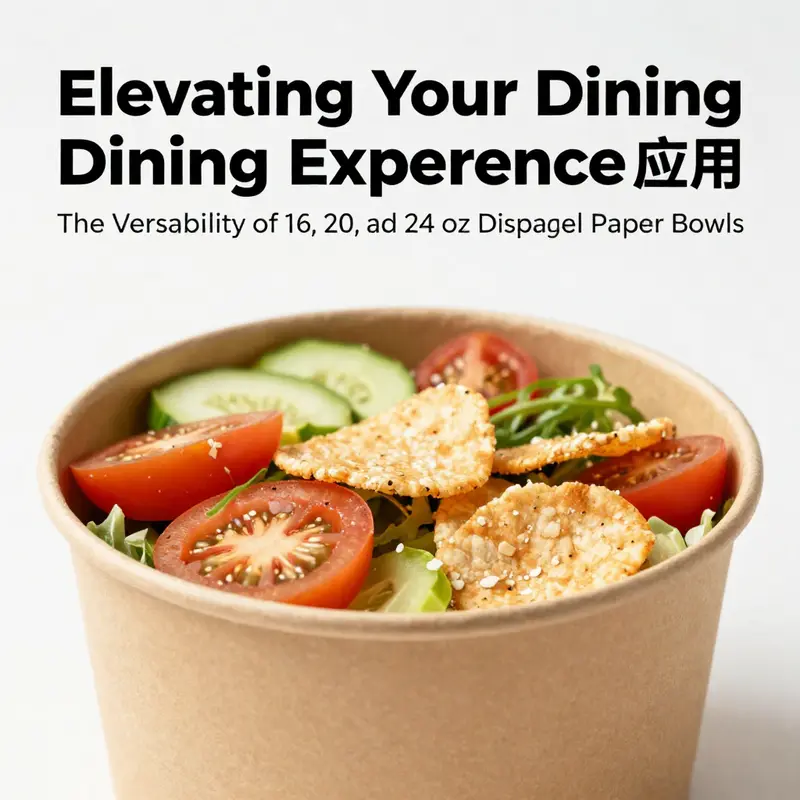
In the modern food service landscape, disposable paper bowls are more than vessels; they signal safety, reliability, and experience. The 16 oz, 20 oz, and 24 oz sizes form a practical spectrum that matches how customers eat and how operators transport meals. These bowls must hold liquids and oils without leaking, stay rigid when carried, and remain mindful of cost and environmental considerations. The 16 oz size serves salads and light meals with a dependable base for fast casual service. The 20 oz size addresses mid-range portions for heartier salads, grains, and modest hot offerings. The 24 oz size handles soups, noodles, larger fruit and yogurt bowls, and family meals. Together, they define a cohesive packaging ecosystem built on safety, performance, and responsibility.
Core performance for the 16 oz bowl centers on moisture management and structural integrity. A food-grade coating on a high-quality board forms a barrier that minimizes seepage. The inner wall must resist pressure from hot liquids or oils while remaining intact during transport. The coating reduces oil migration and helps maintain shape when carried through busy operations. A well-executed design yields a container that can cradle a hot soup or saucy dish without leaking through seams.
Heat tolerance is essential but it does not imply microwave safety. Manufacturers often label these bowls as not microwave-safe unless explicitly stated otherwise. Clear labeling helps prevent misuse and aligns with safety standards for materials in contact with food. The end-of-life path depends on whether the coating and substrate are compatible with recycling or composting in local facilities. Operators should label coatings and recyclability options to inform customers.
From an operational perspective, standardization across sizes supports efficiency in manufacturing and inventory. Brands may imprint logos or colors on the exterior surface, and nonstandard runs can meet specific regional preferences without sacrificing performance. The combined use of 16 oz, 20 oz, and 24 oz bowls shows how a simple disposable item can contribute to a cohesive takeout strategy that emphasizes safety, sustainability, and convenience.
Capacity, Commerce, and Conscience: The 24-Ounce Paper Bowl as a Keystone of Modern Takeout

The 24-ounce disposable paper bowl is more than a measured capacity or a quick packaging choice. In today’s food service landscape it acts as a fulcrum where consumer expectations, supply-chain realities, and ecological considerations tilt in response to one another. The capacity occupies a unique middle ground between the compact, salad-ready 16-ounce option and the larger, shareable 32-ounce vessels; it is precise enough to hold a hearty serving of soup, noodles, fruit salad, or grain bowls, yet versatile enough to function across multiple channels, from quick-service restaurants to health-focused takeout concepts and large-catering displays. This mid-range size has become a practical emblem of how the industry handles both portions and responsibilities. It is not an isolated product but a node in a network of decisions about materials, design, branding, and end-of-life pathways that collectively shape modern packaging norms.
Markets respond to the 24-ounce bowl with a sense of pragmatism. In a climate where takeout logistics demand efficiency, a bowl that accommodates substantial portions without becoming unwieldy in transit is valuable. The 24-ounce form is naturally suited to soups and stews, to heartier noodles, and to fruit or grain-based bowls that travelers or office workers can enjoy on the go. It supports the rise of healthier or more balanced meal options that rely on generous, ready-to-assemble servings rather than compartmentalized, multi-container meals. The capacity is a cue for operators to balance cost, speed, and customer satisfaction. It also mirrors a broader market shift toward customization at scale: operators want packaging that can be adapted to branding needs and seasonal campaigns, while suppliers increasingly offer lines that accommodate nonstandard requests through scalable production processes.
The material story behind a 24-ounce paper bowl is a careful negotiation between performance and sustainability. Most products in this category employ food-grade paper stock with a moisture- and grease-resistant inner coating. The coating is crucial; it prevents leakage when liquids or sauces are present and ensures the bowl can safely transport hot or cold contents. In many cases, the inner barrier is a single or double layer of polyethylene (PE), chosen for its proven water resistance and cost-effectiveness. A subset of higher-end offerings explores alternatives like polylactic acid (PLA) lamination, which can enable compostability in specialized industrial facilities. The outer surface is often printable, enabling logos, color schemes, and messaging that help brands stand out in crowded shelves and busy takeaway queues. The result is a product that performs in the moment of service and yet remains tethered to broader questions of environmental stewardship and end-of-life management.
The environmental narrative around these bowls hinges on several interconnected factors. First is the raw-material mix: many 24-ounce bowls rely on virgin or recycled paper fibers that can be sourced from responsibly managed forests or agricultural residues. The choice of fiber and the production method influence not only the final product’s footprint but also its compatibility with disposal streams. Second is the coating technology. Traditional PE coatings deliver robust moisture barriers, but they complicate recycling because the polymer layer needs to be separated from the paper substrate. PLA lamination offers an appealing alternative for industrial composting, though it requires specific facilities to be effective. Third is the end-of-life pathway. The ideal scenario is a circular flow in which bowls are recycled into new paper products or composted in facilities designed to process compostable packaging. In practice, municipal systems vary widely, and the actual environmental impact depends on local waste-management infrastructure, consumer behavior, and the availability of certified facilities. These realities compel brands to be deliberate about both product design and consumer education, to ensure that the environmental benefits of a 24-ounce bowl are realized in the real world rather than just in lab data.
From a design perspective, the 24-ounce bowl invites a curious blend of form and function. The geometry must support stacking for efficient storage and streamlined loading while retaining strength under load and during transport. A well-engineered bowl resists deformation when gripped by delivery personnel or carried through a crowded pickup area. The interior coating must deliver reliable barrier performance without flaking or imparting off-notes to food, especially for hot or acidic items. The outer surface should accommodate branding without compromising grip or readability of the printed artwork. Some operators pair bowls with lids that seal tightly, a practical feature for soups and hot meals. Lids also expand the bowls’ utility by enabling customers to take meals on the move without spills, an attribute that is particularly valuable in settings with unpredictable traffic patterns, outdoor service, or long-distance deliveries. The lid and bowl pairing becomes a kit of parts that influences how customers perceive value and how efficiently a operation can scale its packaging across shifts and locations.
An important thread in the 24-ounce narrative is the space it provides for branding without overwhelming the product experience. In an era when branded packaging is a strategic tool, a single, sizeable vessel can carry a company’s color palette, typography, and messaging in a way that’s more legible and impactful than smaller, multi-container solutions. The rise of nonstandard or branded packaging often accompanies demand for customization—small-batch runs for seasonal menus, events, or collaboration concepts. Suppliers have responded by offering scalable customization programs that align with brand guidelines while maintaining economies of scale. A noteworthy aspect is the opportunity for brands to insert storytelling into packaging—brief narratives about quality, sustainability, or origin that resonate with consumers as they hold the bowl and choose their meal. In this sense, the 24-ounce bowl becomes more than a container; it becomes a canvas for brand loyalty and a silent ambassador for corporate values in the consumer’s hand.
The practical realities of working at scale with 24-ounce bowls require a nuanced approach to logistics and procurement. For restaurant chains and large venues, the ability to source consistently reliable stock with predictable lead times matters as much as the exact specifications of the coating. Operators often seek suppliers that can deliver a full range of sizes—from 8-ounce test portions to 32-ounce family-size bowls—so that menus can be tailored to seasonal demand or daily peaks without resorting to disparate packaging ecosystems. The supply chain also benefits from standardization across platforms: a consistent set of inner coating standards, a uniform outer printing process, and predictable performance during reheating, transport, and disposal. In this environment, the 24-ounce bowl serves as a standard bearer for efficiency and quality, a value proposition that helps operators manage costs without sacrificing the customer experience.
Customization and branding are frequently tethered to procurement strategies that address not only aesthetics but also regulatory and environmental criteria. Many jurisdictions have tightened rules on single-use plastics, encouraging alternatives that reduce plastic content or promote reuse and recyclability. In response, some operators opt for bowls with no thin-film plastic components or with PLA-based barriers that are compatible with composting streams in certified facilities. However, the reality is nuanced: the effectiveness of these choices hinges on regional waste-management capabilities. A bowl that composts readily in one city may end up in a landfill in another if the local system does not have the infrastructure to process compostable packaging. This discrepancy underscores why the 24-ounce category is so central to ongoing conversations about sustainability in the packaging sector. It represents a tangible, scalable option that can be aligned with environmental policies and consumer expectations while still meeting the practical demands of busy kitchens and fast-moving delivery operations.
Within the marketplace, the 24-ounce bowl also interacts with broader consumer trends around portion control and nutrition awareness. In many health- and fitness-conscious segments, there is a preference for meals that present clear, visible portions. A bowl of substantial capacity helps convey a sense of fullness and value without forcing customers to overconsume or to switch to heavier, bulkier packaging. It supports balanced meal construction by keeping components in one vessel and reducing the need for additional packaging. At the same time, operators must be mindful of the sensory expectations associated with heat retention and texture integrity. A bowl designed to hold a steaming noodle bowl must avoid getting slushy or soggy during transit, while a soup-based application benefits from a structure that keeps the broth at an appetizing temperature without leaking. These technical and culinary considerations converge in the 24-ounce form, a reliable compromise that supports both practical service and consumer satisfaction.
Another dimension worth exploring is the way this size fits into the modern branding and experiential aspects of food service. The packaging encounter is not a mere transactional moment; it contributes to the overall consumer experience, from first glance to last bite. When the bowl is part of a cohesive design system—colors, textures, and messaging carried across lid, sleeve, and napkin—customers perceive value beyond the food itself. In many markets, such packaging becomes a silent ambassador for sustainability when its curves, inks, and coatings align with eco-conscious messaging that resonates with shoppers who are increasingly selective about the brands they support. In this context, the 24-ounce bowl becomes a vehicle for storytelling and a conduit for trust, ensuring that what customers eat travels as an extension of the brand’s promises about quality, responsibility, and transparency.
The chapter would be incomplete without acknowledging a practical avenue through which operators can scale their 24-ounce packaging while maintaining control over cost and quality. For those seeking to harmonize size with brand identity, wholesale options that include customization are a compelling route. Consider an offering described as wholesale custom-print kraft paper food storage salad noodle bowls, which can be integrated into a broader packaging strategy and aligned with product lines that span 8 ounces up to 32 ounces. Such programs enable brands to deploy uniform packaging across menus and locations, strengthening visual consistency and reducing procurement complexity. The opportunity to choose a single supplier capable of meeting both standard and customized needs—across multiple sizes and coating options—can simplify negotiations, enable batch production, and support faster rollout of menu changes or seasonal campaigns. It is in these intersections of scale, style, and sustainability that the 24-ounce bowl proves itself as a keystone element of contemporary packaging ecosystems.
As discussion of the 24-ounce bowl broadens, a broader macro literature helps frame its role within the global trend toward sustainable single-use wares. Market analyses emphasize that the industry is undergoing a transition toward more responsible materials, more transparent supply chains, and more flexible customization capabilities. The capacity of the 24-ounce bowl to serve a diverse set of food formats—soups, noodles, salads, fruit dishes, and even popcorn or snack platters in certain contexts—positions it as a versatile platform. Operators can leverage this versatility to craft menus that are both appealing and efficient to execute, reducing the need for multiple specialized packaging solutions. Suppliers, in turn, respond with innovations in barrier coatings, printing technologies, and compatibility with recyclable or compostable disposal streams. The interplay among these factors—the product’s intrinsic performance, its alignment with environmental directives, and its adaptability to branding and marketing strategies—explains why the 24-ounce bowl has gained prominence in the packaging repertoire of the food-service sector. It is a practical, scalable solution that embodies the evolving relationship between consumption patterns, packaging engineering, and environmental accountability.
For readers who want to connect the micro-level details of the 24-ounce bowl with broader market dynamics, it is useful to consider how the size interacts with adjacent categories. The 16-ounce bowl often serves lighter meals and cold items, where a compact footprint and straightforward disposal profile are highly valued. The 32-ounce or larger options accommodate larger portions or family-style sharing, but they may impose higher costs or exceed the needs of many fast-casual formats. The 24-ounce form thus emerges as a pragmatic compromise: it delivers substantial capacity without being oversized, it can be adopted across multiple channels, and it can be paired with lids or sleeves to expand its utility in delivery and catering. In this sense, the 24-ounce bowl acts not only as a packaging choice but as a strategic asset in menu design, logistics planning, and sustainability storytelling.
The chapter ends with a reminder that packaging is never a stand-alone decision. It operates in a system of design rules, supplier capabilities, consumer expectations, and regulatory landscapes. The 24-ounce bowl has proven resilient because it merges two core requirements of modern food service: the need for reliable, spill-resistant performance and the aspiration to reduce environmental impact. Achieving that balance requires thoughtful choices about fiber source, coating technology, end-of-life options, and the extent to which branding can be integrated without compromising recyclability or compostability. As more operators experiment with branding through packaging and as waste-management infrastructure evolves, the 24-ounce bowl stands as a test bed for how the industry can reconcile speed, scale, and stewardship in a way that respects both the customer and the planet.
For readers seeking further macro-level context on market trends that influence the future of disposable paper wares, see external research that aggregates global patterns in single-use paper ware adoption, material innovations, and regulatory trajectories. This broader lens helps connect the specifics of the 24-ounce bowl to the larger shifts underway in consumer packaging and sustainability. External resource: https://www.researchandmarkets.com/reports/5798418/global-single-use-paper-ware-market-2026
Within the practical realm of sourcing and procurement, one actionable takeaway is the importance of aligning packaging choices with both operational realities and brand values. Operators should evaluate not only cost per unit but also how packaging performs under delivery conditions, how it appears on the counter, and how easily it can be disposed of by customers after consumption. The 24-ounce bowl, with its mid-range capacity, offers a flexible platform to test different coatings, lid configurations, and branding strategies without disrupting the broader packaging architecture. It also invites suppliers to present tiered options—baseline paper stock with standard PE coatings, upgraded options with PLA lamination, and even fully compostable designs where local infrastructure supports industrial composting. The capacity to pivot across these options as markets evolve is a tangible advantage for both buyers and sellers, enabling more resilient procurement programs that can weather shifts in demand, policy, and consumer sentiment.
In closing, the 24-ounce disposable paper bowl embodies the convergence of practical service design and responsible packaging. It is a vessel that carries meals and ideas alike—from everyday soups and salads to branded experiences and sustainability narratives. Its value lies not solely in its ability to contain food, but in its potential to symbolize a more thoughtful approach to how we package, ship, and consume. As the industry moves forward, the 24-ounce bowl will likely continue to adapt, absorbing new materials, new manufacturing methods, and new expectations from diners who want convenience without compromising on environmental principles. The story of this modest vessel is, in many ways, a story about the direction of the entire packaging ecosystem: toward smarter design, clearer stewardship, and a more intentional partnership between food service and the world that sustains it.
Internal resource for further insights into branded, wholesale kraft-paper bowls: Wholesale custom-print kraft paper food storage salad noodle bowls.
The 20-Ounce Frontier: Customization and Manufacturing Options for Disposable Paper Bowls
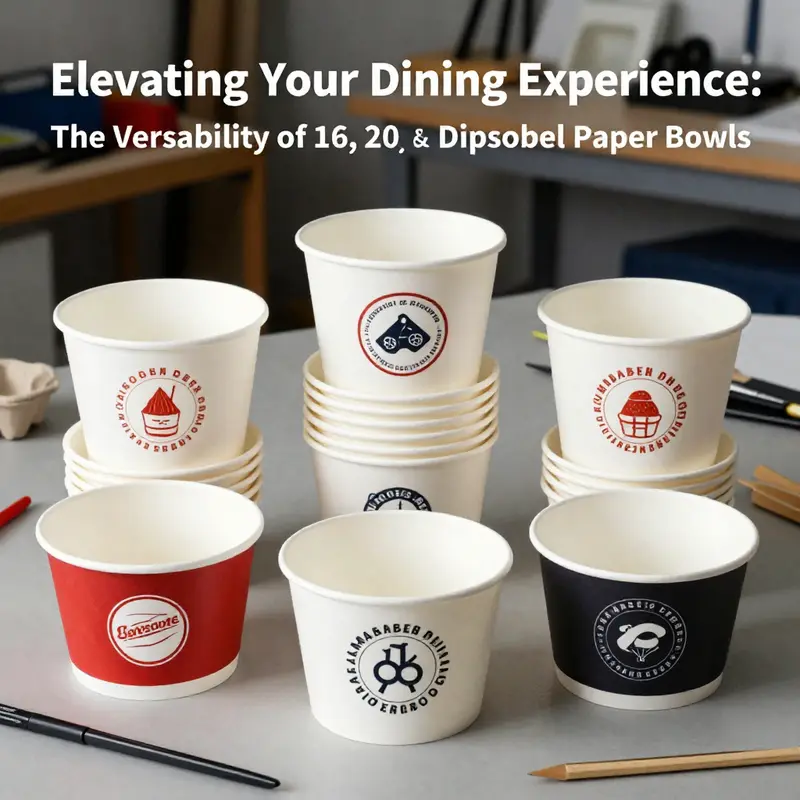
Across the spectrum of disposable paper bowls, the 20-ounce size sits in a practical middle ground. It is large enough to handle generous portions, soups, or salads, yet compact enough to fit neatly into standard take-out packaging workflows. In the broader context of 16-ounce and 24-ounce varieties, the 20-ounce option often serves as a bridge between portion control and operational efficiency. As consumer expectations shift toward convenience paired with sustainable packaging, the 20-ounce bowl has emerged as a focal point for customization and manufacturing excellence. The conversation about this size is not just about capacity; it is about how a manufacturer translates a simple volume into a reliable vessel that protects contents, communicates a brand story, and fits into the daily rhythms of a busy kitchen or a bustling cafe. Understanding the customization and manufacturing options for 20-ounce disposable paper bowls provides a lens into broader market dynamics: how materials choices, coating technologies, production automation, and environmental commitments converge to create a product that is both functional and responsible.\n\nAt its core, the 20-ounce bowl is typically constructed from food-grade coated paper. In many cases, bowl walls rely on a single or double polyethylene (PE) coating that creates a water- and grease-resistant barrier. This is especially important when serving both hot and cold foods, where leakage and seepage can threaten the integrity of packaging, the user experience, and the restaurant’s reputation. Materials discussions frequently surface questions about the balance between barrier performance and recyclability or compostability. Suppliers increasingly respond with grades of paper that maintain food safety certifications—often FDA- or EU-compliant—while offering options that align with environmental goals. In practice, a 20-ounce bowl can be designed with a straightforward, cost-conscious coating or with a more premium, fiber-rich structure that supports compostable or biodegradable pathways. The choice of inner lining, whether a standard PE layer or an alternative barrier, cascades into downstream considerations: consumer perception, regulatory compliance, end-of-life options, and even branding opportunities when lids or matching sleeves are part of the packaging system.\n\nCustomization for 20-ounce bowls extends far beyond simply picking a capacity. Soma of the industry’s standard offerings can be expanded through features like printed logos, color accents, or brand messages printed on the outer surface. This is where the 20-ounce size proves its versatility. For dine-out and delivery brands seeking to reinforce identity in a crowded market, a bowl with branded graphics becomes a portable storefront. The capacity itself supports a generous canvas for artwork and messaging without compromising ergonomics or readability. When a business partner asks for a tailored packaging solution, the path often begins with tooling and mold options that enable unique shapes or integrated components, such as lids that snap securely or vented features that help manage steam during transport. The capacity range from other sizes—20 to 60 ounces in some production lines—illustrates the breadth of customization possible, as many manufacturers maintain modular molds that can be swapped to produce slightly different diameters, depths, or wall thicknesses. The result is a family of products that share a core material system but diverge in finish, printability, and functional accessories.\n\nThe manufacturing technology behind these bowls is a decisive factor in how accessible customization becomes. A modern, fully automated paper bowl forming machine can automate feeding, forming, sealing, bottom punching, and edge finishing in a continuous cycle. For 20-ounce bowls, such lines are designed to handle a spectrum of sizes through interchangeable tooling and modular dies. An adept factory can tune process parameters to optimize wall rigidity, finish quality, and leak resistance, while also controlling formation speed to meet demand patterns that range from everyday restaurant throughput to seasonal spikes in catering orders. This automation translates into consistent performance across tens of thousands of units, reducing human error and enabling strict quality control regimes. When a client requests a nonstandard feature—such as a deeper profile to accommodate extra toppings, a reinforced lip for hot contents, or a specific bottom curvature to improve stackability—the production team can adapt with new molds and calibrated sealing patterns that preserve the integrity of the barrier coating and the bowl’s structural rigidity.\n\nThe environmental trajectory of 20-ounce bowls is equally telling. The market has embraced options that either minimize plastic content, replace conventional coatings with more sustainable barriers, or embrace biodegradability and compostability where appropriate. In practice, this means suppliers can provide versions that are labeled as compostable under certain industrial conditions or that utilize bio-based or recycled materials to reduce the environmental footprint. Certifications and standards play a central role here. For buyers, confirming FDA or EU food-contact material compliance remains essential, but buyers increasingly look for packaging solutions that align with corporate sustainability goals and consumer expectations for responsible disposal. The choice of barrier layer—whether a traditional, inert polyethylene inside or an alternative film designed to degrade more readily in composting environments—affects not only end-of-life outcomes but also the supply chain’s regulatory and labeling obligations. The debate between performance and end-of-life impact is nuanced. Some operators are willing to trade a fraction of barrier strength for a more environmentally friendly profile, while others prioritize the absolute protection of contents during transport and service. The 20-ounce size thus becomes a testing ground for balancing these priorities in a way that does not compromise reliability on the road or in the kitchen.\n\nA crucial dimension of customization is the integration of lids and related accessories. For many 20-ounce applications, a well-sealed lid is not a luxury but a necessity, especially for soups, strong sauces, or liquid-rich offerings. Lids can be designed to snap on securely, provide a moisture barrier, and include venting or stacking features that improve shelf and transport performance. The ability to pair a customized bowl with a matching lid expands the packaging system’s coherence. It also enables better branding opportunities—graphics and color cues that reinforce the product’s identity on the way to the consumer’s door. From a manufacturing standpoint, adding lids introduces another set of tooling considerations, but modern lines are capable of producing bowls and lids as a coordinated family with synchronized tolerances. The result is a complete take-away solution that supports consistent performance, whether the customer’s journey ends at a home kitchen, a corporate office, or a food court.\n\nFor brands eager to explore nonstandard or highly specific configurations, the 20-ounce category offers a horizon of options without sacrificing efficiency. Customization can reach into printing on the exterior with oils and coatings that make ink adhesion more durable, or into the selection of interior coating formulations that minimize flavor transfer or staining while maintaining a barrier against moisture. The ability to request non-standard diameters, particular wall thicknesses, or even texture on the exterior surface—think subtle ribbing or smooth, tactile finishes—can communicate premium positioning. Importantly, these modifications are not merely cosmetic. They can influence stackability, transport stability, customer handling, and the perceived value of the product. In a highly competitive segment, such details enable a brand to stand out while preserving the practical performance that customers rely on.\n\nIf a buyer seeks a direct path to realization, the process typically begins with a discussion about volumes, lead times, and tolerances. The leap from a standard design to a customized solution often hinges on the speed and flexibility of tooling changes, the availability of compatible barrier materials, and the supplier’s capacity to manage nonstandard runs alongside regular production. In many markets, suppliers advertise capability to produce 20-ounce bowls and to accommodate logos, color schemes, or protective features while maintaining FDA/EU-compliant materials. The economics of customization depend on factors such as minimum order quantities, print area, and the complexity of the mold changes. Automation helps, but it is the combination of tooling versatility, material science, and process discipline that ultimately governs the feasibility and cost of a given specification.\n\nAn important note for buyers considering customization is the potential trade-off between turnaround time and design freedom. The more a request deviates from a baseline geometry or coating, the longer the lead times can become as new molds are developed and qualified. This is where the relationship with a capable supplier matters most. A partner with a robust library of interchangeable tooling can offer rapid prototyping, small-batch testing, and scalable mass production, ensuring that a 20-ounce option can progress from concept to shelf with predictable timing. In parallel, the environmental and certification considerations must be threaded through the development cycle. Tests for leakage, heat resistance, and barrier performance should be repeated under the intended service conditions, whether the bowls will be used for steaming soups, chilled salads, or hot beverages. The capacity to validate performance alongside branding and sustainability goals is the hallmark of a mature customization program.\n\nAs with any packaging decision, the buyer’s procurement strategy matters as well. Shorter lead times, reliable supply, and predictable pricing are crucial when packaging serves a front-line function in a fast-casual environment or a high-volume catering operation. The 20-ounce bowl’s position in the market makes it an attractive candidate for modular packaging solutions that can be scaled up or down as demand fluctuates. Suppliers often offer a family of sizes that share compatible lids, sleeves, or dip-in accessories, enabling businesses to craft a consistent packaging ecosystem across 16, 20, and 24-ounce formats. This coherence supports branding coherence and operational simplicity, reducing the cognitive load on kitchen staff and delivery partners alike. In sum, the 20-ounce disposable paper bowl is not a mere vessel; it is a platform for customized packaging that respects safety, performance, environmental responsibility, and brand storytelling in equal measure.\n\nFor readers seeking a concrete example of how customization can be realized, the flow from design concept to production typically traverses several stages. A client presents requirements—capacity, coating preference, print area, and any special features. A packaging engineer reviews the materials science implications, then a tooling specialist evaluates the feasibility of molds and dies for the chosen dimensions. If a nonstandard feature is approved, the line programming team updates the automation sequence to ensure consistent sealing, edge finishing, and bottom formation. The cycle then proceeds to trial runs, where a small batch verifies that leak resistance, heat tolerance, and user handling meet expectations. Data gathered in these trials informs adjustments before full-scale production begins. In this architecture, customization is not an opaque art; it is a carefully engineered process that couples design intent with manufacturing rigor, ensuring that every 20-ounce bowl performs as intended in the real world.\n\nWithin this framework, it is worth noting one practical pathway that many brands pursue to balance customization with efficiency. Nonstandard requests can often be met through non-printed customization, such as selecting different barrier systems or wall thicknesses, while maintaining a visually consistent exterior. This approach preserves the brand’s visual identity through lids, branding on the outer surface, or secondary packaging, while leveraging standard tooling to achieve cost and lead-time advantages. From a buyer’s perspective, this can be an optimal route when the objective is to reinforce brand recognition without delaying delivery timelines or inflating unit costs. It also demonstrates how the separation between aesthetic customization and core performance features can be managed elegantly in a highly automated production environment.\n\nFor readers who want to explore practical examples of customization in action, one can imagine a bakery, a casual eatery, or a corporate catering operation seeking to communicate a premium, clean, and modern image through 20-ounce packaging. The bowls would reflect a brand’s color palette or logo, be paired with lids that lock in freshness and prevent leakage during transit, and utilize an inner barrier that preserves taste without compromising recyclability. The end result is a combined story of capacity that meets portion expectations, engineering that guarantees reliability, and sustainability choices that align with public sentiment and regulatory standards. The 20-ounce size thus becomes a strategic lever—one that can signal quality, support operational efficiency, and present a modern, responsible face to customers in a rapidly evolving packaging landscape. In this sense, customization and manufacturing options for the 20-ounce disposable paper bowl are not merely technical details; they are the levers by which a brand can translate intent into tangible customer experiences.\n\nFor readers who want to peek behind the curtain of customization options, a useful resource with practical examples of design-to-delivery workflows can be found at this supplier’s catalog page, which describes how printed or embossed surfaces can be integrated with a standard 20-ounce profile and how lids and matching components can be synchronized with branding guidelines. custom disposable kraft paper bowl with lid\n\nIn the broader market, the 20-ounce option is often positioned alongside 16-ounce and 24-ounce families as part of a cohesive packaging strategy. The smaller size is frequently chosen for cold salads, snacks, or portion-controlled meals, where density and stacking efficiency matter. The larger 24-ounce option is ideal for soups, noodles, and fruit bowls where volume drives perceived value and customer satisfaction. The 20-ounce bowl sits in the middle, offering a satisfying portion without over-provisioning or under-serving a guest. The capacity symmetry across these sizes enables brands to curate complete meals or snack configurations that feel intentional and balanced. It also invites a more nuanced conversation about material choices and end-of-life considerations that matter to consumers today. The interplay between design, manufacturing feasibility, and environmental stewardship is what makes the 20-ounce channel a compelling case study in modern disposable packaging.\n\nAs this chapter threads through the themes of customization and manufacturing, it remains clear that the 20-ounce disposable paper bowl is more than a mid-size option. It is a dynamic platform that accommodates branding, safety, sustainability, and operational practicality in a way that resonates with both kitchen crews and consumers. The ongoing evolution of coating technologies, tooling versatility, and environmental certifications will continue to shape what this size can become. For buyers and suppliers alike, the 20-ounce bowl is a reminder that packaging is not a single decision but a coordinated system. When designed with intent, it can deliver consistent performance from the first production run to the last plate handed to a customer, while also telling a brand story that aligns with today’s expectations for responsible packaging and a seamless customer experience.\n\nFor readers seeking broader context on large-scale packaging options that share the same material philosophy and production realities, an external resource provides an industry-wide view of 24-ounce and larger paper bowls, including demonstrations of “no-plasticized” design and emphasis on environmental goals. This reference can help situate the 20-ounce frontier within the larger ecosystem of disposable paper bowls and their evolving role in takeaway culture. (External resource)
Final thoughts
Disposable paper bowls in 16 oz, 20 oz, and 24 oz sizes offer not just practicality, but also an avenue for creativity and sustainability in food service. Whether you are serving a quick salad in a 16 oz bowl, a filling soup in a 24 oz bowl, or seeking custom solutions for your 20 oz needs, these bowls can cater to your diverse offerings while maintaining an eco-conscious approach. By embracing these products, businesses can enhance customer satisfaction and align with a growing trend of sustainability.