
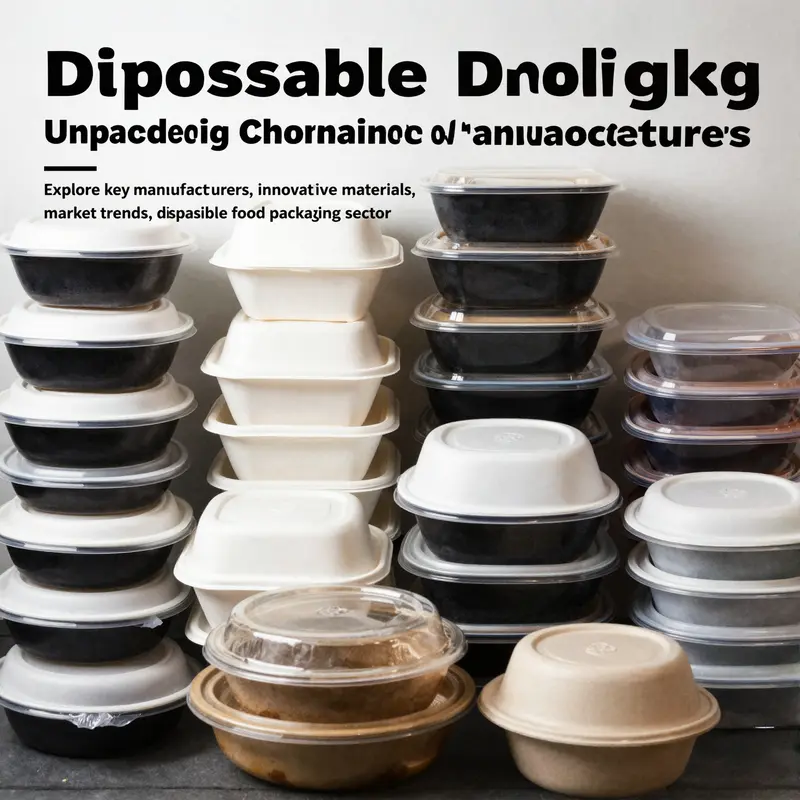
Chennai, a vibrant hub of culinary activity, relies heavily on disposable plastic food containers to meet the demands of its bustling restaurants, food trucks, and catering services. With thriving businesses in need of reliable packaging, the city’s manufacturers provide a range of products crafted from high-quality materials. This landscape not only fosters innovation in design and technology but also adapts to evolving market trends, particularly surrounding sustainability. Throughout this article, we’ll delve into the key manufacturers behind these disposable food containers, examine the materials and technologies they employ, discuss the current market trends influencing the industry, and consider environmental impacts and sustainability efforts. Together, these elements paint a comprehensive picture of Chennai’s dynamic landscape for disposable plastic food containers.
Shaping a City’s Takeaway: Inside Chennai’s Disposable Plastic Food Container Makers and the Push Toward Safer, Smarter Packaging
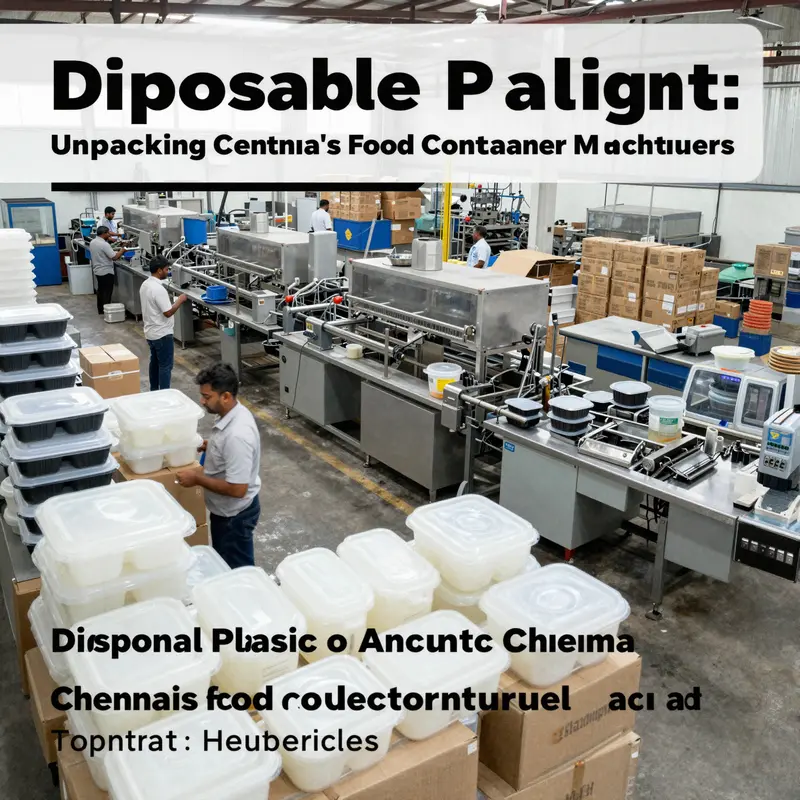
Chennai sits at a hinge of industry, logistics, and a voracious dining culture that stretches from road-side vadas to high-volume hotel banquets. The city’s landscape of disposable plastic food container manufacturers is less a single factory line and more a dense, interlocking network. It spans industrial parks, mixed-use zones near airports and ports, and bustling neighborhood clusters where small and mid-sized enterprises connect with large caterers, takeaway kitchens, and event planners. The result is a market that moves at scale but remains highly adaptive, a reflection of both the city’s commercial tempo and the evolving expectations of customers who want packaging that is affordable, safe, and increasingly responsible. In practice, this means a steady stream of polypropylene and high-density polyethylene based containers, with suppliers also exploring recyclable and biodegradable options as public and regulatory attention to single-use plastics grows more acute. While the broader Indian market often consumes the attention of analysts, Chennai’s local players bring distinct traits to the table: the ability to customize, the speed to respond to seasonal demand, and the proximity to supply chains that serve a range of food service operators—from street food vendors to mass-market delivery kitchens and hospitality groups.
At the core of this ecosystem is the material story. Polypropylene, known for its heat resistance, stiffness, and relative clarity, remains a workhorse for disposable containers that must endure hot meals without warping. High-density polyethylene contributes impact resistance and barrier properties that keep sauces and perishables in good condition during transit. In a city that thrives on quick service and high turnover, containers must perform consistently under a variety of handling conditions, from packed lunches at school to heavy-duty takeout orders for weddings and corporate events. Yet the choice of material is not just about performance; it is also about cost, manufacturing ease, and regulatory compliance. In India, factories serving the food-service sector typically align with food safety standards, favoring resins that meet safety benchmarks and offer predictable behavior during molding, filling, and stacking. Precision in mold design, automation in production lines, and quality assurance checks become as important as the raw resin price itself, because even small deviations in wall thickness or lid fit can ripple into customer dissatisfaction, increased breakage rates, or leakage during transport.
Within this market, a handful of Chennai-area manufacturers have established themselves as reliable, capable players serving a wide regional footprint. Historically, these players have built reputations on robust in-house competencies—from mold design and toolmaking to injection molding and finished goods assembly. The ability to offer customized dimensions and printed marks enables them to meet the needs of diverse customers—from local eateries seeking standardized packaging to event organizers requiring brand alignment on every carton and lid. This capacity to customize is not merely a marketing hook; it translates into real value for hospitality operators who want consistent packaging that reinforces brand identity while maintaining functional performance in the field. In addition to standard lunch boxes and takeout containers, many producers offer a range of shapes and sizes, with lids designed to snap securely and resist leakage even when sauces travel a few kilometers under tropical heat. For operators who rely on the integrity of their presentation, lid fit, seal strength, and stackability become as important as the container’s capacity.
The landscape in Chennai has been shaped by a blend of legacy families and newer SMEs that prioritize operational flexibility. Names that recur in industry chatter often do so because they maintain a disciplined approach to production planning, inventory control, and on-time delivery—factors that matter when kitchens and vendors are coordinating many shipments per day. These firms tend to maintain end-to-end capabilities, enabling them to manage projects from initial mold development to the finished, packaged product. This vertical integration matters in a city where the lead times can be tight and customer expectations high. A reliable supply chain means fewer production holdups, better batch traceability, and more predictable response to market fluctuations, whether that means a surge in wedding catering orders during festival seasons or a sudden need to switch to alternative packaging due to weather or logistics disruptions.
The dialogue around packaging in Chennai also reflects a broader shift toward sustainability. Policymakers and consumer groups are increasingly vocal about the environmental footprint of single-use plastics, and manufacturers are listening. In practice, this manifests in several ways: some firms are refining their plastic formulations to incorporate recycled content without compromising safety and strength; others are exploring recyclable or even biodegradable options that can still perform in the harsh realities of transport and stacking. The balancing act is complex. Green credentials carry a premium, and the performance of eco-friendly materials under heat, humidity, and rough handling must be proven across thousands of daily transactions. Still, the trend is clear: a growing segment of customers values packaging that can be recycled or that uses lower-impact materials, which in turn nudges manufacturers to diversify material portfolios and invest in testing and certification.
Compounding this trend is the practical reality of market demand. Local restaurants, caterers, and hotels require packaging that is not only compliant but also cost-competitive. Customization options—color, imprint, and size—help operators differentiate themselves in a crowded field, particularly for venues that want to reflect their brand in every touchpoint, including the disposable ware used for service or delivery. For many operators, the chain of procurement runs through a few trusted suppliers who can turn around orders quickly and deliver in sync with kitchen schedules. In such a system, reliability becomes a currency almost as valuable as price. The ability to produce a wide range of shapes—rectangular, square, or round containers with compatible lids—alongside bulk SKUs and ready-to-ship packaging reduces the complexity of sourcing for large users and helps keep costs predictable even as resin prices fluctuate.
In the specific Chennai context, several established players have anchored their operations in the city’s industrial districts and logistics corridors. Their presence is supported by a network of subcontractors and suppliers who provide ancillary components—lids, sealing films, and compatible cold-storage containers—allowing a complete packaging solution to be offered under one roof. While each company has its own strategic emphasis, the common thread is a willingness to balance price competitiveness with functional reliability and a readiness to adapt to changing consumer preferences. This adaptability is essential not only for surviving price volatility but also for staying relevant as environmental considerations become a standard feature of procurement conversations. For some customers, the choice is no longer simply about cheapest plastic; it is about whether the packaging can be recycled after use, whether it can be manufactured with lower environmental impact, and whether it can be tailored to fit a specific marketing strategy.
Amid these dynamics, the local scene shows a natural progression toward enhanced service propositions. Some manufacturers offer on-site consultation for packaging design, helping customers translate brand identity into practical, recyclable, or reusable packaging concepts. Others provide customization services that extend beyond basic imprinting to include post-mold finishes or multi-color designs that can withstand the rigors of hot packing and cold storage. The capacity to print or emboss logos, regulatory marks, or handling instructions on the lid or body of the container adds a layer of value for customers who want to ensure that their branding remains legible in transit. Yet this expanded service suite comes with trade-offs. Higher levels of customization can stretch lead times and create inventory complexity. The most successful operators in Chennai manage these tensions by maintaining lean internal processes, close communication with customers, and clear scheduling that aligns production runs with delivery windows.
The shape of the market is also progressively influenced by regulatory signals. While single-use plastics continue to be a practical fixture for many food-service operators, there is a growing expectation to implement safer, cleaner, and more responsible packaging solutions. For manufacturers, this means not only staying compliant with food safety standards but also preparing for life-cycle considerations—recycling streams, end-of-life handling, and waste reduction programs. It is easy to imagine a future where a portion of the market embraces materials designed for easier recycling or compostability, while the remainder continues to rely on durable plastics with improved recycling compatibility. In either case, the Chennai market will need to maintain robust testing regimes to verify that new materials perform under heat and stress while meeting safety expectations for food contact. This testing is not just about meeting compliance; it is about maintaining trust with restaurants, caterers, and guests who rely on packaging to protect food quality from the point of sale to the consumer’s table.
For readers looking to understand the broader packaging ecosystem beyond plastics, the region’s packaging players are increasingly turning to paper-based solutions and other alternatives as complement rather than replacement. The practical takeaway for businesses in Chennai and beyond is that the supplier landscape is evolving toward a more integrated approach to packaging that blends performance, cost, and sustainability. Operators who seek to minimize risk while maximizing brand impact will prefer partners who can deliver reliable containers on time, offer customization that aligns with their marketing goals, and provide options that help reduce the overall environmental footprint of their packaging portfolio. To illustrate how packaging choices are expanding in the region, consider how the industrial and commercial shift toward eco-friendly options is prompting suppliers to explore kraft paper packaging solutions as feasible complements to plastic offerings. For a concrete example of this broader packaging trend, see the disposable octagonal kraft paper packaging option linked here: see external resource https://greendispopack.com/product/disposable-octagonal-box-restaurant-food-kraft-paper-packaging/
Ultimately, the Chennai manufacturing belt for disposable plastic food containers functions as a microcosm of India’s broader packaging narrative. It blends traditional capabilities with modern demands for customization, reliability, and environmental accountability. The players on the ground are not just suppliers of containers they are partners in the daily choreography of hospitality, delivery, and events. Their success hinges on maintaining price competitiveness without compromising quality, while gradually integrating more sustainable practices and materials as technology, policy, and consumer preferences converge. The citys packaging ecosystem thus embodies a practical balance: a strong, adaptable base of plastic container production, augmented by ongoing experimentation with recyclable and biodegradable options, and guided by a clear, disciplined understanding of customer needs in a fast-moving market.
External reading can broaden understanding of the PP-based disposable plastics segment in India and offer context for Chennai’s local dynamics. For a broader market perspective on PP disposable cups and related trends, see the external resource cited in industry analyses: https://www.plasticfutures.com/analysis-pp-disposable-cups-india
From Mold to Market: Materials, Machinery, and mindful manufacturing in Chennai’s Disposable Food Container Scene
In Chennai’s industrial districts a quiet shift is shaping the disposable plastic food container sector. Materials science, mold technology, and regulatory expectations converge as local manufacturers optimize performance, safety, and sustainability. Polypropylene, or PP, remains central for heat resistance and rigidity, with HDPE used for tougher, colder applications. The choice between PP and HDPE balances wall thickness, chemical resistance, and seal integrity, while the local supply chain emphasizes compatibility with food safety norms and the realities of a bustling hospitality economy. Thermoforming and injection molding are the two pillars of production: thermoforming shapes large-volume trays and bowls, while injection molding handles tighter tolerances, lids, and complex features. In Chennai factories the lines specialize and share knowhow, enabling rapid scale and consistent quality. Compliance frameworks ensure food-grade processing, traceability, and reliable seals under hot and cold serving conditions. Sustainability discussions are increasingly integrated, with recyclability and recycled-content variants considered alongside traditional PP and HDPE. The regional map of manufacturing zones, from Tambaram to Ambattur, underpins the supply chain, offering proximity to suppliers and logistics hubs that serve hotels, wedding venues, and high-volume caterers. Industry observers note that the Chennai model shows how a city can harness resin science, tooling expertise, and policy awareness to deliver dependable packaging at scale, while staying mindful of waste and lifecycle thinking. For readers exploring broader context, there are ongoing experiments with recyclable or compostable options and case studies of paper-based formats that complement plastics where appropriate, such as kraft paper-based take-away cups and compatible lids. External resource for broader context and standards guidance: https://www.industryweek.com/plastics/complete-analysis-of-standards-types-and-industry-performance
Shaping Chennai’s Takeaway Era: Trends, Automation, and the Rise of Sustainable Packaging in Disposable Plastic Containers
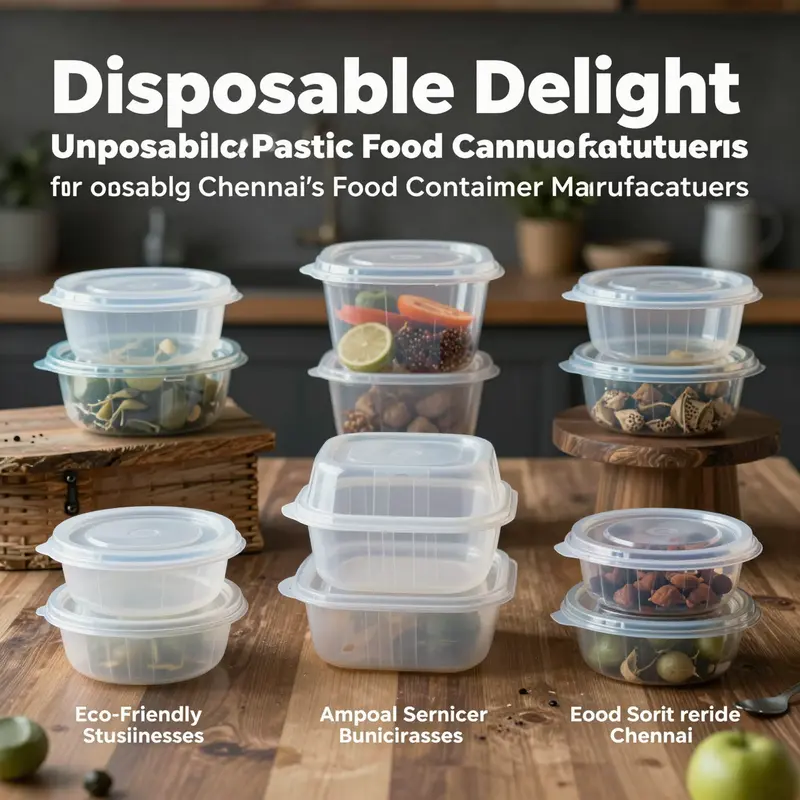
Chennai has emerged as a living laboratory for how a regional cluster can drive rapid transformation in a global packaging space. The city’s industrial zones, from Tambaram and Ambattur to Kundrathur and near the airport corridor, pulse with the rhythm of manufacturers who turn raw resin into a steady stream of disposable food containers. The clientele spans the bustling restaurant belts, the ever-expanding delivery platforms, hotel groups, and large-scale event organizers. In this milieu, the conversation about disposable plastic containers is not just about capability or price. It is about how a mature supply chain in a dense urban economy negotiates quality, safety, efficiency, and, increasingly, sustainability. The shift is visible in the material choices, the methods of production, and the way these producers engage with customers who demand more than a cheap, single-use solution. They want packaging that travels well, resists heat, protects the contents, and leaves a smaller footprint when the product is discarded. This tension—and the ways firms respond to it—gives Chennai its distinctive edge in the national landscape of disposable packaging manufacturing.
At the heart of this evolution is a material story that many observers in the city have watched unfold over the past few years. Polypropylene, or PP, remains the preferred workhorse for many containers because of its combination of durability, heat resistance, and relative safety for food contact. For hot and cold foods alike, PP offers a reliable barrier that preserves temperature and structure during transit. This is crucial as street vendors, small eateries, and large delivery networks alike rely on containers that won’t deform under heat or leak under pressure. High-density polyethylene, or HDPE, has historically shared the field with PP, valued for chemical resistance and cost-effectiveness. But in a market as dynamic as Chennai’s, the material choice is increasingly driven by the push toward food-grade, recyclable or recyclable-like materials, strict adherence to food safety norms, and a growing appetite for traceability in the supply chain. In practical terms, this means that the containers arriving in kitchens and on delivery dashboards carry not just a lid and a seal but a narrative about safety, compliance, and environmental responsibility.
Several local players—whose footprints span industrial parks and commercial belts—have shown that the path from molding to finished product is now accompanied by significant process innovations. The evolution is not only about creating a durable box or a bowl; it is about building automation into the core of the operation. In Chennai, manufacturers are increasingly adopting automated molding lines, high-speed sealing technologies, and automated inspection systems. The result is a level of consistency and efficiency that makes large, repeat orders feasible and small, custom runs profitable. Real-time data from sensors embedded in presses, fall-off material management, and automated packaging lines allow factories to reduce scrap, minimize downtime, and better predict delivery schedules. This digital manufacturing posture supports a broader trend toward lean operations—a necessity in a market where competition comes not only from other packaging suppliers but from evolving consumer expectations for sustainability and transparency.
The automation trend dovetails with a broader push toward sustainable packaging. The discourse in Chennai’s industrial corridors reflects a national and global shift toward materials and practices that reduce environmental impact while maintaining the performance that food service demands. Manufacturers are exploring options that emphasize recyclability and reusability, with a growing emphasis on ensuring that food-contact materials meet rigorous standards. The desire for safer, cleaner, and more sustainable packaging is not cosmetic; it is increasingly a criterion for buyers who must satisfy regulatory expectations and corporate sustainability goals. In practice, this means more attention to material purity, better waste management within the plant, and partnerships with suppliers who can provide traceable, compliant inputs. Companies emphasize the ability to provide packaging that performs under heat, protects the contents during transit, and can be recycled or repurposed with minimal friction at the consumer end.
This ecosystem in Chennai is being shaped by the needs of a diverse customer base. Restaurants, caterers, and hotel chains require packaging that can be customized to different sizes, shapes, and branding needs, while event organizers demand bulk quantities with reliable delivery timelines. The local market’s capacity for customization—both in the dimensions of the container and in the imprinting or labeling on the surface—reflects a mature understanding that packaging is also a marketing touchpoint. Yet the emphasis remains on safety and practicality. The containers must withstand brisk handling during courier legs, withstand the rigors of stacking, and maintain their form when sauce or soup remains hot for the duration of a delivery window. In other words, form follows function, but the scale of function is broader than ever before.
An important undercurrent in Chennai’s packaging sector is the growing attention to alternative materials and ecosystem-friendly design. While PP and HDPE will continue to be staples for the foreseeable future, a subset of manufacturers is experimenting with materials that can ease end-of-life handling. This does not imply a wholesale replacement of established options; instead, it signals a portfolio expansion. The aim is to offer customers a choice, so that a restaurant or events organizer can decide between traditional, proven PP-based containers and options that lean toward recyclability or more sustainable end-of-life pathways. The practical implication for the market is clearer schedules for product development, more robust testing for heat and chemical resilience, and more transparent communication about material properties to buyers who are increasingly worried about environmental footprints. In this environment, the conversation is less about what can be produced and more about how quickly it can be produced, how reliably it can be delivered, and how responsibly it can be disposed of after use.
The topic of sustainability also intersects with policy and consumer demand in tangible ways. In India and abroad, there is a growing regulatory emphasis on reducing plastic waste and improving waste management infrastructure. While Chennai-based manufacturers are not solely guided by government mandates, they operate in a market where buyers increasingly look for packaging solutions that align with broader environmental commitments. This alignment has three practical manifestations. First, there is a push toward standardizing packaging that is clearly marked as recyclable, with consistent guidance on disposal. Second, there is a drive to reduce the use of additives or coatings that complicate recycling streams. Third, there is heightened attention to the supply chain’s overall environmental footprint, including energy use, water management, and waste recovery. In practical terms, this translates into process improvements, such as more efficient heating and cooling cycles in molding, better filtration to minimize scrap, and closer scrutiny of every link in the supply chain to ensure compliance and traceability.
The Chennai market also demonstrates how technology is bridging the gap between traditional manufacturing wisdom and modern customer expectations. The adoption of digital tools in procurement and production planning helps small and mid-sized players compete more effectively with larger, better-capitalized rivals. Predictive maintenance reduces unplanned downtime, improving reliability for large orders and seasonal spikes. Real-time quality control helps ensure that every batch meets the same safety and performance standards, preserving brand trust in markets where repeat orders depend on consistency. And the capability to collect and analyze production data opens doors to continuous improvement—an essential advantage in a field where margins can tighten quickly when raw-material prices move, or when a wave of new delivery demands coincides with a peak wedding season or festival rush.
The human dimension of this transformation should not be overlooked. To stay competitive, factories must recruit and train workers who can operate sophisticated equipment, interpret data from automation systems, and maintain strict hygiene and safety protocols. As the industry leans into more advanced manufacturing, opportunities rise for local engineers, technicians, and quality assurance specialists who understand both the material science of plastics and the real-world constraints of food service. In this way, the evolution of Chennai’s disposable container sector contributes to a broader regional development story: skilled employment, enhanced productivity, and the emergence of a more capable industrial ecosystem that can respond to shifting consumer expectations without sacrificing safety or cost considerations.
For readers seeking a lens beyond the local landscape, this chapter also connects to a broader discourse on packaging modernization. The integration of automation with sustainable material choices illustrates a model that other manufacturing hubs can study. It shows how a city with a dense hospitality economy can leverage its industrial base to deliver packaging that respects both performance needs and environmental responsibilities. The message is practical: success in this sector rests on a balanced portfolio of reliable, scalable manufacturing processes, a keen eye for evolving material science, and a willingness to adapt to the changing demands of customers, regulators, and society at large. As the market continues to evolve, the Chennai cluster may increasingly become a reference point for how regional manufacturing can innovate within the constraints of a sustainable future.
For a deeper dive into related sustainable packaging options and to explore a practical example of an eco-friendly material family in use, you can read more here: eco-friendly recyclable pulp cup holders.
As the chapter closes this iteration of Chennai’s packaging industry, readers are reminded that the core trends are not fleeting. Automation, sustainability, and digitalization together form a triad that will shape both product design and market strategy in the years ahead. The city’s manufacturers are not merely responding to demand; they are shaping it by offering more predictable lead times, clearer safety assurances, and a broader range of packaging choices. In that sense, the story of disposable plastic food containers in Chennai is less about the endurance of plastic itself and more about the evolution of packaging ecosystems that can support a dynamic food service environment while moving toward greater environmental responsibility. The experience gathered here suggests that a future in which high-performance containers are produced with smart manufacturing practices and with sustainability at the core is not only possible but increasingly probable. For those tracking industry trajectories, the LinkedIn analysis of the broader market offers a complementary, external perspective on the momentum and direction of this space: https://www.linkedin.com/pulse/disposable-plastic-food-container-making-machine-market-1234567890/.
From Production Lines to Waste Streams: The Environmental Journey of Chennai’s Disposable Plastic Food Container Industry
Chennai sits at a crossroads where industrial vigor meets urban pressure. The city hosts a cluster of manufacturing facilities that produce disposable plastic food containers, a category that has grown in lockstep with the expansion of catering services, street food culture, and large-scale events. The narrative of these containers is not simply about convenience; it is a case study in how modern urban centers balance demand, production choices, and environmental consequences. Within this landscape, the materials chosen by manufacturers—primarily polypropylene and high-density polyethylene—shape both the performance of the products and their end-of-life fate. These polymers offer heat resistance, durability, and a level of food-safety certification that markets depend on. They also anchor a supply chain that leans heavily on fossil fuels, setting the stage for a broader conversation about energy use, emissions, and the carbon footprint embedded in every takeout box, cup, and lid.
The production cycle—from resin to mold to finished item—unfolds in an energy-intensive sequence. Melting plastics requires steady heat, and molding operations consume electricity and, in many instances, process heat that comes from fossil-fuel combustion. Emissions trace not only to the factory walls but to the wider urban atmosphere that envelops industrial zones. In addition, the manufacturing process generates waste streams in the form of scrap plastics, trimming waste, and potential effluents that, without robust controls, can burden nearby water and soil. Industry commentators caution that the scale of these operations matters as much as the per-unit efficiency. A small improvement in energy intensity can translate into meaningful reductions when multiplied across thousands of containers produced daily. The interplay between productivity goals and environmental stewardship thus becomes a daily operating discipline for manufacturers trying to stay competitive while meeting regulatory expectations.
Post-consumer challenges, however, often determine the environmental imprint of disposable packaging more than the production line itself. In a city where litter and mismanaged waste can quickly become visible pollutants, the fate of a single container depends on countless decisions made far beyond the factory. If containers are discarded carelessly or end up in overwhelmed municipal landfills, the non-biodegradable mass persists for years, contributing to land, shoreline, and urban runoff pollution. In Chennai, as in many Indian metros, waste management infrastructures have struggled to keep pace with rising volumes and diverse streams of materials. The result is a landscape where improperly disposed plastics accumulate in drain networks, clog waterways, and, at times, find their way into coastal ecosystems. The environmental narrative therefore hinges on a chain of custody that stretches from consumer behavior to municipal collection, sorting, and treatment facilities—an ecosystem that is unevenly equipped to handle the scale of disposable packaging still in circulation.
In response to these pressures, the industry in Chennai has begun to reimagine its role. Authorities and firms alike recognize that ongoing reliance on traditional plastics invites escalating costs and heavier environmental scrutiny. A growing segment of the manufacturing community is experimenting with recycled plastics and optimized production practices to cut emissions and improve resource efficiency. The logic is straightforward: higher material recovery and better energy performance translate into lower overall environmental impact and greater resilience to policy changes. These shifts are not merely about compliance; they reflect a broader push toward a more sustainable packaging ecosystem—one that acknowledges the realities of urban waste streams while seeking practical, scalable alternatives.
At the policy level, Tamil Nadu has signaled a willingness to favor eco-friendly packaging through incentives and public messaging. The government’s stance seeks to nudge both producers and buyers toward choices that reduce environmental harm without sacrificing the reliability and reach that disposable packaging provides. This approach opens space for manufacturers to explore more sustainable inputs and manufacturing methods while preserving the essential functionality that customers expect from takeout and catering services. The policy environment thus acts as a catalyst for experimentation, encouraging the adoption of recyclable and reusable options where feasible and spurring greater attention to end-of-life outcomes.
Within this evolving framework, several parallel strands are visible in Chennai’s packaging landscape. One strand involves a pragmatic movement toward the use of recycled plastics, with manufacturers seeking to close the loop by incorporating post-consumer material into new containers. This approach can lower the demand for virgin resin, reduce energy intensity per unit, and, when paired with robust sorting and recycling infrastructure, lessen the net flow of plastics into landfills. Another strand emphasizes process improvements—reductions in energy use, better waste heat recovery, and improved water management within production facilities. These efficiency gains may seem incremental, but they accumulate quickly in a sector defined by high volumes and thin margins.
Yet production-side reforms cannot succeed without downstream alignment. The post-consumer phase remains a chokepoint in Chennai’s environmental equation. Improper disposal continues to pose risks for urban cleanliness and ecological health, particularly in coastal and riverine zones where plastic waste can travel with tides and rainwater. This reality makes the case for a harmonized approach that links manufacturers, waste collectors, recyclers, and municipal agencies. In practice, this means clearer labeling that aids sorting, more robust take-back schemes, and incentives for customers who segregate plastics at the source. It also means investing in community awareness campaigns that articulate the long-term costs of litter and the benefits of conscientious disposal and recycling. The overarching objective is not to vilify a technology or a business model but to align it with the city’s broader sustainability ambitions.
A notable trend shaping Chennai’s future is the shift toward biodegradable and compostable alternatives. Sugarcane-based and plant-based packaging options are moving into the conversation as credible substitutes for conventional plastics in certain applications. These materials, while still developing in terms of cost, performance, and infrastructure needs, offer a compelling glimpse of a circular economy in which packaging materials are designed for end-of-life recovery rather than single-use status. The adoption of such alternatives depends on several factors, including feedstock availability, composting capacity, regulatory standards for industrial compostability, and consumer willingness to participate in composting programs. The government’s campaigns to raise awareness and to incentivize eco-friendly packaging are critical in creating demand that can sustain these greener options as they scale.
The emergence of local startups in Chennai further enriches this transition. These ventures focus on innovative, sustainable packaging solutions that aim to replace single-use plastics where possible. Their efforts illustrate how entrepreneurial energy can complement policy measures, academic research, and manufacturing expertise to accelerate the adoption of compostable and recyclable materials. Startups also tend to emphasize design for end-of-life, offering products that can break down more readily in appropriate facilities or that enable easier recycling through standardized materials and clearer labeling. The collaboration among startups, established manufacturers, and government programs is crucial; it helps ensure that sustainable packaging options are not merely technically feasible but also economically viable for widespread adoption.
The interplay among these forces—production efficiency, waste management improvements, biodegradable material development, and entrepreneurial innovation—corresponds to a broader shift in how disposable packaging is perceived in a densely populated city like Chennai. The story is no longer only about delivering convenience; it is about delivering packaging that respects the city’s environmental limits and its residents’ quality of life. This reframing requires a sustained commitment to lifecycle thinking, where decisions in the factory are weighed against their implications for collection systems, recycling streams, and potential composting pathways. It also demands robust measurement: energy intensity per container, recycling rates, landfill diversion, and the actual performance of biodegradable materials under local usage conditions.
For readers seeking a wider lens on this topic, the broader national context provides valuable perspective. India’s urban centers face similar tensions between demand for disposable packaging and the imperative to curb plastic pollution. The discourse in major national outlets consistently underscores the need for scalable solutions that integrate policy, industry, and civil society. Chennai’s experience contributes a practical, region-specific viewpoint to this larger conversation, illustrating how incentives, infrastructure, and market dynamics interact in a major metropolitan economy. In this sense, the city’s packaging landscape offers actionable lessons about what works, what remains challenging, and where real gains can be achieved through coordinated action across stakeholders.
Beyond policy and market dynamics, consumer behavior remains a pivotal driver. Restaurants and catering services, which form the immediate demand backbone for disposable containers in Chennai, have a unique opportunity to influence outcomes through choices and partnerships. When outlets prioritize suppliers that integrate recycled content, support take-back programs, or invest in compostable options with clear disposal instructions, they help create demand signals that encourage suppliers to innovate and invest. For consumers, clear labeling, convenient disposal options, and education about how to participate in recycling or composting programs can turn everyday meals into opportunities for environmental stewardship. The social dimension—knowing that personal choices contribute to a cleaner city and healthier waterways—often strengthens the business case for sustainable packaging, aligning customer expectations with manufacturing realities.
In weaving together these threads—the material realities of PP and HDPE, the environmental footprint of production and post-consumer fate, the policy and market instruments that push for greener options, and the vibrant entrepreneurial energy in Chennai—the chapter outlines a nuanced trajectory for the city’s disposable packaging industry. The path forward is not a single solution but a mosaic of improvements: better energy and resource efficiency in factories, expanded and more effective waste management infrastructure, a shift toward compostable and recycled-content materials where appropriate, and a shared commitment among government, industry, and civil society to sustain the city’s growth without compromising its environmental health. As Chennai continues to grow and as global attention to plastic waste intensifies, the balance it strikes today between convenience and consequence will illuminate a practical pathway for other urban centers navigating similar challenges.
For readers who wish to explore practical examples of sustainable packaging options within the broader ecosystem, one example area of interest is kraft paper-based bowls and other paper-based take-out containers that are designed to be disposed of through recycling or composting streams where feasible. These options exemplify how packaging can be structurally reliable for food service while aligning more closely with circular economy goals. See a representative example here: disposable 700ml kraft paper bowl for take-out. As the sector continues to evolve, such materials may become more prevalent, supported by both policy incentives and consumer demand for greener choices.
External resource: For a broader understanding of plastic waste management in India and how urban centers are addressing waste streams, refer to The Hindu’s analysis on plastic waste management in India—an essential context for any city balancing growth with sustainability: https://www.thehindu.com/sci-tech/technology/plastic-waste-management-in-india/article68123456.ece
Final thoughts
In summary, Chennai’s disposable plastic food container manufacturers play a crucial role in supporting the growing demand for portable, safe, and functional packaging solutions. As businesses increasingly prioritize sustainability, manufacturers are rising to the occasion by adopting innovative materials and practices that minimize environmental impact. Understanding the key players, the materials they use, evolving market trends, and sustainability efforts enables food service providers—from bubble tea shops to corporate event planners—to make informed choices that can enhance their operations while contributing positively to the environment.