
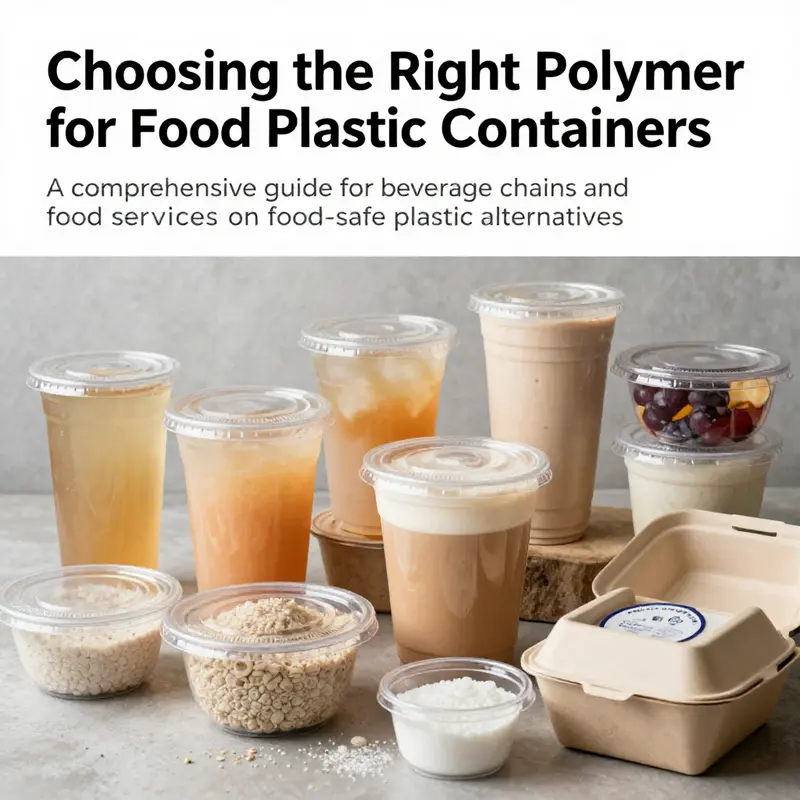
As the demand for efficient and safe food packaging grows, understanding the types of polymers used in food plastic containers becomes essential for businesses in the food industry. From bubble tea shops to catering services, the choice of polymers not only affects food safety but also impacts sustainability initiatives. This article will explore the various types of polymers commonly used in food containers, their properties and benefits, ensuring safety through standards, and emerging trends that can guide future decisions in your packaging strategies.
Clarity, Strength, and Safety: PET, HDPE, and PVC in Modern Food Packaging
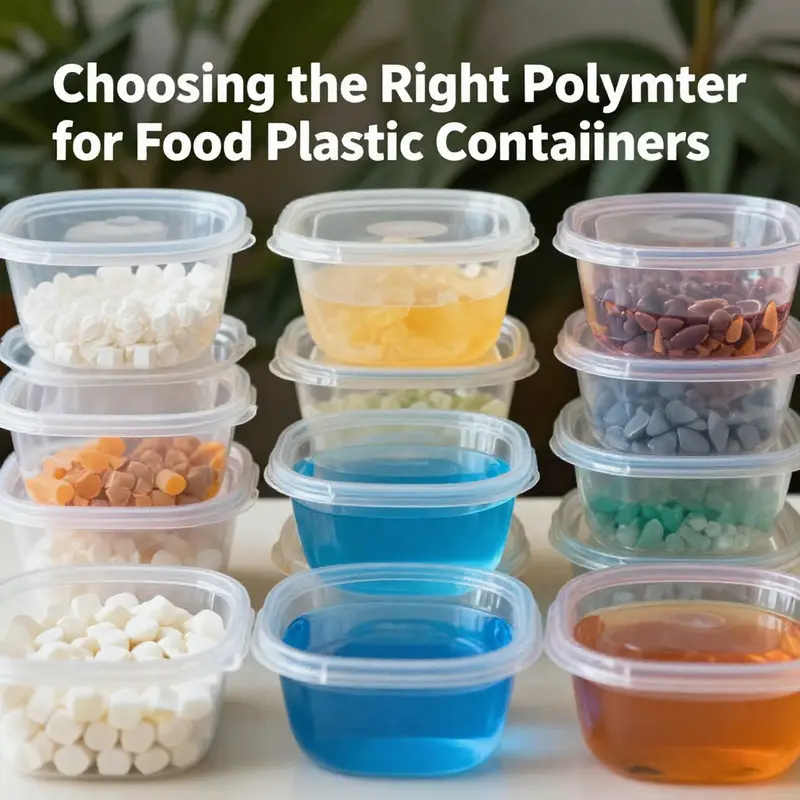
PET, HDPE, and PVC are among the most widely used polymers in food packaging because they offer complementary balance of clarity, strength, barrier performance, and processability. PET provides high clarity and good moisture and gas barriers, making it a staple for beverages and visible food containers. Its lightweight nature also reduces transportation impact, and it is widely recyclable in many regions. HDPE is prized for rigidity, chemical resistance, and compatibility with a broad range of foods; it’s common in milk jugs, bottles, and sturdy tubs, and it can also be processed into films and liners. PVC offers versatility in both rigid and flexible formats, including wraps and films, but its use in direct food contact has declined in some markets due to health and safety concerns related to additives, driving a shift toward safer alternatives. Together, these polymers support a packaging ecosystem where performance must be balanced with safety, recyclability, and life-cycle considerations. Material choice depends on the product, storage conditions, regulatory requirements, and the capability of existing manufacturing and recycling streams. As the industry evolves, emphasis on safer additives, clearer labeling, and improved recycling pathways continues to shape how PET, HDPE, and PVC are used in the modern food supply.
Clear, Strong, and Heat-Ready: How PET, HDPE, and PP Shape the Modern Food Container
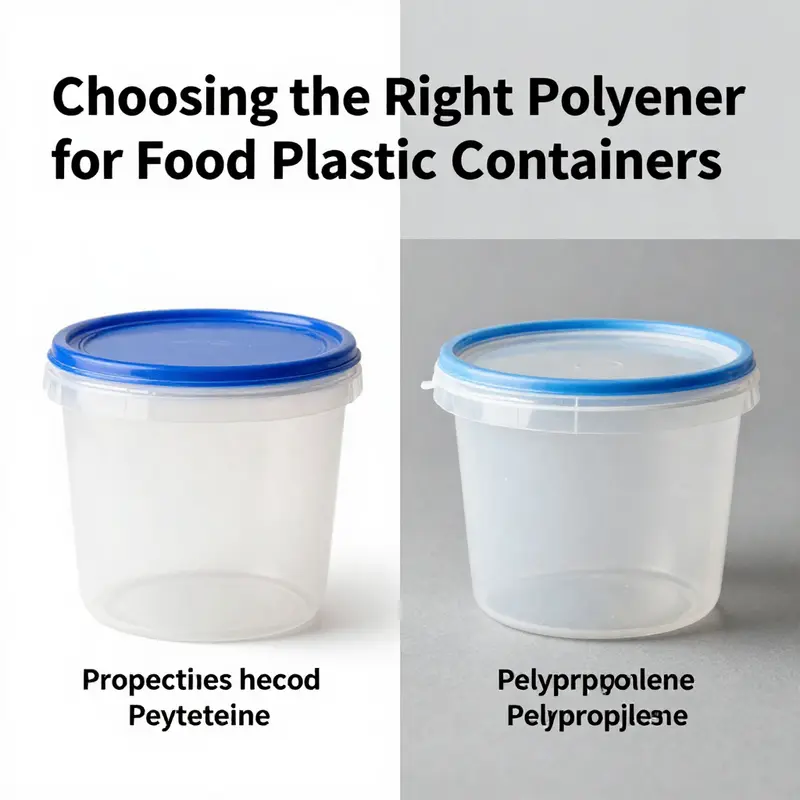
The choice of polymer for a food plastic container is more than a materials curiosity; it is a careful balance of protection, performance, safety, and practicality. When a product travels from a kitchen to a shelf, then into a consumer’s hands, the container plays a silent but critical role. It must preserve taste and texture, keep moisture and gases in check, endure the handling and storage conditions it encounters, and do so without compromising the food’s safety. In this landscape, three polymers repeatedly rise to the top of the design conversation: Polyethylene Terephthalate (PET), High-Density Polyethylene (HDPE), and Polypropylene (PP). Each brings a distinct profile that makes it the material of choice for particular uses while shaping how manufacturers address cost, sustainability, and regulatory compliance. Understanding these polymers in tandem helps explain why certain containers are crystal clear, others are opaque and sturdy, and still others are built to survive high temperatures in microwaves or hot-fill processes. It also clarifies why some materials are favored for short-term, single-use packages while others support durable, reusable designs that are opened and closed countless times. The overarching frame for this discussion is safety and functionality, anchored by a simple premise: a food-contact polymer must not migrate harmful substances into the food, must maintain its performance across a range of temperatures and handling scenarios, and should align with consumers’ expectations for freshness and convenience. Within this frame, PET, HDPE, and PP each perform a specific function with a distinct set of advantages and trade-offs that continue to guide product developers and brand owners as they navigate evolving consumer demands and regulatory landscapes.
PET stands out for its lightness, clarity, and barrier performance. In many ways, PET is the face of food packaging: a transparent shell that lets a product speak visually while acting as a barrier to moisture and gases. Its exceptional clarity makes it highly appealing for juice, water, yogurt, and many ready-to-eat meals where visibility matters. The material’s high tensile strength and rigidity help create containers that resist deformation during transport and stacking, which translates into reliable logistics and efficient shelf space. Importantly, PET’s chemical resistance means it generally stays inert with a broad range of foods, including acidic and oily items, preserving flavor and integrity. For the consumer, that translates into confidence: the product inside looks appealing, and its taste and aroma remain true to the original formulation. PET’s barrier properties also play a decisive role in extending shelf life by limiting moisture transfer and reducing the ingress or egress of gases that would otherwise affect freshness. Beyond performance, PET’s relatively low weight contributes to lower transport emissions, and its recyclability adds a sustainability thread that resonates with modern packaging strategies. When a beverage bottle or a short-term meal container is designed around PET, the goal is often to maximize clarity and barrier integrity while enabling efficient recycling streams that recover the material for new products.
HDPE brings a different set of strengths to food packaging. Its reputation rests on durability, chemical resistance, and resilience in the face of temperature fluctuations. HDPE containers are typically opaque, which is not a drawback but a feature: the material’s opacity helps protect light-sensitive contents, such as certain oils and dairy products, from photodegradation and flavor changes. HDPE’s chemical resistance is particularly valuable for storage of liquids and semi-liquids, including oils, milk, and detergents, where contact with a range of substances is common. The polymer’s ability to withstand higher temperatures without deformation makes it suitable for hot-filled or heated handling scenarios, although it is not generally used for direct microwaving of food unless compatibility with the specific product is confirmed. The robustness of HDPE also translates to excellent impact resistance, which is a practical benefit in consumer environments where containers are stacked, dropped, or heated in transit. In addition to safety and performance, HDPE’s cost-effectiveness makes it an accessible option for durable, high-volume packaging. It is a reliable backbone for containers that must endure repeated use, chemical exposure, and various storage conditions without compromising shape or function. HDPE’s role in the packaging ecosystem often centers on reliability and protection, ensuring that a product remains stable and unaltered from production through distribution and at home.
PP occupies a middle ground that is especially valued for heat resilience and reusability. Polypropylene is famed for its high heat resistance, which supports a wide range of applications—from microwave-safe boxes and takeout containers to yogurt cups and other cups designed for repeated heating and cooling cycles. PP’s toughness and flexibility mean that containers can be lighter and more durable than alternatives that shatter or warp under stress. This resilience is paired with good moisture and odor barrier properties, making PP a strong candidate for products that require a balance of protection and reusability. Its partial transparency, when processed correctly, allows for consumer visibility without sacrificing the barrier benefits, adding to user-friendly designs where seeing the contents matters. Moreover, PP’s safety credentials—its compatibility with food contact and its ability to maintain structural integrity after many thermal cycles—make it a favored material for home and commercial kitchens where containers are used repeatedly for storage, reheating, and transport. The combination of heat resistance, toughness, and relative lightness allows PP to support both single-use and reusable formats, enabling diverse packaging strategies that align with evolving consumer expectations around convenience and sustainability.
It is essential to situate these polymers within a broader safety framework. The “food-grade” designation is not a decorative tag; it is a formal assurance that the material has been evaluated and approved for contact with food under specified conditions. The designation addresses not only the base resin but also the additives, colorants, and processing aids used to tailor the polymer for a particular product and appearance. Sometimes, the concern centers on potential migration: low levels of substances that may transfer from the polymer to the food under certain conditions. Manufacturers mitigate these possibilities through established processing standards, barrier layering strategies, and strict supplier controls. In parallel, other materials, such as PVC, have faced increasing scrutiny due to the additives and monomers used in their production. The literature consistently encourages cautious use or avoidance of PVC for most food-contact applications, precisely because the health risks associated with certain additives can be difficult to manage through standard packaging designs. The contrast among PET, HDPE, and PP—each with its own barrier profile, heat tolerance, and mechanical behavior—emphasizes why a single polymer rarely fits every need. Instead, it is the thoughtful pairing of properties with intended use that guides the selection process.
This triad also highlights trade-offs that designers routinely navigate. PET’s clarity is a strong selling point for consumer appeal and product visibility, but its barrier performance, while excellent for moisture and many gases, can be outpaced by specialized multilayer structures that combine PET with other polymers or coatings to achieve even higher barrier performance. HDPE’s robustness and chemical resistance make it ideal for opaque, sturdy containers and for liquids that demand reliable containment, yet its transparency is limited unless special processing or tinting is employed. PP’s heat resistance empowers heat-tolerant and reusable designs but may involve compromises in clarity and, in some cases, cost, depending on the specific grade and processing route. The packaging engineer’s task, then, is to map the product’s journey—from farm to table or from lab to kitchen—onto the most appropriate polymer with an eye toward safety, recyclability, and total cost of ownership. In practice, this means considering the nature of the food (acidic vs. fatty, stable vs. highly volatile), the expected storage conditions (refrigeration, room temperature, or microwave heating), the handling reality (single-use vs. reusable), and the end-of-life scenario (recyclability or compostability pathways, where applicable). Even within a single class of polymer, the form factor matters: a clear PET bottle may represent a noticeably different design challenge than a PET tray or a PP yogurt cup, due to the geometry and surface interaction with contents. In short, the polymer choice is a design language that communicates not only product identity but also the expectations of freshness, safety, and convenience that define modern food packaging.
The conversation about polymers cannot ignore the broader supply and sustainability context. Recyclability, processing efficiency, and compatibility with global recycling streams influence the practical appeal of PET, HDPE, and PP. PET is highly recyclable and widely accepted in many curbside programs, with straightforward mechanical recycling pathways that support a circular economy narrative for beverage and short-term packaging. HDPE also benefits from robust recycling streams and a well-established material recovery framework, while PP, though highly versatile, sometimes faces more varied recycling outcomes depending on regional infrastructure and market demand for reclaimed resin. These dynamics reinforce that the most sustainable choice is not merely the best-performing resin in a vacuum but the resin that integrates smoothly into a closed-loop system, aligning with local capabilities and consumer expectations. The goal is to minimize environmental impact while upholding safety and performance, a balance that packaging developers continually strive to achieve as markets push toward reduced plastic waste and increased material reuse.
For readers who want a broader perspective on how these materials fit into industry standards and practices, a detailed external resource offers an in-depth guide to the standards, properties, and industrial applications of food container plastics. It provides a structured overview of how PET, HDPE, and PP are evaluated, certified, and implemented across different use cases, underscoring the regulatory and technical frameworks that shape everyday packaging decisions. Understanding Food Container Plastics: Complete Guide to Standards, Properties, and Industrial Applications.
On the internal side of the ecosystem, there are tangible packaging alternatives that reflect the same consumer priorities—safety, convenience, and sustainability—though they rely on different material families. For instance, consumer-ready, single-use packaging can be complemented by durable, reusable options designed for extended service life. A practical example in the packaging landscape is the availability of kraft paper-based bowls and containers that offer a compostable or recyclable alternative in many settings. These paper-based options illustrate how brands respond to growing interest in minimizing plastic use while still delivering functional, aesthetically pleasing packaging for food takeout and service environments. To explore one concrete example of this packaging approach, see the durable, disposable kraft paper bowl designs available here: disposable-700ml-kraft-paper-bowl-take-out-octagonal-rectangle-paper-bowl. This reference highlights the practical choices that operators make when designing packaging ecosystems that emphasize sustainability, while models that rely on PET, HDPE, and PP continue to dominate for many plastic-based applications where clarity, barrier performance, and heat tolerance are paramount.
In sum, the modern food container landscape is defined by a triad of polymers—PET, HDPE, and PP—that together cover a broad spectrum of needs. PET delivers clarity and gas barrier performance suited to beverages and short-term storage; HDPE offers rugged chemical resistance, high moisture barriers, and durability for opaque, heavy-duty containers; and PP provides heat resistance, toughness, and versatility for reusable and microwave-safe formats. Each polymer carries safety assurances, compatibility considerations, and processing realities that shape how products are designed, manufactured, and distributed. While the container forms and food types continue to evolve, the guiding principle remains constant: select the material that best preserves the product’s safety and quality while aligning with the consumer’s expectations for convenience, aesthetics, and responsible packaging. The ongoing challenge for the industry is to harmonize performance with sustainability, leveraging recycling systems and materials science advances to extend the life and value of the packaging, whether it is a clear PET bottle, a sturdy HDPE tub, or a heat-tolerant PP box. By keeping sight of the food’s needs and the consumer’s experience, designers and manufacturers can continue to deliver containers that protect flavors, maintain freshness, and travel confidently through the supply chain.
Safeguarding Meals: How Food-Grade Polymers Meet Standards in Plastic Containers
In the realm of modern food packaging, the safety of what touches our food is not a matter of chance but of rigorous design, testing, and regulation. The chapter that follows examines how the most common polymers used for food plastic containers are chosen, controlled, and kept within strict safety boundaries. To understand the choices, it helps to imagine a delicate balance: a package must protect the product from contamination and spoilage, yet it must not introduce any health risk to the consumer. This balance is achieved only when a material’s chemistry, its interactions with food, and the conditions of use are all accounted for by robust safety standards. The result is a family of food-grade polymers that are not only technically competent but also continually vetted by regulatory authorities around the world. When we talk about the polymers that most often appear in our kitchens and grocery aisles, the categories that repeatedly surface are High-Density Polyethylene, Polyethylene Terephthalate, and Polypropylene. Each has its strengths, and each serves different packaging roles with unique safety considerations that are baked into the design and the regulatory framework protecting food contact. HDPE, PET, and PP are the workhorses of modern food packaging, while PVC has steadily receded from the field due to concerns about additives and potential migration. Understanding why certain polymers rise to the top requires a closer look at what makes a material food-grade and how safety standards translate into practical packaging decisions.
Starting with High-Density Polyethylene, or HDPE, we see a polymer that earns its prominence through a combination of chemical resistance, toughness, and low propensity to release substances into food. The dense, tightly packed molecular structure of HDPE gives it the resilience needed for rigid containers, bottles, and essential storage shapes that must withstand repeated use or long periods of storage. From a safety standpoint, HDPE’s chemical resistance reduces the likelihood that acids, oils, or moisture will break down the polymer in a way that would invite leaching. This is not merely a theoretical advantage; it translates into measurable performance under common food handling conditions—refrigerated storage, room-temperature shelves, and, in many cases, limited heat exposure during transport or typical consumer use. Because of these properties, HDPE is widely adopted for packaging streams that require durability and chemical stability while maintaining economic efficiency for mass production. The result is a material that commands trust in both households and foodservice operations, reinforcing the broader aim of keeping the meal safe from the moment it is packaged to the moment it is consumed.
Polyethylene Terephthalate, or PET, represents another pillar in the modern packaging toolkit. PET is prized for its clarity, enabling consumers to inspect the product through the container wall, and for its strength with surprisingly light weight. These traits couple with excellent barrier properties against moisture and some gases, which helps preserve freshness and extend shelf life. PET is widely used for single-serve and short-term packaging scenarios such as beverage bottles and salad containers, where visibility and barrier performance are valued. From a safety perspective, PET’s barrier performance reduces the rate at which flavors, aromas, or oxygen can migrate into or out of the food, contributing to both safety and quality. However, the use of PET in more heat-exposed applications is more carefully considered, since heat can raise concerns about certain types of migration or changes in the polymer’s behavior. This is not a repudiation of PET’s safety, but a recognition that the context of use—temperature, duration, and food type—shapes the suitability of a given polymer for a particular container.
Polypropylene, or PP, provides a different set of advantages that make it a mainstay for containers intended to endure higher temperatures. PP’s heat resistance and stiffness make it ideal for microwavable boxes, takeout containers, and other reusable or semi-reusable packaging formats. The polymer’s performance under heat and its relative chemical inertness contribute to safety by reducing the likelihood of components breaking down or migrating into food when subjected to warm or hot conditions. PP’s ability to withstand repeated cycles of heating and cooling also supports sustainability efforts by enabling longer use in consumer settings, a factor that intersects with safety, hygiene, and lifecycle considerations. In practice, PP is often selected for containers that must maintain integrity in the face of thermal stress while continuing to provide a reliable barrier against food contact contaminants. The safety narrative for PP, much like for HDPE and PET, is grounded in controlled manufacturing processes, careful resin selection, and strict adherence to regulatory guidance that governs contact with food.
Against this trio stands PVC, a material that once had a larger foothold in food wraps and cling films. The modern stance on PVC in food contact applications has shifted markedly because additives used in PVC, including plasticizers, can migrate under certain conditions and raise health concerns for sensitive consumer groups. As a result, many packaging developers and manufacturers have moved toward safer alternatives that align more consistently with current safety expectations and regulatory priorities. The ongoing transition away from PVC in food contact applications reflects a broader precautionary approach in packaging design, one that weighs both present performance needs and potential long-term health implications. In this evolving landscape, HDPE, PET, and PP carry the bulk of the safety burden and the economic feasibility that keeps food packaging accessible while remaining compliant with high safety standards.
The practical dimension of safety standards becomes clearer when we consider how food-grade polymers are regulated. International and national bodies cooperate to define what constitutes safe contact between packaging and food. The core principle is migration: compounds that could move from the polymer into the food must stay below established limits under realistic use scenarios, including variations in temperature, duration, and the type of food involved. These guidelines are not abstract; they drive everything from resin optimization to the design of cosolvents, additives, and surface treatments that can influence migration. When a polymer is deemed suitable for food contact, it carries a food-grade designation that signals adherence to a defined safety framework. This designation is not a blanket approval for all uses; it is contextual, specifying which products, in which conditions, and for how long the polymer is considered safe.
Among the central regulatory concepts, a few points recur across jurisdictions. First, materials must be evaluated for potential monomer migration, additive migration, and any byproduct formation that could occur during processing or use. Second, the evaluation considers the full lifecycle of the product, acknowledging that packaging can be exposed to a range of temperatures and storage conditions. Third, the standards are dynamic, reflecting new scientific evidence and updated risk assessments. For these reasons, the decision to use HDPE, PET, or PP in a given container becomes a careful optimization task: the packaging engineer weighs the intended use, the expected contact conditions, and the regulatory expectations to select a polymer that will perform reliably without compromising safety.
The regulatory backbone supporting these decisions includes well-known frameworks and databases that practitioners consult daily. In the United States, guidance and compliance are anchored by federal regulations and agency oversight. One practical reference point is the set of guidelines that governs the use of polymers in food contact applications, which outlines permissible substances, migration criteria, and testing protocols. In Europe, equivalently stringent standards administered by safety authorities translate to compliance criteria that often align with the precautionary approach observed across many developed markets. It is essential for designers and manufacturers to stay informed about updates to these standards, because changes can reflect new toxicological findings, improved testing methodologies, or shifts in consumer safety expectations. The overarching aim remains the same: to ensure that the packaging system, from resin to finished container, sustains product safety without creating additional risks to those who consume the food contained within.
From a consumer perspective, the takeaway is not complicated. When selecting containers, one looks for materials that are widely recognized as food-grade, with a history of safe use in the intended application. This often includes HDPE for rigid, moisture-rich foods or where chemical resistance is paramount, PET for clear presentation and robust moisture barriers in shorter-term storage, and PP for heat-exposed or reheat-ready applications. The choice is not about a single universal martial law of plastics but about aligning the container with the meal’s journey—from delivery to dining table—while honoring the safeguards built into the material’s design and its regulatory treatment. In this sense, the chapter’s opening question—what polymer is used for food plastic containers?—unfolds into a more nuanced answer: a few workhorse polymers, each chosen for a specific role and each governed by a rigorous safety regime that keeps food, flavor, and health unrelated to the packaging.
Beyond the chemistry and the compliance, a broader, more practical current emerges in how packaging ecosystems are evolving. Safety standards are guiding not only what polymer meets today’s needs but also how packaging alternatives may compete with plastics. In parallel with polymer-focused safety, packaging developers increasingly explore paper-based and composite solutions where appropriate. Such shifts reflect a principle that safety extends beyond a single material to encompass the entire packaging solution, including surface treatments, adhesives, and packaging formats that influence compatibility with foods. To illustrate this evolving landscape, consider the broader packaging ecosystem where a consumer might encounter a range of packaging formats that balance performance with safety and sustainability. The selection of containers, whether a rigid HDPE box, a transparent PET jar, a heat-resilient PP clamshell, or an alternative like kraft paper-based packaging for restaurant use, is guided by the same core safety logic: protect the food, minimize risk, and comply with the governing standards. For readers who want to explore options that align with the safety-first ethos of food packaging while embracing greener formats, a representative example of paper-based packaging can be viewed at a related packaging resource that highlights how design choices translate into practical, safer alternatives in restaurant settings. kraft paper packaging for restaurants.
In sum, the dominant polymers in food plastic containers—HDPE, PET, and PP—emerge from a shared framework of safety that connects chemistry, processing, performance, and regulation. The narrative of how these materials earn their food-grade status is not a static triumph but an ongoing dialogue among scientists, manufacturers, and watchdogs who test, re-test, and refine the boundaries of acceptable use. The dialogue is anchored by formal guidelines and testing regimes that define what constitutes safe migration limits and what constitutes safe contact under defined conditions. This is why the containers we rely on to keep our meals safe are not merely functional shapes but carefully engineered interfaces between food and consumer health. The safety standards, ever-evolving and globally coordinated, ensure that the packaging we encounter in kitchens and markets remains compatible with the foods it contains, respects the consumer, and supports the integrity of what we eat. For those who wish to delve deeper into the regulatory framework that informs these decisions, official resources maintain a comprehensive catalog of approved substances and guidance that govern food contact materials, ensuring that safety remains a visible, actionable standard in the design and use of food packaging.
External resource: https://www.fda.gov/food/food-contact-materials/food-contact-substances
The Polymer Behind the Plate: How PET, PP, and PE Shape the Future of Food Containers
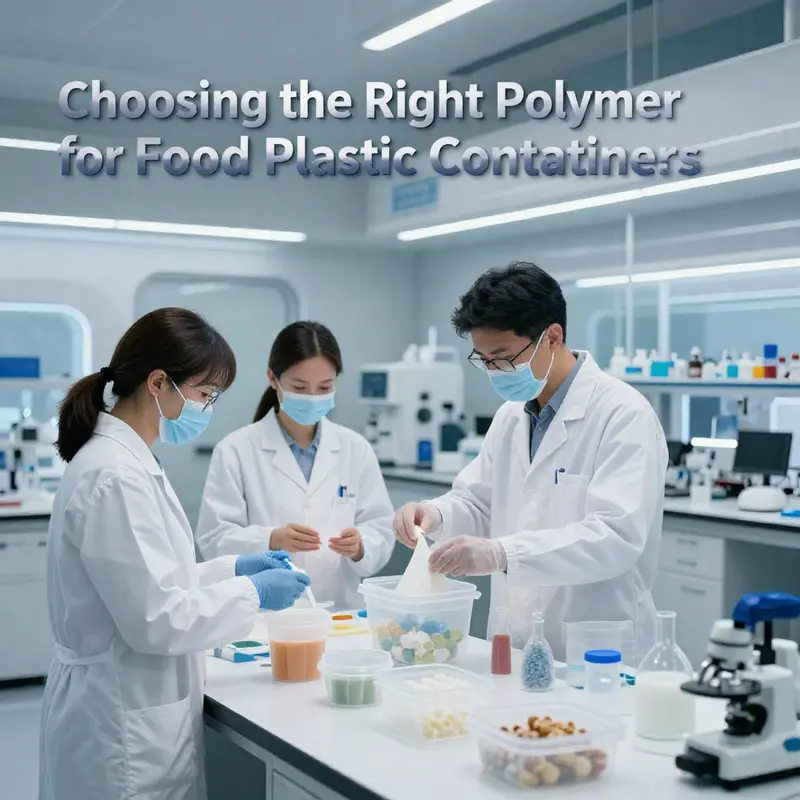
When we consider the polymers that stand between food and the world, the question is less about a single material and more about a family of plastics whose properties match the demands of different foods, environments, and consumer expectations. The dominant players are polyethylene (PE), polypropylene (PP), and polyethylene terephthalate (PET), with each bringing a distinct balance of strength, clarity, heat tolerance, barrier performance, and cost. In practice, manufacturers select among these polymers—or combine them in multilayer formats—based on what the product needs to preserve, how the container will be used, and how it will be recycled after use. The choice is never abstract; it directly affects shelf life, safety, and the environmental footprint of a package that travels from factory to table. At a high level, the landscape breaks down into three familiar pillars: PE, PP, and PET. Within PE, the material spectrum splits into HDPE and LDPE, each tailored to different packaging formats. HDPE offers the rigidity and chemical resistance demanded by sturdy, reusable food-storage containers, while LDPE provides the flexibility and rugged softness ideal for bags and films. PP, on the other hand, is celebrated for heat tolerance. It stays reliable when exposed to warm temperatures, making it the obvious choice for microwave-safe boxes and hot-filled foods. PET completes this trio with its own suite of advantages. It is prized for its high clarity, permitting product visibility that boosts consumer appeal, and for its gas barrier properties that help preserve flavors and extend shelf life. PET’s strength and relatively light weight also contribute to energy efficiency in transport—an important consideration in a world increasingly attentive to sustainability. Yet PET is more than a pretty face in the display case; its suitability for food contact is underpinned by decades of safety validation. When PET is used for beverage bottles, jars, and many liquid-food packages, its chemical compatibility with water, juice, sauces, and other consumables is well established. The surface you see is a reflection of much more than aesthetics; it is a carefully engineered interface between product and consumer. PET’s barrier to moisture and gases helps minimize seepage of oxygen or carbon dioxide that would otherwise accelerate staling or spoilage. This barrier performance is not simply about keeping liquids from escaping; it is about maintaining the integrity of the product inside—its taste, aroma, texture, and nutritional profile—during storage, transport, and display. The material is also inherently recyclable, a factor that has never been more central to packaging decisions as brands pursue circular economy goals. Recyclability reduces the environmental footprint of packaging and enables a supply chain to recover and reprocess PET into new containers or other products. In practice, PET’s recyclability is partly why it remains a benchmark material for food contact packaging—especially for bottles and jars that emphasize clarity and barrier performance. The picture of PE and PP reappears in many dairy and pantry applications as well, where HDPE’s stiffness and chemical resistance ensure safe storage of oil, sauces, and other viscous foods, and LDPE’s flexibility suits bags and liners that shield contents from contamination while enabling convenient, consumer-friendly handling. PP, meanwhile, has earned a reputation for its resilience under heat, a feature that makes it indispensable for containers that require sterilization or hot filling. In short, the polymer choice for food containers is a nuanced decision built from fundamental material properties, processing compatibility, and the realities of the supply chain. The safety dimension cannot be overstated. All three polymers can be designated as food-grade, a designation that reflects validated safety for direct contact with edible products. This is not merely a label; it signifies adherence to regulatory and standards-based frameworks that govern migration of additives and monomers into food, ensuring that packaging does not introduce unintended substances into meals. The safety envelope expands when designers explore multilayer film architectures. In many cases, a single polymer falls short of the required barrier properties for certain shelf-life targets or storage conditions. A common solution is to combine layers of PET, PP, and EVOH (ethylene vinyl alcohol) with strategic tie layers that hold the materials together while preserving the integrity of each layer’s barrier performance. This multilayer approach leverages PET’s clarity and mechanical strength, PP’s heat resistance, and EVOH’s superior barrier to gases and moisture. The result is a versatile packaging system that can protect delicate products such as beverages, liquid foods, or high-fat contents while enabling efficient manufacturing and recycling strategies. It is here that the future of food containers becomes particularly dynamic. The push toward sustainability is reshaping material choices and the ways we think about waste. Biobased polymers, including bio-based PET variants and alternatives like polylactic acid (PLA), are drawing attention for their lower reliance on fossil resources. While these options do not replace PET in all roles, they offer pathways to reduce life-cycle emissions and align packaging with evolving environmental expectations. At the same time, innovations in multi-layer films are enabling thinner, lighter, and more recyclable solutions. For example, blending PET with EVOH and PP in carefully engineered configurations yields films that hold moisture and gas in just enough to preserve product quality while still allowing effective end-of-life separation and recycling where infrastructure exists. These advances respond to the realities of global regulation, consumer demand for safer products, and corporate commitments to reduce plastic waste. Regulations such as GB4806.10-2025 in China are signaling tighter standards for food contact materials, prompting manufacturers to scrutinize every layer of their packaging, from resin choice to coating strategies and migration testing. PET continues to be a central reference point in this regulatory landscape thanks to its well-established performance and robust recycling ecosystem. Its ability to be recycled into new bottles or other PET applications supports circular economy ambitions and helps brand owners meet ambitious sustainability targets without compromising product integrity. Yet the story is not purely about PET. The other major polymers—HDPE, LDPE, and PP—remain essential for forms and functions that PET cannot easily fulfill. HDPE’s rigidity makes it ideal for sturdy milk bottles and condiment containers that need to survive stacking, temperature fluctuations, and rough handling. LDPE’s flexibility benefits flexible packaging and liner materials that wrap or protect products in transit. PP’s heat resistance supports containers designed for hot fillings, microwaving, or sterilization steps that some foods require before consumption. The interplay among these polymers is not accidental. It reflects a deliberate balance of properties—clarity, barrier performance, chemical resistance, mechanical strength, and thermal stability—matched to the needs of the product and the consumer’s workflow. In practice, the industry often treats these materials as a palette rather than a single pigment. A given product might ride on a PET container if clarity and gas barrier are paramount, while a sauce or cream might demand PP’s heat tolerance or HDPE’s chemical resistance. A film or lid may incorporate EVOH for gas barrier enhancement, with PET providing the structural backbone and PP contributing heat stability where required. This composite logic is not a distraction from safety and performance; it is a refinement that enables more precise control over preservation, portioning, and consumer convenience. The future holds further promise in the realm of sustainable packaging, where recycled content and compatibility with sorting streams become critical design criteria. The rise of multi-layer films signals a pragmatic approach: we can tailor barrier properties and end-of-life pathways without sacrificing product safety. The growing interest in bio-based feedstocks adds another dimension. Bio-PET, for instance, can offer the same performance advantages as conventional PET but with a different raw material footprint. While not a universal substitute, these materials expand the toolbox for packaging engineers seeking to align with corporate sustainability goals and regulatory expectations. The broader implication is clear: the polymer chosen for food containers is not a fixed relic of past practice but a dynamic decision guided by product needs, processing capabilities, and environmental responsibilities. For manufacturers, the path forward involves rigorous migration testing, compatibility studies, and lifecycle assessments, all aimed at ensuring that the packaging safeguards the food while minimizing ecological impact. In parallel, the packaging ecosystem continues to diversify with paper-based and other non-plastic formats competing for shelf space and consumer attention. The idea of a single dominant material giving way to a monolithic future is replaced by a more nuanced view in which PET, PP, and PE coexist alongside innovative barrier films and bio-based options. To illustrate the practical dimension of these developments, consider how a typical beverage or liquid-food container is designed: PET forms the clear, stiff container that shows the product and acts as the barrier; a thin PP or EVOH layer improves gas resistance where needed; and the cap or seal materials are chosen to complement the resin’s performance while ensuring leak-free operation. The packaging designer must also account for consumer handling—how the container is opened, poured, heated, or stored in a refrigerator—so that the material responds predictably to real-world use. And beyond function, there is the matter of end-of-life. The recyclability of PET makes it highly attractive, but the presence of multiple layers can complicate recycling streams. This tension between performance and recyclability informs ongoing research and industry practices. In some cases, it motivates the use of mono-material designs or simpler multilayer arrangements that maintain functionality while facilitating sorting and reprocessing. As the field evolves, a practical takeaway emerges: when choosing a polymer for a given food container, prioritize the alignment of material properties with the product’s storage conditions, processing steps, and consumer use pattern, while also considering the packaging’s ultimate fate in the waste stream. For readers who are curious about alternatives to plastic packaging, or who want to explore how paper-based designs fit into this landscape, a useful resource on kraft paper packaging is available here: disposable-octagonal-box-restaurant-food-kraft-paper-packaging. This link offers a tangible contrast to plastic solutions and underscores the broader packaging ecosystem in which PET, PP, and PE operate. Ultimately, the chapter of packaging science that concerns food contact materials is not about any single polymer but about the disciplined synthesis of materials, design strategies, regulatory compliance, and sustainability thinking. PET stands as a benchmark for transparency, barrier properties, and recyclability, and PP and HDPE complement this with heat resistance and chemical durability where needed. The future will push toward smarter, more efficient, and more recyclable configurations, while still guaranteeing food safety and quality. The path forward is guided by policy developments and by ongoing innovations in multi-layer materials, coatings, and bio-based feedstocks—developments that will shape how containers protect, preserve, and present the foods people rely on every day. External resources that provide broader industry context and supplier perspectives can deepen understanding of these trends. For additional context on industry standards and supplier context, see external resource: https://www.xianglongcontainer.com/.
Final thoughts
As the food industry continues to evolve, the choice of polymer used in food plastic containers will play a pivotal role in not just ensuring safety and quality, but also in aligning with sustainability goals. Understanding the distinct characteristics of polymers like PE, PP, and PET can empower businesses to make informed decisions that enhance their service offerings while meeting regulatory standards. Moving forward, staying abreast of innovations and trends in food-grade materials will better position your establishment for success in an ever-competitive market.