

Understanding the safety of clear plastic cups in microwave conditions is crucial for beverage-focused businesses. For bubble tea shops, restaurants, food trucks, and catering services, ensuring the right materials are used can significantly impact both safety and customer satisfaction. This guide delves into the essential aspects of microwave safety for clear plastic cups, starting with an overview of the materials and standards that define microwave safety. Following that, we will explore how to identify microwave-safe features, ensuring that your operational choices align with safety regulations. Finally, we’ll discuss the risks of using non-safe plastics in microwaves, spotlighting the importance of informed procurement practices and operational choices.
null
null
Clear Cups, Clear Heat: How to Identify Microwave-Safe Clear Plastic Cups and What It Means for Everyday Use
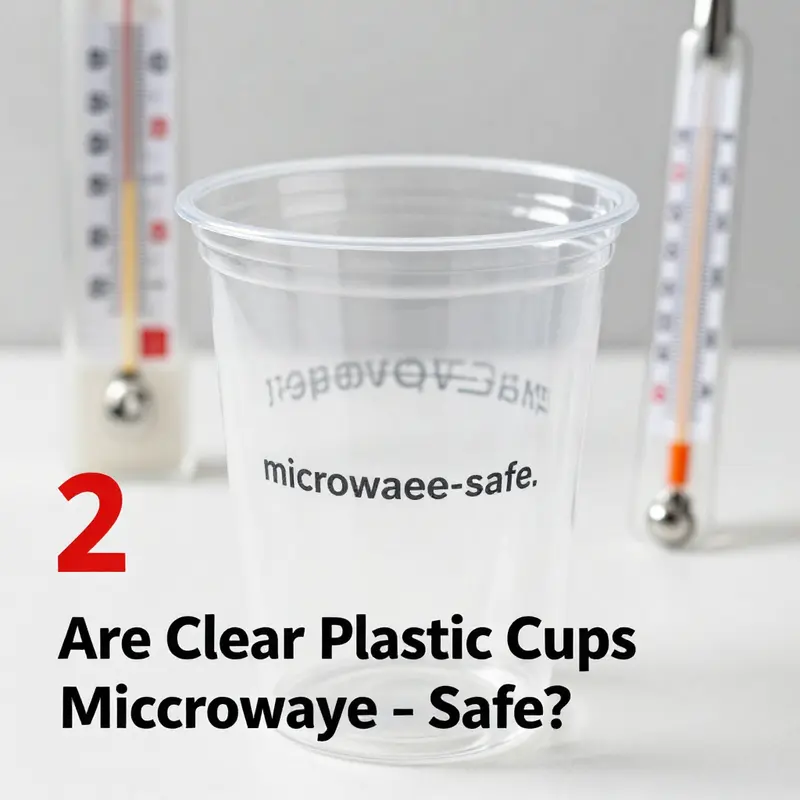
When a reader asks whether clear plastic cups are microwave safe, the reply is rarely a simple yes or no. The short answer hinges on two practical questions: what material the cup is made from, and whether the product has been labeled or tested for microwave use. The reason the answer feels nuanced is that the world of disposable plastics is not monolithic. A clear plastic cup can be perfectly engineered to handle brief bursts of microwave energy, yet the same category of products can readily fail under heat, warp, or even release substances when heated for longer periods or at higher power. Understanding this requires looking at the core material science, the labeling practices that signal safety, and the everyday decisions a consumer makes in the moment of heating a drink or reheating a snack.
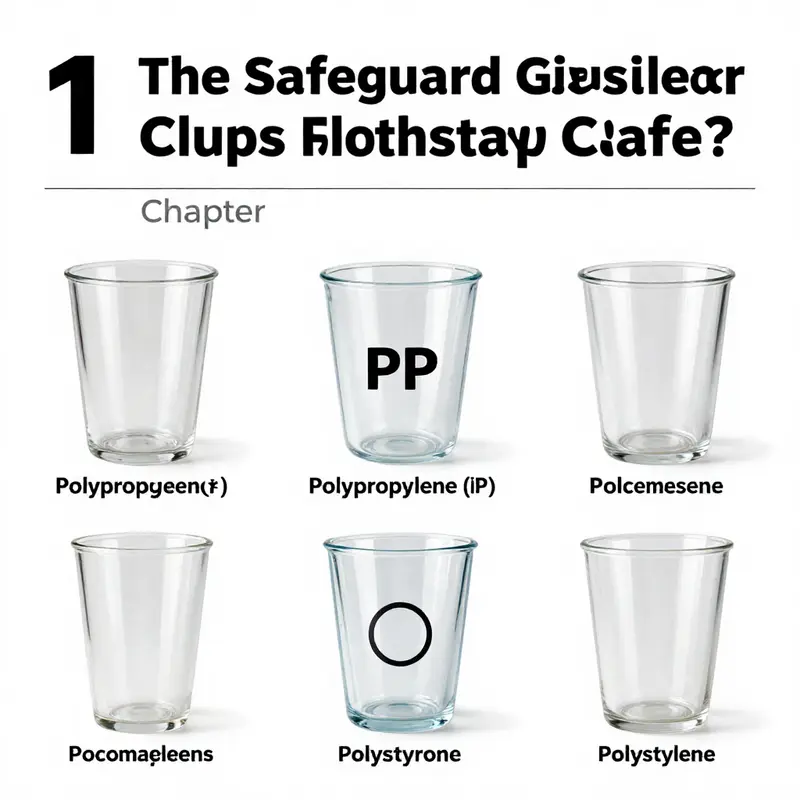
Material choice is the most consequential factor. In the spectrum of plastics used for clear cups, polypropylene, identified by the recycling symbol #5, stands out as the material most commonly associated with microwave-safe performance. Polypropylene has a relatively high heat resistance compared with many other plastics used for single-use cups. It can withstand the kind of brief, repeated microwave exposure typical of warming a beverage or a small amount of liquid, without melting or toppling into a warped shape that would compromise both performance and safety. When a clear cup is explicitly described as polypropylene and bears a label indicating microwave safety, that combination—clear appearance plus the right polymer—is what makes it a reasonable choice for quick warm-ups.
In contrast, other plastics in the same family of products often do not share that safety margin. Polystyrene, often seen in #6 recycling codes, along with PVC (polyvinyl chloride) and polycarbonate (often associated with #7, the “other” category), generally do not offer the same heat tolerance or the same tests for microwave exposure. These materials are more prone to warping or to leaching into beverages when heated, especially if the cup is used repeatedly or subjected to higher microwave settings. It is not merely a matter of the cup “holding up” visually; it’s about chemical stability under heat, the potential for microstructures to loosen or migrate, and the overall integrity of the container in contact with hot liquids.
From a consumer behavior standpoint, you will see clear cups marketed for both hot and cold drinks, and the labeling often reflects this intent. A well-marked option will clearly say “microwave-safe” on the cup itself or on the packaging, and it will likely specify polypropylene as the material. It is precisely these cues—the material designation and the explicit microwave-safety label—that transform a potentially risky impulse into a controlled, low-risk choice. Without those cues, the defaults become uncertainty and risk: you might assume safe use because the cup is clear, or you might assume it’s unsafe and avoid heating at all, which is not the desired outcome either. The middle ground, supported by evidence, is to actively verify the features that truly determine safety.
To identify the safest path, consider three core features that researchers and safety-minded consumers consistently emphasize. First, the microwave-safe label is the most reliable indicator. Look for a symbol that resembles wavy lines or a straightforward declaration such as “Microwave-Safe.” This label signals that the product has undergone testing for short-term microwave use. Second, confirm the material composition. The safest clear cups for heating are those made from polypropylene (PP). When the cup states it is PP and is paired with a microwave-safe declaration, you have a strong basis for heating a beverage or light liquid in short increments. Third, actively avoid certain plastics that have a poorer track record in microwave environments. If the cup’s material is polystyrene (PS), PVC, or polycarbonate (PC), or if there is any doubt about the absence of coatings or adhesives that interact poorly with heat, treat the cup as unsuitable for microwaving.
It is worth noting that the labeling itself is a trust signal—and no signal is perfect if it is ambiguous or absent. The most reliable practice is straightforward: check the label, verify the material, and confirm that the product description or packaging mentions microwave safety. In today’s marketplace, you will often encounter clear cups explicitly designed for hot beverages and for short microwave sessions. The presence of a microwave-safe claim is not just a marketing flourish; it usually corresponds to a real test regimen that ensures the cup can handle the heat of a brief warming without compromising its structural integrity.
If you flip through product descriptions or packaging, you may encounter a straightforward statement along with a symbol. The symbol is typically a stylized plate or a set of wavy lines that visually communicates the intended use. Some packaging might also provide guidance about maximum heating duration or recommended power level. While such specifics vary by manufacturer, the overarching principle holds: a credible microwave-safe label accompanies a PP-based composition or a similar heat-tolerant plastic, and it is this pairing that earns the right to be used in a microwave for short periods. When the cup lacks this labeling or if the material is not PP, the prudent choice is to transfer the liquid to a container that is clearly designed for microwaving.
A practical way to navigate choices while shopping or packing a beverage is to look for certain cues prior to purchase or use. First, confirm the material code and the presence of a microwave-safe label. Second, if the product description mentions polypropylene, that is a good sign, but do not rely on the mere appearance of “clear” to infer safety. Clarity does not itself guarantee heat resistance; it is the polymer’s properties that determine how the cup behaves under heat. Third, be mindful of using cups with metal closures or metal rims when heating in a microwave. The presence of any metal can cause arcing, damage the appliance, or degrade the cup’s performance regardless of the plastic’s inherent safety. These cautions are not about scaremongering; they reflect the real physics of microwaves, where metal acts as a reflector and can concentrate heat in unintended ways.
In this context, a practical question often arises: how much heat is too much for a clear PP cup? The answer hinges on the intended short-term heating scenario. Polypropylene’s heat resistance is high relative to many other consumer plastics, which makes it suitable for warming beverages to a reasonably comfortable drinking temperature. However, even PP has limits. If you place a polypropylene cup with a hot beverage inside into a microwave at high power for more than a short burst, you risk warping, deformation, or, in worst cases, softening of the cup’s walls. A warped container can leak or alter the texture of the beverage, while a softened cup can become difficult to hold or even fail under pressure. The guiding principle is to use the cup only for brief reheating sessions or to heat to a target temperature that remains well below the melting point of the material. If you need to raise a beverage to a boiling point or sustain heat over a longer duration, transfer the liquid to a container that is explicitly designed for such heating.
Clear cups, by virtue of their transparency, invite a quick, intuitive assessment: if you can see the contents, you might feel confident that you know what is happening inside. Yet visibility does not replace material science. A translucent cup made from a heat-tolerant polymer is not the same as a transparent cup made from a glass substitute or a multi-layered plastic with a protective coating. When the cup is intended for hot beverages, the manufacturer often provides a complete set of safety assurances: the plastic type, a microwave-safe label, and sometimes guidance on safe maximum heating durations. Consumers who want to combine convenience with safety should center their practice on these assurances, and not on visual cues alone. In the absence of explicit guidance, the safest approach is to refrain from microwaving or to use a container explicitly designed for it.
Even if a cup is labeled as microwave-safe, that label is not an invitation to extend heating indefinitely. The label typically covers short-term heating scenarios, such as a warming cycle for a drink or a small amount of liquid. Prolonged heating, repetitious cycles, or heating at high power can introduce different risks, including chemical leaching that occurs more readily at elevated temperatures. The science behind leaching is complex and depends on the exact chemical composition of the plastic, the presence of any additives or coatings, and the duration and intensity of microwave exposure. The bottom line for consumers is straightforward: treat microwave-safe labeling as a permission for short, controlled heating, not a universal guarantee for long cooking sessions.
Because the vast majority of clear cups are sold in a disposable context, the packaging often assumes a one-time or limited-use model. In such cases, even if a cup is labeled microwave-safe, it is wise to consider the context in which you are using it. Short heating sessions are generally acceptable, but using a disposable cup to heat a beverage repeatedly, or attempting to boil liquid in it, crosses into a zone where the material may degrade or fail. If you’re reheating a beverage or warming a small amount of liquid on a regular basis, consider transferring the content to a purpose-built microwave-safe container designed for repeated use. The aim is to balance convenience with safety, rather than to stretch a disposable product beyond its intended life.
Connecting theory to practice, some buyers choose to keep a simple rule in mind: if the cup does not clearly declare microwave safety or if the material composition is not PP, do not microwave or do so only for a very brief test with a minimal amount of liquid and at a low power setting. For those who prefer more definitive guidance, there are straightforward ways to verify compatibility at home. A quick test includes filling the cup with water and microwaving it briefly in short intervals, then inspecting the cup for any signs of deformation or odor changes. If the cup remains stable and the water reaches a warm, not scalding temperature, the cup has demonstrated a basic level of compatibility for a controlled warming cycle. If any sign of warping, softening, or off-odors appears, discontinue use and switch to a container that is clearly microwave-rated.
The broader landscape of consumer choice is shaped not only by material science and safety labels but also by the way products are marketed and sold. In the online and retail world, clear cups come in a wide array of sizes and shapes, from tiny 4-ounce cups to larger 20-ounce options. The labeling can vary widely across vendors, and some cups marketed as “clear” might still employ coatings or multi-layer constructions that influence heat behavior and safety. This is why the labeling works as the most trusted signal, followed by explicit material declarations. If a cup claims it is glass-clear while also carrying a defined plastic type and a microwave-safe claim, it is reasonable to treat it as a trustworthy option for short heating tasks. On the other hand, if the product lacks a clear material identification or a safety label, it is safer to assume it is not intended for microwaving.
For readers who want a practical entrance point into this topic, consider exploring options that explicitly indicate microwave compatibility within a conference of products designed for hot and cold beverages. Such products often include short-use guidelines, like heating up to a certain temperature in a given number of seconds, and may also highlight that they are suitable for brief reheating in typical household microwaves. The presence of these details is a signal that the cup was designed with an awareness of how households actually use microwaves, which is invaluable for everyday decision-making. When you encounter a description that mentions microwave safety, pay close attention to the language: does it say “microwave safe for short-term use,” or does it imply broader heating tolerance? It is that precision, more than anything, that distinguishes thoughtful design from marketing fluff.
Beyond the individual decision to microwave a cup, there is a larger implication for businesses and institutions that supply beverages in disposable cups. Cafés, event venues, and offices often face a trade-off between convenience, safety, and cost. If a vendor is supplying cups that are clearly labeled as polypropylene and microwave-safe, those cups can be integrated into processes that require quick reheating of beverages without resorting to metal containers or alternative packaging. The business decision, however, should include clear usage guidelines and a plan for user education. Staff who understand the limits of microwave-safe plastics can reduce the risk of accidents and ensure a safer, more predictable service. Consumers, in turn, benefit from this clarity, as it minimizes miscommunication and gives them confidence in the safety of their warmed drinks.
The role of labeling and material identification in microwave safety is not merely a box-ticking exercise. It is a convergence of science, manufacturing standards, consumer trust, and practical daily use. When you encounter a clear cup that claims microwave safety, your next steps should be systematic but simple: verify the material (look for polypropylene designation), confirm the microwave-safe label, and remember the caveat of short-term use. If any of these signals is missing or unclear, transfer the liquid to a container that has been explicitly designed for microwaving. This approach aligns with best practices in consumer safety and makes it easier to enjoy warm beverages without compromising the container or the appliance.
For those who want to connect these concepts to real-world shopping and usage, there is a straightforward path. In the world of disposable cups, the line between safety and convenience is drawn by clear communication from manufacturers and retailers. A product that clearly states polypropylene and microwave safety, accompanied by a recognizable microwave symbol, provides the strongest assurance. Conversely, a generic “clear cup” without material identification or safety labeling invites caution. In the long run, adopting a habit of checking both the material and the safety claims reduces the risk of accidental exposure to heated plastics and helps maintain the integrity of the beverage experience. The conversation about microwave safety in clear plastic cups thus combines material science, labeling conventions, and practical guidance into a single, coherent framework that consumers can apply without specialized equipment or knowledge.
As you plan your next coffee run, office refill, or home reheating session, consider how the choices you make about cups intersect with the broader concerns that govern food-contact materials. The principles apply not only to clear plastic cups but to a wide range of containers that come into contact with food and beverages. The emphasis remains the same: verify the material, confirm the safety labeling, and use the product within its tested limits. When you do this, you are not just following a rule; you are exercising informed care that protects your health, preserves your appliance, and sustains a more predictable, reliable experience with everyday heat.
To connect this chapter to practical resources for procurement and policy alignment, here is a relevant reference that gathers similar guidance in a supplier context: Wholesale take-away coffee paper cup with lids. This link offers context about the broader packaging ecosystem in which decisions about microwave safety for clear cups occur, especially in bulk or commercial settings where clear labeling and material consistency matter for safety and operational efficiency. It illustrates how the safe-use principle translates from individual consumer choice to corporate purchasing, reinforcing the importance of clear specifications in supplier communications and product data.
In sum, the question of whether clear plastic cups are microwave safe does not yield a universal yes or no. It yields a conditional yes—when the cup is made from polypropylene or another heat-tolerant polymer and is explicitly labeled as microwave-safe for short-term use. It yields a cautious no or a pull-back to alternative containers when the label is absent, the material is uncertain, or the product is not designed for heat. The best practice is to rely on the label, verify the material, and observe the cautions that accompany any microwave heating, particularly with disposable plastics. By holding to these principles, consumers can heat drinks quickly and safely, restaurants and offices can maintain consistent safety standards, and the everyday experience of warmth in a cup can stay enjoyable rather than hazardous.
External resource note: for a broader safety overview of microwaving plastics, see reputable consumer safety resources that discuss plastic packaging and microwave use. One such reference provides guidance on when and how to microwave plastics and helps interpret labeling beyond the single product level: FDA guidance on plastic packaging.
Clear Yet Cautious: Navigating the Microwave Use of Transparent Plastic Cups

The question of whether clear plastic cups are microwave safe invites a careful look beyond the surface shine of a transparent cup. On first glance, their clarity is inviting: a see-through vessel that promises to show your drink as it heats. But clarity does not guarantee safety in the microwave. The truth rests with the material, the manufacturing standards, and the labeling that accompanies the product. In the realm of disposable, single-use plastics, the material commonly used for many clear cups is polypropylene, identified by the recycling symbol #5. Polypropylene has a long-standing reputation for heat resistance and chemical stability relative to many other plastics. When cups are clearly marked as microwave-safe, they are typically the PP type, designed to withstand the kind of short, intermittent heating that accompanies reheated beverages and hot fluids. Yet this general rule should be taken with nuance. Not all clear plastics are created equal, and even among those that are PP, a certificate of safety depends on proper testing, adherence to manufacturing tolerances, and faithful labeling on the product packaging or description.
A pragmatic way to frame the issue is to separate the question of material from the question of labeling. Material alone does not certify safety; it is the combination of material plus a verified microwave-safe designation that matters. Some plastics, such as polystyrene (PS) or polyvinyl chloride (PVC), are typically not recommended for microwaving. These materials can warp, soften, or even release substances under heat. Meanwhile, polypropylene-based cups labeled as microwave-safe have become common in consumer markets, particularly in online retail environments where suppliers explicitly state that the product is suitable for both hot and cold beverages. The label often reads as a simple assurance: microwave-safe. It is a promise grounded in testing—tests that simulate household use, including brief bursts of high power or repeated heating sessions.
That said, a label is not a license to heat indefinitely. Even microwave-safe PP cups should be treated with caution. The heat generated by microwaves is not uniformly distributed, and hot spots can cause localized overheating. Repeated exposure to high heat can gradually wear down the structural integrity of the cup, leading to warping or micro-damage that isn’t immediately visible. In other words, a single, short session on a medium setting is not the same as prolonged heating on a high-power setting. The difference between a quick reheating burst and an extended warm-up matters for both the longevity of the cup and the safety of the liquid inside. The chemistry of plastics does not guarantee that all constituents remain inert under every condition. Even BPA-free formulations, while reducing certain risks, do not eliminate the possibility of chemical migration entirely if the conditions are extreme or sustained.
To understand why these distinctions matter, it helps to revisit what microwaving does to a plastic cup and the liquid it holds. Microwaves heat water molecules efficiently, and many hot beverages inherently contain some bound water. In a microwave-safe PP cup, the plastic is engineered to resist heating to the point of meltdown during typical kitchen tasks. But when the power is cranked up for minutes at a stretch, or when the cup is left in a very hot microwave for longer than intended, the polymer matrix can begin to soften or deform. The deformation is rarely dramatic at first; it reveals itself as a subtle warping or a loss of rigidity, which may alter the fit of the lid, the seal, or any sleeves designed to insulate the cup. The more insidious risk involves leaching. Modern PP cups are designed to minimize migration of additives into hot liquids, but no plastic is absolutely inert under all conditions. Heat can increase molecular motion, potentially promoting trace migration of additives from the polymer into beverages. The most discussed concerns in popular discourse involve BPA and phthalates, substances scrutinized for endocrine-disrupting effects. In well-regulated manufacturing contexts, BPA is typically minimized or eliminated in PP formulations used for food-contact applications. Still, labeling cannot guarantee absolute absence of all substances, particularly if a cup has coatings, colorants, or adhesives that are used to enhance clarity or strength. The bottom line is straightforward: if a cup is explicitly labeled as microwave-safe and is of a PP construction, it is generally considered safe for brief microwave use. If any label is ambiguous or the cup lacks such labeling, adopt a more cautious approach and consider non-plastic or glass alternatives for heating.
The consumer landscape reflects these distinctions in practical ways. Online marketplaces abound with clear plastic cups that claim microwave safety, and many of them are offered in sizes suited to hot beverages. A typical example described in product listings is a 22-ounce cup made from polypropylene, marketed as microwave-safe and suitable for hot drinks as well as cold ones. This dual suitability is not incidental. It recognizes that many households reheat beverages in a single short session rather than engage in long, steady heating. Yet even with such explicit claims, the user’s experience can diverge from the seller’s guarantee if the heating pattern differs from tested conditions. Short, intermittent microwave bursts on medium power are within the realm of what most microwave-safe PP cups are designed to withstand. Prolonged exposure, or using a very powerful setting, remains outside the tested envelope and should be avoided.
In this climate, best practices for safety begin with careful reading of the product label. A cup that proudly announces “microwave-safe” has already passed a benchmark, but that benchmark is meaningful only if the cup is used within the parameters of the testing. Short reheats, modest power, and brief heating durations align with typical consumer use. If a cup shows signs of change—warping, cloudiness, a gritty texture, or an unusual odor—refrain from continued microwaving and replace it. These signs are not merely cosmetic; they point to structural or chemical shifts that could compromise integrity or lead to unexpected leaching. When in doubt, choose an alternative container such as microwave-safe glass or ceramic, which tend to be more forgiving of longer heating sessions and do not carry the same concerns about chemical migration.
There is also a practical note about how one should handle the beverage inside the cup. Even when the cup itself is labeled microwave-safe, the contents may not be. A hot beverage can release steam, create pressure, or cause splashing if the lid is not vented properly. A lid that seals too tightly can trap steam and pressure, increasing the chance of spillover in the microwave. For many disposable cups sold for take-away use, a lid is included or readily available, and the combination of a vented lid with a microwave-safe cup reduces risk. If a lid is present, ensure it is designed for venting and that the contents are not heated to a point where pressure builds. Separating the beverage from the lid during heating for a moment can also reduce the risk of pressure-related issues when you return the cup to its closed state.
From a broader packaging perspective, the landscape of disposable cups is threaded with trade-offs between convenience, safety, and environmental impact. Clear cups that are microwave-safe typically emphasize a clean, transparent aesthetic and a straightforward heat tolerance profile. They are often part of a family of products that include compatible lids, sleeves, and related disposables designed to work together for quick-service and home use. The emphasis on safety does not negate the importance of sustainability; instead, it highlights the need for responsible use and disposal. Consumers who value both safety and environmental considerations may explore alternatives such as reusable containers or single-use options that are certified recyclable or compostable, depending on local waste streams. The central takeaway remains consistent: verify that the cup is explicitly designed for microwave use, use it only within recommended heating durations, and replace any cup that shows damage or degradation.
For readers who want a quick pointer to related packaging considerations, a practical resource can be found in broader discussions of disposable drinkware and its accessories. See the discussion on Disposable white paper lids for hot coffee cups for an example of how lids complement cup safety and usability in hot-beverage contexts. This link points to a related area of packaging design and underscores the importance of pairing cups with lids that are appropriate for microwave use and for the specific beverage you are heating. Disposable white paper lids for hot coffee cups.
In summary, clear plastic cups can be microwave safe when they are made from polypropylene and explicitly labeled as such, and when used according to the testing conditions on the label. The key caveat is that not all clear plastics are safe for microwaving, and even safe materials can degrade with prolonged exposure or high heat. Treat the label as a contract between manufacturer and consumer: respect the stated limits, inspect the cup for any signs of damage after heating, and favor alternatives when in doubt. The result is a practical balance between convenience and safety, one that recognizes how micro-level material science translates into everyday kitchen use. For further context on the specific materials involved and to see a real-world example of a microwave-safe polypropylene product, you can reference consumer-facing product listings that designate polypropylene and microwave safety. External reading: https://www.amazon.com/dp/B0C7XQZ6FJ
Final thoughts
Selecting the right clear plastic cups that are microwave safe is pivotal for the credibility and safety of your beverage services. By understanding the materials and safety standards, recognizing microwave-safe features, and being aware of the risks associated with non-safe plastics, you can make informed choices that protect both your customers and your brand. As the field of food service continues to evolve, staying knowledgeable on safe practices is key to maintaining high-quality service and ensuring customer trust.