
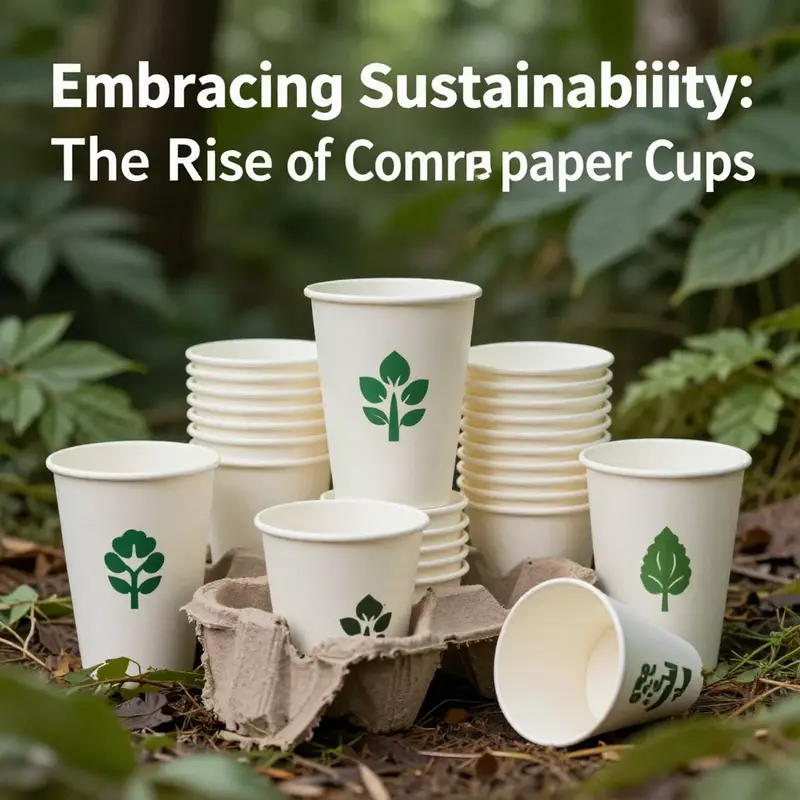
With an increasing focus on sustainability, businesses in the food service industry are seeking eco-friendly solutions to reduce their environmental footprint. Enter the compostable paper cup, an innovative alternative to traditional disposable cups. Designed to break down in composting facilities within a few months, these cups align with the growing movement towards sustainable packaging. Throughout this article, we will explore the myriad benefits of compostable paper cups, examining their materials, certification standards, and current market trends. From reducing waste to enhancing brand image, adopting compostable paper cups can help bubble tea shops, restaurants, food trucks, event planners, and corporate procurement teams take a significant step towards a greener future.
From Cup to Compost: Unpacking the Environmental Benefits and Real-World Pathways of Compostable Paper Cups
A quiet revolution is reshaping the way we think about everyday disposables. The humble paper cup, once a symbol of convenience and waste, is increasingly being reimagined as a conduit for material recovery and lower environmental impact. The shift hinges on a simple, powerful idea: design a product so that, at the end of its life, it can return to the earth with as little residue as possible and as much value as possible. Compostable paper cups embody that idea, moving away from petroleum-based plastics and toward renewable plant-based materials that can truly close the loop when pulled into the right waste stream. They are not a universal solution to all packaging challenges, but when deployed with an understanding of how and where they break down, they offer a meaningful path to reducing pollution, conserving resources, and supporting a circular economy that treats resources as valuable rather than disposable.
At the heart of compostable paper cups is a shift in materials and a shift in responsibility. Traditional disposable cups often rely on a paper shell lined with a polymer coating, typically a plastic that can hinder biodegradation. Compostable cups, by contrast, are crafted from renewable fibers—whether bamboo, sugarcane bagasse, or recycled paper—and employ plant-derived bioplastics such as polylactic acid (PLA) for lining or, in some designs, no plastic at all. This combination is chosen specifically to enable biodegradation in a controlled composting environment. Certification by recognized bodies, such as the Biodegradable Products Institute (BPI) or TÜV OK Compost, signals that these products have met defined standards for biodegradability and compostability, including timeframes, residue limits, and process conditions. When a cup is properly managed in an industrial composting facility, it begins a second life as a resource rather than a burden.
Science and policy converge here in a practical timeframe: industrial composting facilities, operating under the right conditions of temperature, moisture, aeration, and time, can convert compostable cups into stable compost within roughly four months. In the neatest terms, a cup designed for industrial composting can break down fully—leaving behind no harmful plastics or persistent pollutants. This material destiny matters. It reduces the volume of waste sent to landfills, where conditions are often anaerobic and slow to degrade, and it minimizes the long-term environmental footprint associated with non-biodegradable materials. The short but crucial arc—from production, through use, to a properly managed end-of-life pathway—emphasizes how these cups can contribute to a cleaner, less polluted landscape.
Yet the story of environmental benefit is not automatic. The promise of compostable cups hinges on disposal in certified industrial facilities. Home composting, though common for many kitchen scraps and some garden-friendly items, rarely provides the consistent conditions required to meet the standards of industrial composting. Likewise, landfills, which are designed to isolate waste from the environment rather than to promote decomposition, may not provide the time, temperature, or aeration necessary for complete biodegradation. This is why regional infrastructure and consumer behavior matter as much as the material science behind the cups themselves. A census of how widely industrial composting is available, and how reliably a community can separate compostable cups from other waste streams, becomes part of measuring environmental impact. Without a robust end-of-life network, even the most advanced compostable cup risks underperforming its potential.
To harness the full benefits, it helps to look at the lifecycle as a holistic system. The raw materials—whether fiber from bamboo, bagasse, or recycled paper—carry embedded energy and emissions associated with cultivation, harvesting, pulping, and transportation. The manufacturing step, including the production of plant-based linings and any coatings, introduces its own set of environmental considerations. Transport to the point of sale multiplies these factors, linking the cup’s footprint to the geography of suppliers, packaging, and distribution routes. Each stage matters because the overall environmental impact is a sum of these parts. In a circular economy, the emphasis shifts from “single-use” to “recover and return.” Compostable cups are a tool in that shift, designed to re-enter the system as compost that can nourish soil rather than occupy space in landfills.
For businesses, the practical question becomes how to integrate compostable cups into operations with clarity and accountability. This means aligning procurement with local waste-management capabilities, educating staff and customers about proper disposal, and adopting procurement criteria that emphasize certification, material composition, and end-of-life compatibility. A key part of this alignment is ensuring that the cups used are suitable for the intended composting stream. If a facility cannot accept certain coatings or liners, that cup may fail to yield the promised environmental benefits, even if it bears a credible certification seal. Education is essential here, because consumer expectations often hinge on signage and labeling at the point of sale. Clear guidance about where to deposit cups, what containers to use, and how to avoid contamination can transform a promising material into measurable environmental outcomes.
In practice, the disposal message matters almost as much as the product design. Businesses that provide compostable cups can bolster the environmental case by weaving disposal instructions into the customer experience. Signage near cups, staff prompts at checkout, and simple, memorable cues about disposal pathways help ensure that cups travel to the correct facility. When customers understand that their choice is not just about a beverage but about the end-of-life journey of the cup, they become partners in a wider sustainability effort rather than passive participants in a waste stream. The social dimension—creating a culture of responsible consumption—often proves as important as the technical one. This is the human side of a material solution: people choosing to return a cup to a facility that can compost it, rather than tossing it into mixed waste where it cannot fulfill its intended lifecycle.
From a policy and infrastructure standpoint, industrial composting capabilities vary widely by region. Some communities have robust networks of facilities; others rely on fewer options, or on transfer to neighboring areas. This variability means that anyone promoting compostable cups should actively map local composting options, identify nearby facilities, and consider partnerships that can help close the loop. A pragmatic approach might involve a hybrid model that takes advantage of home-compostable designs where appropriate, paired with robust industrial-composting channels for the more demanding materials. The goal is to design and deploy a system where the cup’s journey—from the producer’s facility to the consumer’s hand and finally to a composting stream—is predictable, traceable, and verifiable in outcomes.
Education also extends to the broader public health and environmental context. Compostable cups are not a panacea; they are one part of a broader strategy to reduce single-use waste and to shift toward materials that can return to the earth safely. They complement other sustainable choices, such as reusable cups, refill programs, and waste-diversion initiatives that include compost and recycling streams. The aim is not to demonize single-use items but to redesign them so that their end-of-life impact is minimized and, where possible, transformed into a resource that supports soil health and ecosystem function. In this sense, compostable cups contribute to a broader narrative about stewardship and resilience in the face of growing waste challenges.
To put the concept into a more tangible frame, imagine the cup’s trajectory as part of a circular flow. The plant-based materials reduce dependence on fossil feedstocks from the outset. The design aims to balance performance with biodegradability, ensuring the cup does its job of containing hot or cold beverages without leaking and without compromising recyclability or compostability. The certified standards provide guardrails that protect against greenwashing, offering assurances that the cup will behave as promised under industrial composting conditions. When the facilities, customers, and businesses align, the cup ceases to be merely a disposable object and becomes a reclamation tool—returning nutrients to the soil and enabling resource recovery.
In day-to-day terms, choosing compostable cups means weighing tradeoffs with care. They can often command a modest premium over conventional cups, a premium that reflects the renewable materials, the specialized processing, and the end-of-life management required to achieve true compostability. For many cafes, events, and institutions committed to reducing plastic waste, the investment is justified by the downstream benefits: lower landfill burden, potential reductions in overall packaging waste, and a narrative of environmental responsibility that resonates with customers, staff, and partners. When viewed through the lens of lifecycle thinking, the cost becomes an investment in a system designed to keep materials circulating, rather than a one-way expense that ends in a landfill bin.
A practical way to illustrate the real-world pathway is to consider how a venue might integrate compostable cups with existing operations. The first step is to verify that the cups chosen are certified for industrial composting and that the local facilities can accept them. The second step is to design the customer experience around compostable disposal: place clearly marked bins, train staff to guide customers to the correct stream, and offer brief explanations about why the cups matter and how to dispose of them properly. Third, align procurement with measured goals. Track waste diversion rates specifically for compostables, and report progress to stakeholders. This creates accountability and demonstrates that sustainability is not an abstract ideal but a living practice that informs every decision—from sourcing to service.
In this broader conversation, a simple cup becomes a case study in systems thinking. The environmental benefits accrue not merely from the materials themselves but from the system around them: how cups are designed, how they are used, how they are collected, and how they are processed after use. When customers understand that their cup-going-to-compost choice makes a difference, their actions reinforce the system’s integrity. This synergy between product design and human behavior is central to the environmental promise of compostable paper cups. It is not enough to produce a cup that is technically compostable if disposal practices undermine the system. Conversely, excellent disposal practices can multiply the environmental gains, turning a straightforward product into a powerful lever for sustainability across communities.
For readers who want to explore the broader framework behind these practices, the U.S. Environmental Protection Agency offers comprehensive guidance on compostable products and waste management practices. The EPA resource provides context for how compostable materials fit into a municipal and regional waste system, and it highlights the importance of standardized processes, labeling, and infrastructure investments that support true environmental outcomes. You can learn more at the EPA’s official guide on composting, which outlines best practices for implementing composting programs and selecting compostable products in ways that maximize environmental benefits: https://www.epa.gov/sustainable-management-waste/composting.
As the conversation around compostable cups continues to evolve, the central message remains clear: when designed for end-of-life recovery and supported by capable disposal networks, compostable paper cups can meaningfully reduce environmental impact. They offer a practical pathway to reduce landfill volume, lower long-term pollution, and support a circular economy that honors the value of resources. Their success hinges on thoughtful materials choices, certified standards, and a coordinated effort among producers, retailers, waste-management providers, and consumers. In that shared effort, the cup becomes more than a convenience. It becomes a participant in a healthier, more resilient ecosystem for the communities that drink from it—and for the planet we all depend on.
Internal link note: for readers exploring the practical application of compostable cups within take-out packaging, the following resource offers a relevant product category that aligns with the usage scenario described above: disposable-single-wall-paper-cup-12oz-16oz-kraft-coffee-cup-with-lid. This link provides context on cup designs that are commonly used in takeaway settings, illustrating how form, function, and end-of-life considerations converge in real-world deployments.
From Fiber to Cup: Materials and Manufacturing of Compostable Paper Cups
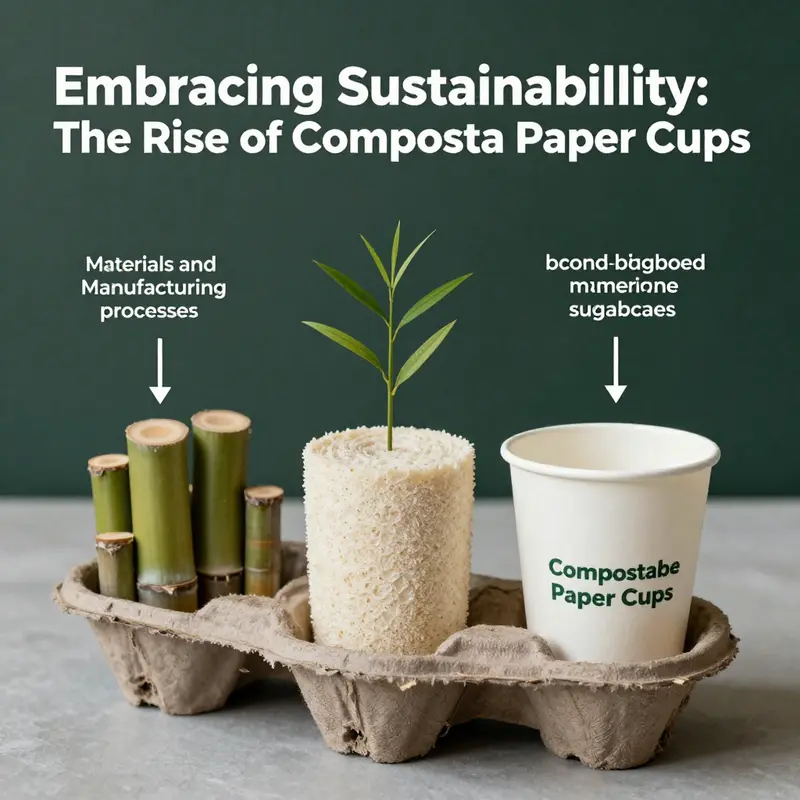
How compostable paper cups are built—material choices, production steps, and the practical trade-offs that determine performance and end-of-life behavior
A compostable paper cup begins its life as a promise: to contain a beverage reliably, to feel familiar in the hand, and to return to the earth without leaving toxic residues. Delivering on that promise requires careful selection of raw materials, precise forming and coating techniques, and rigorous testing. The conversation often centers on two intertwined objectives—functional performance during use and rapid, safe degradation in industrial composting systems after use. Achieving both depends on the fibers, the lining, the adhesives, and the manufacturing process that binds them together.
At the heart of any compostable paper cup is the paperboard. Unlike conventional paper, the paperboard used here is sourced and specified for strength, food safety, and sustainability. Suppliers typically provide certified papers—FSC or PEFC certified—ensuring responsible forest management or post-consumer recycled content. The fiber mix influences stiffness, puncture resistance, and printability. Renewable plant fibers such as bamboo, sugarcane bagasse, or a blend of virgin and recycled fibers are common choices. Bagasse and bamboo offer high strength and a low embodied carbon profile, while recycled fibers reduce demand for virgin wood. The paper formulation also includes sizing agents to resist migration of oils and water, and fillers to achieve the surface smoothness needed for printing.
Functional performance depends heavily on the internal barrier. Traditional disposable cups rely on petroleum-based polyethylene linings to keep liquids from soaking the paper. Compostable cups replace that plastic with plant-derived bioplastics. The most widely used material today is polylactic acid (PLA), produced via fermentation of plant sugars—typically corn starch—followed by polymerization. PLA creates a thin, continuous barrier that looks and feels similar to conventional plastic yet is industrially compostable under the right conditions. Other emerging barrier options include polyhydroxyalkanoates (PHA) and water-based dispersions, which may offer better home-composting potential or improved barrier against oils. The chosen lining must bond to the paper, withstand heat, and preserve the beverage while remaining certifiable to compostability standards.
Manufacturing begins with material sourcing. Paper rolls and bioplastic resin arrive at the converting facility with traceability documentation and certificates. Modern converters insist on chain-of-custody records that tie a finished cup back to sustainably managed forests or verified recycled inputs. The paper is unwound, pre-printed if required, and fed into cup-forming machinery. For printed cups, solvent-free or low-VOC inks are increasingly used to minimize emissions and simplify compostability validation. Printing is followed by coating: a thin layer of PLA is applied to the inner face of the paper either by extrusion coating, lamination, or spray and roll techniques. Extrusion coating melts and spreads a uniform film onto the paper; lamination may involve bonding a preformed PLA film. The goal is uniformity—gaps and pinholes compromise performance and certification.
After lining, the paper is die-cut into blanks. Forming machines shape blanks into cups using heat, adhesives, and mechanical folding. The side seam is sealed—either via adhesive compatible with compostability requirements or by heat-sealing the bioplastic lining to itself. The bottom disc is cut and inserted, then sealed to the cup wall. The rim is rolled to create a smooth drinking edge. Each step requires controls to prevent contamination by non-compostable materials. Many converters implement dedicated runs and cleaning protocols to avoid cross-contamination with standard plastic-lined cups.
Quality control runs through the entire plant. Barrier integrity is measured by gravimetric leak tests, hot-fill trials, and accelerated aging. Heat resistance tests confirm that a cup will hold hot beverages without delaminating or leaking; temperature performance for modern compostable cups ranges widely, with many rated from -20°C to 120°C, enabling both frozen and hot beverage use. Insulation and mouthfeel are managed by single- or double-wall constructions and by adding corrugated or ripple walls for comfort. Microwaving safety is assessed separately; cups intended for microwave use must demonstrate that both the liner and any inks or adhesives remain stable under rapid heating.
A key aspect of this manufacturing story is the certification that verifies compostability. International standards such as ASTM D6400 and EN 13432 define the criteria a product must meet to be labeled compostable—complete biodegradation within a specified time, disintegration to fragments below a set size, and no ecotoxicity in the resulting compost. Third-party certifications from organizations like BPI or TÜV OK Compost add credibility because independent labs verify that finished cups, not just raw materials, comply. This is important because a paper combined with a non-compostable liner will fail the test regardless of the compostability of individual components.
While many compostable cups are marketed as “plastic-free,” that claim must be used precisely. A cup can be plastic-free when the lining, adhesives, and lids are all derived from compostable materials. However, some products pair a compostable paper cup with a conventional plastic lid, undermining the end-of-life pathway. For businesses and event planners, the best practice is to offer matching compostable lids and to provide collection for industrial composting. Where a compostable cup is supplied with a compostable lid, the combined item is more likely to be processed correctly and to return to soil health after composting.
Manufacturing compostable cups also involves trade-offs. PLA provides excellent barrier performance and clarity but typically requires industrial composting environments—controlled temperatures, moisture, and microbial activity—to fully break down within months. Home composting systems rarely reach those conditions, so PLA-lined cups may persist if incorrectly discarded. For that reason, waste management infrastructure is as important as material choice. In regions with established commercial composting, compostable cups are a clear environmental win. Where industrial composting is absent, they may be better than traditional cups but still create confusion. Clear labeling, consumer education, and coordinated collection systems are therefore essential.
Another operational consideration is recycling. Compostable cups are not compatible with standard paper recycling streams because the bioplastic lining alters the pulping process. If compostable cups enter the paper recycling line, they can contaminate fibers and reduce yield. Conversely, composting facilities can accept PLA-lined cups but require separation from non-compostable plastics. Manufacturers and brands address these issues through supply chain coordination: selecting collection partners, participating in municipal pilot programs, and using distinct on-pack labeling to guide disposal. Innovative manufacturers are also exploring mono-material constructions or water-dispersible linings to improve compatibility with either recycling or composting routes.
Sustainability in manufacturing extends beyond materials to energy, water, and waste. Leading converters invest in closed-loop water systems, solvent-free inks, and efficient conversion lines that reduce scrap. Some facilities run on renewable electricity or capture process heat for facility heating. Material efficiency is managed by optimizing cup geometry to minimize paper usage while preserving stiffness and strength. Offcuts and test runs are increasingly recycled or used in alternative products, and adhesive choices are made to avoid heavy metals or persistent chemicals in the compost stream.
Finally, the end-user experience and supply chain transparency matter. A well-manufactured compostable cup should feel familiar: stable in the hand, resistant to leaks, and comfortable to drink from. It should also carry clear marks of its compostability—certification logos and disposal instructions—so consumers and waste handlers can act correctly. For businesses seeking procurement options, many suppliers list their certifications and composting test results, enabling buyers to match product performance with local waste infrastructure. For example, companies often offer a range from economy single-wall options to insulated double-wall designs, along with compostable lids and cup carriers to create complete, compostable service systems; one source illustrating product choices and material details discusses compostable cups and smoothie cups in an industry context.
Material choice, manufacturing precision, and end-of-life planning together determine whether a compostable paper cup achieves its environmental promise. When paper is responsibly sourced, the lining is truly compostable, and the production process minimizes contaminants and waste, the result is a practical disposable cup that fits a circular mindset. The next challenge is scaling collection and composting systems so that the cups leave the consumption phase and enter a management stream that returns nutrients to soil rather than contributing to litter or landfill. For manufacturers and buyers alike, the path forward lies in transparent materials, certified processes, and coordinated waste solutions that honor the design intent of compostability.
For more detail on material composition and technical specifications related to compostable beverage containers, see this industry resource: https://www.plasticfreefuture.com/compostable-smoothie-cups-explained/.
If you want to review an example of an available compostable cup option for commercial use, consider this plastic-free single-wall paper cup for reference: https://greendispopack.com/product/best-price-8oz-double-plastic-free-single-wall-paper-cup/.
Certifying Compostable Paper Cups: Standards, Labels, and Practical Industry Guidance
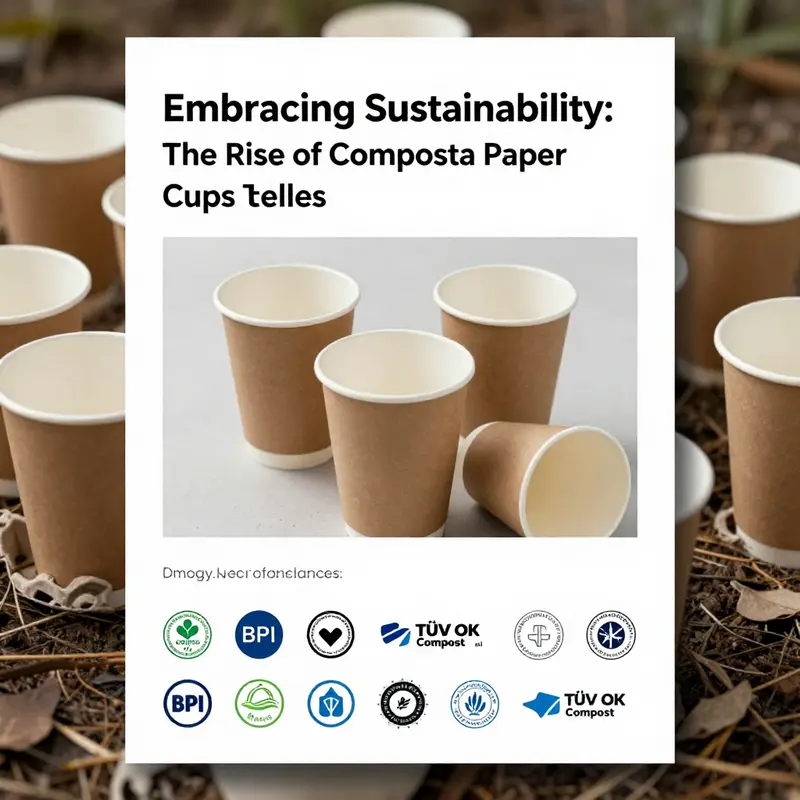
Understanding what makes a paper cup truly compostable is essential for businesses, waste managers, and consumers who want tangible environmental benefits. A compostable paper cup is not merely a marketing phrase. It must meet rigorous, science-based criteria that prove the product breaks down in composting environments without leaving toxins or persistent fragments. This chapter explains the standards and certifications that validate compostable cups, clarifies industry expectations for materials and labeling, and outlines practical steps to ensure those cups complete their intended end-of-life journey.
At the heart of credible compostability are internationally recognized testing frameworks. Two standards consistently used to verify compostable packaging performance are EN 13432 and ASTM D6400. EN 13432, developed in Europe, requires materials to disintegrate and biodegrade within defined timeframes, typically within 90 to 180 days in industrial composting conditions. It also tests for ecotoxicity and residual heavy metals. ASTM D6400, the U.S. counterpart, sets similar limits: the material must biodegrade within a set period under aerobic, thermophilic conditions and must not produce toxic residues that hinder plant growth. Meeting either standard involves laboratory testing that simulates industrial composting: temperature cycles, microbial action, and physical breakdown are all assessed.
Certification schemes translate those standards into consumer-facing trust marks. Organizations offering certifications evaluate products against laboratory results and auditing processes. A trusted certification confirms that the cup will biodegrade in industrial composting facilities, and that no harmful residues remain. Certification programs vary by region, but they typically publish clear criteria and lists of certified products. For businesses choosing compostable cups, a certified mark is the most reliable indicator that the item will perform as promised when it reaches a compatible composting system.
Material composition is another critical piece of the puzzle. The paper substrate used for cups should come from responsibly managed forests or recycled sources, and the barrier layer must be a certified compostable material. Traditional cups use polyethylene liners that block moisture but do not biodegrade. Compostable alternatives commonly use plant-derived coatings such as polylactic acid (PLA) or other certified biopolymers. These coatings provide the same liquid resistance, while being designed to biodegrade under industrial composting conditions. When the paper fiber carries an additional certification—such as a forest stewardship standard—it adds a layer of environmental accountability by confirming responsible sourcing.
Industry guidance emphasizes the importance of end-to-end verification. A cup certified under compostability standards should have test reports showing both physical disintegration and chemical safety. Physical tests prove the item breaks into fragments small enough to be indistinguishable from compost particles. Chemical and ecotoxicity tests ensure the resulting compost supports plant growth and lacks harmful levels of heavy metals or toxic residues. The two test types together reduce the risk of well-intentioned products undermining compost quality.
Clear labeling and communication are practical essentials. Labels should state where the cup will compost: industrial composting facilities, municipal organics programs, or backyard compost systems. Most compostable paper cups require industrial conditions—high heat, controlled moisture, and active microbial communities—to complete breakdown within certified timeframes. Misleading labels that suggest home compostability can create contamination in both recycling and composting streams. Industry guidance therefore recommends explicit phrasing on packaging and point-of-sale materials. Consumers must know whether an item belongs in the compost bin or the recycling bin.
To reduce contamination, businesses should adopt straightforward sorting systems and staff training. Front-of-house staff at cafés and events should be trained to guide consumers to the correct disposal option. Signage should include simple icons and brief text indicating the correct bin for compostable cups. Back-of-house processes must keep compostable items separate from recyclable streams to avoid cross-contamination. Facilities that collect organics should coordinate with local composters to confirm acceptance criteria, and to ensure that liners or adhesives used in lids and sleeves are also compostable. This alignment across the supply chain is as important as the certifications themselves.
A further, often overlooked consideration is the accessory ecosystem. Lids, cup sleeves, and tampers must match the cup’s compostability profile. If a compostable cup is paired with a non-compostable lid, the whole system becomes less useful. Industry recommendations therefore emphasize purchasing integrated compostable systems or ensuring all components bear compatible certifications. When this is not possible, clear instructions should indicate how to separate parts for appropriate disposal.
From a procurement perspective, buyer due diligence matters. Requesting certification documentation from suppliers before purchase is standard practice among sustainability-minded buyers. Procurement teams should examine recent test reports and verify certification status on recognized registries. When evaluating suppliers, ask for evidence that the cup passes both biodegradability and ecotoxicity tests. Also consider supply chain transparency: where the paper fiber comes from, what the barrier is, and whether adhesives and inks are compostable. A rigorous procurement checklist closes gaps that marketing claims might leave open.
Standards and certifications also influence collection infrastructure planning. Municipalities and composting facilities should set acceptance standards aligned with recognized certifications. Operators deciding whether to accept certain compostable cups will look for test data demonstrating degradation under facility-specific conditions. Where possible, facilities can run pilot programs to test locally available products, confirming that those items break down as expected at the prevailing temperatures and retention times. Such pilots provide real-world verification beyond laboratory results.
Education campaigns amplify the effectiveness of certified compostable cups. Clear public messaging explains why certified products differ from conventional alternatives. Key messages include the difference between compostable and recyclable, the need for industrial composting conditions, and the role of correct sorting. Businesses that invest in staff training, customer-facing signage, and routine communication see fewer contamination issues and higher diversion rates. When customers understand the why, they are more likely to participate properly.
Finally, transparency is the industry’s best defense against greenwashing. Suppliers and manufacturers should publish concise technical summaries explaining which standards their products meet, the test laboratories used, and the conditions necessary for composting. Third-party certification marks should link to registry entries or test summaries so buyers and waste managers can verify claims quickly. This transparency strengthens market trust and supports more consistent outcomes across collection and composting systems.
For practical product exploration, businesses can view example kraft paper cup offerings and related accessories to compare specifications and certifications. One useful reference point is an internal product page for an 8oz double plastic-free single wall paper cup, which shows how compostable design is applied in retail offerings: 8oz double plastic-free single wall paper cup.
For authoritative details on certification criteria, testing protocols, and registries, consult the official Biodegradable Products Institute website: https://www.bpiworld.org. This external resource provides searchable lists of certified products, explanation of testing requirements, and guidance for buyers and composters.
Adopting certified compostable paper cups requires coordinated action from manufacturers, buyers, waste managers, and consumers. Standards and certification provide the essential framework, but real-world success depends on accurate labeling, compatible accessory materials, proper collection systems, and ongoing education. When these pieces align, compostable cups can meaningfully reduce plastic contamination in waste streams and return organic material to soil through industrial composting.
From Niche to Norm: The Market Dynamics and Economic Realities of Compostable Paper Cups
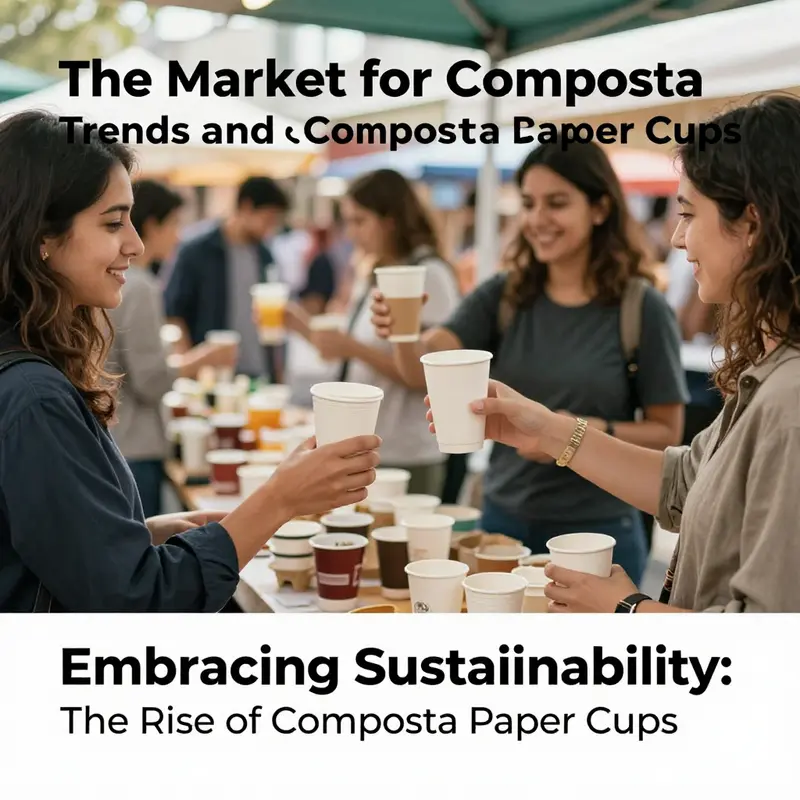
A single takeaway cup can tell a larger story about how modern societies negotiate waste, value, and responsibility. The compostable paper cup is no longer simply a niche option for eco-conscious cafes; it has become a practical instrument for many businesses seeking to align operations with evolving expectations about packaging, sustainability, and waste management. As consumers increasingly recognize the link between everyday choices and environmental outcomes, demand for compostable options has moved from the margins to the mainstream. This shift is not just about doing less harm; it is about redefining what is possible within the logistics of take-away services, where speed, cost, and reliability are as critical as the carbon footprint of a single cup. In this evolving landscape, the market dynamics are driven by a blend of awareness, regulation, and material science that together shape both opportunity and risk for manufacturers, distributors, and end users.
The market data from 2024 presents a clear signal: the global biodegradable paper cups market was valued at approximately USD 2.5 billion, with a robust expectation of continued growth. A projected compound annual growth rate (CAGR) of around 8.5% from 2026 to 2033 points to more than just a passing trend. This is a sector where economies of scale begin to bite, where supply chains reconfigure around certified compostability, and where the definition of “green” becomes anchored in measurable standards rather than sentiment. Those who study the space emphasize that the real value comes not only from replacing plastic linings with plant-based alternatives but from enabling a system that can actually accept and process those materials in return to soil rather than to landfill or burning.
One of the foundational drivers behind this movement is environmental awareness, a force that travels through consumer behaviors, corporate policies, and public policy alike. Customers increasingly judge brands by their packaging narratives as much as by product quality. They want to know that what they purchase does not just perform well but also ends up in the right waste stream. In response, many operators—ranging from fast-casual chains to event organizers—see compostable paper cups as a way to signal long-term commitments to sustainability without sacrificing convenience or performance. Yet awareness alone cannot sustain growth. The market must be supported by a robust framework of regulation and certification that guarantees compostability where the barriers to entry are high and the consequences of failure are tangible.
Regulatory pressure, more than any other single factor, has moved the needle toward compostable solutions. Across jurisdictions, governments and municipalities have begun to restrict or phase out conventional single-use plastics. The rationale is pragmatic: recycled content and end-of-life processing demand dedicated infrastructure and clear labeling. In many regions, this means that cup suppliers must not only reduce fossil-based inputs but also ensure that their products are compatible with industrial composting facilities that operate under defined timeframes, typically within three to six months. The requirement is not only for the cup itself to biodegrade but for the waste system to be able to manage the stream responsibly. In practice, this creates a demand for certified products that can meet standardized performance criteria, reducing the risk of contamination in composting facilities and improving the integrity of the post-consumer stream.
That is where certification bodies and standards come into sharper focus. Organizations that certify compostability—such as those that evaluate a product’s biodegradability, disintegration, and absence of harmful residues—help buyers distinguish materials that genuinely integrate with composting systems from those that merely mimic the appearance of sustainability. Certifications provide a kind of market infrastructure that lowers risk for buyers and creates a recognizable signal for retailers, cafes, and event organizers who must demonstrate accountability to customers and regulators alike. In the broader arc of the industry, certification reduces uncertainty in procurement decisions and supports more stable demand, which in turn can contribute to more predictable pricing over time.
A closer look at materials reveals an ongoing tension between performance, cost, and sustainability. Compostable cups commonly rely on plant-based polymers such as polylactic acid (PLA) and polybutylene adipate terephthalate (PBAT), often combined with renewable fibers from sources like bamboo fiber, sugarcane bagasse, or recycled paper. These materials are designed to break down in industrial composting facilities rather than leaving persistent residues. Yet the life cycle implications depend on the entire system: the cultivation of feedstocks, the energy profile of production, the logistics of distribution, and the availability of appropriate disposal infrastructure. Each link in that chain carries implications for environmental claims, supply chain resilience, and the economics of scale.
The economics of compostable cups are shaped by several interrelated factors. First, material costs tend to be higher than traditional plastics or lined paper cups, particularly when certified, industrially compostable materials are used. As demand grows and suppliers expand capacity, price margins can compress, but this compression often tracks improvements in process efficiency, feedstock optimization, and longer-term contracts that enhance predictability for buyers. Second, certification costs and ongoing compliance obligations—while essential—translate into administrative and production overhead. For buyers, the value proposition hinges on the ability of the cup to perform under real-world conditions—hot beverages, cold beverages, varying sleeve configurations, and compatibility with existing cup-sleeve ecosystems—without compromising compostability.
Third, there is the pricing dynamic created by waste management and disposal infrastructure. In regions with mature industrial composting networks, compostable cups are more likely to be accepted and processed efficiently, limiting the risk of product rejection at the end of life. Conversely, in markets where composting facilities are sparse or uneven in capability, the economic appeal of compostable cups can be tempered by the higher costs of end-of-life processing or the risk of misalignment between products and available facilities. This is not merely a regional issue; it is a policy-design question about how waste management systems incentivize sustainable packaging, how facilities are funded, and how communities participate in a circular economy.
For businesses evaluating the shift, the decision often rests on a blend of strategic goals and operational realities. In hospitality and food service, the choice to adopt compostable cups frequently tracks three priorities: reducing plastic waste, meeting consumer expectations for responsible packaging, and aligning with broader sustainability claims in marketing and reporting. In many cases, the adoption is not simply a substitution of one material for another; it is an opportunity to reimagine the take-away experience. For example, some operators pair compostable cups with compostable lids and sleeves that are designed to be recognized by composting streams, which helps avoid the “to-go waste” stigma that can accompany imperfect end-of-life outcomes. The result is a packaging ecosystem that supports a cleaner post-consumer stream, even as it requires careful coordination across procurement, operations, and waste services.
The regional dimension of growth cannot be overlooked. Europe and North America are often cited as the most active markets, thanks to a combination of regulatory momentum, consumer demand, and relatively well-developed waste infrastructure. In these regions, as waste management capabilities improve, the incremental value of certified compostable cups increases. They become not only a statement about environmental intent but a practical component of a larger strategy to manage waste more effectively, reduce contamination, and support compliance with local and national policies. Yet emerging markets in Asia, Latin America, and Africa show rising interest as urbanization accelerates and consumer awareness expands. The challenge there is to align local waste management capabilities with the design and certification of compostable products, ensuring that the path from production to end-of-life remains coherent and measurable.
Within this expanding framework, the supply chain must navigate the balance between agility and fidelity. For buyers, this means selecting suppliers who can deliver consistent quality at scale, who can provide certification documentation and stewardship commitments, and who can offer reliable logistics to keep up with the pace of modern take-away operations. For suppliers, the challenge is to invest in manufacturing that can adapt to evolving standards and demand patterns while preserving energy efficiency and minimizing environmental impact. The overarching objective is to create a system in which compostable cups are not only an ethical preference but a practical, economically viable option that can be integrated into everyday business practice.
To illustrate how procurement and design considerations translate into real-world practice, one can consider a typical buyer journey. A cafe chain or event organizer begins with a sustainability goal, translating it into a packaging specification that includes compostability certifications, end-of-life suitability, and compatibility with existing waste streams. The next step is supplier selection, where price, lead times, and the ability to provide product stewardship become critical. The internal risk assessment weighs factors such as supply continuity, regulatory compliance, and customer expectations. Once a supplier is chosen, the buyer negotiates volume commitments, delivery schedules, and certification maintenance, while ensuring that the packaging choices integrate smoothly with the rest of the brand experience. All of these steps hinge on a reliable post-consumer system that can accept and manage certified compostable products without introducing contamination, a requirement that underscores the inseparable link between packaging and waste management infrastructure.
From a market perspective, the forward-looking trajectory for compostable paper cups is shaped by both the scale of adoption and the velocity of innovation. The former depends on the capacity of manufacturers to diversify materials, improve production efficiency, and expand certification coverage to reassure buyers in new markets. The latter hinges on ongoing R&D in bioplastics, fiber sourcing, and barrier technologies that allow cups to perform in hot and cold applications while remaining compostable. Innovation is not merely about making a cup that holds a drink; it is about making a cup that fits within a circular economy where end-of-life outcomes are as predictable as the cup’s performance in a cup dispenser. As this market matures, price premiums may stabilize, but the premium itself often reflects the additional value created by reduced plastic pollution, enhanced corporate stewardship, and the potential to avoid regulatory penalties associated with noncompliant packaging.
In practice, successful market development requires a holistic view. Companies that embrace compostable cups as part of a broader sustainability agenda tend to outperform those that treat it as a standalone initiative. This perspective encourages not only responsible sourcing but also transparent communication with customers and stakeholders about how end-of-life outcomes are handled. It invites collaboration across suppliers, waste-service providers, and municipal authorities to optimize the conditions that make compostable packaging genuinely advantageous. When the entire ecosystem operates with clarity—clear labeling, robust composting infrastructure, and verifiable certifications—consumers gain confidence, operators benefit from predictable performance, and the environment benefits from higher rates of proper diversion.
As brands look ahead, several practical takeaways emerge. First, scale matters. The economics of compostable cups improve as production volumes rise, as fixed certification costs are amortized over larger outputs, and as procurement teams can leverage longer-term supplier relationships. Second, the end-of-life story must be credible. Buyers should look for partners who can demonstrate not only compostability credentials but also traceability and a credible plan for end-of-life processing. Third, the supplier ecosystem must support education and labeling that helps consumers recognize what to do with packaging after use. Finally, success hinges on alignment with waste-management realities. If industrial facilities are scarce or uneven in capability, the value of a certified cup may be limited in practice, even if the product itself is technically compostable.
For readers who want to explore procurement options in more detail, supplier catalogs and wholesale programs can be a practical starting point. A representative pathway might involve selecting a reliable supplier who offers certified, compostable cups in the required sizes, with documentation to support sustainability claims and access to a range of compatible accessories, such as lids and sleeves designed to minimize heat transfer while preserving compostability. To illustrate a procurement option, consider a wholesale program that provides take-away cups in multiple sizes along with lids designed for quick assembly during peak service times. This kind of package supports consistent customer experience while maintaining the integrity of the compostable claim. Wholesale take-away 8oz-12oz disposable coffee paper cup with lids. Such options help operators balance cost, reliability, and sustainability in a market where expectations are consistently rising.
The macro narrative remains clear: the market for compostable paper cups is expanding, driven by a combination of awareness, policy, and material science. The economic reality is nuanced and regionally variegated. In markets with mature disposal infrastructure and supportive regulation, compostable cups can be both profitable and principled choices. In others, success depends on careful alignment of feedstock availability, manufacturing capability, and end-of-life facilities. The lines between environmental responsibility and business viability are converging, and the result is a packaging landscape that rewards transparency, trust, and tangible outcomes. For policymakers, businesses, and researchers, the message is equally simple and profound: when the full system—production, distribution, disposal, and recovery—works as intended, compostable paper cups do more than reduce pollution; they help reimagine how takeaway services can operate within a more circular, more accountable economy.
External reference: https://www.grandviewresearch.com/industry-analysis/biodegradable-paper-cups-market
Final thoughts
The push for sustainability in the food service industry has never been more urgent. Compostable paper cups stand out as a practical solution, offering businesses a way to reduce their environmental impact while appealing to eco-conscious consumers. By understanding the benefits, materials, certification standards, and market trends surrounding compostable paper cups, food service providers can make informed choices that align with their sustainability goals. The transition to these innovative cups not only supports a cleaner planet but also positions businesses as leaders in the movement towards a more sustainable future.