
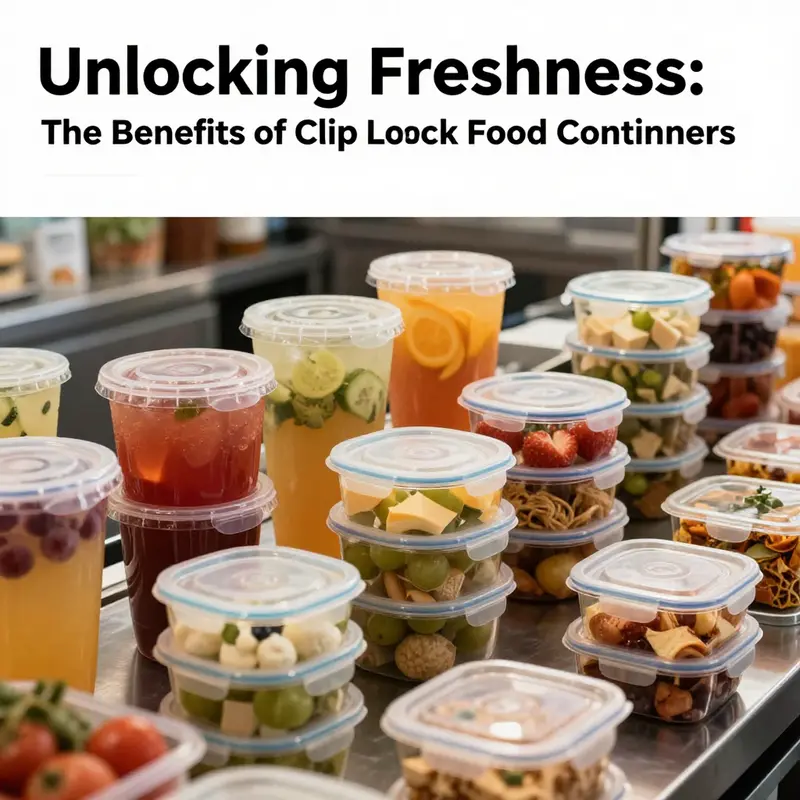
In the bustling world of food service—whether in bubble tea shops, restaurants, or event planning—effective food storage plays a pivotal role in maintaining food quality and safety. Clip lock plastic food containers have emerged as a modern solution, seamlessly blending functionality with durability. Their unique airtight seal not only locks in freshness but also prevents leaks, making them essential for storing liquids, semi-liquids, and various solid foods. This guide dives into the versatility of clip lock containers and their relevance to businesses in the food industry. In the first chapter, we will uncover the numerous practical applications that these containers offer, enriching operational efficiency for food service establishments. The second chapter will highlight how these containers cater to sustainability efforts and eco-friendliness, appealing to the growing demand for responsible practices in food storage. Finally, the third chapter will explore customization options that can enhance brand identity, setting businesses apart in a competitive market.
Beyond Freshness: The Quiet Reliability of Clip-Lock Plastic Containers in Modern Kitchens
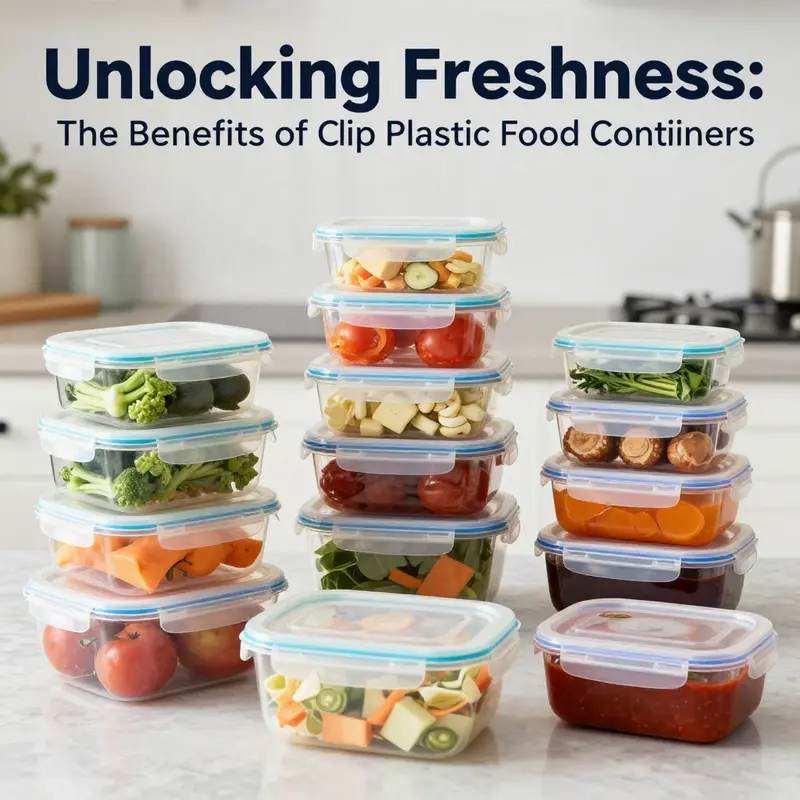
Clip-lock plastic food containers have quietly become a foundational element of how people live with food today. They are not flashy gadgets or fleeting kitchen fads; they are dependable, everyday tools that blend form and function in a way that makes routine cooking, storage, and transport feel almost effortless. At the heart of this reliability is a simple, robust idea: an airtight seal paired with a secure, user-friendly latch system. When a lid snaps into place with a confident click, it signals not only that the contents are protected from spills and odors but also that the user has regained control over portion size, organization, and time. This is especially important in households that juggle busy schedules, multiple meals, and a growing awareness of waste. A well-chosen clip-lock container becomes a collaborative partner in keeping food fresher longer, reducing the likelihood of mealtime improvisation with stale leftovers, and helping people see their options more clearly, whether they are planning a week of lunches or packing a snack for a long commute. The mechanism itself is purpose-built for practicality: a secure seal that resists leaks, a lid that remains easy to open without exerting unnecessary force, and edges that accommodate frequent use that comes with daily life. In many designs, the lid is fitted with a flexible inner seal that conforms to slight variations in the container’s rim, ensuring a snug fit even after repeated cycles of heating, washing, and stacking. The result is less guesswork at the fridge door and more confidence when you carry meals to work, school, or the park.
The materials used for these containers reinforce the sense of safety and durability that users expect. Most models are crafted from high-quality, food-grade plastics such as polypropylene, chosen for their stability across a broad temperature range and their resistance to warping. The BPA-free promise frequently accompanies these products, a reassurance that the containers are formulated to minimize potential health concerns while still delivering the convenience of lightweight, resilient plastics. This combination of materials and design choices means that a single container can transition from the microwave to the freezer to the dishwasher without losing shape, losing clarity, or becoming a source of lingering odors. Such versatility supports the idea that a well-made clip-lock container can be a true workhorse in the kitchen, capable of handling sauces and soups with the same ease as dry staples like grains, beans, or nuts. The ability to withstand both hot and cold environments makes these containers particularly appealing to people who prepare meals in advance, portion out leftovers after a family dinner, or manage bulk purchases with an eye toward minimizing waste and maximizing freshness over time.
A core strength of clip-lock designs is their transparency. Clear walls enable quick visual checks at a glance, so you don’t have to guess what’s inside or how much remains. This visibility is more than a convenience; it supports healthier eating by reducing the chance of forgotten leftovers and wasted ingredients. When a container is see-through, it’s easier to track what’s on hand, gauge portion sizes, and plan balanced meals. In households with children, this clarity is a practical teaching tool as well. Color-coded lids or bodies, a feature many manufacturers offer, can help families establish simple, repeatable systems for distributing meals, snacks, or ingredients. A kid might learn that green-lidded containers hold fruit, blue-lidded ones hold vegetables, and red-lidded ones hold proteins, turning meal prep from a chore into a small, shared project of organization and choice. The visual aspect of these containers therefore complements their mechanical reliability, turning technical performance into everyday motivation for healthier eating habits.
The question of size and shape is not incidental but central to the way clip-lock containers fit into homes of different scales and demands. Square and rectangular designs stack efficiently in tight pantries and refrigerator shelves, while round variants accommodate bowls, soups, and larger items with a different spatial logic. The modular ethos—various sizes that nest and stack—helps conserve precious kitchen real estate. A set that includes multiple units can be arranged to maximize every cubic inch of cabinet space, which is a practical boon for small apartments and busy households where space is at a premium. A nested approach is more than a space saver; it is a thoughtful response to the rhythm of modern life, where the same household might cycle through bulk storage, daily meal prep, and occasional catering needs across a single week. When you adjust from a two-cup storage option for small portions to a large, pantry-friendly container that can hold bulk staples, the same ownership experience remains intact: a secure closure, a visible interior, and a design that makes the process of storing, reheating, and serving feel almost seamless.
In the daily flow of meal planning, leftovers, and school-day lunches, these containers shine because they reduce friction. A secure seal prevents leaks that would otherwise turn a tote bag into a soggy reminder of yesterday’s dinner. An airtight environment slows the pace of staling, retaining the character of sauces, soups, and stews that might otherwise lose their edge. The capacity to move from freezer to microwave with minimal risk of cracking or warping is another key advantage. The ability to withstand the temperature extremes of freezing and reheating, without shrinking or distorting, makes clip-lock containers reliable allies for meal prepping. They can be frozen, then directly heated or reheated, which means fewer pots and pans, fewer dishes, and less time spent cleaning—a small but meaningful contribution to daily efficiency. In a broader sense, the reliability of the lock and the clarity of the walls democratize good food practices. They enable more people to plan ahead, portion out meals, and maintain a consistent standard of freshness without needing specialized equipment or elaborate kitchen routines.
The practical advantages extend beyond the home into offices, schools, and community kitchens, where clip-lock containers often play a crucial role in meal distribution and food safety. In these settings, durability is not merely a preference but a necessity. Containers must withstand frequent use, transport, and stacking while preserving the integrity of the food inside. The resilient latch system and rugged sealing surfaces help prevent leaks during transit, a feature that is especially valuable for liquid-heavy items such as soups, gravies, or dressing-based salads. This capacity to securely transport meals while maintaining a clean, odor-free environment reduces the risk of cross-contamination and ensures that recipients encounter meals that look and taste as intended. Equally important is the ability to sanitize these containers effectively. Many designs are dishwash safe, and their surfaces resist staining and odor retention after repeated cycles, which translates into lower maintenance costs for institutions and individuals alike. The ease of cleaning further reinforces the practical value of clip-lock containers in settings where time and hygiene are prioritized.
When design meets business, the story broadens. In a professional context, clip-lock containers become more than storage vessels; they are a scalable solution that integrates with supply chains and service models. The lids, clips, and seals are engineered to deliver consistent performance at scale, which is essential for operations that handle large volumes of food, such as catering, school lunch programs, or meal-prep services. The certainty that a given container will seal properly, resist leaks, and tolerate repeated cycles of heating and washing means fewer interruptions in service and fewer returns due to compromised packaging. In such environments, the ability to customize—whether through logo application, color schemes for different programs, or packaging configurations that match specific meal components—offers a way to align packaging with brand identity, operational workflows, and health and safety standards. Customization is not mere branding; it can streamline handling, improve inventory control, and enhance the consumer experience by providing a familiar, easily recognizable system for organization and use. The capacity for OEM and ODM collaboration underscores a broader industry trend toward packaging ecosystems that prioritize interoperability and resilience, ensuring that clip-lock containers remain adaptable as needs evolve.
The conversation around clip-lock containers also naturally touches on sustainability. In a market historically dominated by single-use containers, the shift toward reusable, durable options represents a meaningful pivot. Reusable systems reduce waste when used consistently and correctly, and they encourage a culture of thoughtful consumption. The materials typically used—high-quality plastics with strong heat resistance and long service lifespans—lend themselves to repeated cycles of use, washing, and re-use. Yet this is not a binary choice between plastic and compostability; the conversation now includes recycled plastics, post-consumer materials, and even bioplastics that offer lower environmental footprints under certain conditions. In practice, responsible use means choosing options that can endure many cycles, are easy to clean and sanitize, and can be recycled at the end of their lifespan within appropriate programs. Even as the industry explores eco-friendly alternatives, the durability, reusability, and versatility of clip-lock containers keep them relevant for households and professional kitchens alike, provided users maintain them well and dispose of them through proper channels.
Color and aesthetics enter the equation not merely as surface decoration but as tools for organization and motivation. A kitchen that uses a palette of colored lids or bodies can create an intuitive sorting system. This approach appeals to families, students, and professionals who manage diverse meal components and dietary plans. Color-coding reduces cognitive load; it helps users quickly identify what is inside without needing to unlatch and inspect each container. Even the act of color selection can reflect a broader design philosophy that values clarity, accessibility, and a touch of personality in daily routines. In spaces where children participate in cooking or packing lunches, color-coded systems can turn multitasking into a playful learning experience while still preserving the hygiene and safety benefits of airtight seals and stable, durable materials. Aesthetics, then, are not frivolous; they are a practical extension of the same principles that make these containers reliable—clarity, predictability, and ease of use.
The versatility of clip-lock containers extends into contexts that might seem far afield from the kitchen. In educational environments, these containers organize art supplies, science ingredients, and classroom snacks with the same fidelity that they manage food. In workshop settings, they keep tiny components, bulk dry goods, or spare parts neatly contained and easy to transport. Even in pet care, properly designed containers can store pet foods, treats, or supplements, controlled by secure lids that prevent spills and keep odors contained. This broader applicability highlights a central insight: the design choices behind clip-lock containers—airtight seals, sturdy latches, visibility, modularity—serve multiple purposes across a spectrum of everyday tasks. They reflect a philosophy of practical engineering tailored to real-life rhythms, where reliability reduces friction and preserves the integrity, flavor, and value of what we store.
For those who pursue even greater alignment with modern packaging ecosystems, related packaging solutions—such as eco-friendly cup lids and compatible sealing systems—offer complementary approaches to maintaining integrity and temperature across different formats. This holistic perspective recognizes that the strengths of clip-lock containers can be amplified when considered within a broader family of reusable and recyclable options. If you want to explore one such related option, you can find it here: eco-friendly-corrugated-ripple-wall-paper-coffee-cup-with-lid.
In sum, clip-lock plastic food containers embody a blend of durability, convenience, and thoughtful design that aligns with how people actually live and cook. They respond to the pressures of busy schedules, the realities of imperfect storage spaces, and the everyday need to keep meals fresh, organized, and portable. They make it possible to plan, prepare, transport, and enjoy food with a clarity and confidence that few other packaging solutions can match. The most enduring success stories in kitchen storage are not born from novelty but from steady reliability—containers that seal, stack, see-through, and endure. Clip-lock designs deliver exactly that, and in doing so they quietly reshape the rhythm of our meals and the efficiency of our kitchens. External standards, consumer expectations, and evolving sustainability goals will continue to shape this category, but the core value remains: a dependable seal, a simple latch, and a clear view of what’s inside.
External resource: https://www.amazon.com/dp/B07XQ2YF8D?th=1
Final thoughts
In conclusion, clip lock plastic food containers are not only practical but also essential for businesses in the food service industry. Their ability to maintain freshness, prevent spills, and provide customizable options makes them a top choice for bubble tea shops, restaurants, food trucks, and catering services. As customer expectations evolve towards sustainability and innovative branding, these containers offer a solution that meets operational demands while enhancing brand identity. Investing in quality storage solutions, like clip lock containers, can greatly enhance food service operations, ensuring your products remain fresh and appealing, ultimately supporting customer satisfaction and loyalty.