
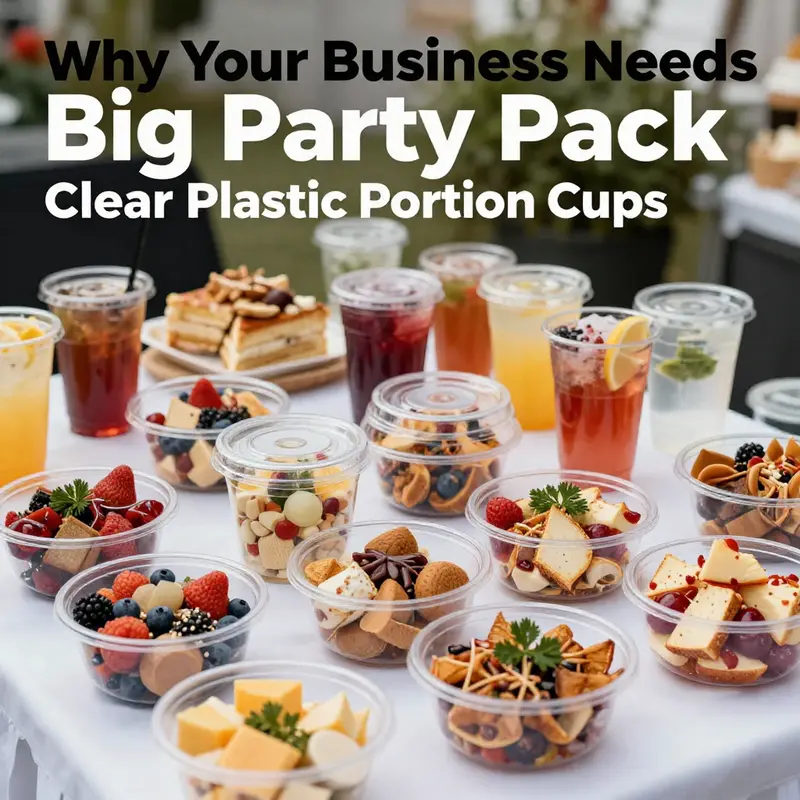
For businesses in the food and beverage industry, especially bubble tea shops, restaurants, food trucks, and catering services, effective serving solutions are vital to customer satisfaction and operational efficiency. The Big Party Pack Clear Plastic Portion Cups, 200 Count, offer a perfect blend of versatility, durability, convenience, and outstanding presentation. These cups are ideal for serving a variety of items, from jello shots to dips, making them a valuable resource for event planners and corporate procurement teams alike. This comprehensive overview will explore each aspect of these cups, revealing how they can elevate your service and impress guests.
From Clear Display to Bulk Convenience: A Deep Dive into the 200-Count Clear Plastic Portion Cups
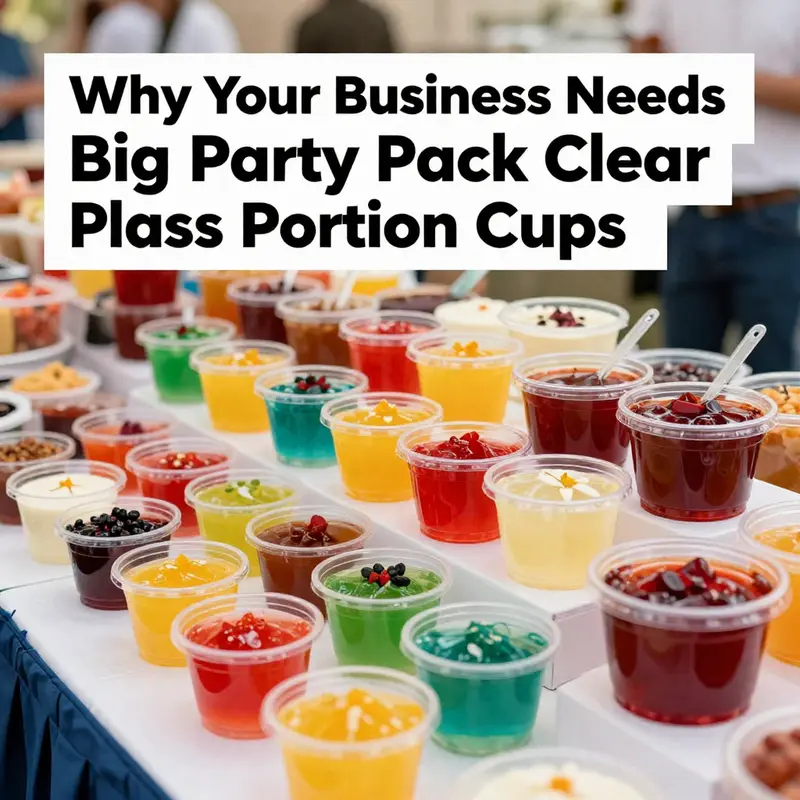
In the realm of event planning, the smallest details often shape the guests’ experience just as powerfully as the big moments. A bulk pack of clear plastic portion cups is one of those quiet workhorses that quietly keeps a party running smoothly. The appeal lies not just in the sheer number—200 cups in a single bundle—but in a combination of transparency, portability, and practicality that makes these cups a recurring tool for hosts, caterers, and coordinators alike. When you’re orchestrating a buffet, a tasting station, or a reception, these cups become more than vessels; they are flexible stations that can mold themselves to the event’s flow, color palette, and guest expectations. Their clear design means what’s inside matters as much as the container itself. A vivid layered dessert, a bright fruit compote, or a carefully arranged dip appears legible, inviting, and accessible. Guests can gauge portions at a glance, which speeds service and reduces the awkward questions about how much is left or how to portion a sample. The visual clarity, paired with uniform sizing, helps maintain a clean, cohesive presentation across dozens or even hundreds of stations, ensuring the event feels thoughtfully planned rather than cobbled together at the last minute.
The cup’s capacity, a compact 3.25 ounces in this bulk option, strikes a practical balance between portion control and user experience. It’s large enough to hold a dessert layer with a dollop of topping, a modest serving of a creamy dip, or a small tasting of a beverage, yet small enough to keep costs in check when you’re supplying beverages, condiments, or bite-sized samples for a large crowd. The standardization of size across a service line is a boon for inventory management, reducing confusion and ensuring consistency in the way you plate or portion. When a host can deploy dozens of cups that share a uniform form, the visual rhythm at the buffet or station reads as deliberate and professional rather than improvised. In practical terms, the uniform size helps staff and volunteers move quickly, aligning portions with pre-set planograms or service times. This is especially valuable at weddings, corporate events, or outdoor celebrations where staff may be stretched thin and every minute counts.
Durability is another crucial factor when considering bulk-clear cups for events. The material is light, yet sturdy enough to hold liquids without leaking and solids without collapsing under reasonable handling. This combination matters most during transport and set-up when cups may be stacked for space efficiency and then redistributed along a service line. A reliable lid design further enhances the user experience by preventing spills—an essential feature when guests are moving through crowded spaces, when cups are handed off between servers, or when there’s a line at the dessert station. A well-fitted lid also enables the cups to double as to-go containers for guests who wish to minimize mess in transit, a feature that can be particularly valuable at outdoor venues or large multi-site events. The dual benefits of presentation and practicality—clear visibility of contents and secure transport—set these cups apart from more decorative or fragile options. They offer a robust backbone that supports aesthetics without compromising function.
Beyond their primary role as beverage vessels, these clear cups reveal their versatility during service at scale. They can be used to present desserts with a modern, uncluttered look, such as layered Jell-O, pudding, yogurt, or custards, where the translucent walls showcase the color and texture of each component. They also adapt easily to savory displays: a small spoonful of antipasto, a bite-sized hors d’oeuvre, or a sampler of sauces and condiments can be arranged attractively within the same frame. The ability to see layered or colored ingredients through the cup elevates the guest’s perception of value and care, even when the items are simple or familiar. In buffet contexts, the cups contribute to a streamlined flow; guests can quickly pick up a cup, sample a variety of items, and continue along the line without backtracking. That efficiency translates into a smoother guest experience and, in turn, a more favorable impression of the overall event.
The cups’ transparent design also invites designers and planners to think strategically about color, contrast, and garnish. A bold berry coulis against pale yogurt, or a vivid citrus gel contrasting with a creamy filling, can create appealing visual strata that entice guests and guide tasting portions. For those who want to emphasize sustainability and coherence across serviceware, the cups pair well with minimalist, modern decor that relies on clean lines and restrained color schemes. In this way, the cups become a bridge between practical function and curated presentation, capable of adapting to an array of themes—from garden parties to formal receptions to corporate seminars. The simplicity of the cup’s silhouette does not limit creativity; instead, it provides a neutral stage on which colors, textures, and flavors can perform.
From a logistics perspective, bulk purchasing of such cups offers tangible financial and operational advantages. When events scale, unit costs often drop with quantity, translating to meaningful savings per guest. This is particularly valuable for planners who must balance menu ambitions with budget realities. Stocking up on a bulk pack also accommodates fluctuations in guest counts, last-minute guest additions, or the discovery of a new service idea mid-planning. The bulk approach reduces the risk of running out during crucial moments, a scenario that can disrupt service and strain staff. It also simplifies procurement; instead of tracking multiple suppliers for small runs of cups, a single bulk order consolidates inventory, simplifies reordering, and shortens lead times for replenishment.
The utility of these cups is amplified when they are considered part of a broader station design. For instance, at beverage stations, cups can be placed along with lids and small napkins to create a self-serve area that minimizes spills while keeping guests comfortable. At dessert or tasting stations, the cups can be pre-rinsed, dried, and arranged in stacks for grab-and-go service, which keeps lines moving and reduces the burden on staff during peak moments. When paired with appropriate lids, the cups can also travel well to outdoor venues where gusty winds or uneven surfaces might otherwise compromise the integrity of samples or beverages. The lids act as a safeguard, preserving presentation and portion integrity from the kitchen or buffet table to the guest station. This combination of lid security, clear visibility, and bulk efficiency makes the cups a reliable backbone for many event configurations.
In planning for a large gathering, hosts often weigh options for upgrade paths or complementary serveware that harmonizes with the cups. A cohesive station—whether it leans toward modern minimalism or festive abundance—benefits from uniform, compatible pieces. While the cups themselves are straightforward, they create a canvas for thoughtful accents: color-coded garnishes, complementary dessert spoons, or even a small card detailing the contents of each cup. The result is a cohesive service experience that feels intentional rather than improvised, a quality guests often notice even if they do not name it. The strategic use of bulk cups can also inform staffing models. Knowing that portions are consistent simplifies portion-control training for staff or volunteers, reduces ambiguity in service, and supports a more predictable pace for the line. When teams understand the tool they are using, they operate more confidently, which in turn translates to smoother operations and a more polished event.
The conversation around disposability is inevitably part of any bulk-ware consideration. It is important to acknowledge the environmental footprint while recognizing the practical realities of mass catering. Disposable cups offer undeniable convenience, but the conversation should center on responsible use. This includes planning for recycling streams where feasible, choosing cups with the most straightforward recycling pathways, and coordinating with venue staff to ensure waste streams are clearly labeled and accessible. For many planners, the key is to balance the ease of single-use items with a thoughtful approach to waste management, ensuring a clean-up process that respects the guests and the venue alike. In this sense, the bulk cups become a pragmatic choice in the toolkit of event execution, one that supports efficient service today while inviting conscientious planning for tomorrow.
There are moments when the cups reveal their usefulness in less obvious ways. They can serve as mini vessels for small samples of beverages during tastings at product launches or conference booths. They can function as tiny, sanitary condiment holders at a bake sale or outdoor festival, where guests expect quick-service options and minimal mess. They can even assume an auxiliary role as makeshift planters for succulents or tiny greens as a whimsical décor touch at garden-themed gatherings. The adaptability of a simple, clear cup—coupled with a lid that protects its contents—speaks to the broader philosophy of event design: keep the tool small, sturdy, and consistent, and let the design language come from the arrangement, color, and content rather than from the container itself.
As planning conversations move from the realm of possible to the realm of practical, hosts often seek to connect the cup system with other, compatible supplies. A nearby station that uses disposable kraft paper bowls for hot dishes or salads can create a unified take-away or on-site dining experience. For those exploring such an integrated setup, consider a practical pairing that aligns with eco-friendly and cost-conscious objectives. A linked example from a common catalog of eco-friendly serveware demonstrates how to pair disposable items for a cohesive look and feel. This pairing helps maintain a consistent guest experience while keeping the logistics simple, whether the event is a bustling wedding reception, a corporate expo, or a community celebration. See the linked resource for ideas on complementary, eco-minded serveware that works well with bulk clear cups and helps maintain a unified aesthetic across stations.
For hosts who want to explore more about robust, clear-portion options and related bulkware, this supporting resource delves into practical configurations and real-world applications that mirror the decisions event teams face. It offers a broader view of how clear cups fit into a larger system of disposable serving ware, including considerations around lid design, stacking efficiency, and the balance between presentation and practicality at scale. The insights here illuminate how a simple bulk cup can anchor a flexible, high-function service strategy that keeps events moving smoothly from kickoff to conclusion. To see how a similar approach appears in a nearby category, check this related resource that discusses eco-friendly, printed-label beverage cups and their role in cohesive station design. You’ll notice how small choices in labeling, color, and presentation can elevate even a straightforward cup into part of a memorable event story.
The breadth of uses and the depth of planning that accompany bulk clear cups reflect a broader theme in event execution: simple tools, when deployed thoughtfully, can unlock substantial efficiency and elevate the guest experience. The cups’ ability to transform effortlessly from beverage vessel to dessert cup to condiments station speaks to a design philosophy that prioritizes adaptability and reliability. In a business where everything scales, the comfort of a dependable, uniform item—one that guests recognize instantly and staff can manage confidently—can be a quiet force behind a successful gathering. And because these cups are designed for easy disposal, they save time and labor that might otherwise be spent on washing and return trips. This efficiency, combined with the visual clarity that supports thoughtful presentation, helps events feel well-curated without becoming prohibitively expensive or logistically unwieldy.
In sum, the value of a 200-count bulk clear plastic portion cup lies not only in its ability to hold a drink or a dip. It lies in its role as a facilitator of guest experience, staff efficiency, and budget-conscious planning. It helps producers and planners deliver on the promise of a well-run event: accurate portions, clean aesthetics, and a smooth, satisfying guest journey from arrival to departure. The cup becomes a quiet partner in the choreography of service, enabling hosts to design experiences that feel effortless, polished, and thoughtful. As you map your station layouts, train your team, and select your complementary serveware, let the cup be the reliable anchor that supports every portion, every presentation, and every shared moment at the heart of the gathering.
Internal link for complementary serveware ideas: eco-friendly printed-logo single-wall paper cup with lid
External reference for broader context on durable, clear cup options: https://www.walmart.com/ip/eFavormart-25-Pack-9oz-Crystal-Clear-Hard-Plastic-Party-Cups-With-Rounded-Rims-Disposable-Tumblers/1368724931
Clear Confidence: Durability, Material Quality, and Real-World Reliability of High-Volume Clear Plastic Portion Cups

Every so often, a seemingly small choice becomes a quiet hinge on which the success of an event turns. In the world of large gatherings, the right serveware does more than hold food or drinks; it supports the flow of guests, preserves presentation, and reduces chaos behind the scenes. When a party pack of clear, disposable cups arrives in a 200-count bundle, it signals more than convenience. It signals a deliberate balance between visibility, practicality, and performance. The cups’ transparency invites the eye to the contents, guiding portion control and ensuring that what’s inside is appealing from the first glance. Yet the true value lies beneath the surface—where material science and thoughtful design meet the realities of catering: transport, stacking, temperature shifts, and the crowded dynamics of a buffet line or a crowded reception hall. The discussion of durability and material quality, therefore, becomes inseparable from how such a pack functions in real life, where the between-sip and between-servings moments matter as much as the initial display of the sweets, dips, or coordinated condiments.
At the core of this reliability is the material itself. These cups are molded from polypropylene, a thermoplastic noted for its strength and resilience. Polypropylene, often abbreviated as PP, is renowned for resisting deformation under pressure, which means a filled cup won’t easily collapse when other cups are stacked atop it or when it sits in a crowded tray during a busy service window. For event settings, that translates into fewer moments where a guest reaches for a cup and finds a distorted rim or a warped edge that compromises both usability and the look of the station. The same material also holds up under a range of temperatures, maintaining shape when a cold beverage is tucked into a chiller or when a warm, dessert-laden shot of vanilla custard needs a brief chill before serving at the banquet table. This robustness is not merely theoretical. It translates into tangible outcomes during service: less spillage, more consistent pours, and predictable performance even when the pace accelerates toward peak hours.
An important facet of polypropylene that matters to event planners and hosts is its safety profile. In the disposable-serveware space, consumer confidence rests heavily on whether a product is BPA-free. The material used in these clear cups is BPA-free, an attribute that aligns with contemporary expectations for non-toxic disposables. The absence of bisphenol A reduces concerns about potential leaching and reassures guests who may be serving children, expectant parents, or anyone particularly mindful of chemical exposure. This assurance does not exist in isolation; it works in concert with the cups’ design and the event context to create a reliable user experience. When guests see a clean, transparent cup in a familiar shape, they not only anticipate the contents with clarity; they also trust that the container is appropriate for everyday use at gatherings, without introducing unnecessary risk.
Transparency itself is a strategic design choice. The cups’ clear appearance is not merely aesthetic; it serves a practical function in service operations. Visual visibility of contents makes it easier for guests to identify what they’re selecting in a buffet line—whether it’s a dessert portion, a dipping sauce, or a small tasting of a themed drink. For event staff and caterers, the see-through quality speeds up replenishment decisions and reduces mis-pours, since staff can quickly gauge whether a tray needs restocking based on how much of a given item remains visible through the cup. The design reinforces a streamlined workflow: guests help themselves with confidence, while staff maintain a balanced cadence between filling and cleaning. The combination of clarity with a stable, lidded bowl form further strengthens this workflow. A lid that fits securely reduces the risk of spills during transport from kitchen to floor and during the inevitable bustle of serving lines. It also supports a clean, organized station where different stations can coexist without fear of cross-contamination or chaotic condensation from overheated beverages pressed into uniform cups.
The lid-and-cup combination is more than a pairing; it is a strategy for control in dynamic environments. An integral feature of the lidded bowl is its capacity to secure contents during transport and storage. For events that require guests to move from one area to another—think wedding receptions, corporate mixers, or large family gatherings—the lid helps keep items fresh and contained when a tray shifts or a quick, crowded walk is necessary. This is especially valuable for items that can spill or mix if jostled, such as dessert jellies, layered condiments, or tasting portions of sauces. In practice, the lid is a simple yet effective barrier that reduces the cognitive load on staff and guests alike. It minimizes cross-contact and helps maintain the visual appeal of the serving station by keeping things contained and orderly. In a setting where every minute matters, the additional layer of security can reduce interruptions caused by spills and the need for rapid cleanups.
Another dimension of durability emerges when considering the cups’ geometry and rigidity. The rounded, bowl-like form is designed to minimize weak points that typically crack under pressure, a common issue with thinner or lower-grade plastics. The round geometry distributes stress more evenly, helping the cup resist bending or cracking when loaded, dropped, or stacked for long periods. This is not only about preventing breakage; it’s about maintaining a consistent user experience across hundreds of servings. When a host orders 200 cups for a single event, the expectation is not only that each cup can hold a portion securely but also that the entire batch presents a uniform look. In a room where visual uniformity speaks to professionalism, the consistent clarity and shape of the cups contribute to a cohesive aesthetic that guests associate with well-planned events. Consistency extends beyond appearance to performance: a predictable lid fit, a dependable seal, and a uniform interior surface that remains easy to clean between uses.
The value of such a pack also rests in its practicality for different serving contexts. In buffet setups, where guests may be sampling several offerings, the 3.25-ounce capacity provides a controlled portion while leaving room for garnishes, sauces, or toppers that complete a dish. In dessert bars or tasting stations, the same cup can function as a convenient, disposable vessel for jello shots, mousse layers, or fruit compotes, with the lid preventing accidental spills during travel from kitchen to guest area. Dips and condiments can be portioned into these cups, turning a single serving into a neat, portable, and easily replenished option. The practical versatility of the cup is a function of its design and the inherent strengths of polypropylene. This synergy between form and material is what differentiates a reliable high-volume cup pack from a merely affordable option. It is the quiet confidence that service staff rely on when the event demands speed, accuracy, and a clean presentation.
But durability and quality are not only about immediate performance; they also shape the broader logistics of event planning. A 200-count pack is a measurement of scale and predictability. When a host buys in bulk, there is less variability in production, fewer interruptions to re-stock, and a more straightforward approach to budgeting. The pack’s uniformity supports efficient inventory management, as staff can quickly count, restock, and replace a station without dealing with mismatched shapes or inconsistent dimensions. The transparent shells promote a straightforward pairing with any menu or color palette chosen for the event, which is a practical advantage when coordinating with décor, signage, and other disposable serveware. In this sense, durability and material quality extend beyond the cups themselves and into the planning process, influencing how smoothly a large event can be executed from setup through service and cleanup.
From an environmental and lifecycle perspective, there is a balanced conversation to have. Polypropylene is widely recyclable where local facilities exist, and its durability supports reuse in appropriate contexts when a host chooses to repurpose containers for other uses. However, as disposable serveware, it is typically designed for single use, which means responsible disposal is a central consideration for event organizers. The BPA-free nature of the material addresses safety concerns, but it does not automatically resolve the broader question of waste. The best practice, then, is to match the serveware choice to the event’s needs: if fast cleanup and reduced labor costs are priorities, a sturdy, reliable plastic cup can deliver substantial value; if minimizing waste is the primary goal, hosts might explore alternative packaging or waste reduction strategies. In all cases, the durability and material integrity of the cup contribute to a safer, cleaner, and more predictable event environment, where guests receive a consistent experience and staff can manage operations with confidence.
Finally, it is worth noting how such products compare within the spectrum of disposable serving ware. While some options might emphasize compostability or biodegradability, those benefits must be weighed against practical performance. A high-quality polypropylene cup may offer superior resistance to temperature, better clamshell-lid compatibility, and clearer visibility than alternatives in its class, providing a reliable balance of cost, sturdiness, and user experience. The goal is not to crown one material as universally superior but to acknowledge that for large-scale events, a well-designed, BPA-free, clear PP cup—with a secure lid and a capable capacity—often meets the dual demands of guest satisfaction and operational efficiency. The data behind such products point to a simple truth: durability and material quality matter most where the pace is high, the stakes are social, and the success of a single cup can ripple into the overall impression guests leave long after the final toast has been made.
In sum, the durable core of clear plastic portion cups lies in polypropylene’s combination of strength, heat resistance, and safety. When paired with a thoughtful lid design and a size that accommodates controlled portions, the result is a reliable tool for event professionals and home hosts alike. The 200-count pack reflects not only a practical quantity but a strategy—a way to ensure consistency across service points, simplify replenishment, and uphold a presentation that looks polished from the first guest arrival to the last farewell. For organizers who value clarity, reliability, and ease, the packaging and material quality of these cups deliver more than a place to hold something delicious; they contribute to a smoother, more confident, and more enjoyable event experience.
External reference for broader context: https://www.walmart.com/ip/eFavormart Clear 10oz Disposable Plastic Cups, Crystal Collection-Wedding-Party-Cocktails/1234567890
Portioned Clarity: The Quiet Power of a 200-Cup Clear Pack in Large-Scale Event Service

Every planned gathering eventually tests the edge between abundance and order. The way a room feels, how smoothly lines form, and how quickly guests move from station to station often hinges on a dozen small decisions that add up. Among these, a 200-count pack of clear plastic portion cups stands out as a surprisingly quiet engine of efficiency. It is not glamorous in the way a centerpiece or a curated menu can be, yet it quietly underpins the entire flow of service at big events. The cups are simple: transparent, disposable, and sized for bite-sized portions. They exist for moments when guests want a quick sample, a single-dip condiment, a paused beverage, or a compact to-go container. When chosen thoughtfully, they help a host deliver on multiple fronts at once: presentation, hygiene, speed, and cleanup. The value of such a pack becomes most evident in the context of a bustling buffet, a wedding reception with many service points, or a corporate event that must move guests efficiently through tastings and breaks. In these settings, the cups do not shout for attention; they work in the background, allowing the main event—the food, the ambiance, the guest experience—to shine more clearly.
The aesthetic of the cups matters as well. The clear plastic acts much like glass in a pastry window or a glass-front display, except these are lighter, sturdier for single-use, and easier to manage with a large crowd. The transparency gives guests an immediate read of the contents, inviting curiosity and enhancing appetite. Color, texture, and layering inside the cup become part of the show, whether it is a tiered dessert, a vivid jelly, or a dipping sauce that gleams under venue lighting. For presentation purposes, few tools compete with a cup that couples a clean silhouette with the versatility to support a wide range of items—from savory condiments to dessert bites. And because most events require a blend of quick service and neat handling, the inclusion of a lid in the packaging is a small but meaningful addition. A lid prevents spills when plates are carried across rooms, when guests pause at a lounge area, or when samples are stacked for a self-serve station. It transforms the cup from a simple tasting vessel into a portable package, allowing guests to sample and then move on without the need to finish the contents or find a trash can mid-walk.
Capacity, of course, anchors every decision about portion cups. The standard bite-sized measure lends itself to a broad spectrum of uses. In a setting where speed and hygiene are paramount, a compact capacity reduces waste and keeps guests from piling up on the buffet line with oversized servings. The ability to pre-portion items at a prep table dramatically simplifies the on-site workflow. In practical terms, a large number of cups means logistics can scale. A 200-count pack is enough to service a sizable portion of a guest list without constant restocking. It also means organizers can stage multiple dipping stations, beverage tastings, or dessert trials without creating bottlenecks. The efficiency is not only about speed; it is about predictability. Teams know how many cups will be needed for a given station and can prepare accordingly, reducing over- or under-stocking. In an era where time is one of the most valuable resources at an event, predictability translates directly into smoother operations and a calmer planning process for the host.
The safety and usability of the cups are equally compelling. Made from food-grade plastic and crafted to be sturdy enough for cold drinks and dense dips, these cups are designed to withstand typical event-day handling. They resist cracking from the occasional clink of a tray and maintain their form when guests retrieve a portion and pass by a busy line. The single-use nature of the cups eliminates the need for on-site washing and drying, which is a major advantage when staff resources are stretched thin. Hygiene benefits extend beyond convenience: guests can access a clean, covered option at each station, reducing the risk of cross-contamination at crowded events. In practice, this means fewer touchpoints between servings and guests, a factor that can influence the overall perception of cleanliness and professionalism at the event. The lids further enhance hygiene by sealing contents during transport, a feature guests appreciate during coffee breaks, late-night receptions, or outdoor gatherings where wind and movement could otherwise disrupt delicate portions.
The versatility of the cups should not be underestimated. They are not limited to beverages or dessert samples; they serve as a compact vehicle for dips, sauces, condiments, and even small portions of formatted appetizers. At a buffet, guests can easily pick up a cup and stroll along the line, choosing from a curated array of sauces or toppings without juggling additional plates or bowls. For dessert stations, a small cup can hold a layered mousse, a fruit compote, or a citrus gel, allowing for a tasting experience that is both neat and visually appealing. They can also function as a quick, portable to-go option for guests who prefer to take a bite and continue with the event agenda or travel to another venue. In this sense, the cups contribute to a flexible service model—one that accommodates guests who are moving between spaces, reconciling the demands of a lively schedule with the desire to offer a memorable tasting or refreshment.
Operationally, the 200-count pack plays into how planners think about space, storage, and replenishment. The cups are compact enough to be stored in a side room or pantry without occupying significant real estate. They stack with little effort, and their uniform shape simplifies inventory management. On event day, staff can pre-fill portions at a central station or at dedicated prep tables near each service point, depending on the layout. The lids can be pre-attached or kept on standby, ready to seal cups as soon as contents are filled. The end result is a calm, repeatable workflow, where staff move with confidence along the service lines rather than improvising under pressure. The predictability of supply makes it easier to coordinate with other components of the event—drinks, desserts, dips, and hors d’oeuvres—without sacrificing speed or quality.
From a budgeting perspective, the 200-count pack represents a balance between upfront procurement and ongoing labor costs. While disposable items carry a per-unit cost, the swift turnover they enable can offset labor expenses, especially in high-volume scenarios. When a venue has multiple service stations, the ability to quickly replenish with clean, pre-packaged portions reduces the time staff spend at the supply closet and increases the time guests spend enjoying the event. In addition, single-use options simplify post-event cleanup, enabling organizers to reclaim space sooner and direct staff toward wrap-up tasks that are crucial for closing a venue on schedule. The net effect is a smoother end-to-end experience for both hosts and guests, with fewer delays and a consistent standard of presentation across stations.
There is also an artistic dimension to consider. A well-chosen set of clear cups can elevate the perceived quality of the event by letting color and texture do the talking. The hues of a citrus gel, the gradient of a layered mousse, or the sheen of a fountain drink all become more vivid when displayed in a transparent vessel. The cups can be used as a flexible element in a broader styling language for the event, aligning with the color palette, the lighting plan, and the overall mood of the room. In this sense, the cups contribute not only to practicality but also to the storytelling of the event—the way a guest reads the array of offerings and feels invited to explore. Even the decision to include lids can be integrated into the design narrative, signaling a thoughtful approach to guest experience that respects movement patterns, safety, and convenience.
Of course, every packaging choice invites a conversation about sustainability. Disposable does not have to mean disposable in an environmental sense. The cups discussed here are typically recyclable where local programs exist, and they can be part of a broader waste-management plan that separates recyclables from trash and compostables when applicable. Planners can pair them with clear signage, staff guidance, and designated waste streams to minimize the environmental footprint of a large gathering. For organizers seeking even more eco-conscious options, the broader category offers a spectrum of materials and finishes, from recyclable plastics to compostable alternatives and recyclable lids designed for easy breakdown. The key is clarity in communication with guests and a transparent plan for disposal, so the convenience does not come with unintended waste.
To tie these strands together, consider a scenario that many readers will recognize: a weekend wedding with multiple tasting stations, a corporate conference featuring breakout sessions, or a charity gala with a bustling reception. In these settings, staff can pre-fill a palette of portions—savory dips at one station, fruit compotes at another, a small dessert sampler at a third—then seal with lids to maintain freshness during a short walk between rooms. Guests benefit from a clean, straightforward experience, where they can sample and move with ease, confident that the contents will be ready when they reach the next pass by a server or a self-serve station. The host benefits from streamlined logistics, consistent presentation, and a reliable baseline for anticipating guest needs. And the event, in turn, achieves a rhythm where every element blends into a cohesive whole, aided by the simple but essential tool of a clear plastic cup that holds a small, precisely measured portion.
For readers who want to explore related options that support a similar philosophy—convenience, presentation, and recyclability—there is a growing family of compatible lids and containers that can extend the utility of these cups. To understand where such choices can lead, consider an example of eco-conscious, lid-equipped beverage vessels designed for branding and on-the-go consumption. For readers curious about lid-compatible, eco-friendly options, there is an example of an eco-friendly printed-logo cold beverage cup with lid. This linked resource exemplifies how design can marry practicality with identity, offering a cohesive approach to event packaging that mirrors the spirit of a well-planned reception: clarity, control, and consideration wrapped into every small component. eco-friendly printed-logo cold beverage cup with lid.
In sum, a 200-count pack of clear plastic portion cups is more than a convenience item. It is a versatile, scalable, and visually adaptable tool for large-scale events. It supports efficient service lines, enhances presentation with its transparency, and simplifies cleanup without sacrificing guest experience. While it occupies a relatively small space in the grand scheme of event planning, its impact is outsized. It helps transform a potentially chaotic buffet into a well-orchestrated display, where guests move with ease, staff operate with confidence, and the host achieves consistency across multiple service points. When chosen with attention to lids, materials, and disposal plans, these cups contribute to a cohesive event narrative—one where simplicity does not mean sacrificing quality, and where the small, clear vessels quietly undergird the entire guest experience. For planners looking to optimize throughput and elevate presentation, embracing this tool can bring immediate, tangible returns in both time and impression.
External resource for further context: https://www.walmart.com/ip/Big-Party-Pack-Clear-Plastic-Cups-12-oz-Pack-of-50/978347671
Crystal Clarity and Cohesive Service: Elevating Event Presentation with a 200-Count Pack of Clear Plastic Portion Cups

In the orchestra of event planning, the tools that seem smallest often determine how smoothly the show plays out. A 200-count pack of clear plastic portion cups, with a 3.25-ounce capacity, sits quietly at the edge of the stage, ready to perform when the moment calls for precise, visually compelling servings. These cups are not mere disposables; they are the visual stagehands of the snack and sip stations, guiding guests through a continuum of color, texture, and proportion. When planners prioritize both presentation and practicality, this kind of pack becomes a linchpin. The sheer number—200 units in a single purchase—reduces the moment-by-moment juggling of reorders during a bustling service window. It’s the kind of reliability that underpins a seamless party narrative, whether it unfolds on a sunlit brunch terrace, in a gleaming hotel ballroom, or at a corporate reception where every detail must read as intentional, polished, and effortlessly chic.
The material, a durable polypropylene, deserves attention in its own right. Clarity remains the supreme feature; the cups stay transparent under a range of service conditions, showing off the colors and textures inside with the same clean line as a crystal glass. This clarity matters because the visual impact of a small portion can be as much about color contrast, layering, or garnish as about the flavor itself. A single glance at a row of identical cups can tell a guest that the event has a cohesive, thoughtful design language rather than a haphazard array of single-use containers. The cups’ shape—balanced between height and diameter—permits easy stacking and graceful handling, which translates to quicker service lines and less crowding around the buffet or dessert table. In an environment where photographs and social media moments proliferate, the uniform, unobtrusive look of these cups helps the edible artwork—whether bright fruit jelly, a jeweled dessert, or a glossy sauce—be the star of the frame rather than the vessel it sits in.
Presentation, at its best, is a process of amplification. The cups’ crystal-clear walls enable the vibrant hues of beverages and desserts to glow through with an almost museum-like precision. A cocktail station, a dessert bar, or a grab-and-go station gains a certain sophistication when every portion looks identical in height and volume, inviting guests to compare flavors and textures by sight before ever tasting a single bite. The uniformity across all 200 units is more than a practical convenience; it’s a quiet dimension of design discipline. A well-curated array of servings appears intentional, curated, and ready for a moment of social storytelling. For weddings and upscale gatherings, this isn’t merely plastic; it is a flexible, neutral canvas that supports a strong, cohesive aesthetic without competing with the edible itself.
Durability and reliability are the twin underpinnings of a smooth service experience. The polypropylene construction preserves the cups’ form and clarity even as they encounter the kinetic energy of a busy service line. They resist cracking under the pressure of frequent handling and remain leak-free when filled with sauces, dressings, or layered desserts—so long as portions remain within the intended 3.25-ounce limit. This reduces the anxiety of spills and wardrobe malfunctions that can derail a moment of celebration. The lids—an integral part of the overall package—provide secure containment that translates to peace of mind during transport, display, and sampling. When guests pick up a lid, they encounter a seal that minimizes spills during in-and-out movement, a common challenge at cocktail hour or standing buffets. In practice, the combination of a clear cup and a dependable lid allows a caterer to present a polished drink or bite station and then move on to the next sequence of service with confidence.
From a photographer’s lens, the cups offer a subtle but impactful advantage. They create a clean visual rhythm across a display table. The cups’ transparency makes it possible to stage desserts and drinks with light playing through layers, revealing every hue and texture. In styled events, where the goal is to tell a color story—perhaps a palette of citrus yellows, deep berry purples, or sea-glass greens—the cups act as quiet amplifiers rather than loud stage props. The guest’s eye naturally gravitates toward the content rather than being distracted by the vessel, a dynamic that makes photos look cohesive and intentional. This is especially beneficial in venues that emphasize vintage or retro vibes, where the contrast between a pristine modern cup and an antique setting can strike a balanced aesthetic without overpowering the display.
Beyond the aesthetics, there is a practicality that resonates with planners who juggle multiple stations, menus, and timelines. The cups’ size makes them perfect for a range of small portions: fruit parfaits, mousse cups, yogurt with toppings, jello shots for a playful celebration, dippable condiments at a tasting bar, or single-serve dips at a buffet. They also function well at a coffee bar as tiny cream or sugar portions for guests who prefer to sample several flavors without committing to a larger serving. In corporate or conference settings, the cups can be used for sample condiments, sauces, or bite-sized appetizers, enabling guests to try a few options without creating a cluttered, overfilled presentation. The pack size supports a high-volume service without frequent restocking, a practical benefit when time and efficiency are of the essence.
An essential consideration for any serving plan is the balance between disposability and hygiene. Clear plastic portion cups facilitate easy cleanup after the event; once guests have enjoyed their samples, the cups can be cleared away quickly, speeding the turnover of stations and reducing congestion. Yet the same disposability invites reflection on sustainability. While the cups are designed for single-use convenience, their polypropylene composition opens the door to recycling programs where local guidelines permit. Event planners who aim to minimize environmental impact can pair these cups with a well-communicated recycling or waste-separation plan. The ability to keep contents secure with lids helps prevent contamination and waste, as samples can be safely transported and consumed without ongoing handling of open containers. The result is a service model that respects both guest experience and resource stewardship, presenting a pragmatic option for event teams seeking efficiency without compromising presentation.
The versatility of a 200-count pack also extends to style and theme. In plated or buffet-style events, a clear, uniform presentation allows the food to be the focal point while the vessel remains elegantly understated. In multi-theme gatherings—think modern minimalism, mid-century chic, or a garden party—clear cups work as a neutral backdrop that harmonizes with tableware, linens, and lighting. They enable a designer’s color story to unfold in a controlled way, rather than competing with busy, patterned cups or opaque containers. For a vintage-inspired setting, this transparency creates a nostalgic contrast against brass or glassware, allowing the colors of desserts and drinks to pop with a sense of refined simplicity. In dynamic venues, such as pop-up weddings or gala fundraisers, the pack’s quantity means planners can sustain a consistent display across multiple stations without slowing down service or compromising the table’s visual flow. The effect is a moment where the practical becomes beautiful, and the practical becomes repeatable across the event’s duration.
In coordinating a large event, inventory management is a crucial, sometimes overlooked, discipline. Having a substantial number of cups in a single purchase reduces the risk of mid-event shortages that derail service. It is easier to stage replenishments, rotate stock, and maintain a clean line of sight across stations than to manage scattered stock from various vendors. The end result is a workflow that feels uninterrupted—guests can sample, move on, and rejoin the flow of the event without noticing the quiet mechanics behind the scenes. This is particularly valuable in settings with complex menus or tasting stations where portions must be controlled precisely to avoid waste or miscommunication about offerings. The uniform cup, with its well-defined capacity, contributes to a predictable service pattern, allowing staff to focus on hospitality—the warm, attentive interactions that make events memorable—rather than on logistics alone.
As audiences become more attuned to the aesthetics of presentation, the way a small serving is packaged can influence perceived value. A guest’s impression of a dessert or beverage is not only about taste but also about how it is introduced. A clean, consistent vessel delivers credibility; it signals that the event concept and the execution are aligned. In turn, this alignment enhances guest satisfaction and the likelihood that guests will capture and share moments from the event on social media, amplifying the reach of the gathering beyond the room. In a landscape where every detail can be the difference between a forgettable gathering and a memorable one, the silent clarity of a well-chosen cup becomes a strategic choice.
For planners who want to pair practical serving options with related sustainable design considerations, a broader look at eco-friendly, branded serving ware can be informative. This aligns with the idea that a coordinated set of vessels—the cups, their lids, and any accompanying display elements—helps create a cohesive story from service to reception. See more about eco-friendly, printed options that can carry a logo or message without compromising the clean, transparent aesthetic. eco-friendly-printed-logo-cold-beverage-cup-paper-cup-with-lid.
In the end, a pack of clear plastic portion cups offers more than just a practical means to portion small foods and drinks. It is a vehicle for design discipline, hospitality, and ease of execution. It enables hosts to curate a color and texture narrative with confidence, ensures that the flow of service remains steady, and supports the kind of clean, editorial presentation that makes food a visual pleasure as well as a culinary one. Through this combination of clarity, durability, and convenience, the cups transform ordinary shots and samples into a cohesive, photo-ready experience that elevates the event as a whole. They stand as a quiet, steady ally in the backstage choreography of a successful gathering, quietly delivering consistency so guests can focus on celebration, conversation, and connection.
External reference for market context: https://www.walmart.com/ip/Clear-Portion-Cups-with-Lids-200-Sets-Ideal-for-Parties/1234567890
Final thoughts
The Big Party Pack Clear Plastic Portion Cups prove to be an invaluable asset for various sectors in the food service industry. Their versatility ensures that they cater to multiple occasions, while their durable construction guarantees reliability in serving. The ease of cleanup allows businesses to focus on what truly matters – delivering exceptional service to guests. Additionally, their transparent design enhances the aesthetic presentation of food and beverages, making them the ideal choice for those looking to make a lasting impression. Invest in these cups to elevate your offerings and streamline your operations.