
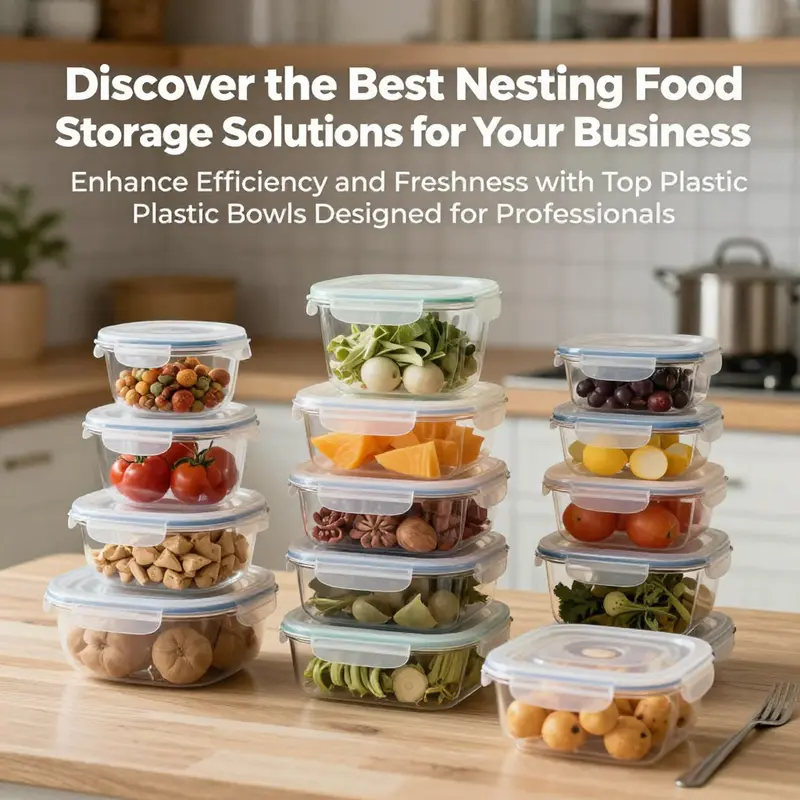
In any food-oriented business—from bustling bubble tea shops to dynamic food trucks—storage solutions play a crucial role in maintaining efficiency and quality. Nesting food storage containers, particularly plastic bowls, not only help save physical space but also ensure your ingredients and prepared dishes remain fresh and ready for service. This article will explore three outstanding options tailored for businesses like restaurants, catering services, and corporate procurement teams. We will dive into the features and benefits of the Mainstays Nonslip Nesting Plastic Assorted Mixing Bowl Set, understand the utility of the TINANA 24-Pack Food Storage Containers, and examine the insights offered by IKEA 365+ Food Container to help you choose the ideal storage solution for your needs.
Nesting for Space and Freshness: How Plastic Bowls with Lids Redefine Storage and Prep
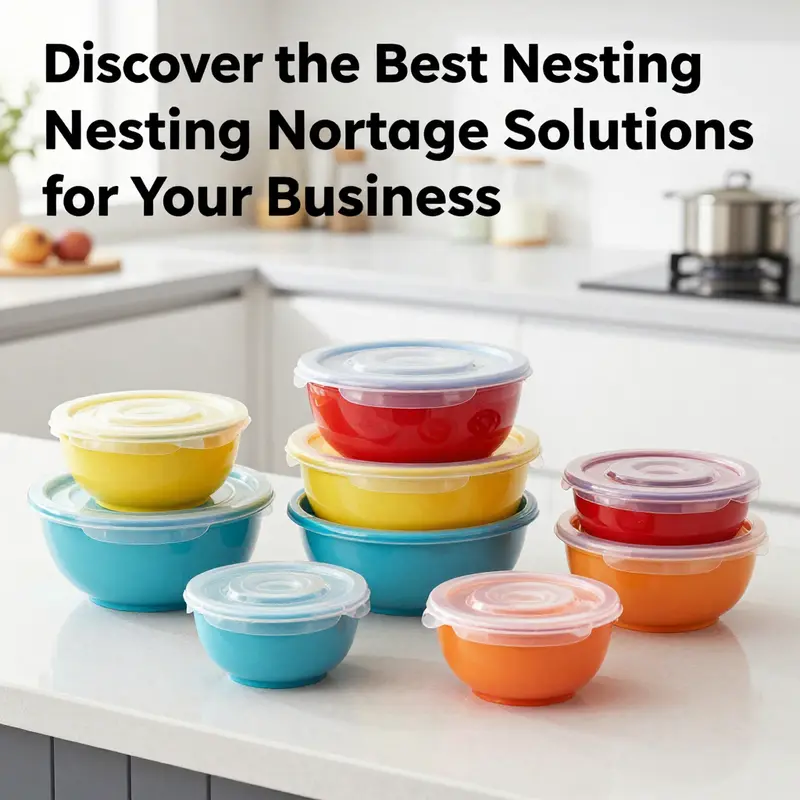
In every kitchen, space is a precious resource and time is always in short supply. The design challenge is not merely to store ingredients but to keep them versatile, accessible, and ready for the next step in the flow from prep to plate. A well-considered nesting plastic bowl set with lids answers this challenge with quiet efficiency. It is more than a collection of containers; it is a compact system that honors how people cook, organize, and adapt to the rhythms of daily life. The essence of this approach lies in a thoughtful combination of nesting capability, safety, and practical features that together create a kitchen tool that earns its keep day after day. The nesting aspect, in particular, is a revelation for anyone wrestling with crowded cabinets or cramped drawers. When bowls can be stacked into one another without wasted space, the entire storage footprint collapses into a neat, manageable bundle. The footprint can be described as a compact square or nearly a single shelf’s worth of display, and the memory of clutter is replaced by a sense of calm organization. That sense of calm matters because it reduces friction: you can reach for a bowl without rooting through an entire stack, you can identify the size you need at a glance, and you can move between tasks with a smoother cadence.
The practical value of this kind of set starts with the materials chosen. BPA-free plastic is the standard, and that choice is more than a marketing line. It is a statement about food safety and everyday reliability. A set built from BPA-free plastic offers a reassuring certainty that the walls and lids won’t impart flavors or chemicals into ingredients, even after repeated cycles in the dishwasher or microwave. That assurance matters whether you are simply mixing batter for a quick weeknight dinner, marinating vegetables for a salad, or portioning leftovers for a busy morning. The plastic itself is typically durable, designed to resist cracking and deformation even after drops or slips that are part of a bustling kitchen scene. The robustness of the material translates into a long sequence of satisfying uses. For families with small children or for anyone who handles a high volume of meals, durability lowers the total cost of ownership and reduces the need for frequent replacements.
Another crucial feature is the lids. The lids are designed to seal the bowls securely, locking in moisture and protecting freshness. This is not a minor convenience; it changes how leftovers are stored and how often food is wasted. When lids fit snugly, they transform bowls into compact, portable portions that can move from refrigerator to microwave with minimal disruption. The lids also enable a single bowl to perform multiple roles: a prep bowl for chopped herbs, a marinating vessel for proteins, a storage container for leftovers, and a mixing bowl for batters and sauces. The versatility of a set that includes lids is, in practice, a gateway to more deliberate meal planning and less reliance on disposable containers that contribute to waste. In a kitchen where every minute counts, a secure lid means you can extract the needed portion quickly, re-seal with confidence, and return the container to its place without second thoughts.
A hallmark of leading nesting sets is the stability offered by a nonslip base. When you are mixing, whisking, or tilting the bowl to pour, a stable base matters. A bowl that stays put reduces the risk of spills and splashes, which in turn protects the countertop and prevents the loss of precious ingredients. The nonslip bottom acts as a quiet obstacle to chaotic motion; it enables a more controlled cooking process and makes tasks like folding in dry ingredients or whisking a vinaigrette less prone to accidents. The combination of stability and nesting is what elevates the set from a simple stack of bowls to a dependable partner in kitchen workflow. It is easy to underestimate how a small design touch—a silicone pad here, a slightly recessed base there—can transform the experience of cooking and cleaning. The result is a setup that feels more thoughtful, less cluttered, and more capable of handling the variety of tasks that daily life demands.
In terms of usability, the size range that comes with a ten-piece set is particularly valuable. The assortment allows a cook to select the exact vessel needed for any given activity: a small bowl for measuring and whisking spices, a mid-sized option for creaming butter and sugar, and a larger one for marinating, mixing, or holding a batch of dough. The wide range supports both everyday cooking and more ambitious projects, from batch-baking cookies to batch-cooking meals for the week. Because the bowls nest, you can store the entire set in a fraction of the space that a loosely scattered collection would occupy. The effect is not merely practical; it also reshapes how you perceive the kitchen’s potential. When space feels abundant, it invites experimentation, and with a well-designed set at hand, improvisation becomes easier and more enjoyable.
The visibility of the bowls also matters. A lot of plastic sets are transparent or lightly translucent, which means you can see what’s inside without opening lids. This quick glance capability saves time and helps with portion control, especially when you are juggling multiple ingredients for a menu or meal-prep plan. Being able to identify a sauce, a glaze, or a chopped topping at a moment’s glance reduces the number of times you open and close containers, which in turn preserves the cold environment inside the fridge and minimizes food exposure. In a busy household, that small efficiency translates into measurable gains in time and ease, especially when you’re coordinating meals for several people across a week.
The color and tactile feel of the bowls can be more than just aesthetic choices. A set with a few lively colors can help differentiate contents at a glance, which speeds up the kitchen workflow when you’re juggling multiple dishes or preparing ingredients for several meals at once. The varied colors, paired with the clear walls that many sets feature, help you quickly identify which bowl holds which stage of a recipe, which is particularly helpful during batch cooking or when you’re teaching someone else in the household how to help in the kitchen. The overall design encourages mindful preparation rather than chaotic, single-use container usage. And because the bowls are dishwasher safe, microwave safe, and freezer safe, the same set can seamlessly move through the entire lifecycle of a meal—from raw prep through storage and reheating to cleanup.
The nesting bowl system’s efficiency is further amplified when you consider the typical blocking points in a kitchen workflow. In small apartments and compact kitchens, the cabinet space you allocate becomes a resource you want to preserve for other essentials. A ten-piece set that nests into a compact footprint—often around a roughly ten-inch square when fully nested and a few inches tall—liberates shelf space for spices, jars, or even a compact coffee station. The ability to remove a reusable container, add ingredients, and then return it to its compact nest without displacing other necessities is a small but real upgrade to daily routines. It is the kind of design choice that often goes unnoticed until you experience it; once you do, you realize how much mental energy is saved by not dealing with a disorganized jumble of bowls and lids.
The practical lifecycle of a good nesting set extends beyond the act of cooking. It affects how you plan meals, how you store them, and how you think about leftovers. When you know that you can seal and refrigerate a batch of soup or pasta with the same set you use to whisk a batter, you begin to rethink how you structure your week’s meals. Leftovers are no longer an afterthought, but a deliberate component of your planning. The lids ensure that flavors stay contained, aromas remain balanced, and the integrity of the ingredients is preserved across days. In that sense, the simple feature of a lid becomes a strategic tool for reducing waste and maintaining quality over time.
From a durability standpoint, the value of a well-constructed set becomes even clearer as the years go by. High-quality plastic that remains resilient after repeated dishwasher cycles and occasional rough handling can outlast several alternative storage approaches. In the long term, that durability translates to fewer replacements, less waste, and a lower environmental footprint than disposable containers that are discarded after a few uses. The ability to reimagine and reuse a single set for different tasks—storing chopped vegetables, cooling a hot sauce, or chilling a dessert—reinforces the sense that this is not merely a product, but a practical platform for everyday cooking and organization.
In evaluating why a nesting plastic bowl set with lids stands out among common kitchen storage options, consider how the design aligns with real-world use. It balances three core needs: space-saving efficiency, reliable safety, and versatile functionality. The nested construction ensures that the set takes up minimal cabinet real estate, which is especially meaningful for apartment dwellers or households with limited storage. The BPA-free composition and sealed lids offer peace of mind that food safety is not compromised, while the dishwasher, microwave, and freezer compatibility broaden the set’s usefulness across cooking, reheating, and storage scenarios. The stability of the base and the range of sizes make the set a flexible partner for almost any culinary moment—from a quick mixing task to a long-term storage plan for batch-cooked meals. The result is a cohesive system that supports, rather than interrupts, the rhythm of modern life, enabling smoother transitions between stages of meal prep and storage while preserving freshness and quality.
For readers exploring packaging and storage options beyond plastic bowls, consider the broader landscape of containers and lids that support reversible use and responsible choices. For instance, if you’re evaluating alternatives to plastic for reasons of sustainability, or if you simply want a non-plastic option for certain foods, you might find value in taking-out kraft paper bowls with lids as a complementary or occasional choice. A practical example you can explore is a disposable kraft paper bowl designed for food packaging with a lid. It represents a different material approach while sharing the essential function: a stable, portable vessel with a lid that protects contents during transport or storage. You can read more about this option here: disposable kraft paper bowl for food package with lid. This link provides a sense of how packaging design evolves across materials, and how different systems address similar needs in a way that can inform your own kitchen setup.
Beyond the specifics of any single product, the broader takeaway is that the best nesting sets revolutionize how we think about storage and prep. They align the physical realities of a busy kitchen with the emotional relief of a well-ordered space. When your bowls nest neatly, when lids protect food without failing to seal, and when you can clean with confidence in a durable, safe material, cooking becomes less about managing chaos and more about embracing the creative flow of meal preparation. The value is not only measured in the number of meals prepared but in the everyday ease that accumulates over time. It is the difference between wrestling with a cluttered cabinet and freely reaching for the tools you need to accomplish a task. It is the difference between leftovers that languish in uncertain containers and those you can reheat, portion, and serve with assurance.
In the end, the decision to invest in a high-quality nesting set is a choice about how you want to experience cooking and daily nourishment. It is about simplifying the routine without compromising safety, quality, or performance. It is about recognizing that a well-designed tool—one that fits into a carefully considered system—can support healthier eating, better organization, and a more peaceful kitchen mindset. The ten-piece nesting plastic bowl set with lids, carefully designed for nesting, stability, and complete compatibility with modern cleaning and reheating methods, embodies that philosophy. It is a practical reminder that good design, when integrated into everyday tasks, can transform the ordinary act of cooking into a more fluid, enjoyable, and efficient experience.
External resource: For a closer look at a popular listing that represents a benchmark in this category, visit https://www.amazon.com/dp/B08QYVJXZK.
Clutter-Free Counters and Clear View: Mastering Plastic Nesting Bowls for Efficient Food Storage
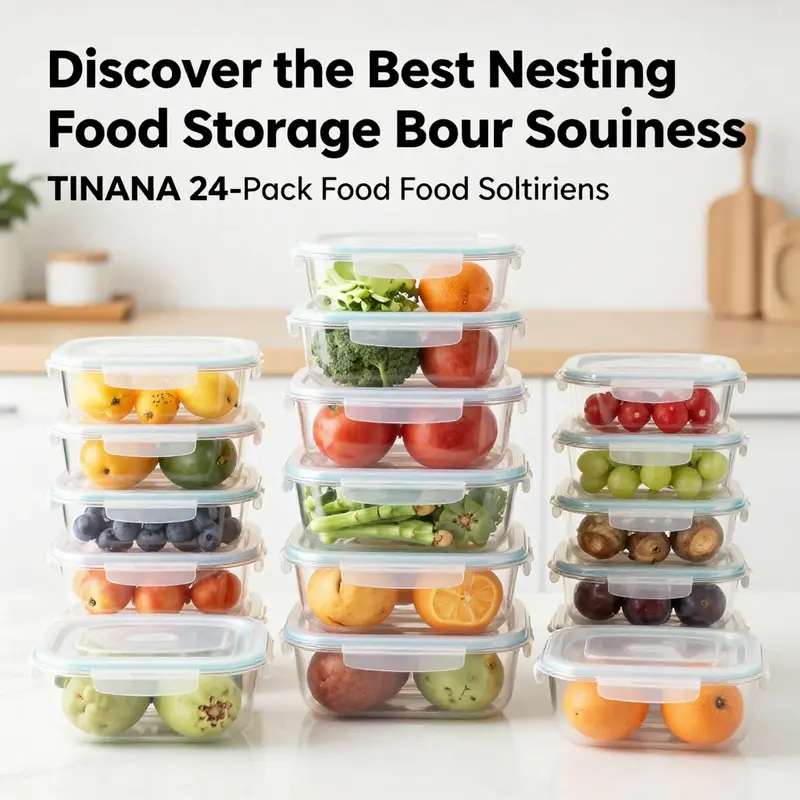
In kitchens of every size, the way we store and access food shapes the way we cook, plan, and savor meals. Nesting plastic bowls offer more than a space-saving trick; they redefine how households think about organization, quick-prep routines, and even the longevity of the ingredients that populate the pantry and fridge. Picture a stack of bowls that closes in on itself like elegant origami: the largest bowl cradling the next, then the one after, each fitting snugly inside the other. The effect is both practical and almost meditative, because it translates a chaotic realm of leftovers and ingredients into a tidy, predictable system. The appeal of a 24-piece nesting set lies in its design philosophy as much as in its utility. It presents a spectrum of sizes that cover everything from the splash of a whisked sauce to a batch of chopped vegetables destined for tonight’s dinner, a lunchbox, or a batch of muffins awaiting the oven. The nesting capability does more than compress storage; it streamlines the workflow of meal preparation itself.
The core strength of these containers is multi-faceted. First is the material choice. Made from BPA-free plastic, they offer a safe medium for storing dry goods, cooked leftovers, and a variety of pantry staples. This is not merely a compliance detail; it is a practical assurance for daily use in a busy household where foods sit in the cabinet or fridge for hours, days, or even longer. The absence of harmful leaching—especially from containers that regularly touch moisture and varying temperatures—gives cooks confidence that flavors and textures remain true to form. The transparency of the material is another quiet but consequential feature. When your storage stack is clear, you don’t need to rummage or label excessively to know what’s inside. You can glimpse the contents, assess portions, and identify what to use first, which reduces waste and speeds up decision-making during a hectic week.
Lids are the unsung heroes of any storage system, and nesting sets tend to elevate their role beyond merely capping bowls. The lids in these configurations are typically designed with tight-sealing, silicone-gasketed edges that form an airtight barrier against air and moisture. This is especially valuable for leftovers and prepped ingredients that must hold their freshness through several days of meal planning or lunch-packing cycles. An airtight seal helps prevent unnecessary odors from migrating through the kitchen or fridge and supports a longer shelf life for prepared meals. The dual promise of freshness coupled with ease of use makes these lids a daily asset—easy to snap on, easy to remove, and built to last through countless cycles of cleaning, stacking, and reusing.
The practical benefits extend beyond freshness. The side-locking mechanism of many lids adds an extra layer of security during transport. When you slip a container into a bag for school, work, or a picnic, you want reassurance that it will stay closed, and the gasket will not loosen in transit. This design consideration reduces the risk of leaks and spills, a reliability that matters as you move from kitchen to car to office. In everyday life, this means you can assemble a complete, portable meal without hunting for foil or plastic wrap to keep it secure. It also helps preserve the integrity of the contents when temperature fluctuations are involved—think a cool salad in a bag that might ride in a warm car or a hot dish that cools slowly on the way back from the market.
Another pillar of value in nesting sets is their space efficiency. The ability to nest bowls means they collapse into a compact footprint that fits neatly within cupboards, drawers, or pantry shelves. This efficiency is especially meaningful in smaller homes, apartments, or dorm rooms where storage surfaces are at a premium. A well-designed nest can reclaim a surprising amount of cabinet real estate, often up to twenty percent more usable space compared with non-nesting alternatives. The math is simple but transformative: you gain order where chaos once reigned, and you gain it without sacrificing capacity. The different diameters and depths in a 24-piece set are purpose-built to handle a wide range of tasks, from whisking a glaze to marinating vegetables or mixing batter. The nesting arrangements ensure that no single bowl dominates the cabinet; instead, they align like a carefully orchestrated sequence that you can access with a single, confident lift.
In this rhythm of kitchen life, visibility is not a luxury—it is a daily advantage. The clear construction allows you to monitor contents at a glance. This reduces the number of times you open and close containers in search of the right item, which in turn minimizes temperature exposure and condensation within the cabinet that could otherwise harm the quality of stored goods. When you keep an eye on portion sizes or track ingredients for weekly meal planning, the ability to see what’s inside becomes a practical ally. It supports mindful shopping and cooking, guiding decisions not by guesswork but by a quick, reliable read of what remains in the stash. The design language behind these nested solutions favors a straightforward, no-fuss approach to storing a diverse array of foods—from cereals and grains to chopped produce, nuts, spices, and sauces. It is a system built to adapt as life shifts: new recipes, changing schedules, and evolving dietary needs.
Labels are a subtle yet powerful feature of modern storage sets. Many 24-piece collections include a simple labeling option—either a dedicated label area or a writable surface on the lid—to mark contents, dates, or recipe instructions. A small pen stored with the set can become an efficient pairing for meal-prep days, allowing you to annotate what’s inside each container and when you prepared it. This capability helps with rotating stock and ensuring food safety, particularly for leftovers. It is not about rigid organization rules but about providing a flexible language for your kitchen routine. If you’re juggling multiple meals for the week, labels reduce ambiguity and misplacement, enabling you to retrieve what you need faster and with greater confidence.
Beyond the day-to-day convenience, the durability of the containers supports a longer horizon of use. They are built to withstand regular handling, cleaning, and stacking. That durability matters in households with children, where a resilient, drop-friendly design can be a quiet saver in terms of both time and money. Cleaning is typically straightforward: many of these bowls are dishwasher-safe, at least on the top rack, and they’re designed to resist staining and odor retention. The ability to clean up quickly after a busy dinner service or a batch preparation is a small but meaningful gain in the broader arc of kitchen efficiency. The materials chosen for these containers also must stand up to repeated exposure to cold, hot, and temperate environments without warping or losing clarity. The results are clear: a system that remains reliable through seasons of cooking, holidays, and the weekly rhythm of family meals.
In evaluating these systems, it’s worth reflecting on the broader market dynamics that have shaped them. The rise of compact living spaces has made space-saving design not a luxury but a practical imperative. Home cooks and parents want products that do not merely store food but also accelerate the cooking process—containers that function as an extension of the prep space itself. The shift toward reusable, durable plastics with thoughtful sealing mechanisms aligns with growing concerns about waste and sustainability. A well-chosen nesting set supports reduced packaging waste in weekly shopping routines and minimizes the need to replace brittle or non-nesting alternatives as needs evolve. The emphasis on safety—BPA-free materials, robust seals, and clear labeling—addresses consumer demand for reliable, non-toxic storage that holds up under routine use. In this context, the nesting design is not simply clever; it is a practical response to a lifestyle where time, space, and safety intersect.
In practical terms, selecting a 24-piece nesting set for your kitchen should begin with a close reading of your own routines. If your days include batch cooking or meal-prep marathons, you’ll likely appreciate the range of sizes that accommodate everything from a tablespoon of spice to a full batch of soup. If you often store dry pantry staples, you’ll want clear visibility and a reliable airtight seal to maintain freshness. If you regularly transport meals to work, school, or a friend’s house, the lid design and the secure locking mechanism become central considerations. The top criterion is whether the set truly nests in a way that reduces clutter without creating a brittle or awkward stack. The containers should fit comfortably inside one another, with a stable stacking order that avoids wedging and pinching. The lids should be easy to grab and align, with seals that do not require excessive force to open or close.
Care and maintenance, though sometimes overlooked, contribute significantly to longevity. Always consult the manufacturer’s guidelines for dishwasher placement and heat exposure. While many sets are designed to withstand washing, prolonged heat exposure can degrade gaskets over time and reduce sealing performance. If a lid or gasket becomes stiff or cracked, it is a signal to replace that component or the entire set to maintain performance. A light rinse after use helps to maintain clarity and prevents staining or odor build-up that could transfer to other foods. The goal is consistent performance rather than perfect aesthetics; a well-maintained set should look clear, feel sturdy, and function smoothly after repeated cycles of use.
The journey through a well-considered nesting system does more than tidy a cabinet. It changes how you interact with food across the day. It makes you more deliberate about what you buy, how you prepare, and how you store for later. The ability to segment a day’s cooking into clearly designated containers—each ready for a specific task or meal—can reduce decision fatigue, encourage homemade meals, and support healthier routines. In households where time is scarce, those thirty seconds saved per decision compound into meaningful improvements in weekly meal quality and consistency. The nesting approach is a practical embodiment of a philosophy: design that respects the realities of modern life, while offering clear, repeatable outcomes that are easy to teach to others, whether in a shared kitchen, a dorm, or a family home.
While the landscape continues to evolve, the core attributes of an exceptional nesting set remain constant. It should combine safety and visibility with a durable build and a thoughtful, space-efficient design. It should enable flexible use—from storage and prep to transport and reheating—without compromising on cleanliness or food safety. It should deliver value not merely as a single-purpose purchase but as a long-term part of everyday cooking life. When you consider a 24-piece nesting collection through this lens, you see that its value extends beyond the sum of its parts. It becomes a framework for a kitchen that breathes more easily, a space that invites creativity, and a routine that sustains itself with fewer interruptions and less stress.
For readers navigating a crowded and evolving kitchen landscape, consider the principle behind nesting sets as a compass: seek designs that maximize space without sacrificing usability; prioritize safety features that protect both the cook and the food; and value clarity of contents as much as the functionality of the lids and seals. In this light, the 24-piece nesting set stands out as a remarkably balanced solution. It embodies how thoughtful industrial design can simplify daily rituals, reduce waste, and keep the heart of the home—its meals—prepared with intention and care. This is not merely about finding a container that fits neatly inside another; it is about adopting a storage system that supports a calmer, more intentional approach to cooking, planning, and sharing meals with others.
External resource: https://www.amazon.com/dp/B0CQ3Z1K6Y
Nesting Brilliance: How Stackable Plastic Bowls Transform Small-Kitchen Storage, Prep, and Everyday Meals
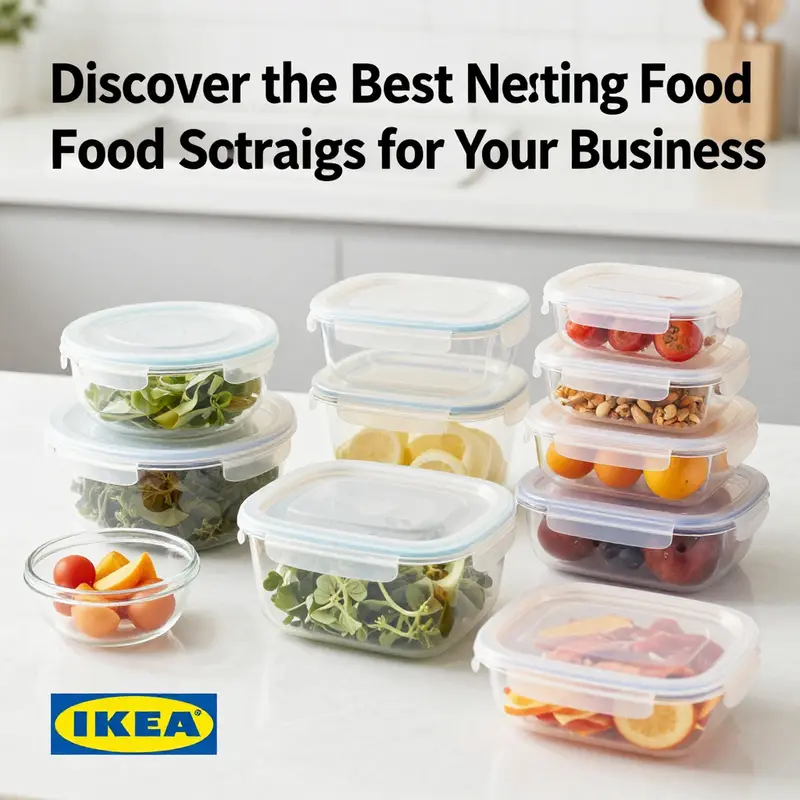
The kitchen is a study in constraints and clever solutions. In spaces where every inch counts, the right nesting food storage containers can feel like a small act of architectural ingenuity. The focus on plastic bowls designed to nest is not just about keeping things organized; it is about redefining how a family moves through a week of meals, leftovers, snacks, and batch-prepped ingredients. When you lift a lid and see the right amount of air, the right seal, and the right translucence, you begin to understand why this category has moved from mere utilitarian gear to a quiet backbone of the modern kitchen. The best nesting sets balance several forces at once: compactness, durability, versatility, and ease of use. They must be stackable enough to vanish into a cabinet or drawer, yet robust enough to survive the knocks of daily life. They should seal tightly to preserve freshness, but also be easy to clean and compatible with common appliances. Above all, they must be adaptable to countless tasks, from everyday leftovers to creative prep work that precedes cooking or baking. The narrative of these bowls is a practical one, but it also reveals a cultural shift toward deeper, more intentional kitchen organization—an understanding that storage is not a passive necessity but an active contributor to healthier, simpler living.
Design efficiency sits at the heart of an excellent nesting bowl set. The geometry of nesting is not accidental; it is engineered to maximize space without sacrificing function. When you have a complete 10-piece assortment, the bowls telescope into each other like a well-honed mechanism. This means you can clear counter space, then pull out a bowl of the right size for marinating, whisking, or cooling a batch of ganache. In smaller homes or open-plan apartments, this kind of stackability becomes a lifestyle feature rather than a convenience. It enables one to convert a narrow cabinet into a flexible staging area for food prep, storage, and even serving when needed. The transparency of the bowls adds another layer of practicality. Being able to see contents quickly, even without labeling, saves time during busy mornings or late-night reheating sessions. The lids, typically made to seal with a clear gasket and a secure snap, keep odors contained and moisture in, a detail that preserves flavors and extends shelf life. Visibility and seal performance together reduce the cognitive load of daily cooking: you know what you have, you know what you don’t, and you can keep items tasting fresh with minimal fuss.
The role of lids cannot be overstated. In a well-rounded nesting set, lids perform like safety valves for a busy kitchen. They keep air out and moisture in, and they allow you to acclimate leftovers in a controlled way. The lid design often emphasizes a pragmatic combination of snap closures and a seal that remains reliable after repeated dishwasher cycles. This is where the product ecosystem truly matters: a lid must be readily replaceable if lost, damaged, or scuffed, without forcing a homeowner to buy a wholly new set. The ability to mix and match lids with bowls in the same family reduces waste and lowers long-term costs. In this sense, the lid strategy advances sustainability in a practical, everyday way. The lids also enable more ambitious uses: you can portion a marinade or a dressing, then store the remainder for later use, or you can transform a bowl into a temporary prep dish for a baking project, poised to slide into the oven or dip into the fridge as needed.
Durability and ease of care complete the trio of essential attributes. The materials—robust, impact-resistant plastic with a smooth, non-porous surface—are chosen to resist cracking or clouding over time. Plastic bowls that are designed to be dishwasher-safe and microwave-safe remove barriers to quick cleanup and rapid reheating, which matters when plans shift from a weekday dinner to a last-minute gathering. The practical benefit is straightforward: fewer dishes, quicker transitions, and less energy spent on maintenance. A non-slip bottom—often a silicone pad embedded with a gentle tack—improves stability on slick countertops or during vigorous mixing. This design feature minimizes the risk of spills when you’re whisking eggs, folding batter, or preparing a vibrant salad. In a busy household, a bowl that stays put means fewer messes, safer handling, and more confidence to tackle multiple tasks in a single session.
Versatility emerges as the strongest case for choosing a nesting set in plastic. The assortment typically encompasses a spectrum of sizes that covers the routine tasks of a kitchen. Large bowls are ideal for salad batches, dough brisk trials, or marinating proteins for the next day. Medium bowls handle sauces, dressings, or the mise en place for a week of lunches. Small bowls come into play for portioning, ingredient prep, or serving dips. The translucent lids add a final layer of practicality: with a quick glance, you can confirm if a container holds leftovers or if it is time to swap in a fresh batch of cut fruit for snacks. This multi-functionality is more than convenience; it’s a framework for improving how you approach food safety, waste reduction, and planning. When a single set of bowls can handle thawing frozen vegetables, whisking a vinaigrette, and prepping a dessert topping, you gain a sense of coherence in your culinary routine that can be difficult to achieve with a clutter of disparate containers.
Alongside design and function, cost remains a pivotal consideration. The best nesting plastic bowls offer extraordinary value: a single purchase delivers a range of sizes, complies with common cleaning and heating routines, and reduces the need for buying multiple, separate containers over time. The value proposition expands when you consider how the stackable format saves cabinet space, which in turn reduces the need for house-wide storage solutions and keeps kitchen organization sustainable. It is not merely about price; it is about long-term cost-per-use, reliability, and the emotional relief that comes from a kitchen that behaves predictably. A well-chosen nesting set can feel like a small investment in daily ease and family well-being, especially for households that balance cooking with busy work schedules, school days, and social commitments.
When we examine alternatives, a few notable options come into focus. There are larger, bulk-storage configurations designed for batch cooking, where the emphasis shifts toward high-volume containment and space-saving stackability. Some families opt for varieties that include glass or glass-plastic hybrids, particularly when reheating is a frequent activity or when there is a desire to minimize odor absorption over time. These alternatives broaden the palette of choices but often demand more careful handling or cost consideration. The distinctive advantage of the plastic nesting approach lies in a clean, cohesive system: compatible lids, predictable stacking, and a behavior that rewards habit formation. The right set becomes a launchpad for routine, making it easier to portion meals, minimize waste, and maintain a calm, organized kitchen environment. In that sense, nesting bowls do more than house food content; they nurture a cooking culture built on efficiency, accessibility, and a reduced frictions around everyday tasks.
For readers exploring how to connect purchasing decisions to everyday use, a practical route is to consider the lifecycle of a set before buying. Start with a layout of your typical weekly menu and grocery patterns. Do you batch-cook on Sundays? Do you keep a rotating schedule of leftovers for lunches? Do you regularly thaw frozen ingredients for midweek meals? Map these patterns against the sizes in your prospective set. A 10-piece assortment should provide a full spectrum that covers both the large-scale needs—salads, batters, doughs, marinades—and the smaller, more precise tasks like portioning snacks or measuring ingredients for quick meals. Visualize how each size slides into the next and how the lids align with each bowl, ensuring a closed, orderly system rather than a loose heap of containers that complicates rather than simplifies daily life. The goal is not to own a dense catalog of containers, but to curate a single, reliable system that glides from fridge to freezer, from mixer to oven, and from pantry to table with minimal friction.
In the wider ecosystem of kitchen storage and packaging, there are compelling examples of how space-conscious design translates into real-world benefits. A set with excellent nesting properties is, in effect, a compact, modular toolkit for food storage. It allows you to store ingredients compactly, plan portions with clarity, and stage recipes without creating bottlenecks or clutter. When you choose materials wisely and look for features such as microwave- and dishwasher-safe performance, you equip yourself to manage life’s surprises with composure. The result is a kitchen that not only holds more efficiently but also encourages better habits—more precise meal planning, more consistent leftovers management, and more opportunities to reuse and recycle, all within a system that is as easy to adopt as it is pleasant to use.
As you consider the broader choices in the market, a small but meaningful action can guide your decision: evaluate the quality of the seal on the lids, test the stability of the bottom against a damp surface, and imagine how you would store and retrieve the bowls in your own space. The best nesting set harmonizes form and function in a way that feels almost seamless. It invites you to embrace a rhythm where cooking, storing, and reheating happen in a continuous loop, with minimal wasted space and maximal confidence. The truth is simple: when your containers nest well, your kitchen becomes more than a place to store food. It becomes a stream of efficient routines that free up time for the people and activities you value most.
For readers who want a concrete example of how nesting design supports real-world practice, consider a practical pointer to a related storage solution that emphasizes portability and scalability. A wholesale, customizable option in the broader family of food-storage bowls demonstrates how a unified set can serve diverse needs—from family meals to weekend gatherings—while maintaining a cohesive aesthetic and performance standard. This kind of solution reinforces the core idea that nesting design is not about a single feature but about a reliable ecosystem that works together to streamline daily routines. If you want to explore this approach further, you can learn more about such comprehensive systems through resources that highlight durable, stackable, and easily replaceable components designed for busy households. Wholesale custom print kraft paper food storage bowls offers a glimpse into how a thoughtfully designed family of storage products can extend the nesting philosophy into other packaging formats while preserving the essential virtues of space efficiency, durability, and practicality.
To round out the discussion with a broader perspective on design, durability, and everyday use, the market continues to refine and adapt these concepts. The foundational ideas—compactness, seal integrity, stability, and ease of cleaning—remain constant, even as manufacturers experiment with new materials, lid configurations, and shape variations. A contemporary nesting set therefore becomes a reference point for evaluating other options: does the container deny space in one area while giving it back in another? Does the lid design prevent leaks without creating unnecessary friction during daily use? Will the materials stand up to frequent cycling through the dishwasher and the microwave, while keeping contents fresh and odors contained? The best answers arise when these questions are tested in real kitchens, where the true measure of success is the quiet efficiency with which bowls, lids, and their contents move through a typical day.
External perspectives on container design reinforce the value of stackable systems. They remind us that practical engineering—clear lids, secure seals, sturdy construction, and thoughtful storage—translates into tangible improvements in how families plan and execute meals. The story of nesting bowls is, ultimately, a story about choosing tools that align with reality: small rooms, busy schedules, and a desire to cook with intention rather than let clutter dictate what can and cannot be done. The right nesting set doesn’t promise miracles; it delivers a dependable, repeatable pattern that reduces the friction of daily life, preserves the integrity of food, and respects the space you have. In that sense, it is a quiet but powerful ally in the perpetual project of making a kitchen more humane, better organized, and more responsive to the needs of a modern household.
External resource for further context on space-efficient containers: https://www.ikea.com/us/en/p/365-food-container-square-plastic-1-4-l-90359179/
Final thoughts
Choosing the right nesting food storage containers is essential for maintaining efficiency and freshness in any food business. The Mainstays Nonslip Nesting Plastic Assorted Mixing Bowl Set stands out with its perfect nesting design and multi-functionality, while TINANA’s 24-pack offers bulk storage solutions, ideal for larger operations. Meanwhile, IKEA’s 365+ series provides an affordable and functional option for simpler storage needs. With these options, you can confidently select the best storage solutions that cater to your operational demands and enhance your workflow. Streamline your kitchen and elevate your service with the right containers today.