
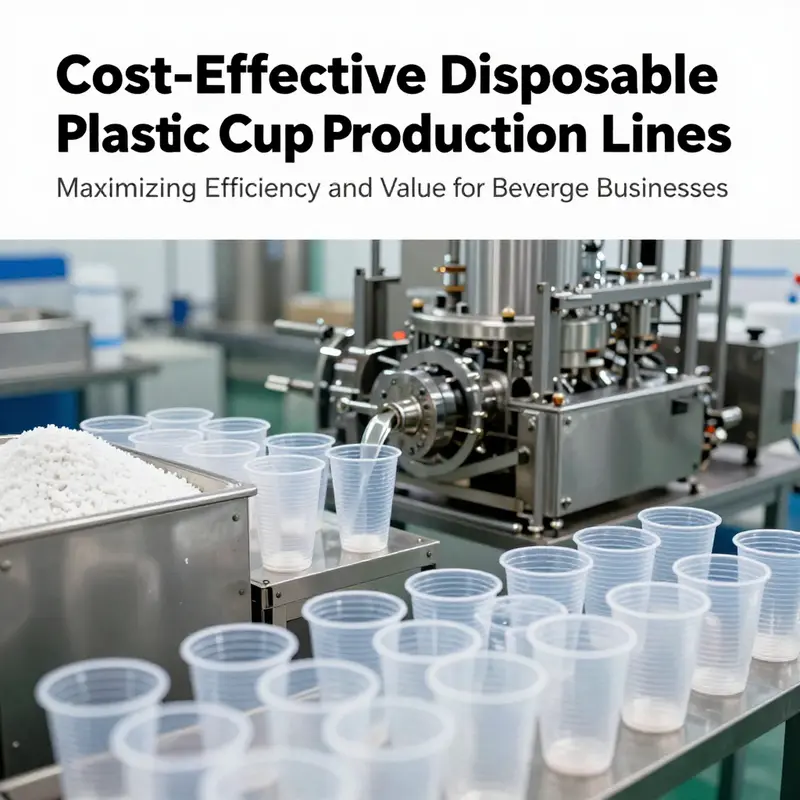
In today’s competitive beverage market, cost-efficiency is paramount, especially for bubble tea shops, restaurants, and catering services. The production of disposable plastic cups has become a critical factor in sustaining these businesses. Understanding affordable alternatives in disposable plastic cup production lines can lead to significant savings and increase operational efficiency. This article explores the essential equipment, market demands, production processes, supply chain strategies, and international trends, guiding operators to make informed decisions that align with their business needs.
成本与产能的共振:廉价一次性塑料杯生产线的技术与价格全景
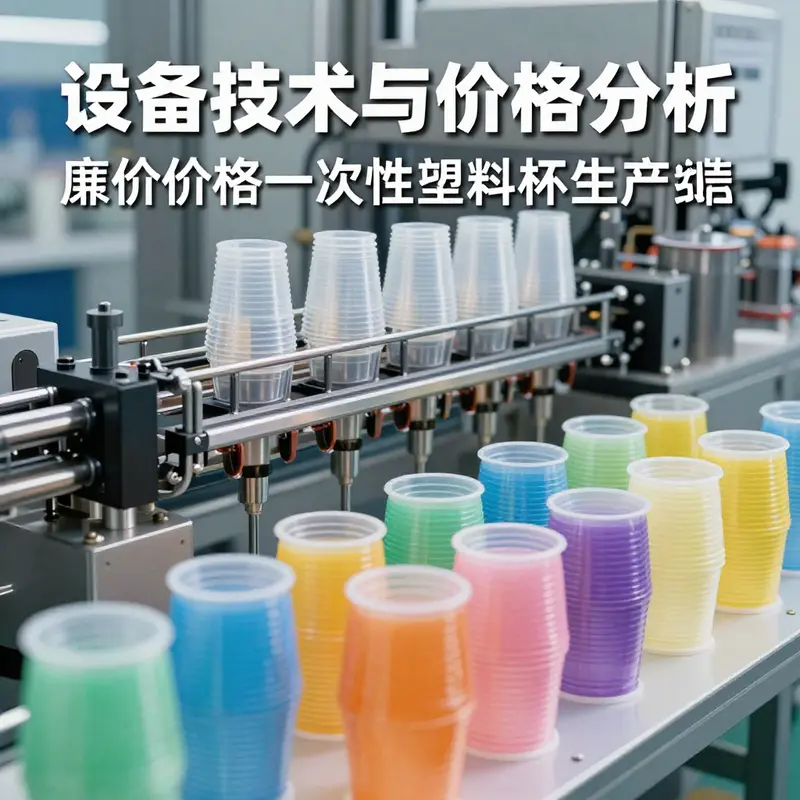
在当下高度竞争的外贸与商用饮品市场,廉价价格的一次性塑料杯生产线并非简单的“低成本叠加”问题,而是一门需要兼顾产能、材料兼容性、自动化程度与合规性的综合艺术。企业在追求更低单位成本的同时,必须理解设备预算、运行成本和市场需求之间的复杂关系。核心诉求往往是以尽可能少的资金获得尽可能稳定的产出,而达到这一目标的路径,往往是对生产线的结构性认知与采购策略的精细平衡。总体而言,市场上存在多层级的设备解决方案,覆盖从基础入门机型到全自动化一体化系统的广泛区间。对想要快速进入市场的小型企业而言,入门级设备提供了试错空间;而追求规模化和稳定性的大型运营者,则需要在产能、材料适配与能耗之间做出更为精准的权衡。
在价格区间的分布上,行业观察者常常把焦点聚焦在三类关键的设备组合:低成本的单机型、中端的全自动化制杯线,以及高端一体化系统。低成本设备的潜在优势在于初期投入极低,便于试产和市场试探;但其产能、稳定性与能耗往往难以与后续升级的需求相匹配。数据显示,入门级设备的价格区间可以低至几千元人民币,极低的初始成本使其成为小企业或区域性试产的合理选项。然而,随着产量需求的提升和订单种类的多样化,单一机型的局限性就会逐渐显现。中端自动化设备则通过更高的产出、更好的材料兼容性和更稳健的运行来提高单位成本效率。价格区间通常落在数十万人民币的量级,部分型号提供定制化服务,能够在不牺牲产能的前提下满足不同杯型与材料的切换需求。对于希望实现“大规模外贸或稳定对接连锁餐饮品牌”的企业,这类设备成为主流选择。至于高端全自动化系统,它们往往不仅包含热成型与包材的生产,还集成了边角料回收、成品包装与智能化管理,向着“从原料到成品的全链路控制”迈进。此类系统的投资门槛较高,但在长期运营与稳定性方面往往具备更高的回报潜力,尤其是在对出口认证和环境法规日益严格的市场环境中。
从具体价格与配置来看,市场提供的参考信息显示,一套自动塑料一次性杯盖、碗、托盘热成型制杯机的报价通常落在约 14,900 到 18,300 美元之间(单台,按最低采购量计)。该设备在自动化多工位处理、材料适配和高产能输出方面具备明显优势,能够在高强度订单环境中实现每小时多达数百个杯子的稳定生产。这一范围之所以具有代表性,是因为它直接体现了“高产能+多材料兼容性+自动化程度”的三要素组合。更完整的生产线,若从原料到成品的全流程打包,一般需要在 23,000 至 25,000 美元之间的预算。尽管这类整线方案的初始成本显著上升,但它们在工艺一致性、原材料利用率和后续扩产能力方面的潜在收益也更明显。
在国内市场的价格梯度中,入门级设备的人民币区间往往显得更为亲民,某些低价机型的报价可能低至约 ¥3,600 左右,面向小规模产能与试产需求。这类设备通常在杯体结构、材料兼容性和自动化程度上存在一定局限,适合对成本极度敏感的小型企业或刚进入行业的创业者进行市场测试。中端自动化设备的价格通常落在 ¥425,532 至 ¥1,000,000 的区间,某些厂商还提供定制化服务,使得设备能够在 PP、PS、PLA 等材料之间切换,以满足不同消费群体和法规要求的需求。高端全自动化系统,若把目光投向更高层级的配置,其价格常超过 ¥350,000,甚至达到 ¥800,000 以上的区间。这类系统往往携带更完善的生产线集成、能源管理和质量控制模块,专为大型外贸企业或出口认证企业设计,意在实现更低单位成本和更高交付稳定性。
在技术特征方面,热成型是当前廉价价位段中最具性价比的主流技术路线。该工艺通过对热塑性薄膜的快速成型和冷却成型,能够高效地转换原材料为杯体、杯盖、碗等制品,且在同一生产线阶段就可以实现多型材的加工,从而降低设备数量与能耗。多工位自动化处理系统的引入,是提升产能与降低人工干预的关键。通过机械化送料、自动夹持、快速换模、以及智能化产线控制,生产线的产量稳步提升同时,操作人员的技能门槛也相对降低。对于计划涉足不同杯型(如冷饮杯、热饮杯、果汁杯等)的企业,设备的材料兼容性尤为关键。常见的可加工材料包括聚丙烯 PP、聚对苯二甲酸乙二醇酯 PET,以及聚苯乙烯 PS,这三种材料各有优劣:PP 耐热、材料强度与卫生性高;PS 成本低、加工速度快、透明度好;PET 则在强度和耐化学性方面表现突出,适用于更广泛的温区与应用场景。环保导向下,PLA、PBAT 等生物可降解材料逐渐出现在高端或特定市场段落,但这类材料的设备成本通常更高,且对设备的温控、材料供给与回收流程提出了更高要求。
从采购策略的角度思考,直接联系供应商是获取准确参数、样品及定制化服务的最直接路径。部分平台上的生产制造商提供从设备、模具、原材料到成品的一站式服务,这能显著缩短前期筹备时间并降低采购风险。在评估供应商时,除了价格与产能外,还应重点关注设备的测试与认证情况、工厂的售后服务能力、以及对您的特定材料组合的适配性。对于希望进入国际市场的买家,CE、FDA 等认证将成为重要的门槛,提前理解并规划认证路径,可以显著提升订单成功率与市场接受度。
在制定投资计划时,务必把“产能与人力成本”的综合效应纳入考量。自动化水平提升可以显著降低对熟练操作工的依赖,理论上可减少约四成左右的人工干预需求,从而在长期运营中降低单位成本并提升产品一致性。然而,较高的初始投资、设备维护与专业技术培训成本也会在前期形成压力。因此,企业应以实际订单预测为导向,采用分阶段升级策略:先以 Price-Performance 优势的中端自动化线起步,逐步增加产线并在产能释放后再考虑向更高端系统扩展。这种演进策略,有助于在市场波动期保持现金流的稳定并避免产能过剩。
对未来的市场走向,环保诉求和法规合规将成为重要驱动。虽然当前廉价设备在短期内仍具备显著优势,但消费者和监管机构日益关注材料的可回收性与环境影响。因此,具备多材料切换能力的设备,以及对可降解材料的支持,正逐步成为性价比评估中的新维度。企业在选型时,可以将环境与合规需求作为长期成本的一部分来评估,以免在未来升级时进入高成本的改造阶段。
在信息获取与决策过程中,跨材料与跨杯型的灵活性往往需要与供应链的稳定性共同权衡。为帮助读者更全面地理解投资回报,可参考某些纸杯生产线的布局与工艺要点,以对比不同生产线在同一工艺范畴下的资源配置。具体可以访问该供应域内的相关信息页面,其中一个示例性入口是一个关于纸质杯生产的页面,作为对比参考,读者可以从中感知到多线并行时的设备布局与工艺简化思路。你可以参考该文章中的一个具体案例来理解跨材料运营的潜在收益与风险,这一对比视角有助于在投资前对自己的材料策略和产线组合进行更清晰的评估:disposable kraft thick paper cup for hot drinks.
最终,成本与产能之间的共振,是一个多维度的动态优化过程。对价格敏感但希望实现规模化的企业,首先应明确目标产能、材料组合与认证需求,然后以中端全自动化设备作为起步,逐步通过产线扩展与工艺改进实现成本下降与产能提升的双重收益。在这个过程中,供应商选择、模具与材料的稳定性、以及对环保趋势的前瞻性布局,都会成为决定长期竞争力的关键因素。随着市场对更高效、可持续解决方案的持续关注,未来的廉价价格一次性杯生产线将不仅是节省成本的工具,更是一种让企业在全球市场中保持灵活性与合规性的综合平台。
外部参考链接:
https://www.alibaba.com/product-detail/Factory-Price-Automatic-Plastic-Disposable-Cup-Lid1600547101652.html?spm=a2700.galleryofferlist.pproductDetail.click&urlShowOtherInfo=true
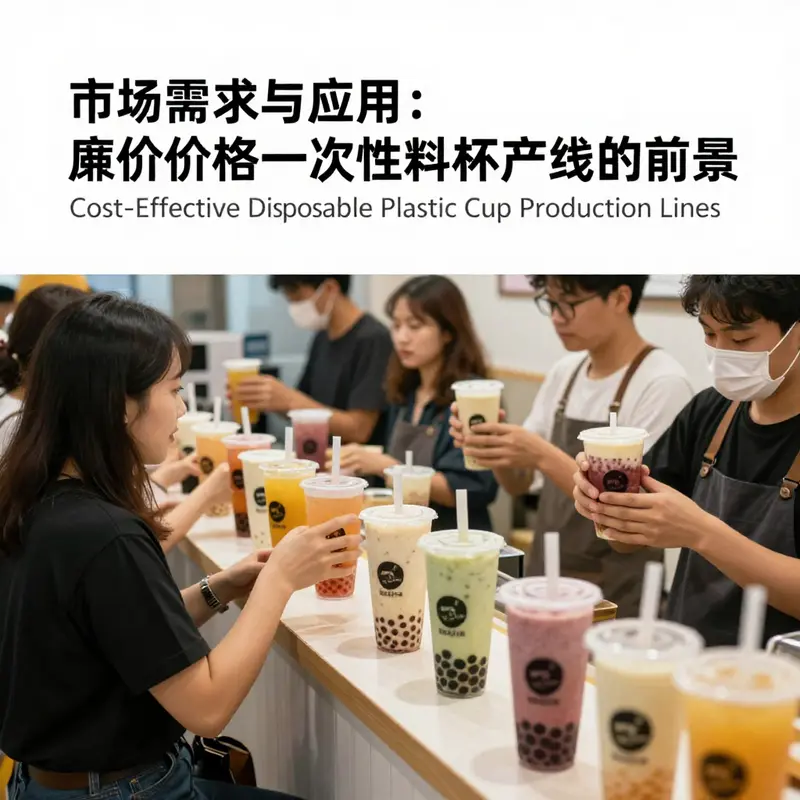
廉价价格背后的市场现实:一次性塑料杯生产线的需求、风险与转型路径
Internal hyperlink: Wholesale custom logo printed Kraft paper soup bowl
从低成本到高产出的工艺演进:廉价一次性塑料杯生产线的综合优化之路
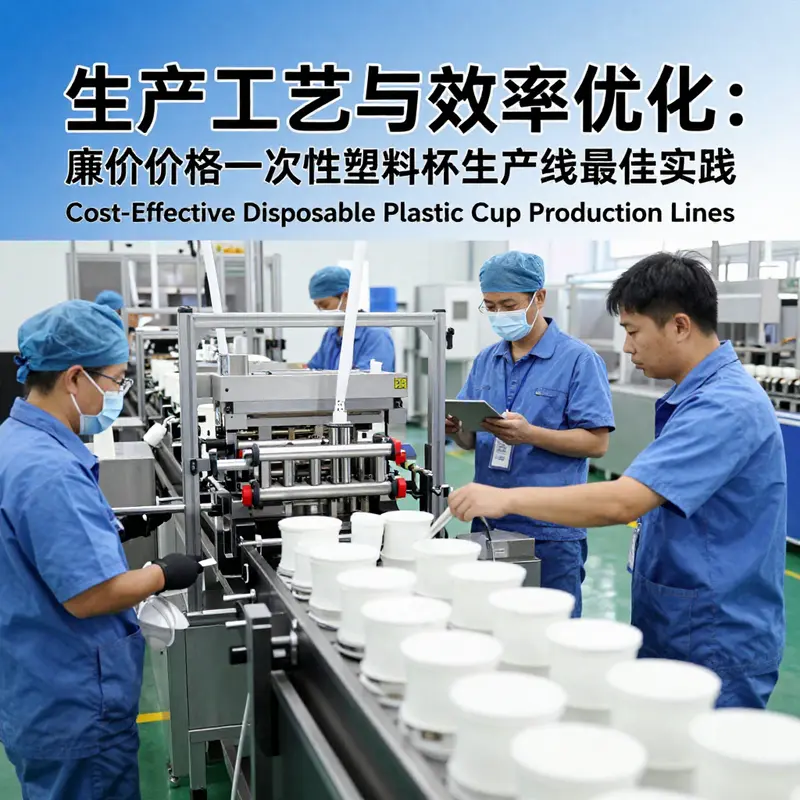
在竞争激烈的 disposable 包装市场,“廉价但可靠”的生产线并非简单的成本叠加,而是以工艺标准化、自动化水平提升,以及对材料与能源的精细管理为核心的综合性升级。围绕一次性塑料杯的生产线,企业需要在确保食品安全与产品一致性的前提下,降低单位成本、提升产能并减少人力依赖。这一Chapter试图以一个连贯的叙事,勾勒出从原料选择到成品出厂的完整链条如何通过工艺与效率的协同提升来实现低成本高产能的目标,同时把环境友好与合规性纳入长期经营的核心驱动。
首先,核心工艺的标准化是降本增效的起点。塑料杯通常以聚丙烯为主材,选料时应以食品级别的颗粒为基准,并建立稳定的多源采购渠道以防止价格波动与断货风险。这一阶段的关键在于对原料的一致性进行严格把控,确保进入设备的材料在热塑成型过程中的熔融行为稳定,避免因树脂批次差异引发的色差、厚度不均或强度波动。接着进入注塑成型阶段,这一步往往决定着杯体雏形的几何精度与壁厚分布。与传统驱动相比,伺服电机驱动的注塑系统具备更高的温控与压力调节精度,能显著降低废品率并将能耗控制在可观范围内。通过对注塑腔温度设定在合适的区间并配合高效的模具冷却,杯身的壁厚分布更均匀,口径边缘的整齐度也随之提升,这对后续的卷边定型和印刷覆膜阶段都有积极影响。
卷边定型是决定杯口密封性与视觉品质的关键环节。传统的人工调模在一致性与换模时间上都存在明显瓶颈。为提升线性柔性与换模效率,应在设备层面引入自动化的卷边调模系统,使换模时间显著缩短,废品率从较高水平下降至极低值。以自动化卷边为例,换模时间的缩短和模具对位的精度提升,不仅提高了单位小时产出,还降低了人工干预的误差来源,使整条生产线在面向不同杯型或批量定制时更具弹性。随后进入印刷与覆膜阶段,杯身印刷通常需要耐水性、耐油性相对稳定的油墨,以及对环境友好程度的考虑。选择水性或低VOC的印刷材料,配合内壁淋膜处理,有助于提升杯体在湿热环境下的保护性能,并降低后续回收与回溯处理成本。对瑕疵的识别与预防仍然不可忽视,推荐在印刷与覆膜阶段设置在线监控与快速更换工艺路线,以避免整批次的报废。
质检与包装则是实现全流程无人化的关键环节。通过视觉检测系统对印刷错位、杯体缺陷、破孔等问题进行连续监控,自动计数与分箱打包设备共同构成了生产线的尾端控制。一个高效的自动化尾部系统可以显著降低人工参与度,同时提升包装的一致性与出货速度。将上述环节整合为一条全自动化流水线,是实现日均产能达到十万只以上并将综合成本控制在每只约0.1元以下的核心。更重要的是,这一路线的成功并非依赖单一设备,而是多工序间的协同与信息化管理的贯穿。仅有高端单机的投入不足以支撑长期的成本优势,必须在生产计划、原料管理、能源分配和人员调度等方面建立数据驱动的运营模式。
在效率优化方面,设备配置的初始投入虽需谨慎,但以小投入实现大产出是很多创业型工厂的现实路径。以一个起步阶段的配置为例,若能够安排若干台自动成型机与辅助的印刷或覆膜设备,便可实现较高的产能覆盖与柔性生产。更重要的是,设备的节能设计不可忽视。引入具备智能控电功能的设备、在非生产时段进入休眠模式、以及采用高效传动系统,往往能带来显著的月度电费下降。人力成本的压缩同样直接体现在线路的运营效率上。成熟的全自动生产线往往只需要少量监控人员,培训周期短、上岗门槛低,便于快速扩张产能而不必在人员成本上承受过大压力。通过构建“订单-产能”的动态匹配机制,企业可以在不同订单规模下保持稳定的产能利用率,甚至在小批量定制订单中保持高响应速度与良好利润。对于成长中的企业来说,这种灵活性是穿透激烈竞争的重要利器。
技术升级的路线图也应纳入长期视角。先以现有自动化产线为核心,逐步增加覆膜、印刷和耐热性能杯的生产能力。中期可以将材料扩展到更高附加值的选项,如耐温、耐用性更强的杯型,从而拓展市场与提高溢价空间。长期则应关注绿色材料的应用与绿色制造的认证路径。随着“双碳”目标的推进,PLA、淀粉基等可降解材料逐步进入商业议程,为企业带来政府补贴和绿色采购机会,利润空间有望通过政策红利与市场偏好提升而进一步扩大。对绿色材料的研究投入不仅能提升品牌形象,也有助于在政府采购、跨国企业合作等高端市场中获得更具竞争力的订单。需要强调的是,绿色升级并非孤立行动,它要求在整个生产链中的原料、设备与运营模式上实现协同改造,以确保成本回收时间与环境效益的双赢。
在成本与利润的分析框架中,成本结构的透明化是确保持续盈利的关键。结合行业数据,原材料成本常占比高位,能耗、人工和设备折旧构成了剩余部分。若以当前账面数据为参照,单位成本若能控制在约0.085–0.09元之间,出厂价若设定在0.15元/只,毛利润将稳居0.065元/只以上;在日产量达到5万只时,日毛利可观且可覆盖折旧,回本周期大概率落在8–10个月水平。这一数字并非空中楼阁,而是建立在订单稳定、产能利用率高、废品率低与供应链稳定的综合基础之上。为实现这一目标,企业还需要将环保和合规性作为长期的结构性驱动,通过合规的原料标准、清晰的设备认证和过程控制来减少因质量问题引发的返工与废弃。
在市场与政策的外部环境方面,环境友好和法规合规将成为新的竞争维度。政府对绿色制造的扶持政策、对可降解材料的激励,以及对高效能源管理的补贴,构成可观的额外利润来源。企业应提前布局、积极申请相关补贴,以降低初始投资成本并加速投资回报。此外,环保材料的市场需求正在持续增长,相关机构研究预示未来五年将出现稳定的增长势头。通过把绿色升级嵌入产品线和运营模式,企业不仅能在成本和利润层面实现改善,也能在品牌与市场认知上获得长远的竞争优势。
在实践层面,本文所探讨的路径并非单一模板。不同地区、不同规模的工厂在资源、人员与市场需求上存在差异,因此,真正可行的方案往往需要结合当地供应链、能源成本与市场定位进行定制化设计。但核心原则是明确的:以标准化的工艺、以自动化为核心、以材料与能源的优化管理为支撑,并辅以绿色升级来开启长期的增长周期。如此一来,廉价价格的生产线就不再仅仅是一个成本标签,而是一个可持续的盈利模式——在规模化与灵活性之间取得平衡,在短期盈利和长期成长之间找到共振点。
在后续章节中,我们将继续把前沿的工艺趋势、设备配置细节与运营模式结合起来,帮助读者构建自己的低成本高产出路线。为进一步了解行业趋势与市场数据,可以参考外部权威分析以获得更广泛的视角。与此同时,若需要一个具体的、面向中小企业的杯类生产方案页面做为参考,可查看这一资源页面:wholesale-take-away-8oz-12oz-disposable-coffee-cup-with-lids。
外部参考与进一步阅读:Automated Plastic Cup Production: Efficiency Gains and Cost Reduction in the Food Packaging Industry,研究显示全自动化生产线能显著提升产能效率与合格率,并对节能与可降解材料应用给出前瞻分析。链接如下:http://www.researchandmarkets.com/reports/5894723/automated-plastic-cup-production-efficiency-gains-and-cost
null
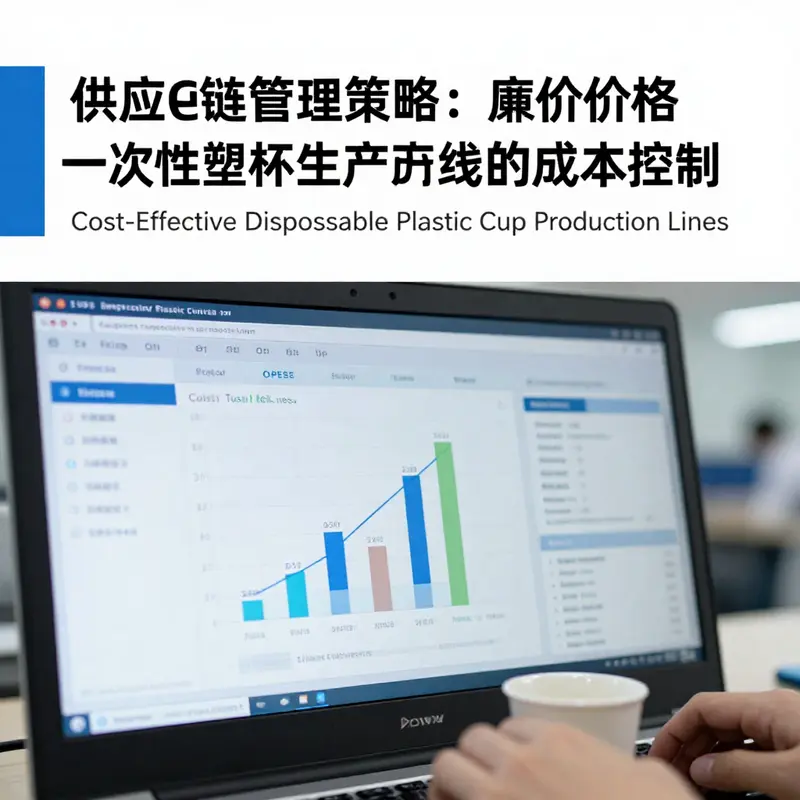
null
国际市场趋势与转型:廉价一次性塑料杯生产线的全球视角与可持续路径
The global market for cheap price disposable plastic cup production lines is entering a period of recalibration. What looked like a straightforward path to scale and profits through high-volume, low-cost output is gradually giving way to a more complex landscape where policy, environmental costs, and consumer expectations reshape what it means to manufacture at scale. The chapter that follows traces this turning point, showing how the once relentless push for cheaper cups is being redirected toward sustainable materials, circular business models, and strategic regionalization. It is a narrative of transition as much as it is of opportunity, where the core capability remains the ability to convert resin, energy, and automation into reliable throughput — yet the metrics of success have shifted from price alone to total lifecycle value and global accessibility of sustainable solutions.
Across major markets, policy frameworks have begun to bite deeper into the economics of disposable cup production. In the past, the primary competitive lever was price per unit; today, producers confront a layered set of constraints that start with design for recyclability and end with extended producer responsibility. Jurisdictions in Europe, North America, and parts of Asia have rolled out or reinforced restrictions on non-degradable utensils, coupled with clear targets for waste reduction and recycling rates. This means that even if you can assemble a cup line that runs at high speed, you must also align with materials compatibility, end-of-life processing, and the regulatory requirement to document compliance. The cost of waste management, compliance, and environmental stewardship is no longer a variable you can chalk up to regional nuance; it has become an integral part of the product’s total cost of ownership. In practical terms, the price advantage once achieved by churning out cups cheaply is increasingly offset by the need to meet a broader set of standards, and by the presence of more sophisticated buyers who value supply chain transparency and environmental accountability as a precondition for contract awards.
If the story ended there, the chapter would be a cautionary tale. Yet the global market is also revealing a complementary reality: the strongest long-term growth is not found in chasing the absolute cheapest cup, but in delivering value through sustainable materials, accountable manufacturing, and scalable circular systems. This reframing creates a new kind of global demand. Across regions with mature consumer markets and stringent environmental laws, there is a pronounced appetite for cups made from biodegradable or compostable polymers, provided they are integrated into end-to-end solutions that minimize contamination, maximize recyclability, and align with local waste streams. In parallel, the rise of the circular economy has sparked interest in “loop” models for cups, where deposits, returns, standardized cleaning processes, and redistribution channels create a closed-loop that dramatically reduces packaging-related carbon emissions. These models are not a distant ideal; they are being piloted and scaled in many urban ecosystems, and the lessons learned are translating into practical demand signals for capable manufacturers.
Among the most consequential shifts is the internationalization of supply chains for materials that enable sustainable cups. The cost gap between traditional fossil-based plastics and bio-based or compostable alternatives has narrowed, thanks to advances in biopolymer development and process optimization. Materials such as polylactic acid (PLA) and polybutylene adipate terephthalate (PBAT) have seen meaningful improvements in price competitiveness and performance. The implication for producers is straightforward: invest in flexible lines that can handle both conventional and sustainable feedstocks, with the capacity to switch as market signals require. The ability to operate with a high degree of material compatibility reduces risk when customers demand greater environmental compliance. It also broadens the geographic reach of manufacturers, allowing producers to meet regulatory and consumer expectations in diverse markets without overhauling their entire production architecture.
To illustrate how the landscape is evolving, consider the practical realities of capacity planning. The traditional model favored single-purpose lines optimized for maximum output of one product family. Today’s forward-looking plants emphasize modularity and adaptation. An automated multi-station forming system, capable of handling different resin families and cup formats, becomes a strategic asset rather than a mere production asset. In a world where regional bans on non-degradable cups can emerge with little warning, the value of a line that can retool quickly and comply with varied regulatory requirements becomes evident. This is not merely a technical preference; it is a market-shaping capability that enables manufacturers to respond to shifting demand without losing cost discipline.
From a market-access perspective, the global opportunity now centers on sustainable cup solutions rather than the blunt pursuit of the cheapest unit price. Brands and retailers are increasingly seeking suppliers who can demonstrate end-to-end traceability, robust material safety data, and clear pathways to recyclability. The conversation around price no longer starts with the lowest quote; it begins with total lifecycle cost, environmental impact, and the reliability of the supply chain. This transition amplifies the role of digitalization in manufacturing: real-time quality monitoring, digital twins for process optimization, and predictive maintenance all contribute to consistent throughput while reducing scrap and energy use. In other words, the pathway to global growth now favors lines that balance throughput with responsible material choices, and that can demonstrate a credible, scalable plan for end-of-life stewardship.
The globalization of opportunities, however, is not uniform. Some regions continue to demand affordable cups for high-volume, time-sensitive applications, and these markets still matter. The key distinction is that even in these price-sensitive contexts, buyers increasingly expect predictable quality and reliable compliance. Manufacturers who can deliver consistent performance at scale, while offering flexible configurations and clear data on material safety, will secure contracts that were once locked to lower-cost offshore suppliers. The most resilient players will blend a lean, automated production philosophy with a portfolio of materials options that align with evolving regulatory landscapes and consumer preferences. This blend requires not only capital investment but strategic market intelligence: understanding which jurisdictions prize certain attributes—end-of-life clarity, compostability, or recyclability—and aligning the production mix accordingly.
The practical takeaway for operators contemplating a transition is simple in concept, though demanding in execution. Build a production strategy that emphasizes adaptability, material compatibility, and lifecycle accountability. Use modular lines that can accommodate material shifts and cup formats with minimal downtime. Strengthen supplier relationships for sustainable polymers and recycling-compatible resins, and invest in systems that document and verify provenance and safety data. Develop a clear circularity plan that encompasses return channels, cleaning and sanitation protocols, and partnerships with local waste processors. Aligning production with these priorities does not merely appease regulators; it expands the addressable market by enabling you to serve customers who measure success by more than the price per cup.
For readers who want to ground this discussion in concrete procurement realities, consider the following perspective. A full production line that integrates forming, trimming, and stackable cup assembly, when designed for flexibility, can support a range of product families—from standard cold drinks to heat-retentive and compostable variants. The cost calculus shifts from a singular focus on unit cost to a broader view of capital efficiency, material versatility, and waste minimization. It is in this context that the notion of a “cheap price line” evolves into a smarter, more resilient capability: a production platform that can adapt to regulatory shifts and to the growing demand for sustainable packaging in a global market that remains highly price-sensitive but increasingly value-conscious.
In this evolving landscape, the supply chain narrative also matters. The cross-border e-commerce ecosystem continues to lower the barriers to global distribution for green packaging innovations. Companies that leverage digital sourcing, transparent supplier audits, and efficient logistics can reach new customers without the need for expensive local partnerships. This is especially true for regions where packaging regulations are strict and consumers expect responsible packaging as a baseline product attribute. The combination of adaptable manufacturing lines, sustainable material options, and streamlined global distribution creates opportunities that were impractical a decade ago. It is no longer sufficient to chase the lowest price; the winning strategy is to offer a robust, transparent, and sustainable value proposition that resonates across markets with diverse regulatory profiles and cultural expectations.
As a practical note for those who want to explore further, consider how a sense of global opportunity translates into specific sourcing decisions and supplier collaboration. One potential pathway is to explore the availability of turnkey lines that can handle multiple resin families and output formats, enabling a portfolio of environmentally conscious cups alongside conventional variations. Another is to invest in modular cleaning and sanitation systems that integrate with closed-loop logistics concepts. And finally, keep an eye on regional programs that incentivize recycling and composting infrastructure, as these programs can shape demand by reducing post-consumer costs for cup producers. The overarching message is clear: the era of indiscriminately cheap disposable cups is giving way to a future where global competitiveness hinges on sustainability, flexibility, and end-to-end accountability. In this new regime, the market rewards lines that can deliver not only volume but value across the product lifecycle.
For readers seeking a concrete anchor amid these shifts, a representative supplier profile from a widely used trade platform demonstrates the price-to-capability dynamic in today’s market. The data shows a range for an automated heat-formed cup line, with the higher end reflecting multi-material compatibility, higher throughput, and better waste management integration. This information provides a practical reference point for evaluating how a line might scale, where the risks lie, and how to position a business for a global client base that is increasingly concerned with environmental outcomes as much as with price. While the exact configuration will vary by region and by feedstock, the strategic takeaway remains consistent: future growth will hinge on the ability to blend efficiency with sustainability, and to translate that blend into global market access.
In the spirit of practical sourcing, one notable example in the broader_discussion of supply chains for disposable packaging highlights the value of a diversified material strategy and the market willingness to pay for sustainable attributes. Companies exploring these paths often benefit from reviewing case studies and vendor catalogs that emphasize multi-material flexibility, recycling-ready designs, and process controls that minimize energy use. Access to such information, while not guaranteeing a specific outcome, helps inform the decision-making process about whether to invest in a flexible line, a more specialized line, or a hybrid approach that mixes conventional cups with compostable variants. Ultimately, the global trend favors those who plan for adaptability and accountability as the core of their production strategy, rather than those who rely solely on the cheapest unit price.
Internal reference: For readers interested in the current exploration of sustainable cup formats within the same ecosystem, a relevant catalog entry highlights disposable kraft paper cup options designed for hot beverages, which encapsulate the broader shift toward biodegradable and recyclable materials. You can explore this example here: disposable-kraft-thick-paper-cup-for-hot-drinks.
External reference: For a broader industry price reference on factory-grade, automated cup production equipment and the cost envelope, see the portable data from a major online marketplace offering factory-priced heat-formed cup lines. This external resource provides context on typical equipment investment levels and the scale of production capacity discussed in this chapter: https://www.alibaba.com/product-detail/Factory-Price-Automatic-Plastic-Disposable-Cup-Lid1600547101652.html?spm=a2700.galleryofferlist.pproductDetail.click&urlShowOtherInfo=true
Final thoughts
The journey towards optimizing the production of disposable plastic cups, especially for bubble tea shops and other beverage-focused businesses, is clear. By understanding the available equipment options, market demands, best practices in production, effective supply chain management, and global market trends, businesses can position themselves for growth while maintaining cost-efficiency. The investment in a reliable disposable cup production line not only enhances operational capabilities but also supports the increasing demand for high-quality beverage services. As trends evolve, staying informed and adaptable is key to thriving in this competitive industry.