
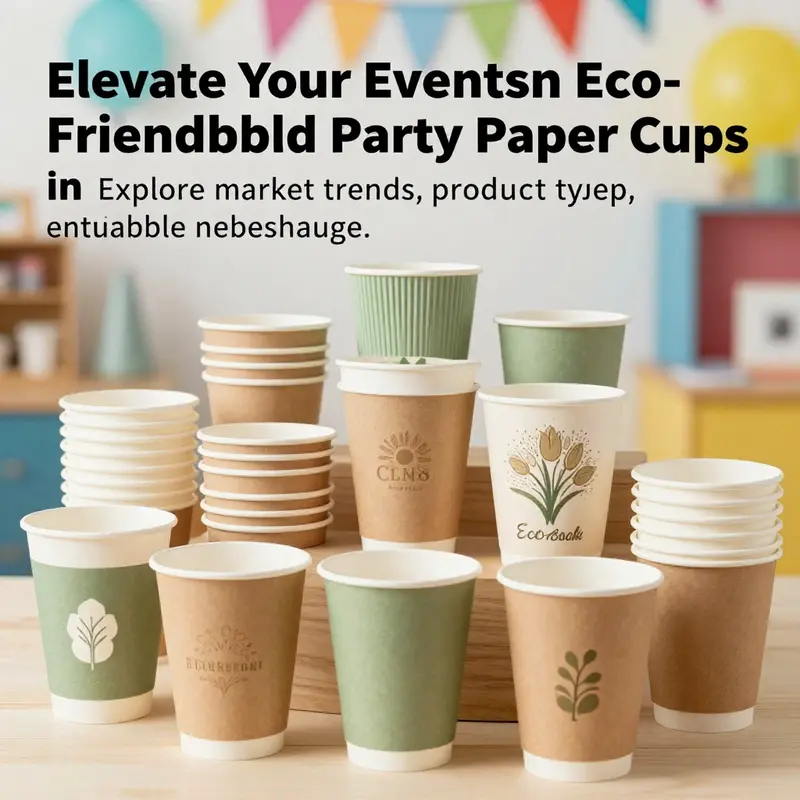
In today’s competitive food and beverage landscape, especially for bubble tea shops, restaurants, and event planners, disposable party paper cups play a key role in enhancing customer experience. As environmental awareness grows, businesses are increasingly seeking sustainable solutions that do not compromise quality. This article delves into the significant market trends that influence the disposable party paper cup industry in China, the various types and innovative features these products offer, and insights into reliable manufacturers and pricing strategies. Together, these insights will equip you to make informed decisions that elevate your business while aligning with the demands of eco-conscious consumers.
Market Winds and Material Shifts: The Growth Trajectory of China’s Disposable Party Paper Cups
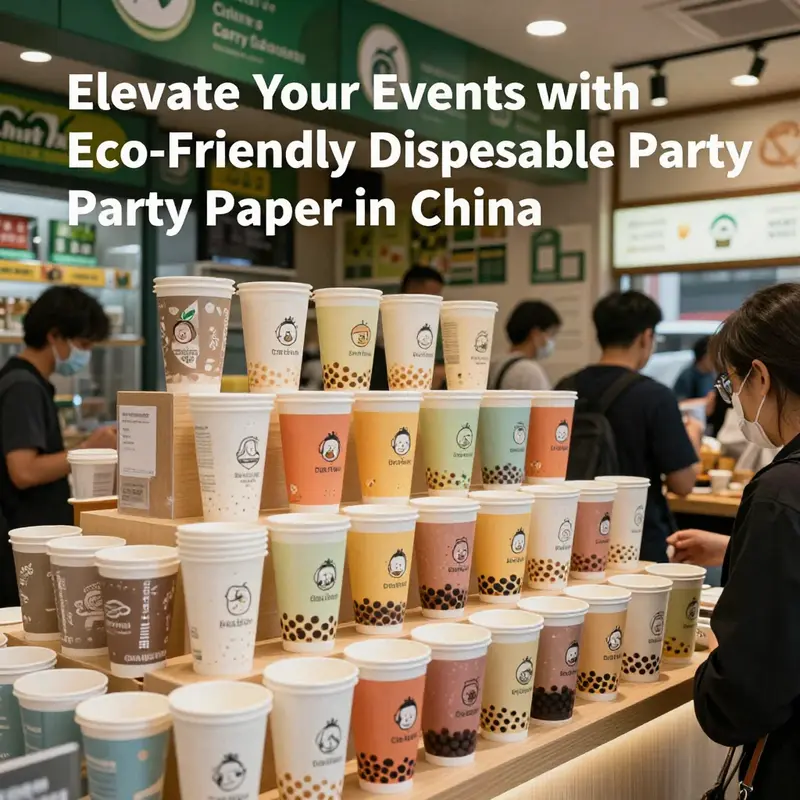
In recent years, the market for disposable party paper cups in China has moved beyond a simple function of convenience to become a telling barometer of consumer values, regulatory intent, and industrial capability. The layered dynamics driving growth are visible in the numbers, yet they are best understood when mapped onto the everyday realities of takeout culture, event planning, and the evolving quest for sustainability. The trajectory is not linear; it is a composite of expanding demand in a rapidly urbanizing society, shifts in material science, and a regulatory environment that increasingly rewards recyclability and lower environmental impact. Taken together, these forces illuminate a market that grew from a modest baseline into a robust, multi-faceted sector with implications for manufacturers, distributors, event organizers, and policymakers alike.
The most conspicuous signal of market scaling is the quantitative rise in market size. In 2025, the disposable paper cup market in China reached about 74.91 billion RMB, roughly 10.3 billion USD at contemporary exchange rates. Projections place the market at 476.0 billion RMB, or around 65.8 billion USD, by 2032, representing a compound annual growth rate (CAGR) of about 4.51%. These figures point to a market that is not merely expanding in volume but also broadening in its range of applications. A consumer base that previously prioritized price now increasingly weighs sustainability, design, and branding into purchasing decisions. This shift is most evident in the party and event segments, where the visual and tactile aspects of cups have become part of the experiential narrative of gatherings. The numbers, while impressive, only begin to tell the story of how the category is evolving.
The broader context within which disposable party cups exist in China offers additional texture. Between 2017 and 2024, the overall disposable paper cup segment expanded from 88.4 billion RMB to 182.9 billion RMB, a remarkable CAGR of 10.95%. Although the party-focused subsegment represents just one slice of the wider market, the underlying growth drivers—the booming takeout and fast-food industries, the rise of casual social occasions, and an increasing preference for single-use hygienic solutions—have amplified demand across all cup categories. The takeout culture in many Chinese cities, paired with the popularity of street fairs, school events, and corporate celebrations, creates a steady drumbeat of demand that helps sustain production capacity and drives innovation in cup design and features.
A central narrative shaping the current market is sustainability. In China, as elsewhere, consumers and businesses are becoming more attentive to environmental impact, and this awareness translates into demand for recyclable, biodegradable, and compostable options. Among the innovations capturing momentum is the PLA-based paper cup, which uses polylactic acid derived from renewable resources such as corn starch. From 2017 to 2024, the PLA paper cup segment demonstrated a striking CAGR of 17.43%, underscoring rapid adoption where eco-conscious branding and compliance with environmental standards intersect with consumer preferences. For party environments, these options offer a compelling blend of aesthetics, performance, and reduced environmental footprint—a trio of attributes increasingly valued by event planners and brand managers alike. The ascent of PLA cups also signals a broader shift toward materials that can be integrated into circular economy models, even as the logistics of recycling and composting scale up to meet growing volumes.
Yet sustainability is not the sole driver of growth. The market is expanding in part because consumers expect convenience without compromising style or messaging. Disposable party cups now serve as promotional vehicles as much as they do as vessels for drinks and snacks. A wave of customization has made cups a canvas for logos, slogans, and seasonal motifs, transforming them from pure utility into a branding surface. This trend is reinforced by the fact that most wholesale activity occurs in large quantities through online marketplaces, with buyers including hotels, event organizers, caterers, and corporate teams ordering tens of thousands of units in a single purchase. As a result, manufacturers have been increasingly attaching value through customization capabilities, fast lead times, and consistent quality at scale. The market thus exhibits a dual rhythm: on the one hand, a push toward better materials and lower environmental impact; on the other, an embrace of branding and design as differentiators that add value to the cups as part of the user experience.
There is also a clear regional narrative about production and supply chain maturity. China has evolved into a major hub for disposable paper cup production, with significant activity concentrated in provinces such as Zhejiang (notably Wenzhou and Yiwu), Guangdong, and Shandong. The geographic clustering reflects an ecosystem of suppliers, manufacturers, and logistics networks capable of meeting both domestic demand and export needs. This concentration helps explain how the market can scale—large producers can offer a range of options from standard, low-cost cups to higher-end, customized, and feature-rich variants. It also frames how new materials and coatings are tested and brought to market, often first within these industrial clusters before expanding nationwide.
Pricing dynamics further illuminate market structure and consumer segmentation. Basic disposable cups, especially in bulk orders, can be priced quite aggressively, with cost per unit often around USD 0.04 for large, non-customized orders. When customization enters the equation, costs rise meaningfully. A printed, customized party cup typically falls in the range of USD 0.10–0.30 per unit, depending on print complexity, color richness, and material thickness. Higher-end cups—those designed to withstand hot beverages, offer thicker walls for insulation, or feature advanced coatings to improve leakage resistance—can exceed USD 1.00 per unit. The price spread reflects a market that serves multiple tiers of buyers: price-sensitive caterers and small organizers looking for bulk value, and brands or large venues seeking distinctive, high-impact servingware aligned with their marketing strategies. The wholesale-dominant nature of the sector means that per-unit costs are heavily influenced by order size, production run, and the supplier’s ability to absorb fixed costs through scale.
Coatings and material science are at the heart of performance, safety, and sustainability considerations. Inner coatings—often a laminate such as PE film or a wax layer—are designed to prevent leakage and maintain structural integrity. However, these coatings have implications for hot beverages, as many are not suitable for liquids above roughly 40°C due to potential melting or deformation. This technical limitation pushes buyers who require hot-drink compatibility toward alternative formats, such as thicker-walled cups or double-walled designs that incorporate superior insulation while still delivering a single-use convenience. The market’s response to these constraints is visible in the growth of specialized cups that offer heat resistance, leak resistance, and branding opportunities in one package. At the same time, there is a clear push toward sustainable coatings and recyclable or compostable lines that align with environmental goals and regulatory expectations.
Customizability has transformed the party cup from a disposable tool into a medium for storytelling. The trend toward branding, logos, and festive designs has particular resonance in Chinese markets, where holidays and seasonal events carry cultural significance and strong consumer engagement. For party contexts, consumers are drawn to cups that convey celebration, auspicious symbols, or thematic color schemes—features that can be embedded in the cup’s print or design without sacrificing print durability or readability. Event organizers, municipal festivals, and corporate teams increasingly leverage customized cups as a lightweight, portable way to reinforce brand presence and event identity. The visual dimension of these cups complements the tactile and functional attributes, elevating the cups from everyday items to curated part of a shared experience.
From a policy and macroeconomic standpoint, the market operates within a broader push toward carbon peaking and carbon neutrality. China’s regulatory environment is progressively calibrated to encourage recyclable and lower-impact alternatives, even as consumption scales. The potential for stronger plastic controls or bans could further accelerate demand for PLA-based cups and other sustainable options. Meanwhile, international developments, such as South Korea’s cup-separate pricing system, provide a reference point for potential policy experiments that could influence Chinese practice. Industry players watch these policy signals closely, seeking to align product development with anticipated regulatory directions and to anticipate possible changes in waste management infrastructure. This alignment is essential to ensure that the growth in disposable party cups does not outpace the system of recovery and recycling that could make such growth sustainable in the long term.
An important practical implication of the current market dynamics is the need for credible, consistent quality in a space where safety concerns have occasionally tempered consumer confidence. Historical episodes, dating back to earlier decades, underscored the risk of recycled materials entering the supply chain, and the market continues to rely on due diligence when selecting suppliers. Reputable manufacturers emphasize traceability, compliance with safety standards, and robust QA processes to reassure buyers that volume orders meet safety expectations as well as performance criteria. As demand scales, the emphasis on quality assurance becomes a differentiator in a crowded field. In effect, the market rewards suppliers who can offer transparent sourcing, reliable performance, and verifiable certifications—factors that increasingly influence a buyer’s decision-making process just as much as price.
The browsing public’s access to a vast array of suppliers and product options via online marketplaces has a consequential effect on both price and design. Alibaba and similar platforms have become central to how buyers discover options, compare features, and arrange shipments. The sheer volume of listings—ranging from small, family-owned production shops to larger, more established manufacturers—creates a competitive environment in which customization and lead times become critical. For buyers, this means faster turnarounds and the ability to source from multiple suppliers to meet diverse event schedules. It also means that quality verification steps, such as requesting samples, requesting material certifications, and evaluating long-term performance, become standard operating procedures before large-scale purchases. The production ecosystem thus evolves toward greater reliability and flexibility to accommodate the staggered and often unpredictable needs of event calendars, promotions, and corporate campaigns.
One of the enduring strengths of the Chinese disposable paper cup sector is its capacity to adapt to the evolving preferences of a modern consumer base while simultaneously expanding export opportunities. The growth in the PLA segment is a case in point: it embodies both environmental stewardship and technical feasibility, two qualities that resonate with global buyers seeking responsible packaging solutions. The broader market growth, underpinned by a robust manufacturing base and strong distribution networks, enhances China’s competitive position in a sector where sustainability and branding increasingly converge. This convergence matters for party contexts because the cups carry meaning beyond their immediate use. They reflect a commitment to environmental accountability and to the aesthetic language of the event itself. When a supplier can offer a recyclable solution that also carries a curated design and a quick, reliable supply chain, the value proposition extends beyond the cup to include brand integrity and event execution quality.
To appreciate the full scope of growth, it helps to consider the demand drivers in a more granular way. Urbanization continues to push up the number of social and corporate gatherings where disposable cups are used. The convenience of single-use items remains appealing for small businesses and informal events where speed and simplicity are valued over long-term storage or washing resources. At the same time, rising disposable incomes expand the willingness of consumers and organizations to pay a premium for cups that align with branding and environmental commitments. The catering and hospitality sectors, particularly in tier-1 and tier-2 cities, account for a large share of annual orders, but the growth extends into schools, cultural centers, and community festivals where cost-per-unit and customization options can determine the feasibility of well-designed events.
From a product development standpoint, manufacturers are balancing performance with sustainability in ways that matter for party contexts. The coating technologies, while still ensuring leak resistance, are increasingly evaluated for recyclability. Some suppliers offer inner coatings that are designed to be more compatible with recycling streams, while others highlight PCR content and the use of post-consumer waste as raw material. These approaches aim to resolve a tension: the consumer’s demand for a price-competitive, durable product and the environmental imperative to minimize waste and maximize resource recovery. In practice, this means a broader portfolio of options—from low-cost, basic cups for generic use to high-value, glossy, branded cups for premium events—each with distinct environmental and performance profiles. Buyers now have the option to align product choice with event type, audience, and sustainability goals, creating a more nuanced and strategic procurement landscape.
A closing consideration relates to the future landscape of product design, consumer expectations, and policy. As the market scales, there is a natural consolidation effect that benefits buyers through improved reliability and supplier accountability, while potentially reducing unit costs through economies of scale. Yet consolidation must be balanced with continued innovation and the diversification of materials, coatings, and finishes that broaden the feasible range of cup applications for party use. The ongoing push toward sustainability—particularly the expansion of PLA and other bio-based options—will likely accelerate the substitution of traditional plastic-lined cups with more eco-friendly alternatives. This substitution is not simply about compliance; it is about meeting a broader consumer expectation that packaging choices reflect social responsibility and creative delivery of brand narratives. The market’s next chapter will hinge on how efficiently the supply chain can integrate recycling and composting processes, how quickly certification and safety standards can be harmonized across a rapidly expanding network of suppliers, and how well the sector can sustain the quality and affordability that make cups a practical and preferred choice for gatherings large and small.
Internal link reference: For readers interested in the intersection of sustainability, branding, and single-wall cup options, a relevant example of eco-conscious design is available at this product page: eco-friendly printed-logo single-wall paper cup. This resource highlights how customization and responsible materials can converge to support both event needs and environmental aims without compromising performance. Such offerings illustrate a broader shift in the market toward a more intentional, design-forward approach to disposable party cups, making sustainability not a trade-off but a value-add in the context of branding and guest experience.
External resource: https://www.researchandmarkets.com/reports/678923/china-disposable-paper-cups-and-lids-market
From Shells to Shields: The Varied Types and Features of China’s Disposable Party Paper Cups

China remains a pivotal hub in the global supply chain for disposable party paper cups, with a market that has grown steadily as event hosts seek cost-effective yet reliable serving solutions. In recent years, demand has diversified beyond basic single-wall cups to include double-wall and ripple-wall designs that improve insulation and grip. Single-wall cups are routinely used for cold beverages at casual gatherings, while double-wall options are preferred for hot drinks at coffee corners and large outdoor events. Ripple-wall cups offer a middle ground, combining texture, grip, and insulation for cooler weather conditions. Custom printing and branding have become common, with flexographic and offset methods delivering bold logos and color schemes, while MOQs often start in the tens of thousands depending on size and print complexity. Lids and straws complete many sets, enabling spill-free service during busy events; some lids are engineered to minimize leaks, and others are compatible with standard sizes across suppliers. Sustainability is increasingly influencing choices, with biodegradable coatings, post-consumer recycled content, and certifications like FSC and FSSC helping buyers assess environmental and food-safety standards. The sourcing landscape in China remains dynamic, centered in hubs such as Zhejiang, Guangdong, and Shandong, where buyers can mix options and leverage a robust supplier network. Lead times typically range from one to two weeks for standard lines, with longer windows for customized orders. Buyers often request samples to verify thickness, print quality, and coating integrity before placing larger orders. As digital marketplaces expand cross-border trade, buyers can compare product availability, certifications, and supplier track records across global platforms, including references to specific product pages and supplier catalogs. The current market continues to mature, balancing performance, branding, and sustainability while reflecting evolving consumer expectations and regulatory realities.
From Factories to Festivities: Navigating Manufacturers, Pricing, and Sustainability in China’s Disposable Party Cups
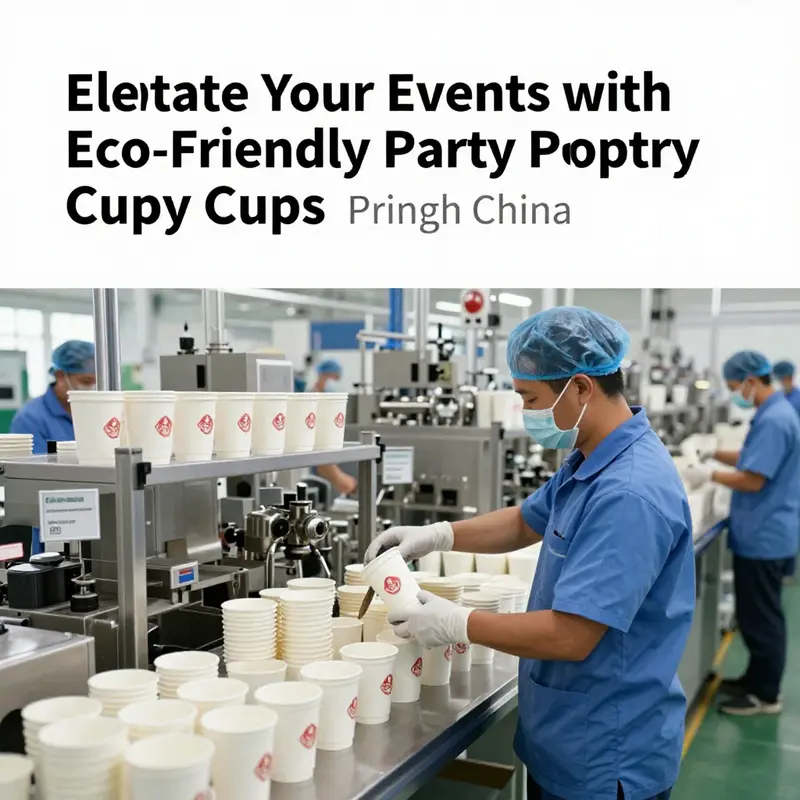
In China, the small, often overlooked disposable party cup has become a surprisingly powerful lens into the country’s manufacturing prowess, consumer expectations, and the fast-evolving logic of sustainability in a high-volume market. Across bustling industrial belts and quiet supplier towns, countless cups roll from presses to warehouses, destined for banquets, family gatherings, corporate events, and neighborhood celebrations. The chapter weaves together market scales, material choices, production capabilities, and pricing dynamics to illuminate how a product as simple as a paper cup has grown into a barometer of China’s role in global hospitality ecosystems. It is a narrative grounded in numbers yet driven by design, policy, and the relentless demand for convenience that underpins modern event culture. The figures are not mere statistics; they map a landscape where supply chains, environmental expectations, and brand storytelling converge around the simple act of pouring a drink into a cup.
Market data from the mid-2020s confirms a market on a steady ascent. The disposable paper cup market in China reached about 74.91 billion RMB in 2025, a figure that translates to roughly $10.3 billion in USD terms. This scale alone signals the sector’s importance to food service, hospitality, and events. Looking ahead, market projections place the Chinese disposable cup market at roughly 476.0 billion RMB by 2032, supported by a compound annual growth rate (CAGR) of about 4.5%. This growth is not driven by novelty alone. It reflects the convergence of three enduring forces: the expansion of eating-out culture and unattended events, the rising demand for disposable solutions in a fast-paced economy, and an intensifying focus on consumer convenience and logistics around large gatherings. Yet the trajectory is not a straight line. It is moderated by environmental concerns, regulatory signals, and the evolving preferences of a diverse consumer base that is increasingly mindful of waste, recyclability, and the life cycle of packaging materials.
Within this widening market, sustainability has emerged as a mainstream driver rather than a niche preference. Consumer demand for recyclable, biodegradable, and compostable options is no longer the preserve of green labels or boutique brands. It is now a defining criterion for many buyers—especially in the B2B segment that dominates the Chinese market—where event planners, hotel operators, and institutional catering services seek cups that align with broader sustainability programs. Materials such as consumed fiber and bamboo fiber have gained momentum as alternatives to conventional virgin paper, while coatings that facilitate recycling or composting without compromising performance are increasingly prioritized. The Alibaba ecosystem in particular reflects this shift, with product listings that foreground “sustainable” and “eco-friendly” claims, and with bamboo fiber variants gaining traction as a credible pathway to lower environmental footprints. These shifts are not just about the end-of-life story; they influence everything from raw-material sourcing and supplier selection to coating chemistry and the feasibility of post-use separation.
Product design and functionality in the disposable party cup space have also evolved in notable ways. The market remains diverse, with categories defined largely by coating technology, intended use, and end-of-life considerations. Laminated coatings—most commonly a plastic film such as PE or a wax barrier on the inner surface—continue to be the default for leakage prevention and general performance, especially for cold beverages. But for hot drinks, the inner melting risk and the thermal profile matter critically; manufacturers increasingly segment products to ensure safe use at higher temperatures. The sustainable and recyclable cups represent a strategic pivot: these cups use coatings designed to be more compatible with recycling streams or to be made entirely from post-consumer recycled paper (PCR). The standardization of form factors—2.5 to 16 ounces in the domestic market—ensures supply chain compatibility across cafes, event venues, and catering services, while a proliferation of specialty cups addresses niche needs.
In the party and events segment, the range expands beyond basic functions to include holiday-themed designs, customization options, and functional refinements. Holiday-themed cups leverage festive motifs, metallic foils, and auspicious characters such as iconic numerals or symbols appropriately aligned with the season. Customization has transformed from a luxury add-on to a routine capability for many suppliers, enabling brands and event organizers to imprint logos, messages, or bespoke artwork on cups that are produced at scale. The touchpoints extend to practical features as well: double-wall insulation for better heat retention, anti-leak lids for beverages that travel, and, in some cases, microwave-safe options, though the latter remains less common given the complexities of heat exposure and coating stability.
Leading manufacturers and a dense supplier network underpin this vibrant market. China stands out as a global hub for disposable paper cup production, blending the reach of international brands with a sprawling constellation of domestic manufacturers. Global players such as Huhtamaki and International Paper maintain a visible footprint, while a wide array of domestic suppliers proliferates across Zhejiang, Guangdong, and Shandong. The distribution architecture is deeply integrated with online marketplaces such as Alibaba, where hundreds of factories and wholesalers appear, many clustered around industrial clusters in Zhejiang—cities like Wenzhou and Yiwu—alongside suppliers in Guangdong and Shandong. The result is a price-competitive landscape with a broad spectrum of offerings, from base, unprinted cups to fully customized, printed, and feature-rich variants. The supplier ecosystem is replete with profiles that highlight customization capabilities, rapid quotes, and the ability to handle large-volume orders that characterize the wholesale model.
Within this ecosystem, a practical example of the supply chain’s breadth is the Zhejiang region’s emphasis on customization and heat-resistant features. A representative example in the market is Zhejiang Jinhao Packing Material Co., Ltd. This supplier distinguishes itself by offering custom double-wall biodegradable cups designed for hot beverages, explicitly tailored for party contexts where convenience meets sustainability. The emphasis on a double-wall structure aligns with customer demand for better heat insulation and a more premium user experience, while biodegradability signals alignment with the sustainability objectives driving many buyers today. The supplier’s capabilities illustrate a broader shift in the market: the ability to couple functionality with environmental considerations at scale, a combination that is increasingly critical for event planners and hospitality operators who must balance guest experience with responsible packaging choices. For readers seeking direct supplier insight, the company’s official platform presence provides a window into product specifications, customization options, and the logistics of scale production.
Pricing dynamics in this market reflect a gradient that mirrors product specifications, order quantities, and the level of customization. Basic disposable cups, offered in standard sizes from 2.5 to 16 ounces, can be priced quite affordably when purchased in bulk without custom printing. In RMB terms, typical unit costs for these standard cups without special requirements often fall roughly in the 0.1 to 0.5 RMB range per cup, depending on order size and the specific manufacturing process employed. When customization enters the equation—whether through printed logos, branded artwork, or a special coating or liner—the price per unit rises accordingly. A customized cup with printed designs, or a double-wall feature, will typically command a higher unit price, with premium materials and more complex manufacturing processes driving the increment. In USD terms, the gap can translate to roughly a few cents per unit for basic, and tens of cents for bespoke products, with premium, high-thickness or specialty cups potentially exceeding one dollar per unit.
This pricing structure reinforces the market’s wholesale orientation. The majority of transactions occur through bulk channels where buyers—restaurants, event organizers, hotels, and corporations—procure thousands or tens of thousands of cups in a single purchase. The wholesale dynamic also explains why Alibaba-era listings show enormous order volumes, such as tens of thousands of pieces per listing, underscoring the business-to-business orientation rather than retail consumer purchases. For buyers, this means a straightforward RFQ (request for quotation) process with suppliers who have the capacity to deliver on large-scale orders, with lead times that vary by production complexity and current demand. Suppliers emphasize the ability to customize, scale, and coordinate with brands or event campaigns, making the cups not just vessels for beverages but touchpoints for branding and guest experience.
The environmental and regulatory dimension adds a layer of complexity to pricing and product selection. While the sustainability narrative is powerful and increasingly dominant, it intersects with questions about end-of-life handling and recycling infrastructure. The broader policy landscape, including examples from other markets that have experimented with price signals or deposit-like schemes to encourage reuse or separate waste streams, has begun to influence thinking in China. The case of South Korea’s cup separate pricing system is often cited in market discussions as an external pressure that could shape a future policy environment in China. In other words, the pricing and design decisions made by Chinese cup manufacturers are increasingly conditioned by a combination of consumer expectations, corporate sustainability goals, and the evolving regulatory playing field.
Within this context, a practical case emerges from the supply side—how a manufacturer positions products for event organizers and brands seeking a balance of cost, performance, and environmental credibility. Zhejiang Jinhao Packaging Materials Co., Ltd. exemplifies how a supplier can compete by offering a combination of customization and sustainability. Their focus on double-wall, heat-resistant cups with biodegradability features speaks to a market that wants to retain the guest experience of a premium hot-drink cup while aligning with environmental standards that resonate across the hospitality sector. For buyers, this dual proposition—functional performance and environmental stewardship—becomes not just a selling point but a strategic criterion in supplier selection. When paired with the ability to print logos or messages and to tailor designs for specific events, such a supplier becomes a pivotal node in a larger network that includes packaging, logistics, and downstream waste management.
From a buyer’s perspective, the decision matrix is multi-dimensional. It begins with the intended use: cold beverages may tolerate simpler coatings and lower-cost options, while hot beverages demand materials and constructions that resist heat and minimize heat transfer to the user. It continues with sustainability goals: a growing cadre of buyers require coatings that align with recycling streams or with compostability standards, and they look for post-consumer recycled content or certified biodegradability. The design layer—whether a cup is printed or unprinted, whether it carries a brand color, or whether it uses a holiday design—also drives cost, but it can yield tangible value in terms of brand visibility at events and in social media photos shared by attendees. Logistics—lead times, minimum order quantities, packaging, and shipping costs—will ultimately determine whether a particular supplier becomes the preferred partner. In this sense, the economics of China’s disposable party cup market are less about a single price point and more about a spectrum of options that buyers navigate to achieve the right balance of performance, cost, and sustainability.
To ground these considerations in a concrete sourcing path, the literature suggests engaging suppliers through RFQs that specify not only size and coating, but also temperature tolerance, print requirements, and end-of-life expectations. If a buyer wants a 10-ounce double-wall cup with a branded imprint and a biodegradable liner, the RFQ should detail the preferred thickness, the printing technique (for example, single-color vs. full-color process), and the target recycling stream. Suppliers will then respond with quotes that reflect material costs, coating technology, and labor required to meet customization. The scale of orders in the market means buyers can negotiate favorable terms, particularly when they can commit to long-term relationships or multi-year procurement cycles. At the same time, buyers must remain vigilant about quality and safety standards, given historical concerns about recycled content or fluorescent whitening agents reported years ago. While modern regulation has addressed many of these concerns, informed buyers still scope supplier quality systems, audit histories, and third-party certifications as part of their decision process.
A few practical notes arise when considering the Chinese market in relation to global supply chains. First, the availability of sustainable options is not merely a niche advantage; it is becoming a baseline expectation for many customers. Second, the mix of local manufacturing capacity and international brands creates a dynamic where price competition coexists with a push toward higher-value propositions—like double-wall performance, superior barrier coatings, and customization capabilities that support brand storytelling at scale. Third, the scale and speed of China’s manufacturing ecosystem enable rapid response to event-driven demand spikes, a critical factor for organizers who must prepare for peak seasons and large festivals alike. In a retail or event context, this translates into short-to-medium lead times for standard cups and even faster cycles for customized orders, provided the client’s design and production requirements are well defined. The result is a market that can deliver both the reliability of mass-produced basic cups and the differentiated impact of branded, themed, or premium cups designed for special occasions.
The narrative of China’s disposable party cups is, at its core, a narrative about how a country with vast manufacturing capacity translates that capacity into a suite of products that support social rituals of gathering and celebration. It is about how sustainability goals, regulatory signals, and consumer expectations converge with manufacturing realities—equipment configurations, coating chemistries, and the precision of printing processes—to shape what buyers can obtain and at what price. It is also a reminder that even a seemingly simple object—a cup for a party—can illuminate the systems, incentives, and constraints that define a modern economy’s relationship with the environment. As buyers plan their next event, as brands consider their next activation, and as manufacturers refine their processes to merge performance with responsibility, the disposable party cup sits at the crossroads of convenience, design, and stewardship. This convergence promises not only continued growth but a transformation in how cups are valued, used, and finally reimagined as part of a circular economy in the marketplace.
For readers who want to explore specific supplier capabilities in a close-to-market context, a practical example of how these dynamics unfold in real procurement practice can be seen in the wholesale and customization options offered by dedicated packaging and disposable-provisions platforms. For instance, buyers looking to source a standard take-away cup in 8 to 12 ounces with printed branding may find compelling value in wholesale offerings that emphasize quick quotes and large delivery volumes. In this vein, suppliers that publish clear customization pathways, a track record of on-time delivery, and transparent pricing tend to perform well in the wholesale channel. To illustrate, you can explore a concrete example of wholesale take-away coffee cups with lids that align with the event planning workflow and brand activation strategies described above. The link leads to a product page that highlights the capacity to deliver in bulk, customization options for logos or messages, and the practical details of lids and compatibility with standard cup sizes. This pathway demonstrates how the market translates design and sustainability considerations into a tangible, scalable product that meets the needs of high-volume buyers while maintaining a competitive price point.
From a long-run perspective, the trajectory of China’s disposable party cup market will likely continue to be shaped by both the pressure to reduce environmental impact and the appetite for reliable, cost-effective packaging solutions for events. The market’s adaptability—evidenced in the development of double-wall constructions, biodegradable coatings, and customizable graphics—suggests that cups will increasingly serve as multi-functional tools for branding, guest experience, and waste management strategies at scale. In this sense, the cup is not merely a vessel but a microcosm of the broader industrial and regulatory environment that governs modern consumer product packaging. As the industry moves forward, the balance between affordability, performance, and sustainability will determine which suppliers emerge as the most trusted partners for event organizers and hospitality operators across China and beyond.
External resource: https://www.jinhao-pack.com/
Internal link example for further reading on wholesale coffee cups with lids: Wholesale take-away 8oz-12oz disposable coffee paper cups with lids.
Final thoughts
The disposable party paper cup market in China presents a unique opportunity for bubble tea shops, restaurants, and event planners to embrace eco-friendly solutions while catering to the diverse needs of their customers. By understanding market trends, exploring innovative product types, and partnering with reliable manufacturers, businesses can not only enhance their service offerings but also play a part in reducing environmental impact. As sustainability becomes a driving factor in consumer choices, investing in high-quality disposable cups will not only elevate your brand image but also ensure customer satisfaction and loyalty.