
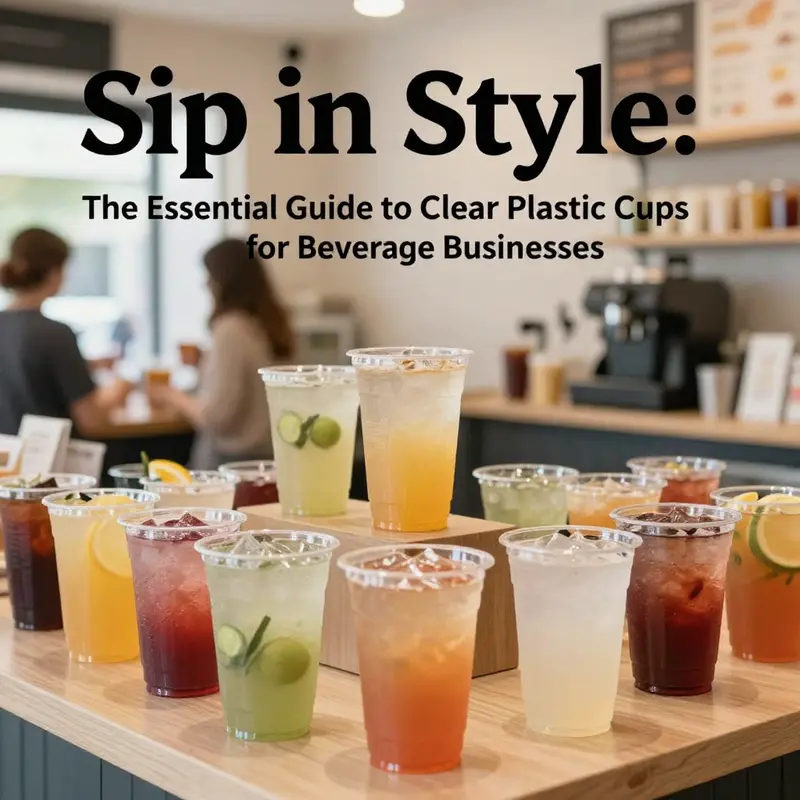
Clear plastic cups have become indispensable tools for beverage businesses, ranging from bubble tea shops to catering services. These cups offer not only a practical solution for serving drinks but also serve as a canvas for branding and sustainability initiatives. In this comprehensive guide, we will delve into the specifications and materials that make clear plastic cups the preferred choice, explore pricing details for informed procurement, and highlight customization options that enhance your brand visibility. By the end of this guide, you’ll gain insightful knowledge that will help you make the best choice for your business needs.
Crystal Clarity, Hidden Strength: How Materials Shape the Performance of Clear Plastic Cups
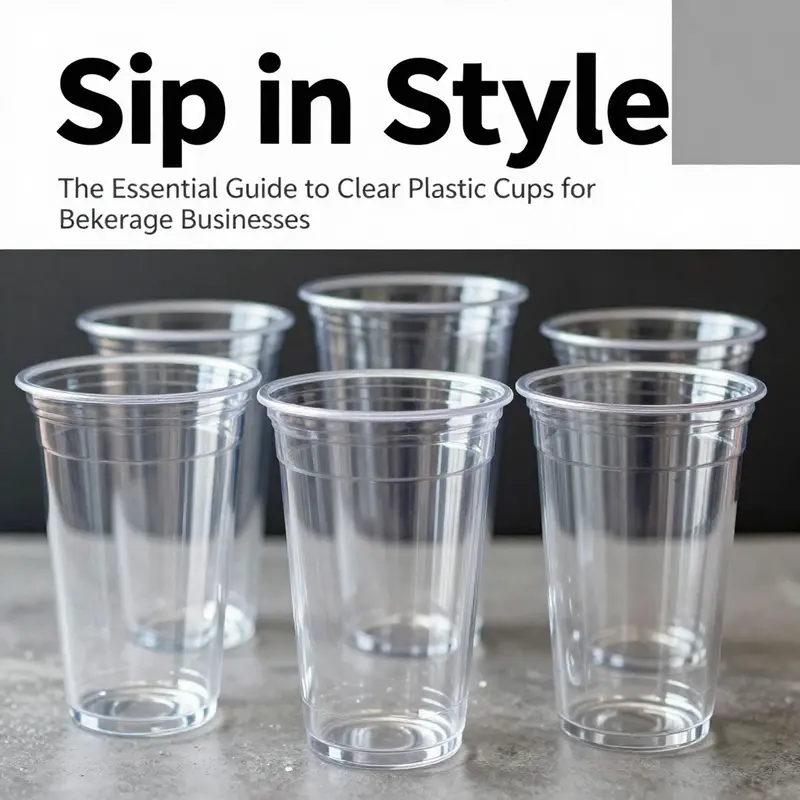
Clear plastic cups have long been celebrated for their ability to showcase beverages while delivering the practical reliability that busy service environments demand. Yet the appeal of transparency rests on more than aesthetic value; it is a direct product of material choice, engineering, and design. In this chapter, we move beyond what a cup looks like to understand what it is made of, how that material behaves under real-world conditions, and why those choices matter for brands, consumers, and the ecosystems that sustain modern food and drink service. The fundamental decision often starts with the most common baseline material: PET. PET, or polyethylene terephthalate, is prized for its clarity, rigidity, and reliable barrier properties that keep moisture and gases at bay. In practice, these properties translate into cups that look pristine even when many beverages pass through them day after day. PET’s optical clarity is unusually high, enabling brands to present the color, texture, and hue of a drink without distortion. This visual fidelity is not merely cosmetic; it communicates perceived quality and freshness, which can influence consumer perception, ordering decisions, and even perceived flavor. From a material science perspective, PET’s rigidity supports tall, wide-mouthed designs that stack efficiently and resist deformation during transit and handling. The same rigidity helps maintain a smooth surface for printing and decoration, a feature that matters to operators who want consistent branding without the risk of cracking or scratching. Importantly, PET is recyclable, widely accepted in curbside programs in many regions and identifiable by the familiar recycling code #1. This recyclability aligns with growing expectations around sustainability, offering a pathway to circular use that is feasible for many municipalities and waste systems. The recycling loop, however, is not purely technical; it is conditioned by consumer behavior, collection infrastructure, and the economics of resin prices. Still, PET’s recyclability is a key attribute that many users weigh when selecting clear cups for long-term programs or seasonal campaigns where multiple reuse cycles or post-consumer recycling goals are emphasized.
The baseline PET story is deeply informative, but most real-world deployments push beyond a single polymer. There are compelling reasons to consider alternative materials or blends, depending on the application, cost targets, and environmental commitments of a business. One such family of alternatives is polypropene-based cups, which often appear in the market as PP cups. PP cups bring a distinct set of performance characteristics to the table. They typically offer excellent heat resistance and a broader temperature range than straight PET, a feature that makes them suitable for hot beverages and foods that must withstand chilling and warming without significant risk of deformation. In many cases, PP cups can tolerate the harsh cycles of a busy service environment—transport, stacking, shaking, and frequent handoffs—where thermal stability matters as much as optical clarity. The trade-off is that PP’s optical clarity can be marginally less than PET’s in some formulations, and the barrier properties may not match PET’s as precisely. Nevertheless, the combination of durability, heat resistance, and cost efficiency makes PP a practical choice for cafes, quick-service restaurants, and event settings where hot drinks or longer shelf-life for pre-drafted beverages are common demands.
Beyond these baseline materials, the market also explores higher-end and specialized resins that push clarity or performance to new levels. For example, polycarbonate (PC) and cyclo-olefin copolymer (COC) are used in premium or technical applications where maximum optical clarity, chemical resistance, and thermal stability are essential. PC offers exceptional toughness and impact resistance, ensuring that cups survive accidental drops or rough handling in crowded venues. COC brings a crystalline clarity that rivals PET while offering excellent barrier properties and chemical resistance, making it attractive for applications that require consistent performance under demanding conditions. Yet these materials come at a price. They are more costly to produce, mold, and supply, which means their use is often reserved for specialized lines or premium offerings where the extra cost can be justified by the value created through brand positioning, durability, or compliance with stringent safety standards. The result is a material ecosystem where PET remains the workhorse, PP expands the temperature safety envelope, and PC/COC occupy the premium tier for niche contexts.
Another important thread in the materials conversation is the emergence of bioplastics and renewable-resource-derived polymers. Bioplastics, drawn from feedstocks such as corn starch or sugarcane, are increasingly marketed as sustainable alternatives that can mimic the clarity and performance of traditional plastics while offering a more favorable end-of-life profile in certain contexts. The attraction is clear: for fast-food chains, coffee shops, and promotional campaigns that want to signal environmental responsibility without compromising convenience, bioplastics can present a compelling middle ground. In practice, bioplastic cups can deliver similar transparency and mechanical performance to traditional PET or PP cups, but their degradation pathways and compostability vary by formulation, processing conditions, and local waste management capabilities. This means that while bioplastics can reduce the long-term persistence of waste under composting conditions, they may require infrastructure and consumer behavior that align with compostability claims to realize those benefits fully. The upshot is that sustainability in clear cup materials is not a simple switch; it is a strategic choice that balances function, cost, and the realities of waste processing and consumer participation.
The market’s attention to resilience also extends through design innovations that elevate performance without drastically increasing cost. Reinforced transparent cups, constructed through strengthened polymers or multi-layer architectures, illustrate how complexity in materials science can yield tangible benefits in real-world settings. These cups aim to combine enhanced impact resistance with the same crystal-clear appearance that customers expect. Multi-layer constructions can mitigate breakage during rapid service, reduce losses due to spills, and preserve the overall aesthetic of beverages in high-traffic environments such as stadiums, festivals, and large events. The trade-offs here include greater manufacturing complexity and potentially higher unit costs, but in exchange, operations gain resilience and reliability that can translate into lower breakage rates, fewer replacement needs, and a better guest experience.
The materials discussion cannot exist in isolation from form and function. Clear plastic cups must balance several physical and mechanical criteria to meet diverse use cases. One constant is the importance of a uniform, even rim. A consistent rim not only ensures stable pouring and comfortable handling but also supports dependable stacking during storage and transport. In practical terms, a uniform rim helps maintain a predictable contact surface for lids, ensuring a leak-resistant seal when a dome lid is employed or when the cup is used to carry solids or semi-solids in dry forms. Dome lids, particularly common with smaller sizes, accentuate the sealed, portable character of modern cups, enabling on-the-go consumption while reducing the risk of spillage. The interplay between lid design and material durability becomes critical when cups are used in dynamic environments, from quick-service counters to outdoor events. The right combination of rim integrity and lid compatibility helps ensure that the beverage remains appealing from the moment it is handed to a guest until the last sip.
Another layer of complexity emerges in the realm of design and branding. The ability to print, emboss, or apply labels to clear cups is increasingly integrated with material science to create a cohesive brand expression. The printing feasibility is influenced by material thickness, surface energy, and the thermal profile of the molding process. Multicolor printing and branding are common, with some producers offering up to six-color capabilities to support vibrant campaigns and distinctive events. The integration of branding with material choices is not merely aesthetic; it reinforces perceived value, fosters recognition, and can even guide consumer behavior on-pack. Aesthetics are thus inseparable from performance: a cup that fails under heat, impact, or abrasion also undermines brand confidence and customer satisfaction. The synergy among material selection, structural design, and branding becomes a central axis around which modern cup manufacturing orbits.
From a procurement perspective, the economics of clear cups reflect a layered price architecture that mirrors material and design choices. Ordinary transparent, single-use cups—such as the 16-ounce variety common in many eating and drinking contexts—might be priced around modest unit costs, with minimum order quantities that reflect scalable manufacturing, supplier lead times, and logistics. When added features are included—such as lids, or branding with custom printing—per-unit costs rise, sometimes into a range that remains competitive for large-scale campaigns but may be prohibitive for smaller operators. Custom-printed cups with multiple colors, for example, can increase unit prices but deliver unique brand associations that extend the lifespan of a promotion or event. Biodegradable options, designed to offer an eco-friendly narrative, sometimes come at the lowest per-unit prices in the marketplace, driven by advances in biodegradable polymer blends and broader demand growth; yet production and supply chain considerations can influence the ultimate cost-per-unit, especially for shorter runs or less common sizes. The interplay between price, MOQ, lead times, and customization is a living economics of packaging that operators must navigate to align with campaigns, budgets, and sustainability commitments.
No single material, price, or feature dominates. The modern clear cup ecosystem is a spectrum that accommodates cold drinks, hot beverages, and a wide array of promotions and packaging needs. PET remains the central backbone due to its clarity, safety profile, and interchangeability with standard recycling streams. PP extends the thermal envelope, enabling hot drinks and comfortable handling in diverse climates. PC and COC push the boundaries of clarity and resilience at a premium. Bioplastics offer a renewable-forward option with varying compostability characteristics. Reinforced and multi-layer cups offer practical performance benefits where breakage risk is high, while design and branding considerations convert material choices into tangible marketing value. Each option requires a careful cost-benefit analysis that takes into account not only the immediate one-to-one costs but also downstream factors—customer experience, waste handling, and brand perception—that shape the long-tail value of the packaging decision.
For buyers and designers who want to explore concrete examples of how these materials translate into real-world choices, the landscape is increasingly driven by supplier ecosystems that emphasize not only material performance but also service characteristics such as free samples, expedited orders, and supply-chain support. A leading manufacturing presence in a major Asian production hub demonstrates how scale and continuous improvement enable a broad packaging portfolio. With decades of production experience, extensive workshop space, and a workforce skilled in precision molding and quality assurance, these operations offer customers a reliable path from concept to finished product. The ability to request samples and tailor orders to staged milestones can de-risk the process for brands experimenting with new materials or trying to optimize packaging across multiple markets. Such supplier capabilities help ensure that the transition from prototype to mass production is smooth, predictable, and aligned with the broader goals of efficiency, safety, and sustainability.
In the broader conversation about cups, materials, and performance, it is also valuable to consider how the discourse around sustainability informs material choices. The rising importance of environmental stewardship has nudged many operators toward plastics that are easier to recycle or more compatible with composting streams, as well as toward bio-based alternatives that can reduce net fossil fuel use. The challenge is that real-world waste management varies by region, and compostability claims depend on the availability of industrial composting facilities, local waste policies, and consumer participation. As a result, many practitioners adopt a portfolio approach: keep PET and PP for broad usability and performance, introduce bioplastics where composting infrastructure supports it, and implement reinforced or multi-layer cups in contexts where the higher durability justifies the added cost. In this way, the chapter’s core message emerges clearly: material selection for clear cups is not a single, static decision but a dynamic negotiation among performance, cost, sustainability, and the realities of the supply chain. This is the defining nuance that shapes how brands curate their packaging—selecting clarity and reliability while aligning with strategic goals around waste reduction, branding, and consumer experience.
For readers who want a practical sense of how these choices translate to a specific category of cups—say, those designed for cold beverages but requiring robust handling—the field offers a straightforward point of reference. The PET baseline supports long display life and clean transparency, while the addition of reinforced or multi-layer layers helps guard against the adrenaline of high-volume service where cups must survive rapid refills and heavy traffic. Bioplastics serve as a narrative that resonates with sustainability goals, even as businesses weigh the trade-offs in degradation timelines and supply chain complexity. The design features, from uniform rims to lid compatibility and the capacity to host elaborate branding, complete the picture by tying together the material science with the consumer experience. In short, the modern clear cup is a sophisticated compact of science, engineering, and marketing—a tool that serves drink, brand, and waste management programs while remaining a small but mighty actor in the daily routines of hundreds of millions of people around the world.
To underscore how these threads connect in the real world, consider how the industry communicates value: through a combination of performance data, sustainability narratives, and practical procurement realities. The decision to select PET, PP, PC, or COC is rarely about a single criterion; instead, it is a multi-attribute assessment that weighs clarity, heat resistance, impact tolerance, cost, and end-of-life considerations. The market has responded with a diverse array of options that can be touting exemplary transparency, offering heat safety for hot drinks, or citing enhanced drop resistance for large crowds. This mosaic ensures that clear plastic cups remain not only vessels for beverages but also carriers of brand messages, logistics efficiency, and environmental commitments. The interplay among materials, design, and supply chain capability is what makes the current generation of clear cups adaptable across contexts—from fast-paced cafes to sprawling festivals—and resilient in the face of evolving consumer expectations and regulatory landscapes.
In closing, the materials story of clear plastic cups is about more than what you can see through a transparent wall. It is about how different polymers, blends, and design decisions coalesce to determine a cup’s performance envelope, its compatibility with branding strategies, and its position within a broader movement toward sustainable packaging. The choices are not monolithic; they form a spectrum that enables operators to tailor their packaging to specific audiences, climates, and service styles. The chapter above sketches a map of this landscape, pointing readers toward the trade-offs that matter most for their particular needs: clarity and barrier performance; thermal tolerance; durability and impact resistance; cost and minimums; and the feasibility of sustainable end-of-life options within local waste ecosystems. As technology advances and waste systems evolve, the cup’s material toolkit will continue to expand, offering ever more precise ways to deliver beverages with precision, personality, and responsibility.
External reference: Understanding 50ml Clear Plastic Cup: Grades, Technical Specifications, and Uses in Industry. https://www.benjaminross.com/understanding-50ml-clear-plastic-cup-grades-technical-specifications-and-uses-in-industry/
Internal link for further reading: eco-friendly-printed-logo-single-wall-paper-cup-with-lids, a page detailing eco-friendly paper cup options and customization considerations. eco-friendly-printed-logo-single-wall-paper-cup-with-lids
Chapter 2: The Price Map of Clear Plastic Cups: From Bulk Deals to Brand-Built Presentation
Pricing for clear plastic cups is rarely a simple sticker price. It is a map that unfolds as you move from small experiments to mass production, and it is shaped by material choice, size, and the extent of branding you want on the cup. For buyers, understanding this map is essential not only to control costs but also to ensure reliability in supply for events and daily operations. The conversation around price begins with volume, then touches on customization, packaging, and sustainability. The map is not static; it shifts with demand, seasonality, and the evolution of manufacturing capabilities across regions. Reading it well means aligning cost with risk and with the experience you want your customers to have when they pick up a drink in a clear cup that shows the beverage inside as clearly as possible. In other words, price signals not just a unit cost but a set of trade-offs that influence how your beverage program feels to guests and how smoothly your operations run during peak times.
If you start with a standard noncustomized cup, the baseline price can be astonishingly low when ordered in bulk. As of late 2025, a typical price point for a standard clear cup in quantities of around 50 000 units lands around 0.011 dollars per piece. That price reflects not just the raw material but the efficiency of high volume production, streamlined packaging, and the ability to ship large batches in fewer cartons. The economics of scale are visible here: you pay little for each piece because the factory pours its energy into one run that serves hundreds or thousands of customers rather than a few dozen. For a buyer who is planning a seasonal push, a festival, or a chain-wide promotion, this baseline creates a comfortable floor from which to negotiate. Yet the map remains nuanced. The exact price you see for 50 000 cups can vary with the supplier, the precise plastic grade, the presence or absence of a lid, and the destination where the shipment lands. Transport costs and duties can tilt the final landed price by a few tenths of a cent per cup, which, when multiplied across tens of thousands, becomes notable. In practical terms, this is the price window that most foodservice operators scan first when they are testing a new beverage concept or when they need to restock ahead of a busy period without complicating the budgeting process.
When the order swells to half a million or more, the unit price tends to drop further, sometimes to roughly 0.042 dollars per piece. This is the second slope on the map, the point where volume begins to unlock deeper efficiencies in the supply chain. Large buyers can consolidate shipments, optimize packaging configurations, and negotiate more favorable terms with the factory, especially if they commit to a steady cadence of orders across several months. The advantage is clear: the difference between 0.011 and 0.042 dollars per cup is not just a line item in a spreadsheet; it translates into thousands of dollars over a quarter or a year. The savings enable more aggressive marketing or the ability to price a bundled offering with lids and branding that makes a beverage feel premium without a corresponding rise in per-unit cost. At this scale, however, buyers should be mindful of lead times and the risk of price volatility driven by input costs such as resin prices, energy costs, and currency shifts. Forecasting becomes an operational discipline, not just a financial one, and long-term forecasting helps protect margins when the market tightens.
Customization adds complexity. If you seek custom branded cups with logos or prints, the baseline flips. For a 100 000-piece run with a logo, you might see about 0.064 per piece. The added cost reflects the printing process, the need to register the logo with high precision, and the setup fees that cover color separations and plate preparation. A single run with a multi color imprint can require more ink layers and more strict alignment checks, all of which contribute to the incremental cost per cup. If you can push to 500 000 pieces or more with branding, the price can come down toward the general bulk rate around 0.042, but you should expect a one-time set-up cost and the printing process to affect lead times. Branding decisions, in turn, influence not only the budget but also the guest experience. A well-placed logo can turn a simple beverage into a moment of brand recall at a quick-service counter, or it can transform a promotional giveaway into a tangible touchpoint for an event. The broader message is that customization is not a peripheral feature; it is a strategic lever that can enhance perceived value, support campaigns, and contribute to customer recognition, but it carries a price premium that must be justified by anticipated impact and volume.
Procurement realities include minimum order quantities and sample policies. MOQs typically range from 5 000 to 10 000 units for standard cups, though some suppliers will accommodate smaller trials or split shipments. A sample may cost around 1 dollar per piece to cover production and shipping, giving buyers a tangible sense of clarity, toughness, and print quality before committing to a large run. The sample experience matters because it connects the abstract price points to real-world performance. A cup that looks good on a screen must also stand up to the daily rigors of a busy café; it must resist cracking in the freezer, hold up under hot coffee, and maintain clarity even after washing simulated cycles during quality testing. The price question thus folds into a larger conversation about how to judge supplier reliability, how to interpret certifications, and how to align quality expectations with the realities of mass production. It is not merely the price per piece that matters but also the confidence that the supplier can deliver when it matters most. The process of vetting suppliers often starts with MOQs and sample policies but quickly expands into questions about production capacity, certification, and the ability to meet multi-location requirements without sacrificing consistency.
Material choices matter. Most clear cups are made from food-grade PP or PET, chosen for safety and performance. PP cups usually handle a wide temperature range roughly from minus 20 to plus 120 Celsius, enabling both hot beverages and frozen drinks. PET cups share durability with the ability to maintain clarity and resist cracking when chilled; both materials have their niche, and the decision often hinges on intended use, cost, and recycling considerations. In practice, the choice is not simply between two plastics; it is a negotiation among clarity, strength, barrier properties, and end-of-life options. For a brand weighing sustainability against price, a growing segment of biodegradable or compostable options is entering the field, especially in 8 to 24 oz formats. These options typically carry higher MOQs and price premiums, but some buyers find the environmental alignment worthwhile for specialized campaigns or markets with strict sustainability expectations. In addition, the availability of recycled content options has expanded, offering a path to maintain low costs while improving a product’s environmental footprint. The sustainability dimension, while often more expensive on a per-cup basis, may yield long-term benefits in brand perception and customer loyalty, particularly among audiences that prioritize responsible packaging.
Availability and sizes round out the practical considerations. Standard assortments commonly include sizes such as 8 oz, 16 oz, and 24 oz, corresponding to approximately 237 ml, 473 ml, and 680 ml in metric terms. Some suppliers extend beyond these to cover 360 ml, 420 ml, 475 ml, 500 ml, 530 ml, 640 ml, and even up to 700 ml, reflecting demand from boba tea, smoothies, and dessert cups. Each size carries its own cost structure, not only because of the amount of plastic involved but also because the feeding of hot liquids, syrups, or carbonated drinks can influence material choice and design features. The presence or absence of lids, seal options, and compatibility with straw or sip openings adds another layer of variety that buyers must consider when crafting a price-to-performance equation for a given program. Lids are a common value-add; they reduce spill risk during transport and make the cup suitable for take-away service, a capability that is increasingly important in a world where convenience and reliability are part of the customer experience.
Features like lids and sealing films can add value by preventing spills during transport. A large portion of cups is sold as part of a kit that includes a lid to improve portability, particularly for milk tea or juice beverages. Multi-color imprinting is widely offered, up to six colors, which is enough for most branding needs, but not unlimited color complexity. The printing dimension itself can influence the price and the lead time because more colors require more precise alignment and more ink layers, which in turn increases the potential for misregistration if the run is rushed. The practical implication for a buyer is to weigh the desired branding fidelity against the urgency of fulfillment. If a campaign hinges on exact color matching across multiple locations, a longer lead time and a higher price might be a wise trade-off for a consistent customer experience. If the branding is more exploratory, a simpler design with fewer colors can deliver a quicker turnaround at a lower cost while still achieving the marketing objective.
Environmental considerations increasingly influence pricing and choice. Eco-friendly options such as biodegradable or compostable cups exist across the spectrum of sizes, often with higher MOQs and a premium per unit, but some suppliers have successfully positioned these products with price points near the traditional plastics when ordered at 8 to 24 oz and at tens of thousands of units. For buyers with strict sustainability goals, the awareness that end-of-life options can affect both customer perception and regulatory compliance is critical. The pricing dynamics reflect a broader shift in packaging markets where consumer demand for responsible options is shaping product development and the economics of supply chains. It is not merely a niche preference but a strategic factor that can influence supplier selection, contract terms, and the decision to revisit packaging standards on a recurring schedule.
Supply chain dynamics define the resilience and responsiveness of the price map. The landscape of suppliers is global, with production capabilities that can push through multi-million piece programs weekly. This capacity is a major strength when demand spikes due to promotions, festivals, or new product launches. It also introduces a layer of complexity: if a supplier runs a large campaign, they may temporarily prioritize certain SKUs or colors, affecting lead times for other items. Buyers should request samples, check quality certifications, and confirm packaging configuration, if possible opting for divided shipments to reduce risk. The ability to produce at scale does not automatically guarantee a smooth experience; it requires clear communication about timelines, batch tracing, and contingency planning for contingency events such as port delays or surges in resin prices.
In practice, successful buying of clear cups balances price with reliability. You will weigh the trade-off between low unit price and longer lead times against the flexibility of smaller orders and faster replenishment. Some buyers choose to work with suppliers who offer flexible terms such as partial shipments, stock on hand, and the ability to reprint or adjust branding across batches. Shipping considerations may include carton counts, protective packaging, and the possibility of fiberboard cartons that minimize breakage during transit. The practical takeaway is to map your demand cadence against supplier capabilities. If you operate multiple sites with staggered sales cycles, you may benefit from a hybrid approach: maintain a core inventory of standard cups at a favorable price, while reserving a portion of capacity for branded runs during peak promotional windows. This approach can smooth cash flow, reduce stockouts, and maintain brand consistency across locations.
To navigate this landscape, buyers often start by listing essential criteria: overall cost of ownership including printing and setup, durability of the cup under intended beverage conditions, compatibility with lids, environmental preferences, and the supplier’s ability to meet demand across multiple regions. A disciplined sourcing process includes requesting samples for functional testing, verifying food-grade certifications, and confirming that the cups meet relevant safety and regulatory standards in the destination market. It also involves evaluating packaging integrity in transit, assessing the risk of label or print damage during distribution, and confirming the availability of after-sales support if issues arise in the field. A thoughtful buyer also considers the total logistics footprint, including freight terms, packaging waste, and the potential for recyclable or compostable options at the end of life. The price map thus integrates economics, quality assurance, sustainability, and service levels into a coherent framework that supports confident, scalable beverage programs.
For those who want to compare options quickly, one practical step is to review supplier catalogs and sample policies. Representative pricing examples illustrate how volume and customization intersect. A small detour into a closely related packaging category shows similar dynamics: when substitution is possible, a non-breakable, transparent option can still carry a premium if it includes branding or advanced sealing features. Given the breadth of choices, buyers often find that the most effective path is to define a target price per unit for the core cup, estimate a range for branding and lids, and then forecast demand across the next six to twelve months. The goal is to create a price envelope that is big enough to absorb minor fluctuations yet tight enough to prevent runaway costs. This disciplined approach does not eliminate risk but it makes it manageable and predictable, which is essential for budget planning in foodservice and retail operations alike.
When it comes to procurement channels, many buyers use global business-to-business platforms to source clear cups, request quotes, and arrange samples. While these channels offer transparency and variety, buyers should verify food-contact safety certifications, ensure compliance with local regulations, and confirm the availability of clearing documents or sustainability claims. The practical value is not only the immediate price but also the ease with which the supplier can partner on future programs, adapt to seasonal demand, and provide reliable stock so that promotions can run with confidence. In this price map, a few strategic questions matter most: Can the supplier commit to a consistent supply over a twelve-month horizon? How quickly can they scale up or down to match demand shifts? What are the lead times for standard versus branded runs, and how are weeks of production allocated across different customer segments? The answers to these questions shape the risk profile of the program and ultimately determine the total cost of ownership beyond the per-unit price.
In closing, the price map for clear plastic cups reveals more than a set of numbers. It reveals the interplay between volume, customization, material choice, and sustainability, all set against the capabilities of a global supply chain. The cheaper option at a small quantity is rarely the cheapest over the life of a program if demand spikes and lead times stretch. Conversely, a higher initial investment in branding or eco-friendly options can yield long-term value through sharper brand recognition, improved customer alignment with sustainability goals, and smoother operations during peak periods. The challenge for buyers is to translate these dynamics into a procurement plan that aligns with business goals, marketing calendars, and operational realities. The result is not a single price but a strategy—one that keeps clarity front and center while balancing cost, risk, and impact across every cup that reaches the consumer. For further practical guidance on comparing clear plastic cup options, see external resources that synthesize material safety, durability, and cost-effectiveness considerations for events and daily use. eco-friendly-printed-logo-cold-beverage-cup-paper-cup-with-lid. For additional general buying guidance on clear plastic cups, you can consult industry buying guides that outline material safety, durability, and best practices for selecting cups for events and daily use. https://www.supplychainb2b.com/guides/how-to-choose-clear-plastic-cups/
Chapter 3: Brandable Vessels—The Craft and Advantage of Custom Clear Plastic Cups
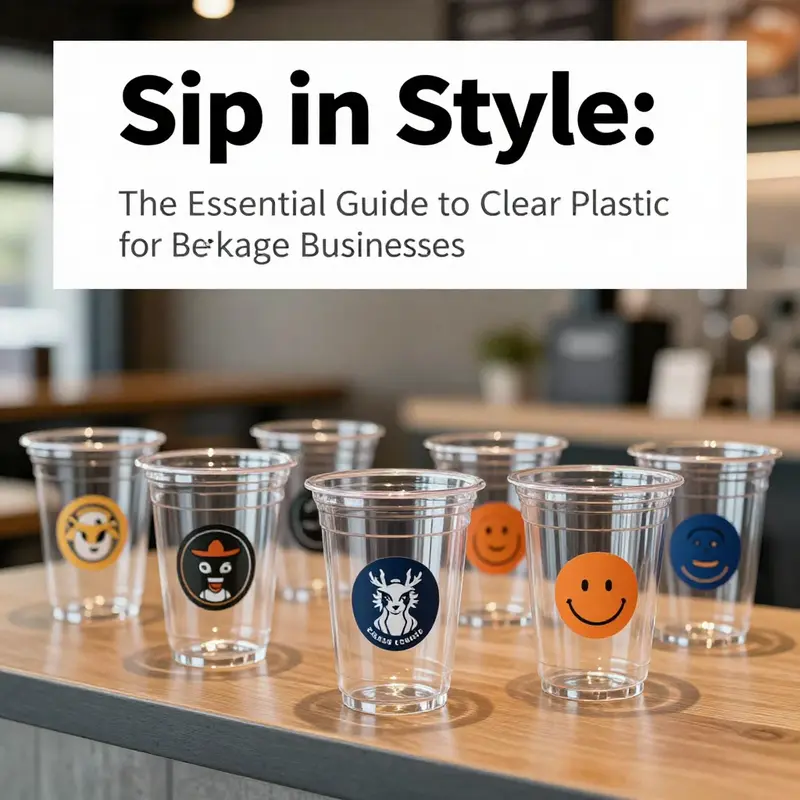
Clear plastic cups have quietly transformed from simple beverage vessels into versatile vehicles for brand storytelling and customer experience. In spaces ranging from bustling cafés to quiet lounge areas, from wedding receptions to product launches, these transparent containers carry more than just liquid; they carry intention. The evolution is powered by a set of converging capabilities—printability, material science, and design ingenuity—that allow a cup to function as a durable, cost-efficient canvas. The result is a seamless blend of utility and aesthetics, where the color of a drink, the touch of the cup’s surface, and the way a lid fits over the rim all orchestrate a memorable moment for the consumer. This is not merely about making cups look good. It is about aligning a practical, often routine experience with a brand’s values, a moment’s mood, and a story that can travel with the customer beyond the point of sale.
At the heart of customization is branding through logo and color. The most visible customization strategy is full-color printing directly onto the cup’s surface. Such printing makes it possible for a brand to project its identity with remarkable fidelity, wrapping the cup in a design that harmonizes with the beverage inside. This is more than decoration; it is a consistency tool that translates the brand’s visual language into a tactile, shareable object. Imagine a cup that carries a logo across its circumference, using two or three colors that echo the brand’s color palette, or a wrap-around image that conveys a seasonal message or a limited-edition campaign. The impact is practical too: a clearly branded cup elevates the perception of quality, provides continuity for customers who encounter the beverage in multiple channels, and reduces the need for separate marketing collateral at the point of service. In a busy service environment, the cup becomes a moving billboard, quietly guiding recognition and recall as it travels from the counter to the table, and then into the consumer’s social feeds as a photo-worthy moment in a broader brand narrative.
The technology behind such branding has advanced significantly. While initial printing might have relied on straightforward labeling or surface-imprinting, modern processes enable multi-color, high-resolution graphics that remain vivid under typical beverage temperatures. Not only can a cup bear a company’s emblem and color details, but the design can be engineered to align with the drink’s visual cues—the deep amber of a coffee, the emerald sparkle of a lime sorbet, or the gradient of a sunset-hued smoothie. The consumer experience is enhanced when the printing remains crisp and the ink adheres securely to the surface, resisting wear from moisture and handling during service. In practical terms, this means menus, promotions, and seasonal campaigns can be integrated into the cup with minimal risk of smear or fade, preserving legibility and appeal throughout the cup’s lifecycle.
Beyond flat, two-dimensional branding, the era of three-dimensional cups has opened a spectrum of tactile and visual enhancements that further distinguish products in crowded spaces. 3D clear cups, built with layered materials, offer a sense of depth and texture that can be felt and seen simultaneously. These cups may incorporate embossed patterns or even subtle holographic elements that catch the light in ways that draw a customer’s attention without overwhelming the beverage’s color. The crystal-clear transparency is essential here: it works like a stage lighting effect, ensuring the drink remains the central focus while the cup’s design adds a premium layer to the overall presentation. For premium events, luxury brands, or limited-edition beverages, the ability to pair an elegant cup with a carefully curated drink palette can transform a simple purchase into a ceremonial moment. It is easy to underestimate how much a consumer’s perception of value is influenced by small design cues—an effect that can compound with word-of-mouth as customers share visuals of their beverages on social platforms.
A central tenet of effective customization is compatibility with a broad ecosystem of accessories. Clear cups are designed to pair with standard lids, straws, and sleeves, a compatibility that matters as much for practicality as for branding coherence. Lids protect against spills during conveyance and ensure that the product remains restaurant-worthy during takeout and delivery. Straws, too, offer opportunities for color coordination or branding through matching hues or branded packaging elements. Sleeves—insulated or decorative—add another dimension, enabling temperature management while providing a surface for additional branding or seasonal messaging. The practical relevance of this compatibility extends across environments: a fast-paced café must move quickly, while an outdoor event must manage heat and wind in a way that keeps beverages stable and customers satisfied. When a cup is designed to work with a full range of accessories, it becomes a turnkey solution for operators, reducing the cognitive load on staff while delivering a consistent brand experience from the moment the drink is handed over to the consumer.
In this context, bulk ordering and pricing structures play a critical role in enabling smaller operators and startups to access customization without prohibitive barriers. The modern supply chain increasingly supports flexible minimums and scalable production runs. A supplier’s ability to start with moderate quantities—sometimes as low as a few dozen or a few hundred cups for proof-of-concept trials—and then scale to hundreds of thousands with consistent quality is a major democratizing factor. In practice, this means a brand can pilot a new design or a seasonal campaign with controlled cost, measure consumer response, and then expand production if the reaction is positive. When the economics align with the campaign’s timeline, the per-unit cost declines as volume increases, making sophisticated customization more accessible across different market segments. For many businesses, this approach makes sense because it aligns a brand’s need for freshness and relevance with a supplier’s capacity to deliver on time and on spec, even when market conditions fluctuate or demand spikes during holidays or events.
Relatedly, the inclusion of eco-friendly options broadens the spectrum of what customizable cups can represent. A growing segment of consumers expects sustainability to be part of a brand’s identity, not an afterthought. Biodegradable or recyclable clear cups—made from materials chosen for environmental compatibility—offer a path to align brand values with product design. The choice between PP or PET materials is part of this conversation, each with its own performance profile. PP-based cups often deliver excellent resilience to temperature variation and impact, while PET cups can offer higher clarity and rigidity that enhance visual appeal. When environmental considerations are paired with customization, brands can communicate responsibility as clearly as they display their logos. The result is not just a better-looking cup but a product that signals care for the customer and the planet, a message that can permeate the overall brand narrative and deepen loyalty.
The consumer experience does not hinge on appearance alone; it hinges on the entire sensory and functional arc that a cup supports. Temperature control, ease of handling, and the absence of leaks are crucial details that, when combined with compelling branding, create trust and repeat purchase. An insulated sleeve, for instance, can maintain drink temperature while providing an additional surface for messaging, seasonal motifs, or QR codes guiding customers to promotions or loyalty programs. A well-designed lid can carry branding too, returning customers to the moment when they first encountered the product and reinforcing brand recall at critical decision points. In short, customization is not merely decorative; it is a cohesive system that connects visual identity, product performance, and customer engagement into a single, portable experience.
In practice, brands balance several decision vectors when planning customization. First, the capacity and the intended service environment shape the print strategy. An eight-ounce cup used in a high-volume bakery might call for bright, high-contrast logos and brief messaging that remains legible at arm’s length, while a twenty-four-ounce cup for a premium juice bar could support more elaborate art that remains tasteful when held under warm lighting. Second, the choice of materials and coatings affects both performance and sustainability. Food-contact-safe inks and coatings are essential, ensuring that branding elements remain intact under moisture and temperature fluctuations. Third, the order structure and timeline influence the design process. Small orders for events or limited editions often require rapid proofs and small-batch runs, whereas large campaigns demand scalable production, consistent color matching, and tight supply chain coordination. Fourth, alignment with the broader packaging ecosystem matters. Clear cups with branding must harmonize with lid and straw colors, sleeve designs, and even the branding of the serving environment itself, so the consumer’s perception of the brand remains coherent across every touchpoint.
The integration of these elements is not merely about producing a larger or more elaborate cup; it is about shaping moments. At a wedding, a couple might choose clear cups that echo their color scheme, with a custom lid featuring a monogram and a tiny emblem that matches the wedding program’s motif. At a charity event, the same cups can carry a bold logo and a short message that refereces the cause, turning each drink into a micro-advocacy moment that participants can photograph and share. In a corporate setting, branded cups can reinforce event branding, with colorways and typography designed to echo the conference theme and communicate a sense of professionalism and care. The cups thus function as a connective tissue linking beverage, venue, and narrative, weaving a story that travels beyond the event itself. This storytelling power is amplified by social sharing: a well-branded cup becomes a visual cue in user-generated content, strengthening brand visibility in ways that traditional packaging may not.
From a supplier’s perspective, enabling such rich customization requires a combination of equipment, process control, and client collaboration. Modern manufacturing lines support multi-color printing, layering, and even tactile effects without compromising clarity. The ability to deliver a consistent, gapless wrap-around design depends on precise tolerances, reliable substrates, and rigorous quality assurance systems. The best suppliers also invest in design consultation and proofing stages, recognizing that a successful customization effort begins with a clear brief and ends with a reliable product that performs under real-world use. This collaborative approach helps bridge the gap between creative intent and manufacturability, ensuring that every branded cup aligns with both the brand’s identity and the practical realities of beverage service, including temperature stability, leak resistance, and stackability for storage and transport.
Within this broader frame, the chapters of the article follow a logical thread from sustainability and cost to aesthetics and user experience, with this chapter emphasizing how customization elevates the cup from a mere container to a strategic asset. The discussion here is not a retreat into speculative design but a grounded exploration of what brands can expect when they engage with capable manufacturers who understand the full lifecycle of a clear plastic cup—from material choice and printing technique to lid compatibility, sleeve integration, and the logistics of bulk production. It is a reminder that every sleeve or lid selected, every foil or holographic accent considered, can contribute to a coherent brand touchpoint that resonates with consumers at the moment of choice.
To illustrate how these ideas translate into real-world results, consider the option to embed a logo and lid as a single, cohesive unit. A representative approach allows a customized cup to arrive with the lid already integrated into the branding narrative, ensuring a seamless handoff from the counter to the consumer and a streamlined experience for the staff. The result is a compact package of identity, function, and storytelling that is easier to deploy across multiple locations and channels. Furthermore, the growth of mixed-volume orders and flexible minimums means brands can test new concepts with a smaller commitment before scaling. They can experiment with different colorways, patterns, and holographic effects, then decide which combinations deliver the strongest resonance with their audience. In the end, customization is not about adding complexity; it is about delivering a more coherent, more legible, and more compelling expression of a brand through a single, everyday object.
As this exploration shows, clear plastic cups bear a potential that extends well beyond the beverage they hold. The capacity to customize, to deploy branding across a durable, recyclable or biodegradable substrate, and to align the cup with compatible accessories and efficient service models gives brands a practical path to differentiation. It transforms a mundane act—grabbing a drink in a busy venue—into an experiential moment carefully choreographed to reinforce identity, support sustainability goals, and delight customers. In this sense, the cup becomes a narrative instrument, a portable, tangible extension of a brand’s voice that travels with the consumer, invites engagement, and invites sharing. The result is not merely a better cup, but a better customer experience—one that is legible, scalable, and aligned with the values and ambitions of the brand it represents.
Internal link: for brands exploring specific examples of how customization can be implemented in practice, see a practical implementation case focused on custom disposable cups with integrated branding and lids. custom disposable double-wall hot paper coffee cups with lid
External resource: to ground this discussion in current market capabilities and pricing dynamics, consult a representative supplier listing that highlights customization options, minimums, and per-unit costs associated with clear plastic cups. External reference: https://www.alibaba.com/product-detail/Clear-Plastic-Disposable-Cups-PP-Milk_1600592278879.html?spm=a2700.1.w10106365.1.4c5b3a5fJwqkMz
Final thoughts
In conclusion, clear plastic cups offer immense value for beverage businesses by combining functionality, cost-effectiveness, and branding opportunities. Understanding their specifications, pricing, and customization features can empower businesses to make intelligent choices that align with their operational needs and strategic goals. The right clear plastic cup not only serves beverages but also tells your brand’s story distinctly. Enhance your service with these versatile and customizable solutions today!