
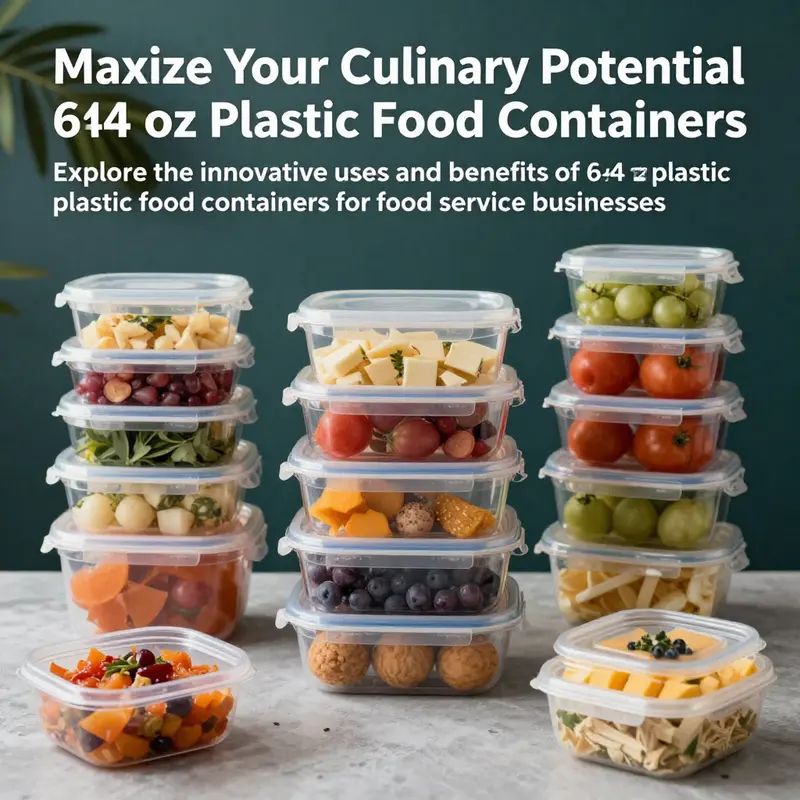
The culinary landscape is ever-evolving, with food service businesses seeking efficient and effective storage solutions to keep up with the demands of quality and convenience. At the heart of this evolution lies the 64 oz plastic food container—a versatile, durable option that caters to a variety of needs within the food service industry. Whether you’re a bubble tea shop, restaurant, food truck, catering service, or event planner, these containers play a crucial role in food storage and presentation. In the following chapters, we will dive into the myriad applications of 64 oz plastic food containers, explore the manufacturing and material quality that ensures safety and reliability, and discuss current market trends for sourcing these invaluable tools.
Big Capacity, Freshness, and Flow: The Role of 64 oz Plastic Food Containers in Food Storage
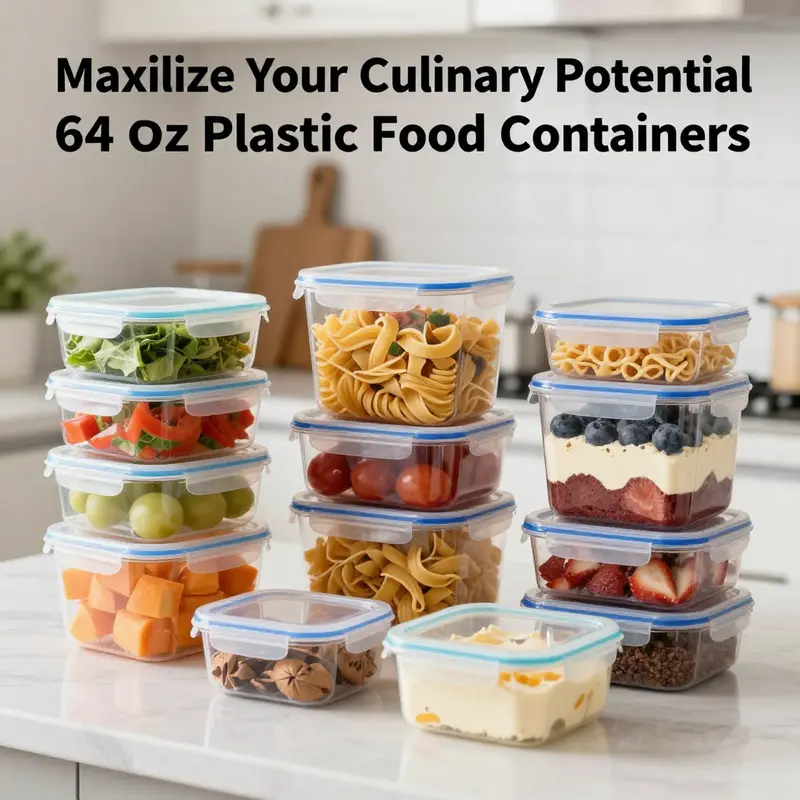
A large reservoir of potential sits in every 64 oz plastic food container. It is not merely a vessel for holding food; it is a compact system that teaches efficiency, preserves integrity, and scales from a home kitchen to a bustling commercial operation. When we examine how people store, transport, and serve food, this capacity becomes a strategic asset. Its usefulness emerges from a combination of size, material choices, user-friendly design, and compatibility with modern kitchen routines that prize time, organization, and safety. The ubiquity of a container this size speaks to a practical truth: food storage is less about keeping food out of sight and more about shaping the entire cycle of cooking, chilling, reheating, and sharing. In that sense, the 64 oz option sits at the nexus of personal habit and professional reliability, quietly enabling routines that would be far more cumbersome with smaller or larger options.
At the heart of any food storage decision is a question of capacity. A single 64 oz container can hold a substantial portion, whether it is a batch of soup for a week, a bed of mixed greens for a family meal, or a kitchen’s worth of marinated proteins awaiting cooking. This volume is large enough to accommodate bulk cooking without becoming unwieldy, yet practical enough to fit on standard shelves or inside a refrigerator or freezer. The modest size of the container’s external dimensions belies the versatility contained inside: it is capable of containing not only liquids but also solids like grains, salads, and cut vegetables, all while providing a clear window into content through transparent walls. That visibility matters because it reduces the cognitive load required to identify what is inside, which in turn lowers the chance of food waste due to misremembered leftovers or expired meals.
The material composition of these containers is equally critical. In today’s market, BPA-free plastics are a standard expectation, driven by a consumer demand for safety and by regulatory shifts in many regions. BPA-free does not merely signal a lack of a problematic chemical; it represents a broader commitment to minimizing potential chemical interactions between food and packaging. The plastics chosen for 64 oz containers are typically engineered to withstand the cold of a freezer and the heat of a microwave, within recommended usage guidelines. They resist staining and odors, a property that matters after repeated use with aromatic foods like curry, paprika, or garlic. The ability to clean effectively without leaving residues supports hygiene and extends the container’s usable life. This durability translates into real savings, especially for families who portion meals for the week or for small food businesses that rely on consistent, repeatable results.
The user experience is a key driver of sustained utility. A container’s lid is more than a closure; it is a seal that preserves flavor, blocks contaminants, and helps prevent spills during transport. Airtight, leak-proof lids are a cornerstone feature in many models, and this reliability becomes especially valuable when meals are carried to work, school, or a client site. A secure lid reduces anxiety about sloshing liquids in transit and minimizes the risk of cross-contamination in crowded environments. In environments where space is at a premium, the ability to stack containers neatly becomes a practical advantage. Stackability reduces the footprint required for bulk storage, whether in a home pantry, a restaurant walk-in, or a catering staging area. In turn, organization translates into faster service, fewer misplaced containers, and a lower likelihood of double-handling that can introduce contamination risks.
The versatility of the 64 oz format extends into the realm of meal preparation and service. For households and meal-prep operations alike, the container serves not only as a storage vessel but as a portion-control tool. Pre-portioned meals can be assembled in advance, stored, and retrieved with minimal effort. This approach supports dietary plans, family schedules, and business-level meal programs, making continuity a practical reality rather than a constant struggle. The design also accommodates a range of food types—from dense pastas and rice dishes to legumes, stews, and creamy sauces. The wide mouth of some variants makes scooping and portioning easier, reducing handling time and enhancing the user’s sense of control over the entire process. Such design nuances matter because they influence how consistently meals can be prepared and then enjoyed without compromise on texture or flavor.
From a culinary operations perspective, the 64 oz container aligns with workflows in the food service industry. Delis, bakeries, cafeterias, and catering outfits value containers that can hold substantial portions while maintaining presentation and freshness. The lids lock in aromas and prevent leakage during delivery, which is crucial when meals are moved from kitchen to customer or from one event to another. The ability to accommodate different ingredients—salads, soups, meats, grains, and desserts—under one packaging umbrella simplifies inventory planning and reduces the number of SKUs a business must manage. When a single container can fulfill multiple roles, staff training becomes simpler, and consistency across batches improves. This, in turn, reinforces customer trust, a critical asset in any service-oriented operation.
The utility of a 64 oz container is also evident in the realm of leftovers and ready-to-eat meals. Large households generate a steady stream of leftovers, and the container’s generous capacity can capture multiple servings at once without overcrowding, a condition that can otherwise lead to uneven cooling and quality loss. The ability to place a prepared meal straight into the freezer for longer-term storage is another practical benefit. When properly sealed, dishes like soups or stews can be stored in low temperatures for extended periods, then reheated with minimal texture or moisture loss. The freezer-safe attribute is more than a convenience; it is a strategic asset for inventory management and supply planning in both households and commercial kitchens. For individuals who prefer batch cooking, this capability enables a grocery list approach that reduces waste and optimizes time spent cooking across the week.
In settings where display and merchandising matter, the 64 oz container can also play a supporting role. In retail contexts, pre-packaged foods presented in transparent containers with clear labeling can attract attention and communicate freshness, portion size, and value at a glance. The container’s clarity helps customers assess the content visually, which can influence purchasing decisions, especially when shoppers are comparing options quickly in a crowded display area. Of course, the packaging must also be clean and aesthetically neutral so that the food itself remains the focal point. In practice, this means containers with smooth surfaces that resist staining and markings, allowing products to maintain a fresh appearance over time. When combined with a lid that seals effectively, these attributes support not only shelf appeal but also the practical realities of transportation and handling in busy retail environments.
Material safety and hygiene inevitably become a running thread through any discussion of storage solutions. BPA-free plastics, when paired with design features that minimize exposure to air and moisture, contribute to a broader safety profile for stored foods. Regular cleaning and proper drying are essential to maintain hygiene standards; the container must stand up to dishwashing cycles without warping or losing its seal integrity. In addition, the container’s design should facilitate thorough cleaning. Rounded interiors, minimal seams, and accessible rims all help ensure that residues are removed during wash and rinse. A container that dries completely reduces the risk of mold or bacterial growth in corners or under lids. These considerations are not merely technical details; they translate into real-world outcomes—longer shelf life, better taste retention, and greater peace of mind for cooks and caretakers alike.
Beyond the mechanical and practical aspects lies an ongoing conversation about sustainability and lifecycle value. Reusability is a core advantage of sturdy, well-made plastic containers. When a container can be used repeatedly over months or even years, it reduces the need for disposable packaging and the associated waste. This is a meaningful alignment with consumer expectations that value responsible practices as part of daily routines. Yet sustainability also involves responsible disposal at the end of a container’s usable life. Many plastics are recyclable, and manufacturers increasingly design products with end-of-life options in mind. The lifecycle of a 64 oz container thus includes not just its immediate use but its eventual reintegration into the circular economy, whether through recycling streams or upcycling opportunities. This broader perspective helps frame the container not simply as a container but as a node in a larger system of food preparation, consumption, and waste management.
The manufacturing landscape for these containers, while diverse, shares a common objective: delivering a product that balances cost, performance, and safety at scale. In high-volume production environments, economies of scale can reduce unit cost, enabling affordable storage solutions for households and institutions alike. The supply chain dynamics—raw material sourcing, fabrication processes, quality control, and distribution—shape the reliability of the final product. A container designed for heavy use must withstand repeated cycles of freezing, reheating, washing, and stacking without compromising its structural integrity. This emphasis on durability is not a luxury; it is a practical requirement for kitchens where every hour counts, and where a single malfunctioning lid or a cracked wall can disrupt service and waste precious time. In such contexts, the container’s design is validated not only by laboratory tests but by the daily rhythms of kitchens and break rooms that rely on predictable performance.
In sum, the 64 oz plastic food container embodies a convergence of practical capacity, safety-forward materials, and intelligently engineered design. Its value emerges through everyday actions—how people portion, store, transport, reheat, and serve food. It supports batch cooking and meal-prep discipline, reinforces organizational systems in commercial settings, and offers a reliable solution for households seeking both convenience and control over their food supply. The container becomes less a single-use item and more a reusable tool that respects space, time, and safety. As consumer expectations evolve toward greater efficiency and responsible packaging, the 64 oz format stands as a durable, adaptable, and approachable standard. It helps kitchen routines stay nimble in the face of busy schedules and growing appetites, enabling cooks to focus on what matters most—the quality of the food itself and the joy of sharing it with others.
External link: For a detailed overview of a widely used 64 oz plastic deli storage solution, see Freshware’s product family and its emphasis on airtight, freezer-safe, and dishwasher-safe design. https://www.freshware.com/products/64-oz-plastic-deli-food-storage-containers-with-airtight-lids-12-pack?variant=43879500283484
From Resin to Refrigerator: The Manufacturing Craft and Material Quality Behind 64 oz Plastic Food Containers
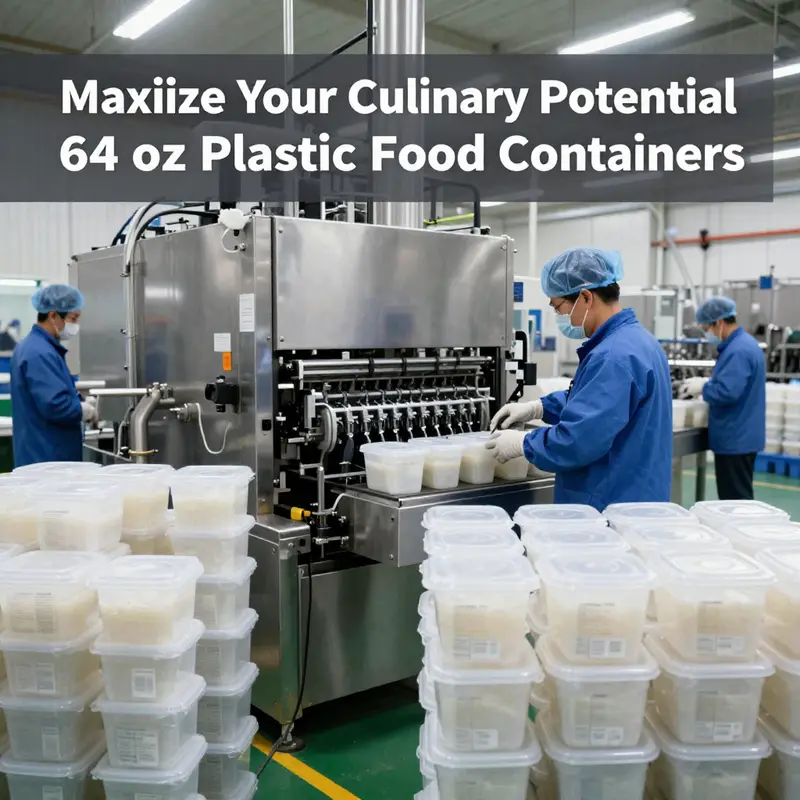
The story of a 64 oz plastic food container begins long before the customer twists open a vacuum-sealed lid. It starts in the resin plant, where raw polymers are formulated not just for strength or clarity, but for predictable behavior across the temperature swings of kitchen life. The choices manufacturers make—between polyolefin families, the additives to color or stabilize them, and the testing that proves they can safely house food—set the tone for every reuse, every wash, every meal-prep session that follows. In this space, material science and process engineering converge to deliver a product that performs reliably in a busy home, a bustling restaurant, or a catering operation. The nuances of material selection—where polypropylene (PP) and high-density polyethylene (HDPE) often take the lead—are not mere technical footnotes. They are the hinge on which safety, durability, and user experience rotate. The aim is not to produce a container that merely holds food; it is to craft a storage system that maintains freshness, resists the rigors of freezing, microwaving, and dishwashing, and does so without compromising safety or sustainability.
At the heart of material choice lies a simple truth: food-contact polymers must stay inert under heat, cold, and mechanical stress. BPA-free plastics have become a baseline for consumer trust, reflecting regulatory expectations and evolving consumer preferences. PP and HDPE are more than just different plastics; they bring distinct performance envelopes. PP offers stiffness and excellent heat resistance, which helps when containers are used to store hot foods or when lids must seal tightly to prevent leaks. It also resists warping and maintains shape across cycles of freezing and heating. HDPE, meanwhile, is celebrated for impact resistance and resilience at low temperatures, which matters when a container is dropped into a freezer or stacked in a fridge for bulk meal prep. The real engineering challenge is balancing these properties with clarity, if a degree of transparency is desired for food visibility, and with safety, ensuring that migration of residuals from the plastic into food remains well below regulatory thresholds.
Manufacturers rely on rigorous certification processes to confirm that the ingredients—resins, colorants, and additives—are suitable for repeated contact with a variety of foods. The emphasis is on food-grade materials certified by regulatory bodies that govern food safety in different markets. Across regions, the exact standards may differ, but the guiding principle is the same: the container must not leach harmful substances into its contents, even when subjected to heat or to acidic or fatty foods. This is why the label “BPA-free” has become a common, practical shorthand for material safety. Yet the quality story goes beyond a single label. It encompasses the entire supply chain of materials, from resin suppliers who provide traceable lot numbers to manufacturers who validate the absence of contaminants through independent testing. The end result should be a container that can handle the kitchen’s practical demands—microwave use, freezer storage, and dishwasher cycles—without compromising its structural integrity or its safety profile.
The physical traits of a 64 oz container reflect deliberate material engineering. In the design phase, the aim is to achieve a balance of rigidity and toughness. For large-capacity containers, a certain degree of stiffness helps maintain the shape under pressure from stacked storage or from the weight of contents. Yet there must also be a margin of resilience; a container that cracks when pulled from the freezer or dropped on a tile floor would fail the day’s first task. The interplay of material properties—tensile strength, impact resistance, and surface hardness—determines how well the container withstands cycles of freezing and reheating, how easily it releases food after storage, and how durable its lid remains during repeated use. The lid, often molded from the same family of plastics or another compatible polymer, must seal with an airtight fit that prevents leaks and preserves freshness. A well-engineered lid relies on a precisely formed rim gasket or snap-fit mechanism that remains reliable after countless dishwasher runs, while not creating an extra burden on the user for secure closure.
These containers are also designed with practical, real-world usage in mind. Freezing tests simulate the dramatic contractions and expansions that occur when liquids freeze and then thaw. Materials chosen for a 64 oz container must resist becoming brittle after long-term exposure to low temperatures, which would risk cracks and compromised seals. Conversely, when foods are heated in the microwave, the same material must avoid warping or softening that could deform the lid or the body, impede a proper seal, or harbor hot spots that might burn a user. The balance is delicate: the material should tolerate quick temperature changes, survive repeated dishwasher cycles without delamination or color fading, and remain easy to clean. In practice, this translates into a product that can be used daily in busy households as well as in institutions that rely on bulk meal prep. The end user experiences a sense of reliability that begins with the material and is reinforced by the container’s geometry and the manufacturing tolerances that guarantee consistent performance across thousands of units.
Beyond the chemistry and the physics, the manufacturing process itself is a crucial determinant of quality. Most 64 oz containers are produced through a combination of molding techniques that suit large-volume production while enabling precise control over wall thickness, clarity, and tolerances. Injection molding is a common path for the container body, where molten polymer is injected into precisely engineered cavities and cooled to form a solid part. This method supports tight tolerances and repeatable results, which are essential when the lid must snap onto the rim with a predictable fit every time. For lids, compression molding or injection molding may be used, depending on the resin system and the desired barrier properties. The equipment must be calibrated to minimize the presence of flash, a thin edge of excess material that can interfere with sealing or stacking. In high-volume environments, automated inspection systems scan for surface imperfections, color consistency, and diameter tolerances that would interfere with lid fit. A tiny deviation in the rim diameter, for example, can create leaks or misalignment with the sealing groove. Quality control is not an afterthought but an integral step embedded in the process, with statistical process control charts that track variations by batch, machine, or operator, allowing rapid interventions before a faulty lot advances to packaging and distribution.
Another aspect of manufacturing quality lies in the affinity between container design and end-use expectations. Large storage containers are used in contexts ranging from home meal prep to catering and bulk food service. The geometry must be ergonomic: easy to grip, easy to pour, and easy to stack. The color and translucence of the plastic can support or hinder the user’s ability to identify contents quickly, a practical advantage in busy kitchens. A well-designed 64 oz container often features a lip or edge that guides the lid’s alignment, a thread or snap-fit system that preserves an airtight seal, and a smooth interior that eliminates nooks where food can cling and harbor residues. The interior texture matters too; some finishes are chosen to minimize sticking for easy cleaning while also avoiding scratches that could harbor bacteria or compromise transparency over time. When sustainability enters the conversation, material choices and manufacturing methods are tested against the container’s life cycle. Manufacturers increasingly consider recyclability, the presence of recycled content, and the potential for reuse. The design then evolves to minimize waste in production and to facilitate end-of-life recovery, aligning with broader industry shifts toward circular economy practices without sacrificing performance.
Sourcing and supplier relationships play a critical role in the material quality narrative. Buyers seeking bulk quantities for food service, catering, or retail operations must assess supplier credentials, track record, and compliance with international safety standards. The choice of manufacturing hub can influence lead times, price, and quality control maturity. Regions with established plastics ecosystems offer mature supply chains, consistent quality, and scalable capacity. The Guangdong region in particular has emerged as a strong node for the production of plastic food containers, thanks to extensive tooling networks, robust extrusion and molding capabilities, and a supplier base adept at meeting the strict demands of food-grade packaging. The advantage for buyers in such hubs is not only cost efficiency but the ability to work with manufacturers who can provide batch traceability, material certification documentation, and product testing reports that verify compliance with food-contact standards. Still, this advantage comes with responsibilities. Buyers should demand evidence of certifications, such as material safety confirmations and product-specific test results, and they should insist on supplier audits or third-party testing reports to verify consistent quality across lots. The outcome is a transparent supply chain where each container is traceable from resin to finished product, enabling confidence in safety and performance throughout its lifecycle.
In this context, the relationship between material quality and user experience cannot be overstated. A consumer who reaches for a 64 oz container for the first time will notice how the lid slots into place with firm reliability and how the body holds up under a crowded refrigerator shelf. They may also notice that the container remains clear enough to identify its contents at a glance, or that the combination of lid and body feels sturdy when stacked with other containers. Those impressions are the cumulative result of careful material selection, precise molding, and disciplined quality control. The small advantages—tight seals, resistance to cracking, easy cleaning—multiply into significant benefits when scaled to thousands or tens of thousands of units in a high-volume operation. In the end, the mathematics of material science translates into a practical promise: safe storage for a wide variety of foods, compatible with everyday kitchen routines, underpinned by a rigorous production discipline.
The conversation about material quality also intersects with sourcing strategies and risk management. For B2B buyers, the reliability of supply is as important as the performance of the product itself. A robust sourcing strategy should factor in supplier certifications for food-grade materials, compliance with international safety standards, and the ability to provide consistent quality across large orders. It should also consider the logistical realities of the global plastics ecosystem, including lead times, production capacity, and the potential for disruptions. The strategic approach is to build relationships with suppliers who can demonstrate end-to-end quality control, from resin supply to finished container, and who can provide documentation that supports compliance claims and test results. In parallel, buyers may explore customization options that affect material performance, such as adding recycled-content resins, selecting opaque vs. transparent finishes, or adjusting wall thickness to balance weight and rigidity for specific use cases. Each of these choices can alter the performance envelope of the container and thus must be traded off against cost, regulatory requirements, and sustainability goals.
The narrative of manufacturing and material quality extends beyond the lab and the factory floor. It informs everyday decisions about how a 64 oz container will be used in kitchens, catering lines, or institutional dining programs. A container that resists warping when hot sauces are added, that remains intact after a trip through a crowded dishwasher, and that can be stacked securely without slipping becomes a trusted workhorse in meal-prep routines. It is the quiet backbone of the daily workflow, enabling cooks, organizers, and service staff to perform with efficiency and confidence. This is why the industry continues to invest in material research, refining resin formulations and molding technologies to deliver containers that are safer, more durable, and easier to reuse or recycle. The end result is not just a container; it is a durable, dependable storage system designed to support the needs of modern kitchens and food service operations while aligning with evolving expectations around safety and sustainability.
As the discussion moves toward practical implications, it is useful to consider how a well-engineered 64 oz container performs across the lifecycle—from bulk production to everyday use and eventual disposal or recycling. In the early stages, rigorous material testing verifies that the chosen polymers will perform as intended under a spectrum of conditions. Later, batch certification documents provide traceability that can reassure buyers during audits or inspections. In the kitchen, the user benefits from predictable lid fit, reliable sealing, and resistance to the stresses of daily handling. In the long run, sustainable design choices—such as enabling higher recycled-content resins or improving end-of-life recyclability—help reduce environmental impact without compromising safety or performance. These interconnected decisions—material choice, processing, quality control, supply-chain strategy, and end-of-life considerations—together form the full narrative of how a 64 oz plastic food container becomes a trusted tool in food storage.
To place this in a near-term, practical frame, consider how a buyer evaluates a supplier’s capability to deliver consistent quality at scale. Documentation becomes a bridge between theory and practice. A Material Safety Data Sheet (MSDS) confirms that the product’s chemical profile is appropriate for food contact. Certificates of Conformity or compliance attest to adherence to applicable standards. Third-party test reports can validate barrier properties, migration limits, and performance under temperature cycling. In a global market, such documentation supports due diligence and reduces the risk of noncompliance in different regulatory environments. The value of this information is not academic; it translates into dependable inventory management, fewer product recalls, and greater confidence for customers who rely on bulk containers to store meals, soups, salads, and desserts with consistent quality.
The literature on sourcing and material specifications in this sector often points to a common thread: the best outcomes arise when producers and buyers collaborate around a shared set of standards and expectations. A proactive approach to quality control—one that emphasizes early-stage material testing, transparent documentation, and ongoing verification—helps ensure that each batch of 64 oz containers is up to the task of real-world use. This collaboration extends to the design phase, where feedback from large purchasers can drive improvements in lid geometry, wall thickness, and surface finishing that enhance both usability and durability. The result is a cycle of continuous improvement where material science informs practical packaging, and practical use, in turn, drives refinement in materials and processes. As the industry evolves, these cycles become more efficient, more transparent, and more aligned with the goals of safety, efficiency, and sustainability that define contemporary packaging standards.
In closing this thread of the narrative, it is essential to recognize that the quality of a 64 oz plastic food container is not a single metric. It is the sum of material choice, processing precision, and disciplined quality assurance, all anchored in regulatory compliance and a commitment to safe, reusable packaging. The manufacturing craft, when executed with rigor, yields a product that can be trusted across diverse environments—from a family kitchen to a high-volume cafeteria. The material’s behavior under heat, cold, and repeated washing becomes a measure of reliability, not merely a theoretical specification. The consumer benefits when this reliability is delivered consistently, and the business benefits from reduced waste, fewer returns, and stronger brand trust. This is why the path from resin to refrigerator matters as much as the price per unit or the color of the container; it embodies the careful balance of safety, performance, and sustainability that today’s packaging demands.
For readers who want to explore related packaging considerations beyond rigid container design, a quick reference can be found in discussions about various takeaway packaging formats. For a closer look at how lid and container interfaces operate in take-away contexts, you can explore this resource: disposable take-away paper coffee cups with lids. This cross-cutting view helps illuminate how even seemingly different packaging formats share common engineering challenges—sealing reliability, material safety, ease of handling, and recyclability—that influence the overall user experience. In practice, the best decisions about 64 oz plastic storage begin with a robust understanding of material science, then extend to supply-chain reliability and end-use practicality. With these elements aligned, the 64 oz container becomes more than a storage vessel; it becomes a dependable ally in organizing meals, ingredients, and ideas across kitchens, cafeterias, and caterers alike.
External resources provide a broader industry lens on sourcing and quality assurance, offering frameworks that buyers can apply when evaluating suppliers. An accessible starter is the Strategic Sourcing Guide for B2B Buyers, which outlines approaches to vetting material suppliers, assessing regulatory compliance, and ensuring reliability at scale. This external reference complements the internal material-focus narrative by connecting the dots between product performance and responsible procurement practices: https://www.supplychain247.com/industry-news/64oz-plastic-container-suppliers-strategic-sourcing-guide-for-b2b-buyers/.
Large-Volume Storage, Global Chains: Market Currents and Sourcing of 64-Ounce Plastic Food Containers
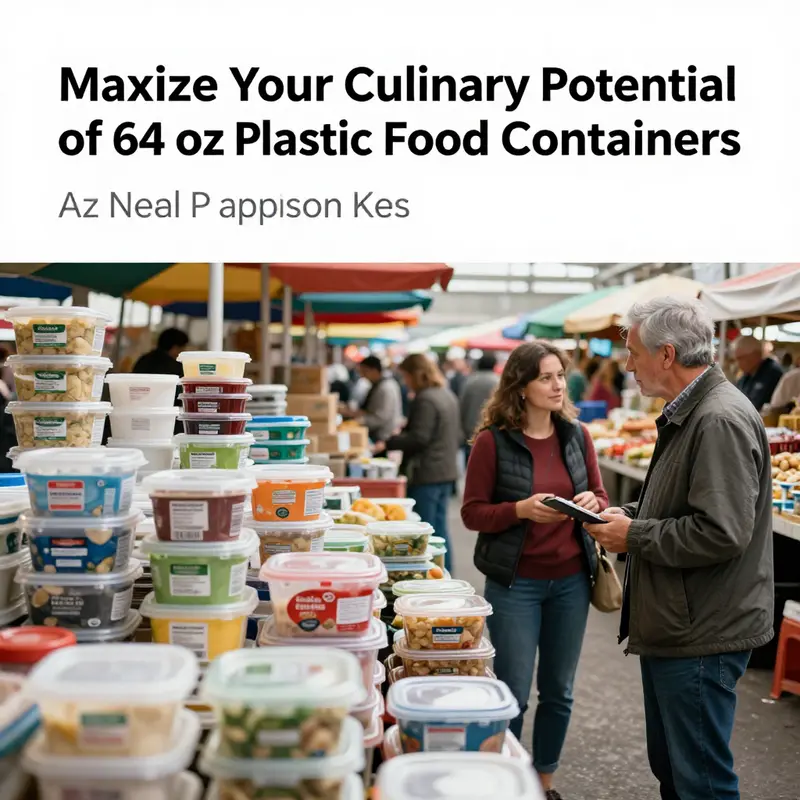
The 64 oz plastic food container stands as more than a bulk-capacity option. It is a logistical asset, a buffer against imperfect meal planning, and a test bed for how modern packaging aligns safety, convenience, and sustainability at scale. In kitchens from home meal-prep corners to bustling catering operations, this size offers the balance between portion control and operational efficiency. It invites a deeper look into how a simple, durable vessel becomes a node in a coordinated network that touches material science, regulatory compliance, logistics, and evolving consumer expectations. The chapter you are reading follows the arc of this size from its practical utility to its strategic value for supply chains, especially as buyers increasingly seek reliability in a world of rapid online shopping, fluctuating raw-material costs, and heightened scrutiny of packaging safety and environmental impact. Understanding these dynamics helps us see why the 64 oz container is not just a product, but a signal of the packaging landscape itself.
Market momentum around large-volume containers is driven by three overlapping forces. First, consumer and business demand for meal kits, bulk salad offerings, prepared foods, and family-sized storage drives steady growth in the need for stackable, leak-proof, and space-efficient packaging. E-commerce has accelerated this trend, converting everyday cooking into trackable logistics where fragile perishables must survive transit without compromise. Second, the supply chain is becoming more data-driven. Track-and-trace capabilities, quality-control checkpoints, and standardized migration tests are less a nice-to-have and more a baseline expectation. Third, the sustainability agenda has moved from aspirational to measurable. recyclability, recycled content, and migration safety are no longer peripheral concerns; they are core criteria buyers use to evaluate suppliers and to reduce life-cycle impacts. Together, these forces shape how manufacturers design, produce, and certify 64 oz containers for a broad range of environments—home storage, foodservice, retail, and industrial kitchens alike.
Sustainability remains a central pillar. The shift toward recyclable and biodegradable materials is no longer a niche preference but a market imperative. Post-consumer recycled PCR plastics are increasingly specified for 64 oz containers, particularly in PET and PP formulations, as brands seek to reduce virgin resin demand without sacrificing performance. Regulatory frameworks amplify this push. In the United States, FDA 21 CFR Parts 174–177 govern the safety of food-contact materials, guiding migration limits and overall compliance. In Europe, EU Regulation (EC) No 1935/2004, along with amendments such as 10/2011, frames the safety and compatibility standards for materials used in contact with food. These standards are not mere paperwork; they shape resin choices, cap materials, and sealing technologies. Suppliers who can demonstrate BPA-free status and provide third-party migration testing—performed by trusted laboratories—gain access to a broader set of markets and improve credibility with retailers and operators who demand assurance of safety and compliance.
In parallel with these safety and sustainability considerations, design and material choices are shifting toward clarity, durability, and functionality. High-clarity polymers that mimic glass in appearance while offering the resilience of plastics have gained traction. Materials like PET and advanced copolymers, including Tritan-like formulations, provide the transparency that helps users quickly assess contents, while preserving impact resistance and dishwasher compatibility. The visual appeal of a glass-like container matters in display scenarios, meal-prep planning, and consumer trust, where packaging that appears clean and durable reinforces the perception of freshness and quality. Yet clarity must be balanced with practical demands: impact resistance during stacking, resistance to thermal cycling in microwaves or freezers, and secure closures that prevent leaks during transport. In response, manufacturers are refining the geometry of rims, lids, and sealing gaskets to tighten the air-tight seal while preserving easy lid removal for busy kitchens.
Beyond aesthetics and safety, the rise of smart packaging features is reshaping expectations for 64 oz containers. QR codes for traceability, tamper-evident seals, and labels that indicate freshness or date of packing are becoming standard in certain channels. Retailers who value transparency and recall readiness see tangible benefits from these features. Smart labeling can help operators meet compliance demands and reassure customers who want to know where a product originated and how it was handled. While not every use-case requires digital augmentation, the trend toward data-rich packaging is inexorable, especially for products distributed through meal-kit services, online grocery platforms, and multi-location catering operations.
On the sourcing side, China remains central to the production of 64 oz containers, with industrial clusters in Guangdong, Guangzhou, and Qingdao acting as pivotal nodes in a highly integrated supply chain. The scale of these regions enables automation to run at volumes that keep unit costs competitive even as resin prices vary. Modern injection-molding lines can produce hundreds of thousands to millions of units per month, creating a powerful incentive for buyers seeking reliable turnkey supply. Cost efficiency is a key driver of value here: if a supplier leverages economies of scale effectively, unit prices can drop to modest levels in bulk purchases, while still meeting stringent food-contact safety standards and certification requirements. This combination—high throughput, robust QA, and cost discipline—gives large-volume buyers confidence to commit to longer-term contracts or more substantial batch allocations.
Proximity to major ports is another strategic advantage that influences sourcing decisions. Guangzhou Nansha and Qingdao Qianwan, among others, offer logistical pathways that shorten lead times and improve delivery predictability. For buyers who need to balance inventory, avoid stockouts, or respond rapidly to seasonal demand, the ability to shorten the cycle from design approval to shelf is a meaningful differentiator. In practice, this operational agility translates into lower working-capital needs and improved service levels for distributors and food-service operators who rely on consistent throughput. It also reduces the risk of obsolescence for designs that respond to shifting regulatory or consumer preferences, since the supply base can adapt more quickly when the supply chain is built around a dense, well-coordinated network.
MOQs have become more approachable for a broader set of buyers. Suppliers across the major manufacturing hubs have grown comfortable with more flexible minimum order quantities, including smaller pilot orders that allow startups and niche distributors to test new markets without tying up large capital. This accessibility lowers the barrier to entry for innovators who want to experiment with packaging formats, colors, and closures tailored to regional tastes or specific retail formats. But while MOQs may be flexible, the expectations on quality assurance remain rigorous. Vendors now routinely provide material safety data, batch-level certificates, third-party migration testing results, and traceable lot numbers. For buyers, this transparency is not only about compliance; it is a practical tool for inventory management, recalls, and post-sale support.
From a cost perspective, volume remains the most potent lever. In a market where resin prices, energy costs, and freight rates are all volatile, the capacity to scale production while maintaining consistent quality is a critical differentiator. Suppliers with integrated upstream and downstream processes—polymer sourcing, resin compounding, and finished-product assembly—tend to offer more predictable pricing and faster response times. For buyers, price sensitivity must be balanced with performance criteria: closure integrity, heat and cold tolerance, chemical resistance, and safe migration levels. A well-negotiated contract can secure favorable unit costs while enabling flexibility in container grades, enabling buyers to adapt to regulatory developments or shifts in consumer demand without overhauling procurement strategies.
In terms of compliance and quality assurance, the pathway from raw resin to the finished 64 oz container is a controlled sequence. Verification steps include resin certification, mold validation, cycle testing, and real-time dimensional checks during production. For markets with exacting standards, third-party testing and certifications become essential. The rigorous documentation not only supports regulatory submission but also builds buyer confidence in long-term sourcing relationships. The best suppliers create a dossier that includes migration test results, heat resistance data, and end-use performance metrics across a range of operating conditions. That documentation serves as a foundation for sustainable procurement programs, where product stewardship and supply-chain transparency are central to supplier selection and contract renewal decisions.
The future trajectory of the 64 oz container market reflects both growth and complexity. Industry forecasters anticipate steady expansion in the coming years, fueled by the overall expansion of the plastic packaging sector and reinforced by a rising share of food and beverage packaging in total demand. The Chinese plastic packaging market is projected to reach a substantial scale, with a compound annual growth rate around the mid-single digits, in line with broader packaging-industry expectations. Export volumes are expected to rise as manufacturers expand capacity and refine supply networks to serve global buyers who crave reliability in lead times and consistency in product performance. In this evolving landscape, the 64 oz container stands as a flexible, scalable option that can bridge traditional foodservice needs with the demands of modern retail and e-commerce channels. It is not simply a container; it is a shared interface between product safety standards, consumer convenience, and the operational realities of large-volume distribution.
For buyers crafting a sourcing strategy, these dynamics translate into several practical imperatives. First, emphasize supplier qualification beyond price. Audit capabilities for regulatory compliance, quality management systems, and environmental stewardship. A supplier who can demonstrate BPA-free status, robust migration testing, and traceability provides a foundation for risk-managed procurement. Second, prioritize flexibility in order quantities and lead times. The most resilient supply arrangements feature configurable MOQs, multi-site sourcing options, and defined contingency plans for rapid reallocation in response to port disruptions or resin-price shocks. Third, insist on packaging performance data that align with actual use cases. Documented performance under microwave or freezer conditions, leak-testing results, stackability metrics, and compatibility with common sealing technologies translate into real-world confidence for meal-prep operations and foodservice kitchens.
This nuanced view of the market reveals how the 64 oz container sits at the intersection of material science, safety regulation, and global logistics. It is a product category that rewards buyers who invest in due diligence and supply-chain intelligence. The container’s growth is not about chasing novelty; it is about delivering dependable performance at scale while meeting evolving expectations around sustainability and transparency. The result is a driver of efficiency for operators who require reliable bulk storage and transport, and a predictable, standards-aligned pathway for manufacturers who aim to serve diverse markets with confidence. In this sense, the 64 oz container embodies the broader transformation happening across packaging: a move toward smarter, safer, and more sustainable products that can travel the world with traceability, quality, and purpose.
External Resource for Further Insight: For a broader, data-driven market forecast and regional demand analysis, see the market outlook from a leading packaging research firm at https://www.marketsandmarkets.com/Market-Reports/plastic-packaging-market-245123538.html. This report provides real-time data on market size, material trends, regional demand, and export forecasts that contextualize the 64 oz category within the global plastic packaging ecosystem.
Final thoughts
In conclusion, 64 oz plastic food containers stand as an essential component across various segments of the food service industry. Their applications range from effective food storage to facilitating convenient meal prep and delivery solutions, catering perfectly to the fast-paced needs of today’s businesses. By understanding the manufacturing quality and sourcing trends, food service businesses can make informed decisions in selecting the right containers that not only enhance food safety and freshness but also support operational efficiency. As the demand for reliable, durable, and safe food storage options continues to grow, embracing 64 oz plastic food containers could indeed be the stepping stone to elevating service quality and customer satisfaction.