
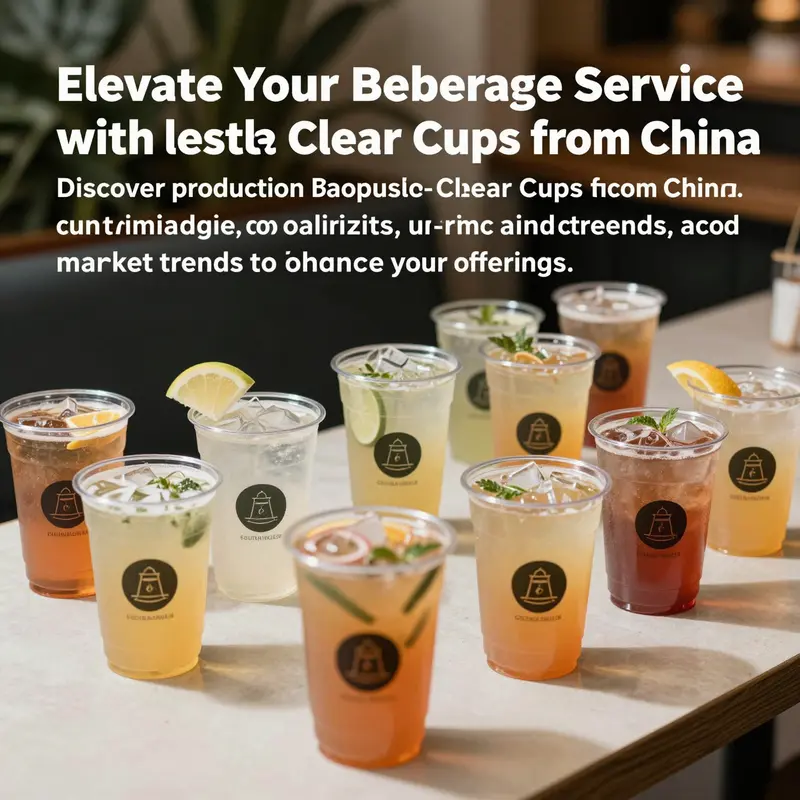
In today’s vibrant food and beverage landscape, the demand for high-quality disposable clear plastic cups has surged, impacted by the ever-growing popularity of bubble tea shops, restaurants, food trucks, and catering services. These cups not only guarantee convenience and hygiene but also offer versatile marketing opportunities for businesses. In the following chapters, we will explore the robust production capabilities and diverse material options available from Chinese manufacturers. Next, we will uncover the customization and branding opportunities that help businesses stand out in a competitive market. Finally, we will delve into the latest market trends and pricing analysis to help you make informed procurement decisions.
From Factory Floors to Bulk Orders: Production Capabilities and Material Choices in China’s Wholesale Clear Cup Market
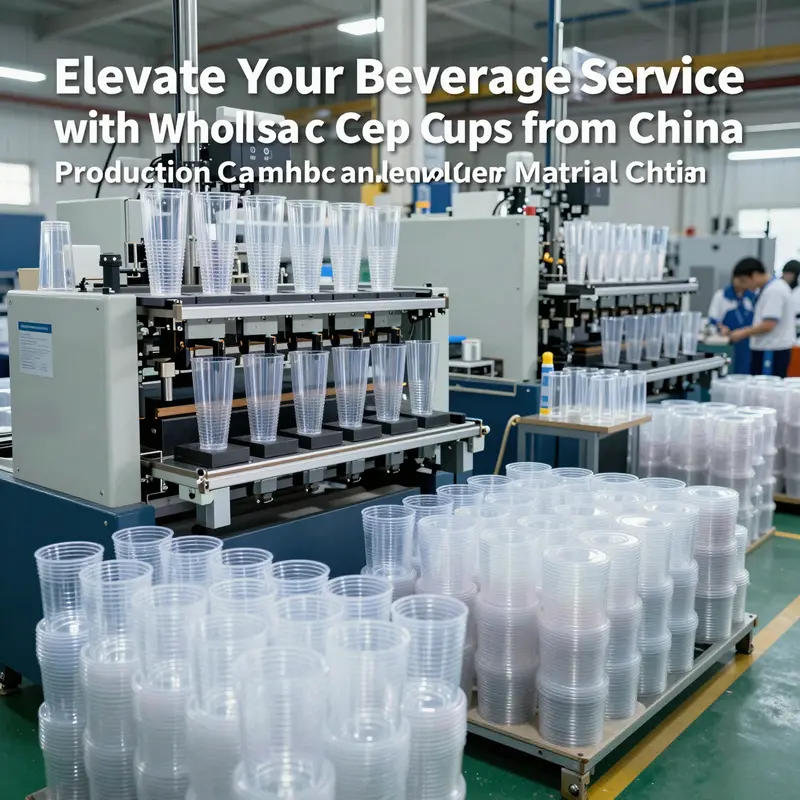
China’s wholesale sector for clear plastic cups sits at the intersection of scale, precision, and evolving material science. It is a landscape defined not by a single factory but by a network of capable producers spread across key industrial belts, each contributing its own specialization to a broader, increasingly sophisticated supply chain. The narrative of production capabilities in this market is not about isolated lines of machinery; it is about how facilities integrate design thinking, process engineering, and material chemistry to deliver cups that meet exacting spec, endure through distribution, and align with growing expectations around sustainability and regulatory compliance. In this sense, the chapter is less about a static catalog of products and more about a dynamic ecosystem that translates concept into consistent, bulk ready delivery. Buyers who come to the market with clear timelines and rigorous requirements quickly learn that success hinges on choosing partners who can operate at scale, while still accommodating the customization that brands increasingly demand for branding, packaging, and user experience.
Across China, production capabilities are organized to balance throughput with flexibility. Regions like Zhejiang and Guangdong are not only logistical hubs; they are engines of process optimization, automation, and quality control. Hangzhou and nearby industrial clusters have built reputations for research and development that translate into practical production benefits. Factories in these zones leverage a mix of high speed injection molding, thermoforming, and multi stage finishing lines, all complemented by automated inspection systems that keep a tight lid on defects while maintaining rapid cycle times. The scale supporting this capability is real: a representative, established producer operates across thousands of square meters of floor space and employs a workforce that blends skilled technicians with automated systems. A notable example—quoted here in a generalized sense to reflect industry norms rather than to identify a specific enterprise—illustrates a facility of roughly 2,500 square meters with more than a hundred employees. Such capacity underpins the ability to offer a broad range of cup sizes, from compact 32 oz designs to formats around 600 ml, and to support resin families including PET, PP, and PLA. The implication for buyers is straightforward: large, multi line operations can absorb volume spikes, maintain consistent wall thickness, and sustain supply across the lifecycle of a product family, from initial launch through ongoing replenishment.
Material options are central to how these production capabilities are realized in practice. PET remains a mainstay for its clarity, rigidity, and relatively favorable cost profile. It performs well for standard cold beverage service and for applications where a clean, transparent aesthetic helps brands communicate freshness and quality. PP offers a complementary set of properties, notably resistance to heat and impact, which makes it valuable for hot beverages or scenarios where cups encounter higher handling demands. The choice between PET and PP often hinges on the intended use, the temperature profile, and the shelf life expectations for the product in question. Beyond these, PLA has emerged as a meaningful option for brands seeking to foreground environmental considerations without sacrificing core performance. PLA is derived from renewable resources like corn starch, and it can be marketed as biodegradable in compatible composting streams. In practice, PLA can deliver similar clarity and stiffness to PET in many applications, but it does require careful matching of heating profiles and service conditions. The sustainability narrative around PLA has grown more compelling as retailers and event organizers seek packaging that communicates responsibility to consumers. At the same time, the technical realities—such as heat tolerance, resistance to moisture, and composting feasibility—mean PLA must be selected with an eye toward end of life and the specific environmental infrastructure available in the buyer’s market.
The market’s embrace of green materials is not purely a response to consumer sentiment; it reflects a strategic alignment with national priorities that emphasize green innovation and higher quality consumption. Chinese suppliers are increasingly weaving environmental considerations into core capabilities, upgrading processing lines and exploring energy efficiency improvements, as well as integrating recycling and circular economy concepts where feasible. This alignment creates a favorable backdrop for manufacturers who can demonstrate credible environmental performance, certifications, and traceable material provenance. The result is a more nuanced marketplace where a cup is not just a vessel for a drink but a node in a broader sustainability and compliance narrative.
From a buyer’s standpoint, the decision calculus extends beyond raw material choice. Consistency in manufacturing is the backbone of bulk procurement. Wall thickness uniformity, clarity, and dimensional accuracy are monitored through layered quality control that combines in process sensors, automated vision systems, and post production sampling. The metric of on time delivery is given equal weight in supplier evaluations because it directly shapes inventory planning, event timing, and shelf availability. Certifications provide a common framework for trust; FDA recognition for food contact, ISO quality management standards, and third party SGS inspections offer a tangible signal to buyers that a producer maintains rigorous quality and safety practices. When suppliers can point to robust traceability records and clear change control processes, buyers gain protection against resin lot variability or process drift that could otherwise disrupt mass production runs.
A core feature of the Chinese manufacturing landscape is its multi hub structure. The geographic dispersion—encompassing Guangdong, Zhejiang, Fujian, and nearby coastal regions—allows buyers to optimize for lead times, freight costs, and supply chain resilience. Some hubs specialize in ultra high throughput lines designed for common diameters and wall thicknesses, supported by robust extrusion and injection capabilities. Others cultivate a more boutique orientation that can accommodate unusual cup geometries, higher wall thickness options, or custom printing workflows. This mosaic means buyers can assemble a sourcing strategy that blends scale with customization. The capacity to reconfigure lines for different capacities and resin mixes with minimal downtime is increasingly seen as a critical differentiator, enabling suppliers to respond quickly to changing demand while maintaining consistent output.
What makes customization practical in this environment goes beyond the raw capability to mold a cup. The true value lies in the end to end pipeline that connects concept to delivery. OEM and ODM services are now well established across the sector, enabling clients to request specific cup shapes, particular lid mating profiles, and bespoke packaging configurations. A mature supplier can maintain in house design and testing teams that translate a client brief into mold designs, print templates, and packaging prototypes within a few weeks. The result is not limited to branding on the surface of a cup but a broader packaging solution that can reduce time to market and simplify supply chain management for brands engaged in large scale beverage programs. The ability to print logos, apply colors, and even offer multi region packaging configurations positions suppliers as strategic partners rather than simple vendors. The synergy between design capability and manufacturing discipline is what unlocks faster prototyping cycles, streamlined qualification, and more predictable acceptance of new line extensions.
As the market has grown, the tradeoffs involved in material choice and process selection have become a bit more nuanced. For example, the performance envelope of PLA is shaped by the operating environment and the presence of additives that can alter clarity, heat resistance, and mechanical integrity. Consequently, suppliers provide clear usage windows and testing protocols to ensure that biodegradable cups meet expected performance standards in the intended application. The capacity of a facility to validate these properties at scale—through controlled trials, standardized test regimens, and documented results—gives buyers confidence when committing to biodegradable options in bulk. This is particularly important for brands seeking to align packaging choices with sustainability stories while maintaining the reliability demanded by large distribution networks. PET continues to offer a broad, dependable baseline for many customers, but the PLA option provides a channel through which brands can signal environmental stewardship and cater to consumer segments that actively seek greener packaging.
The procurement journey in this space is increasingly collaborative. Buyers engage with suppliers early in the product development cycle, using samples, tolerance checks, and packaging compatibility studies to ensure that cups work in concert with lids, sleeves, straws, and domed or flat lid designs. The cross functional nature of such work—combining materials science with packaging engineering and logistics planning—is a hallmark of how modern buyers manage risk and optimize value. Prototyping can be rapid, often supported by short run tooling and digital printing capabilities that accelerate brand testing while preserving the option to scale up to mass production quickly once the design has been validated. The strategic takeaway for procurement teams is to look for partners that can deliver not only a superior manufacturing outcome but also a coordinated approach to packaging integration, labeling, and logistics.
Within this broader framework, the supply chain for wholesale clear cups benefits from the same structural advantages that support other bulk packaging inputs. The existing network of suppliers is experienced with large international orders, has established export procedures, and can provide cost efficiencies through bulk resin purchases, centralized quality control, and standardized packaging. This operational maturity translates into more predictable lead times, lower per unit cost at scale, and a greater capacity to absorb fluctuations in demand. The regional diversification also acts as a hedge against disruptions that can affect a single location, providing buyers with a cushion in times of supply stress. The ability to source from multiple hubs while maintaining uniform quality is a competitive advantage that reflects the careful orchestration of people, machines, and processes across the country.
For buyers contemplating diversification beyond clear plastic cups, the broader packaging ecosystem presents synergistic opportunities. Related container formats, lid variants, and secondary packaging components can be coordinated through the same supplier networks to achieve seamless branding and packaging alignment. This approach reduces governance complexity, minimizes supplier fragmentation, and can unlock favorable pricing through bundled procurement. It also streamlines logistics, as pallets, labeling, and shipping configurations can be harmonized across product families. In practice, purchasers who pursue this integrated approach often realize faster decision cycles, more consistent product experiences for end users, and clearer accountability in the supply chain. The overarching message is that cups are a gateway to a broader packaging strategy that blends product performance with brand storytelling, operational efficiency, and sustainability commitments.
The broader market context reinforces why production capabilities and material choices matter so much. Global demand for disposable clear cups remains robust, driven by hospitality growth, events, and steady expansion in retail and take out channels. Yet consumer expectations continue to evolve toward clearer communication of product provenance, safety, and environmental responsibility. This shifts the emphasis from merely supplying a low price point to delivering value through consistent performance, credible environmental credentials, and reliable service levels. Sourcing from China, with its mature manufacturing ecosystem and well developed export infrastructure, remains a compelling option for buyers seeking both scale and customization. The market has built a reputation for cost competitiveness, but the emphasis now is on how suppliers integrate design, engineering, and logistics to deliver end to end solutions that support a brand’s broader goals.
In evaluating suppliers within this landscape, buyers tend to track a few core indicators beyond price. On time delivery performance, which directly translates into stock availability and event readiness, becomes a non negotiable metric. Compliance with international standards provides risk protection and smooths cross border stories, while high reorder rates signal reliability and consistent quality across multiple production cycles and product lines. The ability to accommodate custom shapes, varying wall thicknesses, and integrated branding without compromising lead times is another often cited criterion. The regional diversity of production hubs helps buyers implement multi supplier sourcing strategies that reduce risk while maintaining cost efficiency. It also offers a practical route to meeting diverse market requirements, enabling a buyer to assemble a portfolio of partners that can support different regional needs while preserving a unified standard of quality. In short, the combination of scale, customization, and dependable delivery makes the wholesale clear cup sector in China a resilient and evolving ecosystem that continues to align with the strategic objectives of beverage service operators, event organizers, and retailers around the world.
For readers seeking to explore broader packaging formats that complement the cup portfolio, there is value in reviewing related content within the packaging ecosystem. The availability of diverse containers, different lid styles, and right sized secondary packaging can help brands craft integrated service experiences. When a single supplier can provide both the primary cup and the corresponding packaging components, procurement teams gain a simplification of governance and a reduction in the fragmentation that can otherwise complicate quality control and supplier management. This integrated perspective reinforces the strategic value of building durable, long term partnerships with suppliers that demonstrate technical depth, reliability, and a willingness to align with a brand’s evolving requirements over multiple seasons and product lines.
In sum, the production capabilities in China for wholesale clear plastic cups convey a mature, well coordinated system that blends large scale manufacturing with flexible customization. Materials such as PET and PP remain central, while PLA adds a credible green option that supports sustainability narratives when implemented with proper testing and end of life considerations. The sector continues to evolve toward suppliers who can deliver not only standardized cups but complete packaging solutions that integrate branding, packaging optimization, and logistics support. The best providers in this space pursue ongoing R and D, embrace green innovations, and maintain rigorous quality assurance protocols that underpin confidence in long term partnerships. For buyers, this translates into a reliable pathway to source at scale from a single geographic market, while still preserving the adaptability needed to differentiate brands through design and packaging. The wholesale clear cup market in China thus stands as a compelling example of how manufacturing sophistication, material science, and strategic sourcing converge to meet the demands of a global beverage economy. As the chapter closes on this frontier, readers are reminded that cup selection is rarely a standalone decision; it is a facet of a broader supply chain narrative that links product performance to regulatory alignment, brand storytelling, and operational excellence. For those curious about related packaging formats that accompany cups in practical applications, the related wholesale content explores the broader ecosystem and demonstrates how packaging choices work together in real world contexts. See the linked resource for a broader perspective on strategic sourcing in clear plastic cups, and consider how the same principles apply to the broader family of beverage containers and ancillary packaging components.
wholesale-take-away-8oz-12oz-disposable-coffee-paper-cup-with-lids
External reference for further insight: Strategic Sourcing of Clear Plastic Cups
Branding on the Clear Cup: How Wholesale Plastic Cups in China Become Mobile Marketing Platforms

When a consumer picks up a disposable cup, the surface that bears color and message often tells the brand story before the beverage is tasted. A clear cup provides a blank canvas, and wholesale producers in China have built an integrated branding workflow that goes beyond just supplying cups. From material choice to printing and packaging, the ecosystem enables brands to create a portable advertisement that travels with the drink.
China’s wholesale market rests on scale, efficiency, and a robust export network. Cups range from small 8 oz styles to large 1000 ml vessels, with PET, PP, and PLA options that affect clarity, heat tolerance, and sustainability signals. Printing methods include pad printing for multi color logos, offset for high volume runs, and digital direct to container for rapid prototyping and customization at scale. Suppliers can also offer branded lids and sleeves to create a cohesive packaging system.
For buyers, the practical path is clear: define a concise design brief, request color-accurate proofs, verify food safety certifications, and confirm MOQs and lead times. A good supplier will provide end-to-end services, from design collaboration and proofing to production, packaging, and logistics, so a single vendor can manage branding across cups, lids, and outer packaging. When executed well, the cup becomes a mobile touchpoint that reinforces a brand message at the moment of purchase and beyond.
In this setting, branding with wholesale clear cups aligns marketing with logistics. The speed, uniformity, and cost advantages of sourcing from China enable campaigns to test ideas, iterate designs, and scale branded cup programs across multiple beverage categories. It is a practical approach to turning a simple cup into a strategic asset that travels with the customer.
From Factory Floors to Global Aisles: Navigating the Wholesale Clear Cup Plastic Supply Chain from China
The wholesale market for clear plastic cups in China is defined not by a single product but by a complex, responsive system that links raw materials, tooling, molding, and logistics into a seamless pathway from factory to shelf. The growth narrative is driven by the everyday needs of food service, beverage brands, events, and retail environments that demand fast turnaround, hygienic handling, and scalable branding opportunities. In this landscape, China operates as a central hub where scale and specialization converge. Large-volume production capabilities coexist with a surprisingly nuanced attention to design, material science, and packaging solutions. Buyers who understand the interplay of these factors can access a spectrum of options that range from straightforward, clear, single-use cups to customized configurations that carry logos, color accents, and tailored packaging. The core challenge, and opportunity, lies in balancing cost efficiency with performance, branding, and sustainability across thousands of units shipped every day to markets near and far.
As the market evolves, the conversation around clear cups expands beyond mere visibility of beverages. It encompasses heat tolerance, leak resistance, stacking stability, and the ability to withstand repeated handling through distribution channels. PET, PP, and PLA dominate the material choices, each with distinct advantages and trade-offs. PET is prized for its clarity and rigidity, making it a natural choice for cold drinks where the visual appeal of the beverage matters most. PP offers greater heat resistance and durability, which suits hot beverages and environments where handling wear is higher. PLA introduces an eco-friendly narrative, presenting a biodegradable option rooted in renewable resources. In practice, many buyers weigh these properties against cost pressures and the regulatory environments of their target markets, leading to a diversified lineup of offerings that can be matched to specific use cases.
The sustainability narrative has become inseparable from wholesale decision-making. Eco-conscious buyers expect manufacturers to reduce virgin resin usage, increase recycled content where feasible, and clearly label the material composition. The push toward recycled PET (rPET) and polylactic acid (PLA) aligns with broader regulatory objectives and a growing consumer desire to see less waste in the packaging life cycle. Yet the goal of sustainability must coexist with performance standards: cups must retain clarity, resist leaks under pressure, and withstand the rigors of bulk handling during storage, transport, and use. This tension between environmental aspirations and practical performance has spurred ongoing innovations in material science and molding techniques, with designers seeking thinner walls that do not compromise strength and with processors refining molding cycles to ensure uniform optical properties.
Manufacturing technology plays a central role in delivering consistent quality at scale. Modern factories employ a blend of inline quality checks, precise resin dosing, and automated inspection to monitor wall thickness, clarity, and defect rates across millions of units. Advances in molding technology enable thinner walls without sacrificing strength, a development that yields material savings and lower unit costs. Yet it requires careful process control, including mold design, cooling rates, and resin formulation, to prevent issues such as clouding or micro-cracking after exposure to cold liquids or rapid temperature changes during transit. The capacity to offer a range of diameters and depths, and to produce variations in lip profiles, corners, and rims without sacrificing batch uniformity, highlights the strength of Chinese manufacturing ecosystems in this sector.
Customization and branding are intrinsic to the wholesale proposition. OEM and ODM services allow clients to collaborate on the entire cup ecosystem—from the cup body to the lid, sleeve, and secondary packaging. Logos, brand colors, and pattern designs can be integrated on the cup surface or on outer packaging, and some suppliers extend capabilities to patterning on the cup itself or on the lid. The economics of customization typically reward larger orders, but even modest, bulk purchases can benefit from branding through consistent color matches and reliable print fidelity. The capacity to offer gloss or matte finishes, textures that improve grip, or anti-fog features adds depth to the value proposition for marketers seeking a distinctive, cohesive look across a campaign.
Demand in this market is broad and multi-faceted. The takeaway sector has surged, supported by the growth of quick-service and delivery platforms that prize fast service and hygienic packaging. Convenience stores and mass retailers rely on a steady supply of affordable cups that preserve beverage appearance while maintaining predictable performance under heavy foot traffic. In events and hospitality, the visual impact of a clear cup becomes a branding opportunity—beverage color, light, and transparency can be leveraged to reinforce a brand narrative when combined with printed logos on the cup or on exterior packaging. Beyond food service, e-commerce logistics require cups that stack efficiently, travel well, and resist breakage, reinforcing the need for consistent tolerances and robust supply chains that can scale as demand fluctuates seasonally.
Pricing and procurement dynamics in this space are shaped by several interdependent factors. Material choice remains a primary driver: virgin PET and virgin PP generally cost less than blends or blocks incorporating recycled content or PLA, due to processing and material availability considerations. Volume remains a powerful lever; larger orders enable deeper discounts and more favorable freight terms, which can dramatically alter the landed cost per unit for buyers who ship across continents. Design and customization add layers of value but also cost, especially when precise logo reproduction, color matching, or specialty lid configurations are involved. Logistics complexity—proximity to manufacturing clusters, port access, and the reliability of outbound and inbound freight—also influences pricing by affecting lead times and inventory carrying costs. In an integrated supply chain, even small shifts in one node ripple across the entire cost structure, underscoring the importance of strategic supplier partnerships.
From a supply-chain perspective, the Chinese ecosystem benefits from dense clustering of capabilities. The country hosts a network of resin suppliers, tooling and mold makers, plastic processing specialists, and downstream packaging firms that can be synchronized to meet bulk demand. The export infrastructure—ports, freight carriers, and customs processes—supports efficient movement of large volumes to global markets. Buyers, however, must remain mindful of potential volatility in currency exchange, freight rates, and global trade policies, which can influence total cost and delivery timelines. The best wholesale relationships in this market are built on predictable service levels, transparent communications about tolerances and defect rates, and rigorous supplier audits that verify capacity to scale, maintain quality, and uphold sustainability commitments during a campaign’s peak periods.
Quality and compliance are non-negotiable in this segment. Cups intended for food contact must meet applicable safety standards and labeling requirements in destination markets. BPA-free claims are common, but buyers should request documentation and third-party testing results to confirm compliance across product batches. Clarity and optical consistency are essential for consumer confidence; even slight haze or color variation can undermine perceived quality, particularly for premium or branded campaigns. A robust quality-management routine includes incoming material verification, process-control charts, and end-of-line testing for leakage, temperature performance, and stack stability. Transparent, ongoing dialogue between supplier and buyer—founded on shared standards for tolerances, defect rates, and corrective-action plans—reduces the risk of supply interruptions and preserves brand integrity across thousands of units.
Sustainability, however, remains a moving target with regional variability. While some markets reward recycled content and clearly labeled resin types, others still struggle with end-of-life infrastructure, complicating the real-world impact of eco-friendly claims. Firms respond by offering a portfolio that spans traditional clear cups, rPET-containing options, and PLA variants, often accompanied by guidance on recycling streams and proper sorting. This portfolio approach allows buyers to tailor packaging to local waste-management realities while aligning with corporate social responsibility goals. In parallel, manufacturers continuously experiment with process efficiencies and new materials to reduce energy consumption and material waste, a development that not only supports environmental aims but also helps to moderate production costs in the face of rising raw-material prices.
Industry analyses of the China cups market point to a robust growth trajectory, underpinned by the scale of production capacity and a diverse product range. The broader market outlook indicates that demand from food service, convenience retail, and events will persist, supported by organizations that invest in sustainable materials and high-quality finishes while maintaining cost competitiveness. The capacity to deliver bespoke, branding-ready solutions at scale positions suppliers to capture increasing shares of the market as consumer and business expectations converge around clarity, reliability, and responsible packaging. This growth outlook is reinforced by research that forecasts continued expansion through the next decade, with green trends shaping both product offerings and pricing strategies in meaningful ways.
For buyers, a strategic approach remains essential. Evaluating supplier reliability, product breadth, and the ability to scale is as important as price. Lead times, minimum order quantities, and the scope of customization services should match campaign requirements. A disciplined sourcing process—requesting samples, conducting internal tests for heat tolerance, leak protection, and stacking performance, and reviewing a supplier’s compliance and sustainability records—supports better decision-making than price alone. A true partner can adapt designs, provide rapid prototyping, and scale production to align with marketing calendars and event schedules. In practice, successful procurement also involves coordinating cups with lids, sleeves, and outer packaging to create a cohesive packaging system that minimizes lead times and reduces waste.
The broader packaging ecosystem offers a context that is often overlooked when focusing on the cup alone. Integrated solutions—where cups, lids, and outer packaging are engineered to work together—enhance compatibility, improve shipping efficiency, and support more consistent branding. This integrated approach also helps in reducing waste by ensuring products stack securely during storage and transit, a consideration that resonates with both sustainability objectives and cost management. While clear cups are a stand-alone product in many respects, their true value often emerges when they are part of a well-designed, end-to-end packaging strategy that optimizes performance, aesthetics, and environmental impact across the entire lifecycle.
As we look to the future, automation and digital tooling are likely to become more pervasive in this segment. Process automation can reduce labor costs and enhance repeatability, while digital design tools enable faster iteration of new shapes, diameters, and branding elements. The push toward recycled content and compostable options will intensify as regulatory frameworks expand and consumer expectations shift toward more sustainable choices. In this environment, successful suppliers will be those who blend material science, advanced manufacturing, and smart product design with transparent communication about environmental impact and practical performance. This combination will help supply chains absorb shocks, maintain affordability, and deliver high-quality, visually compelling products that meet the demands of a diverse, global customer base.
Internal link: buyers increasingly consider the broader packaging ecosystem when evaluating a wholesale supplier, recognizing that a well-coordinated set of components can streamline operations and amplify brand impact. For a relevant example of how eco-conscious branding can be integrated into single-wall cups and related packaging, many buyers explore options like this: eco-friendly printed-logo single-wall paper cup to understand how branding, sustainability, and practical performance can align in a comprehensive cup system.
External resource for further context: for a market outlook that situates the wholesale China cups segment within a broader growth trajectory, readers can consult industry analyses such as the regional and global market assessment at https://www.cognitivemarketresearch.com/reports/china-cups-market, which outlines the projected expansion and dynamics shaping supplier strategies through the coming years.
Final thoughts
Sourcing wholesale clear plastic cups from China not only meets the growing demands of the beverage industry but also equips businesses with the tools for effective branding and marketing. With the production capabilities, diverse material options, and customization services available, your beverage service can thrive in an increasingly competitive market. Embrace these insights to enhance your offerings and stand out to your customers. The right cup can elevate your brand and improve customer experiences significantly.