
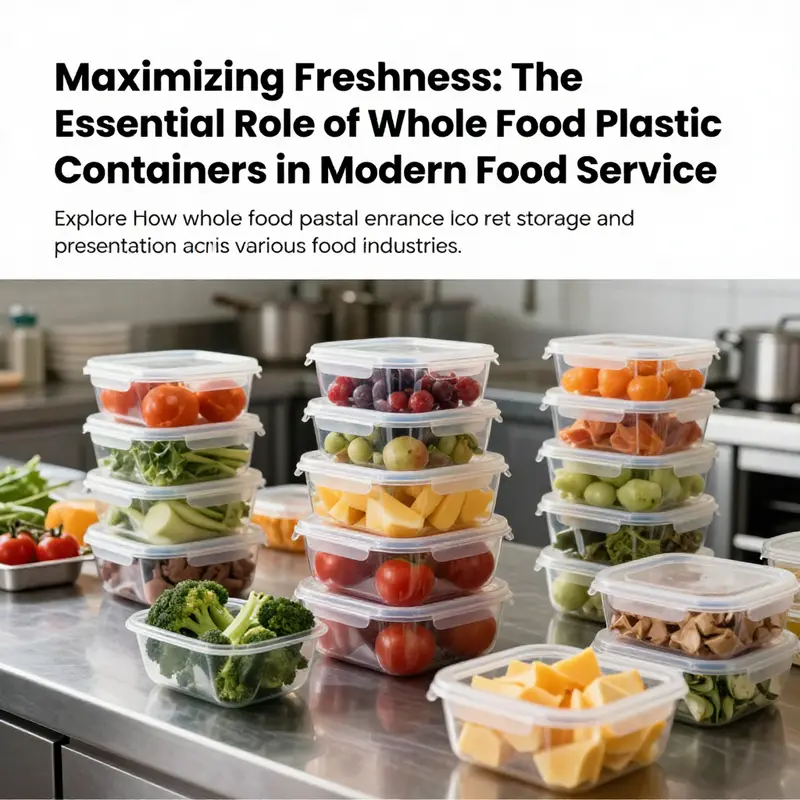
In the dynamic world of food service, whole food plastic containers have emerged as indispensable tools for restaurants, beverage chains, catering services, and event planners. These reliable storage options not only preserve the quality of food but also offer convenience and versatility for different operational needs. This article delves into the key specifications that make these containers ideal, their varied applications in food service, and current market trends influencing pricing and material choices. We aim to highlight how these containers can elevate food handling across diverse settings while addressing the unique challenges faced by industry professionals.
null
null
From Pantry to Transport: The Fluid Role of Whole Food Plastic Containers in Modern Meals
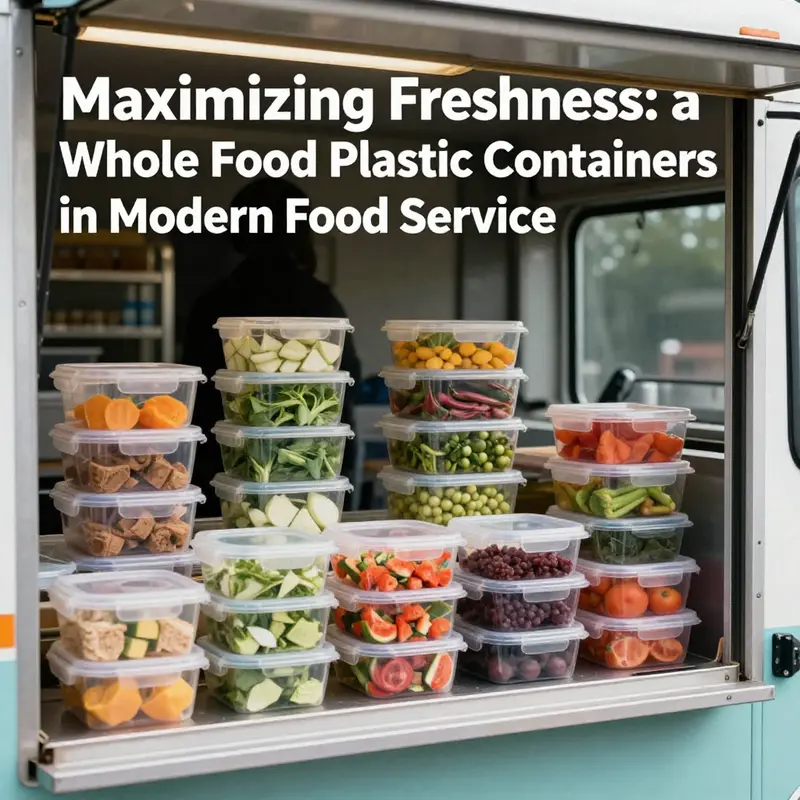
Whole foods arrive in a world that prizes both reliability and simplicity, and plastic containers have settled into a quiet, indispensable role in that ecosystem. They are chosen not for the drama of their design but for the dependable balance they strike among durability, weight, cost, and safety. In kitchens, offices, schools, catering hubs, and even in disaster-preparedness kits, these containers provide a practical framework for preserving freshness, organizing meals, and moving food from one place to another with minimal fuss. Their appeal rests on a set of material and structural choices that translate into everyday rituals: batch-prepping morning oats, portioning late-afternoon leftovers, packing salads for a desk-side lunch, or staging ready-to-heat meals for later in the week. The same containers that chill in a refrigerator and endure the cycle of a household dishwasher can also endure the rough-and-tumble journey from kitchen to curbside pickup, and then back again when a lunch break is in reach. All of this is underpinned by thoughtful engineering that makes the containers safe, reliable, and convenient for whole foods of many kinds.
At the core of this versatility are the resins used to form the containers. The most common workhorses are food-grade polypropylene and polyethylene. Both are known for their resistance to oils and acids, which makes them well suited to storing a wide range of whole foods without degrading or transferring unwanted flavors. Polypropylene, in particular, is prized for its heat resistance and strength. It holds up under microwave and dishwasher cycles, a practical feature for those who prep meals in advance and reheat portions directly in their storage containers. When manufacturers move toward health-conscious design, they often emphasize BPA-free formulations. The shift toward BPA-free plastics has become a baseline expectation in modern food packaging, lowering concerns about leaching while maintaining the performance needed for daily use. Consumers recognize that safety and convenience can travel hand in hand, and the market has responded accordingly with a broad spectrum of BPA-free options that still deliver on the core benefits of lightness, durability, and price.
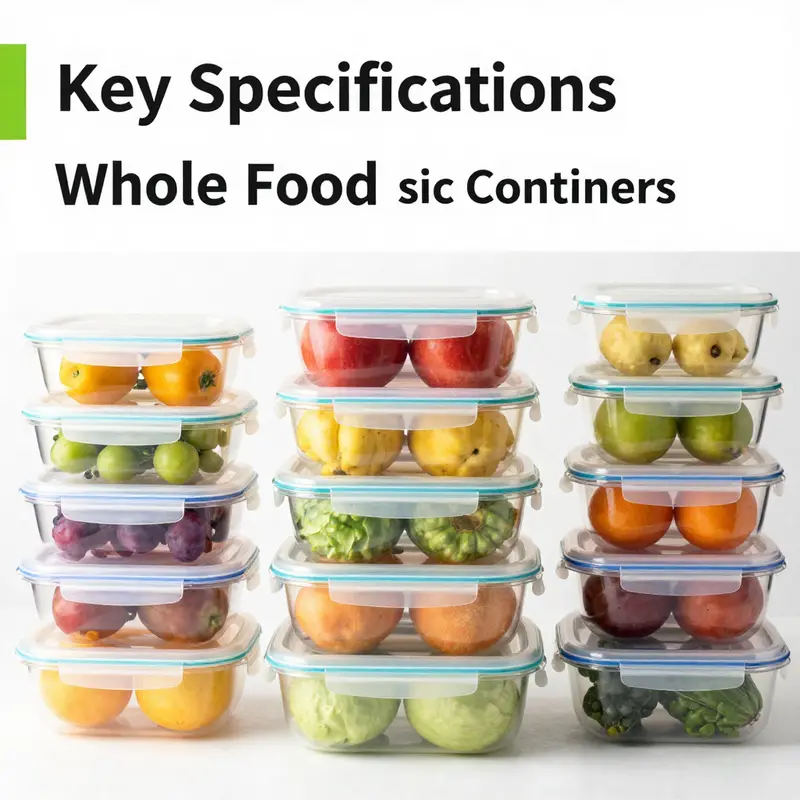
The shape and configuration of a container can define how wholly it supports a meal’s journey from preparation to consumption. Oval or round bases, with sizes that span from compact 500- to 1000-milliliter scales, are designed with kitchen workflows in mind. These sizes align with common meal portions and make it easy to segment a morning routine of yogurt, fruit, and granola, or to assemble a balanced lunch with rice, vegetables, and a protein. A secure, leak-resistant lid is more than a convenience—it is a safeguard for flavor integrity during transport and for refrigeration, where condensation and temperature fluctuations threaten texture and freshness. For restaurant leftovers or deli takeouts, clamshell designs with built-in hinges provide a robust seal, keeping delicate foods intact and preventing crushing during transit. The lid’s closure mechanism becomes a hinge that supports long-distance movement and repeated use, while the container wall resists deformation under cold storage conditions.
Specialized designs extend beyond simple storage to address the multifaceted needs of modern eating patterns. Divided containers enable a main course to stay separate from sides and desserts, preserving taste and presentation. This is particularly valuable for portion-controlled meals, where visual appeal and flavor separation matter as much as nutrition. Salad containers, often equipped with leak-proof lids and in some cases built-in dressing compartments, reflect a precise understanding of salad behavior: greens crave dryness and crispness, while dressings want controlled introduction. In this context, the container becomes a micro-ecosystem, where each component supports the other to maintain texture and freshness without compromise.
The conversation about versatility would be incomplete without acknowledging the broader systems into which these containers fit. A modular, reusable storage concept—rectangular and typically around a two-liter capacity—has become a practical blueprint for households seeking simplicity and sustainability. Such systems are particularly helpful for families managing irregular eating schedules or for households with children who have different meals at different times. Leftovers are kept accessible and predictable, encouraging reheating without the need to unpack or transfer to newer vessels. These modular sets reflect a philosophy of minimalism in design and resilience in use: a few sturdy pieces that can perform many roles instead of a larger collection of single-purpose items. This philosophy resonates with a growing demand for everyday items that combine practicality with longevity, reducing the need for disposable alternatives while supporting the routine of home meal preparation.
Beyond the kitchen, the utility of whole food plastic containers extends into emergency preparedness and travel. In emergencies, thin-walled, lightweight yet sturdy containers provide a dependable mode to store dry goods and perishables alike. Their durability becomes an asset when weather or disruption threatens access to fresh food, and their portability makes them suitable for on-the-go use during outdoor activities, picnics, or long trips. The ability to repackage and portion out meals into compact units helps minimize waste and preserve energy by ensuring portions are appropriate and easy to heat or savor on the move. Reusable storage bags, often made from PETE or reinforced polymers, complement these containers by offering additional space optimization and clear visibility for contents—another small but meaningful element in the broader story of practical food management.
The domestic and commercial landscapes converge most clearly in the everyday routines of meal prep, storage, and transport. For households, plastic containers simplify the discipline of planning meals ahead of time. They encourage a rhythm—one where ingredients are washed, chopped, portioned, and tucked away for future meals. The result is a cascade of small efficiencies: fewer trips to the store, less reliance on single-use packaging, and better control over what enters the refrigerator, which in turn reduces waste. For offices and schools, these containers support communal dining programs, snack stations, and grab-and-go opportunities that respect busy schedules and budget constraints. In catering and food-service operations, leak-resistant seals, dependable stacking, and compartmentalization translate into smoother logistics and a more reliable customer experience. Across these contexts, the core attributes—durability, safety, and convenience—are constant, while the configurations and features adapt to local needs.
Material choices, while central, are not the only contributing factor to the success of these containers. The practical environment where food is stored—refrigeration, freezing, microwaving, and dishwashing—imposes a set of constraints that designers must anticipate. For example, while some containers excel under heat and can be microwaved, others are optimized for cold storage, providing a crisp edge to salads and a firm barrier against moisture. In practice, many manufacturers offer a range of products that balance heat tolerance with structural integrity, allowing a kitchen to choose items that fit its specific workflow. The vision behind these options is not to force a single approach but to offer a toolkit that enables people to assemble a storage ecosystem aligned with their routines and values. That ecosystem supports nourishment by ensuring whole foods stay fresh, accessible, and attractive from the moment they are prepped to the moment they are enjoyed.
Yet no discussion of plastic containers would be complete without addressing the fulcrum of safety and transparency. The market’s response to health concerns has produced a spectrum of solutions—from BPA-free formulations to certified food-grade resins designed to minimize migration of substances into food. At the same time, the trade-offs inherent in plastic design—such as the balance between translucency and impact resistance—shape consumer expectations. Plastics that trade a little clarity for greater durability can still serve well in a kitchen where the goal is to see contents quickly and to rely on the container through repeated cycles. The transparency of a given plastic may be less than that of more rigid materials like polycarbonate, yet the safety profile, heat tolerance, and scuff resistance often compensate by delivering practical advantages in busy environments. In this balance, the container becomes a tool of everyday nutrition rather than a premium display item.
In the broader lifecycle, the plastic container’s story intersects with waste reduction and sustainability goals. While disposable options exist for convenience, the overarching trend leans toward reusability—designs that withstand repeated use, cleaning, and transport. The most successful models embrace modularity and durability, inviting families and institutions to lean into routine reuse. Even as some applications call for single-use solutions, the choice of materials and manufacturing practices continues to improve, with recycled content and responsible end-of-life handling becoming increasingly important. The result is a nuanced picture: plastic containers that support whole foods across multiple settings while gradually aligning with broader sustainability objectives. In this landscape, the value of a well-designed container rests not only in its day-to-day utility but also in its capacity to participate in a longer, more sustainable food system.
The narrative of versatility and application is not simply a catalog of features; it is a reflection of how modern eating patterns shape, and are shaped by, the tools we use to store and transport our meals. The containers’ sizes, shapes, and lid mechanisms are not arbitrary; they respond to the realities of planning, cooking, and sharing food. A family might pre-portion breakfasts for the workweek, a deli or bakery team might assemble grab-and-go meals with a stable shell that protects delicate fillings, and a school cafeteria might select compartments that help students balance meals while maintaining portions and freshness. In each scenario, the container acts as a steward of whole foods, preserving texture, flavor, and nutritional integrity through the vicissitudes of daily life. The result is a near-universal utility that seems simple on the surface but conceals a layer of thoughtful engineering, quality control, and material science aimed at supporting healthy, efficient, and enjoyable eating.
For those who wish to explore packaging options beyond plastic, or who are curious about how design choices influence environmental outcomes, a related avenue of thought emphasizes alternatives and trade-offs. A widely used disposable octagonal box, for instance, demonstrates how packaging can balance protection with recyclability in a food-service setting. This design illustrates how shape, lid closures, and material choices interact to safeguard freshness while still allowing for efficient disposal and recycling. Such explorations remind us that the story of whole food containers is not a straight line but a spectrum of solutions that adapt to values, budgets, and local infrastructure. As the field evolves, the core principle remains stable: the container should support the food it holds by preserving safety and flavor while fitting naturally into the routines that bring meals from preparation to enjoyment. This continuous refinement is what keeps the modern kitchen, catering service, and institutional dining programs resilient and responsive to the needs of a diverse and health-conscious population.
In closing, the chapter of whole food plastic containers is less about spectacle and more about dependable performance. It is about materials that safeguard what we eat, designs that simplify how we store and transport it, and systems that invite reuse over single-use convenience where possible. It is about understanding the trade-offs between durability, weight, transparency, heat tolerance, and safety, and choosing configurations that align with personal and professional routines. It is about recognizing that a simple clamshell or divided tray can carry far more than a meal; it can carry a promise of freshness, a commitment to reducing waste, and a practical pathway toward more organized, nourishing daily lives. The containers we use thus become a quiet but meaningful ally in the ongoing practice of making good food choices simpler, tidier, and more accessible to everyone, wherever meals begin and wherever they end.
External resource: https://www.ikea.com/sg/en/p/365-food-container-rectangular-plastic-20-litres-90478389/
Internal reference for further design-oriented packaging context: disposable octagonal box for restaurant food packaging.
From Shelf to Spoon: The Market Pulse, Pricing Dynamics, and Practical Realities of Whole-Food Plastic Containers
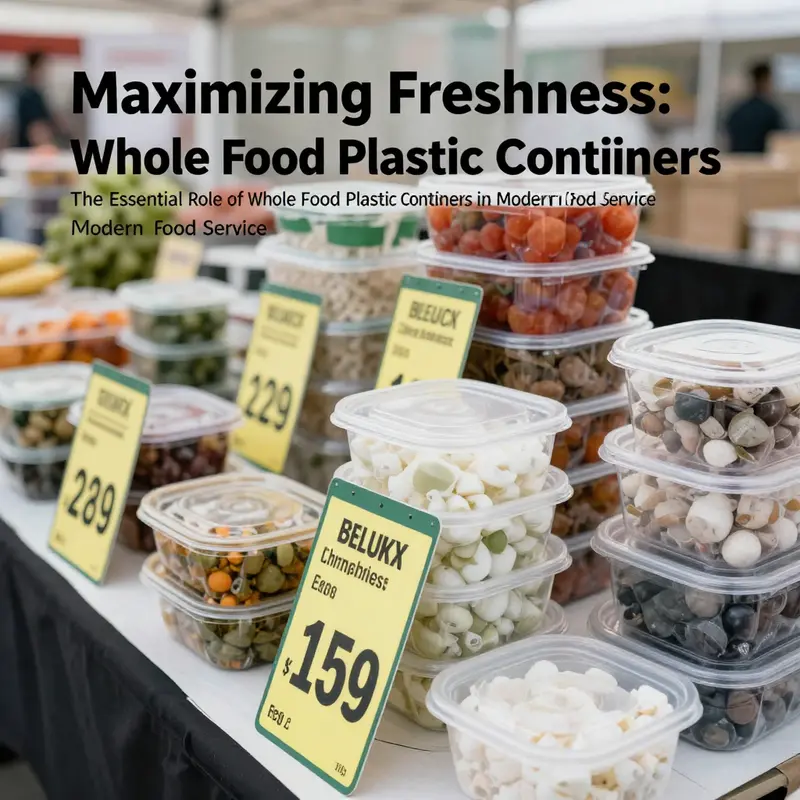
The market for plastic containers that cradle whole foods sits at a complex intersection of convenience, safety, and scale. As shoppers, chefs, and retailers seek reliable ways to store, transport, and present fresh ingredients, plastic packaging has earned a central role in the logistics of modern food operations. The materials most commonly used—food-grade polypropylene and polyethylene—combine durability with a relatively low cost, making them the default choice for cafeterias, grocery aisles, and take-out counters alike. These polymers bring a suite of practical advantages: they resist the oils and acids found in many whole foods, they hold up under temperature variations, and they lend themselves to a spectrum of formats—from simple lidded boxes to multi-compartment lunch systems. In many markets, the emphasis on safety has spurred a shift toward BPA-free formulations, an evolution driven by consumer health concerns and stricter regulatory expectations around contact materials. The result is a packaging ecosystem that is not only functional but increasingly attuned to consumer expectations for safety and reliability while still maintaining the efficiency demanded by large-volume food flows.
At the core of this ecosystem is the recognition that whole foods, whether they are chopped vegetables, ready-to-eat meals, or ready-to-assemble ingredients, require more than a container; they require a dependable system. Plastic containers meet this need through a combination of heat tolerance, mechanical strength, and seal integrity. For items that might be warmed before or during service, polypropylene’s heat resistance is a prized attribute. When the container needs to be durable enough for cold-chain transport without cracking, or to withstand the rigors of stacking in a busy kitchen, the resistant properties of these plastics come into play. And when the focus shifts to cost efficiency—whether for consumer households, schools, or large caterers—the arithmetic of open stock versus bulk packaging becomes a deciding factor. These practical considerations help explain why PP and PE remain widely adopted across wholesale and retail channels and why their role in whole-food storage and distribution shows little sign of diminishing.
Yet the story is not merely about materials and mechanics. It is also about how markets price the convenience these containers provide. The path from raw material to the checkout counter passes through a mosaic of suppliers, manufacturers, and distributors, each adding a layer of value that compounds into the final price that buyers encounter. For bulk buyers—catering outfits, institutions, and large grocery supply operations—the economics of scale can unlock meaningful savings. Industry observations indicate price differentials of roughly 20 to 40 percent between bulk, wholesale procurement and consumer retail pricing. In practice, this means a buyer who commits to large-volume orders can secure substantially lower per-unit costs than those paid by everyday consumers purchasing single units. The mechanics behind these savings are multifaceted. They include lower per-unit production costs achieved through high-volume manufacturing, more favorable logistics terms when shipping in bulk, and extended credit terms that help organizations manage day-to-day cash flow. The economics are not purely unit-based; they also hinge on the redundancy and standardization of product lines—when a buyer consolidates packaging formats across multiple SKUs, the supply chain can operate with fewer line items, reducing handling costs and speeding replenishment.
The market size itself reflects the broad utility of plastic containers in the whole-food sector. The global plastic container market, as reported by independent industry analyses, surpassed the high-water mark of $113.92 billion in 2025 and is projected to climb to about $163.62 billion by 2033. That growth, translating to a compound annual growth rate (CAGR) of roughly 4.6 percent from 2026 through 2033, underscores a steady demand impulse across retail, food-service establishments, and e-commerce. This trajectory is shaped by the ongoing need for flexible storage solutions that are easy to transport and reuse in varied contexts. It is also influenced by the rise of quick-service formats and meal-prep culture, where predictable performance and cost predictability are paramount. The combined effect of demand for convenient packaging and the capacity of plastic materials to meet a range of functional demands helps explain the resilience and expansion of this market, even as consumers and regulators continue to scrutinize environmental footprints and life-cycle considerations.
Against this backdrop, the pricing narrative unfolds along several vectors. For buyers whose procurement strategy emphasizes bulk volumes, the opportunity to realize substantial savings is a central incentive. Wholesale suppliers can offer price points that are significantly more favorable than consumer-level prices, with the potential for discounts tied to purchase quantity, contract terms, and long-term supply commitments. In practice, this translates to per-piece costs that can be markedly lower when orders reach hundreds of thousands or millions of units, compared with the cost of smaller batches purchased in retail settings. It is common for basic storage solutions intended for general-purpose use to be deployed widely across hospitals, schools, office cafeterias, and industrial commissaries, where the balance of performance and price is critical. In contrast, more specialized configurations—such as multi-compartment boxes, steamable options, or designs with integrated ice packs—often command premium pricing that reflects additional functionality and manufacturing complexity.
From the consumer perspective, the price spectrum in retail channels is broad. Basic storage bins and simple containers can be found for less than ten dollars per unit, a price point that aligns with household needs and occasional use. On the higher end, complete systems designed for large-scale food service operations, industrial kitchens, or catering fleets can reach into the thousands or tens of thousands of dollars, depending on size, material, and configuration. This range mirrors the diverse applications of plastic packaging in the whole-food space—from single-serving takeout containers to high-capacity, multi-compartment meal-prep solutions used in schools, corporate cafeterias, and event catering. Even within single-channel ecosystems, the pricing architecture is influenced by seasonal promotions, stock availability, and supplier incentives tied to longer-term partnerships. The ebb and flow of these pricing dynamics create a landscape where procurement strategy matters as much as the packaging specification itself.
For many buyers, the design and performance characteristics that accompany these containers weigh heavily in the decision to purchase. A container’s compatibility with microwaves and dishwashers can mean the difference between a one-off use and a reusable, long-term investment. The ability to withstand repeated heat cycles without warping or losing seal integrity is not merely a feature—it is a determinant of total cost of ownership. The persistence of such features in the market reflects a consumer and operator preference for products capable of delivering repeated service life. However, this durability must be balanced against safety and regulatory expectations. It is here that the BPA-free movement has had a tangible impact, guiding manufacturers toward safer formulations and reassuring buyers that the containers can meet health standards for a wide array of food-contact applications. In many markets, this alignment of safety, durability, and cost efficiency has helped plastics retain their authoritative position in the whole-food packaging stack, even as alternative materials and sustainability narratives gain momentum.
Another dimension shaping pricing and market dynamics is the broader retail ecosystem in which these containers circulate. In major retail channels, including large grocery chains and online marketplaces, a swath of options exists for consumers seeking quantity discounts or seasonal deals. The presence of promotions and bundles can dramatically tilt the effective price for end users, especially when paired with complementary products like lids, dividers, or ice packs designed to preserve freshness. Conversely, the rise of eco-conscious alternatives—such as biodegradable or compostable options—tends to carry a premium, reflecting the higher costs associated with sustainability-focused materials and processes. For buyers who are not bound to plastics alone, these premium options are increasingly considered as part of a broader strategy to align packaging choices with environmental goals and consumer expectations for responsible stewardship. This trend, while exerting upward pressure on some price points, also expands the vocabulary of packaging options available to the market, inviting a broader conversation about how best to balance cost, performance, and environmental impact.
The economics of whole-food plastic containers are inseparable from the realities of supply chains and procurement practices. In a world where demand for freshness, convenience, and safety converges with the realities of production lead times and shipping costs, buyers must navigate a landscape that rewards careful planning and supplier collaboration. Lead times, minimum order quantities, and the logistics of warehousing all influence the total cost of ownership. A well-structured procurement program can leverage forecasting to reduce obsolescence risk and minimize stockouts, while also enabling buyers to secure favorable terms on container families that share standard dimensions and compatibility features. In such a framework, the choice of container is not simply about one-off cost but about the cumulative value delivered across the lifecycle—from purchase and storage to transport, service, and end-of-life considerations. While the market continues to evolve with innovations in barrier properties, resealability, and printing capabilities, the core appeal of these plastic containers remains their predictable performance at a scale that few other packaging formats can match for whole foods.
As with any packaging choice, there is a natural interest in comparing plastics with alternatives. For operations that seek to reduce reliance on plastics, or to diversify the packaging mix, there are pockets of opportunity in paper-based and other fiber-based options that offer environmental advantages and sometimes comparable functional performance for specific use cases. In doing so, buyers often weigh not only the per-unit cost but the total environmental footprint, disposal considerations, and the compatibility of the alternative with existing handling and meal-prep workflows. The ongoing dialogue around sustainability is shaping product development and pricing in ways that drivers of convenience and cost alone could not anticipate. It is precisely this tension—between enduring practicality and evolving environmental expectations—that keeps the market dynamic and responsive to both consumer sentiment and institutional requirements.
To illustrate a practical nuance of this pricing landscape, consider the way large-volume buyers negotiate with suppliers. A typical wholesale agreement might include tiered pricing tied to annual purchase commitments, with incentives for design commonality across multiple container families to simplify production, packaging, and inventory management. A dedicated supplier relationship can also yield favorable terms on customization, which is particularly relevant for institutions that require standardized dimensions to fit existing storage and transport infrastructures. In short, the business of plastic containers for whole foods is not merely about the container itself; it is about the ecosystem that surrounds it—the suppliers, the logistics, and the strategic choices that determine how smoothly the packaging supports the food operation from end to end.
With the market and pricing dynamics in view, it is instructive to acknowledge the broader context in which these products operate. The ongoing expansion of e-commerce, the increasing demand for ready-to-serve meals, and the need for reliable cold and hot chain performance all reinforce the centrality of plastic containers in the whole-food packaging playbook. At the same time, customers are also scrutinizing lifecycle considerations, recyclability, and the potential for reuse in commercial settings. This convergence of practical performance and sustainability concerns is prompting packaging developers to innovate within the framework of established materials while exploring enhancements in design for recyclability and extended lifecycle use. Even as some consumer segments gravitate toward greener options, plastics remain deeply embedded in the infrastructure of modern food distribution, and the pricing frameworks described here reflect the discipline and scale that such a system requires.
For readers curious about alternatives that sit alongside the plastic option, a practical example from the broader packaging world can illustrate how different materials meet different needs. If you are exploring eco-friendly takes on take-away and food-service ware, you may encounter a range of fiber-based solutions that are designed to mimic the convenience and versatility of plastic while offering environmental advantages in disposal. To explore a concrete example within this space, you can review this related product page disposable kraft paper bowl take-away kraft paper salad bowl with pet lid. It provides a sense of how paper-based packaging is positioned to complement—or compete with—plastic containers in contexts where the aim is to maximize sustainability alongside functional reliability. While the two materials serve different demand curves, the juxtaposition is instructive for understanding how buyers choose among options in pursuit of the right balance of cost, performance, and environmental considerations.
Looking ahead, the market for plastic containers designed for whole foods will likely continue to evolve along three axes: performance enhancements that expand heat tolerance and seal reliability, cost optimization driven by scale and process efficiencies, and sustainability-driven innovations that reframe how plastic packaging fits into broader environmental goals. The ongoing maturation of standards around food-contact safety, the push toward BPA-free materials, and the development of more sophisticated recycling streams will shape both the product landscape and the pricing ecosystem. In practical terms, buyers will increasingly weigh total cost of ownership—factoring in storage efficiency, transportability, durability, reusability, and end-of-life options—when making procurement decisions. The result is a market that remains robust and adaptable, able to support myriad food preparation and distribution models while navigating the sensible caution that accompanies any sustainable growth strategy. For those managing large-scale operations, the math remains straightforward: bulk purchases yield unit-cost advantages, safety and performance keep operations running smoothly, and an expanding menu of formats and configurations offers the flexibility needed to navigate changing consumer preferences and regulatory expectations.
In sum, the chapter of market trends and pricing for whole-food plastic containers reflects a disciplined balance between reliability and cost, between convenience and safety, and between scale and sustainability. It is a landscape where polypropylene and polyethylene provide predictable performance, where bulk purchasing unlocks meaningful savings, and where retailers and food-service operators continually recalibrate their packaging choices in response to consumer demand, supply-chain realities, and evolving environmental considerations. The story is not static; it is a living dialogue among manufacturers, buyers, and regulators, each seeking packaging that can protect freshness, support safe handling, and do so at a price that makes sense for daily operations. As the market marches forward, the interplay between price signals and performance promises to shape not just what sits on shelves, but what ends up on plates—and how responsibly it gets there.
External resource for broader market context: https://www.mordorintelligence.com/industry-reports/plastic-container-market
Final thoughts
Whole food plastic containers offer a unique solution to the storage and presentation needs of food service professionals. Their key specifications ensure food safety and freshness while their versatility makes them suitable across various culinary applications. Recognizing market trends and pricing strategies enables food businesses to make informed decisions, enhancing their operations. Adopting these containers is not only a practical approach but also a step towards sustaining high-quality food service, catering, and event planning.