
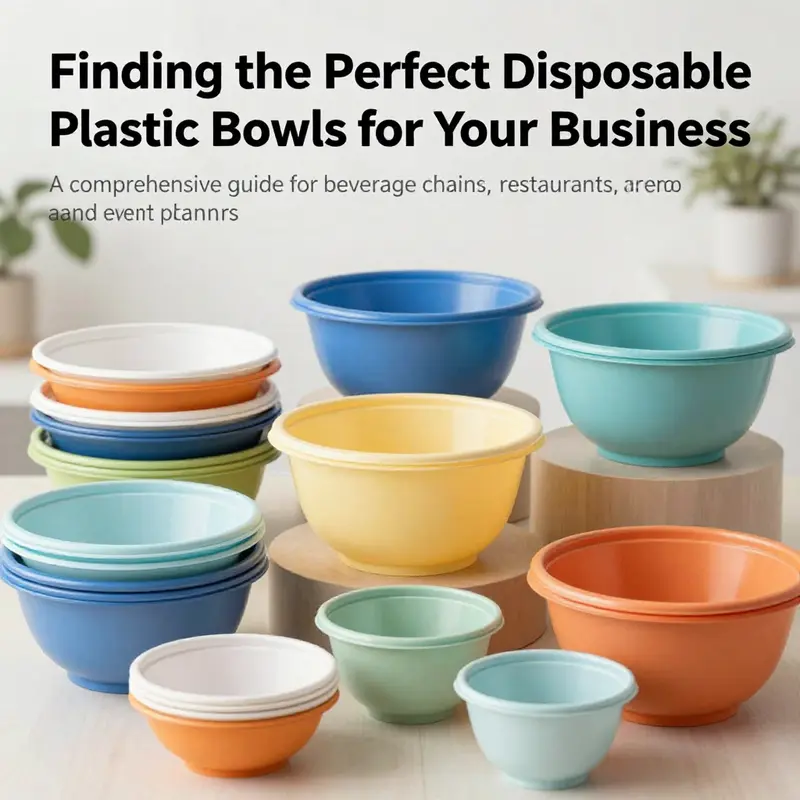
In today’s food and beverage industry, the demand for disposable plastic bowls is surging, especially among bubble tea shops, restaurants, and catering services. With myriad options available, understanding where to buy quality disposable plastic bowls is essential for ensuring that your business meets both customer needs and operational efficiency. This guide explores direct manufacturers offering bulk options, online marketplaces for various styles, local retail solutions for immediate requirements, and economic considerations that help businesses make informed purchasing decisions. Each chapter aims to provide a detailed perspective on how to source the right products while highlighting the importance of quality, design, and pricing strategies for your specific needs.
From Factory Floors to Front-of-House: A Practical Vision for Sourcing Disposable Plastic Bowls
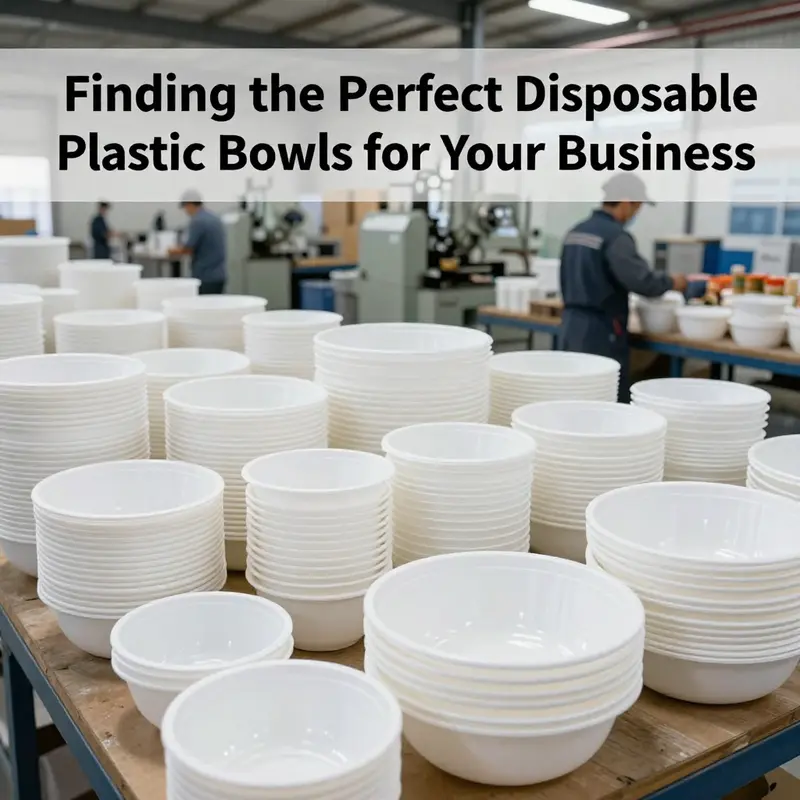
Sourcing disposable plastic bowls is more about strategy than a single order. The path from concept to container weaves through manufacturers, online marketplaces, and local retailers, with attention to quality, price, lead times, and branding. The chapter begins with producers who serve high-volume needs, emphasizing scale, reliability, and customization options such as logo printing and size tolerances. Direct relationships with manufacturers can shorten procurement cycles and improve cost predictability, while bulk lines from established factories offer stability and a range of configurations. Material choice, particularly PP, matters for heat tolerance and durability, and there is a growing emphasis on recyclability and sustainable formulations.\n\nBeyond factories, online B2B platforms aggregate suppliers and present clear specifications, MOQs, and digital communication channels that speed up inquiries and samples. Local retailers fill urgent or small-scale needs, offering speed at a premium price but valuable for last-minute events. A balanced sourcing strategy typically blends direct-manufacturer supply for core items with marketplaces for flexibility and experimentation, and uses local channels to cover peak or emergency demand.\n\nKey decision factors include material and heat tolerance (PP remains common), size range (500ml to 1000ml and beyond), branding capabilities (silkscreen or flexo printing in multiple colors), MOQs and price dynamics, and the importance of documentation and certifications for safety and traceability. A practical approach is to define clear requirements up front and request formal quotes that specify lead times, minimums, and print capabilities. When speed is essential or testing is planned, pilot orders on online marketplaces can validate performance before locking in larger commitments.\n\nIn practice, a buyer might source 500ml and 750ml bowls with branding, confirm six-color print capability, request samples to evaluate thickness and edge finish, and negotiate a unit price aligned with forecasted volumes. The result is a dependable, branded container that supports service delivery while aligning with sustainability goals and brand standards.\n\nFinally, the broader ecosystem—global manufacturing hubs, logistics networks, and supplier certifications—underpins a resilient sourcing strategy. The aim is to maintain steady supply, manage risk, and keep the focus on delivering a positive guest experience through reliable packaging that reflects the brand and supports efficient operations. For further context, readers can consult supplier directories and market reports that summarize current pricing and capacity trends.
Finding Disposable Plastic Bowls Online: Choosing Marketplaces That Match Your Need
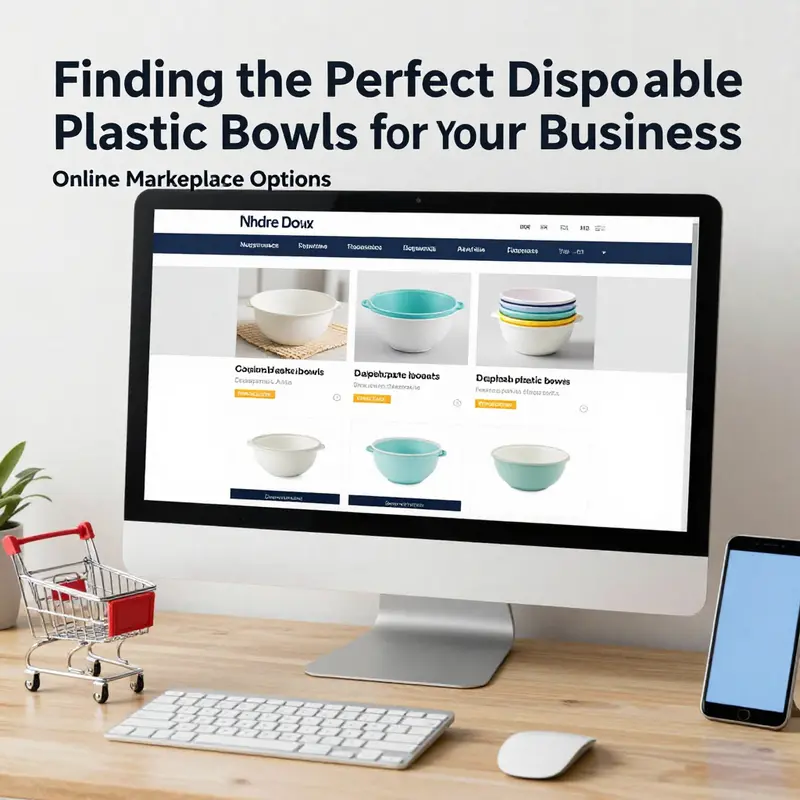
When you need disposable plastic bowls, online marketplaces offer the widest selection and the most flexible buying options. Whether you are ordering a few dozen for a family event or tens of thousands for a food-service operation, the right marketplace simplifies sourcing, pricing, and shipping. This chapter walks through the online landscape in a single, coherent narrative. It explains how to match platform strengths to your needs, what to watch for when evaluating sellers, and how to balance cost, turnaround, and product specifications.
Online marketplaces fall into three practical categories: consumer marketplaces for small-quantity needs, regional e-commerce platforms with detailed local pricing and logistics, and global B2B exchanges for wholesale and custom orders. Each category serves a different buyer profile. Knowing which one aligns with your priorities saves time and money.
Consumer marketplaces excel at convenience. They list single packs and mixed assortments that suit parties, temporary pop-ups, or immediate household use. Shipping is often fast and returns are straightforward. These platforms can be ideal when you need a specific shape or color right away and you do not require branding or large volumes. Search filters let you narrow results by material thickness, diameter, or whether a lid is included. Look for listings that clearly state food-safe certifications and offer multiple photos. Check seller ratings and read recent reviews to confirm the actual product matches the images. Free shipping promotions sometimes conceal long transit times, so confirm delivery windows before committing to a purchase intended for a fixed event.
Regional e-commerce platforms are particularly useful when sourcing within a single country. They provide detailed price lists and market quotes for common sizes and fast-food compatible bowls. These platforms often integrate well with local carriers, which reduces delivery surprises. For buyers located near production hubs, regional listings can reveal competitive stock levels and realistic lead times. When reviewing pages, pay attention to unit pricing for different quantity tiers. Many vendors publish per-unit costs that drop sharply above certain thresholds. This information helps you decide whether a bulk buy will truly lower your average cost after considering storage and handling.
Global B2B marketplaces are the choice for wholesale purchases and custom production. They connect buyers to manufacturers and trading houses that can supply large runs. On these platforms you can request samples, negotiate minimum order quantities, and arrange for logo printing or specific size adjustments. Communication tends to be more detailed and contract-oriented. Use these marketplaces when you need consistency across thousands of units or require product customization. Most reputable suppliers will provide production capacity figures, compliance documentation, and photographs of previous work. Verify lead times and factory location. A supplier’s ability to provide samples and accept smaller trial orders helps mitigate quality risk.
Selecting the right marketplace is the first step. Next comes assessing sellers. Look beyond the lowest quoted price. Examine the full cost picture: unit price, shipping, duties, and any handling fees. For cross-border orders, request a shipping estimate to your destination. Ask whether the quoted price includes packaging suitable for long transit. Some sellers ship large stacks of bowls without adequate protection, which can cause warping or scratches on clear plastic surfaces. If the bowls will be used for hot foods, confirm temperature tolerance and any food-contact certifications.
Sample requests are essential when ordering at volume. A single sample order reveals actual weight, flexibility, clarity, and the bowl’s resistance to heat and oils. Samples also show printing quality when you plan on adding a logo. Many manufacturers accept payment for samples and deduct that fee from the final invoice when you place a larger order. Use samples to test compatibility with lids, sealing equipment, or automated filling lines. Ask for dimensional tolerances for molded items. Small differences in wall thickness or rim diameter can affect how bowls stack and seal, which matters for automated packaging.
Payment and protection differ across marketplaces. Consumer platforms typically offer buyer protection and easy returns. Regional platforms may provide escrow or local payment services to reduce risk. B2B exchanges often use trade assurance, letters of credit, or direct bank transfers. When a large order is involved, consider splitting payment milestones: a deposit to begin production, an inspection hold until pre-shipment photos or a third-party inspection are completed, and final payment on receipt of shipping documents. Insist on a written specification sheet attached to any invoice. That documentation should include material type, wall thickness, dimensions, color, and any printing details.
Shipping strategy matters. For small orders, express carriers are convenient and fast. For bulk shipments, sea freight is commonly the most economical option. Factor in lead time for container consolidation, port handling, and inland transit. If your supplier is close to major manufacturing clusters, they might offer consolidated shipping to a nearby port for lower freight costs. Clarify who is responsible for customs clearance and local duties. Delivered duty paid (DDP) terms simplify import but increase the seller’s price. Delivered at place (DAP) or FOB terms require you to arrange customs clearance.
Sustainability and material choices can influence platform selection. Some marketplaces list alternative eco-friendly options, such as compostable or partially plant-based bowls. If you want to compare disposable plastic bowls with recyclable or compostable paper alternatives, use a product page that highlights those options. That comparison helps you weigh per-unit cost against end-of-life impacts and local recycling infrastructure. If you choose recyclable plastic, confirm the resin type and local recycling compatibility.
Customer service and dispute resolution vary with platform type. For single orders from consumer marketplaces, escalating a claim is usually handled through the platform’s dispute center. Regional e-commerce sites often offer local language support and can facilitate refunds or replacements. B2B platforms rely on negotiated contracts and sometimes third-party inspections. When placing significant orders, consider hiring a sourcing agent or using a third-party inspection service. These professionals can verify factory claims, inspect pre-shipment samples, and confirm packaging standards.
Sourcing timelines differ. Small consumer purchases can arrive within days. Regional platform deliveries can take days to weeks depending on stock and shipping. Custom or wholesale orders take the longest. Custom tooling, logo printing, or nonstandard sizes require design approvals, sample production, and production runs. Add buffer time for quality checks and shipping. Always plan orders with a margin to accommodate inspection or shipment delays.
Pricing transparency is a key advantage of online marketplaces. Many listings clearly show unit prices across quantity brackets. Use those price tiers to calculate storage costs and reorder frequency. For ongoing needs, establishing a direct relationship with a manufacturer discovered on a global marketplace may lower costs over time. Manufacturers often offer better pricing for repeat orders and can maintain consistent product specs. When switching from a retail aggregator to a direct supplier, ensure the new vendor can meet all compliance and certification needs.
Finally, compare the marketplace’s ecosystem of complementary products. If you plan to buy lids, utensils, or branded packaging along with bowls, a platform that offers bundled sourcing saves time. Some marketplaces list compatible lids and sealing supplies alongside bowls, making it simple to assemble a full order. Others specialize in packaging materials and offer better pricing when you order multiple product categories.
If you want to explore alternatives to disposable plastic bowls, a curated offering of eco-friendly paper bowls may help you evaluate trade-offs. For a representative example of a paper bowl product with lid options, see this disposable kraft paper bowl with lid. Such products demonstrate how materials and designs differ from standard plastic bowls, and they highlight options for biodegradable or recyclable choices.
For wholesale and custom production inquiries, consult a global B2B marketplace to connect with multiple manufacturers. Use that platform to request bulk quotes, negotiate minimum order quantities, and arrange samples. When you are ready to place a custom order, include a clear specification sheet and agree on inspection milestones to protect quality. For a direct starting point to compare manufacturers and request samples, visit a prominent B2B exchange.
This practical view of online marketplaces helps you pick the right channel. Match the platform to your required quantities and customization needs. Use samples and clear specifications to reduce risk. Factor in shipping and protection costs. And consider alternative materials if sustainability matters. The right marketplace makes sourcing disposable bowls reliable and cost-effective, whether you order a pack for a single event or set up recurring deliveries for a commercial kitchen.
External source: https://www.alibaba.com
From Aisle to Cart: Navigating Local Retailers for Disposable Plastic Bowls
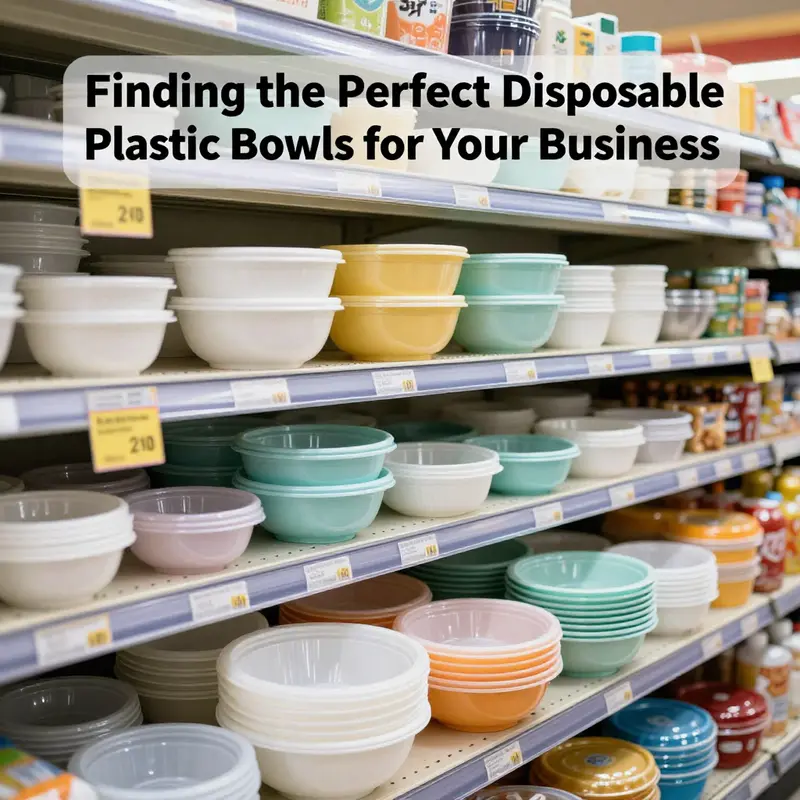
When a gathering is on the calendar or a café service window needs a steady rhythm of take-out orders, the need for disposable plastic bowls can feel urgent. Yet the path to reliable, cost-effective buys is not a straight line from catalog to checkout. In many markets, the closest, fastest route to a dependable supply is through local retailers—stores you can walk into, inspect, and stock up from without waiting for a shipment to arrive. The practical logic is clear: immediate availability can mean fewer surprises, fewer delays, and more control over the exact sizes and quantities you’ll use in a single week. The broader context, though, includes a spectrum of options beyond the local aisle. A successful procurement approach blends on-hand convenience with the possibility of bulk savings from manufacturers or online marketplaces that ship quickly to your region. The result is a balanced, resilient supply strategy that reduces downtime for kitchens, events, and service operations alike.
Local retailers operate as the backbone of many everyday operations because they anchor the supply chain in your own neighborhood. They give you tangible assurance: you can see the product, feel the thickness of the plastic, confirm the color and finish, and check whether the bowls stack neatly, nestle well with lids, or resist leakage when they’re filled with sauces or liquids. The practical benefits go beyond the moment of purchase. When you buy in person, you can assess the packaging quality, confirm that the bowls meet your size specifications, and quickly swap items if any box arrives damaged. For venues with unpredictable demand—pop-up events, seasonal menus, or last-minute catering—the ability to stock a few dozen, or a few hundred, units on the same day is priceless.
The landscape of local retailers is surprisingly varied, even within a single city. You might begin at the traditional grocery aisle, where disposable tableware sits near party supplies and home essentials. Here, the bowls are typically sold in multi-packs that are sized for common service needs—small 300 ml options for desserts or side portions, mid-range 500 ml bowls for soups or salads, and larger 750 ml or 900 ml variants for hearty servings or take-out meals. The prices per unit tend to be higher than bulk wholesale, but the trade-off is immediate availability and the flexibility to adjust orders on the fly. For food-service businesses with ongoing, recurring demand, this flexibility translates into less capital tied up in inventory and fewer logistical headaches when demand spikes suddenly.
Beyond supermarkets, discount chains and warehouse clubs often carry an even broader selection of disposable bowls in bulk-friendly packaging. They tend to offer better unit pricing compared with traditional grocery stores, particularly when bowls are purchased in larger bundles. The risk, however, is that these larger packs can lure you into overstocking. In busy service periods, overstock doesn’t just occupy shelf space; it can tie up cash, particularly if storage conditions are not ideal or if the bowls have a shorter shelf life compared with other disposables you routinely reuse or rotate. A practical approach is to estimate your weekly headcount and meal patterns, then compare the weekly run-rate needs against the pack sizes available in-store. The aim is to match the pace of consumption with the pace of replenishment, avoiding both stockouts and waste.
Local hardware and home-improvement stores, while not the first thought for disposable bowls, often stock sturdy, leak-resistant options intended for casual events, picnics, or temporary food stations. These retailers can be a hidden gem when you need bowls that can withstand a bit more rough handling during transport or at outdoor venues. The bowls sold here frequently emphasize sturdier walls or reinforced rims, features that translate to a more robust user experience for customers who expect reliability even when a transport route is bumpy. It’s worth scanning these sections with a practical lens: does the bowl hold up to hot liquids? Do lids or secure seals come as a compatible accessory, if needed? Can you confidently reuse the container for cold, not-hot, items in a pinch? These questions often separate a dependable, premium-feel product from a bargain-bin concern that may crack under pressure.
If the event you’re planning has a strong visual or branding component, you’ll eventually want to consider customization options. Local retailers rarely offer printing or logo customization on disposable plastic bowls in the way that direct manufacturers or B2B platforms do. That distinction matters for restaurants, cafés, or caterers with a signature look or a consistent theme across events. Local stores typically focus on standard, unbranded products sold in consumer-size packaging. However, you can leverage local stock to test sizes, evaluate thickness, and compare lid compatibility before committing to a larger, customized order from a manufacturer. Once you are confident about form and function, you can move into a more strategic procurement cycle with a supplier who can meet branding, color, or size specifications at scale.
In practice, making the most of local retailers requires a simple, disciplined approach. Start with a clear spec sheet in your notebook or on your tablet: list the maximum serving size you anticipate, the preferred bowl shape and finish, whether you need transparent, white, or colored bowls, and the extent to which moisture or heat resistance will matter for your use-case. Then map out your local options. Play the store visit like a mini-audit. Check the packaging for any signs of damage, verify the lid design and seal, and test several bowls by filling them with a small amount of liquid to observe leakage or deformation. While you’re at it, note the availability of compatible lids, if your operation benefits from a sealed take-out option. The more you test, the clearer your baseline becomes for what constitutes acceptable quality in your market.
As you browse, a few practical heuristics help you balance quality and cost without getting bogged down in endless comparisons. First, the sturdiness of the plastic matters. In a local setting, you often want a bowl thick enough to resist warping when full, yet light enough to be convenient for customers who pick up orders. Second, the rim design should support secure-lid compatibility if you ever require a to-go solution. A loose-fit lid creates spill risk and a poor customer experience. Third, consider the thermal performance of the bowls—hot soups demand heat resistance and minimal sweating on the exterior, which can affect transportation and handling. Fourth, look for packaging that aligns with your sustainability requirements. Some bowls are made from recyclable plastics and are accepted by local recycling programs, while others may not be as easily recycled depending on the additives or colorants used. These considerations may influence both the short-term choice and long-term procurement strategy, especially if your business signals sustainability as part of its brand promise.
Another layer to this is the evolving landscape of online options that still deliver in a local context. Some online marketplaces allow you to filter results by region, showing suppliers who can ship quickly to your locale. This approach bridges the gap between immediacy and the broader range you might need for different events. It’s a valuable compromise when your regular brick-and-mortar options don’t stock the exact size or finish you require. The same logic applies to subscription-friendly vendors who offer recurring deliveries or automatic reorders. If your operation runs on a weekly cadence, you can set up a routine that ensures you never run out of essential disposables while avoiding a surplus that ties up capital. The key is to treat these online avenues as flexible extensions of your in-store routines rather than a wholesale replacement for local contacts.
Price is, of course, a central factor in any purchasing decision. Local retailers often price to the consumer, which means higher per-unit costs than bulk wholesalers. Yet the hidden value lies in the absence of shipping fees, the immediate gratification of same-day pickup, and the ability to quickly rectify a misorder. For caterers or cafes that run high-volume, high-turnover service, a practical rule of thumb is to compare the weekly consumption rate against the in-store pack sizes. If you can reliably justify a weekly purchase that aligns with a specific pack, the per-unit cost can still be competitive, particularly when you factor in the cost of fuel and time saved by avoiding delivery waits. Conversely, if you anticipate growth or seasonal spikes, you will likely be better served by a manufacturer or a wholesale channel that can offer you favorable MOQs, bulk pricing, and flexible terms for long-term contracts.
What about the decision to mix suppliers? Many operators adopt a hybrid model: rely on local retailers for steady, day-to-day needs and use online or wholesale channels when demand surges or when a particular size is temporarily out of stock in the neighborhood. This approach reduces risk: if one channel experiences a disruption, another is ready to fill the gap. The key is to maintain clear ordering thresholds and reorder points so that the reliance on a single source does not become a single point of failure. In this mix, you might reserve local retailers for your most common sizes and then tap online marketplaces or manufacturers for niche sizes, specialty finishes, or branding initiatives. The result is a resilient, responsive supply chain that can adapt to changing menus, seasonal events, and fluctuations in customer demand.
To illustrate the practical reality of shopping locally, imagine you’re preparing for a week of outdoor events where you will serve a mix of hot soups, cold salads, and desserts. You begin at a neighborhood grocery store and quickly verify that they carry a 500 ml round bowl that suits your hot-and-hold needs. You examine the thickness—enough to stand up to transport, not so thick that the bowls become unnecessarily bulky. You also check the lid compatibility. The store has a matching lid that snaps on with a reassuring seal, reducing the risk of spills during transport. For a larger event in the same week, you head to a warehouse club where bulk packaging is available. The purchase price per unit drops, and you buy a pack that fits your predicted headcount, carefully tallying the anticipated weekly usage. You balance that with a small order from an online marketplace to test a 750 ml option that could handle heartier portions for an upcoming weekend, checking the delivery ETA to ensure it aligns with your schedule. In this scenario, a thoughtful blend of local and online sources allows you to control costs while protecting service quality.
Sustainability concerns today also influence how local retailers are perceived and chosen. Some operators prefer bowls made from recyclable materials or those designed to be more easily recycled within municipal programs. Others pursue a mid-range compromise with recyclable plastics that offer adequate performance at a reasonable price. In communities that emphasize compostable or biodegradable options, a growing subset of disposables is gaining attention, though these alternatives often require different handling and disposal streams. This means a buyer in a local store must be aware of local recycling or composting guidelines to ensure the end-to-end lifecycle of the product aligns with environmental goals and regulatory requirements. The familiarity of the local retailer ecosystem—staff who can answer questions about packaging, reuse policies, and disposal recommendations—adds value that goes beyond the glassy sheen of product spec sheets. The conversation with store staff can clarify whether the bowl is compatible with a specific lid line, whether it is dishwasher-safe for reuse in a pinch, or if it’s recommended strictly for single-use scenarios. This personalized, on-site knowledge can save a great deal of time and potential disappointment.
As you round out your shopping plan, it’s useful to consider how to document your local options for future use. Create a short directory of nearby retailers that stock disposable bowls, with notes on size variety, packaging style, and any capacity constraints that you observe in the aisles. Keep a log of price comparisons for the most common sizes you use. Over time this data becomes a quick-reference guide you can consult during budget cycles, special events, or seasonal campaigns. A well-maintained local sourcing log can spare you the friction of last-minute shopping or fragile substitutes, enabling your operation to sustain smooth service with confidence.
The conversation about where to buy disposable plastic bowls does not exist in a vacuum. It intersects with broader procurement strategies, including how to approach wholesale or direct-from-manufacturer channels when your need scales beyond what local shelves can reasonably accommodate. If you anticipate a period of sustained demand, or you plan to customize bowls with logos or specific sizes for brand alignment, you’ll likely reach a point where working with manufacturers or B2B marketplaces makes sense. Those channels can offer lower unit costs at higher volumes, specialized finishes, and the ability to tailor products to your exact specifications. Yet the value of local retailers should not be undervalued. They deliver speed, flexibility, and a grounded understanding of your community’s supply environment. They are often the first line of defense against stockouts, and their role in the total procurement ecosystem remains essential for many operators who prize reliability, familiarity, and the ability to adjust orders on demand.
To connect these local realities with broader market options, consider this practical synthesis: start with your immediate needs as defined by your service model—how many meals per day, what sizes, and what handling conditions. Filter local retailer options by those criteria, test a few representative products in your typical use-case, and compare the experience with the cost and lead times of wholesale or online options. The objective is not to lock into one source but to build a diverse portfolio of dependable suppliers who collectively cover your needs across routine and peak periods. In this way, the local store becomes a critical anchor in a resilient, adaptive supply chain for disposable bowls.
As you finalize your approach, you may also want to explore complementary packaging forms. For some operators, a shift toward kraft paper bowls or other eco-friendly alternatives can align with sustainability goals and brand messaging. These options may be more readily available through certain retailers or online catalogs, offering a chance to diversify beyond plastic while maintaining the ease of use and reliability that customers expect. If your aim is to balance performance with environmental considerations, test a few samples of eco-friendly bowls alongside your usual disposables. This hands-on comparison can reveal meaningful differences in weight, heat retention, lid compatibility, and consumer perception at the point of sale. And if you decide to pursue branded or customized disposables in the future, you’ll already have a practical sense of the sizes, materials, and finish qualities you want to specify in a wholesale arrangement.
For readers who want to explore beyond the local, the broader market presents a familiar universe of options. Direct manufacturers, particularly those with high production capacity and customization capabilities, can offer competitive pricing for large orders and the ability to imprint logos or choose specific sizes. Online marketplaces connect buyers with a wide array of suppliers, often with transparent specifications and MOQs. While these channels can deliver cost advantages and expanded choices, they also require careful validation of supplier reliability, shipping terms, and product consistency. Local retail options, meanwhile, provide tangible assurance, quick turnarounds, and on-site evaluation that can dramatically reduce risk in the early stages of a new supply agreement. The most successful procurement strategy integrates all three channels into a coherent, scalable plan that supports ongoing operations and growth while preserving flexibility for special cases or rapid changes in demand.
For readers who want to investigate further and see a real-world snapshot of the wholesale and online landscape, there are established platforms that connect buyers with suppliers across regions. These platforms can be an excellent next step if you’re considering expanding beyond your local stores. They offer a range of sizes, materials, and customization options that can be matched to your brand and event needs. If you are exploring this path, an accessible starting point is a major online marketplace that connects buyers with manufacturers and suppliers around the world. It provides a lens into the breadth of options available, the typical MOQs you might encounter, and the kinds of shipping arrangements that teams plan around when aligning procurement with budget cycles. This approach helps you plan a transition from local reliance to a more diversified supplier base in a controlled, strategic way.
In sum, the local retailer landscape for disposable plastic bowls offers a practical, high-reliability corridor for daily operations, with the potential to be complemented by bulk wholesale and direct-manufacturer channels as needs evolve. By testing representative sizes in nearby stores, evaluating stacking, lid fit, and leak resistance, and aligning purchases with actual service patterns, you can build a dependable, cost-conscious supply chain that keeps kitchens running smoothly and customers satisfied. The goal is not merely to buy bowls; it is to create a procurement rhythm that supports consistent service quality, minimizes delays, and preserves the flexibility to adapt when events or menus shift. When you succeed in balancing proximity, price, and performance, you unlock a straightforward, repeatable process that serves both routine days and the occasional high-demand week with equal elegance.
Internal resource for complementary packaging options: disposable kraft paper bowl for food package with lid.
External reference for broader wholesale context: https://www.alibaba.com
null
null
Final thoughts
In summary, acquiring disposable plastic bowls is a critical aspect of operational efficiency for beverage chains, food services, and event planners. Understanding the avenues for purchase—from direct manufacturers to online marketplaces and local stores—enables businesses to make informed choices aligned with their specific requirements. By considering economic factors and the advantages of bulk purchasing, you can secure high-quality products that enhance customer experience while streamlining your operations. Stay informed and proactive in your sourcing strategies to remain competitive in the vibrant food service landscape.