
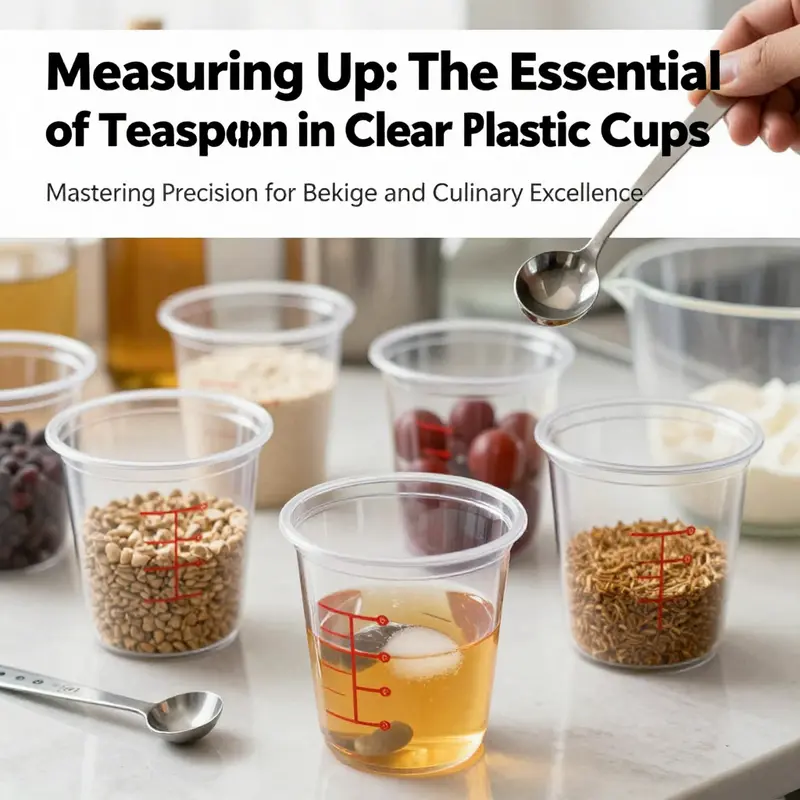
When it comes to food and beverage preparation, precision in measurement is paramount. The teaspoon, a staple unit of measurement in the kitchen, plays an essential role in ensuring consistency and quality across various culinary applications. This article delves into understanding the teaspoon as measured in clear plastic cups—a vital tool in many culinary scenarios, particularly within bubble tea shops, restaurants, and catering services. We will explore practical applications in home cooking, compare different materials like metal and glass to plastic, and emphasize the importance of accuracy in baking and recipe creation. Moreover, this guide addresses common misconceptions surrounding teaspoon measurements and their uses, catering to professionals and culinary enthusiasts alike.
The Clarity of a Teaspoon: How a Clear Cup Shapes Volume, Precision, and Kitchen Confidence
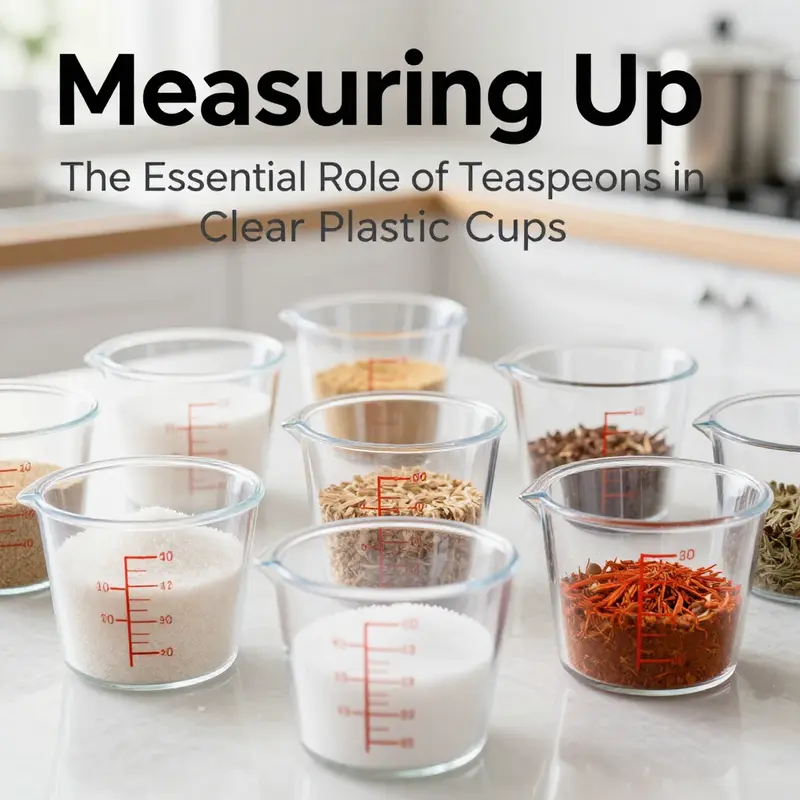
A teaspoon in a clear plastic cup is more than a simple act of scooping. It sits at the intersection of daily practice and measurement science, where a small quantity of liquid or powder carries the potential to tip a recipe from good to great or from passable to imperfect. The teaspoon, long a universal kitchen unit, is widely accepted as five milliliters in most modern measurement systems. Yet the moment a cook slides a liquid into a translucent container marked with numbers, a thread of nuance emerges. The marks on a cup can guide us, but only if we read them correctly and align our eyes with the scale without parallax. In practice, the clarity of the cup and the precision of the line become as important as the volume itself. A precise reading depends not just on the number printed on the side but on the conditions under which the measurement is performed: the cleanliness of the cup, the temperature and density of the liquid, and the observer’s vantage point. When all these factors align, the humble teaspoon in a clear plastic cup becomes a trustworthy standard rather than a rough impression, a reminder that accuracy in small volumes matters as much as accuracy in larger ones.
To begin with, the mathematics is straightforward: one teaspoon is about five milliliters. This equivalence—nuanced by regional conventions and historical usage—provides a practical anchor for cooks and scientists alike. In many cooking contexts, five milliliters is treated as the exact equivalent; in others, especially when older or regional sources are consulted, the figure 4.93 milliliters appears as the traditional teaspoon size. The difference—less than a percent in most cases—may seem minor, yet in a precise baking endeavor or a chemical-sense kitchen experiment, even a fraction of a milliliter can influence the outcome. The modern kitchen often defaults to the five-milliliter standard, and many consumer measuring cups use a dedicated 5 ml line for a teaspoon, making the connection explicit and actionable. When the cup is clear and the markings are crisp, the reader can verify that a level fill reaches exactly that 5 ml line. The clarity of the plastic, the sharpness of the printed lines, and the absence of smudges or residue all contribute to that reliability.
Reading a measurement correctly hinges on a few visual cues. The liquid should rest at a level surface, and the observer must view the meniscus—the curved surface formed at the boundary between liquid and air—at eye level. Reading from above or below distorts the perceived height, turning a true 5 ml into a number that is either slightly high or slightly low. This phenomenon, known as parallax error, is subtle but real. A cup with well-marked lines makes it easier to neutralize this effect; a mark that’s faint or smeared invites guesswork. If the cup is dusty or has residue from previous uses, the marks can appear dimmer, further inviting misreading. In a kitchen that emphasizes repeatability—baking, where precision is essential, or chemistry-inspired cooking, where small errors compound—the difference between a level teaspoon and a heaping teaspoon can be decisive. A level teaspoon, drawn flush with the top of the line, corresponds to the intended five milliliters; a heap or scoop that rises above the line will exceed the target, nudging a recipe toward sweetness or saltiness more than planned.
The choice of instrument matters as much as the act of dispensing. Clear plastic cups designed as measuring tools for liquids—often the kind used for medicines or light kitchen tasks—usually include clearly labeled metric and, in many cases, traditional teaspoon and tablespoon units. In practice, a dedicated measuring cup, especially one designed with angled or easy-to-read markings, tends to produce the most consistent results. Tools that balance readability with durability offer distinct advantages. For instance, a cup built with BPA-free clear plastic and marked in bold, contrasting colors makes the 5 ml line easier to discern at a glance. The non-slip handle reduces the chance of spills when transferring small volumes, and dishwasher-safe construction adds reliability for repeat measurements across days of cooking or batch testing. The result, in everyday terms, is better repeatability: you can pull the cup from the rack, pour once, and know that the measure is correct, not approximate.
In practice, the integration of such tools into a kitchen routine brings a quiet confidence. A recipe that requires precision—such as a delicate leavening balance in a small-batch bread or a precise flavoring in a sauce—benefits from a measurement discipline that values consistency over expediency. When a teaspoon is measured with a level line at eye level and the cup is clean, the transition from measurement to mixing becomes an act of trust. The same trust is earned when the environment supports accurate readings: a well-lit workspace, a clean surface, and a cup that bears markings with minimal distortion. Even temperature can play a role. Liquids expand slightly as they warm, so a teaspoon of hot liquid might occupy a hair more volume than a teaspoon of cold liquid. For most culinary tasks, this variance is negligible, but in a controlled baking test, it can matter. The simplest remedy is to stage measurements at roughly room temperature and to maintain consistency across all measurements when a recipe requires multiple additions.
The broader conversation about measurement often returns to the idea that accuracy is a product of design as much as technique. In professional kitchens, where accuracy is linked to reproducibility and yield, the choice of tool is deliberate. However, the home cook benefits just as much from this deliberate approach, especially when dealing with small volumes where the margin for error narrows. A practical rule emerges: treat the teaspoon as a precise unit only when the tool supports it. A scale that converts all ingredients to grams, or a meticulously marked five-milliliter line on a cup, reduces ambiguity and makes a recipe more forgiving. The take-away is simple: when you rely on a clear plastic cup, choose a model with precise markings and use a flat, level top to avoid misreading. Dampen the desire to take shortcuts; instead, cultivate a habit of checking the mark, aligning the eye, and pouring to the line.
Even as clear plastic measuring cups offer accessibility and convenience, there is value in recognizing their limits. In high-stakes cooking or scientific kitchens, glass or metal tools may be preferred for their thermal stability and resistance to warping. Clear plastic cups, with their lightweight durability and visibility, remain an excellent everyday choice for home cooks. They excel when you need to see how the liquid sits in the cup, when you want to confirm that the line is indeed at the intended level, and when you want a tool that travels well from pantry to stove. The integration of color-coded markings, readable typography, and ergonomic design creates an intuitive experience in which the teaspoon becomes a quick, repeatable action rather than a moment of guesswork. This is where the value of a well-designed measuring cup shows most clearly: in the rhythm of cooking, in the quiet confidence that comes from a faithfully read measurement, and in the ability to translate a recipe’s intent into a precise, repeatable result.
The narrative here also acknowledges that improvisation has its place. When circumstances call for speed or when a kitchen lacks the ideal tool, a medicine cup or a small measuring beaker can approximate a teaspoon—provided the user remains aware of potential discrepancies. In such moments, the lesson is not to abandon measurement but to adapt with intention: recognize the potential for error, read the marks at eye level, and proceed with caution. Yet the growth comes from the awareness that a purpose-built tool—an angled, clearly labeled measuring cup with both metric and imperial units—offers a path to consistency that most home cooks will appreciate. In the long arc of kitchen practice, these small, deliberate choices accumulate into a practice that is less about precision for its own sake and more about fidelity to a recipe’s spirit. The teaspoon, once a simple shorthand, becomes a reliable bridge between intention and outcome when the cup that bears it is read correctly and respected as a standard.
Across different cooking contexts, the elegance of a well-marked cup shines through in everyday tasks. No matter whether a pinch of spice or a measured spoon of vanilla is required, the cup’s marks remind us that precision is achievable in ordinary moments. The act of measuring a teaspoon in a clear plastic cup is a small ritual with outsized consequences for flavor, texture, and texture perception in the finished dish. It reinforces the idea that accuracy is not only a matter of numbers but of how clearly those numbers are conveyed and interpreted. In the end, it is about confidence—the quiet assurance that comes from knowing you have measured correctly and that your cup has delivered exactly what the recipe intended.
For readers who want to connect this everyday practice to broader packaging and kitchen equipment choices, consider the context in which these tools are used in everyday spaces. Even the seemingly small choice of cup style, material, and marking clarity can ripple outward to how reliably a kitchen scales up or down recipes. The same principle applies whether you are preparing a family meal or designing a test batch in a small culinary lab: clarity, consistency, and proper technique are the three anchors of reliable measurement. In the practical terms of kitchen work, the teaspoon becomes more than a unit. It becomes a dependable instrument of flavor, balance, and texture, guided by the clean precision of a five-milliliter line and the careful eye that reads it correctly.
To weave this back into broader kitchen practice, a nod to the environments where cups and markings live helps. In settings that incorporate take-away or disposable components, the attention to labeling and readability is essential. For example, when craft and food service converge, choosing cups with clear, readable markings reduces misreadings during busy service periods. The interplay between packaging design and measurement accuracy reveals a subtle but important truth: readable marks survive the chaos of a bustling kitchen, while vague lines fade into the background as errors accumulate. In this light, the simple act of reading a 5 ml line in a clear cup becomes a practice of disciplined simplicity—a skill that supports reliable results across recipes, scales, and cooks.
Within this broader perspective, it can be helpful to briefly highlight a resource that brings a practical, user-friendly example of measurement tool design into focus. For readers who want to explore a dedicated measuring cup with angled, easy-to-read markings and a suite of units, the concept of a purpose-built tool is reinforced by real-world design principles dealing with visibility, durability, and ease of use. A well-chosen measuring cup can anchor a kitchen’s approach to small-volume measurements, providing a model of how form and function align to support accuracy. And when you consider the practicalities of everyday use—washing, storage, and repeated calibrations—the value of a reliable tool becomes even more evident. In settings where precise teaspoon measurements matter, such a cup can be the difference between a recipe that sings and one that falls flat. The bottom line is simple: for precision to be practical, the tools you rely on must be reliable, legible, and consistent, and the teaspoon, as a standard unit, gains its integrity from the cup that carries it into your bowl, pan, or bottle.
In a broader sense, this chapter ties back to a simple, enduring idea: measure with intention, read with care, and choose tools that respect the smallest units as much as the largest. The clarity of a cup can either invite accuracy or invite error, and the choice is yours. The practice of measuring a teaspoon in a clear plastic cup is not mere trivia; it is a reminder of how everyday decisions—how you view a scale, how you align your eyes, how you select your tool—shape outcomes in the kitchen. A well-marked cup, read at the right angle, becomes a quiet mentor in the craft of cooking, guiding you toward recipes that turn out as intended and experiments that yield reliable data. And when you pair this practice with thoughtful tool selection and mindful technique, you unlock a level of kitchen confidence that travels well beyond the measuring cup itself.
For readers curious to connect this discussion to related packaging and consumer-use contexts, consider exploring related product design choices that intersect with measurement use and cookware. eco-friendly printed-logo single-wall paper cup with lid offers a concrete example of how consistent labeling and practical design support everyday measurements in busy environments, from home kitchens to take-away services. External resources that delve into practical measuring tool design can provide additional guidance on how angled measurements and clear markings reduce misreadings in fast-paced settings. External resource: https://www.oxo.com/products/softworks-2-cup-angled-measuring-cup
Reading a Teaspoon Through a Clear Window: Precision and Practice in a Plastic Cup
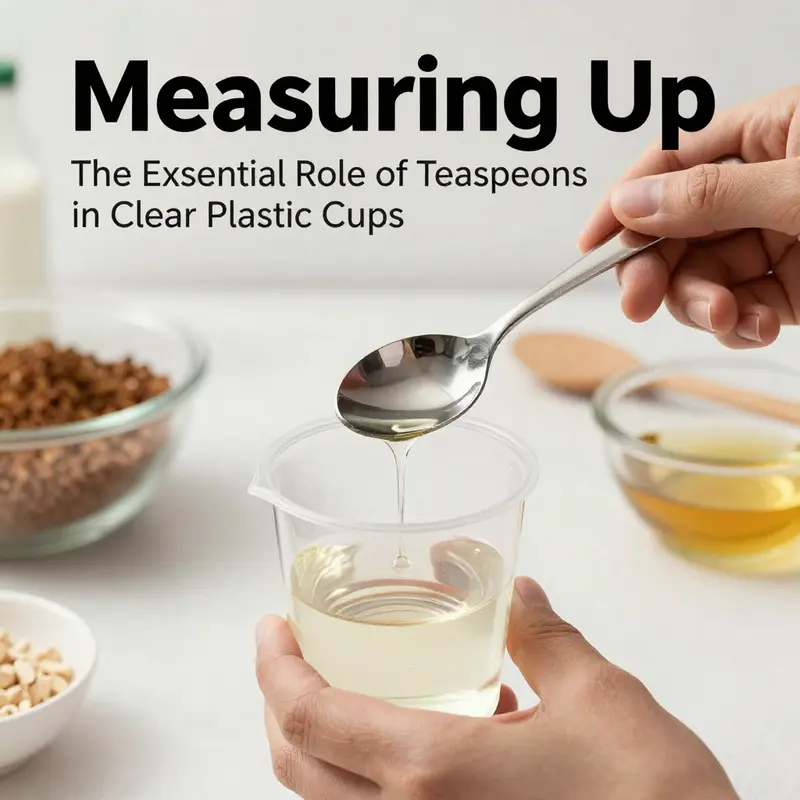
A teaspoon is a small unit with outsized importance in everyday cooking. In most kitchens, it is defined as about 4.93 milliliters, or roughly 0.1735 ounces. Yet the moment you lift a spoonful from a jar into a bowl, the question of accuracy begins to matter, especially in baked goods or sauces where ratios decide texture and balance. A clear plastic cup with marked measurements can turn the act of measuring into a visual, almost tactile, process. The cup’s transparency offers an instant check against overpouring or shortchanging an ingredient, and its built‑in scale lets a cook see exactly where a line for 1 teaspoon, 1/2 teaspoon, or 2 teaspoons lies. In practice, this turns a potentially error‑prone instinct into a repeatable routine, a small discipline that compounds into consistent results across a week of meals and a year of recipes.
What makes a clear plastic measuring cup particularly useful is not just the absence of mystery, but the way it aggregates several common measuring conventions in one tool. Many of these cups carry multiple scales: teaspoons, tablespoons, fluid ounces, and milliliters. When a recipe calls for 1 tsp of vanilla or 1/2 tsp of cinnamon, you can align the ingredient with the corresponding line and read it at a comfortable eye level. The transparency acts as a safety net, letting you catch a line that might otherwise drift out of view in a opaque measuring cup or on a cluttered countertop. For someone who cooks often, this single window—literally a window into measurement—reduces the mental load required to translate a recipe into action.
A practical advantage of the clear cup lies in its versatility. It handles both dry and liquid ingredients, which means you can pour a thin syrup or scoop a dry spice with the same instrument. The cup’s ability to accommodate small quantities is particularly valuable in seasoning or delicate flavor builds, where a misstep by a fraction of a teaspoon can alter the final aroma or sweetness. In that moment of decision, the visual line becomes a guide you can trust. The cup’s light weight and shatter‑resistant construction add to its appeal for everyday kitchen work. You can carry it from the counter to the stovetop without fear of breaking, and because it’s easy to stack, it won’t take up much space in a busy kitchen drawer.
To get the most out of a teaspoon in a clear plastic cup, technique matters as much as the tool itself. When measuring liquids, the eye should rest at the level of the bottom of the meniscus, the curved surface that forms where the liquid meets air. If you read from above or from below, parallax can skew the result by a fraction. The cup’s marks help, but so does your posture: place the cup on a flat surface and bring your eyes to the same height as the measurement line. For dry ingredients, a slightly different rule applies. Scoop the ingredient into the cup until the surface is heaped above the line, then sweep it off with a straight edge, letting the line catch the true level. This “sweep” matters because it eliminates the tiny islands of powder that cling to the cup’s sides and would otherwise push the measurement over the intended mark.
Precision, however, is not just about the act of filling the cup. It is also about understanding what the figure represents in a given recipe. A teaspoon is a volume measurement, not a weight. The weight of a teaspoon of sugar, salt, or spice will vary with the material’s density and how finely it is ground. In baking, where hydration and emulsions are sensitive to even small shifts in quantity, many cooks prefer to use weight for the most critical ingredients. But when a recipe is written in teaspoons and you need a quick conversion or a visual confirmation, the clear plastic cup becomes a bridge between theory and practice. It allows you to see that 1 teaspoon of one ingredient may occupy a slightly different space than 1 teaspoon of another, yet still remains a consistent unit of measure within the recipe’s framework.
Another layer of nuance comes from the way flavors accumulate. Salt and sugar, for instance, have different impacts on texture and taste when measured precisely. A cup that marks 1/4, 1/2, and 1 teaspoon increments enables a cook to stage a flavor build, adding a small amount, tasting, then adjusting. In sauces or marinades, this approach matters even more: a pinch of acidity, a teaspoon of sweetness, a dash of salt can all interact with each other. The clear cup makes these adjustments visible as you dance between lines, rather than relying on memory or mental math alone. It is, in effect, a steady partner in the kitchen’s creative process—reliable enough to support experimentation, yet precise enough to keep a recipe anchored.
The design of these cups also invites reflection on how we approach measurement in different settings. Home kitchens favor convenience and speed, and the clear cup fits that ethos well. It’s durable for everyday use and easy to clean, which makes it a practical choice for quick pancake batters, a quick test of a glaze, or portioning out marinades ahead of dinner service. In more formal or professional contexts, cooks may prefer metal or glass for their resistance to warping, heat, and possible chemical interactions with strong acids. Yet for most home routines, the plastic cup’s balance of visibility, lightness, and affordability makes it a sensible default. The humble tool becomes a quiet mentor, teaching the eye to recognize where a line sits and how a line relates to the recipe’s needed amount.
Across recipes, the importance of accurate measurement is not merely about following a rule. It is about the confidence that comes with seeing a line settle exactly where it should be. When you place vanilla extract, baking powder, or ground spices at the mark, you’re creating a moment of trust: trust in the recipe, trust in the tool, and trust in your own hands to bring ingredients together in the right proportion. This trust is the quiet reward of working with a clear plastic cup—an instrument that makes precision accessible without fuss. It is also a reminder that measurement is both science and craft, the rigors of grams and milliliters meeting the intuition of taste and aroma. In that meeting place, a teaspoon becomes more than a unit; it becomes a spark that lights up a dish’s character.
From a practical standpoint, the cup’s markings facilitate quick multitasking in the kitchen. When you’re ready to scale a recipe up or down, the same lines guide you without flipping to a separate measuring spoon. If you are reheating a sauce and want to add a measured touch of sweetness or acidity, the teaspoon lines give you a dependable reference point. For bakers, the rhythm of adding one teaspoon, then tasting and adjusting, is a familiar cadence. It is here that the visual cue of a clear cup transforms measurement from a potential source of error into a dependable, repeatable step in a familiar routine. The cup’s simplicity is the strength; its transparency is the teacher, and its markings are the language through which clarity speaks.
In practice, many cooks reach for a familiar supplier of kitchen essentials that offer the same clarity without clutter. When you need a simple, effective way to handle a range of cup sizes and lids, an option such as an eco-friendly printed logo cold beverage cup with lid can fit neatly into a broader set of kitchen tools. Its design language aligns with the same values that make a clear plastic measuring cup so appealing: visibility, straightforward measurements, and a practical footprint that keeps the cook’s workflow smooth. eco-friendly printed logo cold beverage cup with lid.
Ultimately, the teaspoon in a clear plastic cup embodies a quiet revolution in home cooking. It strips measurement down to its essential act—the intersection of volume, perception, and control—and it democratizes precision. No scale is required for everyday tasks, yet the cup teaches you to read a line with confidence. It invites a rhythm of careful pouring, leveling, and tasting, a cycle that keeps recipes honest and flavors faithful to the plan. As you move from one recipe to the next, this simple tool becomes a reliable partner, reminding you that accuracy is not only a scientific goal but also an everyday habit that shapes the meals you prepare, the flavors you share, and the memories you cook into each dish.
For readers who want to explore more about measuring ingredients with accuracy in practice, a broader discussion of measurement techniques and tips can be found in external resources. For more on measurement accuracy, see How to Measure Ingredients Accurately.
Precision in a Transparent Vessel: Teaspoon Measurements, Perception, and the Material Trade-Offs of Plastic, Metal, and Glass
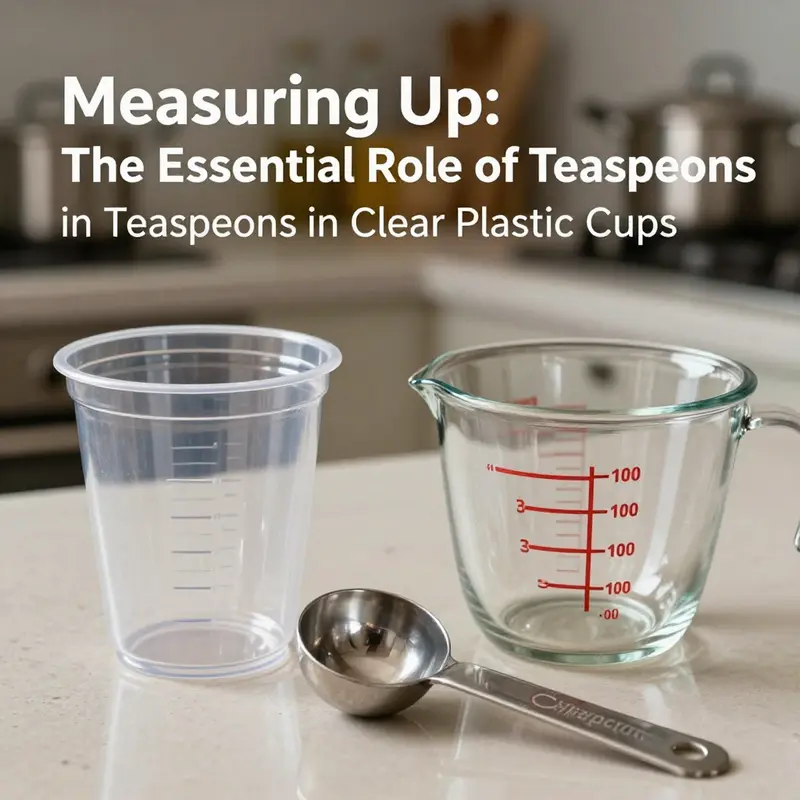
The teaspoon is more than a utensil in a recipe; it is a silent standard that anchors a kitchen’s reproducibility. In theory, a teaspoon equals about 4.93 milliliters, a tiny volume that can cascade into large differences when multiplied across a batch of cookies, sauces, or emulsions. In practice, home cooks often reach for a clear plastic cup marked with teaspoon scales to capture that exact drop of sweetness or the precise pinch of salt. The appeal lies in visibility: the liquid or dry ingredient sits in a transparent chamber where one can judge the level without squinting at a shadowed or crowded measuring spoon. This practice is especially common when small quantities must be measured quickly, or when the cook wants to see how the liquid aligns with a scale at eye level rather than relying on a the totalization of a spoon’s contours. Yet in the quiet economy of measurement, the instrument and the material matter as much as the mark on the side. A clear plastic cup, marked to resemble a teaspoon increment, invites a straightforward question: does the cup’s scale truly deliver a teaspoon’s worth, or do subtleties of the container distort the result just enough to matter in a bake or a sauce reduction?
In the most practical terms, using a plastic cup designed for teaspoon measurements can offer a fast, economical way to portion out small amounts. The cup’s transparency helps the reader discern when the liquid has reached the intended level, and its light weight makes it a forgiving tool for repeated use. The concept of a 5-milliliter equivalence is a useful frame: many cups are calibrated in 5 ml steps, so a single marked line becomes a reliable proxy for one teaspoon in the moment. Because the plastic is clear, the eye can scan for the parallax-free alignment where the liquid surface meets the graduation. Still, the human element—where you stand relative to the meniscus, and whether you read a line from directly above or at a slight angle—will influence the accuracy. A wobble of a few hundredths of a milliliter might seem negligible in a glass of water, yet it matters when you are balancing acidity, salt, or sugar in a delicate recipe. The cup, therefore, is not just a vessel but a perceptual instrument: its precision depends as much on the user’s technique as on the scale itself.
Clear plastic measuring cups have carved a place in everyday kitchens because they blend accessibility with sufficient precision for routine tasks. The primary advantages are clear: visibility, cost efficiency, and lightness. A transparent cup allows you to confirm at a glance that you have poured up to the correct graduation, which reduces the risk of over- or under-measuring in a rush. The material is forgiving in terms of handling; it won’t shatter if dropped, and it is typically inexpensive to replace. These advantages, however, rest on a set of trade-offs that become particularly salient when the task involves hotter liquids or acidic ingredients. Plastics are susceptible to heat distortion, scratching, and, over time, chemical interactions with certain cleaners or prolonged sunlight exposure. Temperature is not merely a matter of comfort; it is a factor that can visually distort the cup. When hot liquids are measured directly in a plastic cup, expansion can blur the graduation lines or tilt the meniscus in ways that mislead the observer. The result is a measurement that feels precise in the moment but proves less reliable after a brief cooldown or a second reading. The equation of measurement with temperature is not theoretical here; it is a tangible cue to temper expectations about plastic’s long-term reliability in the kitchen.
If we widen the view to compare materials—plastic, metal, and glass—the contrast is instructive. Stainless steel, the metal most common in professional kitchens, offers durability and hygiene that are hard to match. A metal cup resists warping and will endure repeated heating and cooling cycles, which is essential for high-volume or hot-liquid tasks. Yet the metal’s reactive potential with acidic ingredients can subtly alter flavor or color, especially in long-term use or with certain acids. The risk is not a dramatic chemical reaction but a hint of metallic perception that may go unnoticed in a sauce but could be more pronounced in a delicate infusions or citrus-based mixtures. In practical terms, metal cups are robust but heavier, and their reflective surfaces can complicate precise reading of a tiny liquid meniscus, particularly under bright kitchen lighting or when moisture beads on the rim.
Glass measures up in its own compelling way. Glass offers exceptional clarity and chemical inertness, making it a stalwart for laboratory-like precision in the kitchen. The transparency of glass is unmatched for discerning exact levels, and its heat resistance safeguards a broader range of tasks—from hot liquids to cool syrups—without warping or deforming the graduations. The caveat, of course, is fragility. Glass cups demand careful handling, and their weight can be a hindrance when measuring many small portions. Still, for cooks who obsess over precision, the glass cup becomes a trusted instrument because its structure does not bend under typical kitchen stresses and its markings remain consistently legible over time. A well-calibrated glass cup, with clear, evenly spaced graduations, can deliver a reading that remains stable from hour to hour, batch after batch.
None of these conclusions undermine the practical reality that many kitchens rely on the convenience of a clear plastic cup for teaspoon-level measurements. The cup’s value is not to replace a scale or a balance but to complement it, offering a quick check against a scale’s reading and a visual cue that a given volume sits at the intended mark. The real-world workflow often looks like this: you scoop a dry ingredient or pour a liquid into the cup until the level aligns with the teaspoon graduation; you check the reading from eye level, adjust for any perspective error, and move on. In cases where a recipe is strict about ratios—think emulsions, baked goods that rely on precise leavening, or syrups with carefully balanced sweetness—the temptation to rely solely on a quick plastic measure should be tempered by awareness of the cup’s limitations. The surface tension of liquids, the slope of the cup’s interior, and even the thickness of the plastic walls can all influence how one perceives the exact level of content. In this context, the cup is best viewed not as a final authority but as a practical aid—a stepping stone toward the more exact discipline of weighing ingredients or using a calibrated glass or metal instrument when maximum precision is necessary.
A useful nuance emerges when we consider the subtleties of reading measurements in a practical kitchen. For liquids, the bottom line often comes down to the meniscus—the curved surface of the liquid. In a clear plastic cup, the human eye must align with the top of that meniscus at the graduation line. Hazy light, a glossy rim, or a slight tilt can create an optical misread. For dry ingredients, the matter shifts toward leveling the substance, rather than reading a curved surface. A level edge, ideally paired with a flat surface on the cup’s interior, helps ensure that the volume truly corresponds to the intended graduation. In both cases, the habit of reading at eye level, using a consistent technique, and acknowledging the cup’s tolerance can elevate the reliability of teaspoon measurements in daily cooking. The small differences multiply when recipes scale up or when precision matters more acutely, such as in delicate pastry layers or beverages that depend on precise sweetness. In other words, the plastic cup is a practical ally, not a perfect replacement for a higher-precision tool, and recognizing its place in the kitchen is part of skilled culinary practice.
The broader takeaway is clear: the choice of vessel should reflect the cook’s priorities. Plastic cups win on accessibility, visibility, and cost for light- to moderate-duty use. Metal cups excel in ruggedness and hygiene when volumes grow and durability matters. Glass cups offer supreme clarity and chemical inertness for tasks that demand high fidelity and repeatable results. The interplay between material and method shapes not only the outcome of a single measurement but the rhythm of a cook’s technique over time. When you plan a recipe that hinges on a teaspoon or two, you might start at the sight line of a clear plastic cup, verify with a calibrated scale, and, if the stakes are high, switch to a glass or metal instrument for final confirmation. To bring this discussion into a practical frame, consider how one might anchor such decisions in a real kitchen environment. For instance, when sourcing tools for a busy cafe or a home kitchen that balances cost with reliability, a cross-check system—plastic cups for quick checks, metal or glass for high-accuracy steps—can streamline workflow while preserving consistency across batches. This approach does not pretend that a single instrument solves every measurement problem; rather, it embraces a pragmatic toolkit where each material serves a specific purpose in the broader practice of precise cooking.
In the spirit of practical experimentation, you may wish to explore a concrete example that mirrors the everyday needs of many kitchens. A wholesale or bulk option for cups can be a prudent choice for environments that regularly prepare small volumes. Wholesale-take-away-8oz-12oz-disposable-coffee-paper-cup-with-lids provides a case in point for how such vessels fit into a broader workflow of portioning, marking, and quick serving. This kind of reference helps frame the plastic cup not as a solitary tool but as part of a larger ecosystem of cupware that supports consistent measurement across tasks. It also invites a broader reflection on how a kitchen’s instrumentarium evolves with practice. If the goal is to capture teaspoon-level volumes with reasonable ease and visibility, a plastic cup can be the first instrument you reach for, with a glass or metal reference ready for moments when the recipe’s margins demand stricter control.
External resource for further reference on plastic teaspoon measurements and related practice: https://www.amazon.com/dp/B0B8W6FZK7
Clarity in Measurement: The Teaspoon, the Cup, and Baking Precision

Teaspoons and clear plastic cups shape how bakers translate intention into batter. A teaspoon holds about 4.93 milliliters, a standard often approximated as 5 ml in home cooks’ tools. This small difference matters when chemistry and texture hinge on exact quantities. A clear plastic cup makes the fill visible, turning measurement into a quick check rather than a guess. Verifying the level at eye level reduces the margin for error caused by scooping and tapping.\n\nIn practice, scoop and level remains essential: overfilled flour can muddy the intended proportions; under capturing sugar or salt can shift sweetness and balance. The cup’s transparency supports consistent technique: scoop, level, and compare to the marked line, then pour with confidence.\n\nBeyond flavor and texture, precise measurement supports nutrition tracking and dietary goals. A misread line can alter calorie totals and macro balance, so the habit of reading the level becomes part of mindful cooking. Clear vessels invite a disciplined ritual that connects measurement to outcome, reinforcing repeatable results across kitchens.\n\nStandardization of 5 ml as a practical teaspoon helps unify recipes, even as individual tools have tolerances. The clear cup helps catch these tiny discrepancies before they influence a bake. In the end, the moment of confirming a fill line is what transforms a good attempt into a dependable recipe. For further reading on measurement tools, external resources can offer deeper context.
Seeing a Teaspoon in a Clear Plastic Cup: Precision, Perception, and Practical Measuring
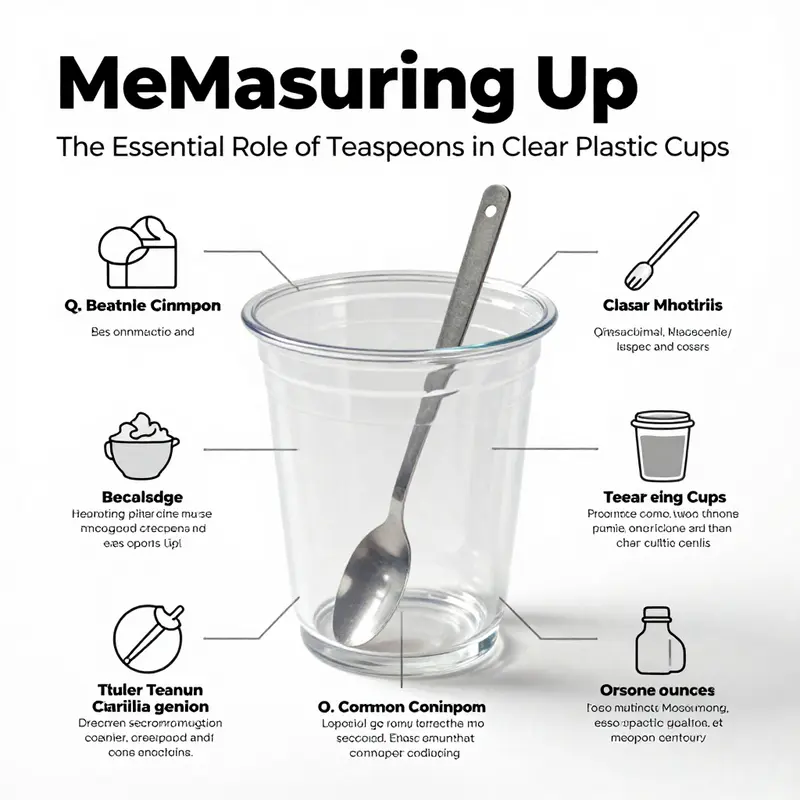
A teaspoon is a small, stubbornly practical unit of measurement. In cooking and baking it typically holds about 4.93 milliliters, or roughly 0.17374 ounces. This standard is not a whim of recipe writers; it is a convention that threads through both U.S. customary and imperial systems. When a recipe calls for a teaspoon, it invites you to translate a moment of estimation into a repeatable action. The simplicity of a clear plastic cup, marked with graduations, makes that translation visible.
In many kitchens, a disposable or reusable plastic cup becomes a mini laboratory where volume can be seen rather than guessed. The transparency of the cup lets you observe how a small measure—an amount as tiny as a quarter of a teaspoon or as much as a full teaspoon—fits into the broader scale of a recipe. The cup’s markings 1/4, 1/2, 1, and in some models 5 teaspoons provide a visual framework that supports both dry and liquid ingredients. In practice, this is more than a habit; it is a discipline of readability. When you see the level reach the 1 tsp line, you know you have the standard teaspoon as defined by conventional cooking measures, not a guess or a vague approximation. The comprehension that comes from visualizing the volume in a clear cup helps stabilize the texture and flavor in a dish that depends on small quantities.
The notion that a teaspoon can vary significantly from one set to another is a common worry, but in general practice most standard kitchen spoons adhere closely to the 4.93 ml benchmark. That said, there is a practical tolerance that matters in real kitchens. A line on a cup is not a guaranteed atom of measurement; it is a reference. When a recipe says 1 teaspoon, many cooks will level the spoon with a clean edge or sweep off to create a flat top, choosing consistency over absolute perfection in the moment. The cup’s marking system, by contrast, gives a reliable, repeatable target. It lets a home baker verify the volume with a simple glance. And because the same 1 teaspoon standard is used across situations, you can scale a batch of cookies or a batch of curry with more confidence, knowing that the same basic unit underpins both ends of the recipe.
A clear plastic measuring cup with visible marks becomes a powerful ally for precision without complicating the cooking process. In kitchens that embrace practical tools, these cups can display important subunits—the 1/4 teaspoon, the 1/2 teaspoon, the 1 teaspoon, and sometimes the 5-teaspoon total—so you can see how a tiny fraction relates to the whole. This is not merely a convenience; it is a cognitive aid. For example, saffron is often specified in a quarter-teaspoon amount in some recipes. When you drop saffron threads into a cup and align the liquid or ground spice with the 1/4 tsp mark, you are transforming a potentially volatile flavor into a reproducible step. Such clarity reduces the chances of over- or under-seasoning, a risk that grows as recipes grow more delicate or complex. The cup’s transparency makes that risk calculable, not speculative.
But the discussion does not end with dry accuracy. The distinction between teaspoon and tablespoon remains essential. A tablespoon equals three teaspoons, about 14.8 milliliters. A common pitfall is confusing the two, leading to a dramatic shift in a dish’s texture or sweetness. The visual cues provided by a marked cup help prevent these errors by presenting a direct, side-by-side comparison. If you need to measure a larger amount, you can visualize the relationship in the same cup: the 5-teaspoon line can be read as a practical shorthand for a nearly full tablespoon in everyday cooking. This interplay of marks—teaspoon, quarter-teaspoon, half-teaspoon, and tablespoon—lets you approach recipes with a calm, methodical mindset rather than a rush of instinct.
Beyond the ritual of measurement, there is a deeper logic to combining a clear cup with the standard teaspoon. In many recipes, precise water-based or syrup-based components demand visibility of the level relative to a fixed volume. A cup that bears calibrated lines provides that visual reference, allowing a cook to notice how much space remains between the top of the liquid and a given calibration. For dry ingredients, the same principle applies. Whether you are measuring flour, sugar, or baking powder, the cup’s marks encourage level-scoop or careful spoon-and-sweep techniques that minimize air pockets or compressions that could skew results. In this sense, the cup is not just a measuring device; it is a teaching tool that aligns perception with standard volume, helping cooks internalize the relationship between small fractions and whole units.
In day-to-day practice, a well-chosen plastic cup offers durability, ease of use, and instant feedback. It is light enough to handle while standing at the stove, and its clear walls reveal how the material behaves under different ingredients. This is important because the behavior of liquids and powders can influence how a measurement translates to the final dish. Sugar dissolves, salt can clump, and powdered leaveners may settle unevenly. The cup’s design—clear, marked, and easy to read—gives a moment of reassurance that the volume you intend to use matches the volume you see. The result is a more reliable foundation for recipes that rely on small, precise adjustments, whether you are adjusting sweetness, acidity, or fragrance.
The practical use of a clear cup with teaspoon markings is especially valuable for home bakers and crafters who want precision without clutter. A single tool can replace several improvised methods that might otherwise lead to misreads. If you need to compare a measurement across a recipe, the cup makes it possible to visualize how much is being added at different steps, creating a cohesive rhythm in the process rather than a patchwork of ad hoc estimates. And if you ever doubt the viability of your measurement, remember that a thorough, careful glance at the cup’s marks provides a direct visual check against the recipe’s stated quantity. The goal is not precision for its own sake, but consistency that translates into predictable outcomes, batch after batch.
To connect with the broader ecosystem of everyday kitchen tools, consider how these cups sit among other common measures and serving ware. Their design is a quiet nod to the principle that simple, accessible tools can fortify culinary confidence without demanding specialized equipment. The same logic applies when you pair the cup with a physical scale for the most exacting tasks. A kitchen scale can confirm the weight corresponding to the teaspoon volume when needed, especially for small-volume ingredients where granularity matters. In this light, the clear plastic cup acts as a bridge between intuition and exactness, a practical instrument that teaches the eye to align with the standard unit while remaining approachable for cooks of all levels of experience.
For readers seeking broader guidance, authoritative standards on measurement practice remain a reliable compass. The National Institute of Standards and Technology provides official guidelines on U.S. food labeling and measurement that reaffirm the teaspoon’s standard volume, offering a reference point for both amateurs and professionals who value consistency. Readers may wish to explore these standards to deepen their understanding of how small-volume measurements fit within larger systems of metrology and culinary science: NIST Guide on Standards. In the practical kitchen, though, the cup’s marks make the abstract tangible, transforming a teardrop of vanilla extract or a pinch of saffron into a reproducible moment in time.
In sum, a teaspoon in a clear plastic cup is more than a convenience; it is a practical philosophy. It invites you to see, compare, and measure with confidence. It gives you a visual anchor for the standard unit that underpins countless recipes, and it helps you avoid common missteps that arise from assuming uniformity where there is none. The cup becomes a companion in the quiet art of precision, a way to translate a tiny amount into reliable outcomes. For cooks and bakers who crave consistency in a world of variable pantry ingredients, this approach seeing the measurement in a transparent vessel offers clarity, simplicity, and reassurance. The next time you reach for a teaspoon, consider letting the clear cup do the talking. It may not replace a scale or a thermometer, but it can illuminate the path from amount to effect with a simplicity that is, in its own way, exact. And if you ever want a practical reminder of how everyday tools intersect with standard measures, a quick look at the linked cup page can anchor the concept in a real-world context: take-away coffee cup single-wall double-wall to-go paper cup.
Final thoughts
The significance of measuring accurately using teaspoons in clear plastic cups transcends everyday cooking. For bubble tea shops, restaurants, and catering services, understanding the principles of volume and accuracy is crucial for successful recipe execution. By recognizing the practical applications, comparisons with alternative materials, the importance in baking, and common misconceptions, culinary professionals can ensure the quality and consistency of their offerings. As we strive for excellence in the culinary world, remembering the role of a simple teaspoon can make all the difference in achieving desired outcomes.