
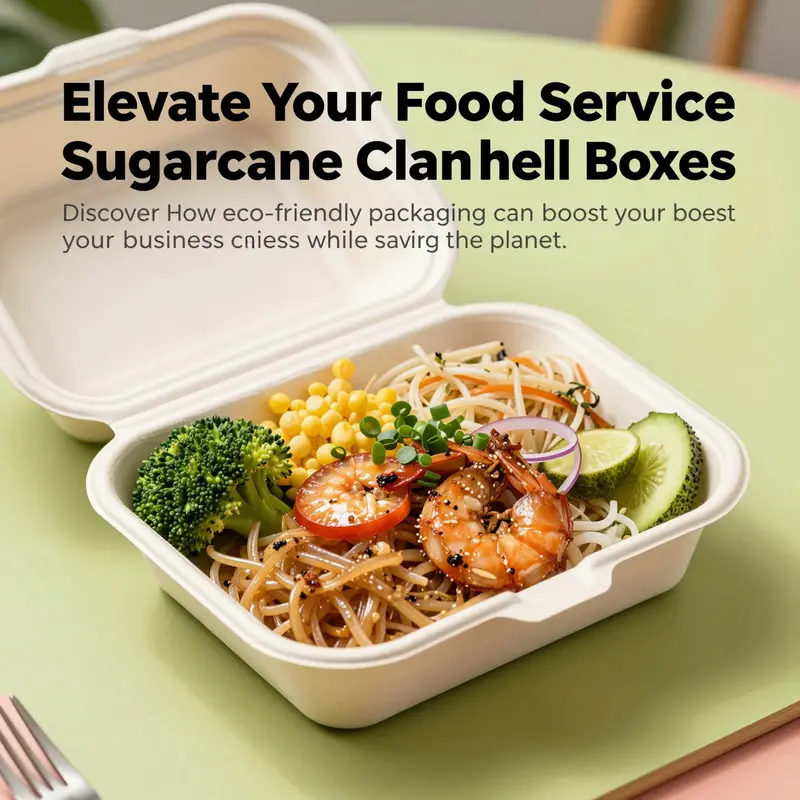
As more consumers seek sustainable alternatives in their dining experiences, the rise of eco-friendly packaging solutions like sugarcane clamshell boxes has become crucial for businesses in the food service industry. These biodegradable containers, derived from the by-product of sugar production, not only lessen the environmental impact but also enhance brand image and customer satisfaction. This article delves into the environmental benefits, economic viability, and current market trends of sugarcane clamshell boxes, providing insights tailored for bubble tea shops, restaurants, food trucks, catering services, event planners, and corporate procurement teams. By understanding these aspects, businesses can make informed decisions about integrating sustainable packaging into their operations.
null
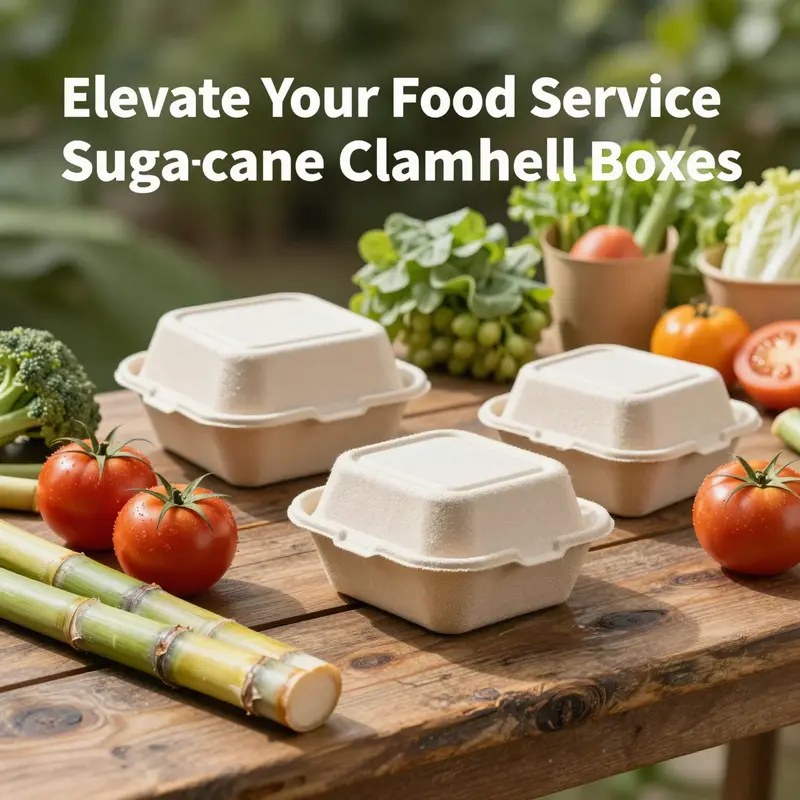
null
Turning Plant Waste into Performance: The Rich Economics Behind Sugarcane Clamshell Box Production
The march toward sustainable packaging has moved beyond a rhetorical commitment to a practical, economically viable practice. In the arena of takeout and fast-cood packaging, the sugarcane clamshell box stands out as a compelling convergence of waste valorization, cost discipline, and market responsiveness. The economic viability of producing these boxes rests on a lattice of interlocking factors: favorable regulatory currents, shifting consumer preferences, advances in manufacturing technology, and the intrinsic cost advantages of using bagasse, the fibrous byproduct of sugar processing. Viewed together, these elements do more than justify the initial investment; they underpin a durable business case that can scale across regions and customer segments while maintaining rigorous standards of quality and compliance. The narrative that follows is not a single-use summary but a sustained explanation of why this packaging option makes economic sense for producers, buyers, and the wider ecosystem striving for lower environmental footprints.
Regulatory momentum is a critical, often underappreciated, driver of economic viability. Governments around the world are tightening packaging regulations, particularly for single-use plastics and materials that contribute to landfill burden. When policies push for recyclability or compostability, the total cost of ownership for alternatives shifts in subtle yet meaningful ways. For sugarcane clamshell boxes, the compliance burden is offset by the fact that bagasse-based products are designed to be compostable under industrial conditions and, in some cases, compatible with existing industrial composting or waste management streams. This alignment reduces liabilities tied to end-of-life disposal and can lower long-term waste handling costs for food-service customers who must align with municipal or regional sustainability mandates. In practice, producers often find that the incremental cost of achieving compliant formulations—such as appropriate coatings that enable heat resistance while maintaining compostability—pays dividends in the form of smoother audits, fewer product recalls, and a broader market appetite for compliant packaging.
Consumer demand acts as a reinforcing force, translating regulatory push into market pull. Today’s diners increasingly equate packaging with the values of a restaurant or brand. They want to see evidence that the container holding their meal is derived from renewable resources, generated with lower carbon impact, and capable of returning to the earth through composting rather than lingering in landfills. This demand translates into a willingness to pay or, more accurately, a willingness to source from suppliers that can offer reliable sustainability narratives, measurable performance, and consistent supply. Bagasse-based clamshell boxes offer a compelling value proposition: they are part of a closed-loop concept in which agricultural byproducts become packaging, reducing waste, and limiting reliance on fossil-fuel-based plastics. For food-service operators, this translates into a dual benefit: a more favorable public image and a more predictable supply chain that aligns with corporate sustainability goals. The psychology of consumer choice—favoring eco-friendly, recognizable materials—creates a premium for responsible packaging choices, even when price parity is not absolute. In practice, this dynamic helps stabilize demand curves for bagasse clamshells, smoothing production planning and enabling economies of scale that further improve unit costs.
Advances in manufacturing technology have a direct, measurable effect on cost structures, throughput, and quality control. The production line for bagasse clamshells blends traditional fiber processing with modern thermoforming capabilities. The raw material itself—bagasse—offers a favorable cost profile because it leverages an agricultural byproduct that would otherwise require disposal. This intrinsic advantage helps push per-unit material costs downward, particularly when suppliers optimize fiber recovery, moisture content, and coating formulations. Yet the technology story matters just as much as the material story. Modern clamshell production benefits from dedicated drying equipment that controls moisture to stabilize the sheet during forming. Proper moisture management improves mold fidelity and reduces reject rates, which in turn lowers waste and boosts overall yield. In a scalable operation, the ability to adjust feed rates, temperature profiles, and sheet thickness without sacrificing performance is crucial. It means a plant can swing between high-volume runs for major food-service chains and smaller, customized runs for regional markets or boutique cafes with specific design requirements. The result is a production ecosystem that marries high throughput with consistent quality, a combination that directly influences profitability.
Materials and cost efficiency lie at the heart of the economic equation. Bagasse, the fibrous residue left after juice extraction, is a renewable feedstock that can be transformed into sturdy, heat-tolerant clamshell boxes. From a cost perspective, bagasse typically outperforms petroleum-based plastics on raw-material economics, especially in regions with productive sugar industries or nearby mills that generate bagasse as a byproduct. The environmental and cost advantages are magnified when the supply chain is simplified: shorter transport distances, fewer intermediaries, and less reliance on imported fossil-based resins. Furthermore, bagasse’s natural cellulose content lends itself to forming a robust structure capable of withstanding typical takeout temperatures, potentially up to 120°C in some configurations. This temperature tolerance widens the range of menu items that can be packaged without resorting to additional insulation or coatings, which would otherwise add cost and complexity. The net effect is a lower total cost of ownership for the packaging, especially when complemented by coatings or barrier treatments designed to preserve moisture and moisture-induced deformation while remaining compostable.
The production process itself becomes a lever for cost efficiency when carefully orchestrated. The core steps—from pulping or refining the bagasse to formable sheets, through forming, shaping, and cooling, to the final conditioning and packing—demand specialized equipment. A key consideration is the moisture balance during sheet formation and subsequent drying. If the moisture content is too high, the material may warp or distort during forming; if too low, it becomes brittle and prone to breakage. The drying stage is thus a critical control point, often requiring energy-efficient systems that recover heat or utilize advanced drying technologies to minimize energy consumption per unit produced. The ability to maintain tight tolerances on thickness and uniformity ensures that each box performs as expected in a demanding food-service environment, reducing returns and dissatisfaction that would harm the bottom line. In addition, the process benefits from modularity. Scalable operations can ramp up or down capacity in response to seasonal demand without incurring prohibitive capital costs. This flexibility reduces financial risk for investors and operators who must navigate fluctuating restaurant and delivery volumes.
The market opportunity for eco-friendly packaging continues to expand, driven by a global uptick in demand for compostable, biodegradable options. The appeal of sugarcane clamshells extends beyond a single niche; they suit diverse applications—from burgers and sandwiches to cakes, salads, and multi-component meals like bento sets. The design versatility is not incidental but strategic. Manufacturers offer a spectrum of sizes and configurations, including two-compartment and three-compartment layouts, which helps food-service operators maintain portion control and keep items separate during transport. This design flexibility broadens the addressable market and improves the likelihood of cross-selling to different restaurant formats—fast-casual chains, diners, catering operations, and even upscale eateries offering sustainable takeout options. Importantly, the temperature resistance profile of these boxes supports a broad menu range, ensuring that customers can trust the packaging to maintain product integrity from kitchen to table. The ability to handle heat while preserving structural integrity reduces the need for secondary packaging or protective layers, which translates into further cost containment and a leaner supply chain.
The product versatility of sugarcane clamshells is not limited to physical form and thermal performance. The packaging ecosystem increasingly prizes compatibility with assorted service requirements, from microwave reheating to lid options and branding opportunities. While some markets emphasize premium aesthetics, others prioritize functional clarity and brand recognition. The clamshell family offers a canvas for customization that aligns with sustainability narratives while delivering tangible operational benefits. For example, formats that separate components enable better portioning accuracy, enabling restaurants to reduce waste and optimize inventory. The 8-inch and 9-inch configurations, frequently mentioned in industry discussions, provide practical options for common menu items. The ability to tailor the design, size, and even internal dividers ensures that the packaging adapts to evolving consumer preferences and menu innovations, reinforcing its long-term economic appeal. In short, the financial case for sugarcane clamshells rests on a comprehensive value proposition: lower raw-material risk, compatible end-of-life pathways, scalable production, and design flexibility that aligns with a broad spectrum of customer requirements.
The market landscape responds to this value proposition with growing appetite, but the economics are not automatic. The economics of any packaging venture must account for the full life cycle—from raw-material procurement through end-of-life disposal—and for regional market dynamics that shape price sensitivity, regulatory compliance cost, and logistics efficiency. In many regions, proximity to sugar mills or processing facilities can materially affect logistics costs and lead times. When mills or material suppliers are geographically proximate, the cost of bagasse—inflated by long-haul transportation or storage needs—tends to decrease, unlocking price stability and more predictable margins for manufacturers. Conversely, regions without ready access to bagasse must pay more for feedstock or incur longer supply chains, which can offset some of the material’s inherent cost advantages. This regional sensitivity means that strategic plant siting and supplier development are central to the long-run economics of the sector. The best operators view supply chain design as a core profit driver, pursuing supplier partnerships that enable not only favorable unit costs but also more predictable quality, warranty terms, and collaborative problem-solving that reduces downtime.
Beyond the factory floor, the story of economic viability extends to customer approvals and buyer risk management. Manufacturers report robust customer acceptance, driven by the combination of performance, price discipline, and a credible environmental narrative. Customers value the ability to demonstrate a cradle-to-cradle or circular economy approach, where packaging materials support waste reduction goals, align with municipal composting programs, and reduce plastic leakage in the environment. The quality control protocols that accompany bagasse clamshell production—traceability of batches, consistent moisture content, and rigorous coating specifications that preserve both barrier properties and compostability—play a pivotal role in securing long-term contracts. Strong quality control translates into lower defect rates, fewer returns, and more stable revenue streams. In a market increasingly driven by environmental, social, and governance (ESG) considerations, such stability becomes a competitive moat. Companies looking to build scale therefore emphasize not only manufacturing efficiency but also transparent reporting on lifecycle impacts, third-party certifications, and reliable performance metrics that reassure investors and customers alike.
The pricing dynamic for bagasse clamshells reflects a careful balance between raw-material advantage and the cost of modernizing and maintaining efficient production lines. Large-volume orders can tip toward very favorable unit economics, with per-piece costs reported in the vicinity of cents per unit for bulk purchases. Even at lower MOQs, price points can remain attractive, thanks to the material’s renewability and the lean capital required to convert a facility to bagasse-based production. Yet the economics are sensitive to energy costs, labor availability, and capital costs for forming equipment, moisture control systems, and post-processing lines. Smart operators design capital plans that amortize these investments over long horizons, aligning depreciation schedules with long-term contract profiles and planned capacity increments that reflect anticipated demand growth. The financial calculus thus becomes an exercise in disciplined capacity planning, risk-adjusted forecasting, and a broad view of total cost of ownership rather than a single price per unit. This approach yields a sustainable margin profile even as input costs fluctuate, provided the production system remains efficient and the product remains aligned with the growing demand for sustainable packaging.
The narrative is not only about current economics but also about the strategic positioning of sugarcane clamshell production in a future-proof packaging ecosystem. The convergence of regulatory trajectories, consumer expectations, and technological readiness suggests that the economic viability of this production pathway will remain robust as the market evolves. The most successful operators will likely continue to optimize material use, invest in precision forming and drying technologies, and leverage modular, scalable manufacturing layouts that can respond to seasonal peaks without sacrificing quality or reliability. They will also deepen supplier relationships to secure predictable bagasse supply and explore opportunities for process innovations—such as moisture-aware forming, energy recovery in drying, and the adoption of compostable coatings that enhance barrier performance without compromising end-of-life options. In practice, this means a business model built on reliability, transparency, and continuous improvement, where the economics improve as production scales and as recycling and composting infrastructure expand in target markets.
To see how these dynamics translate into concrete strategic choices, one can map the economic inputs to the typical decision points in a packaging project. Start with raw-material planning: bagasse procurement, moisture targets, and the feasibility of using waste streams from nearby sugar operations. The next step is equipment and line design: selecting forming presses, drying infrastructure, and quality-control sensors that ensure consistent product performance while minimizing waste. Then comes process optimization: standardizing moisture content, controlling sheet thickness, and calibrating coatings to balance barrier properties with compostability. Finally, market strategy: establishing supplier and customer relationships that deliver stable demand, aligning with regulatory regimes, and communicating the sustainability narrative to win business from a growing cohort of ESG-conscious buyers. The end result is a chain of decisions where material cost savings, process efficiencies, and demand stability reinforce each other, producing a resilient profit margin and a competitive edge in a crowded packaging landscape.
As a closing reflection tailored for stakeholders considering entry or expansion into this space, the evidence points toward a financially sound, future-ready opportunity. The strengths rest on three pillars: resource efficiency, scalable operations, and market receptivity to sustainable packaging. Bagasse provides a renewable feedstock whose cost profile is tempered by the value embedded in agricultural waste streams. Scalable production lines allow operators to capture scale economies without sacrificing quality. And consumer and regulatory signals converge to sustain demand for compostable packaging that reduces plastic waste and supports responsible waste management. Taken together, these factors create a compelling economic calculus for sugarcane clamshell production—a calculus that rewards those who invest in thoughtful supply chains, robust manufacturing practices, and transparent, verifiable sustainability narratives. The chapter that follows will delve into the technical specifications and operational best practices that maximize the returns described here, bridging theory and practice for readers who aim to translate this opportunity into a concrete plan.
For further insights into the technical and economic aspects of production, refer to the Production Process and Technical Specifications overview.
Internal link: For a practical example of related packaging formats and how design choices influence cost and performance, see the octagonal box packaging resource here: octagonal box packaging.
External resource: https://www.sugarcanebagasse.com/production-process-and-technical-specifications
From Bagasse Bloom to Takeout Trend: The Rise of Sugarcane Clamshell Boxes in Modern Packaging
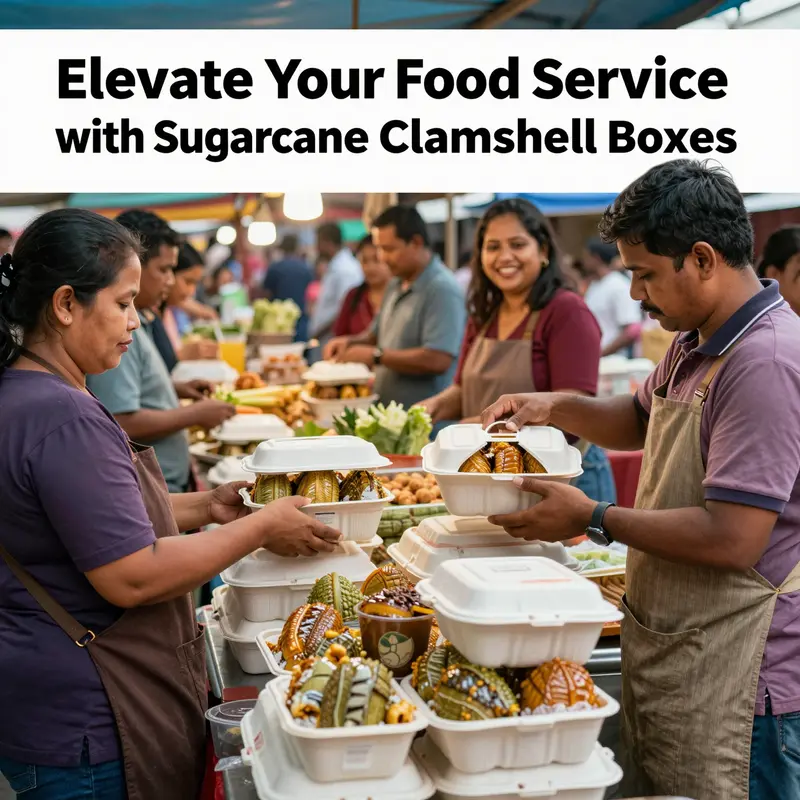
The shift toward sustainable packaging is not a splash but a current that runs through the entire food service ecosystem. In this evolving landscape, sugarcane clamshell boxes have emerged as more than a green alternative; they are becoming a practical standard for how brands frame their relationship with environmental responsibility. These containers, fashioned from sugarcane bagasse—the fibrous residue left after extracting juice from harvested stalks—embody a convergence of material science, supply chain adaptation, and consumer expectation. They are designed to be biodegradable and, in many cases, industrially compostable. What used to be a marginal option for niche cafe menus is now a mainstream packaging solution capable of meeting the demands of bustling takeout culture and the rising bar for responsible brand storytelling.
To understand why this material matters, it helps to picture the life cycle of the bagasse-based clamshell in practical terms. Bagasse is a renewable by-product, which means its collection relies on existing agricultural processes rather than extra land or dedicated crops. The result is a packaging substrate that aligns with a circular economy model: a by-product that would otherwise go unused finds a second life in packaging that can be disposed of with less ecological impact. That alignment is not only about end-of-life. It starts with the raw material’s inherent characteristics—stiffness, light weight, and an affinity for grease resistance—that make bagasse a viable platform for hot meals, cold beverages, and everything in between. A clamshell built from this material is designed to hold a burger without collapsing; a piece of cake or a layered salad without soaking through; and a burrito or sushi pack without crumbling under pressure during transit.
As these containers have become more common, manufacturers have refined the balance between performance and cost. The raw material’s natural fiber content provides a robust base, while modern processing techniques enhance barrier properties, enabling better grease resistance and moisture management. The result is a product that performs reliably in the back of a kitchen, then degrades in an industrial composting facility or, in some cases, in home composting systems where conditions permit. This practicality matters because the best environmental narrative is one that accompanies solid on-table performance with a clear, attainable end-of-life option. Consumers who choose a meal because it is tasty and convenient now also seek assurance that the packaging will not linger in the environment for years after disposal.
The market’s appetite for these vessels has grown in step with a broader consumer and regulatory push toward reducing plastic waste. Across regions, legislators are tightening the screws on single-use plastics and encouraging or mandating compostable alternatives for takeout and on-the-go foods. The logic is straightforward: when a container made from renewable fibers can deliver the same dining experience as a polystyrene box, businesses have a clear incentive to make the switch. The interplay between policy and practice is shaping how packaging suppliers design products, how restaurants select materials, and how logistics networks handle the sourcing, storage, and end-of-life processing of these boxes. Sugarcane clamshells are part of a larger portfolio of bagasse-based and other fiber-based options that together expand the possibilities for sustainable packaging in multiple contexts.
One practical dimension of this expansion is the design flexibility that suppliers offer. Sugarcane clamshells come in various sizes and configurations, including multi-compartment variants that help keep foods separate and maintain their integrity during transit. In a crowded takeout ecosystem, the ability to tailor packaging to different meal components—a sandwich with sides, a cake slice with toppings on the side, a bento-style assortment—becomes a significant competitive asset. The designs can be adjusted for portion control, consumer experience, and branding, all while maintaining the core environmental advantages. The growing trend toward customization is not merely about aesthetics; it is about how packaging can reduce waste by minimizing leakage, preserving freshness, and enabling more efficient stacking and transport in delivery networks.
Cost remains a central consideration for buyers weighing a shift to bagasse-based clamshells. The research landscape notes a spectrum of pricing that corresponds to order volume and customization. In bulk, the price can reach very low levels per piece, while smaller orders or more intricate designs carry higher unit costs. This pricing dynamic reflects the economics of fiber-based packaging where material availability, processing efficiency, and the scale of production influence the final price. For someone planning a restaurant launch, a festival, or a chain’s seasonal campaign, the ability to source these boxes in large quantities at favorable unit costs becomes a pragmatic factor in decision-making. Suppliers often offer free samples to help buyers assess quality and suitability before committing to larger orders, which helps bridge the gap between environmental aspiration and operational reality. The emphasis on sample availability also highlights the demand for evidence that the performance characteristics—heat tolerance, moisture management, and structural integrity—align with real-world use cases.
Beyond the culinary sphere, the momentum for bagasse-based packaging is fueling interest in new application areas. In retail contexts, the packaging is being positioned for produce, baked goods, and other ready-to-consume products where customers value sustainable packaging as a signal of brand ethics. In e-commerce, fragile items can ride in boxes made from renewable fibers that offer protective features, supporting a more sustainable last mile. Even pharmaceutical packaging is starting to explore the role of sustainable, fiber-based solutions in areas where product safety, sterility, and containment are paramount, albeit with stringent regulatory considerations. This cross-sector uptake signals that the sugarcane clamshell is not a one-note solution but part of a broader shift toward fiber-based packaging across the entire value chain.
A key driver in this transition is the enhanced product performance and aesthetics that contemporary manufacturing processes can deliver. Advances in material science and die-cutting technologies have improved the strength, heat resistance, and appearance of bagasse-based clamshells. For many brands, the choice is now less about proving compostability and more about ensuring that the packaging does not compromise the consumer experience. The modern clamshell can withstand hot foods without deforming, hold delicate items securely, and present a polished look that aligns with premium branding. This is not merely about environmental virtue; it is about delivering a confident consumer experience that mirrors the quality of the food inside. When a takeout meal arrives in a container that looks and feels sturdy, customers are more likely to associate the packaging with the quality of the product, reinforcing a positive feedback loop that strengthens brand loyalty and repeat purchase intent.
The storytelling dimension of sustainability has become a central facet of how businesses market themselves today. Packaging is no longer a passive container; it is a channel for conveying responsibility, transparency, and care for both people and the planet. Sugarcane clamshells, with their visible biobased content and compostable credentials, offer a tangible way for brands to demonstrate commitment to reducing plastic waste and carbon footprints. Companies are weaving this narrative into their menus, social media, and in-store experiences, turning packaging choices into a differentiator rather than a mere compliance requirement. The communicative power of sustainable packaging matters because it connects with consumers who are increasingly discerning about how the products they choose are made and disposed of. While taste and convenience remain essential, the packaging experience now contributes to the perceived value of the entire meal or product experience.
The numbers and projections attached to this packaging shift are matched by a growing body of market intelligence that frames the future potential of bagasse-based disposables. Market analyses forecast substantial expansion in the global market for sugarcane-based disposable tableware, of which clamshell containers are a core segment. This growth is not simply a matter of more boxes being sold; it is about the emergence of a more diverse and resilient ecosystem around sustainable tableware. Innovations in design, coatings, and barrier technologies are broadening the range of foods that can be packaged in sugarcane fibers, from hot soups to dense, sauce-laden dishes. As applications diversify, so do the business models around supply, service, and aftercare of packaging use—creating opportunities for manufacturers, distributors, and hospitality operators alike.
For buyers navigating this terrain, the considerations extend beyond material selection to include how the packaging aligns with broader sustainability strategies. A growing emphasis on brand sustainability messaging invites brands to articulate a coherent story about packaging choices as part of a larger environmental plan. This involves not only choosing compostable materials but also implementing family-friendly end-of-life guidance for customers, developing take-back or composting partnerships where feasible, and communicating realistic expectations about home versus industrial composting timelines. In practice, this means packaging is designed with clear disposal instructions or labeling that helps customers understand the most appropriate way to process the material after use. When execution is thoughtful, the packaging can contribute to consumer education as well as to waste reduction outcomes.
From a procurement perspective, the practicalities of sourcing sugarcane clamshells are shaped by supply chain relationships, quality assurance, and the availability of flexible ordering. The ability to customize sizes and configurations, including multi-compartment designs, is particularly valuable for operators who aim to streamline their dining formats and maintain consistency across locations. The sourcing story also involves evaluating the environmental credentials of suppliers, understanding the conditions under which the boxes degrade, and assessing the overall lifecycle impacts through a cradle-to-grave or cradle-to-cradle lens. In this context, the debate about compostability sometimes hinges on regional facilities and local composting infrastructure. Operators must align expectations with the realities of where the packaging will be processed after use, ensuring that the environmental benefits of the material are realized in the communities that purchase and dispose of it.
The broader industry dialogue about sugarcane clamshells is shaped by the availability of educational resources and market reports that track trends, technological advances, and policy developments. As new data arrives, brands can calibrate their packaging choices to reflect evolving consumer priorities and regulatory expectations. The current trajectory suggests continued investment in material performance, design flexibility, and sustainability storytelling, all of which underpin a future in which fiber-based packaging gains momentum beyond traditional food-service roles. The collective impact of these trends is a packaging landscape that is more resilient, more responsible, and more aligned with the needs of a world where waste and resource stewardship are central concerns.
For readers seeking a broader lens on this market, recent analyses project growth and diversification across applications, with sugarcane-based disposable tableware expanding into trays, bowls, and various forms of takeout packaging. The narrative is not merely about replacing one material with another; it is about reimagining how packaging can contribute to a lower-carbon footprint, improved waste management, and more transparent consumer communication. The implications for operators—from independent eateries to multi-location brands—are practical as well as aspirational. They point to a packaging future where sustainability and performance are not trade-offs, but convergent goals pursued with deliberate design choices, careful supplier selection, and a willingness to engage customers in new, proactive ways about how packaging supports a healthier planet.
In closing, the ascent of sugarcane clamshell boxes signals a meaningful shift in how the food service industry negotiates the demands of convenience, performance, and environmental accountability. The material’s renewable origin, combined with its evolving processing capabilities and expanding end-of-life options, positions it as a cornerstone in a broader strategy to reduce plastic waste and advance circular economy principles. The packaging choice becomes an overt statement of intent—an operator’s commitment to responsible practice that resonates with customers who value both quality and stewardship. As technology, policy, and consumer expectations continue to converge, the sugarcane clamshell’s role in the packaging ecosystem seems poised not merely for continued adoption but for meaningful maturation, with design innovations and end-use partnerships pushing the boundary of what sustainable takeout can be.
For further context on market dynamics and growth projections, see the external market analysis: Sugarcane Bagasse Based Disposable Tableware Market Trends: Intelligence & Size 2026-2033. This report offers a comprehensive look at how fiber-based disposables are expanding in scope and application across industries, helping readers situate the sugarcane clamshell within a larger global transition toward sustainable tableware. External resource.
Within the body of this chapter, the practical takeaway for brand managers and packaging buyers is clear: when you pair a material that is renewable and compostable with thoughtful design and transparent consumer messaging, you create a packaging proposition that supports both taste and trust. The sugarcane clamshell is not a one-off trend; it is a building block for a more sustainable, adaptable, and informative packaging world. And as the market continues to evolve, operators will increasingly expect—if not demand—options that deliver robust performance, clear disposal pathways, and a narrative that customers can carry forward with them beyond the point of purchase. This is the arc that sugarcane clamshells are helping to write—a story of strength, stewardship, and shared responsibility that keeps pace with the ever-growing demand for packaging that respects both people and the planet.
In practical terms, for teams exploring these options, a careful assessment of supplier capabilities, product certifications, and sample testing remains essential. It is also important to consider how packaging choices align with the rest of a venue or brand’s sustainability framework. The combination of material science, consumer expectations, and policy impetus is shaping a future in which sugarcane clamshells are not simply viable; they are integral to how food service communicates value and responsibility in a crowded marketplace. The journey from bagasse to box is, in effect, a journey toward a packaging system that honors resource streams, supports food safety and quality, and offers a credible platform for telling a brand’s environmental story—an intersection where practicality and principle meet under one recyclable lid.
Final thoughts
Incorporating sugarcane clamshell boxes into your food service operations is not just a conscious choice toward sustainability; it’s a smart business strategy that appeals to a growing segment of environmentally aware customers. As the demand for greener solutions rises, these biodegradable containers offer an effective way to align your brand with eco-friendly practices. By understanding the environmental benefits, economic viability, and market dynamics of sugarcane packaging, businesses can confidently make decisions that not only aid in reducing plastic waste but also enhance customer loyalty and brand value.