
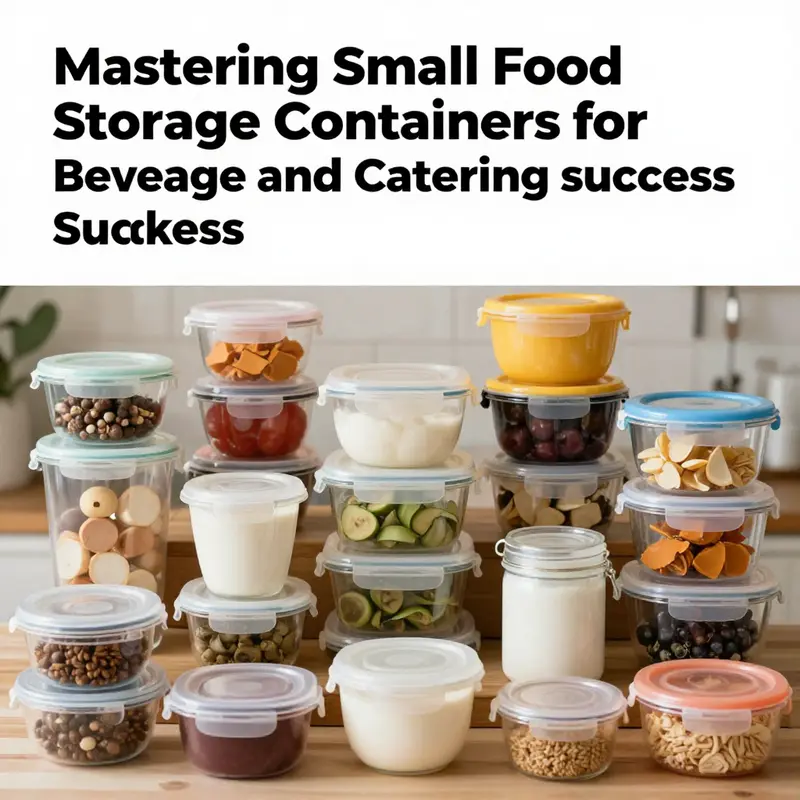
Small food storage containers play an indispensable role in organizing and preserving items for many sectors, particularly in bubble tea shops, restaurants, food trucks, and catering services. As businesses strive for efficiency and customer satisfaction, understanding the wholesale market for these containers becomes essential. Each chapter of this article dives into critical aspects, from current market trends to material safety standards, effective pricing strategies, and sustainability considerations, all tailored to guide beverage chains and catering professionals toward making informed decisions for their business needs.
Beyond the Clear Lid: Market Trends Shaping Wholesale Small Food Storage Containers
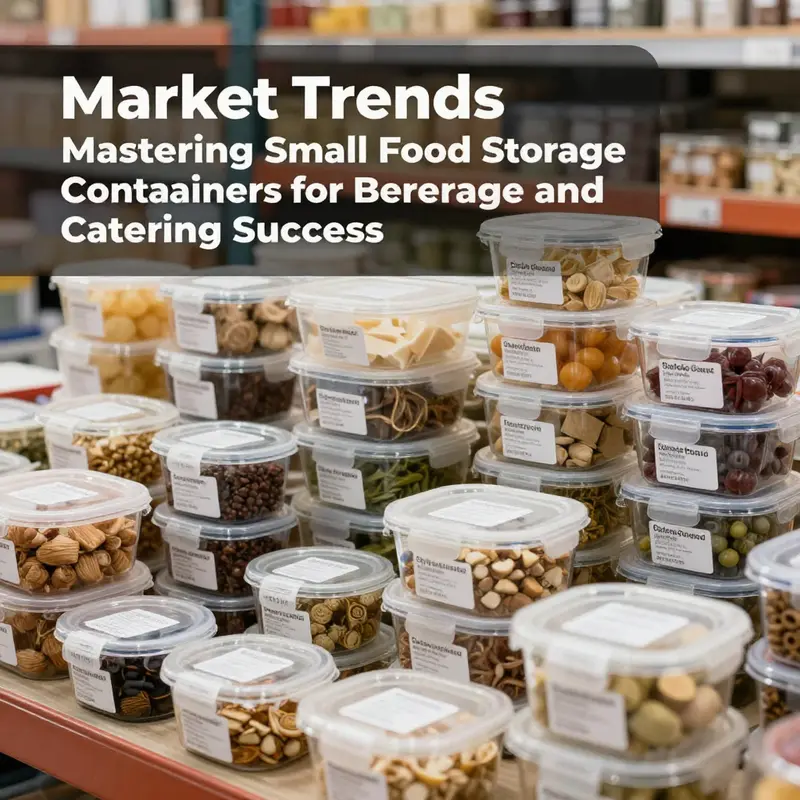
The wholesale market for small food storage containers sits at a crossroads where everyday practicality meets strategic logistics, where brands must balance cost, safety, and sustainability without sacrificing speed or scalability. In the broader arc of wholesale packaging, these containers are more than vessels for leftovers or pre-portioned meals. They are signals of consumer behavior, reflections of regulatory regimes, and test beds for manufacturing ingenuity. In recent years, the market has moved beyond a simple equation of price per piece and durability. It now folds in material science, automation, and design versatility as core levers for growth. This evolution is evident in three intertwined directions: a push toward sustainable materials and circularity, a demand for functional and smart features that enhance freshness and convenience, and a geographic and technological expansion that expands both supply and demand in near real time. To understand where buyers should place bets, it helps to trace how these currents interact and how they shape the choices brands face when sourcing wholesale containers at scale.
Sustainability sits at the heart of the current transformation. Consumers and retailers alike are modeling packaging decisions around environmental responsibility, a shift intensified by policy imperatives and global carbon ambitions. Biodegradable and recyclable materials—such as PLA, PBAT, and bamboo fiber—are no longer niche options but mainstream considerations for wholesale buyers seeking to align with long-term branding and regulatory compliance. The double carbon agenda—carbon peak and carbon neutrality—frames not just product specs but the entire value chain, from resin selection to end-of-life disposal. In practical terms this means more containers designed for recyclability, easier disassembly for recycling streams, and new composites that maintain clarity and strength while reducing embodied energy. The result is a more diverse material palette than ever before. Clear rigid plastics remain popular for their balance of clarity, lightness, and impact resistance, yet they are increasingly complemented by formats that can claim a more sustainable narrative. For some brands, the appeal is a premium glass or glass-like substitute that offers perceived durability and a premium look, while for others, a compostable or recyclable polymer blend reduces the environmental footprint of bulk orders. The trend is not just about materials but about life-cycle thinking. Suppliers are increasingly marketing cradle-to-cradle or at least cradle-to-recycling narratives and offering take-back programs or recycling guidance that helps retailers close the loop with customers.
With sustainability comes an intensified focus on functionality. The chapter of simple, single-use storage is giving way to containers designed for a spectrum of practical needs—leak-proof seals that keep contents secure in transit, stackable profiles that optimize shelf and shelf-edge display space, and portion-control features that speak directly to meal prep and dietary planning. The emergence of smart features marks a notable frontier. Basic durability now sits alongside capabilities such as integrated freshness indicators, smart vents that regulate moisture, and even sensor-enabled lids that help track storage time through connected apps. Market analyses project a substantial ascent for smart storage devices, with projections showing a growth from roughly $211.8 million in 2025 to as much as $607.1 million by 2035. That expansion is not just about gadgets but about a broader promise: better preservation of flavor and texture, reduced food waste, and more precise inventory management for both households and food-service operations. As buyers evaluate proposals, they increasingly weigh how a container’s features translate into reduced spoilage, easier compliance with cold-chain requirements, and clearer communication to end consumers.
Health and convenience constitute a parallel axis of demand that is deeply intertwined with the other trends. The rise of meal-prep culture and home-cooking kits has elevated the need for containers that can withstand repeated use, resist contamination, and maintain hygienic integrity across multiple handling steps. Consumers want products that are easy to clean, dishwasher-safe, and compatible with cold, cool, and sometimes warm storage—while cautioning against heat exposure that could warp plastic seals or degrade clarity. Ready-to-eat and frozen meal formats intensify this demand, as brands seek out storage solutions that preserve taste and nutritional value over longer periods. In response, manufacturers are expanding offerings that pair robust seals with clear, shatter-resistant bodies, and are exploring coatings that resist staining and repellent to odors. The emphasis on health extends to certifications and safety assurances. FDA and LFGB compliance remain top-line requirements, but buyers are also looking at third-party tests for migration and leachables, especially for containers intended to hold acidic or fatty foods. In a crowded wholesale marketplace, this emphasis on safety becomes a mark of trust that can justify premium pricing or enable longer contract terms with large distributors.
The geographic dimension of this trend cycle is equally telling. The global market for small food storage containers is expanding quickly, with forecasts suggesting a broadening footprint across regions as both demand and production capabilities rise. The market is expected to grow from about $3.23 billion in 2025 to $3.57 billion in 2026, a strong sign of momentum and resilience. The compound annual growth rate, around 10.4 percent, signals sustained appetite for scale, customization, and rapid fulfillment. Within this landscape, China stands out as a powerhouse for domestic production and a rising consumer base, with the domestic market projected to exceed substantial thresholds by 2030. Policy support in Western regions also opens doors to new manufacturing clusters, where automation and digitization can drive efficiency and reduce lead times. This regional expansion is not merely about selling more containers; it is about creating end-to-end supply capabilities that can respond to shifting demand patterns, from bulk food-service orders to retail and e-commerce channels that demand shorter cycle times.
Technology also reshapes the way manufacturers operate. The wholesale segment increasingly leverages automation, robotics, and data-driven production to deliver precision, repeatability, and speed at scale. Intelligent manufacturing—flexible lines, programmable molds, and real-time quality analytics—enables suppliers to offer more diverse shapes, sizes, and customization options without sacrificing throughput. For buyers, this translates into more options for private labeling, more reliable supply under volatile macro conditions, and the ability to implement brand-specific packaging architectures that differentiate products on shelf. The confluence of automation with eco-conscious materials creates a virtuous loop: automated processes reduce waste by optimizing resin usage and improving yield, while advanced materials require new process control to preserve optical clarity and barrier properties. As the sector matures, the capacity to scale through precise manufacturing becomes as important as material choice or branding strategy.
For buyers, the sourcing landscape remains highly dynamic. A robust wholesale market is built on a mix of certifications, capacity, and timing. FDA and LFGB compliance continue to be non-negotiable for many buyers, while regional certifications help ensure smoother distribution in targeted markets. A supplier’s production capacity and lead times are critical, especially when seasonal demand surges or when retailers launch time-limited promotions. The ability to bundle items into multi-pack sets—such as a 15-piece kitchen storage set—can reduce logistics complexity and support consumer-ready merchandising. At the same time, shipping logistics, including proximity to manufacturing hubs and the reliability of freight networks, influence total landed cost and service levels. The modern buyer also considers customization options—private labeling, color and lid options, and even mold development for distinctive product shapes. This demand for customization often accompanies pricing strategies that balance unit cost with minimum order quantities. In many cases, the lowest per-piece price tends to be associated with relatively higher MOQs, but volume-based discounts can compress per-unit costs substantially as orders rise beyond the 1,000-piece mark.
The market has not disregarded the experiential aspect of packaging. Design versatility is a central selling point. Consumers want to see content easily, so clear bodies with tight, reliable seals remain a staple. Yet the design language is evolving to incorporate branding opportunities through color-tinted bodies, branded lids, and bespoke mold options that align with a product line’s visual identity. The desire for multi-functionality also plays out in container shapes and sizes. Round and rectangular profiles, modular stackability, and nested designs maximize space in cold storage while offering a cohesive display in retail environments. However, these design ambitions must be tempered by practical considerations. Plastic remains prone to warping under high heat, a reality that makes certain applications more suitable for cold-storage or room-temperature environments rather than oven-safe use. In contrast, premium glass or glass-like materials are marketed for durability and reusability, but they demand careful handling and can command higher upfront costs in wholesale terms. The strategic choice between cost efficiency and brand storytelling often hinges on how well a supplier can demonstrate both performance and lifecycle value, including end-of-life options that align with sustainability narratives.
One practical implication for brands navigating wholesale procurement is the breadth of options available at different price points and service levels. For instance, basic plastic containers may begin at remarkably low unit costs when orders are modest, but volume incentives rapidly change the economics. Private labeling and custom mold development are increasingly accessible, enabling brands to inject identity into even small storage formats. The ability to source sample kits or pilot lots can de-risk decisions before committing to larger runs, a practice that is especially valuable when exploring new materials like PLA-based blends or bamboo fiber composites. In evaluating suppliers, buyers also weigh the total package: packaging quality, labeling autonomy, lead times, and the reliability of after-sales support. The result is a procurement culture that rewards confidence: confidence in material safety, confidence in manufacturing capability, and confidence in the supplier’s ability to scale alongside a brand’s growth trajectory.
For brands exploring concrete pathways to align with both business goals and ethical commitments, practical packaging choices like kraft paper storage bowls offer a compelling case study. These options illustrate how sustainability, branding flexibility, and consumer perception can converge in a wholesale setting. The kraft paper format, with its natural aesthetic and potential for customization, can support a narrative around responsible packaging without compromising on storage performance. The opportunity to imprint logos, slogans, or seasonal themes on a durable, recyclable vessel can translate into stronger shelf impact and broader consumer resonance. See an example of how wholesale kraft paper storage solutions are positioned in the market here: Wholesale Kraft Paper Food Storage Bowls.
As buyers plan for the year ahead, the strategic emphasis should be on balancing sustainability with performance, cost with delivery speed, and branding with safety. The wholesale market rewards those who anticipate regulatory shifts, who adopt materials that can be reliably produced at scale, and who leverage automation to keep lead times predictable while expanding customization options. It rewards those who understand that a container’s environmental story matters as much as its technical specifications. The practical takeaway is clear: to compete effectively, a sourcing strategy must integrate material science literacy, supply chain agility, and product design sensibility. Forging that integration creates a portfolio of storage solutions that not only protect food but also align with evolving consumer values and policy ambitions. This alignment, in turn, supports more resilient wholesale partnerships, smoother international trade, and a stronger brand position in a marketplace where even a small container can carry a large message.
External reference for broader context: https://www.marketsandmarkets.com/Market-Reports/small-food-storage-containers-market-293553532.html
Material Choices and a Compliance Roadmap for Wholesale Small Food Storage Containers
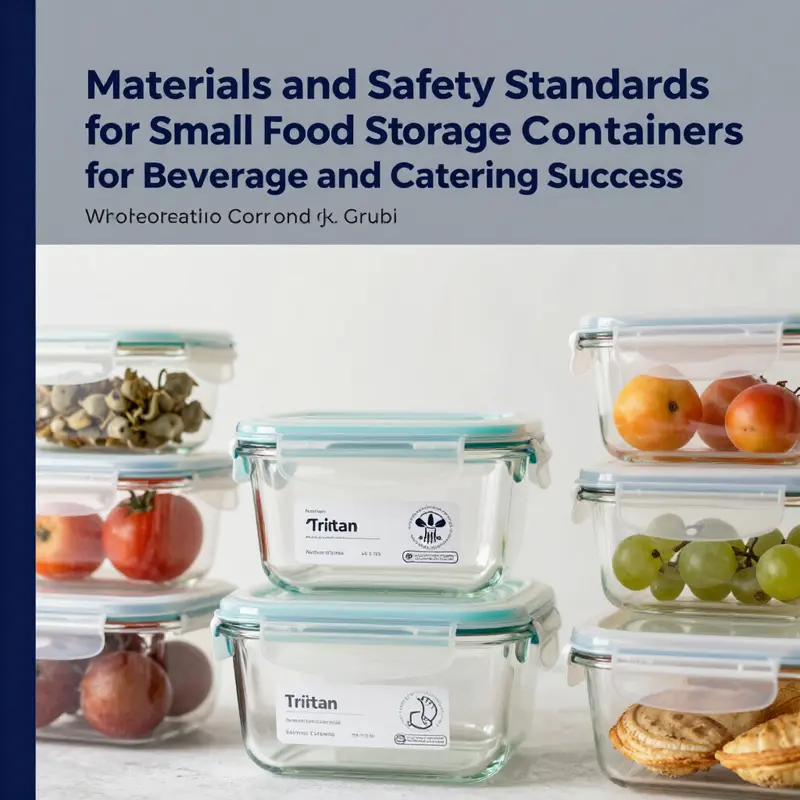
Materials and Safety Standards: a practical roadmap for wholesale buyers
Choosing the right materials for small food storage containers goes beyond aesthetics and cost. For wholesale purchasers, material choice dictates regulatory compliance, product longevity, and brand reputation. When you select containers for resale or use in foodservice, focus on three overlapping priorities: food-contact safety, physical performance, and traceable documentation. Addressing these areas together reduces risk and smooths the path from sample to full production.
Start with material fundamentals. Approved food-contact materials fall into a few distinct families. Rigid plastics such as polyethylene (PE), polypropylene (PP), and polyethylene terephthalate (PET) are widely used. They are cost-effective and lightweight, and they generally meet food-contact rules when manufactured to standard. Glass—particularly borosilicate or tempered varieties—offers chemical inertness and thermal resistance. Stainless steel provides durability and corrosion resistance, ideal for repeated use in professional kitchens. Paper and cardboard can be acceptable for short-term storage or take-away if certified food-safe and free of harmful coatings. Ceramic and porcelain are viable when glazed with certified, lead-free, and cadmium-free coatings. Each of these materials carries distinct compliance and performance implications that wholesale buyers must verify.
Regulatory frameworks differ by market but share common goals: prevent harmful migration into food and ensure product stability under normal use. Major regimes include the U.S. FDA, the European Union EC 1935/2004, and national GB standards in China. The FDA requires manufacturers to use approved food-contact substances and to register when exporting to the U.S. The EU sets limits for total migration and specific migration of substances into food, and it requires testing under simulated use conditions. China’s GB standards establish baseline safety for materials in contact with food and often include local certification or marking that buyers should check. Many global suppliers also align with ISO 22000 or FSSC 22000 food safety management systems, which ease market entry across regions.
Testing is central to acceptance. Chemical migration testing determines whether components leach into food at unsafe levels. Tests vary by food type, contact duration, and temperature. For instance, acidic or fatty foods provoke different interactions with packaging materials than dry foods. Wholesale buyers should require migration reports from accredited labs. These reports should state the test conditions, detection limits, and the regulatory benchmarks used. In addition to migration testing, materials should undergo mechanical and thermal testing. Plastics need assessments for heat resistance and warp potential. Glass and ceramics require thermal shock and impact testing to ensure they remain safe across handling scenarios common in kitchens and retail.
Documented traceability is non-negotiable for wholesale deals. A compliant supplier provides clear labeling of material composition, batch numbers, manufacturing dates, and test certificates. Look for documentation that names the lab and the accreditation body. Certificates that simply claim compliance, without supporting lab reports, carry limited value. A robust documentation package includes raw material specifications, production records, and finished-product test results. These pieces together create accountability and simplify any regulatory audit.
Certifications and marks matter. In some markets, visible marks or codes indicate official oversight. For plastic food-contact items, confirmation of compliance with FDA regulations, or with EU migration limits, is essential. For paper-based products used in foodservice, verify that inks and coatings are food-safe and that the product has the appropriate food-contact marking. Stainless steel should specify grade and any surface treatment. For ceramics, request proof of lead and cadmium testing. Beyond regulatory compliance, many buyers look for voluntary certifications that signal commitment to hygiene and quality management, such as FSSC 22000.
Performance factors influence suitability. Chemical stability and physical durability determine whether a container holds up to real-world use. Chemical stability means the material does not break down or release harmful compounds when exposed to acids, fats, or heat. Physical durability encompasses resistance to cracking, warping, or mechanical failure during shipping and daily handling. Hygiene is closely tied to surface finish; smooth, non-porous surfaces prevent bacterial buildup and simplify sanitation. For reusable containers, compatibility with cleaning methods—dishwasher cycles, steam sterilization, or hand-washing—is important. Plastics that warp at high heat are unsuitable for oven use. Glass and stainless steel usually withstand higher temperatures, but they bring weight and fragility trade-offs.
Design features also affect safety. Airtight seals reduce spoilage and prevent cross-contamination. Stackable forms improve logistics and retail display but must remain stable when loaded. Transparent or translucent lids aid content identification, reducing the need to open containers. If you plan private labeling or custom molds, consider how changes in geometry or wall thickness will affect migration and mechanical performance. Customization may require fresh testing to confirm that modified dimensions do not alter compliance outcomes.
Supplier verification should be systematic. Request samples first and run independent testing if possible. A reliable supplier will provide sample kits and share prior lab reports. Confirm production capacity and lead times to ensure they meet your order schedule. Ask about quality control steps in the facility, including in-line inspection criteria, batch sampling plans, and rejection thresholds. Request photographs or videos of the production line and storage conditions, but insist on hard documentation as well. If you import, understand the supplier’s experience with your target market, and verify that they can support customs paperwork and supply chain transparency.
Sustainability is increasingly relevant. Eco-conscious buyers often prefer alternatives to conventional plastic. Glass jars with bamboo lids, or certified compostable paper containers, appeal to green-minded consumers. When choosing eco-friendly materials, ensure they still meet food safety standards. Biodegradable or compostable claims should be backed by recognized certifications and testing that verifies food-contact safety. If you opt for paper-based products, check for recycled content and water-resistance finishes that are food-safe. Some buyers pair sustainable materials with clear messaging on packaging to make compliance part of the product proposition.
Labeling and product information are crucial at retail. Labels should include material composition, intended use, care instructions, and safety warnings where relevant. If a container is not oven-safe, mark it clearly. State dishwasher compatibility and any temperature limits. Include batch or lot numbers to aid traceability. For wholesale bundles or multi-piece sets, provide a complete contents list and instructions for storage to retailers. Clear labeling reduces consumer misuse and potential liability claims.
Practical procurement tips help buyers avoid common pitfalls. First, align sample testing with real-world use. Test containers with representative food types, at expected temperatures and durations. Second, plan for regulatory variance across markets. A container that meets one standard may not meet another without additional testing. Third, budget for repeat testing when you change suppliers, materials, or designs. Fourth, factor in shipping and packaging protections. Containers must survive transit without damage that compromises safety, such as cracked seals or chipped glass. Finally, consider multi-pack sets as a route to higher perceived value, but ensure every component in the set meets the same safety criteria.
When you evaluate suppliers, ask for evidence of continuous improvement. Good manufacturers conduct periodic audits of their processes and raw materials. They also track complaint rates and maintain corrective action logs. These practices are signs of mature quality systems that reduce long-term risk for bulk buyers.
Operationally, include compliance clauses in purchase agreements. Require updated certificates for each production run and specify acceptance criteria. Make a plan for non-conforming goods, including timelines for replacement or credit. Establish inspection points, such as pre-shipment inspections and random batch testing on receipt. These measures are standard in wholesale procurement for food-contact items.
Material selection, testing, and supplier oversight work together to protect both consumers and brands. When you prioritize materials that are demonstrably food-safe, request full test documentation, and insist on clear traceability, you avoid costly recalls and reputational damage. Thoughtful choices about design, cleaning, and labeling further reduce misuse and extend product life. For buyers balancing cost, performance, and sustainability, a measured approach that layers regulatory proof and practical testing yields the best outcomes.
For environmentally minded options, consider certified paper solutions suitable for food contact. For example, many suppliers offer kraft paper bowls that are food-safe and compostable, providing a lower-impact alternative to plastic for single-use scenarios. Explore sample options and certifications for these products to ensure regulatory alignment with your target market: https://greendispopack.com/product/biodegradable-eco-friendly-take-away-odm-oem-round-kraft-paper-bowl/
Finally, keep authoritative resources handy. Regulatory text and approved substance lists provide the definitive answers for allowed materials and conditions of use. When in doubt, consult an accredited lab or regulatory expert to interpret test results and advise on cross-border requirements. The FDA maintains a searchable database of approved food-contact substances and usage conditions that is useful for buyers serving the U.S. market.
External reference: FDA Food Contact Substances Database – https://www.accessdata.fda.gov/scripts/cdrh/cfdocs/cfcfr/CFRSearch.cfm?fr=174.5
Pricing Playbook for Wholesale Small Food Storage Containers: Cost Drivers, Models, and Negotiation Levers
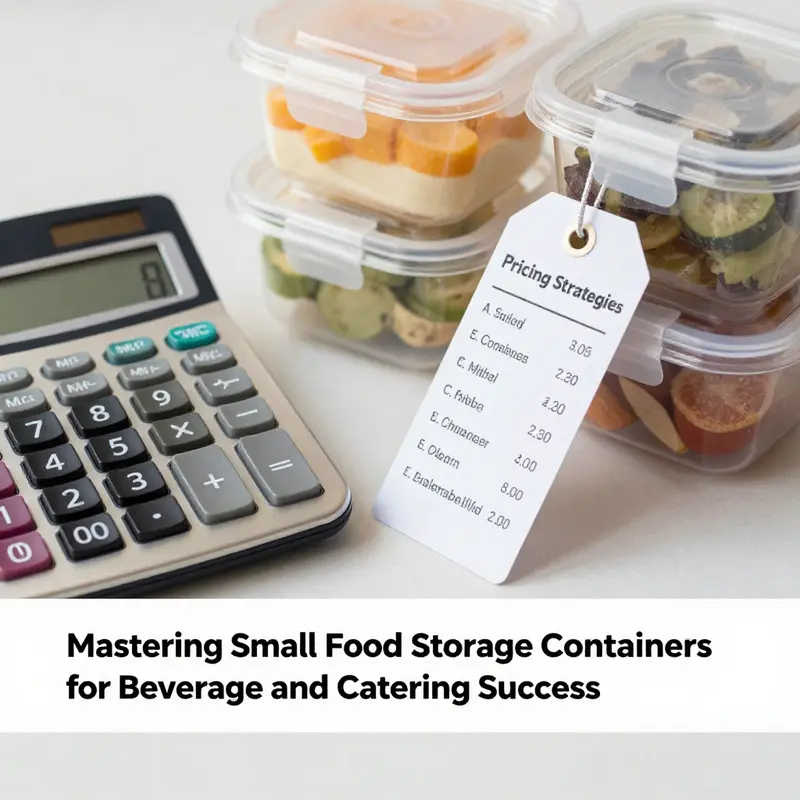
Pricing Playbook for Wholesale Small Food Storage Containers: Cost Drivers, Models, and Negotiation Levers
When setting wholesale prices for small food storage containers, every line on the cost sheet matters. Materials, tooling, production capacity, shipping, certifications, and after-sales service each shape the final offer. A clear pricing playbook helps buyers and sellers align on margins, terms, and expectations. This chapter walks through the dominant cost drivers, practical pricing models, and negotiation levers that determine profitable, competitive wholesale pricing for small food storage containers.
Raw materials set the baseline. Food-grade polypropylene and clear rigid plastics remain common because they balance safety and cost. Glass with wooden or bamboo lids commands a higher base price. Material choice influences not just the raw cost, but tooling, cycle times, defect rates, and packaging requirements. For plastics, regional supply chains matter: manufacturers with easier access to polymer resins and integrated molding facilities often produce lower unit costs. For glass and bamboo combinations, higher material cost pairs with greater perceived value, which supports premium pricing.
Tooling and production complexity form the next major component. Injection molds, lid mechanisms, gasket systems, and multi-compartment designs require up-front investment. Tooling amortization is seldom visible in a single sample price, but it is a constant in unit pricing. Simple round containers have low tooling amortization. Containers with integrated seals, locking clips, or multi-compartment inserts require deeper pockets for molds and quality testing. Buyers should ask suppliers how tooling costs are amortized across order quantities. A supplier may recover tooling in the first batch, or spread it across several purchase orders. Understanding this amortization schedule allows buyers to calculate accurate landed cost per unit at different volumes.
Volume and economies of scale are decisive. Unit cost often drops dramatically once orders reach defined thresholds. Many factories publish price breaks at tiers such as 100, 500, and 1,000 pieces. Beyond those points, labor and overhead become smaller fractions of unit cost. Buyers who can commit to larger or recurring orders can secure lower per-unit prices. Negotiated, tiered pricing is most effective when anchored to clear forecasted volumes and minimum purchase commitments. Suppliers are typically willing to offer discounts in exchange for multi-year or repeat order agreements that smooth their production planning.
Design complexity also affects cycle time and scrap rates. Transparent lids, clear walls, and thin-walled designs require precision molding to avoid warping or cosmetic defects. Containers intended for retail display may demand higher optical clarity and tighter tolerances. These factors increase the reject rate and the inspection burden during production. When suppliers factor these quality controls into price, buyers should assess whether the premium aligns with their market positioning.
Logistics and geography play a critical role in landed cost. Production hubs with efficient port access and consolidated export services can keep shipping costs low. Conversely, remote producers may add inland freight and handling fees. For international buyers, total landed cost includes freight, customs duties, insurance, and local handling. Incoterms matter. Prices quoted on an ex-factory basis look low, but once freight and duties are added, the effective unit cost can rise substantially. Comparing quotes requires standardizing to the same Incoterm, such as CIF or DDP, and factoring in reliable estimates for freight and duties.
Certifications and compliance establish trust and justify price premiums. Food-contact approvals, such as relevant regulatory certifications, increase testing and documentation costs. Suppliers that maintain certification records and third-party test reports often charge more. Yet certified products reduce downstream risk, speed customs clearance, and protect brand reputation. For brands selling in higher-regulation markets, certification is less negotiable. Buyers should include the cost of required certifications in their pricing model and weigh those costs against the potential for faster market access and higher retail prices.
Packaging and kit configuration change pricing dynamics. Multi-piece sets, nested containers, and gift-quality packaging all add cost and perceived value. A 15-piece kitchen set may sell at a higher absolute price but at a lower per-unit cost after packaging economies. Buyers should model both single-unit and kit pricing. Bundles can be used strategically in go-to-market plans. They create price anchors in retail, increase basket size in e-commerce, and simplify SKU management for wholesalers.
Sustainability claims and material substitutes create pricing differentiation. Reusable glass jars with renewable lids attract health- and eco-conscious consumers. Their higher production cost translates to a premium but also to stronger margins for brands that can persuade buyers to pay more. Conversely, recycled plastics and bioplastics may carry higher raw material prices or more variable supply. Buyers must decide whether a sustainability premium is essential to their positioning, and then quantify how much of that premium can be passed to end customers without harming demand.
Several pricing models are commonly used, and each serves a different strategic aim. The simplest is cost-plus pricing. The buyer or seller sums estimated costs, then applies a target margin. This method is transparent and straightforward. It works well when variable costs are stable and volume forecasts are reliable. However, cost-plus ignores market demand and competitor pricing.
Tiered pricing or volume discounts reward scale. Suppliers set price breaks at defined quantity thresholds. This model encourages larger orders and reduces per-unit cost. For buyers, committing to tiered pricing requires accurate forecasting and sufficient warehousing. For suppliers, volume tiers help with production planning and inventory turnover.
Value-based pricing looks beyond cost. It ties price to the perceived benefit in the customer’s market. Glass jars marketed as premium home goods justify higher wholesale and retail prices. Value-based pricing demands stronger branding, differentiated packaging, and often, entry support like point-of-sale materials. It is effective when the end market values premium attributes such as design, sustainability, or certification.
Penetration and skimming strategies address market entry. A penetration price starts low to secure shelf space and volume. It can accelerate market adoption but reduces early margins. Skimming sets a high initial price for premium items, then gradually lowers it to capture cost-conscious customers later. These tactics require planning for inventory lifecycle and production flexibility.
Risk-adjusted pricing accounts for supplier reliability and external variables. Long lead times, political or currency risk, and raw material volatility should be priced into quotes. Some buyers accept variable pricing tied to commodity indices to share the risk of resin price swings. Others prefer fixed-price contracts that carry a risk premium. Both approaches are valid; the choice depends on risk tolerance and cash flow.
Negotiation levers are practical and effective when used in combination. Committing to longer lead times or consolidated shipments reduces freight and handling. Agreeing to longer payment terms may secure a lower unit price because it eases the supplier’s cash flow. Offering to place orders during off-peak production months can lead to lower rates. Sharing tooling costs with the supplier or amortizing them across multiple SKUs can reduce immediate cash outlay.
Samples and upfront testing also have pricing implications. Sample fees exist to cover tooling validation and quality checks. Well-structured sample processes reduce the risk of later defects. Buyers should treat sample fees as an investment in production assurance and likely deduct them from the first large order’s invoice when feasible.
Operational tactics can improve margins without changing unit price. SKU rationalization reduces complexity and lowers tooling needs. Fewer SKUs mean more predictable runs and lower per-unit overhead. Forecasting with suppliers enables better scheduling, reducing rush fees and overtime charges. Local consolidation centers can lower final-mile costs while preserving faster replenishment cycles.
Payment terms and financial instruments matter. Letter-of-credit arrangements, milestone payments, and escrow services provide security for both parties. Currency management is important when dealing with long lead times. Hedging or invoicing in a stable currency helps reduce the impact of exchange rate swings on margin.
Supplier selection is inseparable from pricing. Suppliers in different manufacturing hubs offer distinct advantages. Some regions excel at low-cost, high-volume plastic production. Others have stronger export logistics or better access to specialty materials. Assessing supplier capacity, quality systems, and communication responsiveness is as important as the quoted price. A slightly higher-priced supplier with consistent quality and reliable lead times may deliver better total value than a cheaper but erratic alternative.
Finally, maintain a dynamic pricing playbook. Raw material markets and freight rates change quickly. Regularly update cost models, monitor certification requirements, and review supplier performance metrics. Use predictable reorder points and safety stock to protect against disruptions. Treat pricing as an evolving strategy, not a static number.
For buyers sourcing wholesale small food storage containers, a robust pricing strategy blends cost transparency, volume tactics, design and sustainability decisions, and logistics planning. When these elements are aligned, buyers and suppliers can create mutually beneficial contracts that protect margins and support scalable growth.
For a relevant example of customizable, wholesale food containers and packaging options, see a provider of wholesale custom kraft food storage bowls: wholesale custom kraft food storage bowls.
For a leading B2B marketplace where buyers can compare suppliers, quote structures, and minimum order quantities, consult the supplier platform: https://www.alibaba.com
Sustainable by Design: Wholesale Small Food Storage Containers
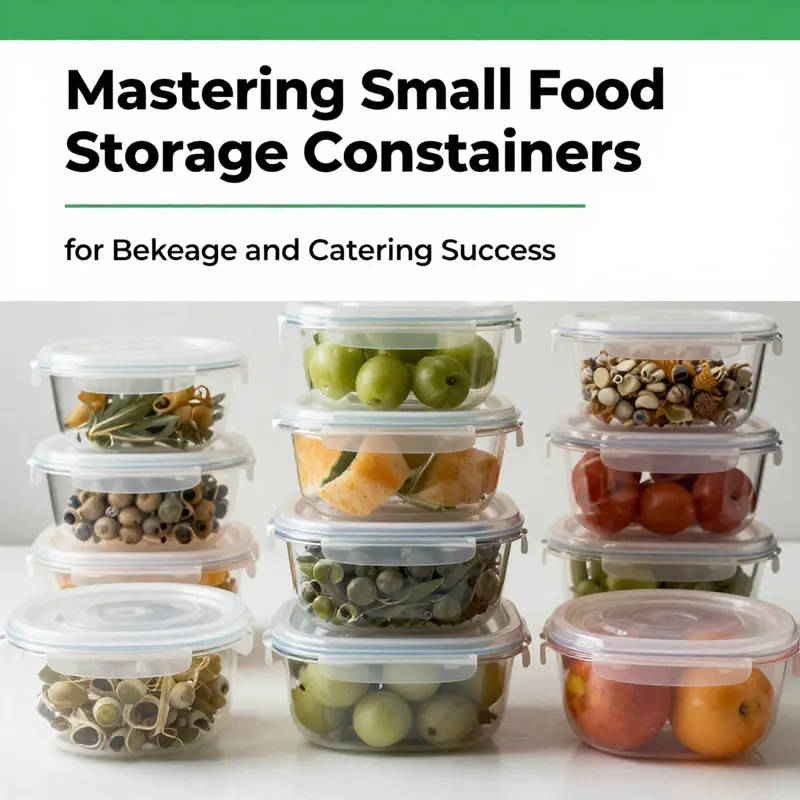
This chapter explores how wholesale buyers can balance performance, safety, and sustainability when selecting small food storage containers. It emphasizes material choice, lifecycle thinking, and end-of-life management as core procurement criteria, and it discusses glass, plastic, and stainless steel in terms of durability, recyclability, and supply-chain impact. Practical guidance covers when to prefer glass with durable lids, cautious use of plastics with transparent recycling information, and when steel makes sense for premium, long-life lines, all while considering total cost of ownership and environmental footprint.
Final thoughts
In conclusion, navigating the wholesale market for small food storage containers requires understanding market trends, material safety, pricing strategies, and sustainability considerations. By aligning your purchasing decisions with these factors, not only can you optimize your operations for efficiency, but you can also cater to the growing demand for eco-conscious products. A thoughtful selection of food storage containers can significantly impact your overall service quality and customer satisfaction. Embrace these insights to elevate your business, create lasting impressions, and maintain a competitive edge in the food and beverage industry.