
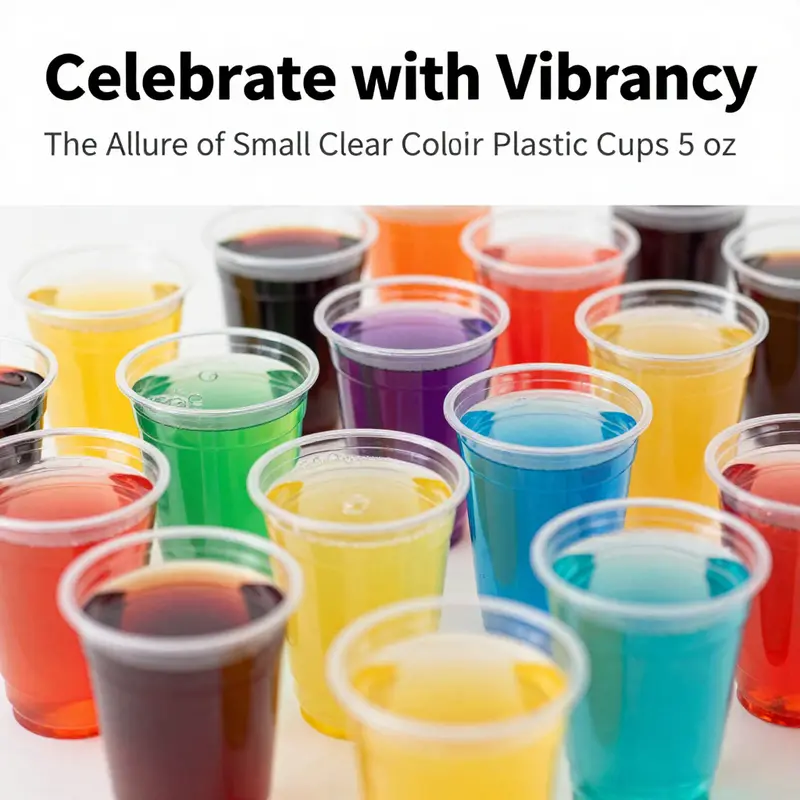
Small clear colorful plastic cups are redefining how beverages are served across various sectors, bringing a splash of color and fun to occasions like never before. As we journey through this article, we unveil the market landscape of these vibrant 5 oz cups, delve into their myriad practical uses at events, and explore the sourcing and production processes that ensure quality and safety standards. Whether you are a bubble tea shop looking for the perfect serving solution or an event planner seeking aesthetic appeal, understanding each segment will empower you to make informed choices that resonate with your brand and clientele.
Crystal Clarity and Hints of Color: Navigating the 5 oz Small Clear Plastic Cup Landscape
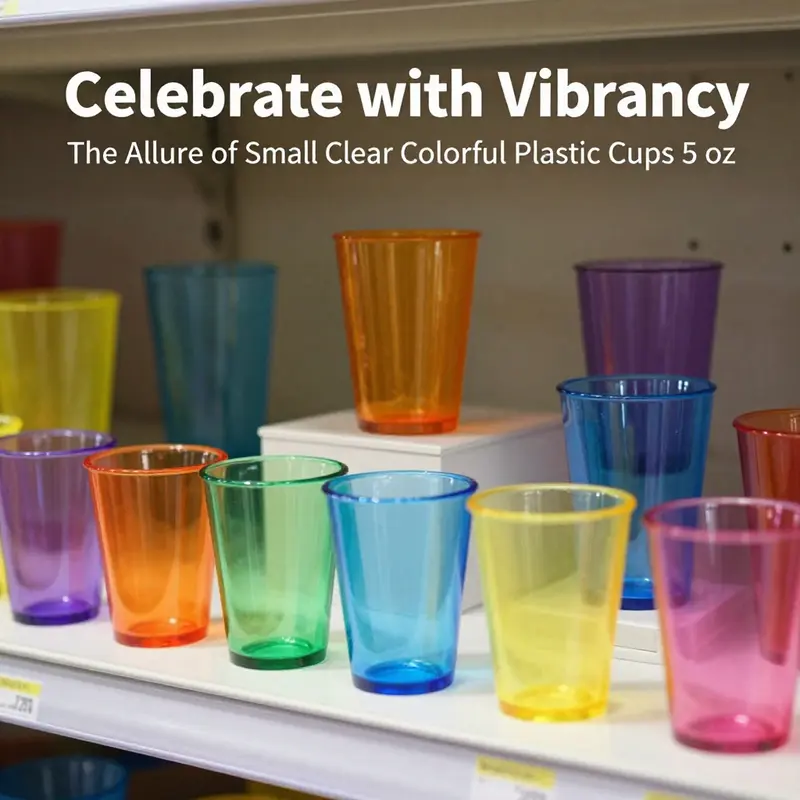
In the bustling world of disposable serveware, the small 5 oz cup sits as a quiet workhorse. It is the kind of item you notice only when it fails—when a spill or a weak seal disrupts a tasting, a party, or a catering service. Yet it is also an instrument of design, a tiny vessel that can carry a message about cleanliness, efficiency, and attention to the guest experience. When you look specifically at the market for these cups, the story that emerges is one of remarkable consistency in form and function, with a curious, undercurrent interest in color that rarely translates into widely available products in the field of 5 oz clear cups. The dominant reality is simple: most offerings in this size are clear, intended to present the drink or dessert as the centerpiece rather than the container itself. The idea of “colorful” cups—a theming ploy, a color-coded system for inventory, or a branding cue—exists as a potential, not as a standard, in this space. The tension between clarity and color becomes a useful lens for understanding not just what exists, but how buyers plan, procure, and deploy these cups across a wide spectrum of settings.
From tastings to kids’ parties, from buffet stations to take-out samples, the 5 oz clear cup is prized for its ability to disappear while it performs. The transmission of color through the beverage remains unaltered by the container, allowing the guest to evaluate the liquid’s hue without distraction. In many venues, the cup’s value lies in the reliability of its shape, its stackability for quick setup and restocking, and its clear surface that invites patrons to inspect reflectivity and cling-free rim aesthetics at a glance. Yet the market’s appetite for color—quietly, almost stealthily—persists. Event planners and brand-conscious caterers imagine a scenario where a subtle tint could complement a themed palette or where a bold hue could serve as a visual cue for differentiate samples during a tasting flight. The practical challenge is that this appetite often collides with a simple supply reality: color variants in this specific size and form are not ubiquitous in mainstream catalogs. The familiar 5 oz cups that dominate shelves and online listings lean toward transparency, a trait valued for its universality and its compatibility with branding, labeling, and signage placed nearby.
The practical implications of this discrepancy ripple through procurement and usage. For operations that rely on uniform inventory, the predominance of clear cups means a straightforward purchasing decision: standard stock in a predictable neutral, without the need to manage color code charts or to assemble themed palettes for every event. Color adds a layer of complexity—demand forecasting, lead times, and potential waste if a chosen hue does not align with guest reaction or brand guidelines. In high-volume settings, even a small variance in color availability can cascade into delays or last-minute substitutions. For this reason, many buyers approach color as a strategic option rather than a default feature. They may opt for clear cups by default and reserve color opportunities for ancillary elements—colored lids, printed napkins, or decorative garnishes that reinforce the event theme without altering the core cup’s material and manufacturing characteristics.
Beyond visual considerations, the cup must perform under real-world use. In the 5 oz category, the lifecycle of a disposable cup is brief but consequential: it handles liquids and, occasionally, thicker sauces or dessert portions; it must resist leaks, hold its shape when chilled or warmed, and be easy to grip and sip from without causing spills. For many operators, the material choice—often a clear polystyrene or PET-blend plastic—carries a suite of performance expectations. Clear cups priced and pitched for food-service usage typically advertise clarity, bar-appropriate rigidity, and a smooth rim that reduces mouthfeel issues for guests. In the current market, there is also a growing emphasis on safety and sustainability. A large portion of buyers now scrutinize whether cups are BPA-free, whether they offer any recyclability assurances, and how they align with a venue’s sustainability goals. Clear cups have an edge in recyclability when they come in standard, unblemished resin streams, but color can complicate the recycling process and may limit downstream reuse in some municipal systems. These considerations shape not just what buyers purchase, but how they plan for end-of-life for an event or operation.
With these realities in mind, buyers increasingly frame color as a design option rather than a default approach. The appeal of color is undeniable: it can energize a presentation, help guests distinguish samples, and support a brand’s identity when used in conjunction with signage and decorative elements. But the absence of widely marketed colored options in the 5 oz size often pushes buyers toward alternative strategies. One path is to implement color changes through secondary components—lids, stirrers, or labels—that carry brand colors without altering the base cup. This approach preserves the universal compatibility and predictable performance of the clear cup while offering the visual payoff that color can deliver. Another route is to explore tinted or dyed variants in related sizes, where the manufacturing ecosystem is more accustomed to delivering color in bulk. For those who require a truly color-forward approach, customization channels exist at scale, but they require careful budgeting and longer lead times. The lesson here is pragmatic: color can be part of the experience, but it rarely starts as the default in the 5 oz clear-cup segment.
The procurement mindset also shifts as buyers recognize the value of packaging and branding partnerships. In the modern marketplace, the disposable cup is not merely a vessel but an extension of a brand’s storytelling. Customization often centers on imaging printed on lids, sleeves, or labels that wrap around the cup, allowing the color narrative to come from the surrounding materials rather than the cup itself. In this sense, color becomes a complementary dimension—an accent rather than a primary attribute. For operations that run frequent tastings or special events, this strategy supports consistent guest experience while maintaining supply chain simplicity and cost control. It also aligns with a broader trend toward modular, theme-based design in hospitality and catering, where the same core product can be repurposed for a dozen different events simply by changing the supporting visuals rather than the cup.
From a design perspective, the choice to deploy color in the space of the 5 oz cup touches on perceptual psychology as well. Color can prime expectations, influence perceived flavor intensity, and even shape memory of the event. A subtle tint might make a light sip feel crisper or a cold sample appear more refreshing, while a muted hue can reduce the visual dominance of spirits or syrups. Yet there is a caveat: color interacts with lighting and with the beverage itself. A bright red cup under warm lighting might intensify the appearance of certain drinks but could distort the presentation of pale liquids or clear syrups. A deep blue or green cup, while striking, can clash with some beverage colors or branding palettes. These nuanced interactions reinforce the point that color decisions must be integrated with the broader sensory and branding strategy rather than treated as a stand-alone flourish.
For buyers seeking additional guidance, it helps to anchor decisions in practical testing rather than immediate aesthetic appeal. Small-scale trials—comparing the perception of the same beverage in a clear cup versus a tinted option, even if the tinted option is not widely stocked—can yield insights into guest reception and waste behavior. It is also wise to assess how color choices affect signage and labeling at point of sale. Clear cups maximize legibility for nutrition panels, allergen warnings, and beverage identifiers displayed on cups or adjacent signage. When color enters the equation, some of that readability can be compromised unless complementary design solutions are used. These trade-offs should be weighed with the same rigor as any other supply decision in the food-service operation: cost per unit, lead time, waste tolerance, and the anticipated guest experience.
In this context, the small 5 oz clear cup becomes a microcosm of a larger conversation about how color, clarity, and material choices intersect in the commercial realities of serving and display. The market’s current emphasis on clear cups reflects a preference for a universal, versatile, and predictable tool for countless applications. The occasional call for color remains a valid line of inquiry, framed not as a demand to replace clear cups but as a design opportunity to be deployed when the project’s goals align with color-driven branding, event theming, or inventory management strategies that elevate the guest experience without compromising functionality. Buyers who navigate this space with intention—by balancing color ambitions with practical constraints—find themselves better prepared to meet divergent demands, from a casual tasting to a formal reception, all while keeping the core packaging simple, reliable, and scalable.
As the chapter moves forward in this volume, it will become clear that color in the 5 oz cup is less a standard and more a strategy. For many teams, the most productive path is to treat color as an enhancement layer—one that can be layered on top of a solid, clear foundation. This approach preserves the integrity of the container instinct while still offering a canvas for creative expression through secondary components, branding options, and thoughtful event design. The conversation about small, clear, sometimes colorful cups thus remains a conversation about balance: between the clarity that showcases a drink and the color that tells a story; between the efficiency of disposable practicality and the aspirational touch of brand storytelling; between the broad compatibility of standard stock and the bespoke appeal of customized presentation.
For readers who want to explore practical pathways beyond pure theory, consider how an eco-conscious supplier ecosystem can support responsible choices without forcing compromises on design or guest experience. There is a growing spectrum of options that embrace sustainability while maintaining the visual and functional strengths of clear cups. Even as color remains a niche interest within this size class, the idea of aligning cup choice with environmental and branding goals offers a compelling framework for future planning. The 5 oz cup, in its simplicity, becomes a canvas for thoughtful decisions: how to maximize clarity where it matters, how to introduce color thoughtfully where it can enhance perception, and how to integrate both into a cohesive service strategy that travels well from kitchen to table, from event to show floor, and from one guest to the next.
To connect this discussion with broader sourcing and design implications, consider how color strategy could scale across a portfolio of disposable serveware. In practice, teams can map color opportunities onto a palette that complements their core branding while preserving the universal advantages of a clear, 5 oz cup. They can also evaluate color through the lens of supply-chain resilience, noting how color variants may influence lead times, minimum order quantities, and the risk of obsolescence if event themes shift or if there is a strategic move toward more sustainable materials that prioritize recyclability over coloration. In the end, it is not simply about choosing a cup that looks good; it is about choosing a cup that supports a workflow, reinforces a message, and aligns with sustainability goals—all while staying faithful to the functional demands of the moment.
As this exploration continues in the chapters that follow, the reader will gain a deeper understanding of how color and clarity can be balanced in real-world procurement scenarios. The aim is not to romanticize color for its own sake but to illuminate pragmatic paths for teams who want to push the envelope in presentation without sacrificing the reliability and efficiency that define the five-ounce class. The market will likely continue to favor clear cups for their universality, yet the door remains open for deliberate color accents and branding touches that can emerge through clever packaging solutions, selective customization, and careful planning. In this sense, the journey through small clear plastic cups in the 5 oz category becomes a microcosm of contemporary packaging decisions: a negotiation between clarity, color, cost, and consequence, conducted with a view toward consistent guest satisfaction and responsible resource use.
Internal link note: For readers interested in how eco-friendly design concepts can translate into practical cup solutions beyond color, the following page discusses disposable, eco-friendly, custom options that can pair with a clear cup strategy without compromising performance or aesthetics: eco-friendly custom paper coffee cups with lid.
External resource for further reading on market realities and product classifications can be found here: https://www.walmart.com/ip/Exquisite-Clear-Plastic-Martini-Glasses-5-oz-Disposable-Cocktail-Cups-30-Count/464723957. This external reference provides a concrete snapshot of how retailers present 5 oz clear cup options and how their descriptions highlight clarity, usability, and occasion-appropriate design, even as the broader market contemplates color-driven enhancements for special events and branded experiences.
Clear by Design, Color by Contrast: Practical Uses of 5 oz Clear Plastic Cups at Events
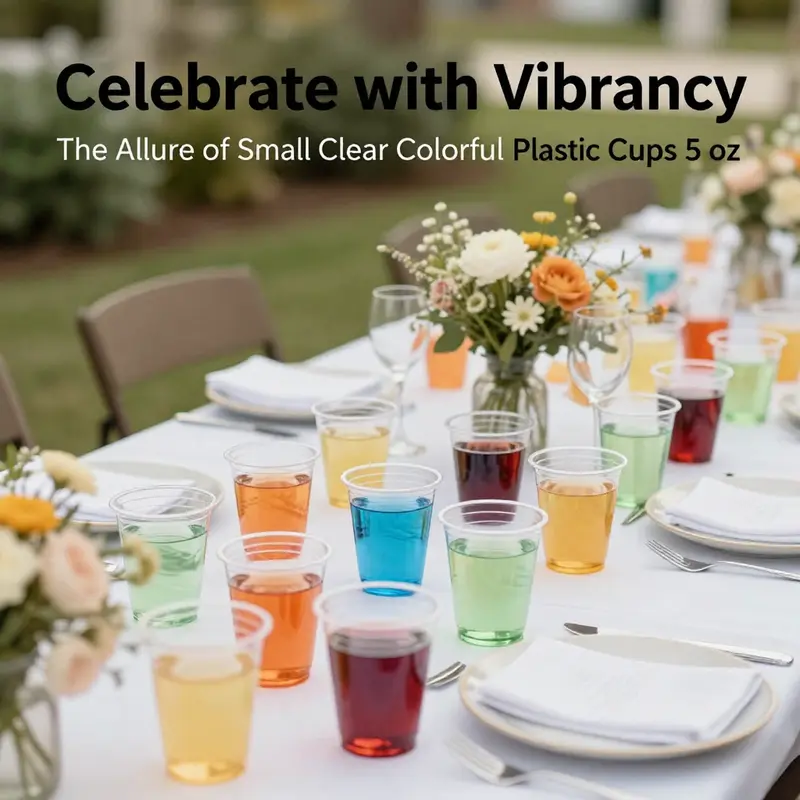
The small clear plastic cup, modest in appearance yet quietly purposeful, occupies a surprising amount of real estate in the planning and execution of events. Its transparency is not merely a visual feature; it is a design instrument that frames color, texture, and aroma in real time, turning a simple sip into a moment of perception. In an industry where presentation often competes with practicality, the 5 oz size offers just enough space for an expressive beverage or a thoughtful bite, without obligating guests to commit to an oversized portion. Yet the term “colorful” in the context of these cups deserves careful nuance. While the cups themselves are typically clear, their real chromatic power comes from what they hold and how they are styled around them. A vibrant cocktail, a crisp mocktail, or a bright fruit-infused water can glow through glass-clear walls, letting the beverage’s hue, temperature, and sparkle do the talking. The color story, then, is not the color of the cup but the color of the contents and the decorative cues that accompany it. An event that leans into this interplay—where the drinks’ colors are allowed to shine against a transparent canvas—often achieves a more memorable sensory impact than one that relies on opaque containers alone. In practice, this is not about chasing a single trend but about marrying clarity with intention, so that each sip reveals a little more about the moment it was poured and the people who shared it. The 5 oz capacity is especially well suited to this approach: enough liquid to enjoy the aroma and nuance, but small enough to encourage light, frequent tasting, sampling at a station, or progression through a multi-course reception without inviting fatigue or waste. The chapters of an event’s story are written in part by what guests hold in their hands as they move from station to station, and the small clear cup often becomes a protagonist, quietly supporting the drama unfolding before the eyes as much as in the palate. The clarity lends itself to a careful choreography of color and garnish. A slice of citrus, a sprig of herb, or a dusting of edible flower can transform a seemingly simple drink into a scene change within a single moment. When the glass is colorless, these accents do not compete; they compete with nothing. They simply exist, letting guests perceive hue, temperature, and texture with unimpeded clarity. In this sense, the cup is less a vessel than a stage crew member, clearing the way for the main performers—the beverages themselves—to capture audience attention. This is particularly true in mixed environments where guests circulate: a lobby reception, a casual cocktail hour, or a conference break. The transparent cup provides a predictable, recognizable element that reduces decision fatigue. A guest can identify their drink quickly, even in a crowded room, simply by looking for the color, the garnish, or the label their host has chosen to emphasize. The cognitive ease that transparency affords is not a trivial convenience. It translates into smoother service, faster refills, and fewer misplacements, which in turn keeps an event moving with the rhythm of conversation rather than the friction of logistics. That is one thread of the cup’s practical value—its role in identification and spill prevention. In a bustling environment, guests juggle conversation, movement, and occasionally a small plate or napkin. A clear cup minimizes the chance of mistaking one beverage for another, especially when multiple stations are offering similar-looking options. The contents, when visible, reveal themselves through color and clarity, so even as a crowd swirls around a bar or a dessert table, a guest can spot the exact drink they ordered. This visual access also supports staff efficiency. A bartender or server can monitor color, garnish, and layering at a glance, detecting mismatches or floating solids that shouldn’t be present. There is a quiet reliability in transparency that becomes a kind of nonverbal communication between guests and the service team. The cup’s aesthetics naturally support thematic design without demanding expensive or elaborate glassware. A wedding, a corporate reception, or a community gathering can benefit from mixing the right amount of polish with the practical demands of a disposable format. Here, color emerges in the beverages themselves, and the cup merely provides a shared stage on which the color plays. The effect is especially pronounced when the event’s palette uses complementary or contrasting hues. A cobalt blue cocktail against a pale lime soda, a deep red sangria beside a clear lemon-tinted agua fresca, or a violet-tinged mocktail paired with a bright orange juice—all these combinations rely on the cup’s unobtrusive presence to let the colors breathe. In the absence of a colored vessel, each hue can appear richer and more saturated, inviting guests to notice the subtleties of flavor as well as the story the color tells. The clarity also lends itself to a broader, thematically coherent approach to beverage presentation. If a venue or a brand identity embraces a particular color family, the drinks can be designed to align with that family while the cups remain neutral enough to keep the focus on the liquid itself. This balance prevents the décor from becoming overly busy while still allowing room for creative expression. The result is a flexible tool in the event designer’s kit: a cup that does not dictate a color scheme but can seamlessly adapt to it, enabling a cohesive atmosphere that feels intentional rather than improvised. Yet even with all these advantages, there is a practical threshold to what small clear cups can achieve. They are disposable and lightweight, which suits temporary use and rapid turnover but also invites a discussion about sustainability. The environmental footprint of single-use plastics has become a central concern for hosts and planners who want to minimize waste without sacrificing convenience. In response, many producers offer recyclable or compostable variants, BPA-free materials, and packaging options that emphasize responsible disposal. There is a growing awareness that the ease of cleanup at the end of an event should not come at the expense of long-term ecological impact. The conversation, then, moves beyond the cup as a product and toward the broader ecosystem of materials, choices, and processes that shape a successful gathering. Sustainable options can be integrated into the same aesthetic and functional framework, preserving the clarity and the color dynamics while aligning with responsible stewardship. For instance, hosts can pair clear cups with recyclable trays, compostable garnishes, and a well-communicated waste plan that encourages guests to recycle properly. In this way, the event’s visual and experiential goals are not compromised but are complemented by a transparent commitment to the environment. The practical considerations extend to transport and storage as well. The 5 oz cup is compact, stackable, and relatively durable for its category, making it an economical choice for events of varying scale. The stacking capability reduces space requirements during setup and transport, a decisive factor when planning in venues with limited storage or tight schedules. The cups’ light weight also translates into lean logistics—fewer shipping costs, easier inventory management, and a lower overall burden on staff during the removal and cleanup phases. A well-planned supply chain for these cups can harmonize with other disposable service ware and décor, creating a coherent operational rhythm that keeps every station flowing smoothly. This cohesion is particularly valuable at large gatherings where the pace of service can become a bottleneck if any single element falls behind. When hosted with care, the small clear cup becomes a silent partner in a well-orchestrated event, enabling both elegance and efficiency. Beyond the basic functions of color presentation, spill control, and practicality, there is room for playful experimentation. The cups can serve as vessels for bite-sized consumables as well as drinks. Mini portions of appetizers, desserts, or tasting portions of sauces and dips can be presented in the same 5 oz format that guests already recognize for beverages. The uniform height and diameter foster a tidy, consistent presentation across a dessert table or a buffet line. This uniformity makes it easier for guests to navigate a station without crowding or confusion while still allowing for a spectrum of colors and textures to mingle at eye level. The minimalist silhouette invites creative garnishing and layered constructions. A yogurt parfait with granola and fruit, a petite mousse with a delicate topping, or a layered fruit trifle can all be portioned into 5 oz cups to provide a tasting experience that feels intimate yet accessible. The structure of the cup supports careful layering, because the clear walls reveal successive strata of ingredients, inviting curiosity and encouraging guests to sample with a sense of discovery. In this light, the cup’s value is not simply in its ability to hold liquids; it becomes a vehicle for storytelling through food and drink. On the topic of storytelling, there is a social dimension to these small vessels that often gets overlooked. The very act of circulating cups among guests—passing a tray, offering a tasting spoon, or inviting someone to sample a new color of beverage—creates micro-moments of interaction. People comment on the color, the aroma, the balance of sweetness and acidity, and the way the drink looks as it catches the light. Guests might discuss the garnish, the temperature, or the way a frozen element slides against the lips. These moments of shared perception become part of the event’s narrative, reinforcing connections between attendees and the organizers. The transparent cup, in its quiet neutrality, invites conversation rather than competition. It does not impose a dramatic statement; it supports a collaborative experience where participants contribute to the color story with their choices and preferences. In envisioning the cup’s role at a broader scale—across conferences, fundraisers, weddings, product launches, and casual gatherings—one can see how it adapts to different cultures, rituals, and vibes. The same cup can be employed for a formal toast at a gala or a casual beverage sampler at a community fair. The key is to approach the cup not as a disposable afterthought but as a deliberate design choice that reinforces the event’s goals. When the beading of a garnish or the tilt of a glass is choreographed with affection, the cup becomes a collaborator in the mood you intend to evoke. This is where the theory meets practice in a real-world setting: the host’s intent, the beverage choice, and the surrounding décor converge through a transparent conduit that remains unobtrusive yet essential. The small clear cup thus embodies a philosophy of restraint and refinement. It asks for a light touch in decoration, a calm alignment with the event’s palette, and a respect for the guest experience. It challenges the planner to think beyond the cup’s physical limits and toward the human experience it supports. It is not merely about what you serve but how you present it, how guests perceive it, and how the moment can feel more vivid because the cup refuses to compete with the beverage. In the end, the utility of the 5 oz clear plastic cup is a reminder that functional objects can be elegant when they are chosen with intention. They are vehicles for color through content, clarity through presentation, and connection through shared sensory cues. They do not require a dramatic act of design to make an impression; the power lies in enabling color to shine, in enabling guests to see clearly what they are tasting, and in enabling a flow of service that feels effortless. For hosts who wish to harmonize convenience with a touch of color-driven drama, these cups offer a dependable foundation to build upon. They serve as a reminder that in events, as in life, the most memorable moments often arrive not from the most conspicuous objects but from the clarity with which simple choices reveal what matters most: the people, the conversations, and the small delights that punctuate them. For those who want to explore sustainable pairings that extend beyond the cup, consider the option of integrating disposable kraft paper bowls into the same event ecosystem. A simple link to a broader range of eco-friendly serveware can help round out the plan without complicating logistics. This approach ensures the event remains cohesive, environmentally conscious, and aesthetically coherent, with each element supporting the others rather than competing for attention. If you are curious about practical, real-world examples of how a clear 5 oz cup can function within a full service plan, a useful point of reference is a comprehensive product listing that demonstrates the balance between size, usability, and presentation in party contexts. The chapter’s insights draw on observations of how guests interact with drink stations, how staff manage flow, and how the color of beverages contributes to the atmosphere, all while keeping the container unobtrusive and efficient. The result is a perspective that treats the cup not as a mere packaging choice but as a versatile instrument that helps shape experiences, from the first glance to the last sip. For designers and planners, this means recognizing that clarity is not a limitation but a lever to amplify color, aroma, and mood. The cup’s transparent walls invite the color and the light to dance, while its modest form invites a focus on the moment—the moment when a guest lifts the cup, notices the hue, inhales the bouquet, and enjoys a small, refreshing fulfillment before continuing a conversation that matters. In this sense, the small clear cup becomes not only a practical tool but a quiet advocate for mindful, sensory-rich event design, where efficiency and beauty meet at the intersection of form and function. Internal resources can complement this perspective by offering practical considerations for aligning disposable serveware with broader sustainability goals. For hosts seeking a bridge between convenience and eco-consciousness, a robust option is to explore recyclable or compostable alternatives within the same product family, paired with a clear, consistent labeling strategy that helps guests dispose of items correctly. The synergy between an understated cup and thoughtful waste practices can yield an experience that is both refined and responsible, reinforcing the event’s values without sacrificing ease of service. To further enrich your understanding of how the 5 oz clear cup fits into the broader landscape of event ware, consider examining related resources that discuss the balance between aesthetics, practicality, and sustainability in disposable serveware. For a practical reference on 5 oz cups and their suitability for the kinds of venues and occasions described above, you can consult a widely used retailer’s listing that demonstrates the standard sizing, clarity, and versatility in a party context. This external resource provides a tangible sense of how such cups perform in everyday settings, offering useful benchmarks for planners and hosts. In sum, the 5 oz clear plastic cup is a small but mighty instrument in the event designer’s toolkit. It is not a flashy centerpiece but a reliable partner that helps color and texture emerge from the glass, while keeping logistics light and the guest experience smooth. It invites experimentation with garnishes and beverages, supports efficient service, and aligns with growing expectations around sustainability when chosen with a thoughtful waste plan. The next time you design a beverage station or curate a tasting experience, listen to the quiet clarity of the cup. Let it be the stage that elevates color, aroma, and conversation, without shouting over them. Let it remind us that sometimes the most effective design is not about making a big statement but about making the right kind of space for people to gather, savor, and connect. External reference: for additional context on practical sizing and usage in event settings, see the Home Depot party cups listing at https://www.homedepot.com/p/Party-Cups-5-oz-100-Pack-402738/309675748. To explore sustainable serving ware that can accompany clear cups, you may also consider a source that highlights eco-friendly, recyclable options and their role in modern event design, including convenient disposables and responsible waste practices. Internal linking note: for a complementary look at waste-conscious serving ware, you can explore disposables in kraft paper bowl formats here: https://greendispopack.com/product/disposable-700ml-kraft-paper-bowl-take-out-octagonal-rectangle-paper-bowl/, which provides a sense of how to balance colorless, clear presentation with environmentally aware choices in the same setting.
From Sourcing to Silhouette: The Making of 5 oz Clear and Colorful Plastic Cups

Every cup begins with a choice, not just a color or a size, but a set of decisions that ripple through production, logistics, and the markets that rely on them. In the realm of disposable drinkware, the 5 oz segment sits at a crossroads of convenience and performance, a tiny vessel that must stay clear under cold pour and quick handling, while also offering room for branding, sampling, or a simple celebratory feel. The journey from raw resin to a bright, ready to use cup is rarely linear. It threads through regions famous for manufacturing scale, moves across plants powered by sophisticated tooling, and lands in the hands of caterers, event organizers, and small bar concepts that prize reliability as much as aesthetics. Though the impulse to seek out a small plastic cup may start with an idea of convenience, the real story lies in how sourcing decisions shape the end experience. The 5 oz format, compact by design, is all about optimizing footprint and performance at once, a challenge that pushes suppliers to balance clarity, stiffness, and cost in equal measure while leaving room for subtle enhancements that set one batch apart from another in a crowded market. In this sense, the production path is less a straight line and more a wire traced through global supply chains, governance checks, and a spectrum of materials that each bring a distinct look and life to the final product. The path starts with where the cups are sourced and how the supply chain is organized, and it ends with the moment a guest lifts a cup to sample a drink, the thin edge catching a spark of light that signals a successful blend of form and function. The sourcing story is essential because it frames the feasibility, the pace, and the sustainability of the entire operation, and it notes how buyers can navigate risk while maintaining consistency across large and small orders alike. In the current landscape, proficient buyers increasingly seek partners who can demonstrate traceable origins, robust quality control, and the ability to scale in response to demand without sacrificing the visual or tactile clarity that makes a clear 5 oz cup appealing in the first place. To understand this network fully, one must peer into the production decisions that ensure the cup remains a faithful canvas for beverages, whether it is a quick cold brew, a tasting sample, or a party setting where the cup is part of the visual language of the event rather than just a vessel.
Sourcing begins, then, with geography and governance. The major manufacturing ecosystems for these tiny yet mighty products tend to cluster around regions with deep tooling expertise, ready access to raw materials, and the logistical capacity to move millions of units efficiently. A hub near a major port offers advantages that ripple into pricing, lead times, and the predictability of reorder cycles. When buyers look at the value chain, they often place a premium on suppliers that can show verified business licenses, evidence of reputable audits, and a history of steady output. Third party verification becomes a kind of currency in bulk procurement, because it translates into confidence that the same cup will perform consistently across multiple runs and over time. In markets that rely on frequent restocking, the ability to re-source quickly without quality drift matters just as much as the ability to meet demand during peak periods. The presence of robust audit regimes and transparent supplier records reduces the risk of supply interruptions and gives buyers a runway to plan long lead times, seasonal demand, and promotional bursts without fear of compromising the user experience. The supply chain reality, then, is not a single supplier or plant but a network that must harmonize inventory, quality assurance, and transportation. While the specifics vary by region, a shared pattern emerges: proximity to key ports, a culture of consistent measurement, and a willingness to align with globally recognized standards. In practice, buyers often choose partners who can demonstrate that their factory floor operates under strict process controls, that each batch can be traced back to a melt batch or a mold run, and that a reliable quality assurance team can capture and correct anomalies before they reach the customer. These considerations matter not only for large orders but also for repeat buys where many small shipments accumulate over time and form the backbone of an ongoing relationship.
Material choice follows sourcing and drives the rest of the balance sheet. The most common materials for 5 oz disposable cups intended for cold beverages include PET, PP, and PLA, each offering a distinct combination of clarity, rigidity, heat tolerance, and environmental footprint. PET is renowned for its exceptional clarity and stiffness, a property that makes the cup visually inviting as light passes through the beverage, drawing attention to color and carbonation. This transparency is not accidental; it is the result of meticulous resin selection and precise molding conditions that suppress haze and optimize surface smoothness. PET also tends to deliver reliable performance for cold drinks, resisting micro-cracking when handled with care during transport and service. Polypropylene, or PP, adds a different dimension to the decision matrix. It is typically more forgiving under heat and impact, and it can be used to create cups that survive short hot exposures or more rugged handling. In a market that occasionally blends hot and cold beverage concepts or uses the cups in environments where stacks and restocking are frequent, PP can offer practical advantages. However, the trade-off is sometimes a trade in clarity for durability, particularly if the exact resin grade is not tuned for maximum transparency. PLA offers an eco-conscious path, derived from renewable resources like corn starch or sugarcane, and it aligns with growing consumer expectations around sustainability. While PLA can deliver good clarity, its temperature tolerance and compostability profile require careful attention. PLA is not universally compatible with all waste streams, and its composting requirements depend on local facilities. Buyers who pursue PLA often have to consider end-of-life scenarios as part of their procurement criteria, ensuring that the cup aligns with the sustainability goals of their events or brands. The material choice—whether PET, PP, or PLA—also integrates with the intended use: cold beverages, carbonation, ice, or sampling scenarios each influence the selection. The acceptance of certain materials may also hinge on regulatory constraints around food contact and packaging safety, which are evaluated through certifications and supplier documentation. As a result, the choice is seldom a pure cost decision; it is a triad of clarity, resilience, and environmental alignment, all calibrated to the customers who will hold and use the cups day after day. The industry often favors materials that preserve the cup’s clean look and permit strong branding, because even in a transparent form, the cup becomes a stage for design through color accents, logos, and printed messaging.
Manufacturing processes provide the bridge from raw resin to the finished silhouette. The two most common pathways are blow molding and injection molding, and each offers a distinct set of advantages for 5 oz cups. Blow molding is highly suited to hollow, uniformly thick walls, which helps maintain a consistent appearance along the entire circumference of a cup. It excels in high volume, enabling rapid production with relatively straightforward tooling once the mold is in place. Injection molding, on the other hand, can deliver tight tolerances and more complex geometries, a quality important when a cup must stack cleanly or accept overlays such as a lip that ensures a snug lid fit. Both methods require careful temperature control, mold maintenance, and calibrated cooling cycles to prevent warpage, whitening, or surface imperfections. Quality control is built into every step of the process. Automated inspection lines sample wall thickness, edge quality, and transparency to catch any deviations that might affect user perception or performance. The daily capacities claimed by leading manufacturers can be substantial, reflecting the scale of production typical in major industrial zones. In some facilities, daily outputs can reach hundreds of thousands of units, supported by continuous operations, just-in-time scheduling, and a fleet of automated handling tools designed to move cups from mold to stack, from stack to packing, and from packing to shipping with minimal manual intervention. The attention to efficiency does not come at the expense of quality. Most producers implement inline tests that simulate service conditions, pulling a cup through a cold beverage cycle, checking for cracks or stress marks, and ensuring the cup retains its clarity after a sequence of freezing and thawing tests. The result is a reliable product that can meet the expectations of busy venues where a stack of cups must be ready for rapid service. The artistry here lies in blending the science of resin behavior with the pragmatics of mass production, ensuring that every cup keeps its shape and integrity across thousands or millions of cycles.
Color and branding become a second life for what is otherwise a transparent vessel. While the core product remains clear, many buyers seek subtle color accents or in-mold designs that give a sense of personality without compromising the core attributes of clarity and strength. In the production line, coloring can be introduced in several ways. One path keeps the base cup clear and applies printing or decoration post-mold, using flexo printing or pad printing to add logos, instructions, or decorative motifs. The alternative is in-mold decoration, where colored patterns or branding elements are embedded into the surface as the cup is formed. In this case, the process carefully controls adhesion and cure to prevent delamination during handling or cold storage. The inks used for internal and external printing are often formulated to be food-safe and to resist smudging, while also remaining compatible with the resin chosen for the cup. Eco-friendly inks and solvent-free processes are increasingly common, reflecting a broader industry shift toward sustainability and safer production practices. Even with color enhancements, the cups must retain the sense of lightness that makes them visually appealing when filled. The challenge is to achieve a balance between branding impact and the fundamental advantages of a clear cup, where the color accents act as an energizing accent rather than a distraction from the beverage it holds. For many buyers, this balance translates into customization programs that begin with a few field tests, progress to limited releases, and finally scale to full production with standardized color options and branding templates. The ability to customize, from subtle color touches to full branding, is a decisive factor for party planners, event organizers, and beverage samplers who want memory-making cues in the cup design without altering the structural integrity of the vessel.
The practical reality of choosing and using these cups also encompasses the broader supplier ecosystem and procurement strategies. Buyers who operate across multiple locations or who manage recurring events will often rely on a small number of trusted suppliers to ensure continuity and consistency. In this context, the advantage lies in shared understanding of lead times, material quality, and the tolerance for minor deviations that can arise with high-volume runs. Suppliers who offer robust quality documentation, consistent batch-to-batch performance, and transparent communication regarding supply constraints are particularly valued. A strong procurement approach also includes receiving samples, evaluating them under the specific service conditions the cups will encounter, and validating that the cups meet internal standards for clarity, rigidity, and fit with lids and other accessories. The trend toward supplier verification and audit-driven procurement is driven not only by regulatory compliance but by the practicalities of large-scale events where even a single defective run can disrupt service. The ability to reorder with predictable timelines and consistent product aesthetics matters as much as the upfront cost. In addition to direct supplier relationships, platforms that connect buyers with vetted manufacturers can offer quotes, samples, and mold designs, facilitating a smoother path from concept to production. The result is a network that can respond quickly to changing demands, while preserving a shared language around product specifications, quality checks, and packaging options.
Sustainability, long a peripheral consideration in disposable packaging, now sits at the center of many sourcing discussions. The drive toward more sustainable packaging has inspired the exploration of materials beyond conventional PET and PP. PLA, as noted, represents a renewable option that aligns with environmental goals, but it introduces new considerations for end-of-life handling and performance under certain conditions. Buyers must weigh the environmental upside against potential trade-offs in stiffness, clarity, or heat resistance. In addition to material choices, the industry is increasingly examining the total life cycle of cups, from resin production to end-of-life disposal or recycling streams. This broader lens encourages manufacturers to invest in design for recyclability, optimize resin content to maximize recycling viability, and adopt packaging and labeling practices that facilitate proper sorting. It also invites conversations about recyclability across different jurisdictions, since national or regional infrastructure can significantly influence the actual environmental benefit. For buyers with sustainability targets, the ability to document and verify the environmental claims of their suppliers becomes as important as the price per cup. This shift has driven demand for transparent reporting on resin sourcing, energy use on the factory floor, and the share of materials that can be diverted to composting or recycling. While blocks of color and logo can draw branding lines, the sustainability narrative adds a lasting dimension to the conversation, inviting designers and purchasers to consider how every batch aligns with a larger responsibility to reduce waste and improve resource use.
The final thread in this intricate tapestry is the practical example of how a typical buy unfolds. A market in which many buyers operate would usually see a process that begins with a clear specification sheet, outlining the exact cup diameter, the 5 oz volume, wall thickness tolerance, stacking height, and lid compatibility. Following that, a supplier might present a set of resin options, a proposed process path, and a preliminary cost estimate. If the numbers align with the purchaser’s budget and expectations, a small batch sample is produced to validate performance in a controlled test. The test checks for clarity under cold conditions, resistance to cracking when gripped, and the integrity of any branding or decoration applied. If the sample passes, the buyer moves into a larger ramp-up, confirming lead times, packaging configurations such as bulk counts per carton, and the logistics plan for delivery to multiple sites or warehouses. The end result is a cohesive package in which the cup design, material choice, and production method come together to deliver a reliable, visually appealing product that serves as the foundation for countless beverage moments. In this environment, the ability to customize, to maintain a stable supply, and to adapt to evolving sustainability expectations is what separates dependable suppliers from the rest. A thoughtful sourcing and production approach can turn a simple 5 oz clear cup into a versatile platform for branding, sampling, and hospitality, supporting the entire spectrum of user needs from a casual backyard gathering to a large-scale event.
For readers who want to explore related options that sit alongside clear 5 oz cups in the packaging ecosystem, a related resource discusses eco friendly, printed logo options for cold beverage paper cups with lids. This internal reference can help designers and buyers consider branding opportunities in the context of broader packaging strategies without losing sight of the core goals of clarity, usability, and sustainability. You can explore that resource here: eco-friendly-printed-logo-cold-beverage-paper-cup-with-lid.
Finally, a practical note on performance and expectations can guide decisions as well. While the clear 5 oz cup is often chosen for its clean appearance and versatility, it is not a one size fits all solution. For venues that require a higher level of crack resistance, or for events where handling and stacking are frequent, buyers may prefer cups that have undergone specific testing and quality assurance processes to ensure reliability under stress. The industry continues to refine the balance between crisp clarity and dependable durability, improving resin blends and molding processes to support a wider range of uses while keeping costs in check. In short, the sourcing and production of small clear cups is a disciplined craft that blends materials science, precision manufacturing, and forward looking sustainability—an approach that allows a simple cup to become a trusted companion in countless moments of celebration, sampling, and everyday refreshment.
External resource: https://www.plasticpalace.com/clear-5-oz-plastic-cups-in-bulk-tested-proven-crack-resistant/
Final thoughts
The small clear colorful plastic cups 5 oz are more than just functional items; they represent an opportunity for businesses to engage their customers visually while providing quality service. As you consider these cups for your offerings, remember their versatility for events, their role in branding, and the comprehensive sourcing processes that follow industry standards. Embracing this vibrant solution will not only enhance your presentation but also reflect a commitment to quality that your clients will appreciate.