
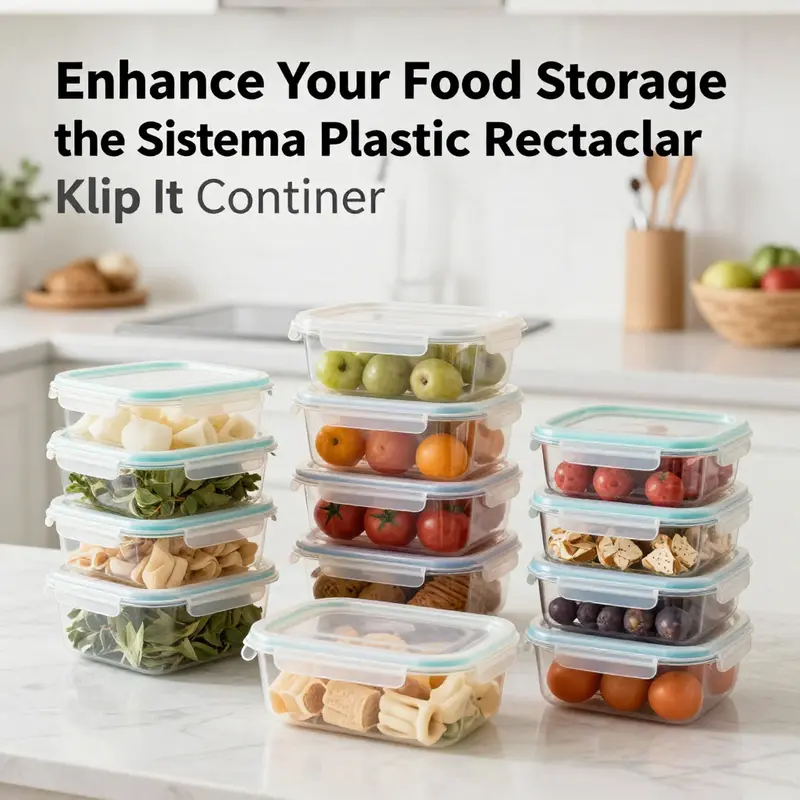
Every bubble tea shop, restaurant, food truck, and catering service knows that maintaining food freshness and organization is crucial for success. The Sistema Plastic Rectangular Klip It Food Container (3L) stands out as an essential tool for professionals in these demanding environments. With its airtight seal, BPA-free material, and microwave-safe design, this container offers a comprehensive solution to food storage needs. In the chapters to follow, we’ll dive into detailed specifications and features, compare it with other food storage solutions, and explore consumer preferences that highlight its relevance and effectiveness for your business.
Preserving Freshness and Space: The 3-L Rectangular Clip-Latch Storage Solution in Modern Kitchens
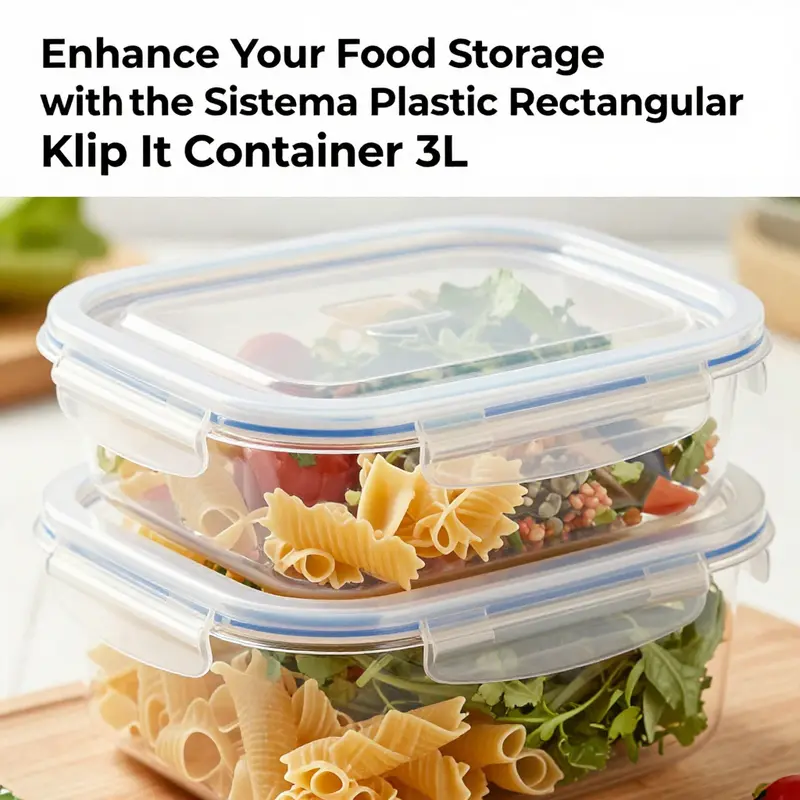
The kitchen is a study in balance—between keeping ingredients fresh and making space for the next meal. In the quest to optimize this balance, a rectangular, clip-sealed storage container of three liters emerges not as a novelty but as a reliable workhorse. Its capacity sits at a sweet spot for daily needs: large enough to hold bulk staples like pasta, rice, or oats, yet compact enough to tuck neatly into a fridge, freezer, or pantry shelf. The rectangle, more than a simple geometry, is a deliberate design choice. It maximizes footprint efficiency, allowing many units to nest and stack with precision. In cramped kitchens or organized pantries alike, the shape helps transform chaotic clutter into predictably arranged rows of contents. A well-considered modular system like this turns everyday storage into a chore that feels almost effortless, a small but meaningful nudge toward consistent meal planning and reduced waste.
Beyond its size and silhouette, the container’s material and construction address two fundamental concerns many home cooks carry: safety and durability. The plastic used is BPA-free, a standard that resonates with health-conscious households. This means the container is designed to prevent chemical leaching into food, an assurance that matters whether you store dried beans for weeks, chopped vegetables for quick weeknight meals, or prepped ingredients for a family lunch. The absence of harmful additives is not merely a label; it translates to a calmer confidence when you seal away flavors and aromas, knowing the container won’t subtly alter them over time. While plastics get scrutinized in popular discourse, the emphasis here is on intentionally chosen materials that align with long-term reuse and gentle contact with a wide range of culinary staples.
Equally central to its practicality is the locking mechanism. The easy-to-use clips lock the lid in place, creating an airtight seal that helps preserve texture and extend freshness. When you scoop out a portion of rice or salad for a midweek meal, you won’t encounter the familiar damp edges or freezer burn on the surface that comes with a looser seal. The effectiveness of this mechanism is often a deciding factor for households juggling several containers and meal-prep days. A reliable seal also mitigates the risk of leaks during transport in lunch bags or car trips, a feature that becomes especially valuable for liquids or sauces stored alongside solid items.
Careful attention to sealing is also a reminder of routine maintenance that can determine how well a container serves you over time. Food debris left around the clips or along the lid gasket can compromise the edge of the seal. As such, regular cleaning—especially around corners and the locking region—helps maintain performance. The top rack dishwasher compatibility is a small but meaningful advantage in busy households. A quick rinse followed by a dishwasher cycle is enough for many users, freeing up time for cooking and planning rather than scrubbing.
The container’s versatility truly shines when you consider the range of foods and activities it supports. Its 3-liter capacity makes it suitable for bulk dry goods, such as whole-grain pasta, quinoa, or rice, items that traditionally occupy a corner of the pantry but benefit from a consistent, visible storage solution. The rectangular form also accommodates leftovers and meal-prep portions with ease. You can portion out dinner components for the week and reassemble them later without disarray. For salads, the container’s depth is sufficient to layer greens, grains, and toppings in a balanced way, keeping moisture from wilting the greens too quickly when stored in the fridge. In a freezer scenario, it becomes a sturdy vessel for batch-prepped stocks, soups, or pre-portioned frozen dinners. The freezer-safe attribute ensures that the container remains robust in low temperatures and seals in flavor without compromising the structural integrity of the plastic.
Transparency and visibility play a practical role in everyday use. A clear body or light-tinted variant allows you to scan contents at a glance, reducing the time spent opening multiple containers to locate a particular item. This visibility is complemented by the modular stacking capability. When stored in a fridge or pantry, you can create neat layers, aligning containers by size and label them with simple, reusable markers. The ability to stack efficiently is not merely about maximizing space; it also reduces the mental load of meal planning. You know where everything lives, so you can pull together a shopping list based on what you actually have rather than what you think you have.
A broader takeaway emerges when you situate this container within the continuum of modern storage options. In a kitchen that increasingly values sustainability, durability and reusability stand as pillars of responsible design. A BPA-free plastic container that is built to endure daily use reduces the temptation to discard after a single season. It invites a longer lifecycle—from daily meal prep to occasional reorganization as family routines shift and new dietary habits emerge. The practical value of such a container lies not only in its immediate usefulness but in its capacity to adapt to changing cooking rhythms: new recipes, seasonal produce, or a shift from bulk shopping to smaller, more frequent trips.
The storage approach here is not a standalone solution but part of a broader ecosystem of clip-seal containers that share a common language of form, safety, and user-friendly features. In practice, that means you can pair this three-liter vessel with smaller or larger versions that share the same seal system and stacking logic. The idea is to build a cohesive set that feels intuitive from the moment you unclip the lid. While every home may tailor its collection to fit its own shelves, the underlying ethic remains consistent: design with the user’s daily routine in mind, reduce friction, and encourage durable reuse rather than quick replacement.
From a culinary perspective, the implications are meaningful. When ingredients are stored in a container that keeps their aroma contained and their texture intact, the home cook experiences less bother with spoilage and waste. The act of cooking becomes smoother because you’re starting with ingredients that look and feel familiar. Dried goods maintain their integrity because the airtight seal wards off dampness and staling. Leftovers, sealed tightly, reheat more evenly and retain moisture without drying out, especially when reheating opportunities arise within a busy week. These benefits accumulate into a daily practice—one that wages small but steady gains in food quality and personal organization.
In this sense, the three-liter rectangular container is more than a receptacle. It is a practical tool that supports consistent meal planning, efficient storage, and thoughtful care of ingredients. Its size, shape, and sealing system address common pain points—spillage, moisture loss, and space constraints—without demanding trade-offs in safety or convenience. For households managing a tight fridge or a compact pantry, this combination of capacity, containment, and compatibility with everyday appliances offers a clear path to a more orderly kitchen experience.
As you integrate this container into your routine, consider the rhythm of your cooking week. On Sundays, you might batch-cook grains and store them in one or two containers for quick bowls and sides. For snacks and dry edible staples, a stackable configuration lowers the temptation to purchase duplicate items because you can identify what you already have at a glance. When a recipe calls for a pre-measured amount of a grain or legume, the 3-liter size keeps the portion consistent without crossing the line into bulk that becomes difficult to manage. And if the kitchen hosts a growing family, multiple units in the same family of containers can reflect a shared system—each piece designed to nest and align with the others so that the entire cabinet feels organized rather than chaotic.
With regard to care, practicalities matter as much as performance. As mentioned, the container is compatible with top-rack dishwashing. However, heating guidelines deserve emphasis. If you intend to reheat food directly in the container, it is generally best to remove the lid. The lid’s plastic composition is not always designed to tolerate direct heat, and removing it minimizes the risk of deformation or release of odors. This simple precaution—keep the lid aside when microwaving—helps preserve the container’s integrity and your food’s texture. Such insights often come from user feedback and practical testing, reinforcing a broader truth: product performance is as much about how you use it as about what it is capable of doing.
Color options, while not altering the fundamental functionality, contribute to personalizing your storage system. A range of hues can help you code contents by category, urgency, or family member’s meals. In practice, a clear body with a bold lid can be a middle ground between visibility and aesthetics, while colored bodies offer a more playful or professional look depending on your kitchen’s vibe. The key is to select a system that feels intuitive to you—one that reduces the friction of daily routines rather than adding another decision point.
Reviewers often highlight two recurring strengths: the airtight seal and the dependable stackability. The seal keeps contents fresh by limiting air exchange, while the modular shape makes it possible to optimize every square inch of storage space. When these traits converge, they support a kitchen workflow that is steady and scalable. You won’t constantly juggle mismatched lids or containers that don’t align in the cupboard. Instead, the system encourages a disciplined, repeatable approach to organization—one that can adapt as your needs evolve, from single servings to family-sized meal prep or a shift toward batch-cooked meals for the workweek.
There are, of course, practical limits to any design. Some users note that even with a microwave-safe label, heating performance can be compromised if the lid remains on. This is not a shortcoming so much as a reminder of the realities of plastic and heat. Temperature fluctuations can affect gasket materials and the closure’s overall effectiveness over time. The recommended practice—remove the lid for microwaving and resecure after cooling—helps maintain seal integrity and prolongs the life of the container. Similarly, while it is freezer-safe, filling to capacity and then freezing can, in some cases, require careful portioning to ensure even freezing and easy defrosting later. Such nuances underline why the best storage routines are iterative: adjust, observe, and refine the system until it aligns with your cooking cadence.
From a broader perspective, the container embodies a trend toward practical, user-centered packaging solutions in home kitchens. It foregrounds the idea that storage should be an enabler of cooking rather than a barrier. The container’s impact extends beyond a single dish or week; it has the potential to reshape how a family thinks about planning, purchasing, and preparing food. By making it easier to see what’s inside and to keep it in good condition, the system reduces the cognitive load associated with meal decisions. That reduction matters because it frees up mental space for creativity in the kitchen—trying new recipes, testing new combinations, or simply enjoying the rhythms of daily life without the nagging worry of spoiled leftovers.
In closing, the three-liter rectangular storage option demonstrates how form and function can cohere into a single, dependable tool. Its capacity is well-chosen for everyday needs, its shape serves spatial efficiency, and its sealing performance guards freshness with consistency. The material choice supports safety and durability, while the compatibility with common household appliances enhances convenience. Taken together, these attributes speak to a philosophy of kitchen design that favors reliability, reusability, and thoughtful simplicity. The result is a container that feels less like a temporary accessory and more like a steady partner in the daily dance of cooking, storage, and nourishment. If you’re reworking a cramped kitchen into a more navigable space, this kind of system offers a practical blueprint for turning potential chaos into organized calm.
Internal resource note: for a broader look at eco-friendly packaging alternatives and related storage considerations, you can explore this example of environmentally conscious containers here: eco-friendly, printed-logo single-wall paper cup.
External reference: for additional product context and user feedback, see the external product page: https://www.amazon.com/dp/B07ZKXQJN9
Why a 3‑Liter Rectangular Clip‑Lock Container Often Outperforms Other Storage Options
Design and Practical Edge
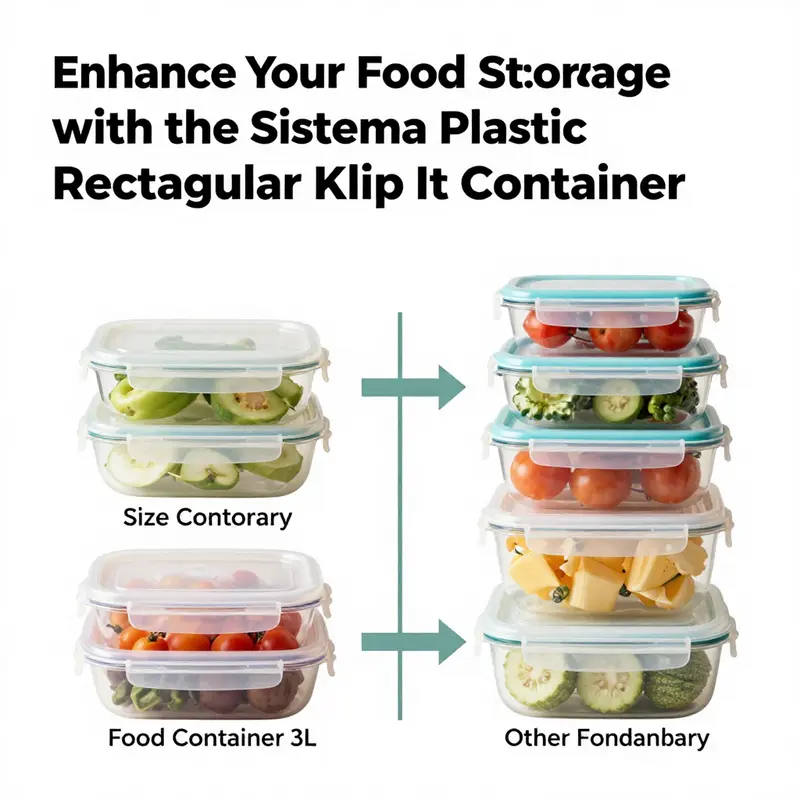
A single storage solution can transform how a kitchen runs. A 3‑liter rectangular plastic food container with secure clip locks blends capacity with everyday versatility. Its rectangular form fits neatly against other boxes, unlike round containers that leave awkward gaps. That efficiency matters in crowded fridges and packed pantries. The container’s footprint reduces wasted space and lets you lay more items flat. Flat stacking lowers the risk of toppled stacks. The clip‑lock system brings confidence when transporting food. Clips on all sides compress the lid evenly. A tight fit reduces spills and slows moisture exchange. For families and meal‑preppers, this reliability means fewer ruined lunches and less food waste.
Material choice shapes everyday performance. Food‑grade polypropylene plastics often used for these containers resist stains and odors. They remain lightweight while handling repeated use. Unlike some plastics, modern resins are formulated without BPA. That lowers the risk of harmful chemical migration into food. Microwave and freezer compatibility expand their utility. You can freeze a casserole and reheat it later in the same container. That saves time and minimizes dish clutter. Compared to glass, these containers are far lighter and less likely to shatter. Compared to metal, they do not react with acidic foods. Lightweight durability makes them practical for packed lunches, car trips, and outdoor meals.
Stackability is not a small detail. A rectangular, uniformly sized container stacks securely. Uniform lids and bases mean multiple units store vertically with little wobble. That makes optimal use of vertical space in cabinets. Stackable designs also simplify transportation. When filled, containers can be layered without sliding off. This contrasts with single‑use bowls and ill‑fitting lids that shift during movement. The predictable geometry also improves visibility. You can see contents and portion sizes quickly. Clear or semi‑transparent walls help identify stored food without opening containers. That quick glance prevents unnecessary temperature changes and keeps food fresher longer.
Seal quality determines freshness and leak resistance. Clip locks create a mechanical advantage. When properly secured, they compress a lid gasket. This compression reduces air exchange. Airtight seals slow oxidation and help maintain texture. That is beneficial for leafy salads, marinated dishes, and lean proteins. A poor seal invites moisture and odors to mingle. Many low‑cost containers skimp on clip quality or gasket material. Clips that bend or lids that warp under heat quickly lose effectiveness. Durable clips and flexible gaskets maintain performance over many cycles of use and washing.
Maintenance matters as much as design. Containers rated dishwasher safe simplify cleanup. A dishwasher‑safe container survives high temperatures and detergent exposure. That resilience keeps the container hygienic. It also reduces the mental friction of daily use. Containers that require hand washing tend to be used less. Ease of cleaning also affects odor and stain retention. Smooth polypropylene surfaces resist stubborn stains like tomato or curry better than porous plastics. Rounded interior corners simplify scrubbing. Removable gaskets allow deeper cleaning. That helps prevent mold or lingering smells. Consider lids with simple geometry and accessible seals for long life.
Comparing materials exposes clear tradeoffs. Glass containers offer superior heat tolerance and a premium feel. They do not absorb odors or stains, and they are fully recyclable. However, glass is heavier and risks breakage. Metal containers are durable and often recyclable, but they react with acidic foods and typically cannot be microwaved. Silicone is flexible and collapsible, useful for compact storage. But it can be difficult to clean and may retain oils. Single‑use paper or kraft bowls are convenient for takeout and events. They reduce the need for washing, but they are not reusable and increase waste. When weighed against these options, a well‑designed polypropylene container balances weight, safety, and practicality for daily reuse.
Environmental considerations are increasingly important. Reusable containers reduce single‑use waste when they replace disposable packaging. A durable 3‑liter rectangular container can substitute for dozens of disposable bowls and wraps. Yet not all reusables are equal. Longevity matters. A container that cracks, warps, or loses its seal will be discarded earlier. That negates sustainability benefits. Choosing a container with sturdy clips, a resilient gasket, and a scratch‑resistant interior pays dividends. At end of life, polypropylene is recyclable in many areas, though curbside acceptance varies. When recycling is unavailable, consider repurposing containers for storage of nonfood items. This extends service life and delays disposal.
Practical scenarios reveal where this container shines. Meal prep benefits strongly from large, flat containers. Cook a family casserole, portion it out, and refrigerate in one container until needed. Salads stay crisp when dressings are stored separately, and the clip‑locks keep everything contained. For bulk dry goods like rice and pasta, the rectangular shape makes scooping easier. In the freezer, the flat profile reduces freezer burn by minimizing air pockets around food. When transporting, a tight clip‑lock system prevents spills on commutes. These benefits are especially valuable for busy households and home cooks who prefer batch cooking.
There are still situations in which alternatives perform better. For high‑temperature oven use, glass or ceramic remain preferable. Most polypropylene containers are not oven safe and can melt or warp at extreme temperatures. For stovetop cooking, metal cookware is necessary. For those focused on the most sustainable option, durable stainless steel containers can be used for decades, but they lack microwave compatibility. If you require ultra‑compact storage, collapsible silicone containers save cabinet space. Single‑use kraft or paper bowls are pragmatic for events or catering, especially where washing logistics are impractical. For businesses or takeout operations, disposable options save labor at the cost of waste.
Cost‑per‑use analysis tends to favor durable reusables. A modest investment in a high‑quality container spreads across hundreds of uses. Consider the lifecycle: if a container lasts for years, the per‑use cost becomes negligible. Low cost at purchase sometimes correlates with shorter lifespan. Cheap containers can warp, stain, or lose clips early. That leads to replacement costs and increased waste. When selecting, compare material thickness, clip robustness, and gasket quality. Pay attention to transparency and lid fit. A slightly higher upfront cost often yields better performance and longer life.
User experience extends beyond physical properties. Clear markings for capacity and temperature tolerance simplify daily choices. Integrated pouring spouts or one‑handed lids are helpful features for busy cooks. Wide mouths make filling and cleaning easier. Narrow openings restrict use and complicate washing. A well‑engineered clip‑lock container balances these features. It should feel secure when handled and simple to open when needed. Ergonomic design also makes it easier to carry and stack.
Food safety remains central. Look for containers made from food‑grade materials. Verify microwave and freezer ratings. Avoid containers with unknown or mixed plastics that may degrade. Pay attention to care instructions for microwave use. Some polypropylene items are microwave‑safe only without the lid. Steam release mechanisms are useful when reheating. In the freezer, allow hot food to cool before sealing to preserve gasket integrity and prevent pressure buildup. For acidic or oily foods, watch for long‑term staining. Rotate containers for varied use to prolong life.
A final practical dimension is compatibility with other storage systems. Rectangular containers map effectively to shelf dimensions, drawer organizers, and refrigerator compartments. Their predictable geometry permits modular pantry systems. If you store many items, matching container sizes simplifies stacking and reduces head‑space waste. Match lids and bases across sizes to interchange parts when one lid is misplaced. This interchangeability reduces the need to replace entire sets. For bulk storage of dry goods, clear labeling on lids or sides makes inventory management simple.
Comparing to disposable paper alternatives highlights tradeoffs. Paper and kraft bowls serve immediate needs well. They are biodegradable or recyclable in many regions, and they eliminate washing. However, they cannot be reused repeatedly. For frequent meal preparation, a durable plastic container provides better long‑term value and less waste. If you occasionally need single‑use options for events, a disposable kraft rectangular bowl is an excellent complement to your reusable collection. It reduces cleanup burden for guests while preserving reusable containers for daily tasks. For an example disposable option, consider a take‑away kraft rectangular salad bowl for single‑use needs: take-away food kraft rectangular square rectangle salad paper bowl.
Practical tips help you get the most from a 3‑liter rectangular clip‑lock container. Always secure all clips for transport. Do not expose lids to direct oven heat. Cool hot foods slightly before sealing. Remove gaskets periodically for a deep clean. Store lids separately if stacking many empty containers to save space. When freezing, label contents with date and use glass markers or removable stickers. Avoid abrasive cleaners that can scratch and trap odors. Rotate frequently used containers to even out wear.
The comparison shows that a well‑designed 3‑liter rectangular plastic container with clip locks is a versatile, durable choice. It wins on space efficiency, weight, and everyday convenience. It pairs well with complementary solutions for specific needs, such as glass for oven use and kraft disposables for events. Choosing a high‑quality item with robust clips and a reliable gasket pays off in usability, longevity, and sustainability. For detailed product specifications and a listing of features, see the official product page: https://www.amazon.com/dp/B0024857Z6
Space-Savvy, Safe, and Stackable: Reading Modern Kitchen Habits Through a 3-Liter Rectangular Clip-Lid Storage Container
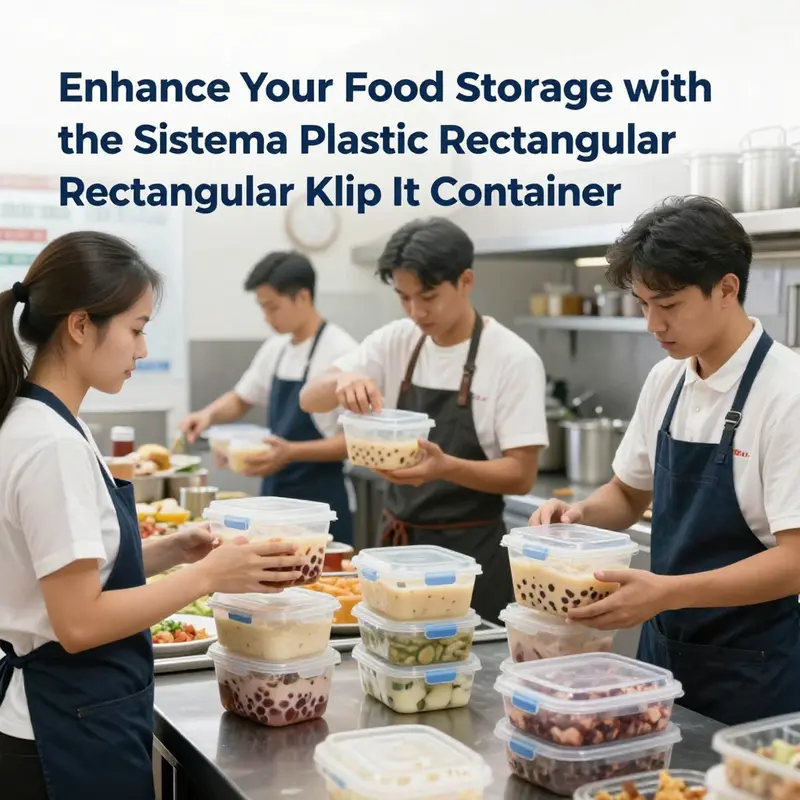
A 3-liter rectangular plastic storage container with a clip-lid system embodies more than a simple way to hold yesterday’s leftovers. It sits at the intersection of space efficiency, safety, and everyday practicality that today’s households expect from their kitchen tools. When consumers choose a container of this size and shape, they are making a statement about how they manage a busy life, how they think about waste, and how they want to interact with food long after the cooking stops. The often overlooked details—the rectangular silhouette, the clip-lid mechanism, the material, and the stated temperature boundaries—not only shape daily routines but also reveal broader patterns in how people store, move, and reheat meals. In this sense, the 3-liter rectangular clip-lid container becomes a useful lens for examining contemporary kitchen behavior, rather than just a storage solution. It is a compact system that supports a larger philosophy: safety, efficiency, and flexibility matter as much as capacity, and they influence what people reach for when planning meals, packing for the day, or deciding how to organize a fridge that is rarely as orderly as it ought to be.
From the first moment a consumer picks up a container of this type, the design speaks to a practical logic. The rectangular format is not a decorative choice; it is a response to real-world pantry constraints. In many homes, shelves and shelves of food items—boxes, cans, and bags—line up in a way that favors straight, flat sides and predictable stacking. Cylindrical or irregularly shaped containers often leave gaps, waste vertical space, and require more careful arrangement to prevent tipping or shifting. A rectangle, however, yields a more stable roster of rows, permits even stacking, and minimizes wasted space in the fridge, freezer, or cabinet. The simplicity of the clip-lid mechanism reinforces this practicality. It is fast to operate, minimizes the chance of leaks, and offers confident seals that keep contents fresh. In kitchens where time is precious and spillage is costly, such reliability makes a measurable difference in the day-to-day flow of cooking and storage. The design thus aligns with a broader consumer preference: seek containers that do not complicate life but rather make it easier to keep food safe and accessible.
Safety is not an afterthought but a foundational concern for contemporary buyers. The materials employed in this class of container—commonly food-grade polypropylene (PP) or high-density polyethylene (HDPE—selected for their balance of rigidity and resilience—are deliberately chosen for their clean performance with food. The explicit absence of BPA and phthalates is not merely a regulatory compliance feature; it is a direct response to a growing consumer insistence on chemical safety. People want to know that what they store near the kitchen’s heat and moisture will not introduce unwanted substances into meals, particularly when reheated. The absence of BPA and phthalates resonates with households that practice meal prep and bulk storage, where repeated use means repeated exposure considerations. It also intersects with concerns about the environment, as many of these plastics are chosen for their durability and potential recyclability, even as consumers increasingly demand clarity about what and how to recycle. The resulting peace of mind—the knowledge that a container is both robust and safe—empowers people to store more with confidence and to use their containers more creatively, without fear of compromising health or flavor.
The functional versatility of a 3-liter rectangular container is another essential pillar of its popularity. It is designed to accommodate a variety of foods and scenarios that recur in everyday life. Leftovers from a family dinner can be portioned into a single container for quick reheating, turning a post-dinner scramble into a calm, predictable routine. For meal prepping, the capacity is ample enough to hold portions for several days while still fitting comfortably in the fridge or freezer. The same container can house bulk ingredients like dried beans, grains, or chopped vegetables, acting as a reliable staging ground for weeknight meals and weekend batch cooking. The container’s temperature resilience—freezing, microwave heating (without the lid), and dishwasher compatibility (top rack)—speaks directly to how modern households operate. Freezing is increasingly common for reducing food waste and managing budget constraints. Microwave reheating, especially when the lid is off, reflects a preference for minimizing transfer steps and avoiding additional dishes. The top-rack dishwasher compatibility makes cleanup less of a chore, a crucial factor for families juggling work, school, and activities. Such capabilities are not mere conveniences; they are the very features that enable practical, flexible routines. When a family can reheat and reuse a single container across several meals, the cost-per-use drops, and the perceived value of the container rises. In this context, the 3-liter rectangular option becomes less a single purchase and more a recurring ally in daily meal management.
The space economy created by the rectangle extends beyond the fridge. In smaller kitchens and apartments, where every inch of counter and cabinet matters, the flat sides translate into fewer awkward gaps and less wasted airspace. The containers can be stacked with confidence, reducing the chance of inadvertent tipping when the shelf is crowded with other containers and items. This stability is not a luxury; it is a practical safeguard against spills and messes that can arise in a busy kitchen. The stackable nature of the design also aligns with broader desires for modular storage solutions. Consumers gravitate toward items that can be rearranged systematically as life changes—new family members, different meal patterns, or shifts in the weekly schedule—without requiring a wholesale reconfiguration of storage spaces. The rectangular form, in this sense, becomes part of an adaptive system, one that fits into an evolving home environment just as it fits into the user’s routines.
A further layer of consumer interest lies in the container’s compatibility with lids from other brands and systems. The idea of cross-brand lid compatibility resonates with a broader consumer demand for flexibility and interoperability. People often accumulate a range of containers from different lines, and the ability to interchange lids helps prevent waste—no longer needing to replace an entire set when a lid is lost or damaged. This adaptability makes a single container a more durable investment, extending its usefulness across multiple contexts, such as swapping in a different lid for a specific storage need or meal plan. It also reduces the cognitive load for the user, who no longer has to chase the exact same lid to complete a storage solution. In everyday life, this means less time spent managing mismatched pieces and more time spent cooking, planning, and enjoying meals with family and friends. This kind of pragmatic compatibility speaks to a modern consumer mindset that values not only usefulness but also seamless integration across the varied tools that populate today’s kitchens.
The discussion of material safety, functional versatility, and design efficiency would be incomplete without acknowledging a growing emphasis on sustainability and multi-functionality. Modern buyers look for products that can do more than one thing well, without compromising safety or performance. In this sense, a well-designed rectangular container with a robust seal and durable materials is an asset for reducing food waste, because it makes portioning and storing leftovers easier and more reliable. The durability of PP or HDPE under typical household use contributes to a longer life span, which in turn supports reduced replacement rates and lower waste over time. The container’s long life can justify its environmental footprint when considered in the context of repeated usage, safe handling, and its compatibility with diverse kitchen tasks—from freezing to reheating to dishwashing. The emphasis on multi-functionality also aligns with the broader consumer trend toward minimalism and practical abundance: people want products that are straightforward, efficient, and capable of adapting to shifting cooking patterns without requiring a new purchase each season. In practice, this means the 3-liter rectangular container becomes part of a household’s everyday rhythm—a tool that helps cooks plan ahead, minimize waste, and keep foods fresh for longer without complicating cleanup or storage.
Within this framework of consumer preferences, the role of color, clarity, and labeling can also influence how such a container is used. Clear or translucent bodies allow quick visual checks for contents, reducing the need to shift items around in the fridge. Labels or simple measurement marks on the exterior can facilitate portion control and meal planning, cornerstones of modern dietary and health-oriented routines. Yet even without elaborate adornments, the fundamental features—the correct balance of rigidity and flexibility, a seal that genuinely locks in freshness, and a shape that makes optimal use of space—carry significant weight. The value proposition is not just about capacity; it is about how the container integrates into a daily lived reality. Consumers are not simply buying a box; they are purchasing a small system that promises speed, safety, and order in a kitchen that often feels crowded and noisy. The cumulative effect of such features is to empower people to cook more confidently, reduce waste, and maintain a cleaner, more navigable kitchen environment over time.
The social and cultural dimensions of storage choices also warrant attention. In households that emphasize family meals and shared cooking, reliable and easy-to-use containers reduce friction during meal prep and distribution. They help ensure that everyone gets a reasonable portion and that leftovers can be stored, transported, and enjoyed later with minimal fuss. The container’s Clip-Lid mechanism, designed for easy operation, supports these social practices by enabling family members to participate in the process without requiring specialized tools or a high degree of manual dexterity. The perception of safety and cleanliness—drawn from the material choices and accessibility of the cleaning process—contributes to trust in the product. People become more likely to reuse a container when they feel confident about its performance and safety. That trust translates into more efficient kitchens, less waste, and more predictable mealtime routines, all of which contribute to higher overall satisfaction with home cooking and storage solutions.
From a practical perspective, the value of a well-designed 3-liter rectangular container also extends to travel and mobility. For packed lunches, picnics, or road trips, a container that is sturdy, leak-resistant, and easy to clean offers tangible benefits. The ability to reheat meals directly (without the lid) in appropriate settings and to store meals without worrying about moisture or odors being absorbed into neighboring items helps maintain meal quality in transit. The container is durable enough to withstand the occasional jostling of a bag or backpack and light enough to be carried by a busy parent, student, or professional. In such contexts, the container’s precise dimensions and shape become a crucial factor in choosing a storage system that travels well alongside other kitchen essentials.
To illustrate the broader ecosystem in which a storage container of this sort exists, consider how kitchen packaging and take-away solutions echo the same design principles. A contemporary rectangular kraft paper bowl designed for take-away meals demonstrates how consumers increasingly expect cross-context compatibility and modularity. The emphasis on a clean, efficient rectangular footprint aligns well with the container’s own pursuit of space efficiency and practical use. For readers exploring packaging trends or looking to integrate storage with take-away formats, this connection underscores a shared logic: define a shape that maximizes space, guarantee safe handling and easy cleaning, and ensure that the same logic can travel from home storage to on-the-go meals. The link between home storage and take-away packaging is not merely casual; it reflects a unified approach to how people manage food from the moment it is prepared to the moment it is consumed, irrespective of the setting. For a closer look at take-away packaging options with a similar emphasis on rectangular efficiency, see this example: rectangular kraft paper bowl for take-away meals.
As the conversation about storage moves forward, consumers will continue to weigh safety, practicality, and sustainability against price and aesthetics. The 3-liter rectangular clip-lid container embodies a balanced stance: it offers robust performance and tangible benefits in a form that is straightforward to use and easy to integrate into a busy life. It does not rely on novelty or complexity to justify its place in a kitchen; instead, it rests on a clear set of advantages that reflect actual usage patterns. People want to feel confident when they store, reheat, or transport food, and they want to do so without creating clutter or introducing chemical concerns. In that sense, this container can be seen as a microcosm of a broader shift toward kitchen tools that respect both the user and the food. It represents a practical doctrine of kitchen design: build products that are safe by default, versatile by design, and efficient in use. When these criteria are met in everyday objects, households experience a more predictable, less stressful cooking and storage environment—one that supports healthier eating, smarter shopping, and more deliberate meal planning.
External resources offer a window into how the market frames these products and how real users assess them in daily life. For readers who want a consumer-facing snapshot of related systems and reviews, a widely available listing provides useful context about similar storage options and user experiences. External resource: https://www.amazon.com/Sistema-Klip-Lunch-Plus-Sandwich-Storage/dp/B07F8Q4R9D
Final thoughts
Incorporating the Sistema Plastic Rectangular Klip It Food Container 3L into your food storage system provides not just practicality but also a means to enhance organization and maintain food quality. Its thoughtful design features cater specifically to the needs of bubble tea shops, restaurants, and catering services. As you explore storage solutions for your business, consider how this container can make your operations more efficient and secure, ensuring that your food items stay fresh and ready for your customers.