
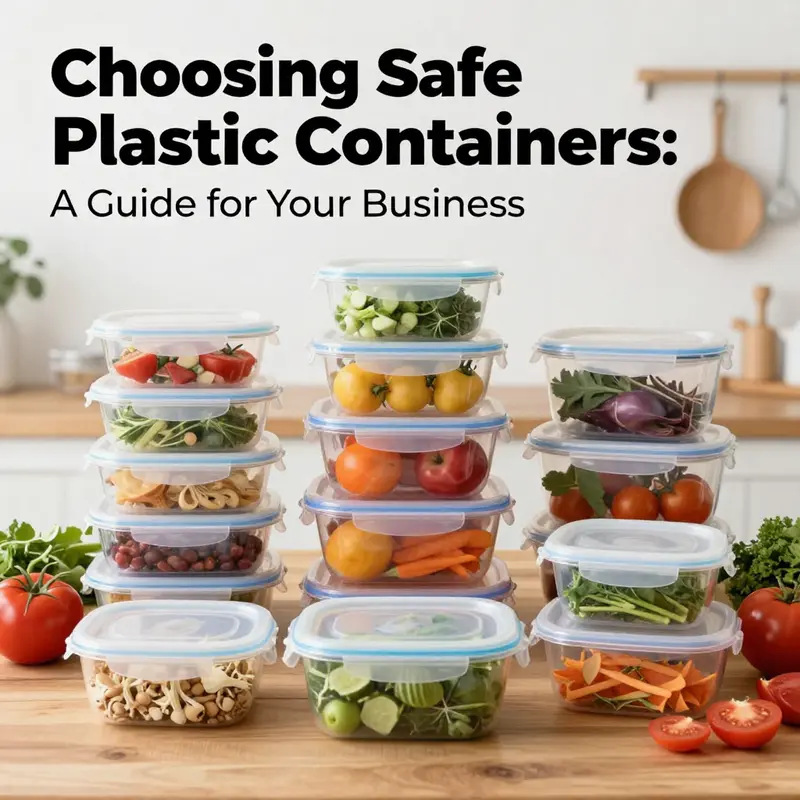
As the culinary landscape evolves, maintaining food safety and adhering to health regulations have become critical priorities for Bubble Tea Shops, Restaurants, Food Trucks, Catering Services, Event Planners, and Corporate Procurement Teams. Selecting the right plastic containers for food storage is not just about convenience but also about safeguarding your customers’ health and enhancing your brand’s reputation. This guide will unlock the essentials of safe plastic materials suitable for food, identify harmful plastics to avoid, and outline prudent safety practices to adopt, ensuring your operations remain compliant and efficient.
Guardians of the Pantry: Understanding the Key Safe Plastic Materials for Food Storage
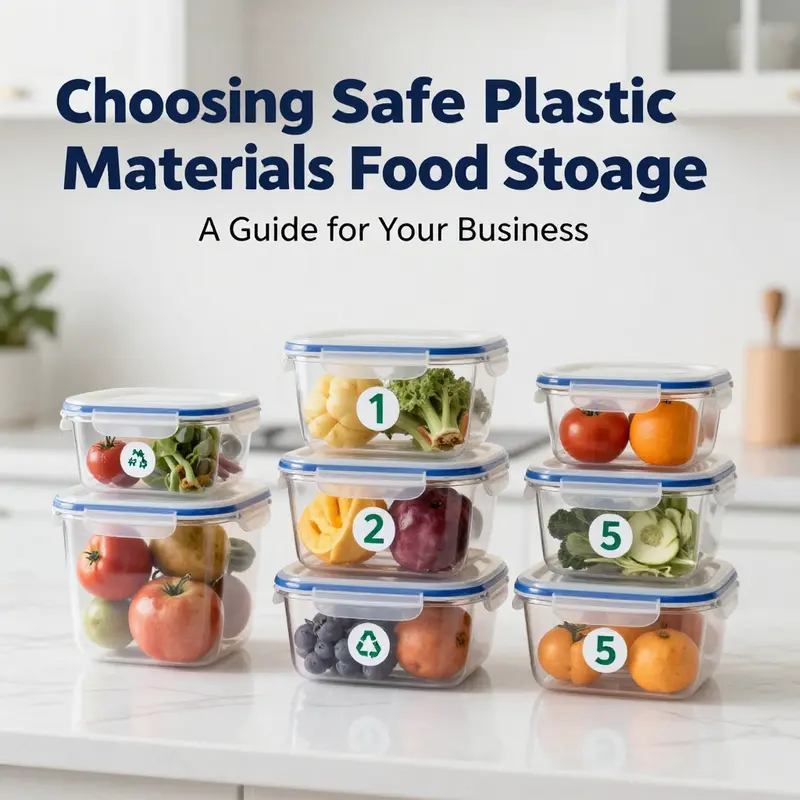
Choosing safe plastic containers for food storage starts with a clear understanding of what the plastic is made from, what the labeling means, and how the container is intended to be used. Nearly everything we reach for in the kitchen—milk for breakfast, a batch of chopped vegetables for the week, salad dressings tucked into the door of the fridge—depends on a container that can hold the food without quietly transferring substances from the plastic into the food. The aim is not to demonize plastic but to recognize that only certain plastics have been vetted for food contact, and only when used as they were designed. This chapter dives into the core materials that have earned a solid reputation for safety in food storage, why they are favored in many households, and where they still carry caveats. It also situates these materials within a broader framework of best practices, reminding readers that safety depends as much on how a container is used as on what it is made from. By understanding the distinctive properties and limitations of HDPE, PP, and PET, homeowners and professionals alike can make informed choices that minimize risk while supporting practical, everyday needs in the kitchen and beyond.
First, consider the family of plastics most widely recognized for safe food contact: high-density polyethylene, polypropylene, and polyethylene terephthalate. Each of these materials is assigned a recycling code that helps identify its composition and permissible uses. HDPE, marked as #2, is known for its chemical resistance and ruggedness. It forms the backbone of many durable containers—from milk jugs to butter tubs—where resistance to oils, acids, and moisture is a valuable feature. Polypropylene, or #5, is the workhorse of heat tolerance in the plastic world. Its high melting point and stable structure make it a common choice for containers that may encounter warm or hot contents, as well as for microwave-safe products and dishwasher-safe designs. PET, labeled #1, is the clear, rigid plastic you commonly see in single-use beverage bottles and salad dressing containers. It holds up well at room temperature and in cold environments, preserving clarity and freshness, but it is not designed for repeated use or for exposure to high heat.
To truly appreciate how these materials perform, it helps to look at the properties that researchers and regulators consider most relevant for food contact. HDPE’s chemical stability is one of its defining traits. It resists reactions with many oils, acids, and bases that commonly occur in food, making it reliable for long storage periods and for containers that may undergo rough handling. It is generally praised for its low toxicity and inert behavior, a combination that translates into confidence for everyday use. The FDA has approved HDPE as a food-grade material, underscoring its suitability for items that come into direct contact with food and beverages. This does not mean HDPE is indestructible; like all plastics, its performance hinges on the conditions of use. Heating, scrubbing with abrasive cleaners, or repeated exposure to harsh contents can still erode its protective barriers, but when used within recommended guidelines, HDPE remains a dependable option.
Polypropylene brings something different to the table. Its chemistry is arranged to resist higher temperatures than many other plastics, giving PP a reputational edge for applications where heat is involved. This includes containers intended for microwaving or direct contact with hot foods soon after cooking. The material’s high melting point means it can withstand temperatures that would cause other plastics to soften or begin to leach more aggressively. PP also tends to have a tight molecular structure, which translates into good resistance to deformation during heating and efficient barrier properties against moisture. The FDA recognizes PP as a food-grade plastic, and its use is widespread in household containers for meals, baby foods, and many ready-to-eat products. When PP is labeled as microwave-safe, it reflects testing that confirms its stability under typical reheating conditions. Of course, even though PP is robust, it still benefits from sensible limits—avoid heating plastics with damaged surfaces, and do not use them for hotter substances than the label permits.
Polyethylene terephthalate offers the gift of clarity. PET is the transparent face of many disposable beverage bottles and some meal containers. Its rigidity provides a dependable barrier against leakage and slippage, and its clarity makes it easy to inspect the contents without opening the package. PET’s performance is excellent at room temperature and in the refrigerator, which is why it has been so successful in cold-storage formats. However, PET’s heat tolerance is more limited than PP’s. Reheating or exposing PET to high temperatures can accelerate material degradation and, in some cases, increase the likelihood of chemical migration. For this reason, PET is typically recommended for single-use applications or for cold storage rather than for repeated heating or long-term hot storage. The safety framework for PET is anchored in its FDA-approval for food contact, but it is essential to heed guidelines about reuse and exposure to heat.
These three materials—HDPE, PP, and PET—are often described as the core trio for food-contact plastics that meet widely accepted safety criteria. They are distinguished not only by their chemical structures but by how those structures translate into performance under real-world conditions. HDPE is sturdy and chemically inert, PP is heat-tolerant and versatile, and PET is clear and mechanically reliable for cold storage. Each brings a set of strengths to the kitchen, and each carries specific limitations that, if understood, reduce potential risk and improve long-term satisfaction with the containers you choose.
An equally important dimension is the labeling that accompanies any plastic container. Labels and markings convey essential information about what the material is, what it is safe to do, and what to avoid. The BPA-free label, for instance, has become commonplace as a consumer-facing assurance. In practice, however, BPA-free does not automatically guarantee complete safety in all contexts. Some inherently safe plastics may be free of BPA but still carry other bisphenol analogs that researchers monitor for possible endocrine-disrupting effects. The bottom line is that BPA-free is a useful cue, but it should be read in conjunction with the material’s identity (the recycling code) and the manufacturer’s heating and storage instructions. The most direct, reliable signals come from a combination of the material code (#1, #2, #5), explicit statements about microwave compatibility, and the manufacturer’s directions for heating, washing, and storage.
It is also essential to consider the intended use. Not all plastics are designed for the same tasks. A container intended for cold, dry storage may not be appropriate for hot meals or for long-term oil-rich storage. The commercial and regulatory communities often emphasize a “design-for-use” approach: a container is considered safe when used as intended and under the environmental conditions for which it was designed. For PET, that means keeping it away from hot contents and avoiding prolonged contact with fatty or acidic foods at high temperatures. For HDPE, it means relying on its resilience for longer-term storage and its resistance to many substances, while recognizing that surface wear can change how a container behaves over time. For PP, it means taking advantage of its heat tolerance for reheating and feeding warm foods, while respecting any limitations the label places on high-temperature exposure, dishwasher cycles, or ultrasonic cleaning. The theme binding these considerations together is consistency: the more closely a user aligns actual practices with the container’s intended design, the more reliably the container will perform without contributing unwanted substances to the food.
A practical corollary to these material properties is the broader hierarchy of safety practices that governs everyday use. Even the safest material cannot compensate for poor handling. High temperatures dramatically increase the risk of chemical leaching, so never heat food in plastic containers that are not explicitly labeled for heating. Let hot foods cool to room temperature before transferring them to any container, and once cooled, store them within the recommended time frames. Acidic and fatty foods deserve extra caution. Tomato sauces, citrus juices, and oils can interact with plastic surfaces in ways that hasten the migration of particulates or residues from the container into the food. While the risk is not necessarily dramatic under typical home-use conditions, it is prudent to minimize exposure by using glass or other inert materials for long-term storage of highly acidic or oily products.
Damage is another reliable warning sign. Scratches, cloudiness, warping, or cracks can create microenvironments that encourage migration and harbored residues. Even containers that have served for a year or more may show signs that their protective barrier has degraded. In such cases, replacement is a safer choice. The manufacturer’s guidelines often provide the best proxy for whether a container should be retired. These guidelines reflect testing that assesses how materials behave under typical cleaning and heating cycles. Adhering to the recommended use, cleaning methods, and heat specifications helps maintain the integrity of the container and reduces the likelihood of leaching.
Labeling and usage cues apart, the materials themselves are not the only route to safety. A growing and important part of the conversation is the choice to turn to alternatives when appropriate. Glass containers stand out as a preferred option for many households seeking to minimize chemical exposure altogether. Glass is inert with respect to food, meaning it does not react with acidic or fatty foods in a way that could introduce substances into the food. It also tends to be highly durable under typical cooking, freezing, and reheating scenarios, especially when using oven-safe glassware or tempered glass designed for kitchen tasks. Glass can be washed, dried, and stacked with less concern about surface wear that would otherwise compromise plastic. From a health and sustainability perspective, glass often offers a long-term solution, removing the need to worry about migration or degradation affecting the food’s quality or safety.
Yet the reality of daily life means many people will still choose plastic for its light weight, convenience, and affordability. The nuanced takeaway is not that plastics are inherently unsafe but that safe storage hinges on matching the material to the right task and following the material’s specific limits. The three core materials—HDPE (#2), PP (#5), and PET (#1)—form a practical framework for decision-making. Each has a distinct set of strengths and constraints, and each requires careful attention to labeling, heating instructions, and storage duration. When a container carries the right code and is used within its designed bounds, the risk of unwanted leaching is minimized. When a container is used beyond those bounds—for example, heating plastics not rated for heat, or reusing single-use PET containers—the chances of adverse migration increase, eroding the safety cushion that such containers initially offered.
In constructing a safe storage system, it is also useful to consider the broader spectrum of materials and practices. Some households may find themselves negotiating space constraints, budget considerations, and the desire to minimize plastic contact with food altogether. The best practice is to evaluate the specific storage need: Will the container hold hot foods or liquids? Will it store foods for long periods, including acidic or fatty items? Will it face repeated cycles of dishwasher cleaning or microwave reheating? The answers to these questions help determine whether HDPE, PP, or PET is the most appropriate choice in a given situation. For many, HDPE will be the workhorse for durable, everyday storage and for items that can handle rough handling. PP can fill the niche where higher temperatures are a factor, and PET may be the best option for cold storage and for items that benefit from optical clarity, such as containers that reveal contents without opening.
The conversation also intersects with consumer education about recycling and end-of-life considerations. The codes themselves are not a universal passport to safety, but they do provide a pathway to recycling streams and, in some cases, to diverted waste material in a manner that aligns with environmental goals. Understanding how to recycle each type of plastic—whether it is accepted in local programs, how to prepare containers for recycling, and what happens to the material after disposal—brings an additional layer of safety into the broader household routine. This is especially relevant in a world increasingly attentive to sustainability, where the choices we make about storage can influence waste streams as well as health.
The practical takeaway is clear: select containers with clearly indicated materials under the right code, respect the heating and storage guidelines, and replace any container that shows signs of wear or damage. Recognize that PET is best for cold, short-term use and single-use contexts, while PP and HDPE offer more flexibility for heating and long-term storage under the right conditions. When there is any doubt about whether a container is safe for a particular use—such as reheating leftovers in a plastic container or storing a high-fat sauce for several days—it is wise to transfer the food to a container that is explicitly designed for that purpose. And for those who seek maximum peace of mind in food storage, glass remains a compelling alternative, offering inertness, durability, and compatibility with a wide range of uses without the same migration risk that accompanies plastics.
All of these considerations—the material, the labeling, and the intended use—work together to shape a safe and flexible approach to food storage. The chapter thus reframes the question from one of “which plastic is safest?” to “which plastic is safest for this food, this container, and this scenario?” The answer is rarely a single universal verdict. Instead, it is a nuanced alignment of material properties with use-case realities, guided by labeling, regulatory approvals, and practical judgment. In this way, the kitchen becomes a testing ground for informed decision-making rather than a battlefield between convenience and safety.
To close the circle, it is worth reiterating a few core principles drawn from the broader body of research and regulatory guidance. First, plastics certified for food contact—particularly HDPE, PP, and PET—are not interchangeable in every context. Their performance varies with temperature, exposure to oils and acids, and time. Second, heat is the primary driver of chemical migration, so heating practices should follow the container’s specific instructions, and hot foods should not be stored in containers that are solely designed for cold storage. Third, damaged or degraded containers deserve retirement from food storage, as their protective barriers become compromised. Fourth, labeling should be read in conjunction with the material type and the allowed uses; BPA-free labeling is helpful but does not guarantee universal safety in all contexts. Finally, when feasible, glass offers a robust alternative that minimizes leaching risk and supports a broad range of uses, from freezing to reheating and even oven cooking in compatible glassware.
From a safety-first perspective, the three core materials—HDPE, PP, and PET—provide a practical, evidence-based framework for everyday storage decisions. They reflect the consensus that, under the right conditions, plastics can be a safe and convenient part of modern kitchens. The deeper learning is that safety is not a static attribute but a dynamic practice: keep to the intended use, respect temperature guidelines, monitor for damage, and stay informed about labeling and regulatory guidance. This approach ensures that the containers you reach for do not merely hold your food but actively contribute to preserving its safety and integrity over time. In the larger arc of safe storage, understanding these materials helps transform a routine choice into a deliberate act of safeguarding health and well-being for everyone at the table.
External resource: https://www.fda.gov/food-contact-substances-fcs
The Clear Divide: Plastics to Avoid for Food Storage and Safer Paths That Endure
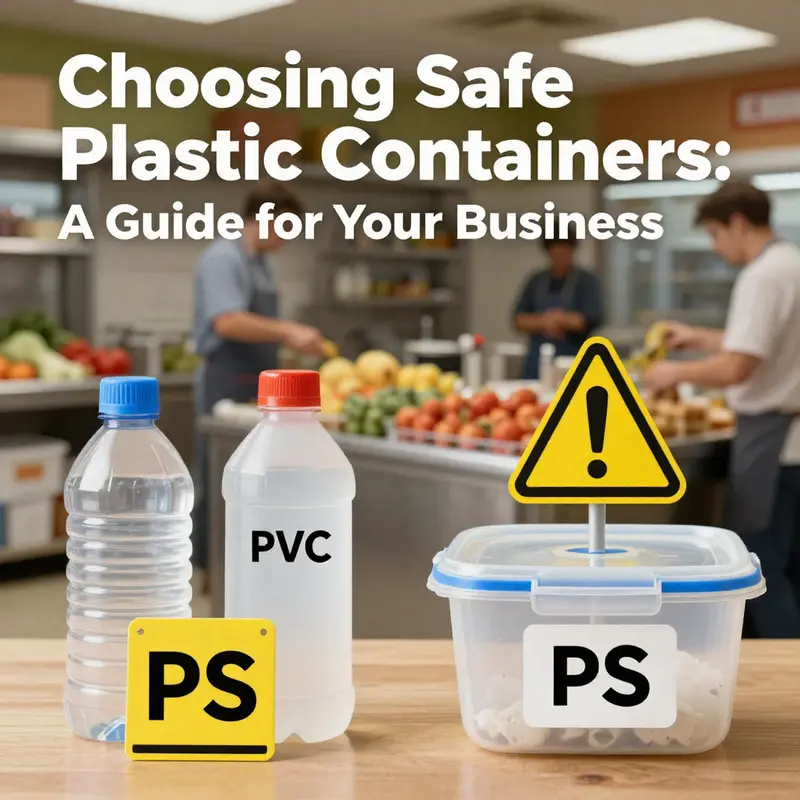
Every kitchen carries a quiet inventory of containers. Their surfaces gleam or show a soft, forgiving matte, but behind the surface lies a question that many households overlook: how safe are these plastics for storing food, especially when heat, fat, or acidity come into play? The question isn’t merely about choosing a label that reads “recyclable” or “BPA-free.” It’s about understanding the chemistry at work when plastic meets food. The risk isn’t equal across all plastics, nor is safety guaranteed simply because a container looks rugged and reusable. What begins as a simple habit—storing leftovers, marinating in a shallow tray, or freezing portions for a busy week—can turn into a quiet, long-term exposure if the container is not suited for the job. In every kitchen, the choice of storage material becomes a living decision about health, convenience, and the environment. This chapter looks closely at plastics to avoid for food storage, not as a scare tactic but as a practical map for safer everyday practice. It invites readers to interrogate their current habits without abandoning the everyday practicality that plastic brings, while redirecting that practicality toward materials and practices that genuinely minimize risk.
In the modern home, the most widely circulated plastics for food contact cluster around a few resin codes, each with a different set of properties and safety considerations. The most common culprits to scrutinize are those that people encounter in everyday life: PET, HDPE, polypropylene, polystyrene, and polycarbonate—plus the broader “other” category that contains diverse materials. PET, or #1, is renowned for clarity and stiffness, a favorite for single-use beverage bottles. The problem arises when PET is reused or heated. Although it can resist some leakage at room temperature, repeated washing, exposure to heat, and physical wear degrade the polymer’s integrity. As tiny changes accumulate in the plastic, the material can begin to migrate into the contents it holds. In particular, when PET is subjected to heat or used to hold hot liquids, there is a real possibility of substances migrating from the plastic into food or drink. The guidance on reuse and heating is clear: PET is designed for single-use, and reuse or heating increases risk. The practical implication for households is straightforward: keep PET for one-time use and discard after opening or use, rather than repurposing it for long-term storage or hot foods.
HDPE, or #2, is another familiar plastic. It’s known for durability and chemical resistance, making it a staple in milk jugs, juice bottles, and some tubs. HDPE is considered very safe for food contact and is less likely to leach than some other plastics. Yet, there are limits. HDPE’s opacity and less common presence in rigid, see-through food storage containers mean its safer performance is not always realized in everyday kitchen kits. When HDPE is used, it remains a sound choice for certain cold storage tasks, but like all plastics, it benefits from attention to heat exposure and long-term use. The bottom line for HDPE is caution about repeated cycles of freezing and thawing, and about storing particularly fatty or acidic foods in long cycles where degradation might gradually increase leaching risk.
Polypropylene, #5, often sits at the center of the safer plastics conversation. It has a relatively high heat resistance, which is why you’ll see it frequently labeled as microwave-safe and freezer-friendly. Polypropylene’s melting point sits well above typical kitchen temperatures, which makes it a practical choice for many meal-prep containers and reusable food storage solutions. But even with polypropylene, safety hinges on proper labeling. Containers must be explicitly marked as food-grade and, ideally, microwave-safe for the intended use. BPA-free labeling, while reassuring to many, is not an ironclad guarantee that a material is inherently safe in every context. For polypropylene, the critical factor is that the material itself is designed for repeated contact with food at varying temperatures. When properly labeled, PP can be a reliable workhorse in the kitchen without the same level of risk attached to some other plastics.
Polystyrene, or #6, has become a symbol of caution in the safety conversation. It’s ubiquitous in disposable coffee cups and takeout containers, valued for its lightness and insulating properties. The downside is significant: styrene, a potential carcinogen, can migrate into food or beverages, particularly when the container is heated or holds oily foods. Styrene migration is not merely a theoretical risk; it has real implications for daily meals, especially for those who frequently reheat takeout leftovers in the same disposable container or store hot foods in Styrofoam. Because polystyrene is often not recyclable in many communities and is structurally less stable when exposed to heat, the prudent approach is to avoid using it for hot foods and for long-term storage. The takeaway is clear: if polystyrene appears in the setup, prefer alternatives for hot or oily foods and consider swapping it out for materials with better inertness and durability.
The broad “other” category, including materials like polycarbonate and various multi-polymer blends, invites particular scrutiny. Historically, polycarbonate containers contained bisphenol A (BPA), a chemical that can mimic estrogen in the body. While many modern #7 plastics are labelled BPA-free, the safety landscape remains nuanced. Some other bisphenols with less transparent safety records have surfaced in scientific discussions, so many households adopt a cautious stance about long-term food storage in the #7 category. The practical advice from safety-conscious households is to consider avoiding #7 plastics for long-term storage, particularly for hot foods or for items used repeatedly over many months or years. In short, the more unpredictable the composition, the more prudent the approach should be. The key is to favor materials whose behavior under heat and over time is well-characterized and understood.
Across these codes, a shared warning emerges: heat dramatically increases the risk of chemical migration, and fats and acids accelerate that migration. Tomato sauce, citrus, vinegar, and cooking oils can all intensify the interaction between plastic and food. The reality is that any plastic container’s safety cannot be determined solely by its color, its brand, or even its cost. The true test is context: what is stored, for how long, at what temperature, and how is it cleaned and reused? It’s in the everyday details—how you thaw a frozen soup, how you reheat leftovers, whether you reuse a bottle designed for single use—that the safety of plastics becomes either a manageable risk or a safety hazard.
This is where the concept of a safety boundary becomes useful. A safety boundary is not a rigid decree but a practical standard: it marks the conditions under which plastic can still be used without crossing into higher risk. For many households, the boundary looks like this: keep PET out of hot food applications and avoid reusing it; avoid heating polystyrene containers or storing hot liquids in them; recognize that LDPE’s dyed colors and recycled origins receive extra caution marks, and avoid unmarked or color-rich bags for food storage. In practice, that means designing a simple system for the kitchen that distinguishes containers by safe use cases rather than by appearance or novelty. The simplest way to build this system is to map the container to the task at hand, always verifying labeling and intended use before you store, heat, or reheat food.
When safety labels are unclear, it’s a wise habit to default to non-plastic or less reactive options. Glass offers a robust, inert alternative that resists leaching and stands up well to repeated cycles of freezing, microwaving, and sometimes oven use. Glass does not react with acidic, fatty, or salty foods in the same way plastics can, and its surface is easier to clean thoroughly, reducing the chance of micro-deposits that encourage migration. Yet glass isn’t always practical in every situation. It can be heavier, more fragile, and less convenient for lunch boxes or travel. The balance, then, lies in recognizing both the strengths and the limitations of different materials and building a storage system that prioritizes safety without sacrificing everyday usability.
If all this sounds abstract, think of the kitchen not as a single space but as a dynamic environment where every stored item has a story about temperature, duration, and substance. A simple reframing helps: treat every container as a potential leacher, then design your storage choices around minimizing that potential. For cold storage, a high-quality HDPE tub or a polypropylene box with a well-sealed lid might suffice for a few days of leftovers, provided it is clearly labeled as food-grade and bottom-labeled for cold storage. For freezing, consider containers designed specifically for that purpose, ideally with a proven track record in low-temperature stability. For warming up leftovers, prefer glass or a robust microwave-safe PP container with a lid that fits, and always allow hot food to cool to room temperature before moving it into any container, plastic or otherwise. These steps may seem incremental, yet they create a consistent safety protocol that reduces risk across the entire food lifecycle.
In the same spirit of caution, it is essential to recognize that practical safety can be achieved without abandoning convenience entirely. The small, deliberate shifts can accumulate into meaningful reductions in risk. For example, a household might designate specific containers for different tasks: one set for cold storage of leftovers, another for freezer use, and a separate set for reheating that is clearly marked as microwave-safe and food-grade. In this framework, the habit of heat becomes a controlled activity rather than an unpredictable hazard. The mind shifts from chasing perfectly leak-proof miracles to building a resilient routine that minimizes risk while keeping the routine efficient. At the heart of this approach is the recognition that the safest option in many households remains glass when feasible, and that plastics should be reserved for uses where their safety profile is well established and consistently applied under the conditions of that use.
For readers interested in practical alternatives, consider how convenient packaging formats can coexist with long-term safety goals. A shift from disposable plastics to reusable, safer options does not demand an overnight change; it invites a gradual transition where each use demonstrates thoughtful choice. For instance, reusable glass containers with tight lids can handle a wide range of temperatures, from fridge to oven, with proper care and handling. They also reduce the cognitive load of having to check heat labels for every item. In addition, more households are discovering the value of paper-based or pulp-based packaging for take-away scenarios, especially when the packaging is designed to be food-grade and compostable. The transition is not about abandoning modern conveniences but about aligning them with a robust safety framework that prioritizes health, reduces chemical migration, and aligns with sustainable practices. If you are looking for a direct, practical example of safer disposable alternatives that still support day-to-day routines, a thoughtful option is to explore single-use kraft paper bowls and lids designed for food service. They provide a practical, low-risk alternative for portions, sauces, and meals when used as intended. For convenience and safety online readers can explore products that are designed with take-away and food-service use in mind, such as disposable kraft paper bowls with lids, which can be an effective interim solution while you pace changes in your own kitchen. For a direct path to a product option that aligns with this approach, you can refer to resources like this: disposable kraft paper bowl for food package with lid. This kind of packaging emphasizes a safer surface profile and a predictable contact experience that reduces the likelihood of unknown additives migrating into food.
The broader takeaway is that safety is not a single benchmark but a spectrum shaped by material choices, labeling accuracy, and how you use containers. This is why a strong focus on labeling is essential. When a container clearly states that it is food-grade and suitable for the intended use, it becomes a reliable partner in safe food storage. The label is not a decorative feature; it is a promise that the container design has been evaluated for the typical temperatures, durations, and foods you expect to encounter. Conversely, containers without clear labeling, or those that feel overly soft, are warning signs that the product may not meet the standards required for reliable food contact. In practice, this means building a habit of checking for a recycling code and explicit food-safe labeling before you decide to reuse a container, heat food in it, or store leftovers for more than a day or two.
An additional layer of caution concerns the interaction between cleaning practices and material safety. Many households assume that washing perplexing containers neutralizes potential risk, but aggressive scrubbing and harsh soaps can damage the surface of plastics, accelerating micro-abrasions and creating tiny pathways for chemical migration. Gentle cleaning and avoiding abrasive tools can extend the life of storage containers while reducing risk. There is a quiet interplay between wear and safety: small scratches become cumulative, more surface area becomes exposed, and the likelihood of migration may increase. The advice here is simple: treat containers with respect, especially if they’re intended for repeated use. If you notice clouding, deep scratches, warping, or any change in texture, it is prudent to retire the item and replace it with a container labeled for repeated, food-contact use.
This chapter does not deny the usefulness of plastic in food storage. Instead, it argues for a more disciplined, transparent approach to plastics so that households can continue to reap the benefits without compromising health. The guiding principle is to understand the context of use: what is stored, how hot it gets, how long it sits, and what the container is made from. Where the risk is elevated, seek safer alternatives and more transparent labeling. Where the risk is lower, make sure the container is designed for the job and kept in good repair. The goal is to create a kitchen ecosystem that is both practical and protective, a place where instinct and information converge to keep food safe from the moment it leaves the fridge until it reaches a plate. For many households, that means gradually shifting toward safer plastics for specific tasks while embracing glass, metal, or paper-based packaging for others.
The conversation around plastics to avoid also invites further learning and ongoing vigilance. Authorities, including the U.S. Food and Drug Administration, provide guidance on food contact substances and packaging standards, which can help you refine decisions about what to use and what to avoid in your daily routine. It’s worth taking the time to consult reliable sources and to stay updated on evolving findings, because the science of plastic safety continues to develop, and new materials or formulations can alter the risk landscape in meaningful ways. The practical habit of staying informed becomes part of a broader commitment to health and sustainability, ensuring that the home remains a place where convenience and care coexist. For those who want a clearer, more actionable route to safer packaging alternatives, it’s reasonable to integrate safer substitutes into your routine gradually. In many kitchens, this means keeping select glass containers for hot foods, investing in high-quality PP containers for reheating, and choosing paper-based packaging where appropriate for take-away or short-term storage. It also means recognizing when a plastic item has served its purpose and replacing it with a safer alternative that better aligns with your health goals and lifestyle needs.
In sum, plastics to avoid for food storage share a common thread: the conditions under which they are used matter as much as the materials themselves. Heat, acidity, fats, and time can turn everyday storage into a risk if the container is not up to the task. The most cautious approach is to rely on materials with well-characterized safe-use profiles, to scrutinize labeling, and to respect the boundaries of how each material performs. By building a practical framework for container choice—favoring glass and selectively using safer plastics like well-labeled PP for specific applications, while avoiding reuse of single-use PET and hot uses of PS—households can maintain the convenience of modern storage while reducing health risks. The path toward safer storage is not a single leap but a series of deliberate steps, guided by labels, the known properties of materials, and a willingness to adapt habits as new information becomes available. And for those who value both safety and convenience, a thoughtful glance toward paper-based alternatives offers a viable, accessible route to minimize plastic-related concerns even as you continue to enjoy the benefits of modern food storage.
External resource: For authoritative guidance on food safety standards and contact substances, refer to the U.S. Food and Drug Administration’s materials on food-contact substances and packaging. https://www.fda.gov/food/food-contact-materials-and-packaging/food-contact-substances-fcc
null
null
Final thoughts
Understanding safe and unsafe plastics for food storage equips food service providers to protect both their patrons and their brands. By selecting the right materials, avoiding harmful plastics, and adhering to safety practices, businesses can enhance their reputability while ensuring food safety. This diligence not only fulfills legal obligations but also fosters customer trust and loyalty, ultimately contributing to a successful operation.