
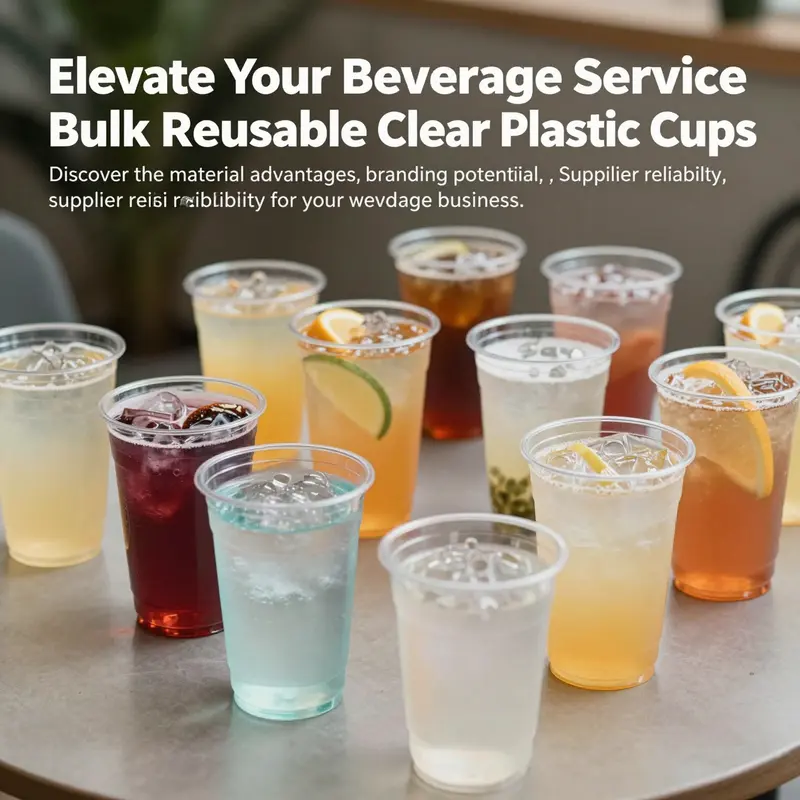
Reusable clear plastic cups in bulk are rapidly becoming an essential choice for beverage-centric businesses like bubble tea shops, restaurants, and catering services. Their durability, cost-effectiveness, and eco-friendly profile make them an excellent investment for enhancing service quality while promoting sustainability. In this exploration, we will delve into the critical aspects of material composition and durability as they pertain to the needs of beverage providers. Then, we will explore the branding and customization opportunities that accompany these versatile cups, providing a powerful tool for brand recognition and customer engagement. Finally, we’ll address the considerations for supplier reliability and ordering logistics, ensuring that every cup ordered contributes positively to your operations. Together, these insights will equip you with the knowledge to make informed choices that bolster your business success.
The Clear Edge: How Material Make-Up Shapes Durability and Value in Bulk Reusable Cups
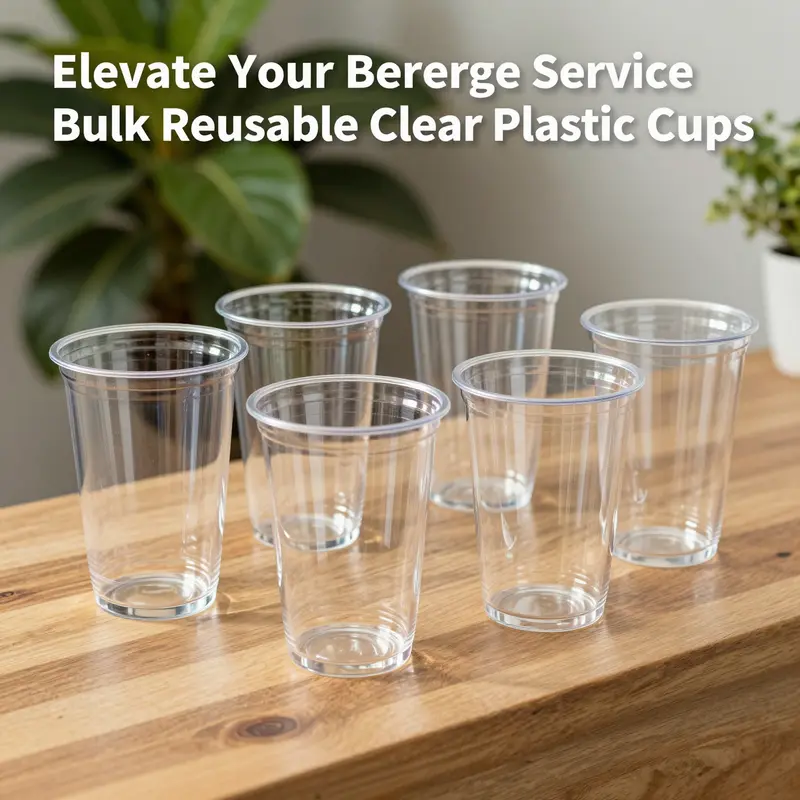
When a buyer looks at reusable clear plastic cups in bulk, the first impression is often a riot of transparency and clean lines. Yet the real storytelling happens beneath the surface: the polymer chemistry, the microstructure that governs impact resistance, and the way a cup ages through countless washes and clinks at busy events. Material make-up matters not just for how long a cup lasts, but for how reliably it performs in the field, how easy it is to clean, and how gracefully it supports a brand’s environmental and aesthetic promises. In bulk applications—whether for offices, schools, hospitality, or large outdoor gatherings—the choice of material becomes a strategic decision. It influences safety, maintenance, cost-per-use, and even the ability to convey a corporate message through clear, pristine presentation of beverages. To understand this fully, we must explore the trio of materials most commonly employed in reusable, crystal-clear cups, and then connect those choices to real-world usage, from everyday office coffee to high-demand settings like daycare centers and event venues.
First, polypropylene, or PP, sits at a practical intersection of performance and affordability. PP cups are renowned for their heat tolerance, which allows hot liquids to be carried without fear of deformation or warping. In many designs, plastics labeled as PP can safely handle temperatures up to about 160°F (70°C), which covers hot coffee, soups, or herbal teas in casual settings. The heat resistance is not merely about comfort; it translates into safety and durability during busy service periods. In a bulk scenario, where repeated use stacks up against heavy cleaning cycles, PP’s resilience shines. It resists cracking and maintains structural integrity after multiple dishwasher runs—especially in top-rack loading—while remaining light enough to minimize fatigue for staff and guests alike. Aesthetically, PP maintains a respectable level of clarity, and its surface tends to resist clouding when washed properly. Beyond practicality, PP is recyclable in many municipal programs, a factor that aligns with sustainability goals even when the cups are used repeatedly rather than discarded after a single use. For venues that must balance cost with large-scale deployment, PP offers a dependable baseline that supports both everyday needs and occasional surges in demand.
Then there is Tritan™ Copolyester, a material introduced specifically to address two critical gaps in reusable cup design: long-term clarity and durable performance after repeated dishwasher cycles. Tritan™ is BPA-free and chemically engineered to resist staining and odor retention, even when cups repeatedly handle acidic juices, coffee oils, or colored beverages. The result is a cup that remains transparent and bright through dozens, sometimes hundreds, of wash cycles. In environments where hygiene and long life matter—daycare centers, educational facilities, healthcare-affiliated settings, or sustainability-forward businesses—Tritan™ offers a level of reliability that many operators demand. The material’s impact strength means fewer chips or cracks, which reduces the risk of injuries in high-traffic areas. Moreover, Tritan™ cups are designed to withstand rigorous cleaning regimes, including dishwasher use, which translates into lower labor costs over time and a more efficient workflow during events where cleanup is a central part of the experience. The trade-off, of course, is cost; Tritan™ tends to command a higher price point than basic PP, but the return on investment can be compelling when you factor in durability, clarity, odor resistance, and the ability to maintain a premium presentation across long service lives.
A third pillar in the bulk reusable cup conversation is PET, including RPET variants. PET has long carried the badge of clarity, offering a visually appealing, glass-like transparency that enhances beverage presentation. PET cups are particularly well-suited for cold beverages, where heat resistance is less critical. In bulk deployments, PET—and especially RPET, which uses post-consumer recycled material—appeals to sustainability-focused buyers who want to demonstrate a responsible footprint without sacrificing visual appeal. The caveat is heat tolerance: PET’s performance can wane with hot liquids, and some users may see slight warping or fogging over time if temperatures routinely approach the upper end of what PP or Tritan™ would tolerate. Nevertheless, for cold drinks at weddings, poolside events, or corporate receptions where the cups may be reused a few times, PET and RPET offer a compelling balance of clarity, recyclability, and cost-efficiency. The recycled variant introduces an additional dimension: it can significantly reduce the overall lifecycle footprint of a bulk purchase, provided that the supply chain supports high-quality RPET with consistent color, clarity, and mechanical performance.
Material choice does not occur in a vacuum. Designers and procurement teams weighing bulk purchases must factor in not only the immediate price per cup, but the entire lifecycle—how many cycles a cup can endure, how easily it stacks for bulk storage, and how it performs in the cleaning regimen typical of their environment. For instance, in a school cafeteria or corporate break room, a cup’s ability to survive repeated dishwashing without losing clarity or developing micro-scratches is a practical requirement. In hospitality settings, where presentation is part of the brand experience, the cups must preserve their optical integrity across multiple events and washings, ensuring the beverage color and presentation remain visually appealing from start to finish. In outdoor venues, where handling and transport add a layer of stress, shatter resistance and light weight become additional decision criteria. Across these scenarios, the design features of the cups—such as stackability, smooth rims for comfortable sipping, and robust sidewalls that resist flex under pressure—contribute to how a single bulk order translates into a predictable, reliable user experience.
Beyond the core materials themselves, the certification landscape and environmental claims surrounding bulk reusable cups can influence buying decisions. Safety standards such as FDA 21 CFR 177.1630, which pertains to certain plastic materials intended for contact with food, play a central role in ensuring that cups intended for beverages are appropriate for their intended use. For suppliers aiming to attract customers who value eco-responsibility, additional certified standards—like EU No 10/2011 for plastic materials intended to come into contact with food, or OK compost Home certifications—signal a commitment to consumer safety and responsible disposal options. These certifications provide a framework for buyers to compare products across vendors and verify that the cups meet recognized benchmarks for safety and environmental stewardship. When evaluating bulk options, many buyers view these certifications as a form of risk management: they reduce the probability of regulatory complications and buyer remorse down the line.
In the bulk market, the decision-making process is also influenced by practical procurement realities. Flexibility in minimum order quantities is a notable facilitator for small businesses and startups that want the benefits of bulk pricing without overcommitting capital. Some suppliers offer flexibility down to as few as ten pieces, enabling pilots, micro-events, or seasonal promotions to test performance before scaling up. Conversely, for larger corporate or municipal deployments, bulk volumes can be arranged with formal service level agreements, ensuring predictable lead times and replenishment. On-time delivery rates can be an indicator of supplier reliability; a supplier boasting high reorder rates and near-perfect delivery performance suggests a well-managed production and logistics operation. In this context, material choice intersects with supply chain reliability. If a chosen material’s supply chain experiences volatility, or if a supplier cannot guarantee timely replenishment, the perceived value of the cup—its durability and aesthetic consistency—could be compromised even before it is put into use.
Custom branding and design options expand the usefulness of bulk reusable cups beyond mere function. For organizations seeking to project a consistent brand image, the clear cup becomes a vehicle for logos, color schemes, and event messaging without obscuring the beverage’s appearance. Customization, when integrated into bulk purchasing, can reinforce identity, communicate values (such as sustainability and quality), and support marketing campaigns at scale. The interplay between material selection and branding options becomes particularly important when you consider the lifecycle of the cup in different environments. In a trade show or a corporate function, for instance, a perfectly clear cup that withstands repeated handlings, washes, and glances across a crowded room carries more perceived value than a cheaper, disposable option. The long-term cost benefits—reduced waste, lower disposal fees, and a consistent brand experience—often outweigh the initial price delta between materials like PP and Tritan™.
Even within the category of reusable cups, there are premium design iterations that push the boundaries of material science and consumer perception. Some suppliers offer diamond-shaped or stemless cup designs that blend PET, acrylic, and glass-inspired aesthetics. These options aim to fuse the clarity and lightness of plastics with a more refined silhouette that suits formal and casual events alike. In practice, these premium cups can enable a seamless transition from corporate function to intimate backyard gatherings, underscoring how material make-up can support a diversified usage pattern without requiring a separate set of products for different occasions. While these higher-end designs typically come at a higher cost, the durability profile—combined with striking presentation—can justify the investment for organizations that prize a strong, consistent brand presence across a broad spectrum of settings.
To make sense of all these variables, buyers can adopt a few guiding questions as part of a due-diligence process. What is the expected daily use profile? Will hot liquids be involved frequently, or will the cups mainly support cold beverages? How many times will the cups realistically be reused before disposal? What are the cleaning workflows and equipment at scale in the facility? How important is clarity and odor resistance to the user experience? What environmental certifications are non-negotiable for the organization? Answers to these questions help narrow the material choice to the most appropriate category—PP for cost-effective, hot-handleable, and recyclable performance; Tritan™ for long-lasting clarity and hygiene in demanding environments; or PET/RPET for high-clarity cold beverage use with a lighter footprint. Each material carries a distinct set of trade-offs, and the best bulk solution often emerges from a careful synthesis of performance data, operational realities, and strategic priorities.
In the broader market narrative, even as disposable optics and single-use plastics dominate headline discussions, bulk reusable clear plastic cups are carving out a practical, scalable niche. They deliver the transparency customers want while offering durability that makes repeated use economically feasible. The presence of clear, recyclable materials aligns with growing consumer expectations around waste reduction, and the availability of BPA-free formulations and robust chemical stability supports a health-conscious brand image. When a procurement team weighs options against the backdrop of cost per use, maintenance demands, and environmental responsibility, the material story becomes a deciding factor that influences every stage of the cup’s journey—from production through daily service to eventual end-of-life handling.
It is worth noting that the conversation around materials for reusable cups often intersects with the broader ecosystem of beverage service. For instance, the market for plastic-based serviceware in bulk includes a range of options that cater to both disposable and reusable use cases. Some suppliers also offer branding and customization solutions that reflect a company’s identity across large audiences, even when the primary product is not the same as the reusable cup category. These parallels illuminate how decisions about material composition, durability, and lifecycle can shape not only product performance but also the sustainability narratives that organizations communicate to customers, employees, and partners. In this sense, the material choice is not simply a technical parameter; it is a foundational element of a system that blends efficiency, safety, aesthetics, and responsibility.
For readers seeking a deeper dive into the technical underpinnings of these polymers, industry datasheets and material specifications provide a rigorous foundation. One resource worth consulting is the Eastman Tritan™ Copolyester datasheet, which outlines the properties that make Tritan™ a standout choice for high-use items demanding clarity and resilience. The datasheet details compatibility with cleaning regimens, chemical stability, and the material’s impact resistance—factors that translate into real-world durability for bulk deployments. This reference complements the practical guidance described above by offering a quantifiable view of how the material performs under stress, how it behaves in various environments, and what kind of life cycle expectations manufacturers may set for their products. In practice, engineers and procurement specialists use this type of data to model wear, plan maintenance, and predict the total cost of ownership across the expected service life of the cups.
In sum, the decision to deploy reusable clear plastic cups in bulk rests on a thoughtful blend of material science and operational pragmatism. PP provides everyday reliability at a favorable price point, Tritan™ delivers exceptional clarity and durability aligned with high-usage environments, and PET/RPET offers a lighter, highly transparent option for cold beverages with sustainability considerations. The most successful bulk strategies recognize that the material choice is a lever you pull in concert with design features, cleaning logistics, certification assurances, and branding ambitions. When these elements align, a bulk order of reusable clear cups does more than meet a practical need; it reinforces a brand’s commitment to quality, safety, and responsible consumption. As buyers navigate the market, they gradually discover how a well-chosen material foundation can unlock consistent performance across seasons, venues, and audiences, turning a simple cup into a reliable partner in the daily routine of service and hospitality.
For those who want to explore a concrete example of how branding and materials intersect in bulk offerings, a look at the range highlighted by a leading supplier underscores the value of combining reliability with customization. The same approach that drives demand for high-volume, logo-enhanced disposables also informs how teams evaluate reusable options. By examining the breadth of options that exist—even beyond what’s typically marketed as reusable—the reader gains a broader sense of what is possible when durability, clarity, and brand storytelling converge in a single, clear vessel. This cross-pollination of ideas helps ensure that a bulk program not only meets practical needs but also elevates the experience for end users, making every beverage communion with the cup a moment of confidence and clarity.
In closing, the material composition of reusable clear plastic cups sold in bulk is more than a technical specification. It is a strategic choice that shapes daily operations, long-term cost efficiency, and the capacity to present beverages in a way that aligns with contemporary standards of safety, sustainability, and style. Whether the final selection leans toward PP for broad compatibility, Tritan™ for premier durability, or PET/RPET for high-clarity, cold-use scenarios, the right combination delivers a dependable, scalable solution that meets the diverse needs of modern organizations. As the market continues to evolve, ongoing innovation in polymer chemistry and processing will likely yield new blends and formulations that push the boundaries of what a reusable cup can endure while keeping presentation at the forefront. For practitioners, the path forward lies in a careful, data-informed evaluation of materials, a clear understanding of usage patterns, and a willingness to invest in a bulk solution that performs consistently across contexts and over time.
Internal link reference: For a practical example of how branding and bulk disposables are marketed in a related category, see good-selling-disposable-takeaway-with-logo-single-wall-paper-coffee-cup. This illustrates how large-volume orders are designed for both brand visibility and operational efficiency, offering a benchmark for evaluating the value added by customization across different product families. good-selling-disposable-takeaway-with-logo-single-wall-paper-coffee-cup
External resource for further technical context: Eastman Tritan™ Copolyester datasheet provides detailed material properties, processing guidelines, and compatibility considerations that inform durable, clear plastic cup design. https://www.eastman.com/products/tritan-copolyester
Clear Assets: Branding, Customization, and the Bulk Advantage of Reusable Clear Plastic Cups
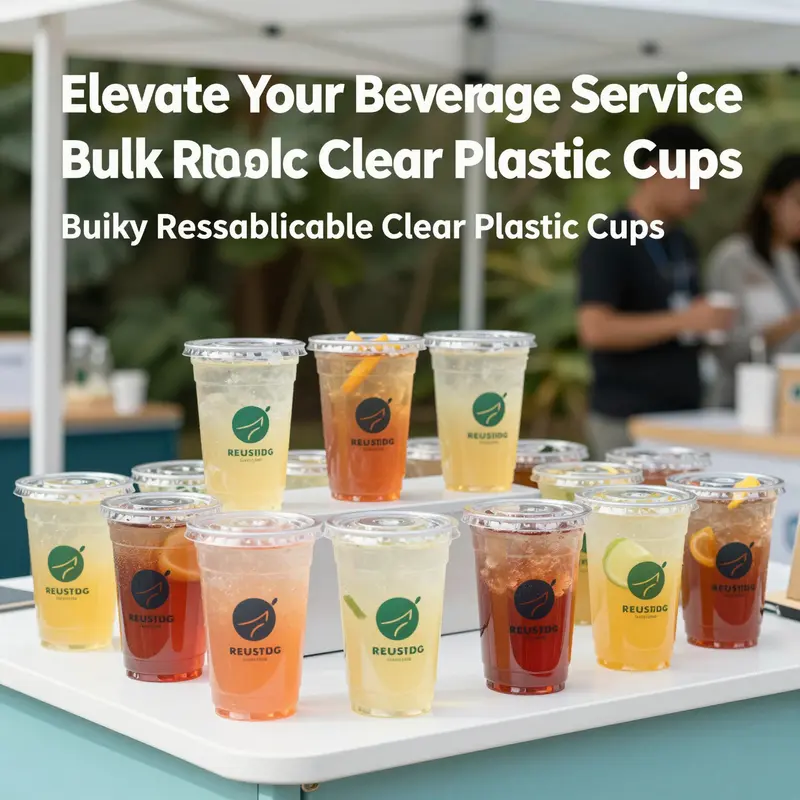
A clear cup is more than a vessel; it is a canvas for brand narrative, a silent ambassador at events, and a practical workhorse in busy offices and schools. When a business steps into the realm of reusable clear plastic cups in bulk, it gains a portable, reusable billboard that travels from conference room to courtyard, from coffee station to community fair, all while carrying the visual language of the brand in a way that ordinary disposables simply cannot. The power of transparency in these cups lies in their ability to showcase more than what is inside, revealing color, texture, and atmosphere, inviting curiosity about the drink itself and about the company behind it. The cups become part of a cohesive sensory story: the clarity of the material mirrors the brand’s emphasis on honesty and quality, while the durability signals a commitment to sustainability that customers can taste and trust. From the moment a guest lifts a cup, branding opportunities begin with dual side printing on the surface area, placing a primary logo on one side and complementary messaging or a QR code on the opposite side to maximize exposure from different angles while maintaining legibility. Seasonal customization and themed color palettes extend personalization without clutter, and color psychology can guide choices to align with eco conscious or premium branding. The cup also serves as a conduit for interaction through codes that link to digital experiences, loyalty programs, or interactive content, while the transparent surface supports beverage storytelling by reinforcing brand narratives through color and presentation. Economically, bulk production improves consistency, reduces per unit cost, and enables iterative design within budget, with durable, dishwasher friendly cups reinforcing sustainability commitments that audiences increasingly value. The design and production dialogue emphasizes readable imprint areas, high contrast, and coatings that preserve clarity, ensuring the final product looks polished from first unpacking to the last rinse. The result is a scalable branding platform that travels with the beverage from service to social moments, turning cups into memorable touchpoints and tangible expressions of quality, responsibility, and enduring customer relationships.
Trust, Timing, and Tradeoffs: Navigating Supplier Reliability for Reusable Clear Plastic Cups in Bulk
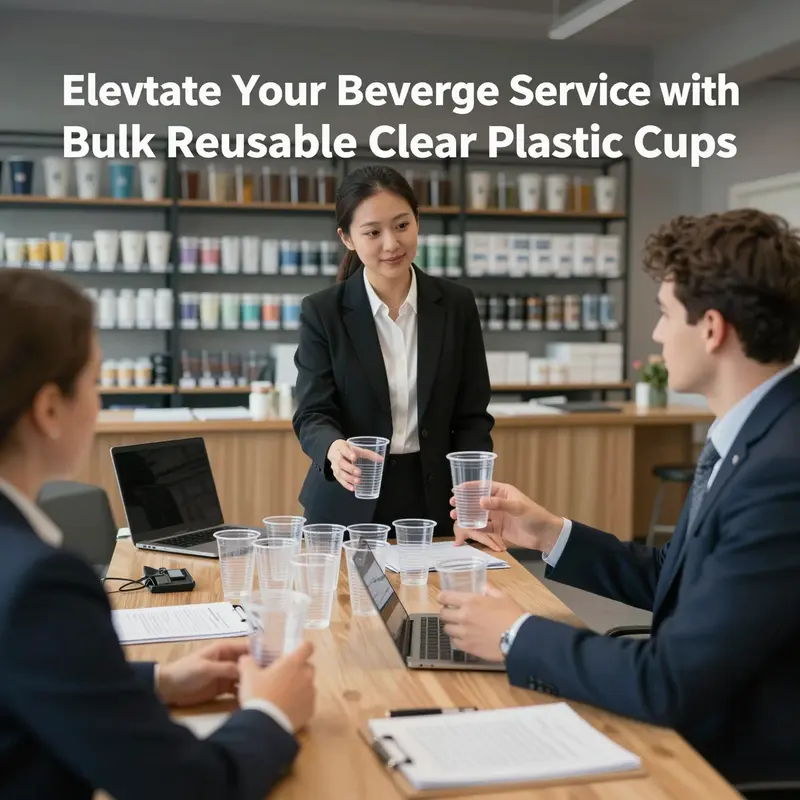
The procurement of reusable clear plastic cups in bulk is more than a mere price exercise. It is a test of reliability, a negotiation with timing, and a careful calibration of risk and value. When a business or institution commits to a bulk order, the true measure is not only the clarity of the cup or the ease of its design, but the steadiness of the supply chain that will deliver that cup, day after day, under a variety of conditions. In this sense, supplier reliability becomes a strategic capability. It underpins consistent user experience at events, consistent brand presentation at corporate functions, and consistent operational efficiency in offices, campuses, or hospitality venues that depend on predictable cleanup cycles and quick turnarounds between gatherings.
At the heart of reliability lies a triad of performance: on-time delivery, transparent communication, and steadfast adherence to safety and quality standards. Buyers should look for suppliers with proven track records of on-time delivery, ideally targeting rates of ≥97 percent. This benchmark is not arbitrary; it reflects the realities of event planning, where delayed shipments ripple into staffing challenges, guest experiences, and reputational risk. When a supplier can report and demonstrate such a rate, it signals robust planning, capable production lines, and responsive logistics. It also signals that the supplier has instituted end-to-end visibility—order confirmation, production milestones, pre-shipment inspection, and clear escalation paths if deviations occur. Transparent communication, in turn, is the connective tissue that makes this reliability tangible. It means timely updates about lead times, changes in material specifications, or any constraints arising from supply chain disruptions. It means a supplier that can present data, not excuses, when timelines shift. And it means a partner that invites questions, shares test results, and explains the rationale behind any design or process decision.
The second pillar goes beyond the clock and the conversation. It encompasses the material, the design, and the process. Reusable clear plastic cups are typically made from materials such as PET or acrylic, chosen for clarity, durability, and shatter resistance. Yet the value of these cups is not solely in their transparency. Buyers must verify material compliance—BPA-free status and food-grade certifications—so that repeated use remains safe for consumers. Documentation like FDA 21 CFR 177.1630 and similar EU food contact standards provides the peace of mind that a product can withstand dishwashing and repeated handling without leaching or degradation. In parallel, sustainability certifications such as OK Compost Home or other recognized standards help align bulk purchases with broader environmental commitments. The goal is not only a sturdy, clear cup, but a cup that supports a brand’s dedication to safety and responsibility across every touchpoint.
The third pillar is the supplier’s capacity to scale, adapt, and innovate without eroding quality. In bulk orders, capacity is not a single metric but a multi-dimensional capability: manufacturing throughput, flexibility in dimensions and customization, and the ability to integrate branding options without slowing the line. A reliable supplier will typically offer a blend of capabilities, from standard clear cups to customized options that carry logos, slogans, or event details. Custom branding is a powerful differentiator for corporate functions, weddings, galas, and promotional campaigns. It must be offered alongside rigorous quality control, ensuring that prints remain crisp through repeated washing and that color fidelity holds across batches. When a supplier can deliver both a consistent product and a consistent brand experience, they become more than a vendor; they become a collaborator in the event or organizational narrative.
The procurement landscape for bulk, reusable clear plastic cups is increasingly informed by regional strengths and documented practices that shape lead times, costs, and risk exposure. A 2026 guide from a major purchasing platform highlights how established industrial hubs can optimize input costs and production efficiency. In particular, it notes that integrated supply chains in key manufacturing regions reduce input costs by notable margins and enable automated production lines capable of outputting millions of units monthly. These facilities commonly offer advanced features such as double-wall insulation, which enhances temperature control and user comfort, along with options for custom branding and export-ready packaging. The implication for buyers is clear: regional clusters with mature ecosystems can deliver reliable capacity, more predictable pricing, and better support for large-scale programs than more isolated suppliers.
To translate these observations into practical sourcing decisions, buyers should consider a few concrete regional dynamics. Within a broader Chinese manufacturing landscape, provinces with distinct strengths can dramatically influence a supplier’s responsiveness and flexibility. Zhejiang Province, renowned for precision engineering and digital printing, is a natural fit for brands that require intricate logos and high-fidelity full-color designs with rapid prototyping. Guangdong Province, with its scale and versatility, provides access to a wide range of materials—PET, PP, Tritan, and even PLA for eco-conscious markets—expanding the design and packaging possibilities while supporting sustainability goals. In another axis, Hubei Province has emerged as a cost-efficient hub for high-volume production, with proximity to major ports that help shorten lead times for international shipping. For large-volume buyers, the 20-foot container typically carries between 200,000 and 300,000 units, depending on cup size and packaging density, which can translate into favorable logistics economics when scheduled properly.
Lead times are a critical driver of project planning and budgeting. Buyers should anticipate lead times averaging 15 to 30 days post-design approval, with early validation of design and material specifications advised. Early validation is a practical safeguard. It means requesting material safety documentation in advance, confirming the compatibility of the chosen plastic with intended cleaning regimes, and agreeing on the printing or labeling method before mass production. When suppliers can share samples for testing and demonstrate that the final product will meet the brand’s tolerance for weight, clarity, and resistance to washing cycles, the risk of expensive reworks at scale diminishes substantially. This collaborative approach to validation fosters trust and reduces the emotional and financial costs of post-production adjustments.
A feature that increasingly differentiates premium bulk offerings is double-wall insulation. This design choice, now common in high-end reusable cups, helps with temperature retention and condensation control. It elevates the user experience by keeping beverages at the intended temperature longer and by preventing surface condensation that can lead to slippery tables and dampened branding areas. However, this feature adds production complexity and, in some cases, printing challenges. The printing process must accommodate a thicker wall and the insulation seams without compromising the clarity or the integrity of the branding. Buyers weighing double-wall options must balance the improved user experience against marginally higher unit costs and lead times. The right calculation will reflect the specific use scenario: a summer outdoor event may derive significant value from improved temperature retention and reduced beverage leakage, whereas a corporate office stock replenishment program may prioritize speed and standardized branding across thousands of units.
Branding and customization are not merely cosmetic details; they are operational signals of partnership quality. For many buyers, the ability to imprint a logo, slogan, or event details on bulk cups is a core value proposition. This capability must be integrated with quality control to ensure legibility, durability, and color stability after dishwashing. The best suppliers offer flexible customization options, including multiple print technologies, from high-resolution digital printing to precise labeling, and they align these capabilities with consistent production planning. It is important to verify that branding does not require prohibitive minimums or extended lead times that would disrupt event calendars. In the conversation about branding, it can be instructive to examine related beverageware options that share similar design and print workflows. For instance, some buyers explore a related category of disposable, double-wall cups with foil stamping for premium events, a path that illustrates how branding criteria can scale from small pilot runs to full-scale bulk campaigns. To illustrate this, consider a related reference in this category: disposable-double-wall-gold-foil-stamping-coffee-cups-with-lid.
The practical realities of ordering bulk reusable cups also include minimum order quantities and pricing flexibility. While some suppliers set high MOQs, others recognize the needs of small businesses or organizations that want to test a format before committing to a larger program. In many cases, MOQs can start as low as 10 pieces, enabling early-stage pilots, branding experiments, or localized deployments without locking stakeholders into oversized initial purchases. This flexibility supports experimentation, helps prove the concept, and sets the stage for scale if the pilot proves successful. It also creates an opportunity to compare multiple supplier approaches—costs, lead times, print quality, and overall service—to determine which supplier best aligns with the organization’s longer-term sourcing strategy. The challenge, of course, is balancing the desire for low MOQs with the realities of efficient production and cost structure. Savvy buyers navigate this by planning incremental increases in order size in line with demand, ensuring that price per unit remains favorable while maintaining strong supplier engagement and a predictable supply chain.
Alongside these operational considerations, material safety and environmental responsibility remain central. Beyond BPA-free declarations, buyers increasingly seek suppliers who can document the full lifecycle implications of their products. This means sharing food-contact certifications, detailing the resin types used, and providing third-party test results that validate performance under repeated dishwasher cycles. For some buyers, this information feeds a broader sustainability narrative that resonates with customers, attendees, and stakeholders. Certifications such as OK Compost Home or similar standards help demonstrate that a product aligns with responsible end-of-life outcomes, even when the cups are designed for multiple uses before disposal. The balancing act remains clear: maximize clarity, durability, and brand impact while ensuring safety and sustainability throughout the product’s lifecycle.
In choosing a supplier, buyers are not simply selecting a product; they are selecting a partner who can deliver consistency across countless interactions and over many order cycles. The strongest supplier relationships emerge when both sides invest in shared planning, risk mitigation, and continuous improvement. This means establishing robust documentation, from material safety data to quality control checklists, and agreeing on a process for rapid issue resolution. It also means recognizing that long-horizon value transcends unit price. A supplier who can maintain high on-time delivery, deliver reliable branding, and consistently meet safety standards over time will help an organization smooth its operating rhythm, reduce last-minute stress, and increase the probability that events and programs run without interruption. The result is not only a practical supply chain win but a strategic enhancement to the organization’s credibility and reliability in front of customers, participants, and partners.
For buyers seeking to understand the strategic nuance of sourcing in a global context, the broader landscape offers meaningful guidance. The referenced 2026 guide emphasizes how proximity to industrial hubs and the integration of automated production lines can support scalable output with improved cost efficiency. It highlights that regions with mature, end-to-end ecosystems can reduce input costs through shared infrastructure, standardized processes, and greater predictability in lead times. This is particularly valuable for programs that require seasonal scaling or multi-city rollouts, where the ability to coordinate production across multiple lines and export logistics becomes a decisive factor in overall program success. The practical implication is to evaluate not only the price per unit but also the reliability of the supply chain and the resilience of the operational model that will repeatedly convert a design into thousands or millions of usable cups.
When forming the sourcing strategy, buyers should consider both the brand narrative they want to project and the operational discipline that will sustain it. The path to success lies in a balanced approach: select suppliers who can deliver on-time performance with transparent communication; verify material safety and environmental responsibility; and pursue branding capabilities that align with the organization’s identity while remaining adaptable to changing event formats. A strong supplier relationship is built on trust, but it is reinforced by data and process discipline—clear milestones, tested materials, documented approvals, and a shared plan for handling deviations. This combination minimizes risk, reduces total cost of ownership, and ensures that bulk purchases of reusable clear plastic cups contribute to a seamless, professional, and sustainable experience for every user.
External resource for deeper context on plastic reusable cups bulk procurement: https://www.alibaba.com/product-detail/Understanding-Plastic-Reusable-Cups-Bulk_1600457245743.html
For further consideration of related packaging and branding capabilities in a connected ecosystem, buyers can explore related options that support branding and sustainability goals while expanding the portfolio of reusable or eco-friendly solutions. In particular, the ability to align color-matching, print durability, and packaging design with chosen branding initiatives is a critical driver for long-term supplier partnerships and program success. As supply chains continue to evolve, the emphasis on reliability, transparency, and documentation remains the bedrock of procurement excellence in bulk reusable drinkware.
In this context, resilience is not simply a metric to chase; it becomes a standard to maintain. It is the expectation that orders placed today will arrive on time tomorrow, that designs approved in the first round will look as intended when produced at scale, and that safety and sustainability concerns are addressed as a matter of course rather than as a design afterthought. When these conditions hold, the bulk purchase of reusable clear plastic cups becomes a strategic asset—one that supports brand consistency, operational efficiency, and responsible consumption across countless events, settings, and communities.
Internal link reference for branding considerations in related product categories: disposable-double-wall-gold-foil-stamping-coffee-cups-with-lid
In summary, the journey to dependable bulk supply flows from a disciplined diligence about delivery performance, material safety, and scalable customization. It is a journey that rewards organizations willing to invest in supplier partnerships, robust validation, and a forward-looking approach to sustainability and brand integrity. Through such partnerships, reusable clear plastic cups move from simple vessels to integral components of a well-orchestrated experience—one that serves customers, colleagues, students, and guests with clarity, reliability, and respect for the environment.
Final thoughts
In conclusion, reusable clear plastic cups in bulk offer significant advantages for beverage businesses ranging from material benefits to customization opportunities. Engaging a reliable supplier streamlines the procurement process and ensures your brand’s image is enhanced through consistent quality and timely deliveries. As you consider implementing these versatile cups into your operations, remember that their design not only elevates the presentation of your beverages but also aligns with growing sustainability demands. Make the transition to bulk reusable clear plastic cups and witness the positive impact on both your service and brand perception.