
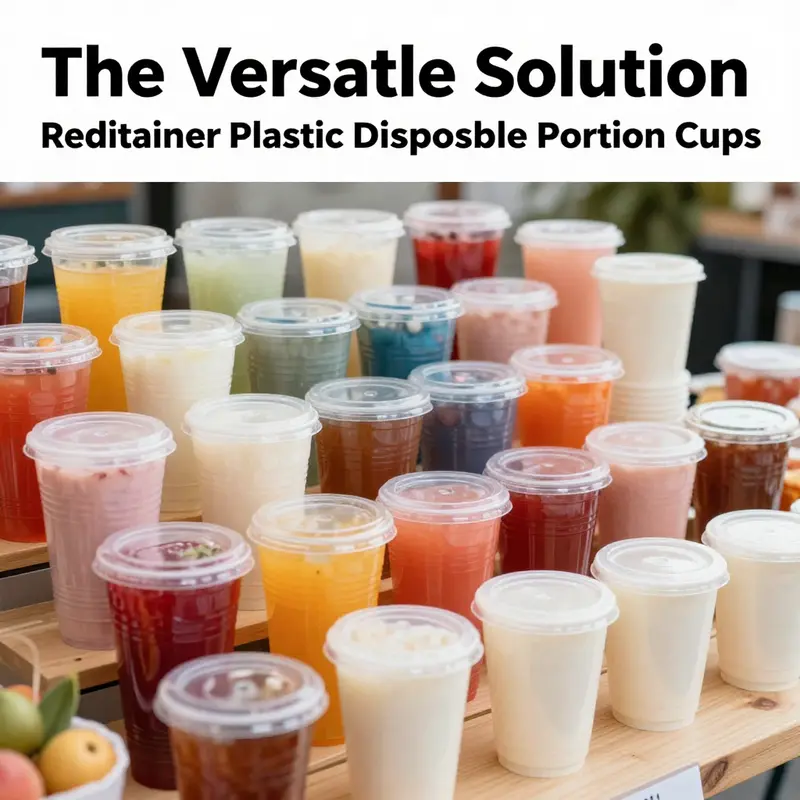
Reditainer plastic disposable portion cups in a 5.5-ounce pack of 100 represent an essential tool for businesses ranging from bubble tea shops to catering services. Their durable and eco-friendly design caters to various applications, making them ideal for both personal and professional settings. In this article, we will dive deep into the product specifications and features that highlight their versatility, the economic benefits they offer, their environmental impact, and various applications and use cases in today’s vibrant food and beverage industry. Let’s explore why these cups are essential for your operations.
Detailed Specs and Practical Features of the 5.5‑Ounce Disposable Portion Cups (Pack of 100)
Product form and purpose
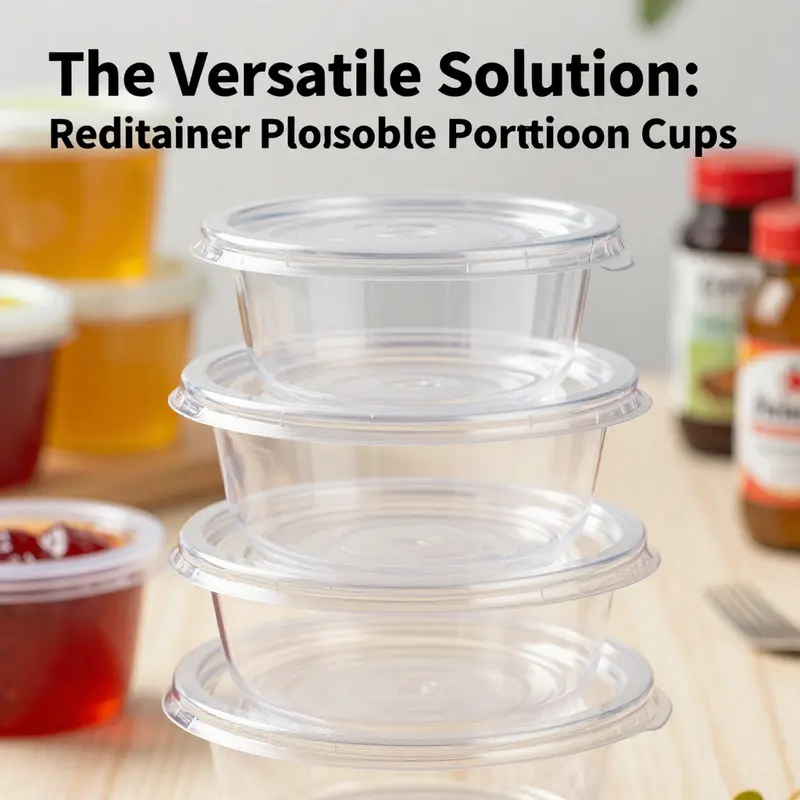
These 5.5‑ounce disposable portion cups, supplied in packs of one hundred, are engineered for clarity of function. Their capacity—about 162 milliliters—fits many common portioning needs. They are small enough for condiments, sauces, jellies, and samples, yet large enough for dressings, side servings, and single‑serve desserts. The translucent appearance lets staff and customers see contents instantly. This reduces mistakes and speeds service during busy shifts.
The cups are made from polypropylene, a flexible yet durable thermoplastic. Polypropylene offers resilience against cracking and bending while remaining light in weight. Each cup measures roughly 2.75 inches by 2.75 inches and stands about 2.5 inches tall, dimensions that make stacking efficient and storage compact. A single cup weighs about 31.8 grams, which balances sturdiness with cost‑effective shipping and handling.
Design features that matter
A practical lid is part of the package design. The secure‑lock lid snaps firmly into place, preventing spills and preserving freshness. This is important for take‑out orders and for transporting trays or samples. Sealing capability also helps maintain hygiene when cups are prepared ahead of service. The lid design supports short‑term storage without leakage and keeps contents visible through its clear profile.
The semi‑transparent finish is more than aesthetic. It enables fast visual checks for fillings and portion levels without opening the container. When paired with a simple label or color‑coded system, the cups speed order assembly and reduce errors. Their surface is smooth and easy to write on with a food‑safe marker for quick identification.
Material performance and handling
Polypropylene provides chemical resistance to common condiments and sauces. It tolerates acidic and oily foods without degrading or warping, though microwaving is not recommended. The cups perform well at room temperature and in cool storage. Because polypropylene is not microwave‑safe in this design, avoid heating hot oils or liquids in the cup. For warm products, transfer to a microwaveable container instead.
Hand washing is recommended for reuse. While the cups are intended as disposable, their robust construction permits careful reuse in low‑risk contexts. Repeated washing by hand helps preserve the lid seal and clarity. Avoid abrasive scrubbing, which can scratch surfaces and compromise transparency.
Sustainability and disposal
These cups are recyclable under recycle code #5. Polypropylene is widely accepted in many municipal programs, though recycling availability varies by location. When recycling is unavailable, consider reusing the cups before disposal, or collecting them for specialized recycling streams where possible. Choosing recyclable disposable items reduces lifecycle impact compared with some alternatives.
Single‑use convenience remains central. The pack of 100 supports businesses and households by reducing frequent restocking. Bulk purchasing lowers per‑cup cost and simplifies inventory management. For operations mindful of waste, reusable containers may fit other needs, but recyclable disposables strike a practical balance between hygiene and environmental responsibility.
Practical applications across settings
Catering and restaurants benefit most from portion control. These cups help standardize servings, ensuring consistent cost and portion sizes. They are ideal for condiments at buffet stations, boxed lunches for delivery, and sample programs at events. Food trucks and concession stands find them helpful for speed and neat presentation.
Retail tasting events and farmers’ markets use the cups to present small samples. Their clarity and secure lids let vendors prepare samples in advance and transport them without spills. Home users also find uses for these cups at parties, family meal prep, and portioning sauces or dressings for packed lunches.
Chefs and managers appreciate the role these cups play in food cost control. When sauces, dressings, or toppings are portioned consistently, waste is minimized. Clear measurement helps staff follow recipes precisely, reducing variability between servers and shifts. For training new staff, cups act as a physical guide to standard serving amounts.
Storage, stacking, and logistics
The cups stack neatly to save counter space. The slightly tapered sides and uniform dimensions allow for dense packing in cupboards and food prep stations. Lids can be nested separately or kept paired to streamline assembly during service. Each pack of 100 takes minimal shelf space, making them suitable for kitchens with limited storage.
Transport is straightforward. Packs fit easily into catering totes and delivery boxes. The lock lids keep contents secure during short trips. For longer transport, additional insulation or a secondary container can preserve temperature and reduce jostling.
Food safety and compatibility
Made from food‑grade polypropylene, these cups meet basic safety expectations for direct contact with food. They resist staining from most sauces and do not leach flavors into contents. Still, be mindful of extreme temperatures; these cups are not designed for hot, freshly heated liquids. For hot fillings, use containers rated for high heat.
The cups are appropriate for acidic items like vinegar‑based dressings and for oil‑based sauces. They also work for gelatin‑based desserts and chilled custards. Because they are semi‑rigid, heavy fillings require proper handling to avoid tipping. Use trays or carriers when serving several filled cups to a table.
Cost and inventory considerations
Buying in packs of 100 is economical. Bulk buying spreads fixed costs and reduces per‑unit pricing. When assessing total cost, factor in lid inclusion, storage space, and shipping. Calculate per‑serving cost by dividing pack price by hundred. For high‑volume operations, ordering multiple packs at once reduces reorder frequency and secures stable inventory.
Inventory management benefits from predictable use rates. Track weekly consumption, and reorder before stock runs low. Small kitchens can keep a single case on hand; larger operations may maintain multiple cases to handle peak periods. Consider storing lids separately only if space savings outweigh the small time cost of pairing lids during prep.
Adaptability and complements
These cups work well with labeling systems and portion control tools. Use food‑safe markers or adhesive labels for dates and contents. They pair naturally with tongs, ladles, and portion scoops sized to the cup’s capacity. For an eco‑conscious shift, pair the cups with compostable napkins and paper carriers to present a greener image.
If a different look or material is needed, paper alternatives exist for similar portion sizes. For example, custom printed small paper cups provide a different tactile feel and branding opportunity. One suitable option is the collection of custom printed 3oz, 5oz, 8oz paper cups, which offers tailored branding and an alternative material choice for certain uses: https://greendispopack.com/product/custom-printed-3oz-5oz-8oz-paper-ice-cream-cups-with-lid/.
Practical tips for daily use
Pre‑assemble cups and lids for high‑volume service. Fill them on an assembly line, cap them quickly, and stack them for delivery. Use color coding or simple labels for allergen management. Store filled cups in covered trays to reduce exposure. When reusing cups, inspect lids for warping and replace compromised pieces.
For events, prefill a selection of popular condiments and place them in chilled wells or insulated carriers. For delivery, secure cups inside boxes with non‑slip liners. For sampling, present cups on a shallow tray with a clean napkin or spoon to maintain hygiene.
Final practical note and resource
These 5.5‑ounce disposable portion cups in a pack of 100 combine practical design, clear visibility, and recyclable material. They answer routine needs in catering, retail sampling, and home entertaining. For more detailed product information and purchasing details, see the listed external resource: https://www.amazon.com/dp/B07VHJXQYK
Stretching Your Budget with 5.5‑Ounce Disposable Portion Cups: Practical Savings for Food Service and Events
Economics in Every Cup: How 5.5‑Ounce Disposable Portion Cups Reduce Costs and Improve Efficiency
Choosing the right portion container affects more than presentation. It touches labor, waste, inventory, and customer satisfaction. When kitchens, caterers, and event planners opt for a reliable 5.5‑ounce plastic disposable portion cup in packs of 100, they secure predictable savings and streamlined operations. This chapter explores how those savings form, where they compound, and how to translate them into measurable financial advantages.
Disposable cups remove several hidden costs. Reusable containers require washing, sanitizing, storage, and replacement. Those activities demand labor hours, cleaning chemicals, water, and energy. Each cycle of washing also risks breakage and wear, which means periodic repurchasing and downtime. By contrast, a disposable cup reduces the need for repeated handling. Staff spend less time on cleanup tasks. Kitchens can reallocate labor to prep, plating, or service. The labor savings alone quickly offset a modest difference in unit price.
Durability matters even for disposables. Well‑engineered polypropylene cups hold their shape during filling, transport, and serving. They resist cracking under pressure and seal firmly with lids. That minimizes spills during delivery and set‑up. Fewer spills translate to less product loss, fewer re‑makes, and reduced food waste. In practical terms, a single avoided spill can save the cost of ingredients, labor for re‑preparation, and any associated service failures. Over weeks of operation, those small savings become significant.
Portion control provides a direct path to lower food costs. A standard 5.5‑ounce cup sets a clear serving size for condiments, sides, and samples. When staff portion consistently, ingredient usage becomes predictable. Predictability improves purchasing accuracy. It helps kitchens buy only what they need. It also reduces over‑serving that erodes margins. For businesses that track food cost percentages daily, standardized portions simplify accounting. They also support consistent customer experiences, an intangible benefit with financial consequences in repeat business.
Buying in packs of 100 yields immediate unit cost reductions. Bulk purchasing typically lowers the per‑cup price and reduces packaging waste per unit. Bulk inventory also reduces ordering frequency. That trims administrative overhead and lowers shipping costs per item. For small operations, a single box may last several service days, avoiding frequent reorders and interruptions. For larger enterprises, predictable reorder cycles allow negotiation for better pricing or terms with suppliers. Bulk purchasing also creates buffer stock for peak demand periods.
Inventory and storage efficiency extend savings beyond price per unit. A single SKU that fits diverse uses cuts the number of different containers needed. The same cup can serve dressings, sauces, samples, and desserts. Fewer SKUs mean simpler ordering and less shelf space required. This consolidation reduces carrying costs. It also reduces the chance of stockouts or overstocking, both of which have clear financial impacts. Consolidating to a versatile portion cup supports lean inventory management.
Operational speed is another source of savings. Portion cups with secure lids speed packing and delivery. Staff can pre‑fill cups and stack them, ready for service or transport. Ready‑to‑go portions accelerate ticket times during busy shifts. Faster throughput improves table turns and order fulfillment. For catering, quicker assembly reduces labor hours on site. For delivery, stable lids protect items and reduce refunds or replacements caused by damaged orders. Time saved translates into lower labor costs and improved revenue capture.
Waste reduction provides dual benefits. Less food wasted lowers ingredient spend. Less packaging waste reduces disposal fees. When cups are recyclable polypropylene, disposal aligns with municipal recycling streams. Recycling reduces the landfill surcharge for businesses in many areas. It also communicates environmental responsibility to customers. That perception can influence buying decisions and justify slight price premiums. The ability to recycle responsibly means cost savings and potential marketing upside.
Comparing disposables to reusables requires a simple break‑even analysis. Consider the hourly labor cost for washing, the cost of water and detergent per cycle, and the expected lifespan of a reusable container. Then compare those costs to the per‑use price of a disposable cup and the frequency of use. In many scenarios, disposables are cheaper when turnover is high or labor costs are significant. In lower‑volume, high‑dwell venues, reusables might fit. The key is to make the comparison using real local data, not assumptions. Operations that document washing time and breakage rates often find disposables more economical on an apples‑to‑apples basis.
There are also indirect financial benefits related to customer service. A spill or messy presentation can prompt complaints and refunds. Secure lids and well‑fitting cups preserve presentation and protect orders. That reduces the need for goodwill gestures that erode margins. Consistent portioning also stabilizes portion perception, avoiding customer disappointment from variable servings. Fewer complaints mean less staff time spent on resolution, and fewer refunds mean more preserved revenue.
Sustainability can intersect with economics. Recyclable polypropylene carries a positive message. Customers care about packaging that is recyclable. That preference can influence purchasing and loyalty. In some regions, businesses that adopt recyclable packaging benefit from reduced waste fees or access to recycling incentives. When packaging supports local recycling streams, disposal costs drop. This connection between environmental practice and cost control is increasingly visible in procurement decisions across the food sector.
Alternatives exist, and choosing wisely amplifies savings. For operations aiming for compostable solutions, paper bowls and cups are options. These choices often have different cost profiles. Paper alternatives may cost more or less depending on volume and local composting infrastructure. For businesses that already use paper-based serving items, pairing portion cups with similar materials can streamline disposal. One relevant example is the availability of custom printed small paper cups for ice cream and samples. These options can complement plastic disposables when branding or compostability is a priority. See the selection of custom paper cup options for inspiration: custom-printed 3oz–8oz paper ice cream cups.
The right approach balances cost, convenience, and customer expectations. For many, a 5.5‑ounce disposable cup in a 100‑count pack hits that balance. It reduces labor, controls portions, lowers waste, and simplifies inventory. To get the most value, operations should track usage patterns, compare washing costs, and calculate unit economics. Small changes in portion size or SKU consolidation can yield disproportionate savings. Transparency in costing helps managers make informed choices rather than rely on habit.
Operational planning makes a difference. Train staff to fill accurately and secure lids properly. Monitor breakage and leak rates to identify supplier or handling issues. Use inventory data to forecast peak needs and avoid emergency buys at premium prices. Consider a trial period to compare actual costs before and after switching packaging strategies. Real‑world data removes guesswork and builds a case for change.
In short, selecting a dependable 5.5‑ounce disposable portion cup, bought in economical 100‑count packs, turns a simple container into a tool for savings. The benefits touch labor reduction, reduced waste, standardized portions, streamlined inventory, and improved customer outcomes. When paired with responsible disposal practices, the economic advantages grow and align with broader sustainability goals. For those evaluating packaging options, grounding decisions in measured cost comparisons delivers the clearest path to ongoing savings.
For guidance on sustainable plastics and resource recovery relevant to packaging choices, consult the EPA’s guidance on plastic management: https://www.epa.gov/sustainable-management-plastics
Rethinking Convenience: Tracing the Environmental Footprint of a 5.5-Ounce Disposable Cup in Food Service
A rush of orders, a tray of samples, and the quick motion of servers lining up to fill, seal, and deliver. In many busy kitchens and event spaces, the 5.5-ounce disposable portion cup operates as a quiet workhorse. Its semi-transparent wall reveals what sits inside, while a secure-lock lid promises a spill-free handoff from station to guest. The practical value of such a cup lies not only in its size but in its adaptability: it holds jelly, dips, sauces, and condiments with enough resilience to survive a delivery route and enough clarity to show at a glance what’s inside. Beyond the table, its existence is a small but significant node in the larger network of food service logistics, where portion control, presentation, and hygiene converge. Yet every convenience carries a consequence, and the environmental footprint of a single-use cup—produced, used, and eventually discarded—adds up when multiplied across thousands of service moments each day. To understand its place in a sustainable economy, one must trace the life cycle from raw material to end-of-life, and then weigh that lifecycle against the benefits of reduced waste, better portion control, and improved food safety.
At the core of the discussion is the material itself. The cup is formed from polypropylene, a durable plastic known for its strength, heat resistance, and compatibility with food contact. Polypropylene carries Recycling Code #5, a label that speaks to its recyclability in many communities yet remains a barrier in others. Recyclability is not a universal guarantee; it hinges on the local infrastructure, the presence of modern sorting streams, and the capacity of municipal programs to process this resin. In practice, this means that while the material may be technically recyclable, it is not invariably accepted where a consumer or a business lives or works. This disconnect between material capability and system capability compounds the complexity of assessing the product’s environmental profile. The wall of the cup is not merely a container; it is a signal of a broader recycling ecosystem that advances only when the correct recycling channels are available and actively used. The result is a lifecycle that can vary dramatically from one city to the next, and a truth often overlooked in casual packaging conversations: recyclability is as much about a system as it is about the material.
The disposable nature of the cup is another pivotal factor. Marketed as a single-use item, it invites consideration of how a product designed for one moment of use becomes a stream of waste. The narrative of reuse, when it appears, tends to flatter the product’s durability, but it does not always reflect consumer behavior. In many real-world scenarios, these cups—paired with their lids—are treated as a disposable solution for quick service, sampling, or on-the-go consumption. The consequence is a significant volume of post-consumer waste that must ultimately find a path to recovery, downcycling, or, less desirably, landfill. The volume matters; even with robust materials, the cumulative impact of single-use items compounds across seasons, locations, and business models. The environmental signal here is less about one cup and more about the aggregate effect of thousands of such cups moving through a service economy every day.
Microplastics add another dimension to the conversation. When plastics are disposed of, especially when they end up in landfills or scattered environments, they can fragment into microplastics over time. These tiny particles are of concern because they infiltrate soils and waterways, interact with wildlife, and potentially enter human food chains through various routes. While the likelihood of microplastic exposure from any single cup is small, the collective presence of billions of such items released into the environment creates a pool of material that persists for decades. Even with reuse strategies, the end-of-life phase remains a critical test for the sustainability claims of disposable packaging. This is not a binary issue of “recyclable” versus “non-recyclable”; it is a nuanced continuum that hinges on how societies collect, sort, and process polypropylene, and whether the recovered material can re-enter the manufacturing stream as a viable feedstock.
Production and transport contribute further to the footprint. The journey from raw resin to finished cup involves energy-intensive steps, including polymer synthesis, extrusion, molding, quality control, and packaging for distribution. Each stage consumes resources—petroleum with its own environmental considerations, water for processing, energy for heating and cooling, and emissions tied to the methods of transport used to move the cups to wholesalers, restaurants, and events. The environmental accounting of this product thus includes not only the fate of the cup after use but also the emissions and resource inputs embedded in its manufacture and distribution. In a world increasingly attentive to supply chains and lifecycle thinking, those upstream costs are as relevant as the downstream outcomes of disposal and recycling.
The conversation about alternatives opens a spectrum of options that situate the cup within a broader environmental strategy. Compostable or biodegradable cups made from plant-based materials—such as cornstarch or other biopolymers—offer the potential to align with industrial composting facilities that can break down these materials more readily than conventional plastics. Yet even these options carry trade-offs. Home composting typically fails to achieve complete breakdown, and industrial facilities may require specific conditions, such as temperature ranges and controlled aeration, that are not available everywhere. Moreover, the energy and resource inputs for producing plant-based materials can be different from those for polypropylene, sometimes offsetting the anticipated gains if not matched with efficient end-of-life processing. The lifecycle becomes a mosaic of decisions: what kind of waste infrastructure exists, how reliable the collection streams are, and what the local climate of disposal permits—economic and regulatory—looks like.
Businesses seeking to minimize harm from such cups often adopt a layered approach. They optimize the portion control benefits—reducing over-portion waste and encouraging precise serving—while simultaneously investing in waste streams that maximize recoveries. Education plays a role, too: staff who understand the local recycling rules and the proper separation of recyclables can materially improve recovery rates. Even if a cup itself is not widely accepted in a given recycling program, clever design choices—such as easier lids, clearer labeling, or packaging that reduces contamination—can improve the efficiency of the system as a whole. In this way, the product becomes part of a larger operational philosophy that treats waste not as an afterthought but as a system asset to be managed, measured, and optimized.
One practical thread in the broader narrative is the availability of alternative packaging within the same supply chain. The landscape of food-service packaging offers a spectrum that ranges from traditional plastics to compostable fibers and hybrid designs. For those who are considering substitutions or supplements to single-use cups, a referenced option exists in the realm of biodegradable, plant-based bowls and containers designed for take-away and to-go service. These products illustrate a principle that sustainability is not about a single perfect solution but about building a portfolio of choices that can adapt to different contexts, facilities, and customer expectations. The idea is not to vilify one material but to align packaging choices with the waste-management capabilities present in a locality, while maximizing the efficiency and safety benefits that such cups provide during service. The aim is to support a circular economy where materials can be reintroduced into productive cycles rather than being relegated to low-value waste streams.
For stakeholders exploring the full spectrum of options, a concrete step is to consider how packaging choices map onto local infrastructure. If the local system can handle polypropylene #5 with high fidelity, then the cup’s lifecycle can be more fully realized as a recyclable resource. If not, the calculus shifts toward exploring compostable or other low-widelity alternatives, while recognizing the energy and processing demands that accompany any substitution. The balancing act is not only about material performance in the kitchen but about the end-of-life ecosystem into which every cup enters. In the end, the environmental impact is a story of decisions: which materials are chosen, how they are processed after use, and what kind of waste-stream infrastructure exists to close the loop.
From a consumer’s perspective, awareness matters. When a guest sees a cup at a counter or in a take-out bag, that sight is accompanied by a constellation of assumptions about where it will end up. Clarity about disposal options can empower better choices, especially when coupled with a willingness to participate in recycling or composting programs where available. The responsibility, then, extends beyond the product itself to the entire context in which it is used: the operations of a venue, the routines of a staff, and the habits of customers who value both convenience and stewardship. A culture of responsibility can transform a disposable item from a one-use artifact into a signal of a broader commitment to environmental sustainability. And while no single action will erase the footprint of a disposable cup, a consistent, system-aware approach can meaningfully reduce the impact over time.
When a business weighs cost against ecological considerations, it helps to anchor decisions in transparent data about lifecycle impacts. The trade-offs are rarely simple: a smaller cup can reduce material use per item, but if it leads to more servings and more waste, the aggregate effect may be unfavorable. Conversely, a robust reuse and recycling program can keep materials circulating in the economy longer, but it requires investment in staff training, separate collection channels, and reliable post-consumer processing. The goal is not to chase a perfect narrative but to embrace a pragmatic, adaptable framework in which packaging choices advance both operational efficiency and environmental accountability. In this frame, the 5.5-ounce cup becomes a case study in a broader practice: balancing the need for practical, hygienic service with the equally real imperative to steward finite resources for future generations.
For readers seeking a concrete sense of how the recycling landscape shapes these outcomes, the broader discourse on plastic codes and end-of-life pathways offers essential guidance. These codes indicate general recyclability, but their real-world efficacy depends on local programs and consumer participation. It is useful to consult independent resources that explain how codes translate into actual recovery rates and why some materials misalign with a given community’s capabilities. Through this lens, the environmental impact of a single component in a meal or a catering order becomes a reminder of the interconnected systems that sustain or strain our waste infrastructure. The conversation invites ongoing attention to how packaging choices can align with regional infrastructure, shifting from a one-size-fits-all mentality toward a more nuanced, place-based strategy that respects both the needs of food service and the integrity of the environment.
External resource: Plastic Pollution Coalition – Understanding Plastic Recycling Codes
Internal reference for readers who want to explore sustainable serving alternatives in related packaging formats: biodegradable eco-friendly take-away kraft paper bowl. By acknowledging diverse material pathways, readers can compare the lifecycle implications of different packaging options and consider how a venue’s waste-stream capabilities shape the most responsible choice for a given context.
Practical Uses and Creative Applications for 5.5‑Ounce Disposable Portion Cups (Pack of 100)
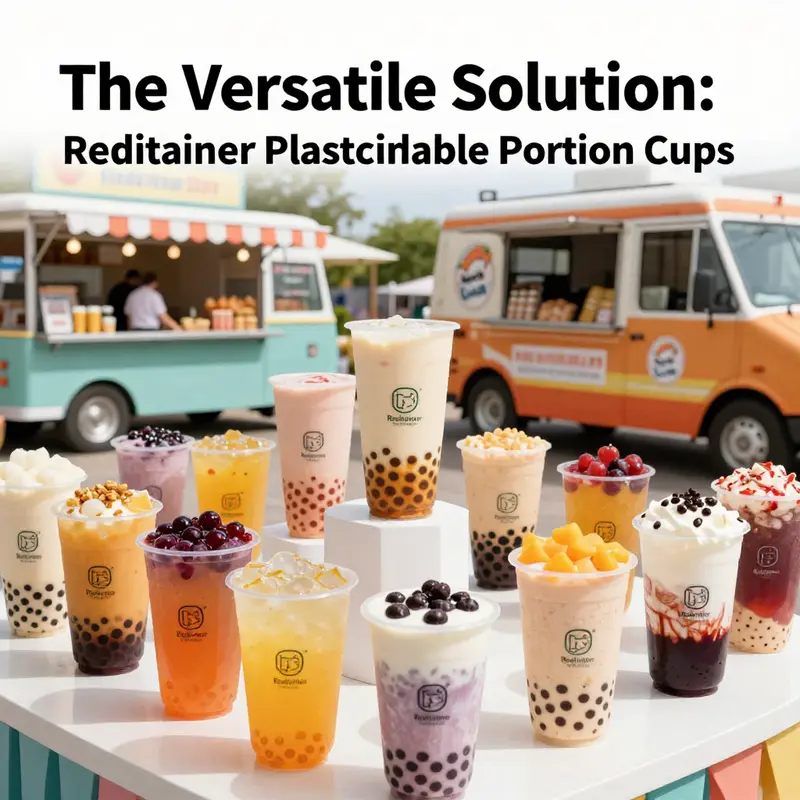
Everyday utility and event-ready versatility in a compact cup
A stack of clear, 5.5-ounce disposable portion cups changes how small servings are handled across kitchens, counters, and carts. Their modest capacity makes them ideal for precise servings without waste. That practicality is the thread connecting daily meal prep, high-volume catering, experimental food sampling, and even creative nonfood uses. The cups’ semi-transparent walls reveal contents at a glance. The secure lids keep samples fresh and reduce spills. Lightweight but sturdy, they slot into workflows that demand speed, repeatability, and a clean presentation.
In food service, a single design must satisfy several needs: food safety, portion consistency, efficient storage, and quick service. These portion cups were engineered with those priorities in mind. They bear up to hot or cold fillings without deforming, which matters when moving between prep stations and service lines. For restaurants and food trucks, they enable fast, confident plating of condiments, sauces, and small sides. A chef can portion finishing sauces predictably, while a server can hand a customer a covered portion that travels well. For catering, their stackable nature frees refrigerated space and reduces prep time. Lids lock in place, making it possible to plate dozens of small desserts or dressings in advance and move them safely across crowded event floors.
Meal prepping benefits from the same characteristics. Consistency is central to meal plans and dietary goals. Measuring portions in identical containers helps track intake and removes guesswork. Home cooks who prepare weekly lunches can use these cups for dressings, sauces, chopped herbs, or snack mixes. The cups fit neatly into lunchboxes and bento-style containers, and the lids prevent cross-contamination during transit. Because they wash clean with simple hand washing, occasional reuse is practical for households aiming to economize without sacrificing hygiene.
Sampling and promotional events offer another compelling use. When introducing new menu items, brands rely on small, attractive samples to invite first tastes. Portion cups present morsels in tidy, individual packages and preserve product integrity better than open trays. The transparency invites visual appeal, crucial in driving first bites. At farmers’ markets, tasting booths, and in-store demos, these cups strike a balance between single-use convenience and a professional presentation. They reduce plate turnover and cut down on sanitation concerns since each sample has its own lid.
Portion control also helps reduce waste. Small, measured servings discourage overpouring of condiments and dressings. In self-service setups, customers can take exactly what they need. That control benefits operators trying to manage food costs. For restaurants, smaller portions of high-cost ingredients—like specialty sauces—maintain flavor impact without overspending. For households, measured servings help preserve leftovers and minimize discards.
The hospitality industry uses these cups in a variety of subtle but meaningful ways. From hotels arranging miniatures for breakfast bars to conference centers organizing boxed lunches, the containers offer neat, consistent servings of toppings, jams, yogurt, and chopped fruit. Banquet staff appreciate being able to pre-package individual portions for grab-and-go offerings. Room service trays look cleaner, and housekeeping can quickly remove used cups when clearing rooms. The lids mean that buffet-style turnover is smoother, with less risk of guests spilling dressings into shared areas.
Visual presentation matters in food photography and displays. Because the cups are semi-transparent, they showcase layered textures and colors without distracting from the food. Small desserts, fruit cups, and gelato samples maintain their shape and appeal when contained. Display cases and point-of-sale counters gain a uniform look when items are presented in identical, clean containers. For culinary competitions or tasting menus, the cups act as discreet staging tools that keep focus on the food while simplifying logistics.
Beyond food, the cups find use in education and craft activities. Classrooms use them for paint mixing, small material sorting, and science experiment portions. Their clear sides let students observe chemical reactions or color mixing without extra equipment. Art studios use them to divide pigments, beads, or glitters during projects. The cups’ size encourages careful use of materials, reducing accidental waste or cross-contamination between colors.
Healthcare and laboratory settings sometimes adopt similar disposable cups for non-sterile sample handling and reagent aliquots. Their ability to hold measured volumes makes them useful for clinic workflows that require quick, disposable receptacles for small quantities. In these contexts, the secure lids and clarity help maintain organized processes and reduce spillage risks during transport.
Event planners and hosts appreciate the ecological and economic balance these containers strike. Buying a pack of 100 lowers per-unit cost and reduces the need for constant restocking. For single-event use, the convenience is obvious. For recurring events, the long shelf life and stackable storage make inventory management predictable. Because many such cups are made from recyclable polypropylene, they align with greener procurement goals. When combined with a local recycling program that accepts polypropylene, the environmental footprint improves compared with non-recyclable alternatives.
Competition between disposable plastics and paper-based alternatives often hinges on use case specifics. For hot, liquid, or oily items, durable plastic often performs better, especially when lids are essential. Yet for some presentations—like rustic salads, larger soups, or signature bowls—paper-based containers provide a different aesthetic and compostability. Brands that want a paper look can still achieve small-sample presentation by pairing larger paper bowls with smaller inner cups. For businesses exploring alternatives, comparing options helps match functionality with brand values. If you want to see options for small paper cups and bowls suited to similar applications, review this example of custom paper cup solutions.
Operational efficiency gets a boost from features that make these cups easy to store, transport, and load into dispensers. Stacks slide into bins without jamming, and lids nest away for compact storage. During busy service windows, line cooks can grab a pre-stacked column of cups and fill them rapidly. Catering runners transport dozens of filled, lidded cups in trays or insulated carriers. That speed matters when service must remain consistent across many guests.
Creatives find additional uses beyond the obvious. Food stylists use small cups to hold garnishes while arranging plate compositions. Bartenders pre-portion cocktail garnishes, syrups, or bitters for high-volume service or to support training sessions. Ice cream shops and dessert bars portion toppings and mix-ins for build-your-own stations. Gardeners even use them as seed-starting trays for small seedlings or cuttings. The cups’ shallow depth gives seedlings room to root until transplanting.
Cost control and inventory planning benefit from predictable packaging sizes. Operators tracking food cost can base recipes and portion sizes on a known volume. That predictability simplifies ordering, forecasting, and waste analysis. Tech-savvy kitchens can combine portion cups with barcode labels or stickers to mark contents and prep dates. Proper labeling extends shelf life and supports food safety audits.
Finally, consider lifecycle and disposal. While the ease of single-use plastics gets attention, choosing recyclable polypropylene and participating in local recycling programs helps mitigate impact. Small operational changes—like rinsing residues and separating lids if required by recyclers—make recycling more effective. When reuse is possible, occasional hand washing can extend a cup’s life for noncritical tasks.
Across service styles and industries, the humble 5.5-ounce portion cup stands out for its combination of precision, presentation, and practicality. Whether measuring ingredients, portioning sauces, staging tastings, organizing crafts, or streamlining catering logistics, these cups simplify tasks while supporting consistent results. Their ability to bridge professional demands and everyday convenience explains why they remain a staple in so many settings.
External resource: For more on polypropylene recycling and local acceptance guidelines, refer to Recycle Now: https://www.recyclenow.com/what-recycling/what-happens-to-polypropylene
Final thoughts
The Reditainer plastic disposable portion cups, with their robust features and eco-friendly materials, stand as a versatile solution for businesses in the food and beverage sector. Their economic benefits and myriad applications—from restaurants to catering services—make them an indispensable tool for portion control across diverse settings. As consumer awareness of sustainability grows, choosing ergonomic and recyclable products like Reditainer cups not only enhances operational efficiency but also aligns with environmental goals. Make the switch to Reditainer cups and see how they can elevate your service dynamics effortlessly.